



Abstract
Background
Monitoring of training tasks allows coaches to have a better knowledge of the loads applied to their players.
Objectives
The aim of this study was to analyze the variations in external load in small-sided games (SSGs) with young players U-12, U-15, and U-23 and compare the external load between age categories in each of the SSGs.
Methods
A group of 24 male soccer players performed five consecutive different formats of four vs. four SSGs composed of 3 minutes of play/rest. GPS devices were used during the tasks (WIMU PRO™). The data were analyzed using IBM SPSS Statistics 28.0, using descriptive statistics, graphical statistics, and ANOVA to compare the results between SSGs and between age groups.
Results
The increase in field areas promotes the increase of distance (DIST) covered and the high metabolic load distance (HMLd), with and without a goalkeeper (GK). The SSGs with GK recorded fewer PL values compared to SSGs without GK. In the U-12 and U-15 age groups, GK use promotes more acceleration (AC) and deceleration (DEC) of high intensity (>3 m/s2). The results also show that the larger areas are promoters of high-speed running (HSR). Age influences some external load variables (DIST, AC, DEC, HMLd) in the game formats studied.
Conclusions
The SSG formats analyzed using GK are promoters of high-intensity neuromuscular activity. Larger areas promote more high-speed displacement. Age is an influence on the external load in different SSGs.
Introduction
Considering the football game’s intermittent nature, in which players perform longer distances interspaced by very high-intensity actions, it is important that training stimuli respond to the game’s bioenergetic demands. 1 In this sense, high-intensity interval training (HIIT) has been proposed as a training strategy that promotes the metabolic and neuromuscular participation of players. Among the different types of HIIT, game-based drills (also known as small-sided games or SSGs) are often used by coaches to promote internal and external load on players, with the aim of responding to some formal game dimensions. 2
SSGs are modified versions of the formal game, in which the coach manipulates the constraints to work specific training objectives related to the different football game phases, stimulating decision-making through the execution of individual and collective technical-tactical actions. 3 Despite some similarities between SSGs and the football formal game, namely in some interactional dynamics, there are differences in physiological demands. SSGs are more intense in relation to heart rate responses and blood lactate concentrations. Regarding physical demands, the SSGs have lower speed values than the formal game. 4 These changes in load can be highly related to specific behaviors that emerge from task constraints, and for that reason, the SSGs design should be carefully implemented by coaches.4,5
Interestingly, task constraints act concurrently to explain variations in physiological and physical demands during SSGs, as well as in technical actions and tactical behaviors. 6 Among different constraints, the most commonly used and researched is the format of play (number of players involved), pitch size (standardized by number of players), and other rule modifications (e.g. use or not of goals, type of marking, number of touch limitations, verbal encouragement). 7 The playing area per player (App) (width × length/number of players) 8 has an influence on the external load imposed on the players, as well as on their physiological response. Studies have found that large areas per player (>100 m2) have a physiological impact,7,9 allowing you to work in high-intensity zones. It is also necessary, in order to achieve high-speed running (HSR) values, that the areas per player are equally large.10–12. SSGs are a training strategy to promote neuromuscular activity, 13 and it has been found that increasing the playing area per player promotes high-intensity accelerations and decelerations (>3 m/s2). 14 Considering that with the increase in the playing area, there is an increase in HSR, accelerations (AC), and decelerations (DEC) of >3 m/s2, it is also expected that there will be an increase in high metabolic load distance (HMLd). 15 Although there is some divergence in the results, regarding the physical demands, when GK is used in the SSGs,16,17 there is a tendency to decrease the workload (distance and HSR).18,19 However, there is an increase in AC and DEC.17,18
The pitch size of SSGs is the most-studied variable in youth soccer players, but surprisingly most of the studies only assess one age category or use a different methodology that does not allow for making comparisons. 20 For instance, it was previously observed that playing area dimensions influence the intensity of the game, the actions of the players, and the used energy systems. 21 Large playing areas are associated with an increase in the intensity of exercise, 7 effective playing space, and surface coverage, 20 while small playing areas appear to foster technical development. 22
Some studies have investigated the relationship between different SSGs and their effect in different age categories, although, to our best knowledge, no study has been conducted with the SSG conditions presented in our study associated with the selected age categories. Moreover, the participation of a goalkeeper (GK) in SSGs is nowadays very important since many soccer teams begin to build their offensive process with GK participation and recently a soccer game rule modification favored the offensive construction process from their defensive area, with the participation of the GK.
Therefore, the optimal design of SSGs remains to be determined, and the interaction effect of each age category in SSGs remains unknown. Based on this rationale, the aim of this study was two-fold: (1) to analyze variations in the external load, considering the performance of five different format SSGs by different age categories (U-12, U-15, and U-23) and (2) to compare the external load between age categories when analyzing each of the five SSGs.
Methods
Study design and setting
This study followed a cross-sectional design. Players from different age categories (U-12, U-15, and U-23) were selected and analyzed in a single session. The games occurred in the afternoon period, with an average temperature of 22°C and a relative humidity of 60%. Twenty-four hours prior to the experimental session, the players were instructed to maintain their habits, which included 8 hours of sleep the night before the data collection session and maintaining their nutritional routine. Throughout the recovery periods in the SSGs, the players could drink fluids.
Participants
A total of 24 players were involved in the study. U-12 players (n = 8) competed in the district football championship, in game formats 9 (GK + 8 × 8 + Gk) and 7 (GK + 6 × 6 + GK). The U-15 (n = 8) competed in the national championship, and the U-23 (n = 8) in the Revelation League championships played in Portugal. Both competitions (U-15 and U-23) are played in an 11-a-side format (GK + 10 × 10 + GK). The clubs to which the players belong are certified by the Portuguese Football Federation as Formative Entities. The inclusion criteria included for the outfield players participating in the SSGs were (1) players without injuries in the last 2 months; (2) players participation in all training sessions in the last 6 weeks prior to the data collection; and (3) players participation in the total playing time in the last month of competition before the data collection. The U-23 (age: 20.1 ± 1.5 years old; height: 1.83 ± 0.04 m; total body mass: 76.1 ± 3.6 kg; body fat: 10.1 ± 2.2%, and soccer experience: 13.3 ± 1.5 years), U-15 (age: 14.7 ± 0.8 years old; height: 1.68 ± 0.05 m; total body mass: 57.3 ± 3.9 kg; body fat: 10.5 ± 2.3%, and experience: 7.6 ± 1.3 years), and U-12 (age: 11.69 ± 0.5 years old; height: 1.59 ± 0.09 m; total body mass: 38.76 ± 4.21 kg; body fat: 11.3 ± 2.5%, and experience: 5.2 ± 1.9 years) were previously instructed about the tasks to be performed in the training sessions.
Our study was conducted in accordance with the international ethical standards for sport and exercise science research and in accordance with the Declaration of Helsinki. 23 The players and parents (in the case of underage players) have been staggered into the investigation scope, and informed consent has been obtained. The study was approved by the Ethics Committee of the Polytechnic Institute of Leiria (CE/IPLEIRIA/22/2021).
Procedures
For data collection, WIMU PRO™ (RealTrack System, Almería, Spain) global positioning system (GPS) devices were used operating at a sampling frequency of 10 Hz. The technology used to collect data via GPS is valid and reliable to monitor the performance of football players. 24 The participants wore WIMU-specific robes, adjusted to the body, on the back of the trunk. Before being placed on the players, the GPS devices were calibrated and synchronized following the manufacturer's recommendations. 24 The procedure was as follows: (1) turn on the devices, (2) wait for approximately 30 seconds after turning them on, (3) press the button to start recording once the device's operating system is initialized, and (4) analyze the data obtained from the devices using SPRO™ software (RealTrack Systems, Almería, Spain).
The training sessions started with a 25-minute standardized warm-up, consisting of 5 minutes of slow jogging, and strolling locomotion followed by 12 minutes of specific soccer drills and finishing with 3 minutes of progressive sprints and accelerations. Agility and speed drills were also conducted, and 5 minutes of a ball possession game within a space of 20 × 20 m concluded the warm-up.
The players were randomly assigned to the playing teams, with no specific tactical missions. The organized teams were maintained during the practice of all SSGs. The SSG format was characterized as possession play (SSG-P, specifically SSG1, SSG2, and SSG4) and a game with regular goals and GK participation (SSG-G, specifically, SSG3 and SSG5). During all the SSGs, the coaches provide some feedback to the players to encourage them. Colleagues and coaches were around the pitch with soccer balls in their hands to quickly replace the ball each time it leaves the pitch size during all the SSGs.
Each game format was repeated once (5 × 3 minutes), with an interval between SSGs of 3 minutes (Figure 1). In SSG1, SSG2, and SSG4, the objective of the game was for the team to keep the ball in their possession for as long as possible. In SSG3 and SSG5, the main objective of the game was to score more goals than the opposing team. No external load data was collected from the GK involved in the SSG3 and SSG5 formats. The order of SSG practice has always been the same in the age groups.
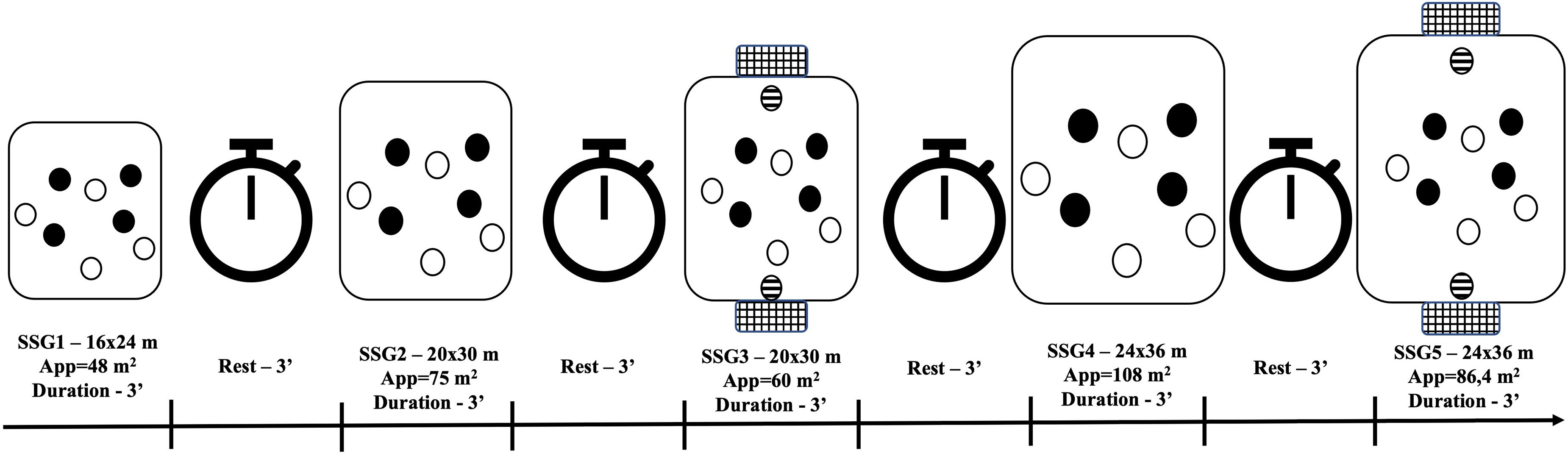
Methodological procedures for data collection.
Variables
The variables analyzed were as follows: Distance (DIST)—total meters (m) covered and High-Speed Running (HSR)—distance traveled at a speed above 21 km/hour. 25 The value considered for HSR by us is the WIMU GPS reference value. Although our research is carried out with young age groups, we found that in the official game formats, the ages studied reach the speed taken as a reference (U-12,26,27 U-15,28,29 U-2328,29); Accelerations (AC)—distance covered in high accelerations (>3 m/s2)25,30; Decelerations (DEC)—distance covered in high DEC (>-3 m/s2)25,30; Player Load (PL)—load derived from accelerometers (a.u), representing the load on the three axes of movement x, y, and z, being used to evaluate the neuromuscular load25,31; High Metabolic Load Distance (HMLd)—a measure that translates the distance covered by the player to a metabolic power above 25.5 W/kg 25 ; Dynamic Stress Load (DSL)—a measure that translates the total weighted impacts, based on accelerometers, with magnitude above 2 g, considering that an impact of 4 g is twice as difficult for the body than the 2 g impact.30,32
Data analysis
The data related to the variables under study were analyzed using descriptive statistics (mean (M) and standard deviation (SD)). The Shapiro-Wilk test was used to test the normality of the distribution. To analyze the differences between SSGs and between age groups, the one-way analysis of variance (ANOVA) was used, and p < 0.05 was used for the degree of significance. The effect size (ES) was determined by calculating the partial eta-squared (
Results
The external load analysis in different SSG conditions is presented for the studied variables in Table 1.
External load analysis in different SSG conditions.
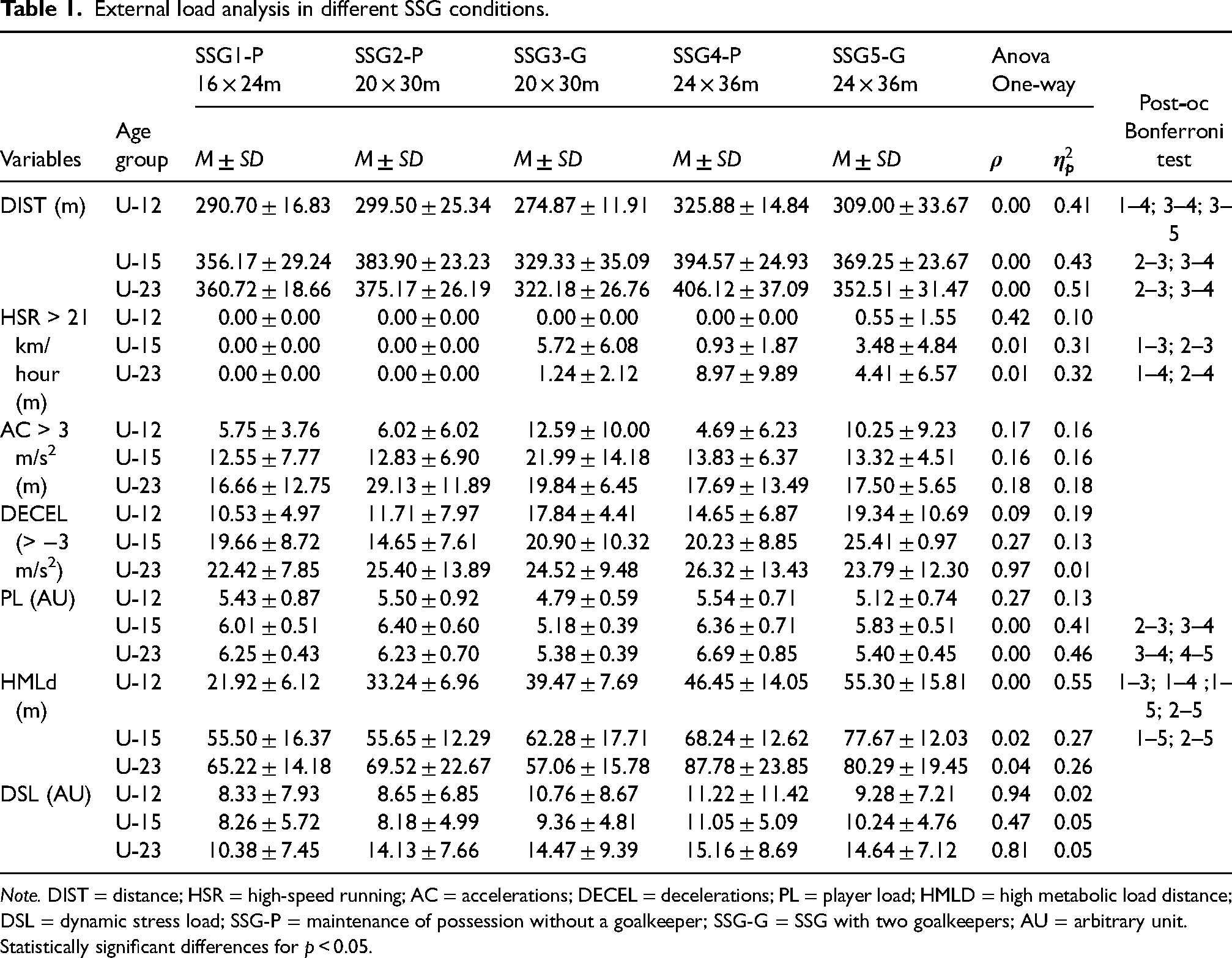
Note. DIST = distance; HSR = high-speed running; AC = accelerations; DECEL = decelerations; PL = player load; HMLD = high metabolic load distance; DSL = dynamic stress load; SSG-P = maintenance of possession without a goalkeeper; SSG-G = SSG with two goalkeepers; AU = arbitrary unit. Statistically significant differences for p < 0.05.
In the distance covered, we verified statistically significant differences and large effect sizes in all age groups, when we manipulated the playing areas and introduced a GK (U-12: p = 0.00, ES = 0.41; U-15: p = 0.00, ES = 0.43; U-23: p = 0.00, ES = 0.51). This is evident between SSG1-P (290 ± 16.83) and SSG4-P (325.88 ± 14.84), between SSG3-G (274-87 ± 11.91) and SSG4-P (325.88 ± 14.4), and between SSG3-G (274.87 ± 11.91) and SSG5-G (309 ± 33.67). In U-15, statistically significant differences were recorded between SSG2-P (383.90 ± 23.23) and SSG3-G (329.33 ± 35.09) and between SSG3-G and SSG4-P (384.57 ± 24.93). In the U-23 age group, statistically significant differences were recorded between SSG2-P (375.17 ± 26.19) and SSG3-G (322.18 ± 26.76) and between SSG3-G and SSG4-P (406.12 ± 37.09).
Differences were also recorded between SSGs in HSR in the U-15 age groups (p = 0.01, ES = 0.31; SSG1-P: 0.00 ± 0.00 vs. SSG3-G: 5.72 ± 6.08 and SSG2-P: 0.00 ± 0.00 vs. SSG3-G) and U-23 age groups (p = 0.01, ES = 0.32; SSG1-P: 0.00 ± 0.00 vs. SSG4-P: 8.97 ± 9.89 and SSG2-P: 0.00 ± 0.00 vs. SSG4-P).
Regarding PL, differences were recorded between the SSGs in the U-15 (p = 0.00, ES = 0.41) and U-23 (p = 0.00, ES = 0.46). In the U-15 age group, differences were recorded between SSG2-P (6.40 ± 0.00) and SSG3-G (5.18 ± 0.39) and between SSG3-G and SSG4-P (6.36 ± 0.71). In the U-23 age group, differences were recorded between SSG3-G (5.38 ± 0.39) and SSG4-P (6.69 ± 0.85) and between SSG4-P and SSG5-G (5.40 ± 0.45).
We also highlight the differences found at the HMLd, between the different formats of SSGs, in the age group U-12 (p = 0.00, ES = 0.55) and U-15 (p = 0.02, ES = 0.27). In U-12, the differences are evident between SSG1-P (21.92 ± 6.12) and SSG3-G (39.47 ± 7.69), between SSG1-P and SSG4-P (46.45 ± 14.05), between SSG1-P and SSG5-G (55.30 ± 15.81), and between SSG2-P (33.24 ± 6.96) and SSG5-G. In the U-15 age group, we found significant differences between SSG1-P (55.50 ± 16.37) and SSG5-G (77.67 ± 12.03) and between SSG2-P (55.65 ± 12.29) and SSG5-G.
In SSG1-P (Figure 2), we found significant differences in the variable distance covered (p = 0.00, ES = 0.70), between the U-12 vs. U-15 (p = 0.00) and U-12 vs. U-23 age groups (p = 0.00). In the DEC (p = 0.01, ES = 0.35), differences were recorded between U-12 and U-23 (p = 0.01). Significant differences were also recorded in HMLd (p = 0.00, ES = 0.70) between U-12 vs. U-15 (p = 0.00) and U-12 vs. U-23 (p = 0.00).
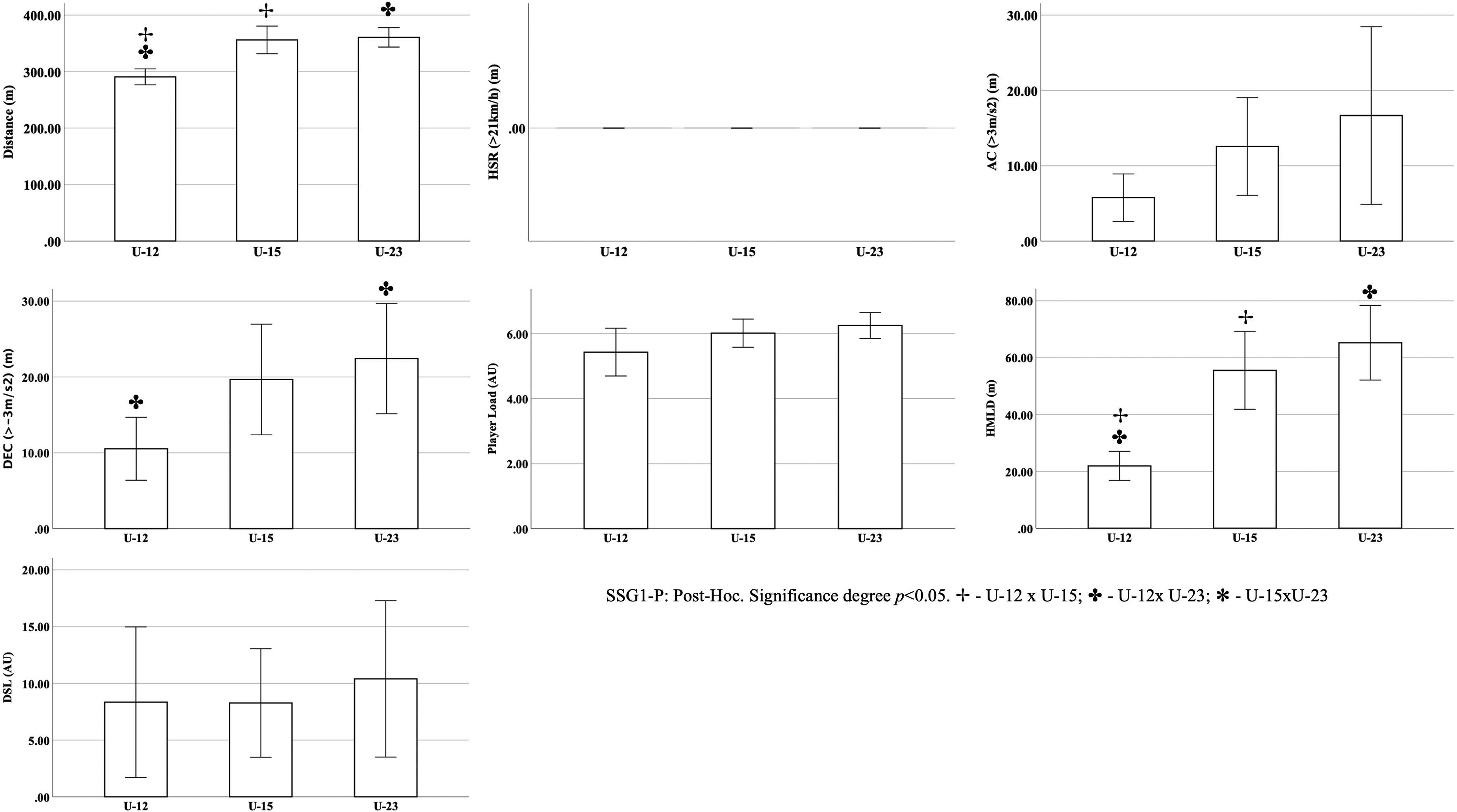
Comparison between age groups in SSG1.
In SSG2-P (Figure 3), significant differences were recorded in the variable distance (p = 0.00, ES = 0.73; U-12 vs. U-15, p = 0.00; U-12 vs. U-23, p = 0.00), AC (p = 0.00, ES = 0.59; U-12 vs. U-23, p = 0.00; U-15 vs. U-23, p = 0.00), DEC (p = 0.04, ES = 0.27; U-12 vs. U-23, p = 0.04), and HMLd (p = 0.00, ES = 0.53; U-12 vs. U-15, p = 0.02; U-12 vs. U-23, p = 0.00).
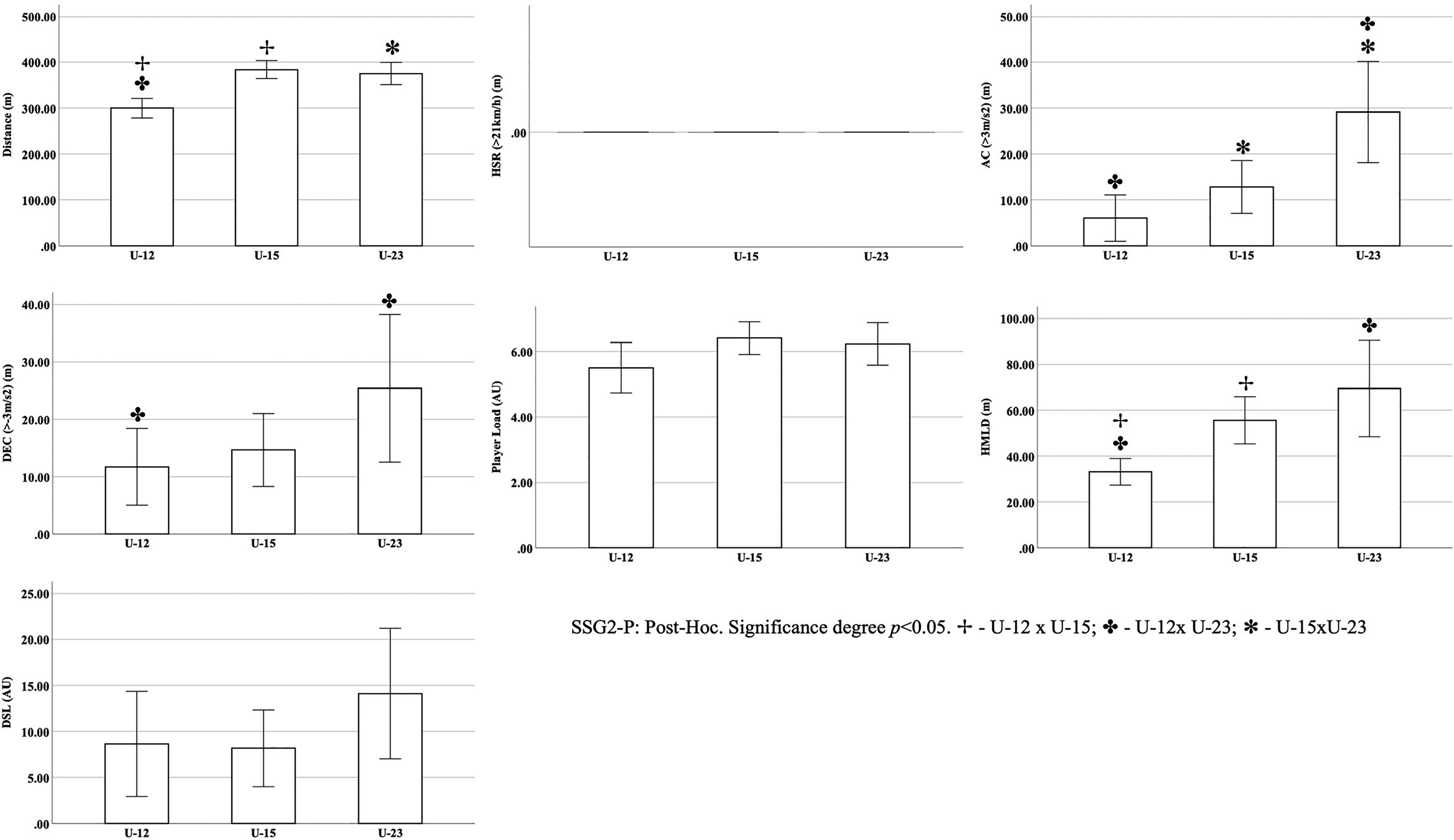
Comparison between age groups in SSG2.
In relation to SSG3-G (Figure 4), significant differences were recorded in the variable distance (p = 0.00, ES = 0.49; U-12 vs. U-15, p = 0.00; U-12 vs. U-23, p = 0.00), HSR (p = 0.01, ES = 0.33; U-12 vs. U-15, p = 0.02), and HMLd (p = 0.01, ES = 0.35; U-12 vs. U-15, p = 0.01).
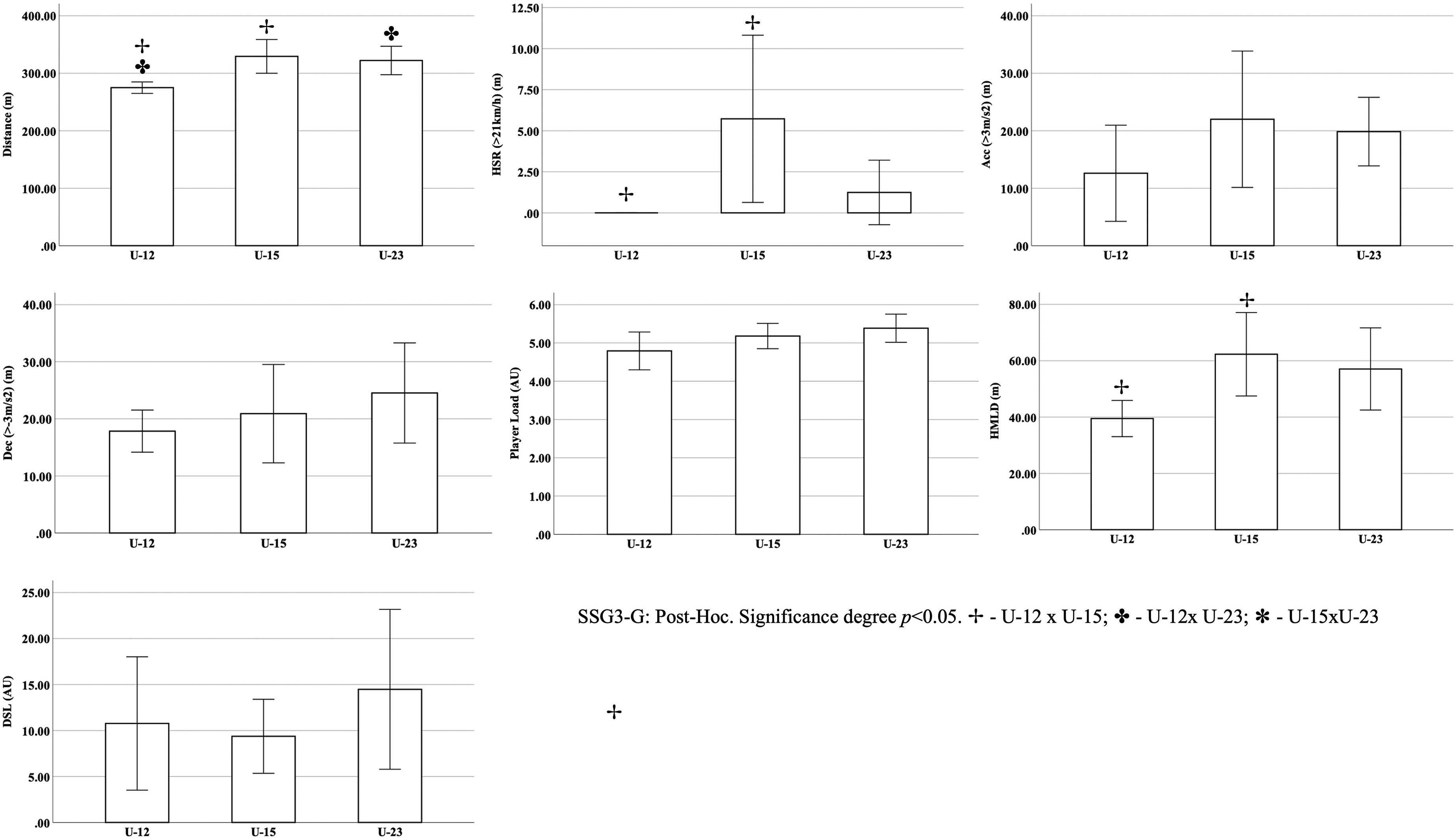
Comparison between age groups in SSG3.
Statistically significant differences were recorded in the SSG4-P (Figure 5), for the variable distance, HSR, AC, PL, and HMLd.
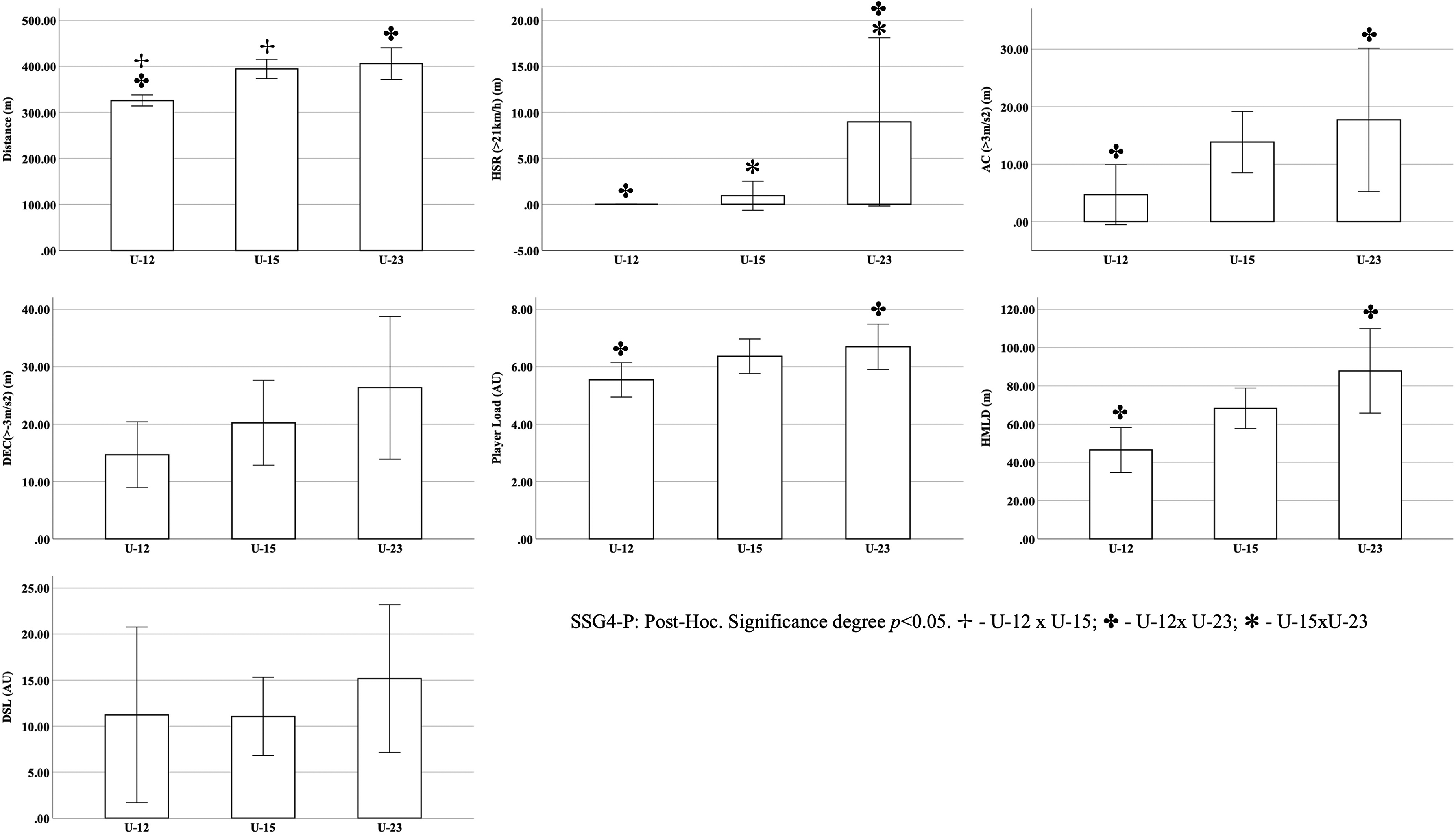
Comparison between age groups in SSG4.
Regarding SSG5-G (Figure 6), we observed statistically significant differences between the U-12 vs. U-15 and U-12 vs. U-23 levels in the distance and HMLd variables.
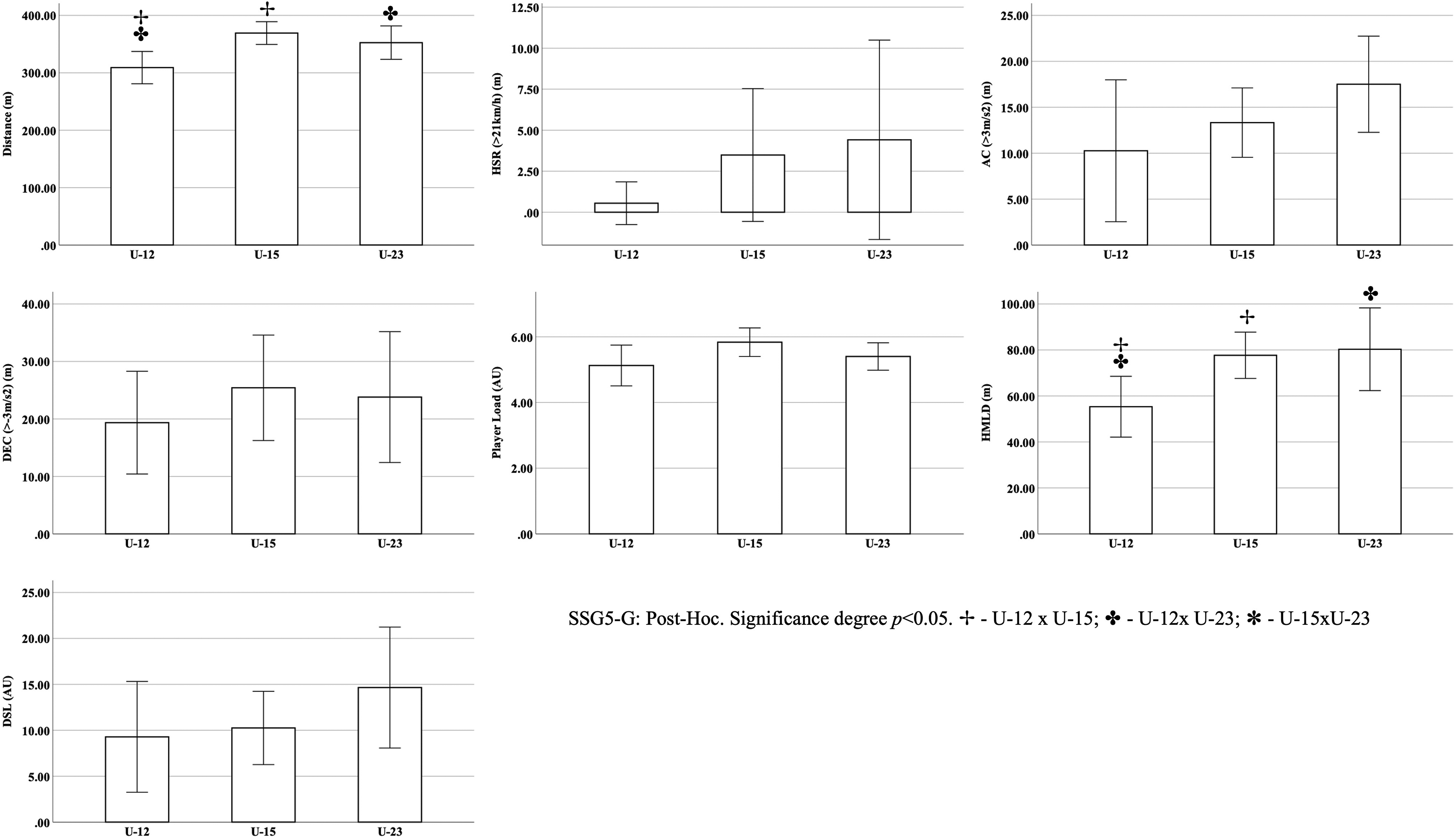
Comparison between age groups in SSG5.
Discussion
The purpose of this study was two-fold: (1) to analyze variations in the external load, considering the performance in five different format SSGs by different age categories (U-12, U-15, and U-23) and (2) to compare the external load between age categories when analyzing each of the five SSGs. The results show that the playing space manipulation did not promote significant differences in external load, in the U-15 and U-23 age groups, a fact not recorded in U-12, in the variable distance traveled and HMLd. In SSGs with and without GK, maintaining the playing areas promoted significant differences in the variables DIST (U-15/U-23), HSR (U-15), and PL (U-15/U-23). We can also verify that when the playing areas were increased and the GK was introduced, we found significant differences in DIST (U-12/U-15/U-23), HSR (U-15), PL (U-15/U-23), and HMLd (U-12/U-15). Regarding the comparison between age groups, in the different formats, we verified the existence of significant differences mainly between the age groups U-12 vs. U-15 and U-12 vs. U-23. It should be noted, however, that there were significant differences between the U-15 and U-23 age groups in SSG2 in the AC variable and SSG4 in the HSR variable.
In a recent systematic review, Silva et al. 35 related to the decision-making in youth sports players and concluded that a tendency for older players to execute more accurate decisions in the game is factual. Clemente et al., 5 in a systematic review of the football SSGs’ effects on tactical behavior and collective dynamics, found significant differences between players of different age groups in the frequency and accuracy of technical actions. Younger players in SSGs practice tend to chase the ball rather than maintain balanced space coverage and to solve performance issues by individual actions rather than looking for a collective solution. 36
The SSGs performed in small playing areas can facilitate individual participation in youth soccer players, while large playing areas will be more suitable for the development of tactical behaviors 22 and physical stimulation, promoting technical development and being more physically demanded. 37 Previously, Folgado et al. 38 found that young soccer players tended to explore the length more than the width of the pitch, while older players tended to decrease the length per width ratio, and more recently, Clemente et al. 39 used the four vs. four plus GK format in different age categories to identify the influence of age on the area occupied by the players, verifying that the largest areas were occupied by U-18 players (∼88 m2), and this value progressively decreased for U-15 (79 m2) and U-13 players (69 m2).
In the present study, DIST was the external variable where more differences were observed in the different format played SSGs, as well as when globally analyzing the different age categories performing the same format SSG. As expected, DIST always increased with the increase in the pitch size in all the age categories. 10 U-15 was always higher (in all the five performed SSGs) compared to the U-23, the fact that we relate with previous data supporting an age influence on muscle energetics, with children relying more on oxidative metabolism during high-intensity exercise than adults. 40 Our results are also somewhat previously explained by Travassos et al. 41 stressed that as players become more experienced and competent, they will be able to adjust their individual performance behaviors to the space covered and game dynamics of their own team to the opposing team and the ball position, in order to explore the available space for play.
In our study, it was observed that the changes in the external load are evident, in the U-12 level, in the DIST and HMLd, associated with the playing area increase, as well as when associated with the pitch size increase and the use or not of GK. In the U-15 age group, it was evident that the manipulation of the playing area and the use or not of GK influence DIST, HSR, and HMLd. In the U-23 class, it was verified in the SSG-P that, with a playing area increase, there were differences in the HSR, as well as an effect in the PL with the use or not of GK and field size manipulation. This evidence supports the notion that SSG format should be carefully manipulated since their effect is different based on the age categories.
Hůlka et al. 42 studied junior soccer players (age: 18.11 ± 1.31 years) in five vs. five SSGs played on the small (28 × 20 m), medium (25 × 35 m), and large (42 × 30 m) pitch size, concluding that the inclusion of GK decreases the workload of players on the small pitch, but not on the medium and large pitches. Barnabe et al. 43 when studying U-17, U-16, and U-15 players in a six vs. six plus GK format found that older and more experienced players exhibited greater dispersion and wider occupation while attacking, and Cardoso et al. 44 observed that declarative and procedural tactical knowledge influenced the cognitive effort of younger soccer players in making soccer performance decisions.
Our study shows that in SSGs with the same play space, but with the introduction of GK, there is a reduction in the DIST traveled. The GK used, in the U-15 and U-23 levels, promoted a decrease in PL values. It should be noted that at the U-15 level, the use of GK promoted more distance covered in HSR. In addition, when analyzing all the variables studied, differences were observed between the SSGs in the same age group with and without GK, which reveals that the participation of the GK is determinant in the dynamics of the tasks of the SSGs in the daily training. Folgado et al. 45 studied U-15 soccer players in two different pitch configurations (40 × 30 m and 30 × 40 m) with the same relative area per player and disclosed that more shots were recorded during the games played on the 30-m-long field and that more passes occurred in the games played on the 40-m-long field. According to Clemente and Sarmento, 46 these observations suggest that short fields are associated with more shots, considering the reduced distance to the goal, while longer fields increase the need to pass the ball forward before a successful shot can be taken.
Furthermore, Ometto et al. 6 indicated that when the SSG is played with only one central goal on each side, the majority of actions take place in the central corridor of the field because the space between the competing teams is smaller and the ball stays longer in the central corridor adjacent to the scoring target to reach the goal more easily. Our findings denote that the GK participation and, consequently, the goal objective determine the dynamics of the SSGs since the focus is on the goal and the technical-tactical actions related to that objective, with a more direct play aiming at a greater number of shots on goal.
The ability to perform quicker sprints than an opponent is crucial in determining the results of duels within a match. 47 Recently, Lopéz-Fernandez et al. 48 studied six-speed ranges in U-14, U-16, and U-18 soccer players during three vs. three, four vs. four, five vs. five, and six vs. six in four different pitch dimensions (lower 30 × 20 m, higher 30 × 40 m − 4 × 4 minutes play/rest) and noticed that the distances covered above 16–18 km/hour were residual. Furthermore, Nunes et al. 11 observed that U-15 and U-23 age categories revealed only subtle changes in the external load, with the number of sprints (> 18 km/hour) being higher for the large playing area in comparison to smaller ones during four vs. four with 4 minutes play/rest SSGs – 20 × 15 m; 25 × 20 m; 30 × 25 m, methodology previously adopted by Halouani et al. 49
Previously, Vilar et al. 50 addressed this topic, indicating that older players ensure collective balance in all the areas of play to maintain or recover ball possession, only increasing the number of sprints for large playing areas (30 × 25 m) to ensure the creation of spaces for play or interception of the ball in the space. In our study, the mean higher values of HSR (> 21 km/hour), AC, DEC, and DSL were observed in U-15 and U-23 compared to the U-12, an observation that we attribute to the fact that from ∼13 years, boys experience a marked increase in cycling peak power through to young adulthood. 51 Also, the mean values of PL, AC, DEC, and DSL tended to be smaller in U-12 compared to U-15 and U-23 soccer players.
Notably, the values of HSR in our study were residual, where the U-12 soccer players presented practically null values, but since in SSG5, some of the mean values of HSR were verified, these were different compared to all other SSGs. Also, in U-15, SSG3 was significantly higher compared to SSG1 and SSG2, which revealed that SSG-G is associated with higher speeds compared to SSG-P. It should be noted that these results seem to agree with those recorded by Casamichana et al. 52 The authors found that SSGs, compared to friendly matches, do not favor HSR activity.
It should be also noted that the mean values of PL throughout all the five SSGs were very similar in U-15 and U-23 and even higher in U-15 compared to U-23 in SSG5. Naturally, muscular power is a component associated with the performance of more dynamic actions such as DSL, HSR, AC, and DEC. Recently, Nunes et al. 11 indicated that U-15 soccer players are usually in the middle of puberty, and this may affect their ability to perform technical skills since they may be experiencing a change in growth and maturation with an increase in strength beginning to appear, indicating that these changes in physical properties could condition the soccer players’ performance.
In our study, the DSL was the only external load without significant differences between the SSGs, considering the different age categories. We found that the SSG formats used, manipulating the constraints of the playing area and the use or not of GK, are not promoters of significant differences in the impacts of high intensity (>2G).
When we compared the external load, in a game format, considering the age group, we found that between U-12/U-15 and U-12/U-23, there were significant differences predominantly in the distance, AC, DEC, and HMLd. In the HSR values, we found statistically significant differences in the larger playing space, without GR (SSG4-P), between the U-15 and U-23 age groups. In the format with the largest playing area (SSG5-G), but with the use of GR, we found significant differences in the DIST and HMLd variants, between the age groups U-12/U-15 and U-12/U-23. Studies have pointed to the fact that age has an effect on external load variables in the use of SSG formats.11,36,37,48 Despite the small variations in HSR values, we verified that the formats used in studies are not promoters of HSR, requiring larger spaces for players to reach speed values higher than 21 km/hour. 10
For instance, the present study presents some limitations. We did not consider the peak height velocity of growth of players, which could clarify the soccer players’ maturation levels, and the level of the players in this study may not be similar to other age categories training methodological framework, namely in other countries, which may be associated with the possibility that the results of this study are not suitable for the same age categories, but different level soccer players. Another limitation of the study, to be considered, is related to the number of participants in each age group. According to the above, our study does not allow a generalization of the results, implying that the results obtained are relative to the population studied, and it is still a study to be considered by coaches who develop their professional activity with young footballers. Future research should consider different soccer players’ levels, other external load variables, and if possible, physiological responses associated with technical and tactical aspects. It will also be relevant to carry out the same study design in women's soccer, with the objective of analyzing the external load in this specific context. Other constraints (e.g. different types and numbers of goals, play/rest time, field format, placement of out-of-game lines, tactical functions) should also be manipulated to verify how the different variables modify and relate.
Conclusions
To summarize, the findings from this study suggest that soccer coaches can use five consecutive four vs. four SSGs with 3 minutes play/rest between 16 × 24 m and 24 × 36 m pitch size to impose a relevant external load demand on the players. The space manipulation and playtime during SSGs should be considered as a major task constraint to promote speed and dynamic actions, such as AC and DEC. We advise soccer coaches to consider higher pitch sizes if the aim of the task is related to these dynamic variables and speed. Likewise, coaches should pay attention when considering the participation of GK in SSGs since it influences the soccer players’ performance.
Lastly, soccer coaches must consider in a very concrete way not to design similar training tasks within the scope of the SSGs for different age categories since the external load differs between players of different ages and this may result in not achieving the objective of a training task and session, and fundamentally, may condition the career of players that must be prepared in the medium to long term perspective, respecting the training stages and adapting the need for stimuli to the condition of the players in each training level. Our findings also suggest that it is of crucial importance to monitor the impact of high-intensity tasks in soccer.
Footnotes
Declaration of conflicting interests
The author(s) declared no potential conflicts of interest with respect to the research, authorship, and/or publication of this article.
Funding
The author(s) disclosed receipt of the following financial support for the research, authorship, and/or publication of this article: This work was supported by the Fundação para a Ciência e a Tecnologia (grant number UID04045/2020).
