




Abstract
Sprint studies present several variables and methodologies for biomechanical analysis in different phases of running. The variability in the analysis of the sample and distance covered may impede the application of the results in track and field athletes. The objective of this systematic review was to characterize the determinant biomechanical variables analyzed in the literature in each sprint phase. Four electronic databases were used (MEDLINE, Web of Science, SportDiscus, and Scopus). Only biomechanical studies with track and field athletes were selected. After the identification, screening, and eligibility process, 109 studies were included for qualitative synthesis and analyzed by the risk of bias assessment. The studies were classified in different sprint phases, according to the sprint task described by the authors (sprint start = 27, acceleration = 32, constant speed = 8, deceleration = 4, and not specified = 38). Factors such as the center of mass position, contact time, force applied on the rear block, and athletes’ ability to generate high amounts of force in the shortest possible time influence the sprint start performance. The acceleration phase is characterized by step frequency and step length transition, propulsive force, and minimization of braking force. Consequently, directing the resulting force as vertically as possible in the braking phase and as horizontally as possible in the anterior direction during the propulsive phase is important during the constant speed phase. In the deceleration phase, the decrease in step frequency and the increase in contact time may influence speed maintenance and, consequently, the result.
Key points
Variables such as contact time, ground reaction force, joint angles, and center of mass position characterize performance during the sprint start phase.
The key factors in the acceleration phase are related to increased step frequency in the first steps and increased step length as the race progresses.
To avoid speed loss during the constant speed phase, it is important to minimize the braking phase by applying greater vertical forces while the foot is supported on the ground and shortening the contact time. A combination of step frequency and step length for maximal velocity, according to an athlete's characteristics, is determinant for sprint performance.
Generating anteroposterior forces during the acceleration phase and maintaining a high amount of vertical force during the constant speed phase are important factors for the development of sprinter speed.
Introduction
Sprinting is one of the track and field skills in Olympic Sport. 1 The goal of sprinting is to cover a relatively short distance as quickly as possible. In the literature, the sprint is composed of different phases, each with specific requirements.2,3 It has been suggested that the athlete's performance in each phase influences the competition results. As a result, studies have verified the demands in different phases, in order to improve training and, consequently, performance. 4
According to Mero et al., 2 the sprint can be classified into four sprint phases: “sprint start,” “acceleration,” “constant speed,” and “deceleration.” Dynamic variables, such as the ground reaction force (GRF), torque, and joint moments, have been analyzed across several sprint distances that cover these different phases.3,5 The literature emphasizes the force application in the horizontal direction during the initial steps of the sprint.6,7 Kinematic variables, such as step length (SL) and step frequency (SF), are considered descriptors of an athlete's performance during the sprint. 8 The displacement of center of mass (CoM) influences the speed development after the block start. 9 Additionally, split times over 100 m are recorded to compare performances between athletes in important events,10–12 and joint angular velocities are used to analyze starting block position and maximal velocity development.9,13,14
Studies about sprinting present a wide range of variables and methodologies for the biomechanical analysis of the different phases, which can hinder understanding of the factors that could be considered determinants in each sprint phase. Furthermore, the variability in the sample characteristics, such as different modalities and sports, makes it challenging to generalize the results to track and field sprinters, who are considered the most proficient in this task. 15 Nevertheless, the significant number of studies specifically involving track and field sprinters allows for the presentation of a systematic review that characterizes the determinant biomechanical variables analyzed per sprint phase.
Considering sprint performance as a result of the interactions between the distinct phases and that a minimum error in a specific phase could distinguish the athlete's position in the competition, the current systematic review aimed to describe and analyze the biomechanical variables considered determinants in each sprint phase, classified according to Mero et al. 2
As far as we know, this is the first systematic review to separate the analysis of sprint into determined running phases for track and field sprinters. This study provides a scientific basis for future investigations aiming to improve athlete performance in sprint by modifying one or more variables and adopting training methods and other specific forms of intervention according to each athlete’s characteristics.
Methods
Information sources and search strategy
This systematic review was performed following the checklist for the Preferred Reporting Items for Systematic Reviews and Meta-Analyses (PRISMA). 16 The protocol was pre-registered in the Open Science Framework. A systematic search in four electronic databases was performed: MEDLINE, Web of Science, SportDiscus, and Scopus, from database inception until March 2021. After this period, studies were added manually. The keywords and a simplified strategy can be exemplified as (“track & field” OR athletics) AND (sprinter OR sprinting) AND (motor ability testing OR performance OR biomechanics OR kinematic OR kinetic OR training OR muscle OR neuromuscular OR muscle activation OR power OR warm-up OR sprint).
Study selection
Firstly, duplicate references were removed. Two authors (TBMAM and JCL) independently screened titles according to the following exclusion criteria: (a) original studies that involved rehabilitation, (b) original studies not related to sprint biomechanics, (c) studies without track and field sprinters, (d) studies with animals, (e) conference studies, and (f) studies with master athletes. Disagreements were analyzed by a third reviewer (FAM).
To perform the next step, screening the abstracts, the following exclusion criteria were adopted: (a) not relevant to the theme and (b) studies without track and field sprinters. Studies were classified according to the sprint phases described by the authors of each study in the Methods, Results, and Discussion, as “sprint start,” “acceleration,” “constant speed,” and “deceleration.” 2 Specifically, the objective and the variables determined in the studies allowed the sprint phase classification. Studies without distinction between sprint phases were classified as “not specified.” Full-text articles were assessed for eligibility. Studies without data collection during sprints, reviews, sprints collected on treadmills, sprints with master athletes, and studies about biomechanical instrument validation were excluded.
Data extraction
The following data were extracted from each study: author, year of publication, and variables analyzed related to sprinting. According to the description of sprint distances, the studies were classified as “sprint start,” “acceleration,” “constant speed,” and “deceleration.” Only the variables measured directly during the sprint were extracted. The frequency with which each variable is presented in the articles was conducted as supplementary material.
Risk of bias assessment
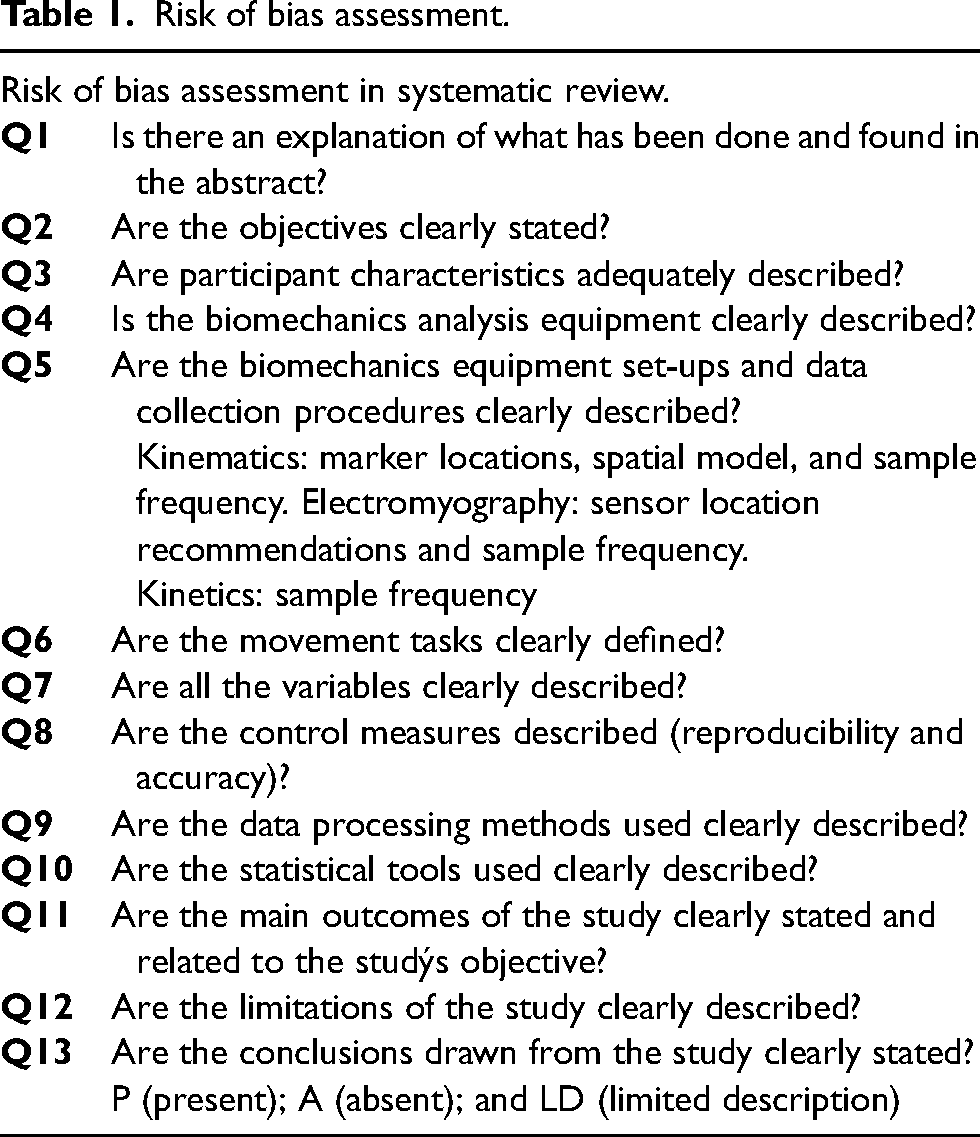
A customized risk of bias assessment tool was developed based on STROBE guidelines (Strengthening the Reporting of Observational Studies in Epidemiology) and on a systematic review in biomechanics. 17 The tool used to analyze the studies is presented in Table 1. In total, 13 questions were organized, with three answer options: P = present, A = absent, and LD = limited description. The analysis included information presented in the Introduction, Methods, Results, Discussion, and Conclusion of the selected articles. The assessment tool aids understanding of the strengths or limitations of the studies analyzed in the present systematic review.
Risk of bias assessment.
Results
The initial search identified 2799 studies, and five studies were added through manual searching and notifications generated by the electronic databases after the search period. Of these, 482 duplicated studies were removed. After the title screening, 529 abstracts were analyzed, which led to 151 full-text articles for the eligibility assessment. In total, 109 studies were included for qualitative synthesis. Figure 1 depicts the PRISMA flow chart and the process for including studies.
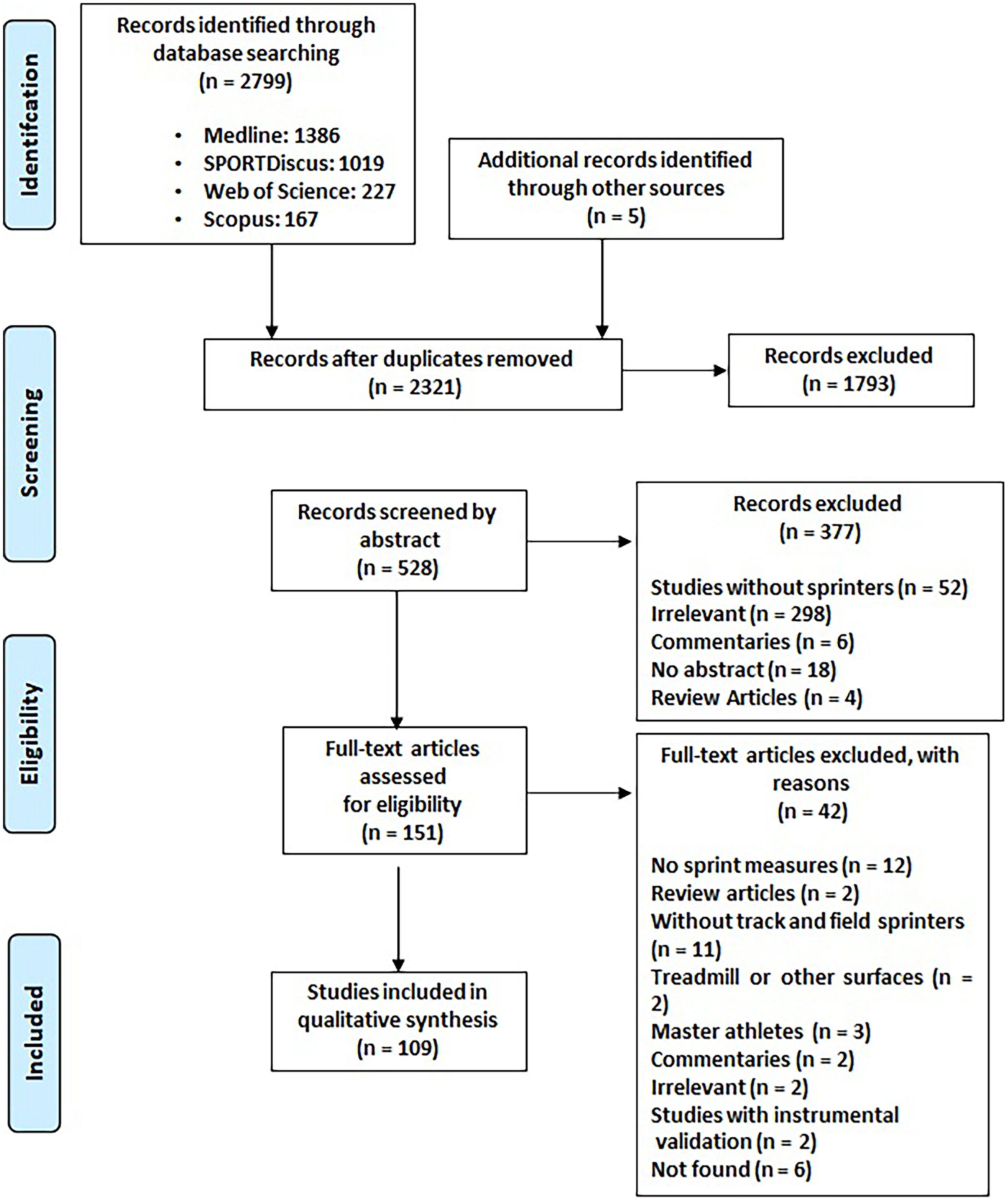
Flow diagram of the selection process (PRISMA).
In the sprint start, the spatiotemporal variables (such as reaction time and contact time at subsequent steps after the block clearance), GRF, joint biomechanics (angles, moments, and angular velocities), and variables related to CoM position (set position, horizontal velocity, and vertical velocity) are the most described variables in the studies.
Studies on acceleration present different variables associated with an athlete's performance compared to the sprint start. The most commonly studied variables include SF, SL, sprint velocity, and variables related to impulse, such as braking and propulsive impulses. During the constant speed phase, spatiotemporal biomechanical variables are highlighted (sprint velocity, SF, SL, and sprint time). In this review, only a few studies explored the deceleration phase (n = 4). Despite the variety of biomechanical variables, outcomes such as sprint velocity, contact time, flight duration, and CoM horizontal velocity, are the most frequently used to describe this specific phase.
Risk of bias analysis
Figure 2 presents the risk of bias summary plot for each question. The absence of information about control measures (e.g. reproducibility and accuracy) and about the study limitations is the most commonly found bias (80.95% and 52.38%, respectively). Basic information such as the objectives, subjects’ descriptions, data collection procedures, statistical tools, outcomes, and conclusions are presented in most of the selected studies.
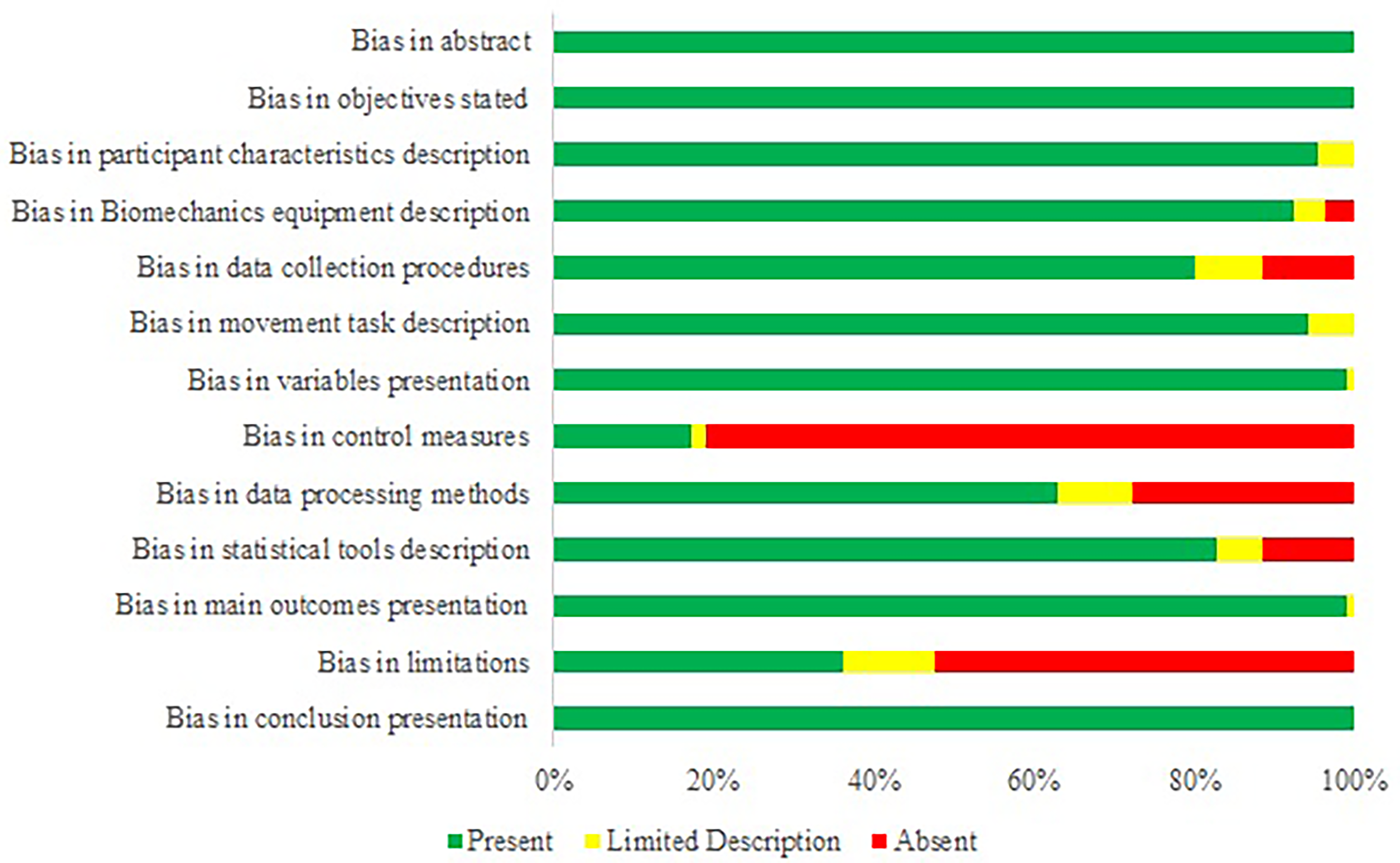
Risk of bias summary plot for each question presented in the customized risk of bias assessment considering all sprint studies (n = 109) in the systematic review. Green: low risk; yellow: moderate risk; red: high risk.
Characteristics of the studies
Extracted data and risk of bias assessment of the 109 studies analyzed are presented in Tables 2 (sprint start phase), 3 (acceleration phase), 4 (constant speed phase), 5 (deceleration phase), and 6 (“not specified”).
Summary of studies—Sprint Start (n = 27).
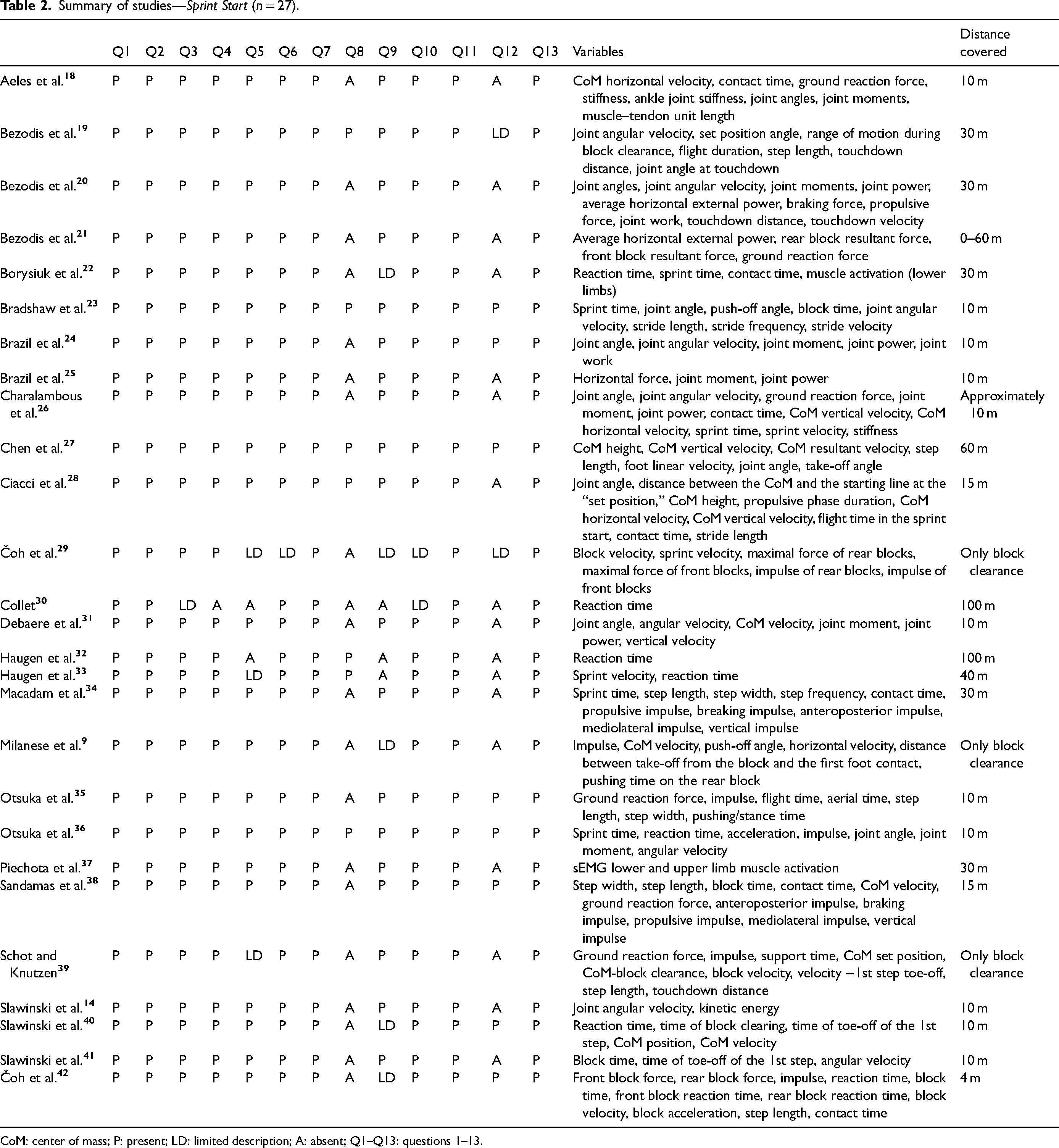
CoM: center of mass; P: present; LD: limited description; A: absent; Q1–Q13: questions 1–13.
Summary of studies—acceleration phase (n = 32).
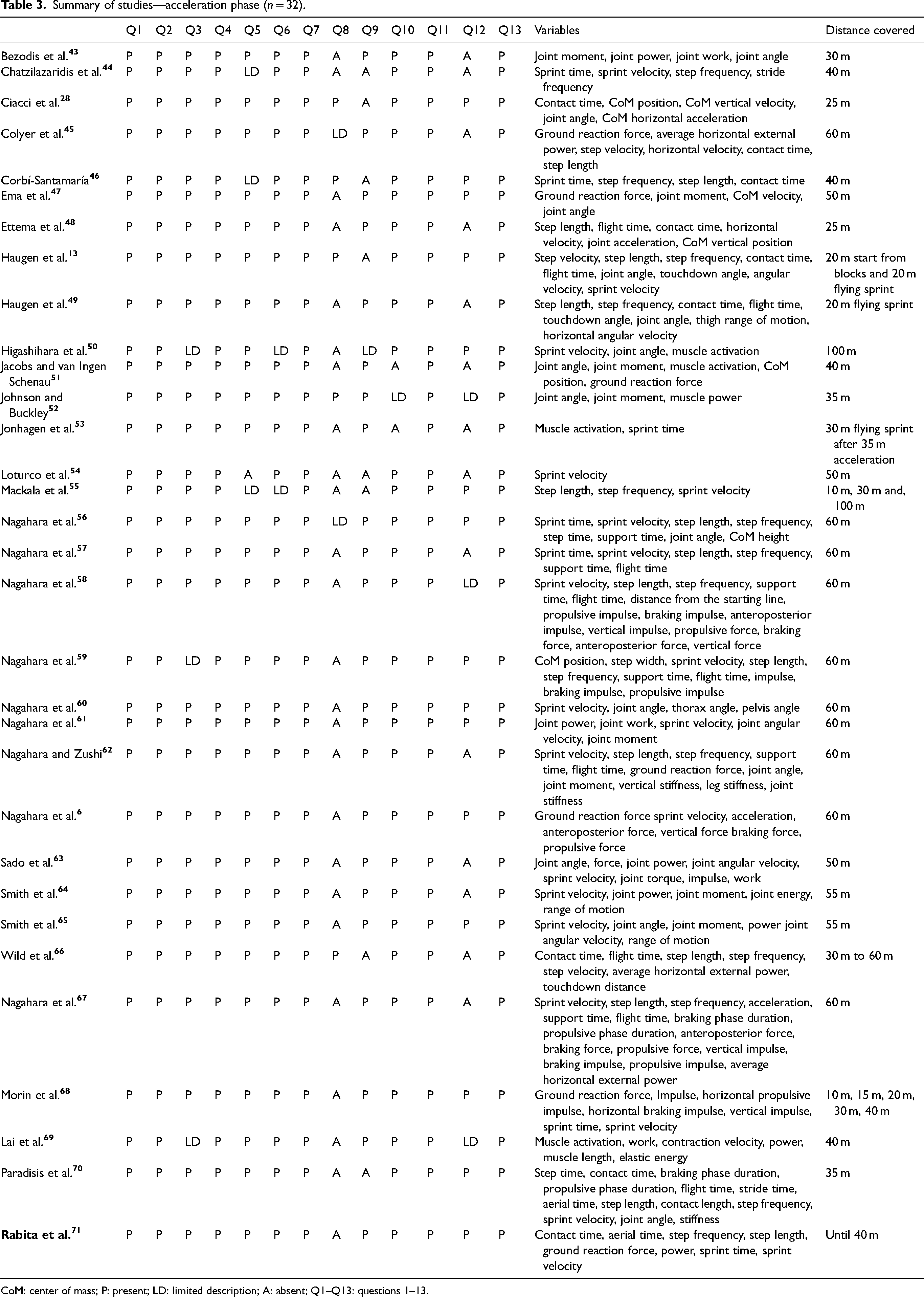
CoM: center of mass; P: present; LD: limited description; A: absent; Q1–Q13: questions 1–13.
Summary of studies—constant speed phase (n = 8).
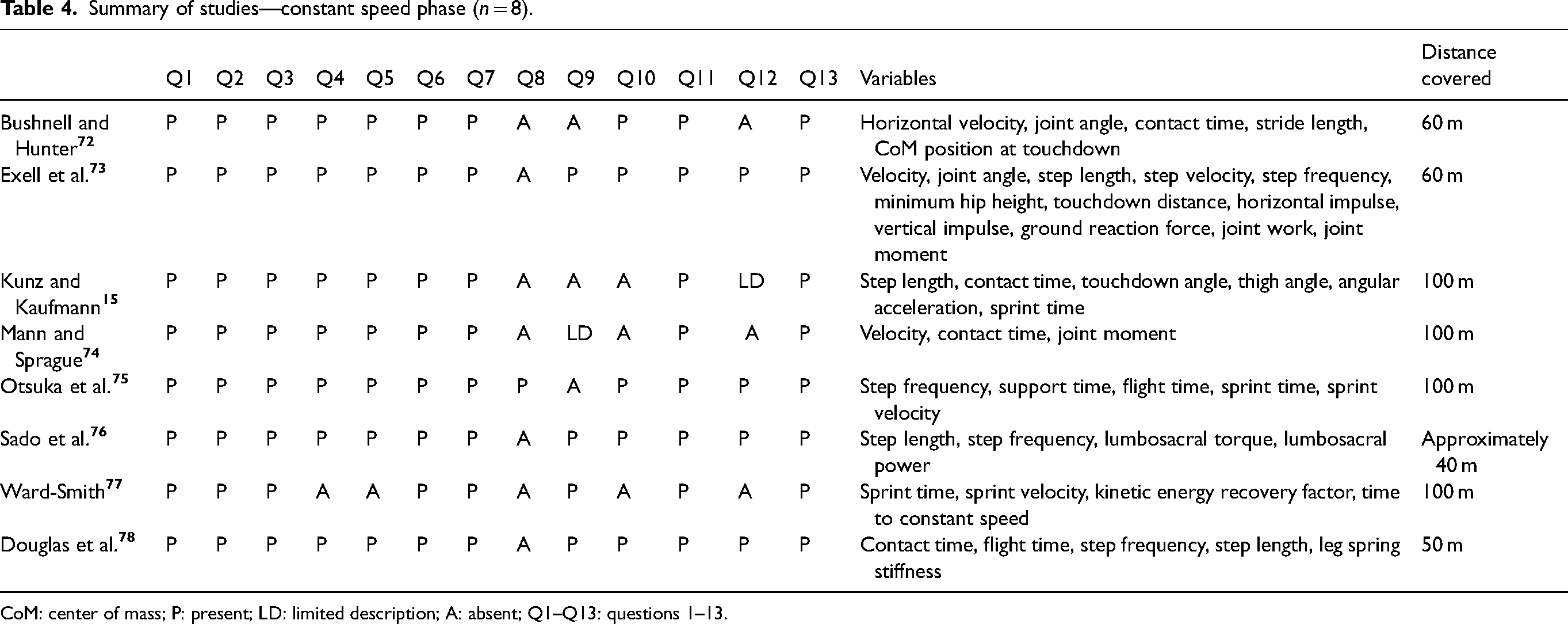
CoM: center of mass; P: present; LD: limited description; A: absent; Q1–Q13: questions 1–13.
Summary of studies—deceleration phase (n = 4).
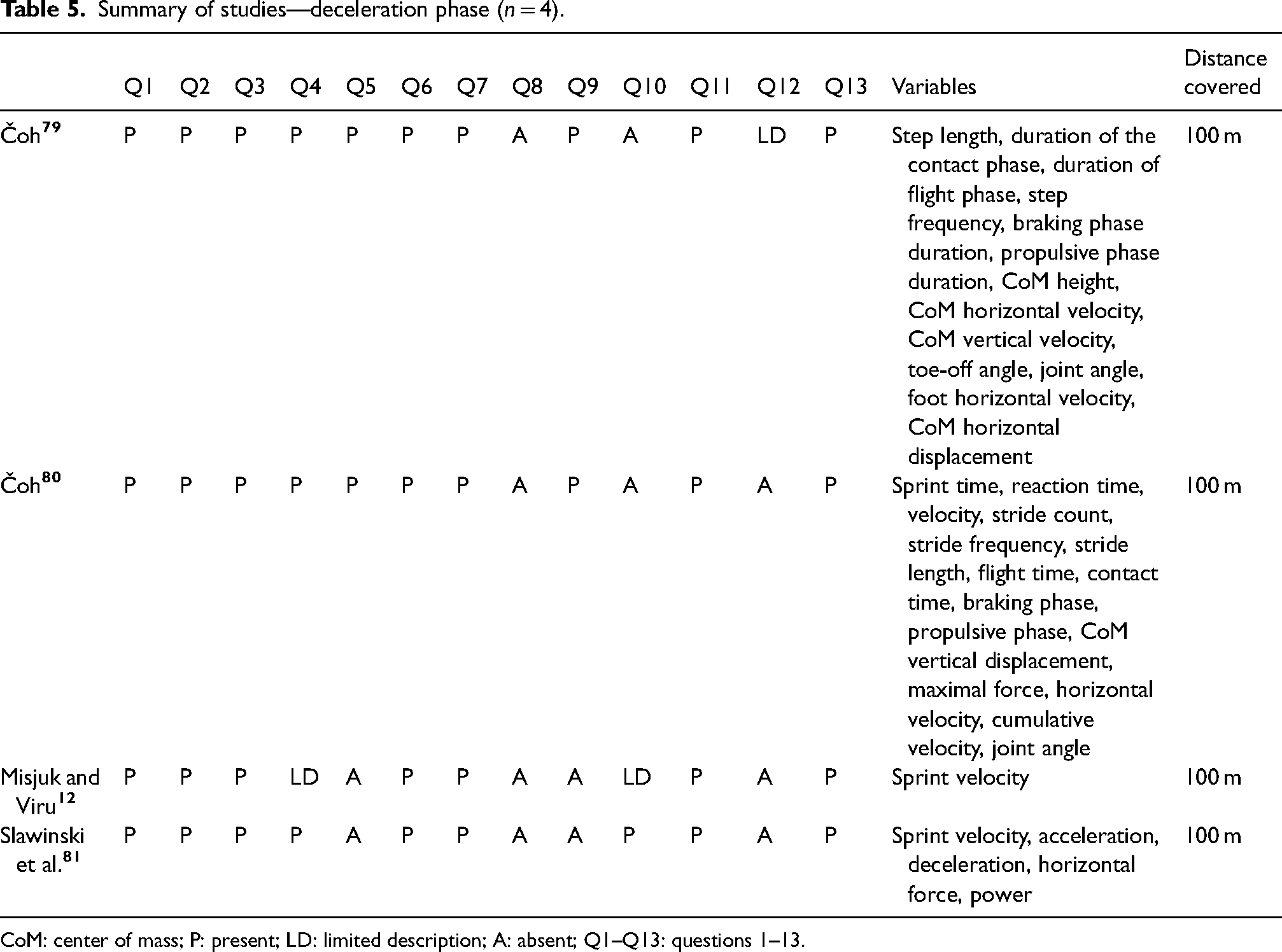
CoM: center of mass; P: present; LD: limited description; A: absent; Q1–Q13: questions 1–13.
Summary of studies—not specified (n = 38).
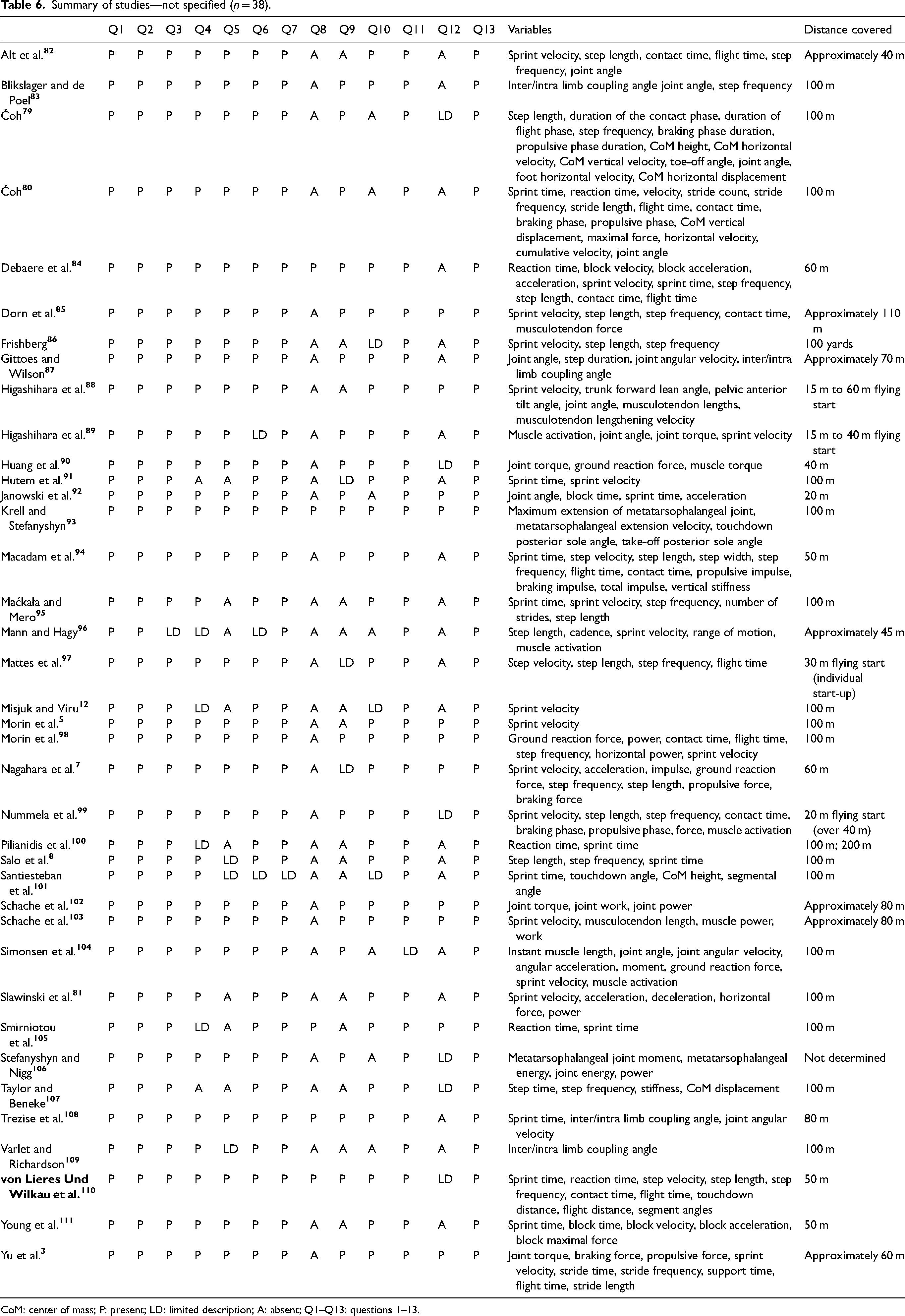
CoM: center of mass; P: present; LD: limited description; A: absent; Q1–Q13: questions 1–13.
Discussion
The current study synthesized the existing knowledge on the biomechanical variables during the block clearance, acceleration, constant speed, and deceleration phases of sprinting. The main outcome of the present review was to identify the variables, reported in the literature, that are considered determinants in each sprint phase. In the sprint start, biomechanical variables associated with CoM position, GRF, contact time, and joint biomechanics are the most commonly described variables. SL, SF, and variables related to impulse are determinants in the acceleration phase. For the constant speed and deceleration phases, spatiotemporal variables are the most widely studied, despite the low number of studies on the last sprint phase (deceleration). Moreover, there is a considerable range of methods chosen between studies in each phase. To the best of our knowledge, this is the first systematic review to divide the sprint into specific phases.
In the current review, we used a risk of bias analysis of the studies to verify the presence of biomechanical information, in order to understand the strengths or limitations of the studies selected. This tool was important to identify the possible lack or presence of information in specific sprint phases. In our assessment, we observed that studies examining the constant speed and deceleration phases lacked information in comparison to other sprint phases.
Sprint start
The first sprint phase is characterized by the initial position, when the sprinter is in contact with the blocks. 2 In the current review, papers investigated block start biomechanics, in certain cases followed by the first sprint steps in the acceleration phase.9,27,112 One variable that influences this phase is the CoM position. This variable is related to the block position according to the starting line and the distance between the feet in the block start.39,40 A CoM position closer to the starting line in the horizontal direction presents benefits, such as a shorter distance that the body needs to move in order to leave the blocks, and fast initiation of the movement after the starting shot. However, a more distant position from the starting line (approximately 35 cm) was suggested to allow the generation of higher horizontal velocities in subsequent actions, 39 which is beneficial for sprints such as the 100 m dash. It is important to underline that, in the study developed by Schot and Knutzen, 39 the athletes were sprinters at the university level. At the 2018 World Athletics Indoor Championships, the finalists (eight men and eight women) of the 60 m dash event presented the shortest CoM distance to the starting line (men: 0.25 m (SD = 0.04)); women: 0.17 m (SD = 0.06)), 113 demonstrating that the level of the athletes influences this variable outcome.
The CoM velocity may represent the speed gain in the subsequent meters from the starting line.9,112 This displacement can be modulated by the distance between the feet on the blocks. The bunched start is characterized by distances up to 30 cm, while the medium start has the feet positioned 30–50 cm apart, and the elongated start has a distance greater than 50 cm between the feet. 27 In the authors’ opinion, the medium start position is important to ensure a better sprint position between the block start and the first stances, such as an optimum trunk flexion angle (−14° to −20°), high CoM, and greater foot linear velocity. In fact, the bunched start presents lower CoM horizontal velocity in comparison to the elongated start, due to the lower amount of time that the athlete has to “push” the blocks. Despite this, the elongated start is not recommended for short-distance sprints (5−10 m). 40 Consequently, the anthropometry of the athlete should be considered in defining the starting block position, since the CoM vertical position and velocity generation depend on the lower limb size and individual strength characteristics of each sprinter.27,112
In track and field, after the starting shot, competitors aim to lose contact with the blocks as fast as possible. However, efficient running requires force to be applied against the blocks at the beginning of the motor action of block release. 42 Thus, the block velocity is known as the resultant velocity at the moment that the foot positioned in front of the block loses contact with the instrument. 114 Coh et al. 42 found higher take-off velocity in faster sprinters (personal best time in 100 m = 10.66 s (SD = 0.18); 60 m = 6.87 s (SD = 0.13)) compared to slower athletes (personal best time in100 m = 11.00 s (SD = 0.06); 60 m = 6.98 s (SD = 0.05)), which is related to the amount of force applied by the rear leg on the blocks and the rate of force development of faster sprinters. Another study explained the higher block velocity found after comparing different knee angle conditions in the rear leg through an increase in horizontal force production, rather than an increase in contact time of the feet on the blocks. 9
In contrast, generating greater forces may not guarantee that the athlete will achieve a higher block velocity, since generating higher amounts of force may require a longer contact time with the blocks. 35 Therefore, it is important to emphasize that athletes should generate high forces in the shortest possible time. In fact, similar anteroposterior thrust values were found between faster (personal best time in 100 m = 10.87 s (SD = 0.41) and slower (personal best time in 100 m = 11.31 s (SD = 0.42)) sprinters. However, the fastest athletes had shorter contact time with the blocks. 35 Additionally, although studies report little relevance between the speed of the block and the final result in the sprint,42,115 results in recent competitions are noteworthy. In the World Indoor Athletics Championship in 2018, the first-place winners in the 60 m race (male and female) had lower contact time with the starting block and lower total time in the block compared to the other competitors. 113 Thus, further studies are suggested to elucidate the relationship of this variable with sprinter performance.
To ensure the sprinter exits the starting block at the highest possible speed, understanding the dynamic aspects related to the activity is essential for professionals and practitioners. Faster athletes apply more force on the block compared to their slower peers. 114 The ability to generate force on the rear block is a strong predictor of sprint performance. 21 In fact, faster sprinters demonstrated greater force applied to the rear block and greater total thrust compared to slower sprinters. 42 To maximize the start, the force applied to the rear block can be accompanied by a “pre-tension,” during the “ready” command. 21 This can be generated from the pre-stretching of the calf muscles due to the positioning of the forefoot muscles on the track. 2 In addition, maximizing the thrust on the rear block without extending the total block time is considered an interesting strategy for increasing performance. 116
In addition to the magnitudes of force and pre-tension, the direction of the applied force has been used to explain performance in this phase of the sprint.25,35 Up to 86% of block exit performance was explained by the total horizontal force generated on the starting block. 25 According to the authors, maximizing the total horizontal force is essential when exiting the block. Faster sprinters showed greater GRF in the sagittal plane (i.e. anteroposterior and vertical directions) compared to slower sprinters, 35 which was explained by the direction of the applied force and not the resulting force generated against the object. Thus, there is no simple relationship between the application of force and performance in the block exit, given the great diversity in experimental designs and types of analysis. Therefore, we suggest that professionals in the track and field area maximize their athletes’ block exit phase based on their individual strength characteristics and ability to generate large amounts of force in the shortest possible contact time with the starting block, especially in the anteroposterior direction.
Acceleration phase
After exiting the starting block, the athlete begins the acceleration, which consists of increasing the speed until reaching the maximum value. This phase generally has a length of between 30 and 50 m2; however, it is known that high-level athletes, such as Usain Bolt, can extend it for more than 60 m. 79 An interesting aspect of the first steps of the acceleration phase concerns the position of the CoM. In the first two sprinting steps, the CoM is positioned in front of the point of contact between the foot and the ground. In the subsequent steps, the CoM moves backward until it is behind the contact point. 2 This initial position of the CoM is related to the position of exiting the block, when the athlete's trunk is tilted. The inclination of the trunk in the initial steps allows for the generation of a greater anteroposterior force and, consequently, a rapid increase in speed. 110
The increase in speed at the beginning of the acceleration phase is explained by the increase in SF, up to the third step, and the decrease in the time of foot contact with the ground. 57 In fact, it is known that quickly increasing the frequency of the step at the beginning of the race can be decisive for better performance. 58 When elevating the trunk, the CoM position is influenced by the contact phase of the foot with the ground. When the foot touches the ground (touchdown), the position closest to the segment in relation to the vertical projection of the CoM is related to the lower loss of horizontal speed of the CoM. By minimizing this loss, the athlete can still boost propulsive ability while touching the ground. 79 In addition to the shorter distance between the foot and CoM at the touchdown, it is known that sprinters have greater foot spacing compared to CoM when the segment leaves the ground (toe-off). 66 This characteristic was decisive in determining the better performance of sprinters compared to athletes of other modalities in short sprints, which was explained by the greater propulsive capacity at the moment of contact with the ground, i.e. the athletes “pushed” the ground more to move forward. 66
Foot support on the ground and the force applied to the segment to move more quickly can be divided into two phases: braking and propulsion. 2 These phases can be calculated from the positive and negative anteroposterior temporal integrations of the GRF 7 or through the horizontal position of the CoM in relation to the ankle (braking: CoM in front of the ankle and propulsion: CoM behind the ankle). 80
It is known that the duration ratio between the braking phase and the propulsive phase influences the performance. Usain Bolt spent 37.3% of the contact time in the braking phase and 62.7% in the propulsive phase, showcasing an efficient and economical technique for achieving maximum speed in the sprint. 79 Several studies have highlighted the importance of the propulsive phase in acceleration. The best performance in the 60 m sprint was attributed to the greater propulsive force during the initial four steps of the race, with a shorter duration of the braking phase in faster athletes. 58 In another study, Nagahara et al. 6 found that a higher mean propulsive force at the beginning of the acceleration phase and lower mean braking force near maximum speed are crucial for achieving optimal performance in the acceleration phase, even among sub-elite sprinters (100 m: 11.28 s (SD = 0.22)). Thus, producing significant propulsive force throughout the acceleration phase and reducing braking force when approaching maximum speed can be an effective strategy for efficient acceleration. 7 As speed increases, contact time tends to decrease, which enhances the potential for the propulsive phase, allowing the athlete to “push” the ground more powerfully during the brief contact and achieve greater displacement.
In addition to the contact phases presented, the direction of force application is also important for better performance in the acceleration phase. The ability to generate anteroposterior force and guide the vector of this force horizontally (forward) is positively associated with better acceleration performance.45,68,71 According to Morin et al., 68 faster sprinters have the ability to “push more,” indicating a greater horizontal propulsive phase compared to other athletes. However, this does not necessarily mean that they produce a lower horizontal braking impulse. In addition, Colyer et al. 45 suggested that sprinters should rapidly overcome the eccentric force in the final stages of acceleration, to attenuate the impulses generated in the braking phase. The production of significant horizontal force is strongly associated with greater speed in the sprint, which may be explained by the potential of the neuromuscular system to sustain high values of horizontal force at high speeds during the race. 5 In fact, generating high horizontal forces at high velocity could improve the sprint acceleration more than high levels of resultant GRF. 71
In contrast, in the vertical vector, the association with the acceleration phase is different. Peak vertical force was negatively associated with better sprint acceleration performance. This means that generating greater vertical force on the ground may not be advantageous for sprint performance during the acceleration phase.6,7 Therefore, even though it is not beneficial for the acceleration phase in the sprint, greater amounts of vertical force may be necessary to maintain higher speeds, as in the maximum speed phase.6,7
Running speed is defined as the product between SF and SL. 79 These variables have been extensively researched in the sprint.2,13,55,57,59,110 During the acceleration phase, particularly in the initial steps, SF has a significant influence. Applying greater propulsive forces at the beginning of the race allows the achievement of higher speeds, resulting in shorter contact times and a higher SF. 110 In fact, even when evaluating a short sprint distance (25 m), SF positively influenced the attainment of higher speeds in sprinters (100 m = 10.86 s (SD = 0.22)). In another study, the higher SF observed in sprinters compared to trained individuals was justified by the ability of these athletes to reach high speeds by applying great forces on the ground and short contact times. 55 Thus, it is concluded that, despite its importance, simply generating a higher SF is not enough to achieve high speeds, as this also depends on the propulsive forces applied. 58
As the race progresses, the stride length increases and influences performance. This variable was positively associated with the maximum speed reached in the 40 m sprint among adult athletes. 44 The increase in SL, rather than SF, explained the increase in speed in the 60 m sprint in sub-elite athletes (personal best time in 100 m = 11.22 s (SD = 0.26)). 62 When analyzing the 60 m step by step, Nagahara et al. 57 verified that the race can be divided into three parts, and the best performance is explained by increasing the SF until the third running step and the SL from the fifth to the fifteenth steps and generating an increase in SL or SF from the sixteenth step until the end of the acceleration phase, when the athlete reaches their maximum speed. However, it is worth mentioning that the sample of the study was not composed of elite sprinters (personal best time in 100 m = 11.19 s (SD = 0.32)). On the other hand, after analyzing the 60 m in male (60 m = 6.82–7.19 s) and female (60 m = 7.48–7.94 s) athletes, it was observed that the success of the sprint does not depend exclusively on the production of high SL or SF. 84 Furthermore, when analyzing the 100 m sprint videos of 52 elite athletes, a previous study found a large variation in sprint patterns related to SF and SL dominance. That is, SF and SL have individual patterns. 8 Therefore, we suggest that the association between these variables and performance in the acceleration phase should be addressed individually in athletes, since they have different physical and morphological characteristics, and thus, an optimal combination between SL and SF can be generated to maximize speed in the race.
Constant speed phase
This phase occurs when the athletes reach their maximum speed, which can be considered the maximal result of the product between SF and SL. 79 As in the other phases, the position of the CoM also influences the sprinter's performance. It is known that a higher CoM can provide better conditions for the development of speed and favor a greater reach of the SL and horizontal displacement during contact.79,107 An athlete with longer lower limbs and smaller circumference in some segments (e.g. leg) may have a higher CoM in relation to their opponents; however, it is worth mentioning that he/she may also generate a longer contact time. 107
The contact time of sprinters is from approximately 0.075 to 0.095 s. 79 When reaching maximum speed, these athletes have shorter contact times compared to athletes who compete in longer distances (middle and long) 72 and decathletes. 15 The shorter contact time can be explained by the distance of the foot at the touchdown in relation to the vertical projection of the CoM. Sprinters usually present shorter distances in this variable, favoring the occurrence of shorter contact times 15 and a more efficient and economical sprint. 79 In high-performance athletes, this variable determines the outcome of a competition. At the 2017 World Athletics Championship, Usain Bolt's longer contact time, resulting from a lower step rate and long flight time, was identified as a determining factor for the loss of the gold medal. 4
This phase presents different parameters for applying force on the ground in relation to the acceleration phase; in the previous phase, the propulsive force presents greater values than the braking force, whereas when the athlete reaches the maximum speed, the difference between these forces is drastically reduced. 3 According to the authors, the braking force increases with speed and reaches a plateau when maximum speed is attained. Therefore, it is recommended that the braking phase and its characteristic force be minimized to avoid loss of speed during ground contact. This can be achieved by directing the resulting force as vertically as possible during this phase and as horizontally as possible (in the anteroposterior direction) during the propulsive phase. 2
The vertical force is positively associated with the maximum speed developed in the sprint.3,7,80,98 As the contact time at high speeds is short, athletes must produce a sufficient amount of vertical momentum in order to maintain their running form within this limited time. 7 Another study found that the maximum speed is related to the athlete's ability to apply large vertical forces while supporting the foot on the ground during the run. 98 Sprinters achieve top speeds by applying greater vertical forces during the first half of the stance. 117 Therefore, in a study analyzing Usain Bolt's performance in the 100 m, it was observed that he generated greater ground reaction forces in the vertical vector and lower braking forces, while maintaining maximum speed, compared to his opponents. 80 In this way, the present study agrees with Mero et al. 2 with respect to the vertical direction of the force during the braking phase and horizontal force during the propulsive phase in the 100 m race.
The contribution of SL and SF in the constant speed phase has been extensively discussed in the literature.8,78,95,110 There are disagreements regarding which variable has the greatest influence on the performance of short sprints (e.g. 50–60 m) and on the 100 m dash. Sprinters showed higher SL compared to team sports athletes in the 50 m run, although no difference was observed in SF between groups. 78 In another study, it was found that the SL continues to increase even after reaching maximum speed, likely due to the upright position of the trunk and higher knee elevation (anterior direction) during the flight phase. 110 In addition, Maćkala and Mero 95 stated that maintaining maximum speed depends on adaptations in the SL, since even with decreases in the SF, some elite athletes manage to maintain maximum speed for longer by increasing the SL.
SF also has an influence during running. Mero et al. 2 stated that at high speeds, sprinters can achieve greater success in races by increasing the SF, rather than the SL. In fact, the lower SF exhibited by Usain Bolt at the World Athletics Championships in 2017 was identified as a determining factor for his defeat, despite having a higher SL. 4 However, it is important to note that these variables can vary considerably among high-level athletes. 8 To achieve better performance, finding the right balance between SF and SL is crucial so that sprinters can sustain their maximum speed for longer periods of time. 95
Reproducing values related to a group average in a race does not guarantee the athlete their best performance or victory in the race, especially when the difference between the competitors is small, such as in the finals of the Olympic Games and World Championships. Thus, individual analyses are needed. Considering that SL is related to increased force production and SF is associated with rapid force production during contact, as well as rapid movements of the lower limbs dependent on neural adaptations, 8 studies are needed to evaluate the same athletes at different times during the same season. This will provide greater understanding of which factor is preponderant for the athlete's final performance.
One component associated with the interaction between SL and SF is the maximum speed reached by the athlete during the sprint. In the case of 100 m, this speed is typically reached at the end of the acceleration phase, from 50 to 60 m. 77 It is well known that the maximum speed reached is strongly associated with performance in the 100 m. 81 However, it is also necessary for the athlete to maintain this speed in the subsequent meters in order to minimize the duration of the deceleration phase. Usain Bolt, for example, presents a large SL and the ability to maintain high speeds for longer and decelerate less compared to his opponents. 95 Thus, even though the amount of maximum speed generated is important, this variable does not exclusively guarantee victory in a race. At the World Athletics Championship in 2017, Justin Gatlin won the 100 m without demonstrating the highest maximum speed value, but with better distribution during the race, influenced by the previous stages. 4 Thus, we suggest that coaches and professionals in the track and field area give emphasis during training to exercises that develop not only the maximum speed but also the maintenance of this speed for longer, so that there is no great loss of speed in the deceleration phase. Furthermore, the development of greater support forces on the ground could favor top speeds, as repositioning limbs more rapidly is not sufficient to maintain top speeds for as long as possible. 118
Deceleration phase
The deceleration phase is characterized by the athlete's loss of speed during the sprint. 2 This loss is attributed to a decrease in SF, increased contact time, and flight phase during the final meters. 2 Unlike SF, studies have found that during deceleration, the length of the step can actually increase.2,119 Furthermore, female athletes are more susceptible to greater loss of speed compared to male athletes, that is, the deceleration phase can last longer for female runners. 81 Therefore, the characteristics of athletes can also have an influence. National-level sprinters (100 m = 10.97 s (SD = 0.22)) were compared to finalists in the 100 m dash at the 2009 World Athletics Championship (100 m = 9.91 (SD = 0.22)). 12 The authors found that the finalists presented less loss of speed in the deceleration phase compared to national-level sprinters, which can be explained by the large difference between the sample levels (approximately 1 s).
This phase of the sprint is still poorly addressed in the literature. Considering the difference in the number of studies selected in the other sprint phases compared to the deceleration phase, great attention should be given to the end of the race (after the 70 m mark), 4 as many events could be determined during this period. Despite this, considering that minimal biomechanical adjustments during the different sprint phases can significantly impact the final performance of the athletes, it is suggested that further studies emphasize the deceleration phase to better understand the factors that lead to the decrease in speed in athletes of different levels.
This systematic review presents some limitations. The studies included had sprint athletes from different performance categories; thus, a high heterogeneity of participants was found (international, national, and regional levels). However, the risk of bias analysis, presented in the text, minimized this heterogeneity. Furthermore, the variety of methods used to calculate the biomechanical variables and the absence of control in the sample size limited the realization of a meta-analysis.
Conclusion
In the sprint start, it was verified that the starting position is influenced by the athlete's anthropometry and the individual strength characteristics, which require the generation of large amounts of force in the shortest possible time. In fact, the contact time and spatiotemporal variables of subsequent steps after the block clearance, GRF, joint biomechanics, and CoM position are variables that should be considered to improve performance in this phase. In the current systematic review, this phase was represented by studies characterized by shorter distances covered and control of measures.
The acceleration phase is characterized by the development of SF and SL. Increasing the frequency in the initial steps of this phase is essential for improving velocity. As the race progresses, the SL increases, leading to greater speeds. It is suggested that exercises be applied during training to develop an optimal relationship between SF and SL during the acceleration phase.
Targeting force during the constant speed phase is important to avoid speed loss, prioritizing vertical force during the braking phase and horizontal force during the propulsive phase. Therefore, in addition to reaching maximum speed, the athlete should try to maintain it for as long as possible, this being influenced by the combination of SF and SL. In our study, there is a lot of information in the studies on this phase, characterizing the development of this phase as a determinant issue in sprint performance.
Few studies have evaluated the deceleration phase of sprint. In general, it is known that there is a decrease in SF and an increase in contact time in the final meters. Therefore, further studies are needed to assess this phase in a specific manner, considering the kinematic and dynamic aspects that explain the changes that occur during this phase, which is a determinant in sprint performance.
From the point of view of angular kinematics, further studies are needed to analyze the influence of specific variables, such as coordination variability, since only two studies conducted analyses of this type, with a total sample of two athletes. As a minimal alteration in movement can modify the sprint performance, it would be interesting to understand, through new studies, the influence of the movement pattern and organization of the neuromotor system during the sprint task in high-level sprinters.
Supplemental Material
sj-pdf-1-spo-10.1177_17479541231200526 - Supplemental material for Determinant biomechanical variables for each sprint phase performance in track and field: A systematic review
Supplemental material, sj-pdf-1-spo-10.1177_17479541231200526 for Determinant biomechanical variables for each sprint phase performance in track and field: A systematic review by Túlio Bernardo Macedo Alfano Moura, Juliane Cristine Leme, Fábio Yuzo Nakamura, Jefferson Rosa Cardoso and Felipe Arruda Moura in International Journal of Sports Science & Coaching
Footnotes
Declaration of Conflicting Interests
The author(s) declared no potential conflicts of interest with respect to the research, authorship, and/or publication of this article.
Funding
The author(s) disclosed receipt of the following financial support for the research, authorship, and/or publication of this article: This study was financed in part by the Coordenação de Aperfeiçoamento de Pessoal de Nível Superior–Brasil (CAPES), Finance Code 001 (Author TBMAM), and CNPq with the grants (#401004/2022-8, 200290/2022-3 and #305997/2022-0).

Supplemental Material
Supplemental material for this article is available online.
References
Supplementary Material
Please find the following supplemental material available below.
For Open Access articles published under a Creative Commons License, all supplemental material carries the same license as the article it is associated with.
For non-Open Access articles published, all supplemental material carries a non-exclusive license, and permission requests for re-use of supplemental material or any part of supplemental material shall be sent directly to the copyright owner as specified in the copyright notice associated with the article.
