



Abstract
This study explored academy football coaches’ perceptions and experiences of managing individual differences in the maturity timing of male adolescent football players in an English Premier League academy. Using a longitudinal mixed method design, 98 under 12–16 players were assessed for maturity status, growth velocities, and match performance grade. Interviews with nine respective coaches were conducted in parallel. The qualitative and quantitative data were combined to generate a contextualised richer understanding and four archetypal case studies. Findings showed coaches perceive various advantages and disadvantages to players maturing either ahead or in the delay of their peers and had different expectations of performance based upon a players maturity status; biological maturity status and timing had large implications for selection and release decisions. This study highlights the challenges of developing, managing and selecting adolescent players in elite male youth football. Biological maturation confounds talent identification and development, and academy environments need to monitor maturity status and educate coaches and selectors on the complexities and intricacies of individual differences in maturity timing.
Introduction
In sports, children are grouped by chronological age, however, same-age peers can differ by several years in skeletal age, an index of biological maturation1,2 presenting a significant challenge to those working with young athletes. Biological maturation is the process of progression towards the mature state and can be defined in terms of status, timing and tempo. 3 Status is the stage of maturity at the time of observation; whereas timing describes the age at which maturational events occur, e.g., puberty, menarche, peak height velocity (PHV). 2 Tempo refers to the rate at which maturation progresses. 4 Individual differences in maturation are determined by genetic and, to a lesser extent, environmental factors.5,6
Boys who mature early are taller and heavier from late childhood, experience PHV earlier, and gain greater pubertal gains in height, weight, lean mass and bone accretion.2,4,7,8 Early-maturing males are also stronger, faster, and more powerful than their late-maturing peers.2,4,9,10,11,12,13 Accordingly, maturity timing has important implications for talent identification, match performance and selection in youth sports.3,4
The timing of maturation and the growth spurt presents challenges in the evaluation of athletic ability and potential.2,4,14,15,16,17 The athlete's physical and functional attributes also hold significant social stimulus value, 18 whereby athletes possessing the appropriate characteristics for success (i.e., early maturing boys) are offered more opportunities, coaching and resources.4,19,20
A maturity selection/exclusion gradient exists in many sports, including football, emerging at puberty and increasing with age and competitive level.3,21,22 As a result of superior size and athleticism, early-maturing boys are disproportionately overrepresented in academy football.10,23,24,25,26 These advantages are, however, transient and generally diminished, and in some cases, reversed in adulthood. 27 Consequently, equally talented late-maturing players may be overlooked or released too early. Although strategies to reduce maturity selection biases are being tested and trialled, e.g., bio-banding4,28,29,30,31 the bias remains pervasive in academy football.25,26,32
Youth sports coaches are key stakeholders in the processes of talent identification and selection/retention decisions.33,34 Growth and maturation have been shown to influence coaches’ perceptions of ability/potential and performance,4,15 with early maturing players perceived as more capable and better performers, 17 with greater potential. 35 It is, therefore, imperative to understand coaches’ perceptions of adolescent athletes pertaining to growth and maturation within academy talent identification systems.
Objective quantitative studies dominate the current literature; very few qualitative studies have been conducted exploring how changes associated with adolescence impact young athletes and their coaches’ perceptions. 36 Exploratory qualitative research can explore ‘how’ and ‘why’ these maturation selection biases exist, and how it may be possible to mitigate and manage such biases. Therefore, the aim of this study was to understand youth football coaches’ perceptions, experiences and management of male adolescent football players; how do coaches perceive and manage a group of athletes in varying stages of biological maturation/development, and what are the implications for selection, retention and release decisions.
Methodology
Design
A longitudinal mixed-methods approach was applied to understand youth football coaches’ perceptions, experiences, and management of male adolescent academy football players. 37 Over 12 months, quantitative and qualitative data were collected simultaneously in three phases (January–April, May–September, October–January). The data were combined to provide an in-depth understanding of coaches’ perceptions and experiences. The players’ maturity status, growth velocity, match time and performance were measured and recorded every 4 months. Interviews with the coaches were conducted in parallel. The quantitative player data was used to supplement and provide context to the interview data, and not influence the discussion. Both approaches were combined to understand the complex phenomena of biological maturation in adolescence in a youth football context. 37
Sample
The sample involved male U12 to U16 players and their respective coaches from a Premier League Category One Academy. 38 Recruitment of these age groups reflects the ages of experiencing puberty and maturation. 2 Due to the dynamic nature of academy football, the sample evolved throughout, with players joining and being released from the academy. The inclusion criteria, thus, specified males aged 11–16 years registered and attending the academy and their respective football coaches. Overall, nine male coaches and 98 boys were included (see Supplementary Table 1). Coaches ranged in age from late 20s to early 60s, with years of experience ranging from 8 to over 30 years. Of the nine coaches, three were qualified for a UEFA-B licence, five held a UEFA-A licence and one held a UEFA-Pro licence.
Growth velocities and maturity status
Height and weight measurements enabled the calculation of growth velocities and the estimation of biological maturity. Biological maturity was estimated using percentage of predicted adult height (PAH) at the time of observation. 39 The estimate used the latest measure of the players’ age, height and weight and mid-height of biological parents. 2 Measurements were taken by the researcher and academy sports scientist at a standardised time for each phase of the study.
Game performance
Normal procedures within the academy involve the routine collection and recording of game time and performance, where each player receives a subjective performance grade for every game they participate in. This is assessed by their age-group coach and grades range from one to four. Grades represent whether players are below (1), approaching (2), meeting (3) or exceeding (4) the academy standard. Across the study period, game performance grades were collected and averaged for each phase of the study as well as the minutes they played over the same period (January–April, May–September, October–January).
Procedures: Qualitative methodology
Semi-structured interviews were used to obtain experiential accounts from youth football coaches about their experiences, perceptions, and management of adolescent players. Interviews were designed to explore the coach's general understanding and experiences and management of their specific players; for example, ‘how do you recognise differences in maturation status’ and ‘what are the implications of differences in maturity status between players?’. This allowed for coaches to talk more generally as well as discuss specific players in their age group.
Overall, nine coaches were involved across the 12-month study, including two coaches for each age group with one exception where only one coach was involved. While the aim was to conduct one-to-one interviews, scheduling demands meant that a number of age-group coaches requested to be interviewed together. As a result, the study is comprised of eight individual interviews and five group interviews. Interviews were conducted face to face ranging in time from 47 to 90 minutes and were recorded, transcribed by the primary researcher and subsequently analysed.
Inductive thematic analysis was used to identify, analyse, and report patterns and themes within the data, with initial coding led by the first author before being verified, thematised and categorised by the research team to aid rigour and trustworthiness. 40 Further to this, the thematic categories and key findings were subsequently discussed and validated with the academy coaches and sports science team. Case studies are presented for exploring the coach's experiences, perceptions, and management in different contexts, for individual players, utilising both qualitative and quantitative data. 41
Ethics
Approval for this research was sought and granted by the University of Bath Research Ethics Approval Committee for Health (REACH, BATH, 2019). Additionally, the objectives, rationale and procedures of the study were explained to the Football Club for further approval.
Data synthesis: Case studies and mixed-methods approach
The quantitative and qualitative data were collected simultaneously over a period of 12 months, combined to gain further understanding and context, then synthesised to culminate into four case studies. 37 Case study methodology is a comprehensive approach to describing and exploring complex issues where the researcher is interested in the phenomenon and the context in which it occurs. 41 The case studies used qualitative and quantitative data to illustrate the themes, about specific players perceived to be extreme or archetypal examples. These provide real-lived examples of the complexities of working with adolescent athletes in a competitive talent environment.
Results and discussion
Across age groups, coaches visually identified and categorised players at opposite ends of the maturity continuum as: ‘super early’ (Coach 1) and ‘very late maturing’ (Coach 3). Players perceived as maturing on time were discussed less frequently. It should be noted that a significant proportion of players described as late maturing, were, in reality, on-time when compared to the general population, highlighting the extent to which advanced maturation is the norm in academy football.22,25,26
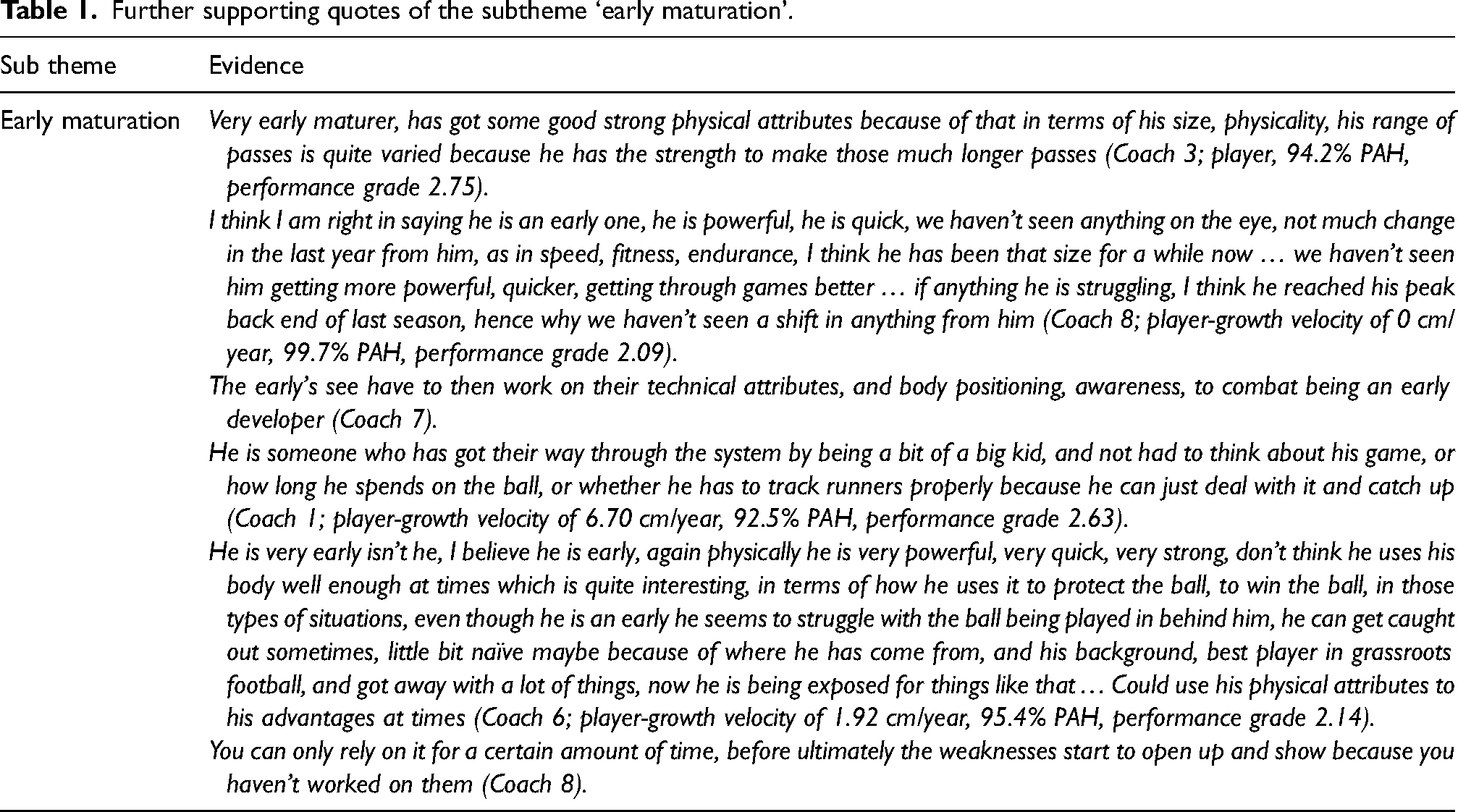
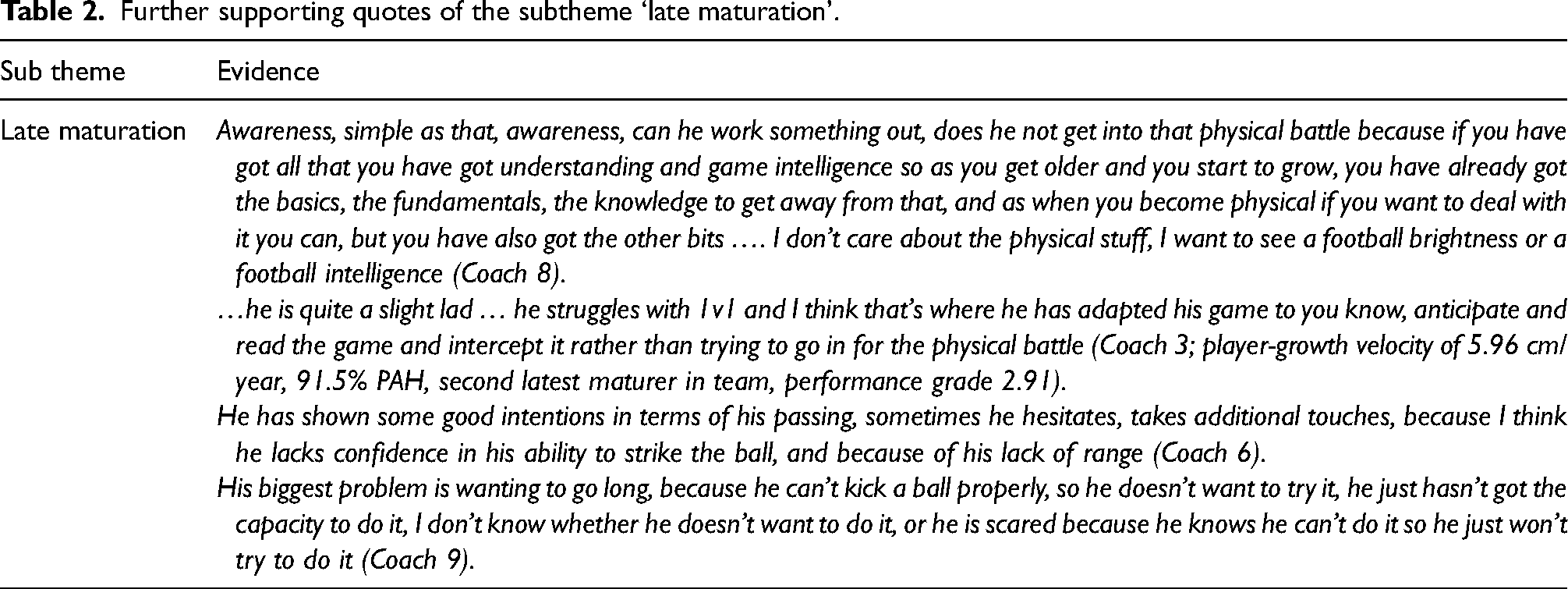
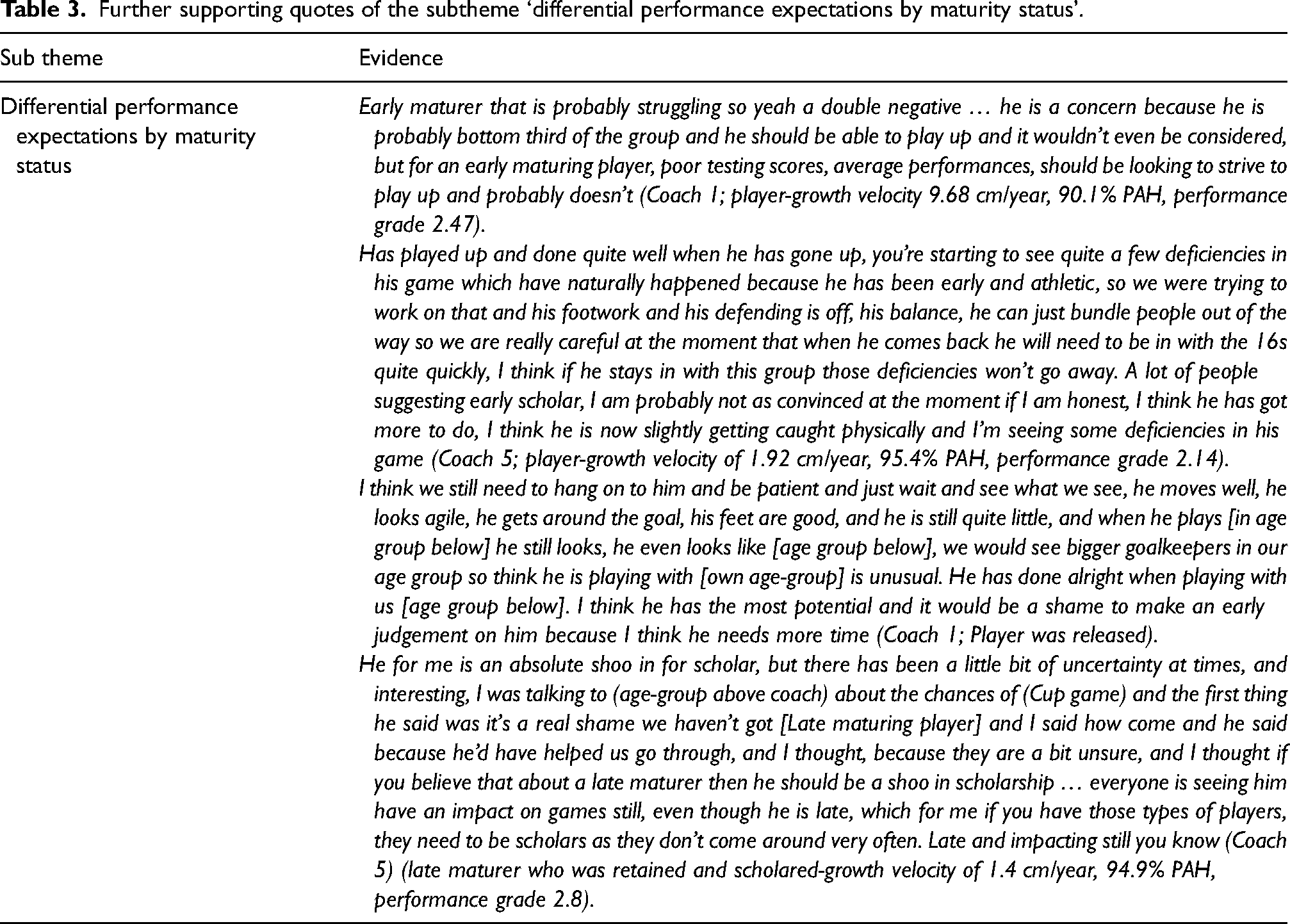
The following section presents four themes, with quotations, and four case studies, with further quotes presented as evidence in Tables 1–3. The themes, (1) early maturation, (2) late maturation, (3) differential performance expectations by maturity status, and (4) implications for selection, retention and release are presented below. Elements of the themes are illustrated within a series of four case studies, each of which represents a player archetype within the academy context. Further discussion of these case studies can be found in Supplementary File 3.
Further supporting quotes of the subtheme ‘early maturation’.
Further supporting quotes of the subtheme ‘late maturation’.
Further supporting quotes of the subtheme ‘differential performance expectations by maturity status’.
Early maturation
Coaches primarily identified early maturing players on the basis of size, physique, and athleticism. In addition to estimates of biological maturation (e.g., %PAH), coaches used facial features, muscle development, and comparisons to same-age peers to distinguish maturity status. For many early maturing players, there was little worry over their future height and physicality: ‘I think he is going to be like 6ft1, and he has been this size since he was like 11 or 12 so it has been easy for him’ (Coach 1). Early maturing players reach their adult height earlier 42 leading to less concern among coaches regarding the future size.
Coaches described greater size and physicality as advantageous: ‘He manages to compete quite easily because he can use his body, he can protect the ball, he can move people’ (Coach 1; player-growth velocity of 5.96 cm/year, 92.9% PAH) (See Case Study 1).
The bulldozer.
Physically he has done quite well, I think he is one of the earlier maturing in the group and you can see that physically he is further ahead than some of the other players. How he has filled out and his physique and also like some of his facial features…another good indicator is his range of pass, the fact that he is physically capable to play the ball over a variety of different distances in comparison to others who maybe are later in the group. (Coach 6; player-growth velocity of 4.39 cm/year, 97% PAH, performance grade 2.63)
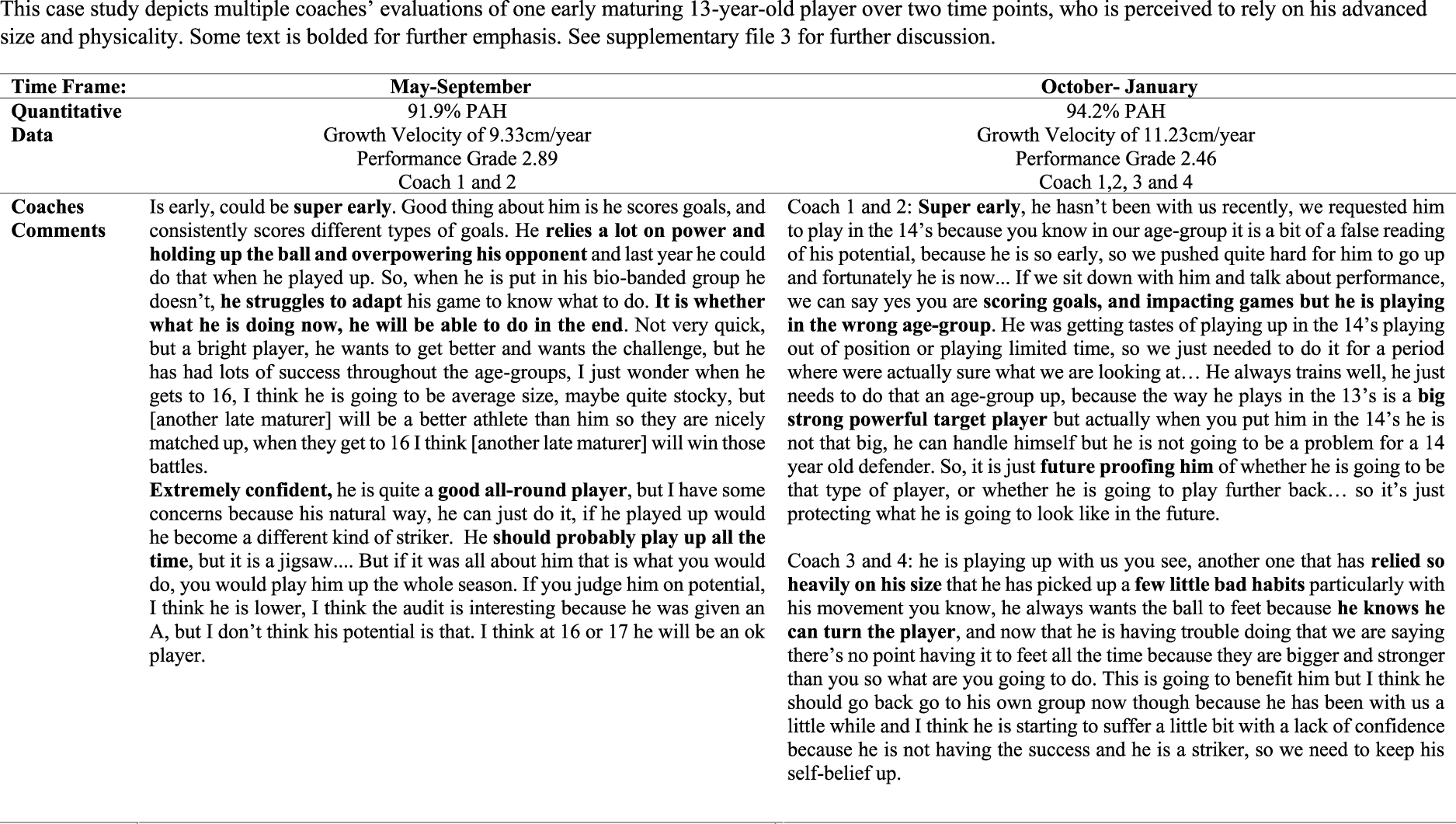
Players who advanced in maturity were described as strong, physical, powerful players who added physicality and protection to the team.
He is able to deal with the physicality, he is quite a big strong lad at the moment, and he deals with that physical side very well. And he adds that little bit of physicality to us as a group in that middle and central area. (Coach 3; player-growth velocity of 8.19 cm/year, 95.6% PAH, performance grade 2.75)
Early maturing players were also perceived to be more consistent and effective in their performances, giving the team the best chance to win: ‘…the lads that are early tend to have a greater effect on games’ (Coach 5).
…Tend to be more consistent performers … a range of things from ball retention, tied in with ball striking, coordination, to the athleticism to cover ground and compete, you know those types of things, they obviously, the Early's give you the best shot. (Coach 6)
Early maturing players were perceived to increase a team's chances of success, due to their superior size, athleticism, and performance consistency; explaining why these individuals are overrepresented in football.3,22,23,25,26,28
Coaches also described the disadvantages of earlier maturation, including limited potential for further growth or physical development:
Early maturer, his muscle development … very strong and powerful, hasn’t particularly grown and I am hoping he isn’t done, I am hoping there a few more inches in him. (Coach 3; 94.6% PAH)
I think he is [biologically] 24, he probably reached his peak last year, and you can see now there is nothing else to come. (Coach 7)
I will hear people talk about him as an early maturer and so what else is there to come. (Coach 5)
Young athletes experience their greatest fitness gains during puberty2,9,47 with rates of improvement dissipating following PHV. 48 Unless these players are optimally engaged in strength and conditioning programmes, coaches may perceive post-PHV early maturing athletes as having peaked early; not improving as much as their later maturing peers. It is important for coaches to understand improvements continue into adulthood, albeit at a smaller rate, and so early maturing athletes are not ‘done’. 48
Coaches believed early maturing players relied upon their physicality in training and competition, neglecting their technical and tactical skills. I would say he gets away with a few things because of his size, I would like to see a neater first touch and more playing off two to improve his tempo, I think he takes extra touches because he can you know. We were doing 1v1, receiving to play forwards and he was just stepping on the ball and doing foot taps and holding the player away and I had to stop him and remind him what the objective of the task was. (Coach 4; player, 94.2% PAH, performance grade 2.75)
Very early, physically really powerful, he is like a bull in a china shop … and that is how he identified himself as a player and how he is recognised, coaches have recognised that's what's good about him, he is a destroyer and like a wrecking ball. Technically he is behind, his understanding is behind. (Coach 1; player-growth velocity of 2.47 cm/year, 88.6% PAH)
Coaches described early maturing players as ‘predictable’; using their physicality to dominate, at the expense of learning and refining their technical and tactical skills. Coaches felt early maturing players experienced an easier journey through the academy than later maturing players (see Case Study 1).
Early mentality, which is you stop developing a lot of your game because you don’t need to, your touch doesn’t need to be perfect because you can bundle your way through, your movement doesn’t need to be on-time because you are going to get there anyway, whereas (late maturing player) has to be spot on with everything or he knows he isn’t going to survive. (Coach 5)
The above quote highlights a challenge, whereby early maturing players fail to develop the technical and tactical elements necessary to succeed at the highest levels. Previous research shows some precocious players can display technical and tactical deficiencies due to over-reliance on their physicality.3,28,30 When early maturing players compete against those less mature, they experience less challenge, limiting their learning and development of psychological, technical, and tactical skills.28,30 This can be detrimental to an early maturing player's development and ultimate success 49 (see Case Study 1). Importantly not all early maturing players are technically behind, and for those that are technically deficient, many still progress to the next level. 50
Coaches described some early maturing players who did not use their advanced physicality to their advantage: ‘Although he has a physical presence in terms of his size, he doesn’t use that at all’ (Coach 3). Coaches often attributed this to players not needing to exert their physical strength, because of their advanced size, they would still be able to ‘get there’:
He can’t really jump which is a problem for a goalkeeper, he just reaches which maybe he gets away with at the moment because he is one of the taller ones. (Coach 4)
Commonly, age-group coaches believed early maturing players were so advanced compared to some of their peers, that minimal physical effort was required for them to successfully compete. Not only does this hinder the athletes learning and development, but illustrates the competitive inequity often found in chronological age groups. 4 Bio-banding, a strategy whereby players are grouped by maturity status, reduces extreme differences in maturity and size, creating more equitable challenges. 4
Some coaches described a desire to push players advanced in maturation into older age groups to promote their learning and development: ‘Look where they are physically and if they are early you are going to have to bump people up aren’t you, to challenge them’ (Coach 7). Playing early maturing players in older age groups was recognised as a talent identification tool; ‘…future proofing him’ (Coach 1) and as a player development tool: ‘We don’t want him to end up as another early who overused his physical attributes and lost other attributes’ (Coach 5) (see Case Study 1).
Coaches also perceived early maturing athletes would be caught physically, but also overtaken in terms of technical and tactical understanding by later maturing boys.
He is another one who I think has used his physicality, I think he has done, and I think it has made him look quite good as well, when he comes up against someone now who is a little bit nippy and sharp and speedy, he really struggles. (Coach 7; player, 98.4% PAH, performance grade 2.11)
Late maturation
Coaches perceived numerous advantages associated with later maturation. These players were identified as smaller and slighter: ‘… he is a later maturer within the group, just physically in general, smaller than everyone else’ (Coach 6). Coaches recognised late maturing players would make gains in size and physicality and that physical testing scores should be evaluated by maturity status to account for maturational differences.
Late maturing, testing for his age-group is just average, but biologically is good. Another really exciting prospect because when he physically develops, dad is a giant, dad is 6foot4, so he is going to be a good size, and he is going to be quite a complete package. (Coach 1; player, 88.5% PAH, performance grade 2.87)
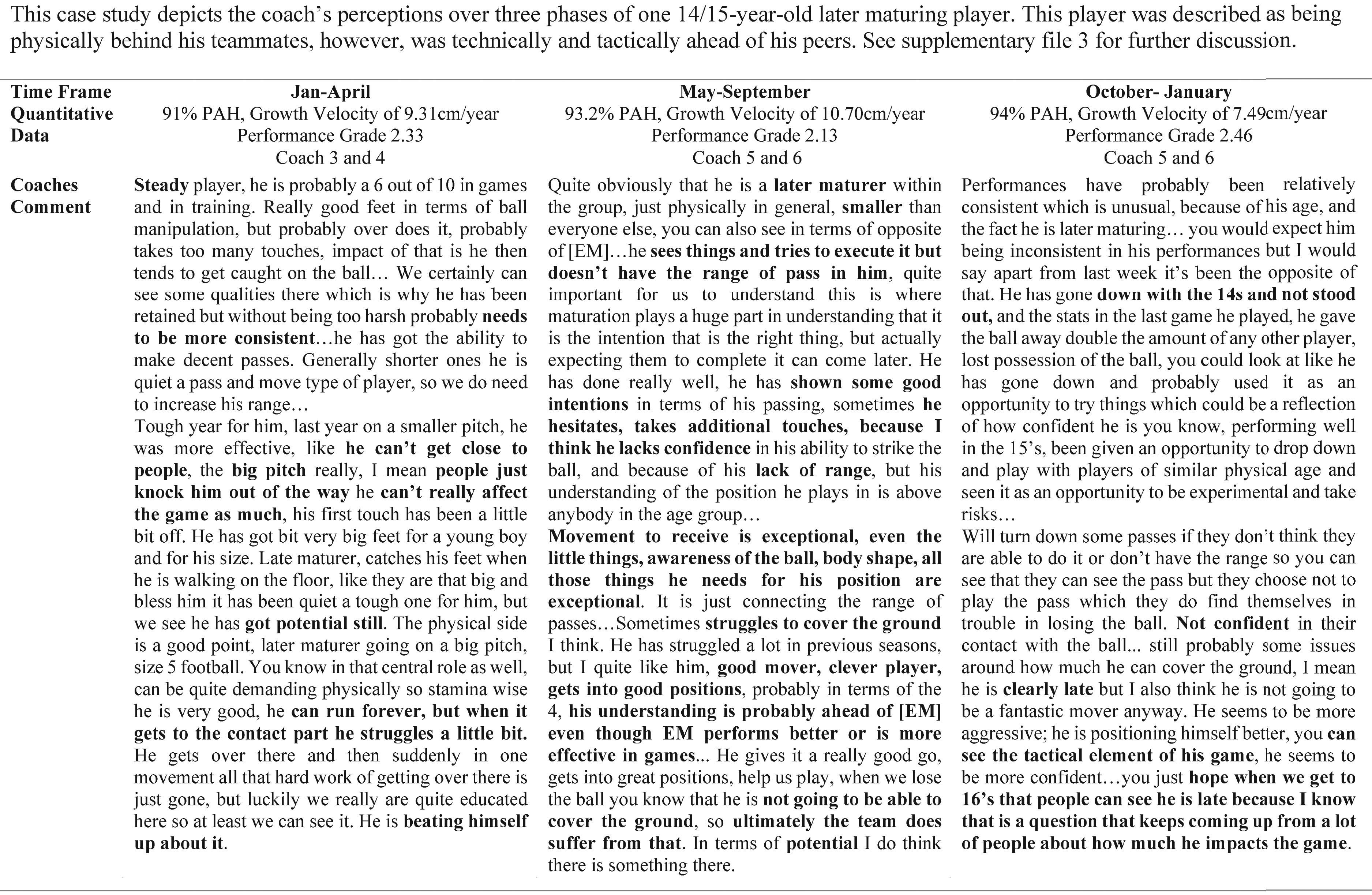
Late maturing players were described as ‘exciting prospects’, because they were perceived to be technically and tactically advanced.
He has learned the tactics and the bigger picture, so he is just waiting for his body to catch up and when it does, I think he has got a massive amount of potential. (Coach 2)
The underdog.
Coaches described some attributes which late-maturing players developed and adapted into their game to compensate for their lack of physicality. Anticipating and intercepting were examples of an adaption.
…but I don’t know whether it is by luck or he is quite bright but he has kind of adapted and adapted and found a way to compete, moving the ball quicker, taking less touches, picking out good spots, but in a 1v1 duel he will struggle. (Coach 1; player-growth velocity of 11.81 cm/year, 89.5% PAH, performance grade 2.73)
Although late-maturing players may eventually rise to the top, they remain underrepresented in academy football.3,22,25,26 Thus, any long-term advantages only hold for the small number of late-maturing athletes retained in academies.25,26 Whether the small number of late maturing players in the system are selected because of their superior technical ability, which was necessary for them to be initially selected, or if they develop a superior ability due to the challenging environment, warrants further investigation. 52 Zuber et al. found that despite later maturing players possessing advanced technical and tactical skills, they still failed to progress to the next competitive level. 50 Thus, more research and strategies need to be investigated to reduce the under-representation of late-maturing athletes in youth football.
Finally, coaches believed late-maturing boys were particularly resilient. Some coaches described their late maturing players as underdogs who had to work harder: ‘He has definitely got the underdog theory, he is at people tackling them and running around, he is a real terrier’ (Coach 2).
The above quotes align with the ‘underdog’ hypothesis, whereby relatively younger and/or later-maturing players hold the best chance for success at the professional level.3,52,55,56 Studies suggest for late-maturing and relatively younger athletes to remain within competitive programmes and academies, they must possess or develop superior technical, tactical, and psychological skills. 52 As described previously, late-maturing athletes experience a greater level of challenge which promotes and necessitates the development of many attributes. 52 For late maturing players to benefit from the ‘underdog’ principle they must, however, be retained within the system. 52 Youth sports programmes need to ensure they are not releasing and excluding late-maturing players from the system and provide them the opportunity to progress to the next competitive level.
Coaches also described disadvantages associated with late maturation. Descriptors such as slight, small, and dot, were used to illustrate their lack of physicality: ‘Obviously there is a physical issue and we have spoken to him about being patient, slight lad’ (Coach 3; player-growth velocity of 5.96 cm/year, 91.5% PAH, performance grade 2.91). Coaches understood for many late-maturing players, their growth spurt and the potential issues challenges were still to be experienced 46 : ‘At the moment he is doing well, his movement is good because he hasn’t gone through a growth spurt yet, I think that helps’ (Coach 3, 87.4% PAH).
Although coaches understood the athlete's growth spurt and the possible detriments associated were still to occur for late-maturing boys, this could be regarded positively. One advantage of developing late is the coordinative strength which can be developed before the growth spurt. 14 Balyi et al. suggest late-maturing athletes have an advantage over early-maturing athletes due to the greater time spent in childhood, i.e., ‘learn to train’ stage of Long Term Athlete Development. 57 Nonetheless, late-maturing athletes will experience PHV, albeit at a smaller rate 58 and possible growth ‘side-effects’ in the older age groups where the intensity of training, competition and overall pressure is greater. 36
Coaches questioned later maturing athletes’ adult height; whether they will be big enough to succeed in their position: ‘…he is small and there are concerns about his predicted height’ (Coach 3; player-growth velocity of 5.21 cm/year, 86.2% PAH, performance grade 2.83). Coaches revealed doubt and uncertainty surrounding predictive height equations. Research shows predicted end height equations are reasonably accurate; the median error bound between actual and precited adult height using the Khamis-Roche method is 2.2 cm in males from 4 to 17.5 years of age. 39 The use of self-reported parental heights in this equation, however, potentially decreases the accuracy of the estimation. 3 To further increase the accuracy and reliability of the method, boy's parents could also be measured where logistically possible.
Coaches appeared to have greater doubt over later-maturing athletes reaching their predicted adult height. Academy practitioners should understand late-maturing athletes will reach their final adult height, yet much later than their early-maturing peers; thus, patience and understanding are required. Johnson advocates for using this end height prediction to better develop athletes in many sports. 59 The adult height of a young football player can be used to allocate individuals to the position best suited for success, instead of waiting until they are mature to find out they are too small for a position, leading to deselection or dropout. 59 Going forward, academies could better use these estimates of final adult size to provide the best opportunity and development for all players.
Coaches believed that later maturing players struggled with the physical nature of the game. Later maturing boys struggled to cover the ground, had a smaller range of passes and find physical battles more difficult than their more biologically advanced peers. Competing against early maturing teams exacerbated this issue: ‘…he finds training and games really tough, physically, he just can’t get around the pitch, he can’t cope’ (Coach 7). Coaches perceived later maturing players struggled to impact games (see Case Studies 2 and 4).
…biologically he is behind and if you play [certain] teams they tend to play their biggest and strongest up front and then he is at the back and struggling. (Coach 1)
Bio-banding is a strategy which could be used to increase opportunities for late-maturing players to impact games. Bio-banding allows late-maturing players to showcase their talent by limiting physical discrepancies and allowing them to play in more central positions.4,28,30,31 Abbott and colleagues found late-maturing boys participate in significantly more tackles and significantly less long passes in bio-banded games than in chronological age-group games; perhaps late-maturing players are more willing to engage in tackling when competitors are of a similar size, and the advantages behind long ball passes to more mature teammates are removed. 29 Thus, academies should utilise bio-banding as a strategy to allow late-maturing players to command games; this not only benefits the development of the player but also allows coaches to better evaluate players before selection decisions by being able to observe certain attributes within a different developmental context. 4
Finally, coaches described the importance of the intentions of later maturing players. Coaches sensed many late maturing players had game intelligence, (i.e., understood the correct move or pass to complete) however, they lacked the physical capacity or confidence to follow these actions through (see Case Study 2). Potentially, late-maturing players understand they lack the physical capacity to create certain passes or plays within a game, and thus choose to play a different tactic rather than make mistakes for example. Coaches of current senior international players who were late maturing in their youth, such as Kevin De Bruyne and Thibaut Courtois, recall their excellent understanding and decision-making despite not having the physicality to compete. 61 Game intelligence and maturity status require further investigation.
Differential performance expectations by maturity status
Coaches portrayed different expectations of their players depending upon maturity status. Across the age groups, coaches had superior expectations of the more biologically mature: ‘The early's are critiqued harsher, yeah maybe it goes back to expectations, they (expectations) are higher’ (Coach 6) and ‘some of the early maturing boys at times I can expect too much’ (Coach 5) (see Case Study 3). Players advanced in maturity who excel in their own age group and can compete or thrive in the age group above were portrayed as ‘exceptional’.
The falling star.
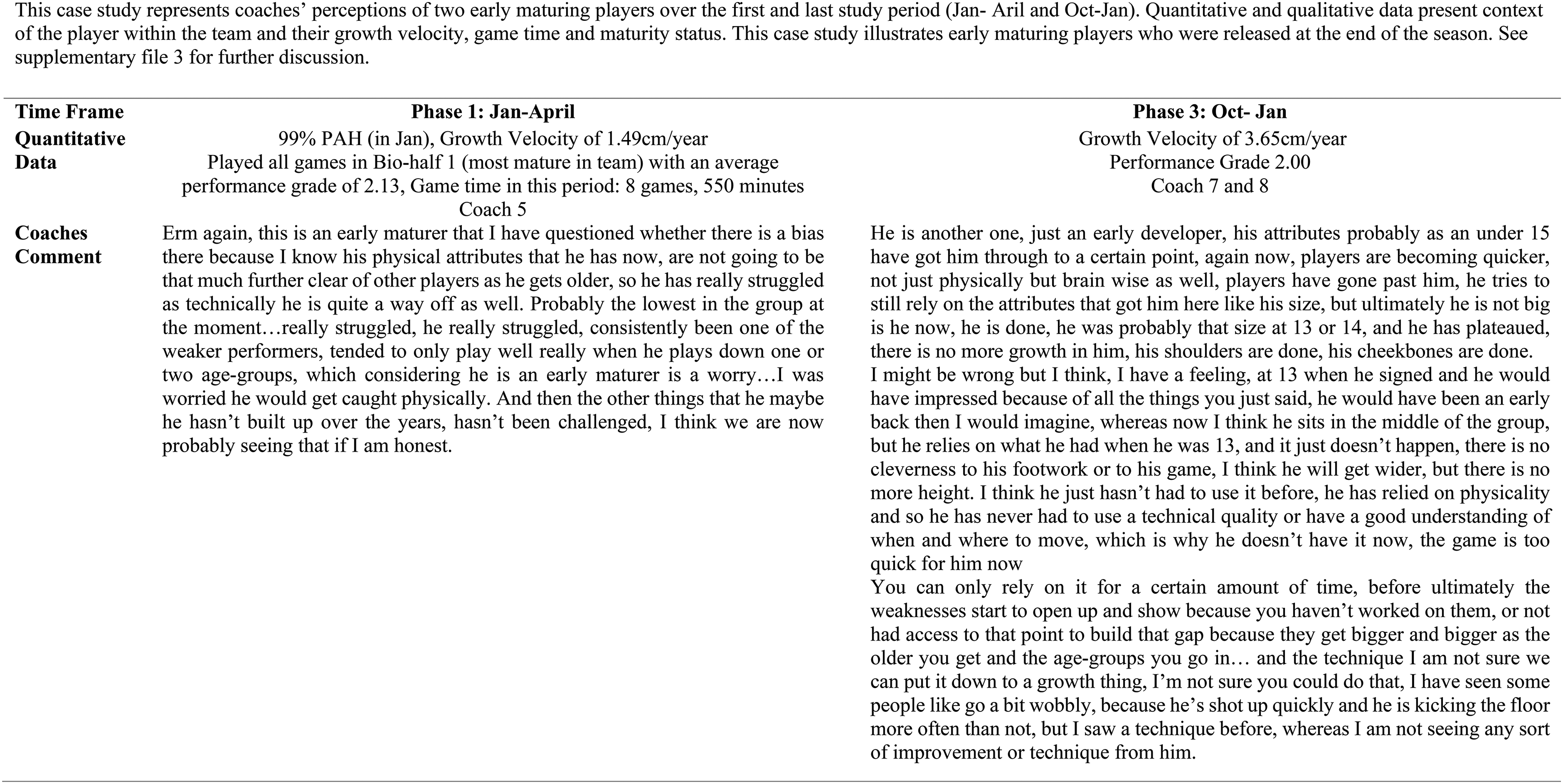
Physically, early maturer, has played up in both the age-group above and the one above that this year, which is a fantastic achievement. Played well yeah, consistent you know. (Coach 3; player, 94.2% PAH, performance grade 2.67)
…really struggled, consistently been one of the weaker performers, tended to only play well really when he plays in [own age-group] game, which considering he is early maturer is a worry. (Coach 5)
Further, early maturing players who were played in older age-group games were expected to perform:
I am worried about him, he has been top boy in younger age-groups, and he's played up for me probably about four or five times and looked very average. (Coach 1; player-growth velocity 8.94 cm/year, 91.3% PAH, performance grade 2.69)
When early maturing players participate in bio-banded games, the level of physical and technical challenge is greater in comparison to chronological age groups28,30; Coach expectations, however, appear to remain the same, where early maturing players are expected to perform well in both chronological and bio-banded groups. Although bio-banding can be used as an evaluation tool to ensure early maturing players are not being identified and invested in because of their advanced physicality, 4 there appears to be greater pressure on early maturing players to consistently perform. It is important to remember however, advanced maturity status is only one aspect of talent evaluation; for example, early maturing players may be experiencing growth or even problems off the field (school/home). The quote above, for instance, describes one player experiencing a high growth velocity (PHV). 4 Early maturing boys playing with chronologically older players in bio-banded games are also exposed to new developmental opportunities and challenges; early maturing players when bio-banded can learn to cope with vulnerability, adversity, and anxiety. 62
Conversely, late-maturing players who were managing in their own age group were perceived as excellent: ‘…he is an alien, he is late maturing but physically one of the best in the group’ (Coach 1; player-growth velocity 13.04 cm/year, 87.6% PAH, performance grade 2.93). Players who were delayed in maturity who managed to succeed in their own age group and compete in the age group above, where the gap in maturity was even greater were described by a coach as ‘freaks’ as they surpass the expectations placed upon them. These players were perceived to be able to compete with boys they ‘shouldn’t be able to’.
A player that is later within the group he doesn’t really look it, I think he manages it well, a positive when you are dealing with late maturers that are coping in a category one academy in their own age-group, it is impressive. (Coach 5)
That hasn’t had any effect on him, his performances haven’t, it's not like (age-group below) coaches have come back and said his performance was very good, he ran the game. (Coach 8)
Bio-banding was often described as an evaluation tool because it creates competitive equity, where players can be assessed against biologically similar players. Bio-banding is useful as a talent identification and evaluation strategy; however, this is not the only use.4,30 Bio-banding creates unique learning and development opportunities for players on either end of the maturity spectrum.4,29,62 The bio-banding strategy should not preclude the consideration of psychological and or technical skills. 4 Thus, for late-maturing players who are described to be thriving in their own age group, playing down an age group with boys of similar maturity may not be beneficial. 4 Similarly, coaches should not expect late-maturing players to be ‘the best in the group’ when moving them to a chronologically younger group. For example, late-maturing players may be experiencing challenges associated with the adolescent growth spurt. 46 Moreover, bio-banding presents an opportunity for late maturers to take on positions of leadership and show self-efficacy on the pitch. 62 Playing down an age group may also advance other attributes such as leadership and mentoring skills. 62 Academies and coaches should acknowledge bio-banding has benefits other than talent evaluation, and perhaps reduce the pressure placed upon both early and late-maturing players to succeed in bio-banded matches. Education around the merits of bio-banding could change the measure of success for coaches from ‘outplaying’ their peers to development of other attributes.
Coaches described biases stemming from these differing expectations: ‘I have got to be careful of a bias …. I expect more of [Early] than I do of [Late], I expect him to play better’ (Coach 5) and ‘I’ve got bias, and my bias is always for the underdog, so I want the underdog to do well someone like [late maturer]’ (Coach 2).
This bias was discussed in terms of coaching, performance grades and selection decisions. Coaches expressed they ‘…could have been better’ with their coaching of some early maturing boys and the system needs to support all athletes irrespective of their stage of development.
I think I could have actually been better with him, he is a massively early maturer, and I think there is an element of me that has got, yeah there is a bias maybe slightly… I sometimes start to think that these players that are closer to 100% (PAH) are done, yet cognitively I know that's not the case, they are still a particular age, low training age, so I have probably been quite hard on him. (Coach 5; player, 99.5% PAH)
If [early] has a slight off game he goes down to a 2, and that is going to affect his performance grade and his audit score. If [late] had exactly the same performance that [early] just had I would give him a 4, because my bias is clearly going on and I am thinking I cannot believe he has just managed to do all that as a late maturer, but an early I just expect it, so there is a bias. (Coach 5; player-early = 98.5% PAH, late = 93.3% PAH)
An increasing number of articles discuss an over-representation of early-maturing athletes in football.22,25,26 Consistently, research has shown early maturing footballers tend to outperform their later maturing peers.11,13,17,22,23,53,60 Thus, a great deal of the headlines and strategies have been focused on decreasing the selection bias against late-maturing players.3,23,25,26,63 Coaches in this study recognised their improvements in managing and developing late-maturing players but also believed the development and education around late-maturing athletes were at the expense of the development of their early-maturing players. Youth sporting systems and programmes need to ensure athletes from both sides of the maturity spectrum are on the best programme for their maturity status and development.
Implications for selection, retention and release
Aligned with the advantages and disadvantages associated with early and late maturation, maturity status and timing had implications for the selection, retention, and release of decisions. Early maturing players were often described as the best players on the team and were regularly selected over their late maturing teammates, because of their advanced physicality, game impact and performance consistency:
He is a relatively early maturing player and probably done the majority of his growing, so hence probably ties in with the element of consistency in his performances and things. (Coach 6)
Probably the best keeper, but physically he is bigger than all of the others as well, so I think whether he is the best, it is more of his physical presence, his maturity, you know you compare him to [Late Maturer] who is the same age, I would say [Late Maturer] is half the size, you know a lot smaller. (Coach 3) (selected early-maturing player = 92.9% PAH, height = 178 cm, weight = 80.7 kg, growth velocity of 5.21 cm/year, compared to released later maturing player = 89.7% PAH, height = 162.3 cm, weight = 46.6 kg, growth velocity of 6.55 cm/year)
Conversely, some early-maturing players were released, or their scholarship was deliberated because of their technical/tactical deficiencies (see Case Study 3).
Let go due to technical ability they didn’t see that he had pushed on enough, obviously liked him physically but didn’t feel like his technical ability was good enough for next level. (Coach 5)
Zuber et al. found that precociously developed players, even with technical and psychological deficiencies, showed the most promise to be retained. 50 Importantly, in both this study and Zuber et al.'s investigation, not all technically deficient early maturing players were retained, highlighting advanced maturation alone is not enough to be retained. 50 Coaches recognised, however, early maturing players had an easier journey through the academy because of their advanced size and physicality.
In contrast, late-maturing players were awarded scholarships for their excellent technical ability and their unexpected physical ability. For most late maturing players, coaches described them as physically behind; Late maturing players who were also physically developed were identified as likely to be signed and given scholarship: ‘He is a bit of an anomaly, because he is late but physically one of the best in the group’ (Coach 2) and ‘Alien. Late maturing but physically of the best in the group. He is the best in the academy in my opinion … offered an early scholarship’ (Coach 1).
As described previously, coaches generally felt later maturing athletes impacted games less because of their lack of physicality. Coaches described a need for patience with late-maturing boys, waiting for them to physically catch up. The deadline for making scholarship and selection decisions confounded coaches’ patience, however.
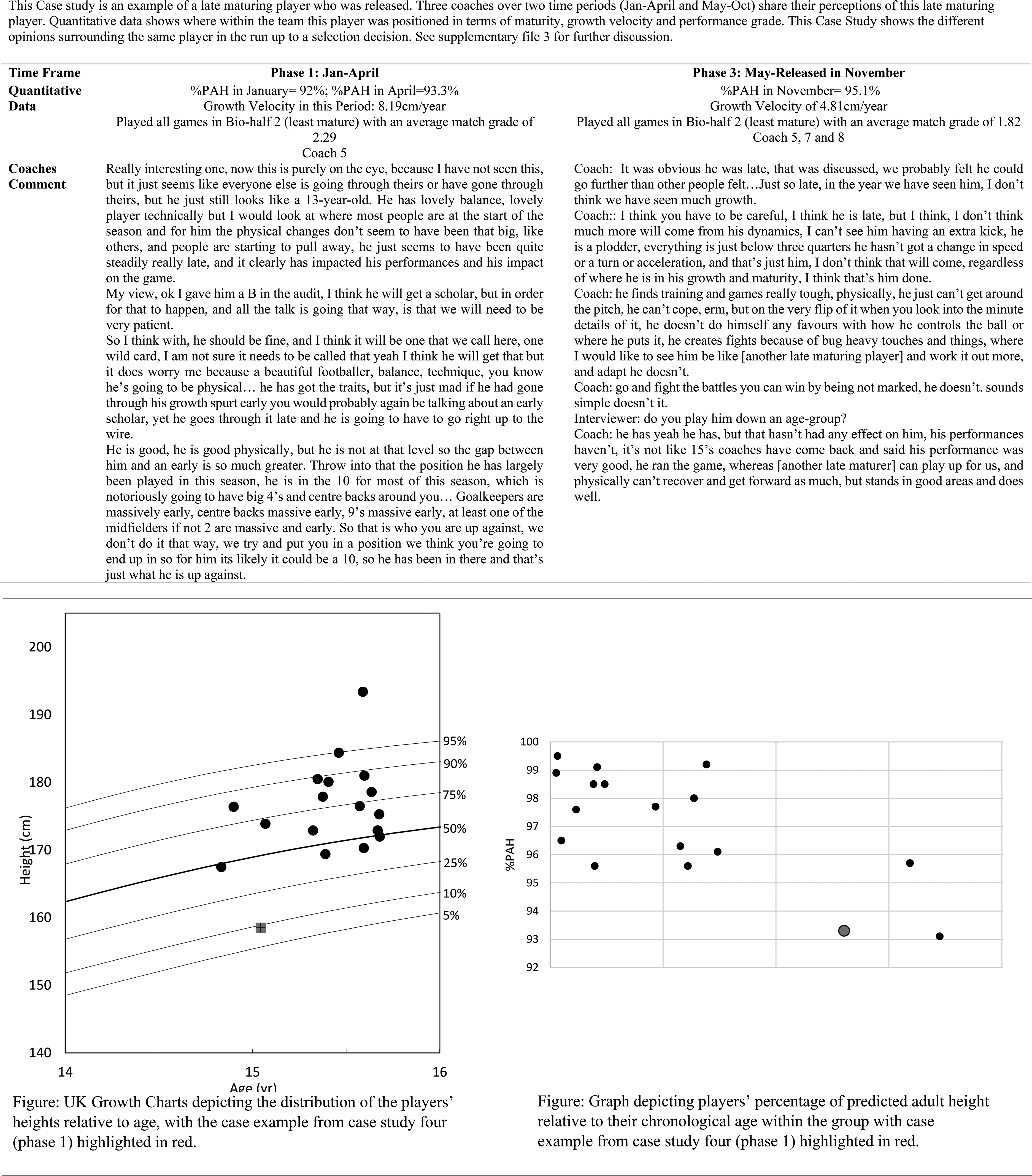
At the moment because of the lack of physicality he is really finding it quite difficult. We have got to overlook that, we can’t make decisions based on physicality at the moment. (Coach 3, player was released)
He has played about a quarter of his games in the [age-group below] because he is a low bio-banded because he is a late maturer. He has got some ability, physically however, since he has been here, it has been a struggle physically. Lack of pace, lack of turn, lack of agility, you can still see that in the age-group below as well, absolutely … I just think this is the wrong environment for him. (Coach 3, player was released)
Coaches perceived it was harder to get late maturing players ‘over the line’ with scholarships: ‘without question it is harder to get a later maturer over the line for a scholar, especially when you get people coming in that make decisions that haven’t seen much of them’ (Coach 5). One coach explained why it was harder for late-maturing players to be signed at under 16.
It must be so tough for those boys like, experiencing growth in those age-groups at that time, bigger football, bigger pitches, all those things that demand you to be bigger, you’re then playing against teams who are generally early and then we critique and grade them, sometimes the expectations are too high. (Coach 6)
This finding aligns with Mitchell and colleague's suggestion, that a disadvantage of late maturation is that athletes experience the growth spurt when the load, intensity, and pressure upon them is greatest. 36
Late-maturing players who were impacting games and managing to compete in their own age group, coaches described as probable scholars and exciting prospects. Coaches described some late maturing players as synonymous with potential; players further away from being mature had more still to come, and so were retained or scholared based on their potential:
I think considering how late he is, I think his energy levels and his mobility to keep running and willingness to keep running forward and back, doesn’t faze him that he is up against someone bigger, he will try and use what physicality he has got, and he is quick, I bet he has so much to come, I think there is a lot there. (Coach 7)
Many late-maturing athletes, who do not reach these exceptional levels are released from academies. The quotes above illustrate the notion that coaches often see potential in their later maturing athletes, but the timing of scholarship decisions means there is a greater risk in offering places to late-maturing athletes (see Case Study 4). Coaches struggle to differentiate between a lack of ability or a lack of physical development due to late maturity; in selection decisions, there are more unknowns for later than early maturing players. However, there are some exceptional famous cases, where talented late-maturing athletes have been retained and scholared yet played down an age group until they developed. 64 Although logistically challenging, signing late-maturing athletes and allowing them time to develop in a chronologically younger age group could be supporting late-maturing players.
Released late maturer.
This study explored coaches’ perceptions, experiences, and management of their team of adolescent academy football players, where naturally the athletes vary in stages of biological maturation. This study utilised a mixed-methods approach to explore ‘how’ and ‘why’ maturity selection biases exist within elite academy football. Only one professional football academy was utilised in this study and therefore results may not be generalisable to other academies with different philosophies, values and practices. Further, this research only focused on the male game; future research should explore this in the female game. Additional research across more talent environments is necessary to substantiate these findings.
Conclusion
Individual differences in biological maturation presents academy players and their coaches with numerous challenges. Coaches perceived that maturing both ahead (early) and in the delay of (late) peers had advantages and disadvantages for current performance and development. Early maturing players were described as bigger, and thus, generally more athletic, and capable of consistently performing at the expected academy standard. Coaches believed early maturing players often relied on their advanced size and physicality to compete, and therefore neglected the development of other skills. Late maturing players were generally described to be smaller and often struggled to compete against their more precocious peers, but coaches explained their potential was deemed to be high, due to their advanced skill development (technical, tactical and psychological) and further growth still to come. Interventions such as bio-banding to mitigate these issues and change perceptions of athletes were described. These maturity differences within the same age group caused coaches to have different performance expectations of players. In turn, this had implications for talent identification and selection decisions. Individual differences in biological maturation in one age group appear to influence perceptions of performance and potential, player development, and talent identification and selection.
Supplemental Material
sj-docx-1-spo-10.1177_17479541231186673 - Supplemental material for Beyond the coaches eye: Understanding the ‘how’ and ‘why’ of maturity selection biases in male academy soccer
Supplemental material, sj-docx-1-spo-10.1177_17479541231186673 for Beyond the coaches eye: Understanding the ‘how’ and ‘why’ of maturity selection biases in male academy soccer by Megan Hill, Thomas John, Darragh McGee and Sean P. Cumming in International Journal of Sports Science & Coaching
Supplemental Material
sj-docx-2-spo-10.1177_17479541231186673 - Supplemental material for Beyond the coaches eye: Understanding the ‘how’ and ‘why’ of maturity selection biases in male academy soccer
Supplemental material, sj-docx-2-spo-10.1177_17479541231186673 for Beyond the coaches eye: Understanding the ‘how’ and ‘why’ of maturity selection biases in male academy soccer by Megan Hill, Thomas John, Darragh McGee and Sean P. Cumming in International Journal of Sports Science & Coaching
Footnotes
Declaration of conflicting interests
The author(s) declared no potential conflicts of interest with respect to the research, authorship, and/or publication of this article.
Funding
The author(s) disclosed receipt of the following financial support for the research, authorship and/or publication of this article: Megan Hill was a funded PhD student of the football club. Thomas John was an employee of the football club.

Supplemental material
Supplemental material for this article is available online.
References
Supplementary Material
Please find the following supplemental material available below.
For Open Access articles published under a Creative Commons License, all supplemental material carries the same license as the article it is associated with.
For non-Open Access articles published, all supplemental material carries a non-exclusive license, and permission requests for re-use of supplemental material or any part of supplemental material shall be sent directly to the copyright owner as specified in the copyright notice associated with the article.
