



Abstract
Introduction
It is well-recognised that fulfilling the role of a coach is multi-faceted. In rugby, some of these coaching facets have been studied, however the research has not been reviewed. Reviewing the literature on rugby coaches will inform and guide policies, coach education, research and practice. Therefore, the purpose of this study is to provide a scoping review of the current coach focused literature on rugby union, rugby league and rugby sevens.
Methods
A scoping review was conducted on five electronic databases (EBSCOhost, PubMed, Scopus, SPORTDiscus, Web of Science) until January 2022 using the PRISMA-ScR guidelines. Participants had to be coaches within rugby union, sevens and league to be included. Data were extracted and analyzed to form a numerical and thematic summary.
Results
105 articles were included. 76% of the studies were on rugby union, 14% on league, 1% on sevens and the remainder focused on a combination of rugby cohorts or did not specify. Three themes were identified via a thematic analysis based on the content of the articles, these were coach knowledge (68%), coach pedagogies (29%), and coach development (4%).
Conclusion
The main finding in this review is that research on rugby coaches understood the risk, prevention, and management of injuries. Educational resources should include all aspects of rugby play or training injuries. The importance of the athlete-coach relationship and coach reflective practices was another significant finding. Coaches are encouraged to have a broad understanding of various aspects related to the player's welfare, which can be developed using formal and/or nonformal learning.
Introduction
Rugby union, rugby league and rugby sevens are popular invasion team sports played around the world, recreationally and professionally, from junior to senior and by men and women. 1 While the three codes have notable differences in game laws, they share similar match characteristics – intermittent high-intensity running interspersed with technical–physical contests for ball possession and territory.2,3 The most frequently occurring technical–physical contest in all three codes is the tackle. 3 Participating in these rugby codes has a range of physical, mental and social health benefits. 4 Like most sports, participating in rugby also carries a risk of injury, with the tackle event associated with the highest injury incidence and burden.5–8 For example, in men's professional rugby union, 22.4 (16.6–30.2) injuries per 1000 match player hours occur when being tackled, and 6.8 (3.9–11.7) injuries per 1000 match player hours occur when tackling. 9
Broadly, the objectives of rugby research across codes are directed towards preventing injury, improving performance and player skill development. The majority of research with these objectives as a focus have the player as the subject of study, for instance, describing players’ physical and technical activities during matches and training.10,11 To date, numerous quality player-focused reviews have been published. These reviews range from narrative syntheses12–14 to systematic reviews15–17 and meta-analyses,10,16 which serve to inform practice, policy and identify gaps to guide future research. These player-focused reviews are also intended to assist coaches in understanding the demands of matches and training, and the risk of injury, so that coaches may better prepare players mentally and physically for competition. With similar intentions, research focusing on the coach as the subject of study has also been conducted in the rugby codes. However, unlike player-focused studies, coach-focused studies in rugby have not been consolidated and synthesised.
Any rugby policy, practice or research aimed at improving an aspect of player welfare, performance and development cannot deny the significance of the coach in ensuring the success and sustainability of said policy, practice or research. Indeed, the coach is considered an interpersonal actor (that is, an actor closest to the player) in a widely accepted social-ecological view for implementing interventions.3,18 It is also well-recognised that fulfilling the role of a coach is multi-faceted. In rugby, some of these coaching facets have been studied; however, the scope and state of this research have not been reviewed. Reviewing the extant of the literature on the rugby coach will inform and guide policy changes, coach education, research and practice. For example, a review may help identify which resources rugby coaches use to gain new knowledge. Based on such a finding, rugby governing bodies can then target the identified resources to optimise coach education.
Reviewing the scope and state of the rugby coach literature will also help in identifying research gaps and directing future research priorities. For example, research on rugby coaches may only use certain study designs or be concentrated on a specific level of coach. Considering the above, the aim of this study was to conduct a scoping review of the current coach-focused literature within rugby union, rugby league and rugby sevens.
Methods
A scoping review was used to address the objective of the study. It was appropriate because of the broad aspect of this novel research topic. It provides an assessment of the size, nature and scope of the available literature by mapping out key aspects in a specific research area. 19 The Arksey and O’Malley's six-stage scoping review process 20 and Levac et al.'s framework 21 were used for this study. Arksey and O’Malley's six-stage scoping review process provides a comprehensive, transparent methodology for this review and additionally holds a role for key stakeholder groups. 20 Levac et al.'s framework clarifies each stage of the Arksey and O’Malley's scoping review process which ensures each stage is completed accurately. 21 This scoping review followed the PRISMA-ScR guidelines and used the PRISMA-ScR checklist which provides guidelines on how to conduct a systematic review and ensure methodological rigour. 22 Additionally, Peter et al.'s study was used for updated methodological guidance. 23 The review was registered with OSF (registration number: 10.17605/OSF.IO/3H7YG). The process starts by identifying the research question and ends with consolidating, summarising and reporting results.
Stage 1: Identifying the research question
The following research questions were identified for this review:
What is known about coaches in rugby codes?
What methods have been used to study rugby coaches?
What are the evidence gaps in the field?
What are the key research priorities of rugby coaches?
Stage 2: Identifying relevant studies
For the purposes of this review, a coach was defined as ‘any individual that is involved in providing coaching’. 24 It must be noted throughout this review that the roles of ‘coach’ and ‘S&C coach’ were used interchangeably. The inclusion criteria were the following: (i) coaches had to be the main participant of the study or the researcher was able to separate the coaches’ results from the other participants, and (ii) only rugby union, rugby league and/or rugby sevens coaches were included. Studies that included other stakeholders or sports were only included if data from rugby union, rugby league and/or rugby sevens coach(es) were clearly distinguishable. Articles had to be peer-reviewed original research studies published in English. Conference abstract reviews and meta-analyses were excluded from this review.
Search strategy
The search was conducted with no date restrictions on five different electronic databases (EBSCOhost, PubMed, Scopus, SPORTDiscus and Web of Science) for all publications until January 2022. The combined keywords were ‘coach*’ AND ‘rugby union’ OR ‘rugby league’ OR ‘rugby sevens’. For example, the keywords for the search completed in PubMed were ((coach*) AND (rugby OR rugby league OR rugby union OR rugby sevens). The electronic searches for the databases are in the Supplementary Files.
Stage 3: Study selection
After completing the initial electronic database search, duplicates were removed and thereafter screened according to the PRISMA-ScR guidelines. 25 LP screened the publications for eligibility at the title and abstract level. LP and DD screened all the full-text publications (Figure 1). Any discrepancies were discussed and agreed upon. If there were any unresolved disagreements, a third party was consulted. The final full-text publications (n = 105) went through the data charting and extraction process.
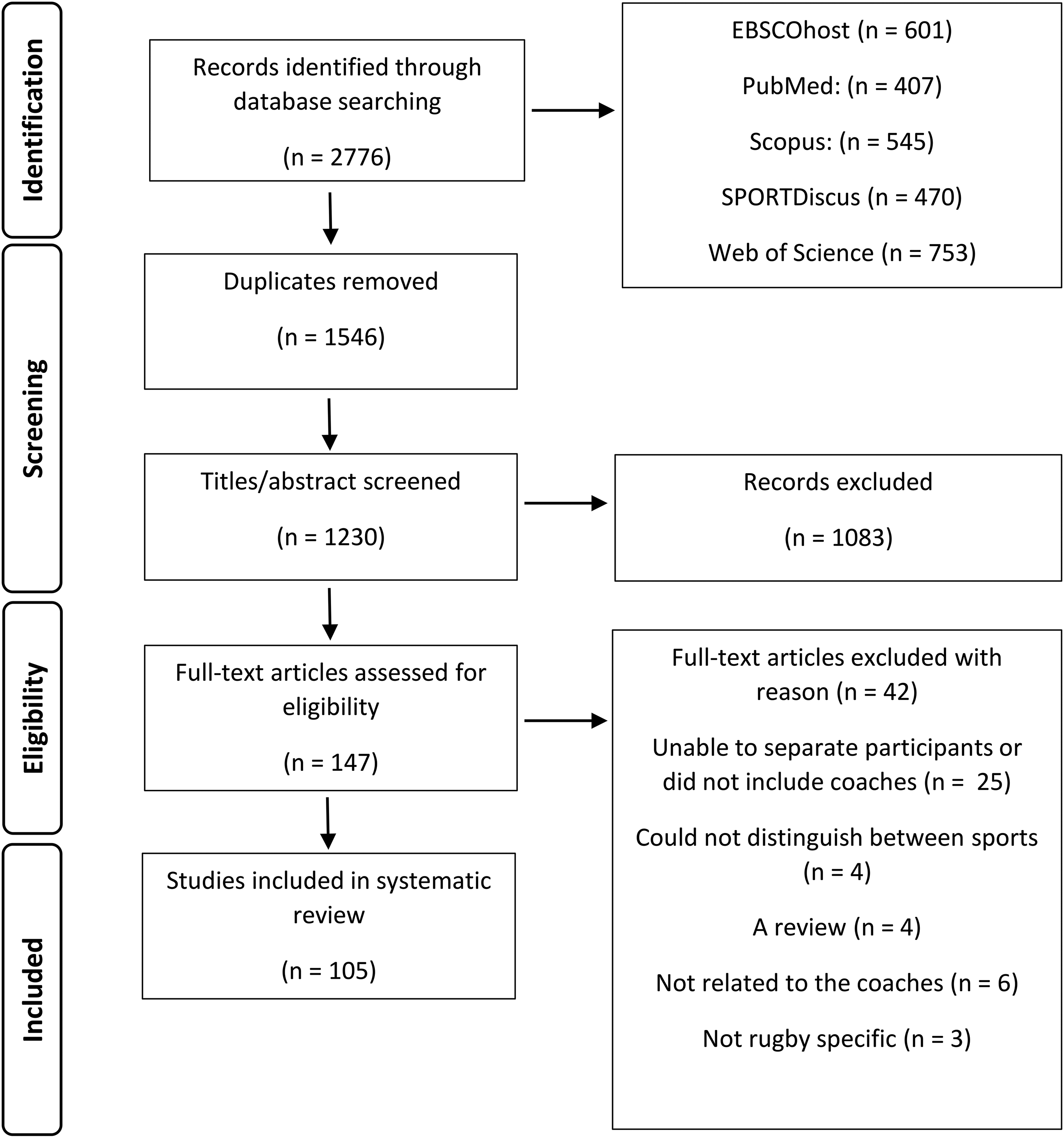
Literature selection process for the scoping review.
Stage 4: Charting the data
The data extraction form was based on Hollander et al.'s scoping review 26 and modified by two researchers (SH and LP) by adjusting the extraction variables to ensure the correct information was being extracted to answer this review's research question. LP conducted the extraction of data and was checked by SH for accuracy purposes. The data extraction variables were charted for each study by general study characteristics (authors and year of publication, rugby code cohort, male or female coaches, youth or senior rugby, type of coach, level/s of coach, topic of study, sample size), aim of study, data collection methods, outcome of study and conclusions.
Stage 5: Collating, summarising and reporting
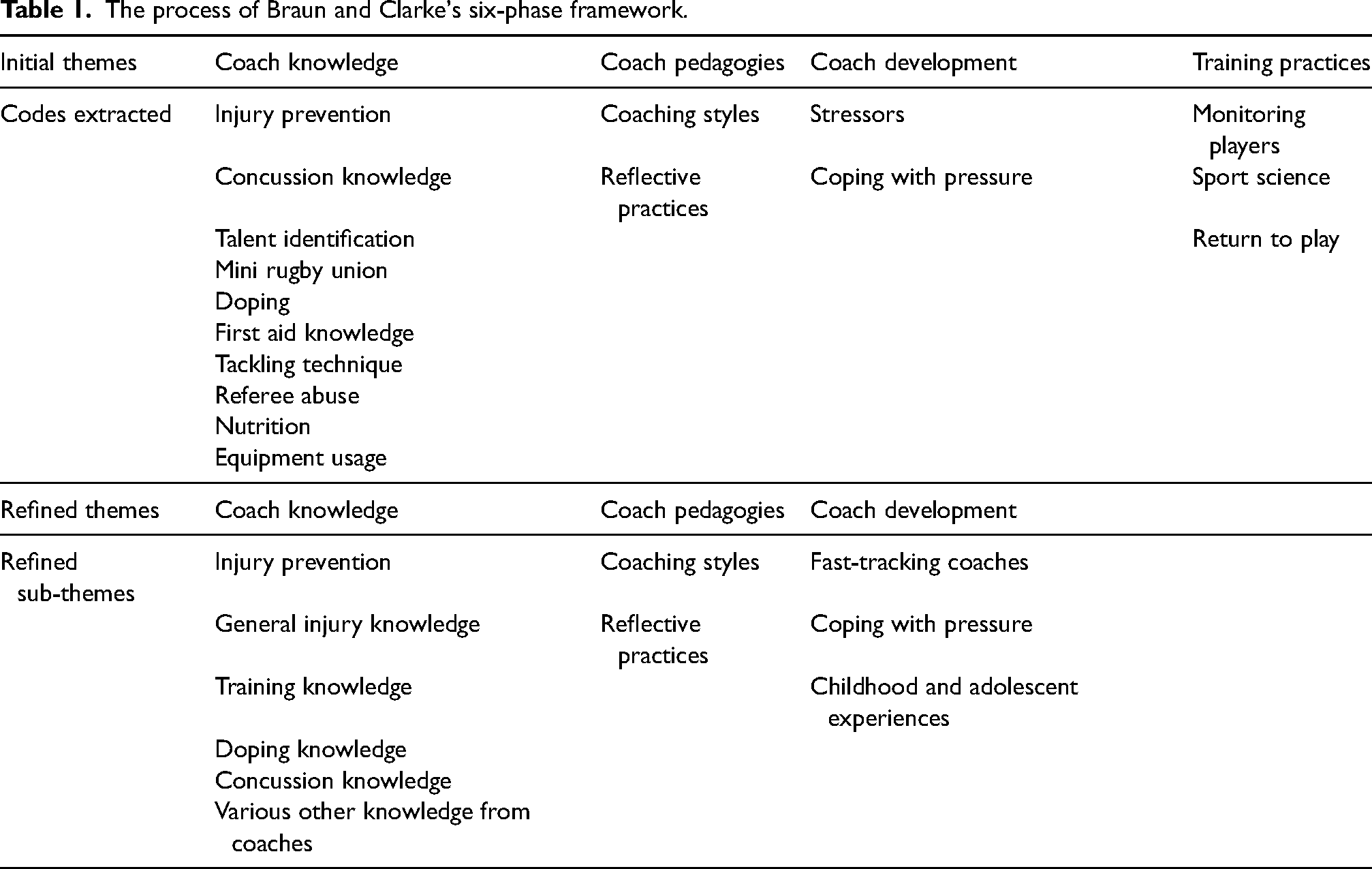
This scoping review presents the data in two ways. Firstly, numerically by a flowchart (Figure 1) and through frequency percentages (%) based on the data charting form. In the numerical analysis, the following variables were reported: participant number, coaches rugby cohort, qualification of coaches, type of coaches and data collections methods (i.e. interview, questionnaire or observational). Secondly, thematically, by mapping out key concepts to answer the research questions. The inductive thematic analysis was based on Braun and Clarke's framework which provides a step-by-step guide for the different phases of thematic analysis. 27 LP familiarised herself with the data by manually reading and extracting data to form codes from each study. For example, if a study's aim was about coaches’ input on injury prevention programmes, the study would be coded as injury prevention. Thereafter, initial themes were developed from organising the codes and then re-reviewed to construct the final themes (Table 1). When analysing the initial themes, the authors felt that training practices would be best suited under coach knowledge since the studies gave insight into the coaches’ knowledge of training practices and their knowledge on how to monitor training practices. This section did not include the pedagogical aspect of training practices. The final themes included coach knowledge, coach pedagogies and coach development. Coach knowledge includes articles which gave insight into the reported knowledge of coaches on different aspects of coaching. Coaching pedagogies includes articles that investigated the different practices that coaches used to teach and develop their players. Coach development includes articles that study how coaches progressed and evolved during their coaching careers. If an article seemingly qualified for more than one theme, the article was placed in the most prominent theme. These themes were discussed amongst the authors to ensure they were relevant and useful in a practical setting. The thematic analysis section is reported in a narrative format.
The process of Braun and Clarke's six-phase framework.
Assessment of methodological quality
The quality of the full-text publications was assessed using the JBI Critical Appraisal Checklist for Qualitative Research which systematically synthesises the quality of the papers based on their possibility of bias, methodological design and analysis. 28 The assessment was done by LP (additional files: Table S1). Because this was a scoping review, studies were not eliminated based on quality.
Stage 6: Consultation
After discussions amongst the authors, we decided the consultation stage was an essential section of this review. Discussing the findings with coaches allows for the researchers to receive insight if the review is beneficial for coaches and how researchers can improve the coach–research relationship. Since this review is based on coaches, which is a practical profession, authors decided that consulting coaches would bring practical insight into the key findings. Stratified convenience sampling based on the authors’ network was used to recruit 10 coaches (one high-performance manager (coach), three strength and conditioning coaches, and six coaches; age, 37.0 ± 6.0; years of coaching experience, 15.2 ± 7.9). Each coach took part in a 20-min one-on-one informal consultation in person, telephonically or online. These coaches were selected based on their role and experience in different areas of rugby. The coaches were involved in either rugby union, sevens or league. They ranged from coaching youth rugby to senior rugby and were either involved in male or female rugby. The coaches were briefed on the overview of the key findings and themes and were asked follow-up questions on how to improve the relationship between coaches and researchers. Following the consultations, the interviews were transcribed verbatim. LP familiarised herself with the data and followed a thematic analysis approach.
Following the consultation stage, DD, AS, KT, KD and BJ assisted SH and LP in writing and editing the manuscript.
Results
Numerical analysis
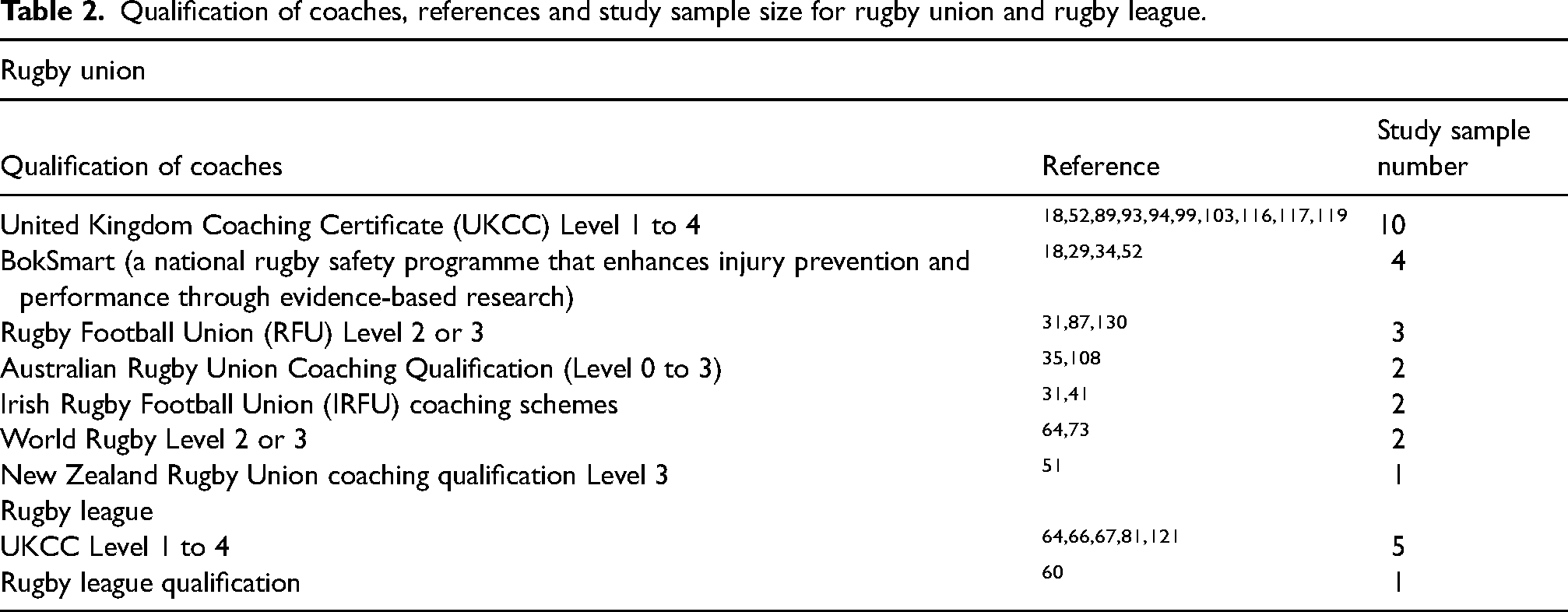
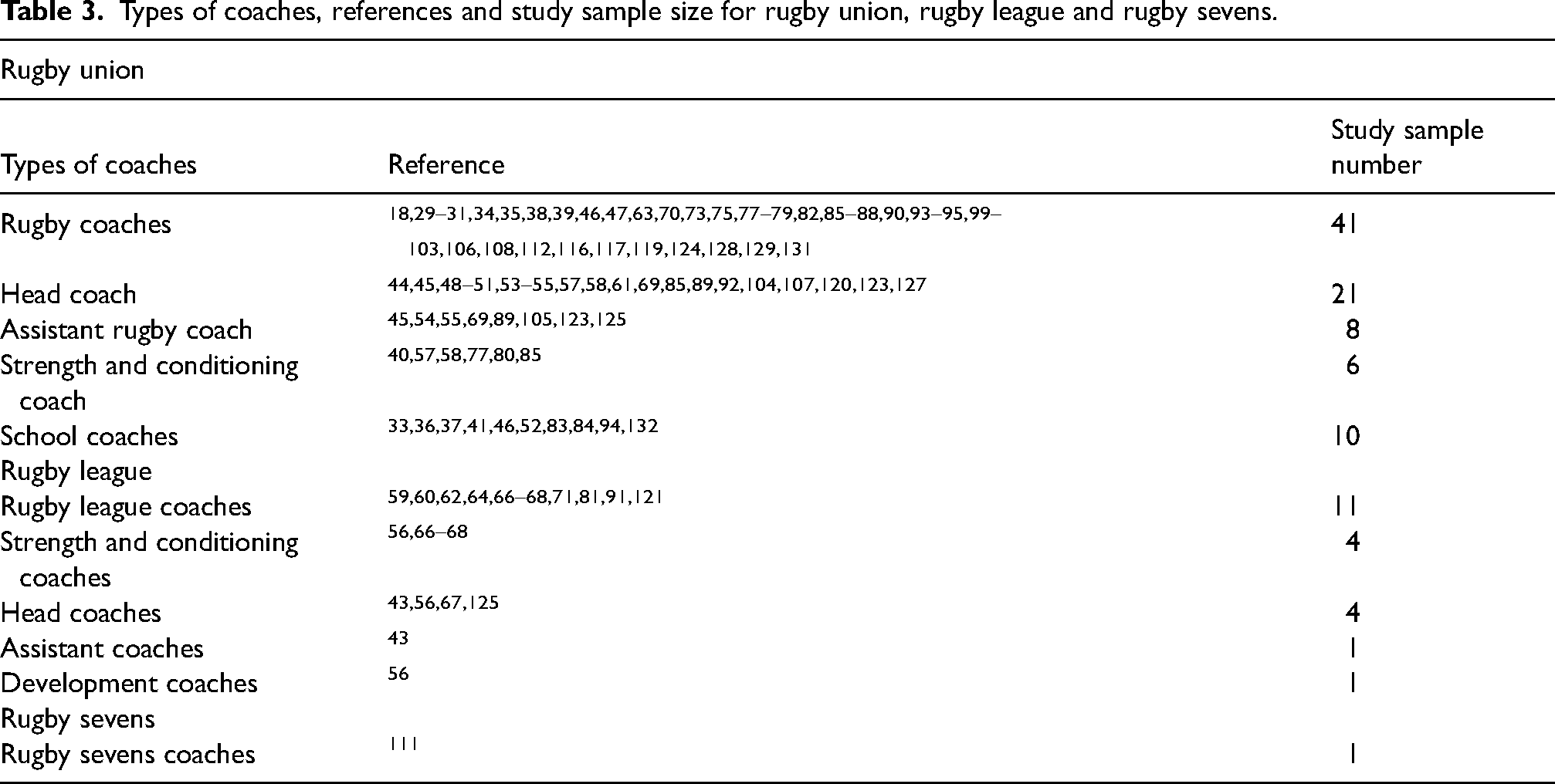
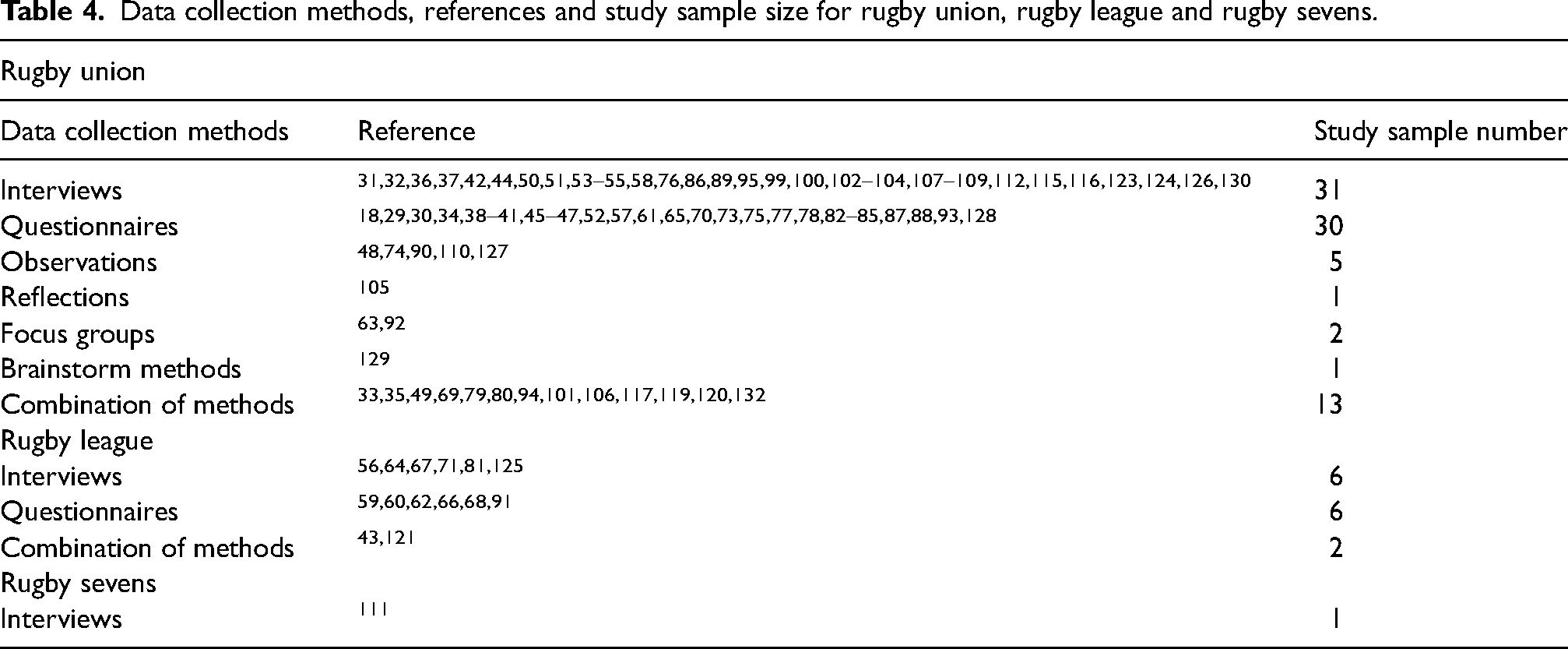
A total of 105 studies (n = 105) were included in the final analysis.18,29–132 In total, 4255 coaches participated in the 105 articles. Forty-four of these studies reported male coaches (n = 44),36,46,50,51,53,56,62,66–68,71,73,76,80,89,92–97,99–101,103–105,107–110,112,115,117–121,123–126,128 only three (n = 3) studies reported female coaches and 18 studies (n = 18) reported both male and female coaches in their studies.29,32,35,38,39,55,57,58,60,65,70,72,84,87,90,113,114,130 Most of the studies focused on coaches within rugby union (n = 80, 76%)18,29–42,44–55,57,58,61,63,69,70,73–80,82–90,92–95,99–110,112,115–117,119,120,123,124,126–129,131 and rugby league (n = 14, 14%).43,56,59,60,62,64,66–68,71,81,91,121,125 The remainder of the studies focused on a combination of rugby cohorts (n = 4, 4%),96–98,114 and only one study focused on rugby sevens (n = 1, 1%). 111 Five studies did not specify the type of rugby (n = 5, 5%).72,113,118,122,132 Only two studies specifically investigated coaches working in women's rugby (n = 2, 2%).31,48 Thirty-three percent (n = 35, 33%) of studies were on youth rugby only, 52% (n = 55, 52%) on senior rugby, nine percent (n = 9, 9%) on both youth and senior rugby and the remaining percentage of the studies did not specify. Only 23 studies (n = 23, 22%) reported all demographic data.29,35,46,48,51,57,58,60,66,67,73,80, 87,89,94,101,105,106,108,119,121,124,130 These data include rugby code cohort, sex of coaches, level of rugby, type of coach and level of coach. Table 2 shows the qualifications of the coaches in rugby union and rugby league. In the studies analysed, most of the coaches held the United Kingdom Coaching Certificate (n = 10).18,52,89,93,94,99,103,116,117,119 Two studies reported that coaches possessed the Australian Rugby Union Coaching Qualification (n = 2).35,108 Additionally, two studies indicated that the coaches held coaching schemes accredited by the Irish Rugby Football Union (n = 2).31,41 Only one study mentioned that their coaches possessed a coaching qualification from the New Zealand Rugby Union. 51 Table 3 shows the types of coaches for all three cohorts. Table 4 shows data collection methods for all three cohorts. Additional files include Tables S1 to S3 which display the study characteristics, purpose of study and conclusion per theme.
Qualification of coaches, references and study sample size for rugby union and rugby league.
Types of coaches, references and study sample size for rugby union, rugby league and rugby sevens.
Data collection methods, references and study sample size for rugby union, rugby league and rugby sevens.
Thematic analysis
After completing the thematic analysis based on Braun and Clarke's six-phase framework, LP familiarised herself with the data by manually reading and extracting data to form codes from each study. Themes were identified; thereafter, initial themes were developed from the codes and then analysed to form the final themes.
Themes identified
The studies were divided into three themes based on the content of the articles:
Theme 1: Coach knowledge
Seventy-one studies reported on coach knowledge.18,29–93,128–132 This theme was further divided into five sub-themes: Coaches’ injury prevention knowledge, coaches’ general injury knowledge, coaches’ concussion knowledge, coaches’ training knowledge and coaches’ doping knowledge.
Coaches’ knowledge of injury prevention
Ten studies (n = 10) were conducted on coaches’ injury prevention knowledge.30,33,34,38,77–79,83,84,129 All injury prevention programmes/workshops that coaches took part in had predominantly positive responses and were helpful to coaches. Of these studies, eight studies investigated injury prevention knowledge after a coach education workshop, formal course or a specific programme.30,33,34,78,79,83,84,129 The majority of studies on coaches’ knowledge of injury prevention investigated injury prevention programmes, 77–79,83,129 including the Mayday Safety Procedure78,79,129 and the BokSmart Safe Six programme. 83 Sewry et al. investigated changes in coaches’ knowledge over the period after launching the Safe Six injury prevention programme. The authors found that coaches’ knowledge of the Safe Six injury prevention programme increased 3.55 times in 2015 and 10.11 times increase in 2016 compared with 2014 based on questionnaire results. 83 The implementation of the Mayday procedure by coaches was another safety protocol investigated by two studies. Poulos et al. evaluated the effectiveness of a strategic approach to improving the translation of the Mayday procedure by coaches within community sport. The prevention group's knowledge in the preseason increased from 30% in 2010 to 70% in 2011 and from 22% to 73% in the regular season. 79 Two studies investigated coach education workshops relating to the injury prevention programme Activate 30 and a neuromuscular training (NMT) warmup. 84 The former study demonstrated that workshops could facilitate coaches in implementing injury prevention programmes. Another two studies focused on formal coach education courses.33,34 Brown et al. found that coaches from a higher socioeconomic status thought the BokSmart course was unnecessary (26% of their comments were negative), while coaches from a low socioeconomic status had a positive perception of the BokSmart programme (only 3% of their comments were negative). 33 Brown et al. also found that most coaches thought the courses could be more practical. 33 Seven studies on coaches’ knowledge of injury prevention were guided by a behaviour change theory or framework. These included the Health Action Process Approach (HAPA) (n = 2);30,84 the Reach, Efficacy, Adoption, Implementation, and Maintenance (RE-AIM) framework (n = 3);33,78,79 the Social Cognitive Theory (n = 1); 129 and the Theory of Planned Behaviour (n = 1). 34 Clacy et al. found that 24% of coaches believed that they play a role in preventing injuries and providing a safe environment for their players, while 70.6% believed that proper training contributed to prevention of concussions. 38
Coaches’ general injury knowledge
Three studies investigated coaches’ general injury knowledge (n = 3).35,41,46 Carter et al. found that 54% of coaches identified the arm and shoulder as the most likely injured location for the tackle, 26% identified the leg as the most commonly injured area on the ball carrier and 36% identified the head and neck are most likely to be injured in the ruck/maul. 35 Cooney et al. found that 97% of coaches reported taking preventative measures to reduce the risk of neck injuries and 81% of coaches incorporated neck strengthening exercises in their training routine. 41 Gouws et al. found that 81% of coaches thought knee injuries were the most prominent injuries in rugby. 46
Coaches’ concussion knowledge
Thirteen studies investigated coaches’ concussion knowledge (n = 13).39,45,47,59,60,65,72,75,82,88,91,130,132 Three of these studies were based on rugby league.59,60,91 When comparing the rugby league studies to the rugby union studies, it was found that coaches in both cohorts had poor knowledge of the return to play protocol for concussion. Clacy et al. found that 71% of coaches tended to rely on medical staff on how to deal with a concussion. 39 Niederer et al. found that 12 out of 20 coaches did not think it was their decision to determine whether a player should return to play after a concussion. 72 Eighty-two percent (82%) of coaches in Fraas et al.'s study agreed that the doctor is the most important decision-maker when players are returning to play after a concussion. 45 Identifying a concussion and educating players on concussion risk were seen as essential. 45 Overall, there was a positive trend of coaches improving their knowledge on injuries and, specifically, concussions over the years.45,47 Continuous education for coaches on this topic was encouraged. 132
Coaches’ training knowledge
Forty-three studies reported on coaches’ training knowledge.18,29,31,36,37,40,42–44,48–58,61–64,66–70,73,74,76,80,81,85–87,89,90,92,93,128,131 Eight of these studies were based on rugby league.43,56,62,64,66–68,81 Coaches agreed that monitoring players are important for training.40,85 Comyns et al. concluded that 80% of coaches thought session-RPE was effective for monitoring performance and preventing injury. 40 Seventy-one percent of coaches had a positive perception of proper tackle technique during different phases of play. 52 Hendricks et al. found that coaches believed proper tackling technique was very important for safety reasons (mean: 4.6, 95%CI: 4.2–5.0 on the Likert scale), and for optimising performance (mean: 4.8, 95%CI: 4.4–5.0 on the Likert scale); however, further education is needed. 18 Strength and conditioning coaches noted 11 aspects of fitness that are important to measure.57,58 Eighty percent of coaches extremely valued performance analysis, but 39% did not receive video footage. Only 20% of coaches had access to a performance analyst. 73
Coaches’ doping knowledge
Two studies reported on coaches’ doping knowledge (n = 2).32,71 One study was based on rugby union which focused on confronting doping athletes. 32 Most coaches believed they were confident enough to confront players about doping. 32 If not, they would give someone else the responsibility to confront the player. 32 The other study was based on rugby league, investigating perceptions and attitudes toward doping. 71 Nicholls et al.'s study found that coaches believe doping education is needed for players and that many factors contribute to doping such as low self-esteem, availability, family, affordability, peers and other coaches. 71
Theme 2: Coach pedagogies
Thirty studies investigated coach pedagogies (n = 30).94–122,127 One study was based on rugby sevens, 111 another study on rugby league, 121 three studies were based on both rugby union and rugby league96–98 and the rest were based on rugby union.94,95,99–112,115–117,119,120,127 Coaching pedagogies include articles that investigate the different practices that coaches use to teach and develop their players. One study investigated the Beat the Game approach which shifted the decision-making of training away from the coach to players making more decisions. 94 Three studies investigated GameSense,108,109,117 which implemented a shift from coach-centred learning towards player-centred learning. Light et al. found that coaches thought the use of games improved players’ skills and reading of cues. 108 Chapron et al. found that coaches were reluctant to move towards player-centred learning. 101 Bennie et al. results showed that coaches felt that they do not only develop players on the field but off the field too. 96 In two studies coaches agreed that the athlete–coach relationship is essential and needs to be individualised.97,106 All coaches in Bennie et al.'s study believed players had to have responsibility to develop, and most coaches had their own styles of coaching. 98 Collins et al. investigated coaches’ intuitive decisions, finding this form of decision-making was developed through experience. 103 Three studies investigated reflective practices amongst coaches.99,105,121 Burt et al.'s study showed that coaches’ main reason for not reflecting was lack of motivation. 99 Another study found that reflective processes, while challenging to implement, can allow for self-awareness and aligning their practices with their values. 105 The ‘Think Aloud’ protocol was implemented with coaches by Whitehead et al., resulting in increased self- and pedagogical awareness. 121
Theme 3: Coach development
Four studies were included in coach development (n = 4).123–126 Coach development was further divided into three sub-themes: Fast-tracking coaches, coaches coping with pressure and coaches’ childhood and adolescent experiences.
Fast-tracking coaches (transition from athlete to coach)
Two studies investigated coaches who were fast tracked from athlete to coach (n = 2).123,124 Some were ‘active’ coaches whereas others were ‘passive’ in the process. 123 Coaches thought their past experiences played a big role in their coaching career. 124
Coaches coping with pressure
One study investigated how coaches dealt with pressure and the stressors in their job (n = 1). 126 This was different for each coach, but a conclusion was to implement programmes for coaches to learn how to deal with their stressors and pressures correctly. 126
Coaches’ childhood and adolescent experiences
One study investigated childhood and adolescent experiences in rugby league which guided coaches to where they are today (n = 1). 125 These experiences seemed to shape coaches’ intuitive decision-making. 125
Discussion
Main findings
To our knowledge, this is the first scoping review of research on rugby union, rugby league and rugby sevens coaches. One hundred and five (n = 105) full-text articles were found and included themes on coach knowledge (n = 71), coach pedagogies (n = 30) and coach development (n = 4). Our main finding within the theme of coach knowledge was that coaches had a good understanding of injury risk, prevention and management, specifically on concussions. One of the main strategies to improve coaches’ understanding of injury risk, prevention and management of all aspects of injury is by providing coach educational resources, such as workshops and injury prevention programmes. In addition to injury prevention education, coaches are encouraged to build knowledge on all aspects related to rugby performance, such as technical and tactical knowledge. 18 Within the coach pedagogy theme, the importance of the athlete–coach relationship was highlighted, as well as coach reflective practice.96,105,106 For instance, Hall et al. showed how reflective practices encouraged a coach's self-awareness and alignment between their behaviours and values. 105 Also, there is a shift in coaching pedagogy, from a coach-centred approach towards a player-centred approach. 101 Although the coach development theme included the smallest number of studies, two papers highlighted the active and passive processes of fast-tracking athletes into the coach's role.123,124 This review highlighted three themes of key research areas, yet it may be how these themes are integrated that could move rugby coaching research and practice forward.
Coach knowledge is multi-faceted
Coaches’ knowledge is multi-faceted 24 and extends beyond knowledge of the sport and teaching rugby-specific skills. Within the reviewed studies, coaches were encouraged to improve their knowledge on injury risk, prevention and management, which ensures the safety and wellbeing of players within their rugby codes.30,33,34,77–79,83,84,133 The consulted coaches agreed that all coaches should continue learning about how to reduce and manage injury risk, specifically concussion.38,45 Based on the consultations, it was noted that some coaches still do not fully understand the risk when a player has a concussion. Also, knowledge of injury prevention and management is only one aspect of players’ welfare. Within a rugby team setting, coaches may be required to offer advice on psychological strategies, nutrition, physical conditioning and lifestyle. In some settings there are not enough resources for coaches to rely on a team of other professionals to give advice. Furthermore, coaches may be a source of mental support and mentorship. 134 As such, it is important for coaches to have a broad understanding of various aspects related to player welfare (i.e. mental health, nutrition intake or physical conditioning), which can be developed using formal (for example, an accredited course), informal (for example, discussions with other coaches) and/or non-formal learning (for example, seminars). 135 Coaches’ knowledge acquisition and learning from different situations have been widely researched across various sports.135–137 Coaches have reported that continuous learning is challenging,24,136 since most are not full-time coaches or have many responsibilities as a professional coach.
One way to overcome these challenges is for rugby stakeholders (for example, governing bodies) and researchers to engage with coaches to identify barriers and facilitators to coach learning. Rugby stakeholders and researchers should work together to ensure their latest findings on the various aspects related to player welfare are accessible through effective translation and dissemination of their research. 138 While informal situations are generally the preferred learning source for rugby coaches, 136 formal and non-formal learning situations have the potential to develop a more up-to-date and evidence-informed knowledge base.124,139 More important than the type of learning situation or source is the design of learning opportunities that connect coaches to existing knowledge, practice, values and working contexts, making new knowledge relevant and useable.137,140
Similarly, the consulted coaches recommended researchers establish personal connections with coaches, spending time with them and observing pedagogical challenges and behaviours. If research is intended for coaches, researchers should involve coaching practitioners during all stages of their study and understand the dynamic nature of the coaching environment. Likewise, through the establishment of a strong researcher–practitioner relationship, coaches will gain an appreciation of the research process. 138 This will also assist researchers to develop a better sense of how coaches are implementing knowledge in practice, informing the development of more practically relevant research questions and agendas.
Coaching pedagogies
Coach reflective practices were encouraged throughout this review.99,105,121 Through reflective practice, coaches may become more aware of their values and how these align with their behaviour.48,105 To fully benefit from reflective practice, coaches may need input from an external peer or coach developer to shape their thought processes and construct new knowledge.137,141 Reflective practice is an ongoing and deliberate process; however, coaches noted that they are not always able to prioritise it.48,99,105 One way to promote reflective practice is for coach educators to formalise it as part of continued coach education. From a research perspective, further work is required on how to effectively integrate reflective practice with coaching in rugby. 141
This review suggested that while a coach-centred pedagogy remains dominant in rugby, coaches seem to be shifting towards a more player-centred coaching approach. That is, from directive pedagogies where coaches make decisions for players and dictate how the game should be played to a viewpoint where players are empowered to drive their own learning and development, including making their own decisions and learning from their mistakes and successes. 108 With that said, the shift towards player-centred coaching approaches has not been ubiquitous. 101 Player-centred approaches require players to make mistakes, reflect upon them and learn from those errors to make further attempts with new strategies. This process requires time, a resource many coaches do not have in abundance. 101 To promote the adoption of player-centred coaching approaches in rugby, the consulted coaches highlighted that more work is required to help identify barriers and facilitators, as well as increased focus in formal coach education courses.
Coach development
From the themes identified in this review, the least studied was coach development. In the identified studies, one of the main pathways for coach development within rugby was the ‘fast-tracking’ of recently retired players into coaching roles. 124 Coaches that develop through this pathway may subsequently rely on their playing and past experiences, instincts, and traditions to inform their coaching practice. 142 Coaches’ playing and past experiences may also act as a filter for interpreting new or different information. 137 To improve the development of coaches in rugby while connecting to practice in context, novice coaches may require mentoring by more experienced coaches. 24 However, a challenge for novice coaches is identifying and accessing mentors with the relevant experience and training. 24 An ineffective mentor may expose novice coaches to potentially unfavourable habits – for example, replicating out-dated or unsafe practices based on previous law variations or accepted tradition. It may also be challenging to develop coaches’ understanding of the theoretical underpinnings of different coaching approaches through informal, uncertified mentoring. From a research and stakeholder perspective, further work is required to gain insight into rugby coaching career pathways and how to best support coaches through their developing careers. The significance of this work was also emphasised during the coach consultations, especially for the development of female coaches – who are underrepresented in the sport.
Gaining knowledge through formal and non-formal coach education is viewed as a key strategy to continue developing as a coach.135,139 This viewpoint was echoed during the coach consultations. The current review did not find any coach development studies demonstrating how experienced rugby coaches mentor newer coaches as part of a coach development pathway. This lack of mentorship opportunities was also cited during the coach consultations. Collectively, the coach development findings bring to light an opportunity within rugby to formalise mentorship as part of a structured evidence-informed pathway for developing coaches. 139 Evidence suggests coaches should have access to practical learning opportunities on what and how to coach, 142 as well as guidance on how to reflect and continue subsequent learning. A coach development pathway of this nature will ensure, for example, players ‘fast-tracked’ to coaching roles have the necessary tools to sustain a progressive coaching career. 123 Increasing research within coaching development will also allow researchers to understand where rugby coaches are coming from and how different stakeholders and organisations can best support them.
Future studies, strengths and limitations
This review provides a broad scope of the literature on rugby union, rugby league and rugby sevens coaches. While this objective fulfils the purpose of a scoping review, the breadth of the synthesis is at the expense of in-depth analyses and discussion. With that said, applying a broad scope allows for identifying major gaps in the literature – one of which was studies on coaches in sevens and women's rugby. Additionally, a definition of ‘coach’ or ‘coaching’ was not clearly included in the methods of the reviewed studies, hindering conceptual clarity. 143 The majority of the reviewed studies used interviews and questionnaires, whereas only four studies used observational methods. Although interviews and questionnaire studies show that coaches have knowledge on a particular subject matter, observational studies allow researchers to measure any changes in coaches’ practice. 137 Future studies can also use action research and reflective practice, which is arguably a more sustainable methodological approach to exploring coach development and changes in coach practice. Future studies should investigate and understand the social, cultural and historical challenges that are associated with shifting coach pedagogies from coach-centred to player-centred. These studies will allow for a deeper understanding of how and why coaches use particular knowledge and practices. In addition, there were only 23 papers that reported all demographic data in this review. Moving forward, studies should report minimum demographic data which include rugby code cohort, sex/gender of coaches, level of rugby, type of coach and level of coach. A strength of the current review was the inclusion of stage 6 (i.e. consulting coaches). In the coaching consultations, coaches mentioned how youth rugby coaches need to be a focus in the future, especially with regard to injury prevention, technical skills coaching and player safety. Other suggestions for future research include coaching styles, coach philosophies, coach education and coaches’ understanding of load, human movement and intensities, transferring knowledge from different rugby codes, coach education and coach competency – especially in the women's game.
Conclusion
In conclusion, there were three main themes in this review which included coach knowledge (n = 71), coach pedagogies (n = 30) and coach development (n = 4). The main finding in this review was that coaches understood the risk, prevention strategies or rationale and management of injuries. Educational resources, such as workshops and injury prevention strategies, are used to improve the coaches’ understanding of injuries, and such strategies should include all aspects of rugby play or training and injuries. The importance of the athlete–coach relationship and coach-reflective practices was another significant finding in this review. It is important to teach and encourage reflective practice in coach education courses for the benefit of coaches. Additionally, coaches need input from an external peer, mentor or coach developer to shape new knowledge and its application. Coaches are encouraged to have a broad understanding of various aspects related to the player's welfare (i.e. physical conditioning, mental health or nutrition), which can be developed using formal and/or non-formal learning. Additionally, researchers are encouraged to create a personal connection with coaches and involve coaches throughout the different stages of their studies to establish a strong researcher–coach relationship. Additionally, this relationship will assist researchers to develop a more accurate sense of coaches’ knowledge on different topics and how their coaching knowledge is implemented. The lack of coach development studies should be addressed by investigating the coach development pathways and effective methods of support for developing coaches in rugby.
Supplemental Material
sj-docx-1-spo-10.1177_17479541231185558 - Supplemental material for More than rugby: A scoping review of coaches in rugby
Supplemental material, sj-docx-1-spo-10.1177_17479541231185558 for More than rugby: A scoping review of coaches in rugby by Lara Paul, Demi Davidow, Anna Stodter, Kevin Till, Kathryn Dane, Ben Jones and Sharief Hendricks in International Journal of Sports Science & Coaching
Footnotes
Acknowledgements
The authors would like to acknowledge the University of Cape Town and the National Research Foundation for the funding and support from the Vice-Chancellor award, PPI award, the UCT Master's Scholarship and the National Research Foundation Postgraduate Scholarship during the study.
Declaration of conflicting interests
The author(s) declared no potential conflicts of interest with respect to the research, authorship and/or publication of this article.
Funding
The author(s) disclosed receipt of the following financial support for the research, authorship and/or publication of this article: This work was supported by the National Research Foundation and the University of Cape Town.

Supplemental material
Supplemental material for this article is available online.
References
Supplementary Material
Please find the following supplemental material available below.
For Open Access articles published under a Creative Commons License, all supplemental material carries the same license as the article it is associated with.
For non-Open Access articles published, all supplemental material carries a non-exclusive license, and permission requests for re-use of supplemental material or any part of supplemental material shall be sent directly to the copyright owner as specified in the copyright notice associated with the article.
