



Abstract
The transition of elite youth footballers through academy systems towards the first team is highly complex, competitive, and often unsuccessful. A myriad of factors including technical competence, physical prowess, and the development environment combine to determine youth player progression. Current research has focused on broad investigations of multiple clubs and stakeholders, providing a valuable overview of the key aspects associated with elite youth player transition. This study aimed to provide an in-depth, context-specific investigation of key stakeholders within an elite level club in the United Kingdom (UK). Seven key stakeholders including the head of the academy (n = 1), the head of sports science (n = 1), coaches (n = 3), and lead sports scientists (n = 2) were recruited. Framework analysis led to the development of a practical framework outlining the key facilitators and barriers of youth-to-first-team transition. Facilitators of transition included overcoming adversity, high-level physical prowess, exceptional technical competence, and possessing at least one elite-level attribute. Barriers to transition included a lack of opportunity, lucrative youth player contracts and a lack of development-specific coaching. In addition, the developmental environment and developing individuals within a team environment were key influences on youth-to-first-team transition. This study complements recent broad investigations of the UK and global stakeholders by corroborating many of their findings while providing transferable, context-specific accounts of applied issues related to successful transition to first-team football.
Introduction
Most youth footballers in the UK fail to transition from the academy level to the first team. 1 Of those who succeed in progressing to the first team environment, even fewer will become established first-team players over a long-term period. 2 The challenges for aspiring footballers are complex given that youth player transition is multifaceted and requires thorough, contextualised investigation. 3 In the context of professional football, a transition event in a youth footballer's career may include key moments such as signing a professional contract, being deselected, or suffering from injury. 4 This complex, multidimensional pathway is closely linked to all aspects of a footballer's life including athletic, academic, and financial well-being. 5
Following the adoption of systematic performance strategies (e.g. the English FA Elite Player Performance Plan (EPPP)), academics have investigated multidisciplinary approaches to player performance and development. Psycho-social factors, 6 physiological demands, 7 technical ability 8 and tactical understanding 9 have been endorsed as key determinants of an elite youth footballer's journey towards first-team football. Such research provides actionable insights into the key attributes of elite youth player performance and predictors of adult performance.10,11 However, it is important to consider the multiple facets of talent development as overlapping and intertwined, with each player forging their own unique journey from elite youth prospect to first team professional. 12 The “Locking Wheel Nut Model” developed by Kelly et al. 13 highlights the nuances and individualised nature of player development. This model supports profiling player competence against a range of technical, tactical, sociological physiological, and psychological metrics. Thus, generating individual plans for each player based on their unique development needs from a coaching, sports science, and psychology perspective. In addition, the Athletic Talent Development Environment (ATDE) 14 model and the Athlete Career Transition (ACT) model 15 have been frequently adopted within the scientific literature. The ATDE model 14 provides a framework of environmental factors that influence the transition of youth athletes to the senior level. The ACT model 15 outlines phases within transition events where interventions may provide support to young athletes during key events in their career. These frameworks highlight the multifactorial nature of the youth-to-senior transition in professional sport and, as such, represent the theoretical constructs that this project is based upon.
Contemporary talent development research has mainly focused on younger age groups from the early phase to the development phase (8–15 years of age). 16 Less attention has been given to senior academy players (> 16 y/o) or the “post academy” development phase and the complexities associated with the progression of players towards first-team football. 17 This is problematic given the difficulties associated with transitioning to first-team football from an academy setting. 2 For example, the main objective of first-team football is to deliver results which are in contrast with the aims of development football. In addition, players’ experiences, needs, and environments will evolve as they progress through the academy system as they are exposed to greater pressures to perform, demonstrate progress, and secure professional contracts. In addition, external peer group pressures may become prevalent as players mature. Thus, further investigation into the later-stage youth development transition is required given the increased physical, psycho-social, and technical demands.18,19
Research into the facilitators and barriers associated with youth transitioning to first-team football is generally scarce. However, there are notable studies within this domain. A global, questionnaire-based study by Lundqvist et al. 20 found that practitioners and stakeholders considered a club-wide playing philosophy, exposure to various playing styles and long-term player development strategies as key factors in youth to senior transition of elite players. As such, it could be argued that clubs should have clear, long-term strategies to facilitate the multifaceted nature of the youth-to-first-team transition. In addition, Mitchell et al. 17 provided insight into the perceptions of key stakeholders within academy systems regarding the barriers associated with this transition. Findings suggested that youth players may struggle to adapt to hyper-competitive, results-driven first-team environments and may experience isolation and loneliness in the early phase of the transition. This is supported by previous literature on the stressors athletes may endure within high-performance sporting environments including an obsession to win and feeling pressure to fit into a new environment, 21 and it suggests that players in the early phase of transitioning from youth to first-team football may require individualised support and resources.12,19 These studies provide a perspective on youth footballer transition and promote triangulation between players, coaches, and key support staff to elicit best practices within academy systems. However, the general paucity of research in this area may limit practitioners’ understanding of this critical phase in a youth footballer’s career. 22 Each academy environment is unique and driven by club philosophy and youth development principles. 22 In addition, organisational governance, culture, and geographic location may impact talent development strategies and depend on resources, finance, population density and development philosophy. 18 As such, individual youth player transition and development are inimitable processes and not a “one size fits all” paradigm.13,20 Therefore, we propose that in-depth, context-specific single-club investigations will enhance and supplement the broad findings of current research.
This study aimed to investigate the perceptions of key stakeholders from an elite youth academy on the facilitators and barriers of youth players (16–21 years of age) transitioning to first-team football. In addition, we aimed to develop a working framework based on the practices of the club involved in this study but with the potential to be implemented or adapted by other elite clubs and practitioners.
Methods
Positioning and design
This project is framed within a constructionist ontology while adopting an interpretivist epistemology. 23 This philosophical position aligns with the research team's belief that knowledge is constructed based on individual notions and interpretations of reality and experience. 24 In addition, the research team agreed that to deliver a rich, in-depth project, the lead researcher should play an active role in the research process. 25 As such, a qualitative, investigative approach to research design was applied.
The first author was embedded within the club's B Team (U21 s) as a sports scientist as part of his PhD. He has ten years of professional football experience as a player and was previously part of the youth academy with the football club involved in this study for 5 years. Each co-author has extensive applied and research experience in elite football. To mitigate potential researcher bias, the co-authors formed a critical friend network to challenge and critique the first author's interpretations at each stage of the data analysis process and subsequent framework development. 26 The use of critical friends is appropriate given the ontological and epistemological positions this study is framed within. 26
Context and participants
The club involved in the study is an elite-level, Scottish Premiership club and regularly competes in Union of European Football Associations (UEFA) Champions League and UEFA Europa League competitions. Following institutional ethical approval from the University of the West of Scotland ethics committee (ref: 17531), eight key stakeholders currently working within the club's youth academy were identified as prospective participants and provided with an overview of the planned study via email. In total, seven responded and agreed to participate (m = 7, f = 0). Voluntary informed consent was obtained from each participant prior to commencing data collection. Participant roles included the Head of Academy, the Head of Sports Science, two lead sports scientists and three coaches across the U18s and B Team squads. All coaches (including the Head of Academy) were qualified to or currently working towards their UEFA Pro Licence and had playing experience at professional level. Sports science practitioners were all educated to the MSc level with over forty years’ collective experience in elite youth and senior football. To protect confidentiality, participant names are replaced with numbers (P1, P2, etc.) in the “Results” section.
Data collection
Data were collected via semi-structured interviews. 27 Pilot interviews were conducted with a coach and sports scientist from a professional football club in the English Championship. This led to the refinement of the interview schedule and the exclusion of questions which were deemed irrelevant to the study aim. 28 The interviews lasted between 51 and 105 min, with 474 min of interview data collected in total. Data collection was conducted face-to-face, within private rooms at the club's stadium or training complex. All interviews were conducted by the lead author during participant free time with findings discussed at length with co-authors following each interview.
Data analysis
Framework analysis was conducted as it offered a systematic approach to framework development. This method provided researchers with a tool to investigate applied issues from the perspective of participants with firsthand experience of a specific topic. 29 We aimed to produce a working framework for the club as part of this project as opposed to a descriptive narrative that traditional qualitative analytical methods yield. 29 As framework analysis has the potential to create actionable outcomes and has been successfully adopted in medical and psychology domains,30,31 it was deemed appropriate for this study.
The framework analysis involved a five-stage process resulting in the development of concepts and sub-concepts from the data. 28 The five stages of framework analysis were as follows: (a) familiarisation with the entire data set; (b) identification of a framework; (c) indexing codes; (d) charting and summarising; and (e) mapping and interpretation of the concepts within the framework. Familiarisation with all seven interviews was conducted by reading each transcript and listening to audio files several times. Initial codes, notes, and ideas were recorded at this stage until the lead author felt they had gained a reasonable understanding of the data. These codes and notes were used to form early impressions of the data. From here, initial abstract concepts were identified to create a framework for the analysis and interpretation of the data. The emergent concepts from the familiarisation phase were grouped and ranked to provide a structure which addressed the main aims of the study. Several sub-themes and components were developed and included in this part of the analysis phase. This was an iterative process which involved the lead author tested the initial framework against a test portion of the data set to refine and remove any unnecessary or duplicate concepts. 29 The research team played an active role in this process by challenging the initial concepts generated by the lead author.
Following framework synthesis, it was applied to the entire data set. Linking study data with the framework components was accomplished using Microsoft Excel. The indexing process involved revising and refining the framework by assessing the efficacy of the framework with respect to the raw data. For example, the sub-concepts “Development Philosophy” and “Developing Champions League Players” were collapsed into “Environment and Development Approach.” Following the completion of the indexing phase, the data were ordered and abstracted to systematically examine it.
Rigour
To address rigour, several trustworthiness criteria were selected based on their appropriateness for the research design. Accordingly, substantive contribution, credibility, and transparency were all incorporated into the project. 26 This was achieved by (a) conducting novel research in an area of current literature that had not received significant attention; (b) consulting the research team at each phase of data collection and analysis to obtain feedback and promote reflexivity; and (c) providing clear implications of the findings as well as future research opportunities for academics and practitioners interested in the elite youth player transition.
Results
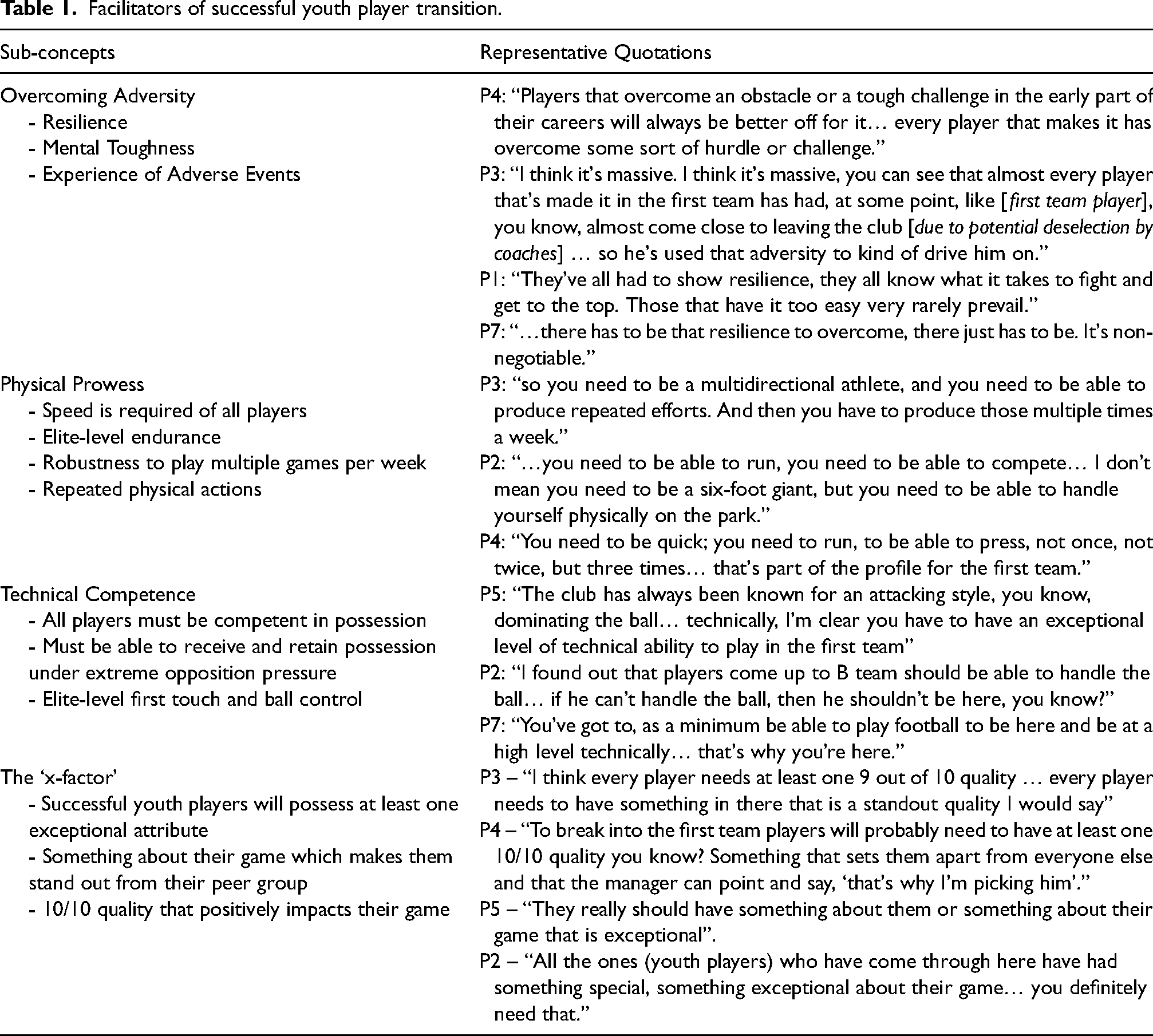
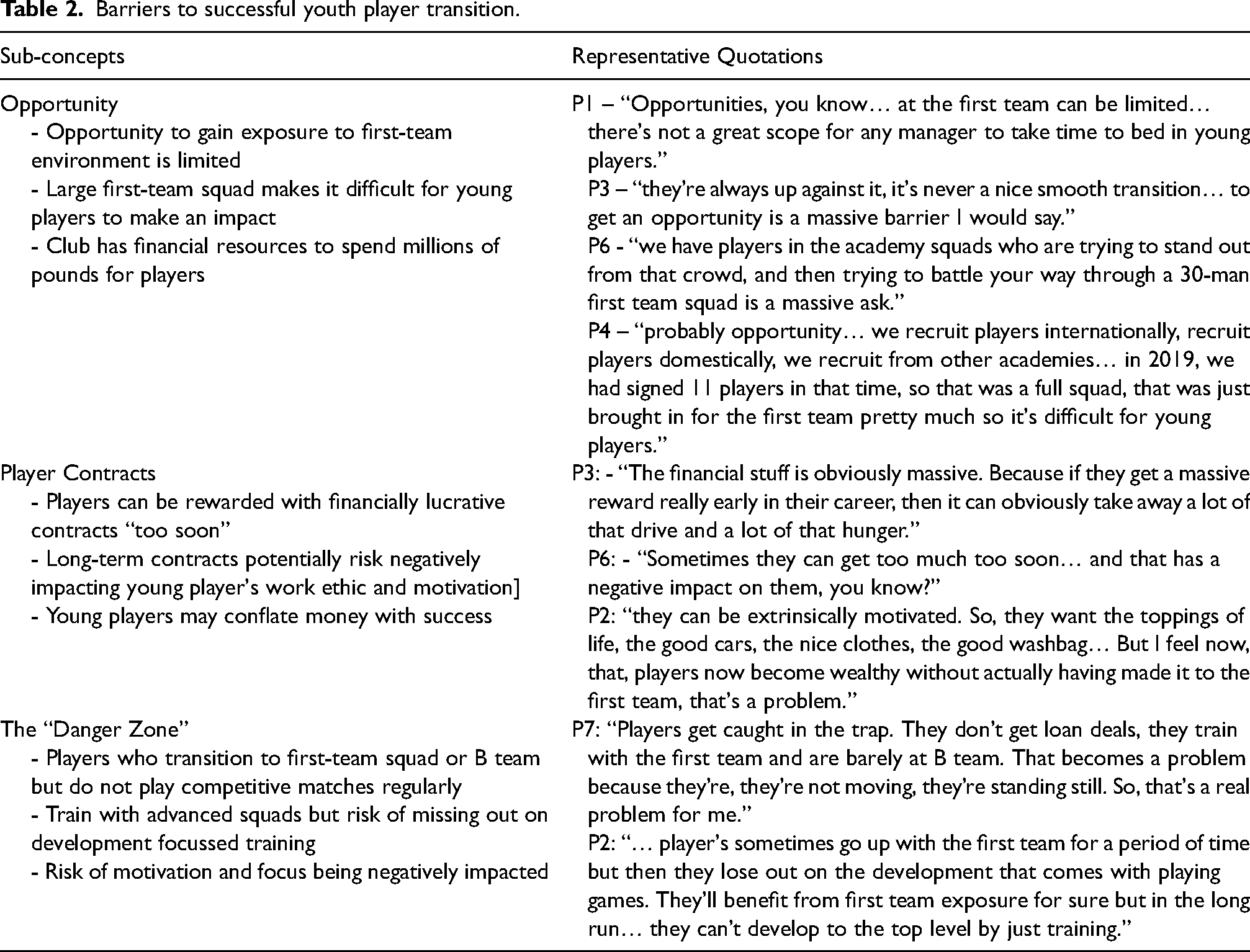
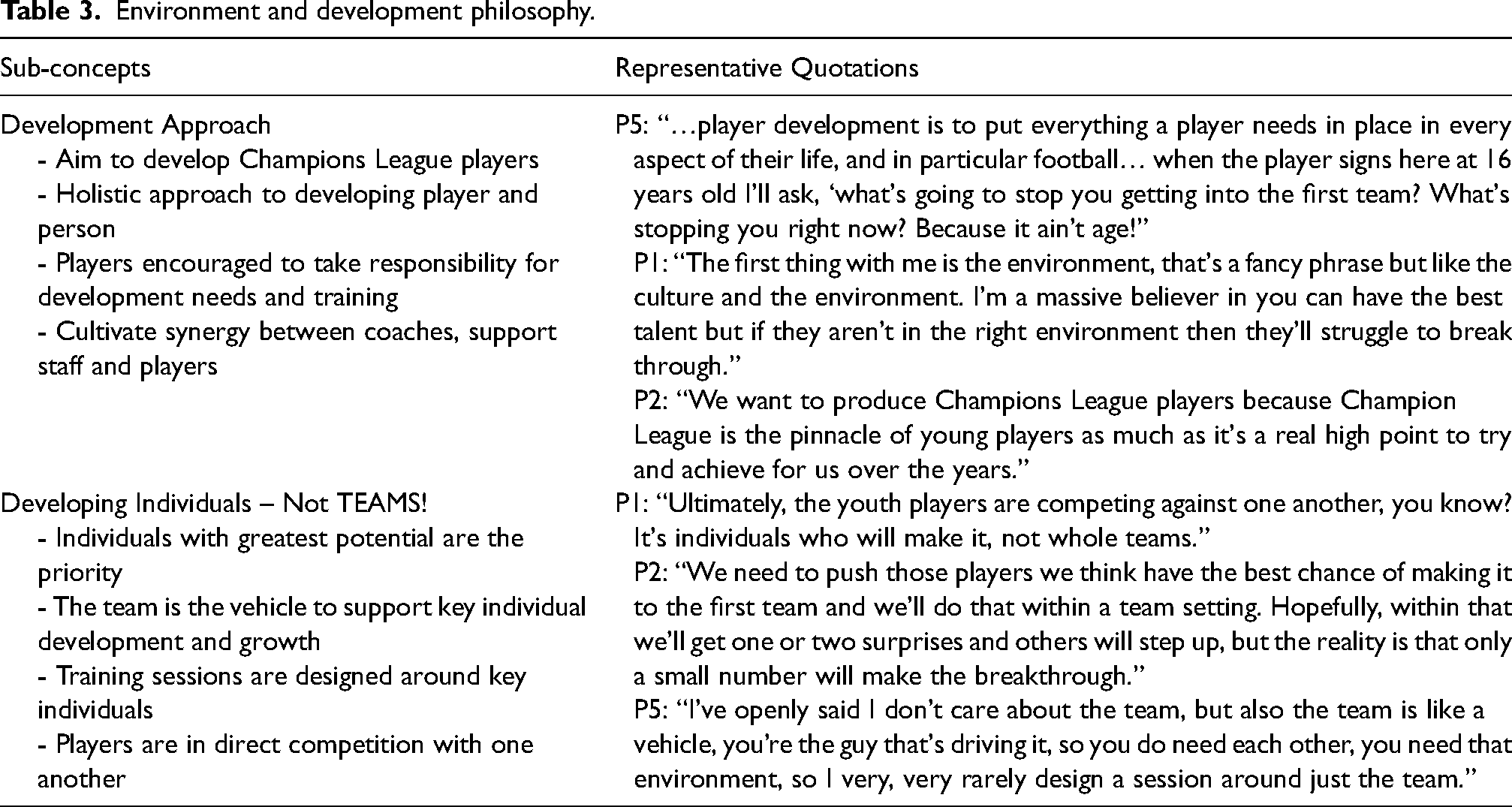
A framework consisting of three key concepts with multiple sub-concepts has been developed. The key concepts are as follows: (a) facilitators of successful youth player transition (Table 1); (b) perceived barriers and challenges to youth player transition (Table 2); and (c) environmental influences on youth player transition (Table 3). Each section of the framework is presented separately, and the concepts are supported by verbatim quotes from key stakeholders.
Facilitators of successful youth player transition.
Barriers to successful youth player transition.
Environment and development philosophy.
Facilitators of successful youth player transition
Players who demonstrated the ability to overcome adversity during their development in the academy were perceived as more likely to transition to first-team football. In this context, adverse events may include recovering from long-term injuries, potential deselection, and experiencing loss of form or motivation. Therefore, resilience was a critical quality that stakeholders perceived to be a key facilitator of successful transitions to first-team football for youth players. Stakeholders considered high-level physical prowess as another key contributing factor to successful transition to first-team football. Commonalities amongst practitioners included the need for players to demonstrate robustness in competing multiple times per week and dominating physical duels with opponents. In addition, the ability to perform repeated actions within a game and training consistently was cited as another key physical metric. The physical aspects of performance were important for successful transition and development and there was a consensus that young players would not transition without the ability to handle the physical demands of the game. All players who had made the transition from the academy to the first-team were considered to possess elite technical competence. Players in every position are expected to build attacks, to regularly retain possession and receive the ball in all areas of the pitch whilst under extreme opposition pressure. Developing technical competence is of utmost importance to the philosophy of the club and players are expected to have attained high levels of technical competence by the time they reached B team level. As such, all youth players with aspirations of transitioning to the first team were expected to meet the highest levels of technical competence. All stakeholders agreed that successful transition to the first team required players to possess at least one exceptional attribute or quality. This attribute could be physical, technical, or psychological and should set them apart from other players in their squad. Due to the magnitude of the club and the pressure to deliver results, it was felt that without an exceptional attribute, it would be difficult for youth players to make an impact in the first-team squad.
Barriers to successful youth player transition
Limited opportunities for youth players to gain first-team exposure were a central barrier to their transition. Stakeholders felt that managers did not have the time to allow young players the opportunity to adapt to the increased demands of first-team football. In addition, the size of the first-team squad only increased the difficulty for young players to make a significant impact at the senior level. The club has the resources to sign players from all over the world which further impacts the opportunities for academy prospects experiencing the first-team environment. The financial rewards associated with some of the highly rated youth team players contracts at the club were also cited as potential barriers to successful youth player transition. Stakeholders perceived financially lucrative contracts for young players as negatively impacting their motivation and work ethic. It was deemed problematic that young players received such financially lucrative contracts prior to any notable involvement with the first team. This presents a challenge for the club as they have a track record of developing talented young players, and there is an obligation to retain their services or risk losing them to rival competitors. The club may also view lucrative contracts as a long-term investment. The first team has a performance focus and not a development focus. Therefore, players in the early phase of first team transition are at risk of falling into a developmental “Danger Zone”. This is due to players not playing competitive matches on a regular basis as well as following training schedules which typically focus on recovery and preparation as opposed to addressing specific developmental needs. As a result, young players in this “danger zone” face the risk of stagnation or regression due to a lack of attention and specific training.
Environment and development philosophy
The impact of developmental practices and the philosophy of the club in relation to supporting the elite youth player transition was another important concept within the framework. The culture created by coaches and sports science staff played a significant role in preparing and educating players about the expectations of being a first team player. In addition, the club's ambition to develop players for the highest level of club football in Europe was also a consistent motivation throughout the development process. Stakeholders believed in the practice of developing individual players within a team environment. This approach acknowledges the reality that select individual players will transition to the first team and not entire squads. Therefore, most team training sessions or matchday instructions are designed around individual players who are perceived to have the best chance of progressing to the first team.
Discussion
This study aimed to investigate the facilitators and barriers associated with the youth footballer transition to first-team football from the perspective of key stakeholders currently working for an elite football club. The analysis led to the development of a working framework which consisted of three key concepts: attributes associated with successful youth player transition, barriers to transition, and environment and developmental philosophy. In this section, each concept and sub-concept are discussed in consideration of the current literature in this field. In addition, potential implications for enhanced practice are offered throughout.
Facilitators of successful youth player transition
Overcoming adversity, physical prowess, technical competence and the “X-Factor” were the sub-concepts in this section of the framework. An athlete's journey to elite-level competence in sport is rarely linear and will likely involve some form of challenge or obstacle. 32 There was broad consensus among participants that players who are successful in progressing to the first team all possessed the ability to overcome adverse events or barriers. For elite youth footballers, adversity is any events or scenarios in their career that require them to display or develop high levels of resilience and mental toughness 33 There is an argument that talent development provision in football does not cater to player needs beyond performance-based metrics. 34 Consequently, young players are rarely exposed to adverse scenarios to allow them to develop resilience and mental toughness35,36 which may be detrimental to their progression towards first-team football.
Interestingly, stakeholders suggested manufacturing obstacles and creating barriers for players to overcome during their academy journey. This aligns with the work of Collins, MacNamara and McCarthy 37 who support periodised, progressive challenges preceded by specific skill development interventions as the optimal approach to manufacturing athlete resilience alongside applied competence. Stakeholders suggested creating challenges for players such as having them play in an unfamiliar position or compete in an advanced age group. 38 Furthermore, resilience and stress exposure were key factors in the global youth-to-senior transition study conducted by Lundqvist et al. 20 which highlights transferability between broad survey data and in-depth single club investigations.
Literature supports the notion that players with advanced physical and physiological capabilities are more likely to progress to first-team football. 39 For example, speed is recognised as a discriminating factor between successful and unsuccessful elite youth footballers. 40 Research has corroborated the importance of maximal and repeated sprint ability to performance in elite football.41,42 Sprint distance in modern football has increased significantly over the last decade 43 due to enhanced player conditioning and the evolution of strategic and tactical principles. 44 Stakeholders highlighted that all outfield players would be required to possess high levels of speed and repeated sprint ability. This is likely due to the aggressive, high-pressing style of football that has been traditionally adopted by first team managers of the club, typically to regain possession. 45 All stakeholders are aware of the importance of speed in the modern game and the tactical style adopted by the club. Therefore, it is unsurprising that stakeholders highlight this as a key aspect of physical performance for aspiring youth footballers.
In addition to speed and strength for central defenders, aerobic and anaerobic endurance for midfielders, and explosiveness in acceleration and deceleration for strikers were cited as desirable position-specific physical attributes. These attributes also reflect the demands of the modern game and are congruent with research in this area.46,47 Despite the consensus that physical prowess is critical to youth player development, there was a lack of specificity when considering how physical performance would impact the transition to first-team football. For example, for central defenders, it would be beneficial to understand what type of strength may best serve a youth footballer to optimise their development and performance (e.g. isokinetic strength and uni-lateral limb strength). It may be useful for academy staff to examine the specificities of position-specific physical demands to inform and optimise training and development interventions. Although recent literature supports the notion that coaches perceive skill and psychological attributes to be valued higher than physical prowess, 48 longitudinal studies report that players who exhibit superior physical performance are more likely to be successful in transitioning to senior-level football.
Technical competence has been widely researched within talent identification and development domains.49,50 As previously stated, the club involved in this study implements an attacking, possession-based style of football. Therefore, it is critical that players possess a high level of technical ability. Ensuring continual development of technical and skill-based abilities is the core methodology adopted by academy coaches to develop players. This is also common amongst elite-level academies. 51 Relatedly, there is an expectation from coaches and support staff that players will possess a high level of technical ability by the time they reach U18 or B Team level. It was considered unlikely for players who have not demonstrated exceptional levels of technical ability by this stage to progress to the first team level. Players’ technical competence is assessed using “coaches’ eye” during training and matches and thereafter reviewed in analysis sessions. 52 This allows coaches to apply their expertise and experience to identify technical strengths and deficiencies within a player's game. 53 This is a typical practice in elite-level youth academies in the UK and is a key aspect of a young players’ development in the academy. 54 One method of enhancing judgement of youth players’ technical competence may be through skill-based assessment. The literature suggests that skill-based assessment discriminates between elite and sub-elite players. 55 The execution of skill-based actions including dribbling, passing, and shooting is considered important metrics when assessing player performance in competition. 56 However, it is uncertain whether practitioners working with this population would consider such methods beneficial for assessing technical competence.
When referencing past and present players who graduated from the academy to the first team, stakeholders all identified one attribute within each player which was considered at an elite level. These perceptions lack research or academic foundation; however, there is value in subjective, anecdotal testimonies from expert practitioners. 57 Academy staff aim to identify a physical, technical, or psychological trait in a youth player’s performance that may give first-team staff cause to include them in their squad. Examples include exceptional top speed, elite-level resilience and exemplary passing ability. Possessing an “x-factor” may also give transitioning players additional time to settle and adapt to the demands of first-team football. Coaches and decision-makers may be more forgiving of performance deficiencies if they have displayed an exceptional aspect of their game. 17 Further research on this notion would be welcomed to understand whether this perception is shared among other key stakeholders within elite youth academies across the UK. In addition, it would be beneficial to understand what methods practitioners adopt to ascertain what aspects of player performance are judged as elite or exceptional.
Barriers to successful youth player transition
The demand, pressure, and result-driven nature of first-team football is cited as detrimental to youth players’ opportunities to join the first team. 17 Research suggests that first-team managers are less likely to trust younger, untested players.58,59 The club involved in this study is expected to win every domestic game. There is incessant pressure from supporters to win league and cup competitions every season as well as performing well in European competition. This dynamic is fuelled by their rivalry with another club whom they regularly compete with for honours. As a result, it is a significant challenge for young players to gain experience and make a sustained impact at the first-team level. Therefore, it is reasonable to deduce that youth players at higher-level academies may not have the same opportunities to experience first-team football as those who play at a lower level. 60 Limited opportunities to demonstrate competence in a first-team environment can stifle development. 17 There have been attempts by governing bodies (UEFA Technical Report, 2022) to implement criteria requiring clubs to include a minimum number of homegrown or development players within a matchday squad. This aims to provide young players with the opportunity to experience the first-team environment and competitive playing time. However, the efficacy of such interventions is unknown and requires further investigation.
A young player progressing to an advanced squad (e.g., B Team to first team) may initially appear as a progressive event in their development. However, if they are unable to make an impact within an advanced peer group, progression is at risk of plateauing due to reduced game time and individual training. 61 This risk requires careful management by academy staff to safeguard against regression of player development. 35 For context, at the time of this study, the first team squad consisted of thirty players. As a result, regular competitive game time for transitioning players is limited, if not non-existent. 17 Playing consistently is important for players to further their development and understanding of the game. 61 In addition, there may be a lack of post academy specific training to address development needs. This was also highlighted by Mitchell et al. 17 as a barrier to first-team transition for youth players. Therefore, first team and academy practitioners should liaise regularly to minimise the risk of young players entering the “danger zone”. A potential solution to this problem could be utilising loans for players at the B Team level who are considered ready to sample first-team football. 61 Alternatively, the creation of a specific youth to first team transition coach or practitioner may protect youth player development within the first-team environment. 17
Over the past thirty years, elite football has evolved into an industry which generates billions of pounds through sponsorship, player sales, and merchandise. 62 Part of that wealth has trickled down to the players by way of lucrative long-term contracts. Ideally, youth players would sign contracts with a structured pay scale which increases periodically or following key milestones (e.g., international call ups, first team debut). 63 In reality, elite clubs are in direct competition with one another to ensure the best young prospects remain at their clubs. 64 Therefore, clubs mitigate the risk of losing those players to rival competitors by offering lucrative contracts to secure their services. This can be problematic, with financially lucrative contracts being awarded to players without contributions at the first-team level. Stakeholders were concerned that motivation may be negatively impacted and that young players were conflating wealth with success. Mitchell et al. 17 found similar results with key stakeholders perceiving the wealth associated with player contracts prior to reaching the first team as one of the main barriers to youth player transition. This suggests that financially lucrative contracts may impact youth player self-awareness, work ethic and motivation.
Environment and development philosophy
The optimal development environment includes elite-level coaching, player welfare, psychological support, elite facilities for the first team and B team, and an elite culture and mindset towards training and performance by all staff within the academy. As highlighted in the ATDE 14 and ACT 15 models, it is important to consider a wide range of factors within an athlete's transitional environment at both macro and micro levels. 20 Without a supportive environment, the ability of football academies to produce top-level footballers is limited.65,66 The academy aims to provide a service for the betterment of player development. Sports science staff have highlighted the use of objective methods of assessment for physical and physiological development whilst technical and tactical abilities are typically judged on a more subjective basis. 65 Integrating objective and subjective methods to assess development represents an effective developmental strategy. 56
Research supports holistic, player-centred approaches to talent development.67,68 To implement this approach effectively, it is important to consider the key predictors of adult performance as highlighted by Williams, Ford and Drust: 11 technical, tactical, physical and psycho-sociological as complex, intertwined domains. In addition, it is critical that such an approach is not generic or designed to address broad concepts of development. 13 Instead, development should be tailored to address the individual needs of each player. Lundqvist et al. 20 highlighted the importance of long-term player development plans for a successful transition to senior football. However, there was a lack of consensus among stakeholders regarding the methodologies implemented by the club to ensure long-term development. For example, the desire to produce players to compete in the UEFA Champions League was cited as being the main aim of the club, as it is widely regarded as being the pinnacle of club football. 69 Greater clarity on this philosophy could enhance academy practices and synergy between multidisciplinary teams.
To optimise the development of individual players with the greatest potential of transitioning to first-team football, coaches and support staff must tailor team training sessions accordingly. 70 This is achieved by designing sessions around the development needs of a particular player(s). 71 Ultimately, all players will benefit from the session however, the main objective is to develop one or two select individuals. 70 Adopting this approach allows coaches to nurture and facilitate the development of key individuals. 72 Prioritising individual players over team success aligns with the purpose of academy football, which is to produce players capable of contributing to first-team success. 73
Dowling et al. 70 investigated the development of individuals by using the team as a vehicle and found that coaches had different perceptions on how to achieve this. There were conflicting opinions between stakeholders on the developmental priorities of late-stage youth players (e.g. winning vs development). In contrast, the stakeholders in this study provided a broad consensus that utilising the team dynamic to optimise select individual development was an appropriate strategy in their pursuit of providing players for the first team.
Limitations
This study represents practitioners from a single elite level soccer club in the Scottish Premiership. As such, the possibility for generalising the findings may be limited. Investigating several clubs across the top tiers of soccer in the UK may yield commonalities that practitioners and researchers can further explore and implement. It should be noted, however, that many of the findings within this study concur with broader investigations in the current literature.17,20 As every club will have unique challenges, philosophies, playing styles and resources, further investigation of individual club practices in relation to youth to the first team transition is warranted.
Conclusion
We have presented a novel framework of youth to first-team transition from the perspectives of practitioners within an elite-level academy. The importance of overcoming adversity and developing resilience as well as elite-level physical prowess and technical ability were considered as critical for successful youth player transition. Major barriers to this transition include opportunity to gain exposure to first-team football, player contracts, and a lack of developmental focus following progression to the first team. The developmental environment, club philosophy and prioritising individual players within a team environment were also highlighted as key factors that influence successful transition to first-team football. We support the need for research on youth to first-team transition and call for further club-specific investigations to increase our understanding of the multiple challenges and complex issues that clubs experience in their pursuit of developing elite, first-team footballers.
Footnotes
Declaration of conflicting interests
The author(s) declared no potential conflicts of interest with respect to the research, authorship, and/or publication of this article.
Funding
The author(s) received no financial support for the research, authorship, and/or publication of this article.
