



Abstract
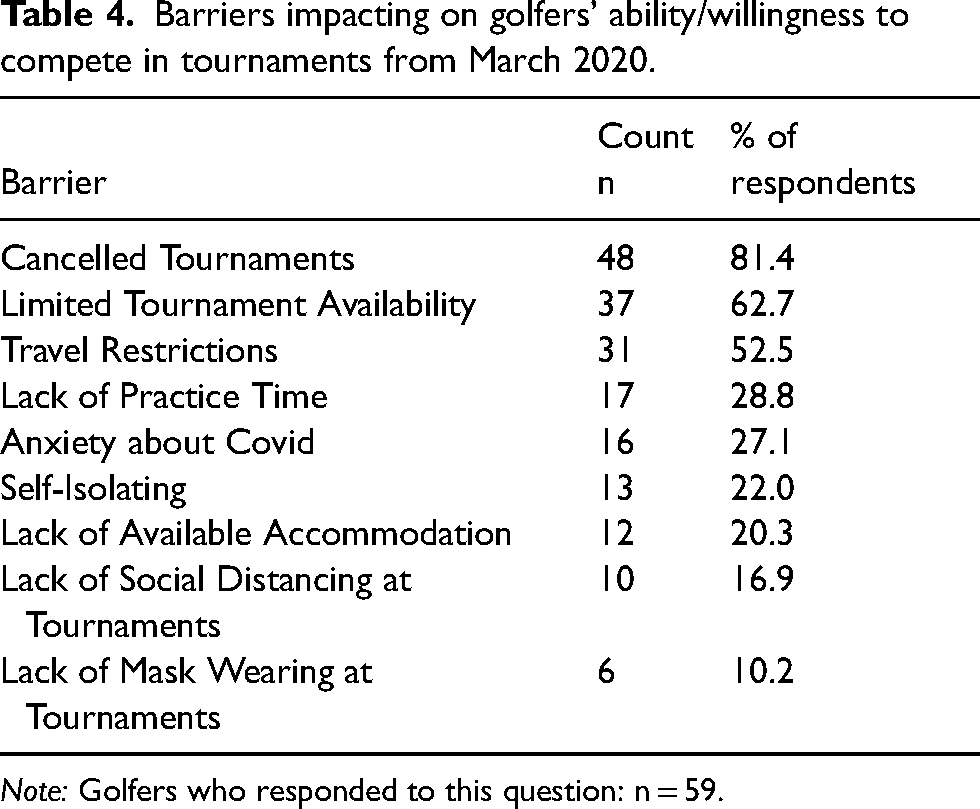
As the spread of the novel coronavirus disease 2019 increased, governments across the world introduced various restrictions to reduce infections. Stay-at-home orders and lockdowns of golf courses (for 5.08 ± 2.79 months) and strength and conditioning facilities (for 6.78 ± 3.80 months) meant that golfers had to quickly adapt their practice and training. This mixed-methods study surveyed amateur and professional golfers (n = 107), to examine the applied impact of the pandemic on their strength and conditioning, golf practice, tournament engagement, levels of stress and motivation and the impact upon diet and sleep. Results indicate reduced practice frequency and duration across various aspects of golf, as well as reduced tournament engagement. The most commonly cited limiting factors for tournament engagement were a lack of practice time (28.8%) and travel restrictions (52.5%). In general, golfers were motivated to train, with session frequency remaining consistent with pre-pandemic levels. However, golfers suffered from significantly higher levels of stress (p < .001), disturbed sleep (p = .015) and perceptions of less physical gains compared to previous years. While online support has been accessed by 53.8% of golfers, the cited lack of facilities/equipment by 71.9% raises concerns over detraining and injury risks on return to sport. Coaches are urged to monitor athlete self-report measures to manage and optimise interventions, especially in similar situations where maintaining progressive overload is challenging. Strength and conditioning and golf coaches can use this study to review their applied practices, consider benefits/limitations to online coaching and to modify future interventions.
Introduction
In spring 2020, governments around the globe took actions to limit the spread of the novel coronavirus disease 2019 (COVID-19), with around half of the world's population under some form of lockdown by April 2020. 1 Enforced lockdown measures meant that populations had to stay home and led to the closure of golf and fitness training facilities in many countries. This immediate impact on practice, competition and training forced both professional and amateur athletes across all sports to adjust to a homebound situation. Wider impacts on athletes’ mental health, 2 diet 3 and sleep quality and quantity 4 were also seen across various sports and levels of ability. Specifically, Sorbie et al. 5 found that golfers’ sense of belonging and life satisfaction significantly improved between lockdown and the reopening of golf facilities across the UK.
Many countries imposed lockdowns that lasted for several weeks or months, for example:
January 23rd, 2020 – China introduced the first lockdown in Wuhan, lasting until 8th April (∼11 weeks). March 19th, 2020 – California becomes first US state to issue a stay-at-home order with most states following. March 19th – 24th – Australian states introduce border restrictions and various lockdown measures, lasting ∼8 weeks. March 20th, 2020 – Argentina lockdown begins and lasts for 7–17 weeks (variation across the nation). March 23rd, 2020 – UK golf courses and gym facilities closed for 8–10 weeks (variation dependent on home nation measures). March 29th, 2020 – Spain introduces full national lockdown lasting for 12 weeks.
Lockdowns have continued into 2021 and 2022 with some countries still enforcing strict stay-at-home measures where outbreaks have occurred.
Literature suggests that the length of these lockdown situations posed potential risks to athletes detraining including a loss of muscle mass (and therefore strength), conversion of fast-twitch muscle fibres (Type II) into slow-twitch (Type I), and reduced flexibility, cardiovascular and neuromuscular performance. 6 As the above examples demonstrate, the COVID-19 restrictions in certain areas of the world resulted in forced abstinence from normal training activities for durations that are rare in competitive sport (e.g., >4 weeks, as per lockdowns). Indeed, multiple weeks of inactivity can cause detraining, with the principle of reversibility dictating that previous training gains would decline. 7 Physiological adaptations gained from their usual regular training will be reversed if training was not continued during the time at home.8,9 For example, research demonstrated that professional football players were able to maintain their aerobic capacity but experienced declines in absolute and relative peak power in vertical jump testing. 10 Additionally, cessation of lockdown restrictions could result in increased risk of injury without careful planning, as sudden resumption of training activities may cause workloads to increase or spike as training and golf facilities reopen.9,11 In other sports, research has demonstrated a greater injury risk where training loads have dramatically increased compared to previous weeks. In rugby league, for example, training load increases of ≥15% on the previous week led to injury risks of 21–49% compared to <10% risk of injury when training load was gradually increased, i.e., between 5 and <10% load increases week on week. 12 To minimise the risk of detraining or sudden spikes in workload upon lockdown cessation, at-home training activities were commonly recommended throughout the pandemic,13,14 with other sports (e.g., basketball) recommending that appropriate testing and measurement of physical capacity was conducted upon recommencement of full training. 15 Furthermore, in contrast to previous examples, 10 athletes following appropriate home-based training programmes were still able to make significant training gains during lockdown, e.g., professional athletes (soccer players in this instance), were able to significantly increase lower body strength and test results (squat and countermovement jumps), despite an increase in body fat percentage and slower running speeds. 16
Keeping athletes engaged and motivated to train while at home has been recognised as a potential barrier to ensuring they continue to make or maintain physiological gains. Research found that isolation periods can cause reductions in athletes’ (volleyball players in this instance) training volume and intensity, and decreased sleep quality, potentially leading to the increases in reversibility and injury risk. 4 In another study, 3 motivation to train was reduced and nutrition habits were found to have altered during lockdown. Indeed, 36% of 258 Rugby Union players reported an increased intake and less than half consumed high-protein food more than twice daily.
Sleep quality and duration has the potential to enhance or disrupt an athlete's recovery and performance in training, practice and competition. Athletic populations have been shown to suffer from inadequate quantity and quality of sleep with both sport specific factors (such as training, travel and competition), and non-sport specific factors (such as female gender, levels of stress/anxiety) influencing these sleep variables. 17 During lockdown, athletes were found to have increased sleep duration, latency, and sleep disturbances.13,18 This coincided with reduced training frequencies, durations and a change to when they chose to train. 18 Sleep loss can impair mental health, cognition, memory and learning. 17 It can also increase the risk of respiratory infections and diminish cellular growth, recovery and glucose metabolism. 17 Furthermore, with a reduction in athlete motivation (as seen during lockdowns),11,13 inadequate sleep can significantly impair maximal muscle strength in compound movements, thereby impacting the benefits and adaptations derived from training. 19 The changes in sleep quality were also affected by when athletes ate, with disrupted sleep more likely when eating after midnight. 20 Nutrition plays an important role in amplifying or reducing the adaptations brought about by training, with availability of, or lack of, macronutrients pre- and post-exercise impacting upon performance and recovery, respectively. 21 Despite limited investigation into nutrition's impact on the golfer and golf performance, it is known that nutrition can impact athletic performance, recovery from training/competition, adaptations to training, and health, which are all relevant to the modern golfer seeking a competitive advantage. 22
Limited access to training equipment has been shown to impede training programmes and lead to less training frequency, time spent training and changes in training modalities to attempt to maintain interventions interrupted by stay-at-home orders.11,23 In this regard, 79% of elite sportswomen reported that gym closures impacted their training. 23 Other research 11 reported that nearly half of their n = 105 participants had access to dumbbells and resistance bands but only 30.5% and 21.0% had access to barbells and kettlebells, respectively, thus limiting the load and exercise variation that could be achieved.
Online coaching has the potential to provide an alternative solution to allow ‘supervised’ sessions to continue and to minimise the disruption to training during periods of isolation or lockdowns. With Wilke et al., reporting that 89.3% of their sample (n = 15,261) would be willing to train three times per week at home, it is clear that online coaching can provide some level of supervision. 24 Furthermore, adapting training based on an individual athlete's needs ensures continuity of training through periods of isolation or lockdown. Seventy-four percent of elite sportswomen stated that they had received adequate support from their coaches and that this had come in the form of adapted programmes delivered via online sessions or apps to track training progress. 23
Over the past couple of decades, there has been an increased number of golfers regularly engaging in strength and conditioning (S&C) to enhance performance through increased clubhead speed, ball speed, shot accuracy, changes to swing kinematics 25 and to save shots on the course, 26 however the pandemic posed unique challenges to these golfers. There is a paucity of research on golfers’ current and past practices (during 2020) under lockdown/stay-at-home order periods. It is crucial that research examines the impact of the pandemic on golfers to ensure practitioners can support them in the most effective manner to optimise their practice and training ready for competition. To date, only a single paper has reported on the wider engagement in golf-related activities (e.g., from outdoor/indoor practice, conditioning sessions, golf-related reading, computer games, etc.) during an 8-day period of lockdown. 27 While it was reported that 48% of golfers completed physical golf related activities within the home, the paper 27 has not reported the detailed impact of lockdown situations on the engagement and therefore provides a limited overview of activity. Other sports (e.g., volleyball) have assessed the impact of COVID-19 on athletes’ training but not specifically looked at the delivery of interventions or the impact on coaching practices.
This study aims to explore the impact of the pandemic on golf practice, tournament and training habits, and in particular, examine the barriers and potential solutions and assess measures of engagement, nutrition and sleep. With the potential for further COVID-19 outbreaks or variants of concern causing the reintroduction of restrictions in some countries, it is important to understand the habits of golfers during periods of isolation/stay at home orders. Results will allow coaches and golfers to adopt and apply best practice in similar situations in the future – for example, where a golfer is required to isolate, or when travelling and may have limited access to facilities, their usual nutrition and sleep environment, or should restrictions be reimposed by a country's government.
Methodology
Procedures
Survey
A mixed methods survey, developed using Qualtrics™, assessed the impact of COVID-19 on golf and strength and conditioning. Ethical approval was granted by the University's Research Ethics committee. Participants were recruited using convenience sampling with an open survey link to the Qualtrics™ website provided through various social media channels and direct emails. Each participant included in the results had consented to responding on the survey having read the participant information. Parental/guardian consent was also obtained for participants under the age of 18 years.
Self-reported participants’ characteristics
The survey was accessed by 110 golfers with three opting out of the research following the participant information screens. Of the remaining 107 surveys, 67 were full completions and 40 provided partial completions. Participants were from 14 countries located across five continents: North America, South America, Europe, Asia and Australia. Participant characteristics are presented in Table 1. Participant demographics including age, gender, golf handicap index, highest playing level, location, etc. were collected to provide insight into the sample. These may be useful for further analysis, replication of the survey, and further exploration around this current research.
Participant characteristics.
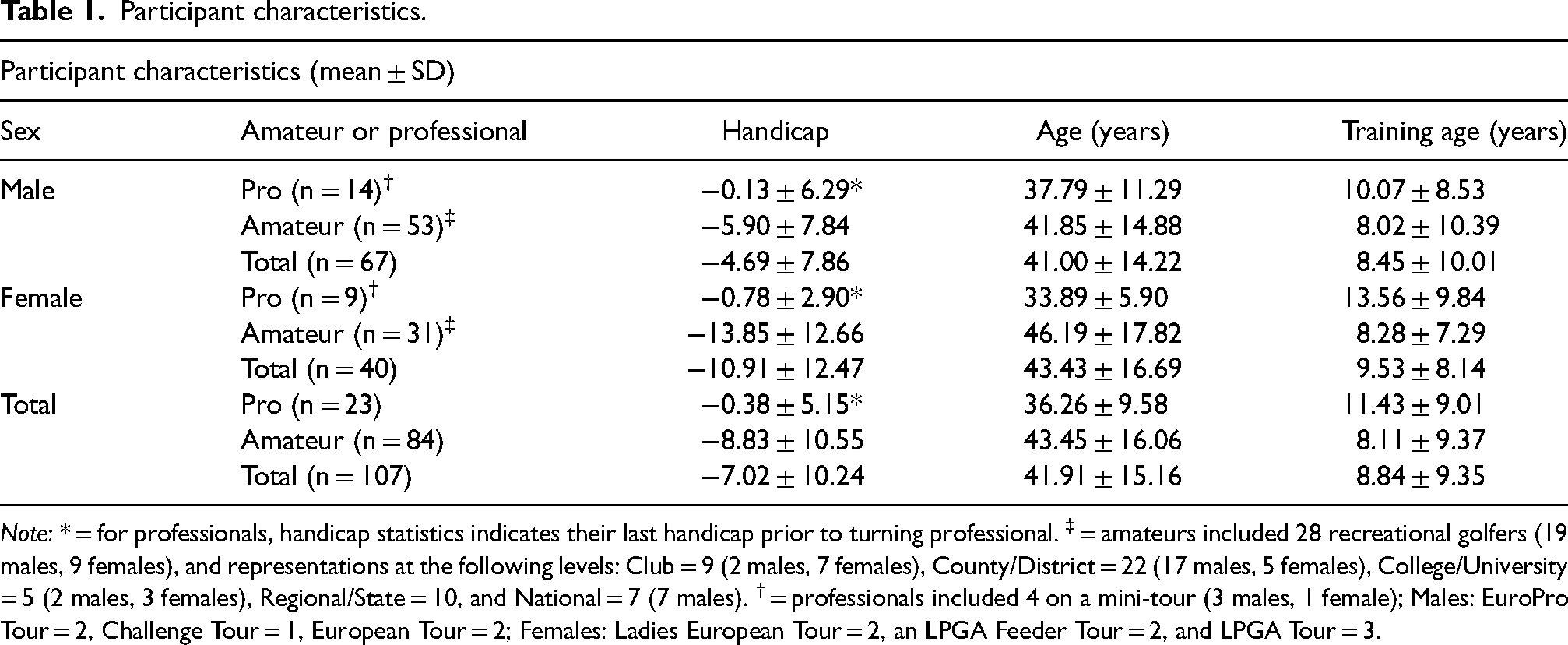
Note: * = for professionals, handicap statistics indicates their last handicap prior to turning professional. ‡ = amateurs included 28 recreational golfers (19 males, 9 females), and representations at the following levels: Club = 9 (2 males, 7 females), County/District = 22 (17 males, 5 females), College/University = 5 (2 males, 3 females), Regional/State = 10, and National = 7 (7 males). † = professionals included 4 on a mini-tour (3 males, 1 female); Males: EuroPro Tour = 2, Challenge Tour = 1, European Tour = 2; Females: Ladies European Tour = 2, an LPGA Feeder Tour = 2, and LPGA Tour = 3.
Survey design
The survey (Supplementary File 1) was designed to capture data on the themes of the participant's golfing performance level and history, the impact of COVID-19 on their practice and competition, barriers to S&C during the lockdown, solutions to support their training, pros and cons to online coaching sessions, and the impact of COVID-19 on physical adaptations, stress, motivation, sleep and nutrition habits compared to previous years. The survey was only available in English and used a variety of question types including frequency scales, rating scales, multiple choice and open text responses.
Data analysis
Data was analysed using SPSS v28 (IBM Corp. Released 2021. IBM SPSS Statistics for Windows, Version 28.0. Armonk, NY: IBM Corp) to highlight common traits and trends within the survey. Statistical analyses are presented below. For all other data, descriptive statistics are presented. Significance was set to p < .05 and data was presented as mean ± standard deviation unless otherwise stated.
Golf practice and S&C/training sessions
Repeated-measures ANOVAs were used to test the independent variable's three levels: pre-pandemic, lockdown and unlocked pandemic conditions and their impact on the session variables. Normality of distribution were met through visual inspections of histograms. Where Mauchly's test showed that the assumption of sphericity was violated, degrees of freedom were corrected using Greenhouse-Geisser estimates. When significant effects were observed, post-hoc tests with a Bonferroni correction (post-hoc alpha level correction p = .0167) were used to identify where differences existed between measures with ηp² (partial eta squared) used to demonstrate effect size (ηp² ≥ 0.01 = small; ηp² ≥ 0.06 = medium; ηp² ≥ 0.14 = large). 28
Number of tournaments
A paired-samples t-test was used to assess differences in the number of tournaments golfers competed in prior to the pandemic (in 2019) vs during the pandemic (from March 2020). Frequency statistics were also collected to help understand barriers to golfers’ ability/willingness to compete in golf tournaments. For all t-tests, where differences existed between measures, Cohen's d was used to demonstrate effect size (d ≥ 0.2 = small; d ≥ 0.5 = medium; d ≥ 0.8 = large).28,29
Equipment questions
Golfers responded to questions assessing the most common golf and S&C equipment owned/accessed pre-March 2020 or bought/accessed during the first wave (March–June 2020).
Scaled questions
Paired-samples t-tests were used to assess differences between golfers’ ratings of stress, motivation to train, sleep quality, and diet/nutrition habits prior to and during the pandemic. Independent sample t-tests were used to assess differences between male and female ratings of stress, motivation to train, sleep quality, and diet/nutrition habits prior to and during the pandemic.
S&C practices
Descriptive statistics are presented for golfers’ training environment and relevant closures, whether they employed a regular S&C coach/fitness trainer, barriers impacting training during the pandemic and solutions for both supervised and unsupervised sessions.
Qualitative results
Barriers that have impacted supervised and unsupervised training sessions and the pros and cons to online support were reported as free text responses. Thematic analyses were conducted on open-ended questions using the following recommended steps 30 : (1) familiarisation with the data, (2) generating initial codes, (3) searching for themes, (4) reviewing themes (with authors discussing and agreeing), (5) defining and naming themes, and (6) producing the report and presenting the results.
Results
Number of months golf facility closed
Nine golfers (11.5%; from n = 78) stated their golf facility remained open throughout. Sixty-nine (88.5%) reported that their golf club closed at some point during the pandemic (March 2020–May 2021). April 2020 showed the greatest number of courses closed with 64 (82.1%) golfers reporting closures. On average golf facilities were reported closed for 5.08 ± 2.79 months (max = 11 months; mode = 7 months) with the longest streak of nine consecutive months from March to November 2020.
Golf practice
Golfers were asked about their golf practice session frequency and duration between pre-, during and post-lockdown situations for long game (full swing), short game (chipping) and putting practice. Results are summarised in Table 2.
Practice session frequency (sessions per week) and duration (mins) pre-, during and post-lockdown situations.
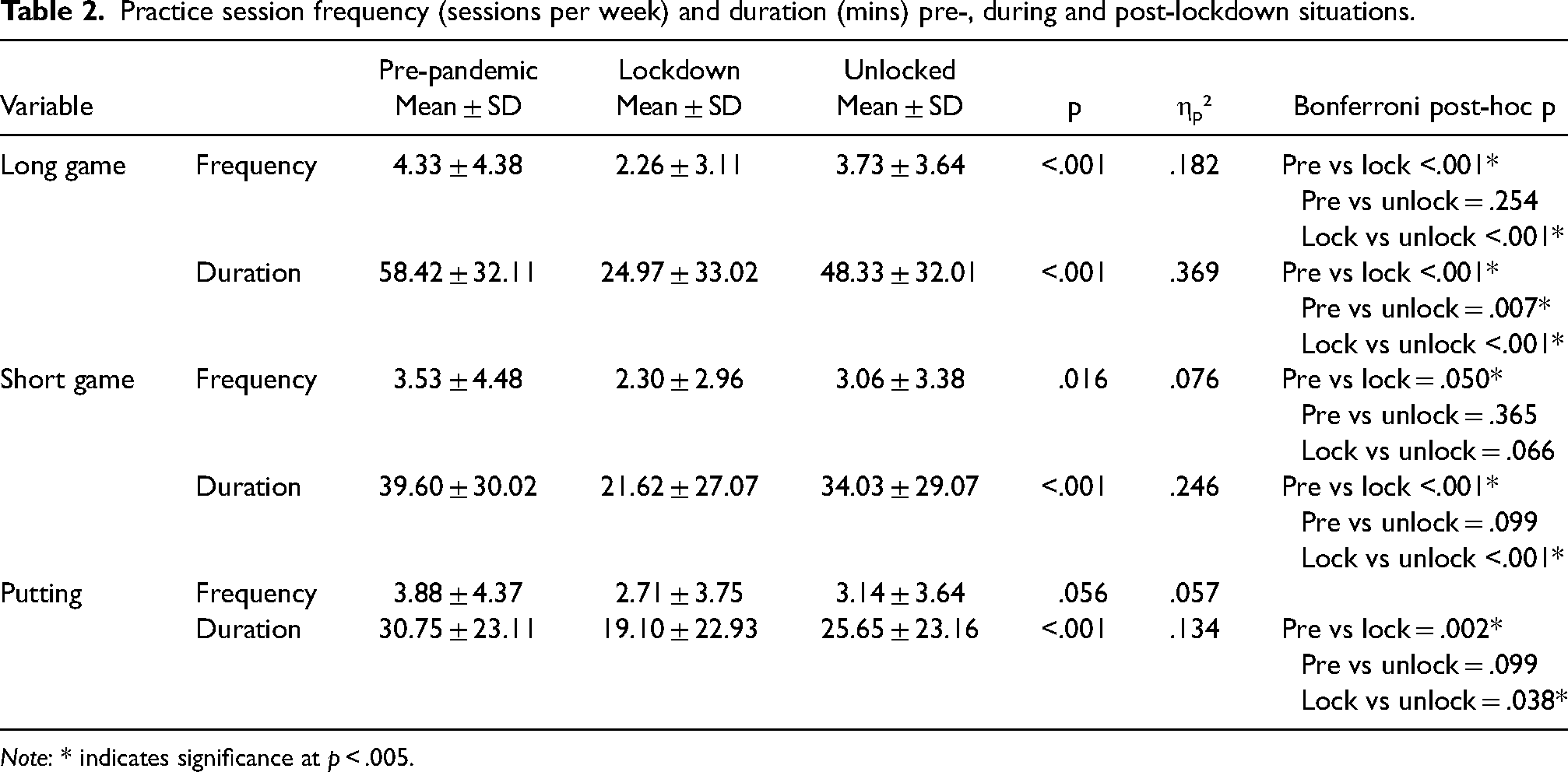
Note: * indicates significance at p < .005.
Solutions to support practice
Golfers were asked about their access to practice facilities and equipment across the pandemic. Only three golfers (from n = 65 respondents) reported having access to facilities/open space to practice full swing throughout the pandemic. Results for during the lockdown phase and how this differed to pre-lockdown are presented in Table 3.
Golfers’ access/use of practice facilities or equipment during lockdown.
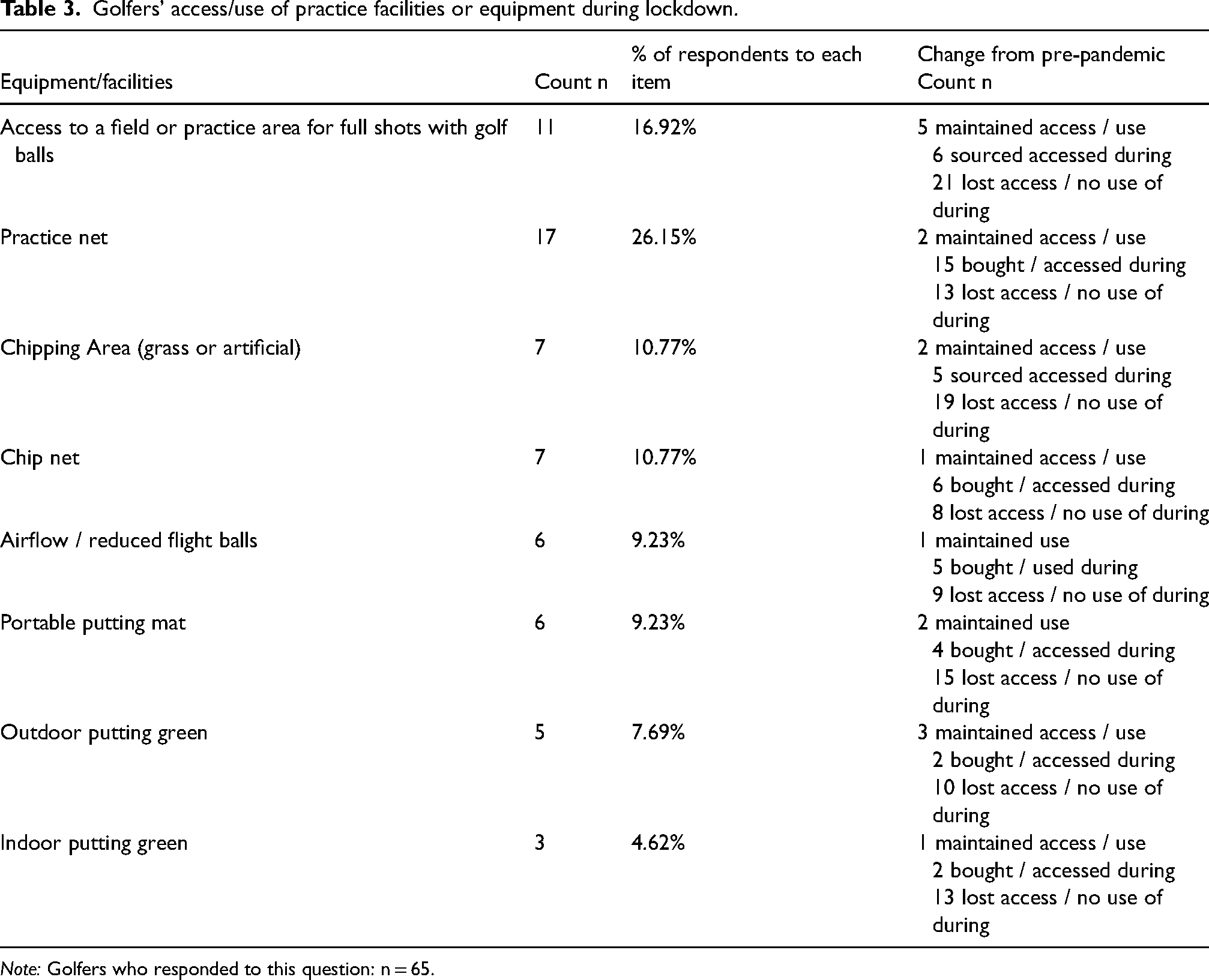
Note: Golfers who responded to this question: n = 65.
Number of tournaments
On average, participants competed in less tournaments during the pandemic (M = 8.36, SE = 1.34) than prior to the pandemic (M = 19.65, SE = 2.23). This difference, 11.29, BCa 95% CI [8.20, 14.22], was significant, t(54) = 7.23, p < .001, and represented an effect of d = .98.
Impact of pandemic on golf ability (e.g., handicap)
There were a mix of responses to how the pandemic had impacted on handicap achieved during the pandemic compared to pre-pandemic (Figure 1). Those who reported greater golfing ability gains (since March 2020) played an average of 10.79 ± 13.23 tournaments. Those reporting equal gains played an average of 5.62 ± 8.24 and those with less gains than prior to the pandemic played in 4.75 ± 5.64.
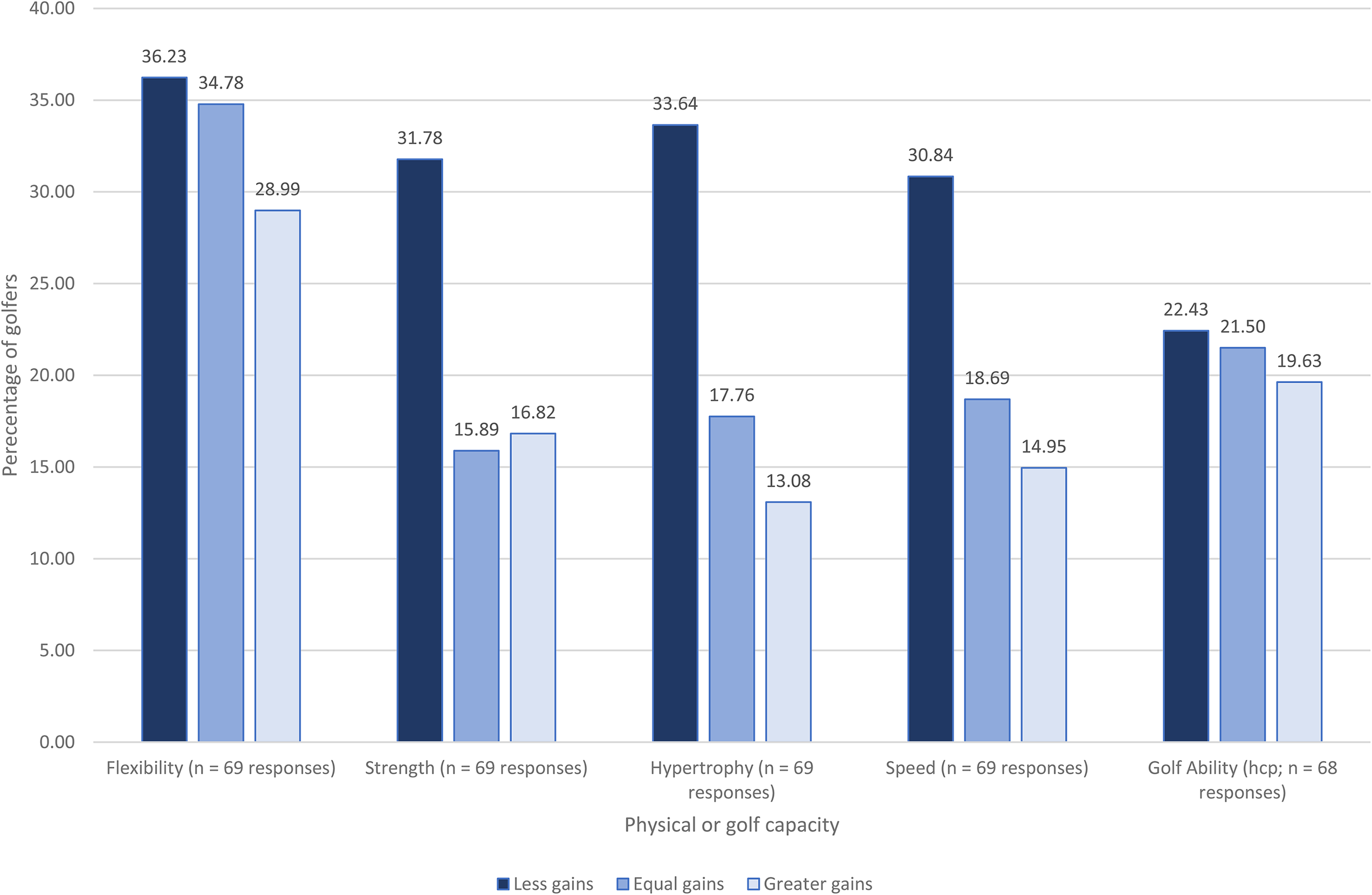
Golfers’ perception of physical and golf ‘gains’ during the pandemic compared to pre-pandemic.
Barriers to competing in golf tournaments during the pandemic
The golfers were asked to identify the barriers that impacted on their ability/willingness to compete in tournament golf during the pandemic. The results are summarised in Table 4.
Barriers impacting on golfers’ ability/willingness to compete in tournaments from March 2020.
Note: Golfers who responded to this question: n = 59.
Strength and conditioning
Regular S&C coach
Out of 88 golfers who responded, 40 (45.5%) stated they have a regular fitness/S&C coach. This included 10 pros from 21 (47.6%) and 30 amateurs from 67 (44.8%) and 25 (43.9%) and 15 (48.4%) of male and female responders, respectively.
Gym facilities closure
Five golfers (8.6%) stated that their usual gym facility remained open throughout. Fifty-three (91.4%) golfers reported that on average gym facilities were closed for 6.78 ± 3.80 months between March 2020 and May 2021 (mode = 8 months), with a maximum of 15 consecutive months closure.
Frequency of training
No significant main effect was found for the number of training sessions between pre-lockdown (M = 3.70 ± 1.93 sessions per week), during lockdown (M = 3.50 ± 2.41) and post-lockdown (M = 3.64 ± 2.01) (p = .672).
Training adaptations
Golfers reported their perception of the level of adaptation they had achieved during the pandemic compared to pre-pandemic (Figure 1).
Online S&C sessions
The survey asked golfers of their engagement with online S&C/fitness training. Seventy-eight golfers (51 males, 27 females) responded including 18 pros (78.3% of professionals surveyed) and 60 amateurs (71.4% of amateurs surveyed).
No engagement
Of the 78 respondents, 36 (46.2%) reported no engagement with online S&C (10 (55.6%) professionals and 26 (43.3%) amateurs). A higher proportion of male golfers reported no engagement with online S&C compared to female golfers (51.0% vs 37.0%). Of those who reported having a regular S&C coach, 25.0% (4 males and 5 females) reported not engaging in any online S&C.
Online 1:1 sessions with coach
19 golfers (24.4%) reported that they had engaged in online 1:1 sessions with their S&C coach (4 (22%) professional and 15 (25%) amateur respondents).
Online group sessions
18 golfers (23.1%) reported engagement in online group sessions (3 (16.7%) professionals and 15 (25%) amateur respondents).
App based fitness programmes/challenges
15 golfers (19.2%) reported engaging with app-based fitness programmes/challenges (2 (11.1%) professional and 13 (21.7%) amateur respondents).
Other solutions
8 golfers (10.3%) reported other online engagement for their S&C (1 (5.6%) professional and 7 (11.7%) amateur respondents). These included researching exercises, following golf trainers on social media, watching videos (n = 4), and use of a bespoke fitness platform provided by their trainer.
Training settings
Golfers were asked to report their usual training setting prior to any lockdown.
Gym-based training
60 of 89 golfers (67.4%) trained in a gym prior to the pandemic (16 of 21 pros (76.2%), and 44 of 68 amateurs (64.7%)).
Home-based training
36 of 89 golfers (40.4%) reported that they trained at home prior to the pandemic (10 of 21 pros (47.6%), and 26 of 68 amateurs (38.2%)).
Training outside
10 of 89 golfers (11.2%) reported that they trained outside prior to the pandemic (2 of 21 pros (9.5%), and 8 of 68 amateurs (11.8%)).
Other
Two amateurs stated that they did not train before the pandemic but have trained regularly since.
A number of golfers reported that they trained in two or more locations (13 of 60 (21.7%) used a combination of gym and home, 4 of 60 (6.7%) used gym and outside, and 4 of 36 (11.1%) used a combination of home and outside for their training).
Barriers that have impacted training sessions during the pandemic – thematic analysis
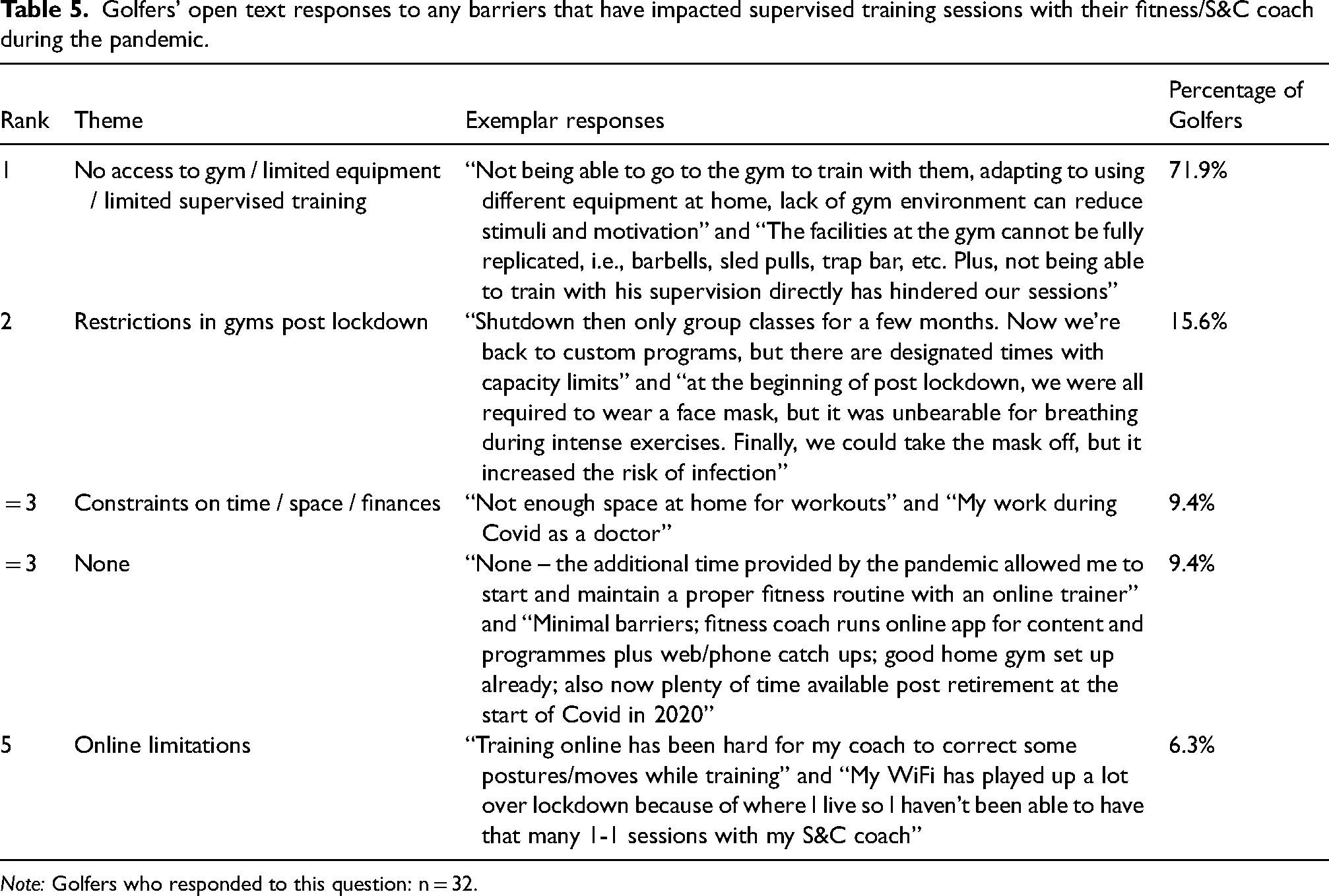
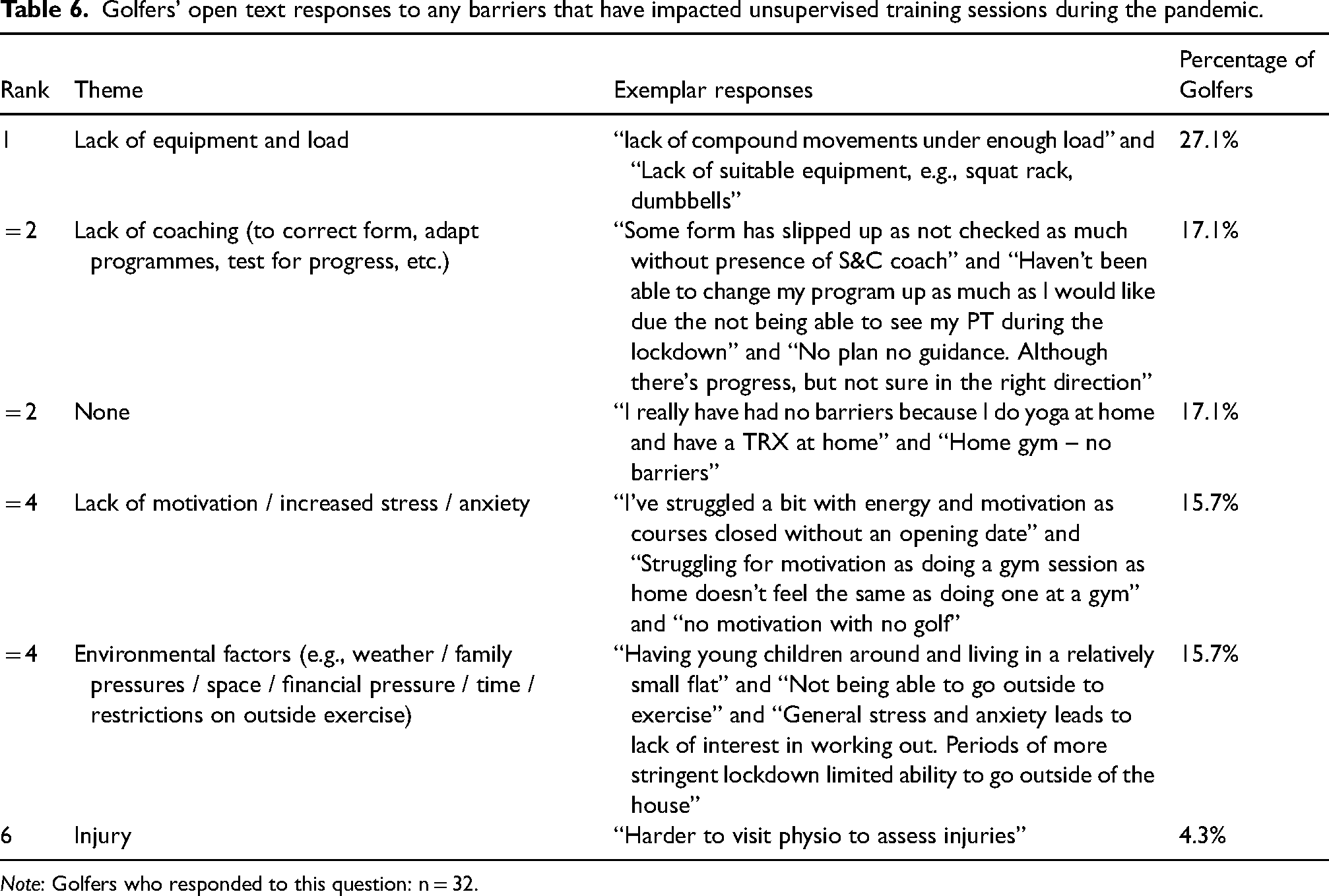
Golfers provided open-text responses to barriers impacting supervised (Table 5) and unsupervised (Table 6) S&C/fitness sessions during the pandemic.
Golfers’ open text responses to any barriers that have impacted supervised training sessions with their fitness/S&C coach during the pandemic.
Note: Golfers who responded to this question: n = 32.
Golfers’ open text responses to any barriers that have impacted unsupervised training sessions during the pandemic.
Note: Golfers who responded to this question: n = 32.
Online S&C sessions
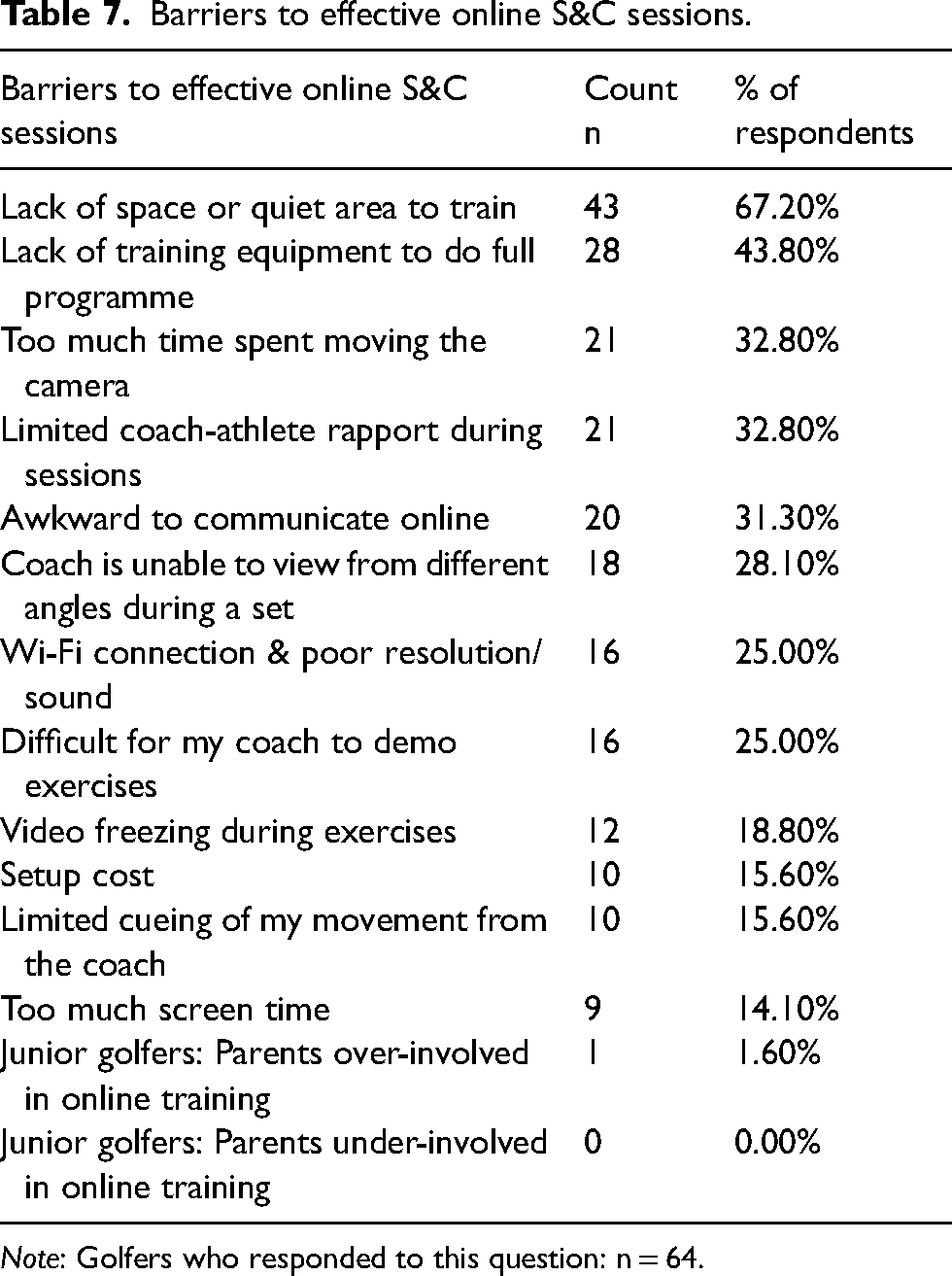
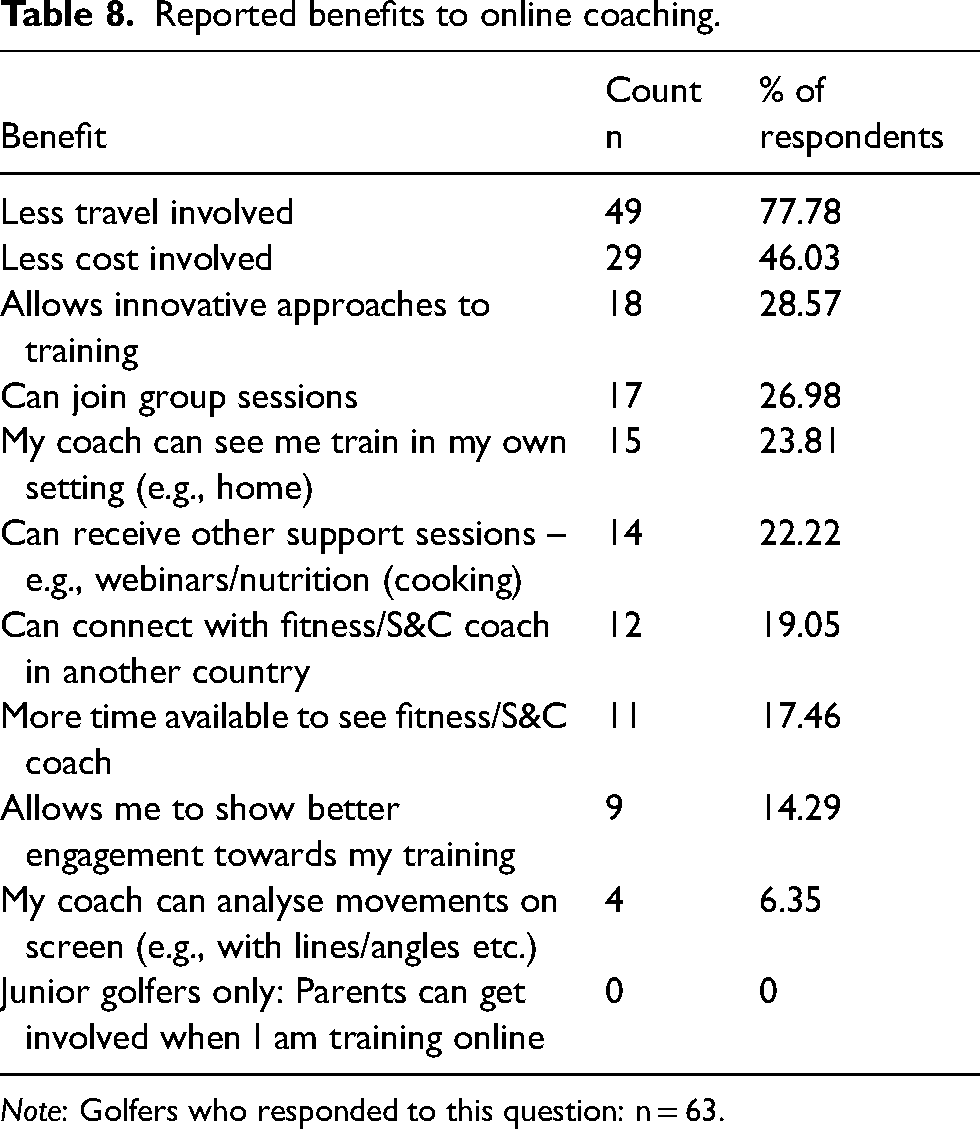
Golfers identified the barriers (Table 7) and benefits (Table 8) to online S&C sessions.
Barriers to effective online S&C sessions.
Note: Golfers who responded to this question: n = 64.
Reported benefits to online coaching.
Note: Golfers who responded to this question: n = 63.
Equipment pre-owned or purchased
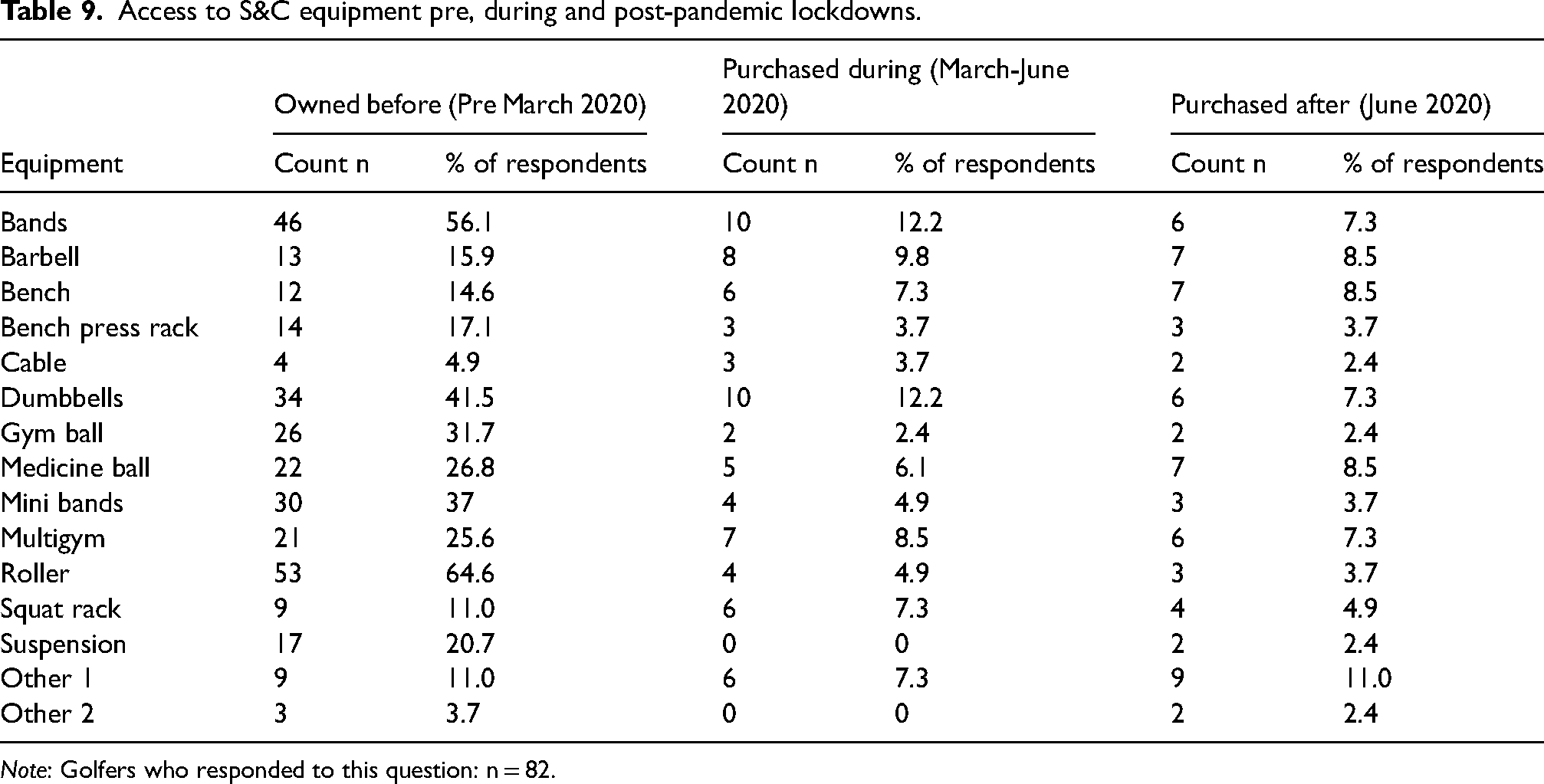
Golfers were asked to indicate which equipment they owned across the pandemic to assess what was purchased during and post lockdown to support their S&C sessions. Results are summarised in Table 9.
Access to S&C equipment pre, during and post-pandemic lockdowns.
Note: Golfers who responded to this question: n = 82.
Measures of stress, motivation, sleep and nutrition
Ratings were reported for the golfers’ pre-pandemic and during lockdown levels of stress (0 = minimal to 10 = maximal), motivation (0 = minimal to 10 = maximal), sleep quality (0 = very poor/disturbed to 10 = excellent/undisturbed) and diet/nutrition habits (0 = very unhealthy to 10 = very healthy) on scales.
Stress
On average, participants were more stressed during the pandemic (M = 6.05, SE = .33) than prior to the pandemic (M = 3.89, SE = .25). This difference, −2.17, BCa 95% CI [−2.75, −1.60], was significant, t(65) = −6.98, p < .001, and represented an effect of d = .84. Furthermore, descriptive statistics indicate that males (+2.47 on rating scale) had a greater increase in stress compared to females (+1.79) from pre (males M = 3.84 ± 2.08; females M = 3.88 ± 2.01) to during the pandemic (males M = 6.31 ± 2.61; females M = 5.67 ± 2.70). However, there were no significant differences between males and females for pre-pandemic (p = .943) or during the pandemic (p = .345) levels of stress.
Motivation
There was no significant difference (p = .264) between golfers’ motivation to train prior to (M = 6.44, SE = .28) and during the pandemic (M = 5.78, SE = .35). Descriptive statistics for male motivation to train: Pre-pandemic M = 6.55 ± 2.36 and during the pandemic M = 6.05 ± 2.82. Female motivation to train: Pre-pandemic M = 6.12 ± 2.19 and during the pandemic M = 5.71 ± 2.71. There were no significant differences between males and females for pre-pandemic (p = .464) or during the pandemic (p = .635) levels of motivation.
Sleep
On average, participants had more disturbed sleep during the pandemic (M = 6.05, SE = .28) than prior to the pandemic (M = 6.63, SE = .23). This difference, .58, BCa 95% CI [.15, 1.06], was significant, t(66) = 2.51, p = .015, and represented an effect of d = .30. Descriptive statistics for male and female sleep quality: Male pre-pandemic M = 6.72 ± 1.74 and during the pandemic M = 6.05 ± 2.13. Female pre-pandemic M = 6.50 ± 2.00 and during the pandemic M = 6.08 ± 2.52. There were no significant differences between males and females for pre-pandemic (p = .638) or during the pandemic (p = .949) levels of sleep quality.
Diet/nutrition
There was no significant difference (p = .910) between golfers’ diet/nutrition habits prior to (M = 6.44, SE = .20) and during the pandemic (M = 6.43, SE = .26). Descriptive statistics for male and female diet/nutrition habits: Male pre-pandemic M = 6.37 ± 1.68 and during the pandemic M = 6.35 ± 2.20. Female pre-pandemic M = 6.50 ± 1.41 and during the pandemic M = 6.63 ± 1.61. There were no significant differences between males and females for pre-pandemic (p = .7.53) or during the pandemic (p = .592) levels of sleep quality.
Discussion
The aim of this study was to report on the impact of the COVID-19 pandemic on golfers’ practice, tournaments, strength and conditioning, moderators of load (sleep and nutrition) and psychological variables (stress, motivation). The main findings include golfers significantly reducing the frequency and duration of practice session during the pandemic compared to pre-pandemic levels. This was true of long game and short game practice frequency and duration and for putting session duration. In general, golfers continued to engage in S&C at home but were hampered by the lack of equipment in order to provide enough progressive overload to allow similar gains in physiological adaptations compared to pre-pandemic. One solution to continue supervised sessions included the use of online video conferencing software. Indeed, over half of the golfers engaged in online training which had both perceived limitations (Table 7) and benefits (Table 8). With the short notice prior to lockdowns, it was difficult for golfers to plan or prepare for such immediate adaptations to their practice and training. In addition, golfers reported significantly increased stress levels and reduced sleep quality during the lockdowns. The results of this study allow lessons to be applied to support golfers in future situations where there is reduced access to practice or training facilities or where there are extended periods of time spent away from their usual environments (e.g., when travelling for tournaments) in order to avoid detraining and support the management of training load.
Golf
With the closure of golf courses and practice facilities for several months, it was evident that the number of tournaments entered was lower for most golfers than the previous year. Even when access to competition resumed, various barriers still existed with a quarter of all participants stating that anxiety over COVID-19 meant that they did not engage as much as they normally would (Table 4). Travel restrictions, lack of practice time and indeed, limited accommodation or tournament availability also led to a compacted and limited season for most. The closure of practice facilities meant that adjustments had to be made during the lockdowns. Long game practice session frequency and duration were reduced during this time and results indicate a lack of access to full swing practice facilities (Table 3), with only three golfers having access throughout. Many golfers purchased equipment for practice purposes to help maintain some normality to their programmes. Indeed, results showed that access to practice nets increased from pre-pandemic to during lockdown, allowing some form of home-based long game practice to continue despite the lack of ball flight to gain shot feedback from (Table 3). However, previous research has shown that a practice net can benefit golfers looking to make technique alterations through an un-coupling of their attention from the environment and their increased state of intentional control over their golf swing, reducing kinematic variability between swings during practice sessions. 31
Duration of long game sessions were still significantly reduced once lockdown restrictions were eased. Reasons explaining this included range time restrictions (e.g., 1 or 2-h time slots) to allow access for everyone, while the unlocking occurring in tournament season may have resulted in spending more time on the course than at practice facilities. For others, it was again due to anxiety over COVID-19, travel restrictions, lack of social distancing on the range, etc. Short game practice showed similar results with reduced frequency per week and duration per session during lockdowns compared to both pre-pandemic and following the easing of lockdowns. However, the frequency of putting sessions remained the same throughout, potentially due to the ease of practicing this aspect of the game at home, with limited or no access to a putting green. Duration of sessions was reduced during lockdown though, with the lack of focus towards a tournament or motivation to practice given as reasons by a number of participants. This was a factor that other researchers also reported across a number of sports.3,11,13 While reduced frequency and durations were reported here, active golf practice did continue. This is in contrast to previous research 32 which found that all but younger male golfers with above-average golf handicaps stopped their active golf.
The impact of the pandemic on progress made with regards golfing ability was mixed. Perception of golf ability gains was most likely based on handicap changes (Figure 1), and this is directly impacted by the engagement in tournaments as they offer the means to play qualifying rounds. Some golfers reported greater gains this year compared to previous years, and this was potentially due to a greater number of tournaments entered by those individuals, compared to those reporting equal and lower gains.
Strength and conditioning
With various barriers and challenges to maintaining appropriate training during stay-at-home orders, it is unsurprising that many golfers reported less-gains during the pandemic compared to pre-lockdown, with strength, hypertrophy and speed all suffering because of home training (Figure 1). While motivation to train and the frequency of training were not impacted by COVID-19 lockdowns, the results from this study suggest that golfers were, most likely, understimulated to enhance or maintain their physical capacity. Reduced training volumes (sets × reps × load) are associated with reduced muscle protein synthesis and indeed, a minimum threshold of mechanical tension must be achieved to stimulate strength adaptations with each individual requiring a different training dose in order to achieve optimal training responses. 33 Some golfers mentioned the lack of load causing a limit to the progress that could be made with reduced intensity and a switch of training modality due to the equipment available (Table 5). A common switch was to bodyweight and aerobic-based activities which would ultimately have decreased the resistance-based training loads experienced. This has also been suggested to increase the risk of injury following a return to ‘normal’ training. 34 With research demonstrating that progressively higher weekly training volumes are required to maintain training gains, it is plausible to suggest that the golfers here failed to achieve this. Furthermore, it has been suggested that while bodyweight, isolation exercises, kettlebell training and plyometrics all have a place in challenging time-limited force expression and providing variety in the motor demands of a programme, it is likely that they will be limited in their potential to increase maximal strength. 35 The switch in training modalities was a common trait across other sports with research reporting athletes increasing aerobic based exercise while reducing strength-based training. 13 As research shows,7–9 significant detraining can impact on the athlete with a break or decrease in intensity that lasts for >4 weeks. With gym closures lasting, on average, for over six months, it is plausible to suggest that the self-reported ‘less-gains’ in strength, hypertrophy, speed, and flexibility were likely due to the impact of detraining and reversibility. Indeed, most athletes will have returned to their sport with reduced physical capacities while being required to focus on tournaments almost immediately as lockdowns ended in playing season (in the Northern hemisphere and some professional tours). 36 Furthermore, research suggested that injury rates were likely increased during this phase of competition11,36 and that load management would be appropriate in similar situations to minimise this risk of injury. 34 The extent of return to play injuries has yet to be established in golf.
Sleep quality, a moderator of internal load, was found to be significantly reduced during lockdown, potentially linked to the significant increase in stress experienced by the golfers during this time. Golfers were not the only athletes experiencing reduced sleep quality. Results here support those found within many other sports (e.g., football, athletics, swimming, Australian football, field hockey, basketball, etc.) where athletes reported increased sleep duration, latency and sleep disturbances.13,18 Indeed, ∼24.6% of athletes from a variety of sports had increased sleep disturbances during lockdowns, 13 with 36.7% of females and 24.2% of males reporting a greater lack of sleep onset within 30 min of going to bed, again with similar trends of increased stress being reported. 13 In contrast though, results in this current study showed that this change in sleep did not coincide with reduced training frequencies or indeed motivation to train by the golfers. Despite this continued training, sleep loss has been reported to impair cognition, memory and learning, mental health, recovery and growth at a cellular level, decreases glucose metabolism and increases the risk of respiratory infections. 17 With is in mind, the use of athlete monitoring (especially for daily wellness), in the form of athlete self-report measures (ASRMs), should be implemented as part of any S&C intervention and lead to stress reducing strategies and the practice of effective sleep hygiene. Monitoring of internal load through ASRM allows training interventions to be optimised for frequency, volume and intensity in light of moderator influences. Changes to sleep quality coupled with increased stress have been suggested to indicate the need for stress and anxiety management upon return to sport/training. 13
Although the frequency of training remained similar during stay-at-home orders, some participants explicitly reported a lack of motivation as a barrier during their open text responses. Previous research identified that keeping previously highly motivated athletes engaged in their training was problematic. 37 In general, golfers were motivated to train with no statistical differences between pre-lockdown and during lockdown, but the restrictions presented numerous barriers/challenges, including lack of facilities/equipment, significantly higher levels of stress and disturbed sleep, etc. With the gym being the most popular choice of training venue prior to the pandemic, it is understandable that it would lead to barriers to training when closures took place and golfers having to adapt to novel training settings.
While most golfers had a regular S&C coach prior to the pandemic, they self-reported that during lockdowns many did not have the opportunity or failed to engage with online coaching sessions. This is in contrast to a survey with elite athletes 23 where results showed that a majority of sportswomen had engaged with, what they felt was, adequate support through various online provisions. The most cited barriers to online supervised sessions for golfers included a lack of space or quiet area to train at home, limited equipment, and difficulty to develop rapport and communicate during sessions. In contrast to these, less travel and reduced cost were the two most frequently selected benefits to engaging in online training. Where golfers have the space and training equipment at home, with online supervision, it becomes a viable option to maintain progress without having to travel or hire gym facilities. However, coaches need to consider methods of developing rapport and ease communication online as they would within face-to-face settings. This is supported by Szedlak et al., who found that athletes wanted coaches to display behaviours that helped to develop their relationship. 38 Trust, respect, role modelling, authenticity, motivation and inspiration were the higher order characteristics that athletes want from their S&C sessions. 38 Establishing an online environment that fosters these characteristics can mean the use of different strategies for initiating rapport and maintaining it. Coaches starting with new athletes may learn from education research, where teachers using online environments rely upon establishing a connection with their student through the sharing of information and finding common ground to initiate rapport. Following this, and relevant to those coaches moving to online with existing athletes, maintaining rapport has been achieved through being attentive, responsive, courteous (e.g., showing respect and empathy) and providing individualised support to students online. 39
Golfers reported a lack of equipment and space as barriers to training, with some purchasing equipment to try and compensate for the home training environment (Tables 5–8). Resistance bands, dumbbells and barbells were the most common purchases during lockdown with least access to larger items such as squat racks and cable machines (Table 9). Investment in equipment may have been impacted by finances, uncertainty about the length of lockdown situations and lack of space to house the equipment at home. Where future periods of isolation or reduced training opportunities occur, golfers should consider either investing in greater loads (such as with Olympic barbell kits) to allow progressive overload to be maintained, or accept that a gradual, phased return to their previous training level will be required to avoid increased risk of injury. Where situations arise for athletes having to self-isolate, detraining due to future lockdowns, returning from a COVID-19 infection or extended periods of detraining (e.g., due to long-covid or severe infection), coaches should be aware of return to play guidelines40,41 and factor in individual needs, level of play and training history to gradually increase external training load while monitoring internal load through ASRM.
Strengths and limitations
The survey was designed as an open link to allow any golfers with an official handicap to complete the questions. Inevitably, this leads to a wide range of golfers completing the study with variety in location, ability, training history and engagement with S&C. While the number of surveyed golfers represents a small percentage of the amateur and professional golfing population, it is important that reflection took place and that lessons were learned from the unprecedented periods of lockdown. The training age (i.e., the number of years a golfer has engaged with strength and conditioning for the purpose of improving their golf/reducing the risk of injury; Table 1), handicaps and frequency of practice and training, indicates that the sample were well placed to respond to questions about the impact of COVID-19 on their training as well as golf practice and tournaments. However, it must be acknowledged that with a larger sample from the population of amateur and professional golfers across the globe, further analysis on the impact on each gender, playing level or amateur vs professional would be possible.
Conclusion
Results indicate that golfers were able to adapt to the pandemic lockdown situation to some extent. Equipment for S&C sessions and golf practice were sourced to allow some form of training and practice to continue. These solutions were not available to all though, and across the sample of golfers the gains achieved in the pandemic were generally less compared to the previous year. Online support is now commonplace in both work and training environments and should be utilised where golfers find themselves in similar situations to lockdown (e.g., travelling with limited equipment or access to suitable training environments). Whilst research demonstrated the increased benefits of life satisfaction, golfers in this study reported anxiety and barriers to competing in tournaments, thus limiting their options to make golf gains during the playing season. With increased knowledge about COVID-19 and prevalence of vaccinations, the golfers’ anxieties may have eased, and more golfers may feel able to utilise practice and training facilities safely and engage further in tournaments. Finally, despite the risk of detraining being a real possibility during the lockdown periods, no research has established the true impact on returning to tournaments and training once restrictions were lifted. Golfers themselves, golf coaches, strength and conditioning coaches, and any others supporting their development, need to better understand the internal loads and impact of training and practice in order to optimise interventions and to ensure fatigue and injury risk are reduced.
Given the results of this study, it is recommended that golfers and coaches apply the lessons learned over the course of pandemic restrictions to future situations that golfers often find themselves in. S&C coaches should provide/support strategies to continue periodised training throughout the year, even when the golfer is travelling or in further lockdown situations. This will allow golfers to maintain progressive overload in their S&C/fitness training, avoid reversibility and to utilise the support available through online technology. Where a lack of access to suitable training and practice equipment is unavoidable for extended periods of time, a well-thought through, phased return to training should be ready and put in place as soon as possible and monitoring sleep and stress levels can help to dictate the need for further interventions to maintain motivation towards golf practice and training.
Supplemental Material
sj-docx-1-spo-10.1177_17479541221140016 - Supplemental material for An investigation into the impact of the COVID-19 pandemic upon golfers’ strength and conditioning and golf practice
Supplemental material, sj-docx-1-spo-10.1177_17479541221140016 for An investigation into the impact of the COVID-19 pandemic upon golfers’ strength and conditioning and golf practice by Ben L Langdown and Alex Ehlert in International Journal of Sports Science & Coaching
Footnotes
Declaration of conflicting interests
The author(s) declared no potential conflicts of interest with respect to the research, authorship and/or publication of this article.
Funding
The author(s) received no financial support for the research, authorship and/or publication of this article.

Supplemental material
Supplemental material for this article is available online.
References
Supplementary Material
Please find the following supplemental material available below.
For Open Access articles published under a Creative Commons License, all supplemental material carries the same license as the article it is associated with.
For non-Open Access articles published, all supplemental material carries a non-exclusive license, and permission requests for re-use of supplemental material or any part of supplemental material shall be sent directly to the copyright owner as specified in the copyright notice associated with the article.
