



Abstract
Differences exist between top-tier soccer leagues (e.g. anthropometry and match demands), which may influence strength and conditioning (S&C) practice. Thus, the aim of this study was to investigate whether current S&C practice in men's and women's (first team and academy) squads differed between global regions. A total of 170 participants, involved in the delivery of S&C support at their soccer club (based on South America (SA), the USA, the UK, or other European countries (EUR)), completed a survey examining their S&C methods. The survey comprised six sections: (i) academic qualifications and S&C coaching experience; and their preferred methods for (ii) physical testing; (iii) strength and power development; (iv) plyometric training; (v) speed development; and (vi) periodization. Coaches in EUR conducted fewer formal S&C sessions, placed less importance on free-weight resistance training (RT), and performed less speed and plyometric training compared to coaches in other global regions (all p < 0.05). While coaches working with UK squads devoted more time to physical development than those in EUR, they regarded bodyweight training as the most important RT modality in comparison to USA and SA, who prioritized free-weight RT. Finally, SA academy players are introduced to formal S&C later (∼14 years old) than those in the UK (∼12 years old, p = 0.002). However, it is reasonable to suggest that the S&C practice of coaches in the USA and SA align better with scientific guidelines for strength and power development in soccer, with emphasis on free-weight RT alongside regular sprint and plyometric training, compared to coaches in the UK and EUR.
Keywords
Introduction
Soccer is the most popular sport worldwide and has the most number of registered athletes compared to other sports. 1 This is reflected in different Fédération Internationale de Football Association (FIFA) confederations and national associations hosting highly successful professional men's and women's leagues. Despite following the same rules, numerous differences are apparent (e.g. technical, tactical, match demands, player anthropometry) across professional leagues.2,3 These different factors may influence the training methods implemented by strength and conditioning (S&C) coaches for players to meet the different demands of competition and playing styles in different countries/continents. However, it is unknown if these global differences translate into alternative S&C practices within professional and academy soccer.
Although no study has investigated global differences in S&C practice within soccer, Weldon et al. 4 did describe current methods of S&C practitioners from different countries, working solely with professional soccer players. However, a comparison between global regions was not possible. Weldon et al. 4 reported that most S&C coaches have two sessions per week in-season, each lasting 31–45 min, with the squat and its variations reported as the most important exercises for S&C coaches. However, when reporting exercise prescription, Weldon et al. 4 only reported the most common sets and repetitions used (three to four sets, four to six repetitions), and lacked the important factor of exercise intensity. 5 Similarly, Loturco et al. 6 observed the same weekly S&C session frequency as well as the dominance of squats and their variations, sets, and repetitions being used to develop strength in the top three men's Brazilian soccer leagues. However, the proportion of coaches using weightlifting and associated derivate differed between Loturco et al. 6 (29%) and Weldon et al. 4 (67%), suggesting there may be differences in some components of S&C practice. Loturco et al. 6 suggested regional differences may be due to related different cultural perspectives and regional backgrounds. This research has exclusively been completed with coaches working with senior male soccer players and, while current S&C practice appears similar between male and female professional soccer players in the same global region, 7 differences may be apparent between global regions, as is suggested when comparing the independent studies by between Loturco et al. 6 and Weldon et al. 4 However, no study has investigated this question directly.
Current methods used to develop strength and power in male and female youth soccer players have also been questioned recently. Despite increasing training age within an academy S&C program, no changes in strength relative to body mass have been observed between age groups in either boys 8 or girls. 9 In a youth development setting, coaches may also have to align their athletes’ training with long-term athletic development (LTAD) recommendations outlined by their respective National Governing Body (NGB). In England, the Elite Player Performance Plan 10 includes guidelines for each chronological age group, starting from those under 5 s. It has previously been reported that young players in England enter elite academy pathways from a much earlier starting age (10 years old) than those in parts of France (13 years old) and Brazil (13 years old). 11 This may be due to differences in the organization and the approach developed by NGBs. Further, in the United Kingdom, there is a traditional academy structure, where the aim is for players to progress through the age groups into the first-team squad. However, in the USA, there is the collegiate and draft system, which is vastly different. Collegiate sport in the USA fulfills a pivotal role, acting as a feeder system for athletes into professional sport. Major League Soccer utilizes the draft system, where college graduates are then signed by professional clubs. The culmination of these and other factors may well influence S&C coaches’ programs and could result in substantially different training approaches between global regions. However, this important question has not been investigated.
The aforementioned regional differences in technical, tactical, match demands, and player anthropometry in soccer have been investigated exclusively in first-team male soccer players.2,3 To the authors’ knowledge, no study has investigated global differences in S&C practice within men's, women's, professional, and academy-level soccer. Therefore, the aim of this study was to investigate the current practice of S&C coaches working in soccer from different global regions, using robust statistical analyses in the largest number of respondents to date. It was hypothesized that there would be geographic differences in S&C practice (e.g. time spent in formal S&C sessions and resistance training [RT]) and that these differences would be in line with the typical match demands, fixture number (for professional squads), or LTAD (for academy squads) for that global region.
Methods
Participants
A total of 177 participants completed an anonymous online survey for this study. Blank responses and those who could not be included in the main geographic groups due to a low number of respondents in regions (e.g. Asia, n = 1) were subsequently removed. The final sample of 170 respondents was from the United Kingdom (the UK, n = 70), European countries (France, Spain, Germany, Italy, and Portugal) excluding the UK (EUR, n = 17), South America (Brazil and Uruguay) (SA, n = 69), and the United States of America (the USA, n = 14). Participants needed to be directly involved with the delivery of S&C support in soccer at the time of responding to the survey. In line with previous survey-based research in soccer, the survey was distributed directly to potential participants via email and indirectly via sharing a website link on social media platforms. 12 Participants were encouraged to share the link with their professional networks to increase the distribution of the survey. 13 Responses were not limited to one per soccer club due to the potentially large number of squads within a single club, as per previous survey research. 12 Due to using indirect data collection methods to distribute the survey, it was not possible to calculate the response rate.
Survey design and data collection
The survey was titled, “Current Practice of Strength and Conditioning Coaches in Soccer” and aimed to recruit practitioners involved with the provision of S&C services with either first-team or academy squads at soccer clubs worldwide. Respondents in this data set worked for soccer clubs in Europe, North America, and South America. This particular study was designed to provide comprehensive information about the current practices of S&C coaches from different global regions. The study received ethical approval from the Liverpool John Moores University Research Ethics Committee (ethics code: 19/SPS/046).
The online survey platform, “Jisc Online Surveys” (formerly Bristol Online Surveys) was used to create the questionnaire and collect answers anonymously. The survey was reviewed for content validity via initial discussions within the research team and subsequently adjusted following pilot testing with S&C practitioners (n = 3) and external academics (n = 3). Those piloting the study had experience working with the first team and/or academy soccer players in either men's or women's professional soccer clubs in the UK. Subsequently, there was a reduction in the number of questions, as well as the rewording of others to increase the practicality of the research tool. Refer to Appendix 1 to view the survey questions. The survey was then adapted and translated into French, Spanish, German, Italian, and Portuguese to increase global accessibility to practitioners in soccer. This was done by colleagues and associates of the research team that was native speakers of the respective languages. The online questionnaire took approximately 15 min to complete and comprised six sections aiming to elucidate the current programming of S&C implemented in soccer. This included the S&C coach's education and experience, and their practice regarding physical testing, strength and power development, plyometric training, speed development, and periodization. Data were collected between 1 December 2019 and 1 March 2021.
Data processing and statistical analysis
For exercise prescription, a sub-selection of data was analyzed. Due to the interaction between sets, repetitions, and intensity, only answers that provided all three elements were used for statistical analysis. When ranges were provided in a response (e.g. session duration 30–60 min), the mean of the two points was used for analysis. Due to the wide range and individual variations reported for exercise selection, the raw data were coded into more general groups by movement pattern which was agreed upon within the research team. This allowed for a quantitative comparison of exercise prescription (e.g. Deadlift variations were categorized as a hinge pattern).
Raw survey data were initially exported into Microsoft Excel (Excel 2019, Microsoft, Washington, USA) to reorganize, prior to being imported into SPSS (version 26, IBM, Armonk, NY, USA) for statistical analysis. To assess between-group differences for frequency data (e.g. exercise selection), frequency analysis was performed via Pearson's chi-square test of independence, with results reported as percentages for each group. To assess between-group differences for ratio data (e.g. session duration), a Kruskal-Wallis test was used due to the data not being normally distributed. Statistical significance was set at p < 0.05.
Results
There were differences between global regions regarding academic education, with relatively more coaches having a master's degree in the UK (59%), EUR (71%), and USA (71%) compared to SA (23%). Within SA a bachelor's degree was most common (51%) compared to all other locations (χ2 (9, N = 170) = 52.14, p < 0.01, Table 1). This pattern was consistent within first-team squads overall and men's squads overall (Table 1). There were no differences between global regions regarding a number of years’ experiences in S&C, either overall or within any sub-group (χ2 (6, N = 170) = 11.56, p = 0.07; Table 1).
Participant demographic data.
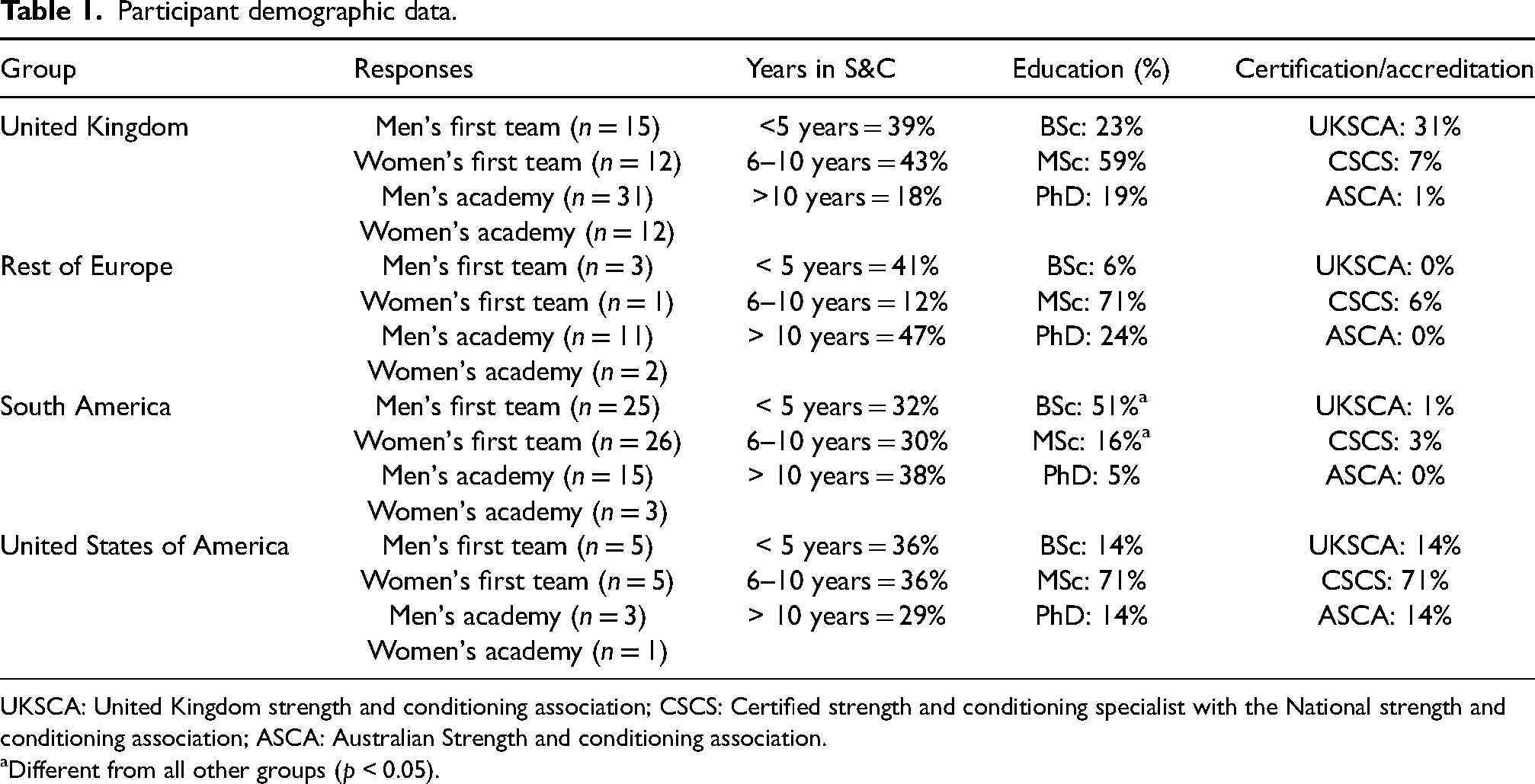
UKSCA: United Kingdom strength and conditioning association; CSCS: Certified strength and conditioning specialist with the National strength and conditioning association; ASCA: Australian Strength and conditioning association.
Different from all other groups (p < 0.05).
The age at which academy soccer players enter a formal S&C program differed by global region (H(3) = 15.50, p = 0.002). Those in the UK started at a younger age than those in SA, with no differences from other locations (Figure 1).
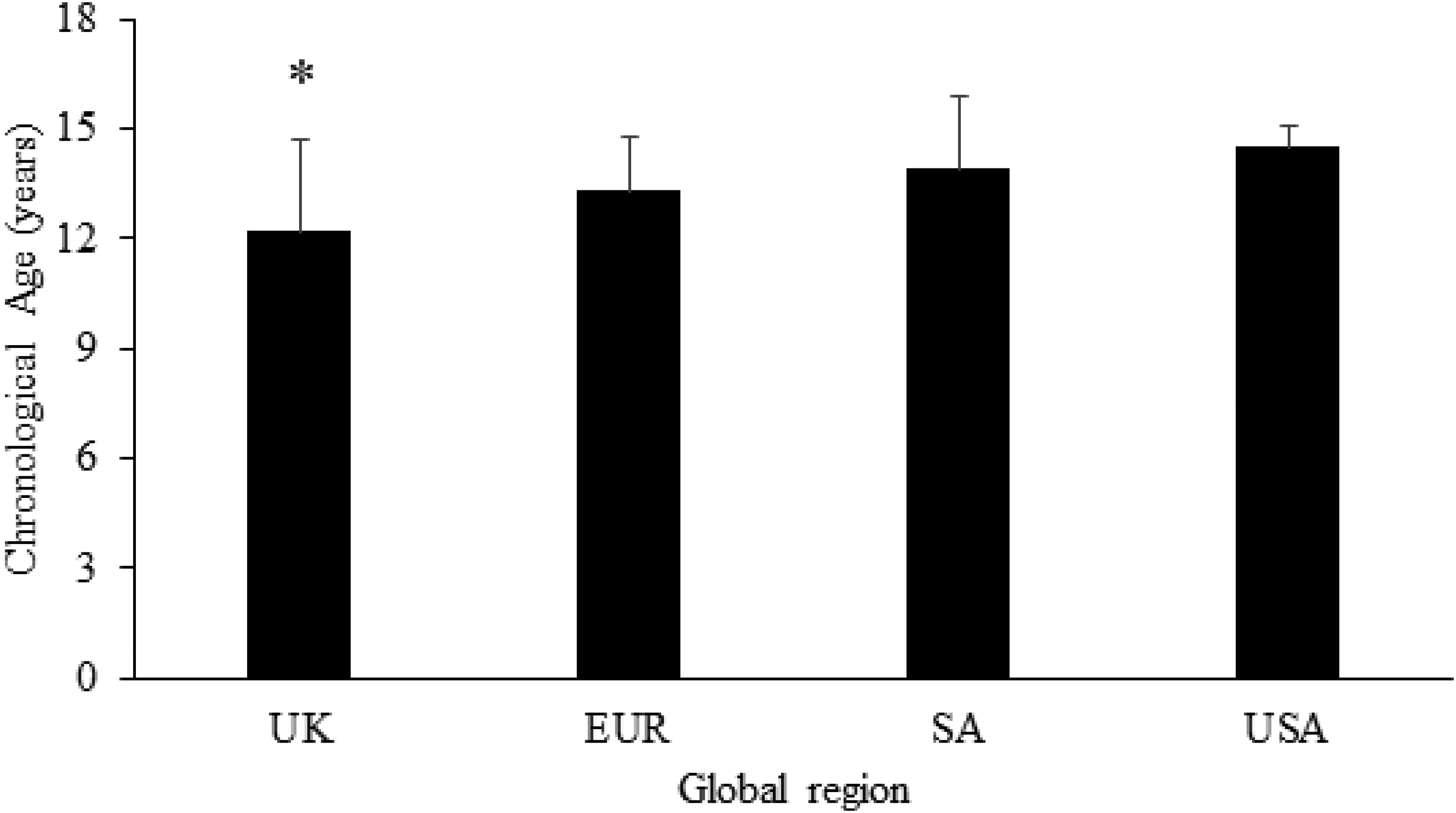
The chronological age that academy soccer players start a formal strength and conditioning program. *Lower than South America (SA, p < 0.05)).
The proportion of coaches using free-weight RT did not differ between global regions, either overall or in any of the sub-groups (χ2 (3, N = 170) = 0.96, p = 0.81, Appendix 1, page 10). Overall, a greater proportion of coaches in the UK used bodyweight training (93%) than in SA (81%) (χ2 (1, N = 170) = 9.51, p = 0.02) and perceived bodyweight training to be the most important RT modality (45% vs. 27%, respectively; χ2 (1, N = 149) = 8.24, p = 0.04; Figure 2, Appendix 1, page 11). A greater proportion of coaches in SA used resistance machines (62%) than in the UK (46%) (χ2 (1, N = 139) = 3.86, p = 0.05). Between first team groups, a larger proportion of coaches in the USA (100%) regarded free-weight RT as the most important modality for developing strength and power than coaches in the UK (60%; χ2 (1, N = 29) = 4.97, p = 0.03; Figure 2, Appendix 1, page 11). When prescribing RT, there were no differences between global regions for sets (H(3) = 1.58, p = 0.66), repetitions (H(3) = 2.78, p = 0.43), or estimated percentage of 1 RM (H(2) = 0.69, p = 0.88; Figure 3).
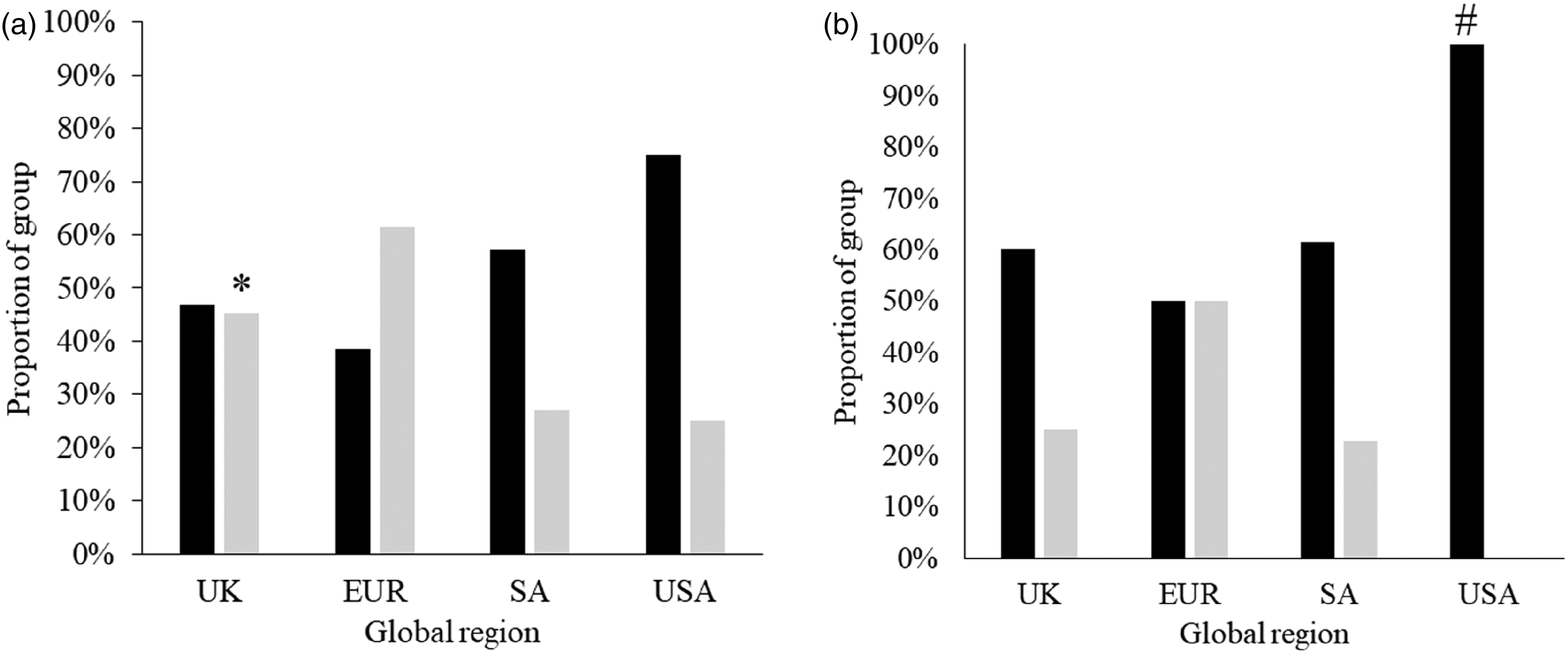
(a) The proportions of all participants that believe free-weight (black bars) or bodyweight (grey bars) training are the most important modality to developing strength and/or power with their soccer players. (b) The proportions of first-team coaches that believe free-weight (black bars) or bodyweight (grey bars) training are the most important modalities to developing strength and/or power with their soccer players. *Greater than South America (SA, (p < 0.05)); # greater than the UK, SA, and the USA (p < 0.05).
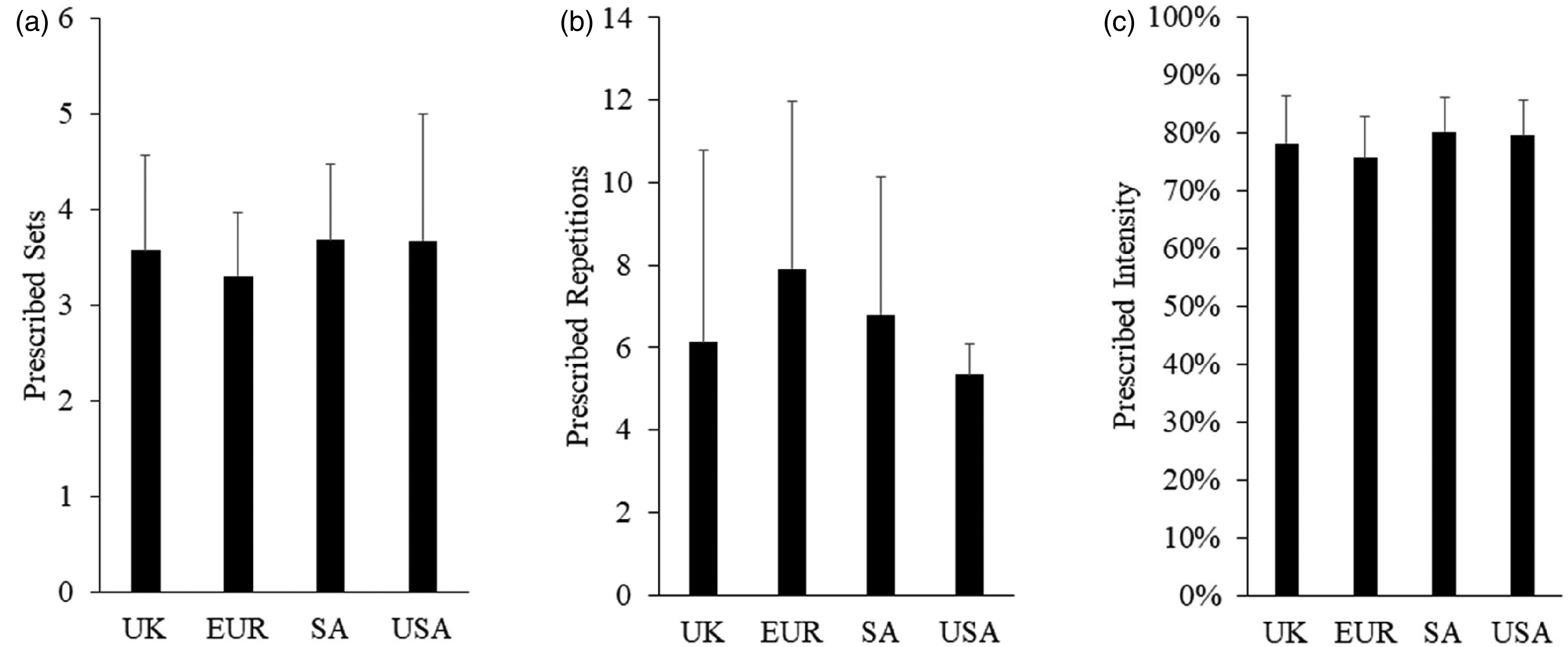
The sets (a), repetitions (b), and intensity relative to 1RM (c) coaches utilize to develop strength in-season with their players.
Overall, there was a greater pre-season weekly session frequency reported by coaches in SA (3.0 ± 1.1) compared to coaches in the UK (2.5 ± 0.8), and EUR (2.1 ± 0.9), but not compared with coaches in the USA (2.7 ± 1.0) (H(3) = 18.34, p < 0.01). Academy coaches in SA also reported a greater weekly frequency than academy coaches in EUR (2.8 ± 0.9 vs. 1.8 ± 0.4) (H(3) = 13.41, p < 0.01). During pre-season, overall session duration was longer in SA (56 ± 20 min) than in UK (46 ± 13 min) (H(3) = 9.63, p = 0.02), with no differences with EUR (49 ± 25 min) or the USA (48 ± 11 min). This was consistent with the first team only comparison (H(3) = 9.67, p = 0.02), while no differences were seen between global regions for academy coaches (either men's or women's squads).
Overall, the number of days in-season where S&C training sessions took place differed between global regions. A greater proportion (47% vs. 12%) of coaches in the UK programmed S&C sessions 2 days following a match (MD + 2) than EUR coaches (χ2 (1, N = 87) = 7.12, p = 0.01; Figure 4). Four days before a match (MD-4), a smaller proportion of SA coaches (42%) programmed S&C sessions compared to USA (79%), EUR (71%), and UK (64%; χ2 (3, N = 170) = 11.77, p = 0.01, Figure 4). Three days before a match (MD-3), a greater proportion of SA (51%), and EUR (47%) coaches programmed S&C sessions than the UK (24%) and USA (7%; χ2 (3, N = 170) = 16.65, p < 0.01; Figure 4). Two days prior to a match (MD-2), a smaller proportion of EUR (6%) coaches programmed S&C sessions than the USA (71%), the UK (44%), and SA (41%; χ2 (3, N = 170) = 14.32, p < 0.01; Figure 4).
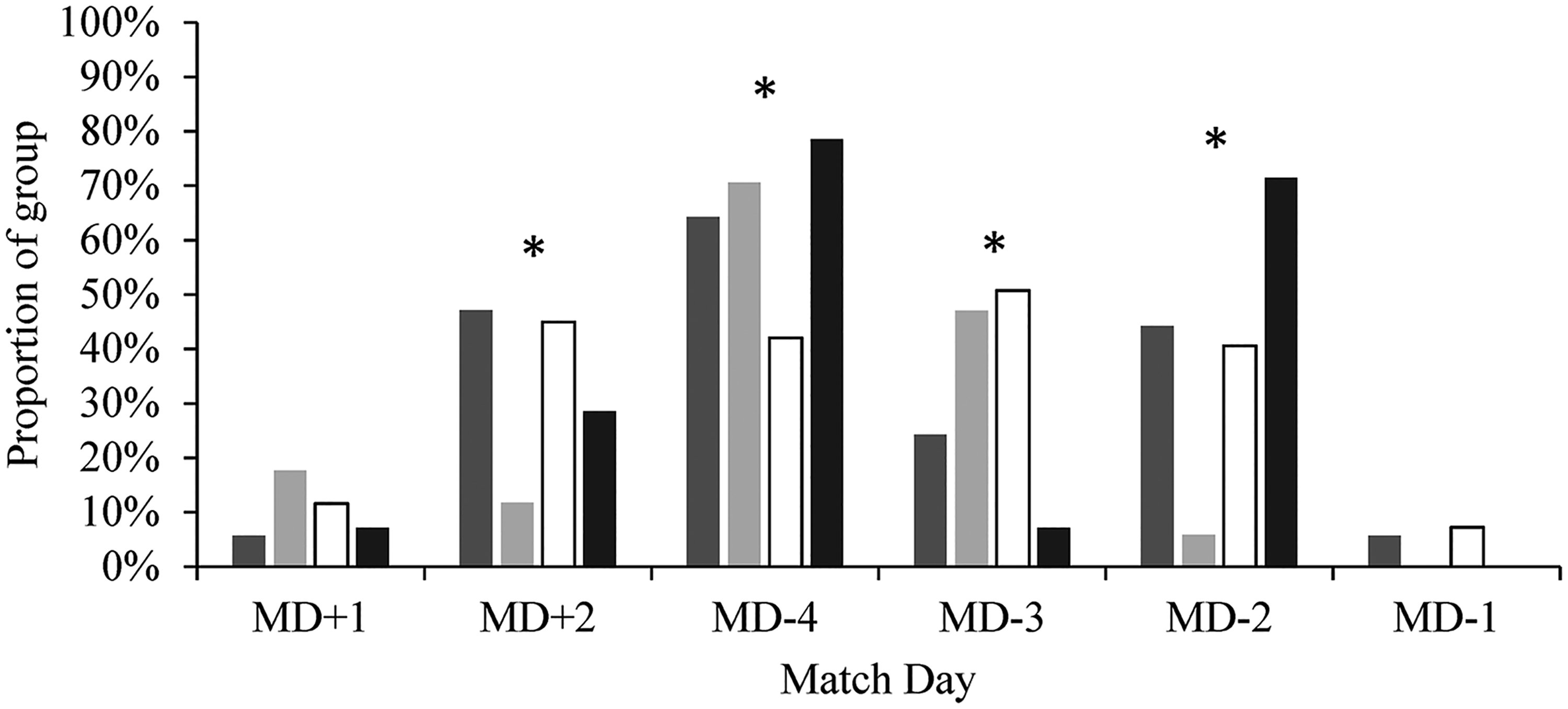
The proportion of coaches with the United Kingdom (dark grey), the rest of Europe (light grey), South America (white bars), and the USA (black bars). *Differences between groups (p < 0.05).
Overall, plyometrics were implemented more frequently by coaches in the UK (2.2 ± 1.1) and USA (2.3 ± 0.8) during a training week than those in EUR (1.4 ± 0.5; H(3) = 13.12, p < 0.01; Figure 5). Overall, speed training was performed more frequently in a training week by coaches in SA (2.4 ± 1.4) than by those in EUR (1.4 ± 0.5; H(3) = 14.96, p < 0.01; Figure 5), a result that was replicated in the men's overall comparison.
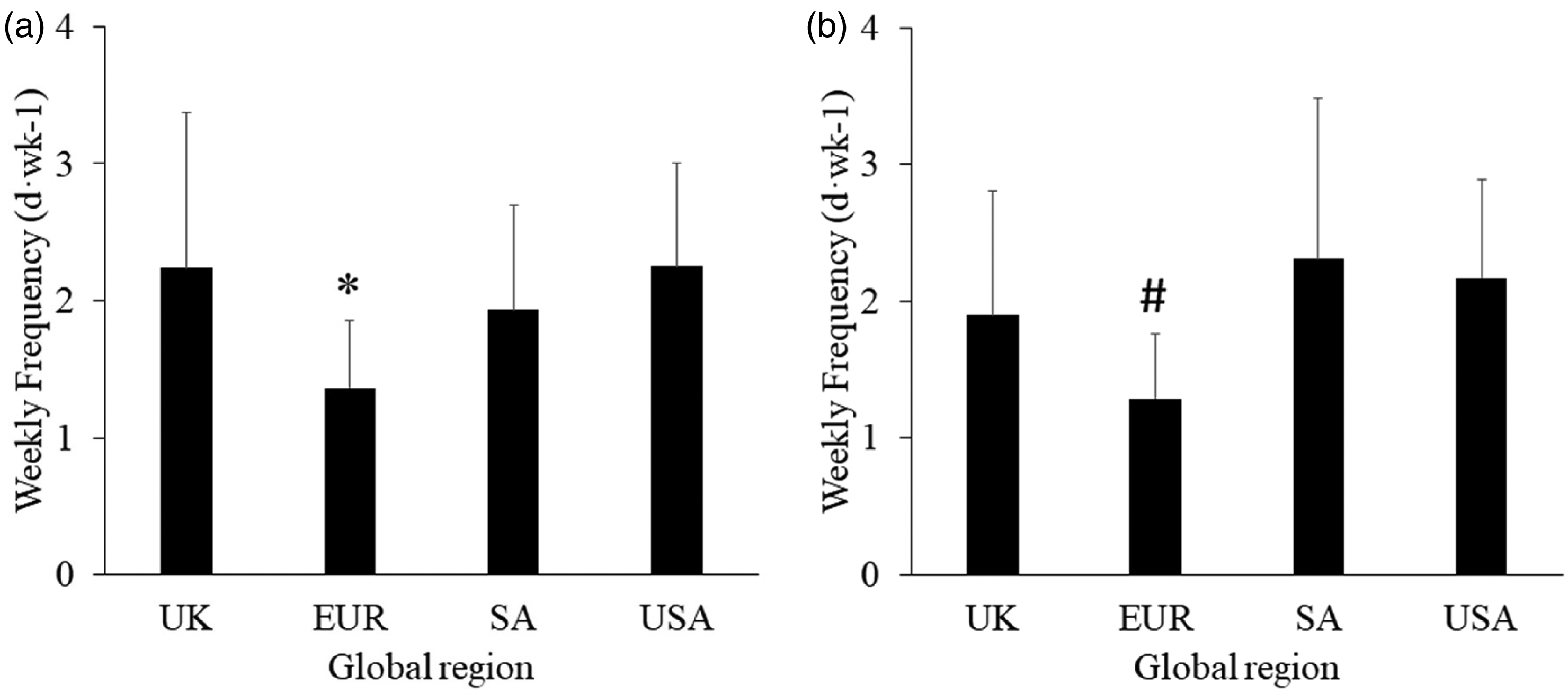
The weekly frequency that coaches utilize plyometric (A) and speed (B) training with their players. *Lower than SA and the USA (p < 0.05); # lower than the UK, South America (SA), and the USA (p < 0.05).
Overall, a smaller proportion of EUR coaches (29%) assessed maximum strength than those in the UK (59%) (χ2 (1, N = 87) = 4.67, p = 0.03) but not SA (46%) and USA (36%; Figure 6). Overall, a greater proportion of UK coaches (79%) assessed the change of direction performance than EUR (53%; χ2 (1, N = 87) = 4.62, p = 0.03) and SA (62%) (χ2 (1, N = 139) = 4.41, p = 0.04) but not USA (64%; Figure 5). Overall, a smaller proportion of UK coaches (34%) assess anaerobic fitness when compared to USA (74%; χ2 (1, N = 84) = 6.68, p < 0.01) and SA (54%; χ2 (1, N = 139) = 5.28, p = 0.02) coaches but not EUR (53%; Figure 6). Overall, a greater proportion of UK coaches (91%) assessed aerobic fitness than the USA (71%) and SA (75%) but not EUR coaches (88%; (χ2 (3, N = 170) = 8.01, p = 0.04; Figure 6). Overall, there were no differences between the global region in externally loaded power (χ2 (3, N = 170) = 5.29, p = 0.15; Figure 6), jump (χ2 (3, N = 170) = 0.88, p = 0.83; Figure 6), sprint (χ2 (3, N = 170) = 4.09, p = 0.25; Figure 6), or muscular endurance (χ2 (3, N = 170) = 3.55, p = 0.31; Figure 6).
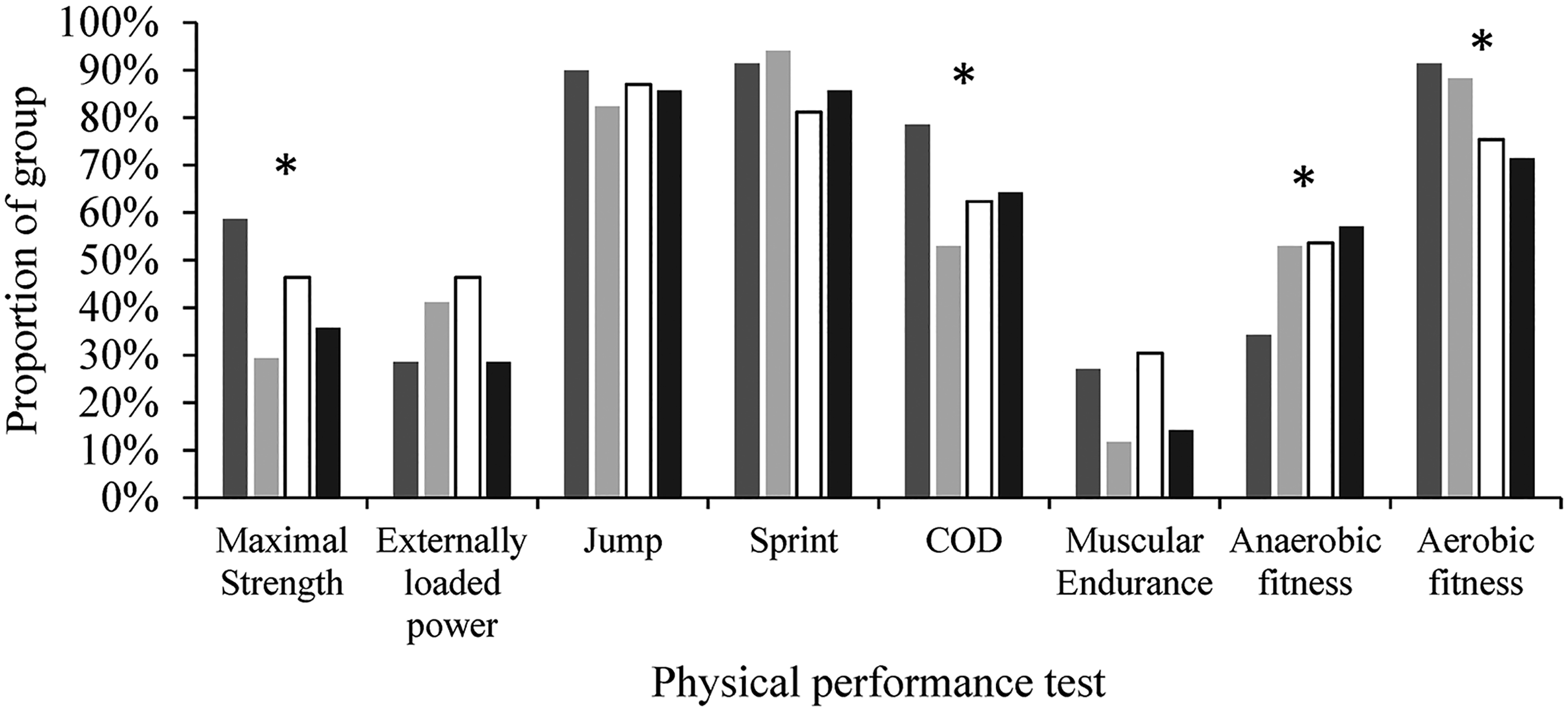
The proportion of coaches using each physical performance test within the UK (dark grey), the rest of Europe (light grey), South America (white bars), and the USA (black bars).
Discussion
The aim of this study was to investigate the practices of S&C coaches from different global regions. In line with our hypothesis, there were differences between global regions in the time spent in formal S&C sessions, the frequency of other physical development modalities, and the approach taken to develop strength and power. (A) When investigating academy squads, players in SA were introduced to S&C at an older chronological age than their UK counterparts. (B) Overall, relatively more UK coaches perceived bodyweight training to be the most important training modality compared to coaches in SA. (C) However, relatively more first-team coaches in the USA than in the UK regarded free-weight RT as the most important training modality in their programs. (D) There are clear differences in the frequency and periodization of S&C sessions during a week between global regions, such as SA performed more (and longer) pre-season S&C sessions than coaches in the UK, and first-team coaches in EUR appear to spend less time in formal S&C sessions than coaches in other global regions. Thus, it is reasonable to suggest that the S&C practice of coaches in the USA and SA align better with scientific guidelines for strength and power development in soccer, with an emphasis on free-weight RT alongside regular sprint and plyometric training in comparison to those in the UK and EUR.
Developing strength and power is recommended in LTAD models 14 and is supported by NGBs.15–17 When comparing the chronological age academy players start a formal S&C program, the current study demonstrated that players in SA start later than those in the UK (Figure 1), which may impact their ability to fulfill their physical potential. These differences may be due to the organizational structures and guidance in place. For example, the average age at a youth soccer player enters a soccer academy in the UK is 10 years old compared to 13 in France, Brazil, and Mexico. 11 Introducing athletes to S&C training prior to peak-height velocity will maximize training age and the potential to achieve optimal adulthood motor capacity. 18 In this study, UK academy boys are introduced to RT at 12 years old, approximately 2 years prior to the age PHV generally occurs in young males, although this varies greatly between individuals. 14 Those players introduced to S&C at a later stage of maturation (e.g. after PHV) may be unprepared for more complex training approaches and may not be able to attain the same levels of strength and power compared to those who started earlier. 18
Physical performance testing is a key component of an S&C program to provide coaches with information on an athlete's capabilities and training prescription. 19 With different physical demands apparent between high-level leagues in different countries,2,3 which may be reflected in the physical assessments chosen by S&C coaches within this study. The importance of jump and sprint assessments appears to be widely understood across all global regions (Figure 6), which is understandable considering the role of powerful actions in influencing match outcomes. 20 However, change of direction ability is assessed by a greater proportion of UK and USA S&C coaches than those in EUR and SA, despite decelerations and changing direction is the most common movement pattern prior to goal scoring. 21 Each of these actions, while anaerobic, occurs within a highly aerobic 90-min soccer match. The importance of these energy systems to S&C coaches appears to differ between global regions, with a smaller proportion of UK coaches assessing anaerobic fitness compared to coaches in the USA and SA (Figure 6). However, 91% of UK S&C coaches reported assessing aerobic fitness, more than USA and SA coaches. While it was beyond the scope of this study to explore the specific assessment protocols and the rationale behind them, the results of this study provide a valuable insight into which physical characteristics are prioritized by S&C coaches in different global regions.
Strength and power are important physical components for physical performance, with a variety of different training modalities providing benefits. 22 The current study showed that, overall, relatively more S&C coaches in the UK regarded bodyweight training as the most important modality when compared to coaches in SA. It is important to consider the greater proportion of academy S&C coaches within the UK sample (61%) compared to SA (26%), which might have influenced this comparison. Here bodyweight exercises refer to exercises such as squats, lunges, and press ups, which are effective training modalities for novice athletes, such as young academy soccer players, to learn exercise techniques and develop a foundation of strength. 22 However, there is a limited opportunity to improve maximal strength, particularly as athletes become more experienced. 22 When comparing first-team coaches in the current study, relatively more coaches in the USA than in the UK regarded free-weight RT as the most important training modality for their programs (Figure 3). Research suggests that free-weight RT is the most effective approach to increasing an athlete's strength capacity as well as facilitating an effective transfer to sporting actions, such as acceleration and jump performance.17,22 When comparing the free-weight training approach taken by coaches in the current study, there were no global differences in the sets, repetitions, and intensity used to develop strength (Figure 2). However, there was large within-group variability regarding these parameters, which may well have precluded any differences from being observed. Despite the importance of building/maintaining strength in-season, 23 there were responses reporting repetition ranges and intensities that align more with hypertrophy/strength-endurance (> six repetitions) than strength training guidelines (one to six repetitions).24,25 This contrasts with both Weldon et al. 4 and Loturco et al. 6 who reported four to six repetitions in-season. The training methods implemented by coaches may be influenced by several factors such as the facilities and equipment available. The context in which S&C programs are designed and delivered is an important factor and should be investigated further. Nevertheless, the wide range of responses supports the conclusion of Reverter-Masía et al., 26 that is, that some coaches current S&C practice in soccer does not follow scientifically supported methods for improving strength.
Beyond exercise prescription, numerous factors need to be considered when planning a training program, such as season phase and time available to train. The pre-season phase is typically characterized by a greater focus on developing physical qualities to prepare players for in-season match demands. 27 The current study showed that, during pre-season, S&C coaches in SA reported undertaking more weekly sessions than coaches in both EUR and the UK, as well as a longer session duration than coaches in the UK. The greater time coaches in SA devoted to training during pre-season may have potential benefits, such as reduced injury occurrence and severity in-season and, in turn, improved team performance. 27 While time spent training is an important factor, the training methods used within these sessions will be a key. 28 When transitioning from pre-season to in-season, there is typically a reduction in training volume as focus moves to match performance. 23 As such, this may limit the opportunity to undertake S&C sessions due to fixture congestion and the need to optimize recovery before the next match. 29
When comparing the number of competitive league fixtures per season, the English, French, Italian, Spanish, and Brazilian top divisions all reported 38 fixtures and 34 games in Major League Soccer. 30 Without the inclusion of domestic cup competitions, as this greatly depends on individual team success, there appear to be no differences in domestic league fixtures across a season between the topflight national leagues in EUR, the UK, SA, and the USA. Therefore, the global differences in S&C practice reported here are unlikely due to differences in the number of competitive fixtures. While few S&C coaches delivered sessions on MD + 1 and − 1, as would be expected for recovery and taper, respectively, 29 there were differences between global regions (Figure 4). Although S&C coaches in the UK, EUR, and the USA predominately programmed S&C sessions on MD-4, differences appeared on MD + 2, MD-3, and MD-2 between groups (Figure 4). A similar distribution of UK coaches delivered S&C on MD + 2 (47%) and MD-2 (44%). S&C coaches in the USA followed a comparable pattern, with a greater proportion focusing on MD-4 (79%) and MD-2 (71%). This appears to be a widely used approach to incorporate two S&C sessions within a single game week. 31 EUR S&C coaches also predominately programed S&C sessions on MD-4 (71%), while SA S&C coaches appeared to evenly distribute S&C sessions between MD + 2 to MD-2 (Figure 4). When looking at in-season S&C session frequency in the current study, differences are apparent. While it was not possible to statistically compare the EUR first team group to others due to its small sample size (n = 4), the in-season weekly frequency of S&C sessions (1.0 ± 0.0) did appear to be lower than other global regions, although a larger sample size would be required to confirm this finding. This is based on coaches in EUR reporting a lower weekly in-season frequency of plyometrics training than other groups (Figure 5), and fewer speed training sessions per week in-season, compared to coaches in SA and the USA (Figure 5). Both plyometric and speed training are important components for improving high-speed running performance,32,33 and distance covered at high speed during professional men's soccer match play differs between the UK and EUR. 2 The demands of these fixtures may influence the training approach, a hypothesis that is supported by the greater frequency of speed training in the UK group compared to EUR. This is an important factor for match success, 20 with sprint training also being an effective injury prevention method. 34 Similar to previous work, 6 it appears that coaches in SA prioritize speed training to develop players more than other global regions, while coaches in the UK spend more time overall on developing strength, power, and speed than coaches in EUR, who reported conducting fewer S&C sessions in-season, utilizing plyometrics less frequently and conducting fewer weekly speed sessions.
For the findings presented here, there are some limitations that need to be considered. Primarily, the sample size in the USA group (n = 14) limited sub-group comparisons, although this number is similar to previous observations of S&C practice in soccer (n = 15), 26 and can still provide valuable insight regarding geographic comparisons. Secondly, only 28% (n = 47) of the 170 respondents reported the sets, repetitions, and intensities they used for strength training in-season. Importantly, most respondents did answer this question (92%) but failed to include the intensity they prescribed. As intensity is a key factor in RT, answers that did not include this information were excluded from the analysis. While this limited the number of data points, this may reflect the relative number of S&C coaches who prescribe all three factors simultaneously.
The data gathered using this survey focused on describing the “what” around current S&C practice. However, this does not consider the wider context in which the responses were given, also known as the “why.” To advance upon the present findings here, semi-structured interviews may be used in future studies to gain a better understanding of the wider context in which decisions around S&C are made.
Our novel findings suggest that differences in S&C practice in soccer do exist between different geographic locations worldwide, which are likely independent of fixture number or match demands. Coaches in EUR conducted fewer formal S&C sessions, placed less importance on free-weight RT, and performed less speed and plyometric training compared to coaches in other global regions. While those working with UK squads devoted more time to physical development than those in EUR, they regarded bodyweight training as the most important RT modality, which is considered sub-optimal for strength and power development. The S&C practice of coaches in the USA and SA, on the other hand, appears to align better with the scientific guidelines for strength and power development in soccer, emphasizing the importance of free-weight RT alongside regular sprint and plyometric training. Finally, SA academy players are introduced to formal S&C training at a later chronological age than those in the UK, most likely due to the later age SA players enter academies. Delaying the introduction of S&C in youth players may leave them unprepared for more complex training approaches and preclude them from achieving their full potential regarding neuromuscular adaptations and performance gains in strength, power, and speed.
Practical application
S&C coaches may use the data presented here to broaden their view of current S&C practice in soccer and our findings may highlight examples of good practice that may help to facilitate knowledge transfer between coaches from different global regions. The application of resistance training varies widely between these global regions, presenting the opportunity for researchers and NGBs to help target training interventions within their global region. This may further improve the translation of science into practice and enhance the athletic development of soccer players.
Supplemental Material
sj-pdf-1-spo-10.1177_17479541221136048 - Supplemental material for Global differences in current strength and conditioning practice within soccer
Supplemental material, sj-pdf-1-spo-10.1177_17479541221136048 for Global differences in current strength and conditioning practice within soccer by Stephen J McQuilliam, David R Clark, Robert M Erskine and Thomas E Brownlee in International Journal of Sports Science & Coaching
Footnotes
Acknowledgements
The authors would like to thank those who participated in the study.
Data availability statement
The authors confirm that the data supporting the findings of this study are available within the article.
Declaration of conflicting interests
The authors declared no potential conflicts of interest with respect to the research, authorship, and/or publication of this article.
Funding
The authors received no financial support for the research, authorship, and/or publication of this article.

Supplemental material
Supplemental material for this article is available online.
References
Supplementary Material
Please find the following supplemental material available below.
For Open Access articles published under a Creative Commons License, all supplemental material carries the same license as the article it is associated with.
For non-Open Access articles published, all supplemental material carries a non-exclusive license, and permission requests for re-use of supplemental material or any part of supplemental material shall be sent directly to the copyright owner as specified in the copyright notice associated with the article.
