




Abstract
The aim of this study was to compare the training effect of small-sided games played using large and small area per player on speed and endurance in college soccer players. Twenty male NCAA division 1 soccer players were randomly assigned to one of two experimental groups: small-sided games using a large area per player (n = 10), or small-sided games using a small area per player (n = 10). During the 4-week intervention, both groups performed three sets of 4–8 min of 5 versus 5 small-sided games using either a large (300 m2) or small (75 m2) area per player. Pre- and post-training, players completed linear sprint (20- and 40-m), repeated sprint, and aerobic endurance tests. Following the intervention, both groups exhibited improvements in 20-m, 40-m, and maximum sprinting speed (all p < 0.05, g = 0.04–0.29). No differences or interaction effects in repeat-sprint ability were found for either group (p > 0.05). A decline in maximal aerobic speed occurred in the small area per player group (p = 0.010, g = 0.60) whilst no change was reported for the large area per player group. Following the intervention, anaerobic speed reserve was lower for the large area per player group versus the small area per player group (p = 0.013; g = −0.23). No further between-group differences were reported at either time-point. These results suggest that small-sided games played with a small area per player may not be adequate to maintain aerobic fitness.
Introduction
Small-sided games (SSGs) are a common method used in soccer training to simultaneously improve physical capacities alongside technical and tactical skills. 1 Understanding how different SSG manipulations affect the acute demands placed upon the player is an important consideration for practitioners utilizing these methods. Previous research has sought to examine the influence of factors such as tactics,2,3 number of players 4 and designated player roles.5,6 However, one factor that has become a particular focus of research interest is pitch configuration. Several investigations have sought to compare the acute demands of pitch size7,8 and area per player (ApP),9–11 as well as the effect of length-to-width ratio. 12
Castillo et al. 7 compared the acute effects of SSGs played with small (100 m2/player; length-to-width: 1.46) versus large ApP (200 m2/player; length-to-width: 1.43) in U16 soccer players, reporting that larger pitches resulted in a greater number of sprints (NSs) and a higher maximal velocity. However, Casamichana et al. 13 reported that SSGs played with an ApP of 210 m2/player (length-to-width: 1.45) were not able to reproduce the high-speed running and sprint demands of match play. Riboli et al. 9 examined SSGs played with various configurations of player number, pitch size and ApP (43–341 m2/player). The authors observed greater sprint and high-speed distance when SSGs are played with a larger ApP, but no clear effect on the frequency of accelerations and decelerations. Subsequent investigations from the same researchers have reported similar findings.10,11 The increased physical and physiological demands of larger ApP have been confirmed by two recent meta-analyses.14,15 Therefore, in theory, larger pitch sizes would be anticipated to confer greater speed-related adaptations in comparison to smaller pitch sizes.
The capacity of SSGs to simultaneously develop multiple performance dimensions make them a highly attractive training method to meet game demands. A recent meta-analysis by Clemente et al. 16 examined the effects of SSG-based interventions on sprinting time and neuromuscular performance in soccer players. No significant effects for SSG-based training interventions on linear sprinting time were reported (ES = 0.19, p = 0.28). However, the average ApP used in these interventions (85.17 ± 35.89 m2/player) was likely not large enough to elicit running velocities greater than 7 m/s. Clemente et al. 16 also noted that a systematization of the training effects related to SSG manipulations is absent from the literature. In particular, there is no research examining the effects of different ApP manipulations on changes in sprint performance and high-speed running output in match play. Given the observations of Riboli et al.9–11 and findings from the meta-analyses14,15 noted above, it may be reasonable to suggest that large versus small pitch SSG interventions would confer slightly different adaptations.
To the best of authors’ knowledge, research has not investigated the chronic adaptations following SSG interventions in which ApP is the independent variable. This is an important consideration as coaches need to understand how their prescribed interventions will likely influence adaptation. Thus, the aim of this study was to examine changes in speed and endurance performance in collegiate soccer players following a 4-week SSG intervention using large (SSG-L) and small (SSG-S) ApP. It was hypothesized that improvements in sprint performance, repeated sprint ability (RSA) and aerobic endurance would be greater in the SSG-L group compared to SSG-S.
Methods
Experimental design
In this study, a 4-week parallel groups design with pre-to-post measurement was used. The intervention took place during the penultimate month of the NCAA Division 1 College soccer season, 8 weeks after the start of the season. Participants were randomly allocated to one of two training intervention groups using SSGs performed on either a large (SSG-L) or small (SSG-S) pitch with the same length-to-width ratio (1.2 × 1.0). Both groups trained according to ApP strategies suggested by Riboli et al.; 9 SSG-L group played with an ApP of 300 m2 (60 m × 50 m pitch size) whilst SSG-S group played with an ApP of 75 m2 (30 m × 25 m pitch size). Overall, the study lasted 6 weeks and consisted of 1 week of pre-testing, 4 weeks of SSG training (twice per week), and 1 week of post-testing. Physical performance tests included 20-m and 40-m sprints, a RSA test, and a shuttle run beep test (BEEP).
Subjects
A convenience sample of 20 male collegiate soccer players (age: 19.1 ± 0.9 years; height: 181.6 ± 6.1 cm; body mass: 74.4 ± 8.3 kg) from a single team playing at the NCAA Division 1 level agreed to participate in the study (Figure 1). The minimum sample size of 26 – determined through a priori power analysis (G*Power-2; Version 3.1.9.7, Heinrich-Heine-Universitat, Dusseldorf, Germany) using an alpha error of 0.05, power of 0.8 and a medium effect size of 0.517,18 – could not be achieved given the permitted size of the player roster. Players were required to have at least 5 years of experience in a formalized training environment. Prior to the commencement of the study and throughout the intervention period, training (technical, tactical, and strength) and match exposure for all 20 players was kept similar. Players trained once a day for approximately 90 min, 5 days per week, with 1–2 matches each weekend. Players that had experienced a season-ending injury within a 1-year period prior to the study start date were excluded. Any player that had experienced a lower-limb injury within the 6-month period prior to the study start date was also excluded. Signed informed consent was be obtained for all subjects after receiving detailed information regarding the potential risks of the study. Ethical approval was obtained through the London Sport Institute research and ethics committee at Middlesex University.
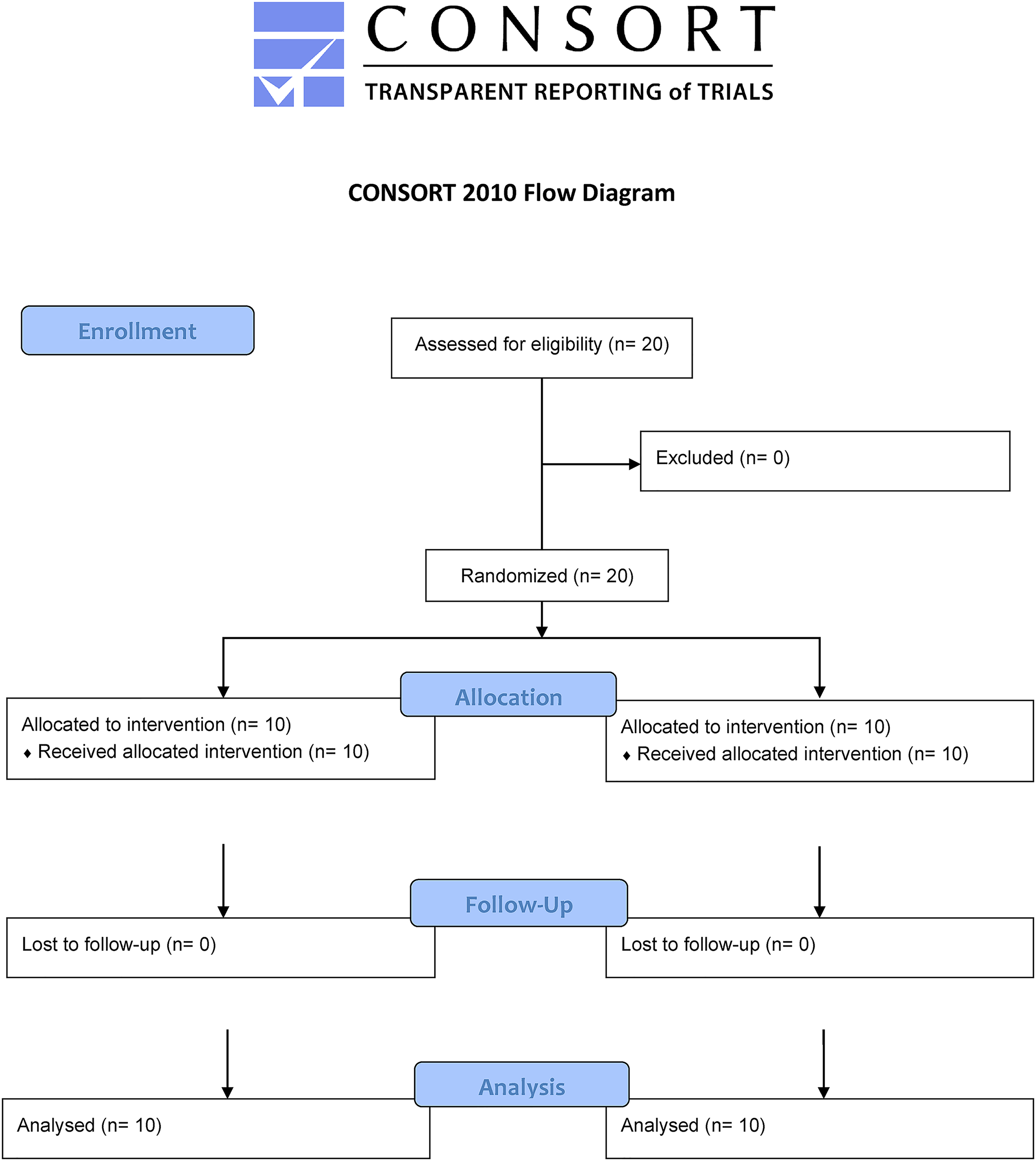
The CONSORT flow diagram for the current study.
Procedures
Intervention
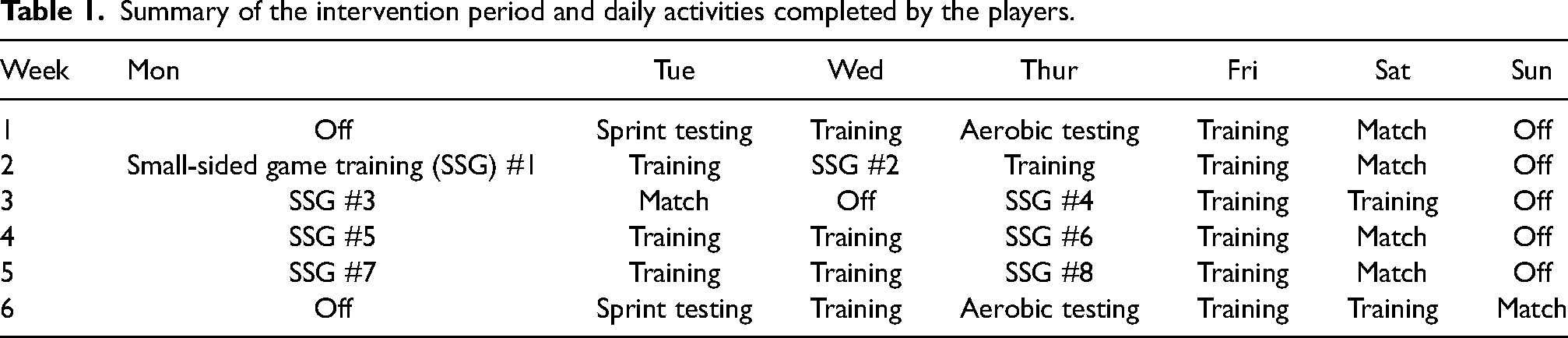
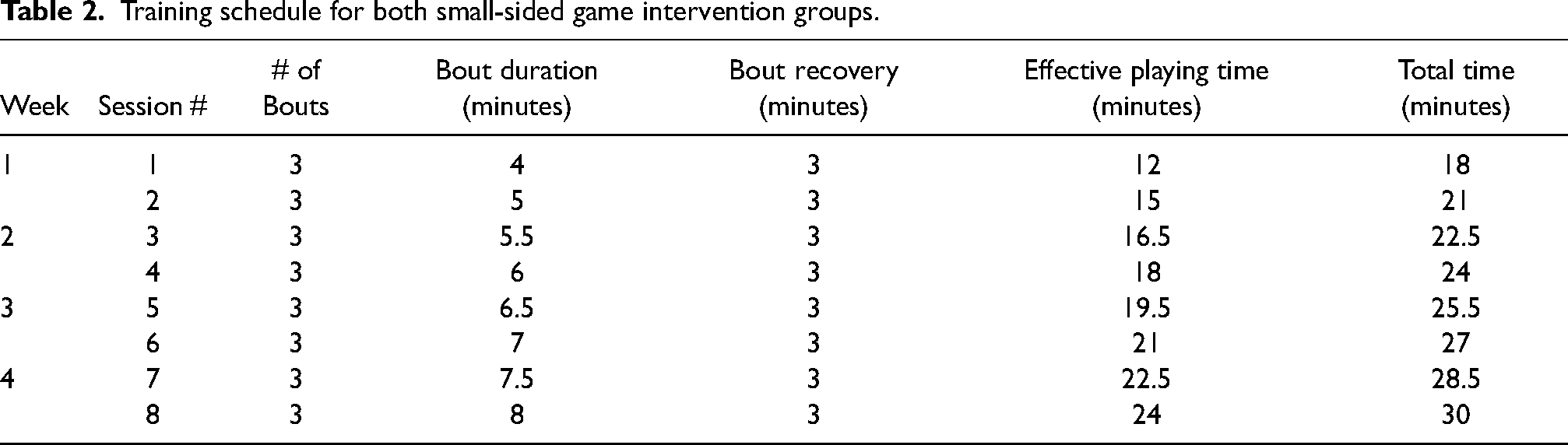
The SSG prescription was identical for both groups with the exception of pitch size (Table 1; Figure 2). The intervention timeline is shown in Table 2. The SSG format was structured as 5 versus 5 games played without goalkeepers1,19 and using a scoring zone. 20 The SSGs were performed as intervals consisting of three bouts of 4–8 min duration with 3 min of passive recovery between bouts. 21 To ensure progressive overload, a periodization scheme similar to Owen et al. 22 was used. To standardize the tactics of each team, both groups used man-marking tactics as suggested by Aasgaard and Kilding. 2 Players were familiarized with man-marking tactics prior to the start of the training intervention.
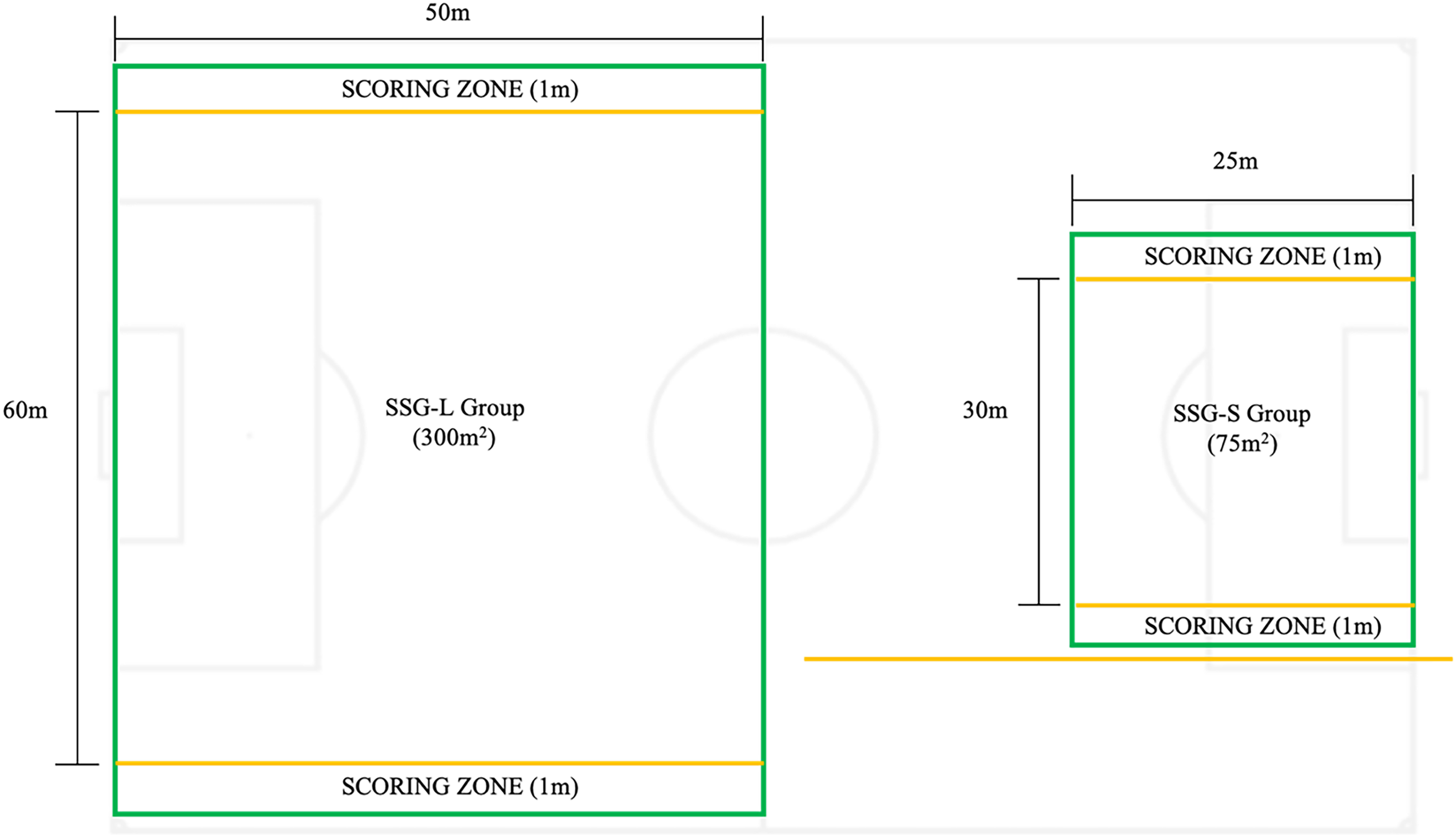
Overview of the pitch configurations for the small pitch (SSG-S) and large pitch (SSG-L) intervention groups.
Summary of the intervention period and daily activities completed by the players.
Training schedule for both small-sided game intervention groups.
In total, players took part in either eight SSG-S or SSG-L training sessions. Each training session began with a 20-min standardized warm-up (Supplemental Content 1), 10–15 min of low-intensity technique exercises to promote familiarity with the ball and finished with the SSG-S or SSG-L training session. The training sessions were carried out simultaneously in separate halves of the pitch (Figure 2). Encouragement was provided by the coaching staff members and new balls were promptly delivered to minimize discontinuity.
Testing
The sprint and repeated sprint tests were performed on the same day. Two days later, the aerobic test was performed. All tests were carried out at a similar time of day (between 10:00 and 12:00 PM) to limit the impact of circadian fluctuations. Tests were performed on an artificial turf pitch (AstroTurf, GA, USA) where the athletes typically train. Players were encouraged to refrain from intense physical activity at least 48-h prior to the testing sessions.
Sprint tests
Following a 20-min standardized warm up (Supplemental Content 1) players performed two trials of the 40-m sprint from a standing start. Players were encouraged to run each trial as fast as possible. Verbal encouragement was be provided during each sprint effort. Sprint time was measured using photocells (0.01-s precision; Brower Timing Systems, UT, USA). 23 Photocells were placed at a height of 1.5-cm on the start line, 20-m, and 40-m; thus, enabling split times for 0–20-m, and 20–40-m. Prior to the start of each sprint, players were asked to assume the start position by placing their preferred foot (right or left) forward, 0.7-m behind the starting gate. Each 40-m sprint was separated by 3 min of passive recovery. The fastest sprint times were recorded.
Maximum sprinting speed
During the 40-m sprint tests, time was recorded between the 20-m and 40-m gates, and the average velocity from 20- to 40-m used as an estimate of maximum sprinting speed (MSS). 24 The highest velocity from the two trials was used as the MSS for each player. Estimates of MSS over longer distances are likely to provide lower MSS values than shorter distances (e.g., 5-m) but do not influence the reliability of measures. 25
RSA assessments
After 10 min of passive rest, RSA was assessed using 5 × 30 m sprints, with a 30-s active recovery period as validated by Castagna et al. 26 Maximal effort during each sprint was stressed in conjunction with strong verbal encouragement from the coach. Sprint times were as measured using the protocols outlined above. RSA was analysed using RSAmean. 26
Maximal aerobic speed (MASBEEP)
On day 2 of testing and following a 20-min standardized warm up (Table 2), players performed the shuttle run beep test (BEEP). The final velocity reached during a 20-m BEEP is a reliable indicator of maximal aerobic speed (MAS). 27 As MAS is a test-dependent metric, 28 this will be termed MASBEEP within the manuscript. A MP3 file (Complementary Training, Belgrade, Serbia) with the BEEP recording was played over a speaker system (Bose Soundlink, MA, USA). Players were lined up between two cones, placed 5-m apart, which run parallel to another set of cones, 20-m away, which together, form the running lane for each player. Players were instructed to start running at the tone, to match their running pace to the tones emitting from the recording at each interval, and to do so for as long as possible. Running speed began at 10.0 km/h−1 for the first minute and increased by 0.5 km/h−1 every minute thereafter. Players were informed that the test is over when they withdraw voluntarily, or failed to be within 1-m of their cones on two consecutive tones. 27 The final running speed was recorded and used as the players MASBEEP.
Anaerobic speed reserve
Anaerobic speed reserve (ASR) was calculated using the below equation
29
:
Physical outputs
Global positioning system (GPS) data was recorded during the eight training sessions. Players had their motion tracked using a 10-Hz GPS device (TITAN Sports, TX, USA), which has been shown to be a reliable and valid measure of total and high-speed running distances, 30 and frequency of acceleration and deceleration efforts. 31 Each device was placed inside of a designated pouch in a sports vest worn by the players underneath their training jersey. As suggested by the manufacturer, each device was turned on 15 min prior to the start of the training session. To avoid inter-unit error, players wore the same GPS device for all training sessions and matches. The following absolute speed thresholds were used for high-speed running (21.6−25.2 km/h−1), sprinting (>25.2 km/h−1) and accelerating/decelerating (>2 m/s2).22,32,33 The following variables were recorded during training sessions and matches: total distance (TD) covered, maximum speed reached (Vmax), high-speed distance (HID) (distance covered at running speeds >21.6 km/h−1), sprint distance (SD) (distance covered at running speeds >25.2 km/h−1), total number of sprints (sprint efforts begin when an athlete surpasses 25.2 km/h−1 for at least 1 s) and total number of accelerations and decelerations (velocity changes >2 m s−2).
To account for the individual speed capacity of each player, 24 a relative speed threshold was created. 34 The following relative speed threshold was used for sprinting (≥30% ASR – 100% MSS) and recorded during training sessions as relative SD (RSD) (distance covered at running speeds between 30%ASR and MSS).
Statistical analysis
All recorded data are presented as mean ± SD and 95% confidence intervals (CI). Normality was verified using a Shapiro-Wilk test (p >0.05). Reliability for the 20-m and 40-m sprint test was calculated using intraclass correlation coefficients (ICC), the standard error of measurement (SEM), 35 and coefficient of variation. ICC's greater than 0.90 36 and CV values ≤ 10% were considered acceptable. 37
A two-way repeated-measures analysis of variance (ANOVA) (2 × 2) was used to examine for the effects of time (pre- vs. post-test), group (SSG-S vs. SSG-L) and the time-by-group interaction. Post hoc comparisons were performed using the Bonferroni correction. Hedges g effect sizes with 95%CIs were calculated using the spreadsheet provided by Lakens. 38 The magnitude of these effect sizes was classified as trivial (0–0.19), small (0.20–0.49), medium (0.50–0.79), and large (> 0.80) as proposed by Cohen. 39 The level for statistical significance was set at p ≤ 0.05.
To analyse individual changes for the sprint tests, minimum detectable change (MDC) was also calculated using the following equation 40 : MDC = SEM * 1.96 * √2. To analyse individual changes for MASBEEP, the smallest worthwhile change (SWC) was calculated using the following equation 41 : SWC = 0.2 * SD.
Results
Normality/reliability
All variables were normally distributed (p >0.05). The ICCs between the test-retest measurements ranged from 0.954 to 0.969 for 20-m and 40-m sprint tests, indicating good to excellent agreement between trials. The 20-m and 40-m sprint tests showed high reliability both at the beginning (pre-) and end (post-) of the intervention, with CV ranging from 0.3%–0.8%.
Baseline performance
At baseline, no significant differences between SSG-S and SSG-L groups were reported for any of the performance variables (all p > 0.05; g = −0.36–0.14) (Table 3).
Pre- and post-intervention testing results for the SSG-S and SSG-L groups.
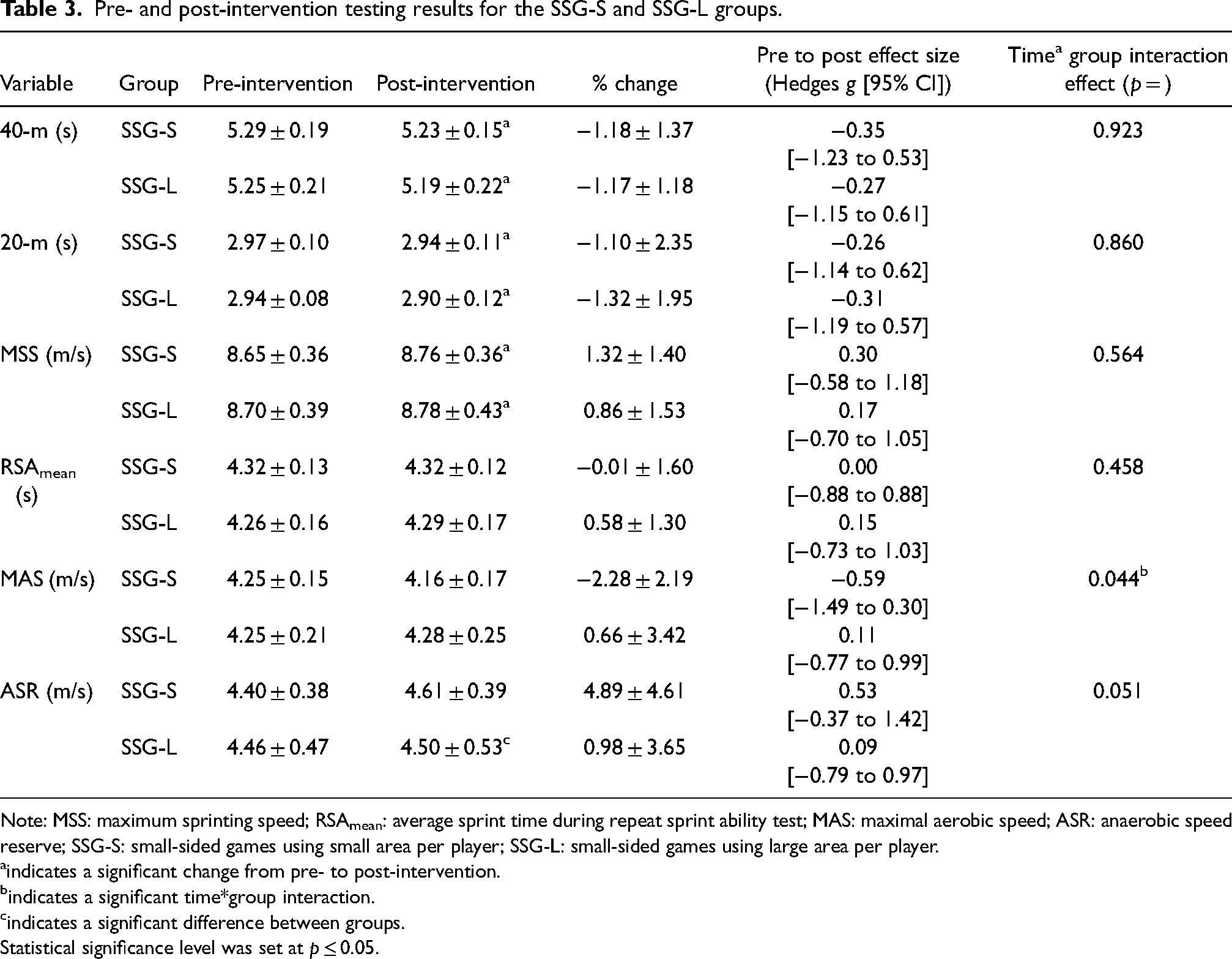
Note: MSS: maximum sprinting speed; RSAmean: average sprint time during repeat sprint ability test; MAS: maximal aerobic speed; ASR: anaerobic speed reserve; SSG-S: small-sided games using small area per player; SSG-L: small-sided games using large area per player.
indicates a significant change from pre- to post-intervention.
indicates a significant time*group interaction.
indicates a significant difference between groups.
Statistical significance level was set at p ≤ 0.05.
Sprint performance
There was a significant improvement in 20- and 40-m sprint performance (Figure 3(a)-3(b)), and in MSS after both training interventions (p ≤ 0.05; g = −0.35 to −0.26, small effects) (Table 3). However, interaction effects revealed no differences between interventions. Overall, 11 players were faster post-intervention whilst two were slower (Table 4). No significant differences or interaction effects were found in relation to RSAmean (p > 0.05) (Table 3).
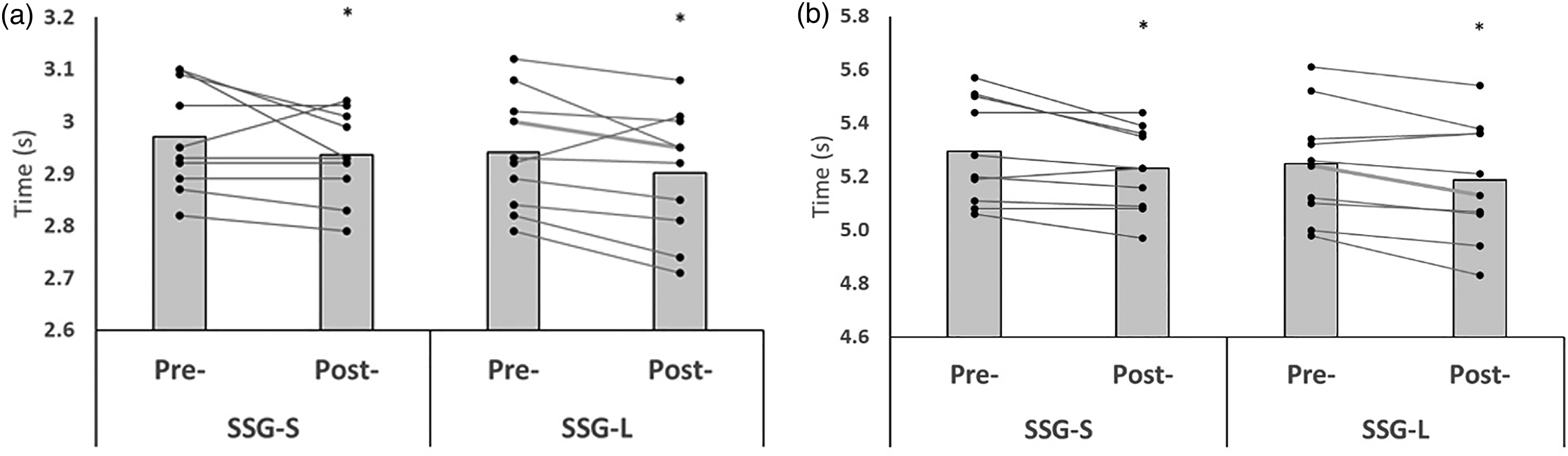
(a) 20-m sprint performance at pre- and post-intervention for the small pitch (SSG-S) and large pitch (SSG-L) intervention groups. *indicates significant reduction in sprint time from pre- to post-intervention (p <0.05). (b) 40-m sprint performance at pre- and post-intervention for the small pitch (SSG-S) and large pitch (SSG-L) intervention groups. *indicates significant reduction in sprint time from pre- to post-intervention (p <0.05).
The frequency of individuals who experienced meaningful change from pre- to post-intervention.
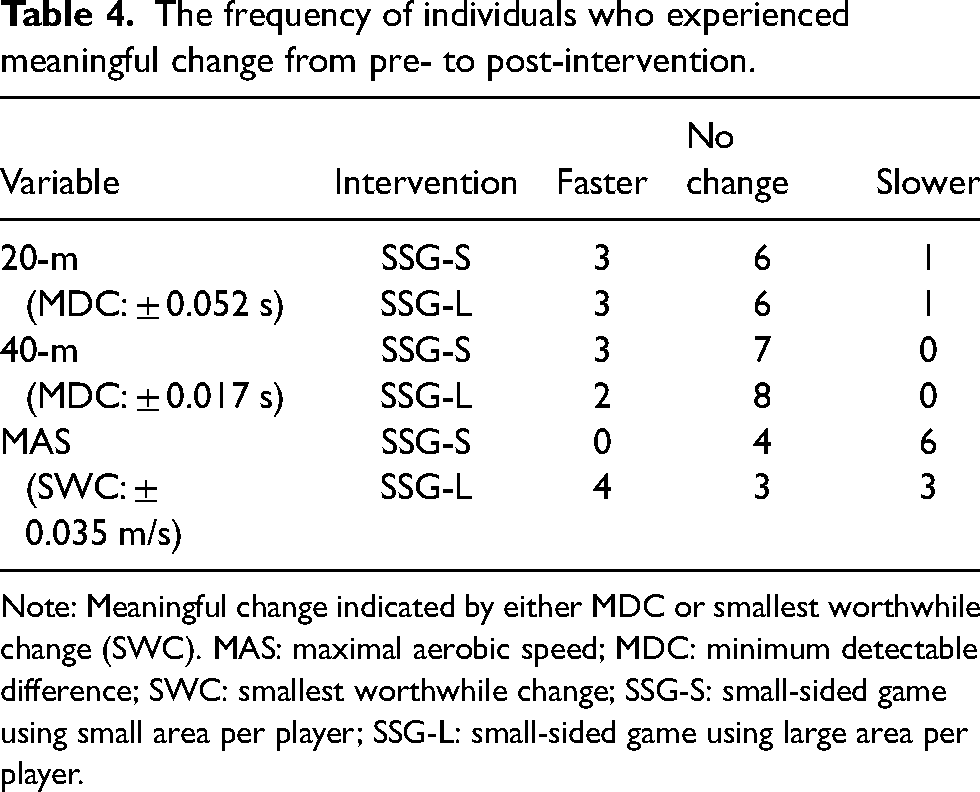
Note: Meaningful change indicated by either MDC or smallest worthwhile change (SWC). MAS: maximal aerobic speed; MDC: minimum detectable difference; SWC: smallest worthwhile change; SSG-S: small-sided game using small area per player; SSG-L: small-sided game using large area per player.
Aerobic performance
Across both groups, no significant change in MASBEEP was observed from pre- to post-intervention testing (p = .229). However, a time*intervention interaction was observed for MASBEEP, (p = .044) (Figure 4 and Table 3). Players in the SSG-S group were 0.097 m/s slower (p = 0.010, g = −0.592) at the end of the intervention than at the beginning (95% CI, −0.164 to −0.030 m/s) whilst no change was reported for SSG-L (Table 3). Six players exhibited slower MASBEEP and none demonstrated faster MASBEEP following SSG-S (Table 3). Conversely, only three players showed slower MASBEEP and 4 players faster MASBEEP following SSG-L.
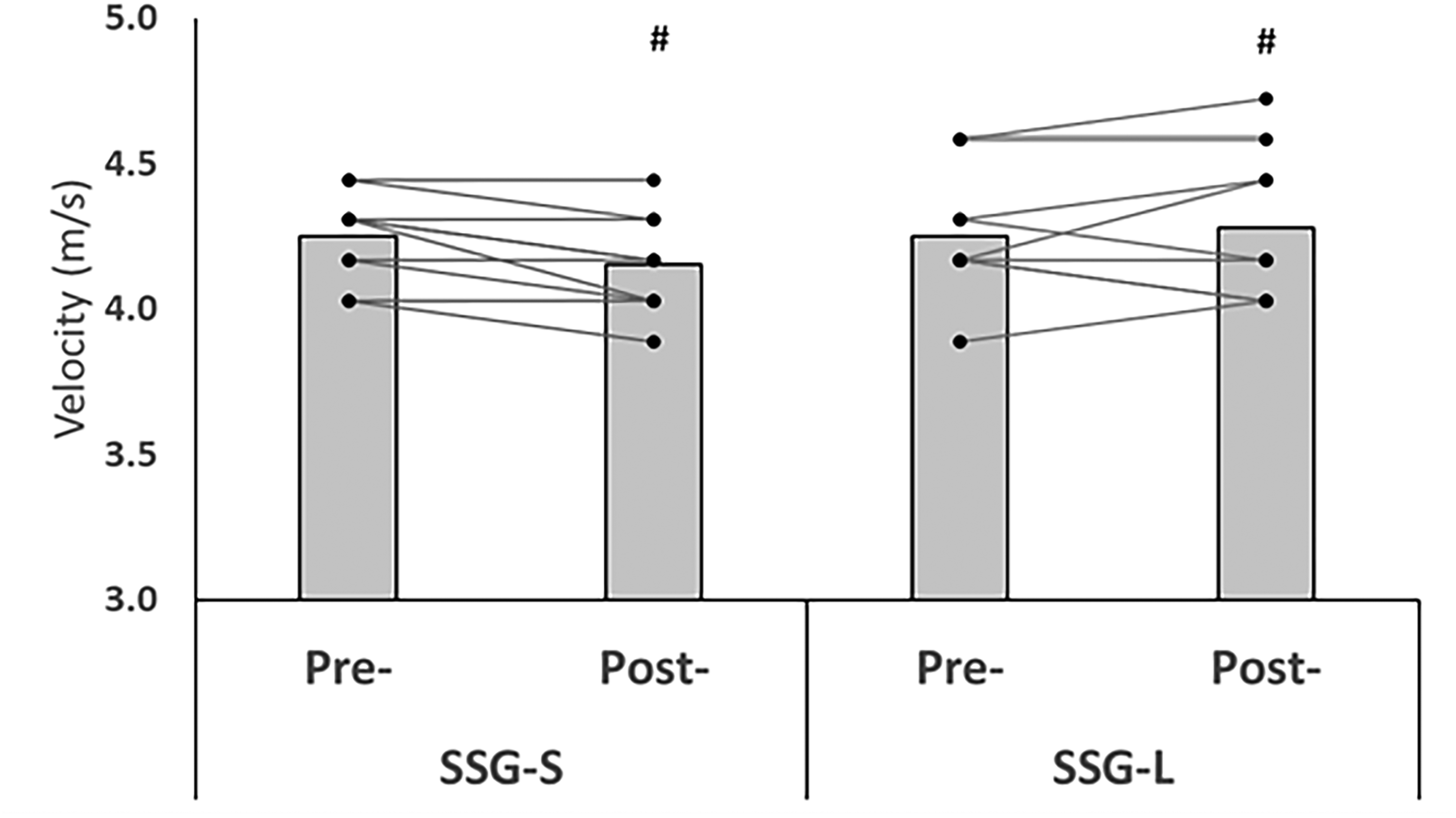
Maximal aerobic speed (MASBEEP) at pre- and post-intervention for the small pitch (SSG-S) and large pitch (SSG-L) intervention groups. #indicates significant time*group interaction effect (p <0.05).
There was also a significant difference in ASR between groups (p = 0.013) (Table 3). After the intervention, players in the SSG-L group had an ASR that was 0.108 m/s smaller than players in the SSG-S group (95% CI, −1.106 to 0.653, g = −0.226, small effect).
Training load
There was a significant difference between groups for cumulative TD, HID, SD, ACC, DEC, sprints, RSD, and Vmax during the training intervention (p < 0.05) (Table 5). Effect sizes were all large (g = 1.71–6.32). Players in the SSG-S group made more ACCs and DECs. Conversely, players in the SSG-L group covered more TD, HID, SD and RSD. In addition, SSG-L made more sprints and reached higher top speeds.
Cumulative training loads experienced within each training group across the intervention period.

Note: TD: total distance; HSD: high-speed distance; SD: sprint distance; ACC: accelerations; DEC: decelerations; RSD: relative sprint distance, Vmax: top speed attained; SSG-S: small-sided games using small area per player; SSG-L: small-sided games using large area per player.
Discussion
The aim of the current study was to examine changes in sprint performance following SSG interventions using large versus small ApP. This was the first investigation to compare training adaptations induced by SSGs using small versus large ApP. The results indicated that both SSG-S and SSG-L demonstrated small improvements in linear sprint performance (e.g., 20-m, 40-m and MSS). However, no differences were found between groups. A further aim of this study was to investigate changes in aerobic performance. Interaction effects revealed that players in the SSG-S group exhibited impaired aerobic performance (MASBEEP) following the intervention whilst no change was observed in SSG-L. Coaches would be advised to employ SSGs with a large ApP to maintain aerobic performance whilst possibly improving sprint performance.
It was hypothesized that SSG-L would result in greater HID, SD and higher Vmax whilst SSG-S would result in greater ACC and DEC.9,42 External load data from the current study confirmed these hypotheses. Players in the SSG-L group covered significantly greater distance at high speed and averaged higher Vmax over the eight training sessions. Players in the SSG-S group made significantly more ACC and DEC over the eight training sessions. These findings conform with current literature regarding the relationship between external load and pitch size. 9 The relationship between external load and pitch size also led to the hypothesis that a larger pitch size would promote greater speed42,43 and aerobic 44 adaptations in the SSG-L group relative to the SSG-S group. Further, large ApP configurations are more likely to represent the demands of match play.9–11
Following the intervention, small but significant improvements in sprint performance were found in both groups (p < 0.05; g = 0.26–0.35). Previous investigations have examined the influence of SSGs on sprint performance, although have not compared pitch sizes. Chaouachi et al. 45 reported small improvements in 10m and 20-m sprint performance (g = 0.22 and 0.23, respectively) following 8-weeks of 1 v 1, 2 v 2 and 3 v 3 SSGs played by elite youth players (100 m2 ApP; age: 14.2 ± 0.9 years). Likewise, Karahan 46 reported small improvements in 20-m sprint performance (g = 0.23) in amateur division soccer players following a 3 v 3 intervention (55 m2 ApP). Finally, Dello Iacono et al. 47 found small improvements in 20-m speed (g = 0.38), but large improvements in 10-m speed (g = 0.90), following an 8-week 5 v 5 intervention (126 m2 ApP). The ApP configurations used by these investigators was broadly comparable to the ApP strategy employed for the SSG-S group (75 m2 ApP) in the current study and would not appear to provide an appropriate stimulus for high-speed and sprint running.10,13 Moreover, the studies noted above reported that isolated sprint training was more effective than SSGs for inducing improvements in linear speed. Consequently, direct sprint training may be more effective at promoting speed adaptations than SSGs. 16
Despite the marked differences in accumulated external load observed in the current study, no significant differences in sprint performance changes existed between groups; both SSG training groups exhibited improvements in sprint performance. As the current study did not have a control group, it cannot be determined if changes in sprint performance were a consequence of the SSG intervention. For example, it is possible that improvements could be related to other aspects of the conditioning programme. 48 Nonetheless, two important limitations of the current study may partially explain why no differences were observed between SSG-S and SSG-L. First, the length of this intervention was short (4-weeks) in comparison to those suggested in the literature for aerobic adaptations (8 weeks) 49 and speed adaptations (6–10 weeks). 50 Previous SSG interventions demonstrating positive training effects have been greater than 6 weeks in duration.45–47,51–53 Second, the sample size used in the current study (20 participants) failed to meet that determined by the power analysis (26 participants), as the roster size is limited to 24 players in this cohort. A small sample size reduces the statistical power of the findings and can therefore affect the interpretation of results. 54 Nonetheless, it is important to highlight that the current study is representative of the constraints faced by practitioners working with elite soccer. The sample size was also comparable to previous investigations (e.g., Karahan 46 ; Dello Iacono et al. 47 ).
Neither SSG-S or SSG-L groups exhibited changes in RSA following the intervention, nor was any time*group interaction observed. This is despite the SSG-L group covering a greater SD and performing significantly more sprints during the training period. In a similar study, Dello Iacono et al. 47 reported significant changes in RSA performance in youth soccer players following an 8-week SSG intervention using 5v5 games (100 m2 ApP) (p < 0.05, g = 1.96). Bujalance-Moreno et al. 51 also reported significant changes in RSAmean (p < 0.01, g = 1.11) following a 6-week training intervention using 2 v 2 and 4 v 4 SSGs (75 m2 ApP) in college-aged soccer players. Despite the similar ApP used in these studies and the SSG-S group in the current study, significant changes in RSA performance were not found. This suggests that an intervention period of 4-weeks, as employed in the current study, may not be sufficient to promote significant changes in RSA performance.
Given the association between larger SSG pitch sizes and increased aerobic demand,42,44 it was expected that players in the SSG-L group would have greater improvements in aerobic performance than players in the SSG-S group. Whilst no significant change in MASBEEP was reported from pre- to post- in the SSG-L group, there was a medium-sized impairment (g = 0.6) in the MASBEEP scores of players in the SSG-S group. Eniseler et al. 52 reported no significant changes in Yo-Yo test scores following 6-weeks of SSGs (12 total sessions) played using an ApP similar to that of the SSG-S group in the current study (90 and 75 m2, respectively). A similar 6-week (18 total sessions) investigation from Los Arcos et al., (2015) reported a trivial to small impairment in MASBEEP performance following SSG training (g = −0.07–0.34) using a similar ApP (85 m2). These findings highlight the importance of pitch size in determining aerobic adaptations and conforms to previous literature.42,44 However, a clear limitation of the current study is the lack of physiological monitoring during the sessions. Monitoring heart rate (HR) responses would provide insight into whether players were experiencing an adequate training stimulus for aerobic development and identify differences between SSG-S and SSG-L interventions (e.g., time spent at 90%–95% HRmax). 55
Riboli et al. 9 has reported increased metabolic power values with increased ApP, which supports the findings of this study that SSGs with larger ApP are required to develop or maintain fitness in college soccer players. This suggests that ApP is potentially a key variable in determining aerobic adaptations. Previous research by Casamichana and Castellano 42 reported that significantly more time is spent at higher HR values (> 90% HRmax) when using medium (175 m2) and large (275 m2) ApP as opposed to small (75 m2) ApP. Given that the current study used a large ApP (300 m2) in SSG-L and a small ApP (75 m2) in SSG-S, it is not surprising that aerobic performance declined in SSG-S whilst being maintained in SSG-L. These findings support the claim that SSGs played with a small ApP ( ≤ 75 m2) may be detrimental to the development of aerobic performance in soccer players. In conclusion, practitioners seeking to promote aerobic adaptations in their players may consider the benefits of using larger ApP (≥300 m2).
The findings of the current study must be interpreted in line with several limitations. Sample size was limited due to the permitted size of the playing roster. The length of the intervention was also limited due to competition schedules. Future investigations should seek to use larger cohort groups and implement longer interventions (≥6 weeks) where possible. However, regulations clearly pose a challenge to applied research studies. No control group was employed in the current study, so the influence of non-SSG training could not be accounted for. If subsequent investigations were able to compare SSG-S and SSG-L to a control group performing no SSG training, it would be easier to understand the true training effect of SSGs. However, researchers should acknowledge that restricting player's participation in training may not be viable in the applied setting. Further, players” physiologic responses were not monitored during the intervention. The differences between SSG-S and SSG-L groups in external load could not be supported by measures of internal load.
In summary, the current study observed that SSGs played with greater ApP expose players to greater HID, SD, RSD, top speeds and more sprints per session. In contrast, SSGs played with reduced ApP expose players to more ACC and DEC actions. Over a short (4-week) duration both large and small ApP SSG interventions may confer small but significant improvements in sprint performance. However, small pitch SSG training may not be adequate to sustain aerobic performance in-season. Thus, large pitch configurations are also likely preferable for the maintenance of aerobic performance in the short-term because of greater absolute workload.
For coaches and practitioners, it is important to understand that ApP influences the physical and physiological demands experienced by players. It is recommended that large ApP configurations are employed if seeking to maintain aerobic performance whilst possibly conferring beneficial effects to linear speed performance. Small ApP configurations may confer a similar beneficial effect on linear sprint performance, but are likely inadequate to maintain aerobic performance.
Supplemental Material
sj-docx-1-spo-10.1177_17479541221126955 - Supplemental material for Does size matter? Effects of small versus large pitch small-sided game training on speed and endurance in collegiate soccer players
Supplemental material, sj-docx-1-spo-10.1177_17479541221126955 for Does size matter? Effects of small versus large pitch small-sided game training on speed and endurance in collegiate soccer players by Joshua Faga, Chris Bishop and Sean J Maloney in International Journal of Sports Science & Coaching
Footnotes
Declaration of conflicting interest
The author(s) declared no potential conflicts of interest with respect to the research, authorship, and/or publication of this article.
Funding
The author(s) received no financial support for the research, authorship, and/or publication of this article.

Supplemental material
Supplemental material for this article is available online.
References
Supplementary Material
Please find the following supplemental material available below.
For Open Access articles published under a Creative Commons License, all supplemental material carries the same license as the article it is associated with.
For non-Open Access articles published, all supplemental material carries a non-exclusive license, and permission requests for re-use of supplemental material or any part of supplemental material shall be sent directly to the copyright owner as specified in the copyright notice associated with the article.
