



Abstract
Development of perceptual-cognitive motor skills is a crucial factor influencing soccer training and competition. The aim of the study was to examine the effects of neuromuscular coordination, proprioceptive and balance exercises on physiological attributes and technical skills in female soccer. Female soccer players competing in Greek A Division (N = 48) were assigned to intervention (N1 = 24) and control groups (N2 = 24). The Proprioceptive Training Intervention Program (PTIP) lasted approximately 20 min and was implemented five times per week for 16 weeks. It was hypothesized that the PTIP in addition to a regular training programme would significantly affect female soccer player perceptual-cognitive-motor capability as it was estimated with physiological attributes (
Introduction
Soccer as an open-skill and competitive sport requires a multitude of perceptual-cognitive-motor skills to be performed under continuously and rapidly changing conditions.1,2 Skill can be defined as an activity or a task that requires voluntary control, has a specific purpose or goal to achieve and has to be performed with high confidence and with the least amount of time and/or energy. 3 Perceptual-cognitive-motor skills in soccer are comprised of two components; one refers to technique (motor skill execution) and the other to decision-making (e.g. executive functions, anticipation, attention) (perceptual–cognitive skill). 4 As Mohr et al. 5 stated, soccer players may have good movement patterns (technique), maintain their technique under different fatigue states, and perform the appropriate action at the appropriate time (skill). Moreover, the skill element refers to the player’s learned ability to perceive and execute the appropriate movement pattern based on the demands of the game. The core of this viewpoint is that the cognitive component of the player, in the form of decision making, is a critical performance component. 1
An extensive number of research studies indicated that physical, physiological, mental, and technical skills are of paramount importance as they are crucial for successful soccer play (e.g..6,7) Soccer players are expected to be competent in aerobic and anaerobic capacity, 8 make correct decisions under time constraints, 9 and perform technical soccer skills, such as dribbling, passing, shooting, 10 and heading 11 with speed and accuracy. Moreover, as it is stated by Ali 1 and Davids et al., 12 many of the soccer skills required -such as passing, dribbling, shooting, and heading- are complex movement patterns and executed while standing on one leg, which underlines the importance of coordination abilities and perceptual cognitive processes in successful performance. Therefore, soccer training should focus on the development of proprioceptive-coordinative abilities as they can improve perceptual-cognitive components of players, such as anticipation, decision-making, and motor skill execution.
The cornerstone of the effective and successful execution of this combination of skills is proprioception and its importance has been recognized widely in the literature (i.e.. 1 ) Proprioception is a complex neuromuscular process and “refers to our sensation and perception of limb, trunk, and head position and movement” (, 3 pp. 115). It is reliant on sensory information transmitted to the central nervous system, involves afferent and efferent signalling, and plays a crucial role in stability and orientation while executing motor skills. 3 In addition, balance has been defined as the ability to maintain a (static) base of support and perform a task while maintaining a (dynamic) stable position. 13
It is a well-documented fact that proprioceptive training programmes have been shown to reduce injury risks particularly lower extremity injuries.14,15 In addition, proprioceptive training has been shown to improve balance, 16 agility performance, 17 ability to learn a new skill, 18 performance enhancement, 19 and even sport attainment. 20 More specifically, studies focusing on soccer have examined the effects of different warm-up methods and stretching techniques including proprioceptive training on agility, dribbling, shooting, anaerobic capacity, and performance. Amiri-Khorasani et al. 21 examined the effects of static, dynamic, and the combination of static and dynamic stretching within a pre-exercise warm-up on the Illinois Agility Test (IAT) in soccer players. The soccer players were tested for agility performance using the IAT after different warm-up protocols consisting of static, dynamic, combined stretching, and no stretching. The key finding of this research revealed that dynamic stretching was the most effective warm-up method for agility performance. Similarly, Gelen 22 compared the effects of different warm-up methods on a variety of soccer parameters such as sprinting, slalom dribbling, and penalty kicks. In line with previous findings, dynamic exercises were found to be the most facilitative for all the skills that were executed by the players. Another study examined the effects of warm-up protocols on anaerobic performance identifying that dynamic warm-up enhanced anaerobic performance in elite youth soccer players. 23 Recently, Boraczynski et al. 24 examined the effects of on-field proprioceptive exercises on motor performance among soccer players. The findings revealed that proprioceptive training, which included a variety of exercises such as single leg balancing games, standing on one foot while kicking the ball to a teammate, and using a balance trainer, can help prepubertal soccer players improve their motor coordination abilities and soccer skills. The authors highlighted the multidimensional benefits of proprioceptive training exercises in prepubertal soccer players.
However, there is scarcity of research examining the potential effects of proprioceptive training programmes on the development of technical skills. Despite its rapid growth, research on female soccer players is limited and inconsistent, particularly when compared to research on male players. Research has shown that female soccer matches have different requirements than male soccer matches such as fitness requirements and match performance characteristics (i.e. 25 ) and female players are two times more likely to experience an anterior cruciate ligament injury. 26 Therefore, it is important to examine more in depth the female game to enhance our understanding which will enable practitioners to incorporate key exercise programmes (i.e. proprioceptive training) in their exercise routines to facilitate development.
Studies examining the effectiveness of proprioceptive training on female soccer players showed that the training programme led to reduction of the number of noncontact injuries (e.g. hamstring) while also reduced the rehabilitation time for noncontact injuries. 14 Similarly, adherence to the neuromuscular injury prevention programme (FIFA 11 + ) which includes proprioceptive and balance exercises significantly reduced the injury risk and improved the balance of youth female soccer players. 27 Proprioceptive balance training can also improve performance related characteristics such as sprint ability 28 and jump performance (for a comprehensive review, see.29,30) Moreover, a limited number of studies have also identified the potential benefits of proprioceptive and balance training on technical skills in sports.31,32
A variety of tests have been used and evaluated in the literature enabling researchers to use them to assess training or intervention programmes in relation to performance in soccer (i.e..1,10,33,34) However, there is scarcity of research evaluating the potential effects of proprioceptive-coordinative exercises on specific technical skills in soccer, particularly in female soccer. As such, the aim of this study was to examine the effects of neuromuscular coordination, proprioceptive, and balance exercises on physiological attributes and technical skills in female soccer players. It was hypothesized that a specialized 16-week Proprioceptive Training Intervention Program (PTIP) in addition to a regular training programme would elicit significant improvements in female soccer players when compared to female soccer players that follow a regular training programme. Hence, for the purpose of the study, the proprioceptive training programme of the current study included variations of balancing on dynamic balance disks 35 as well as agility runs, juggling, kicking, passing, dribbling, shooting, and heading a ball toward a target.
Methods
Participants
Forty-eight female soccer players, competing in the Greek A Women Football (Soccer) Division (Mage = 26.96 ± 2.93 years; Mheight = 168.69 ± 3.14 cm), participated in the study. Prior to their participation, it was confirmed that participants did not take any medication, had no pathological conditions or diseases, and had not participated in an organized proprioception and/or balance training intervention programme within the last six months prior to the start of the study. All female soccer players were outfield players and members of two professional football teams. Both teams were competing in the same division and were playing soccer for 14.79 ± 2.68 years. 1 Twenty-four players of one team were assigned to the Control Group (Mage = 24.04 ± 2.84 years; years of playing soccer Mage = 14.75 ± 2.66 years) and twenty-four of the other team to the Intervention Group (Mage = 23.88 ± 3.01 years; years of playing soccer Mage = 14.83 ± 2.76 years) and took part in a 16-week training intervention programme. Both teams were engaged in the usual training activities and followed similar training programmes with the supervision of their coaches, participated in 5 training sessions (duration ∼ 90 min) and one competitive match per week, and had similar standings in their playing division. Thus, the difference between the two groups was that the Intervention Group also participated in the 16-week training intervention programme. In compliance with the ethical standards that govern human research (Declaration of Helsinki, 2008 version), all participants were required to read and sign a written informed consent.
Procedures
Physiological attributes
The measurements of the current study were based on the procedures of previous studies.36,37 More specifically, standing height was recorded to the nearest 0.5 cm with a Seca Stadiometer (Birmingham, United Kingdom), while body weight was measured to the nearest 0.1 kg with a Seca Beam Balance 710 (Birmingham, United Kingdom). Body fat was calculated using the 7-skinfold method,
38
measured by an appropriate skinfold calipre (Harpenden Skinfold Caliper, Baty International, West Sussex, England). To estimate maximal oxygen uptake (
Proprioceptive training intervention program
Participants in the intervention group underwent a 16-week PTIP with five sessions per week. Each session lasted for approximately 20 min. Prior to each session, participants had a 15 min warm-up. The PTIP consisted of agility ladder football drills, drills with hoops, and balance exercises on BOSU, TOGU, inflated balance disks, and mini trampoline. Practicing the following soccer drills and exercises, female players have the opportunity to cope with a constantly changing environment incorporating the combined perceptual-cognitive-motor components (i.e. decision making, motor skill execution) of the proprioceptive exercises. The main objective of practice with PTIP was to encourage a broad range of movement and different leg patterns to improve sharpness, quickness, proper foot positioning, coordination, and balance.
Agility Ladder Drills. The agility ladder used had dimensions of 5.55 m × 0.50 m and consisted of 12 unbreakable plastic "stairs", connected to each other by durable belts. Female soccer players were standing in an upright position and at a distance of 50 cm behind the ladder. After the signal of the teammate they had to perform a variety of technical running drills such as (a) forward sprint by placing one foot in each square, (b) forward sprint by placing two feet in each square, (c) forward straddle hops in-and-out, (d) standing to the side of the ladder and moving in a lateral fashion in-and-out all the way along the ladder, (e) single leg linear hops, (f) single leg lateral in-and-out hops, (g) slalom jumps with one leg in each square, and (h) diagonal quick slalom. All drills were performed in a quick manner and at the end of the ladder, at a distance of 1 m, a ball was placed. At a distance of 10 m from the ball, there were 3 small goals (1 m long and 60 cm high) that were placed, two diagonally in relation to the ball and one vertically. The players, after passing the last square of the agility ladder, they had to choose and shoot the ball in one of the 3 goals, scoring a goal.
Drills with Hoops. Twenty-four hoops, 80 cm in diameter, were arranged to form two routes (12 hoops per route): a straight line with one-to-one setting and a straight line with two-one-two-one setting. Procedures and drills were similar to agility ladder drills, with the difference that when the players finished the route with the hoops, they dribbled with the ball fast for 10 m and then had to aim at one of the 3 small goals, scoring a goal with the foot of their choice.
BOSU Exercises. BOSU balance device (BOSU, Canton, OH) is designed to improve stability 39 and is used for balance training. Female soccer players had to keep their balance while standing on one leg (dominant and non-dominant) on the inflatable side (approximate height 25 cm) of the BOSU device. With the signal of the teammate, the player had to perform the following exercises. (1) The player was instructed to balance on the BOSU for 30 s, using interchangeably the dominant and the non-dominant leg with both arms at the waist (2) While balancing on the BOSU for 30 s, the teammate was throwing a ball from a distance of 5 metres and the player, in parallel with balance, had to return the ball using the inside (and/or the upper part) of the foot without, either the ball or the foot, touching the ground. (3) Same as the previous exercise, with the difference that player had to return the ball with a header. (4) Same as exercise 2, with the difference that the player had to juggle the ball as many times as possible for 30 s During juggling, the player could use various parts of the body without letting the ball touching the ground. (5) Same as exercise 2, with the difference that the player had to score a goal in one of the 3 small goals (1 m long and 60 cm high) which were placed, two diagonally in relation to the ball and one vertically, at a distance of 10 metres. All exercises lasted 30 s with a break of 30 s. Players were using the dominant and non-dominant leg, interchangeably, during PTIP. If they were falling or touching the ground, they had to return and stand on the BOSU until the completion of the 30 s period. Female soccer players had to perform the same exercises on (a) TOGU© Redondo ball with a base diameter of 40 cm and approximate height 20 cm, (b) inflatable balance discs (diameter of the base 33 cm and approximate height 20 cm), and (c) mini trampolines (30 cm height, 1.4 m diameter).
Six training stages were created across the soccer field to provide amble room for practicing. Each stage was consisted of two stations: two for agility ladder drills, 2 for hoop drills, 2 for BOSU, 2 for TOGU, 2 for inflated disks, and 2 for trampoline. To conserve more practice time, the players were divided into 12 pairs (one pair per station). Each pair had to practice at each stage for a 3-min time period. In stations where the players had to receive the ball from their teammates, they had to change roles every 30 s. All participants rotated at the same number of stations and the sequence of practicing the intervention exercises was presented in an unsystematic – random order for all pairs of participants.
Assessment of soccer technical skills
It is generally accepted that reliable discriminable measures are required in order to assess the effectiveness of training programmes on changes in soccer performance over time.40–42 Results from a training intervention programme provide valuable information to the coach about players’ performance enhancement. 43 For the purpose of the present study, pre- and post- programme assessment was specific to the aims of the PTIP and technical soccer skills were evaluated with juggling, heading, shooting, passing, dribbling, and agility tests.
Free Juggling (body) test Participants had to perform 3 juggling trials and the ball could touch various parts of the body. The juggling sequence was at participant's free will and convenience. The measurement unit was set at 1 point per ball contact. The best measure of the three trials was kept for further analysis.
Alternating Foot Juggling test Participants had to juggle the ball with the sequence right-left- right or left-right-left foot without the ball touching the ground or other parts of the body. The measurement unit was 1 point per jug and the best measure of 3 trials was kept for further analysis.
Juggling (foot) test The player had 3 trials to jug the ball in the air with the right foot and 3 trials with the left foot. The measurement unit was 1 point per jug. 33 The best of the 3 measures on right and left foot were kept for further analysis.
Juggling (body) test This test was identical to Rösch et al. (, 33 p. S-32, Figure 9). The player had 3 trials and the measurement unit was 1 point per successful sequence in each trial. The total points per sequence for the 3 trials were kept for further analysis.
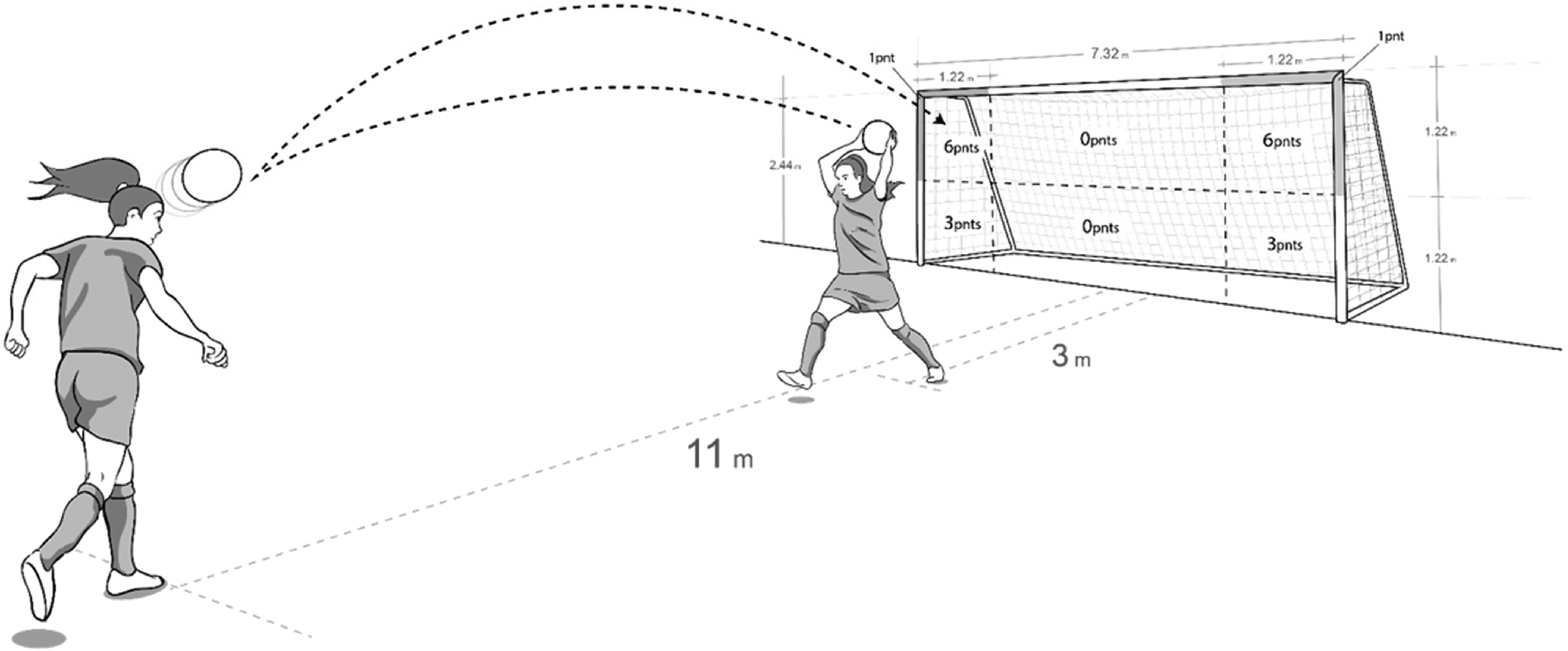
Scoring points, positions of player and teammate, and setting for heading front test.
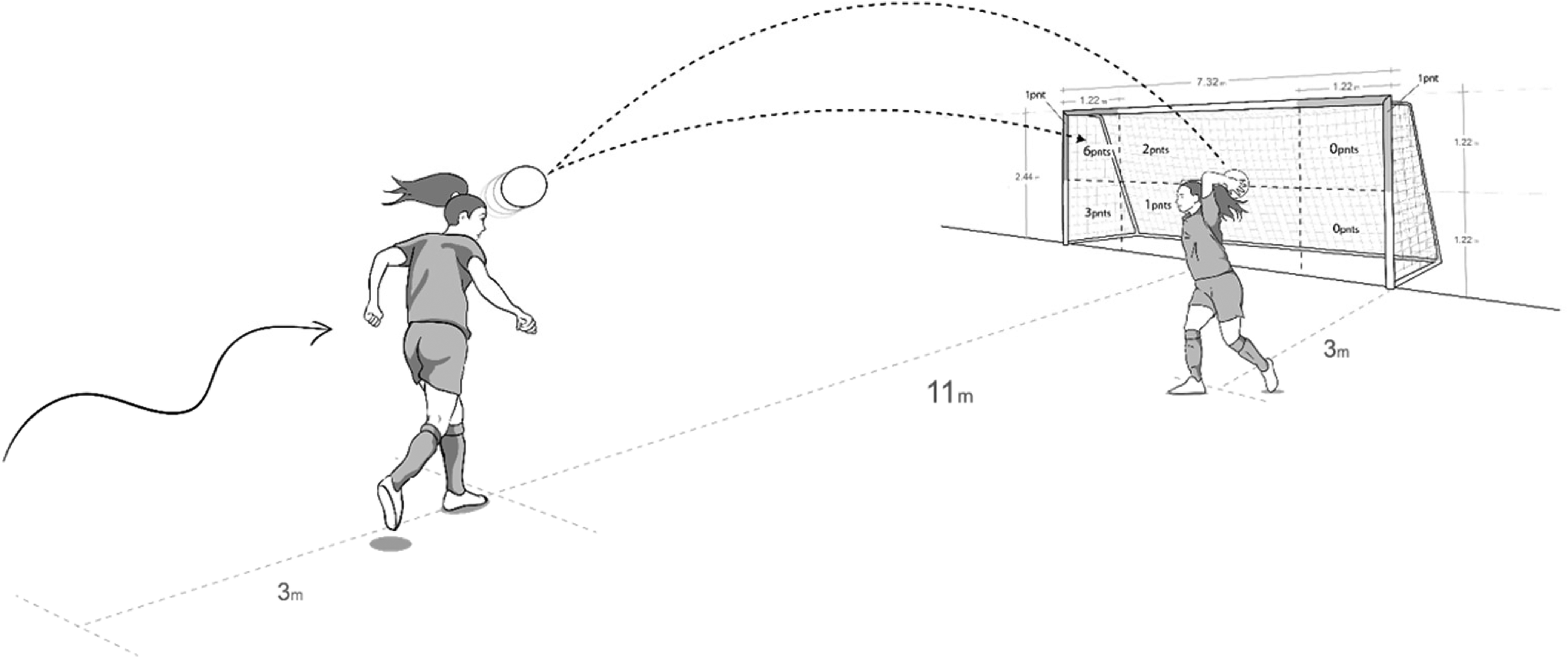
Scoring points, positions of player and teammate, and setting for heading side test.
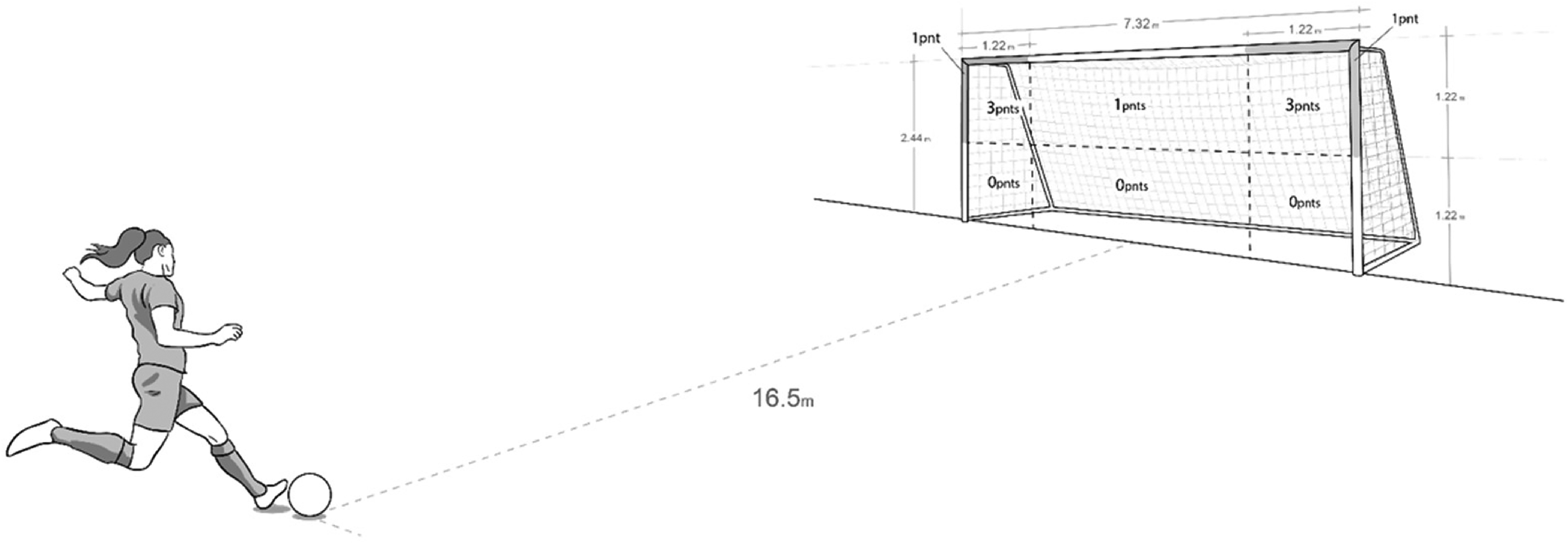
Scoring points and setting for shooting test.
Speed dribbling. Settings, procedures, and measures were in accordance with the guidelines provided by Rösch et al.. 33 Photocell gates (Newtest, Powertimer, Finland) were set at the approximate hip height at first and last gates in order to measure players’ time taken to cover the preset sequence while dribbling the ball (see 33, Figure 10). Each player performed two trials with 5 min of passive recovery. The best time (accuracy 0.01 s) achieved was selected for further analysis.
15-m ball dribbling (Ball-15m). This test required the player to dribble a ball while performing a 15-m agility run. The test was set and performed according to the guidelines provided by Mujika, Santisteban, Impellizzeri, and Castagna. 44 The same photocell gates were placed at the beginning (0 m) and end (15 m) of the planned route. Each player performed two trials with 3 min of passive recovery. The best time (accuracy 0.01 s) achieved was selected for further analysis.
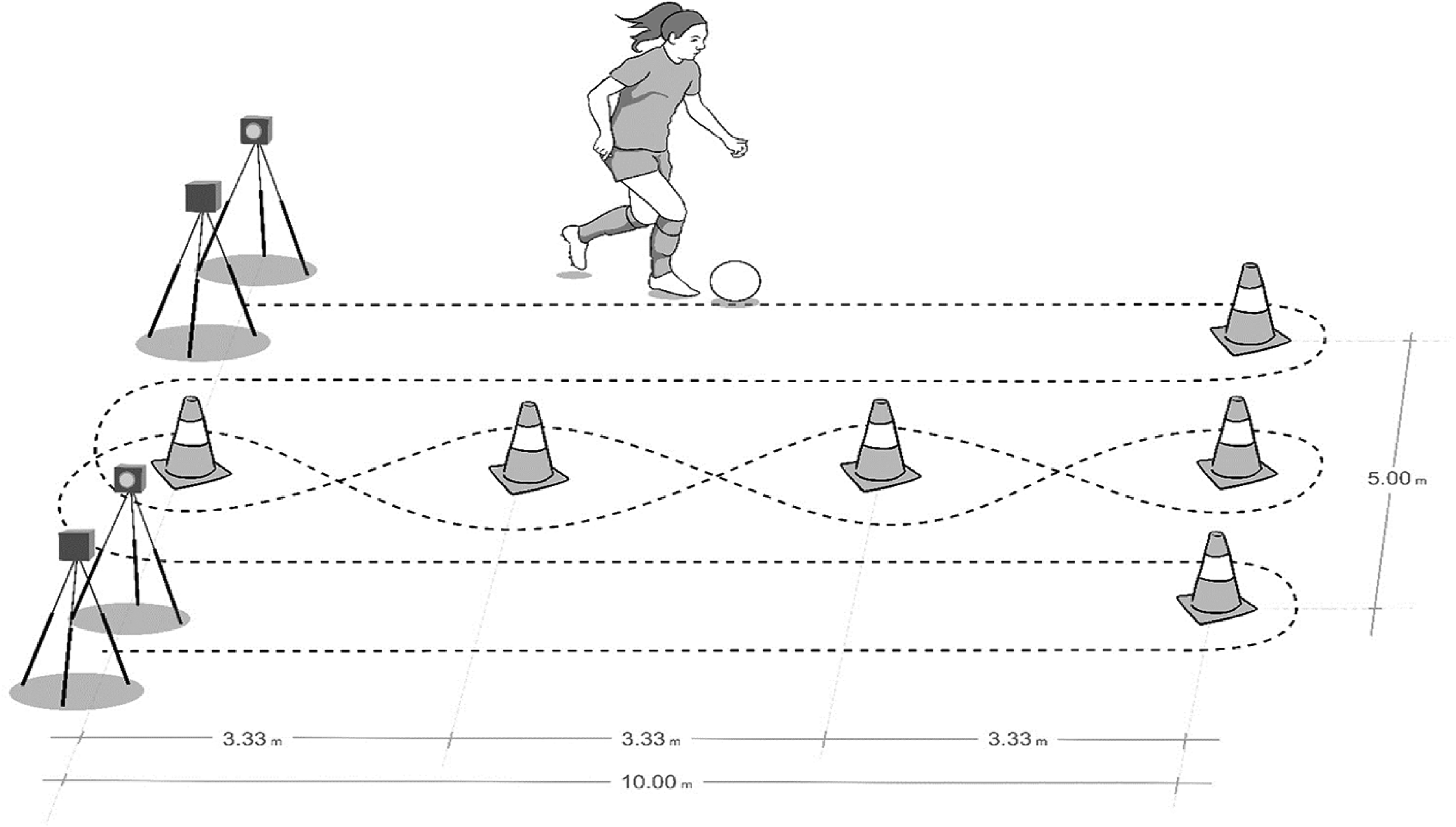
Illinois agility test with ball.
All intervention exercises and evaluation tests were performed on natural grass and the players were wearing soccer shoes. Participants were also familiarised with the evaluation tests by performing one practice trial.
Statistical analyses
Physiological attributes (age, height, weight, body mass index [BMI], percent body fat,
Results
Physiological attributes
The results of the 2 by 2 ANOVAs (Groups × Measures) with repeated measures on the second factor for physiological data indicated statistical significances for: (1)
Bonferroni post hoc analyses for interactions indicated that for: (1)
Means, standard deviations (±), and statistical significances (p < 0.05) for physiological attributes for intervention (N = 24) and control (N = 24) female soccer players.
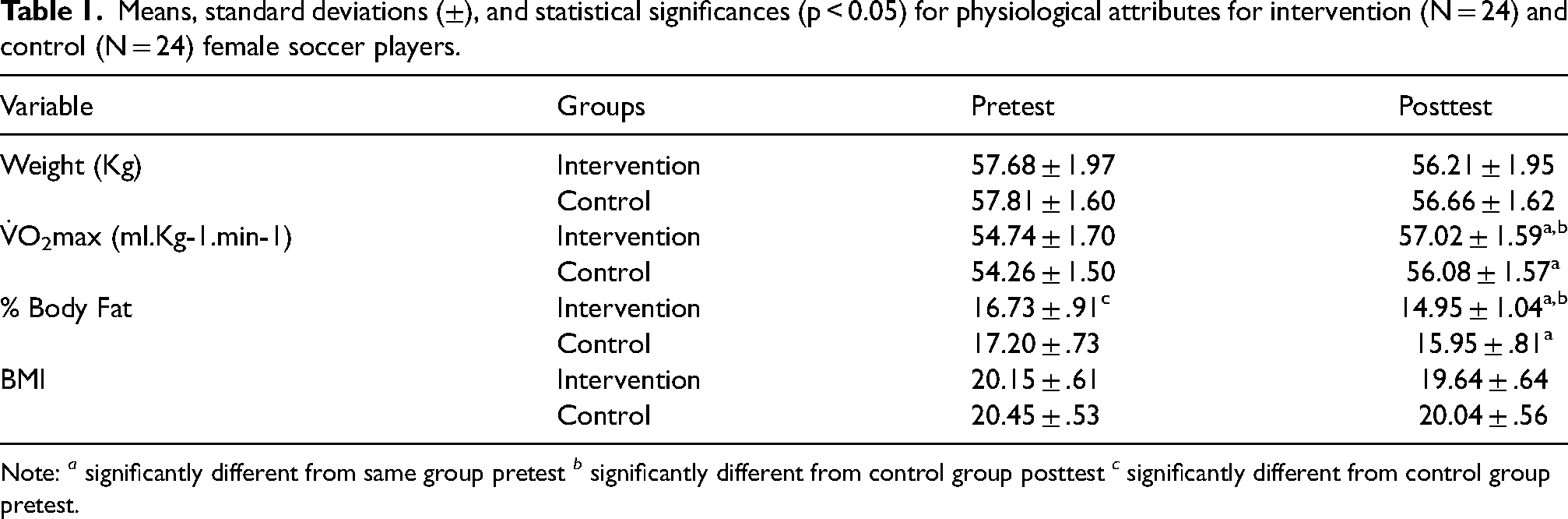
Note: a significantly different from same group pretest b significantly different from control group posttest c significantly different from control group pretest.
Soccer technical skills
Juggling tests. The Groups by Measures ANOVAs revealed statistical significances for: (1) free juggling (body), main effects for Groups (F(1, 46) = 14.65, p < .001, partial η2 = .242) and Measures (F(1, 46) = 241.50, p < .001, partial η2 = .840), and the interaction for Groups by Measures (F(1, 46) = 173.96, p < .001, partial η2 = .791), (2) alternating foot juggling, main effects for Groups (F(1, 46) = 14.65, p < .001, partial η2 = .242) and Measures (F(1, 46) = 134.21, p < .001, partial η2 = .797), and the interaction for Groups by Measures (F(1, 46) = 9.70, p = .003, partial η2 = .745), (3) juggling with right foot test, main effects for Groups (F(1, 46) = 60.81, p < .001, partial η2 = .569) and Measures (F(1, 46) = 174.90, p < .001, partial η2 = .792), and the interaction for Groups by Measures (F(1, 46) = 144.42, p < .003, partial η2 = .758), (4) juggling with left foot test, main effects for Groups (F(1, 46) = 27.93, p < .001, partial η2 = .378) and Measures (F(1, 46) = 201.02, p < .001, partial η2 = .814), and the interaction for Groups by Measures (F(1, 46) = 171.28, p < .001, partial η2 = .788), (5) jugging body test (i) chest-foot-head, main effects for Groups (F(1, 46) = 14.74, p < .001, partial η2 = .243) and Measures (F(1, 46) = 53.82, p < .001, partial η2 = .539), and the interaction for Groups by Measures (F(1, 46) = 47.68, p < .001, partial η2 = .509), (ii) head-left foot-right foot, main effects for Groups (F(1, 46) = 18.04, p < .001, partial η2 = .282) and Measures (F(1, 46) = 57.82, p < .001, partial η2 = .557), and the interaction for Groups by Measures (F(1, 46) = 50.37, p < .001, partial η2 = .523), and (iii) foot-chest head, main effects for Groups (F(1, 46) = 17.38, p < .001, partial η2 = .274) and Measures (F(1, 46) = 54.62, p < .001, partial η2 = .543), and the interaction for Groups by Measures (F(1, 46) = 46.82, p < .001, partial η2 = .504). Bonferroni post hoc analyses for interactions indicated that for (1) free juggling (body) test, (2) alternating foot juggling, (3) juggling with right foot, (4) juggling with left foot, and (5) jugging body test for chest-foot-head, head-left foot-right foot, and foot-chest head, Intervention Group posttests were significantly better (p < 0.05) than Intervention Group pretests and Control Group posttests (Table 2).
Means, standard deviations (±), and statistical significances (p < 0.05) for juggling tests for intervention (N = 24) and control (N = 24) female soccer players.
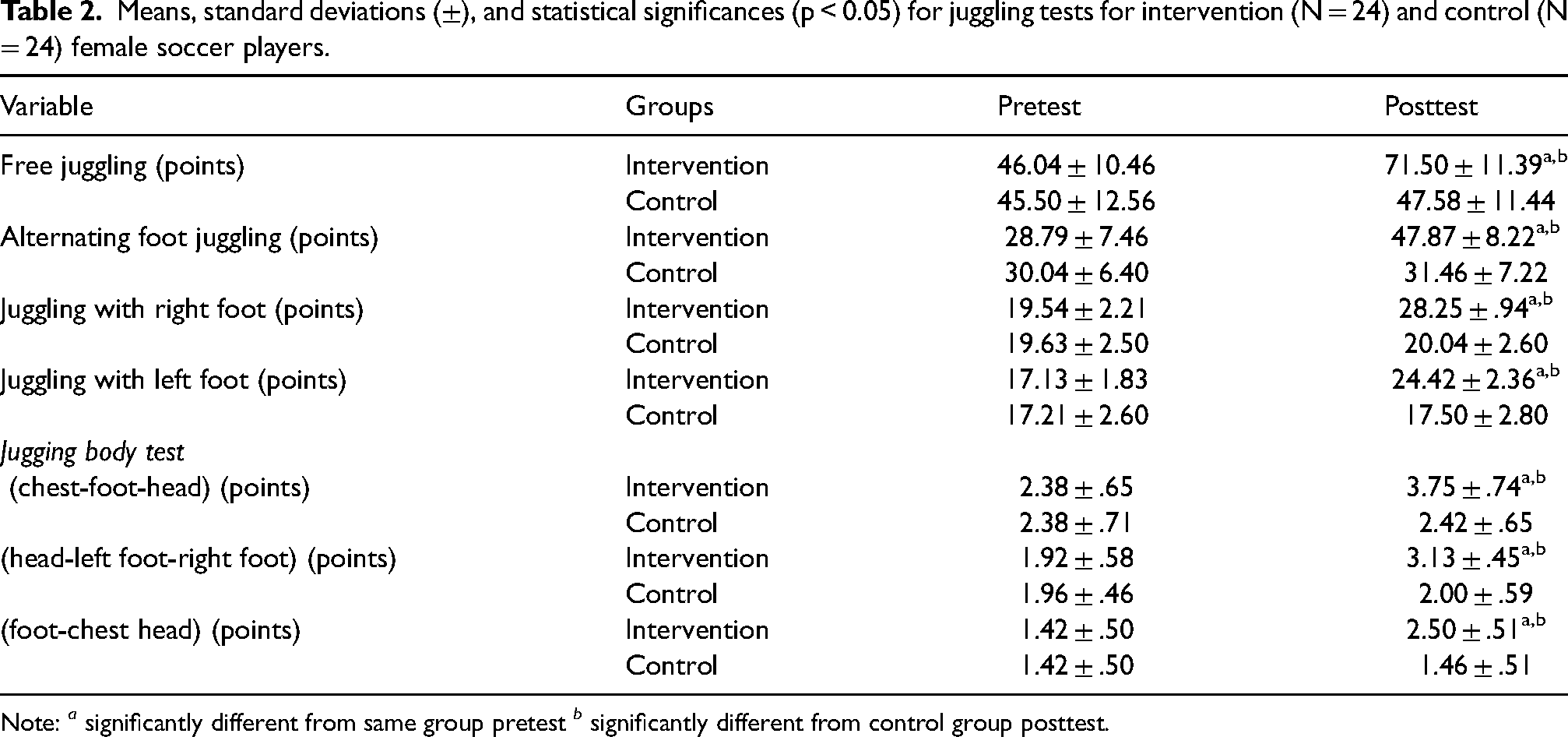
Note: a significantly different from same group pretest b significantly different from control group posttest.
Heading tests. The results of the Groups by Measures ANOVAs indicated statistical significances for: (1) heading front, main effects for Groups (F(1, 46) = 4.74, p = .035, partial η2 = .093) and Measures (F(1, 46) = 30.03, p < .001, partial η2 = .395), and the interaction for Groups by Measures (F(1, 46) = 21.84, p < .001, partial η2 = .322) and (2) heading side, main effects for Groups (F(1, 46) = 6.09, p = .017, partial η2 = .117) and Measures (F(1, 46) = 53.22, p < .001, partial η2 = .536), and the interaction for Groups by Measures (F(1, 46) = 32.93, p < .001, partial η2 = .417). Bonferroni post hoc analyses for interactions indicated that for heading front and heading side, Intervention Group posttests were significantly better (p < 0.05) than Intervention Group pretests and Control Group posttests (Table 3).
Means, standard deviations (±), and statistical significances (p < 0.05) for heading, shooting and passing tests for intervention (N = 24) and control (N = 24) female soccer players.
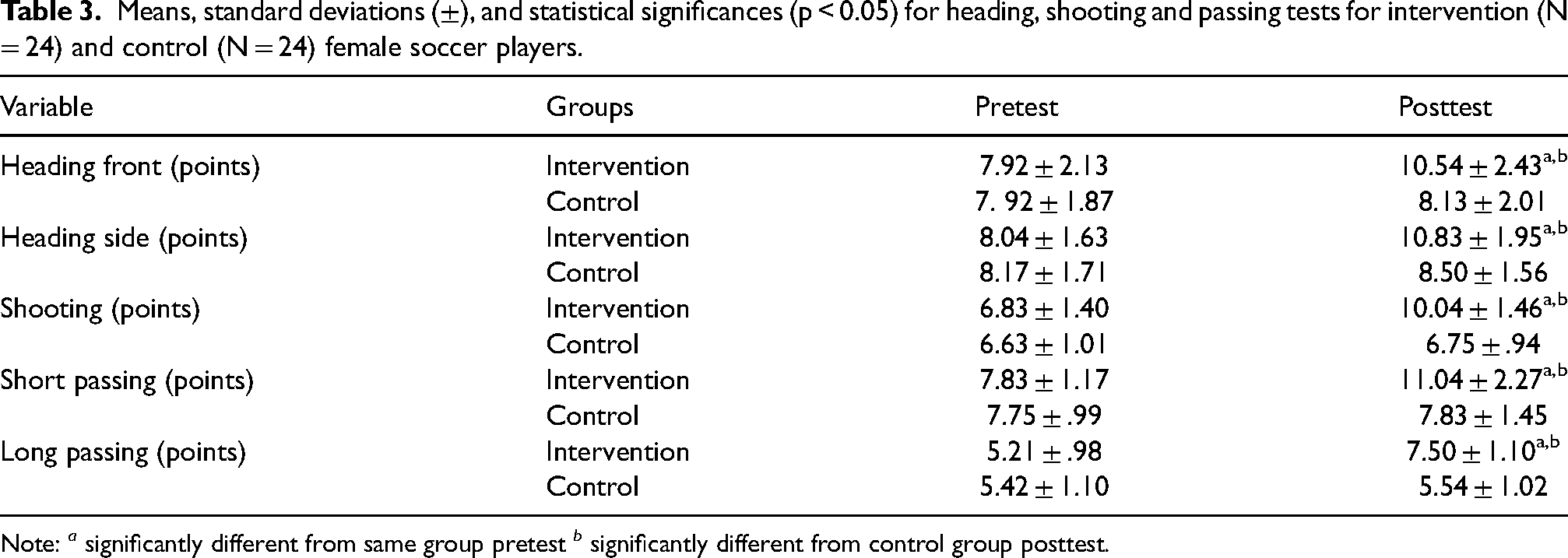
Note: a significantly different from same group pretest b significantly different from control group posttest.
Shooting test Statistical significances were found for shooting test between Groups (F(1, 46) = 38.37, p < .001, partial η2 = .455) and Measures main effects (F(1, 46) = 68.98, p < .001, partial η2 = .570), and Groups by Measures interaction (F(1, 46) = 52.17, p < .001, partial η2 = .531). Bonferroni post hoc analyses for the significant interaction indicated that Intervention Group posttest measure was significantly better (p < 0.05) than Intervention Group pretest and Control Group posttest (Table 3).
Passing tests. Similar statistically significant findings were revealed for: (1) short passing, main effects for Groups (F(1, 46) = 19.52, p < .001, partial η2 = .298) and Measures (F(1, 46) = 42.18, p < .001, partial η2 = .478), and the interaction for Groups by Measures (F(1, 46) = 38.02, p < .001, partial η2 = .452) and (2) long passing, main effects for Groups (F(1, 46) = 11.28, p = .002, partial η2 = .197) and Measures (F(1, 46) = 60.17, p < .001, partial η2 = .567), and the interaction for Groups by Measures (F(1, 46) = 48.36, p < .001, partial η2 = .513). Bonferroni post hoc analyses for interactions indicated that for short passing and long passing Intervention Group posttests were significantly better (p < 0.05) than Intervention Group pretests and Control Group posttests (Table 3).
Speed dribbling. The Groups by Measures ANOVAs for speed dribbling test indicated statistically significant main effects for Groups (F(1, 46) = 6.75, p = .013, partial η2 = .128) and Measures (F(1, 46) = 77.96, p < .001, partial η2 = .629), and the interaction for Groups by Measures (F(1, 46) = 71.30, p < .001, partial η2 = .608). Bonferroni post hoc analyses for the significant interaction indicated that Intervention Group posttest measure was significantly faster (p < 0.05) than Intervention Group pretest and Control Group posttest (Table 4).
Means, standard deviations (±), and statistical significances (p < 0.05) for time dependent variables for intervention (N = 24) and control (N = 24) female soccer players.
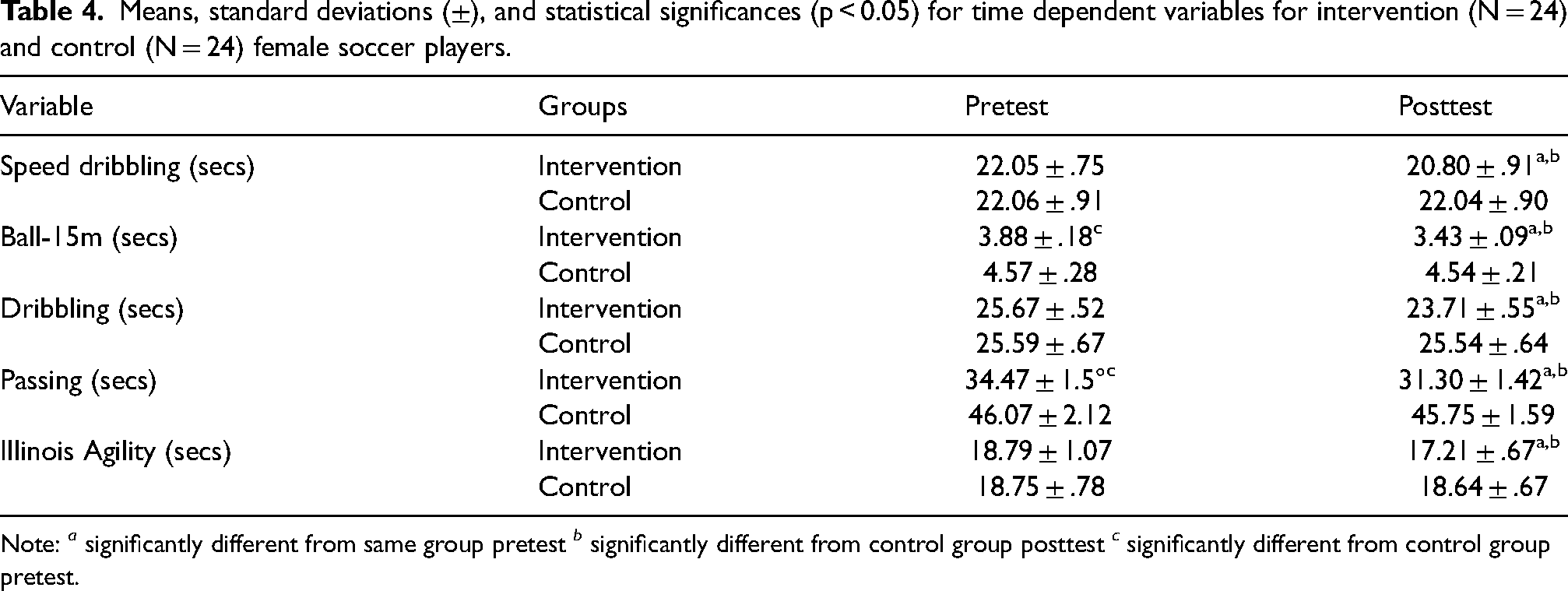
Note: a significantly different from same group pretest b significantly different from control group posttest c significantly different from control group pretest.
Ball-15m. Statistical significant differences were found for ball-15m test for Groups (F(1, 46) = 318.86, p < .001, partial η2 = .874) and Measures main effects (F(1, 46) = 139.73, p < .001, partial η2 = .752), and Groups by Measures interaction (F(1, 46) = 107.41, p < .001, partial η2 = .700). Bonferroni post hoc analyses for the significant interaction indicated that: (i) Intervention Group posttest measure was significantly faster (p < 0.05) than Intervention Group pretest and Control Group posttest and (ii) Intervention Group pretest significantly faster (p < 0.05) than Control Group pretest (Table 4).
Dribbling and passing tests. ANOVAs for dribbling and passing tests indicated statistical significances for: (1) dribbling, main effects for Groups (F(1, 46) = 28.01, p < .001, partial η2 = .378) and Measures (F(1, 46) = 444.12, p < .001, partial η2 = .906), and the interaction for Groups by Measures (F(1, 46) = 400.10, p < .001, partial η2 = .897) and (2) passing, main effects for Groups (F(1, 46) = 793.91, p < .001, partial η2 = .945) and Measures (F(1, 46) = 144.19, p < .001, partial η2 = .758), and the interaction for Groups by Measures (F(1, 46) = 95.39, p < .001, partial η2 = .675). Bonferroni post hoc analyses for significant interactions indicated that for: (1) dribbling, Intervention Group posttest measure was significantly faster (p < 0.05) than Intervention Group pretest and Control Group posttest, and (2) passing, (i) Intervention Group posttest measure was significantly faster (p < 0.05) than Intervention Group pretest and Control Group posttest and (ii) Intervention Group pretest measure was significantly faster (p < 0.05) than Control Group pretest (Table 4).
Illinois Agility test with ball. The ANOVA results for Illinois Agility test with ball indicated statistically significant main effects for Groups (F(1, 46) = 9.73, p = .003, partial η2 = .175) and Measures (F(1, 46) = 126.02, p < .001, partial η2 = .733), and the interaction for Groups by Measures (F(1, 46) = 93.90, p < .001, partial η2 = .671). Bonferroni post hoc analyses for the significant interaction indicated that Intervention Group posttest measure was significantly faster (p < 0.05) than Intervention Group pretest and Control Group posttest (Table 4).
Discussion
The aim of this study was to determine whether a 16-week PTIP performed prior the usual soccer-specific training programme could significantly affect female soccer player perceptual-cognitive motor capability as it was estimated with physiological attributes (V ˙O2max and agility) and motor performance soccer technical skills (juggling, heading, shooting, passing, and dribbling). The findings of the study, and specifically the posttest as compared with the pretest measurements, demonstrated that female soccer players following the PTIP had an improvement in decision-making (perceptual–cognitive skill) and motor skill execution.
Physiological attributes
Participants of the PTIP had significantly higher
Most of the interventions focused on agility have been using agility and speed related exercises and were proven to be effective for improving sprint and agility performance amongst soccer players. 49 Even though the intervention programme of the study did not adopt sprint/agility exercises per se; it demonstrated significant improvements in the agility performance of female soccer players. This could be attributed to either the drills with agility ladders and hoops that were included in the programme or possibly it could be partially attributed to the overall benefits of the intervention followed by the female soccer players of the current study. The frequency and length of the intervention programme which lasted for 16-weeks and was used five times per week for approximately 20 min could also be a determining factor of those physiological benefits.
Technical skills
Furthermore, a variety of technical skills either generic such as juggling or more specific such as heading, shooting, passing, and dribbling were significantly improved following the 16-week PTIP. The differences were observed when comparing between pre- and post-intervention while also between the different groups. In line with the current findings, previous studies adopting plyometric, strength exercises and sprint training have clearly demonstrated improvements on jumping, sprinting ball-shooting performance, and agility.6,50,51 More specifically, a 9-week plyometric and sprint training significantly improved explosive actions such as sprinting, change of direction, jumping and ball-shooting speed for adolescent soccer players. 51 An intervention that consisted of a combination of heavy-light resistance and soccer specific drills demonstrated an enhancement in spring ability among youth elite male soccer players. 6 Additionally, a plyometric intervention programme improved the explosive strength in female soccer players enabling them to improve shooting performance. 50
Thus, considering the findings from previous literature it can be concluded that interventions programmes can be beneficial for numerous performance related characteristics, however the ideal nature of such interventions is yet to be confirmed. Interestingly for instance, an intervention programme which included 10 exercises focused on core stability, neuromuscular control, strength, and ability lasting 15 min and was carried out three times a week for 10 weeks showed no significant effects on performance variables amongst adolescent female soccer players. 52 There are numerous reasons that could explain the ineffectiveness of this intervention such as the nature of the exercises included or the length and frequency of the intervention itself. More specifically, when comparing the intervention used by Steffen et al. 52 to the intervention of the current study major differences can be observed in the frequency (two times vs. five times per week), length (10 weeks vs. 16 weeks) and the type of exercises. The training programme of the current study was to our knowledge the first attempt to combine those specific exercises which highlights the significance and novelty of our findings. It is therefore important to recognize the benefits of structured training programmes akin to the one adopted in the current study as they can be used as part of or in addition to the warm-up exercises to probe perceptual-cognitive-motor skill components and enhance performance amongst soccer players.
To summarize, the results found in the present study support the idea that the 16-week PTIP is effective for improving agility, speed, and accuracy in female soccer players and, consequently, technical skills such as juggling, shooting, heading, passing, and dribbling, indicating an overall improvement in neuromuscular coordination, proprioception, and balance capabilities. Moreover, the insignificant decrease of body weight and BMI, and the significant improvement in
Future research and practical applications
The findings of the current study identified the multiple potential benefits of a proprioceptive intervention programme on female soccer players. Considering the scarcity of research in female sports and particularly soccer it is of paramount importance to further investigate the effects of different types of training sessions to identify the most effective ways of preparing athletes. The current study provided some insight into the benefits of proprioceptive training, however future studies need to examine a variety of training methods to evaluate their effectiveness for soccer players of different ages and skills while also adopt longitudinal designs to investigate the long-term effects of those methods.
The practical applications of those findings relate to the structure of training sessions in soccer specifically in relation to warm-up. It appears that coaches and sport practitioners could incorporate the exercises described in the current study in the warm-up routines or use them in addition to their existing warm-up routines. The multidimensional benefits of this approach suggest that this type of activities could have a higher impact on the development and performance of players when compared to traditional warm-up drills used in the first part of the training sessions. Apart from the well documented evidence related to the benefits of proprioceptive training on injury prevention, the benefits of such a training programme can enhance neuromuscular coordination leading to the improvement of physiological attributes and technical skills. As such, the exercises and tests used in the current study can be easily utilized by coaches in training and evaluating programmes to both monitor and develop male and female soccer players.
Footnotes
Acknowledgements
We thank the participants of the study for their commitment and efforts.
Declaration of conflicting interests
The author(s) declared no potential conflicts of interest with respect to the research, authorship, and/or publication of this article.
Funding
The author(s) received no financial support for the research, authorship, and/or publication of this article.

Data availability
Data are available from the authors upon reasonable request