




Abstract
This study investigated the associations between biological maturation status (classified using the Khamis–Roche method for the percentage of predicted adult height at the time of observation) and relative age (expressed as a decimal value relative to the difference between birth date and competition cut-off date) and the extent to which their relative selection biases existed across competitive age groups in an analysis of players within the Football Association of Ireland's (FAI) national talent pathway. The players assessed were either from the U13 FAI National Academy (n = 125), the Ireland U15 national team (n = 18), or the Ireland U16 national team (n = 16). A moderate to very large selection bias in favour of early maturing players was observed across all age groups, increasing in magnitude with successive age groups (p < 0.05). A total of 46–72% of players selected into the national talent pathway were early maturing; 0% of U15 and U16 players were late maturing. A relative age effect existed across all competitive cohorts (p < 0.05), although not increasing with chronological age and smaller in magnitude than maturation biases. A small positive correlation between relative age and absolute maturity status at U13 was observed, and an inverse correlation between relative age and relative maturity status at U15 (p < 0.01) was observed. There were no other significant correlations between relative or absolute maturity status and relative age. We encourage Football Associations to critically reflect upon their criteria for national talent squad selection; the current system diminishes the chances of selection for late maturing players.
Introduction
The identification and development of talented young players is the primary objective of all professional football academies and associations.1,2 With the purpose of developing footballers for monetary, reputational and competitive gain, professional football clubs recruit thousands of youth players each year to engage within their large and well-funded academies. 3 Those academy players that are selected receive professional coaching, sports science and medical support, gain access to superior training equipment and facilities, and are exposed to high levels of competitive challenge.4,5 The provision of these resources and support systems is proposed to help to ensure that these players experience optimal developmental challenges and opportunities to fulfil their potential. The factors that influence talent development in football are, however, complex, dynamic, and multifaceted, making the process of identifying those individuals with the greatest potential to succeed at the professional level difficult. 6 Two non-modifiable factors that influence player selection and performance within academy football are biological maturation and relative age. 5
Biological maturation is the process of progression toward the adult state and can be defined in terms of status, timing and tempo.7,8 Maturation status describes the state of maturation that the individual has attained at the time of observation (i.e. prepubertal, pubertal, postpubertal); whereas timing refers to the chronological age at which specific maturation events (e.g. peak height velocity, menarche) occur. 8 Tempo refers to the rate at which maturation progresses. 7 This is particularly relevant to football academies and researchers because children of the same chronological age vary substantially in terms of maturation status, timing and tempo. 1 For instance, children of the same chronological age can vary by as much as five-to-six years in skeletal age and somatic maturity, both of which are established indexes of maturation status in youth.9,10 Thus, a child with a chronological age of 12 could have a skeletal age of anywhere between 9 and 15 years. This is of particular concern to practitioners since individual differences in growth and maturation are central to the identification and development of talented youth footballers. 11
Early maturing adolescent males tend to be taller and have greater lean muscle mass compared to on-time or later maturing males, 12 as well as being stronger, faster and more powerful.13–15 In several recent investigations, players advanced in maturation were shown to perform more high-intensity actions, and high-speed running distances and achieve faster peak speeds than later maturing players during match-play.16,17 There are concerns that at the youth level early maturing players may rely on these physical and functional advantages to neglect their psychological and/or technical and tactical development. While the former may lead to short-term performance advantages, the latter have been highlighted to be central to long-term development. 18 As advanced maturation status is associated with increased levels of testosterone 19 and maturation of the anaerobic system, early maturing players also have a greater capacity to adapt to training stimuli (i.e. hypertrophy, anaerobic adaptation), further augmenting their physical and functional advantages. However, these physiological and functional advantages will only exist until late adolescence and early adulthood once all players reach adult maturity. 1
Individual differences in biological maturation have been shown to directly (i.e. physiological adaptations) and indirectly (e.g. psychological interpretations to maturity, evaluations and reactions of others to physiological change) influence player selection into professionalised talent pathways. In an examination of 202 players aged from under 9 to under 16 in one English Premier League academy, Hill et al. 5 identified a selection bias in favour of early maturing players that emerged from the under 12 cohort and increased linearly with age. Crucially, the authors identified that no players in the under 15 and 16 cohorts were late maturing. Similarly, Cumming et al. 1 highlighted that a selection bias in favour of early maturing youth players existed in four separate English professional football academies that increased in trend with age. Moreover, Johnson et al. 4 demonstrated that as players age, they are selected for elite football academies from a biased sample of early maturing boys and those advanced in maturation are up to 20 times more likely to be retained within the academy system. These maturation biases in a youth football context generally seem to emerge at around 12 years of age, coinciding with the onset of puberty, and increasing with chronological age and the level of competition.4,5
Late maturing males are more likely to be overlooked or excluded from academy football, thus denying them access to specialist coaching, training resources, and high levels of challenge and competition. 11 As a consequence, these players are less likely to be represented at the professional level. 5 Although there is some evidence to suggest that late maturing academy players are proportionally more likely to progress to the adult level than early maturing players if retained in the system, 20 late maturing players remain underrepresented at the adult level in absolute terms due to a smaller initial representation within the academy system. Concerningly, this selection bias in favour of early maturing players may appear irrespective of technical or psychological attributes. 21 Of relevance from a talent development perspective, later maturing players may hold the greatest potential for success at the senior level, in a phenomenon called the ‘underdog hypothesis’. 22 The underdog hypothesis suggests that to be competitive and remain within a youth talent programme, such as a youth national team, later maturing players must either possess or develop superior technical-tactical and psychological skills. The comparatively greater challenge that is experienced by later maturing players within an academy environment where they are competing against on-time and early maturing players is thought to encourage the development of these attributes. While these superior techno-tactical and psychological attributes may be less obvious throughout childhood and early adolescence, they become salient in late adolescence and early adulthood once the physical advantages associated with advanced biological maturity become attenuated. 1 However, so long as later maturing players are likely to drop out of the talent development system, the underdog hypothesis cannot be realised.
Relative age represents chronological age relative to the individual birthdate and competition cut-off dates and should not be confused with maturation, which is predominantly governed by inheritable or genotypic, and to a lesser extent, environmental factors.1,5,8,23 The relative age effect (RAE) is a selection bias in favour of those born earlier in the selection year, whereby those born toward the start of the selection year (i.e. 1st January), who are chronologically older than those born toward the end of the selection year (i.e. 31st December), are disproportionately overrepresented within talent pathways. The RAE is well documented in football academies through the overrepresentation of players born in the first two-quarters of the year 24 and is likely to result from attributes that are associated with age, experience and developmental differences that are present from early childhood (i.e. game knowledge and understanding, decision making, neuromuscular development, cognition, behavioural development and psychosocial development).5,6 Players born earlier in the year have up to 12 months more learning time than later-born players and may also receive positive feedback for successful understanding of football tasks more frequently and earlier than those born later in the year. This positive feedback may reinforce confidence levels and increase motivation. However, the RAE is unrelated to the physical, physiological and functional advantages associated with advanced biological maturation.6,15 The RAE in football academies is present during childhood and remains relatively stable throughout adolescence, whereas the selection bias in favour of early maturing players emerges at the onset of puberty, and from this point in development, becomes a stronger predictor of player selection and retention in youth football, increasing in magnitude with chronological age.4,5 It is often incorrectly assumed that players born early in the selection year benefit from advanced maturation, but this is not necessarily the case, and as such, relative age and biological maturation and their associated biases should be recognised as independent constructs.5,8,25,26 While these two variables may exist and operate independently, it is important to note that they are both strongly associated with talent identification and selection. Those players that are both relatively younger and late maturing likely face a double disadvantage and are the least likely to be selected.
Most studies investigating maturity-associated selection biases in youth football have involved professional academies. It is likely that these selection biases are greater in magnitude when considering those youth selected to represent their countries at the International level. That said, comparatively few studies have focused on national junior programmes. The consideration of growth and maturity is an important component of Football Associations’ national talent promotion and selection programmes. 27 With this in mind, our study aimed to (1) examine the extent to which biological maturation and relative age selection biases existed across competitive age groups in an analysis of players within the Football Association of Ireland's (FAI) national talent pathway and international representative squads, and (2) investigate the associations between biological maturation and relative age. To the best of our knowledge, this was the first research examining the simultaneous influence of biological maturation and relative age on player selection at the national level of a Football Associations' player pathway. It was hypothesised that RAE and biological maturation selection biases would be present across all age groups, yet unrelated from one another, with the selection biases in favour of advanced biological maturation being more prominent and increasing in magnitude with chronological age.
Methods
Research context
The FAI is the National Governing Body and ‘system controller’ for football in Ireland. As the governing body of a country with no professional underage competition, coaching or development structure, the FAI have created the Emerging Talent Programme to assist in the structured development of young players nationwide. The Emerging Talent Programme provides a structured programme of development at the league (30 schoolboy leagues), regional (10 regions) and national level (National Academy). The first national talent selection programme within the FAI's boys’ player pathway is the National Academy. The FAI's National Academy is a development programme to help develop Ireland's highest potential players in the under 13 and 14 age cohorts (begins at 12 years of age). 28 One primary aim of the National Academy is to provide a higher quantity and quality of players for national and international teams. 28 The National Academy selects those players perceived to have the highest potential in Ireland across all clubs for a two-year cycle and exposes them to the highest possible levels of training, competition, coaching, and developmental support in preparation for international football, and consists of 1-2 training events per month. Following the completion of the National Academy, the next selection phase in Irish football's national talent pathway is Ireland under 15 national team, followed by Ireland under 16 national team. The FAI's boys’ national player pathway is depicted in Figure 1.
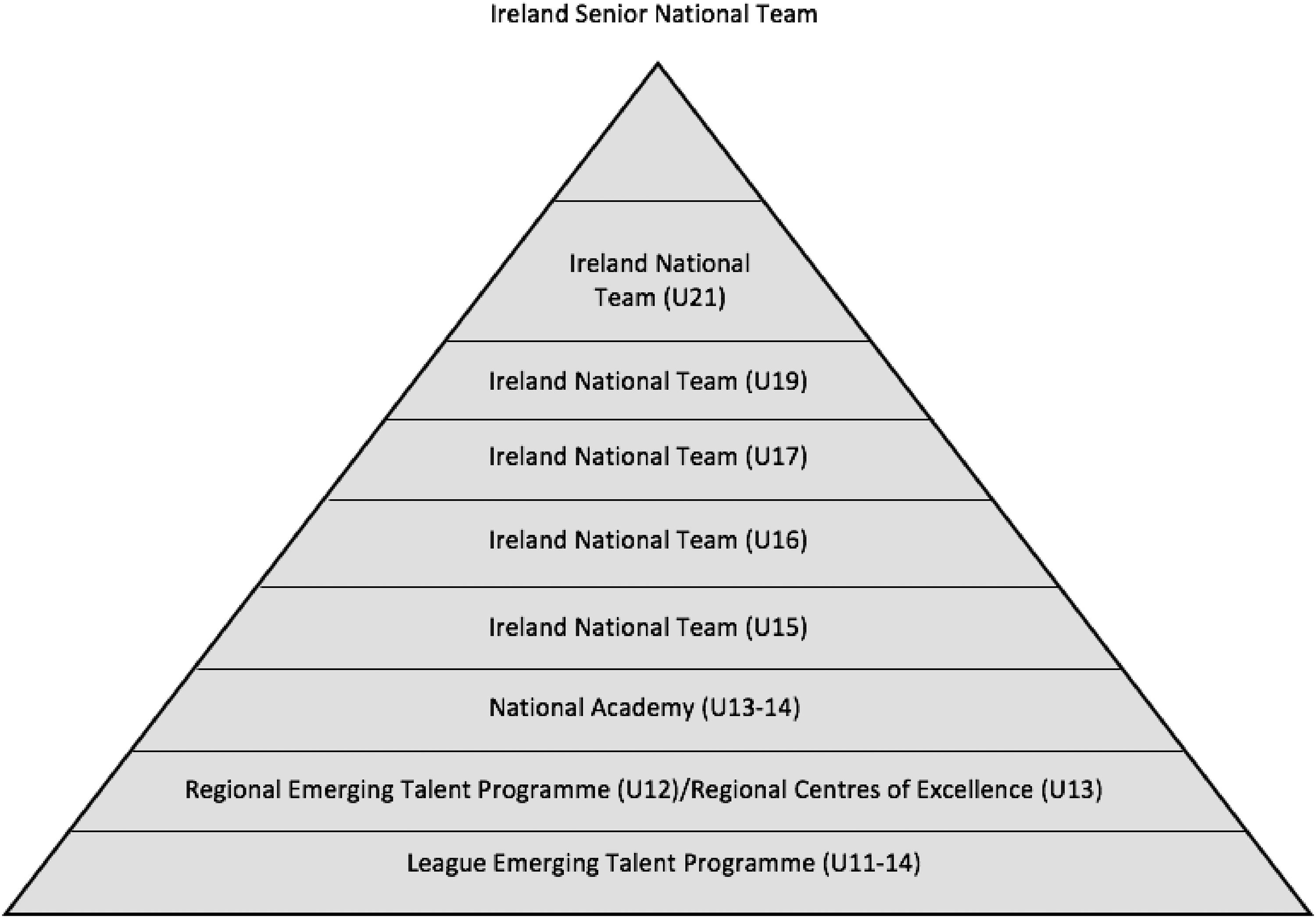
Football Association of Ireland national boys’ player pathway.
Participants
A total of 159 participants had their biological maturation status assessed. The players assessed were members of either the FAI National Academy (IRE13) (n = 125), Ireland under 15 national team (IRE15) (n = 18) or Ireland under 16 national team (IRE16) (n = 16). Data was collected before training sessions over the first quarter of the year and each player was assessed once. In practical terms, 100% of players selected into a given national squad that were invited to participate in this research consented. As such, the sample was representative of all players within the national talent pathway in the cohorts under investigation. Whilst ethnicity was not recorded as part of the programme selection procedures, the vast majority of the participants were Caucasian.
Ethics and consent
Each parent/guardian was provided with a detailed information leaflet outlining the purpose of the research study and the procedures involved, and each player received an information leaflet adapted for minors before the start of this research investigation. Each parent/guardian provided written consent before data collection, and players were also required to provide written assent. Participants and their parents/guardians were informed that participation in this research was voluntary and that their status in their given national squad would not be influenced by their decision to participate. Ethical approval was granted by the first author's institutional Research Ethics Committee.
Anthropometric data and biological maturity status
The maturity status of each player was estimated using the percentage of predicted adult height by Khamis and Roche.
29
Among children of the same chronological age, it is assumed that those closer to their predicted adult height are more advanced in maturation compared to those further removed from their predicted adult height. The Khamis–Roche method enables the prediction of a player's adult height using the regression formula based upon age and gender-specific regression coefficients detailed by Khamis and Roche
29
in their analysis of residents enrolled in the Fels longitudinal study. The Khamis–Roche protocol requires the current age, height and weight of the child, and biological mid-parent height (mean height of biological parents). Players had their body height measured to the closest 0.1 cm using a stadiometer (SECA, 217, Vogel and Halke, Hamburg, Germany) and their body mass measured to the closest 0.1 kg using digital scales (SECA, 877, Vogel and Halke, Hamburg, Germany). Parents’ heights were self-reported in centimetres, converted to inches and then adjusted for overestimation as outlined by Epstein et al.
30
:

Mean adjusted paternal and maternal heights (178 cm and 165 cm, respectively) were in line with sex-specific means for Irish adults measured between 1985 and 2019. 31 In instances where a biological parent was not in contact with a player and their parent/guardians, a national average for adult height was used for that biological mother or father. 32 The median error bounds between actual and predicted adult height using the Khamis–Roche method is 2.2 cm in males aged between 4 and 17.5 years. For the age groups examined in this study, 12–16 years, the lowest 50% error was 1.3 cm for 16 year olds, and the highest 50% error was 2.8 cm for 14 year olds. 29 Using the percentage of predicted adult height has demonstrated construct validity as an indicator of biological maturation status in samples of healthy American, Portuguese and German youth.33–35 Predicting adult stature using the Khamis–Roche formula is as follows:

The height of each player was expressed as a percentage of predicted adult height which was used as an estimate of absolute biological maturity status at the time of observation.2,6,37 Estimated relative biological maturity status was then expressed as a Z-score (i.e. the difference between observed maturity status and expected maturity status) using the child's percentage of adult height compared to age-specific means and standard deviations outlined by Bayer and Bailey in the Berkeley Growth Longitudinal Study. 38 Comparisons to reference values outlined by Bayer and Bailey have been utilised in recent football-specific studies on other European players.2,5,11,39,40 These Z-scores were then used to classify the youth players as late, on-time or early maturing. A Z-score of −0.5 to + 0.5 was classified as on-time maturity status; a Z-score of > + 0.5 was classified as early maturity status; and a Z-score of < −0.5 was classified as late maturity status (as currently employed in the English Premier League Player Management Application). 5 All maturation assessments and calculations were made by the first author who was trained using standardised field practices.
Relative age
Players were categorised by relative age using their date of birth and the cut-off date for selection for their respective age group (In Ireland, selection age groups are determined by the calendar year; 1st January to 31st December). To create a developmentally sensitive measure of relative age, the difference between birth date and competition cut-off date was divided by 365.25 (number of days in a calendar year) and expressed as a decimal value ranging from 0 to 0.99 (youngest to oldest, respectively).1,5 Relative age by Birth Quarter (BQ) is as follows: BQ1 (oldest) (1st January – 31st March) = 0.75 – 0.99 years, BQ2 (1st April – 30th June) = 0.50 – 0.75 years, BQ3 (1st July – 30th September) = 0.25 – 0.50 years, BQ4 (1st October – 31st December ) = 0 – 0.25 years.
Data analysis
Data were analysed using SPSS Version 27. Descriptive statistics were used to examine the variance in biological maturation and relative age across the chronological age cohorts. A series of one-sampled means t-tests were used to examine the degree to which biological maturation and relative age selection biases existed across each age cohort and the total sample by comparing the observed mean values for relative biological maturation (Z-score) and relative age (expressed as a decimal value) against the values expected for the general population (relative age = 0.50 years; maturity Z-score = 0.0). Alpha = 0.05 was used for statistical significance. Subsequent tests of equivalence were used to determine the magnitude of any biases and the degree to which any biases were or were not equivalent to the absence of bias. An equivalence band within ± 0.5 Cohens D was accepted as equivalent to the absence of bias using 90% confidence intervals. Effect sizes (Cohen’s D) were also used to examine the magnitude of any significant differences in the one-sampled means t-tests (small = 0.2–0.49; moderate = 0.5–0.79; large = 0.8–1.49; very large ≥ 1.5).
Spearman correlations (one-tailed) were used to examine the association between relative age and absolute maturity (percentage of predicted adult height), and between relative age and maturity relative to chronological age (Z-scores) in each cohort and across the total sample. Absolute maturity status (i.e. the percentage of predicted adult height) is an established indicator of maturity in youth and provides an indication as to how close players are to adult maturity. However, absolute maturity status does not account for individual differences in age between players in the same age cohort (i.e. the IRE13 cohort includes players that are both 12.1 and 12.9 years). Relative biological maturity status provides an indicator of maturity status relative to individual chronological age between players, without providing an indicator of how close a player is to adult maturity. As such, the association between relative age and both absolute maturity status and relative maturity status were investigated. A Chi-square statistic was used to examine the distribution of players relative to maturity status (early, on time or late) and BQ (1, 2, 3 or 4) across the total sample.
Results
Part 1: The extent of the relative age and biological maturation selection biases
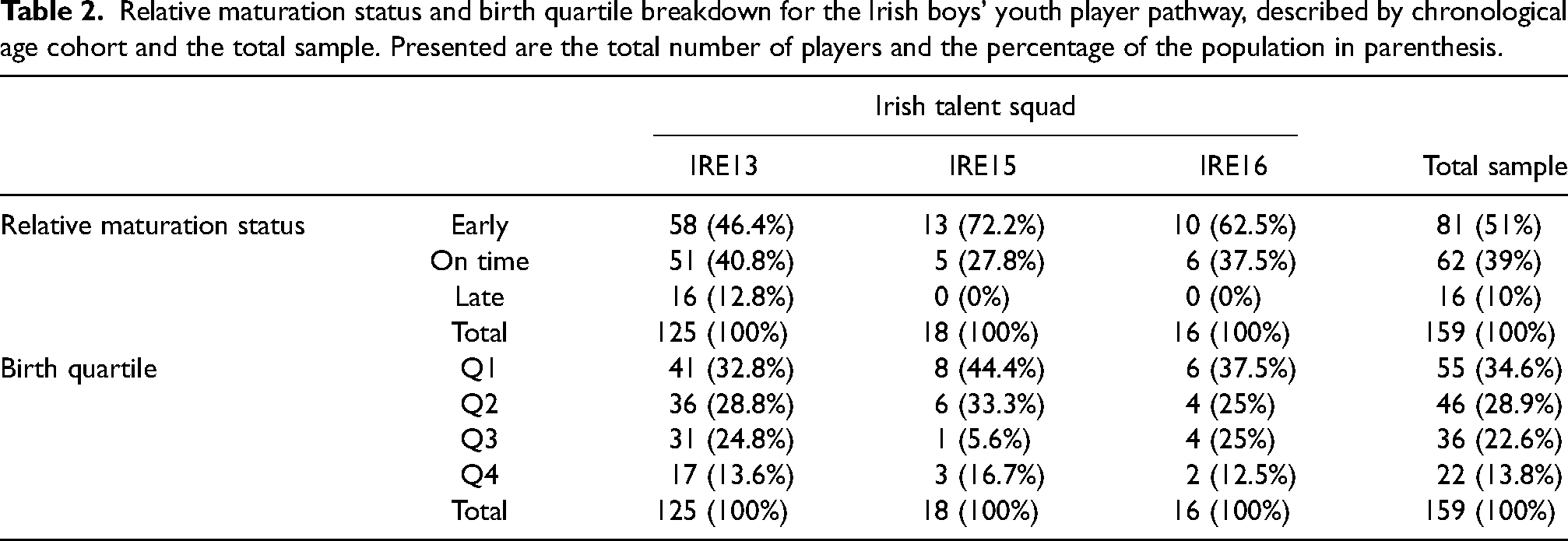
The descriptive statistics for the variables of interest are presented in Tables 1 and 2, and Figure 2. The results of the analysis for relative age and biological maturity are summarised in Figures 3 and 4. The mean value for relative age was significantly greater than the expected value (0.5 years) in all age cohorts, demonstrating the existence of the RAE across the national talent pathway (p < 0.05). However, the magnitude of the RAE existed at only a small or moderate (Cohen’s D = 0.32–0.56) degree and remained relatively stable with chronological age. The mean value for relative age for the entire participant sample was significantly greater than the expected value, but only by a small magnitude (p < 0.001, Cohen's D = 0.36). Although statistically significant, the bias for the RAE in both IRE13 and the entire participant sample was considered equivalent to the absence of bias. In contrast, the mean value for relative maturation status was significantly greater than the expected value (Z-score = 0.0) across all age cohorts (p < 0.05). The magnitude of the statistically significant maturation biases ranged from moderate (IRE13, Cohens D = 0.56) to very large (IRE15, Cohens D = 1.85; IRE16, Cohens D = 1.88) and increased in magnitude with chronological age. The mean value for relative maturation status for the entire participant sample was significantly greater than the expected value by a moderate magnitude (p < 0.001, Cohen's D = 0.67). In contrast to the RAE, the maturation biases in each age cohort and across the total sample were considered not equivalent to the absence of bias.
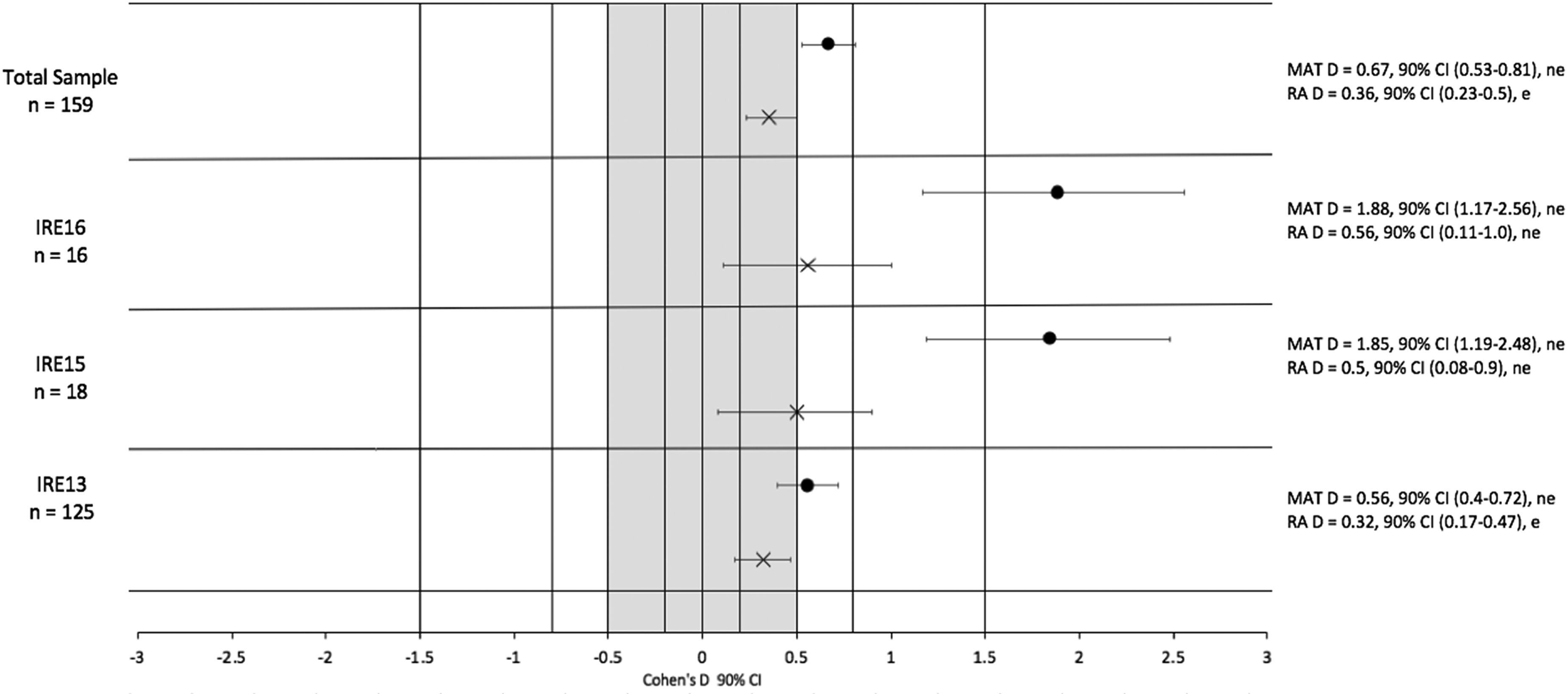
Cohens D effect sizes for the mean values for relative maturation status (Z-score) and relative age by chronological age cohort and by total sample. Note the equivalence band of ± 0.5 Cohens D denotes the values that were and were not considered equivalent to the absence of bias.
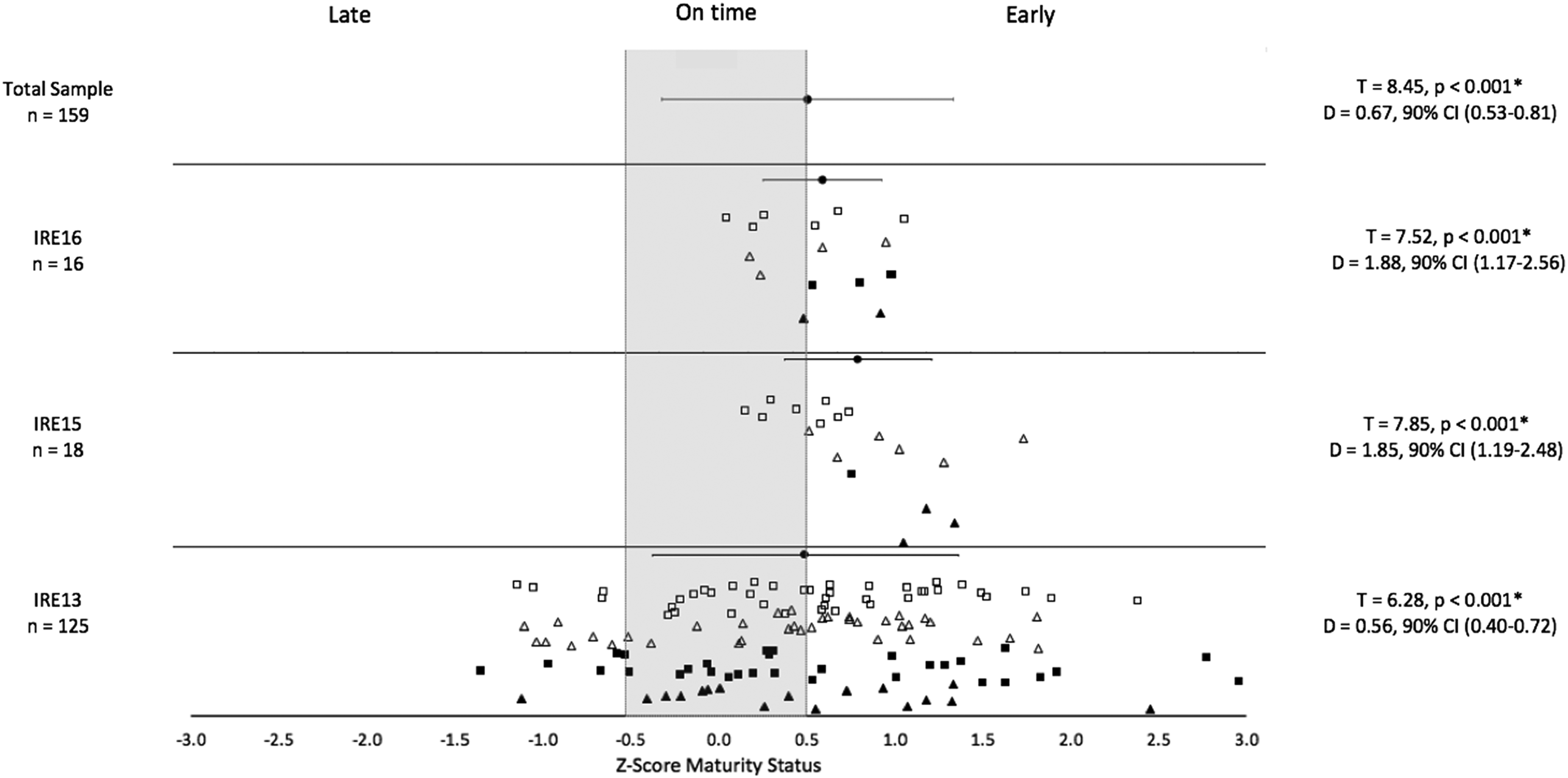
Maturity selection biases in the Football Association of Ireland's boys’ national player pathway by age cohort and by total sample.
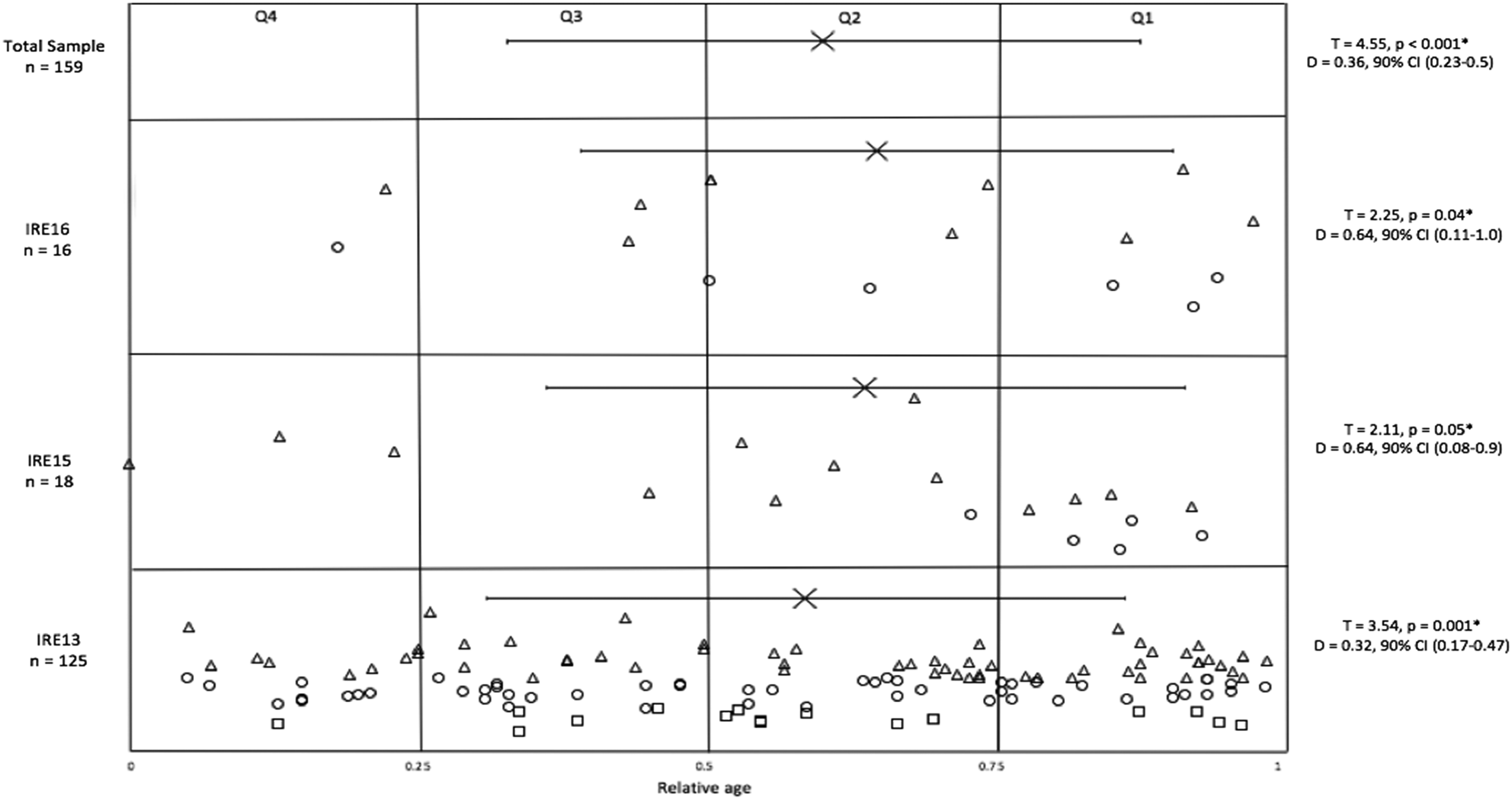
Relative age selection biases in the Football Association of Ireland's boys’ national player pathway by age cohort and by total sample.
Descriptive statistics (mean ± SD) for relative age and biological maturity status in the Irish football player pathway by chronological age and across the total sample. Note the expected values for relative age and relative maturity Z-scores are 0.5 and 0.0, respectively.
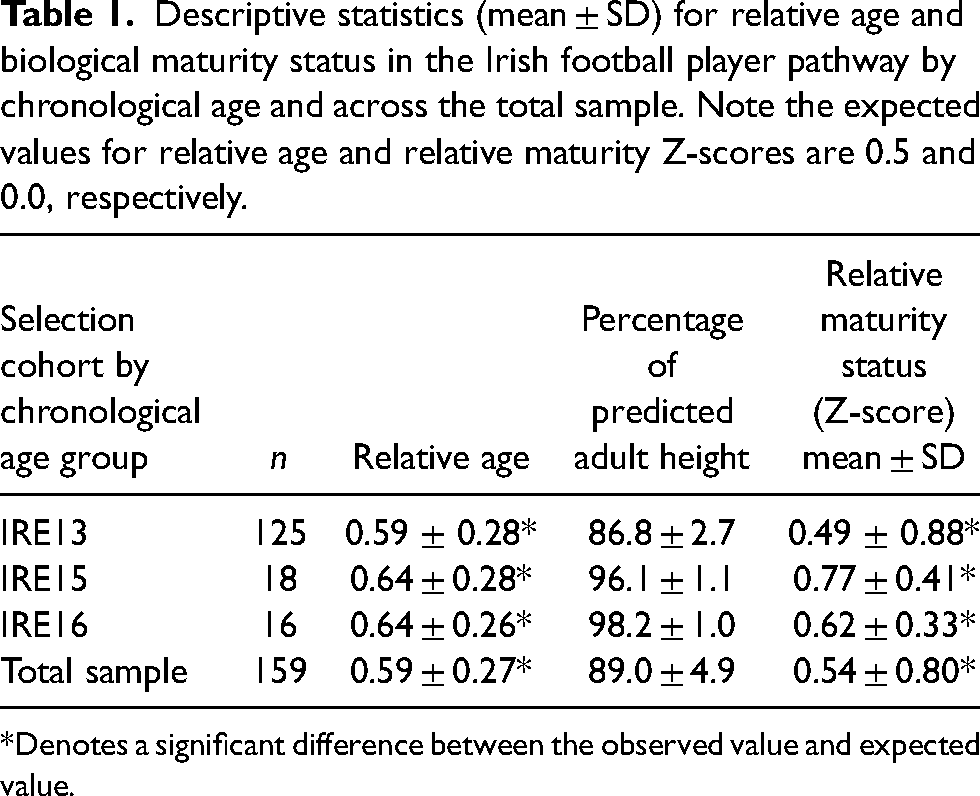
*Denotes a significant difference between the observed value and expected value.
Relative maturation status and birth quartile breakdown for the Irish boys’ youth player pathway, described by chronological age cohort and the total sample. Presented are the total number of players and the percentage of the population in parenthesis.
Part 2: The associations between biological maturation and relative age
Correlations among the variables of interest are presented in Table 3. There was a positive and significant correlation between absolute maturity status (percentage of predicted adult height) and relative age in IRE13, although the magnitude of this positive correlation was small (r = .45, p = < 0.001). However, there were no other statistically significant correlations between absolute maturity status and relative age across age groups. The correlation between relative age and maturity status relative to chronological age (Z-scores) demonstrated an inverse correlation in IRE15 (r = −.77, p < 0.001), but there were no other statistically significant correlations between relative maturity status and relative age across age groups or the total sample. The Chi-square statistic revealed no statistically significant differences between the distribution of players by relative age and maturity status (X2 (6) = 3.14, p = 0.79).
Spearman correlations between relative age and absolute maturity status, and between relative age and maturity status relative to chronological age presented by age cohort and by total sample.
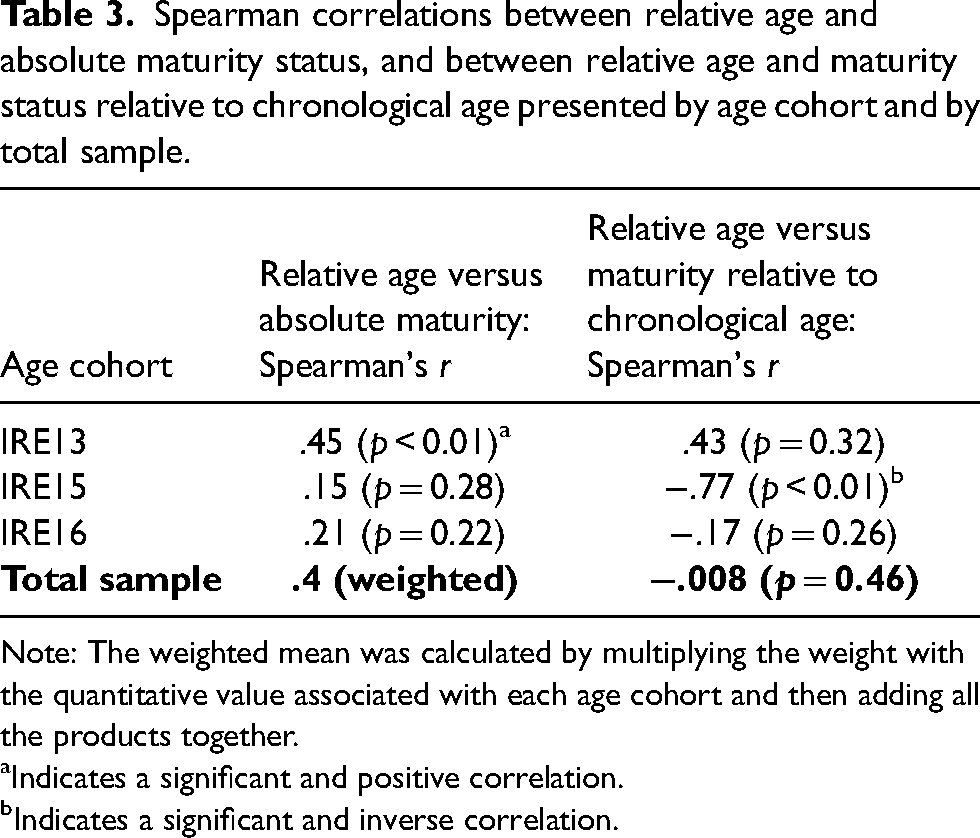
Note: The weighted mean was calculated by multiplying the weight with the quantitative value associated with each age cohort and then adding all the products together.
Indicates a significant and positive correlation.
Indicates a significant and inverse correlation.
Discussion
This research investigated the presence of biological maturation and relative age-associated selection biases within the FAI's national talent pathway. A selection bias in favour of early maturing players was observed across all age groups, increasing in magnitude with successive age groups. A RAE was also observed across all competitive age groups. In contrast to the maturation bias, the RAE was smaller in magnitude and did not increase with chronological age. Significantly, the results of this study provide further evidence that the RAE and maturation biases exist and operate independently of one another. The small to moderate associations observed between relative age and absolute maturation also support the contention that relative age should not be considered or treated as a proxy for biological maturation. That is, older age for one's age group does not necessarily imply more advanced maturation.
The observed selection bias in favour of early maturing players in the Irish player pathway was notably larger than those reported in comparable studies in professional academies. 5 Proportionally, early maturing players were overrepresented across all talent squads with effect sizes ranging from moderate to very large. Early maturing males constituted 51% of the total sample (peaking at 72% in IRE15); a higher proportion of early maturing players than that seen in samples of English academy players (30% of the playing sample, peaking at 54%) using the same criterion to categorise maturity status. 5 The national talent pathway in Irish football begins at age 12. When taking the mean values for maturation status as determined by Z-scores at this age cohort (0.49), Z-scores within the Irish pathway were notably higher than those observed throughout previous literature (−0.04 to 0.33).1,4–6,35 As a direct consequence of this selection bias, no late maturing players were present in Ireland under 15 and 16 international squads. To the best of our knowledge, a football pathway with no late maturing players in these age cohorts has only been observed in one other published investigation, 5 although the relatively low proportion of late maturing players in these age groups is consistent across research. These findings are of particular concern given that in the following age groups, competitive international tournament football and qualifying campaigns begin, starting with the Under 17 European Championships. Once excluded and denied exposure to the Irish international set-up, late maturing players are less likely to return to the system in the future.4,5
A RAE was also observed across all competitive age groups; however, the magnitude of this bias ranged from small to moderate. Mean values for relative age across the Irish pathway differed from the expected values for relative age by only a small degree. When examining the playing population in the Irish pathway by birth quartile, the proportion of youth players born in the last two quartiles of the year is higher than those previously observed elsewhere,5,6,24,41–43 although the majority of Irish players were born in Q1 and Q2. Accordingly, one might argue that variance in maturation presents a greater challenge for selectors than the variance in relative age within this particular sample. This view is consistent with the observations of Johnson et al. who noted that maturation served as a stronger predictor of selection than relative age in adolescent football players. 4
The findings of this study lend further support to the notion that the RAE and biological maturation exist and operate independently from one another. Firstly, the differing magnitude of each bias and how these biases did and did not increase over time provide a preliminary indication. A statistically significant RAE existed at a small to moderate degree and remained relatively stable with chronological age. Contrastingly, statistically significant biological maturation biases existed at a moderate to a very large degree and increased in magnitude with chronological age. In addition, the correlational analysis demonstrated that relative age was predominantly unrelated to both absolute and relative biological maturation status. The higher magnitude of the maturation biases compared to the RAE can be explained by the fact that date of birth, at a maximum, can account for 0.99 years difference in the same chronological age cohort, whereas the effect of biological maturation can be as much as six years between players of the same chronological age.4,9 When examining the distribution of the total sample by relative age according to relative maturation status, although not statistically significant, only one Q4 born player was late maturing (0.63% of the population), whereas this value increased 11-fold in Q4 born players that were early maturing. This would suggest that late maturing players who are also Q4 born face a double disadvantage and are given the fewest opportunities in the pathway. On the other hand, early maturation may negate some of the disadvantages of being born in Q3 and Q4 (i.e. reduced experience). This observation presents an interesting paradox, as it is often assumed that a player born in the fourth quarter is late maturing when in reality they are disproportionately more likely to be early maturing. This is supported further by the inverse correlation between relative age and relative maturity status in IRE15 which demonstrates that selected players born later in the selection year were generally more mature for their age than those born earlier in the selection year.5,44
The result of the present study also supports the contention that older relative age does not imply more advanced maturity. As illustrated in Figure 4, early and late maturing players were observed across all four birth quarters within the IRE13 pathway. Whereas biological maturation status, timing and tempo (and thus, the associated biases of advanced biological maturation) are determined predominantly by genetic and a range of environmental factors,1,5,8,23 the advantages associated with relative age most likely result from attributes associated with age and experiential differences present from early childhood.5,6 Indeed, this may explain why the RAE is also present in non-sporting domains such as education45,46 or chess. 47 In addition, this may also explain why the RAE is present in football academies from childhood 24 but the bias towards early maturing players does not emerge until the onset of puberty.4,5 There is a need to make the independent nature of the RAE and biological maturation unequivocally clear to coaches and practitioners working within talent pathways, as these two concepts are often confused and incorrectly interpreted as synonymous. 23 This process should begin at the foundation levels of coach education.
Given the independent nature of these constructs, separate developmental interventions may be required to address each of these biases. Further, these strategies may need to be implemented at different developmental stages. The process of bio-banding (matching players by maturation status rather than chronological age) has been favourably received by academy players of varying maturation status’ and presents techno-tactical, physical, social and psychological advantages.11,39 Adopting routine bio-banded assessment days and training camps alongside chronological age group competition in the Irish pathway may subsequently provide coaches and scouts with an opportunity to view players in both environmental/developmental contexts and make more informed decisions. Early and late maturing players would also be presented with new challenges and learning opportunities and given an opportunity to perform in an environment more suited to their current stage of biological maturation. Bio-banding should, however, be treated as an adjunct to and not as a replacement for age group competition. Age group games provide an opportunity for late maturing players to compete with and against youth more advanced in maturation, presenting inevitable physical and techno-tactical challenges. These experiences, aligned with individualised and appropriate psychological support, can contribute to the early learning and development of adequate psychobehavioural and coping skills (i.e. resilience, mental toughness, self-regulation) and confidence to help players cope with subsequent challenges that will inevitably occur as the player approaches the higher echelons of the performance pathway. 47 Conversely, early maturing players may be under-challenged in age group competition and bio-banded games may provide these players with the opportunities to emphasise the technical, tactical and psychological skills necessary to succeed at the highest levels. Experiencing and overcoming a range of challenges, setbacks and transitions throughout development is an essential characteristic of athletes who make it to the elite senior level, 48 and it is important that all players have the opportunity to benefit from such learning opportunities. Routine monitoring of biological maturation from late childhood and early adolescence is one essential component of individualising the talent identification and development process, and the Khamis–Roche method provides a cost and time-efficient strategy for Irish clubs and academies to adopt. 29 The implementation of matched chronological aged ‘national futures squads’ may allow Irish football to keep late maturing players in the pathway for longer. Similar interventions have been adopted elsewhere. 49 Emerging evidence (i.e. Royal Belgian Football Association 49 ) indicates that this programme is successful in helping to retain talented later maturing players in the system for longer, although it is important to note that there is no published data to support its effectiveness in long-term player development (i.e. the transition to full-time senior professional football) at this moment in time.
Solutions for the RAE should be implemented from early childhood, before academy and national team/talent squad selection, and may include interventions such as age-ordered shirt numbering 50 or birthday banding. 51 It should also be noted that the long-term benefits of these aforementioned maturation/RAE solutions (and others, i.e. Q4 trial days, average aged team rule) remain unclear and more prospective and longitudinal research is required. On a broader note, qualitative research designs are especially encouraged to better understand how maturation and relative age independently impact the talent identification process. Most importantly, talent identification and development are a biopsychosocial process, contextualised based on the interaction between physical and functional attributes, psycho-behavioural characteristics, and the socio-cultural environment in which the player exists. 52 Optimal solutions to maturation biases and the RAE will inevitably require biopsychosocial solutions (i.e. routine monitoring, coach education, parent education, individualised development and competition, regular player assessment events, pathway coherence).
From a player development perspective, the results of this analysis clearly show that early maturing players are overrepresented on Irish national talent squads and youth international teams; a bias that increases in magnitude with chronological age. The magnitude of this bias is more prominent than the RAE. Since the advantages of early biological maturation are generally no longer present once players reach the age of 18, the FAI is reducing the number of high-potential players available at the senior level of the game by preferentially selecting from a subset of players who are biologically advanced for their age from 12 years upwards. 4 Drawing the majority of players from a sample of early maturing players is a flawed strategy; in essence, the pool to select talent from has been greatly reduced by excluding on time and late maturing players. 4
It is also important to note that when the Irish national talent pathway begins at the under 13 level, maturation biases are already prominent. As such, national talent coaches may be selecting players from a playing pool that is already biased at this age group, a problem that is further magnified with chronological age. This is likely given that the overt and physical changes associated with puberty emerge at 11–12 years. 53 It would thus seem prudent to examine the biological maturation statuses of young Irish players before the entrance to the national talent pathway (i.e. under 10, 11 and 12), with a focus on Irish clubs and the Emerging Talent Programme at league and regional level (the preceding pathway stages presented in Figure 1). Our investigation was the first to assess the maturation statuses of players at the national (and highest) level of the pathway, whereas previous investigations have tended to focus on academy/club players (a step lower in the pathway). Given that the maturation bias appears more pronounced at the national level than at the club level, this suggests that the magnitude of the selection biases not only increases with chronological age but may also increase with the level of competition.
Several limitations of the current study should be noted. Firstly, the results are specific to the FAI's male player pathway and caution is urged when generalising the findings to other Football Associations’ pathways, non-Irish clubs or female player pathways. Second, parental heights for the prediction of adult height were self-reported, rather than measured, and subsequently adjusted for overestimation based on the equations outlined by Epstein et al.; this formula is based on participant samples from the United States. 30 The percentage of predicted adult height at the time of observation was used as the indicator of biological maturity status using the regression formula and coefficients outlined by Khamis and Roche.29,36 Again, this prediction equation is derived from samples of American youth of European ancestry enrolled in the Fels longitudinal study. Moreover, the Z-scores used to derive maturity status from the percentage of predicted adult height are calculated based on participants of European ancestry in the Berkeley Growth Longitudinal Study. 38 The participant sample examined in this study consisted predominantly of European Caucasians. Another limitation is that a large proportion of the sample derives from one age cohort (IRE13). This is a real-world reflection of the nature of talent development structures, whereby the talent pathway narrows upon the onset of puberty. Perhaps this structure contributes to the selection biases observed in this study, whereby early selection procedures and a narrowing of the talent pool are forced at a time point where the advantages associated with early maturation become prominent. Consequently, the extreme maturation biases observed in this study meant that the number of late maturing players was low in relative terms, and results should be interpreted with some degree of caution. The next step in biological maturity research in a youth football context is to examine the extent to which early maturation influences in-game performance, particularly technical-tactical actions (i.e. offensive/defensive actions, decision making, passing accuracy, scanning behaviours). Such research would shed light on the role of biological maturity on in-game performance and may help practitioners and researchers to identify potential factors that differentiate between selected versus deselected players.
To conclude, this investigation has demonstrated that the RAE exists in the Irish player pathway at only a small-moderate degree, but the preferential selection of early maturing players exists at a moderate-very large degree; a bias that increases in prominence with chronological age. The small to moderate associations observed between relative age and absolute/relative maturation status also support the contention that relative age should not be considered or treated as a proxy for biological maturation. We encourage more research to critically analyse and subsequently re-evaluate how Football Associations assess, monitor and select young players for national talent programmes; the current system significantly diminishes the chances of selection for those who are late maturing biologically.
Take-home messages for football coaches and practitioners
Biological maturation and relative age selection biases are not related. Selection biases related to biological maturation are more pronounced than those related to the RAE. The selection bias in favour of early maturing players increases in magnitude with chronological age. The magnitude of the RAE remains relatively stable with chronological age. Different developmental interventions are required for relative age (e.g. birthday banding) and biological maturation (e.g. bio-banding) selection biases. Early maturation may negate some of the disadvantages associated with being relatively younger.
Footnotes
Declaration of conflicting interests
The author(s) declared the following potential conflicts of interest with respect to the research, authorship, and/or publication of this article: DH was a contractor with the FAI. The remaining authors declare that the research was conducted in the absence of any commercial or financial relationships that could be construed as a potential conflict of interest.
Funding
The author(s) disclosed receipt of the following financial support for the research, authorship, and/or publication of this article: The research conducted in this publication was funded by the Irish Research Council under award number GOIPG/2021/277.
Data availability statement
The raw data supporting the conclusions of this article will be made available upon request to the corresponding author.
