




Abstract
The aim of the current study was to capture and better understand the current perceptions of injury risk factors and player monitoring practices in elite men’s domestic senior cricket, to help guide practice in this setting. A cross-sectional mixed-methods design was used, consisting of a quantitative survey sent to science and medicine practitioners at all English County clubs (n = 23, with representation from each club) and a set of qualitative interviews (n = 10 from six County clubs). Previous injury and physical fitness were the intrinsic injury risk factors most frequently endorsed as being important, with reduced recovery time and congested match schedules the most frequently endorsed extrinsic risk factors. Monitoring bowling overs was the most common tool for continually assessing injury risk. Player adherence was perceived to be the main factor impacting effective monitoring, along with human resource and practical application of monitoring knowledge. The interviews revealed that communicating value, fostering effective working relationships, and a strong club culture were important for successfully implementing monitoring and prevention initiatives. Cricket presents distinct challenges for its practitioners, and more education and guidance on appropriate monitoring methods and analysis is needed.
Introduction
Workload quantifies the demands imposed on an athlete during matches and/or training, 1 and has been shown to be associated with injury risk across many sports including cricket.2–5 Cricket has differing game formats, with First-Class matches typically scheduled for four days (approx. 24 hours of play per match) and T20 and One-Day matches scheduled for one day (typically 2.5 and 7 hours, respectively). Matches can also be unpredictable in durations, resulting in substantial variations in player workload, 6 making monitoring player workloads practically challenging. 7
The aim of appropriate workload management is to lead to positive physical adaptations that may minimise the influence of fatigue and reduce injury risk. 8 , 9 Player monitoring (as part of this process) needs to be individualised, with clear variation in workload responses between fast bowlers demonstrated in a sample of adolescent male cricketers on an international development programme. 10
Given the importance of player monitoring to help reduce injury risk, there is a noted lack of literature on player monitoring in team sports like cricket. 7 Understanding the perceptions of sports practitioners, such as physiotherapists and strength & conditioning coaches, to injury and player monitoring practices could help guide practice within the team sports environment. In European elite football practitioners have been found to place importance on external workload variables as injury risk factors, with poor player adherence identified as a barrier to effective player monitoring and subsequent injury prevention initiatives. 11 In professional rugby union, conditioning staff deemed previous injury, Global Positioning System (GPS) metrics, collision counts, and age to be the most important risk factors for managing future injury risk. 12
At present, there has been no systematic reporting of current practitioner perceptions of injury risk factors and player monitoring practices at First Class County Cricket (FCCC) clubs participating in England and Wales Cricket Board’s (ECB) national competitions, and consequently what barriers and facilitators there may be to future prevention strategies in this area. Therefore, the aim of the current study was to capture and better understand the current perceptions of injury risk factors and player monitoring practices in elite men’s domestic senior cricket.
Materials and methods
Study design
This was a pragmatic, cross-sectional mixed-methods study, following a concurrent triangulation strategy where both quantitative and qualitative data was collected to permit comparison between the results from each element. 13 The complementary strengths of both quantitative and qualitative methods can provide greater insights when both results are collectively considered. A quantitative survey identified injury risk perceptions and prevention initiatives and qualitative interviews explored in more detail the current practice and perceptions of player monitoring in elite level domestic cricket in England and Wales. The Consolidated Criteria for Reporting Qualitative Research 14 was used to demonstrate credibility of the qualitative methods (Online Appendix 1). This study was approved by institutional Research Ethics Approval Committee for Health (REACH) [reference: EP 17/18 257].
Data collection and participants
Survey: Injury prevention strategies
A survey was adapted from McCall et al’s 11 UEFA Elite Club injury prevention strategies survey and was sent via email to sport practitioners (over the age of 18) at the 18 ECB First-Class County Cricket (FCCC) Clubs. The original survey was developed for use with UEFA and designed by sports science and medicine practitioners with knowledge and experience in professional elite football and peer-reviewed survey-based research and developed from previous research.15–16 McCall et al pilot-tested the original survey with five football clubs participating in the UEFA Elite Club Injury Study research initiative. 11 These were clubs selected by UEFA as being qualified among the 32 teams in the UEFA Champions League ground-play stage (for the 2014-2015 season) or participated in the play-off stage or were ranked as 1 of the 50 best teams in Europe during the period of 2001-2014. The survey includes four sections: 1) perceived risk factors for injuries, 2) screening tests and monitoring tools used to identify injury risk, 3) injury prevention strategies utilised, perceived effectiveness and implementation strategies, 4) player and coach adherence related to performing an injury prevention programme and commitment to complying with individualised player recommendations. 11 The survey was adapted for use in this study by including cricket-relevant examples in the responses as well as excluding the final two sections focused on injury prevention strategies and adherence, as these were not relevant to the aims of the current study (Online Appendix 2). Participants were required to provide explicit consent before completing the survey. Responses were received from 9 first-team physiotherapists (39%) and 14 strength & conditioning coaches (61%), with representation from each club. All responses were confidential and anonymised after data collection for analysis and reporting, with a unique numerical code assigned to each response for identification purposes.
Interviews: Perceptions and practices of player monitoring in elite cricket
A sub-group of physiotherapists and strength & conditioning staff (n = 10, with 0 refusing to participate or dropping out) from six FCCC clubs were purposively sampled for follow-up interviews about their current practices and perceptions of player monitoring. To promote equitable opportunity to take part in the research, all sports practitioners were provided with the opportunity to express interest to participate in the interviews at the end of the online survey. The eligibility criteria for participation were: (1) a member of the medical or strength & conditioning department at an FCCC club; (2) involved with player management. For those who participated in the interviews, the average time served within their role at the club was 1.8 years (± 1.9) for physiotherapists and 2.9 years (± 1.5) for strength & conditioning staff. Two physiotherapists who participated in the interviews had served less than 1 year at the club (even though they had considerable professional experience outside of cricket) and were joined in the interview by a strength & conditioning coach with greater time served at the club (mean = 3.7 years ± 1.5). Four FCCC clubs had both a physiotherapist and strength & conditioning coach attend the interview (e.g. two-on-one), whereas for two clubs, due to changes to the team’s schedule and practitioner availability, one physiotherapist (1.5 years time served at the club) and one strength & conditioning coach (2.6 years time served at the club) was present with the interviewer (e.g. one-on-one). The interviews were conducted by a single male interviewer (LG) who had previous experience conducting interviews. The interviewer had no experience as a sports practitioner and some exposure to cricket, as they were embedded with the National Governing Body (ECB) as a PhD candidate for approximately 18 months before the study. Some of the physiotherapists (n = 3) and strength & conditioning coaches (n = 2) participating in the study were aware of the interviewer’s role, while others (n = 5) had no established relationship. A semi-structured interview guide was developed by one researcher (LG) and checked by two other researchers (SW, CM), to steer the interview dialogue, whilst allowing participants to say as much as they wished. 17 The guide consisted of open questions on broad themes that were informed by the player monitoring questions from the survey, to draw out more information focused on potential monitoring tools used and the communication of data (Online Appendix 3).
Interviews took place at either the home or away (where a club travelled for a fixture) FCCC ground during the domestic cricket season between May and September 2019. The interviews lasted 20-30 minutes and were audio recorded and transcribed verbatim. The transcripts were imported into NVivo qualitative data analysis software (QSR International Pty Ltd. V.1,02,012) as separate document sources for analysis. No additional field notes were made during or after the interviews and no repeat interviews were carried out. All responses were confidential and anonymised after data collection for analysis and reporting, with a unique numerical code assigned to each response for identification purposes.
Data analysis
Survey
Raw data were exported from an online survey tool (JISC Online Survey, UK) into Microsoft ‘Excel’ software for analysis by the research team. The overall importance of risk factors was calculated by points awarded based on a Likert scale of perceived levels of importance.11,15,16 Consistent with previous research that developed the survey, a risk factor rated by participants as ‘very important’ was awarded 3 points, ‘important’: 2 points, ‘somewhat important’: 1 point, ‘not sure’: 0.5 and ‘not important’: 0. 11 Responses from each participant were then aggregated to rank risk factors from highest to lowest. A similar method was used to determine the most frequently endorsed reasons for ‘importance’ and ‘factors impacting effectiveness’ of player and workload monitoring. To rank tools used to identify and assess injury risk, points were awarded based on participants’ selection of a response (out of a possible three) related to frequency of use. A tool that was used for ‘continuous assessment throughout pre and in-season’ was awarded 2 points, ‘during pre-season only’: 1 point and ‘did not implement’: 0 points. Similarly, points were then summed and ranked from highest to lowest. For the open-ended question of the perceived top three most important monitoring tools, word clouds were generated online (TagCrowd, USA, 2019) based on responses for each rating, with larger and darker words signalling greater frequency of mentions. Word clouds are a visual qualitative method that allows the reader to understand main themes quickly, 18 with their use encouraged in sport and exercise research. 19
Interviews
Thematic analysis was followed for the interview responses as it allows a more organic and flexible coding process and is more suited to research questions related to peoples’ experiences, views and perceptions. 20 This process involves inductive coding without predefined categories or preconceived hypothesis and was conducted by one researcher. Development of themes was derived from the data and were created from the clustering of similar codes that could evolve throughout the coding process, with shared meaning captured around a concept related to the study aim. 21 The defined themes were then checked and validated by two of the co-authors (CM, SW).
The six phases of thematic analysis 22 were followed in the present study: 1) the lead author familiarised themselves with the data, 2) initial codes were generated, 3) codes were collated into potential themes, 4) the themes were reviewed in relation to the coded extracts and entire data set, 5) the themes were defined and named, and 6) the report was produced. During the first two phases, all six transcripts were read and re-read to identify as many themes as possible. To ensure credibility, each transcript was compared and validated against the emerging categories to ensure no relevant data was inadvertently or systematically excluded or irrelevant data included. 23 These categories were then condensed in the third stage to produce themes. In the fourth phase, themes were reviewed and relevance to the research aims was confirmed for all. During the fifth phase, after discussion with co-authors who checked the themes, the theme ‘club support’ and ‘culture’ were combined into one theme with the subthemes ‘negative’ and ‘positive’.
Preliminary findings were then sent to participants to check interpretation accuracy, provide feedback, and request any part of their transcript to be removed. Any misinterpretation would have been clarified and one participant requested to withdraw a section of their transcript, which was removed from the analysis. This allowed for the findings to be checked, enhancing the validity of the interpreted data. 24 Interview findings for each club were also triangulated with their survey responses to check for consistency in responses across both methods. 13 This allowed the authors to note areas of convergence within the findings to strengthen the knowledge claims of the study. 17 Any inconsistencies within the findings (of which there were none) would have been followed up and checked with the participant.
Results
Survey: Injury prevention strategies
Background information
Altogether, at least one sports practitioner from each of the 18 FCCC clubs submitted a survey response. Twenty-three survey responses were included in the analysis.
Perceived injury risk factors
The intrinsic risk factors frequently endorsed as being important were previous injury, followed by physical fitness and sleep (Table 1). Reduced recovery time, congested match schedule, number of matches/minutes played, playing position, and training were the extrinsic risk factors most frequently endorsed.
Top 5 intrinsic and extrinsic risk factors frequently endorsed by ECB FCCC club practitioners.
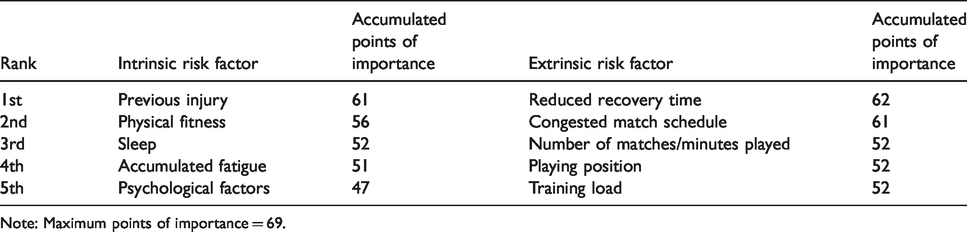
Note: Maximum points of importance = 69.
Identifying and assessing injury risk
When identifying injury risk in players (most often used during pre-season) the most common tools used were evaluation of side-to-side muscle imbalance, flexibility assessment, and maximal physical fitness tests (Table 2). Overs bowled in match and training, along with the acute: chronic workload ratio (ACWR), were the most frequently used tools by practitioners when continually assessing injury risk (Table 2).
Top 5 tools frequently endorsed by ECB FCCC club practitioners to identify and assess injury risk in players.
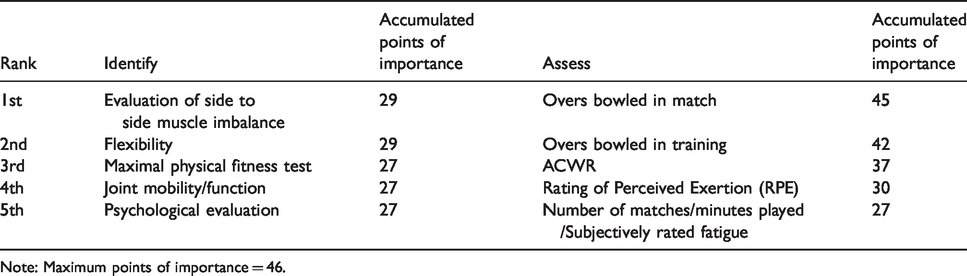
Note: Maximum points of importance = 46.
Monitoring tools
The top three most important monitoring tools as rated by county practitioners are summarised in word clouds. The larger and darker the word, the more frequently it was mentioned. Bowling workload monitoring was the most important monitoring tools used in county cricket, with player conversations also acknowledged (Figure 1). Mentions of player ratings of perceived exertion (RPE) and ACWR became more prominent in the 2nd most important monitoring tools, with wellness starting to feature. Much more variation was found in responses for the 3rd most important monitoring tools, with wellness becoming more prominent along with physical screening and movement (Figure 1).
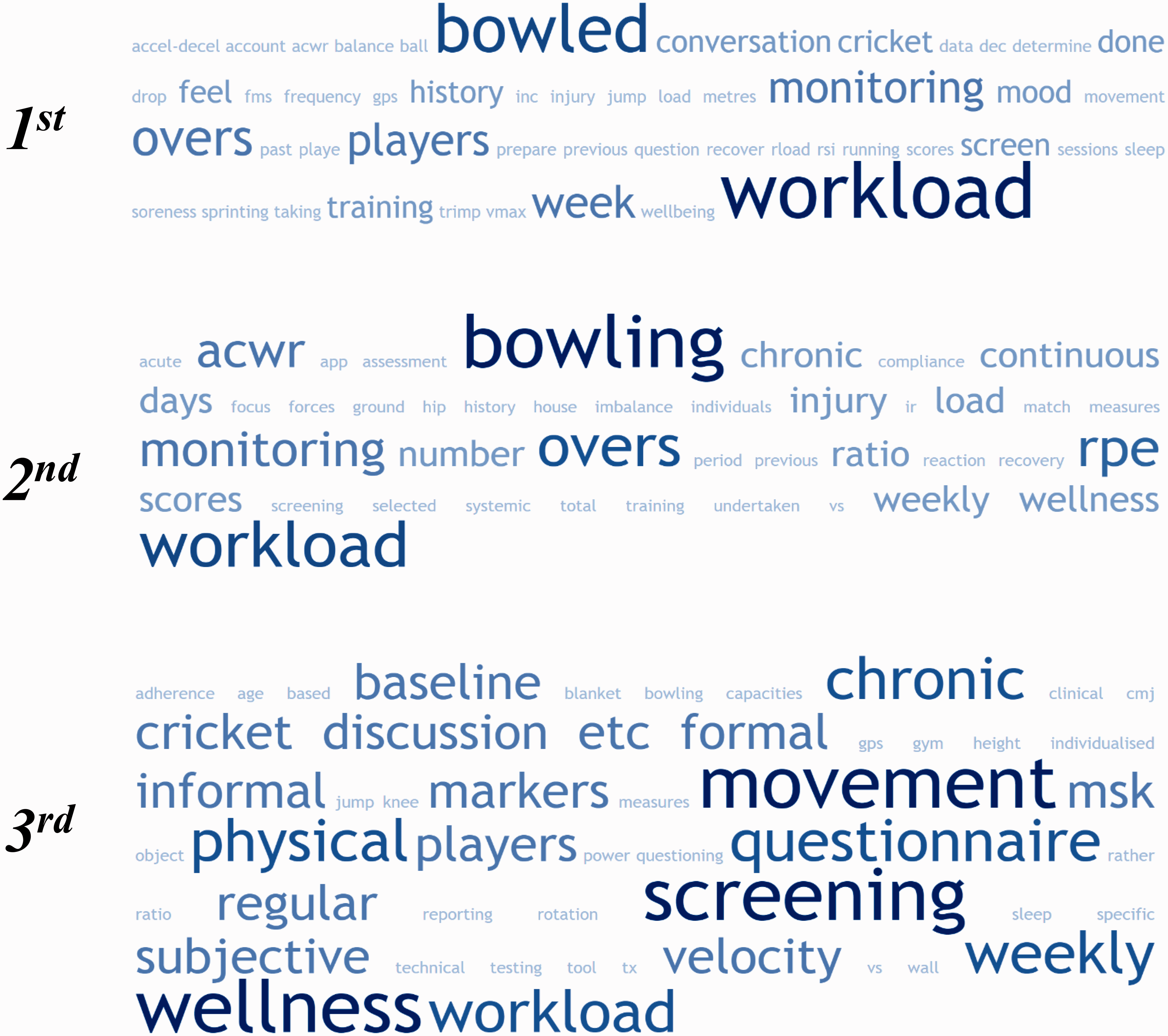
Frequency of word mention for 1st, 2nd and 3rd most important rated monitoring tools.
Reasons for player monitoring and factors impacting its effectiveness
Reducing injury risk was the most frequently endorsed reason for player and workload monitoring from FCCC club practitioners (Figure 2). Player adherence followed by human resource and practical application of player and workload monitoring were the frequently endorsed factors perceived to impact the effectiveness of any monitoring efforts (Figure 3).
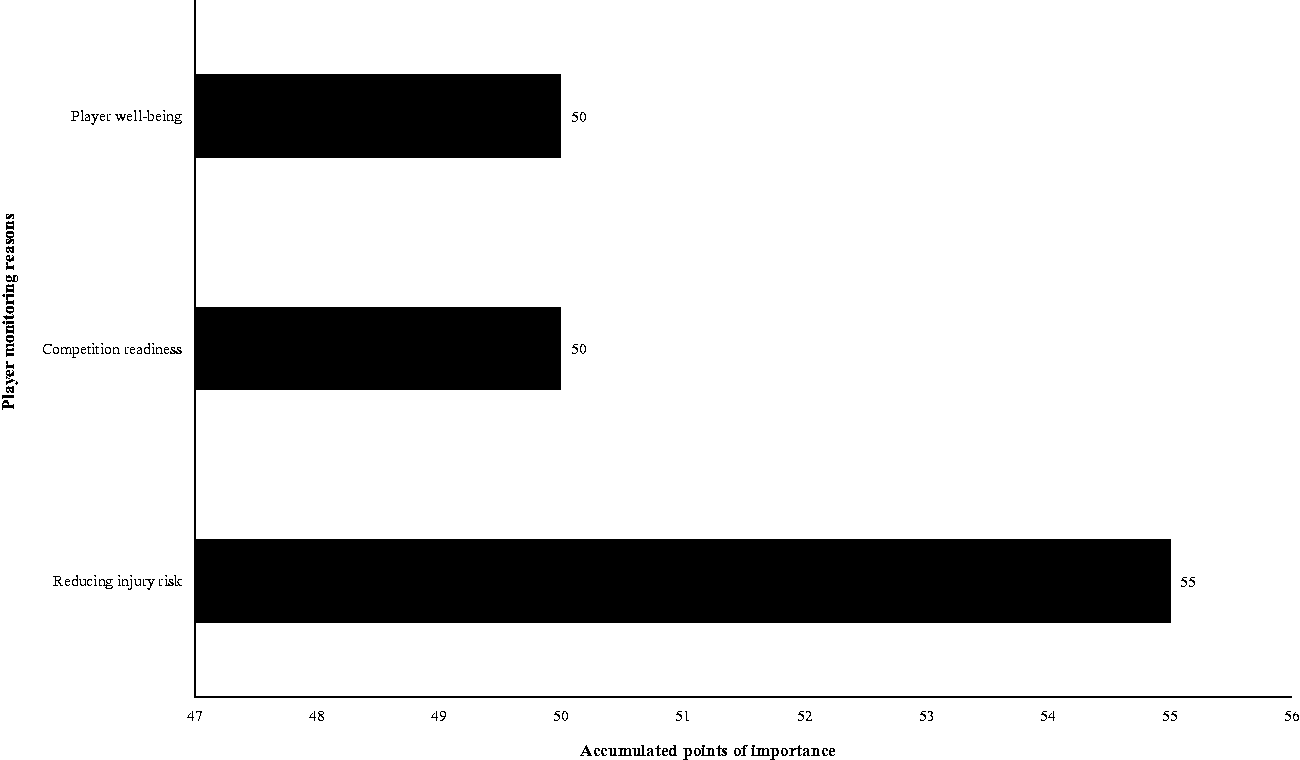
Top 3 frequently endorsed reasons for player and workload monitoring (maximum accumulated points of importance = 69).
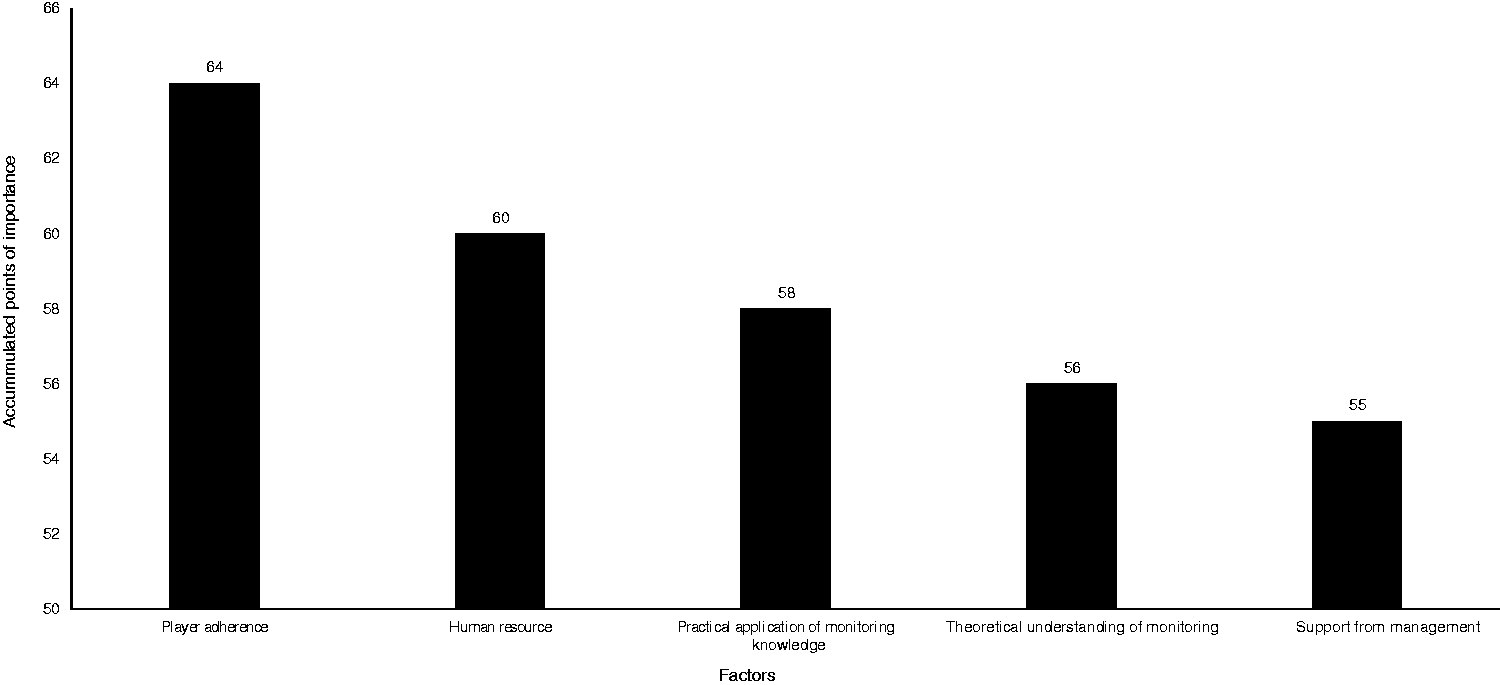
Top 5 frequently endorsed factors that impact effective workload and player monitoring (maximum accumulated points of importance = 69)
Practitioner desires
Seventy four percent of respondents indicated there was more they would like to do to monitor players. GPS was the most frequently mentioned, with wellness and fatigue featuring as desirable measures practitioners would like to capture as part of their player monitoring.
Interviews: Perceptions and practices of workload and player monitoring in elite cricket
Six core themes consistently emerged from the interviews: 1) Perceived importance of player monitoring, 2) Player adherence, 3) Player monitoring challenges, 4) Use of GPS 5) Pre-season preparations and 6) Club culture (Online Appendix 4).
Perceived importance of player monitoring
All sport practitioners involved in the interviews recognised the importance of player monitoring. They believed that monitoring provides greater insight and understanding into the demands of the game and can better inform practice to adequately prepare and rehabilitate players. It was acknowledged that due to the complex nature of injuries, although player monitoring was useful it is only one part of a bigger picture. Furthermore, even though the importance of player monitoring was understood by practitioners, players and coaches may not always appreciate its importance.
Player adherence
Generally, player adherence levels (in relation to participation in player monitoring initiatives) were deemed to be acceptable by practitioners in this setting, with most players regularly completing any required self-report measures. Some of the participants acknowledged challenges in getting some players to ‘buy-in’: ‘It’s such a mix, I mean you’ve got some really professional ones and some, they couldn’t care less’ (P06).
Sub theme: Strategies to improve adherence
Suggested strategies to improve player adherence to any monitoring efforts included practical steps such as notification reminders, but most focused on placing the needs of the player central to any communication around monitoring. Many participants acknowledged their role as practitioners in educating players about the value of any monitoring efforts. This included information about relevant benefits as well as emphasis on positive motivations for monitoring: how it can help the player with matters like injury prevention and overall promotion of playing and performing in cricket. Through this, any potential player concerns around monitoring are also mitigated: ‘We educate them definitely; we just want to know how they are … To help them to help the team; everything is geared towards us being the best cricket team we can be (S&CC02). Several practitioners suggested greater player understanding as to why they are doing anything related to monitoring helps with improving adherence: ‘We’ve done enough to try and explain to them that we’re just trying to keep them on the park’ (S&CC04).
Player monitoring challenges
Aside from player adherence, more general challenges around player monitoring were raised during the interviews. The nature of cricket as a sport presents a distinct challenge for practitioners and was alluded to by numerous participants. During the season, in a typical week a greater proportion of time is spent in competitive matches as opposed to training and it can be difficult to continually ensure players are physically prepared due to reduced recovery time between matches: ‘in football you know, your whole preparation is led up to 1 game in a in a 7 day block potentially 2 in 7, we’re playing 5 sometimes 5 or 6 of 7 [days], and actually so that that 1 day off or that those 2 days off, you know there’s no chance we’re going to be going, right actually we need you in to do this this’ (P02). The additional challenge of managing the varying and unpredictable demands of the differing formats of the game, and ensuring players are suitably prepared for these was also mentioned: ‘[when] there’s been a change of format that we seem to get more issues, so it’s about bridging that gap between workloads’ (S&CC02).
Sub theme: Resource
Quite a few participants acknowledged that not only can Science & Medicine departments within clubs be quite small and generally busy through the season, budget and facilities can be challenges that impacts the effectiveness of monitoring efforts. Time demands because of limited resource can diminish the value of the insight generated from the monitoring data, with most analysis being retrospective in nature. However, it was suggested by one participant that such limited resource can actually be a positive, by allowing practitioners to keep things simple and consistent: ‘we’re quite limited with what we’ve got resource wise but I actually quite like that because it keeps it simple and consistent’ (S&CC02).
Use of GPS
The use of GPS emerged consistently through the analysis with its ability to track running loads its greatest application. This allowed practitioners to gain greater understanding of the different loads required for each format to more accurately inform not just pre-season preparations and returning from injury programmes, but throughout the season to ensure players are continually prepared physically to meet the (often varying) demands of the sport: ‘there’s a lot of GPS, we know roughly what a bowler covers in a day, roughly how much high speed running they cover for each format, it’s all individual, but we know we’ve got an idea of that and to be fair that data helps us pre-season’ (S&CC03).
Sub theme: GPS challenges
Challenges with GPS were raised by most participants during the interviews. It emerged that some bowlers can find the equipment to be quite intrusive and some raised concerns that it could interfere with their bowling technique and negatively impact upon their performance: ‘some are happy and others are like, ‘no I’m not wearing them’, erm ‘cos it interferes with their bowling’ (S&CC02). The cost of GPS was mentioned as an issue, as well as the challenge (and time) of collecting and analysing the data. It was also suggested the data provided by GPS was useful to a point: ‘It’s getting to the point now where erm a lot of the information is same coming back’ (S&CC01). Once again, the distinct nature of cricket arose as an issue for those wearing GPS in comparison to other sports. The long duration of a cricket match can see players becoming uncomfortable with wearing the GPS vest (used by players at the time of interviews): ‘it’s a tight-fitting vest so a few of them don’t like it, erm but I think the big issue we have is that its designed for rugby and football wearing something say for 80 90 minutes, these guys are wearing it for 6 hours and starting to get rashes and stuff’ (P05).
Pre-season preparations
Workload monitoring and adequately building bowling workloads through pre-season to ensure players are suitably prepared to meet the physical demands of the start of the competitive season was consistently the focus of discussion around pre-season preparations for all participants: ‘I think the number of overs bowled in pre-season is a massive factor’ (P01). The need to also build intensity into preparations was acknowledged: ‘I think there’s a difference in competitive overs to net overs and warm up overs. I think the intensity of championship cricket is so much higher than 2nd eleven and their overs, you can prep all you want in terms of the amount of the overs you bowl in a net scenario, but when you get in that 1st game, you’re going up another 10%, and its subconscious so actually getting them into that competitive mode I think it’s just another step up’ (P02).
Sub theme: Challenges with pre-season preparations
Several challenges with building pre-season workload were consistently identified by different participants, with one practitioner admitting they ‘come up with different theories every year’ (S&CC06). Preparations often start with bowling indoors, on a different surface with shorter run-ups. This then progresses to bowling outside with some clubs using marquees to provide a longer (or full) run up to replicate distances often covered in matches: ‘through pre-season bowling our biggest issue is like, where to bowl … so we have a little bit inside but we don’t have a full run up … and then if you go outside its weather, so the issue being is that you’re trying to build overs in March, but you can’t guarantee you’ve got 20 good days in March’ (P05).
Club culture
How working relationships between people and departments can influence the effectiveness of output became apparent through the analysis. The culture of the club, and cricket as a sport, also emerged through the analysis.
Sub theme: Negative club culture
For some participants, it appeared it can be difficult for certain practitioners to effectively implement player monitoring efforts if their club management/coaches do not appreciate its importance and ‘buy in’ to its value: ‘you are very limited in erm … not your ambitions as practitioners working in this environment but … you’re limited by the buy-in from the coaching staff’’ (P01). One practitioner shared the perspective of a coach and understood their frustrations: ‘when talking around monitoring workloads because, if they’re not seeing change (in injury trends) then why would you buy-in?’ (S&CC01). The attitude of coaches, players and cricket towards science and medicine were also mooted by several participants: ‘probably players attitudes to science and medicine, coaches’ attitude to science and medicine, I think cricket’s attitude to science and medicine… I think cricket’s attitude’s changing’ (P05). The increased professionalism of cricket was acknowledged but with the suggestion that for some, the ‘old schoolness of the culture’ (P06) is holding some aspects of science and medicine practice behind.
Sub theme: Positive club culture
Player monitoring appeared effective when practitioners had a working relationship with coaches whereby suggestions could be made, and matters discussed. This insight emerged from a few of the participants. A common purpose also helped ensure actions, suggestions and discussions were guided by similar principles as one example illustrated: ‘the nice thing this club has done is they’ve tried to explain to each player individually and as a group that everything is done to try and help us win’ (P02). Building a positive culture shaped by shared and clear values takes a concerted effort that was believed to be beneficial for all involved: ‘if you walk into an environment where you feel like, you know the club believe it, they invest in proper facility here for me as a player’ (S&CC06).
Discussion
The aim of this study was to capture and quantify the current practices and perceptions of workload and player monitoring in elite men’s senior cricket through a mixed methods design. The survey identified and quantified injury risk factor perceptions and prevention initiatives with the interviews exploring in more detail current practices and perceptions of workload and player monitoring.
Previous injury was perceived to be the top intrinsic injury risk factor by practitioners involved in the study, which supports previous research in football and rugby.11–12 Consistent with previous findings also was physical fitness being perceived to an important intrinsic risk factor, 11 with evidence starting to emerge around the link between well-developed physical fitness and better tolerance to higher workloads. 25 Improved fitness could arguably allow players to better cope with what was perceived to be the most important extrinsic risk factors by practitioners in this study. These were reduced recovery time (which was also found in a study with football clubs included in the UEFA Elite Club Injury Study research initiative 11 ) congested match schedule, and number of matches/minutes played, highlighting a potential area for a future preventative initiative.
The identification of possible injury risk factors that could inform injury preventative strategies is the second phase of O’Brien et al’s 26 three phase cycle for team-sport injury prevention (once the extent of the injury problem has been established in the first phase). Part of this second phase involves exploring potential barriers and facilitators to delivering injury prevention strategies, which the qualitative results of this study contribute towards. With physical fitness perceived to be an important injury risk factor, any potential preventative strategies developed in this area need to consider the culture of cricket that emerged through the interviews. The practitioners indicated that there is a transition of the culture within cricket, with increased professionalism and more appreciation/adoption of science and medicine in the game; however, this is not currently widespread and some players and coaches have not fully embraced science and medicine approaches, indicative of the ‘old-school’ culture of the sport as it was described by participants.
The importance of having ‘buy-in’ at all levels for effective player monitoring is a finding from this study that echoes previous research on factors influencing monitoring implementation. 27 The results highlight a common purpose across the club can facilitate successful monitoring practices ensuring actions, suggestions and discussions are guided by similar principles. Player adherence to monitoring initiatives was found to be one of the top perceived factors that can impact effective player monitoring, which was also found to be a barrier to the implementation of injury prevention strategies in previous research. 11 , 27 Communicating the value of any monitoring efforts is important for improving player ‘buy-in’ and subsequently adherence. In Elite European football, a ‘lack of internal communication (i.e., between staff)’ was ranked the third most important extrinsic injury risk factor by practitioners. 11 The results from the current study suggest the challenge for practitioners in domestic cricket, is highlighting and providing feedback on how exactly such monitoring efforts have prevented and subsequently reduced injury in the past, when coaches are seeing similar injury incidence each year. This would be despite continuous player monitoring with comparatively similar (or slightly less) cricket being played, as identified by previous research. 28 However, it may be that injury rates are consistent because of the continuous efforts and a lack of monitoring would result in an increase in injury rates but this is just speculation and would be difficult to test.
The results highlight the need for clarity and greater understanding of the theoretical and practical application of monitoring for practitioners within cricket. This came out as one of the top factors influencing player monitoring in the survey, illustrated by one practitioner in the interviews who admitted they come up with different theories each year to developing and monitoring workloads. To illustrate, bowling workload has been shown to be an important factor within cricket,3–5, 10 and featured heavily in both survey and interview responses in this study. Participants described widespread use of ACWR 8 , 29 to minimise injury risk, 30 however, there is poor evidence to support ACWR as a risk factor for injury,31–32 and it has been criticised for failing to account for the decaying nature of fitness and fatigue effects over time. 33 With the continued debate on suitable calculation methods the use of ACWR should continue to be tested with further investigation warranted into what acute and chronic time periods might be more appropriate for use in cricket. 5 Given the common use of bowling overs, alternatives for monitoring workloads, such as ‘exponentially weighted moving averages’ (EWMA), 34 should also be explored in future research.
Although a strength of a mixed methods study is the ability to triangulate survey and interview responses that enhance the trustworthiness of the findings, there are limitations with both the quantitative and qualitative methods that need to be considered. Due to the structure of the survey, its construct validity cannot be tested as it is not measuring a theoretical construct but instead gathering information on a checklist of features for each club, with expectations this will differ between participants. Although the survey can be deemed to have reasonable face validity, this was not directly assessed. Furthermore, survey responses are based on perceptions and experiences of the sports practitioners, which may vary between the two roles held by the participants (physiotherapist and strength & conditioning coach) and the amount of experience of the practitioner garnered in that role and at their current club. Capturing responses from both the physiotherapist and strength & conditioning coach for each club somewhat mitigated these risks. Ensuring a broader perspective reduced the potential of over- or under-estimating risk factors that may arise from one point of view, although it must be noted, this was not always achieved. For the qualitative analysis, there was only one coder for the interview transcripts. The inductive approach adopted by this study involves a more organic and flexible coding process that can be undertaken by one researcher. However, having multiple coders initially during analysis is deemed to strengthen the credibility of qualitative findings, providing the opportunity for coders to check for consistencies and discuss any inconsistencies until a consensus is reached. 35 Although this was somewhat mitigated in this study, with defined themes subsequently checked and validated by co-authors.
Cricket as a sport presents distinct challenges that need to be considered for any research being developed in this area as well as the extent any findings can be generalised to other sports. During the season players spend a significantly larger proportion of their time in competitive matches as opposed to training, compared to other team sports such as rugby and football. Matches last hours and days as opposed to 80 or 90 minutes. This was apparent in the discussion around the use of GPS, where it was highlighted that wearing a tight-fitting vest for extended periods can be uncomfortable (typically during the longer First-Class cricket format, where a match is scheduled to last 4 days with approximately 6 hours a day played). This balance of exposure presents a challenge to practitioners in this setting when ensuring players are adequately prepared physically to manage the varying and unpredictable demands of the game, with reduced opportunity for recovery between matches in a typical week. In summary, the unique demands of cricket need to be explicitly considered within any injury prevention initiatives, and findings from other sporting populations are unlikely to translate directly to this setting.
Conclusion
This study aimed to capture and quantify the current injury risk factor perceptions and practice of player monitoring of sport practitioners in elite men’s senior domestic cricket in England and Wales. The top perceived risk factors of previous injury, physical fitness, accumulated fatigue, reduced recovery time and training load support findings from previous research. Similarly communicating the purpose and value of player monitoring is important for buy-in and adherence to any monitoring initiatives, which can be facilitated through effective working relationships with key stakeholders. More needs to be done to support practitioners in cricket with appropriate player monitoring methods and analysis.
Supplemental Material
sj-pdf-1-spo-10.1177_1747954121990354 - Supplemental material for “You come up with different theories every year”: Practitioner perceptions of injury risk factors and player monitoring practices in elite men’s domestic cricket
Supplemental material, sj-pdf-1-spo-10.1177_1747954121990354 for “You come up with different theories every year”: Practitioner perceptions of injury risk factors and player monitoring practices in elite men’s domestic cricket by Luke Goggins, Carly McKay, Nicholas Peirce, Keith Stokes and Sean Williams in International Journal of Sports Science & Coaching
Supplemental Material
sj-pdf-2-spo-10.1177_1747954121990354 - Supplemental material for “You come up with different theories every year”: Practitioner perceptions of injury risk factors and player monitoring practices in elite men’s domestic cricket
Supplemental material, sj-pdf-2-spo-10.1177_1747954121990354 for “You come up with different theories every year”: Practitioner perceptions of injury risk factors and player monitoring practices in elite men’s domestic cricket by Luke Goggins, Carly McKay, Nicholas Peirce, Keith Stokes and Sean Williams in International Journal of Sports Science & Coaching
Supplemental Material
sj-pdf-3-spo-10.1177_1747954121990354 - Supplemental material for “You come up with different theories every year”: Practitioner perceptions of injury risk factors and player monitoring practices in elite men’s domestic cricket
Supplemental material, sj-pdf-3-spo-10.1177_1747954121990354 for “You come up with different theories every year”: Practitioner perceptions of injury risk factors and player monitoring practices in elite men’s domestic cricket by Luke Goggins, Carly McKay, Nicholas Peirce, Keith Stokes and Sean Williams in International Journal of Sports Science & Coaching
Supplemental Material
sj-pdf-4-spo-10.1177_1747954121990354 - Supplemental material for “You come up with different theories every year”: Practitioner perceptions of injury risk factors and player monitoring practices in elite men’s domestic cricket
Supplemental material, sj-pdf-4-spo-10.1177_1747954121990354 for “You come up with different theories every year”: Practitioner perceptions of injury risk factors and player monitoring practices in elite men’s domestic cricket by Luke Goggins, Carly McKay, Nicholas Peirce, Keith Stokes and Sean Williams in International Journal of Sports Science & Coaching
Footnotes
Acknowledgements
The authors would like to thank the science and medicine staff at all First-Class County Cricket clubs for their continuous support, data collection and participation in this study. The authors have not declared a specific grant for this research from any funding agency in the public commercial or not-for-profit sectors.
Declaration of conflicting interests
The author(s) declared no potential conflicts of interest with respect to the research, authorship, and/or publication of this article.
Funding
The author(s) disclosed receipt of the following financial support for the research, authorship, and/or publication of this article: This study was conducted as part of Luke Goggins PhD Studentship joint funded by University of Bath and ECB.

Supplemental material
Supplemental material for this article is available online.
References
Supplementary Material
Please find the following supplemental material available below.
For Open Access articles published under a Creative Commons License, all supplemental material carries the same license as the article it is associated with.
For non-Open Access articles published, all supplemental material carries a non-exclusive license, and permission requests for re-use of supplemental material or any part of supplemental material shall be sent directly to the copyright owner as specified in the copyright notice associated with the article.
