




Abstract
This study presents the perceptions and practices of fundamental movement skills (FMS) in grassroots soccer coaches. One hundred and twenty-eight coaches (123 males, 5 females) completed an online mixed-method survey comprising 32 questions relating to: participant demographics, education, and qualifications; FMS perceptions, practices, and assessments, and the importance of FMS constructs; and other factors related to FMS. Frequency analysis was used to assess and report responses to fixed response and Likert-scale questions, and thematic analysis used for open-ended questions. Results indicated that grassroots soccer coaches have an awareness of the concept of FMS and value FMS as a contributor to developing general movement and soccer specific skills. However, there was a tendency for the coaches to conflate FMS with fitness. Coaches in the current study reported that developing FMS was useful to improve soccer development. The coaches suggested they assessed FMS but the measures they employed predominantly focused on more general movement outcomes. No coach used a valid or reliable process-oriented FMS assessment. Coaches used resources to inform their practice for FMS development, but the quality of resources accessed lacked an evidence base, with a reliance on social media. While the coaches in the current study reported valuing FMS, there are gaps in coach education and available evidence-based resources which inhibit the effective development of FMS within grassroots soccer practice. Providing training, qualifications and additional support for coaches related to FMS will aid implementation in practice.
Introduction
According to the Football Association (FA) over 3.3 million people in England participate in grassroots soccer. 1 Grassroots soccer is defined as the recreational format of soccer, with participants normally categorised as those > 6 years of age. 2 In addition to recreational soccer providing health benefits for children, 3 it also serves as a specialised pathway for sports performance and features within national governing body (NGB) talent development programmes.1,4
Within youth soccer coaching there is a continued focus on the development of soccer-related motor skills (e.g. passing, dribbling, shooting) within coaching practice as they are considered prerequisites for success in the sport.5,6 Motor skills, defined as the consistent production of goal-oriented movements, which are learned and specific to the task 7 can be considered the foundation from which soccer performance is built.5,6 However, a focus solely on those motor skills specific to soccer may fail to consider whether children have the fundamental base of motor skills to build upon via sport specific skill development. Also, the historical practices in youth soccer have tended to focus on physical fitness as a key factor for success.8–11 Physical attributes and body size also play a part in coach decisions relating to selection/deselection for youth soccer players, 12 and this practice becomes more prevalent from the age of seven onwards. For example, English Premier League academies are not permitted to recruit children below nine years of age but run developmental centres from the age of six onwards to ‘capture’ talented players at early ages. 13 There is an acknowledgement that coaches, particularly at grassroots level, need to go beyond physical fitness and body size, to recognise that potential talent in soccer is multidimensional. 14 Put simply, the literature8–11 suggests soccer coaches may not be attending to all of the key aspects related to movement development for their sport, and instead are basing decisions on which players are, or are not, talented, based on some attributes (e.g. body size), at ages (e.g. from 7–12 years) where other factors or attributes (e.g. motor skills) would be more indicative of potential talent in a sport. Such an approach is likely sub-optimal and ignores the concept that children who do not master the building blocks of movement, will experience a proficiency barrier that prevents subsequent learning of more complex skills needed to participate in sports. 15 This is also despite NGB coaching awards in soccer explicitly focussing on the development of fundamental movement skills (FMS) within their curricula for their entry-level qualifications.1,4,16
FMS refer to a broad base of movement patterns, and typically include object control (e.g. throwing), locomotor (e.g. running) and stability skills (e.g. balancing) needed to engage in a physical activities. 15 Of relevance, the term ‘Physical Literacy’ is often conflated with FMS. Physical Literacy is considered an individual's motivation, confidence, physical competence, knowledge and understanding to value and take responsibility for engaging in physical activities for life. 17 While the competence aspect of physical literacy relates to FMS, the physical literacy itself is broader than FMS alone and the two should not be considered as the same thing. 17 Development of FMS are considered building blocks for more sport-specific movements and skills, 18 and represent the foundation for physical activity and sports participation.19,20 For example, children who do not master FMS are less likely to possess the required confidence and competence to engage in activities needed to develop more complex sport specific skills, such as the dribbling and passing required in soccer. 21 Therefore, without developing proficiency in FMS, the development of sport-specific skills may be hampered. This is acknowledged in all entry level soccer coaching qualifications in Europe where the curricula require coaches to engage with FMS. 16 Yet once coaches are qualified it is not clear how they engage with FMS in their practice. This has been noted as a gap within the current understanding of soccer coach practice at grassroots levels. 16 Within the aforementioned context, several models related to movement development have gained attention, including the Developmental Model of Sports Participation, 22 Youth Physical Development Model 23 and Athletic Skills Model. 24 These aforementioned models seek to provide an evidence-based framework to properly prepare children and youth for both sport and physical activity over life 25 and, all have the development of FMS as a foundation within their models.
Recent studies have demonstrated that FMS competence is key for successful soccer performance26–28 and soccer-related talent. 28 The Athletic Skills Model 24 can be used to provide a sustainable talent identification and development framework, which recognises that superior benefits can be gained from the holistic and balanced improvement of social, decision making, physical, technical, and FMS. As such, The Athletic Skills Model, 24 may provide a more sustainable model for talent identification and development. However, even though FMS teaching features across soccer NGB coaching awards across Europe,1,4,24 and the development of FMS are critical aspects in grassroots coaching, many coaches do not tend to focus on FMS in their coaching practice.
Recent research by Burton et al. 29 has demonstrated the importance of examining practices and perceptions of coaches in youth strength and conditioning in terms of guiding future training needs and enabling coach reflection. Likewise, work by Smothers et al. 30 recently examined the landscape of FMS and strength development in professional soccer academies in the UK. Their qualitative research provided rich data which suggested that coaches in professional soccer academies with responsibility for children's physical development acknowledged the importance of FMS and strength development for young soccer players. However, there was variability in practice related to the time dedicated to developing FMS and strength, the number, level of qualification, and utilisation of staff and the integration of the evidence informed practice into programme design and delivery. 30 Given the importance of FMS for children's movement development, and the unique opportunity coaches have to foster FMS, it is important to investigate coach perceptions and practices concerning FMS development. This is particularly the case for grassroots coaches, who generally work in community settings and may play a foundational role in developing movement competence in children before they are selected into professional soccer academies. Although featured in entry level coaching qualifications, the translation or application of these FMS into grassroots soccer coaching practice is under investigated. There is a paucity of evidence addressing the perceptions of FMS in grassroots soccer coaches, and whether FMS are being prioritised and developed when coaching children. Understanding the perceptions and practices of coaches in grassroots soccer will help develop informed strategies for coaches to ensure FMS practices in the sport are optimised. Such an understanding may also be useful for coaches to reflect upon, to foster best practice, and ultimately benefit those children involved. This study, therefore, assessed perceptions and practices of FMS in English grassroots soccer coaches.
Methods
Researcher stance
The epistemological stance taken in this research was one of objectivism and a positivist theoretical position. The methods of data collection and researcher stance were developed from a pragmatic and stance whereby the research process in the current study recognises that preconceived topics such as views and practices, assessment, and perceived importance of constructs related to FMS would be reflected in the responses provided by participants.
Sampling
This study used an anonymous online survey, designed for soccer coaches to describe, and explain their practices and perceptions of FMS. A survey design was chosen in the first instance as a time efficient method that could be remotely administered, reduces researcher subjectivity, and allows anonymity of responses (31). The survey was adapted from previous research with strength and conditioning coaches, professional football coaches31,32 and physical education teachers, 33 and developed using the Bristol Online Survey administration application. The format and structure of the survey was derived by that used by Weldon et al.31,32 as were questions related to ranking importance of movement related constructs, assessment, and other factors. The remaining questions relating to views on FMS were derived from the survey used by Morgan and Hansen. 33 The study was approved by the Research Ethics Committee of ***Removed for peer review***.
Procedure
To target the relevant population for this study, a comprehensive search was conducted online through the available information on grassroots leagues in England for children up to the under 16 age group, within the 51 county Football Associations in the English FA structure. League secretaries were subsequently approached and asked to facilitate the researchers contacting the individual grassroots clubs in each league to ask their coaches to participate. Ten of the 51 county FAs responded allowing us to approach individual soccer clubs to participate. Approval was then gained from individual club secretaries for the researchers to directly approach coaches in their respective clubs. From a possible total of 898 coaches, 128 coaches (14.2%) participated and completed the survey. To be eligible to participate, coaches had to be actively coaching grassroots soccer in the 2019–20 season with children from under 7 to under 16 years of age, with a grassroots club that was affiliated to the English FA. The age range selected represents the range of organised grassroots soccer in England. All participants provided informed consent to initiate the anonymous survey online. Respondents were informed that a copy of the results may be sent to them upon request
Participants
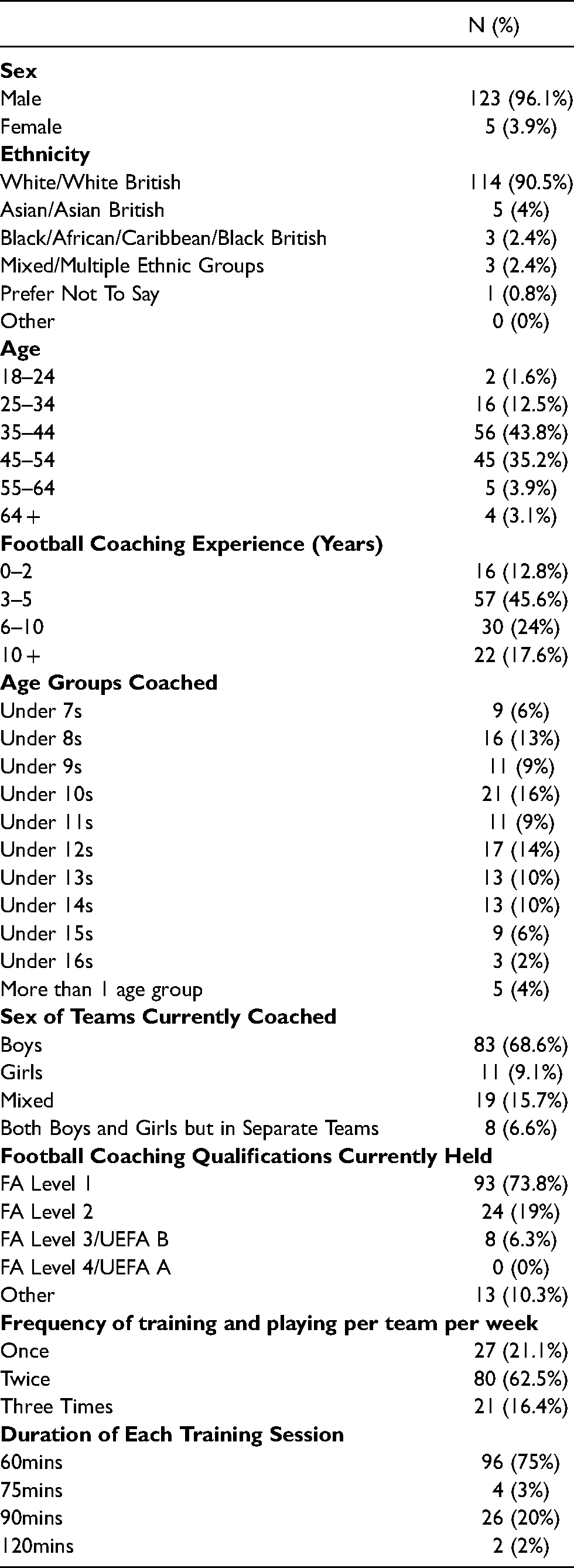
The background information for respondents is presented in Table 1.
Background information.
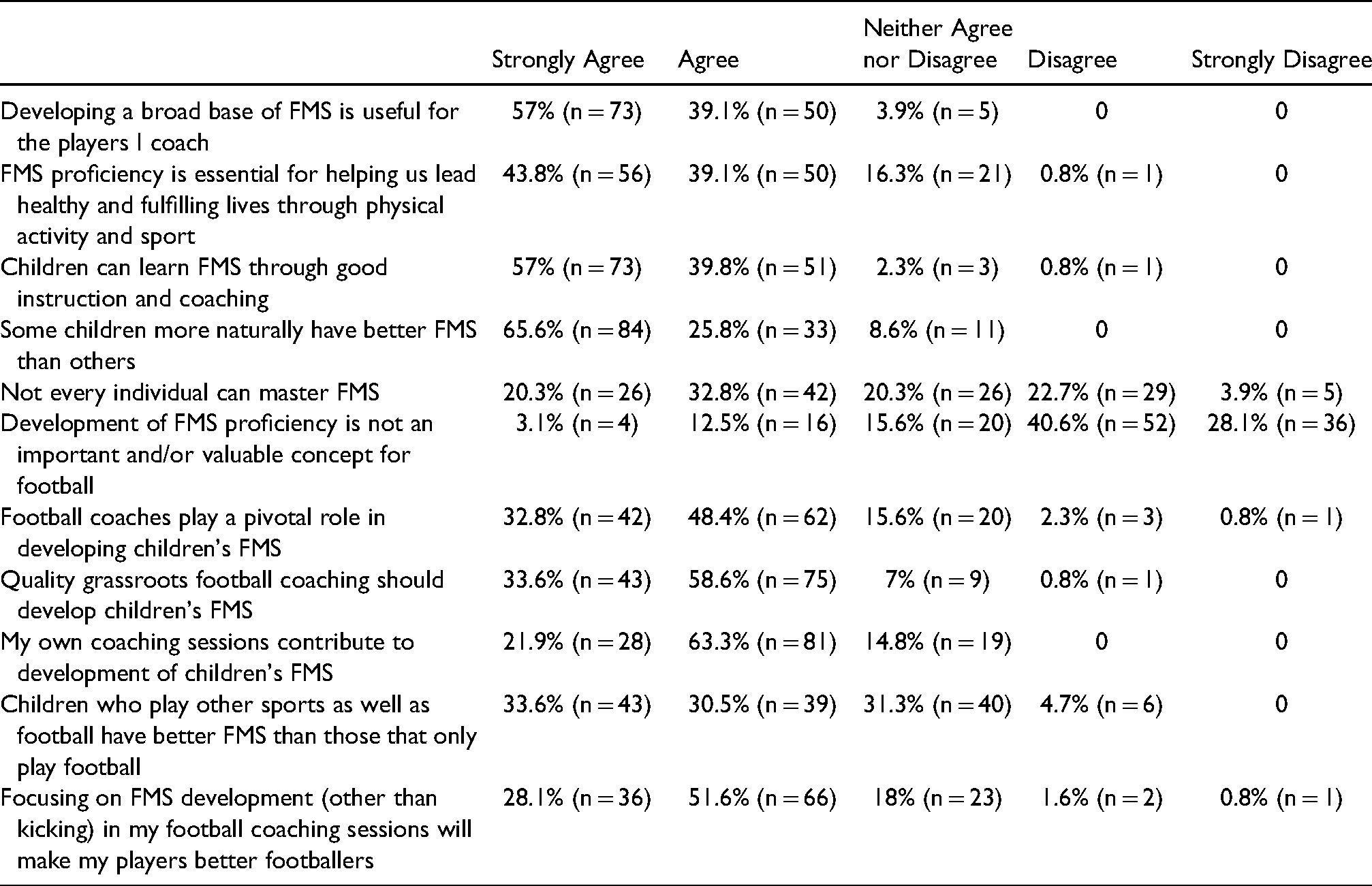
Perceptions of fundamental movement skills in grassroots soccer coaches.
Survey
The survey comprised of 32 questions across six sections: (a) informed consent; (b) background information, demographics, education, and qualifications; (c) FMS views and practices; (d) FMS assessment; (e) importance of constructs related to FMS; and (f) other factors related to FMS. The survey questions are presented in the supplemental material. The start of the survey informed coaches that we were ‘conducting a survey focused on your interest and use of fundamental movement skills in your coaching’ and included an explanation of the purpose, aims, required time commitment, and the confidentiality of information. Initially, respondents were also asked to define what they thought FMS were. Participants were then presented with the definition of FMS used in the present study: ‘By FMS we refer to a broad base of movement patterns. They are typically classified into object control skills (e.g. catching, throwing, kicking, striking, and bouncing), locomotor skills (e.g. running, hopping, skipping, leaping, and jumping), and stability skills (e.g. balancing and twisting)’. Following this, respondents were asked questions related to physical literacy, FMS, and soccer skills. The survey included 13 fixed responses, seven open-ended questions, one question comprising 11 Likert type responses (scored strongly agree to strongly disagree) asking coaches to respond to a series of statements, and one multiple-choice question asking coaches to select the ten elements, from a total of 35, that each coach considered the most important for player success (See supplementary material). Pilot testing was conducted by all of the research team (including experienced researchers and practitioners in Physical Education, FMS and soccer coaching) and five grassroots soccer coaches, to check face validity for a total of three rounds before the survey was finalised. Pilot testing with five grassroots coaches led to slight modifications to the wording and structure of the survey to avoid ambiguity in terms that may have varying definitions and to ensure validity for use with soccer coaches. For example, changing an open-ended question relating to barriers faced in incorporating FMS into coaching practices was modified to incorporate some fixed responses in addition to an ‘other’ category based on pilot testing. Such an approach is congruent with prior studies that have used similar research design and methodologies.32–34
Analysis
All responses from the Bristol Online Survey were downloaded into an Excel 2016 spreadsheet (Microsoft Corporation, Redmond, WA). Fixed response questions were assessed using frequency analysis. Thresholds for use of the terms ‘most’ and ‘majority’ were set as 51% (i.e. over half) and 66% (i.e. two-thirds or more). 35 Open-ended response questions were assessed using a thematic analysis approach 36 using the following six-stage process: (a) familiarisation with the data, (b) generating initial codes, (c) searching for themes, (d) reviewing themes, (e) defining and naming themes, and (f) producing the report. This method of thematic analysis has been previously used in studies surveying sports coaches.31,32,37 An inductive method of analysis 38 was employed for the open-ended responses and themes were coded in a data driven way in line with recommended guidelines. 36 Overarching clear and identifiably distinct themes, representing the main ideas or patterns emerging from the raw data were generated for each open-ended question and agreed upon by two of the researchers XX and XX (removed for review). Methodological rigour was ensured by following the guidelines of Harrison et al. 39 in terms of reporting aims, process of data collection, data analysis and data integration in relation to the responses within the survey.
Results
Perceptions and practices of FMS
When asked if they had heard of the term ‘Fundamental Movement Skills’ previously, most (63%, n = 81) stated they had not heard of it, while only 37% (n = 47) of coaches stated they had. Those coaches that had heard of the term previously were asked how they would explain it, and overall demonstrated a good grasp of the construct, with the majority referring to multiple aspects of FMS. The most frequent words used by respondents were balance (n = 27), basic skills (n = 24), agility (n = 14), coordination (n = 13), throwing (n = 7), jumping (n = 5) and running (n = 5). See supplementary material for the full descriptions used by coaches to describe FMS. Coaches were then directed to a definition of FMS. Participants who had not previously heard of FMS were shown the definition without being asked to describe the concept.
Thematic analysis of the coach description of FMS generated one overarching theme related to ‘basic skills required for movement’ with coaches describing FMS in broadly similar terms. For example:
‘Movement skills such as balance, running, catching, throwing that form the building blocks for a child's physical development’ and ‘It's like holistic skills that involve balance and agility that are important for all sports’ and ‘Basic sports-related movements that help develop the base of physical attributes, such as agility, balance, speed, and strength, these movements can be transferable across sports’
All descriptions provided by the coaches are presented in the supplementary material. Within this overarching theme there was also a consistent use of the words ‘agility, balance and coordination’ referred to by the coaches, with the term ‘balance’ used 27 times, ‘agility’ on 14 occasions and ‘coordination’ on 13 occasions.
After being presented with a definition of FMS, the majority of respondents (96%) reported that developing a broad base of FMS was useful for the children they coached in terms of soccer development, and that FMS proficiency is essential for helping us lead healthy and fulfilling lives through physical activity and sport (82.9%). A majority (96.8%) believed that children can learn FMS through good instructions and coaching and 91.4% believed that some children naturally have better FMS than others. Over half (53.1%) believed that not every child could master FMS and nearly a third (31.6%) believed FMS was not important for football development, contradicting the previous responses regarding FMS being useful. Nearly one-fifth of respondents (18.7%) did not agree that football coaches played a pivotal role in developing children's FMS. Conversely, 92.2% believed quality grassroots football coaching should develop FMS and 85.2% of coaches believed their coaching contributed to the development of children's FMS. Thirty-six percent believed that children who played other sports in addition to football did not have better FMS than those that played only football. Finally, 79.7% believed that focusing on FMS development (other than kicking) in their coaching improved players football performance.
Resources
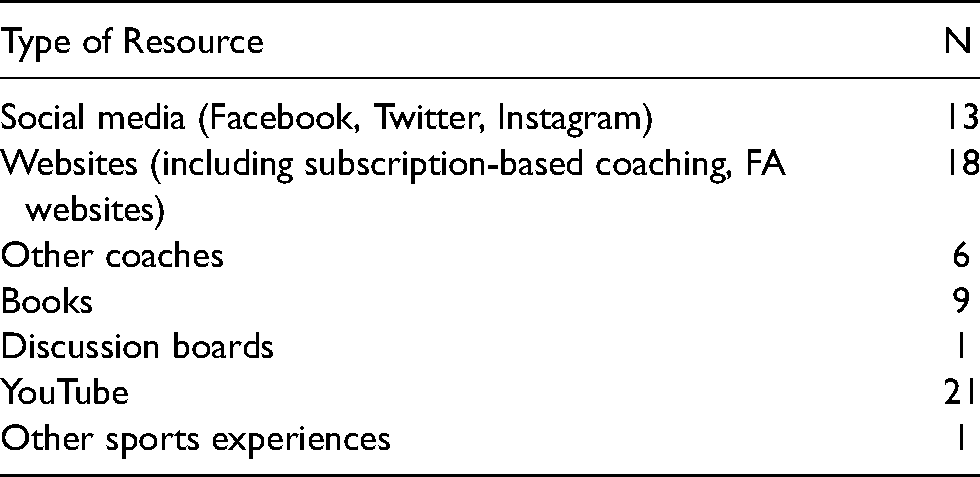
It was similarly reported whether coaches used resources to develop FMS in their practice, with 52% (n = 66) responding that they did and 48% (n = 62) responding they did not. The types of resources used by the coaches are presented in Table 3 with the most used resources being websites and the least being discussion boards and other sports experiences.
Types of resources used by grassroots football coaches to develop FMS.
Why do you teach FMS in your coaching practice?
In response to the open-ended question (See supplementary material) regarding why coaches used FMS in their practice an overarching theme was generated relating to FMS being beneficial for children's development. Within this overarching theme three sub-themes emerged; 1) FMS was related to children's football development specifically; 2) FMS was related to children's overall development, and; 3) FMS being good for fitness and athletic ability. For example, in relation to teaching FMS for football development, coaches responded:
‘To make the kids move better for football’, ‘To improve all-round playing abilities’ and ‘Overall I think football and FMS go hand in hand, football teaches FMS and we can do other things that I think you mean by FMS that feed into football, jumps in place, different types of sprint drills, like springing on a curve, some light resistance exercise with medicine balls, it makes the players better all-round’
Whereas some coaches seemed to teach FMS considering a more holistic idea of child development. For example: ‘These skills enable players to be better footballers, but they are skills that are transferable to day-to-day life. I try to focus on teaching the players skills that are transferable and not just specific to football’, ‘We need to develop better movers. There's is an increasing lack of children developing these skills at home due to the advancement in technology (iPads, Xbox's, etc) meaning more children are sitting in the house rather than playing out, etc….’ and ‘To encourage mental and physical health and development’.
A consistent theme in relation to why coaches taught FMS in their practice related to fitness and/or athletic ability. With comments such as: ‘It's good for agility’, ‘To improve the overall athletic ability of my players’, ‘Fitness’, and ‘to improve fitness and skill’. Responses related to this theme also tended to be smaller in terms of words used to express why FMS was taught by the coaches.
In addition, threading across all three themes were comments that appeared to relate to some aspects of physical literacy, or the subcomponents of physical literacy particularly in relation to fun and enjoyment. For example, in the theme of football development one coach stated: ‘To help develop footballing capability and contribute to greater enjoyment for all’, another coach stated the following within the theme of FMS related to children's overall development: ‘Develop all-round sporting abilities and a sense of fun’ and, In relation to FMS contributing to fitness, one coach commented: ‘To introduce and maintain a fun element whilst promoting general fitness and wellbeing’.
Frequency
Forty-eight percent of coaches (n = 61) employed FMS in their coaching practice regularly (every month), 22% (n = 28) every training session, 17% (n = 22) did this less regularly (two or three times a season) and 13% (n = 16) replied ‘not at all’.
Barriers
When asked about potential barriers that might prevent coaches from incorporating FMS into their current practice, most (60%, n = 72) reported a lack of training in using FMS in coaching, followed by 57% (n = 68) reporting a lack of time in training sessions as the main barriers. A smaller proportion cited inadequate facilities or equipment (26%, n = 31) and lack of confidence in employing FMS in coaching (22%, n = 26). Some coaches reported low levels of enthusiasm or interest in focusing on FMS in coaching (10%, n = 12), lack of space in training (11%, n = 13), and negative parental attitudes to using FMS within coaching sessions (8%, n = 9).
Assessment of FMS
The majority of coaches did not assess FMS (70%, n = 90). Of the 30% (n = 38) who did assess FMS, 37% (n = 14) assessed once a year, 29% (n = 11) twice a year and 34% (n = 13) three times per year. Of the coaches who did assess FMS, the majority (71%, n = 60) employed subjective assessment, most often described as some form of in-game or training observation by the coaches, 11% (n = 9) used objective assessment, while 18% used another form of assessment. For example, coaches reported rating their players on a scale of 1–5 for decision making or athletic performance, based on their perceptions.
Of those who employed objective assessments, when asked what tests were employed to assess FMS, there was a misconception of what objective assessment referred to, with a proportion citing observation in training or games (n = 5) and n = 1 reporting children self-report their competence. Other coaches cited the use of speed gates/timing gates to assess sprint times (n = 5), assessment of jump distance/height (n = 3), or timed agility tests (n = 2). Video analysis of movement patterns in games (n = 2) and a formal ‘decision making test’ (n = 1) were cited as other forms of objective assessment.
When coaches were asked the 10 most important factors for player success in the children they coach, the most popular factors in order were: enjoyment, confidence, coordination, agility, decision making, movement skills with objects, general movement skills, passing, balance & stability and motivation. The frequency of responses for these skills is presented in Figure 1.
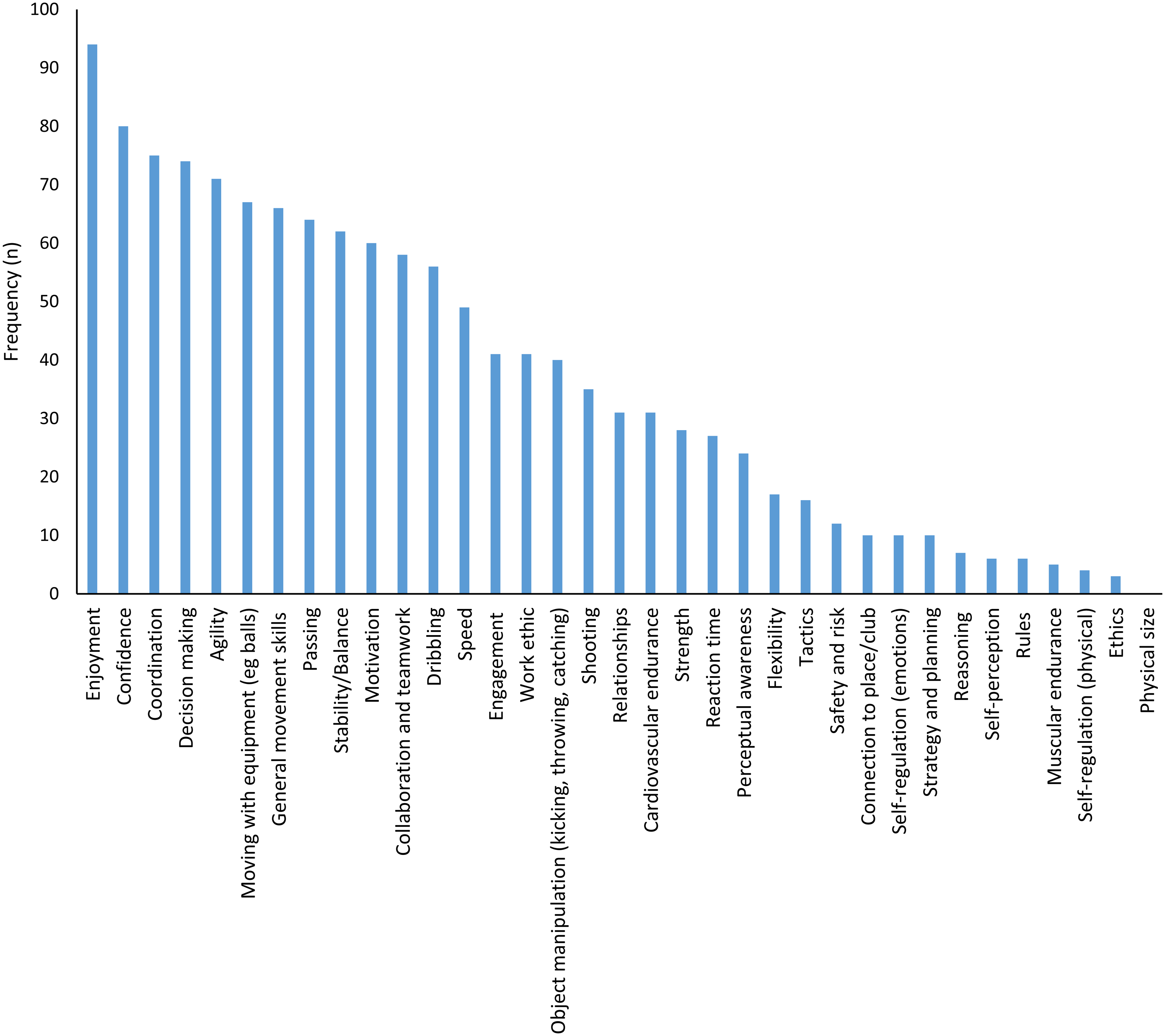
The most important factors for player success in the children as identified by grassroots football coaches.
Discussion
This study is the first to examine the practices and perceptions of grassroots soccer coaches concerning FMS. Understanding coach perceptions and practices underpins the development of effective interventions and positive change. The research presented here provides key messages for how strategies to develop FMS might be embedded within coach education. The results of the present study also offer the opportunity for coach reflection of their perceptions and practices, while raising an overarching question of whether a multidisciplinary approach is needed to enhance FMS, involving grassroots soccer coaching, Physical Education, and other organised and unorganised sports environments.
Our results demonstrate that awareness of the term FMS is mixed within our sample of grassroots soccer coaches but when presented with a definition of FMS the coaches appeared to value FMS as a contributor to developing soccer skills in those they coach. However, responses indicated that there are clear gaps in understanding, coach education, and the availability of evidence-based resources, which inhibit effective development of FMS within grassroots soccer. The development of FMS is a prerequisite for both sport performance and engagement in health-enhancing physical activity in childhood and thereafter. 40 For this reason, many NGB coaching qualifications include content related to the development of FMS. This is particularly the case for soccer. 16 Despite this, there has been a tendency in grassroots soccer coaching to focus on technical skills and fitness development over other aspects such as FMS, 26 even though FMS development potentially leads to more effective and sustainable engagement in sport and physical activity. A key question relates to the motivations of coaches concerning their practice. In the current study, we did not determine whether the coaches in the current study were coaching to win soccer matches, to develop individual players for soccer solely, or to develop soccer players for lifelong PA. It is also not clear whether grassroots soccer coaches consider their role as involving enhancing FMS over developing soccer skills specifically.
The most frequent terms used to describe FMS related to balance, agility, coordination, throwing, and catching, which is congruent with the definition of FMS. Coaches did however conflate FMS with fitness in their descriptions of what they thought FMS was. For example, the terms ‘speed’, ‘sprinting’, ‘strength’, and ‘stamina’ were regularly referred to. There was an overall tendency towards a conflict in participant responses which is worthy of consideration. On initial ask, the majority (nearly two-thirds) of coaches stated they had not heard of the term ‘FMS’ previously, but all held NGB coaching qualifications where FMS was a feature of the curriculum. Moreover, after being presented with the formal definition, a majority reported that developing FMS was useful for the children they coached. They also considered that it was essential in helping them lead fulfilling lives through activity and sport and suggested that they assessed FMS and accessed resources to use FMS in their coaching. This might imply that although the coaches did not formally understand FMS, they were implicitly engaging with aspects of FMS development, either in practice or through the use of resources to develop their practices. This is demonstrated by the inclusion of FMS as five of the top ten features for player success, identified by the coaches. However, questions remain whether grassroots coaches best know how to develop FMS in those they coach. This assertion is supported by respondents stating they valued and used FMS within their practice, but common barriers reducing the implementation of FMS were a lack of training or time at training and coach education. Lack of time has been previously reported as a barrier preventing coaches from implementing developmental activities in sports (e.g. soccer)31,32 and prior work by Burton et al. 29 has demonstrated that within youth strength and conditioning, those with greater session frequency (3–4 weekly sessions), could target 15–18% more motor competencies than those coaching 1–2 weekly sessions, irrespective of session duration. Moreover, while coaches did assess FMS, the measures that were employed were product-heavy (e.g. running speed, agility time). No coach used a valid or reliable process-oriented assessment (i.e. the quality of the movement) in their practice. This is important because the lack of on field assessments minimises the opportunity for specific and immediate feedback. This, in turn, may result in minimal FMS improvement as a result of the type of soccer assessment and practice undertaken. Of relevance, where only product assessments are used, coaches may miss out on key information relating to how players move. If only a process assessment is used coaches may focus more on how movements are performed rather than their outcome. The use of combined product and process approaches to assessment should therefore be advocated where possible. 41 There is perhaps a larger question that should be considered in the context of assessment in the present study. The sample in the current study comprised of grassroots coaches and while our results indicate some of these coaches are using forms of assessment of FMS, given that most grassroots coaches are volunteers perhaps they should not be expected to have specialist experience in using process and product assessment of FMS. Providing practical, time and labour efficient tools or resources to help coaches assess FMS might be useful but it is important to highlight that the role of the grassroots soccer coach is more focused on delivering enjoyable soccer training sessions that help develop the children they coach.
Half of the coaches reported using resources to inform their practice for FMS development. The resources they engaged with were reported to be highly accessible (e.g. social media, YouTube), but may lack an evidence base. Accordingly, a key outcome from the present study is identifying a need for accessible (i.e. digital) and evidence-based resources to inform coaching practice related to FMS. A focus on social media as a tool for coach education and practice is worthy of further consideration. The results of the current study, with this sample of grassroots coaches, suggest that coaches are using social media as a key means to gather resources. There is emerging evidence that the coaching process and coaches need to better consider how social media can inform and develop their coaching, and their communication with their athletes 42 as well as recent work demonstrating potential utility of social media for coach education and learning. 43 Understanding effective use of social media for coach learning is an important next step if social media platforms are to be effectively used to help coaches in their daily practice. Using evidence-based resources alongside a framework to embed FMS may help overcome some of the barriers to implementation. 44 For example, this might include integrating FMS into warm-ups or skill-based practices, such as those previously published using the RAMPAGE framework by Till et al. 45 Such assertion aligns with conclusions drawn by Burton et al. 29 relating to maximising time to develop FMS in their work examining practice and perceptions of FMS in youth strength and conditioning coaches. There are good examples of evidence-based digital approaches such as the icoachkids project (icoachkids.org) and within teacher education and physical education which might offer a template that could be used with coaches.46,47
In addition, we also observed the emergence of a physical literacy approach in our results. Although implicit, the most important factors for player success defined by coaches were spread across the different domains of physical literacy.48,49 Based on the responses to the questions, holistically, the grassroots soccer coaches implicitly value many aspects of physical literacy, with FMS embedded within a wider physical literacy framework. In particular, coaches cited factors across all four physical literacy subdomains, including the physical (e.g. general movement skills n = 66 and cardiovascular endurance n = 31), psychological (e.g. enjoyment n = 94 and self-regulation of emotions n = 10), social (i.e. collaboration and teamwork n = 58 and relationships n = 31) and to a lesser extent, cognitive (e.g. reasoning n = 7 and rules n = 6). 50 These results indicate a promising direction for the future in terms of coaching practice, situating the development of FMS within a broader physical literacy approach. Of note, the highest qualification for the majority of respondents was the entry coaching qualification in the English FAs system. It may also be one reason why the sample of coaches in the current study reported lack of training as a barrier and a reliance on numerous resources to help develop themselves and their practice. There may therefore be a deeper remit to provide direction and resources related to FMS development through soccer in those coaching qualifications that come after the FA level 1 in coaching football.
While not explicitly a feature of NGB coaching qualifications, the implicit focus on physical literacy demonstrates that soccer coaches at the grassroots level are considering holistic movement development in those they work with. This might be an aspect, that if more explicitly developed in initial coach education and continuing professional development, could enhance experiences of grassroots soccer, providing a positive developmental trajectory for lifelong physical activity. Despite this, some of the responses contradicted the established tenants of FMS and motor skill development with a majority of coaches believing that not every individual can master FMS, a third believing the development of FMS would not benefit soccer performance, and one in five suggesting that coaches do not play a role in FMS development in the children they coach. Such beliefs are contrary to empirical studies on motor skill 21 and soccer skill development.22,26 This further supports a need for intervention regarding coach knowledge, understanding, and practice of FMS strategies specific to grassroots soccer. There is also a broader question, which the current study is unable to answer, but does merit further study, relating to who should be responsible for FMS development in children. This may be some or all of grassroots soccer coaches, other sports coaches, school Physical Education teachers or other practitioners.
The current study is not without limitations. Participants were restricted to grassroots football coaches in England and the data presented may be more reflective of the coaching qualification structure and cultural context in which coaching takes place in England. It would be useful therefore to examine differences in perceptions and practice of FMS in grassroots coaches from different countries and cultural contexts. We are also conscious that the results of the current study represent only the relatively small sample of coaches, compared to the number of qualified grassroots coaches nationally, who responded to the survey. In recruitment, we informed coaches that we were ‘conducting a survey focused on your interest and use of fundamental movement skills in your coaching’. This may have unintentionally resulted in those coaches who were more interested in FMS being more likely to participate. Furthermore, while the data presents a snapshot of what grassroots football coaches believe and do regarding FMS, future work building on the data presented here using a more in-depth qualitative methodology (e.g. interviews) would be useful in unpacking how strategies to develop FMS might best be embedded into grassroots coaching practice. We intended to provide a broad overview of perceptions and practices of FMS in grassroots coaches, and we are aware of the descriptive nature of the approach used in the current study. This approach is deliberate and useful as no prior work had examined the perceptions and practices of grassroots soccer coaches concerning FMS. A key first step in achieving positive change is to establish the current perceptions and practices of FMS in grassroots coaches. Only when this form of information is available can informed strategies be put in place to advance coach education and practice. A deeper analysis of why coaches hold the perceptions they do alongside understanding why they engage in the practice they do would be a needed next step to understand the barriers and facilitators to practice for grassroots soccer coaches. Focus group or one-to-one interviews might offer the potential to delve deeper into the current topic using the findings of the current study as a springboard for discussion on the role of grassroots coaches in developing children's FMS. This could, for example, explore views on whether grassroots coaches should have a part to play in developing FMS, motivations for coaching practice, and strategies that might best be employed to help grassroots coaches develop their practice. Effective use of social media for resources and learning around the topic of FMS in grassroots soccer could also be a useful avenue to pursue in future research given the results of the present study in this respect.
Key implications arise from the present study. Tailored, accessible and evidence-based FMS training is required to better support grassroots soccer coaches. Providing evidence-based resources and a framework for coaches to integrate FMS into their coaching practice would be a useful next step, as would some form of guidance or professional development to competently assess FMS in practice. An approach which incorporates meaningful planning for, and delivery of, opportunities for their athletes to learn, practice and improve FMS is key for a balanced athletic developmental trajectory.
Supplemental Material
sj-docx-1-spo-10.1177_17479541211073547 - Supplemental material for Perceptions and practices of fundamental movement skills in grassroots soccer coaches
Supplemental material, sj-docx-1-spo-10.1177_17479541211073547 for Perceptions and practices of fundamental movement skills in grassroots soccer coaches by Michael J. Duncan, Anthony Weldon, Lisa M. Barnett and Natalie Lander in International Journal of Sports Science & Coaching
Footnotes

References
Supplementary Material
Please find the following supplemental material available below.
For Open Access articles published under a Creative Commons License, all supplemental material carries the same license as the article it is associated with.
For non-Open Access articles published, all supplemental material carries a non-exclusive license, and permission requests for re-use of supplemental material or any part of supplemental material shall be sent directly to the copyright owner as specified in the copyright notice associated with the article.
