




Abstract
Identifying high-performing and promising athletes is an important task of national surf associations. However, the scientific foundation of performance indicators in surfing has only developed in recent years. This review aimed to (1) find out which performance characteristics discriminate between surfers of different skill levels, and (2) point out gaps in the existing literature and direct future studies by applying the Groningen Sport Talent Model (GSTM) to categorize findings. A systematic review of PubMed, Web of Science, MEDLINE and PsycInfo databases was performed according to the PRISMA guidelines. A total of thirty-one studies were included. Studies were found on anthropometric, physiological, technical, and tactical, but not on psychological characteristics of surfing performance. In total only six studies included female surfers. Findings suggest that a few performance indicators exist in relation to associations between physical capacities and surfing skill. For one, relative arm span seems to be beneficial to surfing performance and discriminates between differently skilled surfers. Additionally, 15 m and 400 m in-water paddle performance, as well as relative upper and lower-body strength also tend to be better in superior surfers. Technical skills, such as the ability to perform aerials and tube rides with a high completion rate, translate directly into an enhanced scoring potential and therefore success in surfing competitions. While a variety of characteristics for high-performance surfing are already indicated, future research needs to focus on developing reliable methods with higher ecological validity to assess these skills. Apart from the in-water paddle tests, most indicators lack a broadly accepted testing method. Especially, the field of psychological skills in surfing should be addressed more in the future.
Keywords
“Surfing is a million-dollar thrill, but you learn a nickel at a time. Surfing teaches you patience, and it keeps you learning from the beginning, and then when you get older, you have to learn new ways to handle it all. Life works the same way. Some things take a long time to learn. Other things you already know, but sometimes it takes a while to register.”
“Competitive surfing is not only about talented surfing. It’s about the management of your opponent and the management of the waves.”
Introduction
Developing successful athletes is a process that must consider a variety of different variables.3–5 One of the first steps that researchers commonly take, can be seen in identifying important performance characteristics of the respective sport.6,7 Based on the identified performance indicators practitioners are able to create performance benchmarks and criteria that ideally help them in identifying and developing future elite athletes. Sports, such as track and field, swimming or cycling usually have clear and objective performance measures which makes it easier to identify talented athletes based on existing performance indicators, compared to more complex domains.8–10 Finding such objective and multidimensional performance characteristics is a current challenge for practitioners and researchers in surfing (i.e., wave riding).
In contrast to a lot of popular individual sports, surfing seems to provide bigger challenges to tackle when it comes to identifying the relevant performance influences and indicators. For one, competitions are mostly held in the ocean, leaving athletes exposed to the elements. Hence, surfing performance is strongly influenced by a variety of conditions and environmental factors, such as currents and riptides, wind and weather, and most importantly wave formation and frequency. 11 It is therefore not surprising that competitive surfing has been found to show much larger variability in performance than other individual sports, such as swimming, weightlifting, or running. 12 However, the influence of surfing conditions does not stop the most talented surfers from producing consistently superior performance. 13 In competitions athletes face their opponents in head-to-head matchups, leaving them equally exposed to the same conditions. Therefore, continuous competitive success in surfing, such as the eleven world titles by Kelly Slater, can be explained with the athlete’s skills rather than the environmental influences.
Another difference to many other sports is that the most direct effect on surfers’ competitive success results from only a small part of their in-competition behavior. To advance through the rounds of a contest, surfers must compete against their opponents in several time restricted heats. That is, a head-to-head bout against one, two or occasionally more competitors, which usually lasts between 20–40 minutes. 14 However, much like hunters, surfers spend most of their time during heats trying to bring themselves into the best position to succeed. In fact, during elimination heats (i.e., a heat in which the last placed athletes are eliminated from the contest) professional surfers spend about 51% of the time paddling, 42% percent in a stationary (i.e., waiting) position, while the actual point-scoring activity of wave-riding only accounts for 4% of their activity profile. 15 These three main phases of paddling, waiting (e.g., assessing the approaching waves), and riding the waves are often used to characterize the process of surfing that repeats itself over and over during competitive or recreational surfing sessions. 16 The arguably most crucial part of this cycle can be seen in riding the wave, which starts with a few strong paddle strokes after an appropriate wave has been identified, continues with a take-off from a lying into a standing position on the surfboard and is followed by the ride along the unbroken part of the wave, which is used for maneuvers, such as turns and aerials. 16 Adding to the variability of surfing performance, each of the competitor’s waves are scored by a panel of up to five judges based on their subjective impression of (a) commitment and degree of difficulty, (b) innovative and progressive maneuvers, (c) combination of major maneuvers, (d) variety of maneuvers, and (e) speed, power and flow. Scores per wave can range from 0-10 points, with the two highest-scoring waves comprising the total score of each surfer’s heat. 17
Considering the wide variety of performance influences, it becomes clear that surfing athletes need an equally diverse set of skills and abilities to succeed in competitions. Consequently, performance relevant factors that have been identified in the literature include physiological characteristics such as good muscular endurance, cardiorespiratory fitness and anaerobic power, mainly in the upper torso, 11 but also excellent balance 18 as well as cognitive and psychological abilities19,20
The interest in the underlying performance characteristics of surfing has clearly increased over the last fifteen years. While in the early 2000s only a few studies across different academic disciplines existed,11,21 the research seems to be evolving in the past years, just like the sport itself. Currently a variety of studies in the field of competitive surfing focus on topics such as performance requirements15,22,23 and scoring criteria24,25, gender specific differences26,27 or even how a claim, an excessive celebration of a wave, affects the subjective scoring by the judges. 28 Systematic reviews on load monitoring 11 and on the essential skills of wave-riding 29 can also be found.
However, with the sport having made its Olympic debut in Tokyo 2021,30,31 the focus on the high-performance aspect of surfing will most likely grow even further in the future. Especially when considering the importance of well-structured and scientifically based talent programs of the different national surf associations it seems important to identify reliable performance indicators, as they influence how we assess, select, and develop the future elite athletes in this quickly developing sport. To current knowledge, a few studies on the diverse potential indicators have been performed, yet no systematic review on this topic has ever been conducted.
In order to structure the findings of this review in a systematic manner and allow better insight into discriminating performance characteristics, a theoretical model on talent development will be used as its foundation. Therefore, this review will apply the Groningen Sport Talent Model (GSTM) 32 (see Figure 1), which is modified after Newell’s constraints-led approach 33 and has been used in systematic reviews with a similar aim in other sports. 7 The model illustrates how sports performance develops over time based on maturation, learning and training. It includes the contribution of the athlete’s environment (e.g., parents, coaches, club structure, teammates, etc.) and shows how the interplay with the athlete’s multidimensional performance characteristics are related to the task results (e.g., competitive surfing performance).
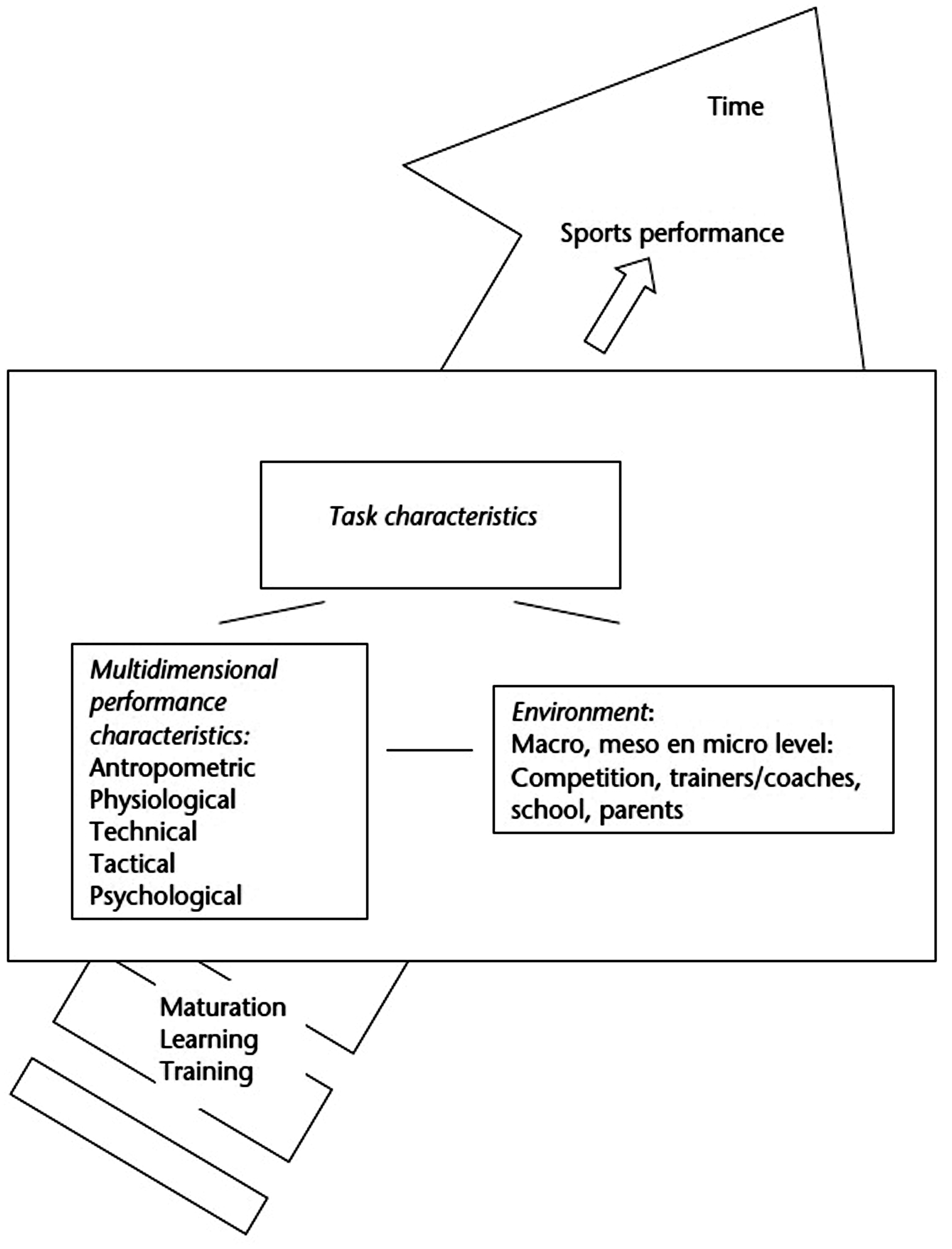
The GSTM as used in Elferink-Gemser and Visscher 32 (Reproduced by permission of Taylor & Francis Group).
If we know what variables underpin elite surfing performance, for example through higher wave scores or different skill-levels in surfing, then we can potentially add an important component to the development of guidelines for performance test protocols, as well as for performance benchmarks. This will end up supporting surfing clubs and associations in their endeavor to develop the future World and Olympic surf champions. Hence, it is the aim of this review to find out which performance characteristics discriminate between surfers of different skill levels. Secondly, it applies the GSTM model in a meaningful way to categorize findings, and to point out gaps in the existing literature and direct future studies.
Methods
Study design
This systematic review focusing on performance indicators in competitive surfing was conducted following the guidelines of the Preferred Reporting Items for Systematic Reviews and Meta Analyses (PRISMA) statement. 34 This project did not require Institutional Review Board approval and therefore the protocol was not registered prior to its start.
Search strategy & eligibility criteria
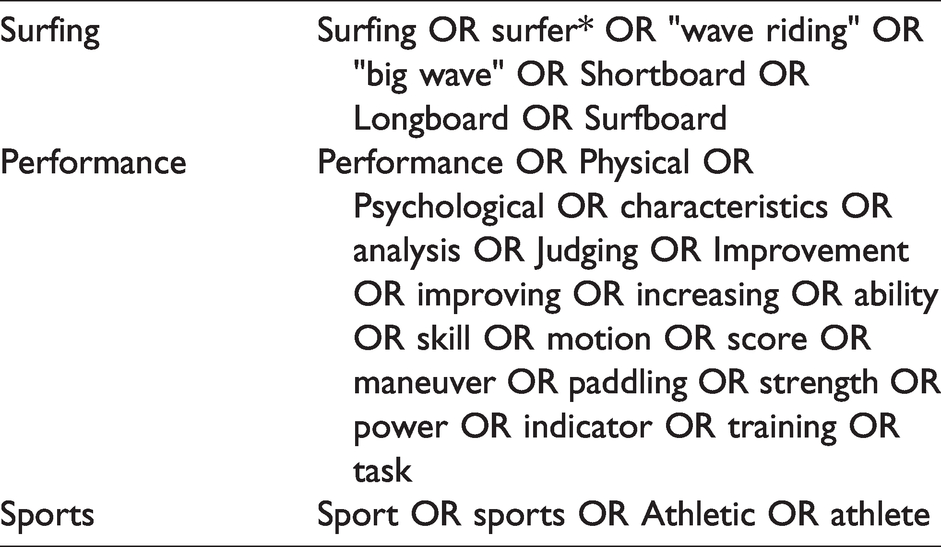
To identify relevant articles focusing on Performance Indicators in competitive Surfing, a series of searches of the key databases PubMed (n = 271), Web of Science (n = 621), MEDLINE (n = 208) and PsycInfo (n = 86) were conducted in May 2020. The implemented search strategy of this systematic review is detailed in Table 1, which combined keywords for the category of “surfing”, as well as for the category of “performance”. Additionally, terms related to “sports” in general were also included as a third category, since the terminology of surfing and wave riding seems to be commonly used as a metaphor in other research areas. For similar reasons, phrase searching was applied to the terms “wave riding” and “big wave” by using quotation marks. The three search term categories were applied as keywords or when possible, to all fields of the respective database search engine. The categories were combined using the AND operator.
Detailed search strategy of this systematic review.
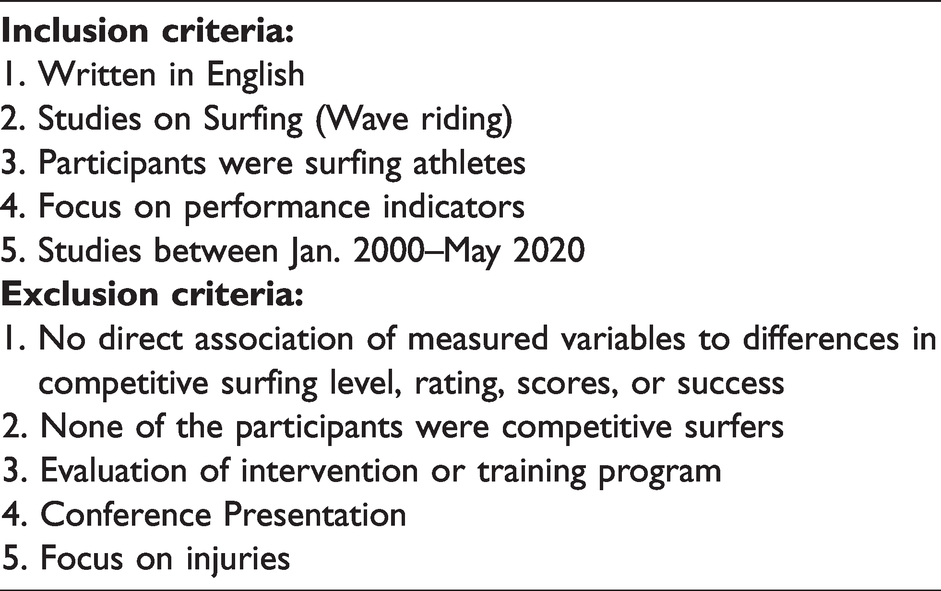
This review focuses on the performance indicators of competitive surfing and therefore excluded all studies that were using solely recreational or amateur surfers. A comprehensive list of the applied inclusion and exclusion criteria can be found in Table 2. Studies were for example only included if they were written in English and if they focused on comparing ability tests and surf performance, among other criteria. Studies were excluded if they only focused on an intervention or training program to increase surf performance, or if they were dated from before the year 2000 to adjust for the evolution of competitive surfing. Additionally, if the citation of existing articles showed any potential relevance, it was screened at the abstract level. When abstracts indicated potential inclusion, full-text articles were reviewed.
Eligibility criteria for the review process.
Apart from the database search, articles that were found through a secondary search (i.e., in the reference list of relevant articles) were added to the full-text assessment, if they met the inclusion criteria.
Data extraction
Study selection and the extraction of relevant data was completed by two authors in four phases. First, database searches were exported to the Covidence online software. In a first step the software automatically removed all duplicates from the imported studies. The following step included a screening of all titles and abstracts using the inclusion criteria as a guideline, in order to ex- or include them from the final step, the full-text assessment. During the full-text screening all relevant data was extracted from the included studies to determine the final in- or exclusion of an article.
Quality check
All included studies were assessed independently by two authors for their overall methodological quality based on the “Guidelines for critical review form – Quantitative Studies” by Law et al.. 35 In case of conflicting scores, a third author assessed the study. All results were discussed among the authors until consensus was reached. The guidelines include 16 items, that aim at objectively assessing the various components of a scientific research article (see supplementary file of this review for details). As was done in two similar reviews by Faber et al. 6 and Te Wierike et al., 36 the outcomes of the items were identified as 1, if the criteria was met, and 0 if it was not. Similar to the mentioned reviews a total score (in percentage) was calculated to allow for a fair comparison of differently designed studies. Total scores of below 50% were considered as low methodological quality. Good methodological quality was achieved with a total score of 51% to 75%, and the rating of excellent quality for every score above 75%.
Results
Systematic search
The database search, using the described strategy, resulted in 1186 articles. After removal of duplicates (n = 482), as well as an extensive abstract and title screening a total of 84 studies remained. Five further studies were included from the secondary search, which brought the total number of studies for the full-text review to 89 studies. After applying the described in- and exclusion criteria, a further 58 studies were excluded (see Figure 2). After excluding those, thirty-one studies remained of which all met the inclusion criteria. No further studies were excluded during the analysis process. See Figure 2 for the process overview of study selection.
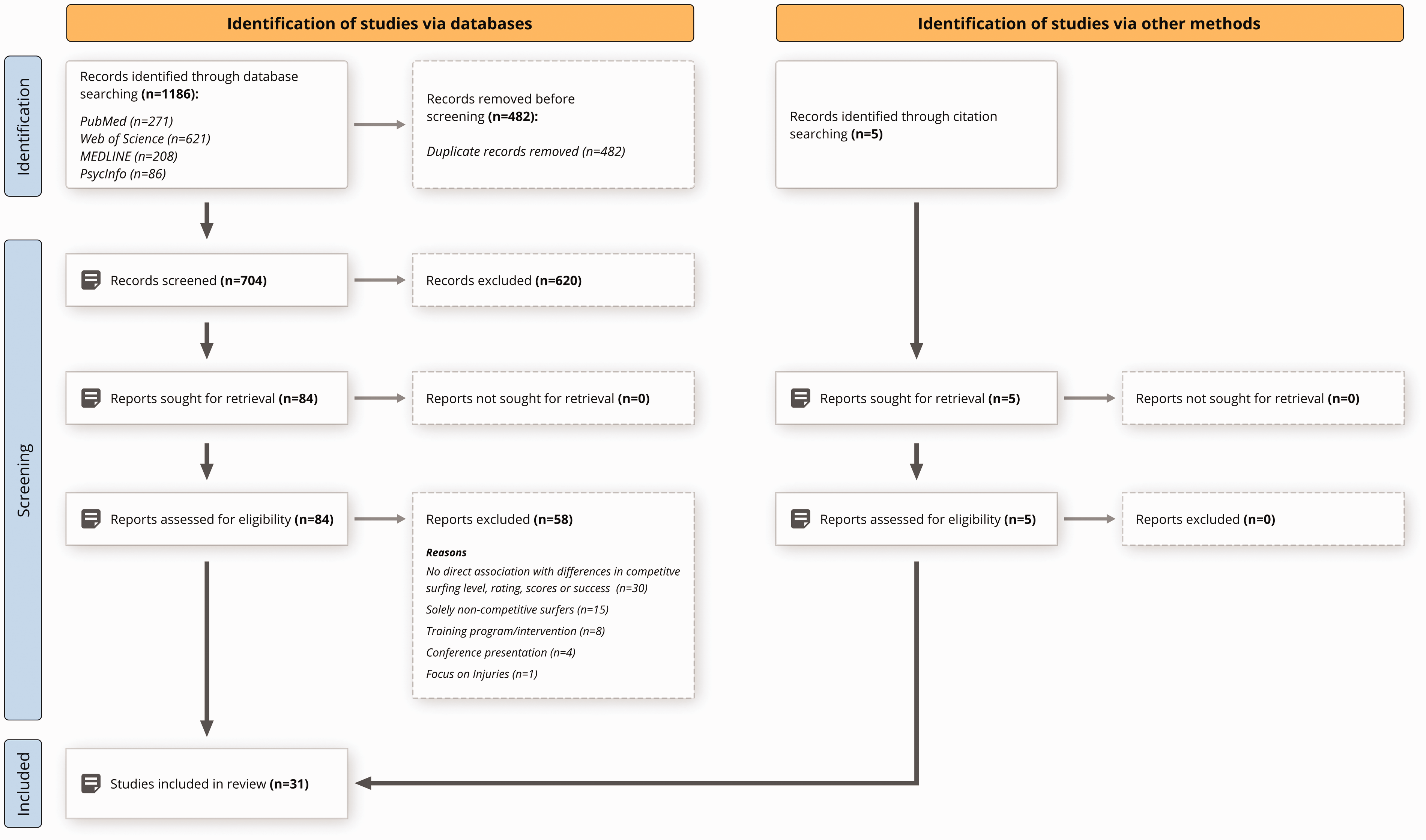
Process of study selection.
Quality check
The assessment of methodological quality showed a good level among all studies. Fourteen of the included thirty-one studies showed good methodological quality (between 51*–%–75%). A total of seventeen yielded scores of excellent quality (above 75%). While all studies were consistent across most categories, differences were mainly found in the report of reliability of outcome measures, as well as the acknowledgement of limitations. The overview of the assessment based on the guidelines by Law et al. 35 of all included studies can be found in the supplementary information file of this review.
Findings
The included studies were categorized based on the multidimensional performance characteristics outlined in the GSTM. The studies included measurements from four out of the five categories (i.e. Anthropometrics n = 14; Physiological n = 22; Technical n = 5; Tactical n = 3; Psychological n = 0). Across the thirty-one included studies, only one focused entirely on female surfers, while another five included both male and female surfers. The other twenty-five studies included only male athletes. The specific findings are discussed for each category of the GSTM. An overview of the most relevant characteristics for all included studies can be found in Table 3–6.
Overview of included studies with main focus on anthropometric characteristics (APM).
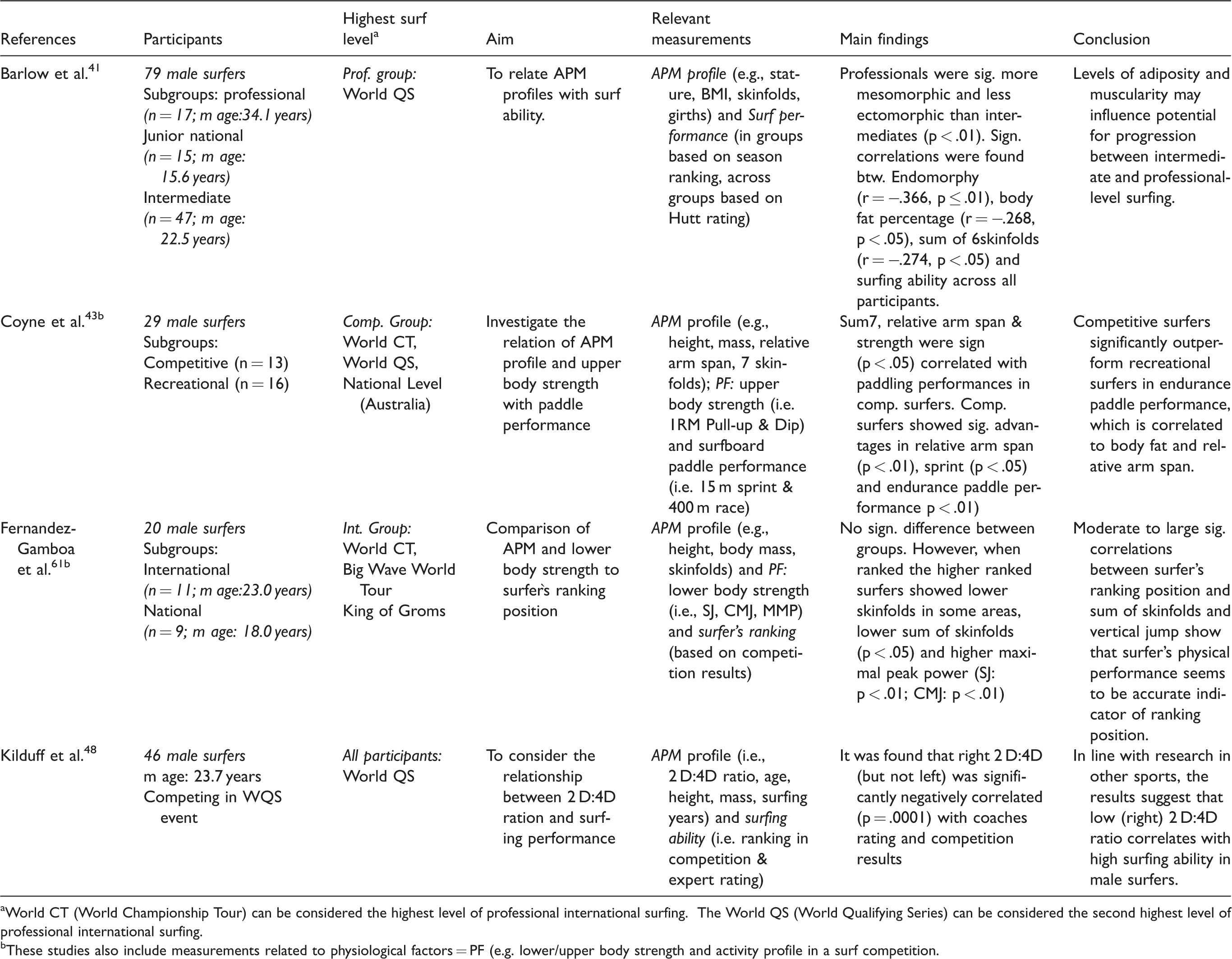
World CT (World Championship Tour) can be considered the highest level of professional international surfing. The World QS (World Qualifying Series) can be considered the second highest level of professional international surfing.
These studies also include measurements related to physiological factors = PF (e.g. lower/upper body strength and activity profile in a surf competition.
Overview of included studies with main focus on physiological factors (PF).
World CT (World Championship Tour) can be considered the highest level of professional international surfing. The World QS (World Qualifying Series) can be considered the second highest level of professional international surfing.
These studies also include measurements related to anthropometric measurements = APM.
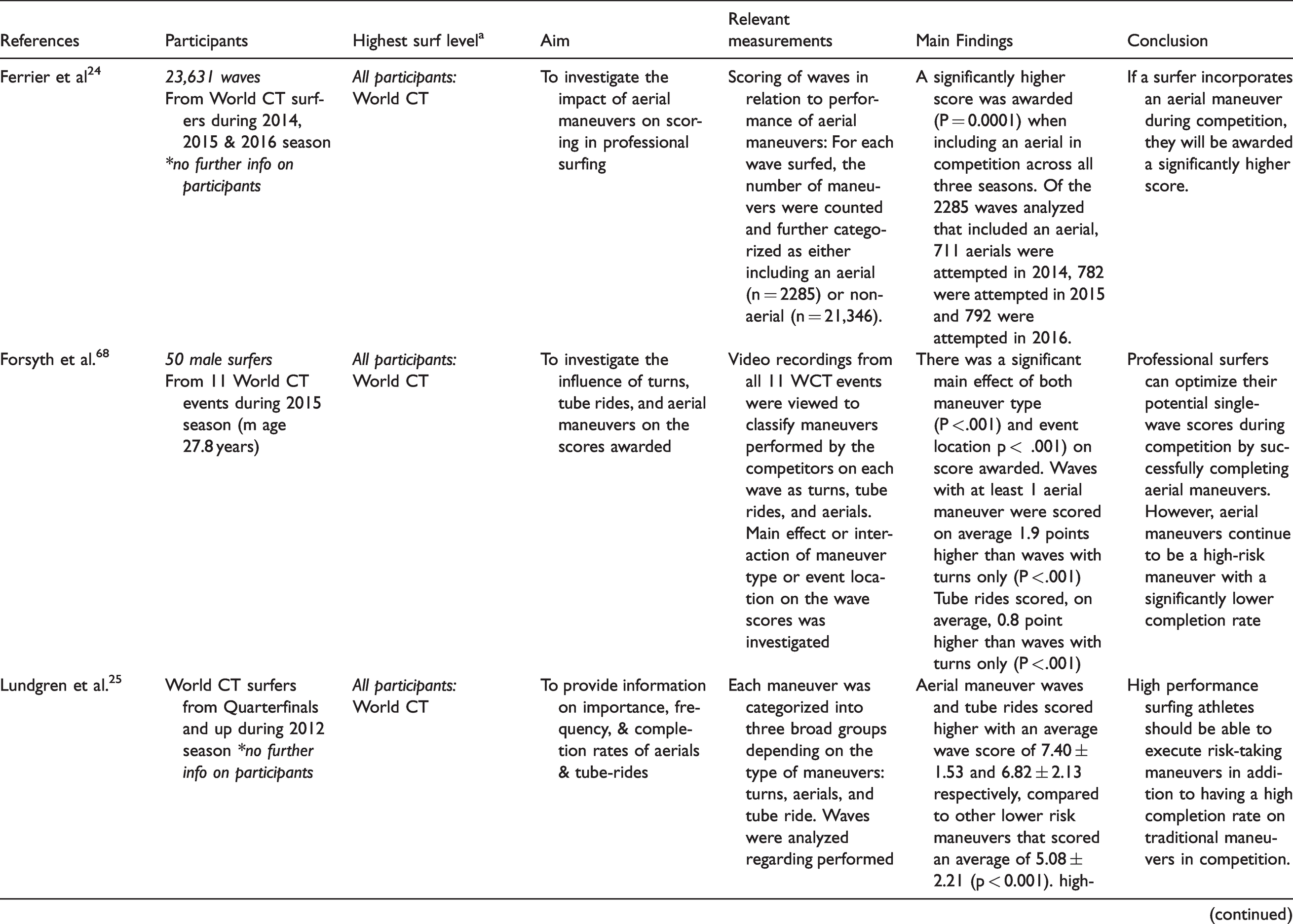
Overview of included studies with main focus on Technical Factors and Scoring Analysis.
World CT (World Championship Tour) can be considered the highest level of professional international surfing.
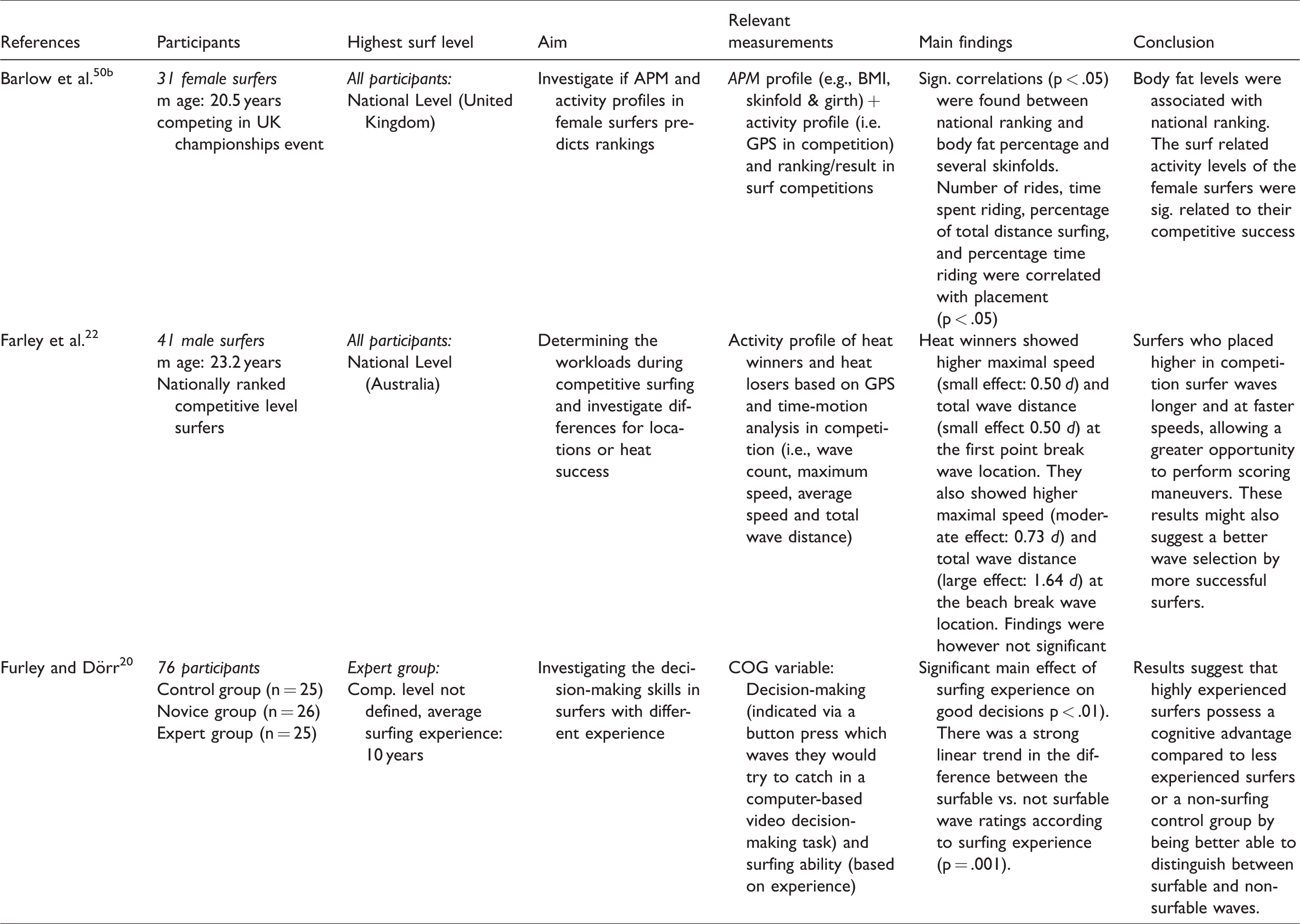
– Overview of included studies – Main focus on tactical factors.
Anthropometry
– Surfers of varying skill levels were assessed for their anthropometric measurements in fourteen studies. Height, stature, arm span, body mass, and skinfold thickness were some of the most commonly assessed variables, all with varying results across the different studies. See Figure 3 for an overview of the assessment instruments in the category of anthropometrics.
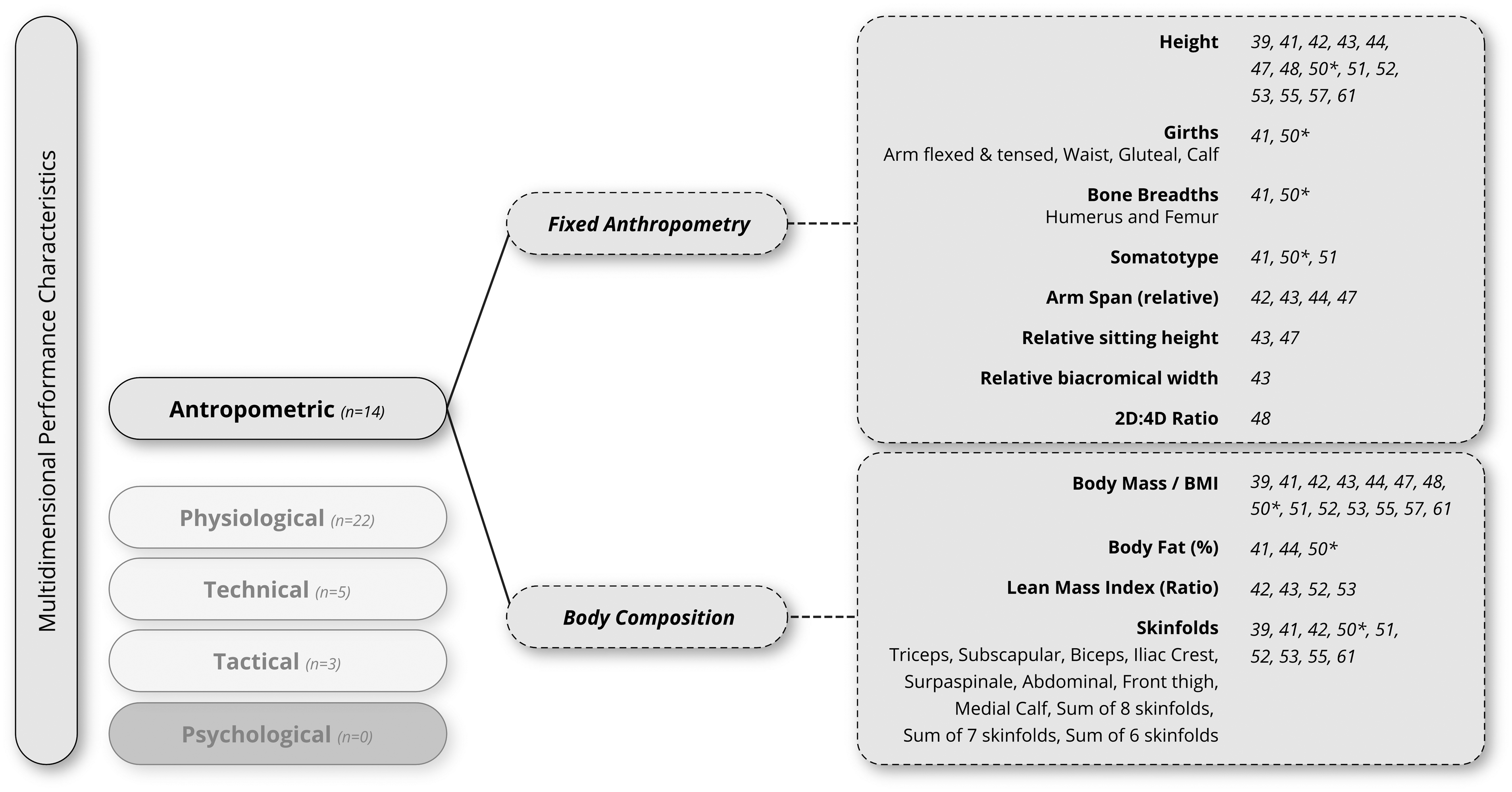
Overview of assessment instruments of anthropometric measurements in the included studies.
While surfers tend to have a relatively short stature and light weight, which has been hypothesized as beneficial, only two of the fourteen studies investigating a relation between height, body mass and surfing ability found significant differences. Not surprisingly those differences were only found between senior and junior surfers in both studies.41,42 In similar fashion senior surfers also showed significantly greater arm span than youth surfers. 42 More interestingly, significant differences in absolute and relative arm span were also found when comparing competitive and recreational surfers of similar age.43,44 In swimming greater arm span is associated with enhanced performance, as it enables athletes to move more water and cover longer distances per stroke resulting in higher absolute speed and traction force.45,46 Consequently, both included studies also showed significant correlations between arm span and key performance variables in surfing, such as endurance paddle performance, 43 VO2 peak uptake and anaerobic power. 44 Such variables have an important influence on a surfer’s paddling skill and might thereby contribute to superior surfing performance. Only one of four relevant studies did not find any differences in arm spans between competitive and recreational surfers. 47 Contrastingly, no differences between differently skilled surfers were found for relative sitting height,43,47 or for relative biacromial width. 43 One study investigated the relation of surfing performance and 2 D:4D ratio, which is the ratio of index to ring finger hypothesized as an indicator of prenatal androgen exposure. Kilduff et al. 48 found a significant correlation of low 2 D:4D ratio in the right hand to expert rating of the elite surfers and their placing in a single World QS competition. Interestingly this finding is in line with suggestions of athletic prowess in other sports. 49
When assessing the somatotype all three studies found that surfers tend to be mesomorphic, as shown for professional senior male surfers 41 females 50 and junior athletes. 51 The measurement of somatotype was able to discriminate between competitive levels, with professional surfers being more mesomorphic and less ectomorphic than intermediate level surfers, 41 but not between differently ranked competitive female or junior male athletes from the same level of competition.50,51 A similar trend was observed for girths and bone breadths. Both variables were able to discriminate significantly between professional and intermediate male surfers 41 but not between differently ranked female surfers. 50
Body fat, lean mass and skinfolds have been investigated by several of the included studies (n = 11), as the body composition seems relevant in an intermittent sport like surfing. Barlow et al. 41 for example report a significant relation between the rating of a male surfer’s ability and their body fat percentage, with better surfers showing lower values. Similar results were found for female surfers regarding their season ranking. 50 Lean Mass Index was found to successfully discriminate between elite junior surfers and control junior surfers, 52 selected and non-selected juniors, 53 as well as between senior and junior competitive surfers. 42 No significant differences between competitive and recreational surfers were found by only two studies regarding the athlete’s body fat 44 and their Lean Mass Index. 43 Contrastingly, skinfolds show incoherent results across the different studies.
Physiological
– Surfers of varying performance levels were assessed for their physiological abilities in most included studies (n = 22). VO2 peak uptake, peak anaerobic power output (W), lower-body strength and jumping abilities were some of the most used assessment instruments. See Figure 4 for an overview of the variables in the category of physiology.
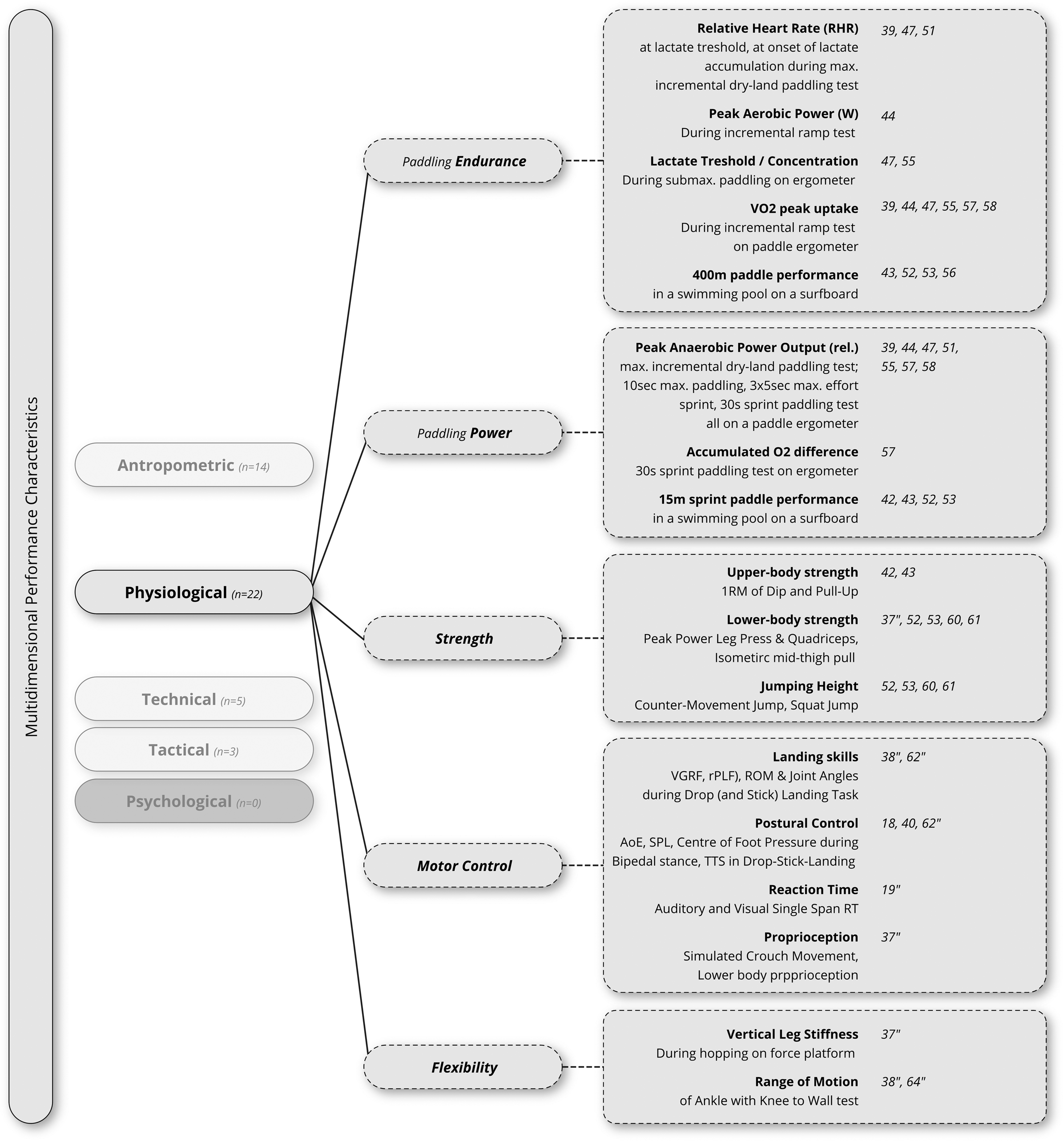
Overview of assessment instruments of physiological measurements in the included studies.
The subcategory of paddling endurance seems to be relevant, when surfers return to the line-up after a long ride or when they adjust their positioning to catch the best waves. Consistently having to compete for a good position in the line-up, surfers may even spend more than half of the total heat time engaging in repeated bouts of high- and low-intensity paddling (i.e., 1–20 seconds), with only short resting periods in between. 54 A good level of paddling endurance has therefore been argued as an important performance characteristic, which can potentially also reduce fatigue hindering surfing performance towards the end of a heat or competition. Several measurement instruments have been used to assess this ability in the included studies in a laboratory setting. Surprisingly, none of the three studies looking at heart rate (relative and maximal) measures, and only one out of six focusing on VO2 max values during an incremental ramp test on a modified paddling ergometer were able to discriminate between surfers of varying abilities. Furness et al., 44 showed VO2 peak uptake and peak aerobic power (W) both were significantly greater in competitive compared to recreational surfers. Other studies with the same comparison could not find similar results. However, two of those were able to distinguish surfers of different ability based on their lactate threshold at 4 mmol/L 55 and lactate concentration during submaximal paddling 47 Interestingly, especially from a practitioner’s point of view, is the strongly cohesive finding that 400 m paddling performance in a pool and on a surfboard can significantly discriminate between competitive and recreational surfers 43 and between elite juniors and control juniors, 52 as well as between selected and non-selected junior national team surfers 53 and between higher level (World CT, World QS and Junior National Team) and lower level surfers. 56
Another important factor in surfing performance might be paddling power, which in competition could make the difference between a surfer catching or missing a crucial wave. Even more so, it may enable surfers to have a faster entry into the wave, which will not only improve positioning and velocity for the wave ride, but also allows them to generally catch larger and more critical waves. All these factors result in an opportunity to achieve higher scores, as they directly translate to key components of the judging criteria (i.e., commitment and degree of difficulty, as well as speed, power, and flow). Hence, paddling power is a potential key performance characteristic in surfing. Relevant measures such as the peak anaerobic power output might be helpful in quantifying this skill. While not all studies agree in results, one can observe a tendency. Absolute peak anaerobic output (W) as measured on a paddle ergometer during a variety of sprint paddle tests showed differences between European level junior surfers and regional junior surfers, 55 as well as between competitive and recreational ones.44,57 No differences were found for the latter group by only one study. 47 Since body mass is a considerable influence on paddling efficiency, the relative peak anaerobic power output could give even more detailed information about a surfer’s paddling power. Two studies found a significant correlation of relative anaerobic power and ranking among pro juniors39,51 and among the top 35 surfers from New Zealand. 58 The only study that found no significant relation between ranking and the relative anaerobic power, found that it could very well discriminate between competitive and recreational surfers. 44 Like for paddle endurance, all studies found cohesive results when assessing paddling power in a setting with higher ecological validity. A 15 m paddling sprint with a surfboard in a swimming pool was able to discriminate significantly between competitive and recreational surfers, 43 senior and junior surfers, 42 elite and non-elite juniors, 52 or even between selected and non-selected junior surfers, 53 with better surfers paddling faster times. As previously indicated, these results suggest that higher paddling power might enable more successful surfers to catch waves deeper on the peak of the wave and with more entry speed. By doing so they increase their scoring potential on a wave, which could lead to more competitive success.
Upper-body strength, which is hypothesized as a potential influence on paddling power as well as on performance of the pop-up during the take-off phase, was only assessed by two studies. Coyne et al. 43 found competitive surfers to be better than recreational surfers in relative dip, but not in relative pull-up strength. Contrastingly, Sheppard et al. 42 found senior surfers to possess greater absolute and relative pull-up strength than youth surfers. The researchers also found a significant relationship between relative pull-up strength (i.e., 1RM pull-up) and sprint paddling performance (i.e., 5 m, 10 m and 15 m times and velocities), which indicates the usefulness of this variable to surfing performance. 42 None of the included studies investigated potential differences in isometric or dynamic push-up strength, which significantly correlated to a quicker pop-up time (i.e., the time it takes a surfer to move from a paddling to a standing position when taking off on a wave) in a later study. 59 A faster pop-up allows a surfer to start riding the wave earlier, thereby maximizing the time in which scoring maneuvers could be performed.
Lower-body strength on the other hand, might have an even more direct influence on competitive status and success in surfing. Being able to apply more force during a turn through greater lower-body strength enables surfers to generate a greater displacement of water, suggesting a more powerful maneuver to judges. 60 One study found significantly higher values of isometric mid-thigh pull strength in elite compared to non-elite juniors, 52 and another higher relative isometric strength in selected compared to non-selected junior surfers. 53 However, the more interesting finding is that performance in counter movement jumps, squat jumps and isometric mid-thigh pull was significantly associated with surfers who performed higher scoring turning maneuvers, 60 which underpins the potential implications for competitive success. However, further associations between measurements of jumping height and competitive level were inconsistent.52,61
In the area of motor control, landing skills and especially postural control appear to be of importance in the sport of surfing. As the athletes move up and down the face of the wave, they must perform a combination of major maneuvers, which they ought to combine with speed, power, and flow in order to get high scores in competitions. 17 Doing so, requires them to consistently remain balanced over the center of their surfboard, absorbing landing forces, even after high aerial maneuvers. Differences in these skills might therefore be expected between surfers of varying performance levels. However, time to stabilization and relative peak landing force during a landing task were only found to differentiate between senior and junior athletes, but not between junior athletes of different competitive levels. 62 Yet, better postural control was suggested in international surfers. 18 Auditory and visual reaction time were also found to be better in superior surfers for both genders. 19 Furthermore, range of motion especially in the ankle has been discussed as important, especially in relation to technical skills and injury prevention. 63 However, the three studies researching the topic come up with contradicting results in relation to differences between skill levels and gender37,38,64
Technical
– The technical skills of surfers (i.e., the execution of maneuvers) are crucial as they directly affect competitive success. Although there are a vast number of maneuver variations with different degrees of difficulty, they can be categorized into three groups: Turns, aerials and tube-rides. 25 Turns represent the most fundamental skill, as surfers ride up to the top of the wave, to then turn their surfboard back down with power and skill in a critical section of the wave, from where they continue their ride. For aerial maneuvers, surfers use speed and timing to launch themselves above the wave, then landing in the face of that same wave to continue or finish their scoring attempt. During a tube-ride surfers position themselves inside the breaking wave, aiming to maximize the time inside the barrel (i.e., airspace under the breaking part of the wave), before successfully emerging from it again. 65 The included five studies focusing on technical aspects of superior surfing, analyzed the different maneuvers in relation to the awarded wave scores (see Figure 5).
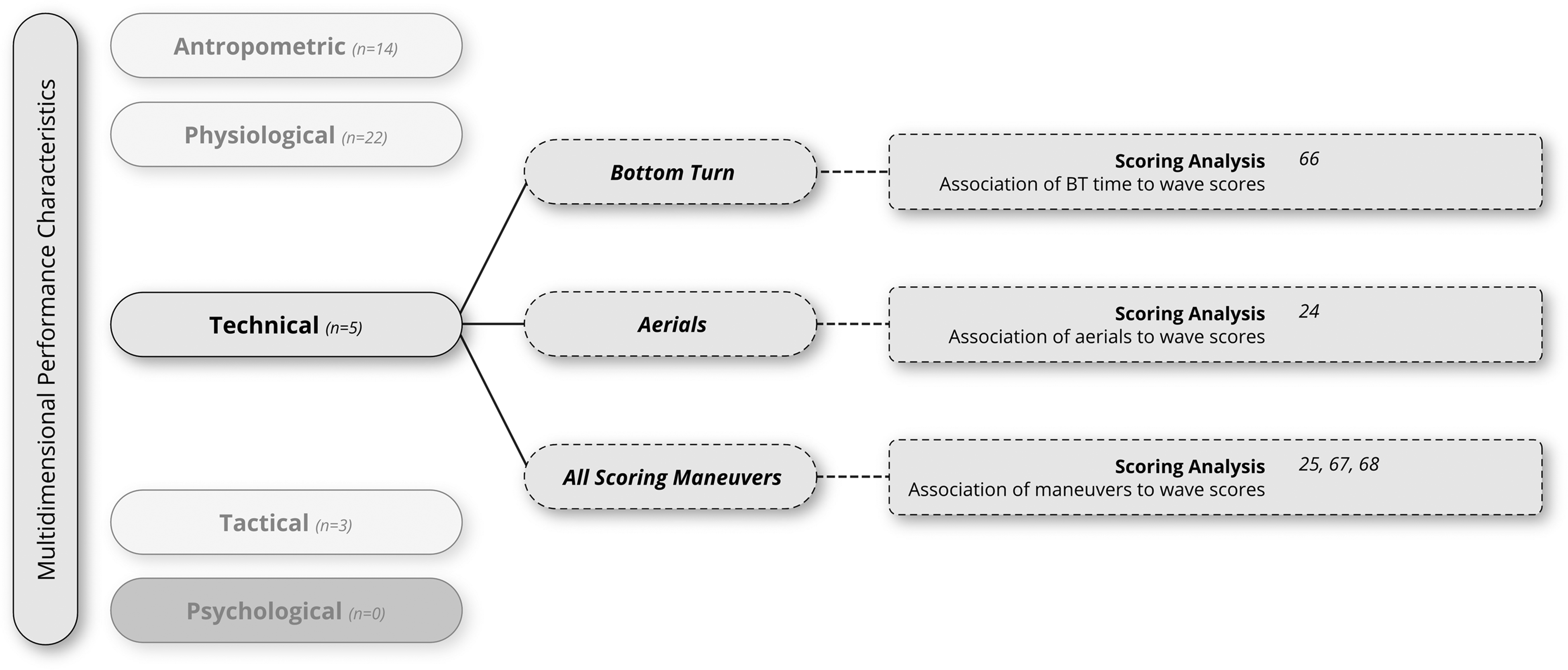
Overview of assessment instruments of technical measurements in the included studies.
Souza et al. 66 found a significant relationship between the time taken for a bottom turn and the awarded scores for the respective wave. In surfing, bottom turns are one of the most fundamental maneuvers as they allow a surfer to transition from going down a wave to going back up again. Although they are not directly scored, they precede and prepare critical maneuvers at the top of the wave. Indeed, in fourteen of the sixteen analyzed heats of selected events of the 2009 and 2010 World Tour, the surfers that stayed longer in the bottom turn, therefore covering more area at the base of the wave, were awarded higher scores for the subsequent maneuvers. 66 Doing so, allowed surfers to carry more speed through the slowest part of a wave into the next section, setting a good foundation for high-scoring maneuvers. Furthermore, a drawn-out bottom turn also creates a more vertical trajectory that enables the surfers to perform a more critical and powerful top turn. For the Brazilian event of the 2010 ASP season Peirão and Santos 67 found significant correlations between wave scores and total frequency of maneuvers, length of ride and variety of maneuvers among other variables. Interestingly between the 2007 and 2010 season, the number of aerial maneuvers increased from four to twenty-six in the event, 67 a trend that emphasizes the growing importance of these type of maneuvers over the last two decades. This is also confirmed by the number of attempted aerials throughout the WCT season, which increased from 711 in 2014, to 782 in 2015 and to 792 in 2016. 24
Aerials are seemingly important maneuvers for competitive success in surfing. For example, during the 2015 WCT it was found that waves that included at least one completed aerial maneuver were scored 1.9 points higher than those that only consisted of turns. 68 Ferrier et al. 24 further support those results, in that waves with an aerial maneuver were scored significantly higher than waves without one throughout the 2014,2015 and 2016 WCT season. Tube rides, which are another key maneuver in surfing, were scored 0.8 points higher compared to waves with turns only, in the 2015 WCT season. 68 The same tendency of scoring (i.e., aerials > tube rides > turns) was observed for all final heats (i.e., quarterfinals, semifinals, finals) in the 2014 WCT season. 25 Important to note is that Forsyth et al. 68 found a main effect not only for maneuver type but also for event location, and therefore the type of wave. Furthermore, the completion rate of high-scoring maneuvers (aerials=∼45-55%; tube rides=∼60%) was found to be much lower than for low-scoring maneuvers (turns=∼90%) throughout the competitive seasons.25,68
Tactical
– A total of only three studies focused on tactical components (see Figure 6). For one, Furley and Dörr 20 investigated wave selection skills, which is an important part of a surfer’s competitive strategy. Throughout each heat surfers can obtain the so-called priority, which is the unconditional right to choose any wave. 17 Only when the surfer with priority exercises this right, is the priority passed on to the next surfer. Therefore, being able to identify the best waves, promises surfers a competitive edge over their opponents, as they can ride the waves with the highest scoring potential while the others cannot. Hence, wave selection seems to be essential to competitive success. When comparing surfers of varying expertise, Furley and Dörr 20 indeed found that the participants’ decision making was significantly improved with increased experience. Expert surfers were better at deciding which waves were surfable, and more importantly which ones were not.
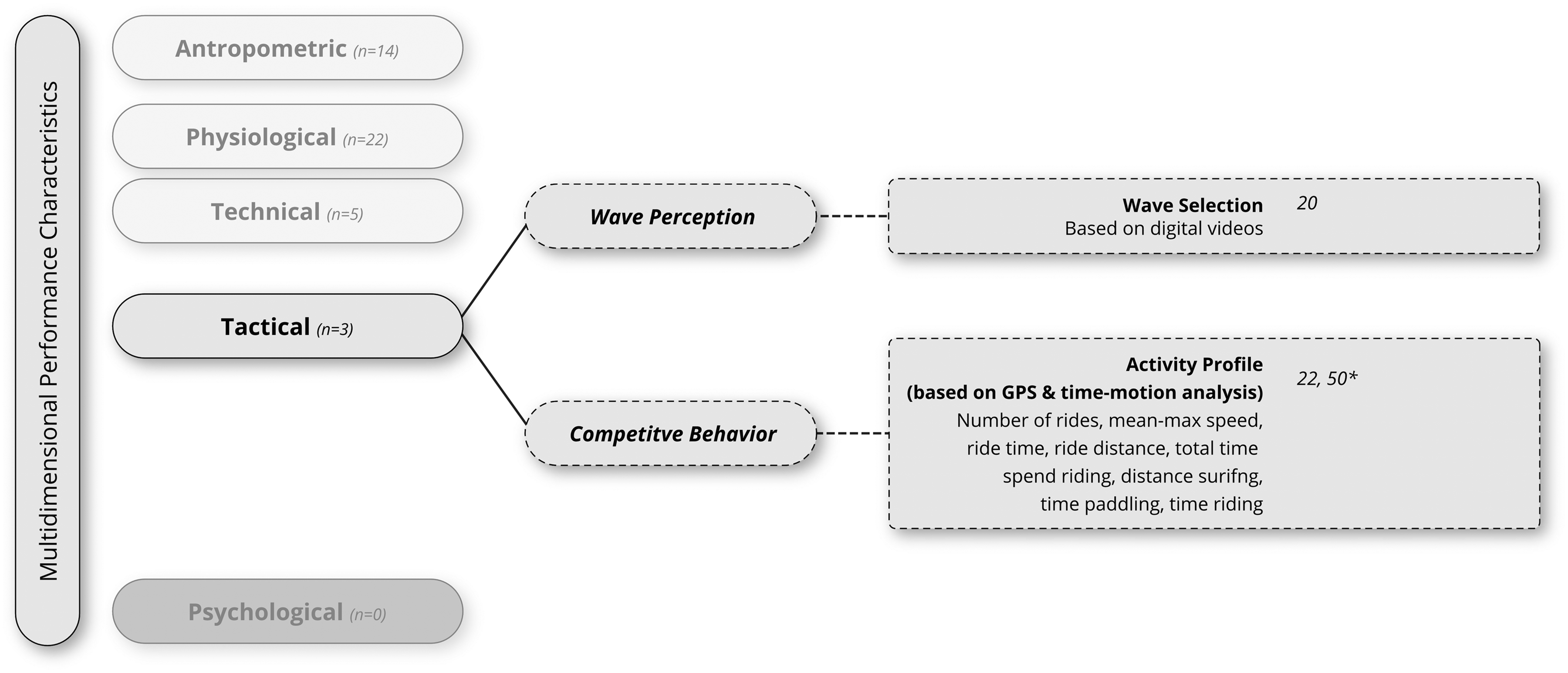
Overview of assessment instruments of tactical measurements in the included studies.
Another way of getting information about surfers’ decisions on wave selection and competitive behavior is through their activity profile. While in most cases such information would qualify as a physiological measure, it can also be rated as a tactical instrument that gives great insight into a surfer’s choice of heat strategy. The athletes’ activity profiles might for example reveal whether they were riding as many waves as possible or being very selective. When analyzing the competitive strategies of female surfers, Barlow et al. 50 used Global Positioning System (GPS) tracking to find that a variety of variables, such as total time spend riding and total distance surfing and most importantly the total number of rides were significantly correlated with heat placement. The more time a surfer spent sitting the poorer her heat placements was. The results of this study suggested that higher activity, which in this case qualifies as a tactical choice, during a heat can lead to competitive success. However, as suggested by Farley et al. 22 the interpretation of GPS data alone is limited, for example because the momentum which is generated during a fall might be recorded as the generated speed on a wave. Therefore, GPS data should always be synchronized with data obtained through additional video recordings (i.e., time-motion analysis), as was done by the second included study focusing on differences in the activity profile of heat winners and losers. Farley et al. 22 found that surfers who won their heat (i.e., by placing 1st or 2nd in a heat of four) surfed waves for longer and at higher speeds than those who lost (i.e., by placing 3rd or 4th in a heat of four), in two of three event locations. While higher speed and longer wave rides might indicate better wave selection, it also enables surfers to maximize the scoring potential of a wave by surfing with more speed, power, and flow (i.e., one of the outlined judging criteria). 22
Discussion
The results of this systematic review provide an overview of performance characteristics that discriminate between differently skilled surfers. It also applied the GSTM model to categorize findings, to point out gaps in the literature and direct future research. It is unsurprising that most studies have a strong focus on anthropometric and physiological characteristics. For one, higher relative arm span emerges as a potential influence on surf performance. In theory it allows a surfer to move greater amounts of water per stroke and therefore paddle more efficiently, especially when paired with appropriate levels of physical fitness. The importance of arm span to performance, as well as the correlation to both, VO2 peak uptake and anaerobic power, has also been reported in free-style swimming,69,70 a sport that has some important similarities to paddling in surfing. As previously outlined, these factors might contribute to a surfer being able to have a faster entry into the wave and catching them closer to the peak in a more critical section, which can positively influence the scoring potential of a wave. While these findings still need further investigation, relative arm span might be a performance indicator that can be used for talent identification in surfing. However, as with most anthropometric measurements these variables should be seen as performance facilitators rather than determinators.
Considering the increasing homogeneity in anthropometric measures towards elite-sports it is not surprising that somatotype did not show a correlation to ranking position of competitive male 51 and female 50 surfers. However, the finding that professional surfers were more mesomorphic than intermediate level surfers, 41 might allow to see a tendency that somatotype could be a measurement that discriminates between elite and non-elite surfers, but not between ability within a homogeneously high-performing group of athletes. Still, it might be postulated that a more mesomorphic and less endomorphic somatotype is beneficial to surfing performance but might not be a determining variable for talent identification. The same tendency holds true for lean mass and body fat in surfers. Coyne et al., 43 p.5 for one suggested that “there is a threshold weight for fat-free mass above which performance enhancements will be hampered. Even if the athlete is very lean” paddling performance might decrease due to the added weight. Similarly, Furness et al. 44 have suggested that not only from a physical but also from an energetical stand-point an extremely low body fat level might not enhance performance in surfing. Therefore, body-fat levels should be within a certain range (e.g., 10.5-22% for male and females based on literature analysis by Furness et al. 44 ) but not too high or low.
As in most sports, physiological characteristics of an athlete also play a key role in performance and research of surfing. Yet, across the included studies experimental measurements in those areas were widely inconsistent. One could argue that due to the variety of different set-ups and the novelty of such methods in surfing research, the variable itself might still be relevant as a performance indicator, however the methods would need to be optimized in further research. This also applies to the already promising laboratory measurements such as lactate threshold at 4 mmol/L, 55 and blood lactate concentration during submaximal paddling 47 to assess paddling endurance, as well as for the variable of peak anaerobic power output, which might be a good indicator of a surfer’s paddling power.
However, based on the presented findings the most valid measures of paddling power and paddling endurance seems to be the 15 m and 400 m paddling performance in a pool. When discussing the differences between laboratory and in-water settings, Tran et al. 53 for example concluded that “it may be that in-water time trials, rather than dry-land ergometer methods, are required to elucidate truly relevant performance difference in paddling for surfers”. This statement also indicates the variety of influences that affect the paddling performance in-water might get lost on a swim-ergometer, such as pulling technique or hand placement during the stroke. In that matter, while a surfer usually pulls their body over the water surface, during ergometer testing they remain stationary and imitate a movement of pulling the water surface towards them. 56 These remarks point to the fact that in-water testing might show higher ecological validity, a point that should be considered when selecting instruments to identify talents. 71 Therefore, it might be concluded that when assessing aerobic capabilities in surfers, rather than an incremental ramp test with VO2 peak uptake measures, a 400 m endurance paddle test should be conducted by practitioners. Furthermore, it might be advisable that a 15 m sprint paddle test, with additional split times at 5 m and 10 m, can reliably assess paddling power in surfing athletes.
As outlined before, paddling skills are mainly important to bring a surfer in position to achieve competitive success. Points are scored while riding the wave, not paddling on it. For this most crucial part of a competition an athlete’s lower-body strength might be a key-factor. Secomb et al. 60 have indicated that peak force in the counter movement jump, squat jump and isometric mid-thigh pull are strongly associated with the ranking of scores for turning maneuvers. The finding that those measures were also elevated in superior surfers in other studies52,62 make a strong case for lower-body strength as a key indicator of competitive success in surfing. As previously outlined, greater lower-body strength might complement technical skills in turn-oriented surfing by generating greater displacement of water, therefore suggesting more powerful maneuvers to the judges.
Furthermore, only few studies have assessed landing skills and postural ability in surfers, with mixed results. Time to stabilization and relative peak landing force during a drop and stick landing task might be an indicator of how well athletes are able to connect major maneuvers on a wave. 62 In combination with lower-body strength (i.e., isometric midthigh-pull) and other physical factors, they have also been used to indicate the risk of lower-body injuries in surfing athletes. 72 However, the ecological validity of those measurements should be addressed in future research, especially considering the speed and complexity of the maneuvers that are performed in the critical sections of a wave. Forsyth et al. 73 have recently pointed to a method of how simulated aerial maneuvers on land can replicate the critical features of aerials in the ocean. Such approach might be a more promising assessment method, as important aspects of the criterion movement (i.e., aerial) are included. Being able to assess surfers’ ability to perform aerials safely and at a high completion rate could be valuable to talent identification and development. While traditionally turns and tube-rides used to be the key-elements of successful wave-riding, aerials are now the highest-scoring maneuvers for competitive surfers.24,25 Apart from tube-rides, aerials tend to be the only possibility for a surfer to receive a perfect 10 score for a wave, based on a single maneuver, 25 which makes them very desirable in conditions that do not afford a high number of maneuvers. However, as the completion rate for aerials is much lower than for turns, it might be argued that their utility does not only depend on the ability to perform them, but also on strategically calculating the necessity of this high-risk high-reward maneuver.
Despite the significant influence of aerials on heat scores, superior surfers should be well-versed in all technical aspects of surfing. Especially, since different event locations afford different maneuvers. 68 A location-dependency is often reflected in the event-specific scoring criteria outlined by the judges. 17 Therefore, all major maneuvers (i.e., aerials, tube rides, and turns) should be well developed in surfing athletes. This is also relevant for the tactical skills of a surfer, as certain situations might require a variety of lower scoring but highly completable maneuvers. For example, if only a low score is needed to win in the last moments of a heat. However, reliable indicators of those technical abilities are not yet known. A drawn out and extended bottom turn might be one criterion to assess surfers for. This technique is associated with higher scoring turns, 66 as the generated speed and trajectory allows for greater water displacement in turn-focused surfing. Yet, bottom turns become less relevant in tube riding and aerials, where speed and timing are of more importance.
Not only the performance of quality maneuvers influences competitive success, but also the selection of the right waves. Granted, better surfers seem to be busier during competition, trying to catch more waves than their competition. 50 However, they also tend to be better at assessing approaching waves and knowing when to take a wave. Interestingly, as pointed out by Furley and Dörr 20 experienced surfers made significantly better decisions than their less-experienced peers on waves that were unsurfable. This might be a crucial finding in itself, as during heats only the surfer with the “priority right” gets to choose freely which waves they want to surf. Wasting this priority right on a wave with low-scoring potential, could have strong implications for the outcome of a heat. Therefore, assessing wave perception and selection skills in surfers seems important. While both skills will arguably improve with increasing surfing experience, standardized test could be developed through further research, ultimately helping practitioners to assess these skills in talented surfers.
Lastly, although interest in domain-specific research has grown over the last two decades, one area of surfing has not been a focus of recent studies. Based on the categorization through the GSTM and to the best of our knowledge, no study has researched psychological variables in relation to differences in skill-level or competitive success in surfing. Especially when looking at how competitive situations unfold, with time and environmental constrains mixing in a unique way, it will be interesting to see if surfers of different levels can also be discriminated based on these abilities. Especially self-regulatory skills and coping under pressure should be of interest, since surfers consistently must deal with a variety of external influences and an unstable competitive environment.74,75 It is therefore encouraged that future research also focuses on the psychological aspects of high-performance surfing.
Practical implications
The presented results of this review also have practical implications for surf coaches and associations aiming to improve their talent programs. As previously outlined, a few methods have been found to discriminate between differently skilled surfers throughout the literature. The different measures seem to be relevant for specific phases of what can be considered the surfing cycle (See Figure 7). Unlike previous literature 16 we suggest a four-phased cycle (instead of three), as a differentiation between the take-off phase and the wave ride seems helpful when assigning the performance indicators.
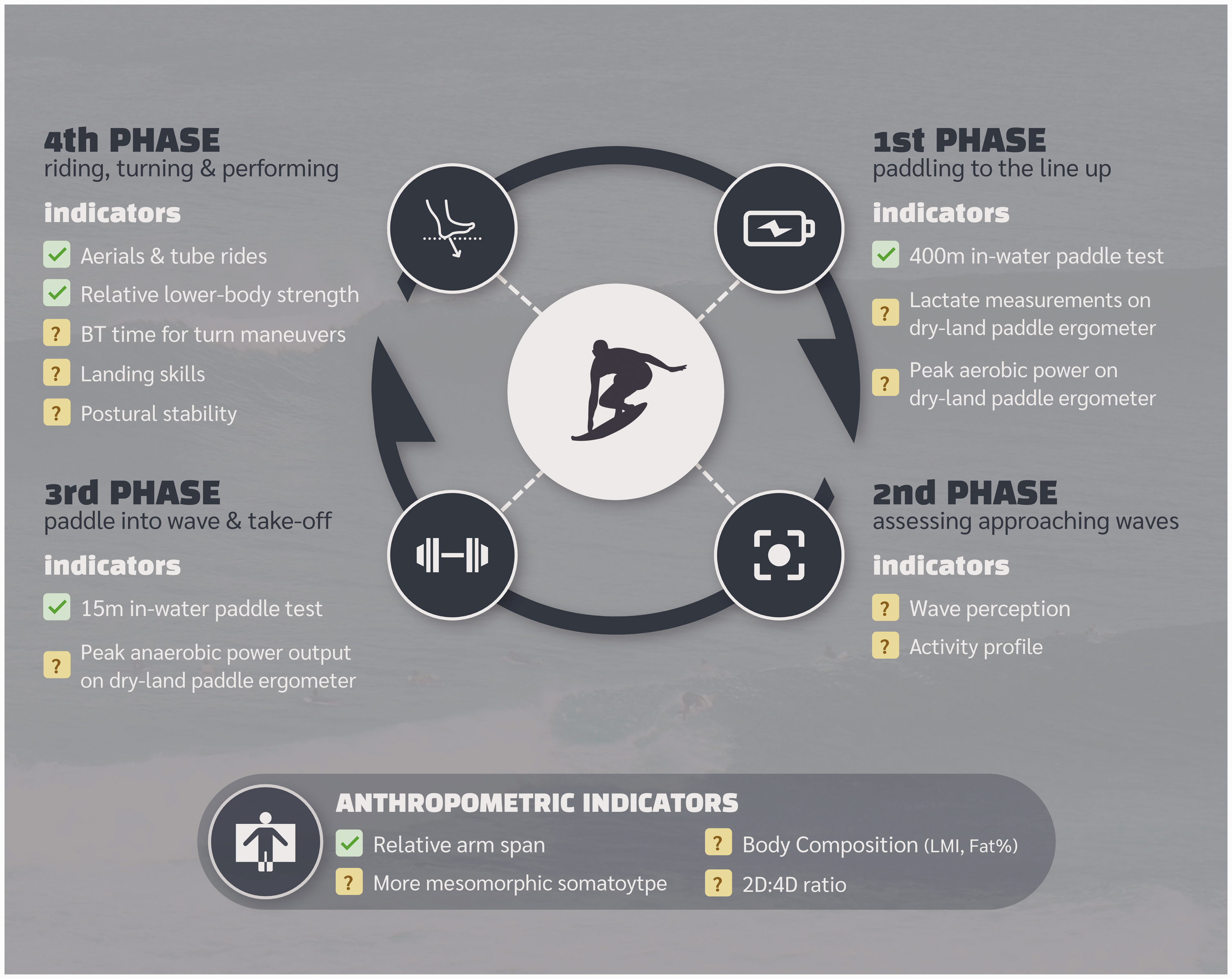
Suggested performance indicators based on included studies for the four phases of a surfing cycle.
It may be added that this suggested model is only based on the existing literature and does not claim to be definitive. Arguably there are a variety of factors that are not included yet, such as cognitive ability in assessing the affordances of a wave, which could help to maximize the scoring potential of a given wave. Or psychological components such as self-regulation and intrinsic motivation, which have been discussed as an influence on competitive success in other sports. 74 Therefore, it might be plausible that the same applies to surfing. It is also suggested by the literature that visual-attentional and tactical strategies could greatly influence competitive performance in surfing. 37 Existing or newly found indicators may be adjusted in the model over time.
Limitations
This review also comes with a few limitations. For one, the systematic search for only English databases might have limited the findings. Brazil and Portugal are two countries with active researchers in the field of surfing. It is possible, that relevant literature in the Portuguese language could have contributed to this review. Secondly, by excluding articles that were published earlier than the year 2000, the long-term development of performance indicators in surfing might have been underrepresented. However, it was found to be more important to present a comprehensive review on performance characteristics of modern shortboard surfing.
Conclusion
The findings of this systematic reveal that a few reliable performance indicators could be used for talent identification in surfing. Instruments that keep essential constraints of surfing, such as an in-water paddle endurance (i.e., 400 m) and paddle power (i.e., 15 m) tests show good discriminative power between differently skilled surfers in a variety of studies. Further characteristics of superior surfing performance include the technical ability to perform aerials and tube-riding, among others. While already few indicators for high-performance surfing are known, future research needs to focus on finding reliable and mainly ecologically valid methods to assess these skills. Future research should also focus on the inclusion of female participants and psychological measurements. Both have been widely neglected in current literature.
Key points
Superior surfers show better performance in 15 m and 400 m in-water paddling tests, and a tendency for a longer relative arm span. Upper-body (i.e., relative pull-up strength) and lower-body strength measurements (i.e., isometric mid-thigh pull) may also discriminate better performance in surfing. The ability to perform aerials and tube-rides is directly related to competitive success. Future research should focus on the inclusion of female surfers, as well as developing reliable instruments with high ecological validity for, amongst other, psychological performance characteristics.
Supplemental Material
sj-pdf-1-spo-10.1177_17479541211042108 - Supplemental material for Riding to the top – A systematic review on multidimensional performance indicators in surfing
Supplemental material, sj-pdf-1-spo-10.1177_17479541211042108 for Riding to the top – A systematic review on multidimensional performance indicators in surfing by Fabian C Klingner, Florian P Klingner and Marije T Elferink-Gemser in International Journal of Sports Science & Coaching
Footnotes
Declaration of Conflicting Interests
The author(s) declared no potential conflicts of interest with respect to the research, authorship, and/or publication of this article.
Funding
The author(s) received no financial support for the research, authorship, and/or publication of this article.

References
Supplementary Material
Please find the following supplemental material available below.
For Open Access articles published under a Creative Commons License, all supplemental material carries the same license as the article it is associated with.
For non-Open Access articles published, all supplemental material carries a non-exclusive license, and permission requests for re-use of supplemental material or any part of supplemental material shall be sent directly to the copyright owner as specified in the copyright notice associated with the article.
