




Abstract
Maturation-related changes in body dimensions and performance can lead to physical mismatches and drop out from youth sport. Here, we propose a new method termed ‘discreet performance banding’ (DPB). We aimed to determine if dividing youths by actual physical performance of a discreet skill or ability (‘change or direction’ [COD] ability) could discriminate between the most and least skilled players better than a marker of implied performance, such as an assessment of biological maturation. 182 male academy Spanish soccer players (age: 13-18 years height: 143 to 188 cm; mass: 32.3 to 81.4 kg) were divided into maturation groups (Tanner stages 2 through 5) and COD groups (‘fast’, ‘intermediate’ and ‘slow’). Players’ skills (passing, shooting, ball control) were evaluated on a six-point scale with a value of ‘1’ considered ‘very bad’ and a value of ‘6’ as ‘very good’. When divided by maturity status, analyses revealed no significant differences between groups in soccer skill. However, when divided into COD groups, the analyses revealed significant differences between the fast and intermediate players ([p < 0.001] favouring the fast group) and between the intermediate and slow players ([p < 0.026] favouring the slow group). There was no significant difference in skill between the fast and slow groups, though the fast group demonstrated a higher skill level as indicated by a small effect size. Fast players were more skilful than both the intermediate and slower players, indicating that COD status can be a differentiating factor between players of different skill levels. DPB could be used to equalise competition in youth sport and to enhance the overall level of enjoyment that youths derive from engagement in sport.
Introduction
In youth sport, the transition from adolescence to adulthood can be difficult with substantial bodily change, such as growth in stature (1) and increases in lean mass (2), resulting in potential increases and decreases in physical performance at specific junctures throughout the developmental years (1,3–5). The maturational processes that underpin these changes are highly variable across individuals with youth athletes who mature earlier than their peers potentially experiencing a competitive advantage due to superior size and physical performance (6). This can ultimately result in the deselection of later-maturing athletes before they have a chance to realise the full extent of their athletic potential and could cause psychological harm and drop-out from sport in the worst cases (6).
To address the above described issue, recent literature has focused on the enhancement of enjoyment, competitive equity and safety with a view to sustaining a young person’s engagement in physical activity through positive experiences in sport (7,8). Concepts such as ‘competitive engineering’ involve the manipulation of game rules to underpin motivation and engagement whilst also helping to ensure that sporting activity is developmentally appropriate (7). Another emerging method of fostering competitive equity in youth sport is the practice of bio-banding which involves the allocation of youth athletes to groups based on their level of biological maturation and physical development (8) or, indeed, their relative age within a given year group in sport (9). Such a practice is considered appropriate given the well-documented mismatches in body size that can occur in youth sport (10) and their resultant implications which can include physical injury (11), drop out (12) from sport, greater difficulty in achieving selection to talent pathways (13) and the negative misjudgement of one’s own personal skill level (14).
While bio-banding might be an effective method with which to suppress the potentially deleterious effect of mismatched body sizes on competitive equity within youth sport, it might not necessarily account for differences in physical performance which can exist independently of weight or stature (15). Moreover, the use of psychology training has also been suggested in light of the fact that bio-banding does not account for psychosocial differences between delineated maturity groups (16). Accordingly, while smaller players might be physically outmatched by larger opponents, this does not necessarily mean they are of lesser ability and this may be even more applicable in sports, such as soccer or basketball, in which forceful collisions are not a primary component of competitive play. Indeed, mismatches in these sports may be characterised more by technical skill or agility than they are by the differentials in physical size that can occur in a sport such as rugby. This is an important distinction to make given recent evidence which suggests that heavy collision youth sports such as rugby, ice hockey and American football had far higher incidences of concussion than sports such as soccer, basketball and field hockey (17). This is further supported by evidence in Australian youth rugby players which demonstrated that the physical size of an individual did not necessarily predict better performance (15). Similarly a recent study in Portuguese basketball players found that despite early-maturing players being taller and heavier than their average maturing counterparts in the U16 national basketball team, the latter group displayed superior technical performance in scoring more points and providing more assists during the national and European championships (18).
Because size differences between players do not necessarily represent performance differences (15,18), and because the demands of various different sports place emphasis on a diversity of physical attributes, the practice of bio-banding could be complemented by alternative methods to broaden youths’ experience in sport and to diversify the challenges with which they are presented in training and competitive play. For example, in a training exercise, the division of youth soccer players based on their level of speed and agility could prevent those players who are fastest and most agile demonstrating overdependence on these particular attributes for success, encouraging them to call on their technical skills to solve the on-field challenges with which they are presented. Conversely, those players who are slower and less agile could be given the opportunity to demonstrate their technical skill against similarly-endowed peers, temporarily free from the fear of being outshone purely on physical attributes, as opposed to technical ability. In this work, we propose a new method which we term ‘discreet performance banding’ (DPB) which is based on dividing youths by their actual performance of a discreet, but specific and important, skill or ability that is relevant to their sport. This is preferred to a marker of implied performance such as an assessment of biological maturation. Like bio-banding, this could help to minimise mismatches in youth sport and foster a developmental environment that maximises opportunities for achieving success in sport. In this study in youth soccer players, we hypothesised that a discreet performance variable, in this case a derivative of agility (change of direction [COD] ability), would be more reflective of technical skill in that sport and would therefore serve as a sound basis for the introduction of this new method. To this end, we posed the research question “is DPB superior to bio-banding as a way to discriminate technical skills in male adolescent soccer players?”
Methods
Participants
The sample comprised of 182 male soccer players playing at the infantil (12 and 13 year olds [n = 64]), cadete (14 and 15 year olds [n = 64]) and juvenil (16, 17 and 18 year olds [n = 54]) age grades in two professional first division soccer clubs in Madrid, Spain. All teams completed training sessions, of approximately 90 minutes duration, three times per week and played one competitive match on weekends. The study was approved by the university ethics committee and the associated clubs. Participants and their parents provided written assent and consent to take part. The players were also informed that participation was voluntary and that they could withdraw from the study at any time.
Protocol
All data were collected by qualified fitness trainers. They comprised anthropometric characteristics (stature and mass), functional fitness capacities and a technical soccer skills inventory completed by trainers. The battery of variables is included amongst components for predicting “soccer talent” (Williams & Reilly, 2000). Height and body mass were collected by a single observer following the protocol of the Spanish Group of Kinanthropometry (Spanish Federation of Sports Medicine), as stated in its Body Composition Assessment in Sports Medicine Statement (19). Change of direction ability was assessed with Barrow’s “Zig-Zag” running test (20) using timing gates (Brower Timing Systems, Draper, Utah, United States) situated at the start and end points of the course. The protocol for this test has been used and described elsewhere (21) and is displayed in Figure 1. This test has been found to be reliable (ICC = 0.94, CV = 0.9) in Spanish soccer players of a similar age to those in the current analysis (21). Two trials were performed with at least three minutes of rest in between each with the better result retained for analysis. Time was measured to the nearest 0.01 s. We chose this test on the basis that the qualities required for successful COD performance, such as muscular strength, power and speed (22), are specifically reflective of those also required for successful soccer performance (23). In this way, we believed this test to be a suitable proxy measure of player skill and, thus, an accurate way for coaches to create banded groups for the purposes of training or competitive play. The facility of such a test to discriminate between higher and lower level athletes has been substantiated in multiple previous research studies (24–26).
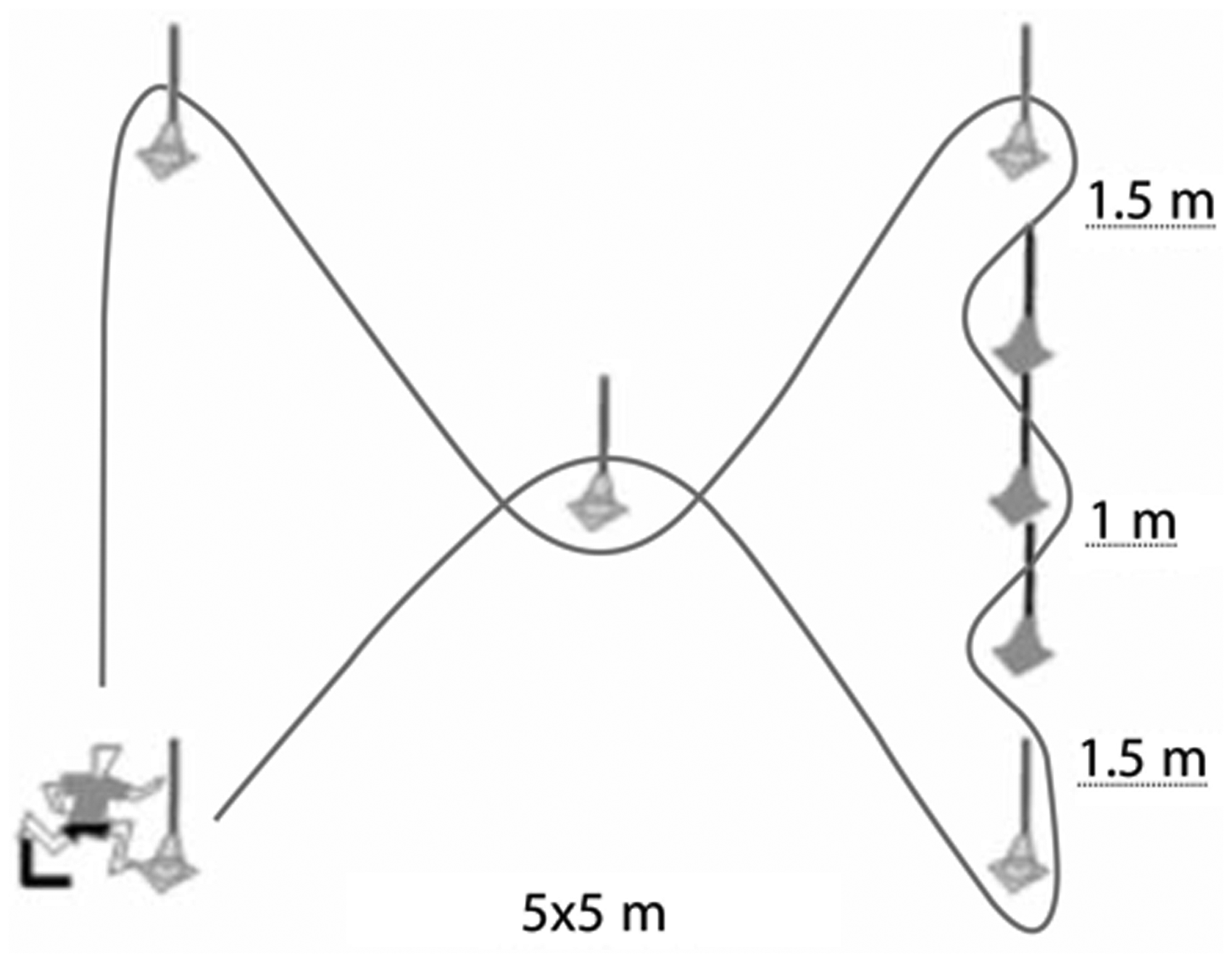
The Barrow test.
The abilities of players were assessed with a battery of skills that included the primary technical soccer skills of shooting, passing and ball control. Each player was evaluated at the end of the soccer season. The evaluated skills were chosen on the basis of their importance for soccer performance as in previous investigations (27,28). Qualified soccer coaches, all of whom were accredited by the Real Federación Española de Fútbol, evaluated the players on a six-point scale with a scoring system in which a value of ‘1’ was considered ‘very bad’ and a value of ‘6’ was classified as ‘very good’. Players were rated by coaches using a standardised paper form with an ‘X’ placed next to the score that best reflected the player’s ability in a given area. A similar method, using a visual analogue scale to evaluate youth talent, has previously been used in soccer and other sports, and is considered valid (29). The use of this type of evaluation was justified on pragmatic grounds given that coaches were able to assess the players based on their actual performance in training and competition. Goalkeepers were not included in the analysis because of the specialist skills associated with their position. Players’ abilities for shooting (left and right), passing (short, medium and long) and ball control (ball skill and reception control) were rated with the individual scores for each forming a composite averaged score for each primary skill (30). Following this, the mean score for each primary skill was converted to a z-score which was summed to form a score for total ability (31).
The formation of the bio-banded and performance-banded groups (displayed in Figures 2 and 3) in this study was rationalised on the basis of a commonly used measure of pubertal development in youths (32), and the practical nature of training in youth soccer respectively. Self-assessed Tanner stages of pubic hair development were reported using pictures from Tanner et al. (33). This method describes the nature, initiation and progression of pubertal development in boys through an assessment of genital development and/or pubic hair growth (32). The procedure to assess maturity status was overseen by two researchers after we received parental consent and participant assent. The self-assessment was completed at the soccer club under the supervision of two researchers, and one of the player’s parents, or guardian, was present at all times. The utilised scale is often used alongside, or instead of, the Khamis-Roche method of maturity assessment with which it shares a good level of agreement as outlined in a table of equivalence by Cumming et al. (8). It allocates youths into one of five different stages of maturity based on pubic hair development with stage 1 being approximately equivalent to <85% of predicted adult height (PAH), stage 2 to 85 to 90% of PAH, stage 3 to 90 to 95% of PAH, and stages 4 and 5 to 95 to 100% of PAH (8). The current study included players from pubic hair stages two through five. The COD groups were divided into tertiles corresponding to ‘fast’, intermediate’ and ‘slow’ classifications based on performance in the above described COD test. We preferred these classifications over the use of normative values because the boundaries of capability of any group of youth athletes are unique to that group and are therefore determined by the fastest and slowest individuals within it. We also intended to create three equally-sized groups but also needed to ensure that no two individuals with identical performance times were allocated to different groups; hence the minor inequality in allocation. The groups were formed on the basis that many youth teams will typically have 25 to 30 player squads which could conveniently be divided into three groups of eight or ten individuals to facilitate 4 vs. 4 or 5 vs. 5 player small sided games that would be suitable in for the use of DPB.
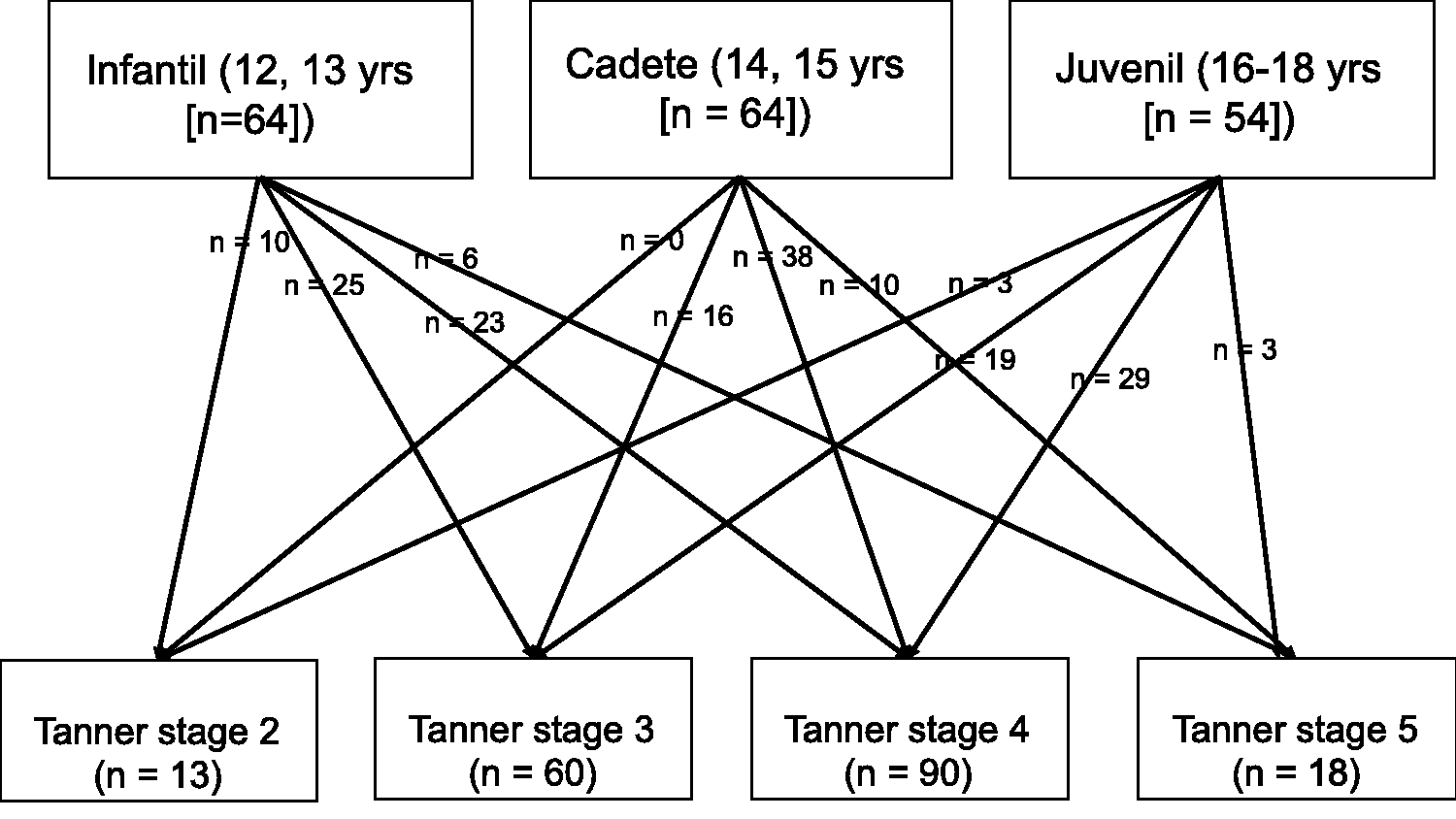
Allocation of participants to maturation groups.
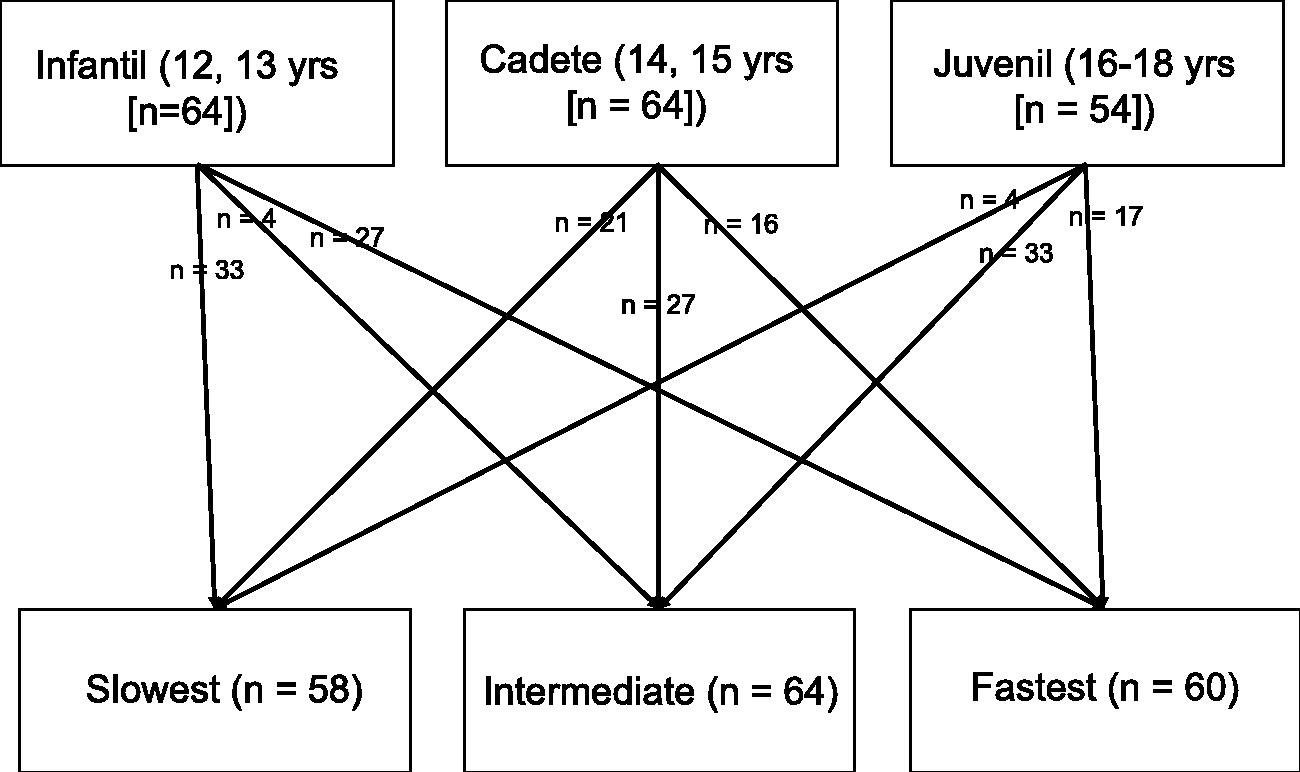
Allocation of participants to COD groups.
Statistical analysis
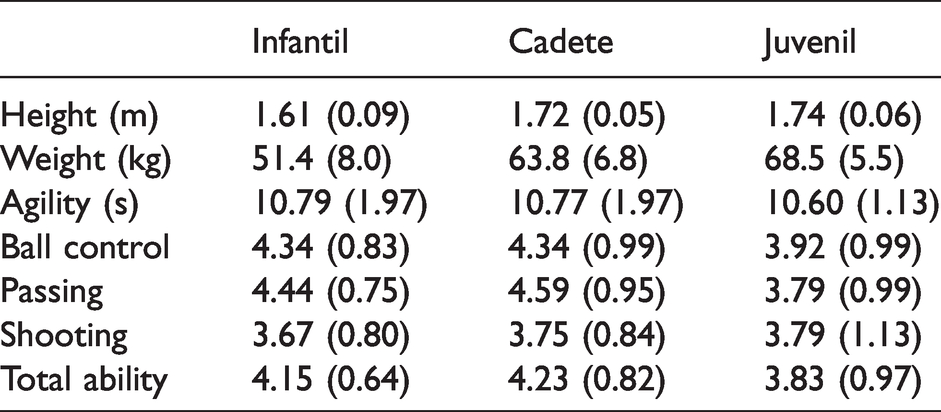
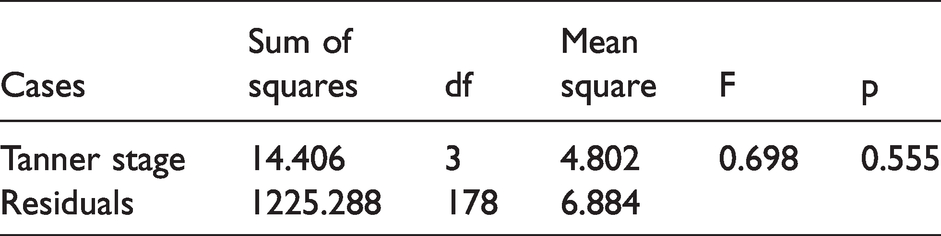
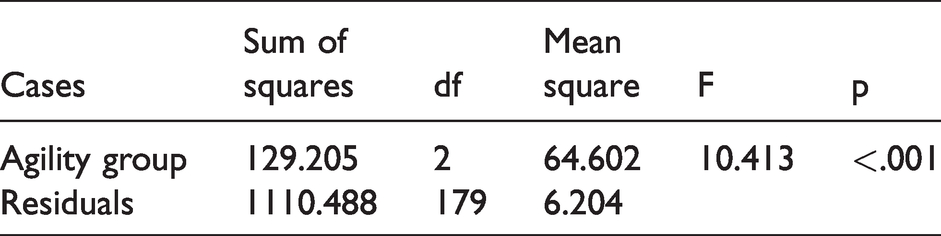
One-way analysis of variance (ANOVA) was used to compare differences between player groups when divided by maturity status (Tanner stage) and COD performance (fastest, intermediate, slowest). The level of statistical significance was set at α = 0.05. Tukey’s post-hoc test was utilised to identify the specific differences between groups and the sizes of these differences were measured with Cohen’s d effect size. The calculated effect sizes were interpreted using the conventions outlined for standardised mean difference by Hopkins et al. (34) (<0.2 = trivial; 0.2-0.6 = small, 0.6-1.2 = moderate, 1.2-2.0 = large, 2.0-4.0 = very large, >4.0 = extremely large). All statistical analyses were performed in the JASP 0.14.1 software package (35) (Table 1).
Descriptive statistics for each group by age.
Results
The results of our analyses are displayed in Tables 2, 3 and 4. When the sample was divided into maturity groups, there was no significant differences between these groups in soccer skill. When divided into COD groups, the ANOVA revealed significant differences (p < 0.001) with Tukey’s multiple comparison indicating that these were between the fast and intermediate players ([p < 0.001] favouring the fast group) and between the intermediate and slow players ([p < 0.026] favouring the slow group). There was no significant difference in skill between the fast and slow groups, though the fast group demonstrated a higher skill level as indicated by a small effect size.
Analysis of variance of total ability for each group by maturity group.
Analysis of variance of total ability for each group by COD group.
Post-hoc analysis for total ability for each group by agility group.

Discussion
The purpose of this preliminary study was to determine if DPB could serve as a viable way in which to divide young, talented soccer players by a discreet variable of physical performance in a similar way to how the practice of bio-banding allocates players to groups based on common biological maturation status. In doing this, we posed the research question “is DPB superior to bio-banding as a way to discriminate technical skills in male adolescent soccer players?” The purpose of such practices is to diversify players’ experience in sport, exposing them to new and different challenges and creating additional opportunities for talent selection in reducing mismatches in physical size and performance. Dividing players into groups based on COD performance, classified as ‘fast’, ‘intermediate’ and ‘slow’, we hypothesised that group membership would be reflective of technical soccer skill with the most agile players (fast) displaying greater technical skill than the intermediate and less agile (slow) players. We hypothesised this on the basis that tests of COD ability call on many of the same trainable physical and perceptual qualities that sport demands of an athlete (22). In this way, such a test is reflective of many of the demands of soccer and could serve as a discreet proxy of overall ability that coaches could use to allocate players to banded groups within training sessions, without alienating any single individual based on a perception of talent (36). In evaluating these results, we posited that DPB could serve as an alternative, or complementary, method to bio-banding which could expose players to a diversity of different challenges in soccer and encourage them to call on a range of skills and attributes to negotiate the on-field challenges with which they are presented.
The results of this analysis partially support our hypothesis in that the faster players were, indeed, more skilful than both the intermediate and slower players, indicating that COD status can be a differentiating factor between players of different skill levels. In demonstrating the heterogeneity between these groups, we have, by extension, demonstrated the homogeneity within them, thus helping to reduce the potential for mismatches when such banded groups are used in training or competition. In contrast to this, when grouped by maturation status, the different groups remained heterogenous within and, therefore, homogenous between. This seems to demonstrate that when divided by biological maturity status, there were no skill differences between the groups, indicating that physical- or skill-based mismatches would be unlikely to be reduced with the use of the bio-banding method, based on this particular sample. On the other hand, it was interesting to note that despite there being a significant difference in skill between the slower players and the intermediate players in our sample, this differential was in favour of the former group which was significantly more skilled than its intermediately faster counterparts. This holds clear implications for the selection of talent within academy systems as it can be observed that an overemphasis on using fitness testing performances to determine future potential is a flawed approach that fails to account for technical skill differences between players, regardless of physical attributes.
There are several reasons as to why this pattern of results transpired. Firstly, based on our results, we can conclude that COD performance could be a useful way for coaches to band players and to diversify their sporting experiences through temporarily restructured playing activity. Similar results have been found in previous research with Gissis et al. (23) reporting that elite youth soccer players demonstrated greater all round physical performance than their less skilled counterparts (sub-elite and recreational), as measured by isometric strength, vertical jump ability and 10 m sprint speed. Gissis et al. (23) did suggest that these observed differences between skilled and less skilled players could have been due to differences in the amount of chronic systematic training undertaken by each of the groups in their study and, indeed, this is a plausible assertion. However, given that the players in our sample were all members of an elite academy, and undertook a similar load of training on a weekly basis, such a conclusion is less applicable to the current study.
The parallel finding that the slower players were more skilful than the intermediate players in this sample was an unexpected finding that may be explained by previous work relating to the relative age effect in youth sport (37). In a series of studies on this topic, Schorer et al. (37) observed a counter-trend to the well documented overrepresentation of individuals born in the earlier part of the calendar year in various groups of different athletes (9). These authors suggested that the relative age effect may not always disadvantage younger athletes as it could potentially present them with the opportunity to cultivate the necessary technical and strategic skills that would be required to compete against larger, older opponents (37). In being exposed to this more substantial challenge, a less mature athlete could eventually learn to thrive if afforded the timeframe in which to do so and this could be just as applicable to the slower players in our sample. In this way, the players in the slow group may have been more dependent on the execution of technical skills than the players in the intermediate group who would, in theory, be better equipped to compete with the fast players on physical grounds. Accordingly, the slow players, knowing that they could be physically outmatched, could, deliberately or otherwise, place greater emphasis on technical excellence as their need to do so would be greater in the interests of achieving success. On a broader level within sport, the status of the underdog has been purported to enhance both motivation and performance and this could potentially be the case as observed in the current study (38).
Building on these results, a potential advantage of DPB is its facility to blind players to the performance group to which they have been allocated. As DPB is founded on the delineation of players based on a discreet measure of performance, from a diverse battery of tests, which players themselves would not necessarily be aware of, this could prevent feelings of despondence or alienation in being allocated to a group to which they would otherwise be dissatisfied with (36). On the contrary, when players are divided based on body size, as with the traditional method of bio-banding, the practice of blinding is less viable given that it could be immediately, and visually, obvious that a player could have been allocated to a group which they consider to be inferior to that which they had originally belonged when divided by age grade. For example, a late developing under 15 player could conceivably find themselves playing alongside an early developing under 12 player and in doing so could experience psychological despondence due to this non-discreet allocation to a perceived inferior group of peers. Our data (not displayed) show that there is no significant relationship between players’ total ability and level of biological maturation indicating that the use of bio-banding may not be necessary in such cases and that DPB can achieve many of the same purported advantages without alienating any particular individual based on group allocation (36). We do, however, acknowledge that these assertions remain speculative and that further research would go some way to clarifying the veracity of our claims, particularly given that the utilised test could only differentiate the fast and skilled players from the remainder.
The practice of bio-banding is purported to equalise competition, encourage sport participation and support talent development and selection by negating the biasing and disproportionate effects that biological maturation exerts in competitive play (39). We argue that these effects are not merely derived from differentials in the timing and tempo of growth between individuals and are equally, or even more, likely to be caused by mismatches in physical performance qualities, such as speed and agility, that can occur independently of maturation, and may not yet have had time to reach their full potential in an individual of a given age. It, therefore, makes as much sense to occasionally divide groups of youth athletes on the basis of discreet physical abilities in a parallel effort to negate the disproportionate effect that qualities such as speed or agility can have in competitive play. This does not merely represent a tokenistic initiative to create an “even playing field” in youth sport. Indeed, we believe that an overemphasis on such an approach is damaging for youth development and can remove an individual’s need to be exposed to potential failure and disappointment, a necessary step in preparation for future experiences, and further learning, in both sport and general life (40). More important than attaining competitive equity, we see DPB as a mechanism to encourage youth players to focus on the execution and development of technical skills. The opportunity to enhance speed, strength, power and agility can be exploited through various off-field avenues but the main emphasis of on-field activity should be on the development of the core skills of a sport, not on the dependence of secondary physical qualities that could deliver success at a young age, but whose effect will erode year by year as a young athlete matures and his, or her, talented peers rely less on physical qualities and more on technical execution (6).
There are some limitations in this work. The use of Tanner stages of pubic hair development as a measure of maturation status can result in inaccuracies when a self-assessed protocol is utilised (41). For the formation of fast, intermediate and slow COD groups, the dichotomisation of continuous data can result in residual confounding and reduced statistical power (42). Further to this, the test of COD was successful in discriminating the fastest players, on the basis of soccer skill level, from the intermediate and slow players. However, as slow players were more skilful than intermediate players, further research on the application of this method is required with researchers encouraged to adopt different discreet tests in different groups of players to further investigate the efficacy of DPB. On this, further research on the DPB method in general is required. At the current time, the method remains untested and is conceptual in nature, requiring comparisons to traditional and biobanded play to determine if it can achieve the potential benefits we outline in this article.
Conclusion
Our results serve as an encouraging preliminary investigation into the potential use of DPB as an alternative to the practice of bio-banding as a means with which to equalise competition at key junctures in youth sport and to enhance the overall level of enjoyment that youths derive from engagement in sport. The method offers several advantages in that is discreet and easily measurable and seems to be able to differentiate the most skilful players from the least skilful meaning that coaches may be able to construct training activities that place varying demands on the players with whom they work. The most pertinent example of this is the attempted elimination of any performance advantages enjoyed by players who may be more dependent on physical prowess than on technical skills. If given the opportunity to compete against young players of similar physical abilities, the necessity to develop technical skills to meet on-field challenges takes on additional importance and, in turn, could underpin the future development of players. On the contrary, those players who may often find themselves at a physical disadvantage, for no other reason than the timing of their growth spurt occurred later than their peers, could be given the chance to excel, free of the disadvantage of temporary, maturation-related deficits in performance. We advocate for coaches to use hybrid and mixed method approaches to youth development such that the broadest possible range of challenges and experiences are presented to the youth athlete. Accordingly, such a hybrid model of development, which acknowledges the intertwined domains of age, maturation and skill level, could serve as the optimal platform upon which to enhance youths’ experiences within sport. Alongside methods such as bio-banding, DPB seems a viable way to achieve this and we encourage further research on the matter.
Supplemental Material
sj-pdf-1-spo-10.1177_17479541211031170 - Supplemental material for Can discreet performance banding, as compared to bio-banding, discriminate technical skills in male adolescent soccer players? A preliminary investigation
Supplemental material, sj-pdf-1-spo-10.1177_17479541211031170 for Can discreet performance banding, as compared to bio-banding, discriminate technical skills in male adolescent soccer players? A preliminary investigation by Jason Moran, Victor Cervera, Benjamin Jones, Edward Hope, Ben Drury and Gavin Sandercock in International Journal of Sports Science & Coaching
Footnotes
Declaration of conflicting interests
The author(s) declared no potential conflicts of interest with respect to the research, authorship, and/or publication of this article.
Funding
The author(s) received no financial support for the research, authorship, and/or publication of this article.

References
Supplementary Material
Please find the following supplemental material available below.
For Open Access articles published under a Creative Commons License, all supplemental material carries the same license as the article it is associated with.
For non-Open Access articles published, all supplemental material carries a non-exclusive license, and permission requests for re-use of supplemental material or any part of supplemental material shall be sent directly to the copyright owner as specified in the copyright notice associated with the article.
