




Abstract
Coaches play a critical role in shaping the sporting experiences of children and youth. In introductory-level grassroots sport programs, the coaching strategies used can greatly influence children’s and youths’ physical literacy development. This study identified behaviour change techniques (BCTs) used by coaches in an inclusive physical literacy-based grassroots sport program for children and youth. Specifically, the study aimed to assess the type and frequency of BCTs reported by coaches in their weekly one-on-one coaching session logs. This study focused on a community-based program (Igniting Fitness Possibilities) that supports children and youth with varied abilities in becoming engaged in local physical activity opportunities. 162 weekly coaching logs from 13 coaches (n = 8 females) were coded using Michie and colleagues’ (2013) BCT Taxonomy (BCTTv1) consisting of 93 different BCTs. A codebook was developed in accordance with the BCTTv1 to assist in identifying BCTs used within the Igniting Fitness Possibilities context. Thirty-six BCTs were identified across the coaching logs, with an average of 3.62 (SD = 2.43) different BCTs coded per log. The most commonly coded BCTs were ‘demonstration of the behaviour’ (146 codings), ‘instruction on how to perform the behaviour’ (145 codings), and ‘behavioural practice/rehearsal’ (137 codings). The findings support the applicability of the BCTTv1 to a paediatric inclusive grassroots context and provide insight into BCTs that might be most relevant to target for physical literacy development in this setting. BCT identification can also promote reflective coaching practices, help identify gaps in training, and provide a foundation for evaluating the effectiveness of coaching strategies.
Introduction
Coaches play a pivotal role in shaping the experiences of children and youth (hereafter ‘children’) in the sports programs that they deliver.1–3 In particular, the techniques coaches use (e.g., social support, problem solving), and their interpersonal styles (e.g., autonomy supportive, compassionate) have important implications for children’s activity enjoyment, perceived competence, motivational levels,4–6 and ultimately their decision to continue engaging in sport.7–8 Fostering children’s activity enjoyment is of particular importance, since positive sport experiences early in life may shape continued participation in physical activity (PA) into adulthood.9–11 Sport is recognized as an important contributor to positive child development, including health-related habits, vocational skills, coping and conflict resolution skills, and positive peer relationships. 2 It is therefore critical that children are provided with the necessary support and motivation from coaches to participate so they can experience the associated physical, psychosocial, emotional, and cognitive benefits. 2 Given the importance of early childhood sport experiences in determining PA engagement into adulthood, the types and frequencies of behavioural support strategies used by coaches must be carefully considered.
Grassroots sport programs provide PA opportunities at a recreational level within community settings. 12 As such, many children’s first experiences with sport and PA occur at the grassroots sport level 13 and thus, these programs are formative in setting the stage for physical literacy development. Physical literacy is conceptualized as an important determinant of health and disease. 14 Its multidimensional concept encompasses movement skill competence, positive affect, motivation, and social participation. As such, the physical ability to execute a motor skill is insufficient for developing physical literacy; rather, skill execution must be simultaneously linked with positive emotions and self-perceptions, leading to a desire to repeat the skill to engage in sporting activities. 14
The way that grassroots sport programs are structured and delivered can have important implications for shaping children’s early sport experiences. For example, programs that allow for early sampling (i.e., provide exposure to various sports and opportunities for deliberate play) may be more effective than sports specialization programs at promoting children’s continued sport participation, as well as physical literacy, prosocial behaviour, and a healthy identity. 13 , 15 What is less studied are the specific strategies used by grassroots sport coaches to promote physical literacy among the children in their programs. These strategies, however, may provide important insight into the mechanisms by which coaches in grassroots sport programs can foster children’s lifelong physical literacy journey. Knowledge of the strategies coaches use is required to ensure that children’s early exposures to sport set the stage for long-term PA engagement. 14 , 16
Coaching strategies that are grounded in research evidence are more effective at improving PA-related behaviours (e.g., increasing habitual PA engagement) than those that lack an evidence-base. 17 The Behaviour Change Technique Taxonomy v1 (BCTTv1), developed by Michie and colleagues in 2013, provides a hierarchically structured list of 93 validated behaviour change techniques (BCTs) organized into 16 BCT groups. BCTs are conceptualized as the ‘active ingredients’, or the smallest observable and replicable components of interventions that have the potential to elicit behaviour change. These techniques may be used alone or in combination. 18 Examples of individual BCTs include: action planning, goal setting, framing/reframing, and behavioural practice/rehearsal. The 16 groups within the BCTTv1 categorize similar BCTs into single domains (e.g., social support, repetition and substitution). Table 1 provides an illustration of the hierarchical structure of the BCTTv1 by showing two of the 16 BCT groupings and their corresponding BCTs.
Organization of BCTs and their groupings in the BCTTv1 (adapted from Michie et al. 18 ).
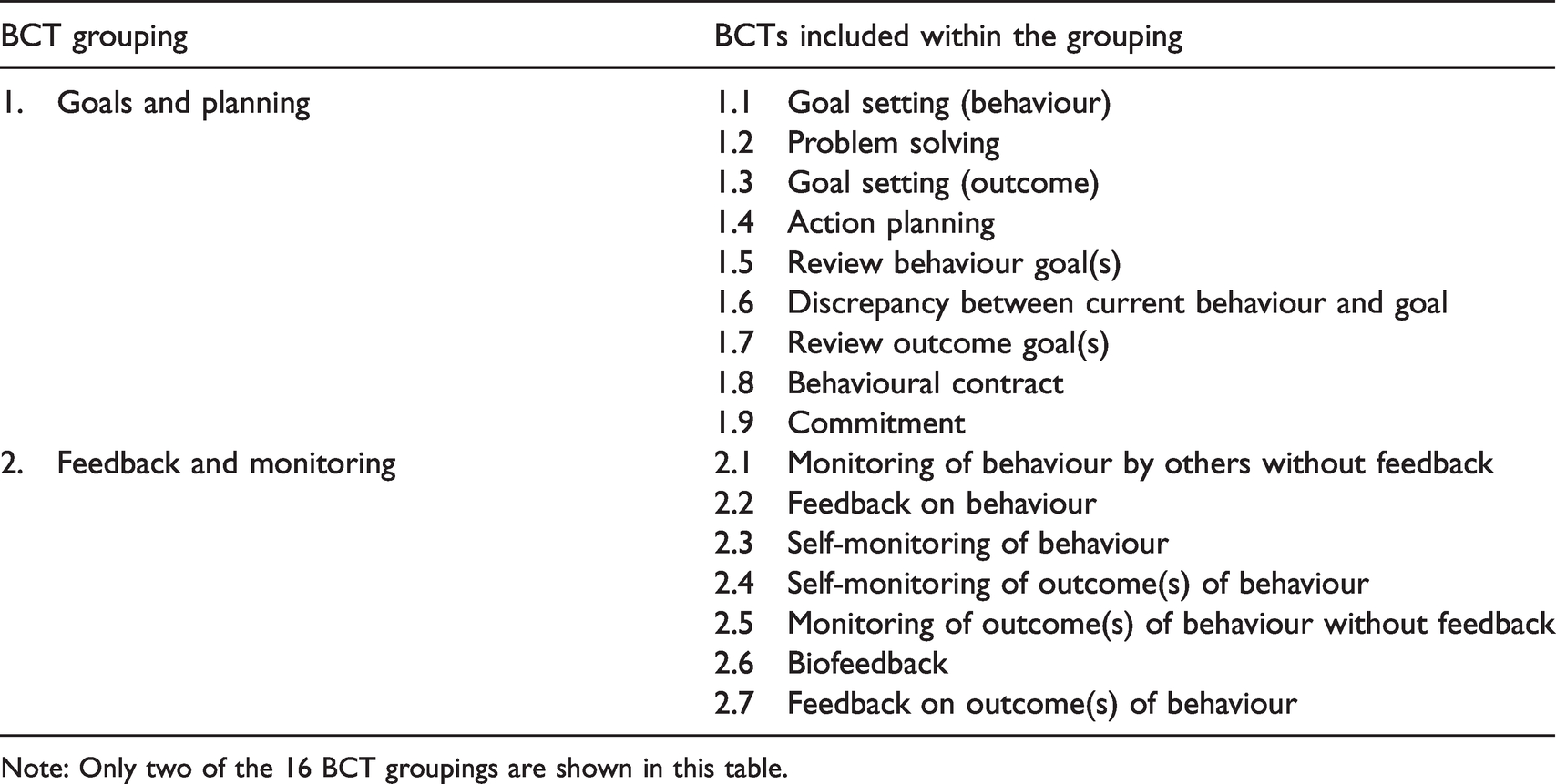
Note: Only two of the 16 BCT groupings are shown in this table.
The BCTTv1 has been effectively implemented across a range of health behaviour change interventions, including those aimed at healthy eating, increasing PA, and improving medication adherence.19–21 These studies have applied the BCTTv1 to identify effective elements of the interventions, which could then be used to inform the development of future interventions targeting the same health behaviour. Specific to the sport coaching context, Allan et al. 22 identified 21 different BCTs (representing 11 of the 16 BCT groups) used in sports coach development programs, with ‘instruction on how to perform a behaviour’, ‘behavioural practice/rehearsal’, ‘feedback on behaviour’, and ‘credible source’ being the most common. Futher, several BCTs have been identified in lifestyle-based coaching apps used to improve health outcomes.23–24 Many of the coaching strategies used in these apps align with the BCTs outlined within the BCTTv1, such as ‘prompts/cues’, ‘information about health consequences’, ‘self-monitoring of behaviour’, ‘social support (unspecified)’, and ‘instruction on how to perform a behaviour’.23–24 The type and frequency of BCTs used within the coaching context may be indicative of a program’s behaviour change potential. 23 As such, examining the BCTs used by grassroots sport coaches may provide insight into the program’s potential to develop physical literacy and increase children’s motivation and future engagement in sport.
Currently, research on the BCTTv1 has primarily focused on adults. When considering the grassroots sport context, however, it is important to understand BCTs used by coaches to promote sport and develop physical literacy among children. The process of behaviour change in children may differ substantially from adults given that children’s executive functioning skills have not fully developed. 25 As such, when working with children, coaches may choose different BCTs than those commonly applied with adults. For example, while goal setting and self-monitoring have been identified as some of the most effective BCTs for PA-related behaviour change in adults 26 , restructuring the physical and/or social environment and behavioural practice/rehearsal have been found to be some of the most effective BCTs among children. 27 Furthermore, children may have a limited capacity and motivation to carry out behaviour change strategies independently. Thus, caregivers must often work collaboratively with coaches to help engage their child in sport programs and promote their physical literacy. As such, strategies that caregivers use to encourage their child to participate in sport should be considered alongside those of coaches when trying to obtain a holistic understanding of children’s sport behaviours. 28
To our team’s knowledge, no study has applied the BCTTv1 to in-person sport programs delivered to children, and only one review has applied the BCTTv1 to youth. 29 The systematic review by Hynynen et al. 29 assessed BCTs used in school-based interventions aimed at increasing PA and reducing sedentary behaviour among older youth. Overall, 36 of the 93 BCTTv1’s BCTs were identified across 10 interventions, with ‘instruction on how to perform the behaviour’, ‘demonstration of the behaviour’, and ‘goal setting (behaviour)’ being most commonly coded. The researchers also found that interventions which were successful in increasing habitual PA behaviours included a greater number of BCTs than those that were not. These school-based interventions, however, did not emphasize physical literacy development and were only delivered to youth who were “apparently healthy”. 29 Therefore, the applicability of these findings to coaching sport programs, and specifically those programs that are inclusive (i.e., include children with and without chronic health conditions) is unknown. Given the physical, psychological, and social benefits of sport for children of all abilities,30–31 and the potential of grassroots programs for physical literacy development, it is of interest to explore BCT-based coaching strategies implemented in inclusive grassroots sport programs.
The goal of the current study was to apply the BCTTv1 within an inclusive grassroots sport sampling program for children. The main objective was to gain an in-depth understanding of the type and frequency of active coaching ingredients (i.e., BCTs) used to foster sport knowledge, motivation, enjoyment, and, ultimately, participation among children in this specific program. The inclusive program context is of particular interest since coaches within these types of sport programs must be flexible in the BCTs that they use in order to promote participation and engagement among children of varied abilities. 32
Methodology
Context
A case study approach was used for this investigation. 33 The case of interest was Igniting Fitness Possibilities (IFP), a community-based sport sampling program with a foundation in physical literacy that was designed to support children in grades 1 to 12 with varied abilities (e.g., typically developing children as well as children with impairments in mobility, vision, motor coordination, attention, and/or psychological functioning) and motivational levels in becoming engaged in sport and other types of PA. 34 Both co-leads (KPAN and FVW) developed the program concepts and structure as well as the coach training. For a detailed description of the development of the program model, please see their Igniting Fitness Possibilities case study. 34
IFP’s first and core physical literacy phase is called QuickStart, and is designed to be a stepping stone or “booster” to future engagement in existing, community sport programs. This phase is inspired in its design by the Long-Term Development in Sport and Physical Activity Framework 16 and was co-created by a multi-disciplinary, community centre-based team using an iterative build/pilot test process. The QuickStart phase consists of 16 weekly 60-minute sessions and is led by a trained PA instructor and assisted by one to two trained IFP coaches (to support in-session participation). During the QuickStart sessions, six to 12 participants engage together in games aimed at developing movement and sport-specific skills as well as increasing knowledge, confidence, and motivation towards participating in a variety of sports and other types of PA (e.g., fitness classes). These weekly group sessions, which are led by a program instructor, focus on providing participants with diverse opportunities to explore their sport and PA interests while developing the skills necessary to be successful in a PA program of their choosing. In the Give It A Try phase, IFP coaches support participants in entering a local sport/PA program that matches their abilities and interests. This study focuses on the QuickStart phase, as this is the phase in which the coaching role is most structured.
A fundamental and unique component of the QuickStart phase of the IFP program is the individual coaching sessions throughout the duration of the 16-week phase. Each child is paired with one of the program coaches with whom they meet outside of the weekly, group-based IFP sessions. These individual coaching sessions provide each child with an individualized opportunity to learn, practice, and reflect on their movement skills and physical literacy development. 35 These sessions occur either on the day of the larger group session (before or after) or on an additional day of the week. Families are provided choice for when these coaching sessions occur to optimize their child’s full engagement. These sessions occur in the same location as the child’s IFP session and consist of discussion-based (e.g., goal setting) and activity-based (e.g., behavioural practice) content. While efforts are made for the child to be matched with the same coach for each individual session, in cases where the specific coach has a scheduling conflict, the child is paired with the other IFP coach from their group session.
All IFP coaches undertake a mandatory IFP-specific training session (one 2–3 hour session) prior to beginning their role in the program, which provides them with a baseline knowledge on strategies for incorporating inclusive coaching practices, building a motivational climate, and BCTs. This formal training session, that includes review of an IFP-specific coaching manual, is delivered at the host centre by the IFP research coordinator. Coaches are taught, through the use of interactive training scenarios, role playing, and group discussions, how to implement some of the key BCTs (e.g., action planning) during the individual coaching sessions, and then reflect on the coaching strategies used.
As part of the roles and responsibilities of an IFP coach, a written log is completed after each individual coaching session during QuickStart. While the content of these logs was analyzed for the current study, the logs were primarily implemented for reflective purposes. Reflection is an integral part of the coaching process in order to develop and refine coaching strategies.36–37 Within the logs, coaches describe the strategies they use in the coaching session (note: they are not asked to identify specific BCTs in accordance with the BCTTv1), how well they believe the strategies worked, changes they would implement moving forward, and any additional feedback.
Study sample
Weekly coaching logs of 13 coaches (eight females, five males) who led IFP programs across the Greater Toronto Area (Ontario, Canada) between Winter 2015 and Fall 2017 were coded using the BCTTv1. Logs from 162 coaching sessions (all available completed logs) were coded. Overall, these logs described coaching sessions with 37 participants across five different sites and six different IFP programs. Twenty-four participants had a disability, examples of which included cerebral palsy, autism spectrum disorder, anxiety disorders, and visual impairments. Program registration was centre-specific and thus, the availability of participant demographics varied based on the information gathered in each site’s registration form.
Coaches were staff from each site where the IFP program was offered to maintain the culture of the local recreation centre where the IFP program was held. Staff needed to have a background in child and youth PA programming and meet any standards of the recreation site that hired them (e.g., first aid training). None of the IFP program staff played a role in conducting the research.
The coding process
Three of the authors (SEW, RP, and KPAN) used an iterative process to code the BCT-based coaching techniques reported in the coaching logs. The BCTTv1 was used as a guide when reviewing the content of the logs, with a goal of identifying all of the BCTs (from the 93 outlined within the BCTTv1) used by IFP coaches during their individual sessions. Two of the three coders (SEW and RP) were certified in BCT coding using the online BCT Taxonomy training program developed by the University College London’s Centre for Behaviour Change (http://www.bct-taxonomy.com). This training program teaches researchers, practitioners, and policymakers how to identify and code BCTs present in intervention descriptions. The third coder (KPAN) has over 15 years of experience developing, implementing, and evaluating BCT-based interventions for persons with disabilities and was one of the experts involved in Michie et al.’s 18 international expert consensus study linking BCTs to mechanisms.
Round one: Assessing applicability of the BCTTv1 to the IFP coaching context
Given the limited application of the BCTTv1 to coaching techniques used in physical literacy-focused sports programs for children of varied abilities, the initial coding aimed to identify potential coding issues (e.g., coaching strategies that did not map onto the BCTTv1) while gaining preliminary insight into the BCTs commonly reported within IFP coaches’ logs. Initial coding of the 162 coaching logs from Winter 2015 to Spring 2017 was completed by the second author (RP) according to the BCTTv1. Coaching strategies that did not align exactly with the BCT descriptions outlined in the taxonomy were classified as an ‘uncodeable’ group. All Round 1 coding was then confirmed through an in-person discussion with one of the project leads (KPAN) where discrepancies, areas of ambiguity, and ‘uncodeable’ coaching strategies were discussed. Given the novelty of applying the BCTTv1 to coaching children in an inclusive sport setting, the resulting outcome of the Round 1 coding was the recommendation to develop a codebook that would aid the application of the BCTTv1 to the IFP coaching context.
Round two: Codebook development
The first author (SEW) created the codebook to provide coding guidelines specific to the IFP context that would aid in accurately identifying and categorizing BCTs in the coaching logs. Developing a codebook has become standard practice when applying the BCTTv1 to novel contexts, 23 ,38–40 and Michie and her colleagues encourage researchers to share their adaptations to this taxonomy to inform coding of future interventions. 41
Our IFP coaching codebook was intended to: (i) address any issues that arose during the Round 1 coding (e.g., how to code techniques that were previously deemed ‘uncodeable’), and (ii) create greater clarity in the coding process by providing examples of how BCTs were used within IFP. The initial version of the codebook was arranged into: (i) BCT name, (ii) definition/coding rules provided by Michie et al., 18 (iii) an example of the BCT provided by Michie et al., 18 (iv) key characteristics of Michie et al.’s 18 BCT definition, and (v) an example of the BCT from the IFP coaching logs. The first step in codebook development was to review the BCT definitions and examples in the BCTTv1 and summarize the key coding rules for each BCT (see ‘Key Characteristics’ column in Table 2).
Excerpts from the revised behaviour change technique (BCT) codebook.
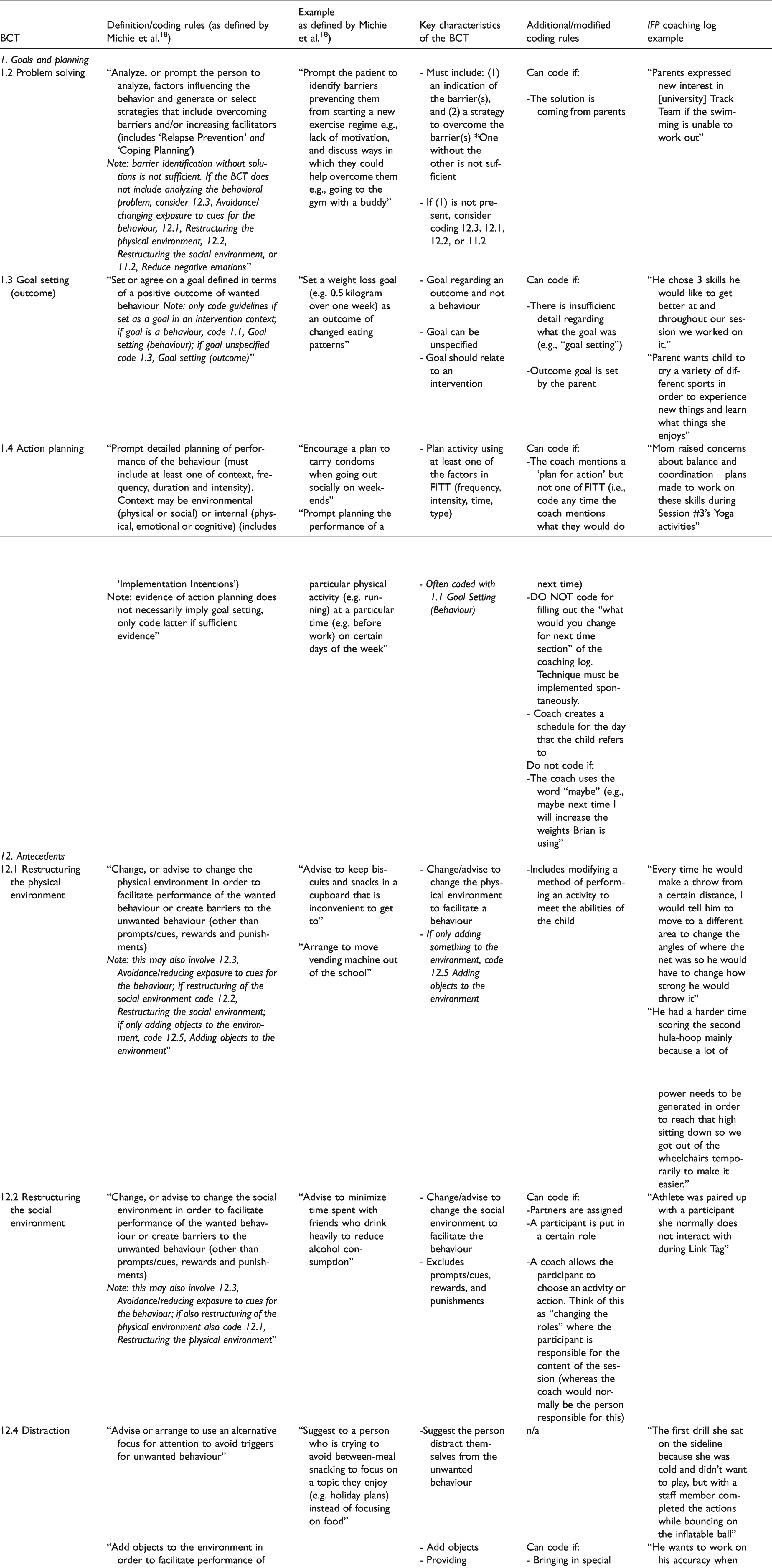
Next, the coaching logs from Winter 2015 to Fall 2017 were re-coded by the first author (SEW) using a summary of the key BCT features (examples provided in Table 2) as a foundation. However, in this round of coding, the codebook was updated throughout the process to create additional coding rules specific to the strategies used by the IFP coaches (see Table 2). For example, ‘goal setting’ could be still coded as such if the goal was set based on discussions with parents and not the child directly. Given the young age of program participants, coaches and parents often played an active role in facilitating the child’s PA behaviour. Thus, the research team unanimously agreed that BCTs carried out by the coaches and parents with the purpose of facilitating the child’s physical literacy and PA behaviour could be coded. No formal method for collecting parents’ input on coaching strategies (e.g., interviews) was used; rather, parents’ contributions were coded when there was mention in the log of a discussion with a parent (n = 7 codes [seven instances where a parent contribution was coded]). All adaptations and examples align in the log of a discussion with a parented with the key coding rules to be consistent with the BCTTv1 (see ‘Additional/Modified Coding Rules’ column in Table 2).
The senior author (KPAN) then used the codebook to code BCTs in a random sample of logs from 40 of the 162 coaching sessions (representing a substantial portion [25%] of the overall logs). It can be argued that when using multiple coders to analyze text, it is most important that coding decisions go beyond set guidelines and also consider context. 42 As such, this subset provided an indication of inter-coder agreement. SEW and KPAN reviewed and compared their coding. The authors discussed any discrepancies until a consensus was reached and the codebook was updated to address any changes to the coding scheme (final codebook provided in Supplementary Materials).
Round three: Coding agreement
SEW updated her coding to ensure that it reflected the final version of the codebook. KAN then used the final codebook to code BCTs in a random sample of logs from 10 of the 162 coaching sessions (6% of the logs; different logs than previous coding). These 10 additional logs were coded by the senior author to evaluate whether the discrepancies noted in Round 2 still arose. With no notable discrepancies found between coders at after Round 3, coding was deemed to be complete.
Two types of inter-coder agreement were assessed: (a) agreement on the presence and absence of each BCT from the coaching logs, and (b) agreement on the frequency of coding for a particular BCT within each log (this accounts for BCTs being coded multiple times in one single session). Inter-coder agreement was assessed using Cohen’s kappa statistic 43 and a prevalence-adjusted and bias-adjusted kappa statistic (PABAK). 44 The PABAK statistic corrects for the high prevalence of negative codes (i.e., BCTs that were absent from a coaching log) and has been used in previous studies to assess inter-coder agreement based on the BCTTv1. 23 , 38 , 45 An inter-coder agreement value of 0.61 to 0.80 is classified as “substantial” and a score above 0.80 is classified as “outstanding”.43–44
Coding analysis
A list of the BCTs coded throughout the 162 coaching logs (and their corresponding BCT groups 18 ) was compiled. The number of different BCTs and their frequencies in each log were tallied and summed to provide total values. When determining the number of unique BCTs coded within a coaching log, each BCT was tallied once. However, when calculating the frequency of a BCT in a coaching log, the BCT was tallied each time it was coded. For example, if the coach demonstrated the same skill three times during the same session, this counted as one unique BCT (demonstration of the behaviour), but was tallied as three codes when analyzing the frequencies of BCTs.
Results
Round 1 coding
A total of 32 unique BCTs (34% of the BCTTv1) were identified in the coaching logs during the Round 1 coding process. These BCTs represented 13 of the 16 BCT groupings, with ‘Associations’, ‘Comparison of Outcomes’, and ‘Covert Learning’ being the three BCT groupings absent from the logs coded. The most frequently coded BCTs were ‘behavioural practice/rehearsal’ (n = 43 codes), ‘instruction on how to perform the behaviour’ (n = 29 codes), and ‘demonstration of the behaviour’ (n = 22 codes).
‘Uncodeable’ coaching strategies
There were two uncodeable strategies: ‘autonomy support’ (i.e., providing participants with choice) and ‘modifying activities to match participants’ abilities’. Although ‘autonomy support’ is not included as a distinct BCT in the BCTTv1, extensive evidence suggests that autonomy supportive practices in physical education settings may increase PA intentions and behaviour among students.46–48 Therefore, although autonomy supportive practices may not change PA behaviour directly, the authors agreed that such techniques should be integrated into the coding scheme when assessing BCTs used by coaches of children in sport and PA programs. Furthermore, while the BCTTv1 is comprised of techniques that may elicit behaviour change in the general population, 18 for people with disabilities specifically, modifying the behaviour itself (e.g., playing volleyball from a seated position to allow those with limited mobility to participate) may be necessary to meet their functional abilities. As such, modifying activities/equipment to match an individuals’ abilities may act to increase PA behaviour in inclusive settings. 49
After extensive discussions and review of Michie et al.’s 18 taxonomy, the authors unanimously agreed that ‘autonomy-supportive practices’ should be coded as BCTTv1 code ‘restructuring the social environment’. The BCT ‘framing/reframing’ was considered as a potential code for ‘autonomy-supportive practices’, as one could argue that allowing the child to choose activities or equipment can reframe the task to one that they have selected to complete, rather than being told to complete. However, after extensive discussion, the authors decided that ‘restructuring the social environment’ was a more appropriate code. When a participant is provided with choice, they are put in a decision-making role where they are responsible for the content of the session, as opposed to the coach. The authors agreed that by providing the child with choice and affording them with the opportunity for ownership over the session, the coach is restructuring the social environment to facilitate behaviour change.
The authors also reached consensus that ‘modifying activities to match a participant’s abilities’ should be coded as either BCTTv1 code ‘restructuring the physical environment’ (if the modification related specifically to equipment) or ‘restructuring the social environment’ (if the modification related specifically to program structure). The BCT ‘body changes’ was initially discussed as a potential code for ‘modifying activities to match participant’s abilities’. However, this was not ultimately chosen as the coaches modified the activity itself to facilitate participation, rather than trying to alter the child’s body structure or functioning. Instructions were provided within the codebook explaining how to code these strategies (see Table 2, BCTs 12.1 and 12.2). Ultimately, no new BCTs were added to supplement the BCTTv1.
Final coding
Inter-coder agreement
In terms of assessing the “presence” and “absence” of BCTs in the coaching logs, the mean kappa score per log was 0.80 and the mean PABAK score was 0.98. These scores indicate “substantial” and “outstanding” inter-coder agreement, respectively. When taking frequency of BCTs into consideration, the mean kappa score per log was 0.78 and the mean PABAK score was 0.97. These scores also indicate “substantial” and “outstanding” inter-coder agreement, respectively.
BCT types
A total of 36 different BCTs (38.71% of the BCTTv1) were coded within the coaching logs. Overall, these BCTs represented 15 of the 16 BCT groupings, with ‘Covert Learning’ being the only BCT grouping absent from the logs. The number of different BCTs coded within each coaching log varied from 0 to 12, with an average of 3.62 BCTs (SD = 2.43) and a median of 3 BCTs coded per log.
BCT frequencies
Types and frequencies of BCTs coded across the IFP coaching logs.
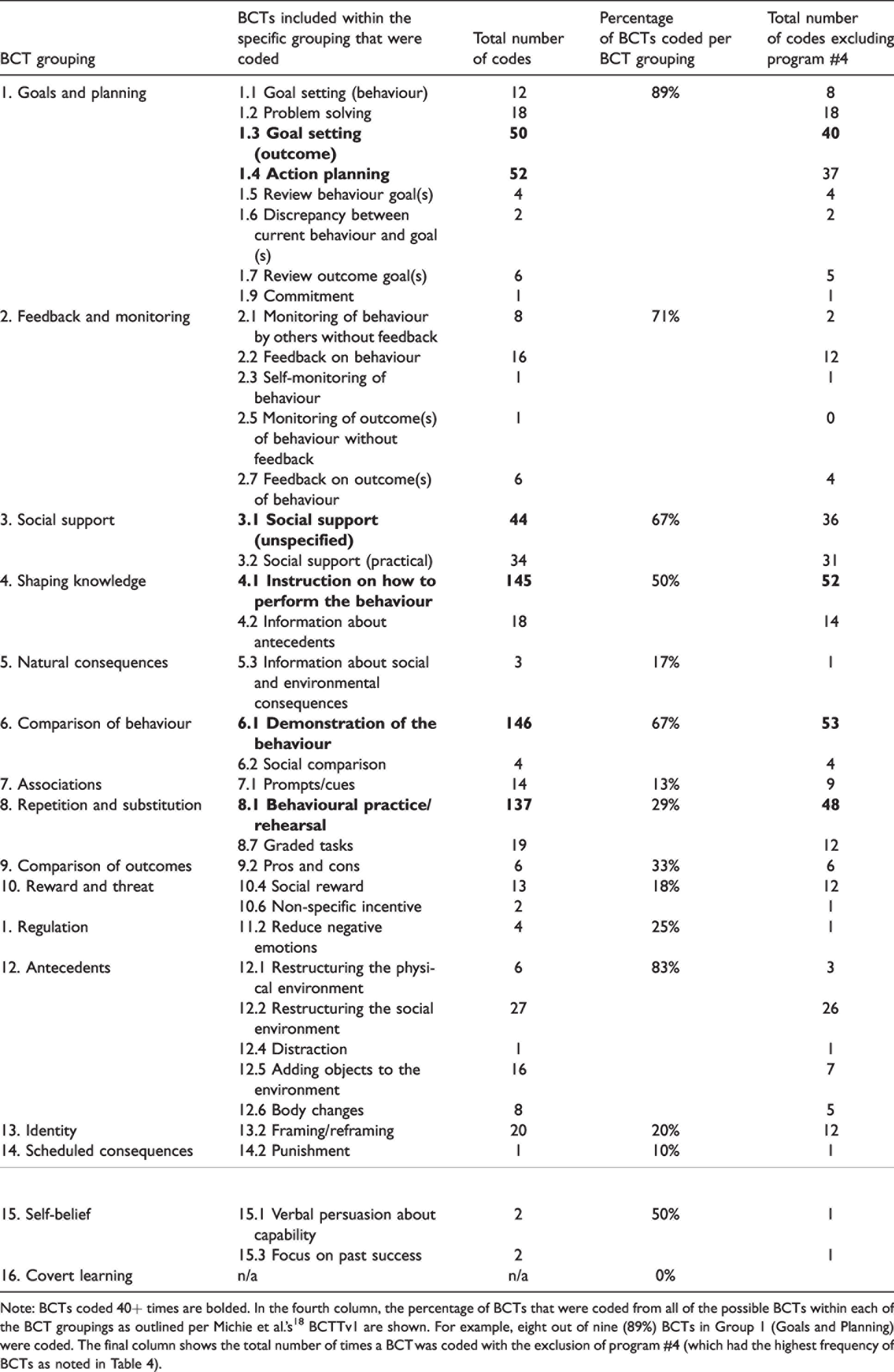
Note: BCTs coded 40+ times are bolded. In the fourth column, the percentage of BCTs that were coded from all of the possible BCTs within each of the BCT groupings as outlined per Michie et al.’s 18 BCTTv1 are shown. For example, eight out of nine (89%) BCTs in Group 1 (Goals and Planning) were coded. The final column shows the total number of times a BCT was coded with the exclusion of program #4 (which had the highest frequency of BCTs as noted in Table 4).
Behaviour change techniques (BCTs) coded in the coaching logs from each IFP program.
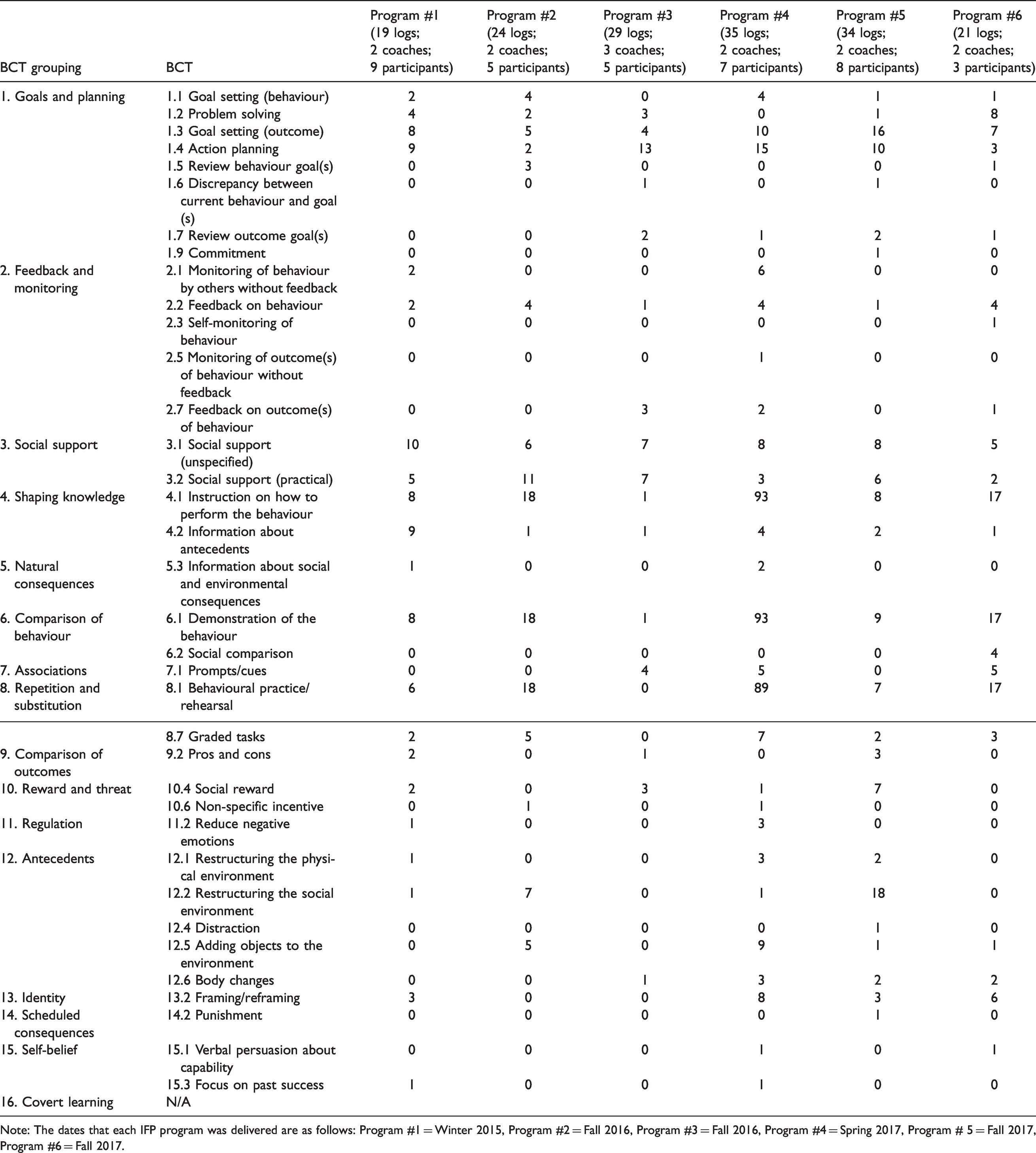
Note: The dates that each IFP program was delivered are as follows: Program #1 = Winter 2015, Program #2 = Fall 2016, Program #3 = Fall 2016, Program #4 = Spring 2017, Program # 5 = Fall 2017, Program #6 = Fall 2017.
Discussion
The current study aimed to identify, through an in-depth examination, the ‘active ingredients’ of a grassroots sport program aimed at increasing physical literacy (i.e., movement competence, motivation, positive affect, and social participation) among children with varied abilities. These ‘active ingredients’ were the BCTs reportedly used by coaches within the individual coaching sessions completed as part of the program. Using the final codebook as a guide, 36 different BCTs across 15 groupings of the BCTTv1 were identified in the content of the coaching logs. This variability in the number of different BCTs identified within the coaching logs provides evidence of flexibility in the coaching methods reportedly used in the IFP program. 32
Interestingly, the study findings directly align with Hynynen et al.’s study, 29 which found 36 different BCTs that were used in school-based interventions aimed at increasing PA and reducing sedentary behaviour among youth. A similar number of BCT was also identified in Tomasone et al.’s 50 disability-focused study of leisure-time PA self-management interventions for individuals with spinal cord injury (32 different BCTs representing 13 of the 16 BCT groupings). However, a greater breadth of BCTs was identified in the IFP coaching logs compared to other populations and health behaviour contexts, specifically sports coach development programs for adults, 22 mobile apps to decrease sedentary time in the general population, 23 and paediatric obesity prevention interventions delivered to parents. 41 These three previous studies reported 21 (11 BCT groupings), 13 (10 BCT groupings), and 22 (11 BCT groupings) unique BCTs from the BCTTv1, respectively. It may be that a greater number of BCTs are deemed to be relevant and/or feasible to implement in interventions seeking to increase PA behaviour in persons with disabilities in comparison to other population and behavioural contexts. A greater number of BCTs may also be necessary when delivering interventions directly to children to maintain engagement in activities or when working with populations with disabilities, as coaches must be able to adapt to a wide range of participant abilities. In terms of the IFP program specifically, the participants’ young ages and varied abilities may also have required coaches to draw on a wider breadth of coaching strategies.
Although 36 unique BCTs were identified across the 162 coaching logs, an average of 3.62 BCTs was reported per individual session log. Since the techniques coded were based on the content of the coach-reported logs, it is also possible that fewer BCTs were coded per session than were implemented. For example, coaches may have forgotten to record the different coaching strategies that they used, and therefore, the current results may be an underestimation of the actual number of BCTs implemented across the different program locations and sessions. Future studies could address this limitation by filming coaching sessions and comparing the coach’s written logs to the video footage. However, in terms of feasibility, the ability to apply a multitude of strategies in any one coaching session (approximately 30 minutes) is likely limited. Our study findings therefore provide a reasonable estimate of the number of unique BCTs that may be practical to implement in sport coaching sessions with children of varied abilities. Future research could explore how the BCTs used in sport programs for children with varied abilities may change over the duration of the child’s program experience.
In addition to the number of unique BCTs applied, our findings address the type of BCTs that may be most feasible to implement when coaching children with varied abilities in sport programs. The most frequently used BCTs throughout the IFP program were ‘demonstration of the behaviour’ (n = 146 codes), ‘instruction on how to perform the behaviour’ (n = 145 codes), and ‘behavioural practice/rehearsal’ (n = 137 codes). These findings closely align with those of Hynynen et al. 29 who identified ‘instruction on how to perform the behaviour’ and ‘demonstration of the behaviour’ as the two most commonly coded BCTs for older youth. These two codes were also the most common BCTs coded by Allan et al. 22 in their review of coach development programs. The current study findings highlight BCTs, in particular the frequently used ones, that can be further examined in terms of their influence on physical literacy development among children with varied abilities. These BCTs may provide possible mechanisms through which coaches and interventionists can motivate children to engage in sport and instill within them an interest in PA, although these mechanisms must be examined in future work.
Although evidence suggests that interventions with a greater number of BCTs may be more effective at facilitating an increase in PA levels, 29 it should be noted that the high frequency of use in itself does not provide indication of their effectiveness with regard to physical literacy development. Hagger and Hardcastle 51 argue that in order to determine the unique effects of BCTs, the interpersonal styles used to deliver them must be considered. Interpersonal styles are composed of several features, including type of language, communication style, and autonomy supportive behaviours. 51 The need to understand intervention delivery and coaches’ interpersonal styles has been addressed in recent studies. For example, Gillison et al. 52 provide a list of self-determination theory-based behaviour change strategies that are not captured by Michie et al.’s 18 BCTTv1. Michie et al. 18 acknowledge that the BCTTv1 would benefit from greater detail regarding mode of delivery and intervention context, and to this end, an elaborate “Behaviour Change Intervention Ontology” is being developed. 53 This resource will synthesize information pertaining to BCT contexts, modes of delivery, mechanisms of action, and effect sizes, allowing researchers to evaluate “What works, how well, for whom, in what settings, for what behaviours, and why”. 53 Programs such as IFP will be able to use this Behaviour Change Intervention Ontology to identify specific coaching practices that elicit PA behaviour change and modify coach training and program structure accordingly.
Findings from this study can also be used to examine the BCTs within the BCTTv1 that were not coded. Approximately 61% of the BCTs (57 of 93 BCTs) were not coded in any of the logs, indicating that these techniques may not have been implemented by IFP coaches. While some of these BCTs may not be appropriate for coaching grassroots sport programs for children (e.g., ‘pharmacological support’), others such as ‘self-talk’ have been found to be effective at improving PA-related behaviour and skills.54–55 As such, this study can be used to identify BCTs that may be suitable but less intuitive to the coaches. These usage gaps can be addressed through continued training of the IFP coaches and may thus have important practical implications on program delivery. For example, exposing coaches to the BCTs that were not used and providing examples of how they could be integrated into IFP may lead to greater flexibility in coaching methods, a quality that is particularly valuable in inclusive contexts.
Although this study focuses specifically on the IFP program, the findings can be applied more broadly to the grassroots sport context. The findings reflect the wide range of BCT-based coaching strategies that may be feasible to implement in other sport and physical literacy-based programs in order to make them more inclusive for children of varied abilities. For example, while programs may encourage their coaches to implement some of the frequently coded BCTs (e.g., ‘demonstration of the behaviour’), they may wish to dedicate a greater portion of their coach training to introducing alternative BCT-based coaching strategies. The BCTs coded in this study can be used as a guide for determining which BCTs may be feasible to implement in an inclusive sport setting. Furthermore, our study findings illustrate the need for coaches to be reflective and flexible in their practice when working with children who have a wide range of abilities. IFP coaches utilized 36 BCT-based coaching strategies to engage their participants in program activities and promote habitual uptake of regular sport and PA. This number was greater than the number of BCTs used in programs/interventions aimed at increasing PA levels among those without disabilities.22,23,41 As such, coaches working in inclusive sport/PA settings may benefit from additional training in BCT-based coaching techniques and how they can be implemented.
Limitations and future considerations
There are some study limitations that warrant mention. While the results provide an in-depth understanding of the BCTs used within the IFP program specifically, it is important to consider that findings may look different across other physical literacy programs and coaches. Such variability was seen across the different IFP programs (as noted in Table 4). Furthermore, coaches from each IFP program submitted a different number of logs. As such, data from certain IFP programs may carry more weight in terms of the BCTs coded in this study.
Since BCTs were coded from written, coach-reported logs, it is possible that coaches used more BCTs in their individual coaching sessions than they reported. The BCTs coded were limited to the logs available to the researchers and, therefore, may not fully represent the content of all coaching sessions held within the program. Coaches also provided different levels of detail in their logs (e.g., simply listing the strategies used versus an in-depth description of the activity and the participant’s response), leading to variability in the number of BCTs coded across coaching logs. The logs were intended to be loosely structured to allow coaches to reflect in a way that would be most beneficial to them. Reflective practices differ from person to person, and while one coach may benefit from reflecting with point form notes, others may have preferred to write long paragraphs detailing their session. Although this lack of standardization in coaching logs may be a limitation to the study, it allowed us to capture a more real world experience among the coaches.
It should also be noted that the IFP program was still being refined throughout the course of the Winter 2015 to Fall 2017 sessions, and thus the structure of the coaching logs varied between IFP sessions. These changes may have influenced the level of detail coaches provided within the logs, as recent versions asked for more specific information about the coaching sessions. However, based on visual inspection of BCT frequencies per IFP program in Table 4 and trend line displays that illustrate the data, the changes in the reporting details required in the logs do not appear to have systematically influenced the number and types of BCTs reported over time. Specifically, rather than seeing an increase or decrease in the frequency of BCTs from program #1 to program #6, there was a non-systematic fluctuation in the frequency of each BCT from one program to the next. We specuate that it is therefore unlikely that any changes to the structure of coaching logs over time influenced which BCTs were reported in the coaching logs (see Table 4).
Given that <50% of coaching logs were coded by two authors, some codes may have been missed. However, all logs were updated after each round of coding thus increasing the likelihood that a missed code would be caught during one of these updates. Furthermore, the dates on the coaching logs pertained to the date of the coaching session and not the date that the log was filled out. Therefore, while coaches were encouraged to complete their logs after each session, those that may have been completed later are subject to recall and salient biases. Lastly, the training that the IFP coaches received may have provided some bias as to the BCTs used in their sessions. However, this training specifically covered ‘goal setting (behaviour and outcome)’, ‘pros and cons’, and ‘restructuring the physical environment’, which were not the most commonly reported BCTs used by IFP coaches. These findings therefore suggest that coaches were going beyond their basic BCT training and thinking of other possible techniques to implement.
The limitations of this study should be taken into account when considering why a disproportionate number of the BCTs ‘instruction on how to perform the behaviour’, ‘demonstration of the behaviour’, and ‘behavioural practice/rehearsal’ were coded in program #4 compared to the other IFP programs. Although these BCTs remained the most frequent when program #4 from was excluded from the analysis, reasons as to why this outlier may exist should be considered. While program #4 did not represent the greatest number of logs completed or program participants, the coaches from this program provided a great level of detail within their logs. It may have been that the coaches had a personal bias towards using and/or reporting these BCTs. It is also possible that the program #4 participants responded best to these three BCTs, and thus the coaches used them more frequently. In the future, coding BCTs from filmed coaching sessions, as opposed to self-report logs, can help to address this coding process limitation and interpretation.
The findings from this study will be used to inform future IFP coach training. For example, through the use of an online training platform, all IFP coaches will be provided with the necessary knowledge and strategies to support BCTs in their coaching role, particularly BCTs that may be less intuitive in their application to day-to-day practice, such as ‘self-talk’ and ‘information about health consequences’. Coaches and program developers beyond the IFP program may also find the results of this study helpful for identifying BCTs that may be feasible to implement in their coaching sessions. Our study findings can also be used to inspire coaches to expand their coaching strategies and consider different approaches to behaviour change that better reflect children’s unique strengths and limitations. Future research, however, would benefit from identifying how the use of specific BCTs may facilitate certain behavioural outcomes such as increased motivation, participation, and enjoyment of physical activity. Finally, given the role that parents often play alongside coaches in facilitating their child’s PA behaviour, future research would benefit from further exploring the parent-coach dynamic and strategies for fostering holistic development through sport programming.
Conclusions
This study is the first to apply the BCTTv1 to identify the unique BCT-based coaching strategies used in a physical literacy-focused sports program for children with varied abilities. The findings support using the BCTTv1 in this context, and as a result of the rigorous coding process, a codebook is now in place to guide future coding of BCTs in similar grassroots sports programs. The study results provide insight into the type and frequency of BCTs that may be most feasible to implement in a children’s inclusive grassroots sport coaching context. In the IFP program context specifically, the findings indicate which BCTs are most frequently used and thus, most pertinent to examine in terms of their capacity to promote sport engagement and physical literacy development among children with a range of abilities. Findings from this study can be used to promote reflective and flexible practice in coaching, and the ability to identify gaps coach training. Future research, however, is needed to evaluate the effectiveness of the different BCTs in improving sport/PA behaviours among children with varied abilities.
Supplemental Material
sj-pdf-1-spo-10.1177_17479541211016580 - Supplemental material for Application of the behaviour change technique taxonomy (BCTTv1) to an inclusive physical literacy-based sport program for children and youth
Supplemental material, sj-pdf-1-spo-10.1177_17479541211016580 for Application of the behaviour change technique taxonomy (BCTTv1) to an inclusive physical literacy-based sport program for children and youth by Shannon E Weissman in International Journal of Sports Science & Coaching
Footnotes
Declaration of conflicting interests
The author(s) declared no potential conflicts of interest with respect to the research, authorship, and/or publication of this article.
Funding
This work was supported by the National Bank; the Milos Roanic Foundation; Connaught Grant at the University of Toronto; and the Social Sciences and Humanities Research Council of Canada’s Insight Development Grant [#430-2014-00157].

Supplemental Material
Supplementary material is available online statement.
References
Supplementary Material
Please find the following supplemental material available below.
For Open Access articles published under a Creative Commons License, all supplemental material carries the same license as the article it is associated with.
For non-Open Access articles published, all supplemental material carries a non-exclusive license, and permission requests for re-use of supplemental material or any part of supplemental material shall be sent directly to the copyright owner as specified in the copyright notice associated with the article.
