



Abstract
Background:
Although short-term outcomes are generally favorable in Cerebral venous sinus thrombosis (CVT), there are limited data on long-term complications and sequelae.
Methods:
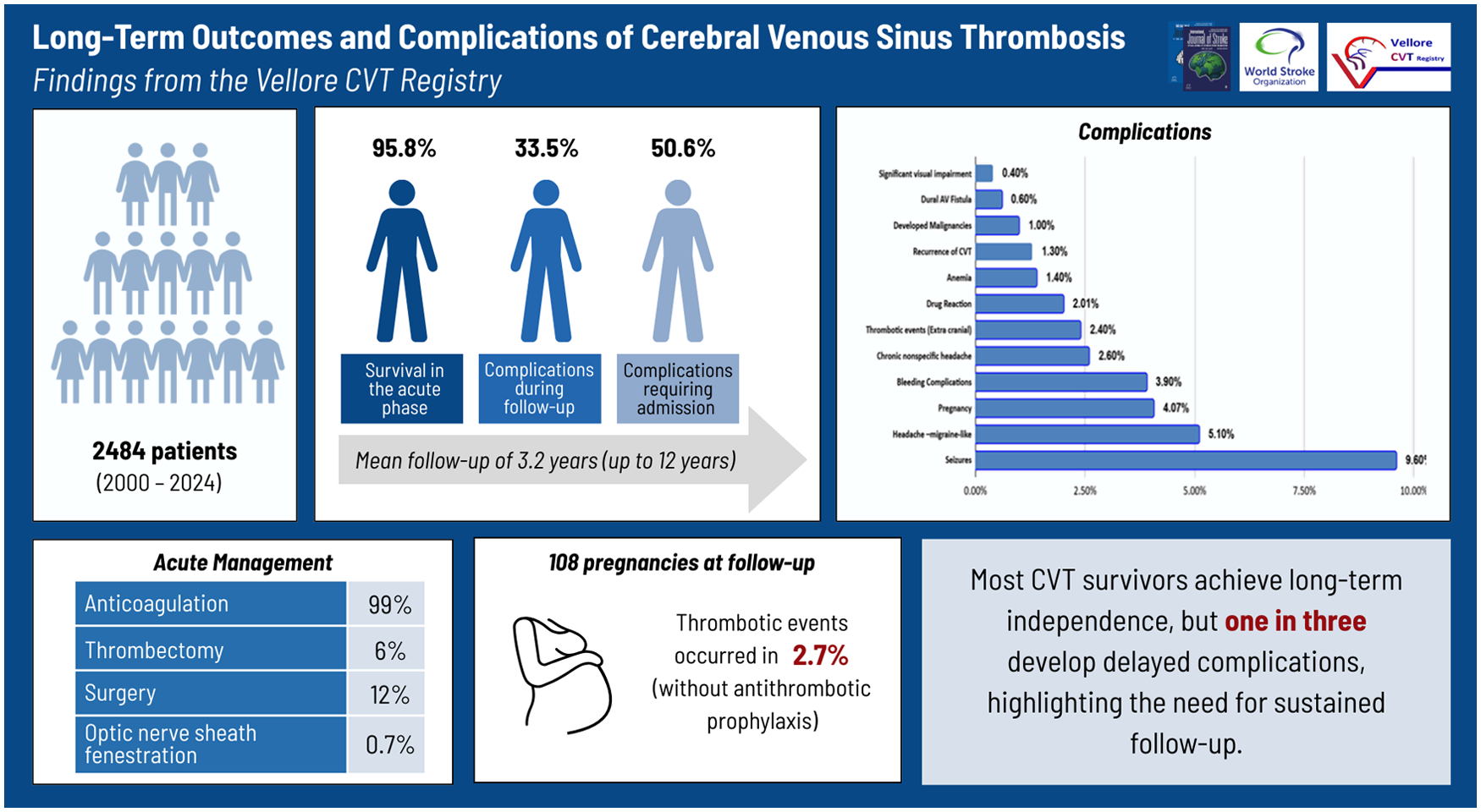
This ambispective study is from the Vellore CVT Registry, the largest single-center CVT registry in the world. Two thousand four hundred and eighty-four adults with CVT enrolled between 2000 and 2024 were analyzed for functional status and complications with follow-up up to 12 years.
Results:
Of 2484 patients, 2380 (95.8%) survived the acute phase, with a mean follow-up of 3.2 years (range, 0–12 years). During follow-up, 41 patients (1.7%) died, the majority being within 1 year. Excellent functional outcomes (mRS ⩽ 2) were achieved by 92% of patients within 2 years. Complications were observed in 799 (33.5%) at follow-up, of whom 405 (50.6%) required rehospitalization. More than half (55.1%) of these complications occurred more than 2 years after the initial diagnosis of CVT. Common complications were seizures (9.6%) and headaches (7.7%). Bleeding events occurred in 3.9% of cases, predominantly due to anticoagulant use. Recurrent CVT developed in 1.3%, and other thrombotic events in 2.4%. Occurrences of malignancies (1%) and secondary dural arteriovenous fistulas (dAVFs) (0.6%) were significant complications that occurred after 2 years. Of the 108 pregnancies that occurred during follow-up, thrombotic events occurred in 2.7% in the absence of antithrombotic prophylaxis.
Conclusions:
Most patients with CVT achieve long-term functional independence, yet one-third develop delayed complications. These findings underscore the importance of long-term surveillance in CVT survivors and give important insights into the natural history of CVT.
Get full access to this article
View all access options for this article.