



Abstract
Background:
Although atrial fibrillation (AF) is a known risk factor for ischemic stroke (IS), few studies have evaluated the risk of AF after IS.
Aim:
We evaluated associations between IS and subsequent AF risk in the Korean population.
Methods:
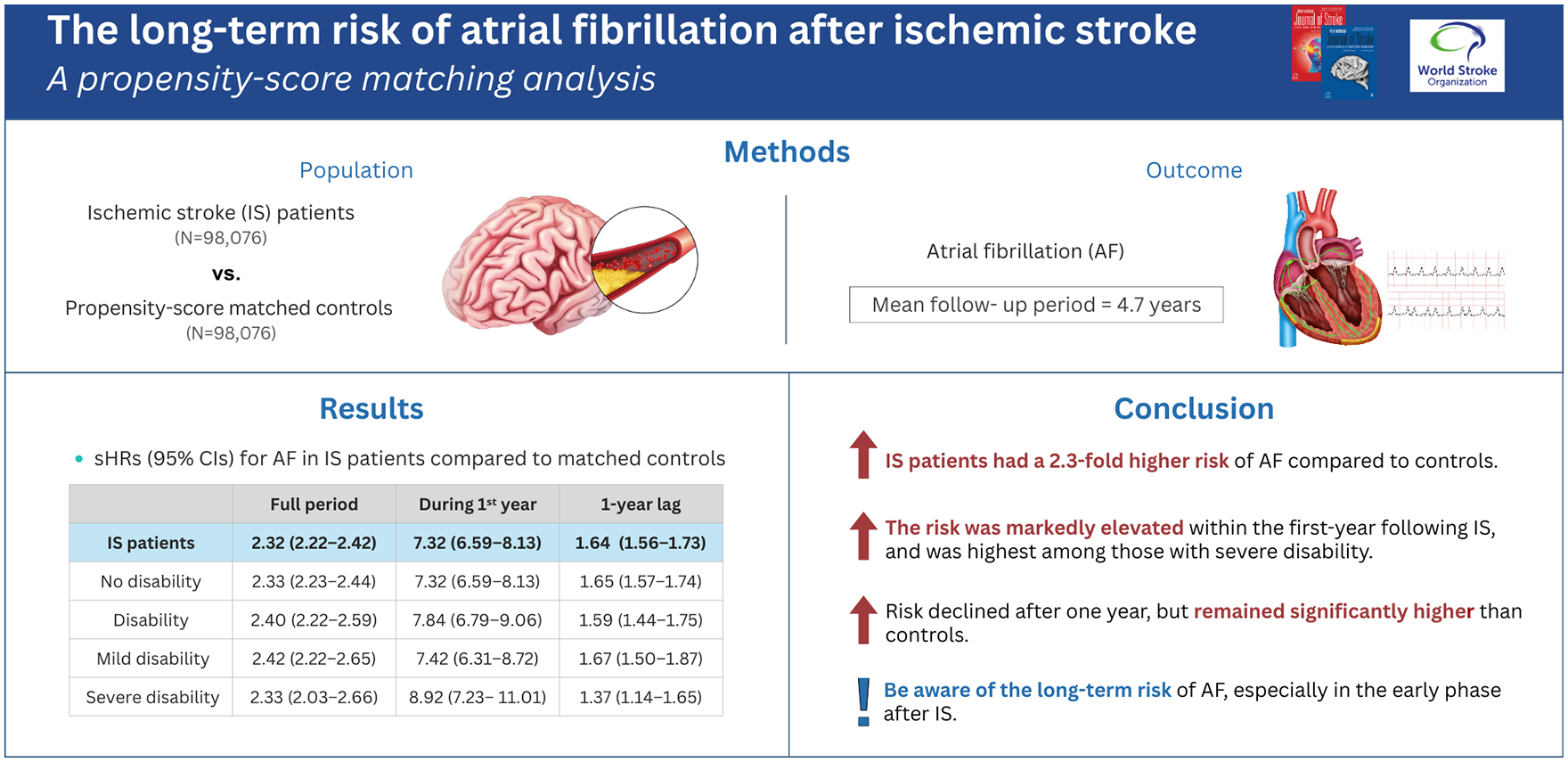
We identified 98,076 participants newly diagnosed with IS between 2010 and 2018 who underwent health screening within the 2 years prior to IS diagnosis, and 98,076 propensity score matched controls were included. The risk of AF was estimated using a Fine and Gray model, with death as a competing event.
Results:
During the mean follow-up period of 4.7 years, 9611 participants developed AF (6728 with IS and 2883 controls). The IS patients had a greater risk of AF (sub-distribution hazard ratio [sHR] 2.32, 95% confidence interval [CI] 2.22–2.42) than the controls, and this association was more prominent during the first year after IS (sHR 7.32, 95% CI 6.59–8.13). After 1 year, the increased risk of AF was attenuated but remained elevated (sHR 1.64, 95% CI 1.56–1.73). While IS patients with severe disability had the greatest risk of AF during the first year after IS (sHR 8.92, 95% CI 7.23–11.01), this finding was not evident after more than 1 year.
Conclusions:
The IS patients were at significantly greater risk of AF during the first year following IS diagnosis. Although the risk was attenuated after 1 year, it remained elevated. Physicians should be aware of the elevated risk of AF in IS patients and take appropriate measures to identify and treat AF.
Get full access to this article
View all access options for this article.