




Abstract
Letter-similarity effects are elusive with common words in lexical decision experiments: viotin and viocin (base word: violin) produce similar error rates and rejection latencies. However, they are robust for stimuli often presented with the same appearance (e.g., misspelled logotypes such as anazon [base word: amazon] produce more errors and longer latencies than atazon). Here, we examine whether letter-similarity effects occur in reading braille. The rationale is that braille is a writing system in which the sensory information is processed in qualitatively different ways than in visual reading: the form of the word’s letters is highly stable due to the standardisation of braille and the sensing of characters is transient and somewhat serial. Hence, we hypothesised that the letter similarity effect would be sizable with misspelled common words in braille, unlike the visual modality. To test this hypothesis, we conducted a lexical decision experiment with blind adult braille readers. Pseudowords were created by replacing one letter of a word with a tactually similar or dissimilar letter in braille following a tactile similarity matrix (e.g., 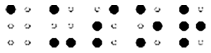
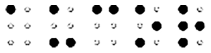
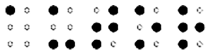
The act of reading requires multiple cognitive processes that range from sensory to strategic. One of the first steps when recognising a word is encoding the identity and position of its constituent letters, which is termed orthographic processing and is the bridge between perceptual and linguistic processes (see Grainger, 2018). Although most research on word recognition has focused on reading through sight (see Verhoeven & Perfetti, 2021, for a cross-linguistic perspective), it is also possible to read through touch using the braille writing system. The present paper examines the process of letter identity coding in reading by testing if the encoding of letter identities is affected by tactile letter similarity (see Baciero et al., 2022, for a recent examination of letter position coding in braille). Before diving into our study, we first describe theoretical and empirical work on letter identity coding during visual-word recognition. Then, we describe the braille system and why it presents a crucial test case for the generalisability of letter and word processing theories.
Orthographic processing in visual format
Visually presented words are often presented in different fonts, sizes, colours, letter-CaSe, or 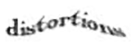
Notably, the centrality of abstract letter representations during word recognition in the visual modality does not exclude the possibility of some perceptual noise when initially encoding letter identities. Indeed, there is some evidence of visual similarity effects in the first processing stages. Using Forster and Davis’ (1984) masked priming technique, Marcet and Perea (2017, 2018) found that, for the target word OBJECT, the visually similar prime obiect is nearly as effective as the identity prime object and more effective than its control obaect (see Perea, Hyönä, & Marcet, 2022, for converging evidence in Finnish). To examine the time-course of this visual-letter similarity effect, Gutierrez-Sigut et al. (2019) replicated the Marcet and Perea (2017) experiments by recording the participants’ event-related potentials (ERPs). They found that, in a time window usually associated with the initial contact with the abstract representations (N250; Grainger & Holcomb, 2009), the ERP responses were very similar for object-OBJECT and obiect-OBJECT; in contrast, obaect-OBJECT produced larger amplitudes. Only at a later time window commonly associated with lexical-semantic access (N400), the waves evoked by object-OBJECT differed from those evoked by the visually similar pair obiect-OBJECT. These findings suggest that, in the visual modality, there is some noise associated with letter identity in the initial stages of letter/word recognition that is ultimately resolved (see Kinoshita et al., 2021).
Of particular relevance to the present study work, it has been suggested that the wide variability of visual forms in both handwritten and printed letters aids the emergence of and rapid access to abstract representations of letters during visual word recognition (Li & James, 2016; see also Hannagan et al., 2012). Notably, previous research has shown that skilled readers may show sizable visual-similarity effects for printed stimuli that lack variability in a format such as logos. Pathak et al. (2019) found that misspelled logotypes like anazon (original logo: amazon) produced more errors and longer latencies than misspelled logotypes like atazon—note that n is more visually similar than t to the m in amazon. Perea, Baciero, et al. (2022) replicated this finding using another set of logotypes; critically, they found no evidence of a letter-similarity effect in parallel experiments with misspelled common words (e.g., amarillo [yellow in Spanish]; anarillo = atarillo). They argued that logos, being typically presented in a single typeface and design, were more susceptible to the effects of perceptual factors than common words.
Braille reading
While most studies on orthographic processing have relied on the visual presentation of letters and words, it is also possible to read through the sense of touch. As shown below, braille presents some unique characteristics that allow us to better understand the nature of reading in general. To our knowledge, no studies have yet examined the effects of letter similarity in braille word recognition.
Each character in braille is represented in a 2 × 3 cell (
To read braille, individuals scan the text from left to right using their fingertips; thus, unlike visual reading, where the sensory process occurs when the eyes fixate on a word, the sensory process in tactile reading occurs during movement (see Millar, 2003). This makes the sensory information in braille somewhat transient due to the seriality of letter processing induced by the finger motion: a given letter ceases to be available once the participant’s fingertip(s) moves to the following letter. Notably, the study of word recognition and reading in braille serves as a benchmark for modality-dependent versus modality-independent processes during lexical access (see Fischer-Baum & Englebretson, 2016). Both braille and visual alphabetic systems are forms of written communication and are bound to have some similarities in processing and neural correlates (see Hannagan et al., 2015; Reich et al., 2012, for evidence of activation in the sometimes-called visual word form area, and Kim et al., 2017, and Tian et al., 2021, for more recent accounts). At the same time, the differences between sensory modalities and the characteristics of braille letters are likely to shape the cognitive processes underlying reading (e.g., see Baciero et al., 2022).
Unlike letters in visually presented words, braille letters are subject to strict norms, and hence they are highly consistent across contexts (e.g., braille displays, thick stock paper, elevators).
1
Moreover, unlike the Latin script, there are no separate characters for upper-case letters in braille (i.e., a code is presented before letters/words to indicate upper case; e.g., A = 
Is there a letter similarity effect in braille?
To summarise, we have identified three differences between visual and braille reading that we suggest are most relevant for this research:
1. Structural constraint difference. Given the limitation imposed by the 2 × 3 grid, the elevation, or not, of a single dot is sufficient to create a different letter. Hence, braille letters are less redundant than printed letters.
2. Variability difference. Given the structural constraint and the regulation and norms in braille characters, the braille writing system lacks the variability in font, case, and format present in visual reading. Therefore, braille letters are more consistent across contexts than printed letters.
3. Perceptual difference. Given the finger(s) motion needed to read braille, it is more transient and serial than visually presented stimuli.
The issue at stake in the present work is whether these differences make braille readers uniquely sensitive to letter similarity effects. We can envision two possible outcomes: The first one is that due to the structural constraint, skilled braille readers become highly efficient at encoding the word’s abstract letter identities. In this scenario, proficient braille readers would show a null or negligible sensitivity to letter similarity. The second scenario is that braille readers may be more susceptible to noise during the encoding of letter identities given the variability and perceptual differences outlined above and, as a result, braille readers would show letter similarity effects. Hence, we believe that if the structural constraint difference dominates, we would find a small to negligible letter similarity effect; conversely, if the variability and perceptual differences dominate, we would see a sizable letter similarity effect.
Overview of the experiment
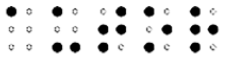
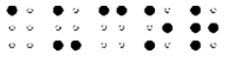
We designed a lexical decision experiment to test whether letter-similarity effects are present in braille word recognition. As is common in the literature on the visual modality, the focus of our analysis was on the pseudowords. These pseudowords were created by replacing one letter from a baseword, either with a tactually similar or a tactually dissimilar letter. For instance, from the baseword: 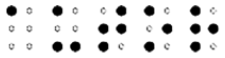
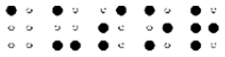
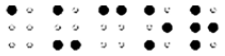
In sum, if there is some confusability due to letter similarity during tactile word recognition, a tactually similar pseudoword like 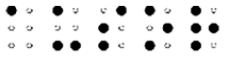
Method
This study was pre-registered on the Open Science Framework (OSF) before data collection (https://osf.io/329cn/).
Participants
With the help of the National Organization of Spanish Blind People, we recruited 12 participants that were diagnosed with either blindness (8) or severe visual impairment (4) at birth (5 male; M = 39.83 y.o.; range: 19–58). They were all native Spanish speakers and braille readers from childhood (5–6 y.o.). Two participants had finished high school, three were undergraduate students, five had completed a university degree, and two had completed a post-graduate degree. All participants gave informed consent before participating in the study and received an incentive for participating (7.5€). We used a Sequential Bayes Factor Design (Schönbrodt & Wagenmakers, 2018) to determine the number of participants, as established in the pre-registration form. Specifically, we computed the Bayes factor for the critical effect (i.e., similar vs dissimilar pseudowords) after the first 12 participants via a paired Bayesian t-test (with default priors) by subjects using the BayesFactor package (Morey & Rouder, 2014) in R (R Core Team, 2021). Bayes factors (BFs) exceeded 3 (i.e., the criterion in the pre-registration) for accuracy (BF10 = 366.01); hence, sampling stopped at n = 12. For response times, the general pattern was the same as in accuracy, but the BF did not exceed such criterion—note that response times in braille reading are long and highly variable (Bertelson et al., 1992).
Materials
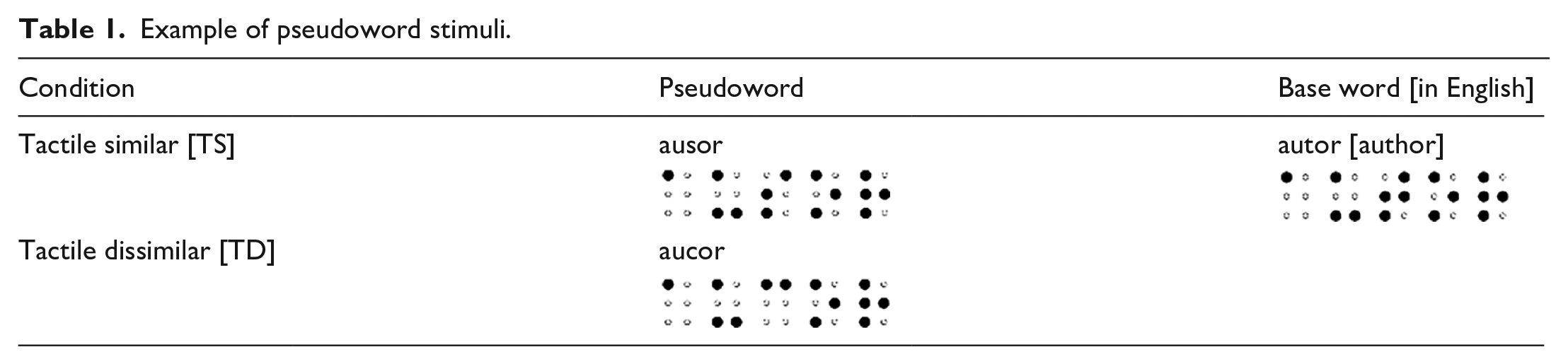
We selected 120 Spanish words from the EsPal database (Duchon et al., 2013) to act as base words (mean length: 6.74 letters [range: 5–8]; mean frequency: 75.23 per million [range: 10.15–727.42]). We used the Baciero, Perea, et al. (2021) tactile letter similarity matrix to generate two pseudowords by replacing one internal letter. 3 The replacement letter could be either tactually similar (TS) or tactually dissimilar (TD) to the original letter (see Table 1). The pseudowords had no orthographic neighbour (substituted-letter neighbour) other than their corresponding basewords. We created two counterbalanced lists so that if a similar pseudoword was presented in List 1, its corresponding dissimilar pseudoword would be presented in List 2. Each list was composed of 120 pseudowords (60 TS and 60 TD). We also selected a separate set of 120 words that were unchanged to act as the positive items experiment (mean length: 6.74 letters [range: 5–8]; mean frequency: 74.07 per million [range: 10.42–585.02]). All items are presented in the online Supplementary Material A.
Example of pseudoword stimuli.
Procedure
We used a refreshable braille display (i.e., Active Braille, Help Tech; Saladino, 2019) to present the stimuli to participants. This display was connected via USB to a MacOS, and we created a shell script both to present the stimuli on the braille display (enabling the OS-X’s VoiceOver accessibility feature) and to record participant’s responses.
The experiment took place in a quiet room and one participant at a time. We conducted a lexical decision task (i.e., “is the string a Spanish word?”) in which we instructed participants to use the index finger of their preferred reading hand to perceive the stimuli, and to use two fingers of the other hand to make the responses by pressing one of the two possible keys on the computer’s keyboard (M for “word,” N for “nonword”). At the beginning of the experiment, we showed participants where their index finger had to be placed before each trial. We instructed participants to read the letter string in a continuous manner without making any regression and to be as quick and accurate as possible in their responses. The stimuli remained in the braille display until a response was made. Response times (RTs) were measured from each trial presentation onset. Inter-trial-interval was 1.3 s, allowing participants to reset their index finger to the start position. We included 12 practice items at the beginning of the session, and the order of target trials was randomised.
Results
Both accuracy and reaction times were collected in each trial. As established before data collection, trials in which responses were either shorter than 0.25 s or greater than 8 s were excluded from the analysis (0.42%). For the latency analyses, error responses (6.28%) were also excluded. Table 2 shows the mean accuracy and correct RTs per condition.
Mean accuracy (proportion) and response times (ms) for correct and incorrect responses for each condition.

RT: response time.
To examine the effect of tactile letter similarity on the pseudowords, we conducted Bayesian linear mixed-effects models using brms (Bürkner, 2017) in R (R Core Team, 2021), with default priors.
4
We employed the Bernoulli link function for the accuracy model and the ex-Gaussian link function for the RT model. Both models included similarity (similar [−0.5] vs dissimilar [+0.5]) as a fixed factor, and all random effects allowed by the experimental design:
Each model had four chains of 5,000 iterations (warmup = 1,000). The output provides each estimate’s value, standard error, and the 95% credible interval (95% CrI) of their posterior distributions. Evidence in favour of an effect is taken when the 95% CrI does not contain zero. All the models converged, and Rˆ was 1.00 in all cases. 5
The analyses of the accuracy showed substantially higher accuracy in the tactually dissimilar pseudowords than in the tactually similar pseudowords (0.971 vs 0.897, respectively), b = 1.59, SE = 0.041, 95% CrI = [0.86, 2.47]. RT analysis showed that responses were faster for the tactually dissimilar pseudowords than for the tactually similar pseudowords (2,836 vs 2,863 ms, respectively); however, we did not find evidence for an effect, as the credible interval crossed zero, b = 50.87, SE = 55.53, 95% CrI = [−60.48, 160.77] (see Figure 1 for a depiction of letter-similarity effects by participants).
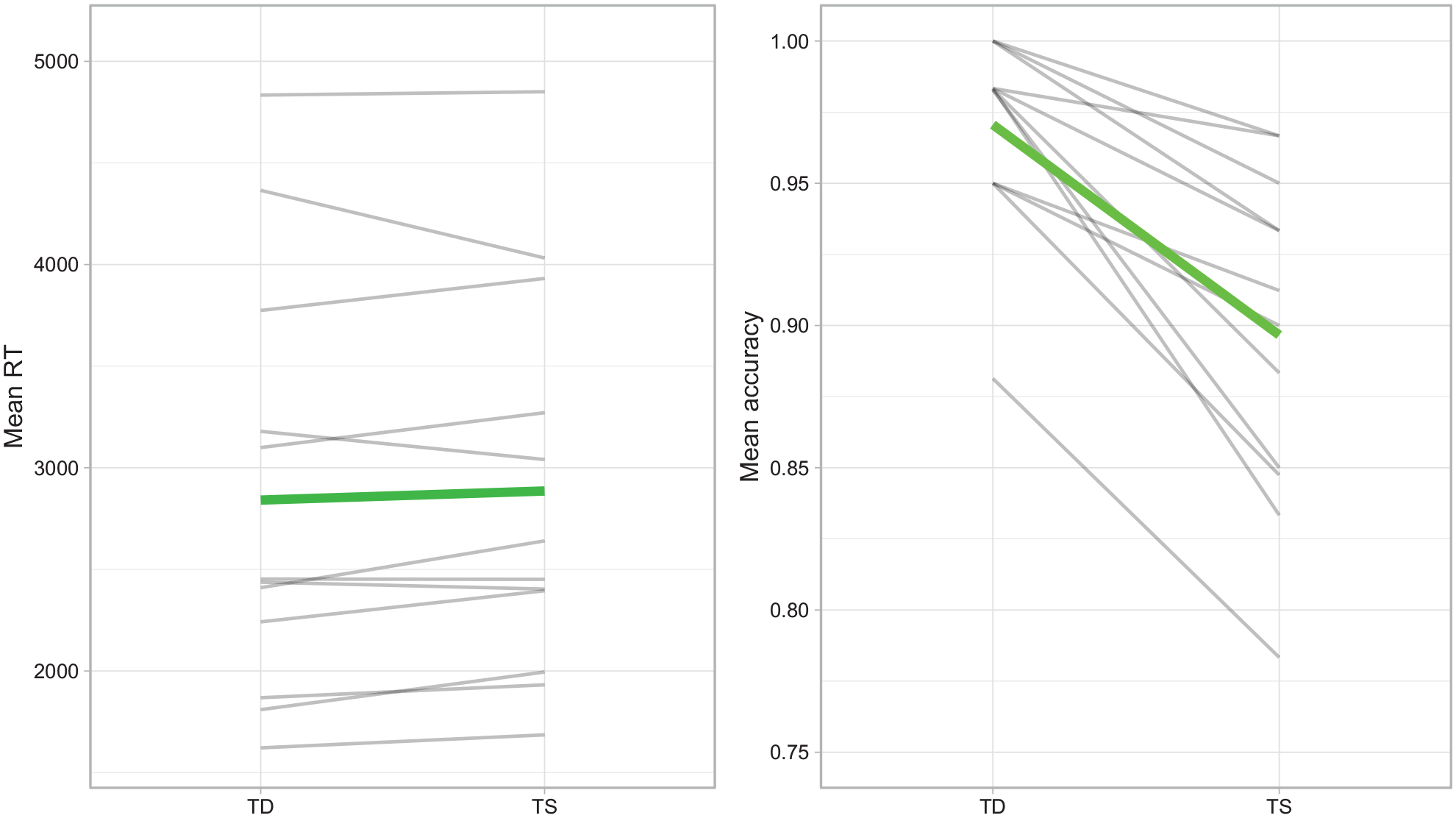
Mean response times in milliseconds (left) and accuracy (right) per similarity condition and subject. Each grey line links the mean of a particular subject in each of the conditions (tactually dissimilar [TD] and tactually similar [TS]). The green line represents the overall mean per condition across subjects.
Discussion
The present study examined whether letter identity coding in braille word recognition is susceptible to perceptual noise, measured by letter-similarity effects. Adult blind individuals performed a lexical decision task in which the pseudowords were created by replacing one letter of a word by either a tactually similar letter (e.g., 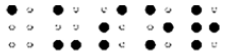
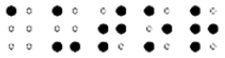
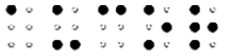
Our findings have relevant theoretical implications for models of word recognition. The better performance for dissimilar than similar pseudowords favours the idea that perceptual noise is an intrinsic part of letter identity coding when reading braille. A pseudoword like 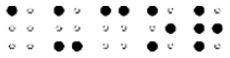 [aucor] is perceptually less similar to its tactually similar baseword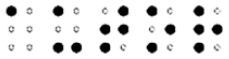
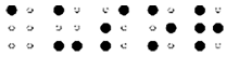 [ausor]. If the mapping from the tactile input to the activation of abstract letter representations had been fully precise, both similar and dissimilar pseudowords would have been classified equally quickly and accurately as nonwords. This pattern rules out the idea that abstract letter representations during braille reading are achieved with great efficiency due to braille’s low redundancy. Instead, our findings favour the idea of perceptual noise in letter identity encoding. This perceptual noise introduces uncertainty in the identification of the constituent letters of words, as described by the noisy-channel models (see Norris & Kinoshita, 2012, for a full model of visual orthographic processing, and Gomez, 2008, for a model of letter position coding using the same principle). This perceptual noise would be more prominent in the tactile than in the visual modality—as indicated in the Introduction, letter similarity effects can be found in the very earliest stages of word recognition, but they resolve quickly during word processing (Gutierrez-Sigut et al., 2019).
Why would misspelled common words show a sizable tactile letter-similarity effect in lexical decision with skilled braille readers? We believe that two differences between visual and braille reading explain this effect. First, there is a perceptual difference, as the letters of a word in braille are read one by one for a short amount of time (7.5 characters/second; Legge et al., 1999); in contrast, all the letters in visually presented words (at least for 4–7 letter strings) are available simultaneously. Thus, the processes underlying letter identity coding in braille may resemble those reported with briefly presented stimuli (see Gutierrez-Sigut et al., 2019; Marcet & Perea, 2017, 2018)—note that, although there is conscious perception for braille letters, the encoding of letter identity in the tactile modality may not be resolved as quickly as in the visual modality due to the fleeting exposure to the stimuli. Second, there is a variability difference because the physical characteristics of braille letters are highly homogeneous across contexts: braille letters follow standardised norms, so a word like 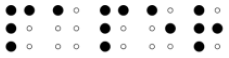
We attribute the letter similarity effect in braille lexical decision (which is not present in visual lexical decision experiments) to both the perceptual and the variability differences between braille and visual reading. Unfortunately, these two factors cannot be disentangled and cannot be manipulated experimentally. Along the same lines, any comparison between braille and visual reading faces the limitation that there are many differences between the decoding process reading in these two modalities. In this article, we have identified three critical differences: structural constraint, variability, and perceptual. Of course, there are other significant differences, such as the quality of orthographic representations due to the limitations of the haptic/tactile system and the fact that there is likely to be more exposure to text for sighted versus blind readers. To make matters more complicated, there are differences not only between the reading systems but also between the readers. Indeed, in the visual modality, readers with dyslexia and deaf readers are more sensitive to perceptual cues (e.g., more errors to viotin and to viocin [base word: violin] in readers with dyslexia; see Perea & Panadero, 2014; different ERP waves for viotin and viocin in deaf readers; see Gutierrez-Sigut et al., 2022) than normotypical hearing readers, presumably because of differences in the quality of the orthographic representation (see Bélanger & Rayner, 2015; Lavidor, 2011, for discussion). Nonetheless, despite the intrinsic difficulties interpreting differences between braille and sighted reading, our findings are clear: Tactually similar pseudowords are more confusable with their basewords than tactually dissimilar pseudowords.
In sum, our findings reinforce the view that letter identity coding has some perceptual noise, providing evidence for modality-independent, noisy-channel models of word recognition (see Kinoshita et al., 2021). Importantly, such perceptual noise seems to be modulated by (1) the specific characteristics of the stimuli (i.e., it is larger for those stimuli that are constant across contexts) and (2) how the stimuli are sensed (i.e., it is larger when the exposure to the stimuli is limited). We believe that the present study opens the door to examine in further detail the nuances of orthographic processing in braille using a standard reading situation (e.g., how does letter identity coding interact with predictability and contextual effects during braille sentence reading? see Drieghe et al., 2005; Slattery, 2009, for evidence in sighted reading).
Supplemental Material
sj-docx-1-qjp-10.1177_17470218221142145 – Supplemental material for Letter-similarity effects in braille word recognition
Supplemental material, sj-docx-1-qjp-10.1177_17470218221142145 for Letter-similarity effects in braille word recognition by Ana Baciero, Pablo Gomez, Jon Andoni Duñabeitia and Manuel Perea in Quarterly Journal of Experimental Psychology
Footnotes
Acknowledgements
Many thanks to the National Organization of Spanish Blind People (ONCE) for their invaluable support and to the very attentive and helpful participants. This research would not have been possible without them. Special thanks to Miguel Martín Suesta for his inestimable assistance, insights, and enthusiasm.
Author contributions
Declaration of conflicting interests
The author(s) declared no potential conflicts of interest with respect to the research, authorship, and/or publication of this article.
Funding
The author(s) disclosed receipt of the following financial support for the research, authorship, and/or publication of this article: This research has been partly supported by Grant PID2020-116740GB-I00 (funded by the MCIN/AEI/10.13039/501100011033) from the Spanish Ministry of Science and Innovation (M.P.), Grant PGC2018-097145-B-I00 from the Spanish State Research Agency (J.A.D.), and grant SMA-2127135 from the United States National Science Foundation (P.G.).

Data accessibility statement
Supplementary material
The supplementary material is available at qjep.sagepub.com.
Notes
References
Supplementary Material
Please find the following supplemental material available below.
For Open Access articles published under a Creative Commons License, all supplemental material carries the same license as the article it is associated with.
For non-Open Access articles published, all supplemental material carries a non-exclusive license, and permission requests for re-use of supplemental material or any part of supplemental material shall be sent directly to the copyright owner as specified in the copyright notice associated with the article.
