



Abstract
Evaluating the performance of research ethics committees provides valuable data that can enhance their effectiveness. This survey assessed the knowledge, attitudes, and practices concerning the publication ethics standards among the members of these committees in Iranian universities of medical sciences, where RECs are legally responsible for assessment of research misconduct in addition to reviewing research proposals. A cross-sectional, questionnaire-based survey was conducted among 240 members of Research Ethics Committees from Iranian universities of medical sciences. The survey assessed knowledge, attitudes, and practices regarding publication ethics standards. Data were analyzed using descriptive statistics and statistical tests. The study revealed that the overall knowledge of Research Ethics Committee (REC) members regarding publication ethics standards was moderate, with an average score of 51.91%. Ethics experts demonstrated the highest level of knowledge (0.69), followed by methodologists (0.68) and researchers (0.64), while clerics and lawyers exhibited the lowest scores. Prior ethics training significantly enhanced knowledge, attitudes, and practices, indicating that training is a critical factor in improving ethical competencies. Members demonstrated stronger adherence to standards related to authorship criteria and responsibilities but exhibited limited understanding of conflict of interest and organizational affiliation standards. Moderate correlations were observed between knowledge, attitudes, and practices, suggesting that improving knowledge through targeted training may positively influence attitudes and ethical practices. The survey raises serious concerns about the knowledge of REC members in this area, especially considering that, RECs are responsible for assessing research misconduct, which often includes issues related to publication ethics.
Introduction
Typically, Research Ethics Committees (RECs) are responsible for reviewing research proposals, particularly those involving human participants. They are generally not directly involved in handling research misconduct or publication ethics issues, except in cases related to the fair access of research participants to study results, where investigators must provide a clear dissemination plan. However, in Iran, the legal framework assigns RECs an additional role: they are explicitly tasked with providing expert opinions on cases of research misconduct, including those related to publication ethics. This expanded mandate, differentiates Iranian RECs from their counterparts in many other countries. While data on the challenges and shortcomings of REC functions are available, there is limited data specifically addressing the unique challenges faced by RECs in Iran due to their dual role in both research ethics review and oversight of research misconduct.
Regarding the first and popular REC role, and in response to the increasing growth of research activities, in Iran like other Low- and Middle-Income Countries, numerous RECs have been established (Silverman et al., 2015). The quantitative increase in the number of RECs could be an indicator of heightened attention to ethical standards within research practices or a need to ethical approval for biomedical research for better compliance with international research and publication ethics standards. However, there have consistently been concerns regarding the quality of performance of these committees (Oo et al., 2020), specifically in Low- and Middle-Income Countries (Sleem et al., 2010), emphasizing the obstacles that hinder their optimal functioning (Chenneville et al., 2014; Silverman et al., 2015). These potential barriers encompass a range of inadequacies and limitations, including insufficient training in research ethics for committee members, a lack of diversity in expertise and composition within the membership, the absence of adequately trained official staff, the need for standardized operating procedures, and constraints related to financial resources and information technology (Ayoub et al., 2019; Chenneville et al., 2014; Coleman and Bouësseau, 2008; Milford et al., 2006; Mishra et al., 2018; Sleem et al., 2010). However, in the case of Iran, the independence of RECs remains a substantial challenge. According to current regulations, the members of these committees are appointed by universities or research institutions, most of which are public and whose leadership teams are centrally appointed at the ministerial level. Consequently, university presidents and their research deputies often serve as the chair and secretary of the RECs. This structure challenges the independence of RECs, aligning with the specific biopolitical context of Iran, and may affect their functioning in various circumstances, particularly during emergencies such as public health crises like the COVID-19 pandemic (Makhdoomi Sharabiani et al., 2023; Shamsi-Gooshki et al., 2025).
The perceptions of researchers and faculty members regarding the underlying standards, role, and performance of RECs in institutions are crucial, as they can provide significant insights into the quality of these committees. Feedback from researchers has often been less than favorable, with many expressing that the committees are inconsistent with their research efforts (Brown et al., 2020). Concerns have been raised about the level of education and knowledge of their members in areas such as medical ethics, potential conflicts of interest, and biases in the review process (Al Omari et al., 2022; Ayoub et al., 2019). Examinations of the capacities and performance of RECs have revealed the limited experience of their members in research and a lack of formal training in research ethics (Bhowmick et al., 2014; Abou-Zeid et al., 2009). Additionally, there is a low awareness of ethical guidelines and instructions (Mishra et al., 2018), along with varying perceptions and attitudes toward ethical issues (Al Omari et al., 2022; Mishra et al., 2018). Other challenges include short membership periods, which limit the ability to retain qualified members (Matar and Silverman, 2013), excessive bureaucracy in decision-making processes, and conflicts of institutional and personal interests among members (Coleman and Bouësseau, 2008; Rothstein and Phuong, 2007; Sleem et al., 2010).
Efforts have been made to evaluate the performance of RECs using mechanisms such as self-assessment tools (Silverman et al., 2015) or auditing and accreditation programs. These mechanisms mainly focus on questions regarding the structure and process of RECs and are often unable to address many important inquiries about the actual impact of RECs on research procedures (Coleman and Bouësseau, 2008). Additionally, efforts have been made to measure the performance of RECs based on the subjective evaluations of stakeholders in the research process, including researchers and REC members (Al Omari et al., 2022; Ayoub et al., 2019; Brown et al., 2020; Sleem et al., 2010). While countries are allocating significant resources to establish or strengthen RECs within their institutions, insufficient attention is given to evaluating whether these committees effectively monitor and review research processes (Coleman and Bouësseau, 2008). Consequently, the overall effectiveness of these committees remains uncertain (Silverman et al., 2015).
With the increase in the quantity of biomedical research, particularly clinical trials, and under the guidance of the WHO Regional Office for the Eastern Mediterranean in the late 1990s, the National Committee for Ethics in Biomedical Research was established in Iran (Aramesh, 2015). Consequently, regional and institutional RECs were established in major research centers across the country (Sadighi et al., 2020; Shamsi-Gooshki, 2024). Despite significant growth in biomedical research in Iran, the intensification of ethical concerns such as the alarming rates of research misconduct and retracted publications, has led to increased attention to ethical standards in this field (Van Noorden, 2023). In addition to ethical review of research protocols, providing expert opinion on possible cases of research misconduct including those related to publications is a primary duty of RECs and their members, as outlined in the “Executive Regulation of the law on Preventing and Confronting the Fraud in Preparation of Scientific Works” (https://rc.majlis.ir/fa/law/show/1264898) and “The Regulation on Establishment, Procedures, and Duties of the Research Ethics Committees” (https://ethics.research.ac.ir/docs/ETHICS-Committee-Establishment-Process.pdf). Therefore, sufficient knowledge and a proper attitude regarding ethical standards in publication are essential for REC members.
According to “The Regulation on Establishment, Procedures, and Duties of the Research Ethics Committees,” some REC members must be researchers, which highlights the importance of their adherence to ethical standards in their own research as a reflection of their attitudes and knowledge. It is necessary to evaluate the knowledge, attitudes, and practices of members concerning ethical standards in publication. If their level of knowledge is low, doubts may arise about the performance of these committees (Bhowmick et al., 2014). While there are global studies examining the knowledge, attitudes, and practices of researchers regarding ethical standards in publication, empirical studies focusing on REC members are rare.
In this cross-sectional study we assessed the knowledge, attitudes, and practices of members of accredited Iranian RECs in order to identify areas needing improvement and suggest effective training interventions for REC members related to these standards. Additionally, these results also provide useful insights for policy-making and regulatory bodies and organizations about how their policies are understood, integrated, and implemented by RECs in academic settings.
Method
A cross-sectional, questionnaire-based study was conducted to evaluate the knowledge, attitudes, and practices regarding publication ethics standards among the REC members at medical sciences universities in Iran.
Survey tool: The survey questionnaire was developed based on the ethical standards outlined in the National Publication Ethics Guideline (approved by the Ministry of Health and Medical Education, 2017; https://ethics.research.ac.ir/docs/publication_guideline.pdf). The standards included in this guidance are fully compatible with international standards. However, this guidance provides instructions in the local language, issued as a ministerial decree by the Minister, which grants it a certain level of enforcement. Additionally, it highlights issues that are more frequently encountered and more relevant to the Iranian context. As it is clearly mentioned in the introduction of this guidance, the National Committee for Ethics in Biomedical Research has developed and approved this guideline to assist in transparency and uniformity of practice among RECs and to enhance coordination with international standards, including the guidelines from the Committee on Publication Ethics (COPE), the requirements of the International Committee of Medical Journal Editors (ICMJE), the policies of the World Association of Medical Editors (WAME), and the guidelines from the Council of Science Editors (CSE). As a legally enforced document, any deviation from the standards outlined in this guideline could be officially recognized as research misconduct by RECs which are authorized to evaluate and provide expert advice about cases of possible research misconduct based on the aforementioned law and regulation that requires them to use this guideline as the basis for their decisions regarding research misconduct and specify the exact parts of the guidance when issuing their expert opinion including when the case is sent to toward the disciplinary bodies. Therefore, members of these committees are expected to be fully aware of the content of this fundamental document. This legal and regulatory requirement justifies the development of research tools based on the national guidance, which are completely aligned with international standards, rather than international ones.
The ethical standards proposed in this guideline for academic publications, were categorized into seven main areas including ethical standards related to: “authorship criteria,” “authorship responsibilities,” “order and composition of authors,” “organizational affiliation”, “citing sources,” “manuscript submission to journals,” and “conflict of interest.” Questions in these areas were asked to evaluate the knowledge, attitudes, and practices of REC members. The final questionnaire consisted of four sections: participants’ demographics and general characteristics (20 questions), participants’ knowledge (38 questions), participants’ attitude (56 questions), and participants’ practice (53 questions). The first section focused on collecting participants’ demographics and general characteristics, such as gender and age, professional activity and role in the REC (members’ roles, years of service, and university national ranking), faculty member positions (education/research track, academic rank, specialty), prior training in research or publication ethics (e.g., attendance at a course or workshop), and prior research experience (e.g., number of published articles, number of supervised theses, number of articles with first/corresponding authorship, and H-index). The second section assessed participants’ knowledge of ethical standards in publication. We defined “knowledge” as having knowledge gained through one’s own perceptions or through information obtained from external sources. To measure this knowledge, ethical standards were presented in statements, and participants were asked to select the “correct” answer from the provided options. The third section evaluated participants’ attitudes toward ethical standards. Attitudes reflected participants’ judgments about the importance of adhering to ethical standards in academic publication. Participants rated their attitudes on a 5-point Likert scale: “strongly disagree” = 1, “disagree” = 2, “undecided” = 3, “agree” = 4, and “strongly agree” = 5. The fourth section involved self-assessment of participants’ practices regarding their adherence to ethical standards in publishing their research. Participants rated their practices using a 5-point Likert scale: “always” = 1, “often” = 2, “sometimes” = 3, “rarely” = 4, and “never” = 5.
Instrument validation was conducted using the Content Validity Index (CVI) and Content Validity Ratio (CVR). The face validity of the questionnaire was confirmed by experts, and any questions with semantic or grammatical ambiguities were corrected. A panel of 15 experts was formed to evaluate the content validity of the questionnaire. The selection criteria were based on demonstrated expertise and experience in research ethics and integrity and strong academic standing. The panel represented a diverse range of scientific fields, including Bioethics, Epidemiology, Medical Education, Nursing (By Research), Nursing Education, Pharmaceutics, and Medical Genetics. All members were faculty members at universities of medical sciences, with several also having experience as Research Administrators, ensuring a blend of theoretical and practical insights. The experts rated each item in the questionnaire based on its necessity. The quantitative data from these ratings were analyzed using Lawshe’s CVR. According to the Lawshe table, the acceptable threshold for CVR is 0.49. All items in the questionnaire exceeded this threshold, indicating that none were eliminated from the final assessment. Furthermore, the acceptable threshold for CVI is 0.7, and all items achieved CVI scores above this benchmark. This confirms the robustness of the questionnaire in terms of content validity. The Cronbach’s Alpha test was employed to measure the internal reliability of the tool. Skewness and kurtosis of the items, along with the Kolmogorov–Smirnov test, were used to assess the univariate normality distribution. Additionally, the Mardia test and Mahalanobis distance were utilized to evaluate the multivariate normality distribution.
Participants: The participants included members of 269 RECs accredited by the national regulatory body (the National Committee for Ethics in Biomedical Research). These RECs operate in medical universities affiliated with the Ministry of Health and Medical Education in Iran. A REC is composed of members from various specialties. The composition of RECs in Iran consists of voting members, including three researchers, a methodologist (with expertise in fields such as biostatistics, epidemiology, or social medicine), a chairperson (usually the president or chair of the institution who is one of the academic staff of the institution), a secretary (usually the research deputy of the institution who is one of the academic staff of the institution), an ethics expert (with academic education or professional training in research ethics), a lawyer, and a cleric or expert in religious studies, with one person in each role, as well as one non-voting officer. An anonymous online survey was conducted to collect data from March 2023 to April 2023. Online questionnaires (https://docs.google.com/forms/d/e/1FAIpQLSeXRAOUo4kUM-UJ1hOmVUwoMLxIG_dizi0obRY3PJryu7edvg/viewform?usp=header) were distributed by the National Committee for Ethics in Biomedical Research through a centralized system to the email addresses of REC members. All emails of REC members should be registered in the National Research Ethics Portal at the time of any application for REC accreditation. Therefore, the National Committee for Ethics in Biomedical Research which is hosted by the Ministry of Health and Medical Education has an updated repository of all REC members’ email address. In this study, a census approach was employed to gather data. Questionnaires were distributed to all members of the target population, REC members by sending them an email explaining the project and inviting them for voluntarily participation. This method ensured comprehensive coverage and allowed us to gather insights from the entire cohort, thereby enhancing the reliability and validity of the findings. The questionnaire was emailed to a total of 2315 REC members. To boost the response rate, a follow-up reminder was sent 1 week after the initial invitation. An aggregate of 267 responses was collected anonymously, with 240 utilized for analysis, while 27 incomplete questionnaires were discarded. The response rate of participants was 11.53%.
Statistics: The data collected from the online survey were downloaded into Microsoft Excel and cleaned for analysis. Descriptive statistics were presented as numbers and percentages for the categorical variables related to participants’ demographics and general characteristics. Participants’ responses regarding ethical standards in publication were calculated separately for each of the areas in knowledge, attitude, and practice. In the knowledge section, one correct answer was awarded 1 point, while three incorrect answers received 0 point. The ratio of participants’ correct responses for each question determined the overall knowledge score for that question. To enhance the interpretability of the attitude responses, we combined the categories “strongly agree/agree” and “strongly disagree/disagree.” Similarly, for practice responses, “always/often” and “rarely/never” were merged into separate categories. Descriptive analysis of the dichotomous responses was presented. Additionally, the overall percentage of responses for knowledge, attitude, and practice was calculated by combining all “correct,” “strongly agree/agree,” and “always/often” responses, respectively.
A t-test was used to determine the significant difference between the mean scores of two groups, including gender, type and specialty of faculty member, and prior training in research ethics or publication ethics. Two-tailed Spearman’s rank correlation was employed to identify the correlation between the mean scores and variables such as years of service as a faculty member, the number of published articles, the number of supervised theses, the number of articles with first/corresponding authorship, and the H-index. The Kruskal–Wallis test was utilized to assess significant differences between the mean scores of two or more groups, including faculty members’ academic rank, members’ roles in the REC, years of service on the REC, and the university level. A p-value of <0.05 was considered significant. Data were analyzed using SPSS software (version 26).
Ethical considerations: Potential participants received a cover letter attached to the survey, which outlined the study’s purpose and emphasized voluntary participation. Completing the survey indicated the participants’ informed consent. Completed surveys were returned anonymously. To enhance confidentiality, the names of the participants’ universities were not linked to the data presented in this article.
Results
Participants’ demographics and general characteristics
Table 1 shows the demographic data, professional activity on RECs, prior training in research and publication ethics, prior research experience, and scientific position of the REC members. Of the total 240 participants, the average age was 48.7 years, with a higher proportion of male members (65%). In terms of the participants’ role in REC, 39.17% of whom were researcher, followed by secretary (12.5%), officer (11.25%), ethics expert (11.25%), methodologist (9.17%), chairperson (6.25%), cleric (4.58%), and lawyer (3.75%). The proportion of different members in this survey largely corresponded to the standard membership composition of REC. The majority of participants were from RECs affiliated with level 1 universities (29.59%). Among the members, those who had served on the RECs for less than 2 years accounted for 37.08%, while 24.17% had served for more than 5 years.
Participants’ demographics and general characteristics.
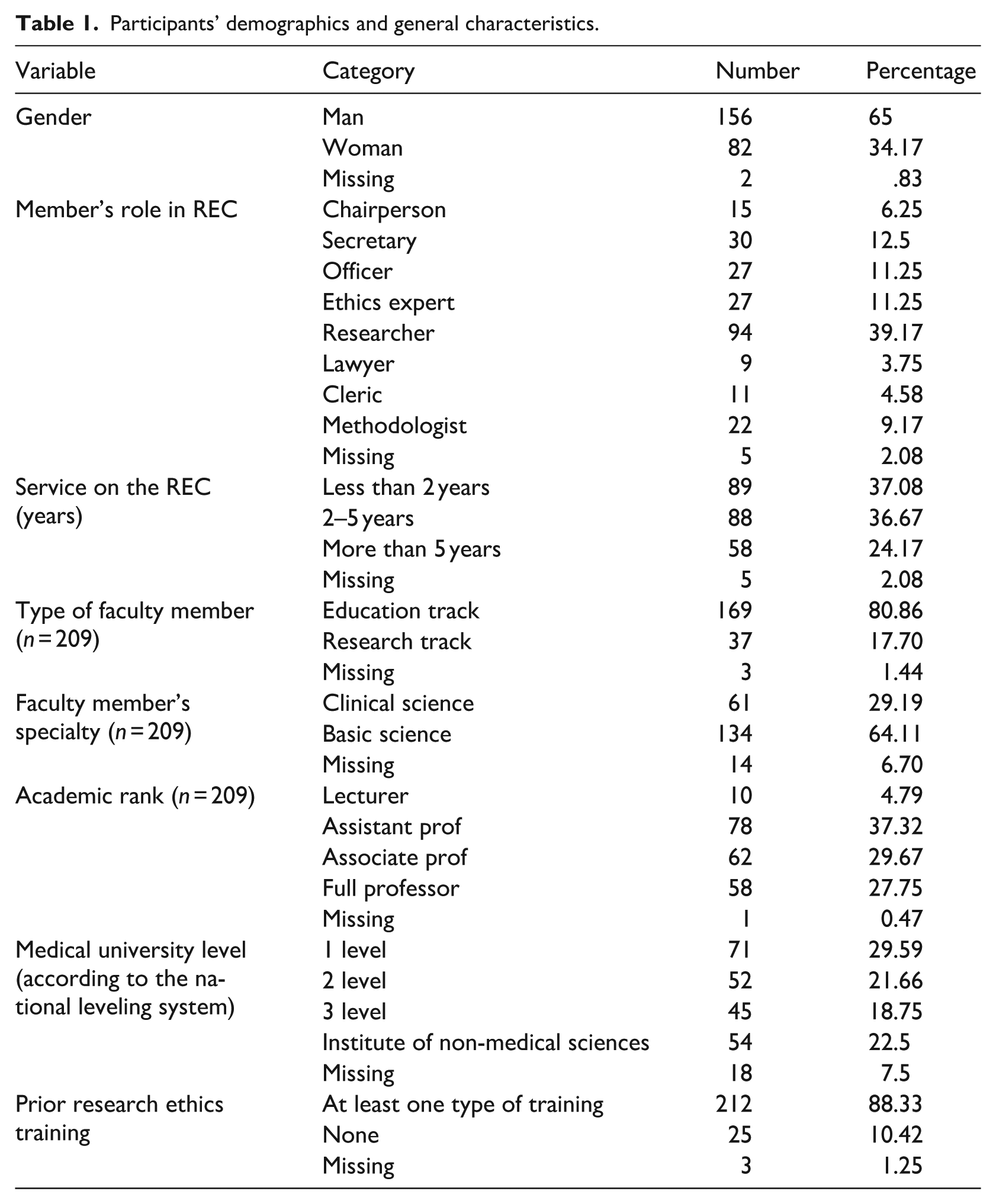
Among the participants, 87.08% were employed as university academic faculty members (Figure 1). Of this subgroup, more than two-thirds worked in the education track, while another two-thirds belonged to the basic sciences. Additionally, 37.32% of the faculty members held the rank of assistant professor. This is consistent with the fact that except for the REC officers who are non-academic staff of universities, and some of the lawyers and clerics, other members including chairpersons (who are the chancellor or president of the institutions according to the law) and secretaries (who are vice-chancellors/deputy of research in the host organizations) are academic faculty members. Basic scientists (65%) were more present than clinical scientists.
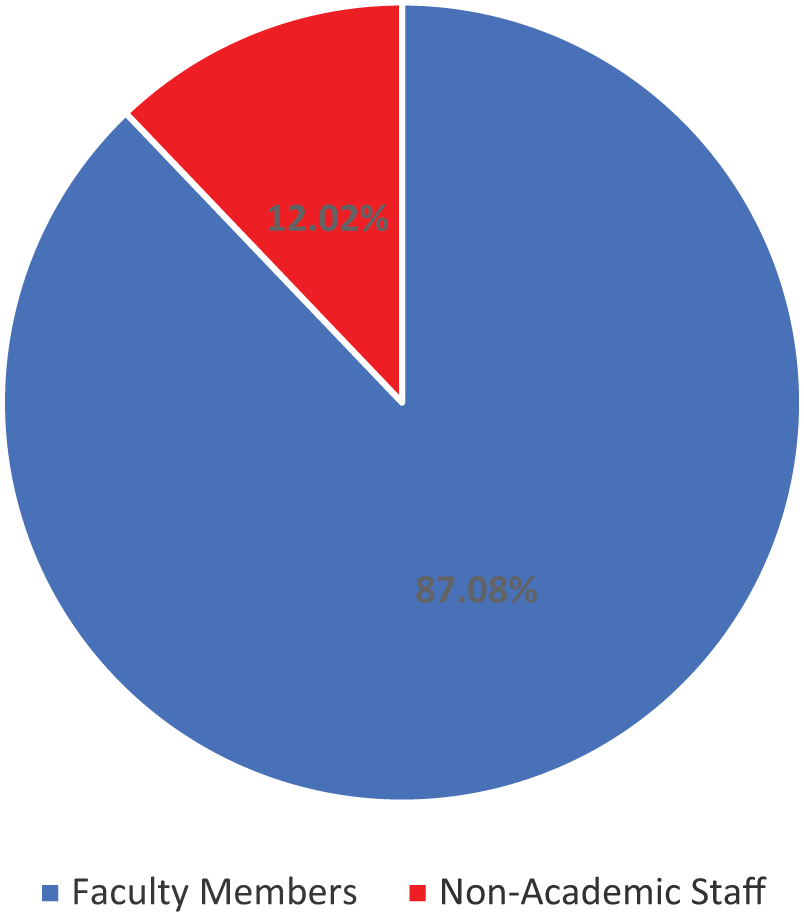
Proportion of academic faculty members serving on RECs.
Their average tenure as faculty members was about 15.43 years. A large proportion of participants (88.33%) had received some kind of education in research ethics through attending workshops on research and publication ethics. The academic staff participants’ publication activities showed that, on average, they had published 24.36 peer-reviewed articles in English and 17.55 in Persian. They were present in 27.51% and 15.86% of these articles as corresponding author and first author, respectively. Their average H-index value was 12.83. The average number of theses supervised by them was 21.75 titles.
Knowledge of REC members regarding publication ethics standards
Table 2 presents the participants’ responses to knowledge questions across different areas of publication ethics standards. For each survey item, one correct answer was based on the content of the guidelines, accompanied by three incorrect options. The knowledge score for each area was calculated as the percentage of correct responses given by participants to all questions related to that area. While REC members should be knowledgeable about publication ethics standards, their overall knowledge was found to be moderate, with an average score of 51.91%. This indicates that REC members generally did not possess a high level of knowledge regarding these standards. Participants’ knowledge scores varied considerably across different areas of publication ethics, ranging from 11.7% to 69.38%. The highest score was observed in “order and composition of authors” (69.38%), while the lowest was in declaring “organizational affiliation” (11.7%). Knowledge scores for “manuscript submission to journals,” “authorship criteria,” and “authorship responsibilities” were relatively high, ranging from 63.63% to 68.16%. The score for “citing sources” was 55.01%, whereas knowledge of “conflict of interest” was notably lower, at 27.5%.
Knowledge, attitudes, and practices of the REC members regarding publication ethics standards.
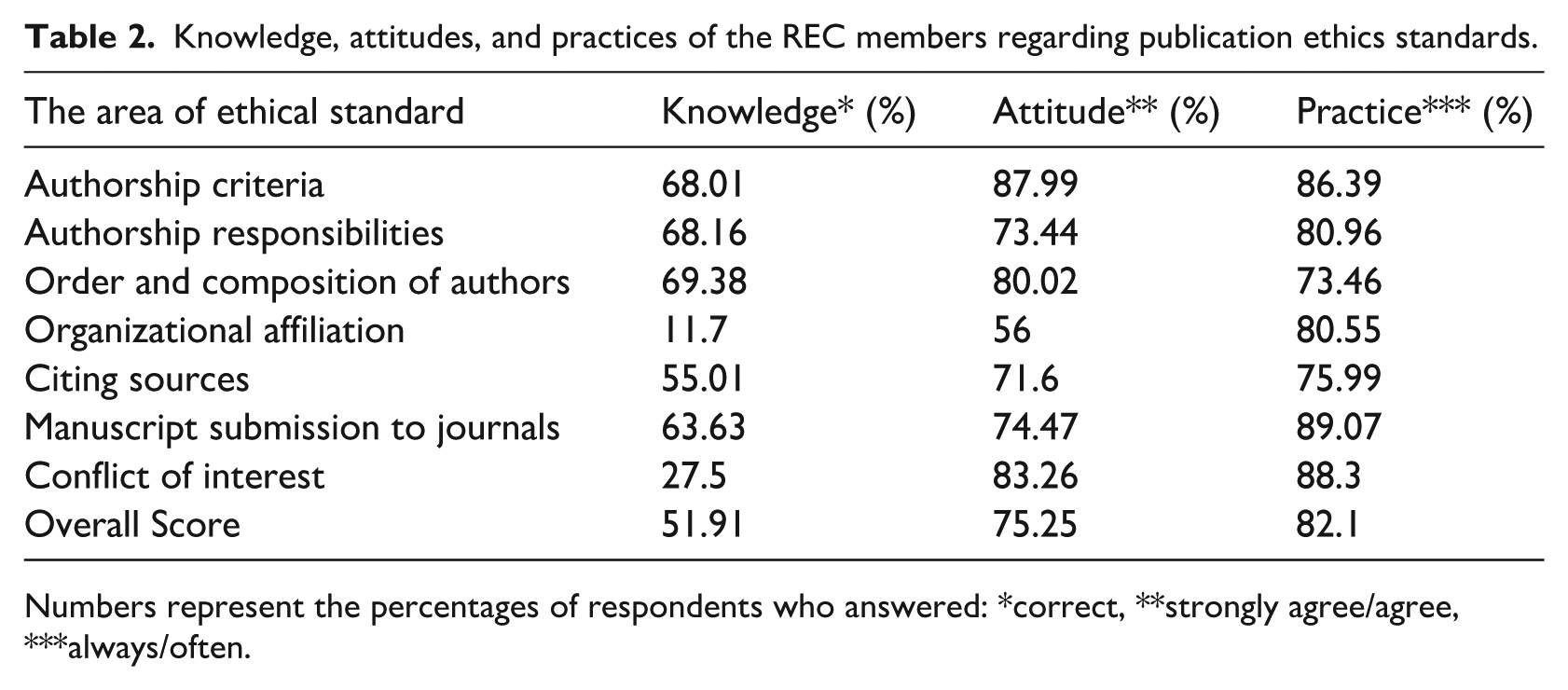
Numbers represent the percentages of respondents who answered: *correct, **strongly agree/agree, ***always/often.
The impact of demographic and general variables (independent) on members’ knowledge of publication ethics standards was evaluated (Table 3). There was no significant difference between the overall knowledge scores of male and female members, except that women’s knowledge (0.74) regarding the “order and composition of authors” was significantly higher (p = 0.013). The average knowledge scores of members, based on their roles in the REC, showed significant difference. The lowest knowledge score was observed in clerics (0.49), while the highest scores were recorded for ethics experts (0.69), methodologists (0.68), researchers (0.64), chairpersons (0.62), secretaries (0.58), officers (0.51), and lawyers (0.49; χ2(df = 7; N = 235) = 31.823; p ⩽ 0.001; Figure 2). In addition, a Mann–Whitney U test was conducted to compare the knowledge scores between members with academic roles (e.g., ethics experts, methodologists, researchers, chairpersons, and secretaries; M = 0.64, SD = 0.14) and those with non-academic roles (e.g., clerics, lawyers, and officers; M = 0.56, SD = 0.15) on the RECs. The results indicated that the difference was statistically significant (U = 3404.5, p = 0.001).
Differences in knowledge, attitude, and practice of the REC members by gender, type of faculty member, specialty, and research ethics training.
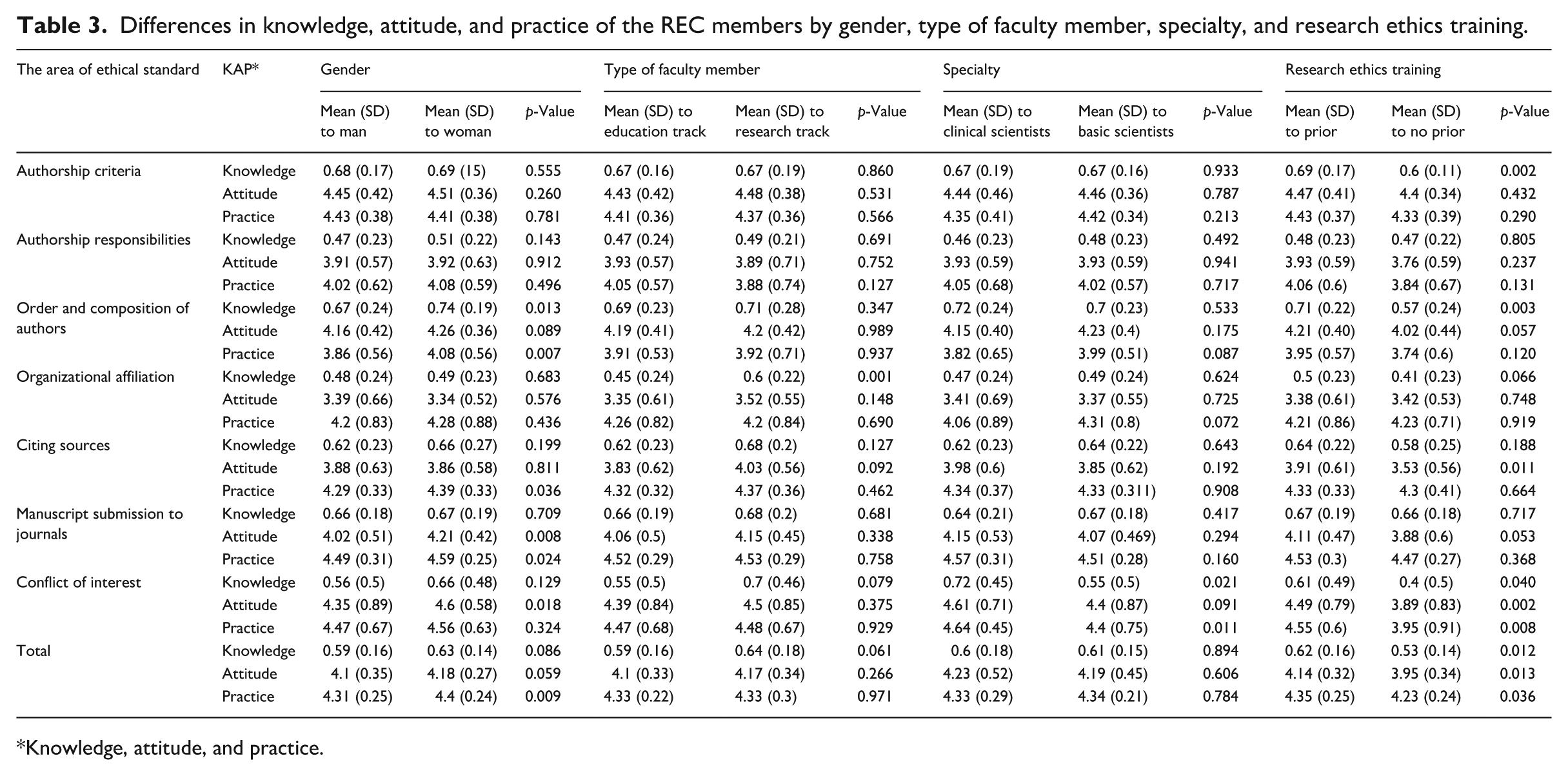
Knowledge, attitude, and practice.
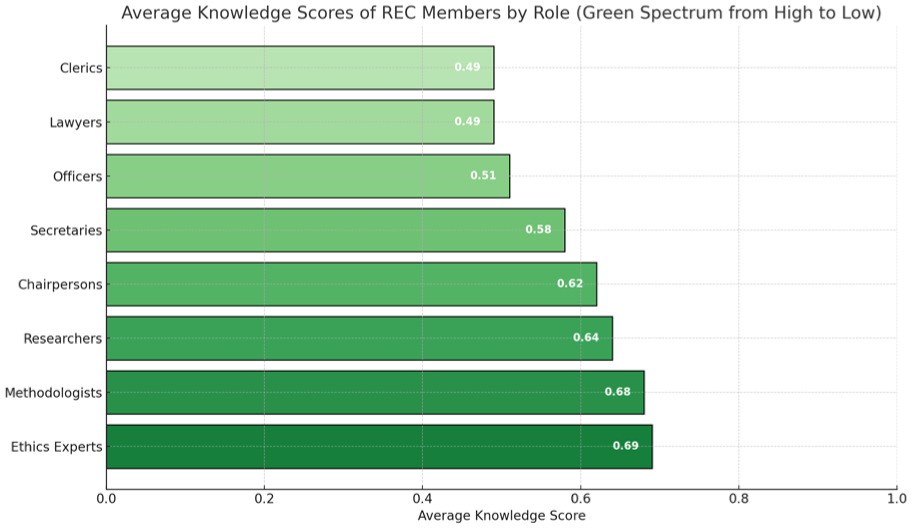
Average knowledge scores of REC members by role (Green spectrum from high to low).
Knowledge levels varied among members with different years of service in the REC; those with more than 5 years of experience provided more correct answers (average = 0.65) to knowledge-related questions (χ2(df = 2; N = 235) = 6.152; p = 0.04). No significant differences were found in the levels of knowledge among members from RECs affiliated with universities in varying levels. Among participants who were faculty members, the average overall knowledge score did not differ significantly between those in the education and research tracks (as faculty members in Iranian universities of medical sciences are recruited into one of these tracks). However, faculty members in the research track demonstrated significantly higher knowledge (0.6) regarding questions related to the declaration of “organizational affiliation” (p = 0.001). No significant differences were observed between the average overall knowledge scores of faculty members across different academic ranks and clinical/basic sciences; only clinical scientists showed significantly higher knowledge (0.72) regarding “conflict of interest” issues (p = 0.021).
There was a tendency for members with prior training in research and publication ethics, or prior research experience, to be more likely to provide correct answers to knowledge questions compared to those without such training or experience. The average overall knowledge score of members with prior training (0.66) was significantly higher than that of those without training, as was their knowledge regarding “authorship criteria” (0.69), “order and composition of authors” (0.71), and “conflict of interest” (0.61; p < 0.05). The scores of faculty members involved in RECs were analyzed. No correlation was found between their knowledge and length of service. However, analysis of their prior research experience revealed a weak positive correlation between knowledge and the number of published English articles (rho = 0.31, p ⩽ 0.001), and a very weak correlation with the H-index (rho = 0.15, p = 0.043). In contrast, no significant correlations were found for other research activities, including the number of published Persian articles, supervised theses, or first/corresponding authorships (Table 4).
Association between faculty members’ knowledge, attitudes, practices and years of service and prior research experience.

p < 0.05. **p < 0.01.
Attitude of REC members regarding publication ethics standards
The participants assessed the importance of adhering to ethical standards in academic publications using a 5-point Likert scale (“strongly disagree” = 1, “disagree” = 2, “undecided” = 3, “agree” = 4, and “strongly agree” = 5). To enhance the meaningfulness of the responses, we combined the categories “strongly agree/agree” and “strongly disagree/disagree.” The scores for the “strongly agree/agree” category are presented in Table 2. Overall, the majority of members (75.25%) endorsed the observance of ethical standards in publications. A significant majority (87.99%) agreed with meeting the standards related to “authorship criteria.” Approximately 80% of participants deemed it essential to comply with the standards concerning “conflict of interest” and “order and composition of authors.” Almost three-quarters of participants agreed with the application of ethical standards related to “manuscript submission to journals,” “authorship responsibilities,” and “citing sources.” More than half believed that researchers should declare their “organizational affiliation” in their publication (Figure 3).
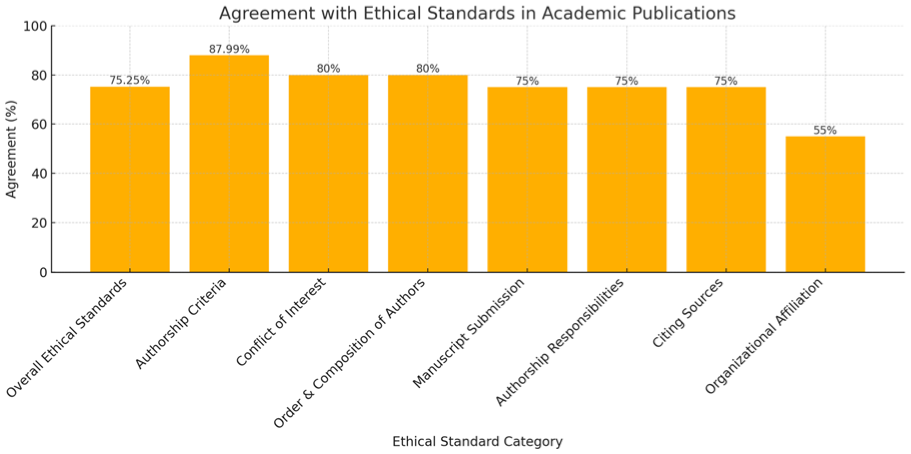
Agreement with publication ethics standards among REC members.
The effect of demographic and general characteristics on members’ attitudes regarding the importance of observing publication ethics standards was evaluated (Table 3). Male and female members in the RECs generally did not differ significantly in expressing the importance of meeting these standards, except for women’s attitudes toward “manuscript submission to journals” (4.21) and “conflict of interest” (4.6), which were significantly higher than those of men (p < 0.05). The evaluation of REC members regarding the importance of ethical standards was significantly different from one another (p < 0.05). Clerical members did not consider compliance with these standards very important (3.47), while researchers (4.30), ethics experts (4.27), methodologists (4.24), secretaries (4.21), chairpersons (4.05), officers (3.95), and lawyers (3.77) showed respectively higher levels of agreement (χ2(7; N = 207) = 21.758; p = 0.003; Figure 4). Statistically significant difference was found in attitude scores between members with academic roles (e.g., ethics experts, methodologists, researchers, chairpersons, and secretaries; M = 4.17, SD = 0.30) and those with non-academic roles (e.g., clerics, lawyers, and officers; M = 3.97, SD = 0.39) on the REC, as assessed by a Mann–Whitney U test (U = 2495.5, p = 0.002). The attitudes of REC members did not show any significant differences based on years of service or university level. There was no significant difference in the attitudes of faculty members belonging to the education and research track, clinical/basic science, or academic ranks.
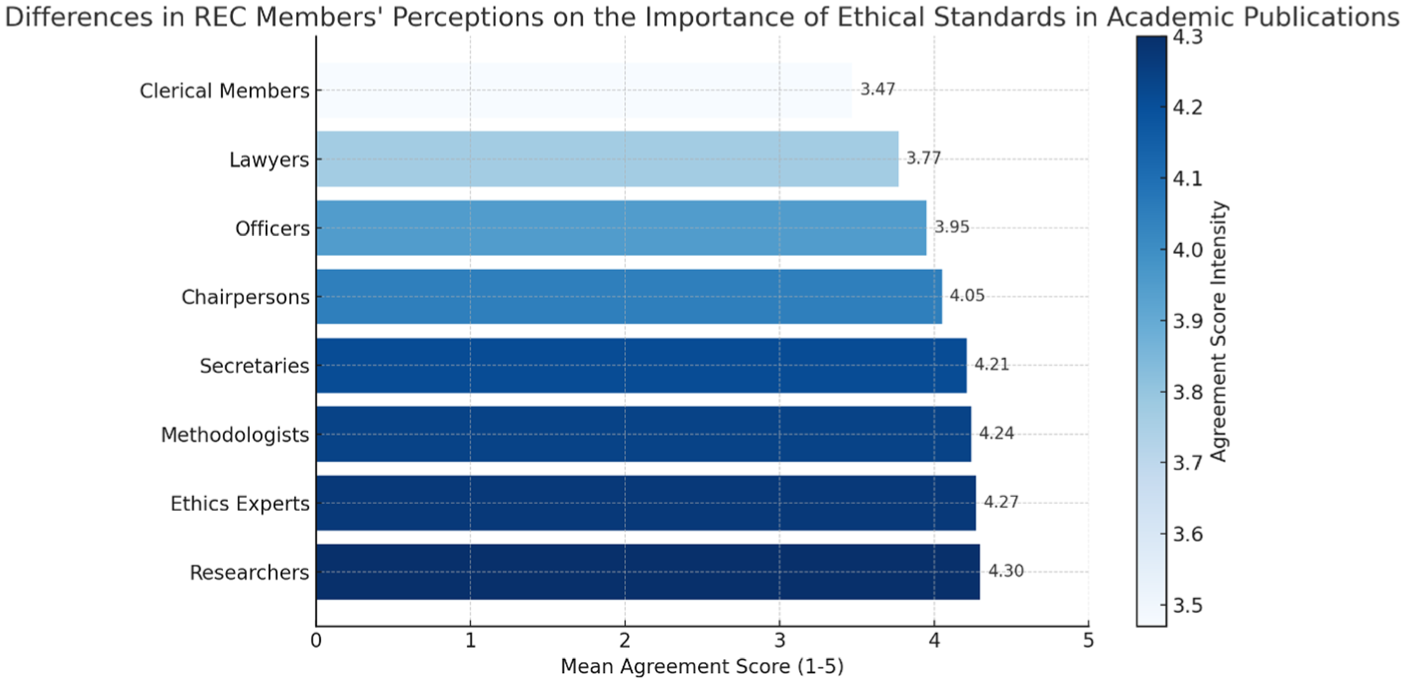
Differences in REC members’ perceptions on the importance of publication ethics standards.
The average overall attitude score of members with prior ethics training (4.14) was significantly higher than that of those without training, and their assessment of the importance of complying with the standards for “citing sources” (3.91) and “conflict of interest” (4.49) was also significantly higher (p < 0.05). Additionally, there was no correlation between faculty members’ attitudes and their length of service. Their attitudes toward publication ethics standards may be related to their participation in research activities. However, among the types of activities considered for research experience, there was only a weak positive correlation between their attitudes (rho = 0.21; p ⩽ 0.001) and the number of published English articles (Table 4).
Practice of REC members regarding publication ethics standards
REC members reported the extent to which they consider ethical standards in the publication of their research. To make the results more meaningful, their responses were transformed into dichotomous categories of “always/often” and “rarely/never,” with the scores for the “always/often” category presented in Table 2. Ethical standards in their own research publications were followed in general by 82.1% of them. Members paid the most attention to standards related to “manuscript submission to journals” (89.07%) and the least attention to “order and composition of authors” (73.46%). A significant majority reported compliance with standards related to “conflict of interest” (88.3%), “authorship criteria” (86.39%), “authorship responsibilities” (80.96%), “organizational affiliation” (80.55%), and “citing sources” (75.99%; Figure 5).
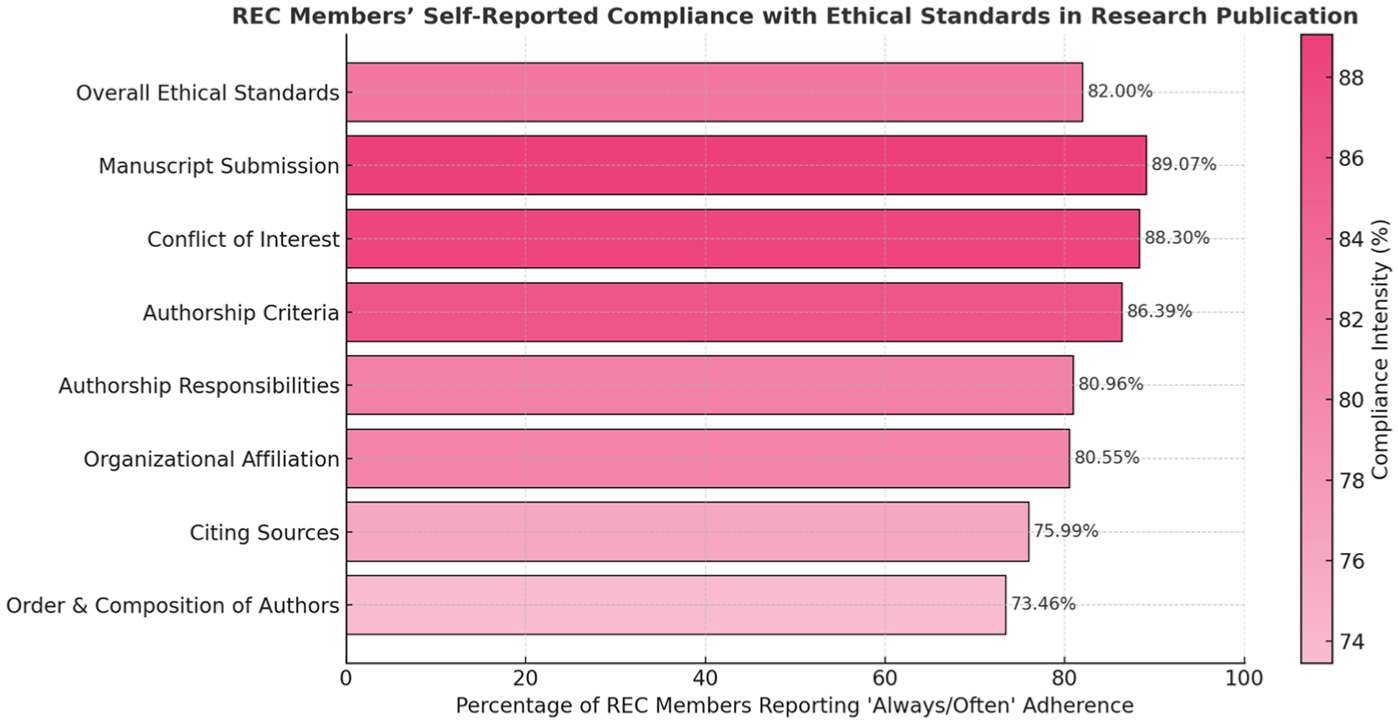
REC members’ self-reported compliance with publication ethics standards.
The effect of demographics and general characteristics on the practices of REC members was assessed (Table 3). Compliance with ethical standards in publication among female members (4.4) was significantly higher than that of male members, and they adhered more closely to ethical standards related to “order and composition of authors” (4.08), “citing sources” (4.39), and “manuscript submission to journals” (4.59) (p < 0.05). No significant differences were observed in members’ practices based on their role, years of service in REC, or university level. The practices of faculty members in the education and research track, as well as those with different academic ranks, did not differ significantly from one another. The overall practices of clinical scientists were not significantly different from those of basic scientists; however, clinical scientists showed significantly greater adherence to the standards regarding “conflict of interest” (4.64) (p = 0.011). There was no correlation between faculty members’ practices and their length of service. The effect of prior ethics training indicated that members who attended research ethics workshops and courses significantly complied with the standards (4.35) more compared to those without this experience, particularly paying more attention to the standards related to “conflict of interest” (4.55; p = 0.008). There was no significant correlation between faculty members’ research activities and their practices regarding publication ethics standards (Table 4).
Based on the assumptions of the KAP approach, which refers to a knowledge, attitude, and practice study, the correlation between members’ knowledge, attitudes, and practices was investigated. The responses of the members in the survey indicated a moderate correlation between members’ knowledge and their attitudes (rho = 0.64; p ⩽ 0.001) and practices (rho = 0.41; p ⩽ 0.001), as well as between members’ attitudes and their practices (rho = 0.61; p ⩽ 0.001; Table 4).
Discussion
More than 2 decades have passed since the establishment of RECs and their continuous activities with the aim of monitoring ethical standards in biomedical research in Iranian medical universities and research institutions. Considering the dual role of RECs in Iran that are required to provide expert opinion for the case of scientific misconducts in addition to their routine role of reviewing research proposals, as a unique feature of that system, REC members are expected to possess a thorough understanding of ethical standards to effectively interpret the guidelines in the process of assessing cases of possible research misconduct. It is also expected that those members of RECs, who conduct research as researchers underrated and apply these standards in their own research at the highest possible level. The knowledge of ethical standards among members can indicate their understanding and decision-making capabilities. Additionally, their attitudes toward the necessity of complying with these standards reflect their level of sensitivity, while the implementation of these standards demonstrates their adherence. Several studies have focused on the duties and performance of RECs in protecting the interests of participants and human subjects in research, primarily examining the performance of RECs from the perspective of the research community, particularly faculty members (Ayoub et al., 2019; Munoli et al., 2017). Despite the studies that have evaluated the structure and administrative processes of RECs in Iran (Larijani et al, 2006; Noroozi et al., 2024), limited information has been reported regarding the knowledge, attitudes, and practices of REC members concerning ethical standards. This study is the first survey among REC members aimed at evaluating their knowledge, attitudes, and practices regarding publication ethics standards.
A REC is composed of members from different specialties who meet regularly (Grady, 2015). They are expected to be educated and knowledgeable and so prepared for this role. This study showed that the overall knowledge score of REC members (51.91%) was at an average level, which is concerning. While it is difficult to assign a qualitative weight to such a result (e.g., “excellent,” “good,” “fair,” or “poor”), the findings suggest that RECs have considerable room for improvement (Silverman et al., 2015). Our study identified specific areas of publication ethics standards where RECs performed well, as well as those that require targeted quality improvement. Given that a significant portion of the research misconduct addressed by the RECs is related to authorship issues, and considering that many of their members are academic faculty members who publish academic articles at their own research area, it is evident that they possess greater knowledge regarding authorship matters. This includes areas such as “order and composition of authors” (69.38%), “authorship responsibilities” (68.16%), and “authorship criteria” (68.01%).
This study examined the impact of various variables on the participants’ level of knowledge. The results provide insights for enhancing REC members’ knowledge. The average knowledge of members who had received prior research ethics training through courses and workshops was found to be significantly higher. This finding aligns with prior research, which has established that ethics training is a strong predictor of familiarity with research ethics principles (El-Dessouky et al., 2011). Furthermore, empirical studies have shown that individuals with prior ethics training are significantly less likely to engage in research misconduct (Kandeel et al., 2011) and are more aware of both research regulations and ethical principles (El-Dessouky et al., 2011; Felaefel et al., 2018; Shiju et al., 2023).
On the other hand, a significant portion of researchers who apply for REC approval, views the role of RECs as an obstacle to their research activities, primarily due to concerns about the level of ethical training among REC members (Ayoub et al., 2019; Silverman et al., 2015). Researchers often assume that REC members lack a clear understanding of ethical issues due to insufficient education in the field of ethics (Bhowmick et al., 2014). Inadequate training of members threatens the quality, efficiency, and consistency of ethical reviews conducted by REC. This situation alters the research community’s perspective on the position and performance of RECs and may disrupt effective communication between researchers and these committees (Ayoub et al., 2019). Enhancing members’ knowledge and awareness of ethical guidelines and policies for research can significantly improve the quality of ethical reviews (Silverman et al., 2015). This development will enable RECs to better empathize with and support the needs of researchers while ensuring that the integrity and implementation of core ethical principles are understood and applied across various subject specializations. Our findings are in alignment with previous findings that claimed although the number of RECs in Iran is increasing and their membership is diverse, some members have not received adequate formal training in research ethics (Larijani et al., 2006). It is essential that the training outlined in the operational plan approved during the establishment of the RECs (Noroozi et al., 2024) or the training programs of the RECs, along with self-education activities, be organized for members (Mishra et al., 2018; Shiju et al., 2023). Furthermore, training programs for all faculty members in universities should be mandatory and serve as a prerequisite for joining RECs (Al Omari et al., 2022).
Activities related to members’ research experience were included in the demographic section of this survey. Prior research experience has been identified as an important factor for membership in REC (Atallah et al., 2018; Alfattani et al., 2023). Given that faculty members constitute the majority of REC members, it was expected that they would not have limited research experience. The tendency observed was that members with prior research experience were likely to report a greater understanding of publication ethics standards compared to those without such experience. However, this assumed correlation did not reach statistical significance regarding members’ research publishing activities. It was found that the number of published English articles and H-index had a weak correlation with members’ knowledge of publication ethics. This finding aligns with Shiju et al. (2023), which reported differences in awareness of ethical principles among individuals involved in research projects. In contrast, other studies have indicated that individuals with prior research experience were significantly less familiar with research ethics (El-Dessouky et al., 2011; Rothstein and Phuong, 2007).
The average overall knowledge scores of members varied depending on their roles within the REC. The highest level of knowledge was recorded among ethics experts, which was anticipated due to their formal expertise and training in biomedical ethics compared to other members. However, they were expected to possess more knowledge regarding the issues outlined in the National Publication Ethics Guideline. Notably, the low level of knowledge among those in management and executive roles (chairperson, secretary, and officer) was concerning when compared to members with scientific and research backgrounds (researchers and methodologists). Especially when we consider the high level of executive roles of REC chairperson and secretary as the institution president and research deputy. Non-academic members, such as lawyers and clerics, also demonstrated the lowest levels of knowledge. These findings underscore that RECs face a shortage of qualified experts (Abou-Zeid, Afzal, & Silverman, 2009). Although a lack of diverse membership or insufficient member numbers can hamper the optimal functioning of RECs and their ability to conduct high-quality, consistent ethical reviews (Silverman et al., 2015), an equally important concern is providing adequate training for members, particularly those from diverse or non-academic backgrounds. Given the wide range of research and ethical challenges that need to be addressed, RECs should comprise a diverse membership with the necessary expertise and experience in research methods (Ayoub et al., 2019). Al Omari et al. (2022) found that the majority of REC members served without certification or advanced training in ethics, and there were no specific requirements for participation in further ethics training.
Our findings also indicated that members with over five years of service on the REC demonstrated greater knowledge in identifying publication ethics standards. This highlights the need to recruit qualified, certified, and experienced members. Mechanisms should be established to assess the qualifications of individual members, enabling RECs to evaluate and confirm members’ knowledge concerning ethical principles, regulatory requirements, and operational issues (Coleman & Bouësseau, 2008). Therefore, imposing term limits on REC membership could be challenging, as it might lead to the loss of experienced members. These results suggest that measures should be taken to improve the composition of membership within RECs and to provide ongoing training and assessment of members’ competencies. The requirement for RECs to offer continuous and periodic training in research ethics for their members should be considered (Noroozi et al., 2024). In this context, the role and support of the National Committee for Ethics in Biomedical Research are crucial. This involves assessing the competence of REC members, providing educational workshops and seminars on research ethics, and considering such essential education as a condition for accreditation or re-accreditation.
The responses from the survey indicated that direct and meaningful relationships existed between members’ knowledge and their attitudes and practices, as well as between members’ attitudes and practices. Consistent with common findings in KAP studies (Torabi et al., 2021), our correlation analysis revealed an interesting pattern. Although knowledge showed a relatively strong relationship with attitude (rho = 0.64), its direct association with practice was weaker (rho = 0.41). This finding suggests that knowledge alone is insufficient to change behavior. Instead, knowledge appears to first influence individuals’ attitudes, and this altered attitude then serves as the primary driver for adopting correct practices. This indirect pathway (K → A → P) is well-documented in KAP theory. Members’ attitudes toward the importance of ethical standards in publication reflect their sensitivity to these issues and motivate their behavior. Despite an average level of knowledge, there was a general consensus among members that ethical standards should be respected in publications. Most agreed on the importance of “authorship criteria” (87.99%) in publications. Since their knowledge of areas related to authorship issues was greater than in other areas, their attitude scores regarding “order and composition of authors” (80.02%) and “authorship responsibilities” (73.44%) also indicated that compliance with authorship issues was of great importance to them. Interestingly, while members had the least knowledge about “organizational affiliation,” about half believed that issues related to organizational affiliation should be accurately declared in research.
The results of the survey also revealed that 87.08% of the REC members were academic faculty members at universities, and the majority had experience in academic publishing. Therefore, their adherence to ethical standards in publication is crucial, alongside their membership in REC. A significant portion of the participants reported that they apply ethical standards, with their practice scores being relatively high across all areas. Despite the participants’ low knowledge regarding ethical standards related to “conflict of interest” and “organizational affiliation,” they reported that they adhered to these standards to a high extent when publishing their research. This inconsistency and contradiction may be related to the participants’ inaccurate understanding of the same topic questions in the knowledge and practice sections of the survey. However, we cannot overlook the favorable attitudes of the members toward these areas, which may drive their practices. In line with their knowledge and attitudes, members also demonstrated high levels of practice in areas related to authorship issues. They reported the highest sensitivity to complying with ethical standards related to “manuscript submission to journals,” which was significantly better than their knowledge score in this area. This trend also applied to “citing sources,” with the majority of participants indicating that they followed the standards for citing sources.
Most of the variables that showed a significant difference in members’ knowledge also revealed similar patterns in their attitudes, including prior ethics training, prior research experience, and the members’ roles in the REC. For instance, similar to their knowledge, the judgments of different REC members indicated that researchers, ethics experts, and methodologists, respectively, placed the highest importance on adhering to ethical standards in publication. These members held scientific positions within the RECs and their sensitivity in ethical reviews is to the technical aspects of the research and all kinds of ethical issues. Their attitudes toward complying with ethical standards were more favorable compared to those of the management and executive team members (chairperson, secretary, and officer). Depending on their backgrounds, different members may have varying attitudes toward ethical issues (Mishra et al., 2018). As members with prior ethics training were significantly more sensitive to ethical issues in research than those without training (Felaefel et al., 2018), they placed greater importance on ethical standards in the publication. The average practice score of members with prior ethics training indicated that they complied with these standards more than those without training. In line with findings suggesting that individuals’ attitudes toward ethical issues in research may be influenced by their participation in research (Rothstein and Phuong, 2007), and considering the significant association between prior research experience and individuals’ attitudes toward ethical issues (Felaefel et al., 2018), a marginal correlation was observed between members’ attitudes toward publication ethics standards and the number of published English articles.
There was no significant difference in the members’ scores for knowledge and attitude based on gender, academic rank, years of service, type and field of faculty members, or the varying levels of universities. This finding also true for members’ practices, except for gender, where female members demonstrated significantly higher adherence to ethical standards. This result contrasts with the findings of some studies regarding certain variables (Felaefel et al., 2018; El-Dessouky et al., 2011; Kandeel et al., 2011) but aligns with the findings of others (Ayoub et al., 2019; Torabi et al., 2021). The number of female members, as indicated by the participants in this study, likely reflects a positive aspect for gender representation in RECs. The adequate presence of women in RECs can contribute to balanced gender representation in the ethical review of research. According to the instructions approved by the Ministry of Health and Medical Education in Iran, at least two female members must be included in the composition of REC. This requirement is a matter of preference rather than a mandate. Approximately 80% of the RECs in medical sciences universities in Iran have reported the presence of at least two women in their membership composition (Noroozi et al., 2024).
This study has several limitations. Most notably, the response rate was 11%, which may affect the generalizability of the findings. This low rate is likely attributable to the composition of RECs in Iran, where highest executive positions such as university presidents and research deputies serve as members. Another factor could be survey fatigue among the target population, which consists mostly of high-ranking academics, the sensitive nature of the topic and questions on research ethics, personal practice, and attitude, as well as the length of the KAP questionnaire. Furthermore, the source of the invitation—a regulatory body such as the National Committee for Ethics in Biomedical Research—could also have been a deterrent, given the weak legal protection for data privacy in Iran and REC members’ potential wariness of the high-level administration. Despite employing strategies to improve participation such as reminder emails, the response rate remained low. This introduces the potential for non-response bias, where respondents may have been more interested or knowledgeable in research ethics than non-respondents. As such, the results might overestimate the overall knowledge and positive attitudes toward research ethics within the broader population of REC members in Iran. Future studies could consider employing mixed-methods approaches or offering controlled incentives to enhance participation rates. The method used to collect data was a self-report survey, which may increase the risk of bias, particularly in the attitude section, and affect the generalizability of the findings. Since participants in the knowledge section were asked to identify the correct option from several alternatives, and the questions did not merely assess their awareness of ethical standards, the potential for bias in this section was almost eliminated. Although this survey may have flaws, and such limitations are inherent in any attempt to collect data for a KAP study, it can still provide a general overview of the status of RECs in Iran. The results can serve as guidance for decision-makers in academic institutions, helping them to better understand the necessary changes to incorporate into the policies, processes, and educational requirements of the REC. However, there is a need to repeat such surveys in the coming years to evaluate the knowledge, attitudes, and practices of REC members, ultimately aiming to improve the quality of their performance. Currently, there is limited information regarding the performance of RECs in Iranian universities, and their status remains largely unknown. Future studies can help identify deficiencies and enhance public trust in the performance of RECs through improvements. Additionally, further insights may enable organizations that issue ethical guidelines for research activities to understand how their policies and principles are perceived and implemented by RECs in academic settings (Brown et al., 2020).
Based on the findings of this study, future emphasis should focus on enhancing the knowledge and competencies of REC members through targeted training programs. It is crucial to investigate the effectiveness of specific educational interventions, such as workshops and continuous professional development courses, on improving members’ understanding of ethical standards and their application in practice. Longitudinal studies assessing the evolution of knowledge, attitudes, and practices among REC members over time will be essential in identifying trends and areas needing improvement.
Conclusion
This study aimed to capture the current level of knowledge, attitudes, and practices of REC members in Iran regarding publication ethics standards. The survey raises serious concerns about the knowledge of REC members in this area, especially considering that, RECs are responsible for assessing research misconduct, which often includes issues related to publication ethics. This situation necessitates urgent attention from policymakers, particularly in developing specific educational programs. The lack of sufficient knowledge among REC members could indicate an inadequate understanding of the ethical standards outlined in guidelines and instructions, potentially jeopardizing the quality, efficiency, and consistency of their judgments. This, in turn, could alter the research community’s perception of the position and function of RECs and their trust in RECs. Given the significant number of research and publication misconducts in Iran, there is a pressing need to enhance the capacity of RECs in this regard. Moving beyond general support, we recommend that Iranian regulatory bodies, such as the National Committee for Ethics in Biomedical Research at the Ministry of Health and Medical Education, mandate a structured and accredited training curriculum for all REC members. This program should be a prerequisite for membership and REC accreditation and re-accreditation and should include periodic refresher courses. To ensure high quality and international standardization, this curriculum could be adapted from established global models. For instance, the CITI (Collaborative Institutional Training Initiative) Program offers comprehensive online modules on various aspects of research ethics, which are widely used internationally. Alternatively, Iran could develop a national program inspired by mandatory certification modules such as those in countries like the United States or Singapore, ensuring it covers core topics such as vulnerable populations, informed consent, conflict of interest, and monitoring of approved studies. Allocating resources to implement such a specific, knowledge-based training program would be a concrete and transformative step toward strengthening RECs, rather than merely providing undefined resources.
To situate this study within the broader landscape of research ethics governance in Iran, it is crucial to acknowledge that challenges beyond individual knowledge and attitude exist. While this assessment is vital, it must be complemented by addressing fundamental issues such as the challenges related to RECs independence and composition.
Footnotes
Acknowledgements
We sincerely thank the National Committee for Ethics in Biomedical Research for supporting this survey.

Ethical considerations
Ethical approval (IR.NIMAD.REC.1397.497) for this study was received from the Biomedical Research Ethics Committee of the National Institute for Medical Research Development (NIMAD). Potential participants received a cover letter attached to the survey, which outlined the study’s purpose and emphasized voluntary participation. Completing the survey indicated the participants’ informed consent. Completed surveys were returned anonymously. To enhance confidentiality, the names of the participants’ universities were not linked to the data presented in this article.
Funding
The authors disclosed receipt of the following financial support for the research, authorship, and/or publication of this article: This study was funded by the National Institute for Medical Research Development (NIMAD) under Grant (9775580).
Declaration of conflicting interests
The authors declared the following potential conflicts of interest with respect to the research, authorship, and/or publication of this article: Despite absence of any potential financial conflict of interest, the corresponding author served as the secretary of The National Committee for Ethics in Biomedical Research at the Ministry of Health and Medical Education of Iran from 2014 to 2021 who led the establishment of the national system for accreditation or RECs in Iran and preparing the draft of aforementioned publication ethics guidance, law and regulation. The authors used OpenAI’s ChatGPT (April 2025 version) to assist in data visualization and language refinement. All figures and content were reviewed and finalized by the authors.