




Abstract
Authorship remains a topic of discussion despite clear recommendations by the International Committee for Medical Journal Editors (ICMJE) adhered to by many publications from health sciences disciplines. This study aimed to review authorship practices and experiences in the Faculty of Health Sciences, University of the Free State in Bloemfontein, South Africa, and compare these to the findings of a similar study conducted in 2001. This was a cross-sectional quantitative study with some open-ended questions for qualitative responses. All manuscripts appearing on the final Faculty accredited research output list of 2022 with a Faculty staff member, student or postdoctoral researcher as first author were included. Potential participants (one respondent per manuscript) were contacted via email in the following order: first author, corresponding author, senior author (supervisor), other author, depending on the availability of email addresses. After written informed consent was obtained, structured face-to-face or online video interviews were conducted. The questionnaire consisted of the items included in the 2001 Faculty authorship study as well as issues raised in the ICMJE and Faculty authorship guidelines. Interviews were conducted with 65 respondents regarding 97 (82%) of the 119 manuscripts that qualified for the study. The median number of authors per manuscript was 4 (range 1–13). Only 7% of the manuscripts with more than one author had a formal authorship agreement. For three of the four ICMJE authorship criteria, respondent feedback indicated that all the authors of more than 80% of manuscripts fulfilled the criterion. All authors fulfilled all four criteria in only 48% of manuscripts. Respondents reported problems regarding authorship with 16% of the manuscripts. Forty percent of respondents were unaware of the Faculty authorship guidelines and 62% of the ICMJE authorship criteria. Most manuscripts were multi-authored and adherence to ICMJE criteria was high. Despite the lack of formal authorship agreements, authorship problems were experienced infrequently.
Introduction
The principles of authorship of scientific manuscripts remain a topic of discussion in Health Sciences, reflected by the editorials and articles published on this topic in various health sciences disciplines during 2024 (Arrivé, 2024; Haas et al., 2024; Hallas, 2024; Kwee et al., 2024; Lin, 2024; Malik et al., 2024; Meursinge Reynders et al., 2024; Rivera, 2024; Tang, 2024; Van Norman, 2024; van Wely, 2024; Wilson and Mitchel, 2024). Concerns have been raised about the ongoing increase in the number of authors listed per manuscript, which may in part be due to including “unwarranted authors” (Arrivé, 2024). Rivera (2024) reflected on coercion authorship (where authorship is demanded, not earned) which he considered “ubiquitous and preventable,” frequently to the detriment of younger researchers. Particular authorship challenges, such as the extent of the involvement of supervisors or other colleagues (e.g. clinical staff), related to graduate research publications have also been raised (Hallas, 2024). Wilson and Mitchel (2024) proposed how students could be trained in authorship ethics as part of the responsible conduct of research early in their careers. This entailed reflecting on their own roles, their instructor’s role and the contributions of other people to their project and research poster.
Recommendations regarding authorship have been formulated by the International Committee for Medical Journal Editors (ICMJE, 2025a) and these are adhered to by many health sciences publications (International Committee for Medical Journal Editors, 2025b). The first version of the ICMJE recommendations referring specifically to authorship was published in 1988 and consisted of the first three of the current four criteria (International Committee for Medical Journal Editors [ICMJE], 1988). The most recent ICMJE recommendations (dated January 2025) contain the following four criteria (International Committee for Medical Journal Editors, 2025a), which have been in place since 2013 (ICMJE, 2013):
Substantial contributions to the conception or design of the work; or the acquisition, analysis, or interpretation of data for the work; AND
Drafting the work or revising it critically for important intellectual content; AND
Final approval of the version to be published; AND
Agreement to be accountable for all aspects of the work in ensuring that questions related to the accuracy or integrity of any part of the work are appropriately investigated and resolved.
These recommendations “are intended to ensure that contributors who have made substantive intellectual contributions to a paper are given credit as authors, but also that contributors credited as authors understand their role in taking responsibility and being accountable for what is published” (ICMJE, 2025a). The recommendations should prevent gift authorship (also known as honorary or courtesy authorship) to persons who do not qualify as authors and prevent ghost authorship, that is, persons who qualify as authors are not listed as authors. In a systematic review and meta-analysis, Meursinge Reynders et al. (2024) reported pooled prevalences for the percentage of researchers considering co-author(s) as having received honorary authorship for the specific publication investigated. These ranged from 26% (95% CI 21%–31%) when no authorship criteria were referred to, 18% (95% CI 15%–21%) when reference was made to the ICMJE criteria, and 51% (95% CI 47%–56%) when co-author(s)’ contributions were stated and then compared to ICMJE criteria.
In 2001, the first author conducted a review of authorship practices and experiences in the Faculty of Health Sciences (FoHS) at the University of the Free State in Bloemfontein, South Africa, by interviewing first authors of Faculty publications of 2000 (Joubert, 2005). This study was conducted on behalf of the School of Medicine Research Committee, who wanted to propose authorship guidelines for the Faculty. Based on the findings of that study and proposals made by the Research Committee, the Faculty adopted guidelines similar to the ICMJE recommendation at that time (ICMJE, 1997), namely the first three criteria of the current four criteria list. These Faculty guidelines have been revised over time, and the most recent (2018) version includes the four ICMJE criteria (Faculty of Health Sciences, University of the Free State). The Faculty guidelines also give direction regarding author agreements, some common pitfalls, order of author names, student research, acknowledgments, and the role of a medical editor.
Two decades after the initial survey seemed to be an opportune time to revisit authorship-related matters in the Faculty, given the ongoing international discussion regarding this topic. The aim of this study was to review authorship practices (authorship discussion, author agreements and adherence to ICMJE criteria) and experiences (whether problems were experienced with the specific manuscript(s) included in the study or publications in general) in the FoHS in 2023, and compare these to the findings of 2001. In addition, awareness of Faculty authorship guidelines and ICMJE criteria was determined. To provide context to these practices and experiences, the authorship criteria and requirement of author contribution statements by the journals in which the manuscripts included in the study had been published, were also investigated.
Methods
Study design and sampling
In this cross-sectional study, all manuscripts that appeared on the final Faculty research output list of 2022 with a Faculty of Health Sciences full-time staff member, student, or postdoctoral researcher as first author were included. The information regarding manuscripts was obtained from an Excel file containing the final list of publications provided annually by the University of the Free State Directorate for Research Development to all staff members.
Potential respondents (one respondent per manuscript) were contacted by email (via the University of the Free State (UFS) Outlook address book or the email address provided in the manuscript) to introduce the project, to determine the person’s willingness to participate, and in which format and when the interview would take place. The information document, consent form and the manuscript(s) that the interview would deal with were attached to this initial email. Potential participants were approached in the following order of preference: first author, corresponding author, senior author (supervisor), other author, depending on the availability of an email address. If no response was received to this email, a second email was sent approximately a week later. If still no response was received, another UFS author of the manuscript in the order of preference indicated, was contacted and interviewed, if available. Interviews were conducted with 65 respondents.
Measurement
A questionnaire was compiled to include the items of the 2001 Faculty authorship study and other issues raised in the ICMJE and Faculty guidelines. The questionnaire consisted of close-ended questions with a few open-ended questions, mainly for respondents to motivate or elaborate on previous answers.
Structured face-to-face or online video interviews (depending on the availability of the interviewer or interviewee) were conducted by one of the researchers with one respondent per manuscript. If the researchers could not locate the full manuscript(s) online, the respondent was asked to provide an electronic copy by the time of the interview. The questionnaire was completed by the interviewer during the structured interview. Interviews were not recorded. Responses to open-ended questions were noted verbatim during the interview. The questionnaire dealt mainly with a specific manuscript and could thus be answered by one respondent several times, depending on the number of manuscripts of 2022 for which that person was the selected respondent. The details of the ICMJE criteria were provided to the interviewee in hard copy or electronically for ease of responding to the questionnaire items relating to these criteria. A few general questions related to authorship were only answered by the respondent once.
The researchers recorded information regarding the presence and content of author contributions and acknowledgment statements in the published manuscript. Information regarding statements about authorship by the applicable journals was obtained from the author guidelines on the journal websites.
Pilot study
A pilot study was conducted in 2022 with five Faculty authors who published a manuscript during 2021. These authors were purposefully selected to represent each of the five schools in the Faculty of Health Sciences, comprising the Schools of Clinical Medicine, Pathology, Biomedical Sciences, Nursing, and Health and Rehabilitation Sciences. Both researchers conducted face-to-face and online interviews during the pilot study. Amendments to the questionnaire (phrasing, funneling and order of questions) and additional questions (e.g. to determine respondents’ authorship experience in terms of number of prior publications, and whether respondents had problems in recalling the details regarding the manuscripts’ authorship) were approved by the Health Sciences Research Ethics Committee (HSREC) of the University of the Free State. These cases were not included in the main study.
Analysis
Quantitative analysis was done using SAS Version 9.4 (SAS Institute Inc., Cary, NC, USA) in the form of frequencies and percentages (categorical variables) and medians and interquartile ranges (IQR; numerical variables). The analysis of open-ended responses was inductive. Similar open-ended responses were first placed together in categories by the first author and then grouped into broader topics. Through discussion between the two researchers, consensus was reached regarding the categories and topics.
Ethical considerations
All the participants gave written informed consent for inclusion in the study and publication of the findings. All information was treated confidentially and only reported in summarized form. Interviewees were requested to refrain from identifying any authors by name in their responses. To protect confidentiality, when answering the section regarding adherence to ICMJE criteria, the respondent had to indicate how many of the authors fulfill each criterion and its subsections, not which authors. Questionnaires contained only code numbers for manuscripts and respondents. The researchers did not conduct interviews regarding manuscripts of which they themselves or their family members were co-authors or were involved in the project. The protocol was approved by the UFS HSREC (UFS-HSD2022/0168/3105), and permission was obtained from relevant UFS authorities.
Results
Response rate
Of the total of 119 manuscripts that met the inclusion criteria, interviews were conducted with an author regarding 97 (82%) manuscripts (Figure 1). The lowest response rates were for manuscripts with the first author in the School of Pathology (n = 8/14, 57%), and School of Biomedical Sciences (n = 7/9, 78%).
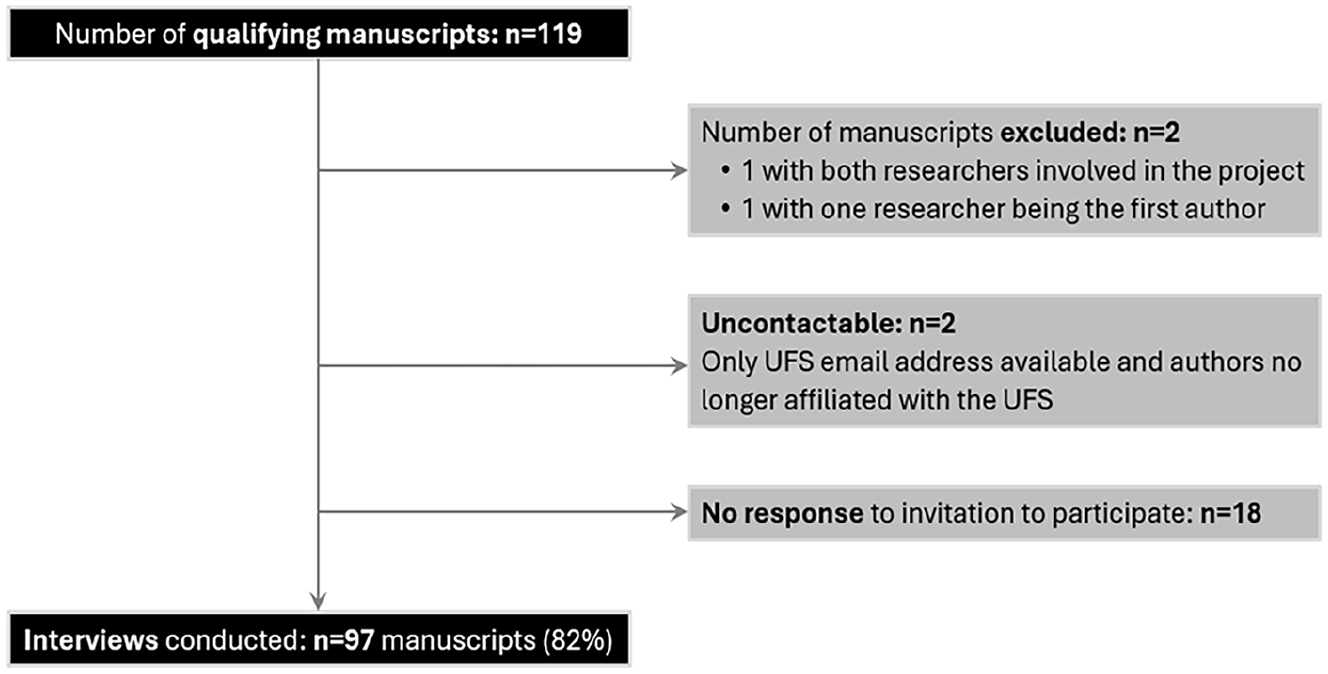
Response outcome.
Respondents and manuscript characteristics
Since some participants responded regarding multiple manuscripts, the total number of unique respondents was 65. The majority of respondents (n = 44, 68%) provided information on one manuscript. The largest number of manuscripts one respondent was interviewed on was seven. Respondents had a median number of 4.5 previous publications. Four respondents were interviewed on their first publication. Respondents were mainly Faculty staff (66%), staff who were also postgraduate students (17%) and postgraduate students (15%).
As summarized in Table 1, manuscripts for which interviews were conducted were mainly original research articles (80%), related to a postgraduate qualification (60%), and from the School of Clinical Medicine (51%). Interviews were mainly conducted with first authors (n = 62, 64%), followed by supervisors (n = 15, 15%) and corresponding authors who were not first authors (n = 13, 13%). The number of authors per manuscript ranged from one to 13, with a median of 4 (IQR 3–5). Thirty-one (32%) manuscripts had more than four authors. Seven manuscripts had only one author. Undergraduate student projects had the highest median number of authors (9.5, Table 1). Manuscripts for which no interview was conducted had a median of 4 authors (IQR 3–8).
Manuscript characteristics and number of authors per manuscript.
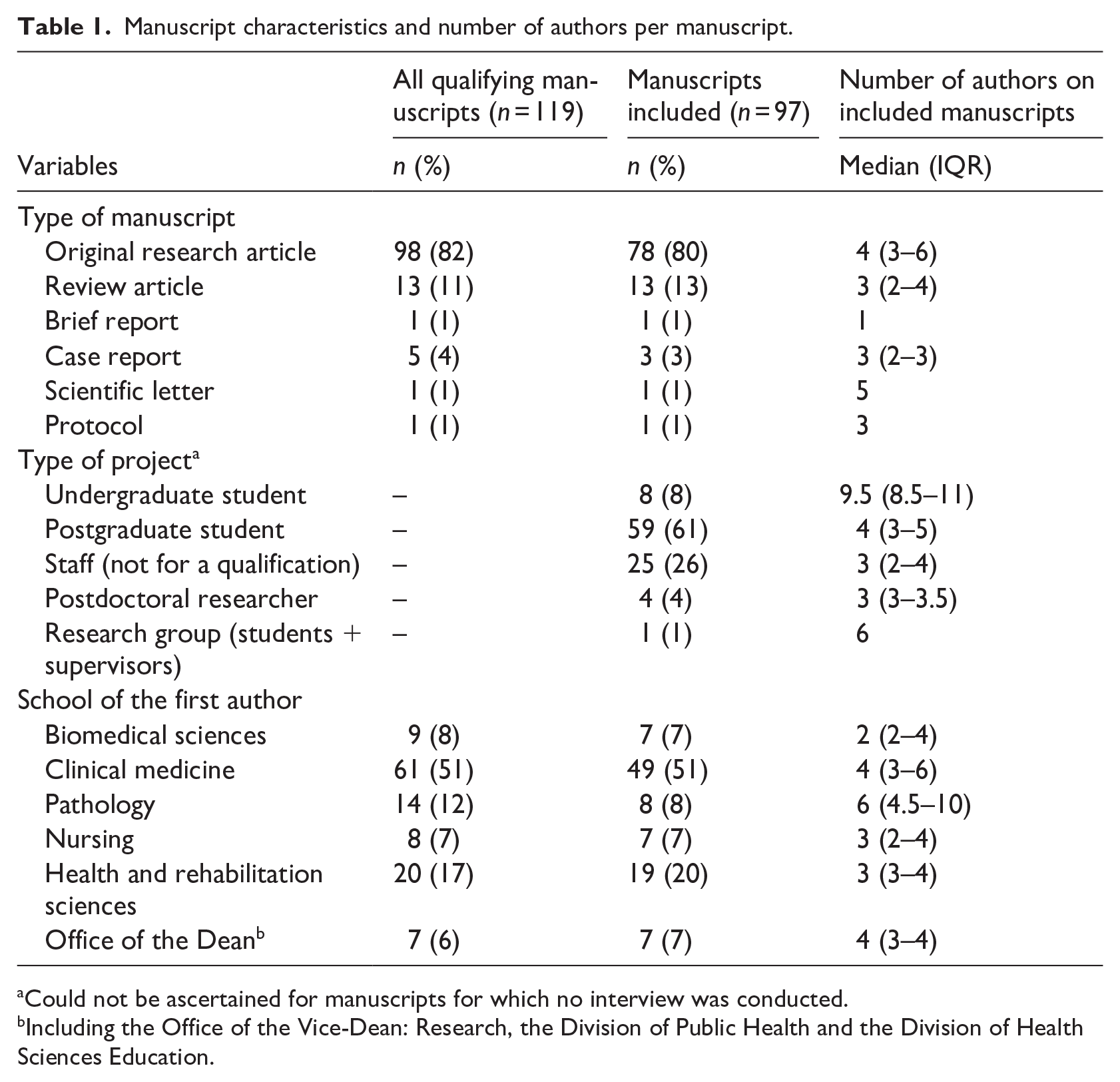
Could not be ascertained for manuscripts for which no interview was conducted.
Including the Office of the Vice-Dean: Research, the Division of Public Health and the Division of Health Sciences Education.
Authorship practices
For the 90 manuscripts with more than one author, respondents reported that authorship was discussed in the research team with at least some members in 76 cases (84%). For the largest percentage of these (n = 43, 57%), the discussion was during the project planning (from research idea to protocol writing). For 54 of the 90 (60%) manuscripts, there was an authorship agreement between at least some members of the research team. These agreements were mainly verbal (n = 45, 83%). Only 6 (7%) of the 90 manuscripts had a formal authorship agreement.
Based on respondents’ feedback regarding criteria 1 (substantial contribution to any aspect from conception to data interpretation), 2 (drafting or reviewing) and 3 (final approval) of the four ICMJE authorship criteria, it was found that all the authors of more than 80% of the multi-author manuscripts fulfilled the criterion. Respondents indicated that all the authors of only 62% of the manuscripts fulfilled criterion 4 regarding accountability (Table 2). All the authors fulfilled all four criteria for less than half (48%) of the manuscripts. The percentage of manuscripts for which all four criteria were fulfilled by all authors was 49%, 56%, and 29%, respectively, for postgraduate study manuscripts, staff manuscripts, and undergraduate study manuscripts.
All authors’ fulfilment of the International Committee of Medical Journal Editors (ICMJE) criteria for authorship based on respondent feedback (excluding single-author manuscripts).
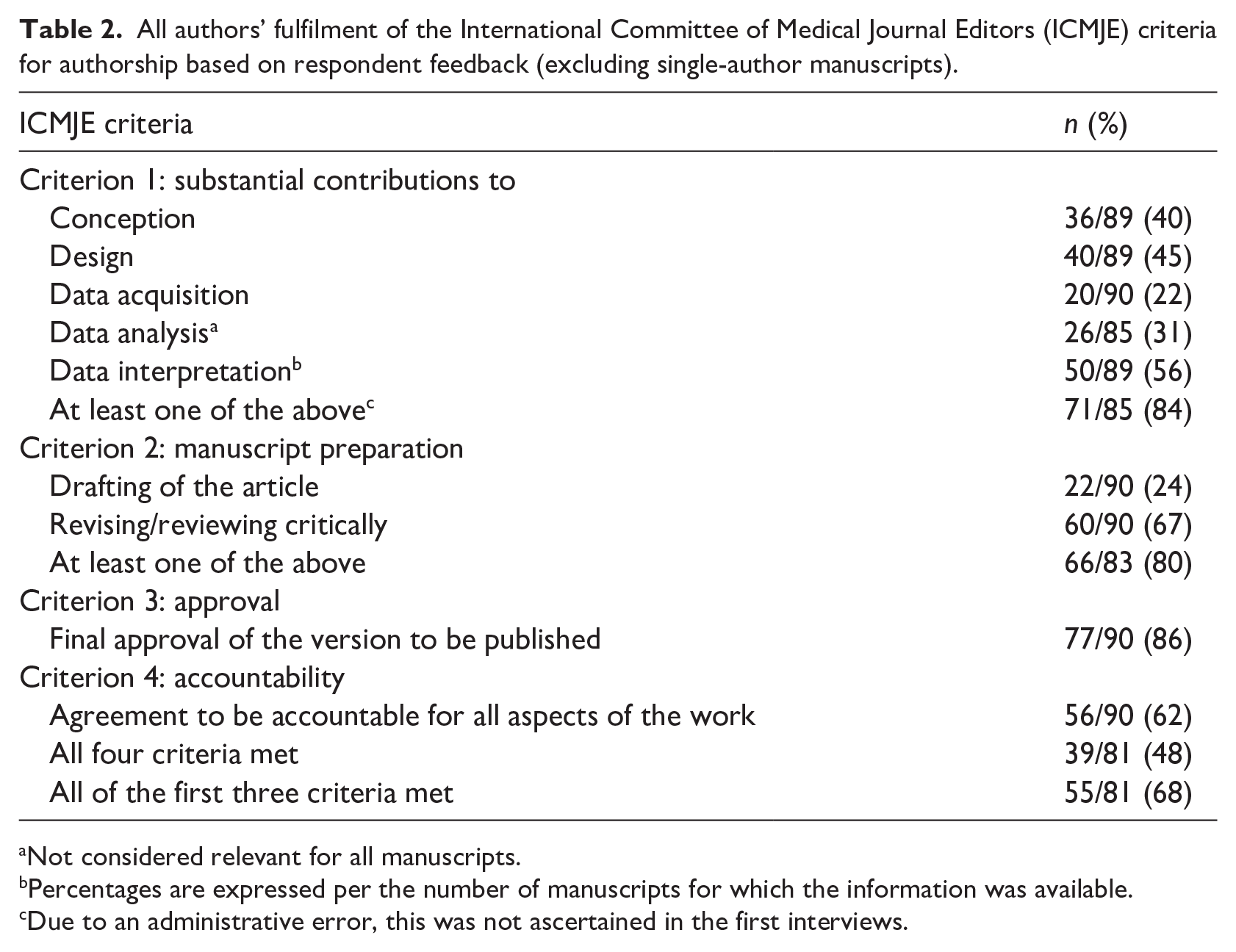
Not considered relevant for all manuscripts.
Percentages are expressed per the number of manuscripts for which the information was available.
Due to an administrative error, this was not ascertained in the first interviews.
In response to the question why authors not fulfilling all four criteria had been included, respondents provided the following motivations: “everybody contributed significantly enough, publication would not be what it is without everyone’s input,” “because of their contribution, author need not be part of every step but took time to review, and raise concerns to enable quality manuscript, cannot only acknowledge them,” “everyone had different roles but was important and valuable,” and every author “played a part somewhere in the project.” Respondents also stated that “there are practical challenges in applying these guidelines” and that authorship needs to be “negotiated.” For two (2%) of the manuscripts with more than one author, at least one author did not fulfill any of the criteria.
Of the 90 multi-author manuscripts, 62 (69%) contained a detailed description of author contributions, 6 (7%) stated equal contribution, 1 (1%) contained a vague statement, and in 21 manuscripts (23%), no statement was made regarding author contributions.
Authorship experiences
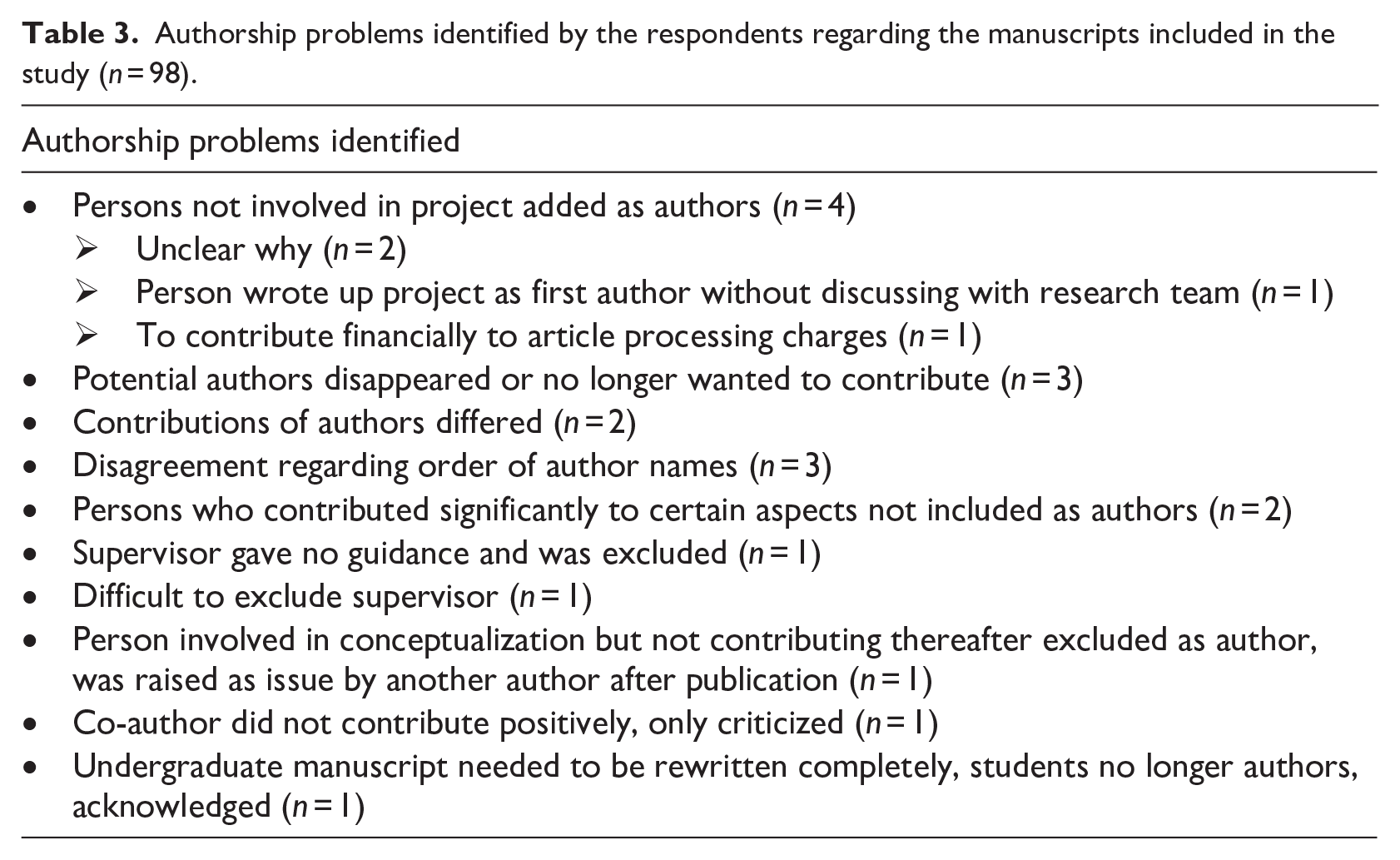
For 16 (16%) of the manuscripts, respondents indicated that some authorship problem was experienced. These problems are summarized in Table 3. Problems were raised for 20% (n = 12/59) of the manuscripts related to postgraduate studies compared to 8% (n = 2/25) of the manuscripts related to staff research not for a qualification. The highest percentage of problems was raised for manuscripts from the School of Health and Rehabilitation Sciences (n = 6/19; 31%) and the lowest for Clinical Medicine manuscripts (n = 5/49; 10%). For the 84% of manuscripts where respondents indicated that no authorship problem was experienced, most respondents made positive comments such as “authorship was planned, not accidental, it was thought through and no problems experienced,” “was a team which worked together,” “well-structured process for PhD,” “honest discussion, really easy to reach consensus, despite power differences,”, and “not at the receiving end of any bad practices.”
Authorship problems identified by the respondents regarding the manuscripts included in the study (n = 98).
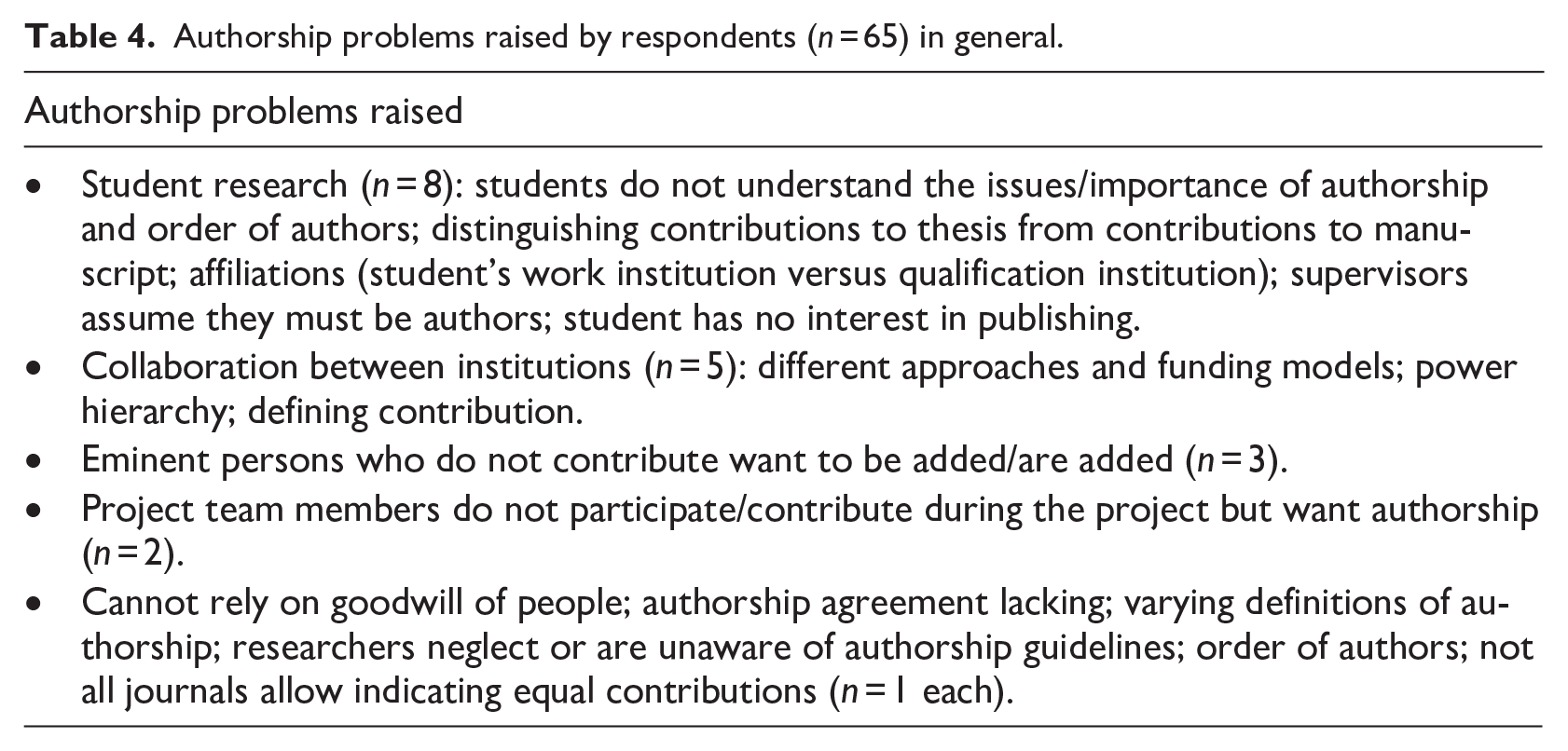
Of the 65 respondents, 18 (28%) raised problems regarding authorship in general (Table 4). These dealt mainly with student research and collaboration with other institutions.
Authorship problems raised by respondents (n = 65) in general.
Awareness of faculty authorship guidelines and criteria
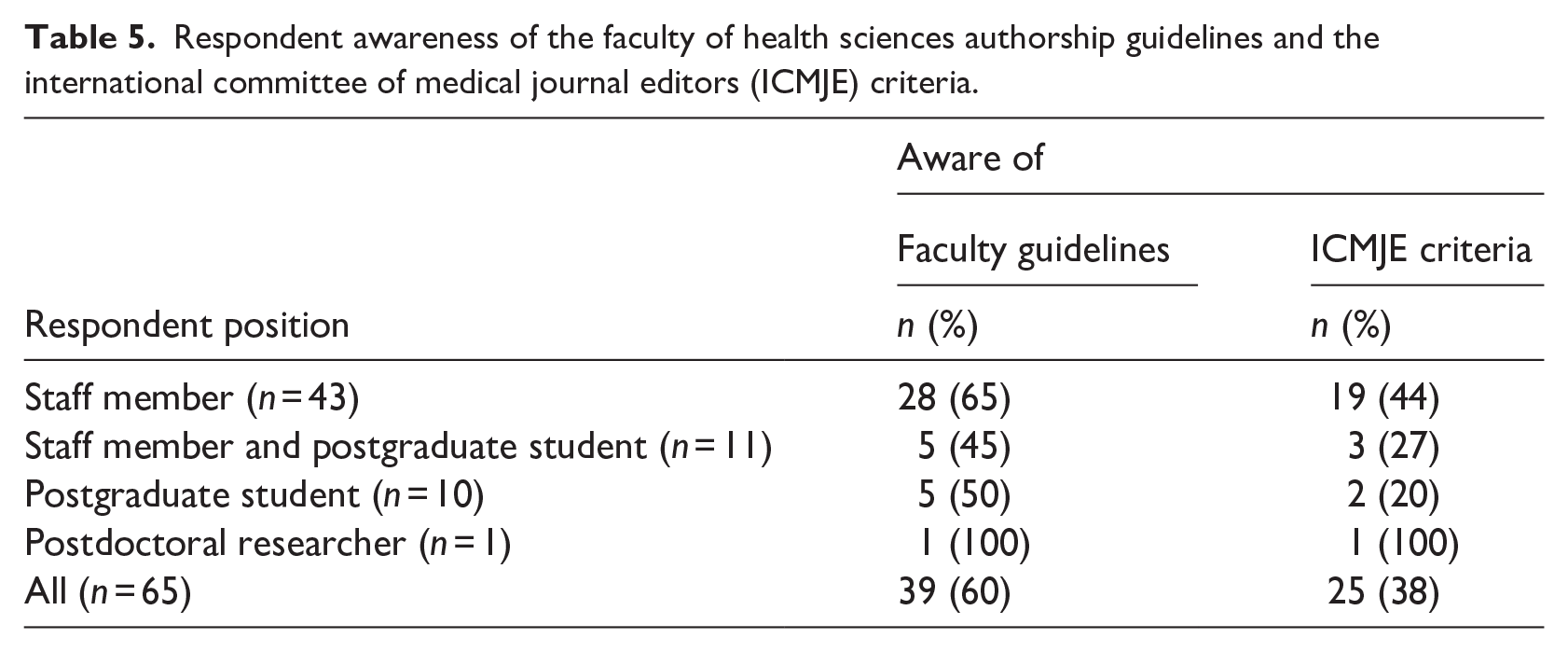
Sixty percent (n = 39) of the 65 respondents were aware of the Faculty’s authorship guidelines (Table 5) but it was clear from responses that these participants were not all aware of the most recent version. Postgraduate students were least likely to be aware of the Faculty guidelines. Only 38% (n = 25) of the respondents were aware of the ICMJE criteria before the interview. Respondents stated that “authors need to be educated regarding Faculty guidelines,” authorship “issue(s) should be discussed, knowledgeable person comes to department(s)” and “probably need a workshop . . . probably a lot that need that kind of assistance.”
Respondent awareness of the faculty of health sciences authorship guidelines and the international committee of medical journal editors (ICMJE) criteria.
Journal authorship criteria and author contribution statements
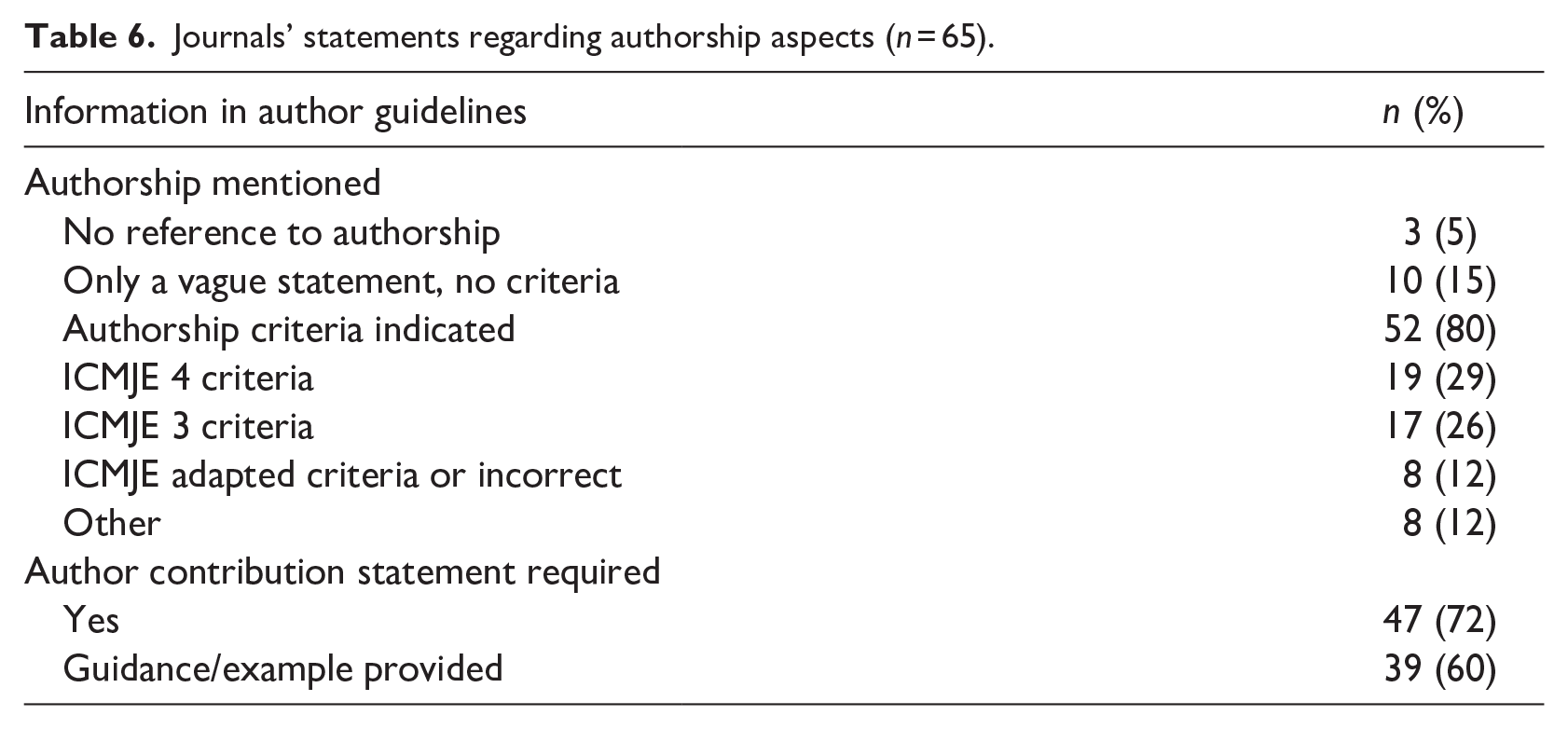
The manuscripts were published in 65 journals of which 80% indicated what their authorship criteria were, and 72% required an author contribution statement (Table 6).
Journals’ statements regarding authorship aspects (n = 65).
Discussion
A high response rate was achieved in this study to determine authorship practices and experiences in the Faculty of Health Sciences at the University of the Free State. The profile of the publications for which interviews were conducted was similar to that of all the manuscripts qualifying for the study. The School of Pathology, however, was somewhat underrepresented.
Publications in health sciences usually have more than one author (Shaffer, 2014), as was the case in our study. Authorship is thus a topic that needs attention in this context. In biomedical publications listed on PubMed, the mean number of authors increased from 4 to 6.25 from 2000 to 2020 (Jakab et al., 2024). At the University of Cape Town, the mean number of authors on health sciences publications increased from five in 1999–2001 to nine in 2013–2015 (De Jager et al., 2020). In our previous study of 2001 and the current study, manuscripts with a UFS FoHS first author had a median of 4 authors. Both these studies excluded manuscripts of multi-center studies of which UFS FoHS authors were co-authors, with first authors from elsewhere. Such studies frequently have a large number of authors. The large number of authors on undergraduate medical student publications was expected since student research groups have 6–8 student members and two or more supervisors. Such publications provide the opportunity to guide students regarding appropriate authorship practices.
Marked improvements regarding authorship practices were seen compared to the findings of the 2001 study. That study found that the issue of authorship was discussed beforehand among the authors for 48% of the papers with more than one author and authorship problems were experienced regarding 36% of the papers (Joubert, 2005). In the current study, these percentages were 84% and 16%, respectively. In the 2001 study, all the authors fulfilled all three criteria of the original ICMJE guidelines for only 9% of multi-author papers, compared to 68% in the current study. In the 2001 study, at least one author did not fulfill any of the criteria for 17% of the manuscripts, compared to 2% in the current study (Joubert, 2005). This improvement may in part be due to the Faculty authorship guidelines compiled after the previous study. It is, however, more likely due to journals’ increased emphasis on authorship such as stating criteria for authorship (80% of journals included in this study) and requiring statements outlining author contributions (72% of journals in this study).
Bates et al. (2004) reported a marked decline in the proportion of honorary authors for British Medical Journal (BMJ) and Journal of the American Medical Association (JAMA) publications after these journals had instituted author contribution disclosure. It is concerning, however, that 20% of the journals covered by our interviews gave no clear guidance regarding authorship criteria, and that a quarter referred to the ICMJE criteria as consisting of three components only, despite the fourth criterion being in place since 2013 (ICMJE, 2013). Incidents of editorial misconduct regarding authorship have been raised recently (von Ungern-Sternberg et al., 2024).
Authorship was frequently discussed in project teams, and in the majority of cases, this was done during project planning. Regardless, few multi-author publications had formal author agreements and problems were experienced infrequently regarding the manuscripts included in the study. The problems raised, as well as those regarding authorship in general, pointed to areas that need further discussion and elaboration in the Faculty guidelines. It is clear from our participants’ responses that the Faculty guidelines and the ICMJE criteria should be disseminated more actively, particularly among postgraduate students. This call was also made by Rivera (2024). In a study among corresponding authors of manuscripts published in BMJ journals, a third of participants indicated that their institution had its own authorship policy, and 74% were “very familiar” with the ICMJE criteria (Schroter et al., 2020). The majority of participants from institutions where the use of authorship guidelines was frequently encouraged reported that authorship eligibility was discussed early (58%) compared to 40% of participants from institutions with infrequent encouragement.
As reflected by the participants’ open responses, knowledge of authorship criteria does not mean that there are no issues to negotiate. In 2018, a survey of South African researchers reported that only 48.5% of health sciences researchers agreed that it was easy to apply the guidelines and criteria for authorship and authorship order (Breet et al., 2018). Haas et al. (2024) have listed some approaches to consider when negotiating authorship: “communicate often and openly,” “adjust authorship inclusion or position as needed,” “prioritize relationships by acting with respect, empathy, and integrity” and “address conflict productively.”
Authorship criteria are still frequently discussed. Bülow and Helgesson (2018) have outlined what they call hostage authorship “where the researchers include undeserving authors unwillingly, and only because they find it unavoidable in order to accomplish a morally important research goal.” Lin (2024) recently advocated for the modernizing of such criteria given the “increasing complexity and interdisciplinary nature of research questions.” Lin’s proposed changes to the ICMJE criteria to “reflect the realities of modern, multi-disciplinary research” included a shift to “sufficient” rather than “significant” contributions, and more flexibility and broadening of what are considered authorship-worthy roles (Lin, 2024). The inclusion of patients or research participants as co-authors has also been receiving attention recently (Woolley et al., 2024).
Limitations
Despite the researchers emphasizing confidentiality of information and requesting that respondents do not mention other researchers or co-authors by name, respondents might have felt inhibited to respond openly. Only publications with UFS FoHS first authors were included to obtain a picture of practices in the Faculty. This selection should be kept in mind when comparing our results to those of other studies.
Conclusion
Manuscripts were mainly multi-authored and adherence to most ICMJE criteria was high. Despite the lack of formal authorship agreements, authorship problems were experienced infrequently. Problems mentioned need to be discussed and elaborated on in the Faculty authorship guidelines. Practices and experiences have improved since the 2001 study, probably due to the increasing requirements of journals regarding authorship.
In the Faculty, authorship problems mentioned by respondents, in particular those mentioned most frequently, namely issues related to student research and collaboration with other institutions, need to be discussed and elucidated in the Faculty authorship guidelines. The Faculty authorship guidelines should be disseminated widely to staff and students and become part of the standard material provided to new staff members and postgraduate students.
Similar surveys can identify specific problems experienced at other institutions which need further investigation. New authorship challenges and questions can arise (such as the role of artificial intelligence in authorship) and need to be identified. Interviewing staff and students regarding authorship is a useful way of familiarizing participants and raising awareness regarding various aspects of authorship and available guidelines. As one of our participants stated, she had been teaching students and colleagues not to add a senior person or head of department as author if that person did not contribute. However, during the interview she realized that was what she had done herself on the manuscript included in the study. Focus group or unstructured interviews can provide more in-depth information.
Footnotes
Acknowledgements
Dr. Daleen Struwig, medical writer/editor, Faculty of Health Sciences, University of the Free State, for technical and editorial preparation of the article.

Ethical approval and consent statements
All the participants gave written informed consent for inclusion in the study and publication of the findings. The protocol was approved by the UFS HSREC (UFS-HSD2022/0168/3105), and permission was obtained from relevant UFS authorities.
Author contributions
GJ had the research idea. Both authors planned and designed the study and collected the data. GJ analyzed the data and drafted the manuscript. Both authors revised the manuscript and approved the final version.
Funding
The author(s) received no financial support for the research, authorship, and/or publication of this article.
Declaration of conflicting interests
The author(s) declared no potential conflicts of interest with respect to the research, authorship, and/or publication of this article.
Data availability statement
Data are available from the corresponding author upon reasonable request.