




Abstract
The responsible conduct of research must be sensitive to the unique ethical concerns of the police setting, but we have yet to develop an empirical understanding of the ethics of research involving police officers as participants. To develop such an understanding, this study collected qualitative data from 30 officers serving in eight agencies throughout the United States. The interviews situated their ethical sensibilities about research in relation to the Belmont principles that serve as the dominant source of norms in U.S. research ethics, then evoked reactions about consent, compensation, confidentiality, and researchers’ motives. The interviews focused on (a) how police officers characterize the responsible conduct of research; (b) the extent to which their reasoning tracks established ethical principles; and (c) which elements of these principles they emphasize. The study also probed which actors and factors were likely to best protect the ethical interests of police as research participants, and how they could be operationalized in a police research setting. Officers stressed the role of the police sergeant as their ethical fiduciary in the planning and execution of research, the distinction between being neutral versus impartial in research, the acceptability of withholding research questions and hypotheses to ensure candid and forthcoming responses, and, generally, the importance of a form of procedural justice in the conduct of research in police settings. The findings provide recommendations for police participatory research that would empower investigators to interpret and navigate the attendant ethical concerns in the context of their own research tradition, encouraging more frequent and higher quality participation in research among police agencies and their officers.
Keywords
Introduction
Few routine government actors exert greater influence on the fabric of civic life than United States police officers. The nation’s 750,000 full time officers have over 50 million contacts a year with citizens (Tapp and Davis, 2022): they respond to crimes, concerns about traffic safety, and complaints about public disorder. Police are central figures in the collective response to unprecedented rates of problematic substance use, firearms violence, and persistent concerns about quality of life in public spaces. Police officers’ decisions have a profound effect on the risk environment faced by people with health vulnerabilities such as substance use disorders or HIV (Rhodes, 2002). While studies have found detrimental impacts of policing on health outcomes (Herd, 2025), research has also endeavored to demonstrate that policing can be leveraged as a touchpoint or intervention to protect or improve health (Fleming et al., 2021). Continued efforts to identify, implement, and evaluate such practices are critical for striking a balance between the pursuits of health, safety, and justice. Police officers’ participation as research subjects can therefore offer insight into the factors that shape these outcomes. With increased understanding of policing, from officers’ mindset to their knowledge of the profession’s systems and outcomes, interventions and polices can be tailored for greater feasibility, acceptability, and effectiveness as well as reduced harm.
Yet police are a population of research participants who work in a paramilitary environment that invokes unique ethical concerns. Agency heads act as gatekeepers who can influence and direct a subordinate’s research participation in ways that diminish informed consent (e.g. when officers are “voluntold” to participate, or worry that they will be seen as uncooperative employees if they don’t). Similarly, leadership could direct officers to respond in a specific way or only allow the recruitment of individuals who they trust to convey politically or socially desirable knowledge or beliefs. Additionally, police have not traditionally been compensated for their role as research subjects; disclosures about deviation from law or policy raise acute confidentiality concerns; and the ways in which proposed research benefits officers or their profession can be unclear, especially when the findings may be critical of police practice. These concerns not only pose distinct challenges for police participation in interviews, focus groups, and surveys, but can also diminish the willingness of police to participate in intervention research with fidelity and enthusiasm.
Despite these concerns, there is no body of evidence that underwrites the framing and resolution of the ethical dilemmas that specifically concern police as research participants. To fill this gap, this study was conducted as a project of the Fordham University Research Ethics Training Institute to investigate and promote the responsible conduct of research involving participants either subject to problematic drug use and HIV, or instrumental in influencing the health outcomes of these conditions. Police wield considerable influence in this regard, and this qualitative study seeks to provide novel data about how they view the ethics of their participation in research. Our goal goes beyond these topics, however; it is our belief that such an understanding can be carefully generalized to studies about a wide range of police-related topics both in the United States and elsewhere. We will proceed by contextualizing our project with an overview of the prevailing ethical standards for research in the United States. We will then explore the characteristics of policing that necessitate additional ethical consideration and various approaches that have been used when conducting police research. Finally, we proceed to our qualitative research, it findings, and their implications.
Bases of the responsible conduct of research in the United States
The norms that govern the ethical conduct of human subjects research in the United States are derived from the principles espoused in the Belmont Report: respect for persons, beneficence, and justice (Nagai et al., 2022). The interpretation of these broad concepts in various settings remains the subject of extensive scholarship, and in practice it resolves to a body of norms that constitute the responsible conduct of research for a given population of research subjects (Wiles, 2012). They include ensuring the confidentiality of participation in research and the data produced by individuals; that the intended benefits of a study justify its foreseeable risks; that consent to participate is voluntary and rendered based on sufficient knowledge of the research project through transparent disclosure (Faden and Beauchamp, 1986); that any compensation is sufficient an acknowledgment of the participant’s time and expertise without unduly distorting the incentive to participate (Anderson, 2019); ensuring the participant’s community has a voice in the planning and execution of studies; and generally cultivating a relationship of mutual respect and trust between researchers and their participants (Wiles, 2012).
Critically, there is no hierarchy to these norms to guide researchers as they design their studies, or to help them resolve ethical conflicts as they execute them (Hurley, 2023). This vagueness results in a dearth of practical guidance for adjudicating competing concerns of respect for persons and beneficence (Nagai et al., 2022), and invites a coarse utilitarian calculus for the latter that can leave socially vulnerable groups open to exploitation by discounting their needs and concerns (Friesen et al., 2017; Nagai et al., 2022). The principles above can therefore be in legitimate tension both with each other, and with the researcher’s motivation to produce the most rigorous and incisive research possible, while remaining silent about salient ethical concerns. For example, there may be good reasons to minimize what is told to a potential participant about a study so as not to bias their response, or it may be critical to be very explicit about the topic so the person fully understands the risks of participation. Some professions view frequent participation as a basic feature of their work—for example, physicians in academic hospitals, who are likely to be acquainted with the standard human subjects research protections. While confidentiality remains important for this population (e.g. physicians may wish to criticize their employer for prioritizing profit over the most beneficial health outcomes), it may be a less pressing concern compared to a layperson participating in a study about their substance use, which may generate suspicion and stigma were it disclosed to employers even if it was well-accepted by their peers (Wigginton and Setchell, 2016), and yet approximately a third of research participants do not fully understand the confidentiality provisions of informed consent (Tam et al., 2015). This imposition of underdetermined norms on different study populations irrespective of their inherent differences therefore reveals one of the vulnerabilities of the Belmont Principles (Shore, 2007), making it critical that researchers should be responsive to how the subjects themselves view the ethical dilemmas of research, which concerns they prioritize, and how they resolve these tensions from their own perspectives.
The Belmont Report is therefore not the sole approach to the responsible conduct of human subjects research, nor is it a universally agreed upon guide to ethical research design, and ethicists, communities, researchers, and practitioners should develop a more expansive understanding of the topic. Nonetheless, it endures as the institutional standard by which human subjects research in the United States is judged, it is widely accepted by the scientific community, and researchers seeking ethics approvals for their work will be expected to present designs that proscribe responsible conduct within its paradigm. Given the marked lack of research that can provide ethical guidance for studies with police as subjects, we chose the present institutional standard as a suitable starting point.
Theory and prior research
In the broadest sense, the ethics of research involving police subjects (ERIPS) has fallen under the research ethics of criminology, which are also broadly guided by the Belmont Report (Israel et al., 2011). As an empirical subject, it remains virtually unstudied, however. A literature search revealed no studies outside of criminology that focus on ERIPS. Within criminology, a review of the contents of 25 criminal justice and criminology textbooks concluded that five briefly discussed research ethics (Rhineberger, 2006), with little or no mention of police officers as the subjects of research. A recent inventory of the peer-reviewed literature on ERIPS identified five articles and book chapters that directly engaged the subject: three were general canvasses of the ethical concerns (Bradley and Nixon, 2009; Rosenbaum, 2010; Skinns et al., 2015), while two theorized about ERIPS at the level of the individual police officers under study (Davies, 2016; Rowe, 2007). However, none of these studies drew on empirical data collected to reveal how police officers’ views of research ethics could clarify the priority and context of the Belmont principles. This study begins to fill that gap with qualitative data from police officers.
Vulnerability and deviance
In pursuit of this end, the extant literature does allow us to make general observations and provide structure to the conceptual terrain of ERIPS. While its corpus does not formally make this distinction, it points toward police as both institutionally vulnerable and sometimes “deviant” research subjects. By the former, we mean the way in research ethics in which a person is deemed vulnerable when they are a subordinate member of a hierarchical organization that may subject them to retaliation over decisions about whether to participate in research, as well as manner and content of that participation (Bracken-Roche et al., 2017). In other words,
While this taxonomy can help guide ERIPS toward principles that protect police populations using extant codes and standards for these groups, Johnstone (2005) argues that we cannot take this as license to simply “read off” the principles of ERIPS from a medical model of research ethics. Even though medical research serves as the originating home of the Belmont principles and can likewise concern vulnerable and deviant populations, the qualitative and ethnographic work often used in police research does not make for such a simple translation, Johnstone (2005) asserts. He also notes that the police setting’s “political and ethical terrain” are distinct from that of other populations, requiring context-specific principles. So, while the taxonomy may not allow us to directly import an ethical framework from other fields that use it, it may nonetheless help guide our studies in police research ethics.
At the same time, research reminds us that police are powerful actors at the individual and institutional levels who can subject researchers to emotional and ethical risks themselves. In exploring this dynamic, Huggins and Glebbeek (2009) consider that a researcher disguising her strongly held political or social identity to gain cooperation in a police setting, along with her concealment of aims and hypotheses, may violate research ethics by virtue of the acute moral distress experienced by the researcher. In contrast, some researchers have argued that as long as there is not the type of deep and willful deception that would violate an IRB process by precluding properly informed consent, it is permissible to withhold hypotheses and beliefs sharply critical of police if doing so allows the researcher to form a deceptive and ultimately false “buddy” relationship with participants that generates more candid, voluntary participation (Sandhu, 2023).
Two traditions of police research
Stepping back to survey the field of police research rather than its participants, Bradley and Nixon (2009) argue it can be divided into two traditions in natural tension with each other. A researcher’s alignment between the two may lead them to emphasize some ethical concerns over others, an idea that tracks similar concerns about prison research (Liebling, 2001). One is the critical tradition, which looks at policing from the outside, takes up its harmful and unjust practices and effects as the principal focus, and endeavors to articulate and underwrite them with evidence and theorization (Neocleous, 2021). The other is the police policy research tradition, which collects evidence to improve the delivery of police services and the wellbeing of officers, an approach that is more sympathetic to the police function.
In the account offered by Davies (2016), the former can be considered an “outsider” position, and the latter an “insider” one. Insiders are more likely to be transparent with police subjects about aims and hypotheses, gain their trust, and elicit robust informed consent as a result. Insiders, however, are also more likely to encounter limits to the research questions they can amicably pursue with police, and their findings may be met with concerns of bias from wider audiences, especially those versed in the critical tradition. Moreover, even a tradition ostensibly supportive of police institutions may find itself at odds with rank-and-file officers, who do not always share the goals, values, and priorities of police executives who may support insider research for their strategic ends. Some police officers may enter a research setting under the belief that the study has been designed to advance the interests of an agency’s executive leadership over those of rank and file officers.
Conversely, outsiders have inherently reduced access to police settings and a harder time gaining the trust of officers, but they have significant independence from their subjects in the formulation and pursuit of a research agenda (Bradley and Nixon, 2009; Davies, 2016). They also have incentives to conceal their aims and hypotheses to maintain cooperation and participation among officers who might be reluctant to expose themselves and their agencies to criticism. We take this as indicating that the ERIPS of the critical tradition is not necessarily the ethics of the policy tradition (see Figure 1).
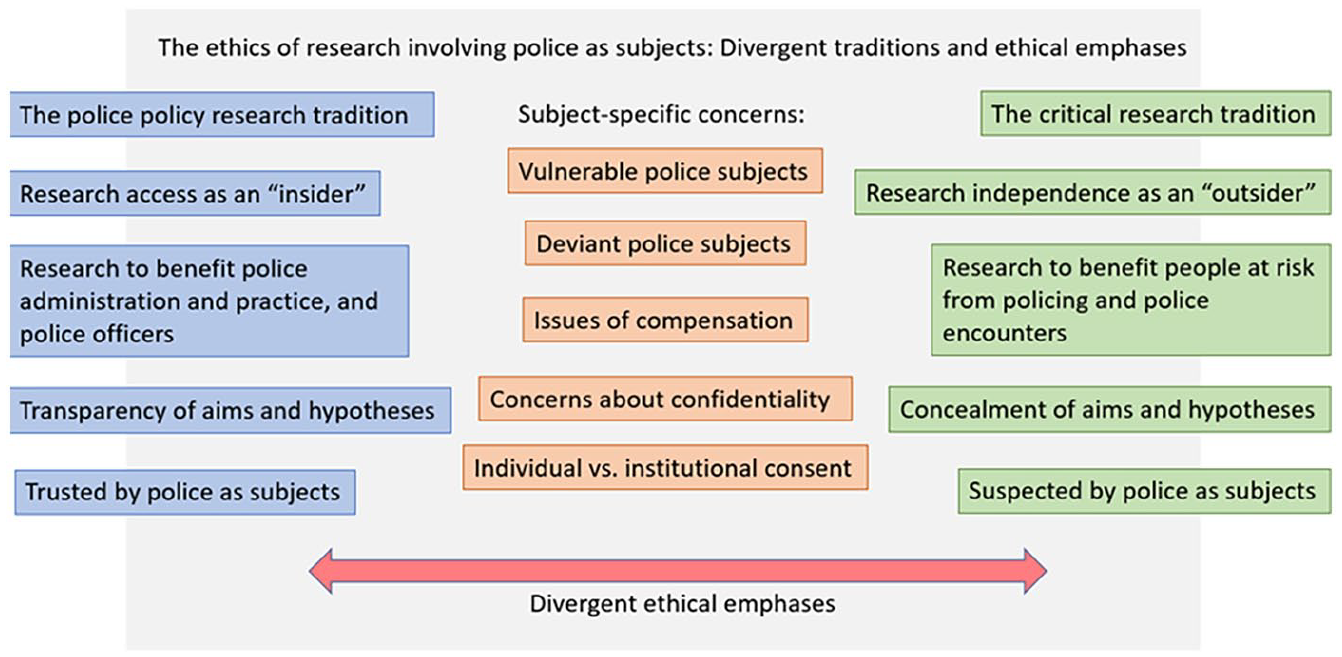
A police research ethics schema.
The ethics of police ethnography
The most pertinent examinations of ERIPS concern participant-observer research and ethnography. This is understandable, given the acute ethical tensions inherent in an approach that deeply immerses the researcher in the professional lives of police officers, where they may be witnesses to misconduct, excessive force, and other injustices, while at the same time feeling a natural, growing sense of empathy toward their research subjects. Rowe (2007) notes that two themes emerged in the ERIPS of his ethnographic work on British police. Formal consent was only the first step, and had to be supplemented by developing relationships of mutual respect and trust, and the second was being as transparent as possible about aims and hypotheses, since he found that police officers felt they had little choice but to subject themselves to ethnographic observation once agency leaders had assented to it. Rowe therefore decided that explaining a study in detail and gaining explicit consent was both a critical and recursive process, despite the challenges generated by quickly evolving ethnographic contexts. His conclusion was that an earlier observation by Norris (1993) was incisive: the ethical dilemmas of police research in the field were highly fluid and situational, and required a “reflexive” approach.
Skinns et al. (2015) discuss ERIPS at length in the practice of ethnographic methods. The principal ERIPS concerns they cite center on the blurred relationships researchers form with subjects when they engage in protracted ethnographic observation, a danger clearly illustrated in an adjacent field by the stark criticism Alice Goffman faced when she disclosed she had been present during incidents of felony violence in her study of young men in West Philadelphia (Lewis-Kraus, 2016). Beyond these blurred relationships, (Skinns et al., 2015) and his colleagues cite the difficulty of obtaining consent in situ, as situations develop, and the natural inclination to report rule breaking and misconduct as being in tension with the expectations of confidentiality that serve as the foundation of qualitative research. In this way, they substantially echo the concerns of Rowe.
Toward an empirically derived research ethics for police
Given the need for a research ethics that spans the two traditions of police research, the vulnerability and deviance constructs presented above would be a novel framework for research into ERIPS, allowing us to interrogate present research practices and develop suitable guidelines. For example, rank-and-file officers who engage in misconduct, display biases, or depart from administrative procedure out of their own sense of justice or fairness are likely to have a set of confidentiality concerns that differ from those of the conscientious mid-level managers that supervise them. In turn, those supervisors may be subject to pressures from above to participate in research and stay “on message” in doing so, precisely because they are conscientious and represent the image a chief of police wants to project. An appropriate set of principles would therefore account for both deviance and vulnerability. Regardless of these assertions and hypotheses, it is critical to note none of the literature discussed here is empirical, that is, consisting of data collected from police as subjects to elucidate their moral sense about these matters. This absence reflects a reliance on theoretical reasoning rather than an understanding constructed by researchers in conversation with police that elicits their ethical voice and uses it to arrive at an understanding of their expectations about the responsible conduct of research. A preliminary set of principles based on such data derived from engagement with police would provide more actionable guidance for future research than theorization alone.
Methods
The study consisted of 30 semi-structured interviews with municipal police officers of various ranks and assignments from across the United States. Under the assessment that it did not pose more than a minimal risk to participants, the study was declared exempt by Brown University Health’s Institutional Review Board (study 2010894). All participants were administered a verbal informed consent process.
Qualitative interview guide
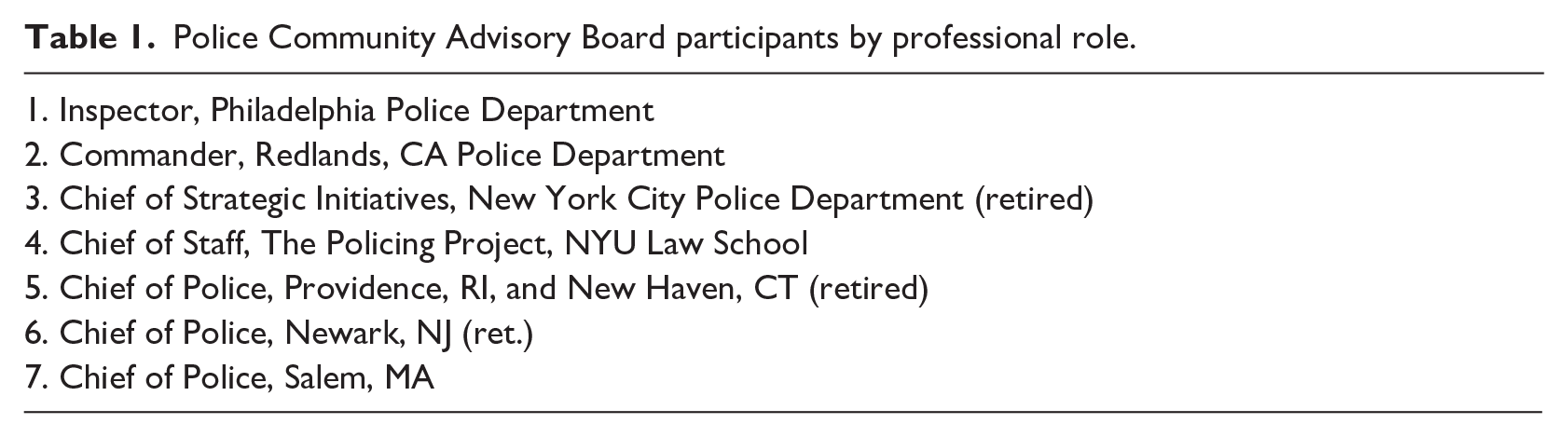
The study’s interview guide was developed in collaboration with a police community advisory group of seven active or recently retired uniformed police executives and non-sworn colleagues (see Table 1). The group met over Zoom with the study team in the spring of 2023 and discussed their experiences with research, their knowledge of police officer concerns, and behaviors regarding research. The advisory boards views assisted in the development of interview questions that covered the relevant ethical terrain. Advisory board members were compensated with a $75 gift card for their participation. Individual members were subsequently contacted on an ad hoc basis to clarify themes or provide additional information.
Police Community Advisory Board participants by professional role.
The guide consisted of questions about transparency, informed consent, confidentiality, preferred participation settings, compensation, the role of research in policing, voluntary participation, the proper role of police officers in initial research design, and who in their agency could be trusted to help officers navigate the ethics of their participation in research. These questions did not pertain to any specific academic field, rather they focused on research in general to ensure results could be applied broadly. In addition to the questions in the interview guide, study participants were presented with two hypothetical situations about research regarding their interactions with people who use drugs (PWUD). One was a hypothetical study that intended to solicit the views of police about PWUD, which can often be negative, characterized by stigma (Kruis et al., 2020; Reichert et al., 2023), and a product of the strain of dealing with people in difficult and seemingly intractable situations. The other was about an attempt to further explore and replicate the findings of a study that shows police drug seizures that intend to improve health outcomes by taking potent illicit drugs off the street were associated with significant increases in fatal overdose (Ray et al., 2023). The situations were presented to understand what officers would consider an ethical way to successfully conduct studies that may result in negative or unflattering portrayals of policing and that might cause participants to give guarded, incomplete, or skeptical responses.
Recruitment of agencies and participants
Participating agencies were recruited in April and May of 2023, and officers were interviewed through late July of that year. Agencies were enlisted at professional conferences and events using relationships the study’s PI has maintained with US chiefs of police, with the goal of geographic diversity as well as variation in agency size. Since there exists no pilot data or prior empirical research on this topic, this strategy was utilized to explore the possibility of demographic variance in the identified themes. Principal recruiting sites were the annual conference of the American Society for Evidence-Based Policing, and the Town Hall meeting of the Police Executive Research Forum. The executives of the agencies that agreed to participate were provided with a standardized recruitment script, which was used to send general emails to agency employees offering them the opportunity to participate in the study. The inclusion criterion for participation was experience in patrol or investigative functions that put the officer in direct contact with PWUD. Since officers with little experience as research participants are likely to be both the norm, as well as a valuable source of unfiltered data, prior experience with research was not an inclusion criterion. Accordingly, few of the 30 participants had taken part in research before this study. Interested candidates coordinated with the study’s research project coordinator (RPC) to schedule an interview. All participants were offered a $75 gift card in compensation for their time. One agency did not permit its employees to accept compensation for research as a matter of city policy, even if it was de minimis.
Data collection
In lieu of their names, participants were assigned a sequential number as their identifier. Interviews were conducted via Zoom and recorded solely using voice recorders. Each interview lasted from 40 to 60 minutes. The audio files were transcribed verbatim by a vendor that anonymized them, and all audio files were destroyed after a random review of extracts affirmed the transcription’s accuracy.
Analysis
All transcribed interviews were imported into Taguette software for qualitative analysis (Rampin and Rampin, 2021). A team of four independent coders (the authors) then inductively analyzed the data, reading the transcripts multiple times to identify themes and subthemes. The a priori frame of the Belmont principles and direct inquiries about consent, confidentiality, transparency, compensation, translation, and dissemination were used as concepts to identify and characterize themes. If a respondent’s statements elucidated their conception of the responsible conduct of research as expressed by our a priori Belmont frame, we interpreted it by its plain language meaning. In other words, we took participant statements about what ethical research meant to them at face value. We did not, for example, interrogate officers’ statements from a critical perspective, interpret if another motive may have been to protect the power of their role or institution, or consider if they had a particular conception of the purpose of methods of research that drove their response beyond the hypothetical qualitative, survey, and administrative data research examples we presented to them, some of which reflected findings critical of police. These are all areas for future study that can build upon the data presented here. The authors were in near-complete agreement about emerging themes, with the principal distinctions being whether specific transcript segments were illustrative of a single or multiple thematic codes. The few resulting disagreements were resolved through discussions facilitated by the study’s principal investigator. Direct quotes from participants were selected, with coders reaching agreement as to which were the most suitable exemplars of themes. Data were analyzed from the fall of 2023 through the winter of 2024.
Results
Study population
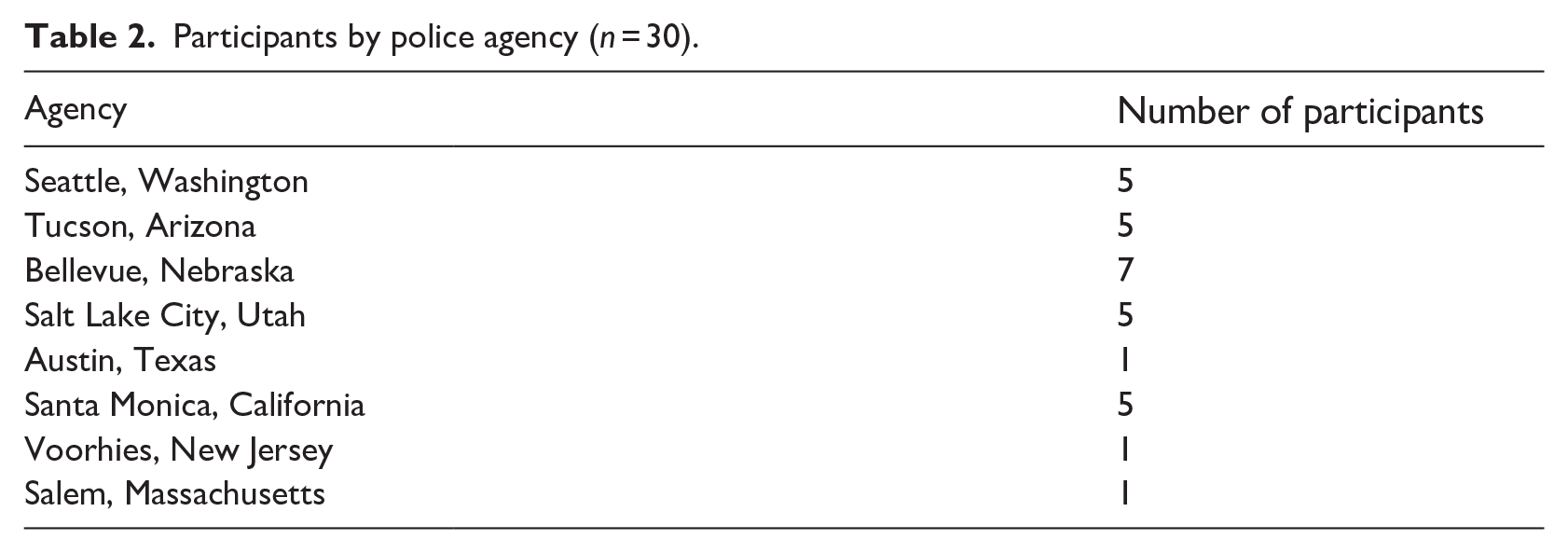
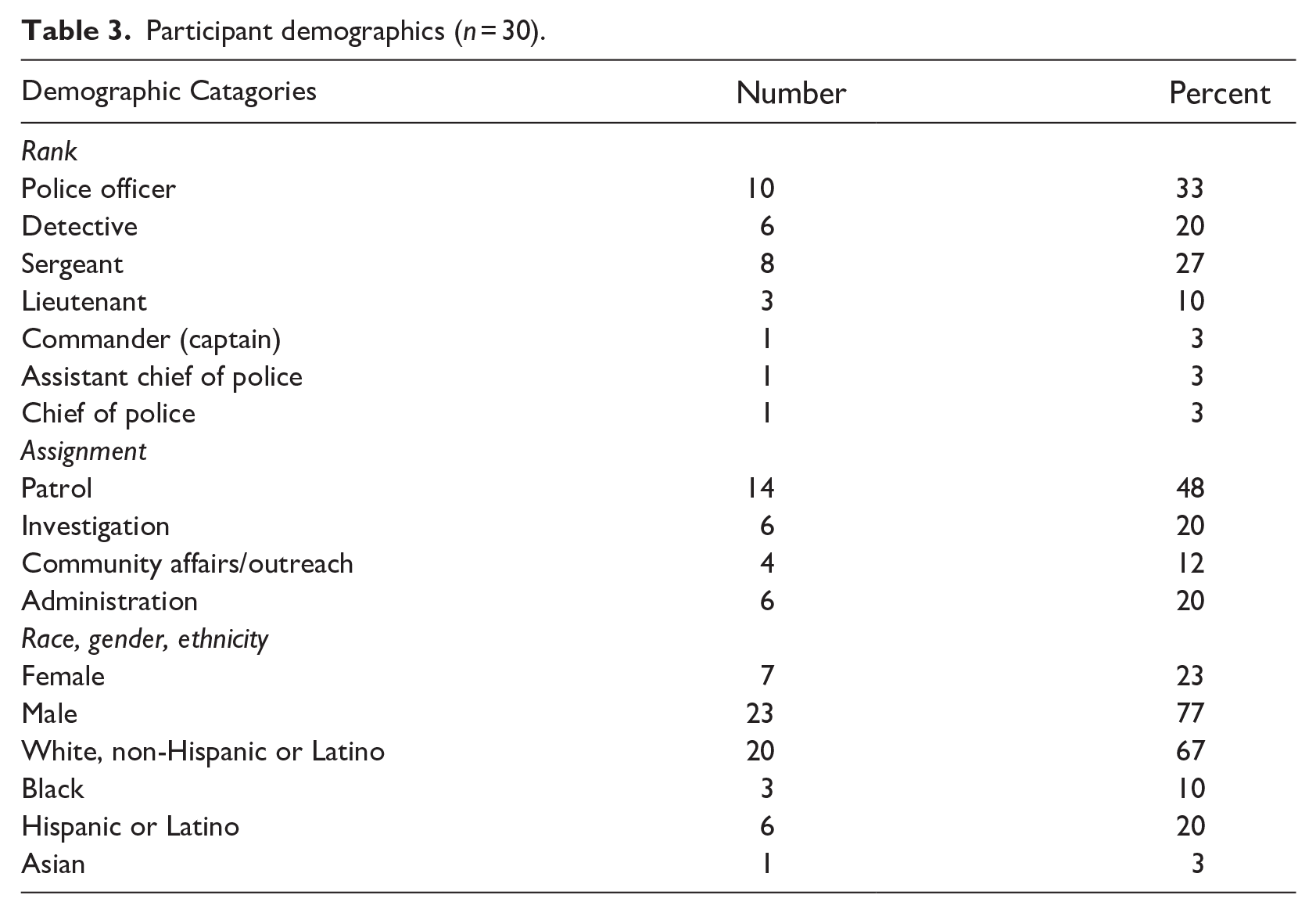
The study’s 30 participants were recruited from eight geographically diverse agencies of differing sizes, from small municipal police departments to agencies that serve major US cities. Table 2 presents their distribution among participating agencies, and Table 3 presents their demographics by rank, assignment, race, gender, and ethnicity. Participants were mostly police officers and detectives, or their immediate supervisors (i.e. sergeants). The largest portion (48%) were assigned to patrol. In a sample of 30, the percentages were comparable to the representation of female (16%), Black (12%), and Hispanic (20%) police officers nationwide (Morrison, 2023; Police Data, 2024). We did not detect meaningful variations in officer response across agencies. In the exemplars below, assigned participant numbers are provided to address concerns of overreliance on a small number of participants for quoted material.
Participants by police agency (n = 30).
Participant demographics (n = 30).
Transparency and informed consent
We asked participants to explain what levels of disclosure and transparency about aims, methods and/or hypotheses were necessary for them to feel as if they could make informed decisions about whether to participate in a study, and how forthcoming to be in their answers to questions. Most participants did not insist on complete and transparent disclosure of research aims to feel they had enough information to provide informed consent. They understood that researchers might need to withhold the findings of prior studies and specific hypotheses in order to elicit candid and unvarnished responses, which are more likely to yield robust and valuable data. When presented with the idea, participants consistently agreed the rationale was similar to police techniques for interviewing suspects and witnesses. In cases officers deliberately withhold information to avoid soliciting a biased or tainted response, participants did not view such omissions as unethical: I would think that you would wanna be vague about that, because if it’s gonna taint the results, then that doesn’t help the research. (P1) I would completely agree with hiding the hypothesis because that’s the only way you’re gonna get a true answer. (P 22) Sometimes it’s better to not know what’s being researched. That way you’re honestly answering. (P24) I don’t wanna lead the witness into it ’cause then, it’s a bad statement where you just made them say exactly what you wanted. (P25)
Officers nonetheless acknowledged that withholding hypotheses and/or research aims could border on a form of deception that could damage the researcher-participant relationship, so a careful balance needs to be struck. As two participants put it: I feel like I would feel deception there, so I don’t know. That might affect my trust negatively ’cause we’re cynical to begin with, and we are always—establishing trust with us is a very delicate process and can be ruined very easily, so I think that probably would be how I would feel about it. Eventually, I probably would get over it and see the bigger picture, but initial reaction, I would be probably be upset. (P9) On one level, the researcher might say kind of, like, a detective, I wanna say the minimum, so that I can get the unvarnished truth, and then the ethics person might say, you gotta tell the cop everything so they can make the most informed decision. (P30)
However, officers generally felt that a brief description of the research project would suffice for them to feel comfortable participating. In the context of qualitative studies, they recognize the importance of providing enough information to understand the topic being discussed, but they also acknowledged that the conversation would naturally evolve as the interview progressed. As some put it, You don’t have to tell me exactly everything, ’cause I know it’s gonna be a fluid situation. I’m up for that, I’m willing to do that. Give me a broad topic of this is the direction we’re goin’, what we’re gonna talk about. That’s what I would want and would like to see. (P29) Well, I think that—I mean, like your guys’ informed consent, I feel like the information that you gave to me made me feel comfortable with what the study’s about, what we’re gonna be talking about, so I think that was enough information for me to feel comfortable enough to give you whatever answer’s needed. . . (P30)
Participants felt that revealing aims and/or hypotheses after completion of the study would be a sign of respect for their agency and dignity as participants, and it would encourage future participation in research. Beyond that, actively communicating the study’s results to participants was considered vital for fostering ongoing engagement in research efforts. One officer emphasized that “it would probably help me participate more fully if I knew I was going to get that information at a later time” (P28), another stated “I actually think that would probably make the biggest difference” (P17); a third echoed that sentiment, saying “I think it’s very important to share what actually came in the study” (P8). Officers went as far as to comment on the value of researchers taking the time and effort to translate the findings for a lay audience, and how this might encourage future participation: It should come with some type of a translational one page—one or two page infographic with the results. I think that would make a bigger impact than the article itself because most of us—most cops don’t have access to those research articles. (P16) I would be happy to see the end result in whatever timeframe, just for my own personal education of it. Just it helps reestablish that trust and balance of, “Hey, this is what actually was occurring.” (P6) For me, it’s gonna make a huge difference. If I see something like that, I’m gonna be way more interested to participate in future research studies because I can see that like, okay, I took this time out of my day, I did this, and it actually went somewhere (P22)
Nearly all participants distinguished between omissions or deceptions intended to elicit accurate and unbiased responses, and those designed to mislead officers in ways that would encourage responses to support a predetermined outcome or conceal what they believed to be a heavily biased but unproven hypothesis. Many believed the latter approach sometimes prevailed in research, both to secure the participation of an agency and to produce participant data that fits a hypothesis. This manipulation deceit was consistently voiced as one of the reasons officers might hesitate to fully participate in a research study.
Confidentiality and setting
Participants often described themselves as not concerned about confidentiality in their own case, but cited the need for confidentiality for the protection of other officers who participate in research. Most claimed they were not concerned about supervisors and peers learning what they disclosed to researchers (“It’s not gonna change what I’m gonna say” (P19)), but acknowledged that strong confidentiality protections were critical nonetheless: I don’t think they would be interested in trying to use this against us or anything like that. (P8) . . .I don’t have anything to hide and there’s nothing out there that’s gonna change anything about who I am or what I’ve done. I’m not concerned about it, But other officers, totally. (P29)
In essence, officers were generally insistent that they themselves had nothing to fear from inadequate confidentiality protections, but the general fear was founded. As one put it, “A lot of cops are really, really nervous that things are not anonymous, that their name is gonna somehow get released.” (P14). It is possible that such statements reflected officers’ hesitance to admit their own vulnerability in what remains a highly masculine environment (Brown, 2007; Prokos and Padavic, 2002).
Officers had a range of beliefs about what circumstances would best protect confidentiality and promote candid participation in research. Some officers participated from home, others participated via smartphone from their police cruisers, and most agreed that home or a vehicle would be good options for confidential participation in research. It emerged that officers felt the best approach to respecting the desire for confidentiality consisted of providing officers with several options for participation and allowing them to choose the one they would be most amenable to, both in the case of qualitative interviews and survey taking. The options proposed by officers were typically to participate in a police cruiser, at home, or in an office with sufficient privacy. Several officers concluded that being able to start their tour of duty from home to participate in research during work hours would be a highly acceptable way of ensuring confidentiality and promoting participation: I would definitely prefer to do this study at home than, say, at the precinct. Yeah, 100 percent. . . . What people might hear and things like that. (P28) I think you would get more honest responses from people in a neutral setting or at their house than you absolutely over being at work, for sure. (P4) Well, I don’t think you’re going to get a lot of police who will do it on their own time. If you could do it at work and it’s convenient for them and it’s interesting to them, then they might volunteer their time. But if you want to get someone that’s not at work to do it for free, it won’t happen. (P14)
None of the participants were familiar with the National Institutes of Health’s federal certificate of confidentiality, which legally protects participants of US-based research studies from the forced disclosure of identifiable research data. Its features had been explained to them during the verbal consent process, and the interviews subsequently brought it up as a topic of discussion. Participants felt it was a means to inspire trust in the confidentiality of the research process, especially given the highly sensitive and political nature of police work, and the desire for members of the public, police administrators, and the press to learn what police officers might say if they had an expectation of confidentiality. One specifically cited the certificate’s appeal as protecting what the officer knew to be populations particularly vulnerable to the consequences of disclosure: What’s kind of good, but sad, in a way, is the fact when you shared with me that this same certificate protects people who are criminals and who are drug users and things of that nature because then I trusted it more, if that makes sense to you. (P9)
Compensation, and research as a duty or best practice
Whether research participation occurred on or off duty, or at their workplace or another location, officers overwhelmingly felt that compensation was not necessary for the ethical conduct of research, nor would compensation influence either their willingness to participate or their perception of how ethically they were treated. This was despite being informed that compensation is considered a key element of the ethical treatment of various research populations, including people who use drugs, students, and the general population (Anderson, 2019). Many officers observed that regulations prohibited them from receiving additional compensation for actions performed while on duty, and were therefore asked to consider compensation for participation while “off the clock,” in a setting that better protects their confidentiality, for example. They articulated their responses in a range of ways that centered on the idea that participating in research was integral to both policing as a profession, and service to research being a valuable act for police officers.
One view principally held among the higher-ranking participants was that participation in research is a duty that police officers have toward the public and the profession, aiming to continually improve the outcomes of the work: I think there is a duty to make the profession as good as it possibly can be. In that sense, duty to help make policing better, yes, I think that does play a factor. (P8) I feel like it’s a duty where we’re giving insight to our career, showing what we do on a day-to-day basis and trying to share that knowledge with public. (P18)
A related idea was that participation in research is not a duty per se, but nonetheless a best practice, and police who strive to be professionals should engage in this practice. This was the most common construal of why participation was important, but compensation was not necessary, and it was held across ranks: I don’t think it’s a duty, but I think it’s very useful and helpful, and is something we should do, though we shouldn’t be forced to do, I guess. (P10) I believe that’s my professional responsibility to participate, because again, I think it’s really important that all the things that we do need to be looked at in the context of doing them better down the line. (P17) We’re doin’ a service. Especially right now, this is my regular time. I’m very fortunate in this assignment where I have a little bit of free time where I’m able to do things like this. . . We’re providing insight to our career or line of work. (P18)
It is worth noting that some participants across ranks observed policing’s aspiration to be a profession, but that it wavers between a profession and a vocation in various aspects of practice, and standards. These officers asserted that participation in research is something that contributes to policing’s professionalization: It’s. . . also understanding how important this is and how vital it is that our profession be treated as a profession and not as a job, and that it does require scientists to come in and give us some kinda indicator of how we’re doing and how it’s being perceived from the outside. (P17) Compensation isn’t why I wanna do this. This profession has been denigrated, and most of it has been a lot of BS, to be honest with you. Yeah. I’m not saying that we’re perfect, we’re far from it, but anything that I can do to improve this profession, I wanna do. (P4)
In sum, the response from most officers was that compensation for participation in research was a secondary concern. They viewed accepting compensation as an acceptable token of respect for a participant’s time, rather than as a requirement for participation. There was one notable exception, a participant who felt strongly that anything done beyond traditional police work should come with compensation. Such a view suggests the most cynical and research-resistant officers may possess knowledge that would be valuable to a research study, but their attitudes may preclude them from viewing participation as either a duty or an important aspect of professionalism. In such cases, compensation plus the option to participate during work hours from home would be a way to enlist their participation in studies.
Voluntary participation
Every participant we queried, regardless of rank or assignment, asserted that their own participation in the research at hand was voluntary, and this was critical to its ethical conduct. Nonetheless, several officers stated they participated because a ranking officer brought the study to their attention, and they viewed the supervisor favorably, which made them inclined to participate: I would say, if there’s a good relationship between your admin and the rank and file people, if they trust that the admin, and they say it’s legit, then I think that would be more apt to get people involved. At least it was for me. (P4) Yes, if you trust your boss—obviously my boss, I know her very well. I would not think she would set me up for something bad. (P23) She was my supervisor for I wanna say three years, maybe a little less. We have a pretty good relationship and I trust her. She trusts me so when she asks me to do that—when she asked me to do that I said yes. Couldn’t say no to her. (P19)
When confronted with the idea that this request by a supervisor could be seen as a subtle form of pressure or coercion, a consistent theme emerged in response, as one participant observed, “voluntary is not really in our profession” (P23). Participants drew the distinction between a supervisor soliciting and encouraging participation with no means of knowing if the person participated, or what was conveyed to the researcher, and participation that was considered an implicit requirement of satisfactory job performance. Many rejected the idea that a request from a superior inherently implied it was unethical or coercive. One officer noted that, given the hierarchical nature of policing, being instructed to participate in a study at work, during work hours, could yield higher quality responses, as involvement would be considered a part of the workday: I think you have more of that balance by me not being told to do it and not doing it at work solely for all those same reasons. I could click the X at the top of the window and I’m gone, versus if I’m at work and I’m being told to do it, well then I’m gonna have more of a requirement to stay from start to finish, right? (P6)
Presented with this same scenario, other officers conversely felt that institutional pressure to participate would hurt the quality of the results, with one stating: I don’t feel like, when participation is mandatory or ordered, something like that, you get real answers from people. (P8)
Still, some officers expressed that even under such circumstances it would be a disservice to the research project to hold back or let resentment affect the information provided by participants: . . .I feel like even if I was ‘voluntold’ to do it, I still need to give the best responses that I can. Otherwise, it’s doing a disservice to the research for me to not be honest and give good responses. (P30)
In the Discussion, we present an approach that may assist researchers in reconciling the tension between the strains on voluntary participation in a paramilitary organization, and the ethics of research that require it.
Police participation in research design
Only the study’s sole chief of police, who had participated in prior research, was aware of a community advisory board’s potential role in guiding research and offering insights into ethical concerns. When the concept was explained to officers, most agreed that police co-participation in the design of research, from the construction of research questions to the design of study methods, would be an acceptable and effective way to ensure the research was ethical and productive. Officers observed that. . .
. . .in an ideal world, there would be some consultation with officers, with maybe. . . several different ranks in there, ’cause every rank has a different spot and a different perspective. (P10) . . . it would be more of an effective way to get the best information out of the data that you get from the officer. (P25)
Some officers also felt that consultations with their labor union could be a means to ensure they were fairly treated and to generate buy-in regarding the research. One remarked that “You might get a little bit more participation, people willing to speak about it, if it’s coming from our actual union to all the officers” (P18). However, these sentiments were not unanimous. One officer noted that too much participation by police in study design and execution could make a study less objective: I would honestly think it’s actually more genuine and better if it was separate and it was just a researcher or team coming in from their own or his or her own perspective and not be filtered by police employees. (P23)
Impartiality versus neutrality
Officers felt that impartiality was an overriding requirement of the ethical conduct of research. They felt that researchers often had pre-ordained results in mind, and this either consciously or unconsciously influenced the construction of their studies and their methods in ways that produced biased results, “like they were trying to paint police in a certain light” (P28). This type of research was cast as relegating officers to being means to an end, and eroded their trust in the process of research: It just seems like if they do some research it’s for the negative. It’s not to see what true police work is or what police officers are really about. How they handle things and treat things. It’s not about the person, it’s just about let’s find some dirt and we’ll spread that dirt out so people can see that cops aren’t as good as they seem to be. (P29) When I think of researchers who are trying to research the police, I think I often go to that they’re trying to confirm their belief that the police are doing something wrong. (P5)
After addressing concerns about biased research, the interviewers introduced the concept of neutrality. Neutrality was defined as the determination not to favor one interpretation of the results over another, whether that interpretation is supportive or critical of police practices. Participants were then asked to compare this concept with their expectations regarding impartiality. In response, officers consistently distinguished between impartiality and neutrality by saying that if research were conducted impartially, it meant that once it yielded results, researchers could ethically declare a police practice, policy, or behavior negative or positive without the need to remain neutral in their assessment. The most candid result captures this sentiment concisely:
Impartiality was most often seen as a requirement of ethical research, and if this requirement was discharged, it eliminated the need for the researcher to remain neutral in the interpretation of results and encouraged trust in the researcher’s conclusions.
The contrasting influence of the sergeant and police executives
The most overwhelmingly consistent finding of the study was that the police sergeant, that is, the person in rank that immediately supervises police officers and detectives, was the most important actor in both protecting the ethical interests of rank-and-file research participants and encouraging participation in research. As one participant declared: “The most influential supervisory group in all of law enforcement is the first-line supervisor, your shift supervisor. Generally speaking, it’s a sergeant” (P15).
Nearly every participant, regardless of rank or assignment, characterized sergeants as having both a fiduciary duty toward the people they supervised, and an on-the-ground understanding of their needs and concerns. They felt these factors uniquely situated sergeants to determine if a given research study met the ethical standards that would allow for rank-and-file participation, and sergeants had a unique capacity to foster trust between researchers and participants: As an officer or a detective—you have a good working relationship, like you trust your supervisor, you know they’re doing their best to be the best leader they can be for you, I think you’re more willing to take their word at something like that. I believe what they have to say. Trust what they have to say. (P26) Your sergeant is someone you can trust because he can—he knows you, he knows your family, he knows your situation at home. He cares about getting you home safe. (P28) Whereas my sergeant, we’re on a personal basis. We probably talk about everything outside of work . . . . I would definitely be more apt to be like, okay, I’d be interested or I can help you out (P25)
In contrast, officers had a less favorable view of executive management when it came to research. Mistrust of the motives of executives, including the use of research for political or careerist ends, emerged as a theme. As one put it, “I think a lot of officers, detectives, even sergeants in this department, don’t trust a lot of the upper management” (P14). In tying the contrast specifically to research, one participant remarked that “even a sergeant who’s not that influential would have more influence on somebody doing a survey than a chief would, even if they liked the chief” (P13). Participants wondered if command staff simply saw research as a means to an end: I don’t necessarily believe that the command staff have the right impression of what they’re doing actually impacts and has the same goal. I think they see the things that they do as good media talking points and that feel good, “Oh, we did this, we put this forth, we tried to do this,” and they don’t actually care about the end change and the end result. (P6) Yeah, and that’s the other thing is just like does the administration have an agenda here? Because I’ve worked for administrations that use numbers and studies and research and stats to foster their political agenda. None of us like that. (P11)
Other observations
Participants echoed concerns that were like those underlying calls for meaningful community-based participatory research among vulnerable populations. While police are rarely considered vulnerable from a broader social perspective, as individual research participants, they shared concerns that suggest they cared about how researchers treated them, influencing both their trust in the process of research and their willingness to participate in studies. They perceived many research projects as being extractive in nature, and that they were seen as means to an end for an academic striving to collect data and publish findings. As one stated, I’m a firm believer in researchers doing ride-alongs, researchers coming to roll calls, being part of our organization, not just showing up, handing us a test, and leaving.” (P9)
Continuing on, the same officer explicitly acknowledged parallel concerns in minoritized communities when it came to extractive processes in research that left participants in the dark about the results: It’s incredibly important, and I think that that’s a theme we’re seeing, whether it be policing as the research population or anybody as a research population, and especially I know it’s been a source of contention with communities of color, too, where they’re not getting the information back on research that they’ve been participating in. (P9)
They felt that their behaviors were misunderstood or mischaracterized, and it was important for researchers to be impartial in their practices to minimize the potential for bias. They believed that it was incumbent on researchers to demonstrate commitments to fairness and impartiality, and to foster trusting relationships with police practitioners that would protect their ethical interests as research participants. “I do have that feeling that you need to be on your guard, because they’ll grab onto these kernels of stuff, and then it blows up and becomes bigger—taken out of context.” (P11)
Discussion
This is, to our knowledge, the first study to collect empirical data from police officers about how they conceive of the ethical issues surrounding their participation in research as subjects. It provides insights relevant to researchers regardless of their alignment with traditions critical of police and their institutions, or those more sympathetic to them.
Steps to ensure voluntary participation
Officers’ responses here reflect the fact that they are often instructed to participate in research by their supervisors, many do not feel this leaves them in a position to meaningfully volunteer to do so, and they have conflicting feelings about this tension: some feel this is an acceptable aspect of working in a highly-regimented occupation, while others resent it. Regardless, it violates well-accepted principles of the responsible conduct of research. If researchers cannot be sure that police supervisors have adhered to an IRB-approved recruitment script that stresses the voluntary nature of participation, qualitative and survey research studies can explicitly emphasize that the although officers may have reported to the study site (or opened the survey) as instructed by a supervisor, continued participation is voluntary, and officers may decline to begin the study or cease participation at any time, and their decision to do so will remain completely confidential. If at all possible, the location of the interview or the setting of survey administration should allow officers to feel confident they can do so if they desire. In this way, researchers will have taken steps to ensure that a less-than-voluntary recruitment process can nonetheless result in voluntary participation at the time and place of the study itself.
The role of sergeants
One of its most actionable findings is the identification of the police sergeant as an ethical fiduciary to police officers. This finding accords with prior research where police officers reported that their immediate supervisor was a person with considerable—or the most—influence over their behavior when it came to making discretionary decisions about how to police, one that held more sway in shaping incentives and motivations than their chief of police (Del Pozo et al., 2021; del Pozo et al., 2024a; Engel, 2000; Marotta et al., 2023). To the extent this is confirmed by further research, leveraging sergeants as fiduciaries would help ensure the responsible conduct of research when police are subjects, provide a means to convey an intended study and its protections to rank-and-file officers, and presumably increase participation rates in studies. If this is the case, police sergeants should be integral to the arc of research, from the initial formulation of research questions, through agency briefings, to recruitment, execution, and the translation and dissemination of findings.
Research training for police
In implementing such an arrangement, both police officers and sergeants would benefit from short training sessions on the nature and purpose of research, the ethical concerns inherent in the conduct of research in police settings, the importance of research to the just, equitable, and effective conduct of policing, and the expectations participants should have when research is conducted ethically. The training need not be extensive, but a primer would be of considerable benefit. For their part, chiefs of police or their executive staff should be in ongoing conferral with both the research team and the agency’s sergeants as the research methods are developed and a plan to execute the research is formulated. The conferrals should leverage sergeants’ role as both an ethical fiduciary to rank-and-file participants, and their knowledge of the working conditions that will affect the feasibility of the research plan. This feedback, combined with the role of the advisory board, should offer strong ethical protections to participants. This suggests the organizational arrangement portrayed in Figure 2.
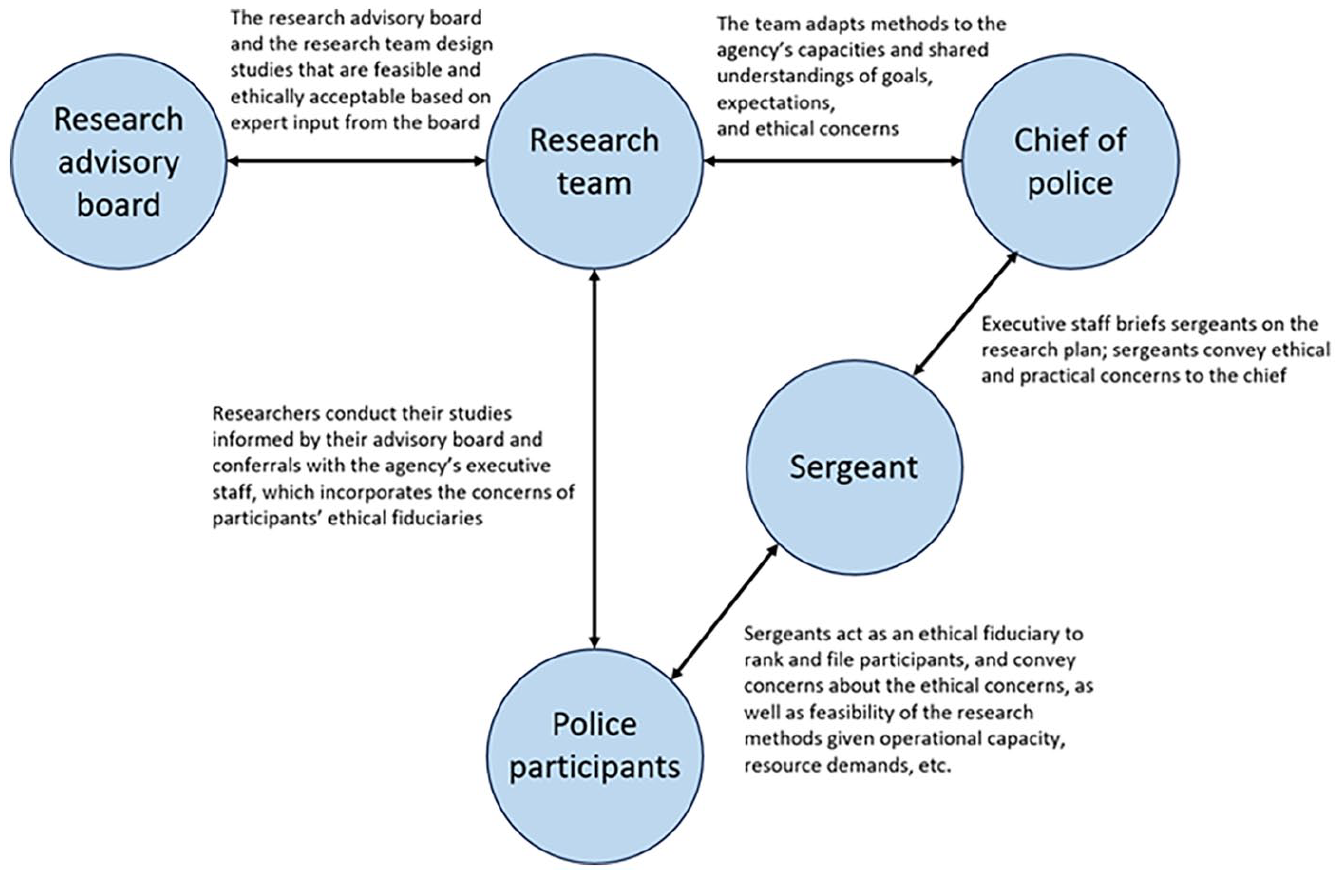
An organizational model for promoting the ethical conduct of research involving police participants.
Procedural justice in research
Based on the themes that emerged here, we can summarize by saying police see the responsible conduct of research as adhering to a type of procedural justice. In police settings, the highly influential research of Tom Tyler and his colleagues casts procedural justice primarily as a form of psychological inducement, where adhering to certain procedures makes a person subject to the judgments of a police officer more likely to voluntarily accept those judgments (i.e. without resistance or the need for coercion), even if they are unfavorable (Sunshine and Tyler, 2003; Tyler, 2006). For example, if a police officer explains why he is about to give a ticket for drinking in public, asks the citizen if there is anything they’d like to say about the circumstances, listens carefully, answers any questions the person has, and acknowledges their concerns, then the citizen is more likely to voluntarily accept the ticket, even though it comes with a fine or other penalties. In this way, the Tylerian theory of procedural justice as used in policing is a psychological one (Lind and Tyler, 1988).
That is not precisely what we mean here, however. Instead, we propose a modified theory where police value the form of procedural justice traditionally invoked by jurisprudence, a conception antecedent to the psychological one policing scholars are likely to be more familiar with. In it, adherence to procedure is what secures the substantive justice (i.e. a fair and accurate verdict) necessary for the court to unilaterally impose a penalty on a defendant, such as seizing his assets or imprisoning him. In other words, procedural justice in legal process is not primarily a psychological inducement, but an epistemological exercise intended to produce the fairest and most accurate results (Waldron, 2011). If robust procedures govern the admissibility and use of evidence, the cross examination of witnesses, the exclusion of arbitrary bias, and giving clear instructions to a jury, that is, they safeguard and promote rigor and impartiality, then they are more likely to produce fair verdicts based on solid evidence, ones that respect the dignity of defendants in the process that determines their guilt or innocence (Waldron, 2011). In the context here, the processes of giving police a voice in research construction, ensuring their confidentiality, working with sergeants to ensure the concerns of police are accounted for, being explicit about the steps used to produce impartial results, and then translating the findings to police officers for interpretation and evaluation will reassure officers that the final product is a rigorous one based on sound evidence, one that respects their dignity as research participants, thereby justifying its subsequent use in shaping police practice and policy.
There is a distinction worth noting as we put forth this interpretation, however, and it is the one that makes ours a modified theory. If a research study is truly voluntary, police officers have the power to decide whether to participate in it or not. Their resistance to participation may be seen as a way of personally rejecting processes they see as biased or unfair. In this sense, when it comes to research participation, police are not involuntary subject to anything in the sense that other people are subject to tickets, arrests, or verdicts. In that sense, the discussion here is not about the willing acceptance of something that will nonetheless be imposed involuntarily. But, as with a parking ticket given to a motorist, research results can then produce laws, policies and procedures imposed on officers by legislators, city leaders, and chiefs of police in ways that profoundly affect their working conditions. Thus, while the theory here is that procedural justice in research may psychologically induce the acceptance of undesirable outcomes, they are not outcomes that will be imposed involuntarily in the proximate sense, but rather in the larger arc of police innovation and reform. At the distal point in the process of legal and policy reforms, procedural justice in research may be more likely to persuade officers to accept the involuntarily imposed outcomes it underwrites.
Impartiality versus neutrality
The discussion about procedural justice above highlights a critical difference between impartiality and neutrality, one that bears on the ethical concerns of police who participate in research. This distinction is especially relevant to researchers in the critical tradition, given that it derives from an antecedent belief that policing is a tool used to prevent emancipation (Neocleous, 2021), and its legitimate goals may be best executed by other institutions and means (Vitale, 2017). It is hardly neutral toward policing, or police officers. But policing itself is not about neutrality either, and most officers understand this. When police confront problems they collect evidence, assess it, then take a side that advances one set of interests over another. Sometimes they have little choice when an allegation is serious or violent, and other times the side they take is a product of their discretionary judgment. Some people will have to shut down their parties so others can sleep, and some suspects will face arrest, with all its burdens, for what the police believe they did to other people, and all of this is shaped by a broader set of expectations that arise from societal norms, power, and influence. In other words, police take sides, and we do not expect them to remain neutral in their work either. We do, however, expect them to arrive at their conclusions impartially, with an open mind to the relevant evidence, and without irrelevant favor toward who might benefit from their judgments. If police shut down some parties but not others because they do not like certain types of music, we would see this as unjust. Likewise, most would hope police would apply the highly discretionary laws regulating political demonstrations toward protesters in an impartial manner, regardless of the content of their speech.
In keeping with this idea, one of the themes that emerged is that officers do not expect researchers to remain neutral; their findings will naturally suggest what side to take on a given issue in debates about policing and its methods. However, officers expressed the desire to be assured that the findings were obtained through impartial processes executed by researchers. If the procedures involved in research can ensure police participants of the impartiality of the process and its generation of results, this study suggests that police are more likely to believe the results are reliable, and more likely to accept ones that find police practices wanting. Researchers should therefore consider distinguishing between neutrality and impartiality in how they plan, execute, and portray their research, conveying this difference to police, and explaining what they have done to abide by it. Successfully doing so not only satisfies a condition of fairness toward police that reflects the responsible conduct of research but may also have the instrumental value of promoting the voluntary and willing participation of police officers in the research process itself.
The role of co-design
It is important to acknowledge that co-designing research can serve several purposes (Slattery et al., 2020), not all of which are relevant to research in police settings. For example, co-design can guard against abusive or extractive research practices, providing a means to protect groups such as sex workers or people who use drugs, who have been harmed by research practices in the past. In the case of policing, co-design can promote access to hard-to-reach police research populations by giving them a stake in the research, it can improve rigor and reduce waste by ensuring the concepts and/or variables under study are meaningfully operationalized, and it can provide granular insights into the culture and norms of the research setting before formal data collection commences. At the same time, it can also foreclose critical inquiry and objectivity, as one participant noted. It therefore must be carefully managed; it is not an unalloyed good.
Limitations
This study has limitations. They principally stem from the study’s position of providing preliminary data about a subject with a paucity of prior empirical research. In doing so, it sampled a geographically diverse group of officers from agencies that served a variety of communities, from large cities to smaller municipalities. The intention was to see if saturation arose from this deliberately diverse group, increasing the likelihood that the results are transferable to a wide range of police settings. That said, further research should explore how well the results apply across important strata in American policing, ranging from rural areas to densely populated cities, where the politics of policing are highly contentious. This research is crucial for resolving conflicting views on what constitutes fair and effective policing.
Regional variation in policing is also a limiting concern: recent research finds, for example, that chiefs of police in the US South have a substantially different perception of changes in policing since the murder of George Floyd than those of other regions, reporting significantly fewer resulting challenges to the profession than chiefs from the Northeast and Midwest (del Pozo et al., 2024b). This comparative insulation from the challenges of policing reported by police executives from the South suggests they may have a different attitude toward research and researchers, who investigate these challenges regardless of the research tradition. If these varying perceptions about policing in the post-Floyd era are underwritten by the political dispositions of communities and their police departments, they may also affect their approach to research. The political and social events of the past few years, the COVID pandemic first among them, have cast scientific research in a highly politicized light (Chinn et al., 2024; Zhou et al., 2024). Given that the participants here voiced skepticism of the motives of many researchers, and this study did not include participants from the South, it is possible the ethical sensibilities of police about research may significantly vary by region in a way that has gone undetected by this study.
The study also made general distinctions between qualitative research, survey work, and allowing access to administrative data, while not explicitly touching on ethnographic research. We therefore advise caution in transferring the findings here across approaches to the ethics of various study types. Participants likely held views of research based on their own experiences, which may not have been sensitive to various research designs. In a similar vein, the study did not deeply probe what officers assumed was the core purpose of research. It could have been the case that they carried an underlying belief that the research under investigation was inherently from the policy tradition, and reliably aimed to support the basic structure and mission of police institutions. Although officers expressed the view that researchers often come to their setting with pre-ordained views and conclusions, future studies should explicitly probe the thresholds of transparency and disclosure necessary for informed consent in critical research.
Finally, this study was inadequately powered to detect any notable differences in ethical sensibilities between the prevailing demographic of US police officers—a white male with some college education—and officers from communities and demographics such as women, Black and Hispanic officers, and those of sexual and gender minorities. Capturing their insights about the police profession is a critical research end in and of itself, and their minoritized status is likely to afford them unique and valuable insights about topics of interest, from interactions with people who use drugs, to how minoritized populations in their jurisdiction are policed and why. It would also be insightful to assess the extent to which these officers view sergeants as an ethical fiduciary as well, or if there are other sources of ethical guidance they rely on. Accordingly, future research should deliberately sample these participants. How they feel about assurances of confidentiality and the levels of disclosure necessary to ensure informed consent may be revealing, especially if they are more likely to feel like outsiders in their own agencies. Likewise, the study secured participants with a predisposition toward research from agencies with leaders who attend research conferences, leaving the most research-resistant populations in policing unstudied. This harder-to-reach group of police officers and agencies possesses vital knowledge, especially if their resistance to research participation associates with other policing behaviors of interest. Future research projects might specifically endeavor to study them.
Conclusion
In collecting qualitative data about the ethics of research involving police as participants, we come away with the observation that while there are unique ethical concerns about the responsible conduct of research in this setting, they resolve in ways that make sense given what we know about both research ethics generally, and policing in particular. Officers understand that transparency can conflict with effective investigation methods, and they appear to accept this in research designs, as long as they are treated with respect throughout the process. There was broad consensus that the sergeant is the key actor to interface with in conveying the importance and ethical soundness of research, a finding that conforms to what we know about police culture but that has never been voiced so clearly in the context of research ethics. Choices of setting matter in terms of assuring confidentiality and promoting participation, and police indeed have reason to fear that breaches of confidentiality could come back to penalize them in their professional setting if they are expected to speak candidly to researchers. Providing officers with several options about where and how to participate in research can help overcome this, although compensation may play only a marginal role in incentivizing them. Finally, police want to be assured of impartiality in the investigative process, but do not expect impartially derived findings to be neutral toward their profession, and there is cause to believe adhering to a construal of procedural justice adapted to research could offer such an assurance. These findings provide a path forward for the evolution of the responsible conduct of research when police officers are participants.
Footnotes

Ethical considerations
This research was reviewed and the study was declared exempt by Brown University Health’s Institutional Review Board 3 (study ID 2010894).
Funding
The author(s) disclosed receipt of the following financial support for the research, authorship, and/or publication of this article: This research was supported by the National Institute on Drug Abuse (grants K01DA056654 and R25DA031608 to Dr. del Pozo). The institute had no role in the conduct of the research or the preparation of the manuscript, and the views expressed herein do not necessarily reflect its policies or positions.
Declaration of conflicting interests
The author(s) declared no potential conflicts of interest with respect to the research, authorship, and/or publication of this article.