




Abstract
To enhance efforts against plagiarism, a deeper understanding of its various aspects is essential. This cross-sectional questionnaire study assessed the knowledge, attitudes, subjective norms, and self-reported plagiarism practices among health researchers in Egypt and Lebanon. A validated questionnaire was distributed to postgraduate students and faculty members across 15 universities through personal emails and health researcher-specific social media platforms. Out of 283 respondents, the mean knowledge score was 14.8 ± 3.7 out of a possible 27.0, indicating moderate knowledge of plagiarism. Attitudes toward plagiarism were moderately permissive, with an average score of 62.2 ± 10.9, out of a maximum of 90.0. Subjective norms received a moderate score of 33.6 ± 6.7, where a favorable score should be low (10–23) suggesting that participants perceive society as disapproving of plagiarism and believe its prevalence is low. The mean self-reported Plagiarism Severity Score (PSS) was 4.1 ± 3.6, reflecting a low level of self-reported plagiarism, with a maximum possible score of 18. Multivariable analysis revealed a negative correlation between subjective norms and the PSS (β = −0.194, CI [−0.196: −0.010]). This finding is counterintuitive, as one would typically expect that a lower subjective norms score (indicating stronger disapproval of plagiarism), would correlate with fewer acts of plagiarism. One possible explanation for this result is the presence of negative perceptions of organizational justice—such as feelings of being unfairly treated—which might lead to higher rates of self-reported research misconduct. We recommend that universities in the Arab Middle East region develop research ethics training programs that include responsible conduct in research. However, it is essential for academic leaders to assess and address the research integrity climate within their institutions, as organizational injustice could undermine the effectiveness of these educational efforts.
Keywords
Introduction
Research integrity has recently received considerable attention in the research ethics literature (De Peuter and Conix, 2023; Jacob, 2016). Acts of research misconduct include fabrication and falsification of data and plagiarism (Office of Research Integrity, 2023). Plagiarism, widely regarded as an act of ‘fraud, involves presenting ideas and words as your own without consent or acknowledgment of the source (Academic Integrity at MIT A Handbook for Students, 2023). More recently, the use of artificial intelligence without proper citation has also been recognized as a form of plagiarism (Oxford University, 2023).
Plagiarism is a common cause of publication retraction (Fang et al., 2012). One of the main reasons for the retraction of papers published in the Arab region between 1998 and 2018 was plagiarism (AlRyalat et al., 2020). Several studies have demonstrated that academics (e.g., graduate and post-graduate students, faculty, and doctors) from low- and middle-income countries (LMICs) have low or moderate knowledge of plagiarism (Bilic-Zulle et al., 2005; Clarke et al., 2023; Khemiss et al., 2019; Phyo et al., 2023).
Regarding acts of plagiarism, studies from LMICs have shown a wide range, between 37 and 90%, exists among medical students, graduates and post-graduates, and faculty. These include studies from Pakistan (Shirazi et al., 2010), Iraq (Ismail, 2018), Croatia (Bilic-Zulle et al., 2005), and Myanmar (Phyo et al., 2023).
The literature demonstrates that occurrence of plagiarism is associated with various elements (Jereb et al., 2018a). These include individual factors, such as male gender (Jereb et al., 2018a), personality traits (Giluk and Postlethwaite, 2015; Jereb et al., 2018b; McCabe et al., 2001), insufficient knowledge in research writing and proper citation practices (Kampa et al., 2024), lack of accessibility to electronic resources (Jereb et al., 2018a), an unsupported institutional research environment that includes pressures to publish (Honig and Bedi, 2012; Singh and Guram, 2014); language barriers experienced by non-native English speakers (Perkins et al., 2018), lack of clarity about plagiarism among the faculty (Ali, 2021), and the absence of strict penalties (Kampa et al., 2024). Whether plagiarism is affected by culture remains unclear (Kim and Uysal, 2021; Leask, 2006).
Studies have shown varying results regarding attitudes toward plagiarism. A positive attitude toward plagiarism—that is, tolerance, permissiveness, or approval—reflects an individual’s acceptance of this form of misconduct. Conversely, a negative attitude indicates intolerance and disapproval of acts of plagiarism (Mavrinac et al., 2010). Many studies using the Attitudes Towards Plagiarism questionnaire (ATP) to explore the attitudes of students, post-graduates, and faculty toward plagiarism (Mavrinac et al., 2010) have shown varying results. For example, studies from Myanmar (Phyo et al., 2023) and Pakistan (Rathore et al., 2015) demonstrated that participants held moderate to strongly positive attitudes toward plagiarism. Conversely, studies from Tunisia (Bettaieb et al., 2020), Croatia (Pupovac et al., 2010), Saudi Arabia (Alhadlaq et al., 2020; Marar and Hamza, 2020), India (Raj et al., 2021), and Egypt (Ali, 2021) revealed moderate to strongly negative attitudes toward plagiarism.
Attitudes regarding plagiarism are a significant component of behavior, according to the Theory of Planned Behavior (TPB) model by Ajzen and colleagues (Ajzen, 1991), which has been used to predict a variety of behaviors. According to this theory, attitudes, subjective norms, and perceived behavioral control (i.e., motivation) trigger an individual’s behavioral intentions and behaviors.
Subjective norms reflect personal perceptions of the prevalence and acceptance of plagiarism within society. They represent the social pressures influencing individuals to engage or not engage in plagiarism (Ajzen, 1988; Furneaux, 2011). In other words, the degree to which an individual perceives social pressures from society to engage in or avoid a particular behavior is a key determinant of their intention to perform that (Ajzen, 1988, p. 12) (Furneaux, 2011). Much research has shown that subjective norms can have a powerful influence on an individual’s behavior (Asch, 1951; Kam et al., 2018; Newcomb, 1943; Stone et al., 2007).For example, in a study to validate a scale to measure attitudes toward plagiarism, Farooq and Sultana showed “that not only positive attitudes but also subjective norms about plagiarism also affect an individual’s intention to plagiarize” (Farooq and Sultana, 2022).
There are only a few studies on plagiarism in the Arab Middle East region (Ali, 2021; Felaefel et al., 2018; Ghajarzadeh et al., 2012; Marar and Hamza, 2020), with only the latter two studies using the ATP questionnaire to investigate plagiarism-related constructs. To address this gap, we aimed to explore several constructs (knowledge, attitudes, subjective norms) along with self-reported plagiarism practices among health researchers in Egypt and Lebanon. Additionally, we intended to identify the independent factors associated with these constructs.
Materials and methods
Study design: We conducted a multicenter cross-sectional questionnaire study.
Study tool: We developed a self-administered questionnaire consisting of the following sections: 1) demographics, 2) knowledge of plagiarism, 3) attitudes toward plagiarism, 4) subjective norms, and 5) self-reported practices regarding plagiarism.
Subscales of the plagiarism constructs
The demographic section consisted of 18 questions that included age, gender, type of academic degree, current academic position, faculty department, number of published papers, types of previous training related to plagiarism, and acceptable IELTS score (>6.5) and TOEFL score (>80).
The knowledge items comprised of 27 items across three sections: a) four items involving the definition of plagiarism; b) 15 items covering types of plagiarism acts (all are multiple choices); and c) eight items regarding causes of plagiarism. Responses were recorded on a five-point Likert-type scale: “strongly disagree,” “disagree,” “not sure,” “agree,” and “strongly disagree.” We assigned one point to each correct answer (whether it was “agree” or “strongly agree” or “disagree” or “strongly disagree” depending on the correct response for the specific question) and zero points for each incorrect answer or “not sure.” Possible knowledge scores ranged from 0 to 27; with higher scores indicating greater knowledge.
The measures of attitudes and subjective norms were adapted from the Attitudes Toward Plagiarism questionnaire (ATP), validated by Mavrinac and colleagues (Mavrinac et al., 2010). The attitude scale consists of two sections: (a) 13 items that reflect positive attitudes, indicating approval or acceptance of plagiarism, and (b) 5 items that reflect negative attitudes, indicating disapproval or condemnation of plagiarism. Responses to the positive attitude items were rated on a five-point Likert-type scale, ranging from “strongly disagree” (5) to “strongly agree” (1). Therefore, the score range for the positive attitude scale is 13 to 65, with 65 representing the highest level of approval of plagiarism.
For the negative attitude items, responses were reverse scored, with “strongly agree” (5) to “strongly disagree” (1). The score range for this section is 5–25, with 5 representing the highest level of approval of plagiarism after reverse scoring. The total score range for all attitude items is 18 to 90.
The maximum score for someone who holds an entirely positive attitude toward plagiarism would be 70 (65 from the positive attitudes section plus 5 from the reverse-scored negative attitudes section). Thus, higher scores on the total attitude scale reflect a more significant overall approval of plagiarism. This scoring system allows for a comprehensive assessment of attitudes toward plagiarism, distinguishing between approval and disapproval with a clear, quantifiable metric.
The second scale consisted of 10 items that measure subjective norms related to plagiarism. These norms capture respondents’ perceptions of the prevalence of plagiarism and its acceptance within the scientific community, indicating the perceived social pressure to engage in or avoid such behavior. Responses were recorded on a five-point Likert-type scale, ranging from “strongly disagree” (1) to “strongly agree” (5). The total subjective norms score ranged from 10 to 50, with lower scores indicating that society perceives plagiarism as unacceptable.
The self-reported plagiarism section asked participants whether they had committed any plagiarism (six items) in the last 3 years; responses included “never,” “once,” “more than one time,” and “not sure.” We calculated a Plagiarism Severity Score (PSS) from these six items. A score of 0 was assigned if the participant reported “never,” a score of 1 if they reported “not sure,” 2 if an act was committed once in the last 3 years, and 3 if committed more than once in the last 3 years. The total PSS ranged from 0 to 18 points, with higher scores representing more frequent self-reported plagiarism practices.
Validity: We assembled an expert panel to assess the initial questionnaire for face validity and content validity. This panel consisted of five experts: three in research ethics, one in public health, and one in questionnaire development. Based on their feedback, we modified the relevant questions.
We pilot-tested the revised questionnaire with 18 participants from Egypt and Lebanon. We asked the participants to give feedback regarding a) language, b) understandability, c) confusion, d) suggestions for improved wording, and e) further comments. Questionnaire items were revised based on their feedback.
We conducted cognitive interviews with two focus groups, each consisting of five participants, to evaluate their understanding of the questionnaire items. Participants were asked to rate each item on a scale from 1 to 5 (“very bad” to “excellent”). Based on their feedback, we made further modifications to the items.
We evaluated the responses’ reliability (internal consistency) by calculating Cronbach’s alphas. The scores were 0.762 for the overall questionnaire, 0.744 for the knowledge subscale, 0.756 for the plagiarism severity score subscale, and 0.779 for the combined attitude and subjective norms subscales (Mavrinac et al., 2010). These values indicate acceptable internal consistency.
Recruitment of participants: We targeted postgraduate and faculty researchers at the faculties of Medicine, Dentistry, Pharmacy, Nursing, and Health Sciences in 15 public and private universities in Egypt and Lebanon. We distributed the questionnaire to potential participants via a weblink to SurveyMonkey using official emails and research groups of the targeted universities on WhatsApp, Facebook, and LinkedIn. The questionnaire was self-administered.
Sample size: We calculated the sample size using the Epi Info calculator of survey studies. We estimated the number of postgraduate and faculty members in the faculties of medicine, pharmacy, dentistry, and health sciences in both countries to be 22,000 with 20% from Lebanon and 80% from Egypt. Using a 5% confidence interval, 0.05 alpha error, design effect of 4; and 11.6% as the prevalence of plagiarism reported among researchers in the Middle East region (5), the calculated sample size was 425 (Lebanon 125 and Egypt 300). To account for non-responses and incorrect emails, we targeted a sample size of 180% of the calculated sample size (250 from Lebanon and 530 from Egypt).
Statistical analysis: We utilized SPSS (Statistical Package for Social Science) software version 21 for data management and analysis. Descriptive analysis presented the data by number, percentage, mean, and standard deviation. The Chi-square test and the Fischer exact test were employed to measure the association between self-reported plagiarism practices and independent demographic items. The student t-test and ANOVA were applied for parametric numerical data, while the MacNemar and Kruskal-Wallis tests were used for non-parametric data. The Pearson correlation coefficient (r) was calculated to measure correlations.
We excluded questionnaires from the analysis if they contained any skipped questions in any section, except for the section on self-reported acts of plagiarism, where one skipped question was allowed. This approach likely ensures the completeness and reliability of the data across most sections while allowing for some flexibility in the sensitive area of self-reported plagiarism. Allowing one skipped question in this section may account for the discomfort or reluctance participants might feel when disclosing personal acts of plagiarism, thus reducing potential bias in the overall analysis.
We conducted a multivariable linear regression analysis to identify which independent variables predicted knowledge, attitude, subjective norms, and PSS scores. Independent variables were included in the multivariable model if they had a significance level of p < 0.05 in the correlation analysis. The correlation coefficient value represents the proportion of variance in the outcome variable explained by the predictor variables.
The direction of the relationship between the predictors (independent variables) and the dependent variables was determined by examining the sign of the coefficients in the regression equation. For instance, in a regression equation of the form Y = β1X1, where β1 is the coefficient for predictor X1 and Y is the dependent variable, a positive β1 indicates that X1 has a positive effect on Y. This means that as the predictor variable increases, the dependent variable also tends to increase, assuming all other variables remain constant. Conversely, if β1 is negative, X1 has a negative effect on Y, suggesting that an increase in the predictor variable is associated with a decrease in the dependent variable, assuming all other variables are held constant (Palmer and O’Connell, 2009; Standard Solutions, 2024).
Ethical consideration: We obtained ethics approvals from the two Universities in Egypt (FAMASU R39/2021) (FMBSUREC/07022021/Mohammed) in February 2021 and one in Lebanon (Ref: IRB-REC/O/018-21/0121) in March 2021. We provided informed consent in Arabic and English to the participants at the beginning of the questionnaire and asked for their voluntary consent to access the questionnaire.
Results
We obtained responses from 308 of 780 potential participants, yielding an estimated response rate of 38%. However, the actual response rate might be higher as some potential participants might not have received the communications due to outdated or incorrect email addresses or having left their groups on WhatsApp and Facebook. We excluded 11 individuals with non-medical backgrounds and 14 undergraduates. Consequently, we analyzed data from 283 individuals: 183 Egyptians and 96 Lebanese. The mean age was 34.8 ± 9.7 years, which ranged between 22 and 68. Of the respondents, 78.1% were females, 33.9% had published more than two papers, while 35.7% never published. Many participants attended courses in scientific writing, research ethics, and responsible conduct in research: 82.0, 72.8, and 50.8%, respectively. Other characteristics of the participants are presented in Table 1.
Demographics of the respondents (n = 283).
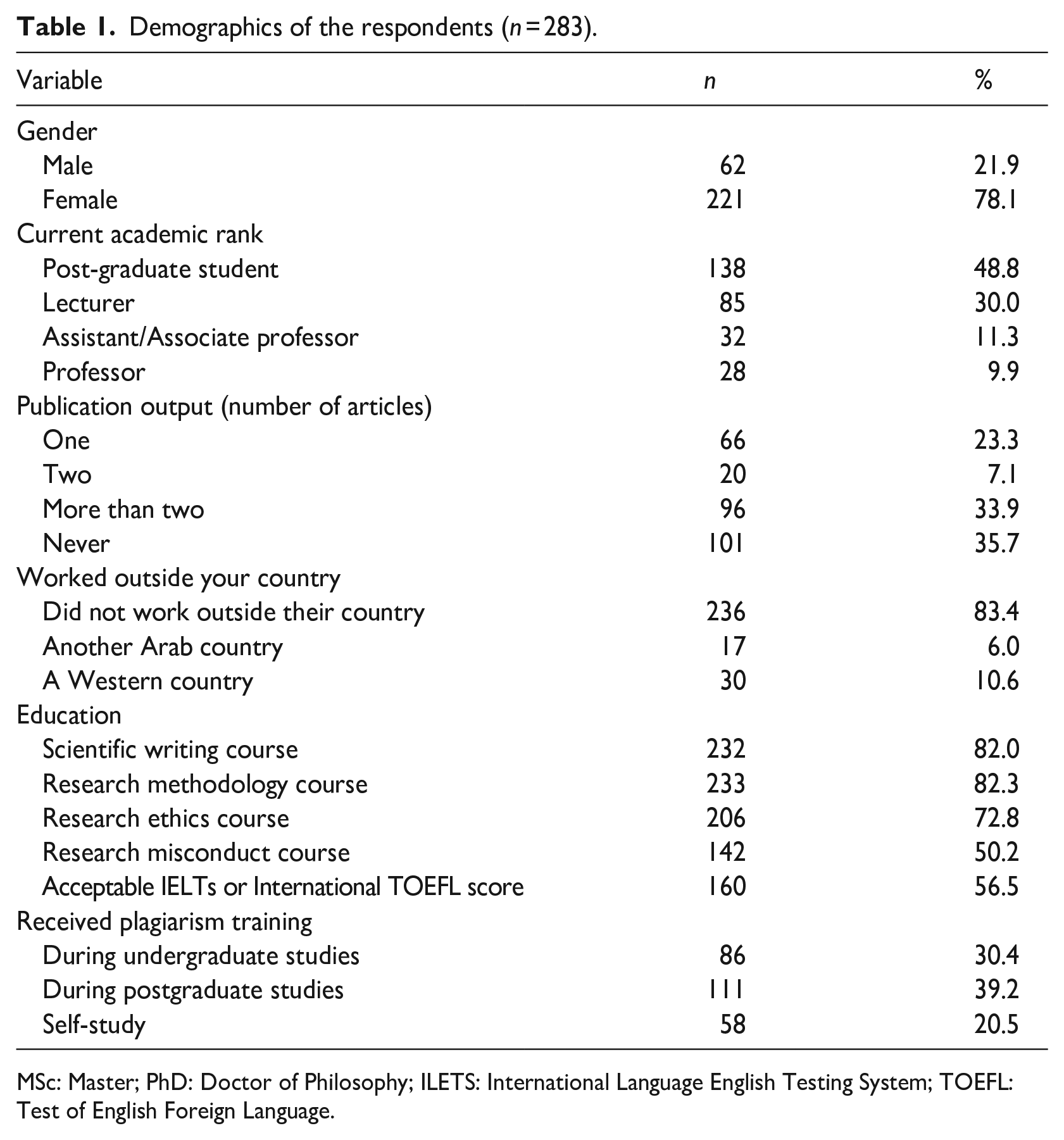
MSc: Master; PhD: Doctor of Philosophy; ILETS: International Language English Testing System; TOEFL: Test of English Foreign Language.
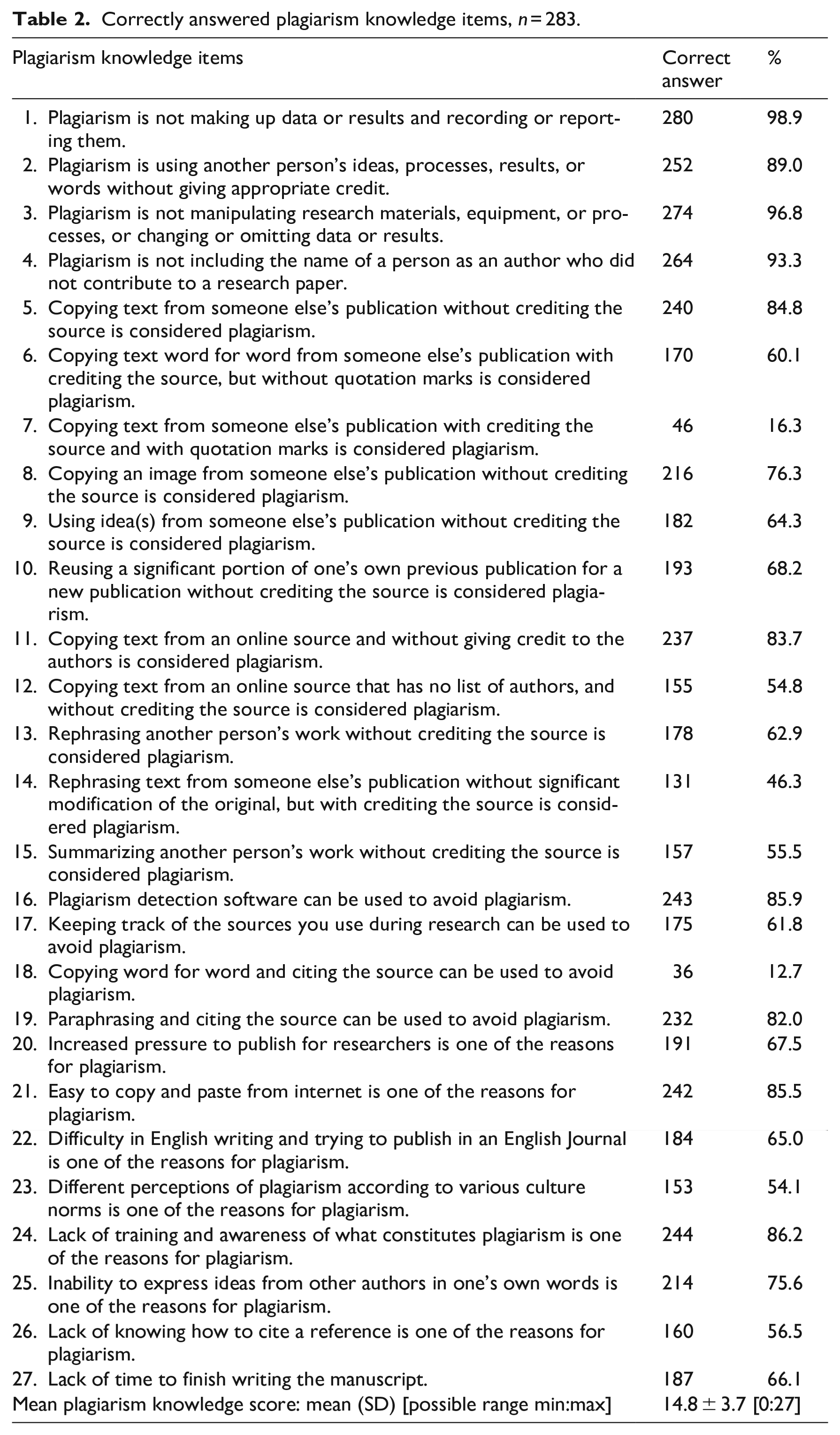
Table 2 shows the results of the knowledge items. The mean plagiarism knowledge score was 14.8 ± 3.7 (possible range 2–22), representing a moderate knowledge of plagiarism. None of the participants achieved the maximum score of 22. Most (>90%) participants could accurately define plagiarism (items 1–4). The correct answers for types of plagiarism acts (items 5–12), for example, copying text, ideas, images, and copying from online sources ranged from 60.1 to 84.8%, except for “copying with crediting the source and with quotation marks” (16.3%). Approximately half of the participants misunderstood the concept of paraphrasing (items 13–15). Regarding factors that might lessen the degree of plagiarism, many participants correctly identified three of the factors (items 16, 17, and 19), while only 12.7% of participants chose “we should not copy word by word” (item 18). More than 50% of the participants identified the most common causes of plagiarism, items 20–27.
Correctly answered plagiarism knowledge items, n = 283.
Regarding attitudes toward plagiarism, the mean total attitude score was 62.2 ± 10.9 (potential maximum score is 90, and higher scores indicate approval of plagiarism), representing a moderate approval of plagiarism. Regarding specific attitudes, only 19.1% disagreed with “Self-plagiarism should not be punishable in the same way as plagiarism is,” and only 35.7% disagreed that “Young researchers who are just learning the rules of scientific writing should receive milder punishment for plagiarism.” Furthermore, only 41.6% agreed that “Plagiarists do not belong in the scientific community.” See Table 3 for more details.
Attitudes toward plagiarism, n = 283.
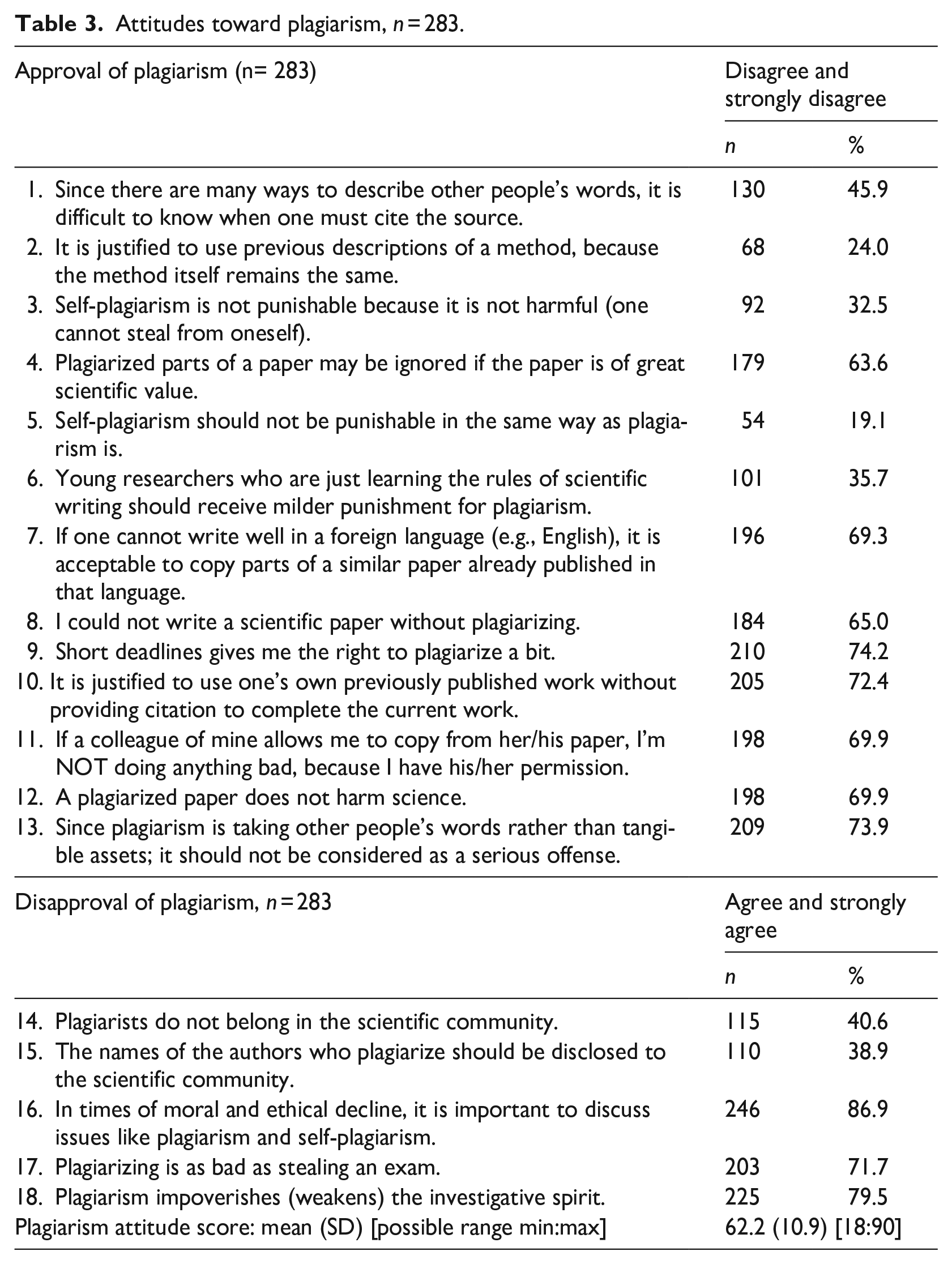
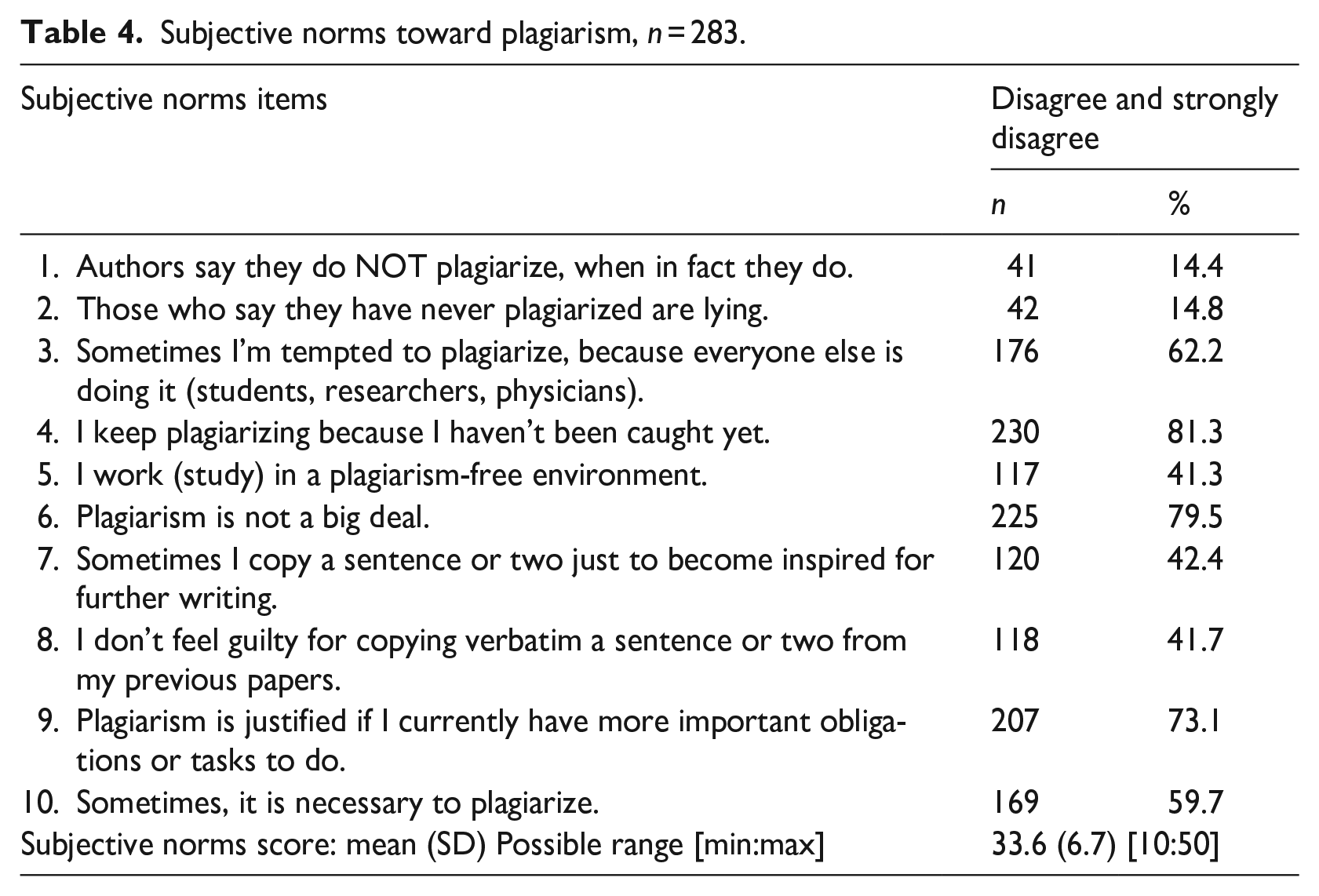
Table 4 shows the responses to items on the subjective norms subscale. The mean subjective norm score was 33.6 ± 6.7, within the moderate reference range of 24–37. Subjective norms represent the perceived social pressure to engage in a specific behavior. A favorable level should be low (10–23), indicating that plagiarism is socially unacceptable and its prevalence is low (Mavrinac et al., 2010). Individual responses reflective of this moderate score include that 41.3% disagreed with the statements “I work (study) in a plagiarism-free environment’’; 42.4% disagreed that “Sometimes I copy a sentence or two just to become inspired for further writing,” and 41.7% disagreed that “I don’t feel guilty for copying verbatim a sentence or two from my previous papers”. In contrast, 81.3% disagreed with “I keep plagiarizing because I have not been caught yet,” 79.5% disagreed that “plagiarism is not a big deal,” and 73.1% disagreed that “plagiarism is justified if one has other obligations or tasks.”
Subjective norms toward plagiarism, n = 283.
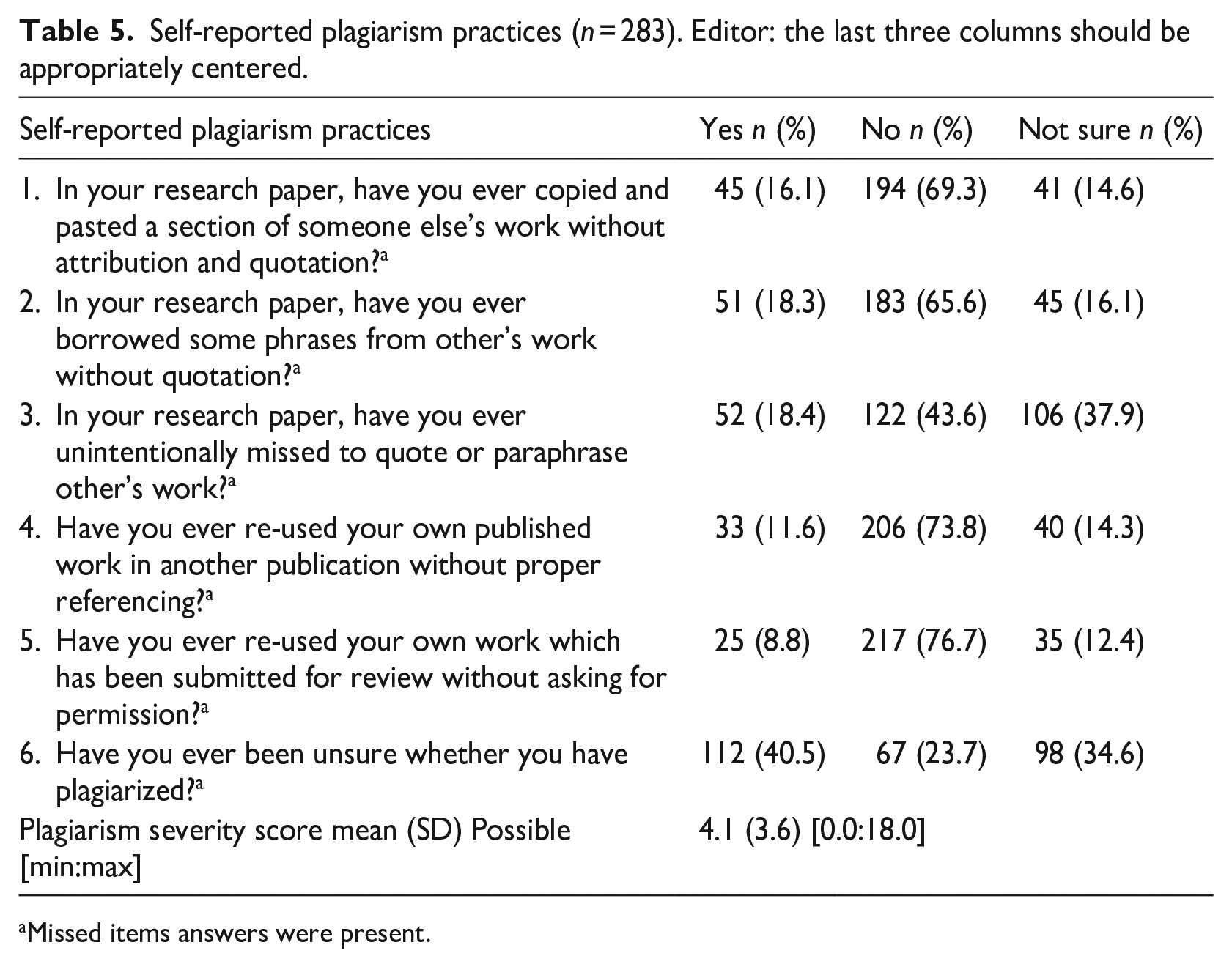
The mean PSS was 4.1 ± 3.6, representing a low score for self-reported acts of plagiarism, as the maximum possible score was 18. Between 16 and 18% of the participants reported various acts of plagiarism, including (1) copying and pasting a section of someone else’s work without attribution and quotation and (2) borrowing phrases from others’ work without quotation. A lower figure of 8.8% reported self-plagiarism. See Table 5 for more details.
Self-reported plagiarism practices (n = 283). Editor: the last three columns should be appropriately centered.
Missed items answers were present.
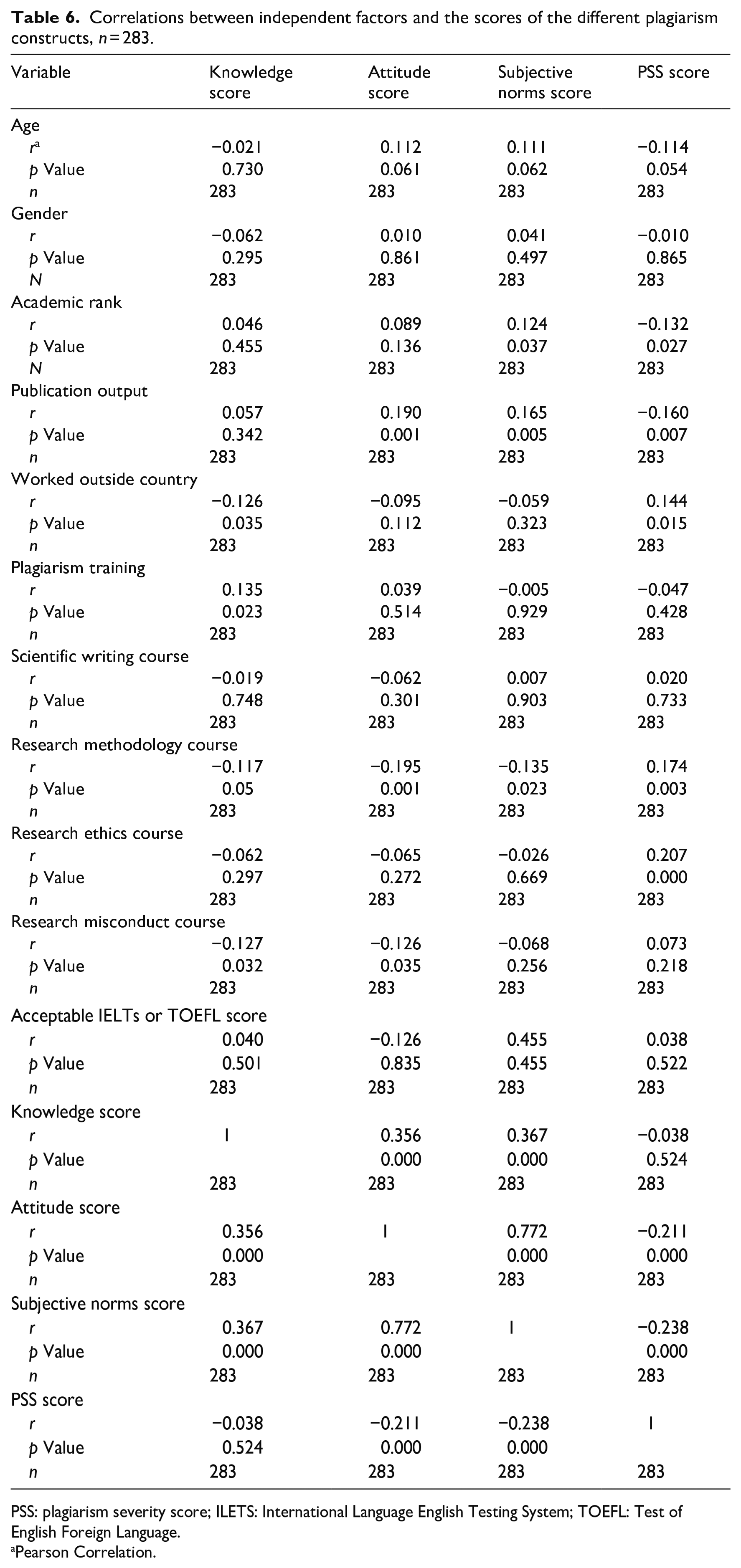
Table 6 shows the correlation analysis between independent and dependent factors of the plagiarism constructs. The knowledge score had significant positive correlations with both the attitude score (r = 0.356, p < 0.001) and the subjective norms score (r = 0.367, p < 0.001). The attitude score was positively correlated with the knowledge score (r = 0.356, p < 0.001) and subjective norms (r = 0.772, p < 0.001), while it negatively correlated with PSS (r = −0.211, p = 0.001). The subjective norms score was negatively correlated with PSS (r = −0.238, p = 0.001). The PSS had significant but weak negative correlations with the attitude score (r = −0.184, p = 0.001) and the subjective norms score (r = −0.220, p = 0.000). The publication output was positively correlated with both the attitude score (r = 0.190, p = 0.001) and the subjective norms score (r = 0.165, p = 0.005) and negatively correlated with PSS (r = −0.160, p = 0.007).
Correlations between independent factors and the scores of the different plagiarism constructs, n = 283.
PSS: plagiarism severity score; ILETS: International Language English Testing System; TOEFL: Test of English Foreign Language.
Pearson Correlation.
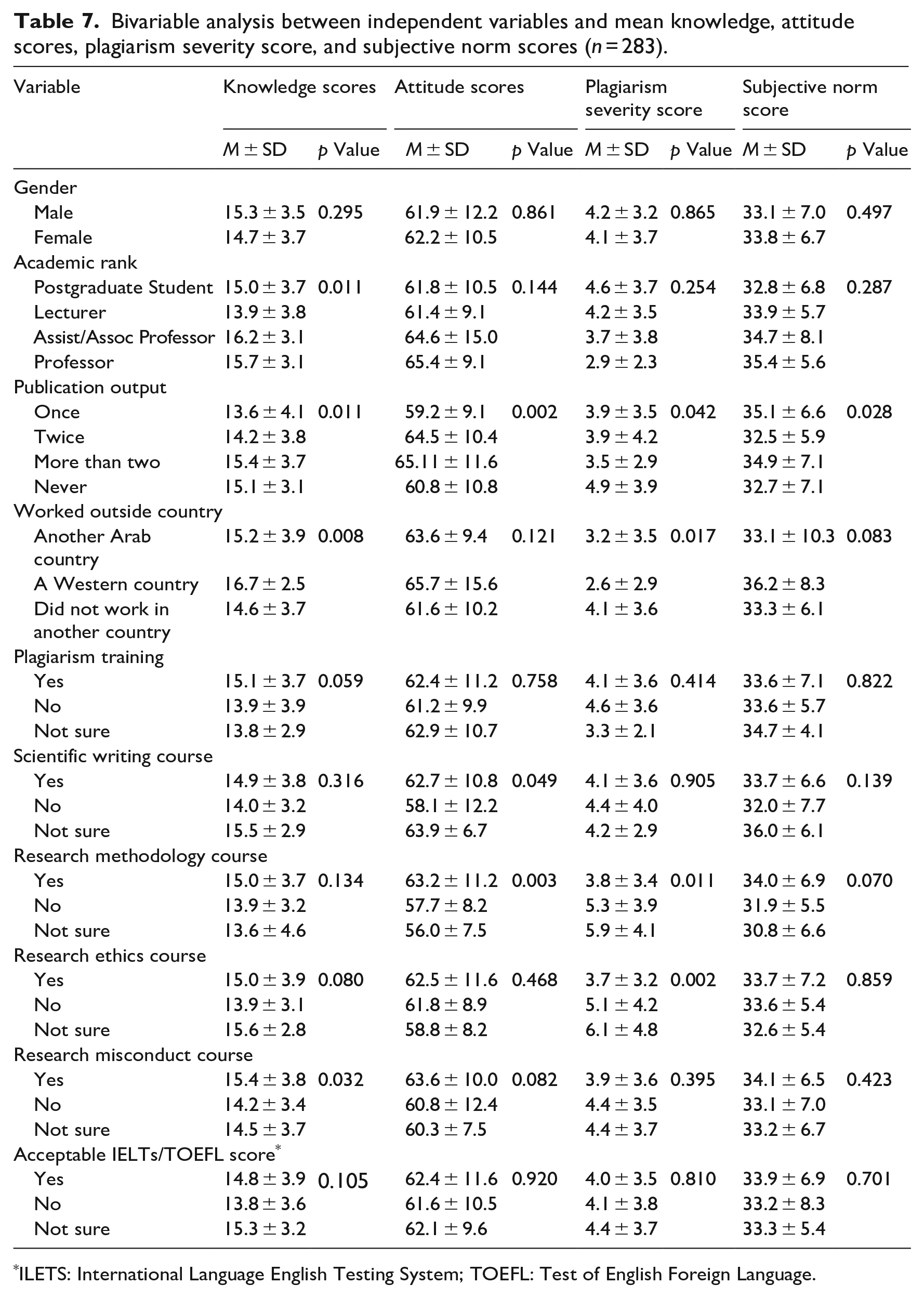
Table 7 shows the bivariate analysis between the independent variables and scores of knowledge, attitudes, subjective norms, and self-reported plagiarism practices. We found a significantly higher knowledge score among participants with higher academic rank (p = 0.011), higher publication output (p = 0.011), those who worked outside the country (p= 0.008), and participants who attended courses on research misconduct (p = 0.032). The attitude score was higher (disapproval of plagiarism) with publication output (p = 0.002) and attending courses in scientific writing and research methodology, p = 0.049 and 0.003, respectively. The PSS score was lower for those working in a Western country (p = 0.017), with publication output (p = 0.042), attending research methodology (p = 0.011), and research ethics courses (p = 0.002).
Bivariable analysis between independent variables and mean knowledge, attitude scores, plagiarism severity score, and subjective norm scores (n = 283).
ILETS: International Language English Testing System; TOEFL: Test of English Foreign Language.
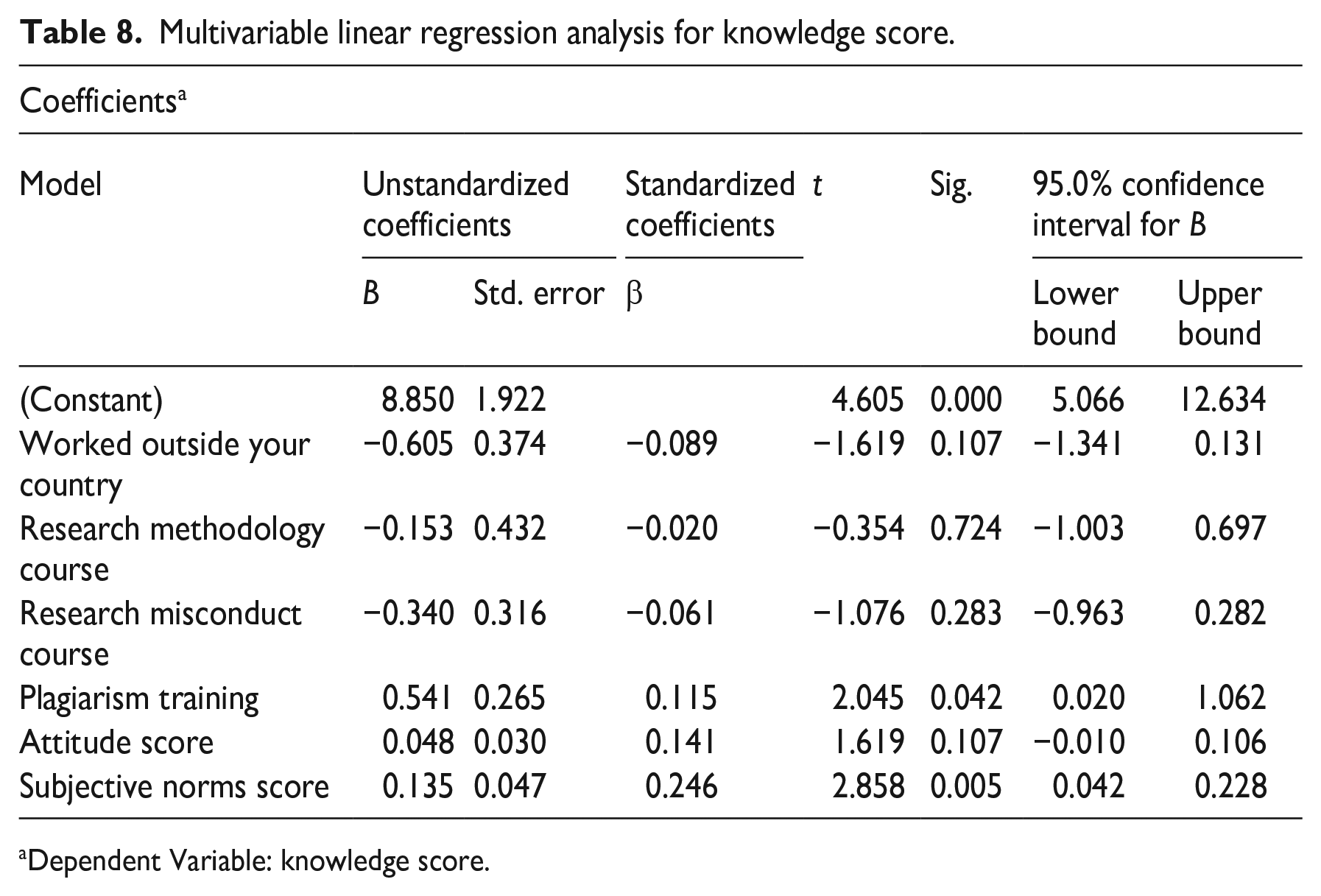
Tables 8 to 11 present the independent predictors of knowledge, attitude, subjective norms scores, and PSS, respectively. The significant factors predictive of the knowledge score were “plagiarism training” (β = 0.115, CI = [0.020:1.062], p = 0.042) and the “subjective norm score” (β = 0.238, CI = [0.037:0.224], p = 0.006).
Multivariable linear regression analysis for knowledge score.
Dependent Variable: knowledge score.
Multivariable linear regression analysis for attitude score.
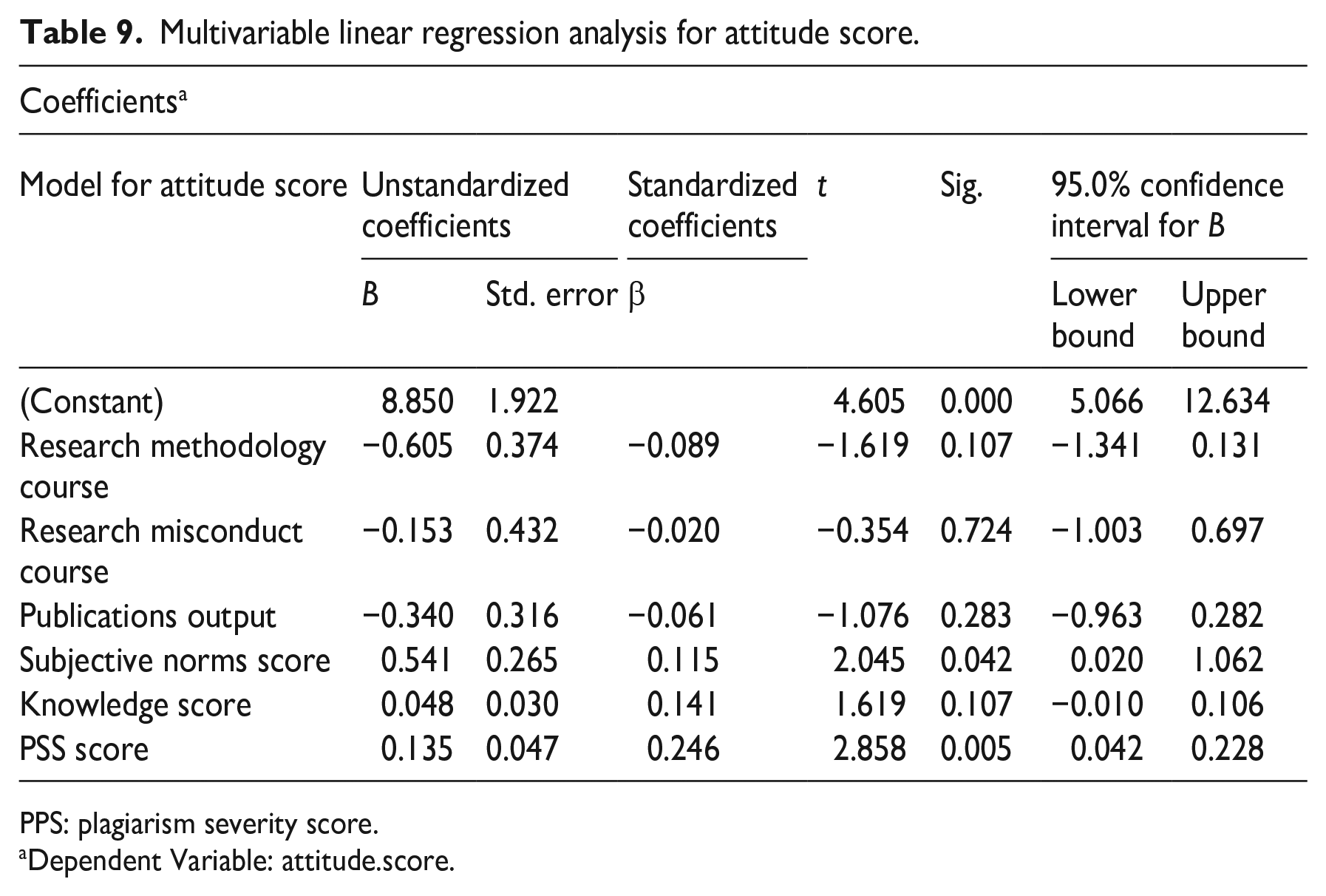
PPS: plagiarism severity score.
Dependent Variable: attitude.score.
Multivariable linear regression analysis for subjective norms.
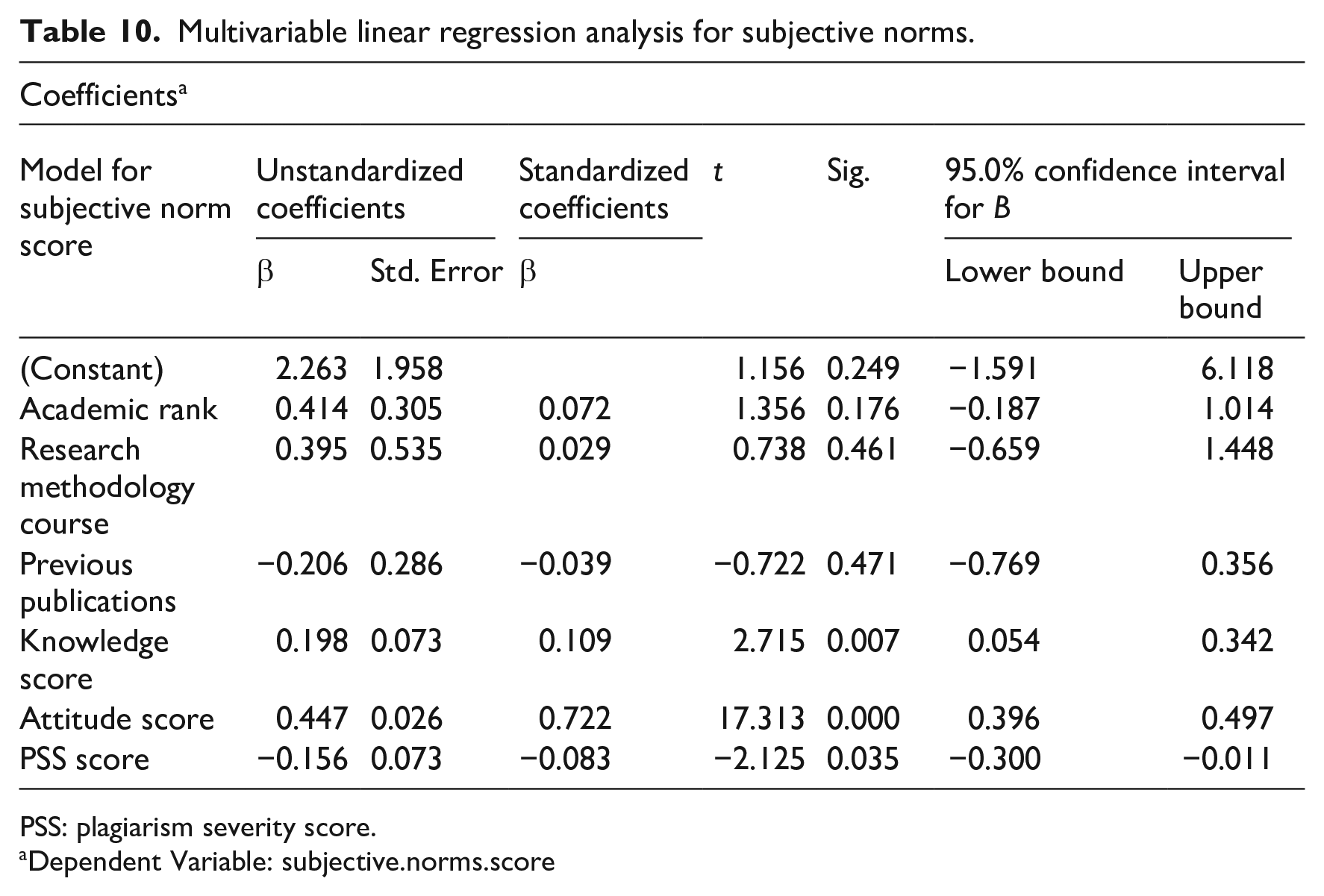
PSS: plagiarism severity score.
Dependent Variable: subjective.norms.score
Multivariable linear regression analysis for acts of plagiarism (PSS).
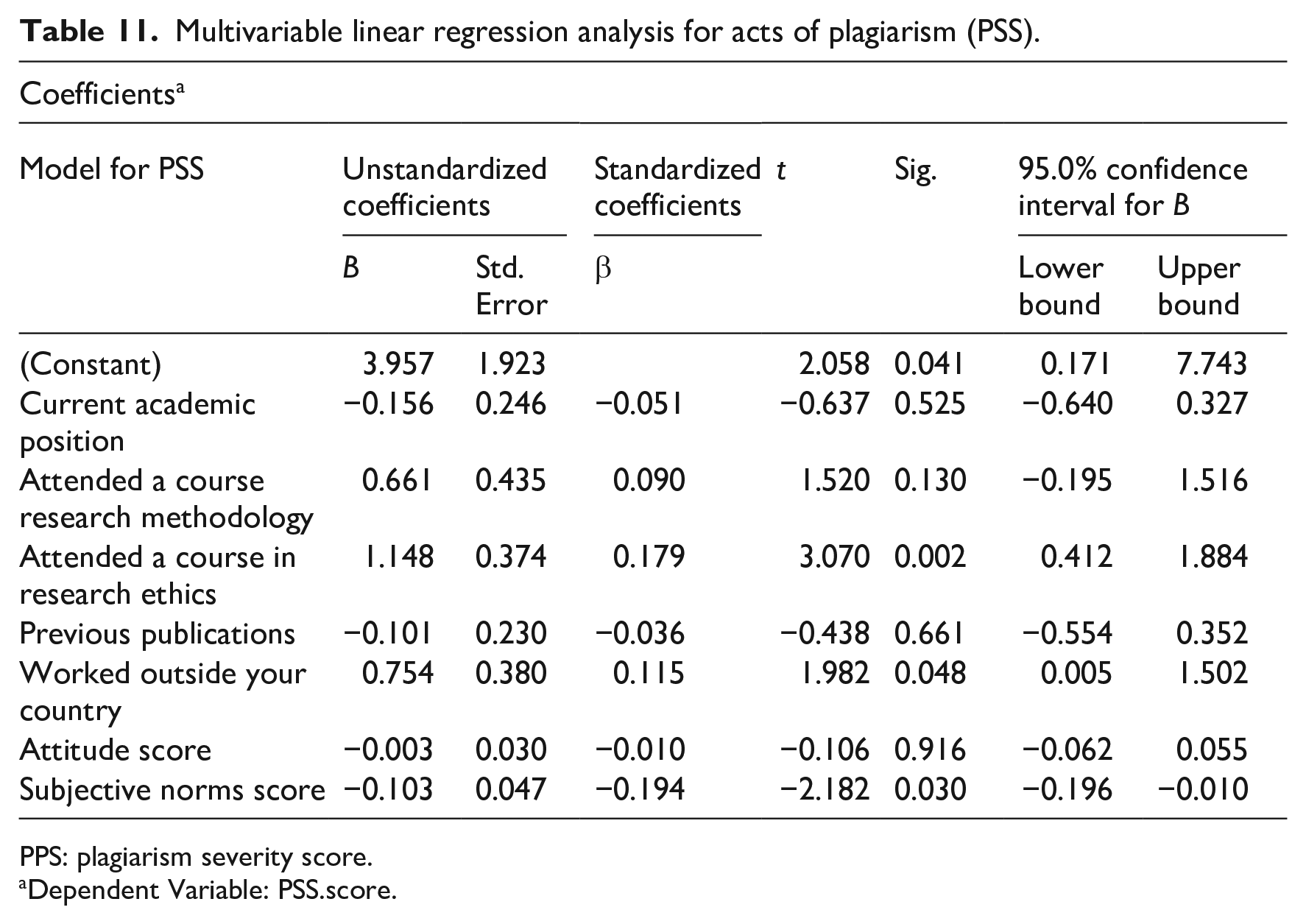
PPS: plagiarism severity score.
Dependent Variable: PSS.score.
Both the subjective norms score (β = 0.115, CI [0.020: 1.062]; p = 0.042) and the PSS (β = 0.246, CI [0.042: 0.228], p = 0.005) were positive predictors of the attitude score.
The predictive factors for the subjective norms score included the knowledge score (β = 0.109, CI [0.054: 0.342], p = 0.007), the attitude score (β = 0.722 CI [0.396: 0.497], p < 0.001), and the PSS (β = −0.083, CI [−0.300: −0.011], p = 0.035).
Finally, significant factors predictive of the PSS included attending a “research ethics course” (β = 0.179, CI = [0.412: 1.88], p = 0.002) and “worked outside your country” (β = 0.115, CI [0.005: 1.502], p = 0.048). The subjective norms score correlated negatively with the PSS (β = −0.194, CI [−0.196: −0.010], p = 0.030).
Discussion
We found several important aspects regarding plagiarism from two countries in the Middle East. First, participants demonstrated moderate knowledge of plagiarism (14.8 ± 3.7; possible range 0–27). These results compare with those of other studies investigating aspects of plagiarism. For example, Raj and colleagues found a moderate knowledge score of (4.43 ± 1.99; possible maximum of 10) among medical residents and junior faculty from institutions across South India (Raj JP et al.). They concluded that participants lacked adequate knowledge of avoiding plagiarism (Raj JP et al.). Tajall et al. reported that the Iranian faculty members of medical science universities attained a “good” level of knowledge (Tajalli et al., 2024). Moreover, Khemiss and colleagues found low plagiarism knowledge among university hospital doctors in Tunisia (Khemiss et al., 2019). Finally, Ryan and colleagues investigated students’ knowledge about plagiarism in Australia and showed low knowledge of plagiarism (Ryan et al., 2009).
It is challenging to compare knowledge scores between different studies as such scores depend on the extent of participants’ prior exposure to instruction in plagiarism, the type of questions asked, and the characteristics of the sample population. For example, we observed higher knowledge scores among participants with higher academic rank or with greater publication output. Similarly, other studies have found that knowledge is associated with a higher academic level and a higher publication record (El Bairi et al., 2024; Fatima et al., 2018). We propose that participants gain higher knowledge during their publishing process. Finally, working abroad was associated with increased knowledge, which is probably attributed to heightened awareness in Western countries of the importance of avoiding plagiarism. Relatedly, a study by Faleafel and colleagues investigating research misconduct in several countries in the Middle East found that researchers who had attended a Western university positively influenced research conduct (Felaefel et al., 2018).
Regarding attitudes, the mean attitude score of our participants reflected a moderate approval of plagiarism (62.2 ± 10.9, possible range 18–90), indicating that many of our participants justify and accept plagiarism. Similarly, an Egyptian study assessing faculty members’ attitudes toward plagiarism across 40 Egyptian universities, using a modified version of the ATP questionnaire, revealed moderate positive and moderate negative attitudes among respondents, with mean scores of 28 ± 7 and 20 ± 3, respectively (Ali, 2021). The authors of this study recommended that the Supreme Council of Universities develop an academic integrity policy and mandate obligatory training programs on plagiarism in the public universities.
Marar also reported moderate scores for positive and negative attitudes toward plagiarism among researchers at a tertiary care hospital in Riyadh (Marar and Hamza, 2020). Additionally, Rathore and colleagues, exploring attitudes toward plagiarism among faculty and medical students in Pakistan, found that most faculty and students demonstrated attitudes reflecting approval of plagiarism (Rathore et al., 2015). Similar moderate scores for approval of plagiarism have been observed among faculty and students in Tunisia (Bettaieb et al., 2020), resident doctors and junior medical faculty in India (Gomez et al., 2014; Raj et al., 2021), medical faculty in Iran (Ghajarzadeh et al., 2012), medical students in Romania (Badea-Voiculescu, 2013), graduate students in Ghana (Anaman and Agyei, 2021), and post-graduates in Myanmar (Phyo et al., 2023).
These results reflect a widespread, tolerant attitude toward plagiarism among students and faculty in many LMICs and underscore the need for targeted educational interventions. Such interventions should address the ethical implications of all forms of plagiarism, including self-plagiarism, to foster a more comprehensive understanding and adherence to academic integrity. In alignment with these recommendations, Alhadlaq et al. found that medical ethics courses were effective in reducing approval attitudes toward plagiarism (Alhadlaq et al., 2020). Additionally, a recent study by Rathore, Fatima, Farooq, and Mansoor (Rathore et al., 2018) highlighted the importance of workshops in raising awareness of research ethics and reducing scientific misconduct in LMICs.
Our participants held specific attitudes about plagiarism. For example, only a minority disagreed that “self-plagiarism is not punishable because it is not harmful (one cannot steal from oneself)” and “young researchers who are just learning the rules of scientific writing should receive milder punishment for plagiarism.” In contrast, a sizable majority agreed that “plagiarizing is as bad as stealing an exam” and that “plagiarism impoverishes (weakens) the investigative spirit.” Pupovac and colleagues (2010), Bettaieb and coworkers (2020), and Phyo and colleagues (2023) report comparable results on similar specific items within their study populations.
These findings reveal the subtle views participants hold about plagiarism, likely reflecting a complex interplay between their perceptions of the severity of different types of plagiarism and their reasoning behind the associated consequences. Additionally, the consistency of our results with those of previous studies suggests a similar pattern of attitudes across different populations.
Our study also showed that none of the independent variables we studied were predictors of the attitude score. This contrasts with a study from Tunisia, in which investigators reported that a lower tolerance toward plagiarism was associated with higher academic rank and previous training in scientific writing (Bettaieb et al., 2020). Additionally, Raj and colleagues demonstrated that not currently being involved in research was a significant predictor for the positive attitude score (Raj JP et al.). These findings suggest that factors typically associated with constructive research practices, such as higher academic rank and scientific writing training, correlate with a less tolerant attitude toward plagiarism, while a lack of current research involvement is linked to a more accepting view of plagiarism.
Our study revealed that the subjective norms score was (33.6 ± 6.7), aligning with the moderate range of 24–37 proposed by several authors (Bettaieb et al., 2020; Raj et al., 2021). A low subjective norms score (10–23) indicates that participants believe society does not find plagiarism acceptable. Our findings are consistent with those of other studies. For instance, Raj and colleagues reported a moderate subjective norms score of 31.05 ± 4.58 among resident doctors and junior faculty (Raj JP et al.). Similarly, Bettiab and colleagues found a moderate subjective norms score of 24.6 ± 4.9 among faculty members at the Faculty of Medicine of Tunisia (Bettaieb et al., 2020).
Of our hypothesized predictors (β; 95% CI; p-value), the knowledge score positively correlated with the subjective norms score (+0.109; 0.054–0.342; p = 0.007). This result suggests that individuals with greater knowledge about plagiarism are more likely to believe that society accepts or tolerates plagiarism. This counterintuitive finding suggests that simply having knowledge about plagiarism might not be sufficient to foster a strong anti-plagiarism stance and underscores the importance of not only educating individuals about plagiarism but also ensuring that this knowledge is framed within a strong ethical framework that discourages any tolerance for dishonest practices.
Investigators have reported other predictors of the subjective norms score. For example, Raj and colleagues identified “age” and “lack of previous publications” as significant predictors of subjective norms scores (Raj JP et al.). Specifically, they found that age was a negative predictor, suggesting that subjective norms are likely to decrease as age increases, which is favorable. They hypothesize that seniors might be “better positioned to voice their opinions and not accept issues as they are” (Raj JP et al.). Additionally, they observed that the absence of previous publications was a significant predictor with a positive correlation, indicating that individuals without publications tend to have higher subjective norms scores, which is less favorable. Finally, Bettiab and colleagues further revealed that participants with higher academic rank, English proficiency, and those who had attended workshops related to scientific writing were significantly associated with lower subjective norms scores, which is favorable (Bettaieb et al., 2020).
The extent of plagiarism was low in our study. Our reported PSS was (4.1 + 3.6, possible range 0.0–18.0), and less than 20% of our participants engaged in any of the listed acts in the questionnaire. This result compares with the study performed by Phyo and colleagues, who observed a PSS of 1.40 + 2.39 (maximum possible score 10); of all their participants, just 37.6% had committed at least one of the six indicated acts of plagiarism.
Nevertheless, these results contrast with other studies in LMICs, which show a higher prevalence of plagiarism. For example, a study from Iraq reported that the prevalence of plagiarism among medical and nursing students was 54.3% (Ismail, 2018). Additionally, Shirazi and colleagues showed that 82 and 73% of medical students and faculty from Pakistan reported plagiarizing (Shirazi et al., 2010). These differing rates of plagiarism could be explained by different academic environments and cultural attitudes toward plagiarism, the extent of academic integrity policies in institutions, the social norms within a particular academic community or country, and the research environment where significant pressures to publish might foster higher plagiarism acts. Finally, variations in study design, sample size, and the characteristics of the participants (e.g., level of education, discipline, and prior exposure to research ethics) could contribute to the differing rates.
It is instructive to discuss the relationships between attitudes, subjective norms, and plagiarism acts. A low subjective norms score is favorable as it indicates that participants believe that society does not find plagiarism acceptable. Our results revealed that the subjective norms score positively correlated with attitudes toward plagiarism (+0.115; 0.020–1.062; p = 0.042). Similarly, the attitude score was positively associated with the subjective norms score (+0.722; 0.396–0.497; p = 0.000). This positive association is logical as higher attitude scores indicate a greater tolerance toward plagiarism, and higher subjective norms scores suggest that individuals believe society is more accepting of plagiarism. In other words, individuals who justify or accept plagiarism might also be inclined to believe that others around them, or the broader community, share similar views.
Regarding the predictors of plagiarism acts, our study found that the attitude score was not a significant predictor of plagiarism. This contrasts with the findings of Phyo and colleagues, who demonstrated a positive association between the total attitude score and plagiarism acts (+0.97; 0.93–0.99; p = 0.027) (Phyo et al., 2023). This relationship is logical, as higher attitude scores, which indicate a more permissive acceptance of plagiarism, would likely result in higher plagiarism rates.
Instead, we found that the subjective norms score negatively predicted plagiarism acts (−0.194, 0.196–0.010, p = 0.030). This finding is counterintuitive because a lower subjective norms score, which indicates a belief that society disapproves of plagiarism, would typically be expected to correlate with a decrease in plagiarism acts. However, our results suggest the opposite: as subjective norms scores decrease (indicating stronger societal disapproval of plagiarism), the number of plagiarism acts increases. This unexpected relationship implies that the dynamics between societal disapproval and individual behavior may be more complex and require further interpretation. One possible explanation is that other factors might influence this relationship or that the belief in societal disapproval does not always translate into personal behavior. For instance, individuals might justify plagiarism and self-plagiarism when they commit these acts themselves while holding others to a stricter standard (Pupovac et al., 2010).
Alternatively, unethical behavior could be a sign of moral disengagement—a process where individuals convince themselves that their unethical actions are morally acceptable (Bandura et al., 1996). They might justify their behavior by believing that breaking moral rules is permissible when it serves their interests or by rationalizing that their actions are not as severe as others’ more egregious misconduct.
Moreover, individuals may displace responsibility for their unethical behavior by attributing it to external pressures. A relevant example is the link between perceptions of organizational justice in academic institutions and self-reported misbehavior or misconduct. Specifically, when individuals believe they are being treated unfairly (e.g., facing unreasonable demands for promotion), they are more likely to engage in scientific misbehaviors, including plagiarism.
Martinson et al. (2010) demonstrated this relationship, finding that negative perceptions of organizational justice (i.e., feeling unfairly treated) correlate with higher rates of self-reported misbehavior and misconduct.
Additionally, a recent study using the Survey of Organizational Research Climate (SOuRCe) tool, which measures various aspects of the research integrity climate, was conducted among researchers at several Egyptian universities. The findings revealed that the subscale for Departmental Expectations received the lowest scores, indicating a heightened perception of organizational pressure to publish and secure funding, potentially suggesting significant organizational injustice (Abdelkreem et al., 2024).
Finally, in a recent interview study by Elgamri and colleagues, researchers at several universities in the Arab Region of the Middle East shared their perceptions of challenges to conducting and publishing research (Elgamri et al., 2023). Participants indicated that research misconduct, such as plagiarism, might be linked to inadequate research infrastructure and lack of funding, training, mentoring, and time. These findings reinforce the idea that external pressures perceived as unfair can contribute to unethical practices.
These explanatory mechanisms are relevant to the theory of planned behavior (TPB) (Ajzen and Fishbein, 1969), which incorporates several components to predict intentions and explain behavior. One component is the person’s attitude toward the act in question. Another measure is the person’s perception of what others expect him or her to do (i.e., subjective norm). The third component (not measured in this study) is the motivation to comply with these expectations. Accordingly, for acts of plagiarism, if an individual evaluates a suggested behavior as unfavorable (i.e., a negative attitude), if he or she believes society wants compliance with such behavior (low subjective norm), and if the intention (motivation) not to perform the behavior is substantial, then he or she will be less likely to perform the behavior. However, the existence of perceived institutional challenges to conducting and publishing research (the third component) might lessen the motivation to conform to standards of research integrity. This concept explains the negative correlation between subjective norms and plagiarism acts.
Limitations of the study
We acknowledge several limitations of our study. For example, several aspects of our study design might limit the generalizability of our results. Specifically, our response rate of online data collection could have been higher, which led to a sample size that was lower than calculated. Moreover, self-selection bias in our data cannot be ignored, as participants who were willing to participate in this study probably represented individuals who were interested in concepts of plagiarism. Additionally, female participants constituted a majority in our study, which might have skewed our results. However, findings from earlier research have not indicated that gender has any impact on plagiarism. Finally, we relied on the participants’ self-reported practices, which may underestimate the prevalence of research misbehaviors due to imperfect memory and social desirability bias, as participants might have provided answers that others will view favorably.
Conclusions and recommendations
Our study revealed that plagiarism represents a significant ethical issue of academic performance among our study population. Additionally, many participants exhibited a permissive attitude toward plagiarism. We also found that subjective norms strongly influenced attitudes and self-reported plagiarism acts.
We recommend that universities in the Arab Middle East region develop ethics and research misconduct training programs for postgraduate students and faculty members, as such training could positively influence their attitudes and practices related to plagiarism. However, it is essential for academic leaders to assess and address the research integrity climate within their institutions, as organizational injustice could undermine educational efforts. Finally, we suggest conducting mixed-methods research to further investigate attitudes, subjective norms, and the underlying reasons for engaging in plagiarism at universities.
Footnotes
Data availability statement

Declaration of conflicting interests
The author(s) declared no potential conflicts of interest with respect to the research, authorship, and/or publication of this article.
Funding
The authors disclosed receipt of the following financial support for the research, authorship, and/or publication of this article: This work was supported by Award No. R25TW007090 of the Fogarty International Center at the National Institutes of Health, USA.
Ethical approval
We obtained ethics approvals from two Universities in Egypt (FAMASU R39/2021) (FMBSUREC/07022021/Mohammed) in February 2021 and one in Lebanon (Ref: IRB-REC/O/018-21/0121) in March 2021.