




Abstract
Scientific integrity is defined as the condition that occurs when individuals adhere to accepted standards, professional values, and practices of the relevant scientific community. This study aims to investigate the influential factors on the scientific integrity in scholarly publishing of researchers in Thailand. The questionnaire was delivered to a sample size of 398 top researchers who had high citations and h-index recorded in the Scopus database during the past 5 years, 316 responses were returned. The findings confirm that there are five factors that affect scientific integrity in scholarly publishing: university/faculty requirements/policies, university support, aspects of publishing, publisher aspects, and researcher-related factors. It is evident that establishing a process and criteria for authorship agreement and verification, as well as dedicating offices or units within the university to address research integrity concerns and provide support to researchers, exhibit the highest factor loading values. The findings ensure that scientific integrity stands out as a top priority for researchers linked with prominent research universities in Thailand. To tackle this challenge, it is recommended for the universities to prioritize initiatives aimed at enhancing researchers’ ethical awareness and nurturing scientific integrity.
Introduction
University ranking is a method used to assess and compare universities based on various criteria (Kaidesoja, 2022). It helps enhance the impact and reputation of universities, identify potential collaborators and funding sources, among other benefits (Galleli et al., 2022; Kaidesoja, 2022; Lukman et al., 2010; Taylor and Braddock, 2007), leading universities to issue policies, strategic plans, and processes to boost scholarly publishing. According to this, scholarly publishing plays important roles in enhancing university reputation, developing researchers’ academic ranking, career advancement, promotion, and recruitment, as well as creating new knowledge and fostering international cooperation and research projects (Dhillon et al., 2015; Wahid et al., 2022). This has led to a rapid increase in scholarly publications in educational institutions. However, as noted by Wahid et al. (2022), scholarly publication is influenced by many factors, such as personal, environmental, and situational factors. In terms of personal factors, funding and collaboration are the most influential factors for researchers, followed by time availability, academic rank, and qualifications. Meanwhile, institutional publication performance is influenced by environmental and situational factors (e.g., availability of electronic information resources, library support, provision of the latest books and journals, university-industry relationships, mentoring, training, and reduced teaching loads). The study by Dhillon et al. (2015) indicated that the age and experience of researchers significantly influence research productivity.
In 2020, the Ministry of Higher Education, Science, Research, and Innovation (MHESRI) of Thailand categorized universities into five groups according to the Reinventing University Project policy, namely: (1) Global and frontier research, (2) Technology development and innovation, (3) Area-based and community engagement, (4) Moral and intellectual cultivation, and (5) Specialized and professionals. For universities in the Global and frontier research group, there are a total of 16 universities. The strategic goal is towards internationally competitive research with high quality, emphasizing advanced research and cultivating researchers as knowledge leaders for the nation, at the doctoral level or beyond, with dissertations or internationally recognized research outputs across various disciplines. Prioritizing exploration to generate new knowledge, theories, and discoveries to expand the frontiers of knowledge and foster academic advancements in various fields (Australian Government, 2020; MHESRI, 2021). This policy has resulted in a significant increase in Thailand’s research publications in international journals. According to Scimago Country Rankings, from 2020 to 2022, Thailand’s publications indexed in the Scopus database have increased by 12%–15% each year (Scimago, 2024). However, when Thai university scholars are pressured to produce a large quantity of research outputs, some instances of research misconduct have been discovered, such as duplicate publications, disqualified research writing, malpractice in authorship, etc. As a result, the MHESRI has implemented various measures related to scientific or research integrity in scholarly publishing (Sawasdee, 2023).
Scientific integrity constitutes principles and standards for research conduct and scholarly publication. It involves honesty, responsibility, transparency, and independence of researchers and reviewers (Nek and Eisenstadt, 2016). Adhering to the principles and standards, scientific integrity ensures the credibility and reliability of the research process and its outcomes. In the context of scholarly publishing, scientific integrity is essential for maintaining the trust of the scientific community and the public in published research. It is the foundation for advancing knowledge and promoting innovation in all fields of science (Kretser et al., 2019). The increasing number of publications is undoubtedly a positive development that reflects universities’ dedication to research and academic excellence. However, with this increased output comes an added responsibility to maintain scientific integrity. As reputable institutions, the global and frontier research universities must ensure that their research is conducted in a rigorous, ethical, and transparent manner.
A review of prior research has revealed numerous factors influencing research misconduct. Some studies suggest that the organizational climate, encompassing the work environment, practices, procedures, support from the university, incentives, organizational culture, and behavior related to research activities, may contribute to fostering research misconduct among researchers (Ehrhart et al., 2013; Martinson et al., 2016; Mumford et al., 2007). Armond and Kakuk (2022) noted that the integrity of science can be compromised by factors such as inadequate resources, the pressure to secure funding and publishing, suspicion, and competition among researchers. These elements impede the sharing of information, disrupt the peer-review process, and contribute to harmful research practices. Additional factors related to research integrity include journal reputation, rankings, acceptance rates, the peer-review process, and author guidelines (Holtfreter et al., 2020; Lüscher et al., 2020; McNutt et al., 2018; Subaveerapandiyan et al., 2022). Additionally, researchers from various academic ranks and scientific disciplines have differing perceptions of research integrity (Haven et al., 2019). Thus, studying the factors that significantly influence research integrity contributes to universities’ efforts in developing a culture of research integrity, which could better foster research practices and ethical conduct, as well as maintain and enhance their reputation (Forsberg et al., 2018).
Path analysis, an extension of multiple regression, enables researchers to infer and test a series of causal links between variables. It allows for the simultaneous examination of relationships among multiple predictor and criterion variables. Bollen (1989) and Kline (1998) indicated that path analysis focuses on observed variables rather than latent ones. This approach is specifically designed to test and capture intricate “causal” relationships among the variables of interest (Barbeau et al., 2019). This study aims to examine the factors that impact the scientific integrity of researchers engaged in scholarly publishing at global and frontier research universities in Thailand. It explores the correlations between factors and check indicators of the model fit, with the ultimate goal of suggesting effective solutions to enhance research conduct in these universities.
The findings of this study are compromising for (1) policy makers to issue strategy, policies and mechanisms to enhance ethical conduct and maintain the credibility of scholarly publishing; (2) universities to issue appropriate documents, procedures, and guidelines, provide resources, and organize educational programs to foster an academic culture and ethical conduct in research; and (3) researchers in enhancing their perceptions of factors influencing research integrity, enabling them to recognize problems in research, make informed decisions, and exhibit responsible conduct in their scholarly endeavors to safeguard their reputation within the academic community.
Literature review
Exploring factors influencing research integrity plays a crucial role in evaluating and enhancing researchers’ perceptions of integrity climate in their universities. Based on the previous research, the scientific integrity has been influenced by different factors and can be divided into three main groups as follows.
Organizational environment
According to Holtfreter et al. (2020), the primary contributors to misconduct were often identified as work-related challenges and pressures, such as the expectation to secure external funding and publish in high-impact journals, were commonly seen as factors contributing to research misconduct. Similarly, pressure related to meeting tenure requirements and establishing a reputation were also identified as contributors (Dhillon et al., 2015; Rohwer, 2018; Roje et al., 2023; Wahid et al., 2022).
Other studies also mentioned that the structure of rewards, including the tenure and promotion system and annual merit salary adjustments, resources, and time pressure are heavily influenced by research productivity, particularly the publication of work in top-tier journals and the acquisition of competitive grants. When scholars face intense pressure resulting in negative emotions, the likelihood of misconduct increases significantly. This may involve altering results from a pre-test to support a grant proposal or strategically misrepresenting estimates in a manuscript submitted to a peer-reviewed journal (Martinson et al., 2010; Rohwer, 2018; Roje et al., 2023; Tijdink et al., 2014; Wahid et al., 2022).
Furthermore, the promotion of codes of ethics, mentors with integrity, and coursework emphasizing good methodology and integrity constitute significant sources of ethical standards in research. These standards play a crucial role in supporting norms that aim to prevent or detect research misconduct. Such norms encompass practices like sharing research data, conducting replication studies, specifying research procedures, and maintaining detailed records. The research context, whether laboratory or field studies, experimental or observational designs, individual or collaborative projects, and the stakes involved, along with factors like local or international scope and resource adequacy, also influence research integrity. Additionally, disciplinary culture, such as work modes (team or individual projects), normative practices encouraging consultation, transparency in work processes and products, and oversight due to external funding or human subjects review, contributes to the ethical considerations in research (Kaewkungwal and Adams, 2019; Levine and Iutcovich, 2003; Rafi et al., 2019; Rohwer, 2018; Roje et al., 2023; Wahid et al., 2022).
External factors like the resource environment and system policies indirectly impact the scientific research credibility of researchers (Zhao et al., 2022). Additionally, other factors influencing research include the tightness of the job market for scientists, the occurrence of high-profile cases involving scientific fraud or risks to human subjects, the political climate for science as seen in legislative efforts to regulate scientific conduct, activities like managing data access, the introduction of new federal rules overseeing research grants, the level of public openness, research investment, national funding, collaboration, and the overall respect for science and scientists (Levine and Iutcovich, 2003; Mamun and Rahman, 2015; Roje et al., 2023; Wahid et al., 2022).
Khathayut and Walker-Gleaves (2021) observed that within the Thai academic landscape, there exists a notable lack of comprehension among university faculty regarding plagiarism, its prevention, and the broader aspects of academic integrity instruction, because of the lack of policies for plagiarism punishment and institutional support (Bowen and Nanni, 2021); and some cases of authorship-for-sale (Wongnak et al., 2023). Moreover, Kaewkungwal and Adams (2019) found that variations in perceptions and expectations between researchers and members of Research Ethics Committees in Thailand had an impact on the ethical considerations and protocol review procedures. Consequently, they proposed that the implementation of plagiarism policies holds significant importance for universities, serving to cultivate an atmosphere of academic honesty and bolster educators’ awareness regarding plagiarism-related matters. Furthermore, it is crucial to scrutinize suspicious researchers in order to address systemic research misconduct and bolster the integrity of research endeavors; and establish a clear policies and procedures for research ethics.
Publishing and publisher aspects
It can be seen that open access is the most popular trend in scholarly publishing at this stage. However, several factors hinder open access publishing, including concerns about funding, journal quality, researchers’ perceptions, accessibility, attitudes, norms, innovativeness, researchers’ seniority, and past publishing behavior (Dallmeier-Tiessen et al., 2011; Kepalienė and Maceviciute, 2022; Moksness, 2018, Moksness, et al., 2020; Shook and Vecchione, 2022). The findings of Subaveerapandiyan et al. (2022) indicated that researchers prefer to have digital publishing because it brings a lot of benefits for readers. They emphasize that journal reputation, journal index, and high-impact journals are important criteria for them to publish their papers. Moreover, during the writing and publishing process, they are aware of relevant issues of publication ethics, copyright, and plagiarism relates to the unauthorized use of another individual’s concepts, methods, findings, or language without proper attribution (Paruzel-Czachura et al., 2021; Roje et al., 2023).
High-impact journals utilize the peer review system to evaluate submitted manuscripts, relying on expert recommendations to ensure scientifically rigorous publication decisions. Reviewers assess factors such as novelty, methodology, statistical analysis, readability, and the use of illustrations. The primary goal of high-impact journals is to publish manuscripts of the utmost quality, aiming to deliver novel, clinically significant, and reliable information to their readership. Acceptance rates underscore their commitment to maintaining stringent standards (Lüscher et al., 2020). Factors leading to low deterrence of research misconduct include a minimal chance of identifying such misconduct through the peer review process and a low probability of detecting it due to the absence of scientific replication (Holtfreter et al., 2020). Additionally, the journal mandates a data availability statement for each article, enhancing confidence in clinical trials, facilitating independent analyses, and supporting the testing of new hypotheses. The use of an open data repository promotes transparency and enables patient-level meta-analyses (Lüscher et al., 2020).
McNutt et al. (2018) suggested modifications to journal authorship policies and procedures. These changes aim to offer clarity on each author’s specific contributions, enhance confidence in the completeness of the author list, and establish explicit criteria justifying the attribution of authorship credit. Furthermore, a Scientific Integrity Consortium has underscored the need to: (1) promote the publication of unexpected discoveries that adhere to high standards of quality and scientific integrity in scientific journals; (2) advocate for the uniform and transparent implementation of efficient procedures for correcting or retracting published papers across journals; and (3) develop rigorous and comprehensive evaluation criteria that acknowledge and incentivize the highest levels of integrity in scientific research (Kretser et al., 2019). The global scientific community also acknowledges that addressing predatory publishing activities is a critical concern in both science and research integrity. Consequently, there is a need for proactive measures to mitigate and manage the implications of such activities. Additionally, guidance for authors, particularly those who are early in their careers, is essential in navigating the academic publishing process (Caporale and Zagarella, 2023).
Researchers’ aspects
Wahid et al. (2022) observed a positive correlation between the performance of publications and citations by individual institutions and enhancements in their rankings, accreditation, and allocation of funds in higher education. Moreover, Holtfreter et al. (2020) emphasized several factors contributing to research misconduct, such as researchers inclined to take shortcuts, facing challenges in pursuing long-term goals, acting without considering long-term consequences, struggling with impulse control, easily discouraged by rejection, and individuals with a self-indulgent approach. Elevated expectations for career advancement were considered a significant contributor to scientific misconduct, while a stronger emphasis on recognizing scientific integrity was linked to lower instances of self-reported scientific misconduct. Furthermore, individual ethical values, the pressure to publish papers, the academic ethics of institutions, and the extent of monitoring and penalties for scientific misconduct were identified as additional influences on scientific integrity (Roje et al., 2023; Yu et al., 2021).
Levine and Iutcovich (2003) highlighted individual factors, such as one’s professional integrity history, exposure to explicit ethics or research conduct training, past tendencies toward hurried or meticulous work planning, the extent of professional or personal commitments, and the perceived importance of a specific publication for personal or group advantages also impacted to research integrity. The findings of Zhao et al. (2022) indicated that the personal achievements and scientific research literacy of scientists serve as intrinsic factors influencing the frequency and intensity of their engagement in scientific research dishonesty.
Based on the literature review, the researchers designed the questionnaire including five factors influencing the scientific integrity as shown in Figure 1.
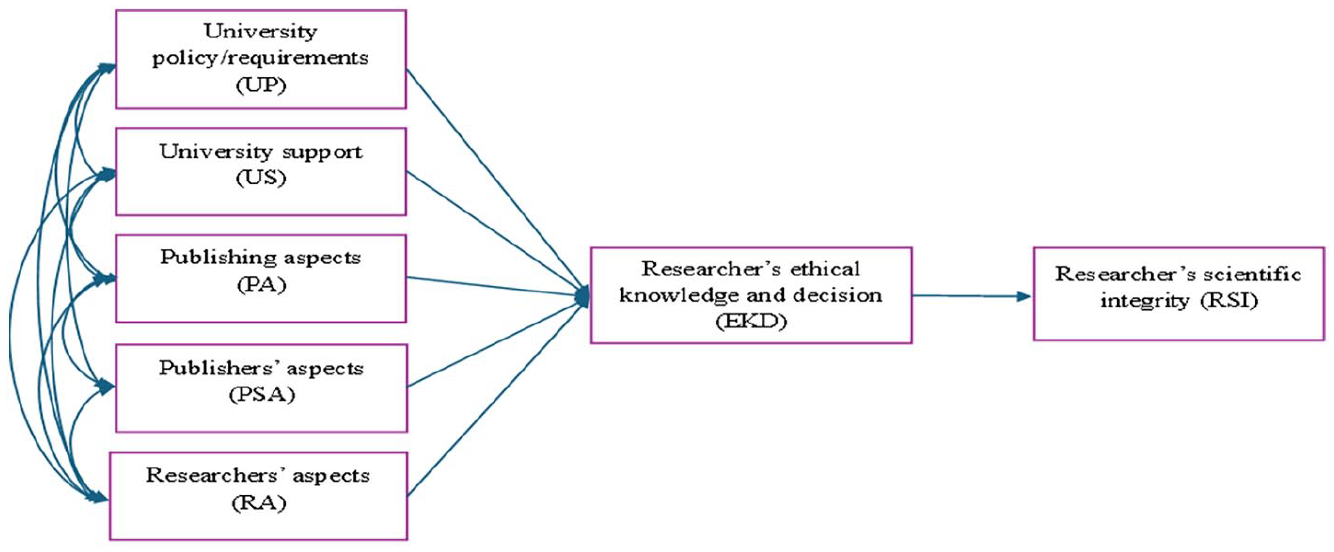
Hypothesized conceptual model with path analysis.
Research method
Sampling
This article focuses on surveying the researchers who have had articles published on Scopus in the last 5 years in 16 global and frontier research universities in Thailand.
Scopus serves as a database of peer-reviewed academic literature, providing a thorough representation of global research in various domains such as science, technology, medicine, social science, and arts and humanities. It offers a comprehensive overview of the world’s scholarly output, including abstracts and citations. Publishing documents on Scopus database helps address predatory publishing and safeguarding the credibility of scholarly publications; enhance the efficiency and effectiveness of the research process; empower institutions to strengthen their performance, ranking, and reputation; and allow funders to maximize the benefits of their investments (Scopus, 2022).
To ensure a comprehensive study of active researchers and effectively evaluate their research impact and productivity, a 5-year timeframe is chosen as an appropriate period. This duration aligns with established practices in academia, where impact factors and h-index calculations often utilize a 5-year mapping period. By focusing on this specific timeframe, this research can capture a substantial body of work and provide valuable insights into the researchers’ sustained output over a significant period.
According to the data retrieved from Scopus database in July 2023, there are 62,486 researchers with 97,624 papers between 2019 and 2023 by 16 global and frontier research universities. The sample size of this research is calculated by utilizing the Yamane’s formula with 95% CI. Consequently, the total sample size of this study is 398 participants. Given the total sample size, we aim to select the top researchers from each of the 16 universities based on the dataset extracted from Scopus database.
Research tool
The quantitative method was used to collect data from researchers’ opinions of scientific integrity of scholarly publishing though a questionnaire. The literature review significantly contributed to designing the research tool of this study. The structure of the questionnaire includes three parts: Part 1—Demographic information; Part 3—Factors influencing scientific integrity of scholarly publishing; and Part 3—Researcher’s ethical knowledge and decision, and scientific integrity of scholarly publishing.
This questionnaire helps to survey factors having influence of scientific integrity, such as university’s policy (i.e., requirements/standards, ethics process, country standards, pressure of faculty, funding, university support to publications, training, and education); publishing and publishers aspects (i.e., APC charge, speed of acceptance, review process, name of publishers, open access policy); and researcher’s aspects (i.e., academic promotion, income, personal reputation, cooperation, conflict of interest) on a scale of 1–5 for each item from 1 = Very unimportant to 5 = Very important. Furthermore, open-ended questions also are added to have more opinions or suggestions of researchers concerning the scientific integrity of scholarly publishing in their university.
Items in each factor were grouped by carefully reviewing previous studies to identify the key concepts or constructs aimed to measure. Next, these items that appeared to assess similar aspects or dimensions were considered potential items for grouping into the same factor. Then, to ensure the quality of the questionnaire, the researchers sent this research tool to three experts from different fields (i.e., social sciences, technology, and health sciences) for evaluation of its contents, structure, and language. Subsequently, the researchers revised the questionnaire based on the feedback and suggestions provided by the experts.
Data collection and data analysis
The last version of the questionnaire was delivered to researchers by using Google form through email within 4 months. As a result, we got 316 valid questionnaires from participants, accounting for 79.4%. After the data collection process, the researchers reviewed and checked the dataset for any missing or erroneous values and addressed them appropriately; and removed any duplicate entries or irrelevant responses. Subsequently, the data underwent analysis and model fit assessment using SPSS and MPlus software version 7 used for path analysis.
The path analysis method is employed to examine the primary data gathered through questionnaires. The subsequent model illustrates the relationships among variables, such as University/faculty requirements/policies, University support, Publishing aspects, Publisher aspects, Researcher’s aspects, Researcher’s ethical knowledge and decision, and Researcher’s scientific integrity (Figure 1).
Research findings
Demographic information
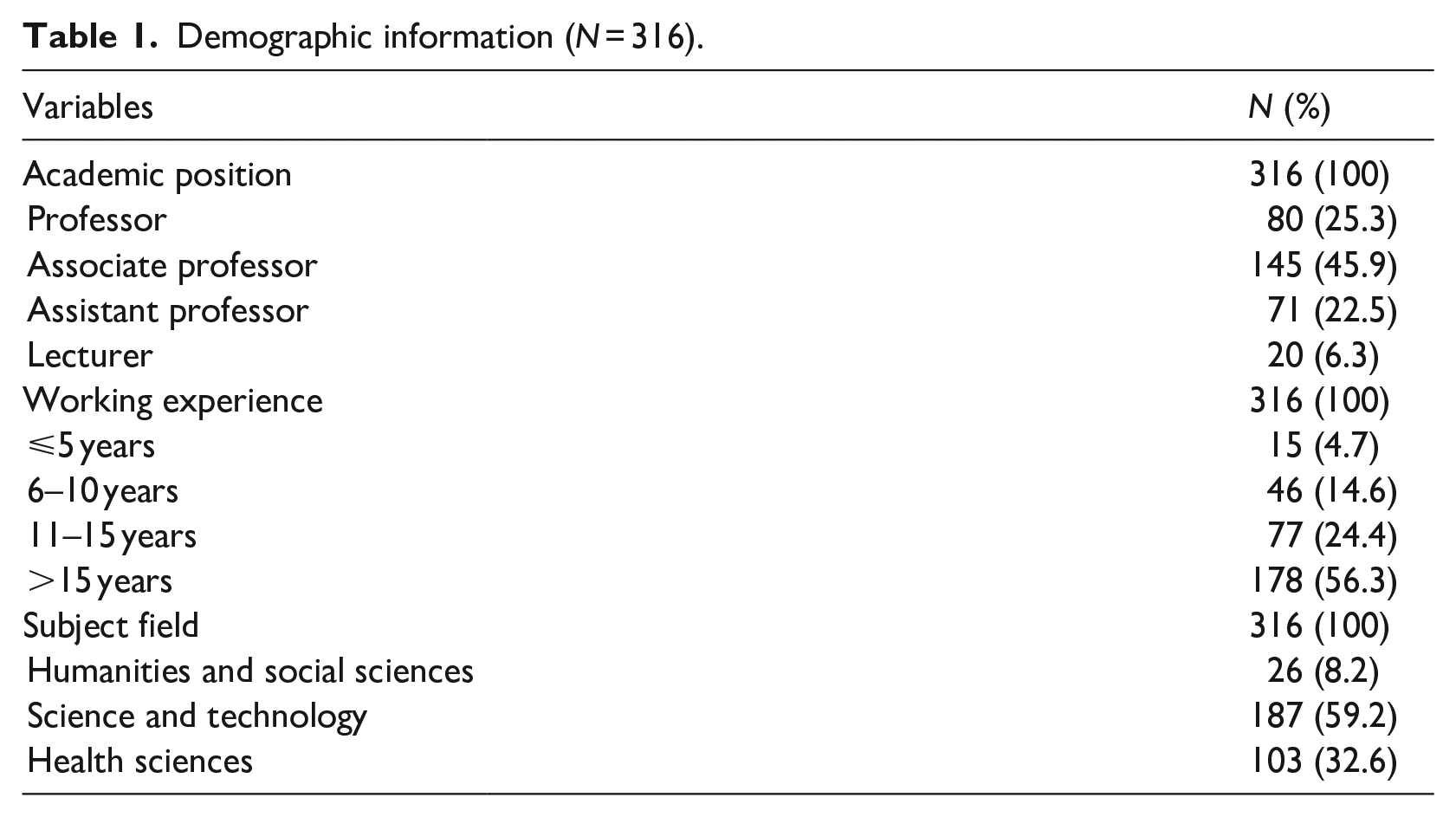
Table 1 presents the demographic details of the sample. The majority of participating researchers had working experience of over 15 years (56.3%), followed by those in the 11–15 years group (24.4%), the 6–10 years group (14.6%), and the ⩽5 years group (4.7%). Among the 316 participants in academic positions, associate professors constituted the highest proportion at 45.9%, followed by professors (25.3%), assistant professors (22.5%), and lecturers (6.3%). Regarding subject fields, 59.2% of researchers were from science and technology, 32.6% from health sciences, and 8.2% from humanities and social sciences.
Demographic information (N = 316).
Mean, standard deviation, and factor loadings values of items
In order to check the validity of questionnaire, the SPSS software was used to check the Cronbach’s Alpha of this tool. The survey consisted of five factors with 27 items and the value for Cronbach’s Alpha is 0.763. Therefore, this instrument is acceptable for next steps. The results of means, standard deviations (SD), and factor loadings values of items and factors in this study are derived from the perceptions of the participants, reflecting their individual perspectives and interpretations of the questionnaire items.
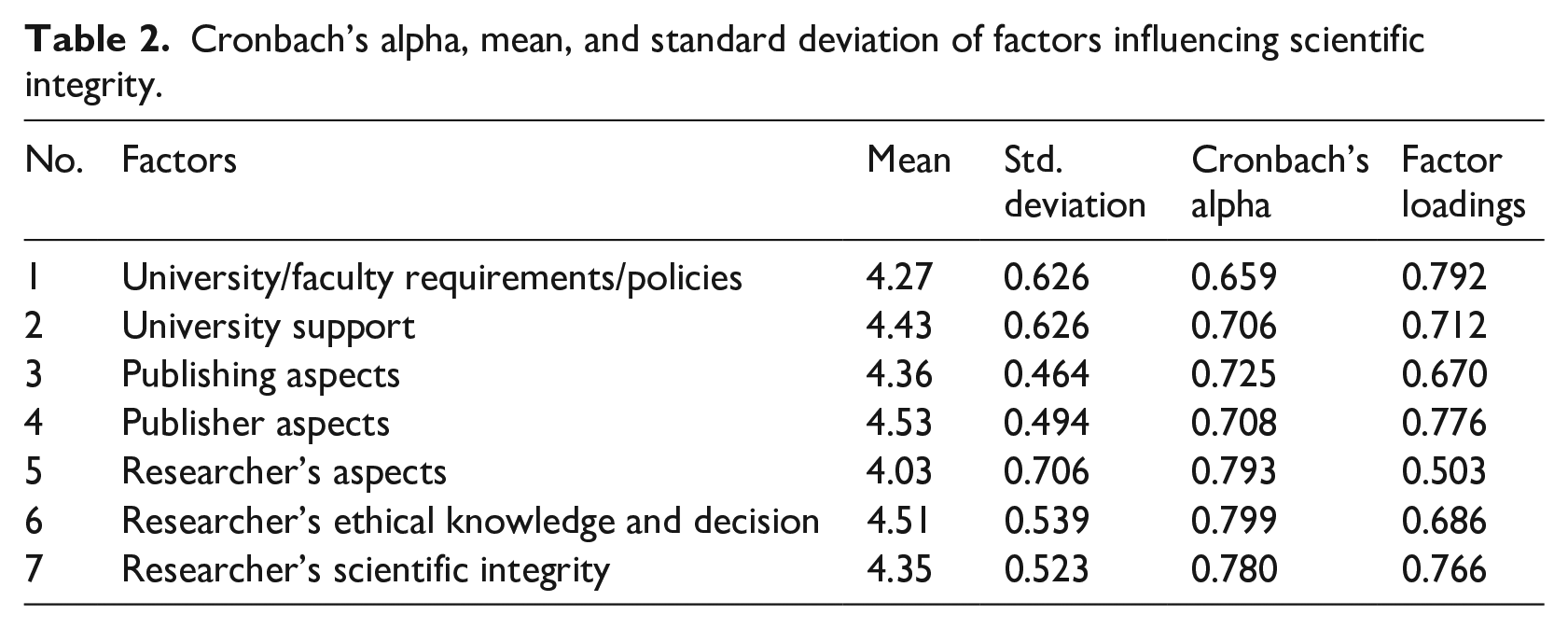
The results of assessing the Cronbach’s Alpha for factors influencing scientific integrity, as depicted in Table 2 with values surpassing 0.659, affirm a high level of reliability. Furthermore, the mean values associated with these factors demonstrate a degree of elevation, indicating a robust and consistent measure of the variables under consideration. This not only underscores the reliability of the assessment tool but also emphasizes the substantial impact of the identified factors on scientific integrity.
Cronbach’s alpha, mean, and standard deviation of factors influencing scientific integrity.
The percentage of explainable variance was 66.7%, indicating that the items retained in this dimension have high explanatory power within the model. The factor loading results, shown in Table 2, indicate that the factor loading values of variables in this study are all above 0.503. Proposed by Kaiser (1974), a guideline suggests that KMO (Kaiser-Meyer-Olkin) values exceeding 0.50 indicate the appropriateness of data for factor analysis. This study revealed a KMO index of 0.906, highlighting a highly suitable relationship between variables for conducting confirmatory factor analysis. Additionally, the statistically significant result (p < 0.001) from Bartlett’s sphericity test confirms the suitability of the correlation matrix for factor analysis. Consequently, these findings support the assertion that the utilized data in this study are well-suited for exploring the underlying structure of the variables of interest.
The mean scores, standard deviations and quality description of mean values included in model were examined and are presented in Table 2. The mean scores of publisher aspects and university support are the two highest values.
Based on the findings regarding the factors influencing the scientific integrity of scholarly publishing, as depicted in Table 3, it is evident that establishing a process and criteria for authorship agreement and verification, as well as dedicating offices or units within the university to address research integrity concerns and provide support to researchers, exhibit the highest factor loading values. Specifically, β = 0.732 and 0.703 respectively within the university or faculty requirements/policies factor.
The mean, standard deviation, and factor loadings values of items.
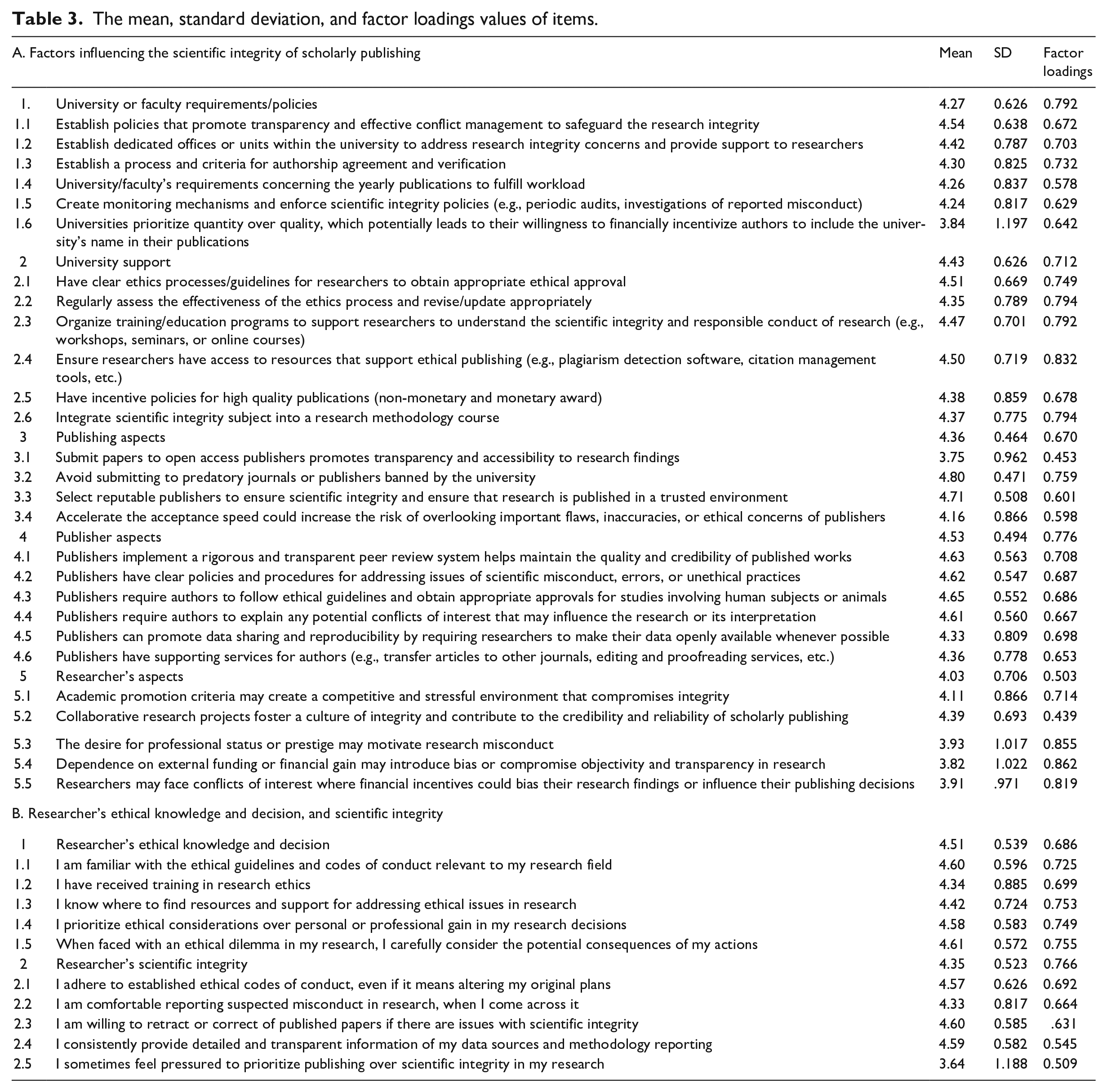
In terms of the factor related to university support, ensuring researchers have access to resources that facilitate ethical publishing (such as plagiarism detection software, citation management tools, etc.) emerges with the highest values, reflected by β = 0.832. Moreover, the practice of avoiding submission to predatory journals or publishers banned by the university attains the highest scores in both mean (x̄ = 4.80) and factor loading (β = 0.759) within the publishing aspects factor. Additionally, the implementation of a rigorous and transparent peer review system by publishers is highlighted as crucial for maintaining the quality and credibility of published works, as indicated by the highest values in the publisher aspects factor, with β = 0.708. Similarly, the reliance on external funding or pursuit of financial gain may introduce biases or compromise the objectivity and transparency of research, representing the highest factor loading values within the researcher aspects, with β = 0.862.
When researchers encounter ethical dilemmas in their work, they prioritize careful consideration of the potential consequences of their decisions within their ethical framework, aiming for a deeper understanding and thoughtful decision-making process. This particular aspect demonstrates the highest scores in both mean (x̄ = 4.61) and factor loading (β = 0.755). Additionally, the findings indicate that researchers are committed to upholding established ethical standards, even if this requires adjustments to their initial plans, as reflected by the highest values observed at β = 0.692.
Testing the hypothesized model
In the model, fit indices were used to evaluate the hypothesized model. These fit indices include Chi-Square (χ²), the Comparative Fit Index (CFI), the Tucker-Lewis Index (TLI), the Standardized Root Mean Square Residual (SRMR), and the Root Mean Square Error of Approximation (RMSEA). These indices were utilized to assess the fit of the hypothesized model.
The final path analysis, illustrated in Figure 2 and Table 4, demonstrates the model's coherence and alignment with the data. Initial assessment of the model’s consistency reveals a Chi-Square value of 0.510 with 5 degrees of freedom, resulting in a Chi-Square ratio to degrees of freedom (χ2/df) of 0.102. Notably, this ratio is below 3 and statistically insignificant at the 0.05 level (p = 0.9918), indicating a favorable fit between the observed variables and the hypothesized model (Hair et al., 2006; Hu and Bentler, 1999; Moss et al., 2015; Sharma et al., 2005).
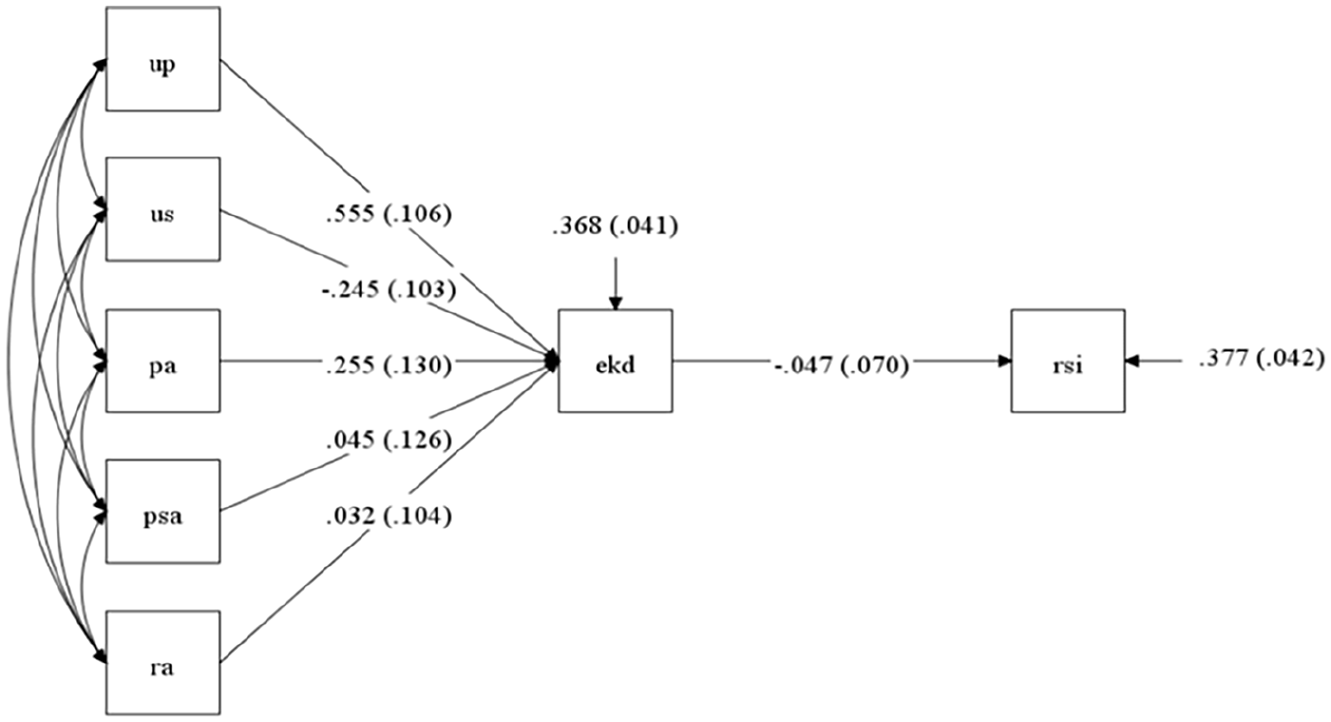
The final path model.
Results of the statistical analysis of model fit.
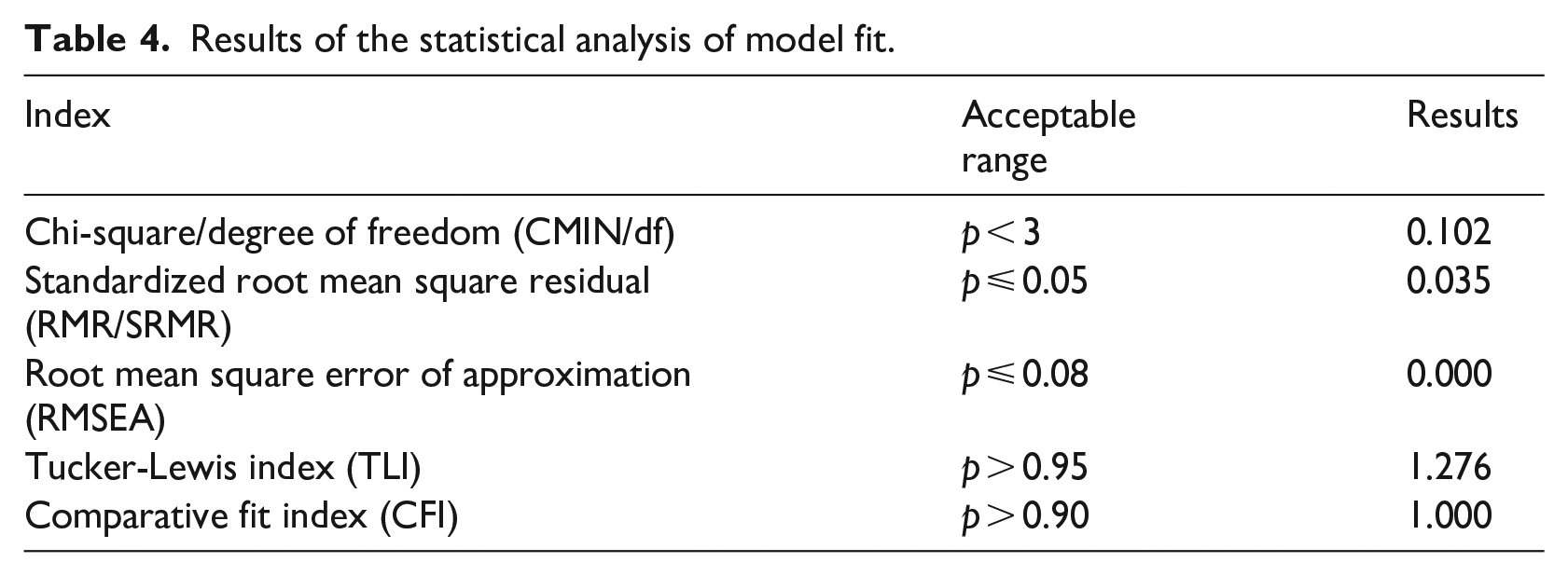
Furthermore, the Comparative Fit Index (CFI) attains a perfect score of 1.000, while the Tucker-Lewis Index (TLI) stands at 1.276, surpassing the recommended threshold of 0.95. The Root Mean Square Error of Approximation (RMSEA) registers at 0.000, and the Standardized Root Mean Square Residual (SRMR) value is 0.008, both comfortably below the conventional cutoff of 0.05. Collectively, these indices underscore the robust alignment between the proposed model and the empirical data, substantiating the coherence and validity of the hypothesized relationships among the variables under examination.
The examination of model results, along with the latest provided data, sheds light on the intricate associations shaping researcher's ethical knowledge and decision and its interplay with researcher’s scientific integrity within academic environments. Notably, university/faculty requirements/policies demonstrate a significant positive association with researcher’s ethical knowledge and decision (β = 0.56, p < 0.001), emphasizing the role of institutional regulations in fostering ethical decision-making among researchers. Conversely, university support exhibits a negative albeit non-significant association with researcher’s ethical knowledge and decision (β = −0.25, p = 0.018 > 0.001), suggesting a nuanced impact of institutional support on ethical knowledge and decision-making processes.
Further analysis reveals that publishing aspects demonstrate a positive relationship with researcher’s ethical knowledge and decision (β = 0.26, p = 0.051 > 0.001), reflecting the potential influence of publishing dynamics on ethical perceptions, albeit non-statistically significant. Similarly, publisher aspects and researcher’s aspects display positive but non-significant relationships with researcher’s ethical knowledge and decision (β = 0.05, p = 0.721 > 0.001 and β = 0.03, p = 0.756 > 0.001, respectively), suggesting limited direct impacts on ethical decision-making processes.
Additionally, the negative association between researcher’s ethical knowledge and decision and researcher’s scientific integrity remains non-significant (β = −0.05, p = 0.503 > 0.001), implying that while ethical knowledge and decision-making may not directly translate into scientific integrity, they remain distinct constructs within the research landscape.
Interestingly, based on the opened questions of scientific integrity in Thailand, the respondents also provide their opinions as follows:
- The Thai funding system for laboratory sciences is deficient in ethical considerations. Researchers face pressure to produce more results with limited resources, resulting in incomplete projects. Failure to meet publication targets in the Thai funding system may result in researchers being required to repay funds already expended. This exploitation encourages cutting corners or even fabricating results. Similar issues affect students, who face publication requirements to compensate for universities granting degrees without ensuring proper academic output.
- Honorary authorship is difficult to avoid in Thailand.
- Publishing a paper is a combination of science and art, as well as personal motivation or passion. Some researchers work because they receive funding, while others work out of passion for research, even if they do not receive financial support. In addition, when researchers remember the true purpose and significance of conducting research, and strive to produce thorough and honest reports, external factors like academic promotion should not compromise the integrity of our research.
The participants also suggested several solutions to enhance the research integrity at Thai universities:
- It is necessary for all universities to set up Office of Research Integrity to handle issues concerning research misconducts; provide more fundings for research projects and open access publishing; and have the participations of stakeholders in every level of research system.
- Understanding and following research standards is considered important in conducting research. Furthermore, students should know about this because sometime this issue comes from students and the advisor does not notice or realize it.
- Publishers may consider discounting submission rate for developing country research study and award for young scientists.
- Developing countries should avoid over-valuing impact factors or citation index in judging journal reputations.
- Research in each field may be different in terms of academics and processes, but what is common is that researchers must be honest in collecting data, analyzing data, and reporting based on factual information and discussion. Furthermore, researchers, especially those early in their careers, should be educated about the ethical standards and practices of scholarly publishing.
Discussion
The results of this study indicate five factors influencing scientific integrity, including university/faculty requirements/policies, university support, publishing aspects, publisher aspects, and researcher’s aspects. The results of checking model fit show through indicators support to the validity of model, such as χ2/df = 0.102, SRMR = 0.035, RMSEA = 0.000, TLI = 1.276, CFI = 1.000. This reinforces the model’s appropriateness for analyzing factors having the influence of researcher’s scientific integrity. In addition, the findings suggest that the model demonstrates both coherence and alignment with the data, highlighting its suitability. Given these results, maintaining scientific integrity emerges as a paramount concern for researchers affiliated with global and pioneering research universities in Thailand. To address this, it is advisable for institutions to prioritize initiatives aimed at augmenting researchers’ ethical knowledge and fostering scientific integrity. Incorporating the five identified components from the model into such programs is recommended. This strategic approach ensures that researchers are adequately equipped for their research endeavors and possess a comprehensive understanding of university guidelines, institutional support, as well as the intricacies of publishing and publishers. Additionally, it focuses on ethical processes to enhance their ethical knowledge and decision-making in scholarly publishing. By taking these steps, higher education institutions can empower their researchers with a profound grasp of research integrity, contributing to a culture of ethical research conduct.
These findings reinforce the evaluation of past research that scientific misconduct results from a complex interaction of elements, including individual ethical failings, external pressures like the necessity to publish and progress in one’s career, and a lack of thorough education on scientific ethics. These factors together foster unethical behaviors in academic and research settings, highlighting the necessity for diverse strategies to effectively tackle and prevent such misconduct (Holtfreter et al., 2020). Yi et al. (2019b) emphasized that external factors were frequently cited as contributing to research misconduct. They highlighted the evaluation system as a significant risk factor due to its excessive emphasis on publications. Career advancement tied to published papers, pressure for promotion, securing research funding, and job stability were all identified as catalysts for misconduct. Even participants who didn’t directly fault the evaluation system still criticized its focus on publications. Additionally, inadequate governance for monitoring and addressing misconduct was acknowledged. The influence of research supervisors and the broader scientific environment was also recognized. Internal factors, such as personal characteristics, moral values, and self-restraint, were implicated in research misconduct. Motivations like pursuit of promotion, increased income, and fame were pinpointed as underlying unethical research behavior (Yi et al., 2019b).
In addition, the “publish or perish” culture, where consistent publication is essential for academic career sustainability, has historically placed significant pressure on faculty members. This pressure is particularly intense for junior scholars, who risk termination if their publication records fail to meet promotion and tenure criteria (Dhillon et al., 2015; Rawat and Meena, 2014; Roje et al., 2023; Wahid et al., 2022). Additionally, there’s a recognition that the stress related to meeting university criteria for top-tier performance, such as publishing in high-impact journals, a competitive atmosphere, academic performance standards, or an overwhelming load of tasks, also plays a role in misconduct and could be addressed (Alberts, 2013; Roje et al., 2023). It can be seen that the productivity of academics depends on their research experience, academic position, funding and attitudes, collaboration, time, and academic qualification (Dhillon et al., 2015; Wahid et al., 2022). However, the scholarly publication requires some relevant knowledge of data analysis, searching skill, literature review, research questions development, methodology, ICT skills, keywords and materials identification (Tella and Onyancha, 2021).
Kraemer et al. (2015) indicated that community members worry that research pressure could result in researchers publishing without adequate community input or potentially manipulating data. They believe investigators prioritize their own career advancement over the community’s needs. Moreover, community investigators observe that external pressures grant professional investigators control over multiple project elements such as data collection, ownership, and analysis. A significant concern regarding scientific integrity is the lack of funding, which can hinder the proper execution of research. Insufficient financial support increases the risk of data manipulation. Without sufficient salaries or reimbursement for expenses, researchers are unable to participate effectively.
Additionally, most of factors in the path analysis were found to be different significant, including: (1) Significant path: university/faculty requirements/policies have a significant impact on the main variable of researcher’s ethical knowledge and decision. This means that means that changes in variable university/faculty requirements/policies are associated with changes in researcher’s ethical knowledge and decision. (2) Non-significant paths: It is considered that university support, publishing aspects, publisher aspects and researcher’s aspects do not have a significant impact on researcher’s ethical knowledge and decision. This means that there is no evidence to support a relationship between university support, publishing aspects, publisher aspects and researcher’s aspects, and researcher’s ethical knowledge and decision. Thus, it can be concluded that among the variables tested, only university/faculty requirements/policies appear to have a meaningful influence on researcher’s ethical knowledge and decision. This finding may suggest potential avenues for further investigation or intervention focused on university/faculty requirements/policies.
These findings also emphasize the pivotal role of institutional regulations, as seen in university/faculty requirements and policies, in shaping ethical decision-making among researchers. Further exploration of these associations promises valuable insights into fostering a culture of integrity and accountability within academic communities. However, the influence of university support on ethical knowledge is more nuanced. The study highlights a significant positive relationship between publishing dynamics and researchers’ ethical decision-making, suggesting an impact on ethical perceptions. Notably, the non-significant negative association between ethical knowledge and researchers’ scientific integrity indicates their distinct yet interconnected nature.
Past studies also support the results of this study, who mentioned that training is seen as vital for upholding scientific integrity, with professional investigators emphasizing the need to train community and academic staff to ensure accurate data collection. It is important to stress the importance of ongoing training throughout the research process. Although research members may lack research direction, they advocate for their involvement and propose that professional researchers provide appropriate training. Both classroom and hands-on training methods are valued, with an emphasis on mutual education regarding community behavior and customs. Moreover, ensuring active participation of researchers in projects is crucial for maintaining stringent quality control standards and empowering the community (Kraemer et al., 2015). Additionally, universities, and other research institutions prioritize ongoing education initiatives to ensure that all members of the academic community are well-versed in the principles of scientific integrity, thus mitigating the risks associated with scientific misconduct. Institutions should be encouraged to explore the state of research misconduct in their own environments and formulate guidelines for investigating and dealing with suspected cases of scientific misconduct. Alongside these educational efforts, the establishment of a robust scientific evaluation system is essential. This system should not only assess the quality of research but also serve as a proactive measure to uphold the highest standards of integrity and rigor in academic endeavors (Liu et al., 2024; Nishimura et al., 2021; Okonta and Rossouw, 2014; Shamsoddin et al., 2021; Yi et al., 2019a; Yu et al., 2021).
Conclusion
This research, utilizing path analysis, delved into the intricate web of influences shaping researchers’ scientific integrity within global and frontier research universities situated in Thailand. Through a meticulous examination of numerous factors, including university and faculty requirements/policies, institutional support systems, nuances within the publishing landscape, considerations related to publishers themselves, and various aspects related to the researchers, a comprehensive understanding of the dynamics at play was achieved. The study not only offers valuable insights into the factors influencing research integrity but also provides actionable recommendations for enhancing research quality, mitigating the risk of misconduct, and fostering a culture that prioritizes scientific integrity and the dissemination of high-quality scholarly work. By recognizing and addressing the multifaceted factors influencing scientific integrity, higher education institutions can take proactive steps toward ensuring the credibility and rigor of research outputs. This, in turn, not only upholds the integrity of the academic organizations but also reinforces the trust and confidence of stakeholders in the scholarly community.
However, this study focused on surveying the factors influencing the researcher’s scientific integrity within 16 global and frontier research universities in Thailand. This limited scope may not fully capture the broader landscape of factors impacting scientific integrity across different types of institutions or in other regions. Additionally, the findings might not be generalizable to researchers outside of the specified university context or to those in different countries with distinct academic cultures and practices. Therefore, the applicability of the results to a wider population may be restricted. Thus, it is recommended to expand beyond the specific context of 16 global and frontier research universities in Thailand. Researchers should consider broader samples from diverse institutions globally. Employing mixed-methods approaches, such as combining surveys with interviews, could provide deeper insights into researchers’ experiences and perceptions of scientific integrity. Comparative studies across different disciplines may also reveal variations in factors influencing scientific integrity.
Footnotes
Declaration of conflicting interests
The author(s) declared no potential conflicts of interest with respect to the research, authorship, and/or publication of this article.
Funding
The authors disclosed receipt of the following financial support for the research, authorship, and/or publication of this article: This research received financial support from the Young Researcher Development Project of Khon Kaen University Year 2024, Thailand.
Ethical approval
Authors declared that the study has met the criteria of the Exemption Determination Regulations approved by the Khon Kaen University with number HE663288.
