




Abstract
The earthquakes which struck Nepal’s capital in 2015 were humanitarian disasters. Not only did they inflict tragic loss of life and livelihoods, they also destroyed parts of the Kathmandu Valley’s unique UNESCO World Heritage site. These monuments were not just ornate structures but living monuments playing central roles in the daily lives of thousands, representing portals where the heavens touch earth and people commune with guiding deities. Their rehabilitation was also of economic importance as they represent a major source of tourist income and employment. Unfortunately, the social and political desire for rapid reconstruction resulted in the swift removal of many traditionally constructed foundations and their replacement with modern materials without assessments of whether they contributed towards the collapse of individual monuments. These actions, combined with the wholesale removal, mixing and dumping of modern and historic debris, contributed to a second, equally destructive, cultural catastrophe – irreversible damage to Kathmandu’s Medieval fabric, in a process which frequently excluded local communities and custodians. This case study draws from our collective reflections and lessons learned from our attempts to enable equitable and ethical research partnerships between UK and Nepali colleagues as well as local communities in the debris of the Kasthamandap, Kathmandu’s eponymous monument. After briefly describing the potential of mobilising archaeologists in post-disaster contexts and outlining the challenges of undertaking research in such a setting, our case study utilises the TRUST Code to assess the character and success of our multidisciplinary collaboration in a time of crises.
Keywords
Introduction
The UN’s On-Site Operations Coordination Centre (OSOCC) estimated that the earthquakes in Nepal on 25th April and 12th May 2015, along with their aftershocks, killed 8790 people and injured more than 17,866 (OSOCC Assessment Cell, 2015). In addition, 15,001 governmental buildings and 288,797 residential buildings were destroyed following the initial earthquake (OSOCC Assessment Cell, 2015) and, in the 14 most-affected districts, approximately 1,814,000 people lost shelter. Assistance to remote areas was challenging with destruction of communication networks and landslides blocking roads for recovery teams, and heavy rainfall further hampered rescue. The Post-Disaster Needs Assessment (PDNA) generated by Nepal’s National Planning Commission (NPC) put a value of NPR 706 billion (US$ seven billion) on the direct and indirect impact of the earthquake to the country’s economy (National Planning Commission [NPC], 2015). The PDNA also noted that the earthquake affected some 2900 structures of cultural and religious heritage value (NPC, 2015: 15), with a number of monuments in Kathmandu’s seven World Heritage Monument Zones being severely damaged or collapsed. The total estimated damage to tangible heritage amounted to NPR 16.9 billion (US$ 169 million).
One of the key monuments to collapse was the Kasthamandap, a Medieval rest house within the Hanuman Dhoka Durbar, or royal square, of Kathmandu. Acknowledged to be the eponymous monument of the Valley, it became the focus of an international partnership to investigate its ruins and support its reconstruction, a partnership which will be assessed on its equitability in a later section of this paper (Figure 1). The UK-Nepal partners comprised the following groups:
archaeologists and geoarchaeologists from Durham University’s UNESCO Chair on Archaeological Ethics and Practice in Cultural Heritage;
archaeologists and heritage managers from the Department of Archaeology, Government of Nepal;
community engagement and intangible heritage specialists from Durham University, Tribhuvan University, Nepal and the Pakistani NGO Laajverd;
architectural and engineering specialists from Nepal’s chapter of the International Council on Monuments and Sites (ICOMOS), Durham University and Newcastle University;
the Nepal field office of the United Nations Educational, Scientific and Cultural Organization (UNESCO); and
local communities and their elected legislators.
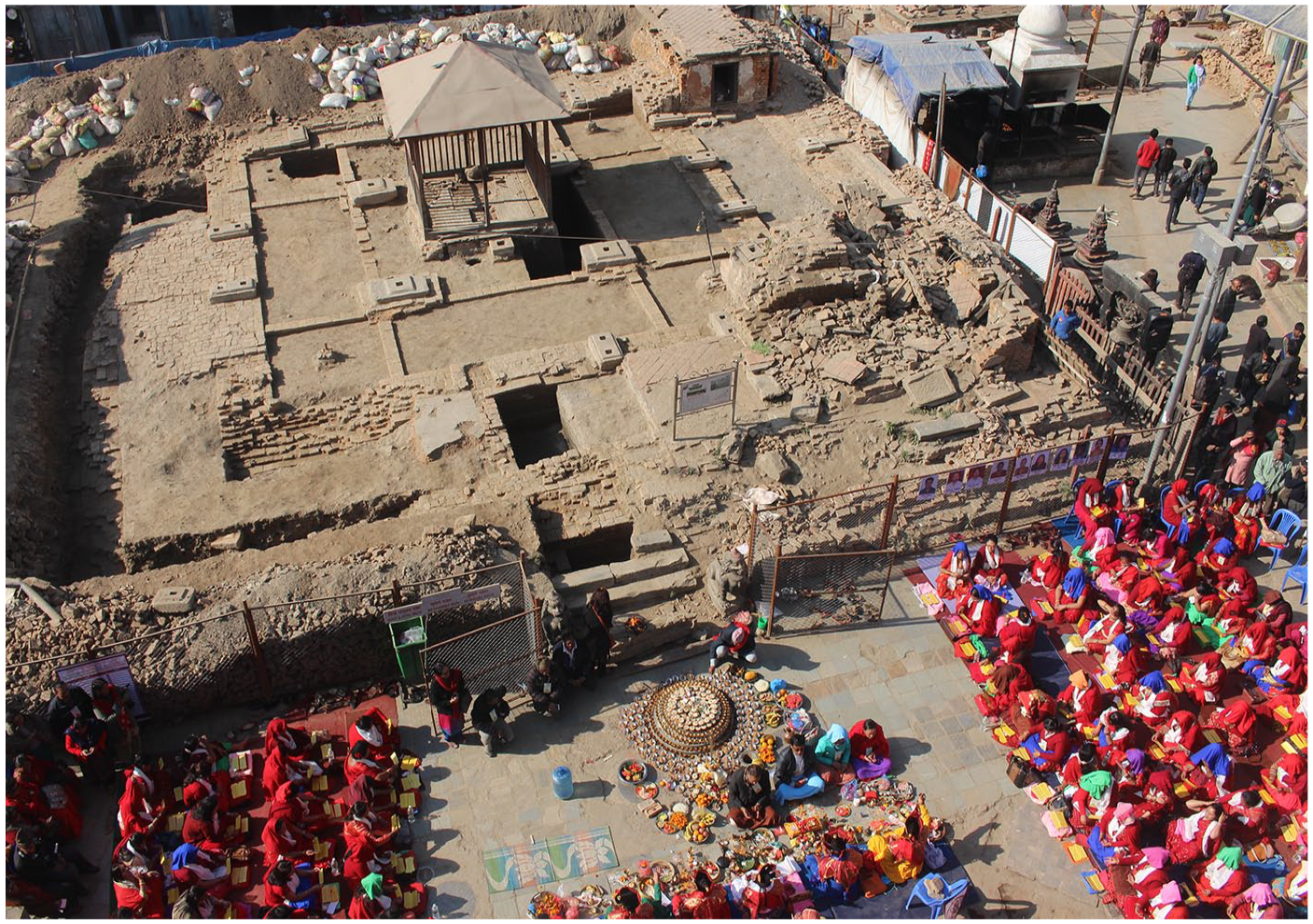
Community-led Saptabidhānuttar Pūjā and prayer ceremony following the completion of the research.
Rather than recounting our interdisciplinary methodological approach to the field and laboratory research at the Kasthamandap, which is available elsewhere (Coningham et al., 2019; Coningham and Weise, 2019), we draw from our collective reflections and lessons learned to present this case study of the ways in which we attempted to enable equitable and ethical research partnerships between UK and Nepali colleagues as well as local communities in a time of crisis. These were gathered through informal team meetings, general debriefing meetings, academic and practitioner workshops, interviews, anonymous surveys and during the generation of co-authored papers and exhibitions. We briefly describe the role of archaeologists in post-disaster contexts and highlight three of the main types of challenges encountered while undertaking research in a crisis-setting and provide indicative examples: financial and capacity challenges; research ethics, and health and safety challenges; and broader challenges of intervention. While some are specific to the heritage sector, most would apply directly to any research conducted in crisis or post-disaster settings. We then use the TRUST Code (Schroeder et al., 2019; TRUST, 2018) to assess the character of our collaboration.
The potential role of archaeologists in post-disaster contexts
First responders to crises typically include military and police units, firefighters, engineers, architects, health professionals, planners, drone teams and government officials funded by state parties, International Government Organisations and Non-Government Organisations. In immediate post-disaster contexts, heritage protection and archaeological research interventions are rarely a priority, where saving lives, providing shelter, food, security and access to health care are paramount. Indeed, research in crisis settings faces significant challenges (Shanks and Paulson, 2022). However, as acknowledged in our submission to the Global Research and Action Agenda on Culture, Heritage and Climate Change, disasters, human or natural, often overwhelm pre-planned emergency responses, a situation that in turn compromises heritage research and protection agendas and protocols (Morel et al., 2022). In the rush to rapidly reconstruct, international mitigation practices and interventions may further damage heritage, alienate local communities, Indigenous practitioners and researchers, as well as neglect interdisciplinary evaluations to understand what went wrong and lessons to be learnt.
Working with local experts and communities through community engagement to learn about sites, recover artefacts and to support the repair and reconstruction of damaged buildings and monuments, archaeologists can help to strengthen communities, re-establish trust, encourage people’s pride and ownership of monuments (especially working ones), and support structures that help to ensure future oversight and management after the ‘Disaster Industry’ has moved on (Chapagain, 2023; Coningham and Lewer, 2019).
The challenges of undertaking research in a crisis setting
While the challenges of undertaking equitable research in insecure settings has been discussed elsewhere (Dunia et al., 2023; Shanks and Paulson, 2022), less focus has been placed on its intersection with heritage. The Heritage of South Asia faces an increasing number of threats, ranging from natural disasters, such as earthquakes, to the impacts of accelerated development and conflict (Coningham and Lewer, 2019). To raise awareness of these threats and challenges, with South Asian partners from Bangladesh, India, Myanmar, Nepal, Pakistan, and Sri Lanka, we co-designed and hosted an international workshop ‘Heritage at Risk 2017: Pathways to the Protection and Rehabilitation of Cultural Heritage in South Asia’ in Kathmandu in September 2017, funded by a grant from the UK’s Arts and Humanities Research Council Global Challenges Research Fund. During this meeting, and subsequently, we distinguish three main types of challenges when undertaking research in a crisis-setting, and provide indicative examples:
Financial and capacity challenges
Most funding for those in Higher Education Institutions (HEIs) is held by national research agencies with time-consuming processes of peer review and a primacy placed on research excellence rather than crises responses, public utility or agility/expediency.
National research agency funding cycles are short term, which is problematic for research continuity within protracted crises.
HEIs seldom have capacity to release staff at short notice to participate in crises research, and notifications of the award of grants often give little notice before start dates, creating challenges for delivery of core duties at home HEIs.
Negotiating partnerships with local colleagues already involved in crises settings is challenging, as research is not always recognised as a priority by their own line managers and coordinators.
Colleagues already involved in crises settings often find Intellectual Property agreement contracts issued by UK HEIs intimidating and confusing.
Logistics, such as accommodation, transport, food, and power are often restricted in crises settings and organising in a manner that does not detract/distract resources from humanitarian priorities is complex.
HEI financial controls of funding are not readily compatible with dynamic field demands for receipting and the use of cash in crisis contexts.
HEI focus on closed UK Research Excellence Framework (REF) Impact assessment cycles leaves UK-based researchers with ongoing research partner legacy obligations without funding or time allocations.
Research ethics, and health and safety challenges
Formal permission for all archaeological work needs to be first obtained from the Director-General of Nepal, and visas need to be obtained for foreigners, both potentially time-consuming processes.
Research agencies require detailed ethics and risk mitigation strategies to be submitted with grant applications prior to deployment of HEI-based teams.
HEIs require additional ethics approval, as well as health and safety approvals, if engaging with local research participants.
Broader challenges of intervention
Most HEI staff lack experience of heritage research in post-disaster contexts.
Many experts and practitioners deployed during disaster and post-disaster interventions are unaware of local cultural sensitivities and values.
Practitioners and custodians of traditional/intangible knowledge systems have fewer formalised qualifications and frequently find their relationships with formally educated colleagues, such as engineers and architects, asymmetric, and struggle to demonstrate the financial basis to engage with donors and procurement procedures.
Tangible and intangible heritage are often recorded and managed separately, and traditional/intangible knowledge systems are neglected. As a result, such practitioners are frequently excluded with communities denied custodianship, leaving heritage sites marooned and of limited sustainability.
Incoming research groups frequently do not embed ethical and equitable partnerships, mapping/recording is frequently duplicated and seldom articulated with management tools, and researchers seldom engage with policy and decision-makers.
International research groups often find it difficult to extract themselves and hand over legacy and custodianship to local partners.
The sharing of lessons learned, including approaches/successes and challenges/performance is too little, too late.
Equitable and ethical research partnership at the Kasthamandap
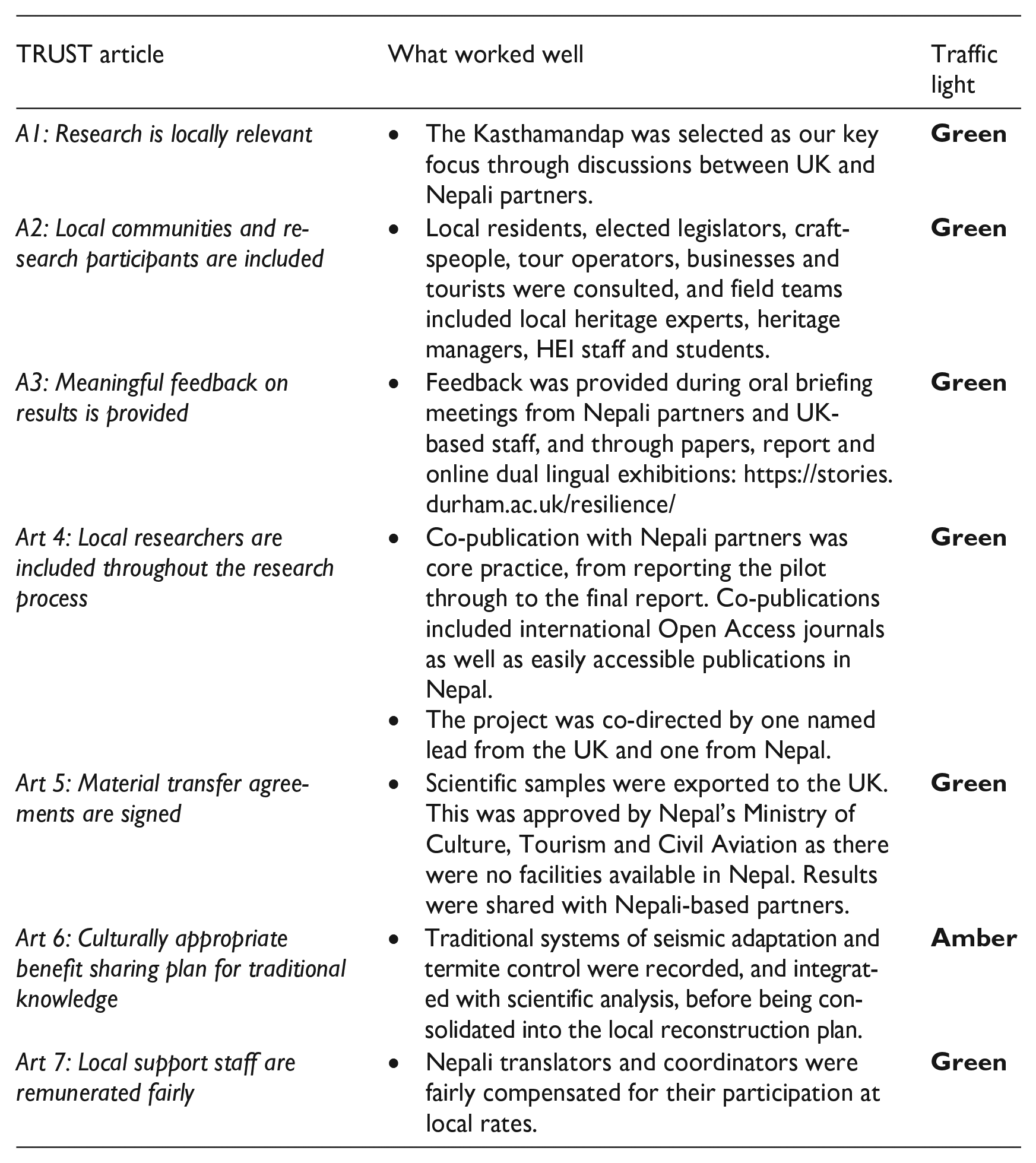
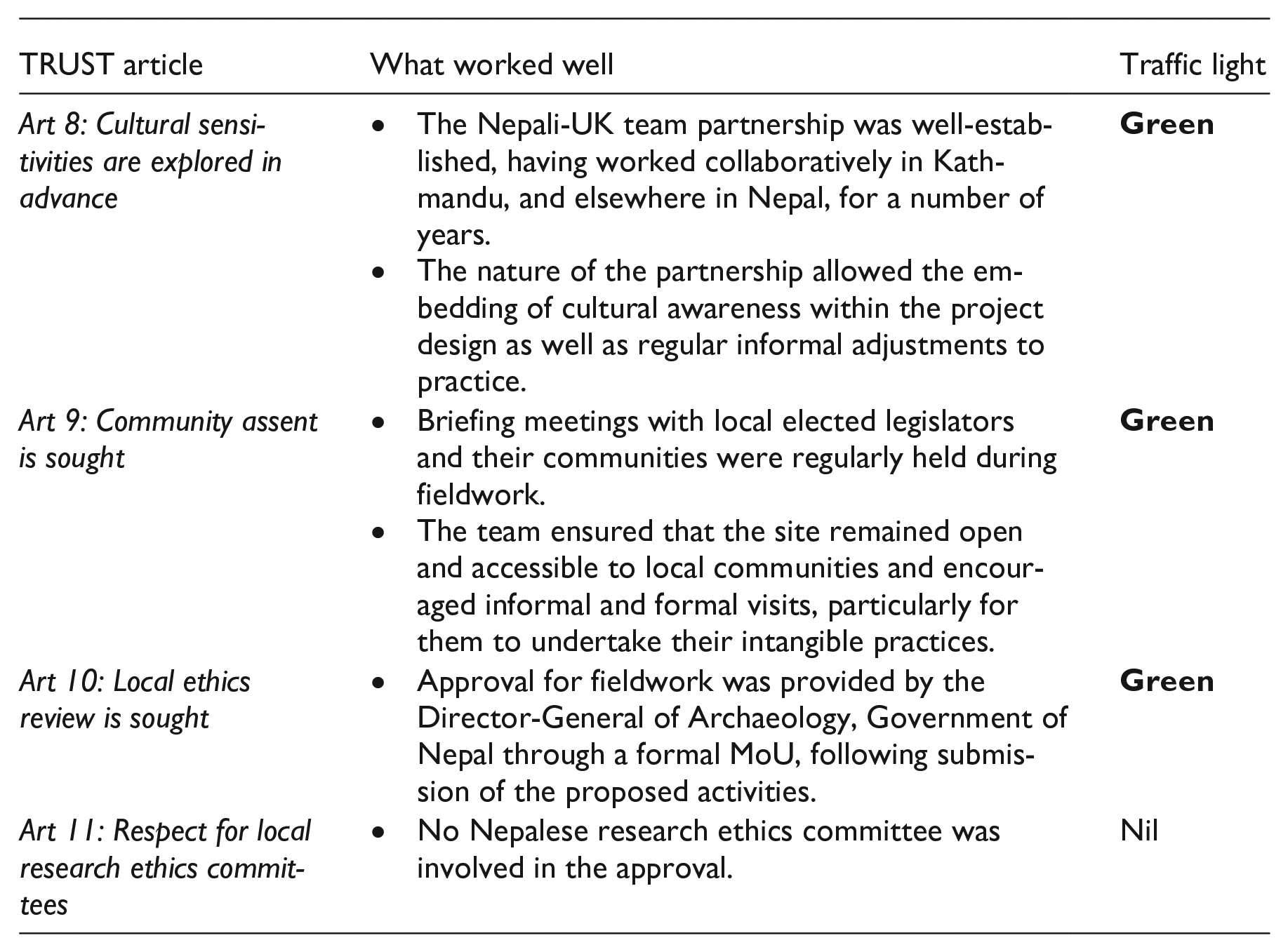
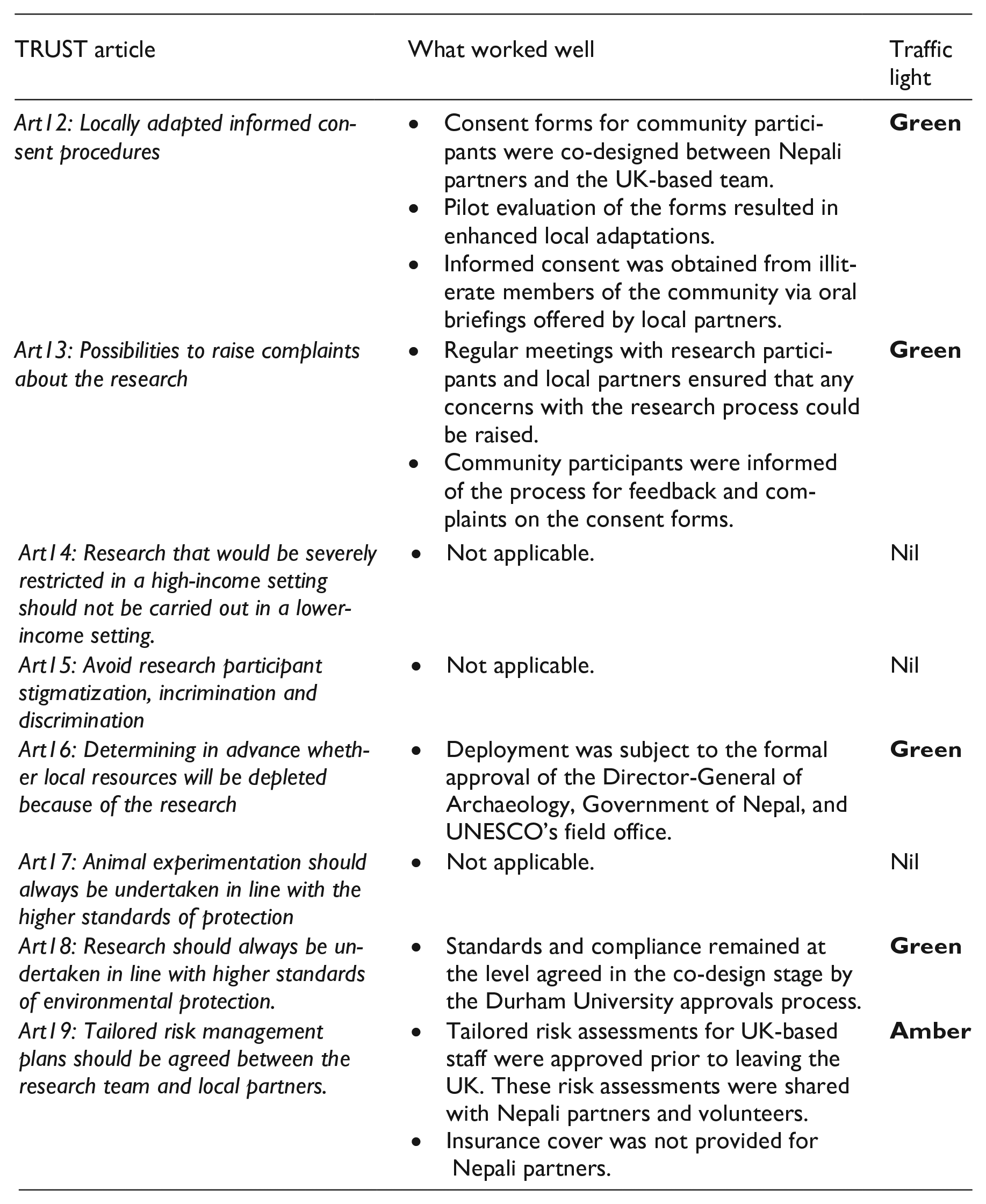
When the financial and administrative hurdles have been met and approvals, including from relevant research ethics, and health and safety decision-making bodies have been obtained, ethical and equitable research partnerships are still not guaranteed. One way of determining systematically whether our partnership between the UK and Nepal at the Kasthamandap was conducted equitably is to map it against The TRUST Code – A Global Code of Conduct for Equitable Research Partnerships (TRUST, 2018) as a guide. The TRUST Code consists of 23 articles linked to four values: fairness, respect, care and honesty, and has been adopted across the research cycle from funders, such as the European Commission, to publishers, such as NATURE and SAGE. Having become aware of the TRUST Code during the 2023 ALLEA (All European Academies) scientific symposium ‘Crises and the Importance of Research: How Prepared Can We Be’, we outline below how the Kasthamandap partnership fared when assessed against the summarised articles of the TRUST Code, bearing in mind that our research programme was not designed around these.
Fairness
Respect
Care
Honesty
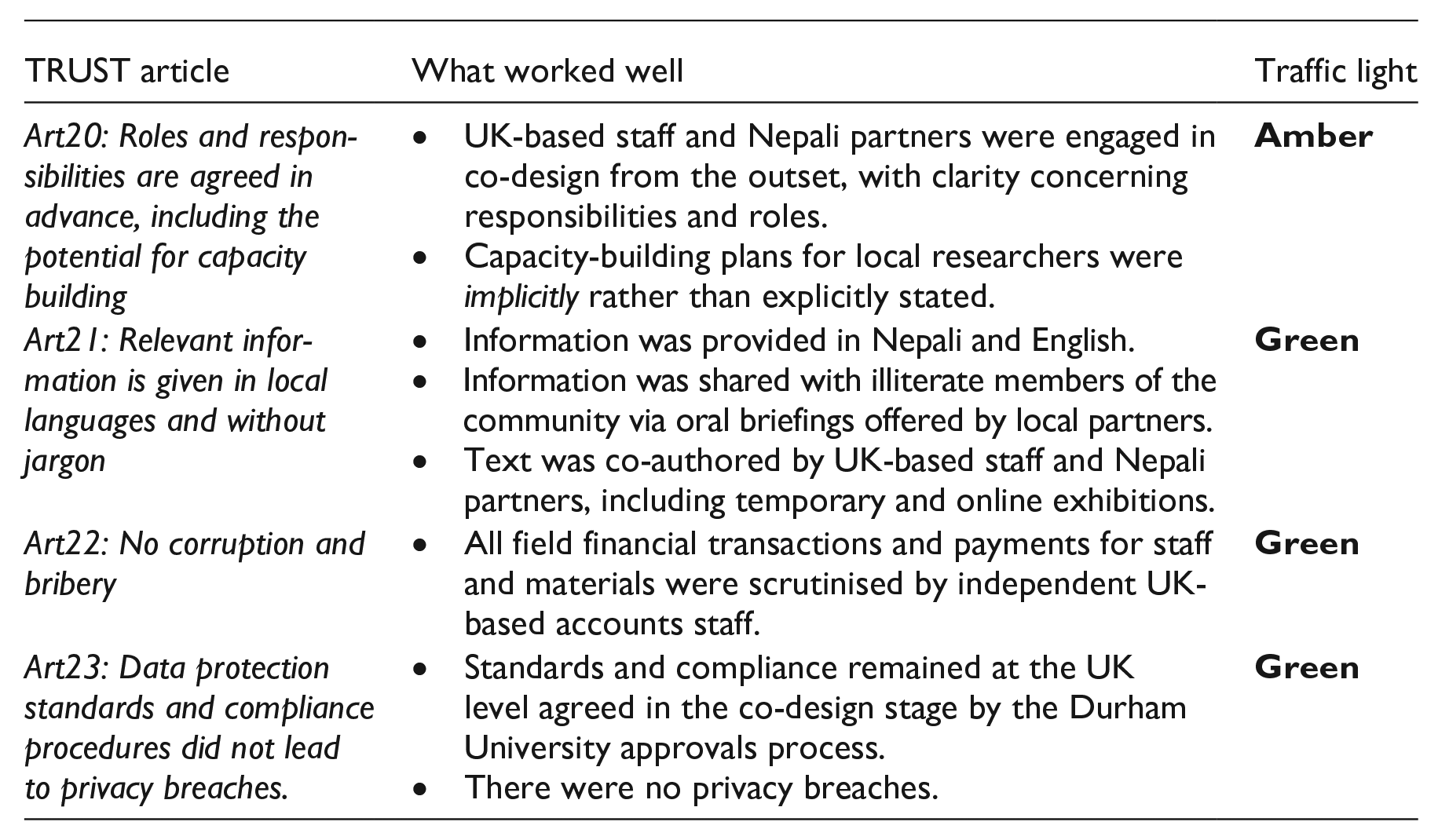
From the above dashboard, it is clear that our Nepali and UK-based partnership at the Kasthamandap performed well against the TRUST Code. We fully acknowledge that there was also room for improvement as indicated by the Amber traffic lights. First, culturally appropriate benefit sharing plans for traditional knowledge were implicitly rather than explicitly stated (Art 6); secondly, insurance cover was not provided for Nepali partners (Art 19); and, finally, capacity-building plans for local researchers were implicitly rather than explicitly stated (Art 20). However, traditional knowledge systems, such as seismic adaptation and termite control, were recorded, and integrated with scientific analysis, before being consolidated into local reconstruction plans. In addition, capacity-building benefitted from ongoing efforts to locate new opportunities and resources as we were able to facilitate the visit of Nepali partners to the UK to participate in workshops and visit specialist laboratories processing samples from the Kasthmandap, as well as offer a fully funded PhD studentship at Durham to one of the local experts. Significantly, we were able to raise funds from the Oriental Cultural Heritage Sites Protection Alliance to support travel and subsistence for colleagues from India, Myanmar and Sri Lanka to participate in the post-disaster interventions in Kathmandu, thus reinforcing invaluable South Asian- wide peer to peer experience and incubating south-south-north networks.
Conclusion
Our multidisciplinary archaeological, geoarchaeological and engineering investigations at the Kasthamandap, combined with engagement with community members and traditional/intangible knowledge practitioners, revealed ancient hazard-resilient architectural knowledge systems. These included monumental symmetrical foundations, which minimised seismic motion and the use of ‘engineered’ soil to reduce the risk of liquefaction as well as the sheeting of timber elements in copper to retard biological growth and termite infestation. We also co-designed processes for the recycling of disaster debris with first responders, methods which were later successfully applied to conflict scenarios. Following the completion of our fieldwork in Nepal, the Kathmandu-based Kasthamandap Reconstruction Committee integrated our analysis and reports into their approach, and the Kasthamandap was rebuilt with full participation of local communities and their local elected legislators (Figure 2). The narrative of this remarkable success was formally recorded by the Reconstruction Committee in their own Nepali, Newari and English language volumes (Weise and Joshi, 2022), which reinforces the nature of our long-term equitable research relationships in Nepal built on trust and reinforces the lesson that international research groups need to recognise the right timing to extract themselves and leave legacy to local partners.
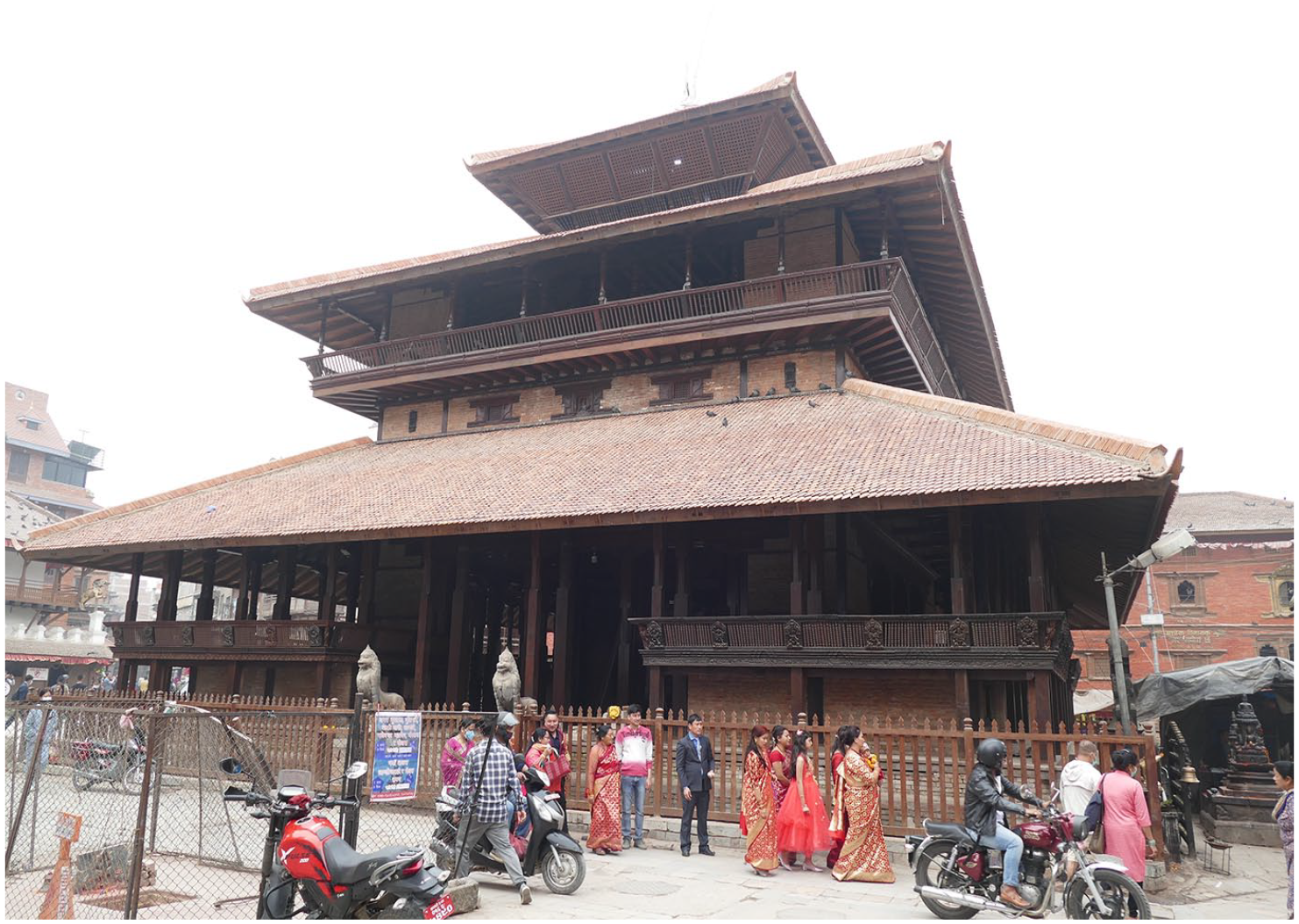
View of the Kasthamandap after its reconstruction in 2022.
Footnotes
Acknowledgements
We are grateful for the institutional assistance and support provided the Department of Archaeology, Government of Nepal; UNESCO Chair team, Department of Archaeology and Oriental Museum, Durham University, UK; University of Stirling, UK; ICOMOS (Nepal); Tribhuvan University, Nepal; Lumbini Buddhist University, Nepal; Newcastle University, UK; Department of Archaeology and National Museum, Government of Myanmar; Central Cultural Fund, Government of Sri Lanka; Maharaja Sayajirao University of Baroda, India; Field Office Kathmandu and World Heritage Centre, UNESCO, Paris; and Kathmandu Metropolitan City and the communities of Hanuman Dhoka. We also deeply acknowledge the support and passion shown by Mr Rajesh Shakya and the other members of the Kasthamandap Reconstruction Committee, the craftspeople and the ward members who rebuilt the Kasthamandap.
Declaration of conflicting interests
The author(s) declared no potential conflicts of interest with respect to the research, authorship, and/or publication of this article.
Funding
This article includes data collected during fieldwork conducted in Nepal and funded by the Arts and Humanities Research Council Global Challenges Research Fund Awards AH/P006256/1 and AH/P0005993/1; British Academy’s Global Challenges Research Fund Cities and Infrastructure Programme Award CI170241; National Geographic Society Conservation Award #C333-16; UNESCO Contracts #4500283215 and #4500318125; and an award from the Oriental Cultural Heritage Sites Protection Alliance.
Ethical approval
RF210261 Department of Archaeology Ethics Committee, Durham University, UK.
