




Abstract
Responses to the COVID-19 pandemic globally disrupted lives and contributed to the exacerbation of pre-existing inequalities. Women in research were also affected. The prominent role that women played in professional and personal care duties had a detrimental effect on their research outputs, potentially hindering their career progression. Moreover, the challenges faced by women academics during the pandemic, including job loss, increased mental health issues, and the intersection of gender with other socio-demographic traits exacerbated existing gender disparities within academia. By systematically scoping the qualitative literature on the experiences of women researchers during the pandemic, this study sought to explore how women experienced and reacted to the challenges generated by the COVID-19 pandemic. A qualitative meta synthesis of the included studies revealed three themes: gendered professional expectations, colliding identities and coping strategies. These themes show how gendered roles such as teaching and professional care work, associated with the hierarchical and gendered division of tasks both at home and in the workplace, made women feel unsupported and alienated as relevant agents in the academic context. The study reveals the importance of pastoral care, teaching and service work as the essential backbone of the academic infrastructure, especially in times of crises. It also exposes how productivity-focused researcher assessment criteria, rewarding mainly individual results and unrewarding of care and service work, can be viewed as perpetuating structural inequalities based on gender, parenting situations, contractual situations and background. In conclusion, this study exposes the need to proactively address the gendered practices and implicit biases which reproduce inequalities within academia and highlights how paying attention to the experiences and needs of women researchers is essential for improving the resilience and crises preparedness of academic the system.
Introduction
The COVID-19 pandemic and the measures taken by governments to contain the spread of the virus have forced the world population to adapt to new living and working conditions while facing the risks and difficulties that accompany every health crisis. Studies have shown that men and women 1 have been affected by these new circumstances in different ways (Carli, 2020; Flor et al., 2022; Rozenberg et al., 2020). In general, the lockdown measures imposed by governments have had disproportionate consequences for the livelihoods of women when compared to men, often aggravating existing gender inequalities and causing long-term detrimental effects for the economic, health, safety and social conditions of women and girls (Cousins, 2020; Yavorsky et al., 2021).
Women in research have also been affected. The prominent role that women fulfilled in unpaid and paid care duties, such has home-schooling, childcare, and care for vulnerable people has led to a decrease in publications by women researchers, and to a reduced number of women-led new research projects (Squazzoni et al., 2021; Ucar et al., 2022; Viglione, 2020; Walters et al., 2022b). This has exacerbated the existing gap between men and women in the production of scientific articles (Pinho-Gomes et al., 2020) and (given the importance that publications still have in the research assessment process) could have long-term consequences for the career advancement of women researchers, especially for early career researchers (Myers et al., 2020; Oleschuk, 2020).
Studies looking at the impact of the pandemic on research have shown that women in academia are, when compared with men, more likely to have lost their jobs or reduced their work commitments, experienced stress and sleep deprivation, and suffered from mental health issues such as depression and anxiety (Ronnie et al., 2022). These experiences further exacerbate the “leaky pipeline” in academia (Alper, 1993), a phenomenon that leads women in STEM and in other fields to leave their jobs before reaching senior roles (Dunn et al., 2022; Ysseldyk et al., 2019). This is especially true for academic women with children, who in general publish less and have less stable contracts (Morgan et al., 2021). Moreover, among women, some groups have been affected more than others. The COVID-19 pandemic has had a greater effect on the lives of academic women belonging to marginalized groups such as women with disabilities or from a minority background (Melaku and Beeman, 2022; Wagner et al., 2021). Gender intersects with other socio-demographic characteristics to exacerbate existing inequalities, legitimizing unequal access to resources and academic positions, and penalizing those who cannot sustain high productive rhythms due to the invisible caring labor they perform (Melaku and Beeman, 2022).
In general, recent global literature has shown that the COVID-19 pandemic has exacerbated pre-existing gender inequalities in academia, by aggravating existing systemic oppression and gender discrimination (Gewin, 2020; Myers et al., 2020; Pereira, 2021). It is, however, unclear how women experienced and reacted to the specific challenges introduced by the COVID-19 pandemic, if indeed certain groups of women (e.g. across different backgrounds or career stages) have been affected in different ways compared to others, and how women researchers themselves experienced their roles during the pandemic. It is also unclear whether some women researchers’ experiences have been studied more than others. In this article we scope the qualitative literature on women researchers’ experiences during the pandemic systematically. The study was guided by the research question “What are women researchers’ experiences of the COVID-19 pandemic?”
The specific objectives of this study were:
To systematically identify and critically appraise the qualitative primary research on women researchers’ experiences in the COVID-19 pandemic
To conduct a qualitative meta-synthesis of included studies and identify analytic themes
To identify any gaps in knowledge about the experience of women researchers during the pandemic
Methods
This study took a scoping review approach to identify and map the evidence about a specific phenomenon about which little is known (Munn et al., 2018). The review was designed in line with the guidelines provided by the Preferred Reporting Items for Systematic Reviews and Meta-Analyses (PRISMA) extension for scoping reviews (Tricco et al., 2018). The review protocol was preregistered and is available at https://osf.io/3ey9j.
Search strategy
The search strategy to identify relevant articles was developed and conducted, in collaboration with an information specialist (LS) from the medical library of the Vrije Universiteit Amsterdam, to find articles describing the lived experience of women researchers during the COVID-19 pandemic. A comprehensive search was performed in the bibliographic databases Medline (via Ovid), Embase.com, Cinahl (via Ebsco), APA PsycInfo (via Ebsco), Scopus, the Web of Science Core Collection and the International Bibliography of the Social Sciences (IBSS/via ProQuest) from inception to February 2023. Search terms included controlled terms as well as free text terms. Synonyms for “woman researcher” were combined with synonyms for “COVID-19” and search terms associated with ’experience’ or “qualitative research.” The search was performed without date or language restrictions; however, date and language restrictions apply for the inclusion criteria. Duplicate articles were excluded by the specialist librarian using Endnote X20.4 (Clarivate TM), following the Amsterdam Efficient Deduplication (AED) method (Otten et al., 2019) and the Bramer-method (Bramer et al., 2016). The full search strategies for all databases can be found in the supplementary information.
Selection process
After the search, identified citations were uploaded into EndNote (citation management system). The titles and abstracts resulting from the search were screened by GI and CPP using Rayyan (Ouzzani et al., 2016) and assessed against the inclusion and exclusion criteria (see Table 1 below). Any discrepancies that emerged in the screening were discussed during team meetings (GI, CPP, and NE) to reach an agreement and final decision.
Inclusion and exclusion criteria.
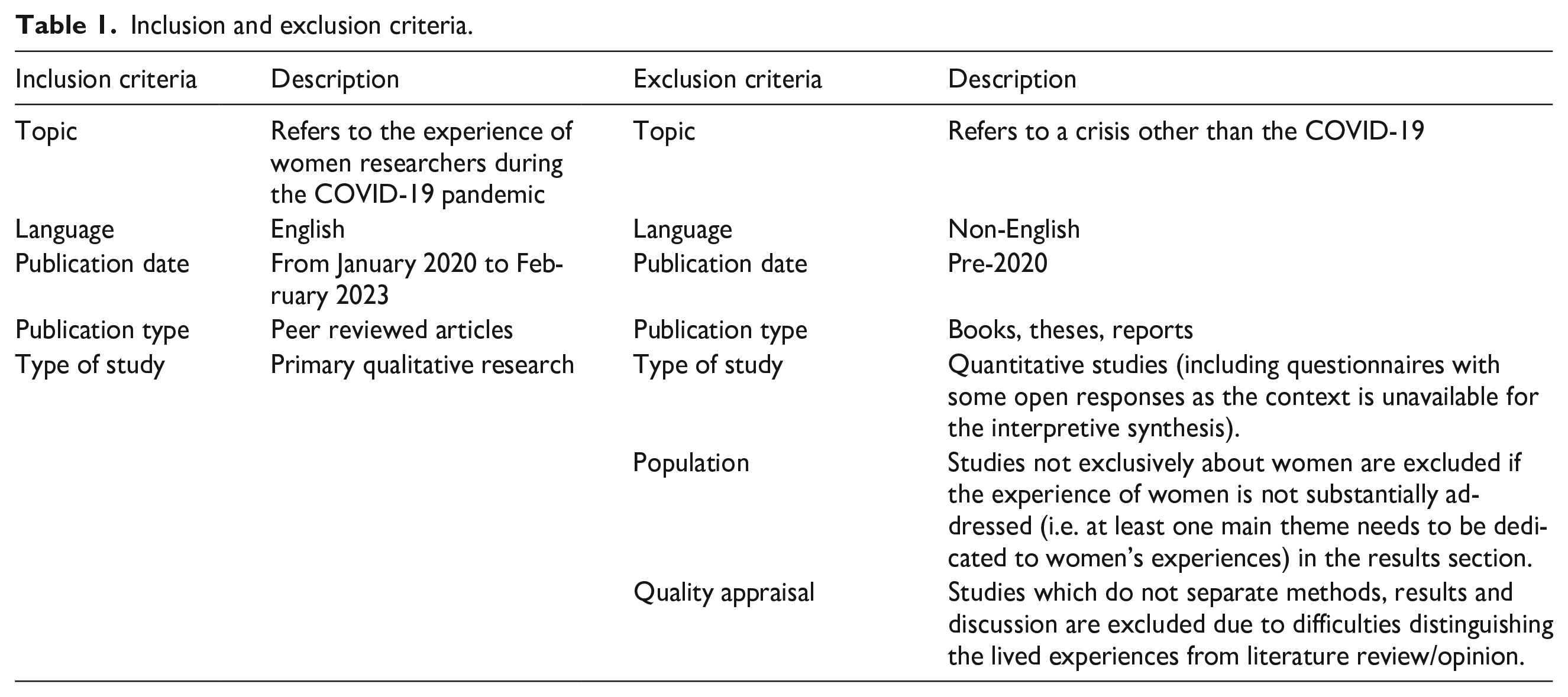
The full text of the selected relevant citations was retrieved and assessed again against the inclusion criteria by GI and CPP. Any discrepancies were discussed in team meetings (GI, CPP and NE) to reach an agreement and final decision. The reasons for the exclusion of any of the sources analyzed in full text, as well as the inclusion process, are reported in the PRISMA flow chart (Figure 1).
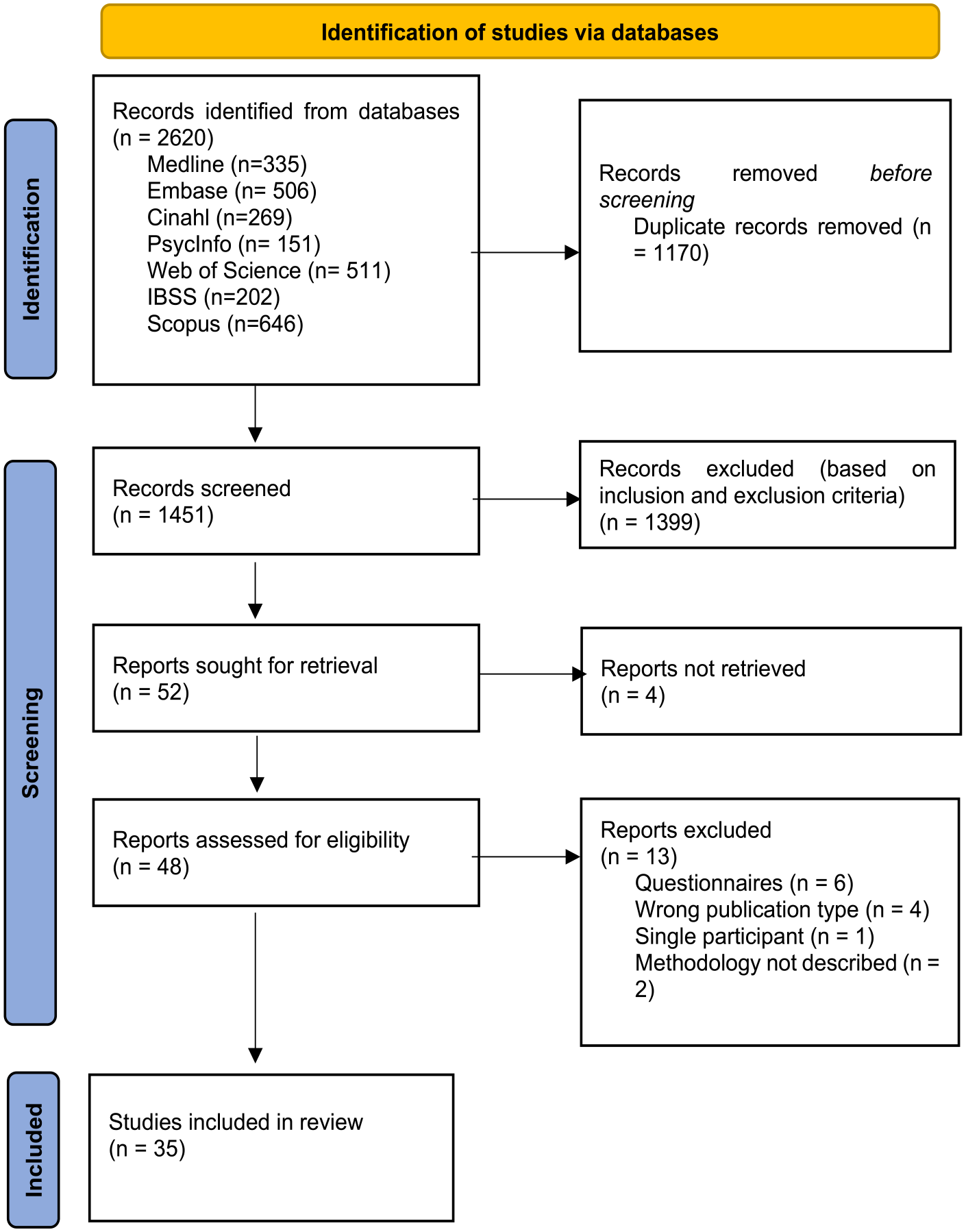
PRISMA flowchart.
Data extraction
The following data was extracted from included articles:
Author(s), year, reference
Study aim
Study design and analysis method
Target group/participants
Location
Quality score
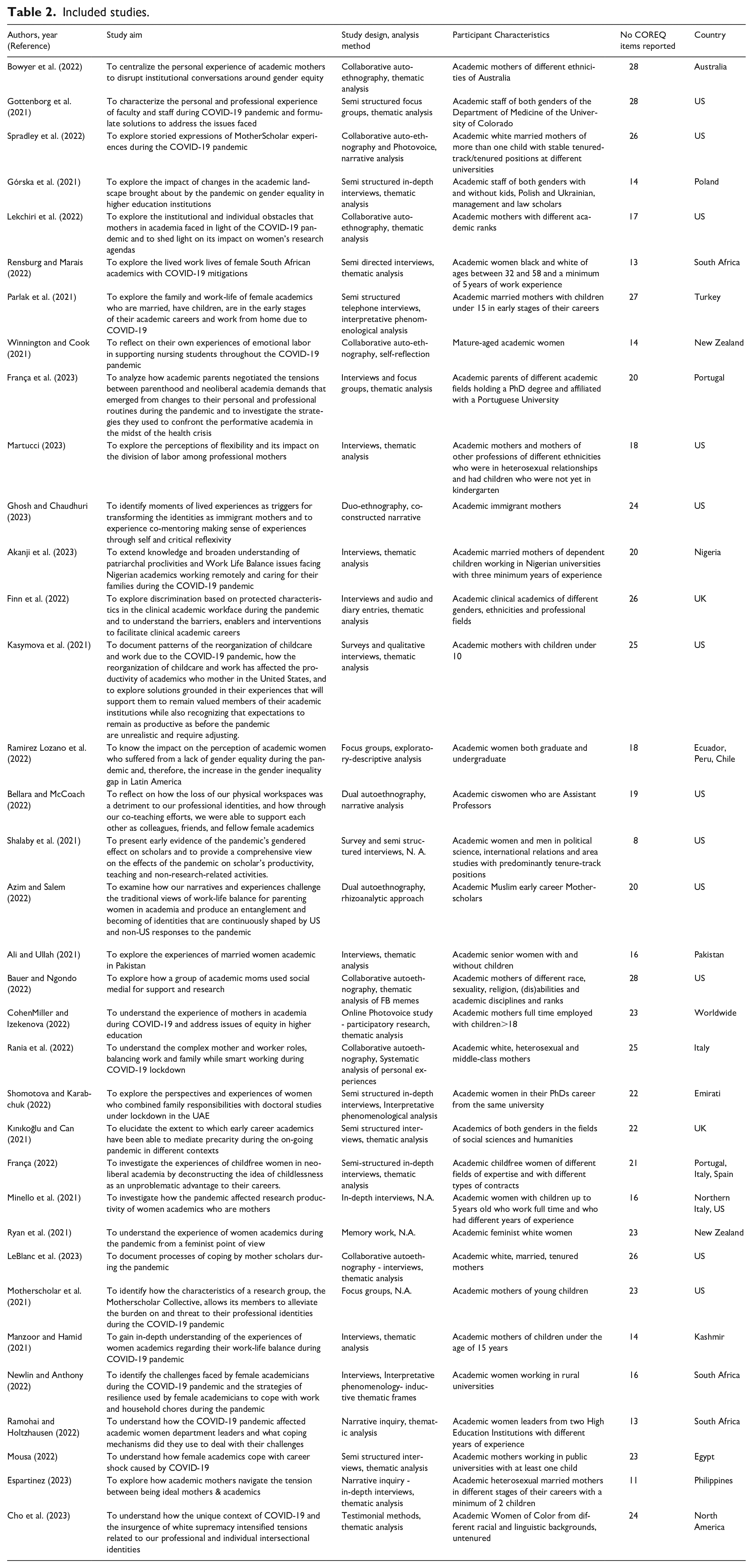
Data extraction was conducted from full text copies of the included articles by GI and CPP (see Table 2). Any discrepancy in the results was discussed in team meetings (GP, CPP, and NE) to reach an agreement and final decision.
Included studies.
Data analysis
A qualitative meta-synthesis of included studies was conducted using a thematic approach aiming for an interpretive synthesis of findings, rather than a narrative review of the included articles (Thomas and Harden, 2008). Full text versions of included articles were uploaded to MaxQDA. The results sections of an initial sample of 10 articles were open coded line by line independently by GI and CPP. These preliminary, distinct open coding schemes were contrasted and compared in team meetings (GP, CPP, and NE) and used to develop an initial coding tree. This coding scheme has been used to code the whole data set by GI, after which 12 new codes were developed inductively. These represented subcategories of the initial codes. The final coding scheme was then used by CPP to code all articles. Coding disagreements were discussed in team meetings to reach consensus regarding interpretations of code descriptions and coded text (Braun and Clarke, 2013).
Analytic themes emerged from the coding process but also from the thematic analysis conducted after the coding was completed. Themes were refined and discussed multiple times in team meetings and as part of an iterative interpretative process. The themes have been reported paying particular attention to how diversity aspects, such as gender, ethnicity, age, marital and household status, cultural background, religion and socioeconomic status (Hengelaar et al., 2023), and their intersection, have shaped the experience of women researchers during the COVID-19 pandemic. The terminology used in this article reflects the terms used in the included studies. 2 Additionally, studies have been assessed for the quality by looking at how many of the items from the COREQ (COnsolidated criteria for REporting Qualitative research) criteria are reported (Tong et al., 2007). Studies have not, however, been excluded due to the quality appraisal.
Results
The result of the literature screening are presented in a PRISMA flow diagram (Figure 1) (Page et al., 2021). Of the 2620 records retrieved, 1451 studies were screened after removing duplicates. Of these, 1399 records were excluded after reading title and abstracts and assessing them against the inclusion and exclusion criteria. A total of 52 records were sought for retrieval. Out of these, 4 were not accessible and 13 were excluded after examining the text in more detail. After this final assessment a total of 35 articles, meeting the inclusion criteria, were included in the review.
Regarding the quality assessment of reporting, 71.4% of included articles reported more than half of the items included in the COREQ criteria; the items most frequently reported were major themes development (97.1%), description of sample and sample size (100%) and illustrative quotes (94.3%). The items least frequently reported were non-participation (11.4%), participant approval of transcripts (11.4%), performing repeat interviews (14.3%), and use of field notes (20%).
Table 2 provides an overview of the characteristics of the included studies. The included studies came from nineteen different countries (plus one study addressing participants worldwide), and they used a variety of qualitative data collection methods (i.e. structured and semi-structured interviews, focus groups, collaborative auto ethnographies, photo voice, memory work and narrative analysis).
Themes
Three analytic themes emerged from a meta-synthesis of the 35 included articles:
Gendered professional expectations and work pressure
Colliding identities
Coping strategies
These are described below. The codes frequency table is presented in the Appendix.
Theme 1: Gendered professional expectations and work pressures
Women reported experiencing a disproportionate teaching burden (in comparison with the time spent on other tasks), gendered professional expectations related to pastoral and mentoring tasks, precarity of employment and anxiety about career progression.
Disproportionate teaching burden
Women reported experiencing pressure from their institutions to maintain teaching activities and facilitate a rapid transition of education and other academic tasks to online mode (Akanji et al., 2023; Finn et al., 2022; Górska et al., 2021; Martucci, 2023; Rensburg and Marais, 2022). This time-consuming transition required learning about the use of new technologies, reorganizing teaching materials, adapting teaching strategies, and supervising students’ transition to online learning (Bauer and Ngondo, 2022; Górska et al., 2021; Gottenborg et al., 2021; Manzoor and Hamid, 2021; Ramirez Lozano et al., 2022; Spradley et al., 2022). While some studies described some participants as feeling supported by their employers (Ali and Ullah, 2021; Espartinez, 2023; Manzoor and Hamid, 2021; Newlin and Anthony, 2022; Ramirez Lozano et al., 2022), the majority of studies stressed a delay or a lack of technical and material support and, in some cases, the lack of a basic stable internet connection for online teaching, both for themselves and for students (Akanji et al., 2023; Ali and Ullah, 2021; CohenMiller and Izekenova, 2022; Espartinez, 2023; Finn et al., 2022; Kasymova et al., 2021; Lekchiri et al., 2022; Manzoor and Hamid, 2021; Newlin and Anthony, 2022; Ramohai and Holtzhausen, 2022; Rania et al., 2022; Rensburg and Marais, 2022; Spradley et al., 2022). Older women researchers reported feeling particularly unprepared for the digital transition, with some even pushed to retire earlier (Ali and Ullah, 2021; Espartinez, 2023; Ramirez Lozano et al., 2022).
I’m 50+ already. Came the pandemic, I needed to navigate this fancy gadget and complicated LMS [learning management system]. I feel like I’m back to zero in teaching. I have heavier course preparation due to incorporating varied online teaching strategies. I wonder if my traditional teaching strategies still connect with the millennials. —MoM3 (Espartinez, 2023: 9).
The transition to online education required time-consuming student supervision to create a good online environment and to answer students’ questions related to teaching content and organization. This was combined, for some, with increased workload related to research and/or clinical responsibilities (depending on the disciplinary field) (Gottenborg et al., 2021). For others, like those who had to work in a lab, research activities were stopped due to social distancing measures (Gottenborg et al., 2021; Spradley et al., 2022). These extra challenges, paired with the increased burden of home schooling due to school closures, meant that women were often expected to work at “150%” (Bowyer et al., 2022: 3), often stretching working hours into the night when children were asleep, an expectation that was described as “inhumane” (Rensburg and Marais, 2022: 395) and unresponsive to the unprecedented challenges they were experiencing (Minello et al., 2021). The majority of women felt that the message coming from their institutions was clear: teaching cannot be postponed and has priority over other tasks (Akanji et al., 2023; Ali and Ullah, 2021; Bauer and Ngondo, 2022; Bellara and McCoach, 2022; Bowyer et al., 2022; Espartinez, 2023; Finn et al., 2022; Ghosh and Chaudhuri, 2023; Górska et al., 2021; Gottenborg et al., 2021; Kasymova et al., 2021; Kınıkoğlu and Can, 2021; Lekchiri et al., 2022; Manzoor and Hamid, 2021; Martucci, 2023; Minello et al., 2021; Newlin and Anthony, 2022; Parlak et al., 2021; Ramirez Lozano et al., 2022; Ramohai and Holtzhausen, 2022; Rensburg and Marais, 2022; Ryan et al., 2021; Shalaby et al., 2021).
Gendered professional expectations
Studies frequently described how women were allocated, or took upon themselves, care tasks related to the social and psychological needs of their students (Ali and Ullah, 2021; Bellara and McCoach, 2022; Cho et al., 2023; Espartinez, 2023; Finn et al., 2022; Górska et al., 2021; Kasymova et al., 2021; Kınıkoğlu and Can, 2021; LeBlanc et al., 2023; Martucci, 2023; Ramirez Lozano et al., 2022; Ryan et al., 2021; Winnington and Cook, 2021).
I have devoted a lot of time to my [international] students. . .. They are alone, without a family close by (. . .) we can sometimes talk for an hour longer than planned, if I ask them what they are doing, how they feel. (. . .) Do they need help? Are they able to do their shopping, to buy food? Are they managing it all? (Górska et al., 2021: 8).
One study reported that male researchers focused more on teaching content and new approaches, whereas women were more empathetic and tried to understand the perspective of their students (Górska et al., 2021). This meant that they spent a large amount of time and effort to support students in facing pandemic-related anxiety and personal difficulties. Sometimes this meant that women made themselves available to students even after teaching hours and through personal communication channels, which meant they had the impression of having to be “on call” 24/7 (Ali and Ullah, 2021: 149; Manzoor and Hamid, 2021).
Before COVID-19 I often met research students once a week or when needed to discuss anything. But after lockdown, I feel I am available for them 24/7. They can call and text me any time and I have to assist them instantly (Ali and Ullah, 2021: 149).
Precarity of work contracts and anxiety about career progression
Women researchers reported extreme pressure and increased anxiety related to their career progression. This was also due to the fact that teaching and care work often remained invisible and did not contribute to career advancement (Kınıkoğlu and Can, 2021; Ramirez Lozano et al., 2022; Shalaby et al., 2021; Winnington and Cook, 2021). As a consequence, women reported having to pause their research activities, such as publications and grant writing, and other activities that might progress their careers, such as (online) conference participation, to prioritize those tasks that could not be postponed, like teaching, care and pastoral support, as well as childcare.
The teaching and pastoral care pressure, paired with a reduction in research time, was perceived to have negative repercussions on the career advancement of women, especially on junior researchers, on faculty women of color or from a migrant background and on those with temporary contracts who feared job losses and experienced negative consequences for their ability to negotiate permanent contracts and tenure track positions (Cho et al., 2023; Kınıkoğlu and Can, 2021; Ramirez Lozano et al., 2022). Moreover, women reported feeling anxious about their personal financial stability in a situation in which institutions were often financially unstable, implementing pay cuts and putting a hold on additional recruitment (Akanji et al., 2023; Finn et al., 2022; Ramirez Lozano et al., 2022; Ryan et al., 2021; Spradley et al., 2022). This challenge was felt more strongly by women living in low- and middle-income countries, where their financial stability (often perceived as an indication of career success) was undermined by pay cuts, negatively affecting their financial independence and ability to support their household (Akanji et al., 2023; Espartinez, 2023; Shalaby et al., 2021).
I have been experiencing career and family difficulties since the spread of the deadly coronavirus, which is now hitting many Nigerian private universities hard due to the lockdown. For instance, we had no choice but to accept pay cuts, despite being mandated to continue lectures and teaching online at home. I’m stressed, lack motivation, and feel my career prospects are plummeting because being financially capable is the ideal in Nigeria. Making enough money from academia to cater for my family and having some to save for a rainy day is what I call success, but this is not the case today – despite working tirelessly from home during this global pandemic (Akanji et al., 2023: 10).
Those on temporary contracts and from underrepresented groups experienced particular anxieties related to proving themselves and maintaining academic productivity (França et al., 2023; Ghosh and Chaudhuri, 2023; Górska et al., 2021; Kınıkoğlu and Can, 2021). Because of their often more precarious situations, they felt they could not say “no” to unrewarding tasks and were therefore pushed more toward teaching and pastoral care work (Cho et al., 2023; Kınıkoğlu and Can, 2021; Newlin and Anthony, 2022). While women without children were in a better position in terms of time allocated to research, an advantage shared with most men, especially men without children, the expectations they had to fulfill remained challenging (França, 2022).
Even if the household conditions were more “favorable,” could someone be expected to conduct business-as-usual in the wake of a global pandemic and maintain the same pace of productivity and engagement with our job duties? (França et al., 2023: 963)
Theme 2: Colliding identities
Women reported experiencing difficulties related to the lack of proper space to work at home, the lack of boundaries between private and work life, and the influence that this had on their personal and professional identities and the renegotiation of parenting and work responsibilities.
Lack of proper spaces to work
Across studies, women researchers reported challenges related to homeworking in response to COVID-19 lockdown measures, particularly in relation to the lack of proper space to work and renegotiating divisions of home spaces with their families or partners. In spite of the efforts to create a “separate” office space, private and workspace trespassed into one another. Women described the situation as chaotic, messy and extremely stressful, and mothers of young children in particular reported frequent interruptions and noise (Bellara and McCoach, 2022; CohenMiller and Izekenova, 2022; Parlak et al., 2021).
The constant chaos and the feeling of being always “on,” made women feel in constant “meltdown mode” (Espartinez, 2023). Online meetings became open windows into the private space, making women feel exposed and vulnerable (CohenMiller and Izekenova, 2022; Rania et al., 2022; Rensburg and Marais, 2022). One study described this invasion of the private and safe space as particularly traumatic for women of color, who expressed feeling like the institutional violence they experienced in the workspace (manifesting itself in the promotion processes, micro and macroaggressions, invisible and emotional labor and the destruction of ancestral histories, knowledge, and pedagogies) was penetrating their private space (Cho et al., 2023).
I began this reflection thinking about my relationship to the institution. If I am being honest with myself, we are in a toxic relationship. But as any person who is working on healing, I get more and more confident each day in the moves that I make. I refuse to be in this intimate relationship with the university anymore. I have seen the ways that the pandemic has further blurred these boundaries for people, myself included (Cho et al., 2023: 8).
Difficulties in expressing one’s professional identity
Working from home made it difficult for women to express their professional identity over their private one. Leaving home to go to work gave mothers, and women in general, the opportunity to decide what aspects of their personal life to share, and enabled them to fully express their professional identities especially in those cultural contexts where women are mostly seen are caretakers and have to fight to affirm their professional selves (Akanji et al., 2023; Azim and Salem, 2022; Manzoor and Hamid, 2021; Mousa, 2022; Newlin and Anthony, 2022; Ramirez Lozano et al., 2022). Now this opportunity was gone. On the one hand, women felt their professionalism could not be expressed in the way they wanted, impeded by their parenting and caring duties, and by the lack of a dedicated space to work. On the other hand, they felt they were not able to be the “good” mothers they wanted to be because of the intrusion of work in the private space. All the spatial, temporal, emotional and mental boundaries between private and professional identities were dismantled.
My professional identity was all of a sudden taken from me because I couldn’t go to work. I didn’t have a space for work. I didn’t have what I needed. So my professional identity was basically put on the back burner. I have these four kids at home with me, who I have to do everything to try and take care of (Spradley et al., 2022: 240).
Balancing and renegotiating responsibilities
The difficulties experienced trying to comply with internal and external pressures and standards of excellence in both the private and the professional sphere made women feel guilty and inadequate (Cho et al., 2023; LeBlanc et al., 2023; Motherscholar et al., 2021). Some studies report that women often felt like they had to reduce their workload or even quit their jobs in order to be able to fulfill their parenting and family responsibilities (Martucci, 2023; Parlak et al., 2021; Shomotova and Karabchuk, 2022) a feeling that, women report, was not shared by their male partners (Azim and Salem, 2022; Espartinez, 2023; Ghosh and Chaudhuri, 2023; Górska et al., 2021; Gottenborg et al., 2021; LeBlanc et al., 2023; Ramirez Lozano et al., 2022; Ramohai and Holtzhausen, 2022). The choice between family and work was a very difficult one and sometimes dictated by the contractual situation and the fear of compromising their job security and career advancement (Akanji et al., 2023; Finn et al., 2022; França et al., 2023; Ghosh and Chaudhuri, 2023; Gottenborg et al., 2021; Kınıkoğlu and Can, 2021; Lekchiri et al., 2022; Martucci, 2023; Parlak et al., 2021; Ramirez Lozano et al., 2022; Ramohai and Holtzhausen, 2022; Rania et al., 2022; Shomotova and Karabchuk, 2022). Some women felt pushed to this choice by normative gender roles (Espartinez, 2023; Manzoor and Hamid, 2021; Mousa, 2022; Parlak et al., 2021), whereas others felt reducing work pressure, or even quitting their jobs, was an act of self-care and a way to reconcile their private and work life and to restore mental and physical health (Cho et al., 2023; LeBlanc et al., 2023). The internal and external pressure that women felt in this situation pushed them to experience anxiety, stress and frustration and had detrimental effects on their mental and physical health. All the studies report that the exhaustion caused by the competing and demanding responsibilities pushed women to their limits.
Flexibility
Because of the flexibility allowed by their academic jobs, women researchers often rescheduled work commitments, worked at night, and made space for care and home-schooling duties. Most of the studies revealed that men’s work was, in most households, prioritized while women were considered the “available” parent and had to carry most of the work related to childcare and housework (Akanji et al., 2023; Ali and Ullah, 2021; Azim and Salem, 2022; Bauer and Ngondo, 2022; Bellara and McCoach, 2022; Bowyer et al., 2022; CohenMiller and Izekenova, 2022; Finn et al., 2022; França et al., 2023; Ghosh and Chaudhuri, 2023; Górska et al., 2021; Gottenborg et al., 2021; Manzoor and Hamid, 2021; Martucci, 2023; Mousa, 2022; Newlin and Anthony, 2022; Parlak et al., 2021; Ramirez Lozano et al., 2022; Rania et al., 2022; Shomotova and Karabchuk, 2022). Some studies report that even when men had equally flexible jobs (for instance because they were academics themselves) they did not perceive their work to be flexible in the same way that women did, leaving women to carry most of the workload related to childcare and housework (Akanji et al., 2023; Górska et al., 2021; Martucci, 2023; Parlak et al., 2021). In spite of this, flexibility was perceived differently by women. Some perceived it as a positive aspect of their jobs, allowing them to accommodate their parenting tasks (Martucci, 2023; Motherscholar et al., 2021; Rania et al., 2022). Others felt institutions required them to be flexible without accommodating deadlines, teaching or meeting schedules (Kasymova et al., 2021). Given the lack of external support normally provided by professional babysitters, family members or day care services, being flexible was especially difficult for mothers with young children and single mothers (Ali and Ullah, 2021; CohenMiller and Izekenova, 2022; Espartinez, 2023; Motherscholar et al., 2021; Parlak et al., 2021; Ramirez Lozano et al., 2022; Shalaby et al., 2021; Spradley et al., 2022; Winnington and Cook, 2021).
Blending identities as an act of resistance
In general, women felt pushed into normative gender roles as mothers and caregivers both at home and in the workplace. They carried the majority of the burden related to household management, home-schooling, housework and caring for the elderly. The lack of support from partners and institutions and the feeling of being pushed back into (or trapped in) gender normative roles is reported across all studies regardless of nationality or cultural context. Women with children felt a sense of injustice and betrayal often expressed through the fear of being unfairly compared with colleagues without care responsibilities and through the frustration and sense of injustice for the lack of equal distribution of tasks at home (Cho et al., 2023; Finn et al., 2022; Górska et al., 2021; Gottenborg et al., 2021; Kasymova et al., 2021; LeBlanc et al., 2023; Lekchiri et al., 2022; Parlak et al., 2021; Rensburg and Marais, 2022; Ryan et al., 2021). For some women, reaffirming their identity as “motherscholars” (Azim and Salem, 2022; LeBlanc et al., 2023; Lekchiri et al., 2022; Motherscholar et al., 2021; Spradley et al., 2022) was a way to expose the untenable institutional demands and male dominated success standard to create a new path where both the private and work identity could find their space (França et al., 2023; Ghosh and Chaudhuri, 2023; LeBlanc et al., 2023).
Theme 3: Support and coping strategies
The previous themes reveal that the majority of women researchers felt overwhelmed with work in both the professional and private sphere. This resulted in negative emotions, lack of time, a sense of chaos and a feeling of guilt about not doing enough. Yet, women in academia found ways to resist and withstand this demanding situation via support and coping strategies such as: seeking and cultivating social and institutional support, adopting new technologies, and developing personal coping strategies.
Social support
Women researchers actively cultivated, sought or encountered social support. In some studies, participants describe having allies, often women in similar situations, at their workplace (Bellara and McCoach, 2022; Cho et al., 2023; Motherscholar et al., 2021). Solidarity among colleagues or peers was described as an important source of care, relief, understanding and comfort (Bellara and McCoach, 2022) and was useful in different ways: it had the power to mitigate loneliness, reaffirm women in their roles as academics (Motherscholar et al., 2021) or share teaching responsibilities (Bellara and McCoach, 2022).
In general, sharing experiences and struggles (Azim and Salem, 2022; Motherscholar et al., 2021) and using humor as a way to express difficult feelings that would not otherwise be easily communicated (Bauer and Ngondo, 2022), was particularly valuable for many women researchers and a way to expose and verbalize the internal struggles that women were often experiencing. This is particularly true for researchers who are also mothers. For these women, “motherscholar” communities were a safe space to share their experiences, frustrations, anxieties, fears and worries but also to seek support and share success stories (Motherscholar et al., 2021). Moreover, one study conducted in the United States revealed how for women of color, creating and being part of a community of academic women of color was understood as a defiant act of resistance against the institutional norms of academia which are often centered on masculine power and individualist meritocracy (Cho et al., 2023). Participants themselves described how researcher communities were much more effective in supporting them than their academic institutions: NO SUCCESS that I have had is because of just me, myself, and I. One of the things that I learned early on is that to survive, I need family—familia. I did find that here. I am in a teaching collaborative space where we have ebbed and flowed with each other’s situations. Sometimes I will take on more responsibility than they do, but the next time they will take on more responsibility than me [. . .]. (Cho et al., 2023: 13).
In the domestic sphere, support came mostly from family members, who were sometimes described as being recruited to share the burden of household tasks; husbands were the most common source of help, but older children also sometimes helped with simple tasks, such as some aspects of housework and babysitting (Lekchiri et al., 2022; Parlak et al., 2021; Rania et al., 2022). However, as mentioned above, the majority of participants reported feeling like they had to carry most of the burdens or had to explicitly ask male partners to take care of particular household tasks in order for them to help (Akanji et al., 2023; Ali and Ullah, 2021; Azim and Salem, 2022; Bauer and Ngondo, 2022; Bellara and McCoach, 2022; Bowyer et al., 2022; CohenMiller and Izekenova, 2022; Finn et al., 2022; França et al., 2023; Ghosh and Chaudhuri, 2023; Górska et al., 2021; Gottenborg et al., 2021; Manzoor and Hamid, 2021; Martucci, 2023; Mousa, 2022; Newlin and Anthony, 2022; Parlak et al., 2021; Ramirez Lozano et al., 2022; Rania et al., 2022; Shomotova and Karabchuk, 2022).
Institutional support
A lack of institutional support played an important role in the way that women researchers dealt with the obstacles that the COVID-19 outbreak posed on their lives (Akanji et al., 2023; Bowyer et al., 2022; CohenMiller and Izekenova, 2022; Kınıkoğlu and Can, 2021; Motherscholar et al., 2021; Ramirez Lozano et al., 2022; Rensburg and Marais, 2022). Women felt institutions failed to offer material and technical support for remote working (Akanji et al., 2023; Ramirez Lozano et al., 2022), provide guidance on how to handle in person teaching or COVID-19 cases among students and colleagues (Kınıkoğlu and Can, 2021), or develop family friendly policies to support mothers (CohenMiller and Izekenova, 2022).
Those women who felt understood by their colleagues and, more importantly, by their superiors, reported feeling less pressure and insecurity regarding their job positions (Shomotova and Karabchuk, 2022). In general, seeking support from superiors and colleagues was one of the main coping mechanisms for women academic leaders, especially in the moment of taking important decisions (Ramohai and Holtzhausen, 2022). Even when institutional efforts were put in place to help researchers with their professional duties by, for instance, providing extensions of deadlines, this was not perceived as an adequate solution to their burdens (Kasymova et al., 2021); They [the participant’s university] just gave everyone an extra year. But I look at my peers who . . . do not have children, and they are using an extra year to get ahead, where someone like me is using it has this extra year, but you know, I am barely keeping my head above water (Kasymova et al., 2021: 429).
Individual coping strategies
Two main individual strategies can be distinguished from the included studies: (1) self-care and prioritizing oneself by lowering expectations and (2) taking pride in being “resilient” and trying to continue to fulfill all duties. Self-care practices included taking time off from work and caring responsibilities to dedicate to non-productive activities such as physical exercise (Spradley et al., 2022), and changing job schedules by introducing more breaks (LeBlanc et al., 2023; Shomotova and Karabchuk, 2022). This required women to lower their expectations regarding both their professional and private roles. Concretely, this meant accepting imperfection as inevitable in work tasks (CohenMiller and Izekenova, 2022; Ghosh and Chaudhuri, 2023), embracing the chaos at home (CohenMiller and Izekenova, 2022), letting family life—especially children—interfere with work meetings (França et al., 2023), being more permissive with kids (LeBlanc et al., 2023) or delegating job responsibilities to colleagues (Ghosh and Chaudhuri, 2023).
When I realised I could not really concentrate [because of the constant interference of family demands with her work] I was a bit worried (. . .) but then, I thought “OK, that’s it. If you don’t have the best level of productivity this year, you are not going to die because of that. (. . .) So I ended up relativising things a bit (França et al., 2023: 9).
Self-care and lowering expectations were, in some cases, also portrayed as acts of resistance against the ideal academic worker (often male and without children) (Bowyer et al., 2022; França et al., 2023; Spradley et al., 2022). According to some studies, women realized that it was not natural to hold themselves to the same standards as before the pandemic since the conditions were not the same (França et al., 2023; Ghosh and Chaudhuri, 2023; LeBlanc et al., 2023). By not accepting the demands that institutions put upon women, by prioritizing mental health before academic tasks and, in general, by choosing to not go beyond their own limits, some academic women felt they were enacting a form of resistance against the institutional neoliberal logics and norms and reaffirming their double identities as academics and carers (Bauer and Ngondo, 2022; França et al., 2023; Ghosh and Chaudhuri, 2023). In contrast, some women took pride in their resilience and continued to fulfill all duties (Ramohai and Holtzhausen, 2022) or felt that they could not compromise on any of their tasks either because of the internal and external pressure put on them to support and care for their families (Górska et al., 2021; Parlak et al., 2021), or because they had to prove themselves in the eyes of their employers in order to remain competitive on the job market (França, 2022; Kınıkoğlu and Can, 2021; Shomotova and Karabchuk, 2022). This was particularly true for women who lived in societies where women are still considered solely responsible for care duties and housework and for doctoral candidates who often felt they could not work less, fearing repercussions for their careers (Akanji et al., 2023; França, 2022; Kınıkoğlu and Can, 2021; Newlin and Anthony, 2022; Parlak et al., 2021). This was also linked to prioritizing others’ needs—family members or job responsibilities—over oneself (Akanji et al., 2023; Ali and Ullah, 2021) and often led women to feel frustrated both in the personal and in the professional sphere (Akanji et al., 2023; França et al., 2023; Parlak et al., 2021). Being resilient was mentioned most frequently in a study about women academic leaders (Ramohai and Holtzhausen, 2022), a study with Philippine mother academics (Ali and Ullah, 2021) and a study with women researchers in rural South Africa (Newlin and Anthony, 2022).
Mother to three children, I managed to weather all the challenges that came into my life. You never know what I’ve gone through. I am used to all pains; I can face them all for my family. I am a tough woman. —MoM8 (Rania et al., 2022: 11).
Discussion
This article aimed to systematically scope the qualitative literature to understand women researchers’ experiences of the COVID-19 pandemic. The review revealed that women were subjected to gendered professional expectations, experienced challenges reconciling their private and work identities, and sought support or resorted to coping strategies in order to deal with the crisis. Whereas previous quantitative and mixed methods studies have shown how women researchers’ careers and lives and have been disrupted by the pandemic, for instance by increasing their domestic workload and by hindering their productivity (Breuning et al., 2021; Gao et al., 2021; King and Frederickson, 2021; Miller and Riley, 2022), their career progression and ability to access tenured track positions (Davis et al., 2022; Heo et al., 2022; Oleschuk, 2020) and their mental health (Saw et al., 2023; Walters et al., 2021), this article adds to the literature by bringing women’s experiences to light and revealing how women felt unheard, discriminated against (especially if mothers) and exploited by a system that often seemed to value productivity over care.
The prominent role that women play in teaching paired with care responsibilities both at home and at work, disproportionately affected women’s productivity and ability to be competitive in a job market ruled by the logic of productivity (Finn et al., 2022; Górska et al., 2021; Minello et al., 2021; Shalaby et al., 2021; Winnington and Cook, 2021). The vulnerabilities of migrants, women of color and minority groups, due to precarity and linked to structural discrimination, was exposed; women, especially those on temporary contracts or from underrepresented groups, felt discriminated in their ability and power to negotiate tasks allocation and contracts in a fair way (Cho et al., 2023; França, 2022; Kınıkoğlu and Can, 2021; Newlin and Anthony, 2022; Shomotova and Karabchuk, 2022). Because of the need to prove themselves in the eyes of a research system that uses “whiteness as a credential” (Melaku and Beeman, 2022: 3) and is built on male childless standards (Bleijenbergh et al., 2012; Knights and Richards, 2003), women often experienced imposter syndrome, as a consequence of having their self-confidence hindered by lack of resources and support, and denounced the unfairness of the research system, which ignored the women’s unpaid work and pushed them toward invisible tasks such as pastoral care and service work, thereby undermining their possibility of career progression (França, 2022; Kınıkoğlu and Can, 2021; LeBlanc et al., 2023; Minello et al., 2021).
The review shows commonalities in experiences across countries in terms of women being pushed back or forced into gender normative roles both in the professional sphere and at home, suggesting that gendered professional expectations and work pressures are common to academia and the system of science. The precarity of work and financial insecurity, already described as a major issue in academia for a long time, has also been exacerbated by the pandemic (Ivancheva et al., 2019; Kınıkoğlu and Can, 2021; O'Keefe and Courtois, 2019; Walters et al., 2022a). Women, who are already (more often than men) employed on temporary contracts, receive lower salaries, and occupy less prominent roles within research teams (Ding et al., 2021; European Commission, Directorate-General for Research and Innovation, 2021; Samaniego et al., 2023), report experiencing anxiety around their financial stability and felt they had to remain competitive within a system that too often discriminates against them.
Inspired by the relational theories of gender (Connell, 2012), which describe gender as a multidimensional construct encompassing economic, power, affective and symbolic relations (Connell, 2009; Lorber, 1994), we argue that the social practices through which gender is enacted in families, communities and academic institutions were acutely exposed during the pandemic. The studies included in this review highlight how in times of crises, women were subjected to a division of labor which reflected the power dynamics present in academia and in the broader social context, where those in more vulnerable positions are given the least rewarded tasks. As apparent in the description of the theme of gendered professional expectations, the fact that women in academia were assigned, or took upon themselves, teaching, service and pastoral care work tasks, which are currently underestimated in the research assessment system, exposes the gendering of the research workforce, but also the relations between different occupations within the academic context. The persistent devaluation of the social reproduction work within academia (including education, pastoral care and service work), which, as shown during the pandemic, is indispensable for all the other productive activities to take place, persists both at the institutional level and at systemic level where these tasks are considered less prestigious and are less rewarded (Fraser and Jaeggi, 2018). The hierarchical assignment of women and men to different types of work was highlighted during the pandemic and was accompanied by anxiety and worries about the consequences that this had and might have on the career advancement of women in academia (Kreimer, 2004).
The pandemic made clear that the outsourcing of care duties, made possible by the often-privileged position of academic parents within society, allows institutions to be able to count on productive employees. Women researchers (and parents in general), in normal circumstances, are enabled to dedicate themselves to their productive duties by outsourcing their care duties to other workers (often other women) for lower wages (Bozalek and Zembylas, 2023). The impossibility of counting on this type of support, and the dependence of academic women on those who carry out the reproductive work, revealed the unequal position of mothers and women in academia; women had to reconcile their unpaid care duties with their paid (unrewarded) care obligations and were often forced to stop or reduce their productive duties either as an act of self-care, or as a response to external or internal pressure to adhere to excellence standards both in the private and work sphere. In a context in which women and minorities are the ones who more often work in less prestigious and temporary arrangements (Arday, 2022; O'Keefe and Courtois, 2019), undermining women’s productivity was an additional act of discrimination which challenged women’s abilities to publish and apply for grants, and therefore diminished their ability to secure more permanent positions and achieve financial stability.
Despite the efforts of institutions to support their employees, for instance by granting extensions and providing technical support in accompanying the transition to online teaching, women reported that the measures put in place by universities to mitigate the negative effects of the pandemic were not perceived as effective, showing a general sense of unpreparedness. As a consequence, women, often found support in each other or resorted to individual coping strategies and acts of resistance (such as the conscious reduction of work and making their role as mother visible) against the neoliberal male productivity imperative. Indeed, women’s responses to the crisis reveal the importance of solidarity, care, and self-care. Responses which are in sharp contrast to the current marketization of academia, which leaves little space for values like care and solidarity and has pushes academic workers to commit to a culture of overtime working hours and fierce competition (Isgro and Castañeda, 2015).
From a care ethics perspective “Caring about involves the recognition in the first place that care is necessary. It involves noting the existence of a need and making an assessment that this need should be met” (Tronto, 1993: 106). In feminist care ethics theory, we can distinguish between the act of “caring about,” which implies being concerned for and recognizing a need, and “caring for” which implies the actual attention and response to a certain need in relation with the care receiver. Establishing a caring relation, presupposes meeting the other, not by putting them in a box, or by categorizing them as belonging to a certain group, but by understanding what they are going through (Noddings, 2015; Weil, 1977: cited in Noddings, 2015: 77). Although institutions did “care about” their employees, the measures put in place to address researchers’ needs were based on a generalization, centered on the model of efficiency and prioritizing the need for performance and productivity. This generalization, which did not reflect the real experience of researchers, and did not “care about” what women were going through, meant that other needs such as wellbeing, solidarity, justice, cooperation, and care, which are in general strangers to the neoliberal academic system, were not adequately met (Corbera et al., 2020). As Noddings (2015) argues, institutions cannot care for anyone directly, as caring for requires a “person to person relationship” (p. 76), which institutions cannot achieve. However, they can engage in the care relationship by assessing and anticipating needs while creating the conditions to support, facilitate and reward those who can engage in the fundamental activity of “caring for” (Noddings, 2015).
This review reveals that women researchers took care responsibilities upon themselves by carrying most of the pastoral care work at work and by playing a prominent caring role at home; they both recognized (cared about) and attended to (cared for) the care needs of diverse actors in their professional and personal circles, often to the detriment of their career progression and even of their own mental and physical health. On the one hand, as caregivers, they felt responsible for the wellbeing of students and colleagues. On the other hand, as care receivers, women, especially those with children, felt that their caring needs were not recognized and felt like the support strategies put in place by institutions were widening the already existing gap between those with and those without care responsibilities. In this way, women ended up being discriminated against twice: first as unrecognized and unrewarded caregivers within their institutions (and at home), and second as inadequate or somehow deficient care receivers (Noddings, 2015), unable to flourish in spite of the support received (e.g. extensions). Because of the pre-existing power dynamics, hierarchy, and discriminatory practices in academia (and enacting the gender regime described above), women were not considered reliable sources of knowledge and therefore dismissed or not taken seriously (Fricker, 2017). This act of epistemic injustice undermined women’s professional status, led to a decrease of confidence (Fricker, 2017) and made them feel alienated as relevant and credible agents in academia.
Policy and practice recommendations
At a policy and institutional level, there is a need to expose and proactively address the gendered practices and implicit biases which reproduce inequalities within academia and to acknowledge the “privileged irresponsibility” (Bozalek and Zembylas, 2023) (failing to acknowledge the dependence on those who provide care services) that universities as well as male researchers draw on to be able to dedicate themselves to the productive tasks of generating new knowledge. The pandemic exposed the importance of pastoral care, teaching and service work as essential backbone of the academic infrastructure and highlighted how productivity focused researcher assessment criteria, rewarding mainly individual results and unrewarding of care and service work, can be viewed as perpetuating structural inequalities based on gender, parenting situation, contractual situation and background. Making mentoring and caring for students an explicit, valued and rewarded task for all academics, and starting to value team output over the individualistic “publish or perish” imperative will help to change this gender regime. Moreover, this crisis has highlighted how the precarization and competitiveness of academic environment, makes academia an inhospitable place especially for women of color, women with a migrant background and mothers. Organizations can recognize and support those who “care for” and are (made) responsible for the indispensable social reproductive work. At a systemic level, policy makers can promote reforming the current research assessment by making sure this work is recognized and rewarded.
Study’s strengths and limitations
A strength of this study is its rigorous and transparent review and analysis process which enabled a meta-interpretation of findings from studies on women researcher’s experiences from across different countries and incorporating diverse voices. The full data and coding have been made available to enable other researchers to build on this work in the future. Furthermore, the quality of reporting of included studies has been made transparent. The study however also has its limitations. The review focused only on qualitative articles, therefore 316 articles which examined the phenomena from a more quantitative perspective were excluded. This could potentially exclude some relevant information. These articles were however (when appropriate) used for background and supporting literature. Another limitation is the lack of representation of men’s voices and perspectives. Whereas this study focusses on the experience of women, we do recognize that some of the challenges exposed by this study (such as those related to online teaching and parenting) were not solely experienced by women and therefore would need further exploration in future research. The study also did not find substantial reports of negative coping strategies, such as alcohol and excessive food consumption. This might be due to the stigma associated with them and might call for future research to explore them specifically. Moreover, 21 autoethnographies which did not separate methods, results and discussion were excluded from the meta-interpretation due to the difficulties distinguishing the individual experience from interpretation. This decision potentially excluded some women’s experiences. We also recognize that women who had the time to write and reflect on their experiences might have been able to do so due to their own privilege, and the most vulnerable voices might be further under-represented in the published literature.
Conclusion
The identification and meta-synthesis of studies revealed the themes: gendered professional expectations, colliding identities and coping strategies. These highlight how gendered teaching and professional “care work,” paired with the hierarchical distribution of tasks and prestige both in the workplace and at home, made women often feel unsupported and unheard. Moreover, the intersection of different discriminated identities exacerbated existing inequalities and challenges experienced by women. To improve the resilience of the research system, it is essential to pay attention to the experience and needs of women researchers within the system.
Supplemental Material
sj-docx-1-rea-10.1177_17470161241231268 – Supplemental material for The experience of women researchers during the Covid-19 pandemic: a scoping review
Supplemental material, sj-docx-1-rea-10.1177_17470161241231268 for The experience of women researchers during the Covid-19 pandemic: a scoping review by Giulia Inguaggiato, Claudia Pallise Perello, Petra Verdonk, Linda Schoonmade, Pamela Andanda, Mariette van den Hoven and Natalie Evans in Research Ethics
Footnotes
Appendix
Declaration of conflicting interests
The author(s) declared no potential conflicts of interest with respect to the research, authorship, and/or publication of this article.
Funding
All articles in Research Ethics are published as open access. There are no submission charges and no Article Processing Charges as these are fully funded by institutions through Knowledge Unlatched, resulting in no direct charge to authors. This paper was supported by the European Union under the grant agreement No 101058094, project prepared. For more information about Knowledge Unlatched please see here:  .
.
Supplemental material
Supplemental material for this article is available online.
Notes
References
Supplementary Material
Please find the following supplemental material available below.
For Open Access articles published under a Creative Commons License, all supplemental material carries the same license as the article it is associated with.
For non-Open Access articles published, all supplemental material carries a non-exclusive license, and permission requests for re-use of supplemental material or any part of supplemental material shall be sent directly to the copyright owner as specified in the copyright notice associated with the article.
