



Abstract
There is an increased focus on fostering integrity in research by through creating an open culture where research integrity dilemmas can be discussed. We describe a pilot intervention study that used Moral Case Deliberation (MCD), a method that originated in clinical ethics support, to discuss research integrity dilemmas with researchers. Our research question was: can moral case deliberation in research groups help to navigate research integrity dilemmas? We performed 10 MCDs with 19 researchers who worked in three different research groups from three different disciplinary fields at a university in the Netherlands. We analyzed the dilemmas and values discussed, sent out a survey questionnaire to assess self-perceived moral competencies, and conducted in-depth interviews. We found research integrity dilemmas pertained to authorship disputes, supervision of junior co-workers, and questionable handling of data. Participants perceived the majority of moral competencies to a higher degree during the MCD when compared to perceiving them in daily practice afterward. Interviewees told us that they felt most comfortable discussing dilemmas among peers with whom they were not closely affiliated. We conclude that MCD sessions could be relevant in navigating research integrity dilemmas, but that revisions to ensure commitment and safety are required.
Keywords
Introduction
With cases of research misconduct receiving international attention, focus has shifted to fostering an open research culture at research institutions where research integrity dilemmas can be discussed (Bouter, 2020; Downey and Veitch, 2021; Nature, 2019). An open research culture is thought to be conducive to research integrity because it would not only promote transparency about research practices, data, and code but would also decrease secrecy and a lack of trust among researchers (Casadevall and Fang, 2012; Haven et al., 2019; Institute of Medicine, 2002; Martinson et al., 2010). This shift is echoed in the revision of the Netherlands Code of Conduct for Research Integrity (2018). That code includes a chapter on institutions’ duties of care that states: “Institutions provide a working environment that promotes and safeguards good research practices. They ensure that researchers can work in a safe, inclusive and open environment where they feel responsible and accountable, can share concerns about dilemmas. . .” (p. 20).
Case discussions where students or researchers discuss real or hypothetical complex cases that raise research integrity dilemmas have been around since the 1990s as part of responsible conduct of research (RCR) education in the US (Steneck, 2007). Examples of such dilemmas may range from authorship to data analysis, with their shared feature that there is no obvious right (or wrong) answer (Else, 2022). Discussing complex cases that raise research integrity dilemmas can be done as part of a standardized educational curriculum, or in research teams to improve a teams’ skills to handle complex ethical questions (Shamoo and Resnik, 2015). One useful example is the handbook James Dubois prepared as an appendix to his book on RCR cases (Dubois, 2013).
With research becoming increasingly more complex, various institutions have created research ethics support services that have different functions (Sharp et al., 2015; Taylor et al., 2023). For example, the role of an ethicist within an institutional review board/research ethics committee is often focused on examining and enforcing whether existing principles are met in proposed research. Other forms of ethics support focus more on consultation and are intended to promote team learning (Molewijk et al., 2015). More recently, there have been calls to expand the scope of research ethics support, with some authors describing the need for research integrity support (Master et al., 2018).
In parallel, clinical ethics support has grown and one specific form of ethics support that is often used in the Netherlands, Norway, and Sweden is “Moral Case Deliberation” (henceforth: MCD) (Weidema et al., 2013). MCD was developed to strengthen ethical reflection on dilemmas that participants themselves experienced in settings where health care professionals face challenging decisions (Molewijk et al., 2008; Stolper et al., 2016). One of the participants brings in a dilemma they experience in their work. The members of the group jointly investigate the dilemma by identifying relevant values and norms. Values are moral principles which motivate behaviour; norms formulate what should be done to realize a specific value in the given situation. Values and norms are not deduced from a predefined set of abstract principles or codes; instead, they are related to the concrete situation and experiences of the participants. The goal is to clarify a dilemma and come to a shared understanding of the case at hand, not necessarily to solve it (Metselaar et al., 2015). MCD has been shown to raise moral awareness, moral reasoning skills, and to foster an open culture in clinical settings and in health education and research (de Snoo-Trimp et al., 2017; Haan et al., 2018; Hem et al., 2018; Kok et al., 2023; Metselaar et al., 2015; Molewijk et al., 2023; Svantesson et al., 2014; van der Dam et al., 2012).
MCD is a group reflection on a dilemma experienced in practice, guided by a trained facilitator. Philosophically, it is grounded in pragmatic hermeneutics, an approach that argues it is not helpful to structure dilemmas using only abstract principles and procedures (Molewijk et al., 2008). Instead, it is important to pay attention to the context of a specific situation and the people in that situation; it stresses that actual dilemmas are always complex and concrete. We believe that dilemmas with research integrity also tend to arise especially in those cases where abstract principles in codes of conduct provide no clear answers (Davies, 2019), and codes themselves can even be conflicting (Peels et al., 2019). Hence, we reasoned MCD could help researchers in navigating research integrity dilemmas. We describe a pilot intervention where we assess the feasibility and relevance of using MCD to deliberate over complex cases that raise research integrity dilemmas. Our research question is: to what extent is MCD feasible as a method to navigate research integrity dilemmas in practice?
Materials and methods
Ethical approval
The Scientific and Ethics Review Board of the Faculty of Behavioural and Movement Sciences, Vrije Universiteit, Amsterdam reviewed and approved our study (Approval Number: VCWE-2017-017R1).
Methodological framework and design
In line with Thabane et al. (2010) as well as Eldridge et al. (2016), our pilot was meant to assess whether an intervention with MCD can be done, meaning that we focus on the feasibility and relevance of the intervention. To answer our research question, we use different data sources (triangulation). Firstly, we analyze what sort of dilemmas participants brought up to examine whether participants gained insight into the complexity of research integrity dilemmas. Secondly, we describe participants’ experiences with MCD and their reflections on their own moral competencies to examine if they perceived MCD as being relevant. Finally, we review participants’ suggestions for improvement to explore how the intervention could be refined.
Sample and participants
We used our network to contact various heads of departments of the Vrije Universiteit Amsterdam from different disciplinary fields via email, explaining the pilot intervention. Three departments agreed to join and helped us to recruit three pre-established groups of researchers from three different disciplinary fields: the humanities, the natural sciences, and the biomedical sciences. To be eligible, group members had to work in research for at least 3 days per week. Demographic information about the intervention participants (n = 19) as well as survey participants (n = 10) and interview participants (n = 5) appear in Table 1 below. Note that the number of intervention participants totals across all sessions (e.g. in total, eight researchers from physics attended at least one MCD), as attendance fluctuated per session and ranged between three and eight participants.
Demographic information of participants. a
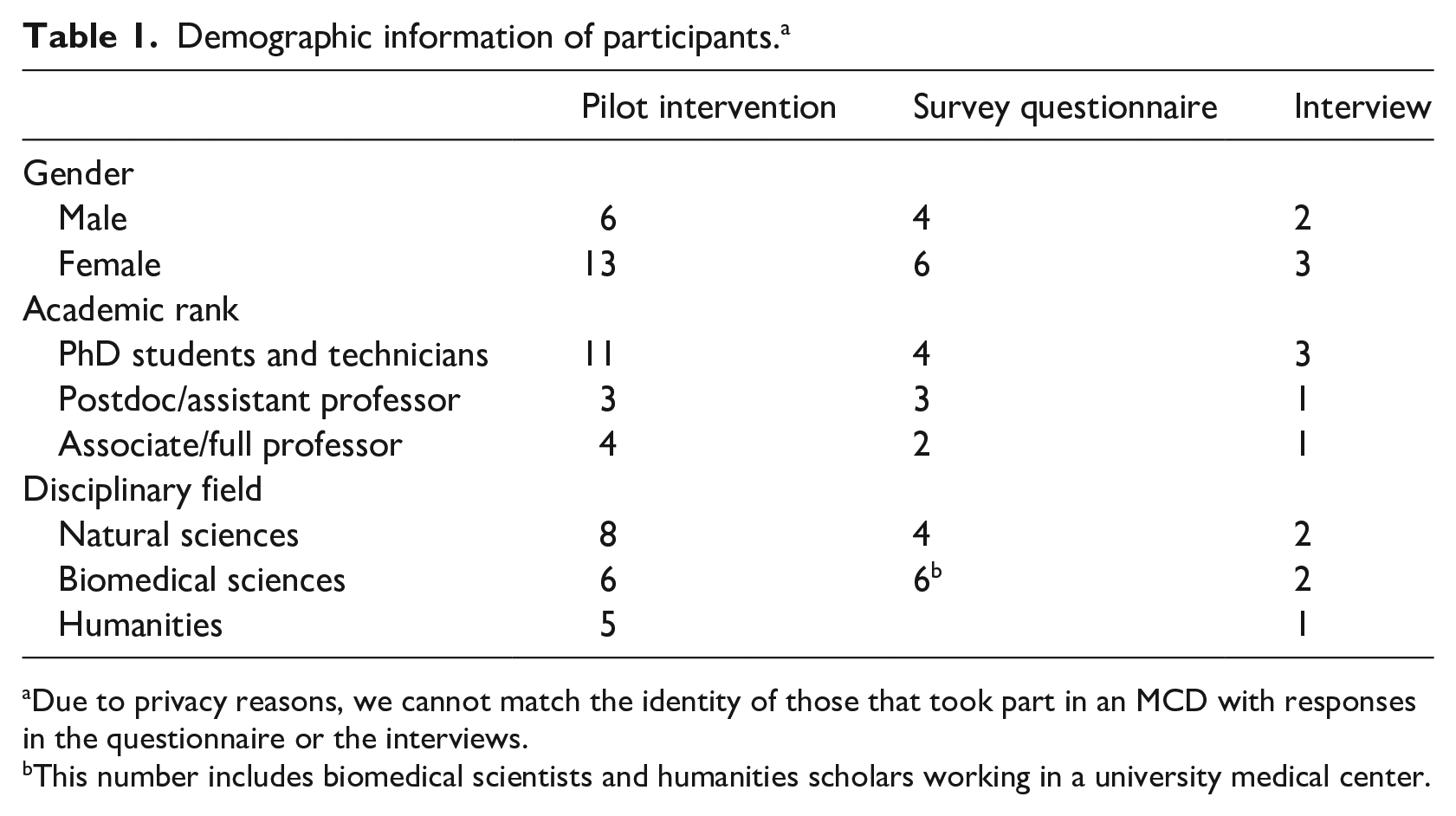
Due to privacy reasons, we cannot match the identity of those that took part in an MCD with responses in the questionnaire or the interviews.
This number includes biomedical scientists and humanities scholars working in a university medical center.
Intervention description
We recruited one group of researchers from each of the three different disciplinary fields. Between February and May 2020, we organized three to four MCD sessions in each group (in two groups, a fourth session had to be cancelled due to conflicting other obligations). We used the Dilemma method for MCD that has been described in detail elsewhere (Molewijk et al., 2008). Before each MCD session, we enquired via email if someone wanted to submit a case and if that did not happen, we did a brief round at the start of each MCD session, enquiring the different cases and then choosing a case through majority voting. MCD sessions lasted approximately 1.5–2 hours. MCDs were guided by a certified MCD facilitator (for the facilitator training, see Stolper et al., 2016).
Setting
The intervention took place in a Dutch mid-sized university and was part of a larger project to investigate the academic research culture in Amsterdam (Haven, 2021). The project explored which aspects researchers considered to promote or hinder research integrity as well as the barriers researchers perceived to conducting research with integrity.
Research team and reflexivity
The MCD sessions were led by TH and JT, with other members of the research team observing. TH, female, was a PhD student at the time; JT male, was an assistant professor, both were employed at the same Dutch university. TH had previously met some participants in the humanities group through teaching, but never collaborated with them. TH conducted the interviews, which was helpful because she had attended all sessions and could follow the specific examples participants referred to.
Materials and measures
To better understand what sort of research integrity dilemmas researchers are confronted with, we made notes during the MCD sessions about the general content of the dilemma discussed (to protect anonymity) and collected the values and norms for each dilemma that was chosen for deliberation.
Prior to taking part in the MCD intervention, participants received an online survey questionnaire. The survey consisted of self-formulated questions and the “Euro-MCD,” which is described below. In the self-formulated questions, we enquired about the extent to which researchers felt capable of navigating research integrity dilemmas as well as the general conditions at the department (the full list of questions can be found in Supplemental Appendix 1). We also asked researchers whether they felt capable of handling research integrity dilemmas. Participants were asked to indicate their agreement with these items on a 5-point Likert scale ranging from “not at all” to “completely.”
We used the Euro-MCD to measure the extent to which participants reported that they learned moral competencies (Svantesson et al., 2014). Moral competence regards the agent’s ability to be cognizant of their own moral values, the moral aspects of a situation, the agent’s capacity to communicate their moral judgment, as well as the capacity to act according to what is considered responsible, and to be accountable for those actions (van Baarle et al., 2017). The Euro-MCD was developed by Svantesson et al. (2014) to evaluate the impact of clinical ethics support. It presents a list of possible outcomes of MCD that are thematically clustered and participants then rate how important these outcomes would be to them and to what extent they experienced these outcomes (de Snoo-Trimp et al., 2020b).
We slightly modified the original Euro-MCD questions by replacing words such as “clinic” with “research.” To check whether the revised items were clear, we asked researchers from the humanities who did not take part in the study to inspect the items for comprehensiveness, which led to no further changes. The Euro-MCD questions were sent after the MCD intervention and enquired to what extent participants observed particular outcomes during the MCD and in everyday research (see Supplemental Appendix 2 for both questionnaires).
To investigate how participants experienced the MCDs and to learn whether and how MCD could be improved, we conducted semi-structured in-depth interviews. These interviews were based on a topic guide (Supplemental Appendix 3) and focused on what participants had learned and how MCD could be improved to help open up the departmental research culture.
Procedure
We obtained the e-mail addresses of the participants from the department heads under the condition that we would only use them with regard to this pilot. We sent participants an information letter, explaining the purpose of the intervention and how we would evaluate the intervention. About 1 month prior to the first MCD, we sent participants the first survey questionnaire (see Supplemental Appendix 1). If they did not complete the survey, we sent two reminders. The surveys started with an informed consent prompt. We sent another questionnaire about 1 month after the last MCD and followed up with two reminders.
After each MCD session, the moderator collected the dilemmas, values, and norms participants brought to the fore. After the final MCD session, we sent an email inviting MCD participants for 30-minute semi-structured interviews via Skype. We sought to recruit 1–2 researchers per MCD group to get a better understanding of their experiences with the MCD sessions. We sent an online informed consent form prior to the interview, where we explained that we would record the interview, transcribe it pseudo-anonymously, and would delete the recordings afterwards. When participants agreed to this, we scheduled online individual interviews which lasted between 25 and 40 minutes.
Analytical methods
In determining whether MCD can help researchers navigate research integrity dilemmas, we used information from different data sources (triangulation) to answer our research question. For the dilemmas presented, we reviewed the notes collected after each MCD and counted which values were mentioned most frequently. The values and dilemmas help determine whether MCD can be carried out in a research group setting, that is, do researchers bring in dilemmas where there is ethical complexity.
The survey data was used to determine whether the intervention was relevant to participants. Survey data were anonymized prior to the data analysis. We used Wilcoxon’s signed rank test to compare participants’ perceptions pre- and post-MCD intervention, as our sample was too small and not normally distributed. Here we compared pre- and post-scores with H0 (α = 0.05) given that there is no difference between participants’ self-assessment regarding their capacity to handle research integrity dilemmas, and their departmental culture, prior to and after the pilot intervention. It should be noted that we do this to examine whether the intervention is perceived as relevant, not whether it is effective. We focused on two subdomains from the Euro-MCD, namely those that pertained to moral competencies, because they were most relevant for this article. For these Euro-MCD items, we calculated means and standard deviations.
The interview data helped us understand how feasible MCD is as an intervention, and how it could be improved. Two authors (TH and JT) independently read and coded the transcripts using ATLAS.ti 8.3.0 for Mac. They first coded in vivo, then clustered these coded passages to look for similarities, and later created broader clusters, which formed the basis of their coding trees. Differences in interpretation between TH and JT were discussed with a third author AM until we reached consensus (Lincoln and Guba, 1985). We used inductive content analysis (Elo and Kyngäs, 2008) and looked for recurring themes in the data (meaning themes were not identified in advance). The analysis was guided by our overall research question, but we also coded what interviewees reported to have experienced during and as a result from the MCDs more generally. We stopped analyzing when the themes had been discussed with the full research team and all members agreed about their importance and comprehensiveness. Figure 1 illustrates our coding tree.
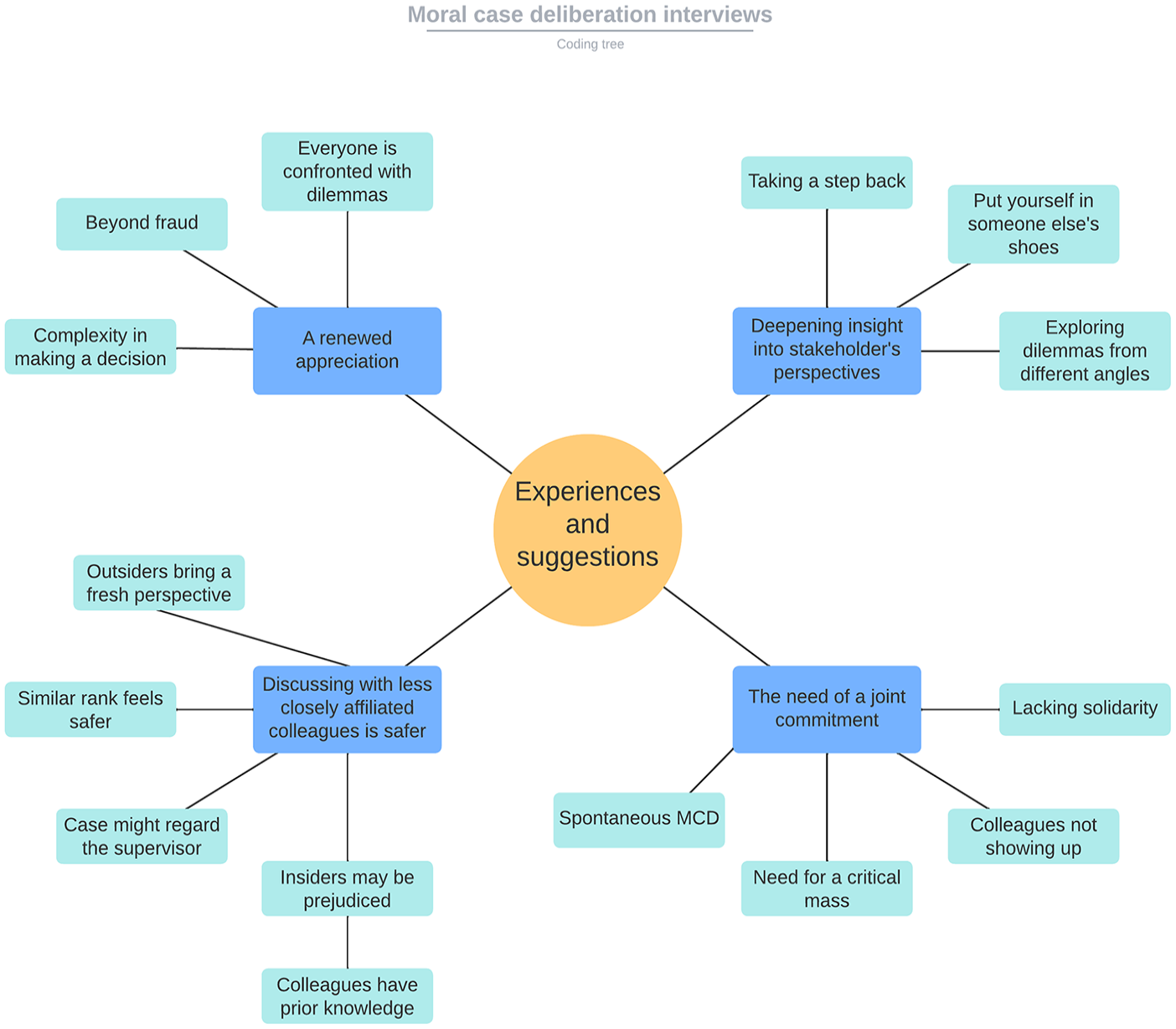
Coding tree for interviews, showing the different themes and subthemes.
Results
Dilemmas and values discussed in the MCD sessions
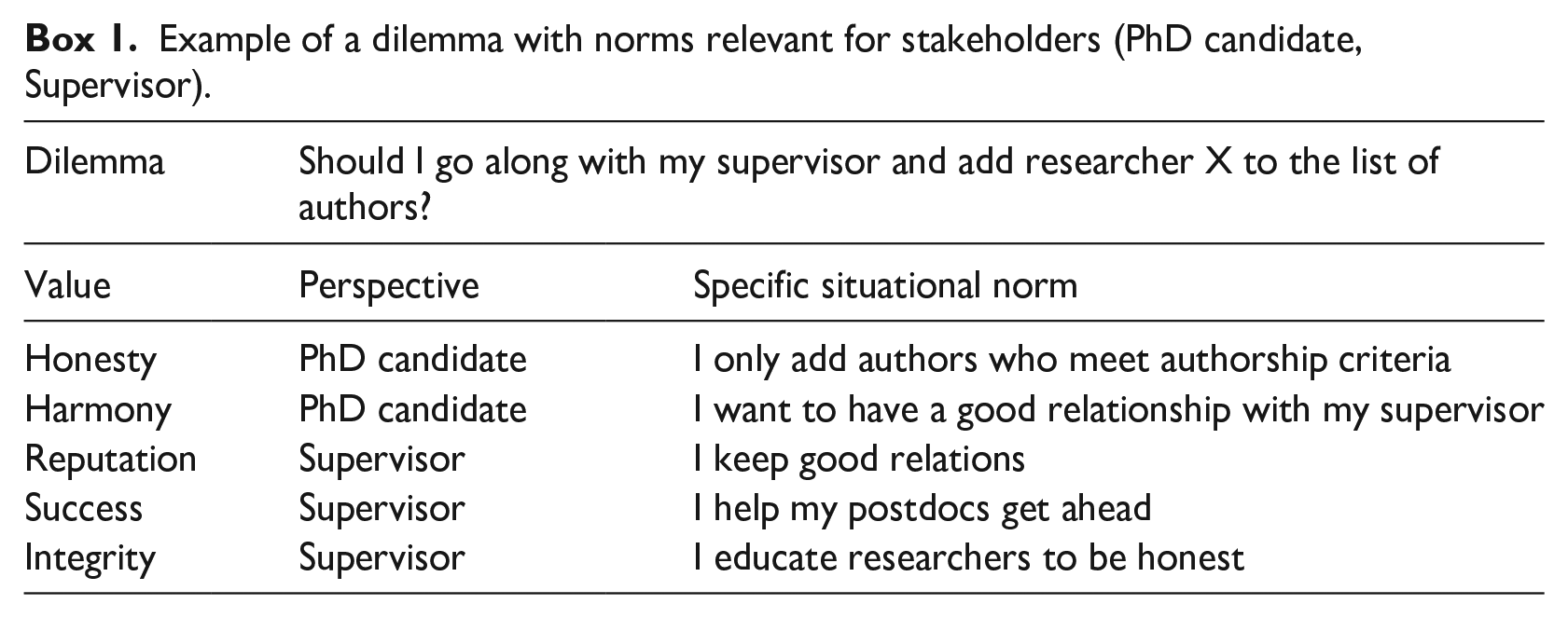
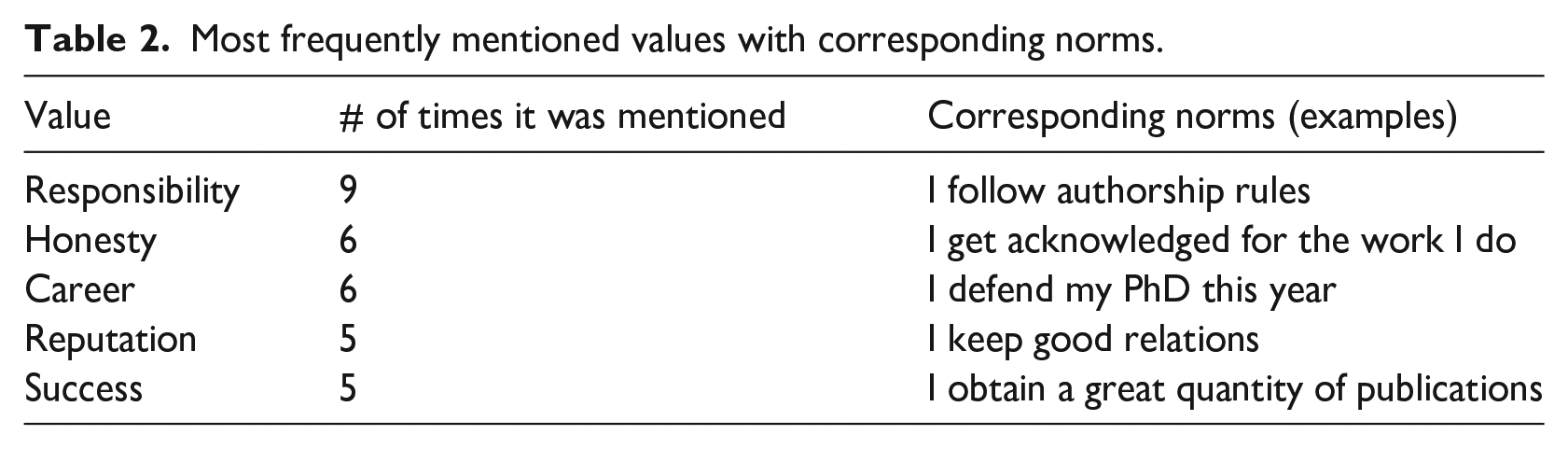
Participants discussed a wide array of dilemmas. We found research integrity dilemmas commonly pertained to authorship (e.g. Should I add author X to my paper? With the values honesty and harmony clashing—see Box 1 for a detailed example), supervision (e.g. How far do I go along with my supervisor’s new ideas? With the values success and loyalty clashing), and handling data (e.g. Can I leave out negative data? With the values honesty and reputation clashing). The most often mentioned values in the dilemmas were: responsibility, honesty, career, reputation, and success (see Table 2). These values were mentioned by participants irrespective of their disciplinary field. The full list of values and norms mentioned during the MCD sessions is provided in Supplemental Appendix 4.
Example of a dilemma with norms relevant for stakeholders (PhD candidate, Supervisor).
Most frequently mentioned values with corresponding norms.
Handling research integrity dilemmas and perceptions of the research culture
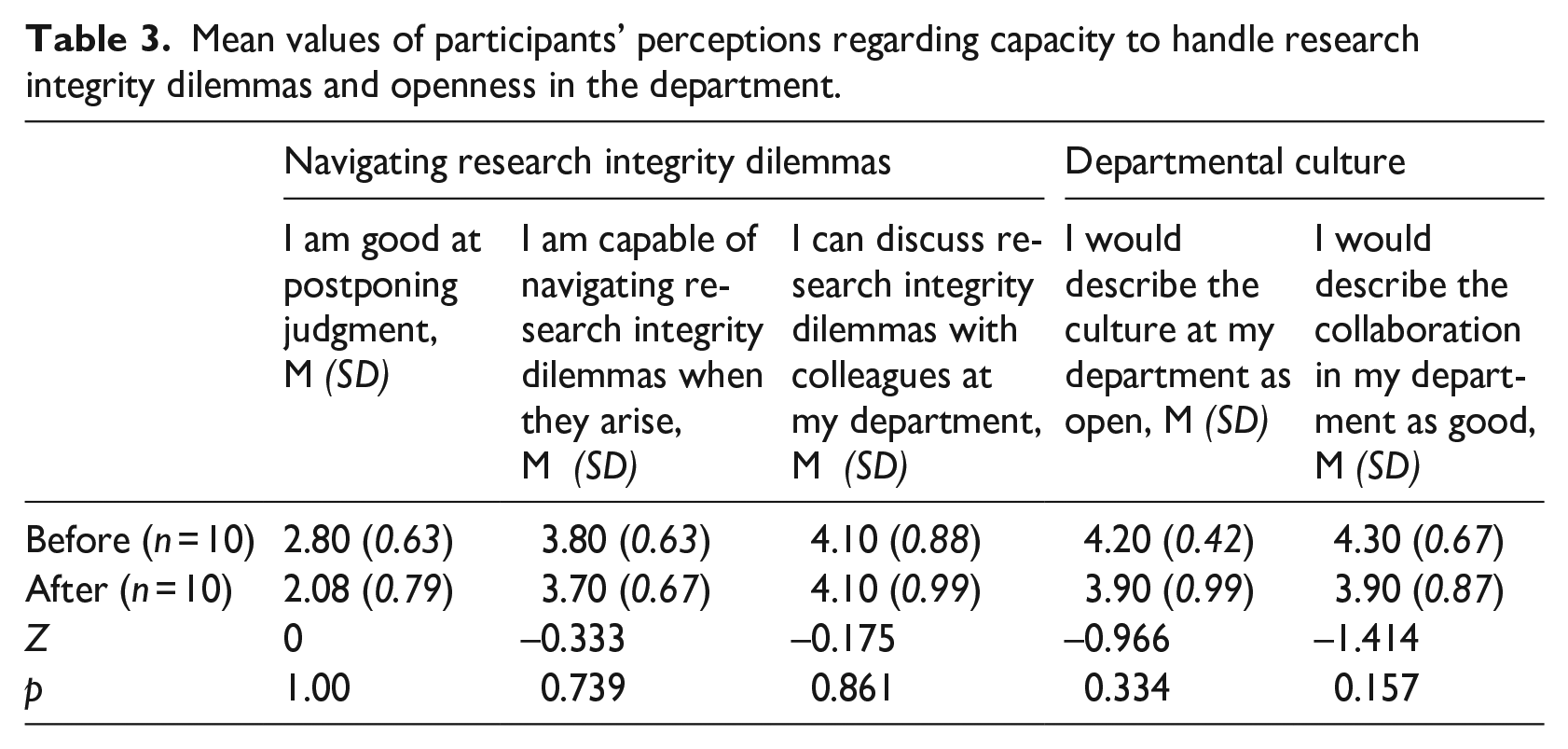
For the five self-formulated items, 10 researchers completed the questionnaire before and after the MCD intervention. We found no significant differences between pre- and post-scores using the Wilcoxon signed rank test. This implies that we cannot reject the null hypothesis that there are no differences in participants’ perceptions pre- and post-pilot intervention regarding their capacity to navigate research integrity dilemmas and their departmental culture. Mean pre- and post-scores can be found in Table 3 below.
Mean values of participants’ perceptions regarding capacity to handle research integrity dilemmas and openness in the department.
Perceived moral competence
With the exception of the potential outcome having to do with enhanced understanding of ethical theories, participants indicated that all potential MCD-related outcomes would be quite important to them. After the pilot intervention, participants reported on the extent to which they experienced particular moral competencies during the MCD and during everyday research afterwards. Participants reported that they experienced the majority of outcomes “to some degree,” with some even “in quite high degree” during the MCD. Participants reported experiencing the majority of these outcomes “to some degree” during everyday research afterwards. Most outcomes were experienced to a higher degree during the MCD sessions; only some outcomes were experienced to a higher degree afterwards in researchers’ everyday research practice. See Table 4 below.
Mean values for experienced moral competence from Euro-MCD during the MCD and during everyday research (enquired after the pilot intervention).
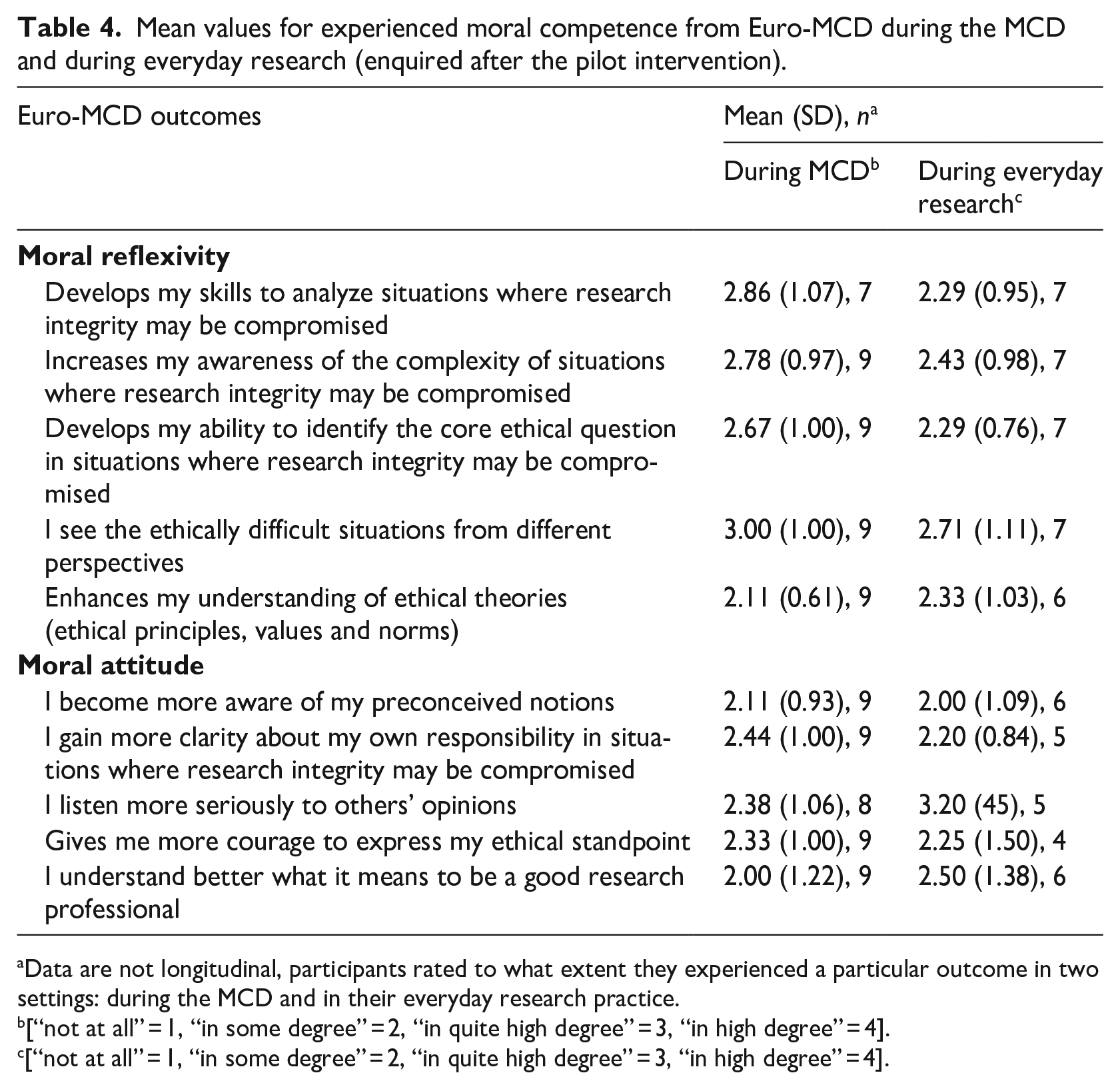
Data are not longitudinal, participants rated to what extent they experienced a particular outcome in two settings: during the MCD and in their everyday research practice.
[“not at all” = 1, “in some degree” = 2, “in quite high degree” = 3, “in high degree” = 4].
[“not at all” = 1, “in some degree” = 2, “in quite high degree” = 3, “in high degree” = 4].
Interview themes
The goal of the interviews was to better understand interviewees’ experiences with MCD and to find out whether and what kind of suggestions there would be for improvement. Below, we describe four themes. The first two themes relate to what interviewees learned through participating in the MCDs, the latter two themes point at conditions for how MCD be improved.
A renewed appreciation of research integrity
Interviewees reported that many of them now realized that research integrity goes beyond falsification, fabrication, and plagiarism, and that there are various subtle issues where it is not clear what is right or wrong. Acting with integrity involves weighing the different pros and cons of the two sides of a dilemma and making a well-considered decision on how to move forward. Through discussing the various dilemmas, participants gained a more nuanced understanding of what research integrity is, how important it is in their work, and had the collective experience that everyone is confronted with research integrity dilemmas in their career.
But it [research integrity] just is an important topic and we pretend it doesn’t exist. . . That is of course exaggerated, but in essence you can only let people feel that it is important by openly talking about it. – Senior researcher 1
Ehm, well, that it [research integrity] is much broader than what people think. Ehm, that it does not only relate to, data fraud or fiddling with numbers, but that it is broader, and [related to cases such as] maybe this person is put more in picture, than, eh – whilst this person has not contributed to the research. Or ehm, or, or someone is forced into a certain line [of research] that they don’t want. That is more an integrity question than a fraud case. . . – Junior researcher 1
MCD as deepening insight into stakeholders’ perspectives
Interviewees appreciated the fact that the MCD method invited them to reflect and take a step back. The method challenged them to think more profoundly about why they felt a particular action was the right action. They felt MCD was a helpful tool that unveiled and promoted their understanding of the different perspectives that played a role in research integrity dilemmas.
. . . For a lot of things, a systematic approach, right? Sit down, take a step back, how, what are all the different sides to this? Eh, without directly jumping to solutions. Because sometimes you shouldn’t come with solutions as a head of department, others should come with a solution. – Senior researcher 2
. . .for instance, in. . . the last MCD that we did, in the beginning it was really hard to understand what. . . one of the stakeholders was thinking or eh, yes, have in mind what their motivations were. But once we actually addressed this, it was so much easier to empathize with them. So I think this is something that can also be applied more generally. If there is a problem to think about, well, what is, what are the values driving this person and how can we come to an understanding. – Junior researcher 2
Discussing dilemmas with not closely affiliated colleagues is perceived as safer
Interviewees emphasized the importance of perceiving that the setting was safe to share research integrity dilemmas. Factors that played a role in whether the setting was perceived as safe was, among other factors, the composition of the group, that is, if participants were all from similar ranks, meaning there were no supervisors present during the deliberations, this contributed to a safe atmosphere according to some participants. Another factor was the connections that participants had to one another, as they were more inclined to be open with colleagues with whom they did not work directly. Interviewees also expressed that they felt that “outsiders” bring a fresh perspective to the case, whereas insiders may have prejudices toward certain people involved or insiders may find it hard to suppress prior knowledge about the case. Those who did feel they could be open in an MCD, also acknowledged that the other participants were colleagues they did not work with on a day-to-day basis.
And I also think that it was a good setup to, ehm, discuss in a group of people you do not know directly, to discuss this freely. Because of course it is sometimes difficult to discuss something like this with direct colleagues, or if your supervisor is there. Then some things would have been left unsaid. . . – Junior researcher 1
Y: In a small group so to speak, I would be more inclined to be open than in a large group whereas you really, uh, address one another. Yes, also to protect other people or something, I don’t know, but yeah, I don’t have a clear answer. . .
Interviewer: Yes, you just indicated that these weren’t researchers from your own group.
Y: Yes.
Interviewer: To what extent do you believe it would be different if they had been from your own group?
Y: Yeah, I think, maybe it would have been more difficult, whereas in this case, it was of course interesting that there were a few people from the same group. – Senior researcher 1
The need of a joint commitment
Participants noted that some colleagues only showed up for one session (instead of the requested three to four) or none. This gave interviewees the perception that they lacked solidarity, especially the more senior researchers that did not attend (all) sessions. Early career researchers acknowledged that the sessions were presumably too long for the busy agendas of senior researchers. Yet, to them it felt as those researchers that did not show up thought that reflecting on research integrity dilemmas was not useful or important enough, which in turn decreased the enthusiasm among those who did show up. As such, interviewees noted that they needed to feel supported in participating in MCDs by those higher up. Interviewees also saw opportunities for shortening the net time spent on an MCD, but only if a substantial number of colleagues (“critical mass”) were already familiar with MCD. Some interviewees also saw opportunities for organizing an MCD on the fly or using parts of the method during a difficult departmental meeting.
Those people [beyond PhD candidate level] are not going to make time for it, they just don’t have that time – you noticed. . . It’s difficult because it’s not that they don’t, it’s, it’s impossible for those people to just, ehm, free up to hours of their time, so it is a bit unrealistic. . . – Junior researcher 3
. . . you need time for this, I think that’s most important. You can’t just walk in and say, hey, let’s do some – you need to be acquainted with one another, you need to be familiar with the method, then it shouldn’t need to take long. . . Ehm, but you can’t just out of the blue go on about separating values and writing it down, if you know what I mean. You need to invest time in that, in the setting of a meeting or whatever. Ehm, and then you need a critical mass, I believe, to get it on the agenda in a pleasant way. – Senior researcher 2
Discussion
We conducted a pilot intervention study where we used MCD to discuss research integrity dilemmas. Our research question was: to what extent is MCD feasible as a method to navigate research integrity dilemmas in practice? Participants most often deliberated over dilemmas having to do with authorship, supervision of junior co-workers, and questionable handling of data. Participants found almost all the potential outcomes of MCD quite important and experienced them to a greater extent during the MCD than in daily practice. Some outcomes were experienced to a greater extent in daily research practice, such as understanding what it means to be a good research professional, suggesting that MCD has some relevance for researchers. Interview participants urged us to think about the hierarchy existent in research groups and how these hierarchies may undermine open deliberation.
Participants practiced moral reasoning during the different phases of the MCD. They indicated some staying power of the MCD intervention as indicated by interviewees’ reflection on how MCD helped improve their insights into stakeholders’ perspectives as well as better understanding the inherent complexities in research integrity dilemmas. Many values that played a role in the dilemmas also featured in codes of conduct for research integrity. For example, the European Code of Conduct (ECoC) (ALLEA (All European Academies), 2017) mentions Honesty as a fundamental principle of research integrity, which is defined as “Honesty in developing, undertaking, reviewing, reporting and communicating research in a transparent, fair, full and unbiased way” (p. 4). According to the MCD participants, the value of honesty corresponded with norms such as “I should be able to defend the data interpretations in my PhD” and “I report my results truthfully.” Here we see that the norm discussed during the MCD is more concrete compared to the ECoC norm. Another frequently mentioned value was Responsibility, which is defined by the Netherlands Code of Conduct (Netherlands Code of Conduct for Research Integrity, 2018) as meaning “[. . .] among other things, acknowledging the fact that a researcher does not operate in isolation and hence taking into consideration – within reasonable limits – the legitimate interests of human and animal test subjects, as well as those of commissioning parties, funding bodies and the environment. Responsibility also means conducting research that is scientifically and/or societally relevant” (p. 13). For our MCD participants, norms that make this concrete were “I should report what I find” and “I should spend grant money wisely” or “I should follow the rules of authorship.” Again, we observe a different, more concrete interpretation of responsibility in the MCD compared to the ECoC and Netherlands Code of Conduct.
MCD has been evaluated intensively lately in different contexts and with varying results. For example, Silén et al. (2015) found a similar method to not increase the moral reasoning skills of psychiatric staff. Weidema et al. (2013) found that structural use of MCD increased the critical thinking of health care professionals in mental health care. Haan et al. (2018) found that MCD brings about changes for the professional in interprofessional interactions. Stolper et al. (2016) found the method to work well in educating students about ethics in clinical settings. Huysentruyt et al. (2023) studied the use of MCD in Dutch prisons and found that a series of MCD strengthened to some degree the moral craftsmanship of employees working in prison. However, it should be noted that these studies concern ethical issues in patient care, education, or prison. MCD for research integrity has a different scope and deals with different ethical issues not related to individual patient care.
Interviewees emphasized that the atmosphere during the MCD sessions should be perceived as safe so that they could be open about their own views on research integrity dilemmas. Whereas we wanted to conduct this pilot to foster openness, safety being an important precondition for openness underscores that MCD cannot just be implemented wherever—a finding also known from other research ethics training and reflection (see e.g. van Baarle et al., 2019). Interestingly, psychological safety has previously been linked to high-quality research with principal investigators reiterating its importance as a construct to support research integrity (Antes et al., 2019).
Relatedly, junior interviewees on the one hand mentioned that they felt safer discussing their dilemmas when their supervisors were not present. On the other hand, they mentioned that it was important to have a joint commitment, meaning supervisors were also committing to attending and participating in the MCDs. One way to mitigate this might be to have supervisors attend only a subset of sessions that PhD candidates attend. However, there are other approaches described in the literature where PhD candidates and supervisors reflect on ethical issues together. Whitbeck (2001) described an intervention she called group mentoring that was positively evaluated. In this method, a discussion leader prompts a group with a scenario and asks the group to reflect on whether there is ambiguity in the situation, and what the protagonist can or should do (Whitbeck, 2001). A key difference may lie in the fact that although the scenarios used were based on real cases, they were nevertheless not directly brought in by the participating group members. Some distance from the actual dilemma could help participants being more open and perceiving the atmosphere as safer.
A different emerging finding regards the commitment among participants. This was already evident during the intervention itself where sessions in two groups had to be cancelled because of conflicting appointments. This struggle with commitment was also evident from the survey responses and the reflections in the interview. One could interpret this as an indication that the method should be shortened. However, trying to postpone judgment and zoom in on the complexities of a situation, which both take time, is precisely at the core of MCD. That said, it could be useful to see if groups become faster with practice so that the time they take at the beginning would pay off later.
Strengths
This is the first pilot using MCD to deliberate research integrity dilemmas among academic researchers using real-life dilemmas from their research practice. We used principles of triangulation, bringing insights together from different types of data (survey, observation, interviews) to get an understanding of how researchers evaluated this pilot. That the intervention took place in the work context is part of a larger movement to bring debates about research ethics and research integrity directly to the work floor (Kalichman and Plemmons, 2018; Plemmons and Kalichman, 2018).
Limitations
The major limitation of our pilot intervention is that a limited number of participants took part, both in the intervention and in the evaluation. Because interviewees remarked that this had to do with the substantial time investment, it might be useful to consider other ethics support tools that require less time and still contribute to moral reflection and moral learning. This might include, for example, developing a heuristic moral compass that can be used by individuals (Hartman et al., 2019a) or using one of the five short reflection exercises on research integrity that rely on a virtue-based ethics approach (The Embassy of Good Science, 2022).
In addition, the impact on the research culture of MCDs is probably limited when they are part of a one-time pilot, compared to when they are incorporated into ongoing departmental meetings (Hartman et al., 2019b).
Another limitation is the use of a statistical test in a pilot study where we did not compute non-parametric power calculations beforehand. We are aware that this is an underpowered study. The results of the Wilcoxon test should therefore be interpreted with great caution and should only be used to indicate that some aspects of MCD may be perceived as relevant by participants and not whether MCD was an effective intervention.
Finally, the Euro-MCD was revised and validated whilst we were conducting this pilot study (de Snoo-Trimp et al., 2020a, 2020b). In our study, we used a version of the Euro-MCD that was not validated yet, limiting the validity of our moral competencies’ findings.
Conclusion
Participating in MCD sessions could be considered a helpful tool for developing moral competencies to navigate research integrity dilemmas. Participants in our pilot study brought in dilemmas with more concrete norms than the formulations found in Codes of Conduct. Respondents also mentioned that MCD could help in dealing with the inherent normative ambiguity of research integrity in concrete situations. At the same time, discussing research integrity dilemmas can be precarious and discussing dilemmas with peers (instead of direct colleagues or supervisors) was perceived as safer. We conclude that an intervention using MCD can be done, but that substantial revisions should be made to ensure safety among participating researchers in discussing dilemmas.
Supplemental Material
sj-docx-1-rea-10.1177_17470161231198402 – Supplemental material for Can moral case deliberation in research groups help to navigate research integrity dilemmas? A pilot study
Supplemental material, sj-docx-1-rea-10.1177_17470161231198402 for Can moral case deliberation in research groups help to navigate research integrity dilemmas? A pilot study by Tamarinde L Haven, Bert Molewijk, Lex Bouter, Guy Widdershoven, Fenneke Blom and Joeri Tijdink in Research Ethics
Supplemental Material
sj-docx-2-rea-10.1177_17470161231198402 – Supplemental material for Can moral case deliberation in research groups help to navigate research integrity dilemmas? A pilot study
Supplemental material, sj-docx-2-rea-10.1177_17470161231198402 for Can moral case deliberation in research groups help to navigate research integrity dilemmas? A pilot study by Tamarinde L Haven, Bert Molewijk, Lex Bouter, Guy Widdershoven, Fenneke Blom and Joeri Tijdink in Research Ethics
Supplemental Material
sj-docx-3-rea-10.1177_17470161231198402 – Supplemental material for Can moral case deliberation in research groups help to navigate research integrity dilemmas? A pilot study
Supplemental material, sj-docx-3-rea-10.1177_17470161231198402 for Can moral case deliberation in research groups help to navigate research integrity dilemmas? A pilot study by Tamarinde L Haven, Bert Molewijk, Lex Bouter, Guy Widdershoven, Fenneke Blom and Joeri Tijdink in Research Ethics
Supplemental Material
sj-docx-4-rea-10.1177_17470161231198402 – Supplemental material for Can moral case deliberation in research groups help to navigate research integrity dilemmas? A pilot study
Supplemental material, sj-docx-4-rea-10.1177_17470161231198402 for Can moral case deliberation in research groups help to navigate research integrity dilemmas? A pilot study by Tamarinde L Haven, Bert Molewijk, Lex Bouter, Guy Widdershoven, Fenneke Blom and Joeri Tijdink in Research Ethics
Footnotes
Acknowledgements
We would like to acknowledge all pilot intervention participants for their willingness to participate, and for their openness and patience.
Author contributions
TLH, JT, BM, GW and FB conducted the pilot. TLH, JT, BM, GW and LB designed the study. TLH wrote the first draft. TLH and JT analysed the data, BM verified the interpretations. All authors gave feedback and helped revise the manuscript. All authors approved the final version.
Data availability statement
Data cannot be shared publicly because of participants’ privacy. The pseudonymized personal data is available for research purposes only under a data transfer agreement to ensure that persons authorized to process the personal data have committed themselves to confidentiality and the receiving party agrees that the pseudonymized personal data will only be used for scientific research purposes.
Funding
All articles in Research Ethics are published as open access. There are no submission charges and no Article Processing Charges as these are fully funded by institutions through Knowledge Unlatched, resulting in no direct charge to authors. For more information about Knowledge Unlatched please see here:  . When conducting this pilot, LB, JT, and TH were funded by Templeton World Charity Foundation (grant number #TWCF0163/AB106).
Supplemental material
Supplemental material for this article is available online.
References
Supplementary Material
Please find the following supplemental material available below.
For Open Access articles published under a Creative Commons License, all supplemental material carries the same license as the article it is associated with.
For non-Open Access articles published, all supplemental material carries a non-exclusive license, and permission requests for re-use of supplemental material or any part of supplemental material shall be sent directly to the copyright owner as specified in the copyright notice associated with the article.
