




Abstract
This article analyses whether Brazilian graduates feel that their higher education programmes have contributed to the development of civic competences (ethics, critical thinking and respect for diversity), necessary to become active citizens in a democratic and fair society. The analysis considers disciplines and students’ socioeconomic and cultural background, employing official data (2014, 2015 and 2016) from the National Test of Student Performance (Enade). Findings show that students of higher socioeconomic backgrounds tend to concentrate in programmes which lead to more prestigious and powerful positions in society. Curiously, it is these students who feel less confident that their degree contributed to the development of the above civic competences than their colleagues from lower socioeconomic backgrounds. These findings question whether higher education fulfils its mission to promote holistic human development for all students. These competences are particularly critical for privileged students who will be better positioned professionally to tackle societal injustices.
Introduction
Demands of the 21st century citizenship require that higher education prepares students to face an increasingly complex and connected world. Students are supposed to become more flexible, innovative, multitaskers, able to use complex ideas and information, make difficult decisions and solve problems. Assuming that higher education has an important role in empowering students to become active leaders and part of the solution to tomorrow’s problems, it is imperative to ask whether graduates are learning the necessary skills to navigate an uncertain future (Franco et al., 2015). Monteiro et al. (2019) claim that a key role of higher education is to promote students’ abilities to select information ethically and critically, encouraging them to search, find and filtre information from a large range of unorganised materials. Ethical and critical thinking should be fostered while promoting respect for diversity, including racial diversity (Cokley et al., 2010). Higher education has therefore the responsibility to train students to know how to use information with ethical judgement and critical sense and how to analyse complex systems – social, economic and political – through the adoption of ethical and rational principles in a world marked by racial, gender, cultural and economic diversity (Cokley et al., 2010; Franco et al., 2018).
The development of such competences presupposes that higher education embraces a broad human development mission, through a holistic education, which includes the preparation of students to participate actively in society, as envisaged by Newmann’s and Dewey’s ideas (Harkavy, 2006; Zgaga, 2009). In this paradigm, higher education is a public good (Walker, 2012) and contributes to the improvement of society by developing students’ awareness and sensitivity to real-world problems such as inequality, discrimination, or human rights abuse and, in this way, enabling them to actively participate in fighting injustice (Walker, 2010, 2012). However, the dominant economic and instrumental purpose attributed to, and also adopted by, higher education in the past decades made visible a tension between economic competitiveness and social cohesion (Harkavy, 2006; McCowan, 2012; Suspitsyna, 2012; Walker, 2010, 2012; Zgaga, 2009). Educational policies inspired by neoliberal thinking led to a preoccupation with efficiency, accountability and measurable outputs. In this context, league tables have become important, but indicators neglect issues such as equality, citizenship or democracy, focusing on more tangible outcomes such as research productivity, patents, employability, etc. As a result, higher education is now pursuing commercialisation, knowledge transfer, skills match with labour market needs, economic profitability from research and third mission activities. Suspitsyna (2012) refers to the transformation of the university from a social organisation to an industry. In the knowledge economy, higher education is valued for its contribution to economic competitiveness and the direct economic benefit brought by the development of human capital and knowledge. This shift in the missions of higher education also influences how students are educated and what these attribute value to. According to Harkavy (2006), the current priorities of higher education institutions legitimise students’ pursuit of economic self-interest and a widespread sense that higher education serves only to acquire career skills and credentials. Students become disengaged from the ideals of a fairer and just society, when they see their institutions functioning as ‘entrepreneurial, ferociously competitive, profit-making corporations’ (Harkavy, 2006: 14). A consequence is that students are formed to play their economic role in society, leaving ‘broader university objectives of personal development and the social good seriously out of balance’ (Walker, 2010: 488). Suspitsyna (2012) claims that this represents a neoliberal model of citizenship, with little prospect of teaching students how to participate in noneconomic causes for the good of the society.
In the context of developing countries, such as Brazil, where socioeconomic inequality, disrespect for human rights and social injustice are serious problems, higher education may play an important role in training undergraduates who do not only meet economic needs, but are also capable of addressing issues of social cohesion, human development and inclusive political institutions. This is essential to address the great global challenges of maintaining democracy (Levitsky and Ziblatt, 2018) and its important pursuit of justice (Sandel, 2020) and of equity (Piketty, 2019). The developing nations’ failures to reach a satisfactory level of development are closely related to shortcomings in these aspects (Acemoglu and Robinson, 2012).
The reality of Brazil, for example, provides strong evidence of the contradictions between economic versus social goals. While being in the top 10 of the world’s largest economies in the last decade, Brazil is one of the most unequal countries in the world. In 2017, Brazil’s GDP was approximately USD 3.3 trillion, larger than that of countries such as Russia, Canada, Australia and Spain. In terms of income distribution, however, even after some improvement in recent decades, Brazil is still the tenth worst country, as measured by the Gini coefficient (World Bank, 2020). In 2017, there were 55 million Brazilians living below the poverty line, subsisting on up to USD 5.50 per day, accounting for a quarter of the country population (IBGE, 2018). This vast inequality is also reflected in the maintenance of elite access to higher education. Social context is still a strong conditioning factor and most students from lower-income families enrol in lower-quality, lower social status institutions, courses and modes of education. According to the Brazilian Institute of Geography and Statistics (IBGE, 2018), in 2015, 45.22% of Brazilians declared themselves white, 45.06% as brown (mixed race) and 8.86% as black. Participation rates, however, evidence racial discrimination: while 30.7% of the young white population was enrolled in higher education in 2018, black and brown students were significantly below, with only 15.1% and 16.3% enrolled respectively (Todos pela Educacao, 2019). Among those who completed high school, only 33% of black and brown students entered higher education, compared to 52% of white students (IBGE, 2018). Moreover, the existence of disparities in the participation of groups of different socioeconomic levels in federal state institutions indicates the existence of inequality of opportunities in the system: in these institutions, which are free and also the most prestigious ones, only 20% of students come from the bottom two wealth quintiles of the population, while 65% are from the top two quintiles (World Bank, 2017). Therefore, the current expansion of higher education is reproducing the inequalities present in Brazil as a whole. For example, while only 4% of the graduates of the competitive medical programmes have mothers with poor education, more than 50% of graduates of the social work programmes that do not generate positional goods have mothers without higher education (McCowan and Bertolin, 2020).
Brazil is an important example of a country which confronts itself with the emerging global phenomenon of endangered democracies. Thus, as in the USA or in European countries like Hungary and Poland, a nationalist and far-right government was elected in 2018. Supported by (pseudo)liberal groups and evangelical conservatives, Brazil’s president used the urgency of fighting corruption and crime as justification for ‘political radicalisation’, proposing policies that disregard science, that promote intolerance and disrespect for human rights, minorities and diversity. For example, as Brazilian society is well aware, the current government of President Bolsonaro encouraged the use of ineffective medicines and made it difficult to acquire vaccines during the COVID-19 pandemic, reduced resources for scientific research and systematically denies global warming, neglecting the inspection of fires in the Amazon rainforest.
Meanwhile, international organisations have highlighted the importance of educational systems addressing issues of citizenship, values and attitudes. Among the United Nations Sustainable Development Goals (UN, 2015), the concept of global citizenship proposes a strong defence of tolerance and mutual respect in order to nurture peace and prosperity, which thrive in democratic societies. In this context, Brazilian higher education has the opportunity to foster the values of freedom and plurality which can significantly contribute to fight threats to democracy. This article analyses Brazilian graduates’ perceptions of competences related to citizenship, ethics, critical thinking and respect for diversity acquired during higher education. The study is guided by the following research question: are students prepared to take up a role of active citizenship in society? To answer this question, the paper analyses the civic competences that Brazilian graduates consider they developed in higher education and whether there are differences in perceptions by discipline and by students’ socioeconomic and cultural background. In doing so, the article provides insights into the extent to which higher education serves to expand civic awareness. The study additionally questions the level of equity present in Brazilian higher education, leading to implications for future policy developments in the fourth largest higher education system in the world.
Civic competencies
Developing citizenship is a relatively recent concern in higher education, previously relegated to lower schooling levels (Englund, 2002). The massification of higher education in the late 20th century signalled its potential to support civic participation, democracy, social cohesion and social justice. Depending on the degree of political maturity, citizenship has been pursued as the formation of democratic dispositions (in new democracies) and as the strengthening of civic participation and political involvement to achieve fair and just societies (in established democracies) (Biesta, 2009).
Citizenship is a complex and multifaceted attribute which implies a number of dispositions, behaviours and values. According to Hoskins et al. (2006), the key dimensions of active citizenship are participation in political life, in civil society and in the community (Hoskins et al., 2006). The first two imply political action: participation in political life includes conventional activities in the sphere of the state, for example, voting or participating in party activities, while participation in civil society includes nongovernmental political action such as protest, involvement in human rights organisations, environmental organisations and trade unions. In contrast, participation in community life implies activities that are less political in nature and meant to support the community, such as those undertaken within religious, business, sport, cultural or social organisations. Active citizenship, although expressed in individual action, is considered to benefit the society and community at large (Hoskins and Mascherini, 2009). These authors purport that ‘the role of active citizens within social cohesion is to be the force involved in maintaining the values of equality and diversity through the activities of civil society’ (Hoskins and Mascherini, 2009: 463).
Ethical boundaries set the limits of active citizenship, since citizens’ activities should not contravene principles of human rights and the rule of law. Thus, participation in extremist groups that preach intolerance and violence should not count as active citizenship (Hoskins et al., 2006). In this respect, Biesta (2009) refers to a consensus notion of democracy. A question arises about what should happen when the ‘borders’ of the democratic order are being contested (Biesta, 2009) and how far unconventional protest and forms of active citizenship can be allowed within a socially cohesive society (Hoskins and Mascherini, 2009). Biesta (2009) calls for a notion of citizenship that recognises the role of conflict and that ‘allows for forms of political agency that question the particular construction of the political order’ rather than aiming at the reproduction of the existing order. Similarly, Suspitsyna (2012) claims that contestation lies at the heart of democracy given individuals’ conflicting interests and values, for which reason, she argues, democracy is agonistic, that is based on the acceptance of conflict and confrontation as a legitimate part of politics.
Universities are seen as safe spaces for citizenship production where, through interaction with peers and teaching staff, students can learn from and negotiate diversity, experiment with political ideas and practices, debate controversial topics that encourage reflection and criticality, consider various viewpoints and learn tolerance and respect for the other (Cheng and Holton, 2019; Englund, 2002; McCowan, 2012). According to Suspitsyna (2012), the scientific ethos of universities is convergent with the agonistic model of democracy which allows questioning and contestation: ‘Preparing students for agonistic citizenship requires teaching them how to draw on their identities to tirelessly scrutinize, doubt and challenge the naturalness and inevitability of dominant discourses and their consequences’ (Suspitsyna, 2012: 67). Nussbaum refers to three capacities that higher education should develop: critical self-examination, a sense of world citizenship and the narrative imagination (Nussbaum, 1997). This latter is ‘the ability to think what it might be like to be in the shoes of a person different from oneself’ (p.10), similar to what Annette (2005: 336) refers to as ‘affective learning and the growth from simple modes of thinking and feeling to more complex ways’.
John Dewey’s ideas have been influential in developing the link between higher education and citizenship (Harkavy, 2006; Zgaga, 2009). Dewey believed that learning was most effective when people worked together to solve specific real-world problems (Harkavy, 2006). Harkavy (2006) therefore suggests confronting students with universal problems manifested in their community, which pose dilemmas and alternatives, for example poverty, unequal education, unequal health care or substandard housing (Harkavy, 2006). As a result, the acquisition of civic competences in higher education is frequently associated with active experiential learning in the form of service- or community-learning which focuses on significant, real, community-based problems and brings students and the surrounding community together (Annette, 2005; Harkavy, 2006; McCowan, 2012). Annette (2005) argues that service-learning builds character as it helps students understand, through experience, abstract moral thinking and encourages them to reflect on their civic engagement activity. They also become sensitive to the public good, human welfare and social justice (Harkavy, 2006). Matto et al. (2017, 2021) provide examples of how institutions around the world are teaching active citizenship. An example from Brazil is provided by Minillo and de Menezes (2021) in their description of an outreach project in which the university engaged with the local community in a project connecting the United Nations’s Sustainable Development Goals with local issues.
For individuals to become active citizens and contribute to the well-being of their community and society, they have to learn civic competences. According to Deakin Crick (2008): 313) competence designates ‘a complex combination of knowledge, skills, understandings, values, attitudes and desires which lead to effective, embodied human action in the world, in a particular domain’. In the domain of citizenship, the European Reference Framework of Key Competences for Lifelong Learning describes civic competence as equipping individuals to fully participate in civic life, based on knowledge of social and political concepts and structures and a commitment to active and democratic participation (European Council, 2006). According to the same document: Skills for civic competence relate to the ability to engage effectively with others in the public domain, and to display solidarity and interest in solving problems affecting the local and wider community. This involves critical and creative reflection and constructive participation in community or neighbourhood activities as well as decision-making at all levels. . . Full respect for human rights including equality as a basis for democracy, appreciation and understanding of differences between value systems of different religious or ethnic groups lay the foundations for a positive attitude.
Pluralism and respect for difference, an ethical mindset, ability to think critically and to act within a diverse context, and empathy that allows understanding others thus emerge as dimensions of civic competences.
Ethics, critical thinking and diversity
Although ethics may be considered intrinsic to higher education, its visibility is not always evident in the curriculum. Indeed, many departments have only recently accommodated within their curricula the moral issues relevant to their disciplines. Attention to ethics in the higher education curriculum was triggered by some factors highlighted by Illingworth (2004). On the one hand, there is substantial media interest in issues related to professional ethics, in some cases driven by public criticism of some professionals. On the other hand, the pressure to teach ethics has also derived from benchmarking statements, requirements of professional associations and the more general goal to provide students with key transferable skills. However, ethics across the curriculum can take different forms and apparently is not something widespread. Whereas a pragmatic approach focuses on professionalism as a behaviour constrained by a previously agreed code of conduct, an embedded approach emphasises students’ self-identity through a holistically presentation of moral issues. A theoretical approach places an understanding of moral theory at the heart of ethics teaching and learning through a theoretical discipline exploring key moral theories, principles and concepts and subjecting them to critical appraisal (Illingworth, 2004; Matchett, 2008). According to Matchett (2008), ethics across the curriculum is not widespread because of lack of time and lack of expertise, which is reflected in the uncertainty about the criteria that might be used to fairly assess students’ ethical thinking. As aforementioned, the neoliberal paradigm prioritises efficiency, economic benefits, measurable outputs, leaving little space and time for less tangible outcomes. Despite all the difficulties that might be encountered in the implementation of ethics across the curriculum, Ozar (2001) has specified some ideal learning outcomes for undergraduates: knowledge of an array of values, principles and ideals, potential conflicts among those; facts that are especially relevant to ethical decision-making in specific areas and a core set of useful conceptual tools; and skills in multiple perspective taking, and formulation of logical arguments.
Critical thinking has also been identified by educators and employers as an essential learning outcome of civic education (Butler and Halpern, 2012; Franco et al., 2015, 2018; Halpern, 2014). Although there is no consensual definition of critical thinking, some similarities can be found. Critical thinking implies scrutiny before accepting any claim as true, assessment of the strength and credibility of the information and consideration of alternative explanations, openness to rethink beliefs and knowledge in face of information that does not confirm previous beliefs and a priori knowledge (Franco et al., 2015, 2017: 707; Barnett, 1997). Empirical evidence has shown that critical thinking can be enhanced through courses specifically designed to teach thinking skills or through instructions embedded in other courses (Moseley et al., 2005). Yet, although a set of intentions, guidelines and goals to include critical thinking in the curriculum is identifiable, these do not always translate into clear measures and teachers’ practices (Arum and Roksa, 2011; Franco et al., 2018). To create critical thinking opportunities, higher education institutions should bring it not only to the classroom, but also to the institutional discourse and the academic environment itself (Franco et al., 2018).
Diversity and respect for diversity are also essential for civic engagement education. Expressed in individual differences (personality, learning styles, life experiences) and group/social differences (race/ethnicity, class, gender, sexual orientation, country of origin, cultural, political, religious, etc.), diversity has been found to enhance critical and complex thinking in higher education, positively impacting educational outcomes (Cokley et al., 2010). Specifically, racial diversity in higher education was found to improve racial understanding and perspective taking (Gurin et al., 2003), cultural awareness, cognitive openness and attitudes favouring equal opportunity (Cokley et al., 2010).
Data and analysis
For a society to be considered socially fair and politically stable, it is essential that all students receive quality education, regardless of their social and economic background or of their higher education programme. Assessing whether the education received by students from different social groups and from different programmes teaches civic competences can generate evidence about higher education’s contribution to social justice and democracy. In order to compare different groups of students, this article analyses microdata extracted from the dataset of Anísio Teixeira National Institute of Educational Research and Studies (INEP), an institute under the Brazilian government. Specifically, one of the world’s largest higher education student databases was used: the National Test of Student Performance (Enade). Students completing undergraduate programmes in specific disciplinary areas take the Enade test every year. 1 This test evaluates students’ performance and also gathers data on their socioeconomic background. The Student Socioeconomic Questionnaire has more than 50 items which include diverse questions about the students’ socioeconomic and educational background: skin colour, life conditions, family income, study conditions, parental education level, as well as subjective opinions on university infrastructures (laboratories and library) and programme quality. This study analysed the answers of 1,257,251 students participating in any of the three editions of Enade: 2014, 2015 and 2016 (https://www.gov.br/inep/pt-br/acesso-a-informacao/dados-abertos/microdados/enade).
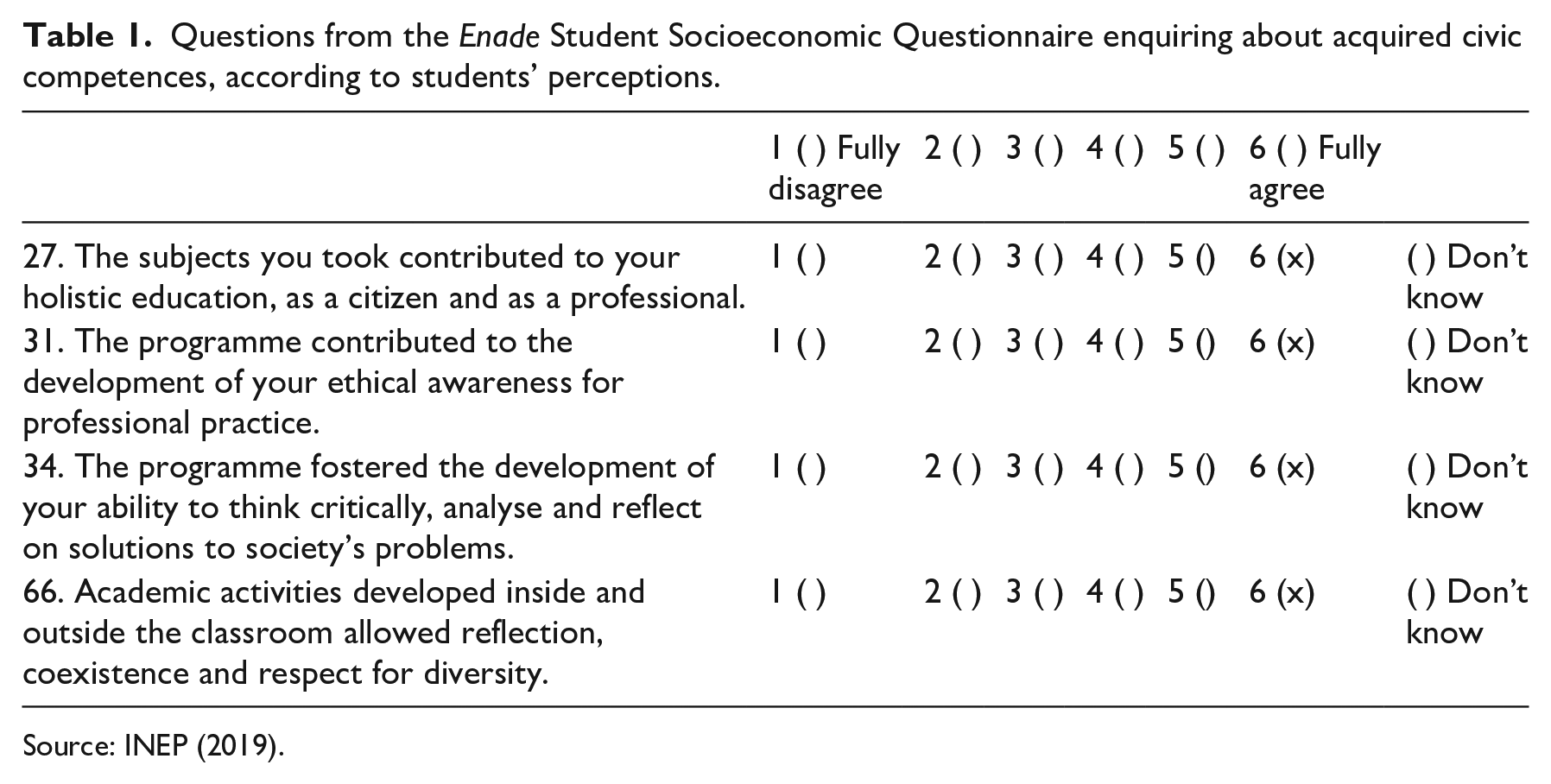
Initially, comparisons were made regarding the perceptions of students from different backgrounds (e.g. different socioeconomic levels) about the civic competences that they had developed. The Student Socioeconomic Questionnaire contains four questions, each referring to a specific civic competence: personal development for citizenship (no. 27), ethical awareness (no. 31), critical thinking (no. 34) and respect for diversity (no. 66). These questions were analysed to identify any differences between the students’ perceptions regarding the education received. For the purpose of comparison, only the scores of students who ‘fully’ agreed that their programme contributed to the development of these competences were considered (see Table 1).
Questions from the Enade Student Socioeconomic Questionnaire enquiring about acquired civic competences, according to students’ perceptions.
Source: INEP (2019).
The percentages of students who fully agreed that their programmes contributed and/or promoted citizenship, ethics, critical thinking and respect for diversity were compared between the following groups: (i) students who consider themselves black or brown and students with another skin colour; (ii) students whose mothers have no schooling and students whose mothers have postgraduate degrees; (iii) students from low-income families (up to 1.5 minimum salaries) and students from high-income families (above 30 minimum salaries) and (iv) students who attended public high schools and students who attended private schools or studied abroad. The choice of these variables as background indicators was based on literature that indicates such aspects as important conditions of socioeconomic and cultural background for Brazilian students (Bertolin et al., 2019). The statistical techniques used to verify the significance between the differences in perceptions between the groups were the two-proportion z-test for two groups and the Chi-square test for more than two groups.
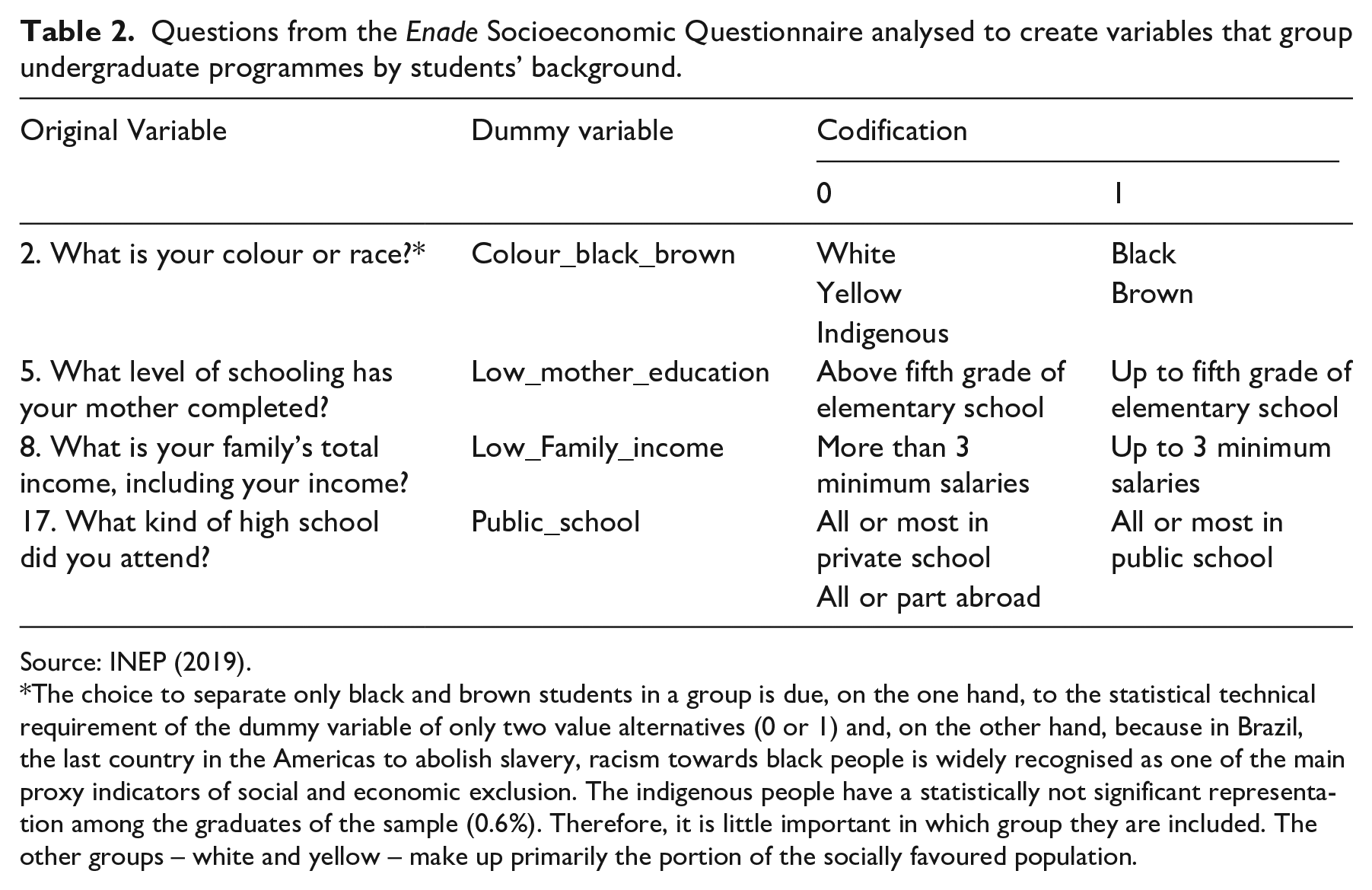
Next, comparisons were made regarding the perceptions of students from different undergraduate programmes about the civic competences that they had developed. To facilitate the analysis, the programmes were grouped into large sets according to the students’ background using two techniques: (i) creation of dummy variables (binary) for students’ background characteristics and (ii) non-hierarchical cluster analysis of the k-means type. The questionnaires answered by the same 1257,251 students from the previous stage were considered in the process of identifying programmes that predominantly enrol low, medium and high socioeconomic background students. The responses used in the Student Socioeconomic Questionnaire to group programmes by different student profiles referred to the same personal characteristics used in the previous step. In this way, the following four dummy variables were created (Table 2):
Questions from the Enade Socioeconomic Questionnaire analysed to create variables that group undergraduate programmes by students’ background.
Source: INEP (2019).
The choice to separate only black and brown students in a group is due, on the one hand, to the statistical technical requirement of the dummy variable of only two value alternatives (0 or 1) and, on the other hand, because in Brazil, the last country in the Americas to abolish slavery, racism towards black people is widely recognised as one of the main proxy indicators of social and economic exclusion. The indigenous people have a statistically not significant representation among the graduates of the sample (0.6%). Therefore, it is little important in which group they are included. The other groups – white and yellow – make up primarily the portion of the socially favoured population.
To conclude the grouping of programmes according to the students’ background profile, the non-hierarchical k-means cluster analysis technique was used, whose main objective is to identify objects/entities with similar characteristics. Through this procedure, three (K) large groups (clusters) of programmes were created with approximate percentages of students (generated by means of the technique of dummies variables) who consider themselves black or brown, whose mothers have low education, who belong to low-income families and who studied in public high schools (see Table 3):
Groups of study programmes with different profiles of student background.
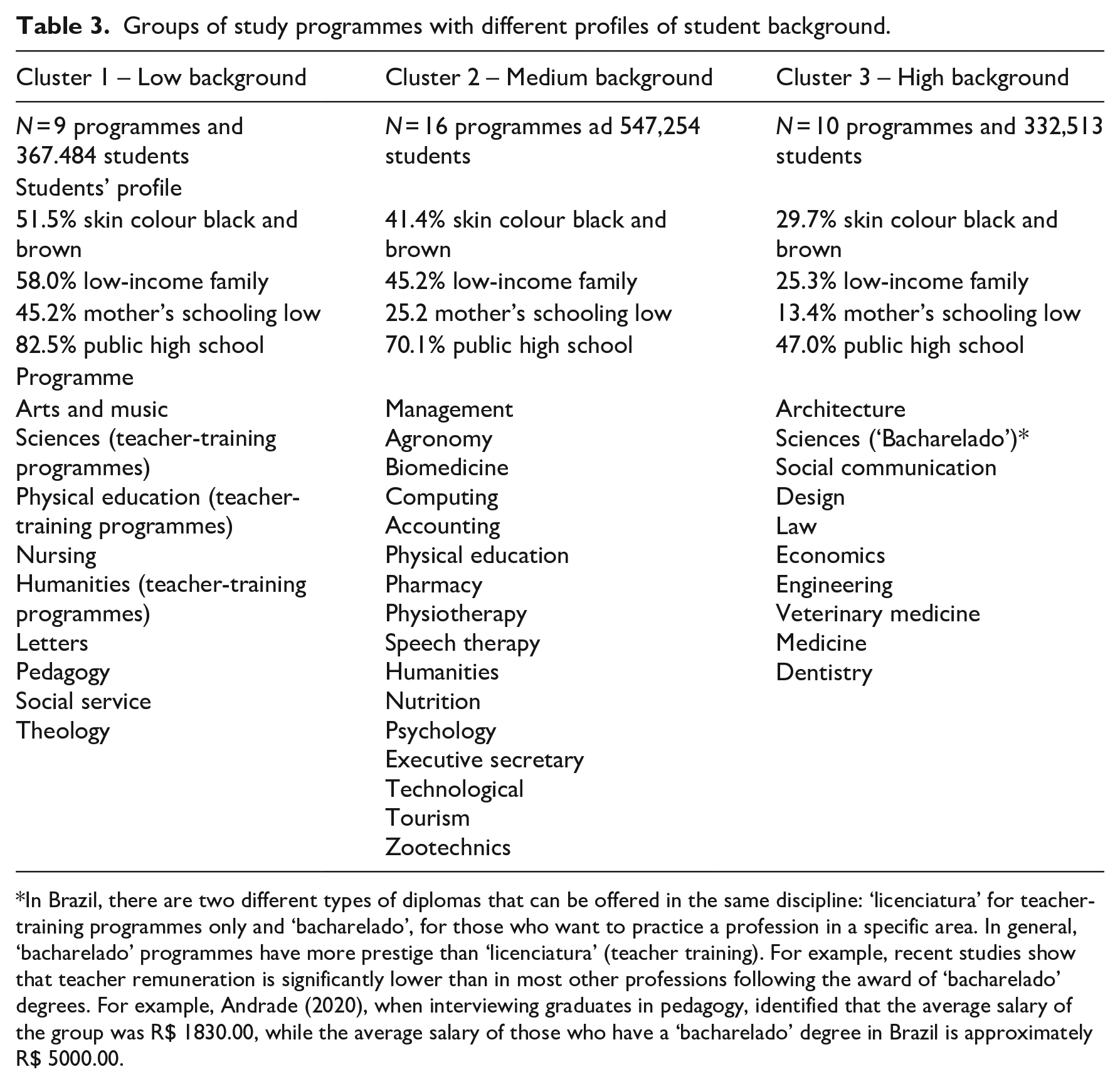
In Brazil, there are two different types of diplomas that can be offered in the same discipline: ‘licenciatura’ for teacher-training programmes only and ‘bacharelado’, for those who want to practice a profession in a specific area. In general, ‘bacharelado’ programmes have more prestige than ‘licenciatura’ (teacher training). For example, recent studies show that teacher remuneration is significantly lower than in most other professions following the award of ‘bacharelado’ degrees. For example, Andrade (2020), when interviewing graduates in pedagogy, identified that the average salary of the group was R$ 1830.00, while the average salary of those who have a ‘bacharelado’ degree in Brazil is approximately R$ 5000.00.
Finally, the perceptions of students participating in Enade from programmes belonging to different subgroups (specified according to the background of their students) were compared. Specifically, the perceptions about the civic competences developed by different undergraduate programmes were analysed.
Findings
When answering the questions about education for citizenship, ethics, critical thinking and respect for diversity, within the population of 1.25 million participants in the 2014, 2015 and 2016 editions of Enade, the students who are considered of lower background – black or brown skin coloured, mother with no schooling, low family income of up to three minimum salaries and who attended public high school – ‘fully agreed’ more that their programmes contributed to education in these values and skills than students from higher backgrounds – those with no black or brown skin colour, whose mothers have a postgraduate degree, family income above three minimum salaries and who attend private high schools during most or all secondary education (see Table 4).
Comparison of civic competences between groups of students by background.
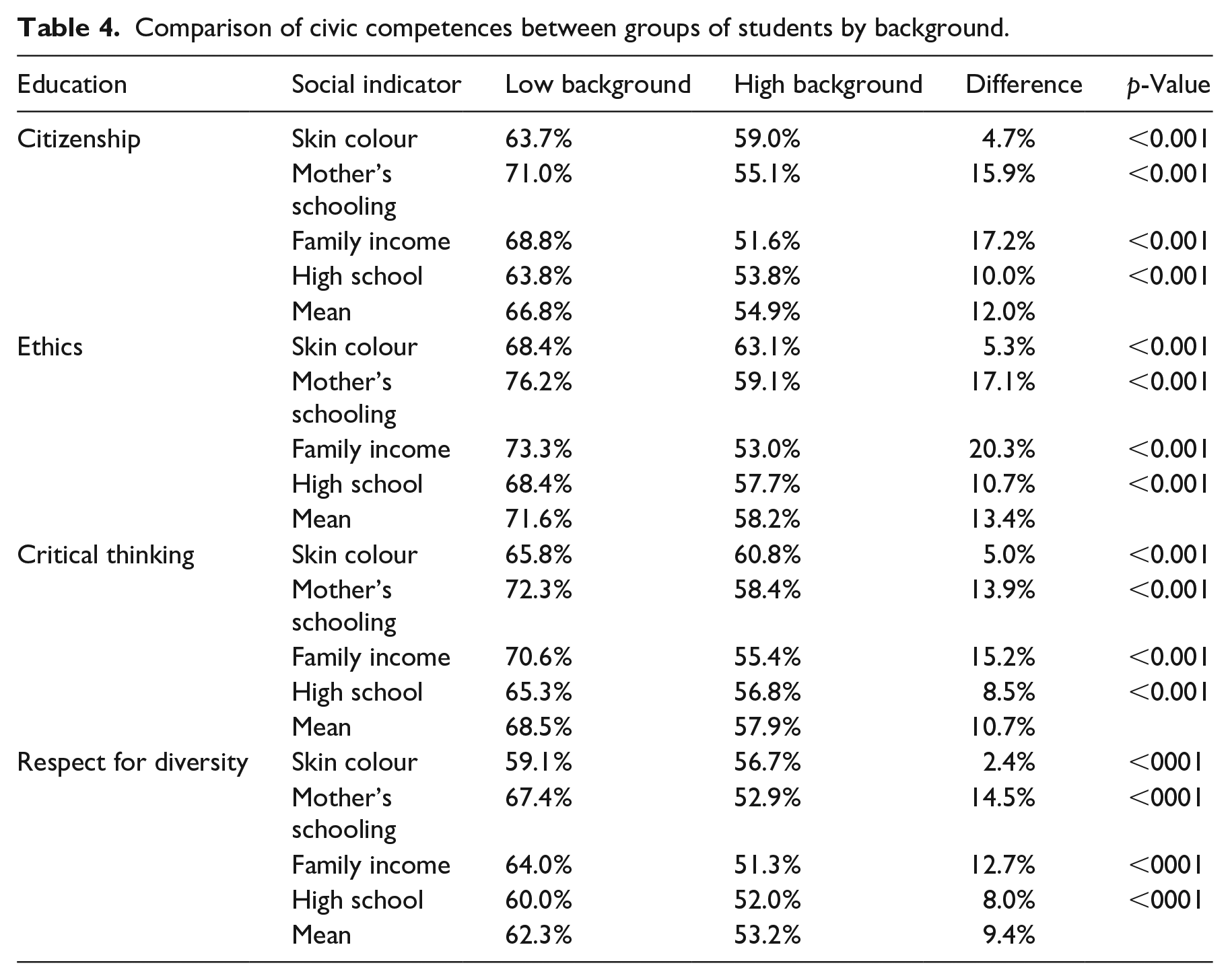
For instance, regarding the item which asked respondents to assess the statement ‘The subjects taken contributed to your holistic education, as citizen and professional’, while 66.8% of students from low socioeconomic background fully agreed, on average, only 54.9% of those from a high background were of the same opinion. In all social indicators of this item, the difference between the groups is statistically significant (p-value < 0.001).
Likewise, when expressing themselves on other topics, particularly on whether the programme contributed to the development of their ethical awareness for professional practice; on whether the programme promoted the development of their ability to think critically, analyse and reflect on solutions to society’s problems; and on whether the academic activities developed inside and outside the classroom allowed reflection, coexistence and respect for diversity, students from a low background recognised a greater contribution of their programmes to the development of these competences. As in the case of citizenship, in all the social indicators of the other three themes – ethics, critical thinking and respect for diversity – the difference between the low and high background groups is statistically significant.
Among the different aspects of civic competences, it was in the approach to ethics that, on average, a greater difference of perceptions is observed between students from low and high backgrounds (13.4%). Regarding social indicators, in the set of the four analysed items, the difference in students’ perceptions was greater when the students were differentiated by the family income indicator.
When analysing the responses of the 1.25 million students from the 2014, 2015 and 2016 editions of Enade disaggregated by undergraduate programmes, the relationship with their socioeconomic background is also observed. The programmes that enrol, on average, students with a lower socioeconomic background are those who are better assessed by students regarding the education provided in terms of citizenship, ethics, critical thinking and respect for diversity (see Table 5).
Comparison of civic competences between groups of programmes by student background.
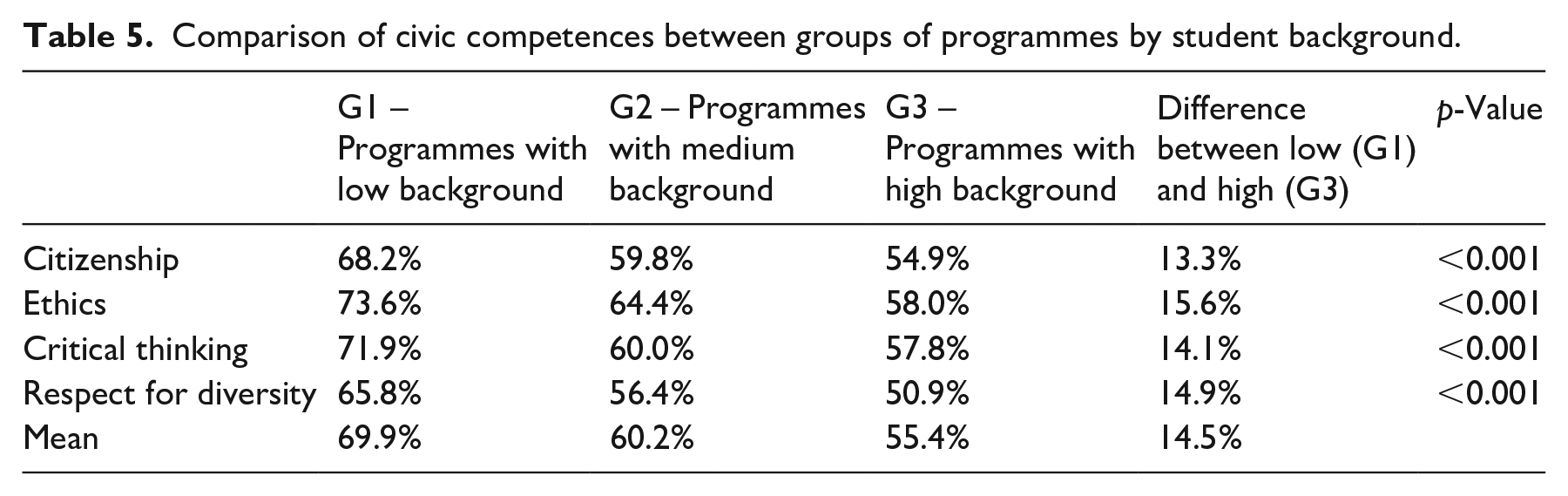
As the students’ background profile increases in the various programmes, their perception of the contribution of their education to the development of the analysed civic competences decreases. As shown in Table 5, the percentages of students’ full agreement regarding the contribution of their programmes to citizenship, ethics, critical thinking and respect for diversity have an inverse relationship with the average background profile of the programmes. While, on average, almost 70% of respondents from programmes which enrol low background students (G1) fully agree that their education had developed the above competences, only approximately 55% of students from programmes with a high background profile (G3) think the same way. It is rather worrying that only around half of this latter student category are learning about citizenship at all. In general, the difference in the assessment of acquired civic competences between programmes with a lower and higher background is approximately 15%.
When this relationship is disaggregated by study programmes, the inverse relationship between students’ backgrounds and their perceptions about the development of civic competences emerges in a more visible way. Figure 1 shows the increasing trend line quite clearly: the percentage of students whose mothers have higher education grows from the G1 programmes – low background (Social Work, Pedagogy and Nursing), passing through G2 (Psychology) and arriving at G3 (Law, Civil Engineering, Veterinary Medicine and Medicine).
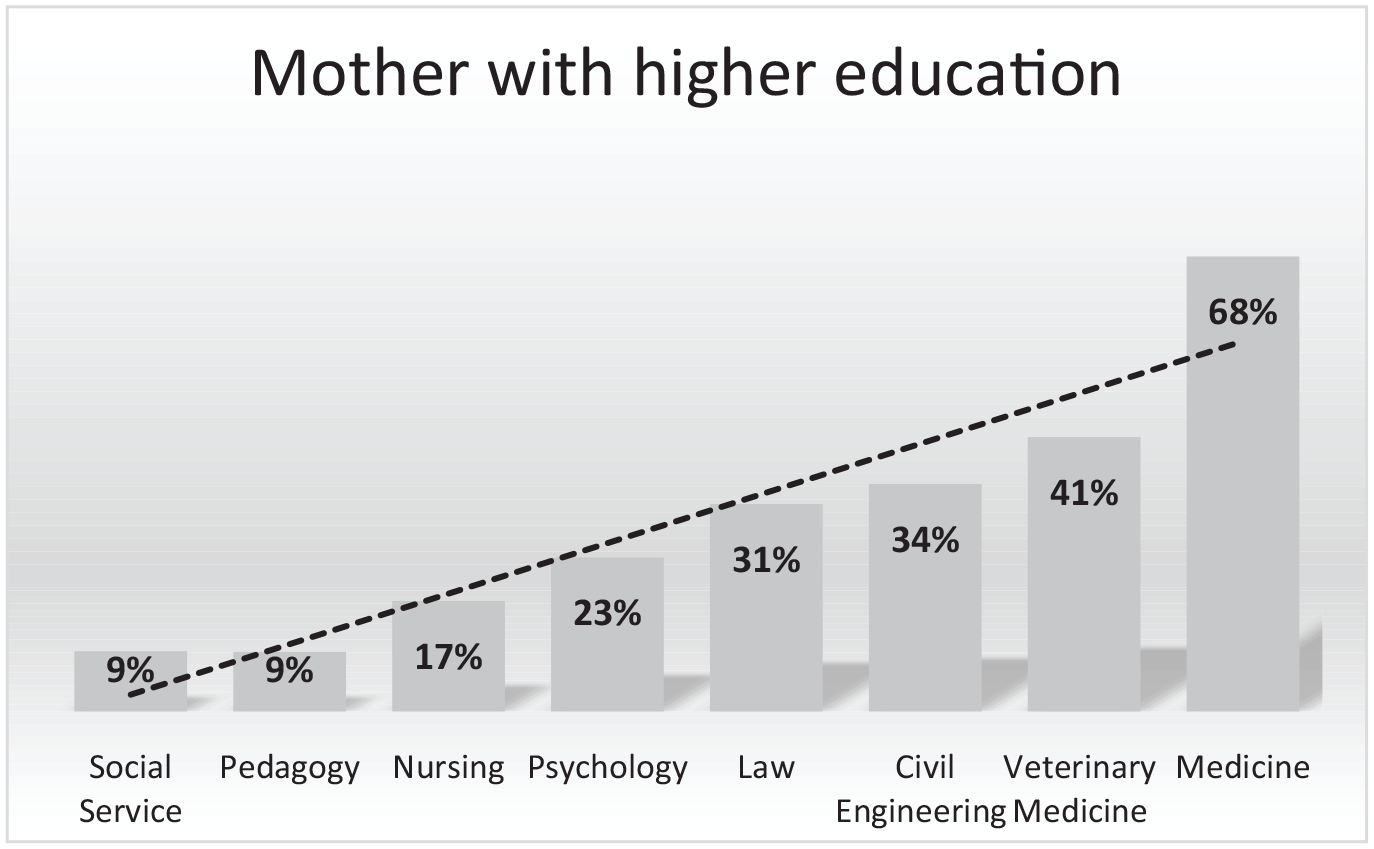
Difference in the share of students whose mothers have higher education by undergraduate programme.
The differences between the profile of students in different study programmes, evidenced by the mother’s education, are extremely telling. In programmes with few candidates in the selection and admission processes, which offer poor career and income prospects and which do not generate social status for graduates, such as Social Work and Pedagogy (see McCowan and Bertolin, 2020 regarding social segregation by disciplinary area), students whose mothers have higher education only represent 9% of enrolments.
However, these same students’ opinions about the critical thinking skills developed during their higher education programme present a completely different trend line which is represented in Figure 2. In the Social Work, Pedagogy and Nursing programmes, the percentages of students who agreed that their education had fostered the development of critical thinking vary between approximately 70% and 80%. In the Civil Engineering, Veterinary Medicine and Medicine programmes, these percentages vary between approximately 50% and 55% (see Figure 2).
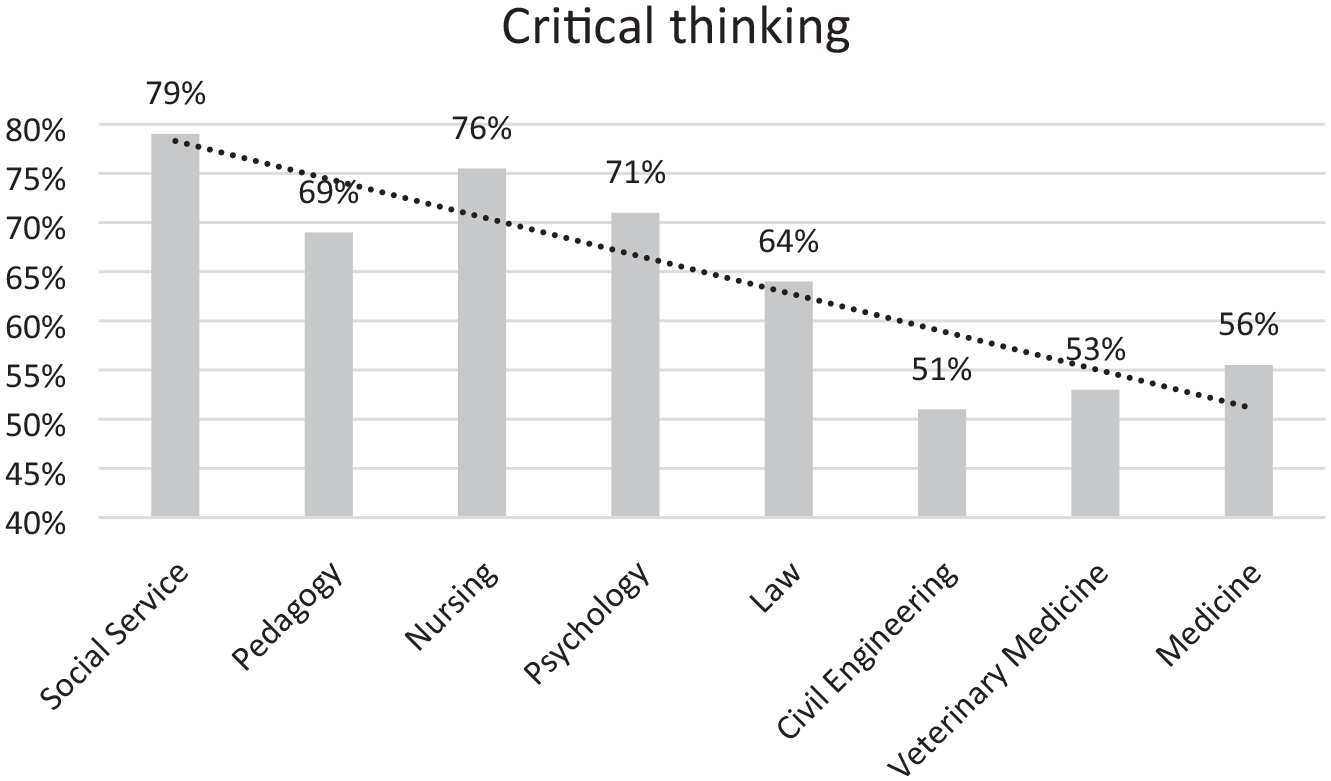
Difference in students’ positive assessment of critical thinking education by undergraduate programme.
This pattern of inverse relationship between the profile of students in the programmes and the development of civic competence is recurrent, as a rule, for the same programmes in the other three items: citizenship, ethics and respect for diversity.
Discussion and conclusion
This paper has investigated whether recent graduates feel that during their higher education they have developed civic competences which, in the literature, are associated with the capacity of taking up a role of active citizenship in society. Brazilian higher education was the context for the study, a country which struggles with social inequalities and threats to democracy and where, therefore, higher education could play a major role in tackling these challenges. Human development and education for citizenship are missions of higher education which are nowadays in competition with other more utilitarian missions, which see higher education as an instrument for economic development. Differences in graduates’ perceptions were analysed by socioeconomic and cultural background and by discipline. A caveat is worth making here, namely the subjective nature of the data. Self-perceptions of the acquisition of these competencies may not reflect fully the extent to which students have actually acquired these competencies. Qualitative research could elucidate the results reported in the paper by unpacking student perceptions of civic competences and the contribution higher education make to their development.
The key finding of this study is that students of lower socioeconomic background are more confident about the fact that their degree contributed to the development of the analysed civic competences – citizenship, ethics, critical thinking and respect for diversity – than their colleagues with a high socioeconomic background. On the one hand, students from higher income backgrounds could have cultivated these competencies thanks to the good education that they received during their upbringing. One may expect that they enter higher education with more developed civic competencies, and thus with less margin for growth than lower income students who would experience higher gains. On the other hand, however, the privileged background of higher income students can represent a disadvantage because these students have lived in an elite and less diverse context. Higher education apparently also fails to develop these competencies because they are not learning sufficiently about diversity. As they enrol in more prestigious programmes, with an elite and homogeneous student body, higher income students have fewer opportunities to encounter diversity.
Therefore, one can argue that the lesser confidence among these students regarding the civic competences developed during their studies is related with the composition of the student body. The more homogenous the composition of the student body in these more prestigious programmes is, the fewer are the opportunities students have to encounter diversity, coexist with less privileged students, become aware of societal problems through direct experiences and thus develop a consciousness of plurality, difference and the need to address social injustice. What appears to be missing is the ‘narrative imagination’ that enables students to think what it might be like to be in the shoes of a different person (Nussbaum, 1997). In contrast, students from lower socioeconomic backgrounds enrol in programmes with a more diverse student body as far as race, income and cultural capital are concerned. These students experience themselves, or through interaction with their colleagues, problems related to social injustice, discrimination, inequality, poverty, unequal educational opportunities and so on. In order to develop an awareness of such issues and a wish to be active agents in the improvement of the society, it is important that students understand, through lived experience, abstract moral thinking (Harkavy, 2006).
Moreover, high income students complete mainly programmes in areas which offer social and economic advantages (e.g. law, architecture, medicine, economics or engineering), and are therefore better placed to occupy power positions in society and to influence the direction of social and democratic evolution. Higher education institutions’ failure to diversify, by limiting elite students’ exposure to diverse people and experiences and hindering lower income students’ access to better higher education institutions and programmes, may thus compromise societal development. It is particularly those in power who need to be sensitive towards diversity, be aware of the issues faced by the people for whom they make decisions and give them a voice to build and maintain a working democracy.
There may be another explanation for differences by discipline, namely that the programmes in which students with a high socioeconomic background tendentially enrol are not sufficiently thought through from a curricular point of view to empower these students to act as catalysts for change in their communities. Should this be the case, this would require curricular redesign and more experiential learning in order to expose students to real problems in their community (Annette, 2005; Harkavy, 2006; McCowan, 2012). However, this is a supposition that requires further empirical study.
These findings suggest policy implications at two levels. First, if higher education is to improve civic competences, then access policies could foster the diversification of the student body in order to avoid the rather clear segregation into programmes, whereby high socioeconomic background is a condition for entry to the most prestigious ones. This may be achieved through more affirmative action policies (Bertolin and McCowan, 2021) or through measures that raise the aspirations of and support (academic, financial, logistic) for students from low socioeconomic backgrounds. Second, institutional level policies could target curricular design to accommodate new learning experiences which include community service activities and which could expose students to the real-life problems in society and help them become active citizens.
The risk of not paying attention and not acting to address these issues may be the consolidation of a system that continues to produce and reproduce the existing inequalities in society, not only in economic terms and in the elite access to some programmes, but also in terms of worldview and differentiated values among students of different socioeconomic backgrounds. After all, few disagree that, in the face of great contemporary global challenges involving environmental and climate degradation, migratory flows, the aggravation of inequalities and the emergence of nationalist movements, it becomes increasingly important that educated citizens and future leaders, generally higher education graduates, develop civic values and skills that support the consolidation of more just, inclusive, sustainable and democratic societies. In this way, higher education will be reinforcing its historical mission with the improvement of society, providing equitable and civic education for all.
Footnotes
Declaration of conflicting interests
The author(s) declared no potential conflicts of interest with respect to the research, authorship, and/or publication of this article.
Funding
The author(s) disclosed receipt of the following financial support for the research, authorship, and/or publication of this article: This work was supported by the MCTIC/CNPq under grant no. 28/2018 405565/2018-6.
