




Abstract
In this critical case study, we examined the ways civic culture developed at an action civics summer camp and provided implications for civics teaching and learning. Findings highlight how the camp context produced and simultaneously failed to yield a culturally participatory inclusive civic culture. Specifically, we found the emphasis on dialogue, inquiry, and attention to place during the camp experience supported actors in developing positive civic culture exchanges. However, the civic culture that emerged at the camp also included white hetero-normative cultural practices and ideologies which discouraged participation among some students with non-dominant identities. Further, students of all identities did little to engage in civic experiences beyond the camp. We suggest that these shortcomings might be overcome by intentionally designing learning experiences to address these concerns, supporting counselors to understand how to mediate sensitive projects, and demonstrating to students how to perpetually engage with civic concerns.
Introduction
In this research, we explored how students developed a shared civic culture while participating in an out-of-school summer civics education program, Youth Act. 1 We proceed by highlighting literature related to the development of civic culture and how teachers and practitioners might incorporate curricular tools and pedagogical practices that mediate students’ understanding of citizenship and civic agency. Our aim in the camp was to support a move toward more participatory and justice-oriented visions and approaches to civic life (Vygotsky, 1978; Westheimer and Kahne, 2004). In what follows, we describe the context of the study, our framework for analysis, methodology, the results, discussion, and implications of our study. We suggest our study will help civic educators support the development of more equitable, inclusive, and fully shared visions of civic life, civic culture, and civic community.
Civic culture and the classroom
Civic culture, civic engagement, and the complexities of civic life come together to affect how students civically participate (Biesta et al., 2009; Gruenewald, 2003a, 2003b; Hall et al., 1999; Rubin and Hayes, 2010; Torney-Purta and Amadeo, 2011; Wood, 2012; Wood et al., 2018). Unfortunately, educational framings of civic life often reduce civic engagement to understanding institutional structures and knowledge, neglecting how an inclusive and supportive classroom culture is vital to a student’s personal and civic development (Fraser, 2012; Gill and Boote, 2012; Windschitl, 1999). These reductionist approaches to civics education continue despite existing scholarship on how identity, cultural inclusion, cultural citizenship, ideology, and agency positively impact civics education (Konforti, 2009; Magill, 2019; Rosaldo, 1993; Solórzano and Yosso, 2002). While scholars offer insight into how the inclusion of a student’s culture informs civic experiences in educational contexts, there is a lack of research on the collective construction of civic culture during educational experiences (Blevins et al., 2016; Rodríguez, 2018; Woodson, 2016). Studying how students generate and circulate cultural forms, practices, values, and shared understandings (cultural production) might help reveal how students civically think, exist, and act within settings beyond educational spaces.
Considering the development of youth civic culture is valuable because, during the adolescent developmental period, individuals begin to establish the ideological and cognitive foundations forming ‘dispositions, practices, [and] processes’ that will constitute one’s involvement in civic life (Dahlgren, 2003: 154). Cultural formation occurs as a collective body negotiates, transmits, internalizes, and mediates social decisions. These acts help a community establish boundaries for their collective identities, signaled when a group develops and uses material and immaterial forms of culture (Assmann, 2011). While material culture refers to the physical things, the expressive or observable creations, formed by the group, immaterial culture refers to how people organize themselves, develop myths, create philosophies, utilize knowledge, and understand heritage.
Classroom culture shares a reciprocal relationship with a society’s broader civic culture in that it frequently mirrors the practices and discourses found in society. Both spaces play a significant role in how youth’s political attitudes, habits, sentiments, and behavior emerge (Bourdieu, 2017; Moisés, 2011). Therefore, considering the formation of civic culture within the classroom and its relation to social spaces can help educators understand how students view their place in society. It can also reveal how students’ actions in the classroom simultaneously reflect or push against larger social discourses (Callahan and Obenchain, 2016; Vickery, 2016).
Unfortunately, civic curricular artifacts, teaching models, and other civic education practices seldom facilitate students’ exploration of the discursive and material influences that frame their understanding of civic life. Students are typically not provided educational opportunities that scaffold the unpacking of individual and collective identities, nor do these interactions help students decide whether they want to maintain or alter these cultural realities. Educators rarely ask students if they accept or reject the authority of civic leaders or the groups in which they participate (Almond and Verba, 1998). This failure to engage students about their beliefs of political leaders is important because when students feel like their traditions, values, norms, and ideas, or in other words, their culture, is at odds with the dominant culture, students often passively engage with systems of governance and governing authorities (Rubin and Hayes, 2010). Therefore, it is crucial to understand the multifaceted layers of power that situate the production of culture and citizenship and the elements of civic culture that can lead to individual and group empowerment (Magill and Rodriguez, 2021).
One possibility for disrupting and reconstituting relationships of power in civics learning contexts is integrating students’ lived realities into the curriculum in ways that affirm students’ cultural markers and foregrounds individual and collective agency (Banks and Nguyen, 2008; Crocco, 2001; Schmidt, 2010; Sherrod, 2006). Educational spaces developed with the goal of student agency provide opportunities to support individual identities, diversity of thought, and the co-construction of knowledge. Prioritizing student agency also facilitates cultural inclusion and the development of a collective body that values authentic and conscious civic action (Castro et al., 2012; Moore, 2012). When students identify as agentic and collective learners, they are more likely to jointly reveal contradictions between democratic principles and real life. As a result, they are then able to partake in dialogical exchanges with others through which they can begin to imagine civic possibilities and address these possibilities on a larger scale (Engeström, 2016; Freire, 1970; Vaughn and Obenchain, 2015).
Considerations of community, identity, and power
Civic culture requires an appreciation of the reciprocal relationship between civic agents and the cultural tools or mediational means that form civic life (Wertsch and Rupert, 1993; Wertsch et al., 1993). To better understand the nature of civic culture and its relation to civic education, it is helpful to examine how power, relation, community, and educational experiences produce or perpetuate citizenship and civic identity norms. Traditional civic education experiences may suggest to students that they are not yet citizens and, when they are citizens, that they should participate through existing systems (Biesta et al., 2009). Deconstructing the relationship between culture, power, and identity in citizenship is vital because civic culture and ‘citizenship has not been developed, either historically or in the present, around principles of freedom, equality, and justice’ (DeJaeghere, 2013: 227). Normed ideas of power and citizenship frame how civic and social studies education are mediated across relational differences and incorporated within a shared culture.
An educator’s understanding of ideology, power, and democracy and their feelings about what citizens should do nuance the curricular dynamics at play in the normalization of classroom and civic culture. These factors also mediate students’ understanding of civic practices. Teachers’ understandings of ideology, power, and democracy affect their teaching disposition and how culture will develop in educational spaces. In classrooms, expressions of ideology, power, and visions for democracy unfold through curriculum and pedagogy, dialogue and discussion, and the use and production of artifacts (Blevins et al., 2020; Chandler, 2010; Santiago, 2017; Tyson and Park, 2008). An educator’s ability, or inability, to perceive and negotiate dialectical tensions in culture, relation, and learning differences become part of a student’s civic becoming (Castro, 2014; Freire, 1970; Schmidt, 2010).
These relational power interactions are significant because schools are one place where students realize the meaning of democracy and form their civic identity (Atkins and Hart, 2003; Levinson, 2005; Magill, 2019). The way a student understands democratic exchange across power and difference will influence the nature of their civic disposition. Minority and low socio-economic students, for example, often believe that civic engagement is reserved for wealthy and white students (Bartels, 2008; Campbell, 2007; Kahne and Sporte, 2008). These students often remove themselves from uncomfortable civic spaces and, unfortunately, experience fewer meaningful civic engagement opportunities, become civically apathetic, and feel disconnected from the structural aspects of the civic culture (Atkins and Hart, 2003).
Developing a shared civic culture through cultural exchanges in the classroom can help students understand how power situates their social lives and their civic identity. One understanding of civic identity is a personal ‘sense of belonging’ and responsibilities within a ‘geographical community’ (Atkins and Hart, 2003: 157). Developing civic identity, then, requires a foundational knowledge of and participating in one’s community and possessing a commitment to democratic principles. Working with and across differences can help students and teachers establish knowledge and solidarity to develop an expansive participatory and inclusive civic culture (Efremenko and Evseeva, 2012; Magill, 2021). Civic tools and practices like the ability to research, dialogue across differences, and interpret information, can help students ‘acquire the civic identities that will allow them to become effective civic actors’ (Atkins and Hart, 2003: 163). Appropriate civic education implies the affirmation of students’ identities, support for students’ agency, and help considering students’ role in building community and partaking in collective civic action (Magill, 2019; Yates and Youniss, 1998).
Study context
The purpose of this study was to examine civic cultural formation at Youth Act, a free weeklong action civics summer camp offered to rising fifth through ninth graders at a private university in the Southern United States. We intentionally designed the camp curriculum to include action civics. Action civics is an approach to citizenship education centered around an inquiry cycle where students work in groups to identify issues of concern within the local community, conduct research, brainstorm, determine a root cause of their chosen issue, and construct an action plan through collaboration with local community members and organizations (Epstein, 2014; Levinson, 2012). We were interested in what type of shared civic culture emerged from an out-of-school action civics pedagogical experience. The camp context provided a unique opportunity to consider how students of diverse cultural backgrounds, ideologies, and perspectives come together to create material and immaterial forms of culture.
Actors in the camp included student participants, preservice teachers who serve as camp counselors, in-service teachers knowledgeable of action civics pedagogy, and the Youth Act research team. We held a 2-day training before Youth Act to ensure the counselors understood the purposes and model of the camp. Much of the training mirrored the camp experiences and provided counselors with opportunities to experience the activities they facilitated during the camp. Several activities supported students as they moved through the inquiry cycle. For example, students participated in a community issues fair, newspaper scavenger hunt, and field trip to the university legislative library, and heard from guest speakers. The camp culminated with a community showcase where students presented information about their chosen issues and action plan. Student projects from the past seven iterations of the camp have focused on a range of local issues, including but not limited to water pollution, veterans affairs, child hunger, immigration, school violence, mental health, and homelessness.
In addition to the action civics inquiry cycle (Epstein, 2014; Levinson, 2012), counselors teach students about Generation Citizen’s (2018) Advocacy Hourglass and the Youth Act See, Know, Do civic engagement framework. Counselors also guide students through a model for examining evidence and identifying targets and tactics (Generation Citizen, 2018; Millenson et al., 2013). Furthermore, we center the practices of authentic civic engagement, including dialogue, inquiry, and attention to the places that citizens encounter.
Framework for analysis
To help us study the development of civic culture, we focused on Youth Act as a system of activity. Defining our unit of analysis as the activity in the camp helped us to analyze how participants used the curricular tools, chose to govern their interactions, and divided their labor. In other words, studying the activity of the camp allowed us to focus on the production, consumption, exchange, and distribution of existing and emerging material and immaterial culture (Engeström, 2016).
From this starting point, we considered the idea of civic identity formation within the activity system, understanding that collective identities always mediate an individual’s identity (Assmann, 2011; Wertsch, 2021). Next, we examined the production of cultural artifacts, their use by students, and what these artifacts communicated about the collective civic culture of Youth Act. Lastly, we considered how broader discourses of power and civic norms mediated the Youth Act learning context, which influenced how students collectively bounded the civic community within the camp context.
We understand civic identity as how a person understands themselves as a citizen informed by a person’s ideology, disposition, and lived experience (Baiocchi et al., 2014; Biesta et al., 2009; Flanagan, 2013; Kahne and Sporte, 2008). Our examination of civic identity in this study included the consideration of different intersectionalities, such as race, social class, gender, sexuality, and other factors that shaped immaterial aspects of student culture. 2 We observed these and other aspects of civic identity through observations, interviews, and the creation of artifacts. Exploring civic identity helped us better understand how personal civic experiences related to group dynamics within the camp context. As Assmann (2011) notes, ‘culture and society convey or generate an identity that is always personal though not necessarily collective’ (p. 115). Focusing on civic identity helped us interrogate how the experiences students brought into the camp context shaped and were shaped by the civic culture that unfolded during the Youth Act learning experience.
Secondly, we focused on cultural artifacts, acknowledging that the mediums of civic exchange inform the material and immaterial aspects of cultural development (McLuhan, 1964). Specifically, we compared the mediums of civic exchange (e.g. dialogue, inquiry, shared experiences) to their role in creating a shared culture. By focusing on how the learning community engaged with and produced various cultural artifacts and practices, we sought to understand what these practices and artifacts communicated about the civic culture within the context of Youth Act.
Lastly, we considered how the often-unseen social realities, constructions, and ideologies that govern thinking about civic and cultural relations influenced the boundaries of the civic culture within Youth Act. We considered the ways students seemed to understand abstract concepts (e.g. citizenship, freedom, justice) across differences to examine the influence of discourse on civic cultural formation. We suggest that these factors created the conditions through which participants developed their civic imagination (Baiocchi et al., 2014; Smith et al., 2022). In sum, we argue that civic identity, exchange, and symbols/spaces/places provided us with a foundation to explore the development of civic culture and interactions.
Methods
We conducted an exploratory critical case study to investigate civic culture at Youth Act during its seventh iteration in the summer of 2019. Two research questions guided our inquiry into Youth Act:
In what ways does a sense of civic culture (material and immaterial) emerge from shared experiences at Youth Act?
How do dialogue, inquiry, and place inform experiences at Youth Act and change participants’ conceptualizations of culture and engagement about civic knowing, seeing, and doing?
We relied on multiple sources of evidence categorized as material and immaterial culture (Creswell, 2013; Yin, 2017). Evidence from material culture (artifacts) included student-generated documents, inquiry project websites/presentations and posters, camper booklet worksheets, and exit slips students completed at the end of each day of the camp. Immaterial culture data sources included semi-structured individual and group interviews and observations recorded as field notes collected by researchers (Almond and Verba, 1998). While data related to material culture (i.e. student-generated products) offered insight into the values and perspectives of camp participants (Creswell, 2013; Saldaña, 2013), immaterial culture data provided a deeper analysis of the myths, philosophies, and heritage informing the case (Merriam, 1998).
Participants
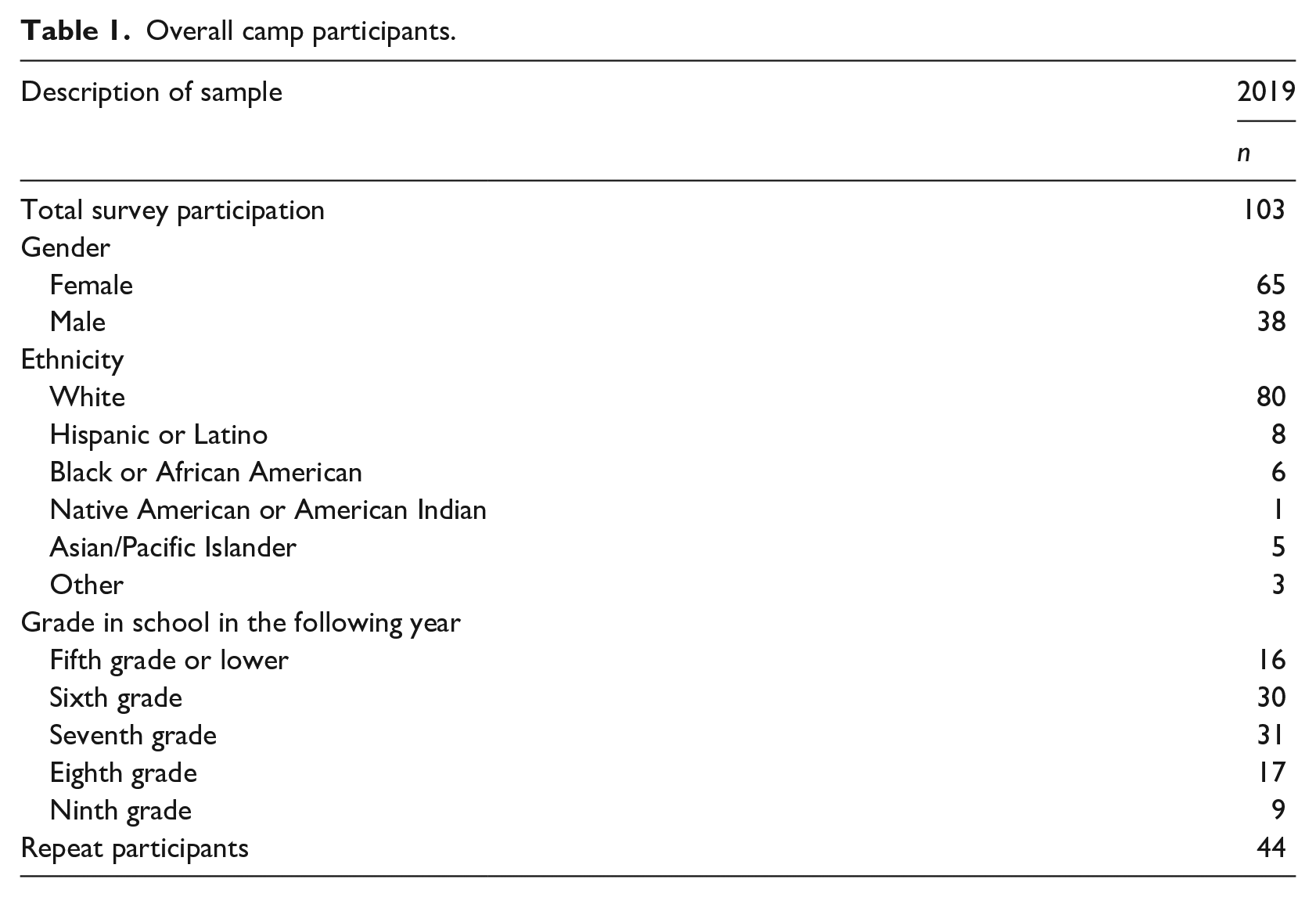
A total of 104 campers 3 attended the Youth Act camp in the summer of 2019. Demographic data for campers are shown in Table 1. Before starting camp, researchers randomly selected 32 campers for daily, individual, semi-structured interviews. All students (campers) completed exit tickets at the end of each day. The exit ticket completed by students on the first and fourth days of Youth Act was of specific importance to researchers. The assessments from these 2 days were identical and focused on students’ shifts related to traits/characteristics of participatory and justice-oriented citizens (Westheimer and Kahne, 2004). Based on the pre- and post-assessment results, researchers purposefully selected 30 students to participate in semi-structured, café-style interviews (Creswell, 2013; Wood, 2012).
Overall camp participants.
Data collection
We collected data on material (e.g. exit tickets, posters, camp projects) culture from all participants. These items were collected and organized after the conclusion of the camp. We collected data on immaterial culture in distinct phases. For example, we used a standard observational protocol (Creswell, 2013), recording field notes during specified structured learning times (in the morning and afternoon) throughout the week. Additionally, before Youth Act 2019, an extensive interview protocol was created for individual and group semi-structured interviews. The individual interviews of 30 randomly selected students occurred during the structured learning times every day, while we conducted the café-style group interviews of 33 purposefully selected students 4 on the final day of Youth Act. Individual and group interviews were audio-recorded and then transcribed by the research team.
Data analysis
Data analysis began with both structural and descriptive coding, during which the research team identified emerging themes and topics related to elements of civic culture and the research questions for the study (Saldaña, 2013). Data were first coded by individual researchers and then compared and discussed for inter-coder agreement. We utilized a constant comparative approach by revisiting these established codes, topics, and categories as new information was collected and analyzed. Initial codes included terms such as ‘solidarity’, ‘community’, ‘ideology’, ‘privilege’, ‘support’, ‘consciousness’, ‘difference’, ‘exchange’, ‘perpetual solidarity’, ‘multiplicity’, ‘time’, ‘injustice’, and ‘commonality’. We then considered how the ‘tools of civic culture’ discussed below (concepts that frequently emerged from the literature) related to what we observed within the camp activity system. We identified these tools of civic culture as ‘dialogue’, ‘inquiry’, and ‘place’. Following the initial coding cycle, we reorganized and reduced the codes into linked themes and the concepts of civic identity and civic culture. These themes formed the foundation and organization of our findings (Glaser and Strauss, 1967; Miles et al., 2013). When codes and the ideas of dialogue, inquiry, and place were considered in concert, final themes emerged which became ‘results’. These were organized as positive aspects of the camp and places for improvement. Positive themes included, ‘community development of cultural artifacts’, ‘intellectual solidarity: dialogue and collaboration’, and ‘structures and scaffolds for civic culture. Areas for improvement included, ‘considering diversity, ideology, and intersectionality’, and ‘fear of social engagement and perpetual civic engagement beyond the camp’.
Tools of democratic education
Consideration of the tools used in democratic education is important because individuals use tools to develop consciousness (Vygotsky, 1978). What tools an individual or community chooses to use signals a community’s values. In this study, we paid particular attention to common tools used in social studies learning contexts and how these tools might support a student’s ability to connect the experiential and material aspects of a particular civic community to the social world. Below we describe some of the common tools used in democratic education and how they were incorporated into the design of the camp.
Dialogue
Dialogue is a vital tool for developing the type of shared community needed to engage as citizens. Dialogue helps reveal civic identities and create commonality in civic communities (Blevins et al., 2020; Freire, 1970; Magill and Blevins, 2020). In civics education, dialogue can help unearth the issues students encounter in their everyday lives and as part of the formal curriculum (Dilworth, 2004; Journell, 2011; Mirra and Garcia, 2020; Parker and Hess, 2001). Researchers have argued that through dialogue, students are better able to work through problematic epistemological and ontological norms associated with civic hegemony (Blevins et al., 2020; Magill and Salinas, 2019; Subedi, 2008). Dialogical mediation helps students rationalize social concerns and more fully consider how their own identities relate to civic knowledge, skills, and dispositions (Avery et al., 2013; Subedi, 2008). Discussion related to civic tools, cultural identity, cultural diversity, and civic empowerment can help students and teachers learn to take more positive dispositions toward diversity/identity, civic self-efficacy, and social engagement (Hipolito-Delgado and Zion, 2017). Therefore, purposeful dialogical civic experiences remain vital to participatory civic identity, culture, and community (McCoy and Scully, 2002).
At Youth Act, students spend a significant amount of time in structured, small-group learning sessions. On the first day, students suggest possible civic norms for their group, brainstorm ideas around the expectations for dialogue and collaboration throughout the week, and postulate connections between these norms and their burgeoning civic identity. Counselors also ask students to identify positive characteristics and issues of concern within the students’ communities. Through this dialogue, students immediately gain perspective about their peers’ concerns and ideally start forming connections around shared interests. It is around these shared interests that each group then comes to a consensus on a single issue of concern.
Coming to a consensus can be difficult, which is why we equip counselors with a consensus-building framework (Millenson et al., 2013). The consensus framework offers counselors and campers structured language prompts to encourage student groups toward general agreement. While the goal of these structured learning times rests in students creating civic commonalities and a shared purpose through dialogue, students also share their ideas and plans with people outside their newly formed community. Midway through the camp, students present their proposed plan of action to a small group of local community members, receive feedback on their plans, and then make the changes necessary to move forward with their efforts.
Dialogue becomes a necessary cultural exchange within the camp context as actors create shared norms, values, and dispositions (Valenzuela et al., 2015). We acknowledge challenges exist to engaging in civic dialogue to develop a shared culture, including shying away from difficult or controversial topics and framing conversations in ways that unknowingly privilege certain cultural norms and understandings over others (Avery et al., 2013; McAvoy and Hess, 2013; Parker and Hess, 2001; Philpott et al., 2011). These factors may limit the emergence of a democratic civic culture. However, when agents use dialogue for interactional purposes, it can be a profound factor in developing a shared civic culture.
Inquiry
Inquiry is another tool for cultivating civic community as students apply their knowledge and identities by gathering and assessing new information. Through inquiry, students explore ‘compelling questions’ for which there is no single answer (National Council for the Social Studies [NCSS], 2013) and use evidence to arrive at informed conclusions in a process that approximates democratic practices (Barton and Avery, 2016; Bermudez, 2015) since ‘[i]n a democracy, citizens need to grapple with shared problems and issues for which there is no one answer’ (Barton and Avery, 2016: 1002). Through inquiry, students can examine and explore the world around them. How an individual interprets their surroundings reveals something about their cultural knowledge and their understanding of democratic participation (Ramirez, 2012). Through inquiry, students have opportunities to conduct meaningful research on issues of personal concern. This form of critical civic inquiry makes it more likely that students and teachers will develop more democratic classroom cultures (Soares and Wood, 2010).
Two activities supporting student examination of their communities are the local newspaper scavenger hunt and community issues fair involving local area organizations. We designed these activities to raise students’ awareness of pressing issues within the community and allow students to gather and assess information about these issues. After their collaborative examination and identification of community issues, student groups choose a focus issue to explore for the remainder of the camp. Additionally, students visit the university library to gain historical and political knowledge related to their rights and responsibilities as both local and national citizens. One library station asks students to identify their first amendment rights and make connections between these rights and their burgeoning understanding of issues of concern within the community. Students also analyze primary source documents (photos and articles), hypothesize the causes of significant past events (flooding, industrialization), and discuss how the community responded to these problems. Further, students interrogate these various responses of the community and pay special attention to how ever-changing factors like technology, transitions in leadership, and natural phenomenon impact the community’s response.
Place
Civic life is deeply connected to place and informs how we interpret and relate to others. Meaning fills space, and individuals ascribe value to spaces. Those meanings play a role in how culture develops a collective identity (Gieryn, 2000; Schmidt, 2011). How individuals interact with spaces communicates something about their agency and how they understand their identity within hegemonic norms (Schmidt, 2013). Furthermore, envisioning what is possible within spaces works synergistically with research on social issues, connecting with others, and revealing power. Scholars who focus on place-based learning models argue that place can be a starting point for teaching and often helps students identify as civic participants (Gruenewald, 2003a; Sobel, 2004).
As a component of the Youth Act curriculum, we supported students in thinking about their local context when working through the inquiry cycle. In addition to activities that help students identify local issues (e.g. the newspaper search and community issues fair), we encouraged the counselors to support their students in thinking about taking local action. For example, one group wanted to address how their community could better support immigrant populations. The issue of immigration seemed too big to tackle, so they worked on localizing the issue. One student working on this project said, ‘We changed [our project] cause now it’s more local. So now we’re doing transportation to ESL classes’. She also noted, ‘we’re gonna call [the community college] because they have some classes and then Waco transportation’. By focusing on immigration within their local context, the students more readily identified as civic agents. In the detailing of our results that follows, we combine our framework for analysis in which we considered notions of civic identity, cultural artifacts, and discourses of power (norms) with Youth Act’s democratic tools of dialogue, inquiry, and place.
Results
We found that Youth Act participants developed a unique sense of civic culture based on their worldview, individual cultures, and personal ability to synthesize the experiences of others into a shared perspective. Overwhelmingly, camp experiences led to an increase in a shared civic culture and norms and perceptions of what civic culture could be beyond the camp. At times, however, specific camp experiences were positive for some and negative for others. Our findings are organized based on our categorization of these findings as (1) transformational, authentic, and inclusive ways the camp facilitated the formation of civic culture and (2) ways the camp could have better facilitated a positive and inclusive civic culture. Considering our conceptual framework that focused on civic identity, cultural artifacts, and social mediation, we found that manifestations of material culture represented the symbolic negotiation of civic participation across actors in the camp community. The immaterial culture was similarly important to the camp’s success; however, it was considered less by participants who identified with the dominant culture. The result was that immaterial culture inadvertently maintained certain norms that informed the experiences of participants. We suggest there is much to be learned from both our successes and shortcomings.
Developing and fostering civic culture: Camp strengths
We argue that three positive aspects of the camp helped develop a meaningful and transformational civic culture. First, the shared development and negotiation of cultural artifacts were foundational to civic exchange. In other words, participants developed artifacts showing their understanding of the cultural exchanges that represented the essence of the camp culture. Second, students shared civic connections through dialogical interactions with their community issue topic, community leaders, and counselors who helped them develop and clarify their personal and communal civic identities. Third, we found that our efforts to develop a civic culture provided a framework by which students could work through the challenges and uncertainties of real and perpetual civic engagement beyond the camp.
Community development of cultural artifacts
The development of cultural artifacts, such as student presentations of their plans for civic engagement, was symbolic of how their civic identity was forming. The culminating inquiry project, presentations, and websites provided spaces for students to express their developed understandings of community issues and offer up their conceived solutions. One group’s website discussed the correlation between poverty and food insecurity in the community: Sadly, there is a shocking rate of 30.9% of families with poverty in (city). Also, 20% of residents in (county) have food insecurities. Our goal is to help hungry families by making a mobile food pantry. The food pantry will drive around and give all families in need food.
Another group’s project focused on the issue of immigration. On their project website, each student summarized their conclusions after completing the camp experience. Mia, 5 a 12-year-old seventh grader, stated: ‘I learned that immigrants in our community aren’t always feeling welcome. Their life has changed completely. They need friends, mentors, and opportunities. WE CAN HELP THEM!’ These artifacts, or material manifestations of camp culture, demonstrate the relationship between the camp’s teachings and the immaterial culture students had developed during their participation. Students developed artifacts that targeted the root causes of their chosen issues.
The artifacts students created facilitated conceptual exchanges that helped students develop their civic knowledge and think about the human connections civic culture might foster. These factors could be observed through students’ thinking about their final work. Tonya 6 shared ‘I’ve learned that making someone feel wanted can save. Here the student importantly discussed the psychological toll of not being included or provided access to civic space. Another group’s website discussed how neglecting to create an inclusive civic culture can lead to avoidable and problematic social issues when discussing their project, remarking, ‘. . .immigrant children don’t feel safe in our community because their life is completely different than it was before in their home countries. . .we want to help these children in any way we can’. Creating these projects and other communally built artifacts allowed students to develop more inclusive civic identities and imaginations that informed how they understood civic culture at Youth Act and how civic culture might be important beyond the camp.
Intellectual solidarity: Dialogue and collaboration
Youth act encouraged dialogue in many ways, including the exchange amongst and within student groups and the opportunity for camp participants to engage with community stakeholders. Thus, a camp culture developed simultaneously within individual groups and led to community-minded practices as well. Through dialogical exchanges, students clarified their thinking about civic participation in their community. Several participants noted experiences such as the community issues fair, guest speakers from the community, and structured learning times with counselors as opportunities that created spaces for a more engaged and participatory civic culture. One student, Greg 7 argued for the importance of relationships as part of civic exchanges and personal civic development, stating, ‘There’s more people to motivate you and to be a good citizen and to educate you on how to be a good citizen’. Greg suggested a big part of these relationships included talking with people from the local community that understood these issues and could help them execute their civic engagements.
Another student, Ellie
8
discussed how dialogical exchange could help citizens develop as conscious individuals. She suggested that sharing many cultural perspectives benefited a civic culture: I think working as a group helps a lot because you have one perspective if you’re working with yourself but if you have all these other people like the people in our group then they have so many different perspectives and so many ideas that we can accomplish a lot of things together.
Ellie was aware that the exchange of differing cultural perspectives and lived experiences could help participants in a particular civic culture think about specific community issues in previously unconsidered or under-considered ways. Her discussion centered on the importance of civic culture promoting social transformation, noting that a community can achieve more together.
A third student, Mia, 9 mentioned the interconnected nature of social life, noting that we achieve more as a society when we develop an inclusive civic culture and work together. She believed ‘working with others can make you be a better citizen because in everything you do, at some point in your life, you’re going to have to work with others, even if you don’t want to’. Mia’s comments center on the idea that the core purpose of a society is to support each other based on our shared vulnerability and that participation across differences is vital to this idea. Many other students noted the importance of dialogical, intellectual, and collaborative exchanges to create structures and cultures beneficial to the common good. For many, it was clear that participants’ openness to the ideas, knowledge, and culture of others strengthens the collective civic culture.
The groups developed immaterial culture through dialogical and celebratory experiences that led to intellectual solidarity or informed support across participants (Magill and Rodriguez, 2021). This solidarity of purpose led students to create projects, or material culture, that reflected the group’s vision and approach. These realities begin to help students think more entirely about the relationship between civic culture, and the knowing, seeing, and doing of citizenship.
Structures and scaffolds for civic culture
The structure of Youth Act, including purposeful scaffolding, helped support the creation of a civic culture during the camp. Several students reflected that the structure of the camp, particularly the collective inquiry project, fostered a sense of social and civic-minded collaboration. Students shared how they began to understand the challenges of developing civic culture, participation, and action, noting how perpetual engagement would be worth the effort.
In an interview at the culmination of the camp, Alex
10
remarked, ‘In camp, there are people who are also working for the same cause, but outside of camp, it’d also be much harder and longer, but it would also be probably more worth it in the end’. Alex’s discussion highlights the way civic structures for exchange and engagement make developing civic culture easier. Evie
11
mentioned, ‘We all come from different backgrounds, different age groups and different kinds of education, but through that we can have a wider range of our knowledge and viewpoints of how we can face community issues and find resolutions’. Her discussion details the relationship between developing a civic culture across differences. Further, Alex and Evie’s comments illuminate the challenges and necessity of developing inclusive civic culture in and beyond the camp. Ava
12
talked about how structures and scaffolds were conducive to framing civic culture, exchange, thinking, and acting: Working with a group is a lot, I feel like, a lot more helpful when you’re doing a big project because there are so many different ideas, and you can see everything with a fresh set of eyes when you really listen to everyone else.
Youth Act incorporated several elements that were key in fostering civic culture, including a purposefully scaffolded curriculum and inquiry project, experiences that developed community, and the incorporation of students’ lived experiences. These elements were helpful in developing civic culture at the camp.
Developing and fostering civic culture: Possible improvements
Two additional findings suggest how we could have fostered a better sense of civic culture, particularly related to civic identity and symbolic interactions. First, the majority rules nature of democracy burdened students from non-dominant cultural backgrounds by asking them to fit into more normed cultural backgrounds. Some students of color, for example, pointed out the hypocrisy of the other students attending to particular social issues while behaving in ways that did not reflect their stated commitments. Certain students felt other participants did not understand their lived experiences, and as a result, minimized their ideas. Second, while some students did identify structures of the camp that allowed them to postulate ways of extending their projects beyond the confines of Youth Act, others communicated very real challenges in continuing their projects beyond the camp. Consequently, the civic culture created in camp was unlikely to extend outside of the experience. Students shared that they identified as civic agents within the camp context but did not feel they would continue or could lead this work in the future.
In additional conversations at the conclusion of Youth Act, some students sensed a disconnect between the culture created in the camp and the culture that existed in society, as some camp experiences felt simulated (Bowles Eagle and Heller, 2022). Therefore, students suspected they might struggle to be more active citizens in real-life situations.
Considering diversity, ideology, and intersectionality
As in many spaces, the majority cultural population 13 tended to chart the direction of the inquiry projects and camp experiences at Youth Act. While the camp successfully framed and supported civic learning experiences and the staff endeavored to provide culturally inclusive experiences, whiteness became a subconscious and normalizing ideology that existed as part of the civic culture. This reality became clear as students from non-dominant backgrounds struggled to push their ideas forward, in part, because of the ways white students normalized their perspectives on community issues.
For example, a 12-year-old Latino student who discussed his attendance at the camp in 2018 mentioned a civic issue of personal importance to his family which informed his civic imagination: Well, we could do a lot of different things. Like I was saying earlier, there are different levels of things you can do. You can be a personally responsible person who just goes to a refugee camp to help serve food or donate beds, you could be a participatory [person] and you could organize different events but then there’s a change-oriented [person], where they just – immigrants are people, that’s what they would do –they would make everyone believe that and make it a known thing.
The student felt like others in his group dismissed his ideas in favor of other projects that would be more ‘fun’. Further, he suggested that he had ‘a connection to this issue’ because he wanted to be an immigration lawyer because of the way ‘people treat immigrants. . .like my mom’. This group chose to raise awareness about youth mental health by organizing a Fun Run/Walk. The student felt disheartened that his issue was not chosen, not because the student was outvoted, but because he perceived his proposed issue as more real, visceral, targeted, and aligned with participatory and change-oriented notions of citizenship stressed during Youth Act. In this way, the camp culture resulted in a broader and more abstract project, rather than one based on the lived experiences of a student affected by the issue of civic concern.
Similarly, Sadie,
14
an African American female student, discussed the frustration she felt during the process of choosing a community issue. Her group had decided to address the issue of animal abuse and overpopulation even though she had stated that she wished they would focus on the issue of racism: I wanted to do like races, because there’s a lot that goes on in this world and more people not to get along. And so, we can’t solve problems if no one gets along. So, I feel like that’s what thing one. I wanted to focus on it [racism] but nobody cared.
Sadie’s frustration emerged when the interviewer asked her how her group chose their issue, to which she responded, ‘I didn’t choose it’ and described that ‘nobody listened [to her]’ when the group was coming to a consensus. Of note, Sadie also showed apathy toward the group’s project when the interviewer initially situated the interview around the question of how a citizen could advocate for animal abuse and overpopulation, to which she replied, ‘I guess to speak on the problem. I don’t know’. In contrast, when the interviewer began to inquire about her interest in the issue of racism, Sadie became more engaged and vocal. When asked how she would want to address the issue of racism, Sadie responded: I wanted to address it where people can know that everybody is the same person, no one is different based on their skin color, that you should treat people how you would treat your family.
To Sadie, it was important to have a dialogue with her peers about a topic that was important to her. Dialogical praxis within educational contexts challenges individuals to place their positionality in conversation with the positionality of others. Through differences, individuals can search for shifts in the established boundaries of the collective to be more inclusive and humanizing (Freire, 1970). The issue of racism was deeply personal to Sadie ‘Because [she] get[s] called out in school because [she is] Black’. She ‘get[s] talked about and told that [she’s] racist, that [she] need[s] to go back to Africa’. Sadie attended a school that she described as ‘Mexican’ with ‘about [a] 10%’ population of African American students. Given the connection between her identity and the issue she wanted to develop in her group, the dismissal by her peers of her ideas for the direction of their project felt like a direct exclusion of her as a person. Sadie also indirectly communicated in her interview the importance of dialoguing about race with her peers by answering in the negative about whether her teachers prioritize conversations on race. She mentioned that ‘We are working on [it] in school sometimes’ but that she primarily talks about race ‘at home with [her] parents’.
Unfortunately, despite Youth Act’s emphasis on participatory and justice-oriented citizenship (Westheimer and Kahne, 2004), the camp’s civic culture seemed to mirror the exclusive civic culture Sadie experienced at school. Observations of Sadie’s group support the frustration she expressed in her interview with the progression of her group’s civic culture. As the group was coming to a consensus on their community issue, students debated the idea of addressing immigration. Unfortunately, the group’s dialogue exhibited signs of exclusive and hegemonic discourse. For example, one student mentioned, ‘some say illegals are trying to bring in drugs’. This was followed by another student who included a limited, xenophobic, and jingoist interpretation stating, ‘9/11 was caused by immigration so that is why we need to build that wall’. Though the students were likely trying to make sense of things they heard in media and in political rhetoric, these statements highlight how broader hegemonic cultural practices can infiltrate learning contexts.
Fortunately, one student did offer a counterexample to these problematic comments, stating, ‘I have a friend who had her hijab ripped off because people did not understand her or her religion or what she goes through’. Another student replied, ‘then maybe she shouldn’t wear one’ to which the initial student retorted, ‘she shouldn’t have to wonder if she would be treated differently if she didn’t wear a hijab’. As the students continued to engage in deliberation, it became clear they wanted to take up a less controversial and complex idea. Some students made comments in small groups like, ‘why is this so long’ and ‘let’s just get this done’.
Many students in Sadie’s group appeared to treat choosing a topic as if it were a school assignment that needed to be completed. When observing the class, most students from the majority population appeared happy-go-lucky while Sadie was observably disappointed and agitated. Students also subtly excluded Sadie in subsequent small group activities. In a passing conversation with one of the researchers, the counselor (a preservice teacher) of this group shared, ‘I didn’t know how to handle the situation other than to try and limit those [racist] comments. That’s why we chose a less heated topic like animal abuse’. These data speak to factors related to the development of civic culture, student relationship to civic participation, and teacher/counselor’s ability to negotiate challenging and complex discussions.
A few additional factors informed Sadie’s experiences. First, she attended a school that contributed a small percentage of the participants to Youth Act. Many of the Youth Act students had a community of friends that they knew from school and had developed a sub-culture where in-out groups developed. Secondly, other students of color at the camp came from more affluent school districts, which ultimately demonstrates the importance of understanding the unique race, class, and other identity intersectionalities of participants (Cho et al., 2013; Jones and Vagle, 2013; Lorde, 2017).
The behaviors exhibited by Sadie’s group were, likely, not learned at camp. However, the camp was not able to trouble these patterns of behavior and beliefs that might otherwise have helped students develop a sense of shared civic culture across differences. As camp directors, we recognize the need to be more thoughtful in considering the intersectional aspects of student identity and structuring experiences in ways that better foreground student experiences from minority populations. Purposeful inclusion of the lived experiences of those coming from culturally diverse backgrounds might improve the civic culture of the group. Minority voices can reveal perspectives that better inform how the cultural values within social systems inform experiences across citizens. In the camp, we might provide experiences that more completely reveal participant identity for the group and foreground working-class, gendered, and other minoritized cultural identities. Providing students with identity frameworks, much like we do civic frameworks, might help students explicitly consider issues related to social class, race, gender, and other identity markers within the group’s civic culture and society. Similarly, developing shared definitions of justice, ensuring participants discuss the merits of policy rather than rhetoric, and teaching the skills to interrogate hateful claims could all be important implications for improving camp experiences.
The fear of social engagement and perpetual civic engagement beyond the camp
Many students described feeling more enlightened about civic engagement after participating in Youth Act and the potential to be more engaged citizens as adults. However, most felt like it would be challenging to be engaged as citizens outside the camp before they were adults (Blevins et al., 2020). The civic culture created in the camp allowed students to work through the challenges and fear of being engaged in real and perpetual civic activities; however, many students still felt challenged to do citizenship outside the confines of camp without the camp leaders, structures, or developed communities of support. These perspectives affected both the material and immaterial aspects of the civic culture in that students felt like the camp was, in some ways, a simulated type of experience, and their projects reflected this perspective. When asked about what type of citizen he was, Alex argued, At camp, I would say I’m a change-oriented, but outside of camp I’m more of a personally responsible. . .In camp, there are people who are also working for the same cause, but outside of camp, it’d also be much harder and longer but it would also be probably more worth it in the end. [after civic engagement] the problem is still there. It’s basically like a never-ending road. No matter how much distance you cover, there’s still a lot more distance.
Alex discussed the challenges of developing civic culture and participating as transformational citizens beyond the camp, given his limited capacity to develop structures and processes that would allow for planning and cultural exchange beyond the camp. He noted the difficulty of perpetually developing civic culture, exchange, and transformation. Notably, Alex discussed both the importance of and overwhelming reality of civic participation. Greg similarly discussed these worries, Here I feel more of a participatory, maybe change-oriented citizen, trying to help a cause and get the root cause of animal abuse, and we’re trying to fix that. Usually when I’m not in [Youth Act] I’m personally responsible. Just giving food to a food drive, picking up trash if I accidentally drop it. [Here] There’s more people to motivate you and to be a good citizen and to educate you on how to be a good citizen.
Alex and Greg both mentioned support and guidance as a strength of Youth Act, and a challenge when they leave. As a previous Youth Act study found, the assistance of like-minded adults and camp structures guide students toward civic transformation (Blevins et al., 2020). However, this project represents a culminating civic event that suggests a solution to the issue. When faced with the reality of perpetual civic acting, students often feel overwhelmed. Therefore, a significant concern for students is having the time and structured support to develop civic culture and participate outside the camp. Allen
15
directly discussed the issue of time, I would say I’m a personally responsible citizen because I’ll support a cause, but I don’t think I would ever like organize anything really. And I’d say I’m the same kind of citizen at home and at camp. . .If I just had more time on my hands, I would probably organize something.
Fortunately, Youth Act created opportunities for intentional and structured efforts around issues of concerned interest to students. Allen’s insightful comments highlight issues of time, priority, and the reality of civic culture beyond the camp. Just as standardized curricula prioritize specific ideas over others, 16 students must also choose how to spend their time. Allen is aware of the value of engaging in more participatory forms of citizenship, but life outside of the camp presents competing opportunities that prevent him from prioritizing civic engagement. Students also need to develop and engage in civic culture beyond the camp. Unfortunately, this often can feel like an overwhelming task.
Our analysis revealed that participant experiences at Youth Act did not always lead to a supportive civic culture and expanded perceptions of civic culture beyond the camp. While there was some expression of a shared civic culture, not all students felt this experience was equitable and inclusive. Additionally, many students still struggled to see how they might engage in civic action or take the time to participate as citizens beyond the support in the camp. Therefore, our second set of findings affirms Assmann’s (2011) description of how the personal is always related to the collective, but the collective may not always embody the personal.
Discussion and implications
This study extends educational research on the development of civic culture among youth. We suggest that schools and civic/social studies education classrooms might consider embracing inquiry-based, student-generated, collaborative, locally-minded instructional practices rooted in issues of student interest. We agree with the scholarship that suggests teachers play a crucial role in how students form civic identities (Chandler, 2010; Santiago, 2017; Tyson and Park, 2008). Therefore, increased focus on instructional/curricular guidance for preservice teacher education and professional development programs is beneficial. Experiences like those described in the camp can help students develop a schema to understand themselves as civic participants. Further, dialogue can help students consider how civic culture and community might lead to more frequent successes when addressing the root causes of social issues. Attention to how material and immaterial culture develop in classroom contexts, intersectional identities of civic participants inform group civic culture, structures scaffold civic culture and facilitate civic possibility, and time is spent on civic knowledge and participation is necessary for the development of a shared civic culture.
Youth Act provided a space for developing essential aspects of a shared civic culture. Developing civic culture requires working across differences, which can be supported by examining social and historical artifacts. 17 Civic activities and scaffolds such as helping students dialogue about a social issue, connect with stakeholders, and engage in transformational inquiry projects, can be valuable tools for overcoming the potential fears and obstacles associated with more active civic expressions. Civic activities can also allow participants to connect across different ideas and experiences. It is apparent that when these elements are present, students see themselves as effective civic actors, as reflected in shared cultural elements such as motivations, values, localized interests, and community (e.g. Kahne and Middaugh, 2008).
The civic community has a symbiotic relationship with a student’s civic identity, imagination, and how students share their lived experiences. At the camp, students developed intellectual solidarity with others when they could connect with others across differences. The tools of exchange such as shared inquiry, critical dialogue (Blevins et al., 2020), and accessible frameworks can help students develop shared civic cultures and become more active in their schools and communities. The civic community also extends beyond the structures we create in our camps and classrooms. Partnering with those in the community can help students develop more complex civic imaginations and envision themselves as transformational civic actors.
Further, factors related to exchange require focused consideration of marginalized identities and experiences. While these marginalizing factors often originate outside of learning contexts, teachers and educational facilitators can create experiences that foreground this marginalization in society and take steps to ensure the pedagogical dispositions of counselors are culturally affirming and that students understand the importance of intersectionality and lived experience. From these foundations, material and immaterial aspects of culture can develop in more inclusive ways.
What is clear in this study is that a civic culture will develop uniquely based on many distinct factors. Civics educators might consider civic culture elements such as participant ideology, perceptions of power, perceptions of learning, perceptions of what the experience should make the group feel, how the culture helps participants connect to ideas, how the minority is understood, and how foundational concepts like justice are understood and taken up by the group. Further, the fact that civic culture relates to a student’s lived experience appears to be universal across camp participants. For many students in the majority cultural population, their lived experience involved recreating the conditions they had experienced in other contexts, which offered certain privileges and ways of existing comfortably as part of the educational culture. However, many students of color and those that had experienced marginalization in school and/or society, often saw the camp as an opportunity to develop a civic culture that could help them address the marginalization they observed or experienced in their or their loved one’s lives.
Educators might also consider the power of the dialogical process in developing civic culture and foregrounding the support needed to help teachers feel comfortable when engaging in difficult conversations around complex and politically charged ideas. The dialogical process has the potential to reveal the tensions that students and citizens face. However, simple conversations will not often have the type of profound impact on culture, ideology, and action one might hope. Developing shared understandings of oppression, justice, and engagement, and being comfortable with being uncomfortable is vital to building a more just civic culture and prerequisites for the authentic exchange. These factors appear needed to develop the type of civic culture where everyone will be mutually humanized through the experience. The humanizing experience of talking across differences with genuine care for others and developing a shared culture might then allow participants to see the fallacy in racist rhetoric in efforts to provide reasons that provide justification for alienating and misguided policy and civic engagement. Lastly, this process requires time to labor together and genuinely understand and care for those with whom we develop culture.
Civic educators might consider how civic exchanges and laboring together situates civic culture. Factors like how the tools (inquiry-based, student-generated, collaborative, locally minded instructional practices), the histories, the identities, the frameworks, the perceptions, and the dialogical processes are taken up will change how a civic culture develops. Therefore, it is important to ensure that we provide best practices (tools), but also to acknowledge how external factors situate camp culture. Similarly, students may need to feel uncomfortable when giving up their privilege and ways they have understood engaging in classroom culture. Furthermore, it is important to face the reality of time’s effect on civic culture. Providing time and space means these efforts are symbolically valued. We might prioritize the development of an inclusive and democratic civic culture and complexity rather than simple solutions to multi-faceted experiences and community issues. Addressing the critiques in this piece requires sustained and prolonged experiences within the community and purposeful efforts to address those things group members identify and communicating the need to prioritize issues of human suffering and meaningful change over a purely entertaining activity. Providing a space where these things are understood and engaged is perhaps the most important goal of civic culture.
Conclusion
Developing civic culture is as complex and delicate a process as democratic participation itself. Like participating in a democracy, students require common understandings, experiences, and support which allow them to engage in transformational experiences that might help them better their communities. They also require spaces and opportunities to authentically engage as civic participants. Conversely, but also like democracy, teachers and civic participants must acknowledge that the majority opinion often rules. Therefore, two options exist. A group either develops consensus around shared cultural elements by exchanging diverse ideas to develop the most favorable course of action or fails to do so and continues to marginalize ideas and experiences that do not align with the majority ideology.
Fostering a positive immaterial civic culture requires good faith dialogical exchange, shared understandings of identity and ideology, vulnerability, and openness. Students and teachers must understand that part of their immaterial civic culture should include perpetual civic engagement, overcoming fear, realizing the limitations of their perspectives, and developing intellectual solidarity. Similarly, developing positive material culture involves building upon immaterial culture by providing self-empowering experiences that help students naturally attend to the root causes of issues. Material culture becomes an outward expression of individual and group commitments, which can be studied to understand better how society considers social realities. Leaders, teachers, and teacher educators can provide supportive structures through which students can engage with ideas and the social world and develop transformative artifacts that allow them to create and develop a civic culture that might engage meaningfully in the social world.
We are optimistic that our findings will be helpful to educators attempting to develop a shared civic culture in more traditional educational contexts, like schools, which continue to be places where democratic meaning is realized (Levinson, 2005). Programs can help current, and future teachers implement civic culture strategies by reimagining civic education around principles of freedom, equality, and justice (DeJaeghere, 2013), attend to inequitable civic power relations, and ensure civic access for all students (Banks, 2017).
Footnotes
Declaration of conflicting interests
The author(s) declared no potential conflicts of interest with respect to the research, authorship, and/or publication of this article.
Funding
The author(s) disclosed receipt of the following financial support for the research, authorship, and/or publication of this article: The present research was financially supported by the Hatton W. Sumners Foundation.
