



Abstract
Background:
Women’s health is significantly influenced by the appropriate and timely secretion of female sex steroid hormones. Consequently, awareness of hormonal fluctuations at various life stages is crucial. In 2016, the Japanese Ministry of Health, Labour, and Welfare launched the HealthCareLabo (https://w-health.jp/) interactive women’s health information website.
Objectives:
This study aimed to investigate user behavior on the website from its inception in March 2016 to December 2022 to enhance its quality and effectiveness.
Design:
Retrospective web research.
Methods:
Data analysis used Google Analytics to examine website engagement metrics, the number of pages visited per session, feature utilization rates, use access methods, and geographic locations.
Results:
Over the 6-year study period, HealthCareLabo attracted 21,575,636 unique users, 26,200,559 sessions, and 53,595,955 page views. Returning users accounted for 10.7%, with an average of 2.05 pages viewed per session and an average session duration of 48 s. “Bounce rate” refers to the proportion of visitors who leave a website after viewing a single page without engaging further. The bounce rate of 67.75% suggests users did not find the content relevant, comprehensible, and actionable. The most frequently accessed page was “Self-check for All Women’s Diseases,” accounting for 10.95% of total page views. Notably, 64.19% of users were aged 25–44. The bounce rate increased with age, while the average session duration and pages viewed per session decreased. Traffic via social media had the highest average time on pages, most page views, and the lowest bounce rate. Among the top 10 Google Search queries leading to the website, four were related to BMI, with “BMI female” ranking highest and achieving a click-through rate of 48.53%. The Self-check feature was widely utilized, particularly for premenstrual syndrome, with 66% of respondents aged 25–44.
Conclusions:
The findings suggest that women of reproductive age are particularly attentive to health-related concerns, including body image and premenstrual syndrome. HealthCareLabo serves as an effective platform for promoting health literacy, with its Self-check feature playing a pivotal role in user engagement.
Plain language summary
We launched the HealthCareLabo (https://w-health.jp/) interactive women’s health information website. Analysis of traffic data suggested that women of reproductive age are particularly attentive to health-related concerns, including body image and premenstrual syndrome.
Introduction
The maintenance of women’s health is affected by the secretion of 17-beta-estradiol, which is dependent on the ovulatory status. It is well established that ovulation is related to the ovarian function, which in turn is related to menstrual cycle, pregnancy, childbirth, and menopause. Therefore, a special management with an awareness of hormonal fluctuations at each life stage is required. Despite advancements in medical science, significant gender-based disparities persist in health care. Women experience higher rates of misdiagnosis and delayed treatment across various health conditions due to the predominant reliance on male-centric research data. 1 Furthermore, significant and systematic differences in diagnostic assessments between men and women have been documented, leading to potential inaccuracies in estimating the true prevalence and burden of various diseases affecting women. 2 Conditions such as endometriosis, polycystic ovarian syndrome, and menopause remain underfunded and under-researched despite their high prevalence and substantial impact on quality of life. 1
Over 70% of adults utilize the internet to seek information regarding health-related issues. 3 However, systematic evaluations of consumer health websites have revealed substantial deficiencies in the quality and accuracy of the information provided, 4 underscoring the critical need for evidence-based digital resources. 5 The delivery of high-quality, patient-centered health care necessitates the provision of reliable and accurate information, which plays a pivotal role in enhancing patient experience, improving health literacy, facilitating behavior change, and ultimately influencing health outcomes.6,7 Nelson et al. reported that the “My 28 Days” initiative provides a compelling case study of the potential of digital medical solutions in addressing complex women’s health issues such as secondary amenorrhea. 8 This global digital health platform facilitates timely diagnosis, education, and management of hormonal and reproductive health conditions. By leveraging digital communication systems, such initiatives ensure patients, caregivers, and healthcare providers are interconnected, reducing diagnostic delays and improving clinical outcomes. 8 Moreover, digital platforms provide an avenue for real-time data collection and patient engagement. Such patient-centered approaches not only empower women to take an active role in their health but also enhance health literacy and decision-making capabilities. 9
A previous study reported that health literacy in the general population in Japan was lower than that of European individuals. It also pointed out that the absence of a comprehensive website offering reliable health information and the inefficiencies of the Japanese primary healthcare system, which lacks general practitioners serving as gatekeepers, contribute to these issues. As a result, Japanese citizens have limited opportunities to acquire fundamental knowledge about the healthcare system, utilize available health resources, and develop the skills needed to effectively communicate with healthcare professionals. 10 Therefore, comprehensive women’s health support is an urgent issue in Japan to foster a positive cycle that promotes both sustainable economic development and equitable resource allocation.11,12 Hence, in March 2016, our department inaugurated a website, HealthCareLabo (https://w-health.jp/), with the Japanese Ministry of Health, Labour, and Welfare, written in Japanese, with the aim of providing accessible related to the health of women across all stages of the life course.
The internet has become a key medium for obtaining health information.13,14 Therefore, it serves as an appealing mass medium for delivering behavior change interventions, as it enables the provision of personalized feedback and guidance through computer-based tailoring.15,16 Our resource provides information on the health issues at each stage of a woman’s life, such as childhood and adolescence, adulthood, pregnancy, childbirth, menopause, and old age.
Examining access to these sources can function as a barometer for assessing and identifying trends or shifts in health attitudes within a given community or population. 17 Web analytics involves the measurement, collection, and analysis of data related to user interactions across various platforms, aiding in the assessment of trends, patterns, and behaviors. This includes generating reports on audience demographics, geographic locations, user navigation paths, and usability. Analyzing these metrics not only facilitates an understanding of user behavior patterns but also identifies areas for targeted improvements, ensuring that relevant, timely, and accurate information is delivered in a user-friendly manner. 18
Following the process evaluation model established by Song et al., 15 the evaluation utilized Google Analytics, Search Console, and Tag Manager data, focusing on (a) user engagement metrics, such as the number of visits, visit duration, bounce rates, and most frequently visited pages; (b) traffic sources, including traffic filters, as well as country and city origins; and (c) goal conversions, defined as specific interaction targets.
The objective of this study was to evaluate the web analytics for HealthCareLabo over a 6-year period since its launch. The aim of this study was to investigate the online behavior of users consulting the website with the goal of improving its quality and effectiveness.
Methods
Data collection
Google Analytics (Google LLC, 1600 Amphitheatre Parkway, Mountain View, CA 94043, USA) was used as a statistical method. Google Analytics has been used to assess and evaluate website traffic since March 2016. Therefore, data collected from March 2016 to December 2023 were analyzed. As part of its privacy policy, we did not collect personal identifiers from any of the users, and consent to participate this study was deemed unnecessary because this study was considered consensual with opt-out participation, and approved by the Institutional Review Board (no. 11428) of the University of Tokyo.
Data analysis and visualization were conducted by Human Digital Consultants Co., Ltd. (Tokyo, Japan). Google Analytics determines locations from a visitor’s Internet Protocol (IP) address and counts each visit as a session number. Google Analytics data do not contain any personally identifiable information and are presented in an aggregated format, making them a suitable tool for use in research without raising ethical concerns.19,20 In this study, the research team implemented Google Analytics by embedding a tracking tag on the WalkAlong platform. 19 These tracking tags consist of snippets of JavaScript code, a programming language commonly used for web development. This code enables the collection of various types of user behavior data upon visiting the website. The collected data may include information such as the Uniform Resource Locator (URL) of the accessed page, the user’s browser language, the browser name, and the device used to access the platform. Additionally, the tracking code gathers information regarding the nature of the visit, including the content viewed, session duration, and the channels through which users accessed the platform (e.g. search engines such as Google, direct URL input, social media, and email links). The overall web engagement, comprising metrics such as overall website traffic, user profile (including default metrics such as age, sex, country of origin, and type of device), acquisition or referral source, time spent on site, bounce rate, users who completed the Self-check, and the number of responses to Self-check were examined. The bounce rate refers to the proportion of visitors who leave a website after viewing a single page without engaging further. In the context of medical literature, a high bounce rate may suggest that users do not find the content relevant, comprehensible, or actionable. This metric is critical in evaluating the effectiveness of medical communication, highlighting the need to present complex medical information in a clear and accessible manner to improve user comprehension and retention. 16 Additionally, descriptive comparisons between device types (desktop and mobile) were presented.
Table 1 shows the variables analyzed. A unique visitor is a person or computer (host) who has made at least one request to a web server for a file, including the web pages on the website of interest, during a pre-specified period. If the users made several visits during this period, they were counted only once. The visitors are tracked using IP addresses. Hence, if multiple users access a website from the same IP address, they are counted as a single unique visitor. The origins of searches that eventually directed users to the website were classified into three categories: direct access (via URL entry, bookmarks, or links in emails), referrals from internet search engines, and links from external websites (excluding search engines). Owing to a change in the website analysis software from 2023, data from 2016 to 2022 were presented, and data from 2023 were treated as supplementary data.
The analyzed variables.

PV: pages viewed.
Self-checks were conducted using the Japanese version of the screening tests, premenstrual syndrome (PMS)/premenstrual mood disturbance disorder (PMDD): Menstrual Distress Questionnaire 21 ; menopausal disorders: Simplified Menopause Index 22 ; overactive bladder: Overactive Bladder Symptom Score 23 ; depressive symptoms: Self-Rating Questionnaire for Depression 24 ; insomnia: Athens Insomnia Scale 25 ; frail check: Japanese version of the Cardiovascular Health Study 26 ; eating disorder (ED) Self-check: Eating Attitudes Test-26, 27 which were made available on the website for users to complete by selecting responses. Upon completing the Self-check, the results were displayed, and if the score exceeded the cut-off value, a comment recommending a hospital visit was shown. We used Google Analytics to examine the number of users who performed the Self-check, the number who completed it, and the number who exceeded the cut-off value. Additionally, we analyzed age, the number of sessions, page views, number of users, bounce rate, and session duration. Table 2 shows the screening test and cut-off values used for each Self-check.
Screening test and cut-off value for Self-check.

EAT-26: Eating Attitudes Test-26; J-CHS: Japanese version of the Cardiovascular Health Study; MDQ: Menstrual Distress Questionnaire; OABSS: Overactive Bladder Symptom Score; PMS/PMDD: premenstrual syndrome/premenstrual dysphoric disorder; SMI: Simplified Menopausal Index; SRQ-D: Self-Rating Questionnaire for Depression.
Informed consent
Since December 2020, HealthCareLabo has provided an open-ended consultation form (consultations with free descriptions) on its website to collect health-related inquiries. Users can submit their health concerns through the form, which is delivered to the administrative team via Google Forms. Responses to these inquiries are provided on the website by physicians who manage HealthCareLabo and are updated periodically. We have classified the received inquiries according to their respective categories for further analysis.
Statistical analysis
In this study, no comparisons between groups were made, and no statistical analyses were conducted.
Results
During the study period, HealthCareLabo had 21,575,636 users (73.7% female, 26.3% male), comprising 26,200,559 sessions, and 53,595,955 page views (Figure 1). The number of visitors increased since the launch of the website, peaking in September 2021; however, it subsequently declined and remained stable from November 2021 onward. Approximately 10.7% of the visitors were returning users. On average, users visited 2.05 pages/session, and the average session duration was 48 s. The average bounce rate was 67.75%.

HealthCareLabo overview presented in Google Analytics.
The top pages of the page views are listed in Table 3. The most frequently viewed page was Self-check for All Women’s Diseases (10.95% of all page views; n = 2,786,640). The second most viewed page was the BMI measurement results (7.91%; n = 405,340). Among the top 10 pages, six were related to Self-check (Self-check for All Women diseases, Self-check for PMS/PMDD, Self-check for Uterine Myoma, the result of Self-check of PMS/PMDD, Self-check for Endometriosis, and the result of Uterine Myoma), all with an average time of 35 s on page, and bounce and exit rates in excess of 38%. In page analysis, the Self-check page had a short average session duration and a high bounce rate.
Top 10 pages based on page views.

PMS/PMDD: premenstrual syndrome/premenstrual mood disturbance disorder.
The number of times a page from a website is loaded (or reloaded) into a user’s browser (one user visiting a page multiple times results in multiple page views).
Number of page views by unique users on the site (one user visiting the same page multiple times will result in a unique page view).
The average duration of a session on a page before the user switches to another page.
Number of times a user session begins on a page.
The percentage of single-page sessions a page receives (the percentage of visits to the site where the user leaves from the same page that he entered without visiting another page or triggering an event such as a form submission).
Percentage of users who left the website from a page (the last page visited by a user before leaving the website).
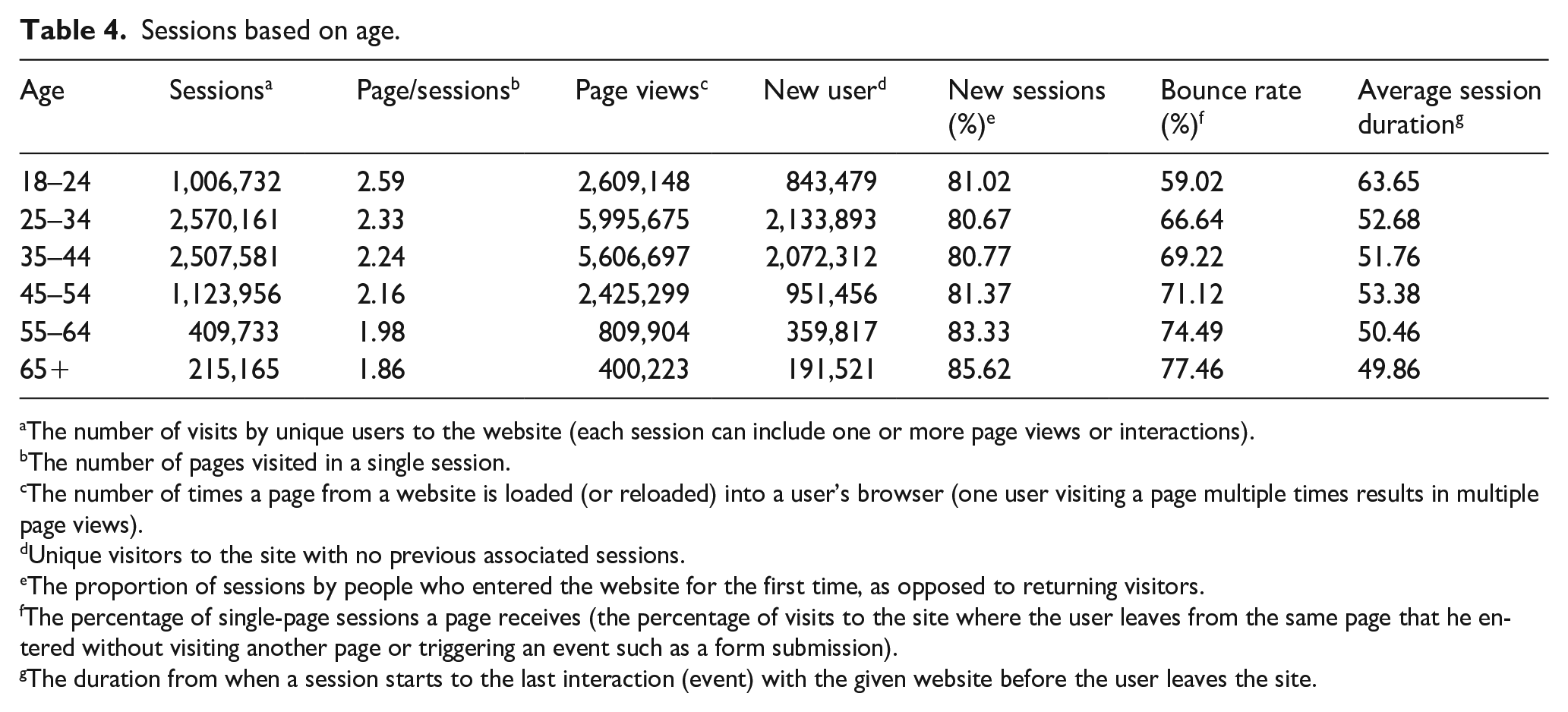
One-third (31.01%; n = 79,078) of the users logged into a Google-related service/account when visiting HealthCareLabo, thus providing estimated data on their gender and age. More than half of the users (64.19%; n = 4,206,205) were 25–44 years old (Table 4). The bounce rate increased with age, whereas the number of pages per session and average session duration decreased.
Sessions based on age.
The number of visits by unique users to the website (each session can include one or more page views or interactions).
The number of pages visited in a single session.
The number of times a page from a website is loaded (or reloaded) into a user’s browser (one user visiting a page multiple times results in multiple page views).
Unique visitors to the site with no previous associated sessions.
The proportion of sessions by people who entered the website for the first time, as opposed to returning visitors.
The percentage of single-page sessions a page receives (the percentage of visits to the site where the user leaves from the same page that he entered without visiting another page or triggering an event such as a form submission).
The duration from when a session starts to the last interaction (event) with the given website before the user leaves the site.
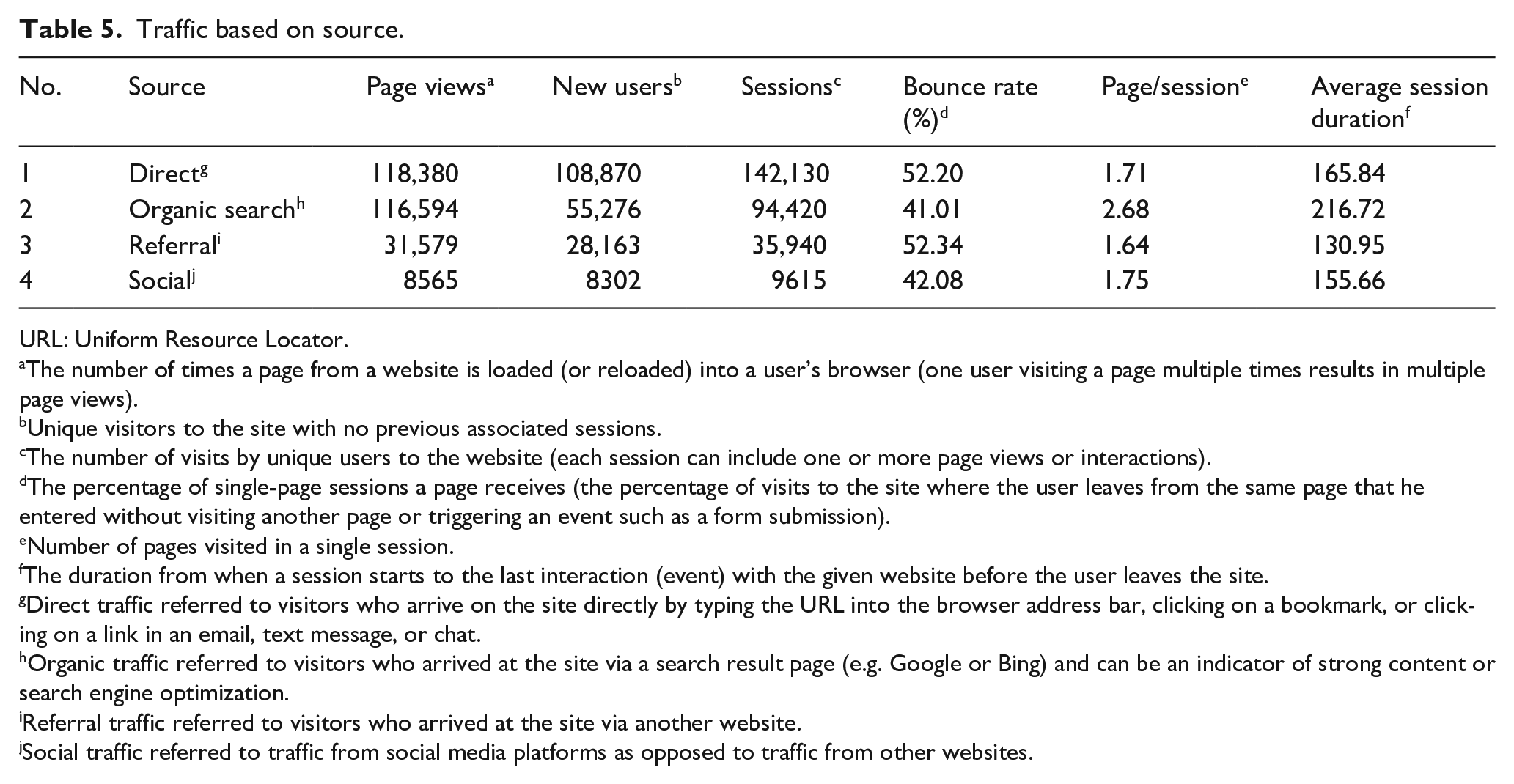
Traffic source organic searches accounted for the highest proportion (93.90%; n = 20,316,801) of all website sessions and had the shortest session duration among all traffic sources (Table 5). Traffic via social media (i.e. from links on other websites, such as those that link to us as a resource, or from an online media/news feature), while representing only 0.08% of the sessions (n = 19,441), had the highest average time on pages, most page views, and the lowest bounce rate.
Traffic based on source.
URL: Uniform Resource Locator.
The number of times a page from a website is loaded (or reloaded) into a user’s browser (one user visiting a page multiple times results in multiple page views).
Unique visitors to the site with no previous associated sessions.
The number of visits by unique users to the website (each session can include one or more page views or interactions).
The percentage of single-page sessions a page receives (the percentage of visits to the site where the user leaves from the same page that he entered without visiting another page or triggering an event such as a form submission).
Number of pages visited in a single session.
The duration from when a session starts to the last interaction (event) with the given website before the user leaves the site.
Direct traffic referred to visitors who arrive on the site directly by typing the URL into the browser address bar, clicking on a bookmark, or clicking on a link in an email, text message, or chat.
Organic traffic referred to visitors who arrived at the site via a search result page (e.g. Google or Bing) and can be an indicator of strong content or search engine optimization.
Referral traffic referred to visitors who arrived at the site via another website.
Social traffic referred to traffic from social media platforms as opposed to traffic from other websites.
Table 6 lists the top 10 queries from Google searches that brought the users to the website. Four of the top 10 queries are related to BMI. Among these, the query “BMI female” had the highest search position (1.02) and the highest click-through rate (CTR; 48.53%; n = 150,019). CTR represents the proportion of users who click on a particular link relative to the total number of users who view the page. A higher CTR indicates that titles, abstracts, or links are effective in capturing user interest and fostering further engagement. On the other hand, the highest CTR was for the “ED Diagnostic Test,” (69.54%; n = 34,240), which also had a high search position (1.01). On average, the website received 38,122 clicks/month from searches related to BMI.
Google Search traffic: top queries ranked based on clicks.

URL: Uniform Resource Locator.
Number of clicks on a URL from the site appearing on the Google Search results page (not including paid ads).
The number of times a URL from the site appears in Google Search results as viewed by a user (not including paid ads).
The proportion of clicks received per impression.
Average ranking of website URLs for search terms (with one being the first website listed in the top search results).
As this site is written in Japanese, most of its access was from Japan. There were many accessions from prefectures with large populations (Figure 2). Users from Tokyo, the capital of Japan, were the most numerous (24.44%; n = 5,506,023 visitors), followed by users from Osaka (14.66%; n = 3,302,143 visitors) and Kanagawa (11.11%; n = 2,503,168 visitors), the most populous prefectures in Japan. However, the bounce rates, PVs, and average sessions remained the same across prefectures. Miyazaki had the lowest bounce rate (58.54%), most pages per session (2.74), and the longest average session duration (87.82 s). Many (90.7%; n = 3,861,247) sessions occurred on a mobile device, with a bounce rate of 76.14% and an average session duration of 50.12 s. The second most common session type was desktop (8.1%; n = 344,008), with a bounce rate of 73.41% and an average session duration of 78.77 s. The remaining sessions occurred on a tablet device (1.2%; n = 52,182), with a bounce rate of 75.72% and an average session duration of 63.27 s.

Traffic based on prefectures. There were many accessions from prefectures with large populations. Users from Tokyo, the capital of Japan, were the most numerous, followed by users from Osaka and Kanagawa, the most populous prefectures in Japan.
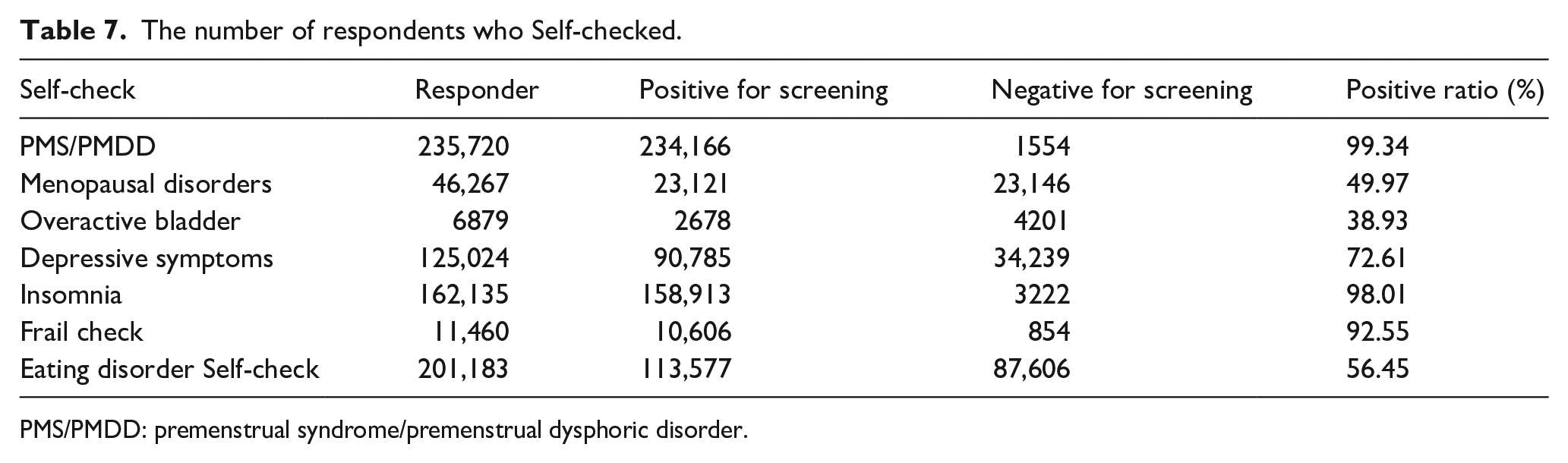
The number of respondents who Self-checked was higher in the PMS/PMDD (n = 235,720), ED (n = 201,183), insomnia (n = 162,135), depression (n = 125,024), menopause (n = 46,267), frailty (n = 11,460), and active bladder (n = 6879) groups (Table 7).
The number of respondents who Self-checked.
PMS/PMDD: premenstrual syndrome/premenstrual dysphoric disorder.
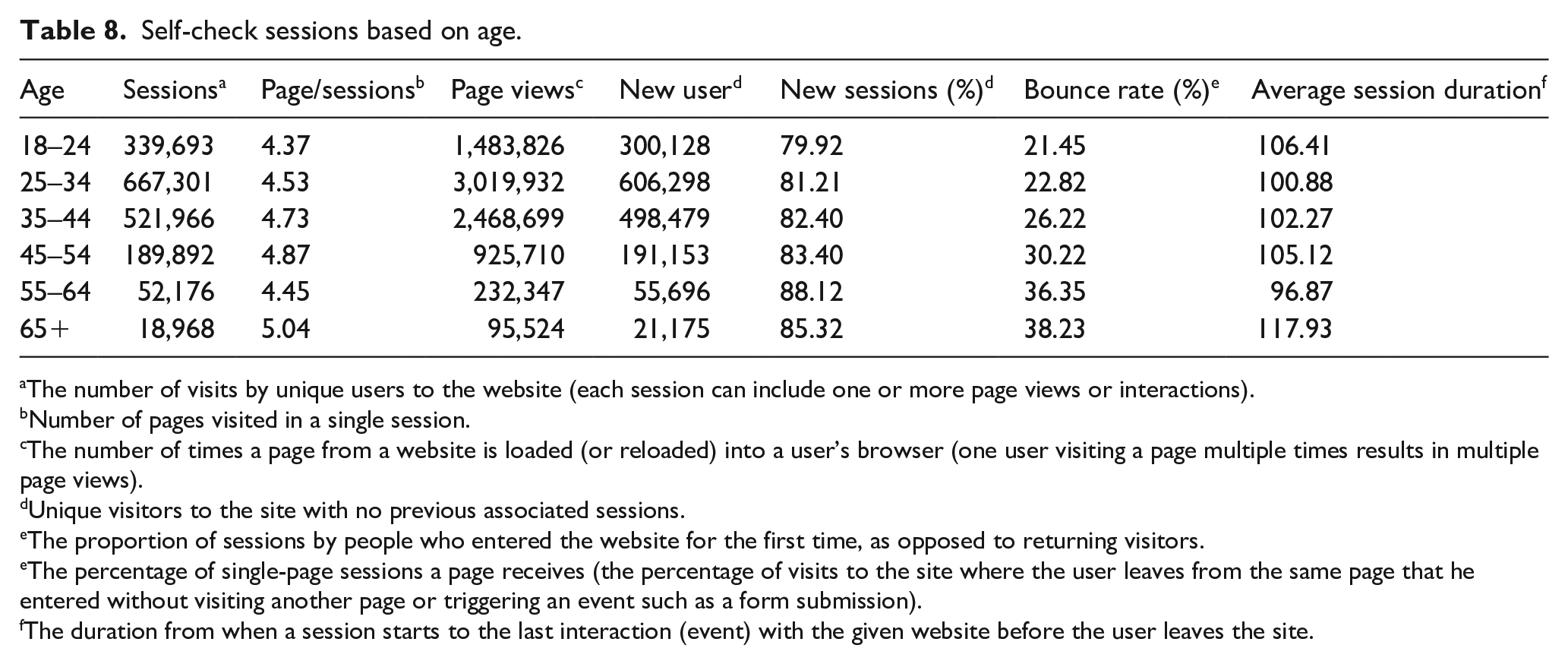
Table 8 shows those who Self-checked according to age: more than 60% of those who took the Self-check were 25–44 years old (66.4%; n = 1,189,267). The number of pages per session did not differ with age; however, the bounce rate increased with age. The average time on page was 104 s, with a bounce rate of 29.22% and an exit rate of 83.39% (Table 8).
Self-check sessions based on age.
The number of visits by unique users to the website (each session can include one or more page views or interactions).
Number of pages visited in a single session.
The number of times a page from a website is loaded (or reloaded) into a user’s browser (one user visiting a page multiple times results in multiple page views).
Unique visitors to the site with no previous associated sessions.
The proportion of sessions by people who entered the website for the first time, as opposed to returning visitors.
The percentage of single-page sessions a page receives (the percentage of visits to the site where the user leaves from the same page that he entered without visiting another page or triggering an event such as a form submission).
The duration from when a session starts to the last interaction (event) with the given website before the user leaves the site.
The percentages of each Self-check that exceeded their respective cut-off values are listed in Table 7. The positive rates were highest in the following order: PMS/PMDD (99.34%; n = 234,166/235,720), insomnia (98.01%; n = 158,913/162,135), frailty (92.55%; n = 10,606/11,460), depression (72.61%; n = 11,043/125,024), and ED (56.45%; n = 87,606/201,183) checks.
The number of consultations with free descriptions on the consultation form was 67, classified as follows: “eating behavior disorders” accounted for 48 cases, with 41 cases related to bulimia (Bulimarexia Question (BNQ)) and seven cases related to anorexia (Anorexia Question), “menstruation” accounted for six cases, “irregular uterine bleeding” for three cases, “pregnancy-related” for two cases, and “others” for eight cases. The number of consultations increased around February 2022 and decreased around February 2023.
Discussion
Health literacy is defined as the degree to which individuals have the “capacity to obtain, process, and understand basic health information and services needed to make appropriate health decisions.” 28 Low or inadequate health literacy has been associated with various adverse health outcomes, including increased rates of hospitalizations and emergency department visits, poorer overall health status, and higher mortality rates. 29 Women with low health literacy are more likely to engage in care-avoidant behaviors. 6 This tendency may be linked to greater distress about medical results, limited understanding of risks and testing options, insufficient health information-seeking behavior, reduced access to health care, or lower levels of self-efficacy.6,30,31 Establishing a global digital platform dedicated to women’s health care and research could mitigate mismanagement while facilitating efficient information exchange among patients, healthcare providers, family caregivers, and researchers. 5 For these reasons, the operation of the website “HealthCareLabo” provides cross-disciplinary information related to the health of women of all ages.
The objective of the present study was to evaluate web analytics over a 7-year period for HealthCareLabo. The number of visitors to the website peaked in September 2021, then declined and stabilized from November 2021 onward. Ninety percent of HealthCareLabo visitors from search engines, which makes it susceptible to the Google Core Update, which may have influenced the change in visitor numbers. Bounce rate measures the percentage of users who visit a website and leave without continuing to other pages on the same website in a single session. Bounce rate is determined by dividing the number of users who exit a site without viewing additional pages by the total number of users, 32 and it is often regarded as an indicator of user satisfaction with a particular page, 33 and most businesses concur that pages with high bounce rates should be redesigned to enhance user-friendliness, aiming to increase the frequency and duration of user visits, thereby reducing the bounce rate. 34 HealthCareLabo’s average bounce rate was 67.75 % over the study period, which is higher than other health-related web traffic studies.35 –38 There are several possible explanations for this behavior. For instance, visitors may leave because they have found the information they were seeking and no longer need to stay, or they may leave due to dissatisfaction with the online interventions (e.g. not finding the desired information), which discourages them from remaining on the site. 37 In fact, in HealthCareLabo, the bounce rate for the Self-check page was notably high. Moreover, given the high bounce rate of accesses to pages displaying results, such as BMI calculations and Self-checks, it is likely that many users view their results and then leave the site, which contributes to a high bounce rate. Furthermore, by age, the bounce rate increases with increasing age, suggesting that while information is easy to obtain for users of reproductive age, the site may make it difficult for post-perimenopausal women to obtain the information they want to obtain. To improve the bounce rate, it is necessary to enhance the navigation, so that visitors who complete a Self-check are directed to pages that help them improve their situation. Currently, our website only provides a recommendation for individuals with positive Self-check results to seek medical attention. To enhance our approach to user health, it may be beneficial to include additional resources, such as links to articles related to Self-check assessments or features that allow users to chat directly with healthcare professionals. These improvements could facilitate better access to medical information and promote timely medical consultations.
Most visits lasted <40 s, and the average session duration was 48 s. Previous reports of other health-related web traffic studies indicate that the average duration time is 1 min 30 s–2 min, 39 and our site tends to be short. The brief duration of page visits highlights the “hit-and-run” nature of many online information seekers, underscoring the need to present information concisely and clearly to capture and maintain readers’ attention. 40 Although users may be obtaining the information they need, they might lack interest in exploring other pages on the site. To improve user engagement with similar content, it is crucial to design a website that effectively directs users to other relevant pages. This can be achieved through strategies that encourage users to explore additional content.
Most connections to the website originated from organic searches rather than direct searches. This suggests that many visitors to the HealthCareLabo site were unaware of its existence and found it through internet searches.
The visitors to the HealthCareLabo website were predominantly 25–44 years old, accounting for 64% of the total; also, 66% of those who conducted the Self-checks were also aged 25–44; as the user’s age increases, the average session duration decreases, and the bounce rate increases. This indicates that the site is frequently visited by Japanese women of reproductive age, and younger users are more interested in the site’s content and tend to browse the site. Additionally, many respondents came from urban areas, suggesting that women of reproductive age who are presumed to live and work in an urban area are more concerned about their health issues or have better internet access or digital skills. Among the Self-checks, PMS/PMDD and ED were common, with a high positive rate for PMS/PMDD. According to the DSM-IV-TR, 3%–5% of women of menstrual age may develop this disorder. 41 Of these women, 90.6% consider the symptoms to be normal (not pathological) and 18.7% seek professional help, although in some cases they receive inadequate responses. 42 Women suffering from PMS/PMDD and ED often struggle to decide whether to visit a medical institution. Because PMS was originally considered a Western culture-specific disease, 43 awareness of PMS/PMDD in Japan is said to be lagging behind that of other countries. The use of screening tools for PMDs is helpful for an efficient examination, 44 and taking this Self-check may help guide patients toward seeking medical attention.
The number of consultations correlated with the spread of COVID-19 in Japan. February 2022 coincided with the sixth wave of COVID-19, during which the number of consultations decreased. The period of declining consultations coincided with the conclusion of the COVID-19 pandemic and the transition to classification as a Category V infectious disease. It is believed that the increase in the number of eating behavior disorders, which has been observed alongside the spread of COVID-19, may have contributed to the increase in consultation cases. 45
The number of consultations with free descriptions on the consultation form, there were many consultations regarding ED, especially BNQ. ED, are pernicious mental illnesses that are characterized by significant preoccupations with food and weight/shape, and abnormal eating patterns. The two primary EDs were anorexia nervosa (AN) and bulimia nervosa (BN). 46 By definition, both are characterized by an over-concern of weight and shape and attempts to control weight. Individuals with AN are underweight for their age, sex, and developmental history and can engage in behaviors to avoid weight gain or not recognize the severity of their illness. Those with BN frequently engage in episodes of binge eating several times per week, which are typically followed by various maladaptive weight-compensatory behaviors, including the misuse of diuretics, self-induced vomiting, fasting, laxative abuse, and excessive physical exercise. 46 The epidemiological surveys revealed different trends in ED presentations across Japan, such that the yearly incidence of AN and BN increased dramatically in 1998, and then stabilized by 2015. However, the prevalence estimates of BN were extremely low in these national surveys. 47 In the consultation cases we received, the number of inquiries related to BN was higher than those related to AN, indicating an increasing trend in BN-related consultations. The prevalence of BN is likely underestimated compared to that of AN, as individuals with BN are less inclined to seek medical assistance. 48 Therefore, while knowledge and treatment methods for AN are known in Japan, information regarding BN is considered limited. This lack of information may be a contributing factor to the large number of consultations received through our inquiry form. Responding to inquiries submitted through the consultation form may help individuals recognize the need for treatment of BN and encourage them to seek medical attention.
Limitation
The findings of this study should be considered in the context of various limitations. There are no guidelines for the use and interpretation of Google Analytics to demonstrate “success” of a platform. Google Analytics conforms to a marketing perspective of web-based behavior rather than a comprehensive evaluation of user health, behavior, or objectives. 19 Another limitation is that the number of users may be inaccurate because a new client ID is given each time the user deletes browser cookies, switches devices, or uses a different browser. Similarly, regarding the calculation of the average session duration, Google Analytics assigns a value of 0 s when a user visits a page but does not visit a second page or trigger an event. 49 Additionally, Self-check processes may introduce bias due to participant self-selection or condition-based self-selection, which could potentially distort the results and represent a limitation of the present study. Moreover, it remains unclear how many users with positive Self-check results subsequently sought medical attention. Furthermore, whether the responses provided through the consultation form are viewed by the users themselves is also uncertain. Future research should focus on tracking the behavior of Self-check users to determine whether they engage with related informational content and whether those with positive results proceed to seek medical care. Such follow-up studies are essential to evaluate the long-term impact of digital health interventions on user behavior and healthcare utilization.
In conclusion, HealthCareLabo provides information about women’s health issues to all generations, particularly working-age women. It helps them by using Self-checking methods to check their bodies and make informed decisions.
Conclusions
In conclusion, the findings from this study underscore the importance of optimizing digital health platforms to enhance user engagement, facilitate the dissemination of accurate information, and encourage proactive healthcare behaviors. Moving forward, improving website navigation, expanding educational resources, and integrating interactive features are crucial to addressing the diverse health needs of women. HealthCareLabo operates without any commercial interests; instead, it is driven by a commitment to sharing information and expertise. This focus on providing authentic, evidence-based resources reflects our dedication to empowering women to make informed decisions about their health. By refining the HealthCareLabo platform, we aim to equip women with the knowledge and tools necessary to make informed health decisions and access timely medical care, ultimately contributing to improved health outcomes and greater public health literacy.
Footnotes
Acknowledgements
We thank Mr. Wataru Fukuzaki of Human Digital Consultants Co., Ltd. for managing HealthCareLabo.

Ethical considerations
The study is approved by the Institutional Review Board (no. 11428) of the University of Tokyo.
Consent to participate
Consent to participate was obtained through an opt-out approach, allowing participants to decline inclusion if desired.
Consent for publication
Consent for publication was obtained through an opt-out approach, allowing participants to decline inclusion if desired.
Author contributions
Funding
The author(s) disclosed receipt of the following financial support for the research, authorship, and/or publication of this article: The study is supported by the Ministry of Health, Labour, and Welfare.
Declaration of conflicting interests
The author(s) declared no potential conflicts of interest with respect to the research, authorship, and/or publication of this article.
Data availability statement
The data shown here are provided according to the appropriate demand by the researcher. To obtain access to the raw data analyzed in this study, contact the corresponding author (O.W.-H.).