



Abstract
Background:
Empowerment is vital for individuals’ control over their lives but is often constrained for women in India due to deep-rooted patriarchal norms. This affects health, and resource distribution, and increases domestic violence. Domestic violence including physical, sexual, emotional, economic, and psychological abuse is a significant human rights and public health issue. Understanding the link between women’s empowerment and attitudes toward physical violence is essential for addressing this problem.
Objectives:
To explore the relationship between various aspects of women’s empowerment and their attitudes toward the justification of physical violence in specific circumstances. The study aimed to provide insights into how empowerment can serve as a protective factor against domestic violence.
Design:
A cross-sectional study was conducted using the data from the National Family Health Survey-5 (NFHS-5), collected from 2019 to 2021. The study was carried out between July 2023 and March 2024.
Methods:
Data from NFHS-5, focusing on women aged 15–49 who completed the domestic violence module, were analyzed. Women’s empowerment was measured through employment, asset ownership, and decision-making autonomy. The study assessed 8 indicators of employment, 12 of asset ownership, 9 of decision-making, 5 justifying physical violence, and 11 indicators of physical abuse. Frequencies, percentages, Fischer’s exact test, and logistic regression were used, with significance set at p < 0.05.
Results:
Of 4562 women, 23 (0.7%) were employed, 3397 (74.5%) owned mobile phones, and 744 (21.9%) used them for transactions. Joint financial decisions were made by 2692 (75.2%) couples. Restrictions on meeting friends were reported by 376 (10.1%), and 431 (11.6%) had trust issues with partners. Physical violence was justified by 934 (20.5%) for neglecting children, and 3365 (90.4%) experienced partner violence. Land ownership was reported by 383 (8.4%) women. Empowered women were less likely to justify or experience violence, with mobile phone use and decision-making autonomy linked to reduced violence.
Conclusion:
Women’s empowerment through employment, asset ownership, and decision-making is associated with reduced justification and prevalence of physical violence. Despite progress, entrenched societal norms persist. Interventions should focus on economic and social empowerment, addressing cultural attitudes and promoting gender equality.
Plain language summary
Our research looks at how helping women have more control over their lives can stop domestic violence in India. We looked at a lot of information from a big survey that asked women about their lives. We found that when women have jobs, own things such as phones and houses, and have a say in important decisions, they are less likely to be hurt by their partners. This shows that when women have more power and independence, they are safer from violence. Having a job and earning money on their own means women do not have to rely on someone else, making it harder for them to be controlled or hurt. Also, owning things such as phones and houses can give women a sense of security and control over their lives, making them less likely to accept violence. When women are involved in making decisions about their health and family, they feel more confident and are less likely to accept violence. This research tells us that it is really important to support women to have more control over their lives. When women are educated, have jobs, own things, and can make their own decisions, they are safer from violence. So, we need to focus on giving women more opportunities and support to empower themselves. This will not only make their lives better but also help make our society safer and fairer for everyone.
Keywords
Introduction
Empowerment is defined globally as a multidimensional social process that assists people in gaining the utmost control over their very own lives. 1 Similarly, women empowerment relates to women’s ability to make strategic life decisions that was previously denied to them. 1 Many factors account for lack of empowerment among women in India such as patriarchal society norms, limited mobility and labor opportunities, and decreased levels of social inclusion, political involvement, and economic justice.2,3 Women empowerment factors include decision-making in the family, freedom of mobility, equitable gender roles, access to school and work, media exposure, experience with domestic abuse, and political engagement. 4 Women’s empowerment is closely connected to economic independence and the ability to make decisions, both of which are essential for challenging deep-rooted gender norms. 5 Restriction often perpetuates a cycle of domestic violence, where women who lack empowerment may feel compelled to tolerate or justify abuse due to limited alternatives. 6
Domestic abuse (also referred to as ‘domestic violence’ or ‘intimate partner violence’), is a behavioral pattern in a relationship where an individual gains or retains power over their intimate partner. Abuse can occur in many forms (e.g., physical, sexual, emotional, economic, or psychological) and includes actions causing harm, humiliation, fear, assault, or injury. 7 Gender-based violence against women has since long been acknowledged as a violation of basic human rights. 8 Domestic violence according to the Indian context comprises physical, mental, emotional, and sexual abuse of a woman in her intimate relationship, which is culturally mandated and often tolerated by society. 9 Data from the Indian National Crime Records Bureau (NCRB, 2017) indicate that women in India are victims of a crime every 3 min. 10 The National Commission for Women (NCW) in India has released substantial statistics on domestic abuse, noting a disturbing spike in reports during the COVID-19 epidemic. Between 2014 and 2022, the NCW saw a 55.03% increase in complaints in 2021 compared with those in 2018, with forecasts showing 35,287 complaints in 2022, the largest in 8 years.11,12 Although a recent nationwide survey showed a slight decrease in physical and sexual violence from 31% to 29% over 5 years, the current level is still concerning. 13 Even though these rates are below the global average, they represent millions of women who continue to experience violence. 13 Although the husband is primarily responsible for domestic violence, in-laws and individuals closely or indirectly associated with the woman through marriage are often involved. 14 Worldwide, 30% of women have survived physical or sexual violence in an intimate relationship or sexual violence by a person who was not their partner. 15 During their lifetime, approximately 736 million women globally (about one in three women) are victims of intimate partner violence (IPV), nonpartner sexual violence, or both. 16 The significant occurrence of IPV in India may be ascribed to a variety of cultural beliefs, norms, and patriarchal ideals that justify the oppression of women in cultures throughout their lives. 17
From the past to present: challenges for women
The role of women was fundamental to the foundation of Indian society. 18 In the Rig Vedic period, women enjoyed high social status, good living conditions, and the opportunity to reach high intellectual and spiritual standards. 19 Vedic civilization revered women as mothers and people with immense capacity to see the truth and contribute to human society, and that era had much to teach the present society. 20 South Asian literature, such as Tirukkvaiyr, presents female characters in various roles, thus challenging the narrow, traditional ideal of being a good Tamil woman by offering a richer, more diverse portrayal of women’s roles in society. 21 Following a free and honorable status in the Rig Vedic society, women started to experience discrimination in education and other rights beginning in the later-Vedic period. 18 During the Smriti period, particularly under the influence of Manu’s laws, women’s status began to decline as these laws imposed restrictions on their autonomy and reinforced patriarchal control.22,23 As time progressed, societal norms evolved, resulting in the adoption of practices that marginalized women, including child marriage, which were not present during the Rig Vedic Era. 24 At that time, there was no practice of untouchability and a caste system. 24 This historical decline in women’s status has paved the way for current issues, such as the widespread issue of domestic violence in India. 12 The idea that women were considered inferior and subject to male guardians implies that domestic violence may have occurred, even if it is not expressly mentioned in Rig Vedic texts. 25 Thus, despite the seeming equality of rights during the Rig Vedic era, the roots of domestic violence were most likely planted in the changing cultural standards that followed. 25 Cultural perceptions that are entrenched in historical inequalities continue to perpetuate violence against women, despite legal advancements that are intended to protect them. 25
Women in India have had equal rights with males since the Constitution was written, unlike women in the West, who had to battle for nearly a century to vote. 18 In the 17th century, across Asia, women made up about one-third of the world’s population. 26 In that era, women were not permitted to inherit wealth or enterprises, and they were expected to heed their fathers, spouses, and sons; society constantly perceived women as less significant and consistently placed them in an inferior position to males. 27 In the 20th century, the feminist movement started, mainly focusing on supporting women’s rights regarding their ability to make decisions about having children. 27 During that century, the United Nations approved various statements aiming to encourage fairness and equality for women across the globe. Unfortunately, in Asia, many of these statements have not been put into action as intended. 28
The study conducted by Patel et al. 29 found that gender disadvantage is the primary factor contributing to the low health condition of several Indian women. The level of independence and equality that women have achieved is considered to have a significant impact on their capacity to control reproduction and promote the well-being and growth of children. 30 Women often accept traditional roles as natural, leading to unfair treatment. In developing countries such as India, societal norms and family setups continue to support women’s subordinate status. In many places, the birth of a boy is still preferred to a girl. 31
Pervasive domestic violence is a significant issue for women, particularly during crises such as the COVID-19 pandemic, when they are trapped at home for extended periods. 12 This mistreatment encompasses physical, verbal, and emotional abuse, with dowry harassment emerging as a significant problem in marital disputes. 32 Despite possessing individuality, self-respect, personality, capacity, talent and efficiency compared with men, women continue to face persistent challenges. These challenges persist despite the equal rights and opportunities guaranteed to them in the Indian Constitution. 33 We need to do more to bridge the divide between urban and rural areas, ensuring that rural women have equal opportunities for education, employment, healthcare, and decision-making. The challenge lies in altering traditional beliefs in South Asian countries, where patriarchal conventions hinder women’s empowerment. 34
Women empowerment and domestic violence
Based on the United Nations Universal Declaration of Human Rights, women have the same rights as men; they “have the right to life, the right not to be subjected to torture or inhumane or degrading treatment or punishment, the right to equal protection, the right to liberty and personal security, the right to equal protection under the law, the right to equality in the family, the right to the highest standard of physical and mental health, and the right to justice.” 35 Women empowerment is a primary goal of the mainstream domestic abuse movement. 36 Working on women empowerment indices such as employment status, ownership of physical assets such as mobile phones, bank accounts, land, and housing and key household decisions for herself such as healthcare, household purchases, and freedom of movement with regard to visits to her family and relatives place will directly influence against domestic violence. 37 Empowering women in India will bring about a significant leap for society and the country as a whole against domestic violence as women hold unequal roles and prestige in practically every community and aspect of life 4 ; hence, it is vital to empower them by giving them equal possibilities in every way possible. 4 In the context of this paper, empowerment predominantly refers to the socioeconomic and political empowerment of women, which directly affects their capacity to resist domestic violence and make decisions. Lack of empowerment can exacerbate women’s vulnerability to domestic violence, as it limits their ability to resist and escape abusive situations. The study aimed to explore the relationship between various aspects of women’s empowerment and their attitudes toward the justification of physical violence in specific circumstances providing insights into how empowerment can serve as a protective factor using National Family Health Survey-5 (NFHS-5) data.
Insights from multicentric studies in India
Many studies worldwide have tried to explore the extent and different aspects of women’s empowerment and domestic violence, providing valuable information. In a multicentric study with an analytical cross-sectional design covering 18 states in India with 14,507 women respondents, they showed that in India, women with lower household income, low education, from lower castes, and with partners engaging in drinking/betting face higher risks of domestic violence. 38 In a mixed methods study that took place in specific villages in Karnataka, Telangana (previously part of Andhra Pradesh), and Meghalaya, India, indicated that when women who had equal rights to own land significantly reduced violence against them and enhanced their abilities.
Methods
The National Family Health Survey 2019–2021, 39 the fifth in the NFHS series, includes demographic, nutrition, and health data for India, each state/union territory (UT), and 707 districts as of 31 March 2017. The Ministry of Health and Family Welfare (MoHFW), Government of India, was in charge of all five NFHS surveys. The International Institute for Population Sciences (IIPS), Mumbai, appointed by the MoHFW is regarded as the lead agency for all NFHS cycles in India. The NFHS-5 field study was implemented in two phases. Phase I study (17 June 2019 to 30 January 2020) was conducted in 17 states and 5 UTs whereas Phase II study (2 January 2020 to 30 April 2021) was conducted in 11 states and 3 UTs. Data were collected by 17 field agencies from 636,699 households, 724,115 women, and 101,839 men.
This is a nationally representative probability sample of all women aged 15–49. Given the comparable methodology of NFHS-5 and NFHS-4, data can be compared throughout time. However, several additional themes were included in NFHS-5 (e.g., preschool education, handicaps, toilet accessibility, death registration, menstrual hygiene practices, and causes of abortion and procedure type). The contents of NFHS-5 are comparable with those of NFHS-4, allowing for comparisons throughout time.
The study relies on the data from the fifth round of the NFHS-5 conducted between 2019 and 2021. Women empowerment indices developed from NFHS-5 data are critical in comprehending and treating domestic abuse. 39 The data provide crucial insights into the relationship between women’s empowerment and domestic violence in India. By analyzing these elements, we can delve into the underlying causes and work toward effectively empowering women to prevent domestic abuse. Domestic violence is a crucial issue that is intimately linked to women’s empowerment. We can find patterns and trends in the NFHS-5 data that provide light on the underlying causes that contribute to domestic violence. The reporting of this study conforms to the Strengthening the Reporting of Observational Studies in Epidemiology (STROBE) guidelines. 40
Study design
This study employs a cross-sectional design, utilizing the data from the NFHS-5. After necessary permissions were obtained from the Demographic and Health Surveys (DHS) on 21 June 2023, the data from the NFHS-5 was collected and utilized for the study and the analysis was conducted between July 2023 to March 2024.
Study population
The study focuses on women aged 15–49 years who participated in the Domestic Violence Module (DVM) 39 of the NFHS-5 study. Out of the 47,918 women surveyed through the DVM, only 4562 women were included in the final analysis (with consent obtained from either the patient or the patient’s legally authorized representative in the case of minors). This age range was selected because it represents the most active reproductive and marital period, where domestic violence is most prevalent.
Inclusion criteria
Women aged 15–49 years and women who completed the DVM interview in full without any interruptions.
Exclusion criteria
The study excluded women who did not complete the DVM module, had interrupted or terminated interviews, provided inconsistent or invalid data, did not consent to participate (with consent obtained from either the patient or the patient’s legally authorized representative in the case of minors), or fell outside of the age range of 15–49 years, ensuring the accuracy, reliability, and ethical integrity of the data.
Variables and indicators
The study took into account various aspects by considering specific indicators. This included eight indicators related to employment status, examining how women are engaged in work. Additionally, 12 indicators focused on ownership, covering possessions such as mobile phones, bank accounts, land, and housing. Another set of nine indicators delved into key household decision-making, assessing the roles of women who have a say in important family choices. Furthermore, five indicators were considered to understand the reasons for or justifications behind instances of physical violence. The study also examined 11 indicators to quantify instances of physical abuse, exploring the different forms it may take. Lastly, the study considered factors related to perpetrators of physical violence, aiming to understand the characteristics associated with those who engage in such behaviors. A conceptual framework was formulated to streamline the domains and indicators, as illustrated in Figure 1. This framework aimed to simplify the representation of various aspects, paving a clearer understanding of the relationships between domains and their corresponding indicators within the context of the study’s objectives.
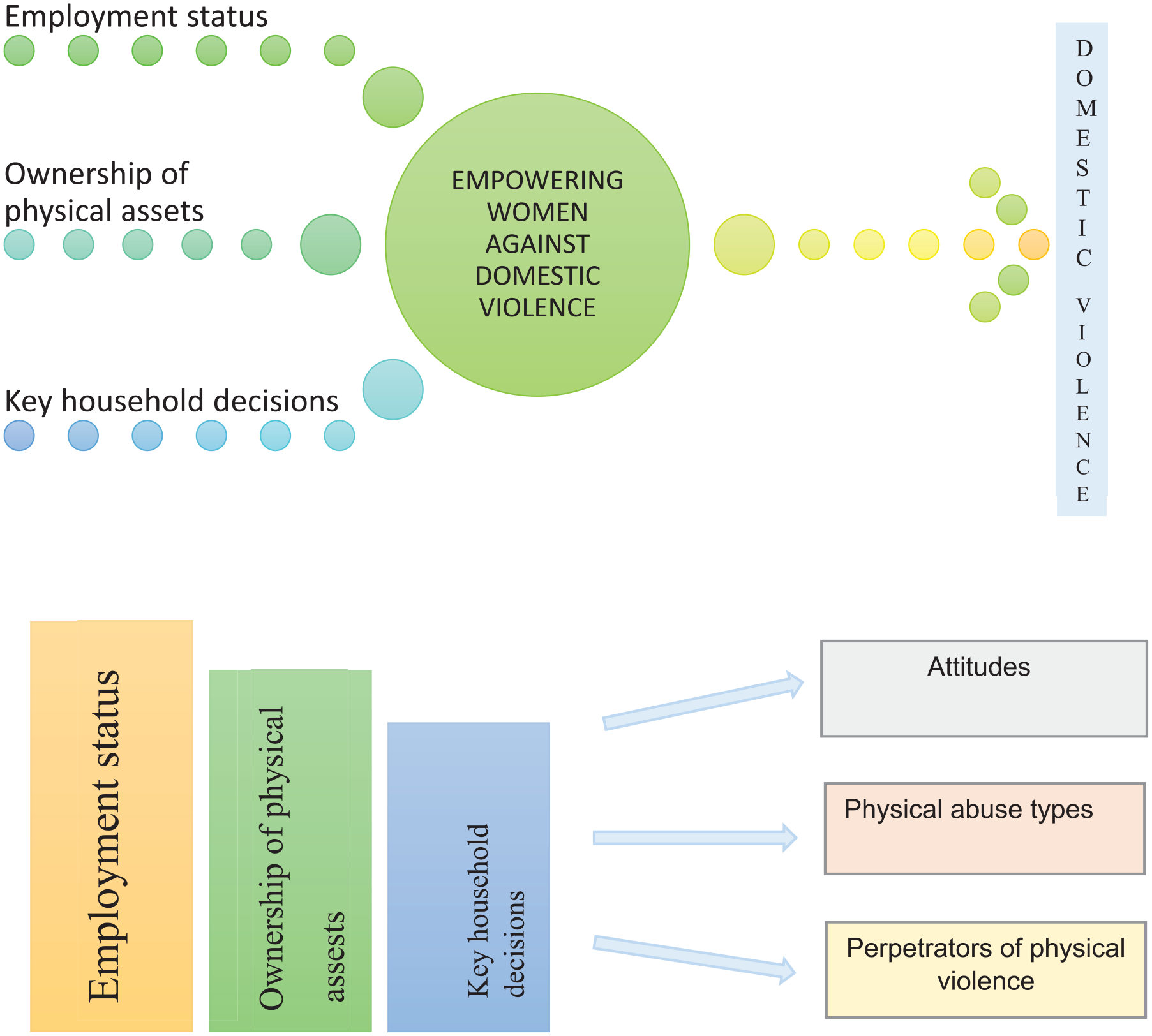
Conceptual framework for the determinants of woman empowerment and domestic violence.
Statistical analysis
Women empowerment indicators and physical violence were depicted using frequencies and percentages. The Fischer exact test assessed associations between these indicators, considering a significant p-value <0.05. Additionally, logistic regression was employed for further statistical analysis.


Results
In Table 1 among the study population of 4562 women, the results show that only 23 (0.7%) of them currently had jobs, and 3470 (99.3%) were unemployed. Nine hundred sixty-nine (73.1%) worked for their families. About 273 (36.3%) of women had earned more money than their partners but were unemployed. Many couples (2692, 75.2%) made joint decisions about how to use the money the husband earns, while 890 (24.8%) of partners made these decisions alone. Most women (3397, 74.5%) owned a mobile phone, and 744 (21.9%) used it for transactions. Only a small percentage owned land or houses alone (383 (8.4%) and 583 (12.8%), respectively). Decision-making about healthcare and big purchases often involves joint choices. However, some women faced restrictions from their partners, such as not meeting female friends (376, 10.1%) or limits on family contact (230, 6.2%). Additionally, 431 (11.6%) had trust issues with their partners about money. Overall, these findings highlight the various factors that affect women’s empowerment.
Sociodemographic characteristics of women empowerment indicators (N = 4562).

In Table 2, a significant portion, 882 (19.3%), felt beating was justified if a wife went out without telling her husband, while 934 (20.5%) believed it was acceptable to neglect children. Additionally, 860 (18.9%) thought beating was justifiable in case of an argument, and 484 (10.6%) refused sex, with 431 (9.4%) agreeing to burning food. Three thousand three hundred sixty-five (90.4%) reported experiencing physical violence by a husband or partner. Various forms of abuse were prevalent, including being pushed, slapped, punched, kicked, strangled or threatened with weapons. The perpetrators were predominantly partners (3365, 90.4%), while family members, including mothers, fathers, siblings, and in-laws, were also identified.
Physical violence indicators (N = 4562).

Table 3 shows the relationship between women’s empowerment and attitudes toward physical violence. Empowered women, often employed and owning assets such as mobile phones, displayed significantly different attitudes. Notably, they were less likely to justify violence if a wife neglected children, refused sex, or burnt food. Mobile phone ownership, especially using it for transactions, was linked to reduced acceptance of violence. Similarly, owning land or a house correlated with less acceptance of violence, particularly related to sexual or food-related reasons. Decision-making power in healthcare and family visits showcased a similar association. Additionally, restrictive behaviors by partners, such as limiting family contact or controlling finances, were associated with higher acceptance of violence.
Association with women empowerment indicators and attitudes toward physical violence indicators (N = 4562).
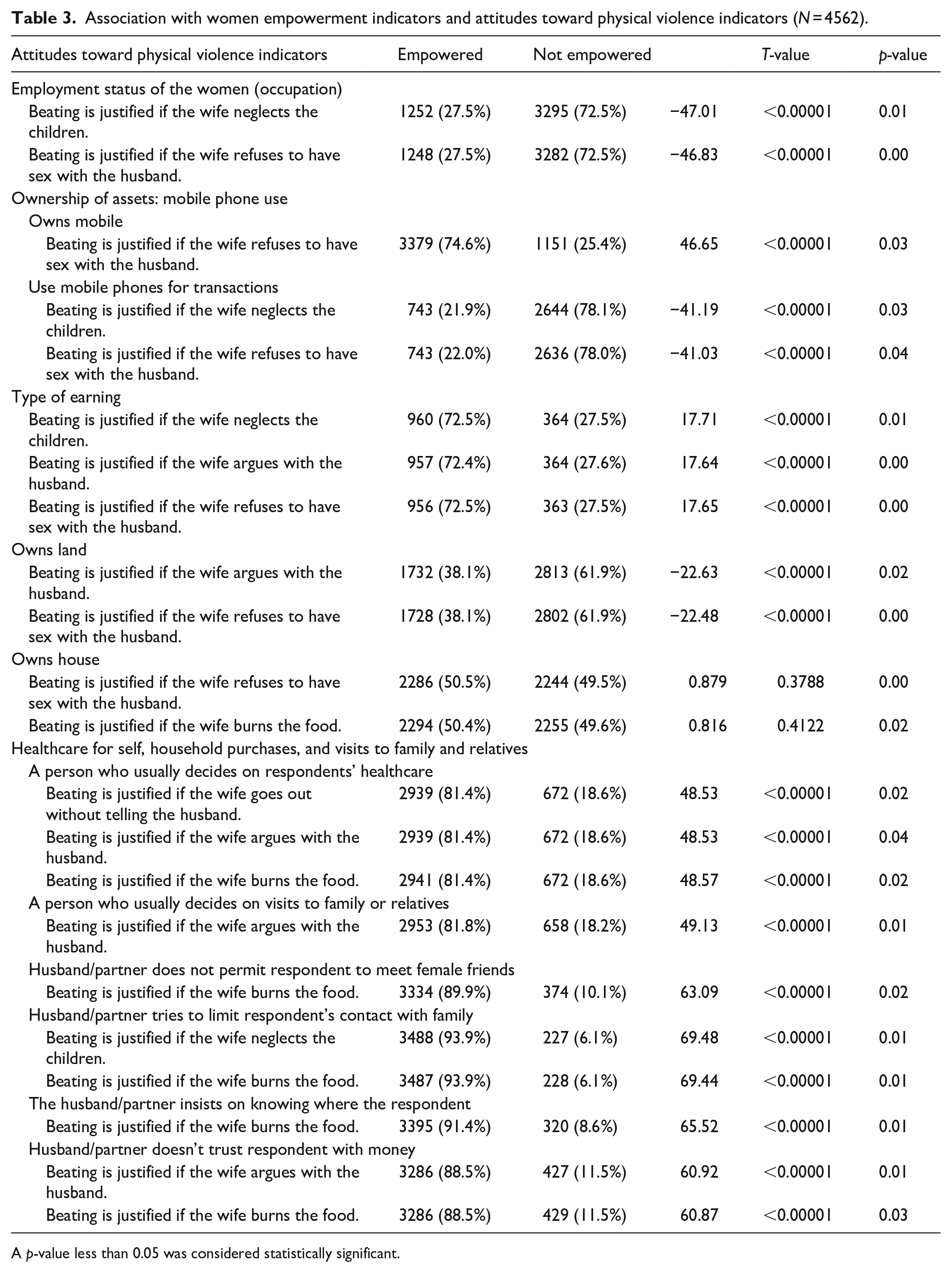
A p-value less than 0.05 was considered statistically significant.
Table 4 examines the link between women empowerment and various types of physical violence in 4562 participants. Empowered women, often employed and owning assets such as mobile phones, experienced significantly lower rates of violence. Specifically, they were less likely to be punched or hit by their partners and were less susceptible to being strangled or burnt. Mobile phone ownership, especially for transactions, correlated with reduced incidents of slapping. Women owning land or a house were less likely to experience physical violence, notably being pushed, slapped, or kicked by their partners. Decision-making power in healthcare, household purchases, and family visits showcased similar protective effects. Conversely, restrictive partner behaviors were associated with higher rates of violence.
Association with women empowerment indicators and physical violence types (N = 4562).
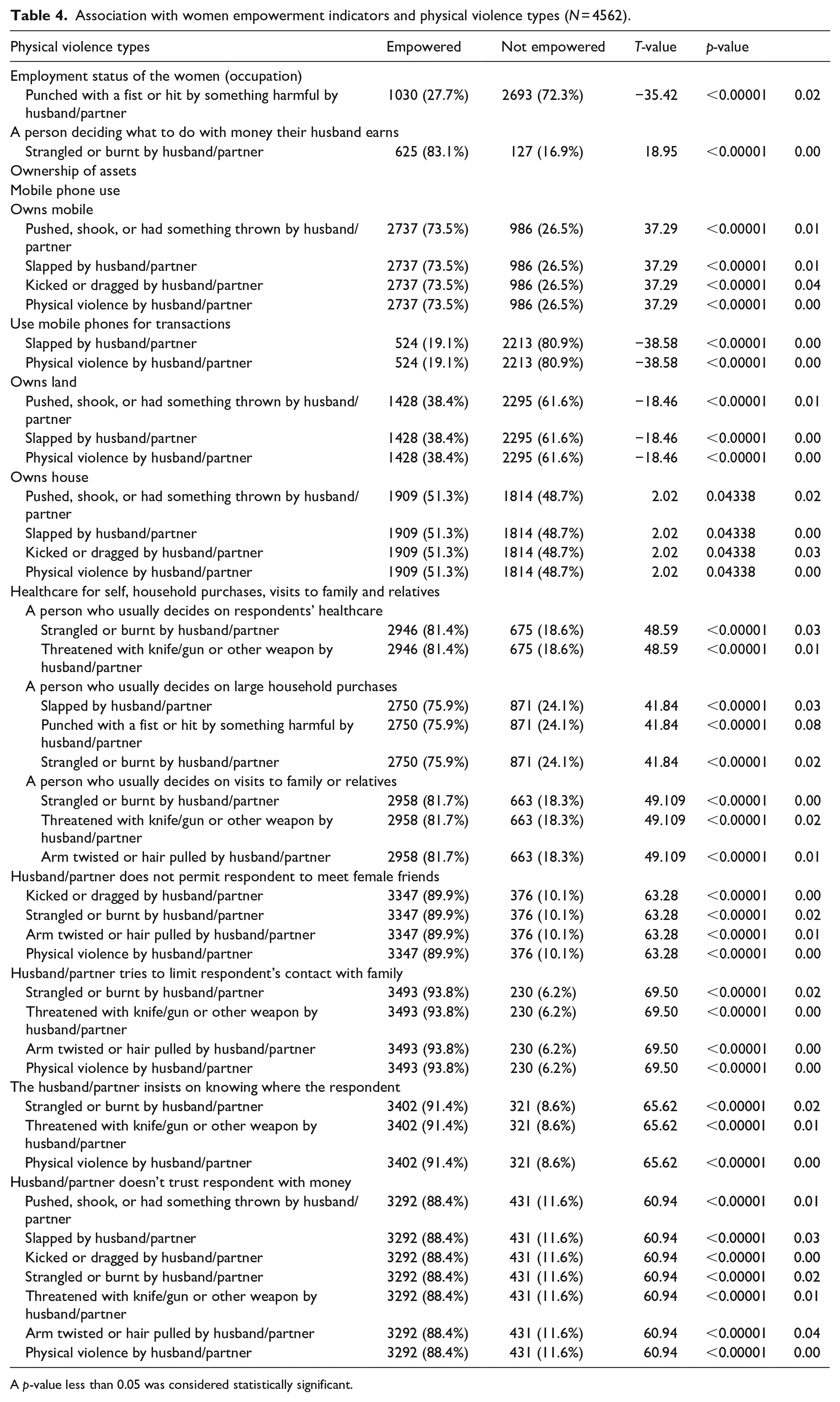
A p-value less than 0.05 was considered statistically significant.
Table 5 shows the link between women’s empowerment and the perpetrators of physical violence. Empowered women, especially those employed and owning assets such as mobile phones, were less likely to face violence from mothers, fathers, and other family members. In healthcare decisions, women’s empowerment correlated with reduced violence.
Association with women empowerment indicators and physical violence perpetrators (N = 4562).

A p-value less than 0.05 was considered statistically significant.
Discussion
Employment and asset ownership
Our study warrants the relationship between women’s empowerment and their acceptance of physical forms of domestic violence, drawing the data from NFHS-5 dataset. Findings reveal that only a small fraction of women in the study were employed (23, 0.7%), with the majority being unemployed. Among those employed, a substantial proportion worked for their families, and a notable number had earned more than their partners. Justification for physical violence was significantly lower among employed women (23, 0.7%), women who worked year-round, those who could decide and make decisions regarding their husbands’ money (2692, 75.2%), women who owned mobile phones (3397, 74.5%), and those who used mobile phones for financial transactions (744, 21.9%). Additionally, women who owned houses (383, 8.4%) and land (583, 12.8%) and those who made decisions regarding their healthcare (320, 8.8%) and family visits (299, 8.3%) were less likely to justify physical violence.
The existing literature aligns with our findings. A study carrid outin Uganda 41 found that formally employed women were less likely to excuse physical violence than unemployed women (OR = 1.66). Similarly, a study carried out in Uttar Pradesh and Rajasthan 42 demonstrated that women with greater autonomy to make financial and healthcare decisions were less accepting of physical violence (AOR = 2.12 for those lacking decision-making power). Further, a study carried out in Uttar Pradesh and Bihar 43 supported this finding, showing that women who own mobile phones have a lower incidence of physical violence (coef: −0.041). Additionally, a study was carried out in Kerala 44 noted that women who own homes and land are more empowered, which correlates negatively with the acceptance of physical violence. These studies collectively suggest that economic and social empowerment plays a critical role in reducing the justification of violence against women.
Attitudes toward violence
Despite the progress in empowerment, a significant portion of women in our study still condoned various forms of physical violence under certain circumstances. In our study, 882 women (19.3%) justified beating a wife for going out without informing her husband, and 934 (20.5%) believed neglecting children was acceptable. These attitudes are concerning as they reflect deeply ingrained societal norms that perpetuate violence.
Our findings are consistent with global trends. A study in Guyana 45 reported that 17.9% of women justified IPV under specific conditions, particularly among rural and economically disadvantaged women. Similarly, in sub-Saharan Africa, the Survey-Based Women’s Empowerment Index (SWPER) was negatively correlated with IPV, indicating that better attitudes toward violence may reduce its prevalence. 46 According to the WHO, Global Database on Prevalence of Violence Against Women 47 provided global estimates showing that the lifetime prevalence of IPV among ever-partnered women aged 15 years and older is 26%, with regional variations such as 49% in Oceania, 44% in central sub-Saharan Africa, and 35% in South Asia. These findings highlight the urgent need for interventions to shift cultural attitudes and promote gender equality as a means of combating IPV.
Empowerment and acceptance of physical violence
The study further demonstrates that women who are empowered through employment, asset ownership, or decision-making power display were less accepting toward physical violence. For instance, a study carried out at a a slum community in Mumbai, 37 found that women with decision-making power were less likely to experience domestic violence, with those justifying beating wife being 2.29 times were more at risk. A study carried out in North East India 10 observed that higher education and upper wealth quintiles were associated with a lower risk of domestic violence, emphasizing that empowerment through education, wealth, and autonomy significantly reduces the prevalence of violence.
Physical violence and empowerment
Among the various forms of physical violence, slapping was the most prevalent 227 (6.1%) in our study. This aligns with other studies, such as a study carried out at Malawi, 48 which found that 64.94% of married women reported experiencing slapping or being struck with objects, making it a widespread form of abuse. Additionally, a study in Jodhpur City highlighted that physical abuse (54.7%) was the most common form of domestic violence, followed by mental (20%) and financial abuse (14%). 49
Perpetrators of physical violence
Our findings also suggest that empowered women are less likely to experience physical violence from family members, including mothers, fathers, and siblings. This indicates that empowerment may reduce not only the likelihood of experiencing violence but also the sources of that violence. A study carried out in Ghana 50 supports this finding, showing that women involved in decision-making, particularly regarding healthcare and family matters, experience reduced violence from partners and family members.
Limitations
This study has limitations that should be considered when interpreting the findings. Firstly, we did not include a formal power analysis to determine the sample size, as the data were based on available data from the NFHS-5 dataset. This may limit the study’s ability to detect smaller effects. Future research should consider conducting a power analysis to ensure an adequate sample size for detecting clinically meaningful differences. Secondly, the cross-sectional design restricts our ability to draw causal inferences between variables, as the temporal relationship between exposure and outcome cannot be established. Additionally, reliance on self-reported data introduces the potential for recall and social desirability bias, potentially affecting the accuracy of the information provided. Lastly, the generalizability of the findings is limited, as the sample may not be representative of the broader population, particularly if drawn from a specific geographic area or demographic group. These limitations should be taken into account when interpreting the study’s results and implications.
Conclusion
This study warrants the significant relationship between women’s empowerment and the reduced acceptance and the prevalence of physical forms of domestic violence, using NFHS-5 dataset. Empowerment, manifested through employment, asset ownership, and decision-making power, is associated with lower justification for violence and a decreased likelihood of experiencing it. Despite progress in some areas, the persistence of attitudes condoning violence highlights deeply rooted societal norms that continue to perpetuate gender-based violence. The findings emphasize the need for interventions that promote women’s economic and social empowerment as a means of combating domestic violence. Additionally, addressing cultural attitudes and enhancing gender equality is important for reducing the acceptance of violence and supporting women’s overall well-being. Future research should further explore these dynamics, considering the limitations of cross-sectional design and potential biases in self-reported data, to provide more comprehensive strategies for empowering women and preventing violence.
Footnotes
Acknowledgements
We thank the DHS for granting us access to the data from the NFHS-5, which formed the foundation of our study. Our appreciation extends to the Ministry of Health and Family Welfare and the International Institute for Population Sciences (IIPS) for their efforts in conducting the NFHS-5 survey. We also recognize the dedication of all individuals involved in collecting, managing, and disseminating the NFHS-5 data, as well as the women who participated in the survey, for sharing their experiences and insights.
