



Abstract
Most school climate studies to date have focused on Minority World (i.e., high-income) countries. As such, there is limited understanding of the concepts and constructs that encompass school climate in Majority World (i.e., low- and middle-income) countries. We conducted a systematic review of empirical studies that assessed school climate quantitatively in Majority World countries. Out of 4372 initial articles, 172 met inclusion criteria. Of these, only 8.2% were conducted in a low-income country, and the vast majority (91.8%) in a lower-middle income country. A majority of publications are from 2016 onwards, and most (69%) on secondary education. Domains of school climate were well represented across existing frameworks (e.g., safety, teaching and learning, relationships, and institutional environment). The findings indicate a greater need for research in the lowest resource settings and a need to connect school climate to other important policy issues such as school-based violence and gender inequality.
Keywords
Introduction
Research on school climate dates back over 100 years (Anderson, 1982; Thapa et al., 2013). Over the last three decades, there has been a growing body of empirical research that has examined which factors color and shape school learning environments and has shown meaningful potential impact of these factors on children’s learning. A range of terms have been used to describe school climate such as tone, atmosphere, feelings, ethos, occupational health, organizational health, setting, milieu, culture, and conditions of learning (Bradshaw et al., 2021; Thapa et al., 2013). Regardless, a synthesis of research on this topic indicates that one of the commonly used definitions of school climate is “the quality and character of school life” (Anderson, 1982; National School Climate Council, 2007, 2015; Thapa et al., 2013).
The U.S. Department of Education Office of Safe and Healthy Students (U.S. DOEOSHS, 2016) has described school climate as comprising safety, engagement, and environment and characterized it as the one that “reflects how members of the school community experience the school, including interpersonal relationships, teacher and other staff practices, and organizational arrangements.” The rise of systematic, empirical study of school climate grew out of industrial/organizational research coupled with the observation that school-specific processes accounted for a great deal of variation in student achievement (Anderson, 1982; Kreft, 1993; Purkey and Smith, 1983). Ever since, research on the topic has been growing systematically, and in recent years many countries have shown a keen interest in this area. There is empirical evidence being documented on various aspects of school climate in several languages (for a summary, see Benbenishty and Astor, 2005; Cohen et al., 2009; Berkowitz et al., 2016; Thapa et al., 2013 in English; Debarbieux, 1996; Janosz et al., 1998 in French; Del Rey et al., 2009 in Spanish; and Li et al. (2020) and Zhang (2024) in Chinese). However, most of these studies focus on Minority World (i.e., high-income) and there has been a dearth of research in Majority World (i.e., low- and middle-income) countries. A recent systematic review focused on how school climate was linked to student outcomes in Majority World countries reviewed 35 articles and concluded that there were associations of school climate with student academic, behavioral, and social-emotional outcomes, but that additional work was needed in the conceptualization of school climate to increase rigor (Larson et al., 2020).
Addressing this need, this systematic review focuses specifically on how school climate has been conceptualized and empirically studied to date in Majority World countries. We cast a wide net in the literature we review and analyze those articles within existing frameworks of school climate. Our results shed light on countries and regions that are represented in the school climate research base to date in Majority World countries, how school climate has been conceptualized, as well as the utility and shortcomings of existing frameworks. The findings provide much needed insights to researchers, policymakers, and practitioners in Majority World countries and inform the broader literature of school climate.
Existing frameworks and constructs of school climate
In this section, we provide a summary of the most widely used frameworks of school climate constructs and assessments. We include those that are explicitly related to school climate and acknowledge that there are other frameworks related to social-emotional and prosocial classrooms and schools that are implicit but highly overlapping. Importantly, both the effects of school climate and the conditions that give rise to it are deeply interconnected, growing out of the shared experience of a dynamic ecological system (Bronfenbrenner, 1979; Ma et al., 2009). Thus, information in one dimension may relate to another dimension as well. Also, research studies refer to Minority World countries unless otherwise specified.
Thapa et al. (2013) identified five essential dimensions of school climate: (a) Safety; (b) Relationships; (c) Teaching and Learning; (d) Institutional Environment; and (e) the School Improvement Process. First, Safety is one of the most acknowledged dimensions of school climate and comprises three sub-dimensions: rules and norms, physical safety, and social emotional safety. Feeling safe—socially, emotionally, intellectually, and physically—is a fundamental human need (Maslow, 1943). Feeling safe in school is central to student learning and healthy development (Devine and Cohen, 2007). Despite this, a great deal of research shows that many students do not feel physically and emotionally safe in schools, largely as a result of breakdowns in the interpersonal and contextual variables that define a school’s climate.
Second, the process of teaching and learning is fundamentally relational. The second dimension, Relationships, comprises aspects such as respect for diversity, school connectedness and engagement, social support, and leadership. The patterns of norms, goals, values, and interactions that shape relationships in schools provide an essential area of school climate. One of the most important aspects of relationships in schools is how connected people feel to one another. From a psychological point of view, relationships refer not only to those with other people but also with one’s self—how one feels about and takes care of one’s self. Safe, caring, participatory, and responsive school climates tend to foster a greater attachment to school and provide the optimal foundation for social, emotional, and academic learning for middle school and high school students specifically (Blum et al., 2002; Goodenow and Grady, 1993; Osterman, 2000; Wentzel, 1997).
The third dimension—Teaching and Learning—encompasses social, emotional, ethical, and civic learning; service learning; support for academic learning; support for professional relationships; and teachers’ and students’ perceptions of school climate. A positive school climate promotes cooperative learning, group cohesion, respect, and mutual trust, all of which have been shown to directly improve the learning environment (Finnan et al., 2003; Ghaith, 2003; Kerr et al., 2004). Many studies focus on the classroom aspect of teaching and learning (the “classroom climate”), particularly focusing on the importance of relationships between the students and the teachers (Hamre and Pianta, 2001; Pianta et al., 1995).
The fourth dimension, Institutional Environment, comprises two aspects: (a) school connectedness and (b) physical surroundings, resources, supplies, etc. School connectedness is defined as “the belief by students that adults and peers in the school care about their learning as well as about them as individuals” (Centers for Disease Control and Prevention, 2009: 3). School connectedness is a powerful predictor of and is associated with adolescent health and academic outcomes (McNeely et al., 2002; Resnick et al., 1997; Ruus et al., 2007; Whitlock, 2006). There is also mounting research that illuminates how environmental variables such as classroom layout, activity schedules, and student–teacher interactions can influence student behaviors and feelings of safety (Conroy and Fox, 1994; Van Acker et al., 1996). The quality of school facilities has been found to affect student achievement through overall school climate as a mediator (Uline and Tschannen-Moran, 2008).
Finally, the School Improvement Process refers to how schools successfully implement school improvement programs (Bulach and Malone, 1994; Dellar, 1998; Gittelsohn et al., 2003; Gregory et al., 2007). School climate improvement efforts are grounded in ecological systems theories of development that recognize that characteristics of the individual, family, school, and other layers of the environment impact individual learning and behavior (Bronfenbrenner, 1979; Kohlberg and Mayer, 1972). Studies on such inter-connections show that schools with high relational trust, such as good social relationships among members of the school community, are more likely to make changes that improve student achievement (Bryk and Schneider, 2002).
The National School Climate Center (NSCC) has also developed an extensive related framework for evaluating school climate, encompassing the same first four dimensions as Thapa et al. (2013) and with a fifth dimension called “Leadership and Efficacy.” Within these categories, there are 14 distinct sub-dimensions: Rules and Norms, Sense of Physical Security, Sense of Emotional Security, Support for Learning, Social and Civic Learning, Respect for Diversity, Social Support-Adults, Social Support-Students, School Connectedness/Engagement, Physical Surroundings, Social Inclusion, Social Media, Leadership, and Professional Relationships (NSCC, 2015; NSCC, 2020). Likewise, the US Department of Education’s National Center on Safe Supportive Learning Environments (NCSSLE) has a framework that emphasizes creating environments that are safe, engaging, and supportive for all students. Their three main school climate dimensions are (a) Engagement (cultural and linguistic competence, relationships, school participation); (b) Safety (emotional safety, physical safety, bullying/cyberbullying, substance abuse, emergency readiness/management); and (c) Environment (physical environment, instructional environment, physical health, mental health, discipline). The American Institutes for Research (2018) highlights three main areas of school climate: (a) policies, procedures, and norms; (b) cultural context; and (c) physical environment and partnerships with families and community. Their Conditions for Learning Survey, administered in schools across the United States, assesses four core constructs within elementary, middle, and high schools: (a) a safe and respectful climate; (b) challenge/high expectations; (c) student support; and (d) social and emotional learning.
At the international level, UNICEF’s Child Friendly Schools framework aims to promote inclusiveness, gender-sensitivity, tolerance, dignity, and personal empowerment within schools. The framework is based on the following principles (UNICEF, 2009): (a) Schools should operate in the best interests of the child. (b) Educational environments must be safe, healthy, and protective. (c) Classrooms should have trained teachers and adequate resources. (d) Children’s rights must be protected, and children’s voices heard. Likewise, the Programme for International Student Assessment (PISA), under the aegis of the OECD, provides a multifaceted framework for assessing school climate. This approach includes three main dimensions: (a) student disruptive behavior; (b) teaching and learning; and (c) school community. The World Bank has a program called Safe Schools with the objective to assist countries to design and implement sustainable safe school policies and practices. The five measurable characteristics of Safe Schools—each of which can impact the safety levels of students, teachers, and the environment in which the teaching and learning occurs—are (a) physical safety; (b) mental health and well-being; (c) instructional practices and environment; (d) interactions and relationships; and (e) school connectedness (World Bank, 2022a). PISA’s methodology enables a comparative analysis across various countries and time frames, thereby offering a global perspective on the nuances of school climate and students’ perspective on sensing school climate around them. This framework is particularly noted for its extensive reach and the breadth of its assessment criteria, providing valuable insights into the correlation between school climate and student outcomes (OECD, 2020).
Although there is not yet a consensus about which dimensions are essential to measuring school climate validly, empirical reviews such as this one will help to refine and focus our understanding of the aspects of school climate that can and need to be assessed. More importantly, given the very different histories of the development of educational systems in Majority World countries compared to Minority World countries, particularly in relation to school climate and social emotional learning, it is unclear if existing frameworks are sufficient to capture the breadth of children’s experiences in schools in Majority World countries.
Formal education in Majority World countries
Since the passing of the Millennium Development Goals in 2000, education in Majority World countries has significantly transformed. Majority World nations have made noteworthy strides in enhancing educational access despite facing a myriad of challenges. For example, in Sub-Saharan Africa, primary school gross enrollment rates went from 71.7% to 99.2% between 1990 and 2020 (UIS, 2022). Additionally, there has been a growing emphasis on gender parity in education, leading to more girls attending school than ever before (World Bank, 2023). Yet, at the same time, teaching quality and learning outcomes have remained steady or even declined in spite of the significant rise of enrollment in primary and secondary schools without commensurate resources (Angrist et al., 2023).
Despite increases in education enrollment, a large proportion of students are not learning. Seven out of ten students aged 10 in Majority World countries cannot read or comprehend a simple written text (World Bank, 2022b). The COVID-19 pandemic exacerbated learning loss, particularly impacting the most vulnerable children (UNESCO, 2022). Sustainable Development Goals, particularly Goal 4, emphasizes inclusive and equitable quality education (UNESCO, 2011), a goal that has catalyzed many governments, donors, and multi-lateral agencies to develop policies and programs focused on school quality over the past decade. Despite these initiatives, many Majority World countries continue to grapple with significant challenges that have implications for conceptualizing school climate. Key issues include higher rates of first-generation learners, high school dropout rates, gender inequality, limited access to preprimary education, large disparities in educational access, inadequate infrastructure, and the need for curriculum reform and improved assessment systems (Global Partnership for Education, 2017).
Inadequate funding, in particular, affects infrastructure, learning materials, and teacher salaries, resulting in overcrowded classrooms and outdated textbooks. Many schools lack basic facilities such as clean water, sanitation, and safe buildings, which impact student health, safety, and attendance, leading to increased absenteeism and dropout rates. School-based violence, gender inequality, and gender-based violence severely affect students’ school experiences. Effective school leadership is often hindered by a lack of training and support, resulting in poor administrative practices and low teacher morale. These factors collectively shape school climate, influencing how children perceive and experience their educational environment.
There are ongoing debates regarding the most effective strategies for improving education in Majority World countries (Akyeampong et al., 2023). However, discussions often revolve around the balance between educational quality and accessibility, selecting the language of instruction and assessment, and the integration of local cultural contexts into curricula. School climate is rarely discussed but has important implications for addressing these issues.
Method
Procedures
We conducted a systematic review of the empirical literature on school climate in Majority World countries published between 2000 and 2022, drawing on an existing framework to examine how the constructs studied fit (or did not) under the four major school climate constructs as identified by Thapa et al. (2013): (a) Safety; (b) Relationships; (c) Teaching and Learning; (d) Institutional Environment. Below, we explain the search techniques, inclusion/exclusion criteria, and data extraction methods.
Search techniques
We used the Education Resources Information Center (ERIC) database, accessed through ProQuest and the University of Pennsylvania library system, to execute a comprehensive search of peer-reviewed journal articles published on or after Jan 1, 2000, that focused on school climate and its major components in formal K-12 schools in Majority World countries. The research team then used the “suggested terms” function available in ProQuest and input from school climate experts to identify additional similar terms that are commonly used in place of the previously identified five major components of school climate. School climate and similar terms were also included in this study. Majority World countries were defined by the World Bank (2023) groupings as low- and middle-income. Commonly used geographic terms for regions, such as Sub-Saharan Africa or West Africa, and previous names for nations that had changed their names after 2000, such as Swaziland in place of Eswatini, were also included. A full list of the search terms and countries included is available in Tables 1 and 2, respectively, in the Appendix.
The search process was broken down into multiple steps to both simplify the process and allow for troubleshooting checkpoints. Individual searches for relevant articles were conducted for each geographic region and component of school climate. The Boolean “OR” operator was used to join different terms for the same component of school climate (“School Safety” OR “School Security” OR “School Violence” …) and to join the different countries and related regional terms for each geographic region (“Angola” OR “Benin” OR “West Africa” …). The Boolean “AND” operator was used to join the two sets of terms in the search process.
The search process yielded many articles that focused on school climate and its components in postsecondary education, distance education, and inclusive education, which were deemed to be beyond the scope of this study due to the variation in their delivery across contexts. The initial search process also identified research on education in emergency contexts, and the research team determined that education in emergency contexts has unique considerations that are also beyond the scope of this study. The research team then identified a short list of terms to describe postsecondary education, distance education, and inclusive education and joined them using the Boolean “OR” operator (“higher education” OR “postsecondary education” OR “e-learning”) and intentionally excluded articles with these terms through the use of the Boolean “NOT” operator. The research team used the “AND” operator in place of the “NOT” operator to identify the articles being excluded through this process and determined that the limiter was functioning as intended and excluding articles beyond the scope of this study as defined by our geographic and topical search terms. The full list of terms used for this exclusionary process is available in Table 3 in the Appendix.
During the search process, we identified School Improvement as a separate phenomenon dependent on the type of educational system in each nation and a topic that merits its own study. However, the research team recognized that school improvement is interrelated with other components of school climate included in this study. As such, school improvement and its related terms were no longer included in the list of search terms, but not intentionally excluded through the use of Boolean operators.
The search was limited to articles written in English as this was the only language spoken commonly by the entire research team. The search identified 4372 articles for title and abstract and then full-text screening.
Inclusion/exclusion criteria
Articles were included in this study if they contained quantitative analysis and/or results beyond descriptive statistics that measured school climate or its components at formal in-person K-12 schools. For studies with data from multiple countries, the study was included if data and/or the quantitative analysis for Majority World countries was explicitly separate from other countries. Articles that focused solely on student performance without connecting performance to a component of school climate were excluded. Studies at high-cost private schools, if identified in the abstract or full text, and studies in hybrid learning (in-person and online) environments were also excluded due to the varied provision of learning in these environments. Articles that focused on school leadership and/or school improvement were included only if they contained another component of school climate as identified in the list of included search terms. Articles discussing the impact of specific pedagogical practices on student performance, such as the impact of flipped classrooms on test scores, were also excluded if these articles did not also focus on another component of school climate, such as student engagement or teacher support.
The inclusion/exclusion process was conducted manually in two stages to expedite the review of a large number of articles. The systematic review software Covidence was used to manage this process. The process began with a title and abstract screening and concluded with a full-text screening. Inclusion/exclusion criteria were applied using a two-vote system where two members of the research team independently voted to include or exclude an article for further analysis. In situations where team members did not agree, a third team member issued the final inclusion/exclusion vote. During this stage of the process, it was decided that this study would be further limited to low- and lower middle-income countries and articles focused on upper middle-income countries were subsequently excluded. Given a very large number of studies from three middle-income countries (China, Malaysia, and South Africa), this decision was made to ensure there was a manageable number of articles to review and maintain a diverse set of countries represented. At the end of this stage, 172 articles were identified for inclusion in this study and data extraction.
Data extraction
The included 172 articles were evenly divided among the research team for data extraction, and data was manually extracted using Microsoft Excel to organize the data. The following data was extracted from each article: (a) year of publication; (b) title; (c) authors; (d) publication title; (e) region as identified by World Bank (2023); (f) country or countries included in the study; (g) status as a low- or lower middle-income country; (h) type of quantitative analysis used in the study; (i) component of school climate as identified in our search terms discussed in the study (safety, relationships, teaching and learning, institutional environment, or other); (j) additional sub-domains of school climate; (k) sample size of students; (l) sample size of teachers; (m) sample size of principals and/or administrators; (n) sample size of schools; (o) type of school(s) (private, public, both, or unknown); and (p) level of schooling (primary, secondary, both, or unknown).
Results
Our analysis of the literature covers seven areas: publication period, country categorizations based on income, levels of schooling, types of methods used, sample characteristics, categorization of studies in five domains of school climate, as well as 14 additional sub-domains of school climate.
Publication period
The 172 studies were published between 2000 and 2022, with the majority of studies published in the latter half of the observed period, and a marked increase in research focusing on school climate in both low-income and lower-middle income countries from 2016 onwards (see Figure 1). Specifically, only one study (0.6%) was published in 2001 (n = 1), 2002 (n = 1), and 2003 (n = 1). This percentage slightly increased in subsequent years, with 1.2% in 2004 (n = 2), 1.7% in 2005 (n = 3), and a similar trend continued until 2015. The years following 2016 witnessed a significant surge, with 9.9% of the studies published in 2016 (n = 17), 9.3% in 2017 (n = 16), 11.1% in 2018 (n = 19), peaking at 14.5% in 2020 (n = 25), and slightly declining to 11.6% in 2021 (n = 20). This pattern underscores a growing academic interest and focus on school climate in low- and lower-middle income countries, particularly in the latter half of the two-decade span from 2000 to 2022. Number of articles published between 2000 and 2022.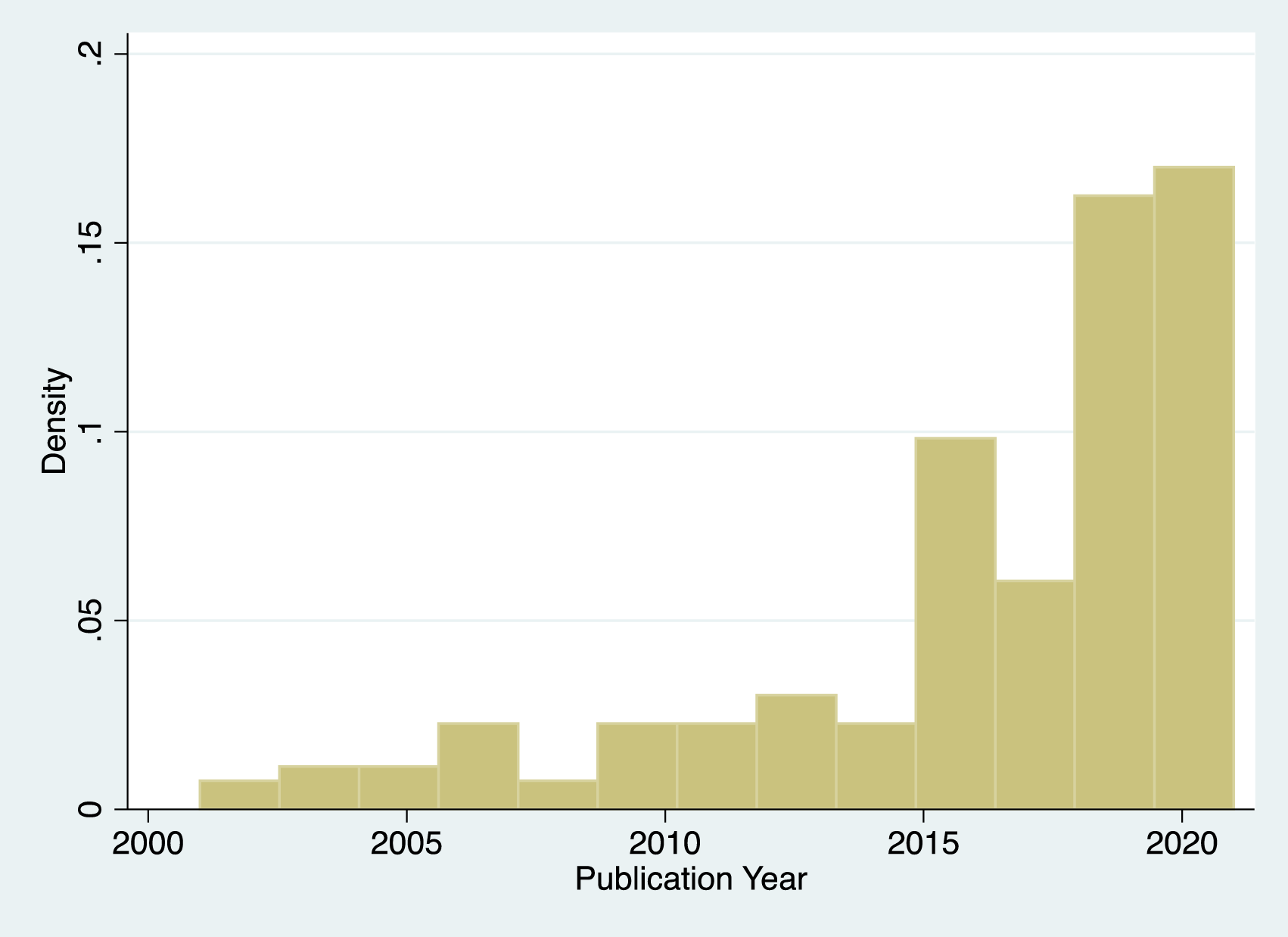
Country categorizations based on income and region
In our analysis of the studies, a significant focus was on low-middle-income and low-income countries. Of these studies, a substantial majority, 156 studies (91.8%), were conducted in a lower-middle-income country. In contrast, 14 studies (8.2%) were conducted in a low-income country. This distribution highlights an important gap that the schools in the most under-resourced countries are not represented in the literature base to date.
In our methodology, we intentionally excluded papers that focused on school climate and its sub-domains in education-in-emergency situations due to the unique considerations that must be given to education in these environments. It is important to note that only 12 out of 26 low-income countries do not have current ongoing conflicts according to the Global Conflict Tracker (Council on Foreign Relations, 2024). Going back to 2000, many of the remaining 12 countries without current conflict have some history of significant or prolonged conflict, political violence, or catastrophic event that created internal displacement.
In terms of geographic location, most studies were conducted in Asia (n = 79), followed by Africa (n = 69), and Middle East and North Africa (n = 22). Only one study was conducted in Latin America and the Caribbean (LAC), and no studies were conducted in Eastern European or Central Asian countries. The geographic distribution of studies also reflects our methodology and decision to exclude upper-middle-income and middle-income countries; a significant proportion of low-middle-income and low-income countries are in South and East Asia, the Pacific, Africa, the Middle East, and North Africa. Of the countries in Latin America and the Caribbean, only four countries (Bolivia, Haiti, Honduras, and Nicaragua) are considered low-income or low-middle-income countries and eligible for inclusion in this study. Similarly, only three countries in Eastern Europe and Central Asia (Kyrgyz Republic, Tajikistan, and Uzbekistan) were eligible for inclusion in this study.
Levels of schooling
The studies we reviewed showed a pronounced emphasis on secondary education, with 69% of the studies (n = 118) specifically focusing on the secondary educational level. In contrast, primary education, forming the foundational stage of schooling, was the central subject of 22% of the studies (n = 37), indicating significant interest but comparatively less than that for secondary education. Notably, a small number of studies (5%, n = 8) aimed to adopt a holistic approach by encompassing both primary and secondary education levels within their scope. This approach provides a broader perspective on the educational continuum on school climate studies by conceptualizing school climate across multiple grade levels. Furthermore, a small portion of studies (5%, n = 9) did not specify the education level of focus and are hence categorized as “Unknown.” This distribution of focus across different levels of schooling highlights the diverse academic interests in the field of school climate at different levels, particularly emphasizing the nuanced and dynamic nature of secondary education.
Methods used
Studies utilized a range of quantitative methodologies, including both descriptive and experimental methods. The most deployed methodology was Multivariate Regression (n = 44, 26%). Correlational analyses were also widely utilized (n = 33, 19%). Factor Analysis, implemented in 22 studies (13%), was used to distill and identify underlying factors of school climate, potentially revealing latent structures that might influence school climate. We combined studies using both ANOVA and t-tests (n = 34, 20%). The “Other” category, which includes a variety of innovative and less conventional methodologies, was featured in 20 studies (11.63% of the dataset). Finally, experimental and quasi-experimental designs were applied in 10 studies (6%), highlighting a limited evidence base on causal research related to school climate.
Sample characteristics
The samples in the studies reviewed predominantly focused on data collected from children (62%, n = 107), followed by teachers (40%, n = 70). A few studies also focused on principals (8%, n = 13) and parents (4%, n = 7), and some looked at school as a whole (47%, n = 82). Out of the 172 studies, various school types were represented: 55 studies (32%) focused on public schools, 10 studies (6%) focused on private schools, 27 (16%) on both private and public schools, and 80 studies (46%) did not explicitly mention school type.
Domains of school climate
Studies were categorized into one of the four domains of school climate: School Safety, Relationships, Teaching and Learning, and Institutional Environment (Thapa et al., 2013). Some studies that explored multiple domains were categorized in up to two more domains in addition to the first categorization to ensure the analysis captured the full extent of domains the studies explored. Therefore, there is some overlap between the domains each study is categorized in with some studies being categorized in multiple domains.
We found that the studies were well represented across these four dimensions of the Thapa et al. (2013) framework: Safety (21%, n = 36), Relationships (53%, n = 92), Teaching and Learning (35%, n = 61), and Institutional Environment (35%, n = 60). Only 10 studies did not get clearly fit in any of the four major dimensions or the additional sub-domains given their general nature, or their less typical approach to capturing some dimensions. Most studies (n = 6) could be categorized in a general “school climate” category (e.g., student satisfaction with their school environments). Alternatively (n = 4), studies that could potentially be categorized in a nearest domain did not measure elements of this domain as traditionally defined in the school climate literature (e.g., a focus on relationships between school principals and teachers could be considered “Relationships”; student reports on their general experiences in the classroom could be categorized as “Teaching and Learning”; and teachers’ reported commitment to the school community could be categorized as “Teaching and Learning”).
Additional sub-domains
We also drew on the National School Climate Center (NSCC) to categorize studies foci with more granularity. The NSCC framework (NSCC, 2020) identifies 14 such sub-domains—Rules and Norms, Sense of Physical Security, Sense of Social-Emotional Security, Support for Learning, Social and Civic Learning, Respect for Diversity, Social Support-Adults, Social Support-Students, School Connectedness/Engagement, Physical Surroundings, Social Inclusion, Social Media, Leadership, and Professional Relationships. Similar to the categorization of the domains of school climate, some of the articles were cross categorized between various NSCC sub-domains. The most common sub-domains represented in the articles we reviewed were Support for Learning (n = 50, 29%), Social Support-Adults (n = 42, 24%), Physical Surroundings (n = 34, 19%), and Sense of Social-Emotional Security (n = 26, 15%). Some of the least represented sub-domains were Social Media Safety (n = 3, 1%), Rules and Norms (n = 6, 3%), Respect for Diversity (n = 10, 6%), and Social and Civic Learning (n = 11, 6%).
The least represented school climate sub-dimensions are areas that have only emerged as foci of research and policy in the past decade on a global scale. For social media, this is particularly true as many rural communities have only recently acquired regular access to the internet and affordable electronic devices to access it. The development of research and policies to improve the least represented school climate sub-domains requires awareness, buy-in, and support from all stakeholders in the school climate improvement process, which is a time-consuming process for even the most well-funded and progressive education systems. While unsurprising that these sub-domains are the least represented, it is promising to see these domains acknowledged on a global scale in the literature base.
Discussion
Understanding and improving school climate may be an essential part of improving educational access and quality in Majority World countries. Indeed, a recent review of studies linking school climate to student outcomes found that a positive school climate was beneficial for student outcomes (Larson et al., 2020). Yet there is still a limited understanding of the concepts and constructs that encompass school climate outside of Majority World countries and whether existing frameworks sufficiently capture the dimensions of school climate globally. We conducted a systematic review of empirical studies on school climate research that assessed school climate quantitatively, focusing on low- and lower-middle-income countries. Drawing on the conceptual frameworks identified and presented by Thapa et al. (2013), we analyzed the nature of the studies to date in terms of their representation across regions and participants, and domains of school climate examined.
Published school climate studies in Majority World countries have grown dramatically in the past decade, indicating increasing interest in and attention to school climate in Majority World countries, particularly after 2016 when the majority of studies reviewed were published. Importantly, we found that there is significant non-representation across regions and countries in the literature to date: most studies were conducted in Asia, with much lower representation of African countries. Thus, there is still a lot to be learned about school climate across the diverse countries and regions of the Majority World. Furthermore, while we restricted our search to lower-middle and low-income countries, the vast majority of studies represented lower-middle-income countries, with less than 10 percent conducted in low-income countries. This is consistent with a recent review of school climate and student outcomes in Majority World countries, which found that most studies were conducted in middle-income countries (Larson et al., 2020).
The ways in which school climate has been operationalized to date in the published literature fit well within existing widely used frameworks, though this may simply reflect the use of Minority World-based constructs and measures. While a more restricted review of studies that included student outcomes found the majority of studies examining school climate focused on school resources and the physical environment (Larson et al., 2020), our more expansive search revealed that more than half of the studies focused on constructs related to the domain of Relationships, followed by Teaching and Learning, Institutional Environment (which encompasses the physical environment and resources), and Safety. However, as mentioned above, there were a few studies that did not get clearly fit in any of the four major dimensions or the additional sub-domains given their unique nature of the approach in each study. And, we do not think those studies provide new insights into the existing frameworks and domains of school climate, or their less typical approach to capturing some dimensions. On the other hand, school climate studies in Minority World countries focus much more on issues related to safety, specifically bullying and school violence (see, e.g., Astor and Benbenishty, 2019). The foci of the research base in different regions may indirectly have implications for the foci of programs and policies.
An extension of this research could be to do a more in-depth study explicitly searching for differences in school climate categories between lower- and middle/higher-income countries. Future research in Majority World countries may consider incorporating unique contextual and cultural elements into the conceptualization of school climate. For example, Majority World countries tend to have more collectivist cultures than Minority World countries which have more individualistic cultures (Hofstede, 2011). Future studies on school climate may consider how to integrate a collectivist orientation into how school climate is conceptualized (e.g., how much does the school foster social harmony; conflict aversion; loyalty to the community)? Whether these aspects would fall under the Relational domain or require a new yet-to-be conceptualized domain is an open question. In addition, other areas of relatively higher relevance in Majority World countries could be related to domestic violence, religious and political conflicts, and natural disasters due to rapid climate change. Investigating these areas would be very promising to the field, particularly to shed more light on the school climate-related aspects that are more prevalent in Majority World countries. Moreover, Minority World countries may be able to learn from potential new constructs identified from Majority World countries and expand definitions of school climate.
We also found that the majority of studies focused on the “secondary” level of schooling, indicating that primary schools are currently not well represented in the literature base. In low-income and lower-middle-income countries, approximately 21% and 15% of students do not make the transition from primary to secondary school, respectively (Global Partnership for Education, 2017). The focus on school climate in secondary schools leaves a knowledge gap in terms of how school climate may contribute to student dropout in primary school and termination of schooling after primary school. An important area for future research would be to examine school climate in primary schools and its links to students’ educational progress and attainment.
Finally, despite our focus on quantitative empirical studies, very few studies used experimental methods or methods that lend to causal inference. Thus, the current knowledge base is primarily descriptive and associational. Future research would benefit from studies that aim to establish causal inference in improving school climate or in linking school climate to student outcomes in order to shed light on the processes that improve school climate in Majority World country settings. This would be critical for informing policy and practice aimed at improving positive school climate.
Limitations and conclusions
The findings of the study should be interpreted considering its limitations. First, we selected one framework to define domains of school climate and analyze the studies we reviewed. Several other frameworks exist, and there is no national or international consensus on the definition of school climate or the dimensions (Bradshaw et al., 2021; Larson et al., 2020; Thapa et al., 2013). As a result, our conclusions are bound by the chosen framework. The field would benefit from future research that harmonizes the range of existing frameworks. Second, we made several strategic decisions to help define the scope of our review, including removing studies conducted in emergency and conflict settings and studies conducted in middle-income countries. Thus, our conclusions are limited to stable, lower-middle and low-income country contexts. Future work could examine how the results would be similar or different in the specific contexts that we excluded. Furthermore, such future research could also incorporate studies relating to the school climate improvement process.
Nonetheless, several recommendations emerge from the study for both researchers and policymakers. First, it is important for education policy makers to invest in data collection and databases on school climate across all levels of schooling. Good data is necessary to assess school climate systematically within a country, a necessary precursor to designing interventions that could improve school climate and hopefully, ultimately, students’ educational outcomes. Second, in this field, there is a large gap between research, policy, and practice. Conscious attempts need to be made by researchers, policy makers, and practitioners to bridge these gaps and align findings from school climate improvement processes to implementation science (Bradshaw et al., 2021; Thapa and Cohen, 2023). Third, school climate improvement needs to be taken seriously and viewed as an iterative, continuous, and data-driven process (Cohen and Espelage, 2020; Cohen et al., 2009; NSCC, 2015). School leaders and communities embarking on the school improvement process need to have the vision as well as buy-in of all the stakeholders to initiate, complete, and sustain this process, which are critical to execute effective school climate improvement.
Finally, more robust empirical studies as well as comparative studies on school climate are needed, particularly with data from low-income countries. Studies that inform and help foster positive school climate and social emotional learning will contribute to healthy and productive teaching and learning practices, which are of immense need in the current times. Towards this end, it is important that the academic world work together with national and international communities to prioritize data collection and robust studies in this field. Hence, we recommend that the donor community, the international community, and researchers pay more attention and priority to school climate research and practice in low-income countries. We also recommend that the current and future United Nations goals clearly incorporate and prioritize fostering positive school climate as part of quality education.
Footnotes

Funding
The authors received no financial support for the research, authorship, and/or publication of this article.
Declaration of conflicting interests
The authors declared no potential conflicts of interest with respect to the research, authorship, and/or publication of this article.
Author biographies
Appendix
Included terms related to school climate and its components.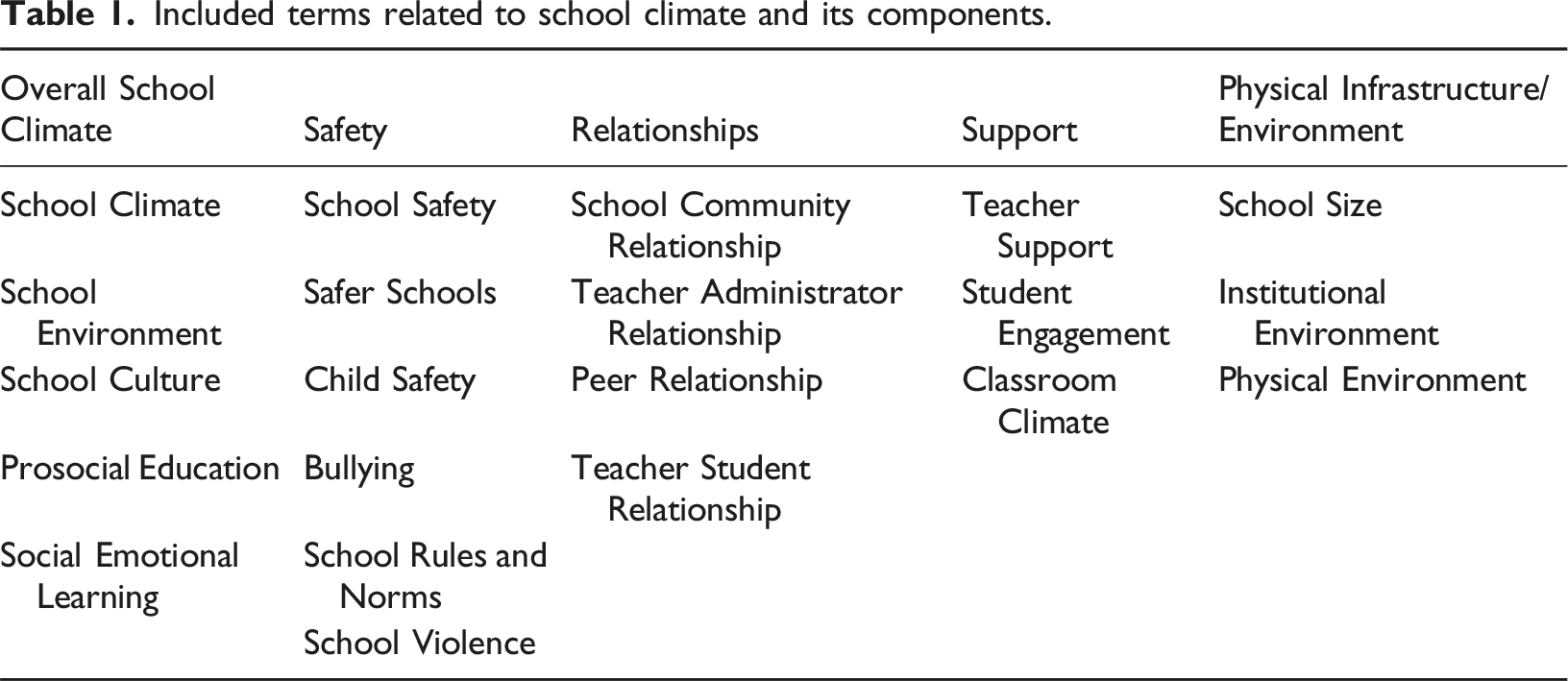
Overall School Climate
Safety
Relationships
Support
Physical Infrastructure/Environment
School Climate
School Safety
School Community Relationship
Teacher Support
School Size
School Environment
Safer Schools
Teacher Administrator Relationship
Student Engagement
Institutional Environment
School Culture
Child Safety
Peer Relationship
Classroom Climate
Physical Environment
Prosocial Education
Bullying
Teacher Student Relationship
Social Emotional Learning
School Rules and Norms
School Violence
Included countries and related geographic terms.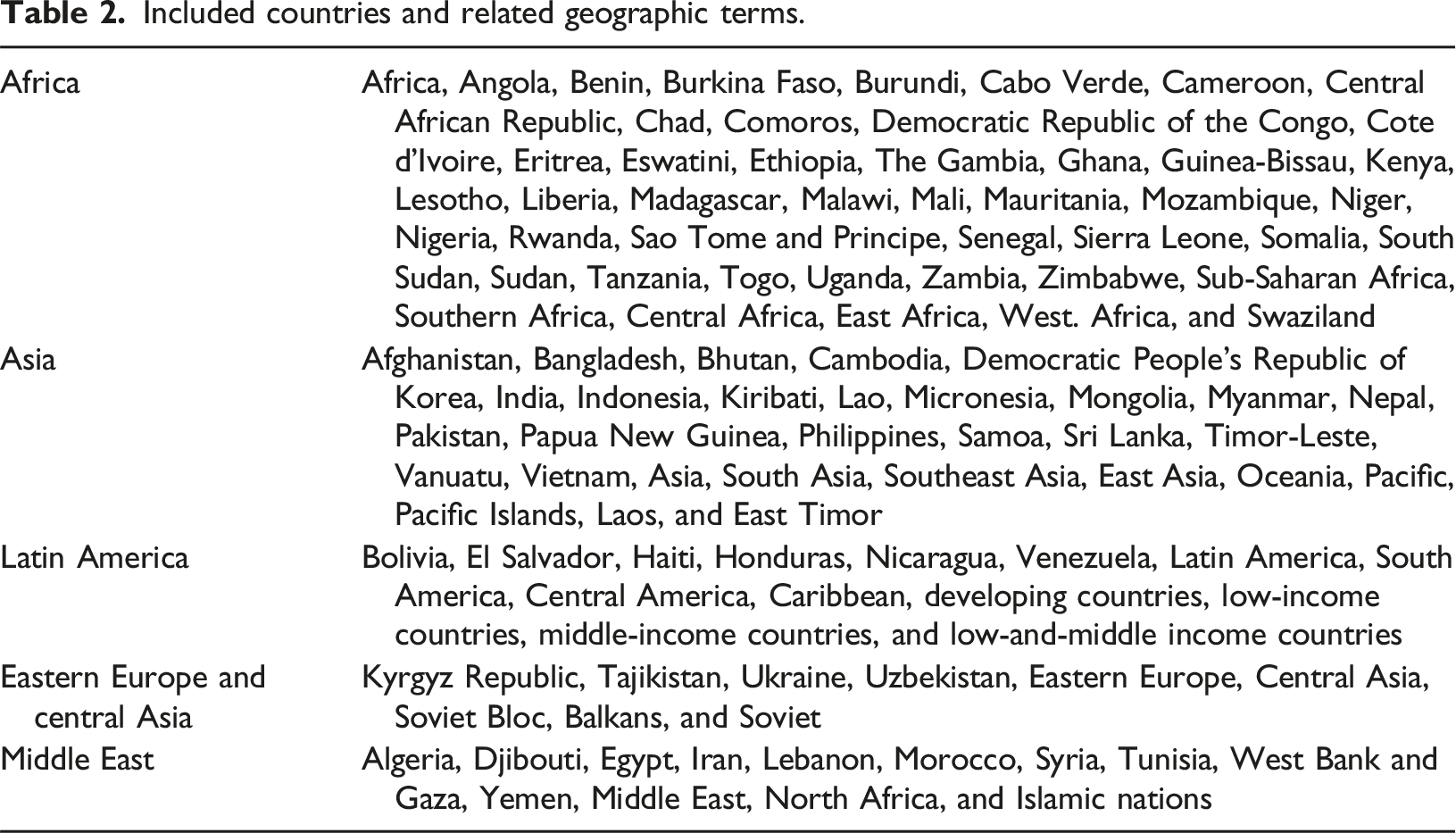
Africa
Africa, Angola, Benin, Burkina Faso, Burundi, Cabo Verde, Cameroon, Central African Republic, Chad, Comoros, Democratic Republic of the Congo, Cote d’Ivoire, Eritrea, Eswatini, Ethiopia, The Gambia, Ghana, Guinea-Bissau, Kenya, Lesotho, Liberia, Madagascar, Malawi, Mali, Mauritania, Mozambique, Niger, Nigeria, Rwanda, Sao Tome and Principe, Senegal, Sierra Leone, Somalia, South Sudan, Sudan, Tanzania, Togo, Uganda, Zambia, Zimbabwe, Sub-Saharan Africa, Southern Africa, Central Africa, East Africa, West. Africa, and Swaziland
Asia
Afghanistan, Bangladesh, Bhutan, Cambodia, Democratic People’s Republic of Korea, India, Indonesia, Kiribati, Lao, Micronesia, Mongolia, Myanmar, Nepal, Pakistan, Papua New Guinea, Philippines, Samoa, Sri Lanka, Timor-Leste, Vanuatu, Vietnam, Asia, South Asia, Southeast Asia, East Asia, Oceania, Pacific, Pacific Islands, Laos, and East Timor
Latin America
Bolivia, El Salvador, Haiti, Honduras, Nicaragua, Venezuela, Latin America, South America, Central America, Caribbean, developing countries, low-income countries, middle-income countries, and low-and-middle income countries
Eastern Europe and central Asia
Kyrgyz Republic, Tajikistan, Ukraine, Uzbekistan, Eastern Europe, Central Asia, Soviet Bloc, Balkans, and Soviet
Middle East
Algeria, Djibouti, Egypt, Iran, Lebanon, Morocco, Syria, Tunisia, West Bank and Gaza, Yemen, Middle East, North Africa, and Islamic nations
Terms actively excluded using the “NOT” Operator.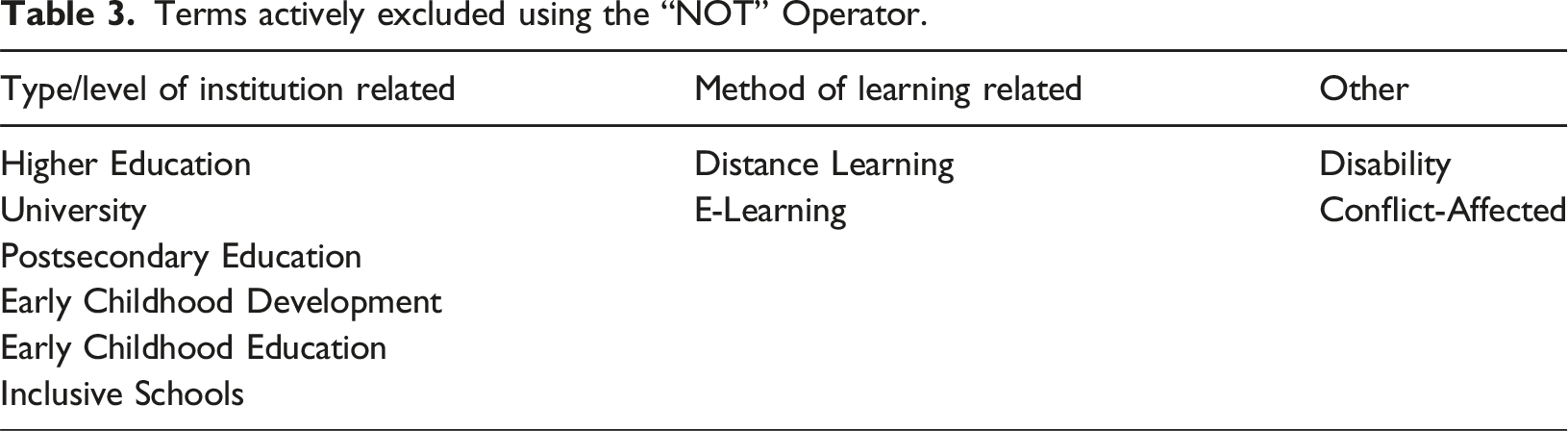
Type/level of institution related
Method of learning related
Other
Higher Education
Distance Learning
Disability
University
E-Learning
Conflict-Affected
Postsecondary Education
Early Childhood Development
Early Childhood Education
Inclusive Schools