



Abstract
This study investigates the role of multicultural personality traits, wellbeing, and initial English proficiency on sociocultural adaptation during an ERASMUS stay. The participants completed a test battery including the Multicultural Personality Questionnaire, the Warwick-Edinburgh Mental Wellbeing Scale, the Oxford Quick Placement Test, and the Sociocultural Adaptation Scale twice: once at pre-departure and once upon return. Additionally, a subgroup of participants was interviewed regarding their lived experiences and conceptualization of factors leading to sociocultural adaptation. The quantitative results indicated that those with higher initial English proficiency and wellbeing scores at pre-departure displayed stronger sociocultural adaptation at the end of their stay abroad. The qualitative analysis highlighted several individual and contextual factors, such as situated language use, and availability of community support crucially determining different participant rates of sociocultural adaptation. These results accentuate the importance of certain elements, such as language competence and academic integration for optimal study abroad gains.
Keywords
Introduction
The significant growth in population flows in the post-pandemic world attracts empirical attention to how to meet the increasing need to educate people with intercultural sensitivity and respect to diversity (Vallone et al., 2022). International student mobility is one significant avenue to address such critical issues as it regains a burgeoning popularity after the COVID-19 pandemic.
Drawing on research regarding the organizational and policy-related factors in international student mobility in higher education, we know that studying abroad (SA) is key to internationalization of higher education with several additional benefits especially for underdeveloped countries (Bulut-Sahin and Kondakci, 2023), such as future employability. The literature also suggests that SA outcomes can hugely vary depending on the measures under study (Borrás and Llanes, 2021; Güvendir et al., 2024) while some student-sojourners end up with linguistic (Köylü and Tracy-Ventura, 2022), sociocultural (Van Niejenhuis et al., 2018), personal (Sude et al., 2020) and intercultural development (Nguyen, 2017), others apparently not (Borràs and Llanes, 2021). There is a large body of research regarding the role of SA on target language development (Borràs and Llanes, 2021) in different types of sojourn contexts (e.g., anglophone contexts v. English as a lingua franca contexts for learners of English: see Borrás, 2023; Heinzmann et al., 2024; Köylü, 2021) and in terms of different language skills (Borràs and Llanes, 2024; Köylü et al., 2024; Köylü and Tracy-Ventura, 2022). However, there is a dearth of studies investigating what factors can influence the outcomes of a potential SA (Köylü and Borràs, 2023), the focus of the current study.
These might be related to the level of integration to host institutions and the immediate environment abroad. To this end, individual differences (ID) have always been significant elements alternating the sojourner response to certain challenges of SA, language growth, intercultural awareness, and sociocultural adaptation (SCA) while abroad. To exemplify, scholars have long wanted to know if a developing L2 would also lead to cultural integration (Van Niejenhuis et al., 2018). Additionally, we know little about the combined effects of multicultural personality, wellbeing, and initial language competence on sojourners’ SCA. There is a dearth of studies per se investigating several ID variables at once to better understand sojourner behavior and growth.
The purposes of this study are thus twofold. We first aim to better understand the role of several ID variables that alternate SCA during SA. We also focus on filling the empirical gap to comprehend what pre-departure factors can predict SCA in SA. To this end, we survey the role of multicultural personality, wellbeing, and pre-departure proficiency in English on SCA in taking a mixed-methods approach.
Literature review
Sociocultural adaptation during SA
Ward and Kennedy (1999) conducted one of the seminal studies on the notion of SCA. They argue that SCA is anchored in the idea of becoming aware of culturally appropriate knowledge, along with a set of skills and tools to effectively communicate with the people around to solve everyday problems in the new cultural environment: the host country.
Although the major reason for SA seems to be academic, Yu and Wright (2016) reported that the most important issues in terms of international students’ satisfaction were not directly related to academic studies but some SCA factors like interaction with other students or into the local community. Similarly, O’Reilly et al. (2010) showed that, especially for short-term mobility students, academic expectations are low and their SCA is mostly based on some other factors like pre-departure orientation, sharing accommodation with other international students, and support from local friends. Similarly, English-language proficiency, feeling socially supported, greater contact with the local students, and a low level of perceived discrimination are some of the main facilitators of SCA (Yu et al., 2019).
Host identification (a measure of acculturation) (Ward and Kennedy, 1999), personality (Leong, 2007), especially proactive personality and adjustment self-efficacy (Hua et al., 2020) and effective contact with local people could also be predictors of SCA. Yet further research is needed to understand how multicultural personality, wellbeing, and pre-departure proficiency influence sojourners’ likelihood of initiating social contact with the people around using the TL. In what follows, we unpack multicultural personality, wellbeing, and initial language proficiency in a way to understand how they influence SCA.
Multicultural personality
The rise in human flows has resulted in more diversity and multiculturality, leading to scholarly efforts to identify potential personal factors that ease social and cultural adaptation, and favorable intercultural exchanges (Vallone et al., 2022). To understand what makes someone a better fit to such intercultural environments, scholars have explored certain personality characteristics, like multicultural personality traits (MP) (Van der Zee and Van Oudenhoven, 2000) which could be favorable to maintain personal adjustment, build rapport with people in the new environment, and effectively function in intercultural contexts. MP might also be essential to initiate interactions and favorable contact among people from diverse linguacultural backgrounds (Leong, 2007).
MP defines multicultural effectiveness on five dimensions: cultural empathy, emotional stability, open-mindedness, social initiative, and flexibility (Van der Zee and Van Oudenhoven, 2000). These traits help people in international settings, including temporary student-sojourners, perform and communicate effectively while adjusting into the new environment effortlessly (Van Oudenhoven and Van der Zee, 2000). Yet research with diverse populations have yielded differentiated results. To exemplify, Yakunina et al. (2012) argue that social initiative and emotional stability are statistically significant contributors to sojourner-students’ adjustment into the US society. Among the 341 international student participants in several US institutions, those with higher scores on the open-mindedness, flexibility, and cultural empathy traits in the MPQ showed significantly greater openness to diversity and better adjusted into their SA contexts. Leong (2007) longitudinally investigated the case of Singaporean undergraduates’ adjustment in an international exchange program. He found that only social initiative was a significant predictor of reduced behavioral and psychological difficulties while abroad, while positively contributing to sociocultural adjustment. Investigating how residence abroad could influence MP, Tracy-Ventura et al. (2016) conducted a study with 58 British student-sojourners in France and Spain. The results indicated significant changes only in emotional stability, confirming the idea that residence abroad could be a form of social investment for temporary student-sojourners. All in all, certain MP traits, mostly emotional stability, and social initiative have shown to predict sociocultural adjustment during SA, leading us to include it as an ID variable in our study. Those who are emotionally stable could better overcome stressful situations even when intercultural differences are involved (Yakunina et al., 2012). Yet we get to know more about wellbeing and SCA when MP is also taken as an ID variable in a model exploring different levels of SCA.
Wellbeing
Ward and Kennedy (1999) claim that there are two major domains of SCA: psychological (emotional/affective) and sociocultural (behavioral). As per the affective domain, wellbeing is regarded as a significant contributor to integration into international environments and a factor positively correlated with SCA (Chirkov et al., 2008), yet having received very little empirical attention. Wellbeing is explored along with other ID variables, such as motivation (Chirkov et al., 2008), self-efficacy, academic self-efficacy and social adjustment (Poyrazli et al., 2002). Yet there is a dearth of studies investigating wellbeing, MP, and language skills at once to better understand adaptation during temporary sojourn.
To this end, O’Reilly et al. (2010) explored a group of incoming short-term students to Ireland by comparing them to a group of Irish students. They used measures of psychological wellbeing, loneliness, stress, social support, and SCA. The results showed that even though international students did not experience much academic stress or loneliness, and received adequate social support, they had struggled with adaptation to their host community. Zheng (2017) conducted a qualitative study to understand sojourners’ emotional-management strategies for intercultural adjustment and overall SCA in their host countries. She concluded that the participants reported to have changed through reappraisal, promotion of self-esteem, and prioritizing themselves through establishing good intercultural encounters and discouraging demotivating ones. This was key to promoting mutual understanding with the host community, respect, and building reciprocal relationships for better SCA. Dewaele and Dewaele (2021) similarly investigated the role of SA on wellbeing and the relationship between MP and wellbeing in 33 British student-sojourners to Francophone countries. They collected data at three intervals: Time1 (pre-departure), Time2 (in-sojourn), and Time3 (towards the end of sojourn). They could only find significant differences for wellbeing between Time2-Time3, but not from Time1-Time3. They could confirm a marginal link between cultural empathy and wellbeing at Time1, which disappeared at Time2 and Time3. The marginal correlation between emotional stability and wellbeing at Time1 also weakened at Time3 and had no significance at Time2. The qualitative data revealed that all participants struggled with language-related, psychological, and administrative difficulties during sojourn, but coped with those depending on their pre-departure wellbeing profiles (depressed, average, high) to some degree and better adjusted to their new environments through their stay.
Initial language proficiency and sociocultural adaptation
Language competence in the target language (TL) is widely regarded as a core element for optimum gains especially during SA (Hessel, 2017). The results about what level of initial proficiency leads to the greatest gains are rather inconclusive as both lower and higher (Baker-Smemoe et al., 2014; Köylü, 2021) initial proficiencies have been found to develop certain skills after SA (Zalbidea et al., 2021). It is claimed that those with higher initial levels have more declarative knowledge to proceduralize and automatize during sojourn (Köylü, 2021), while those on the lower end have more room for development, implying that less stabilized L2 knowledge may be more receptive to growth during immersion (Baker-Smemoe et al., 2014). Yet little is known about how initial proficiency influences SCA during sojourn.
Hessel (2017) investigated the role of several ID variables on language gains of 96 German ERASMUS sojourners in the UK. She found that initial proficiency in English, gender, English use anxiety, self-efficacy, perceived future L2 self-discrepancy, and attitude towards co-nationals significantly predicted L2 gains after SA. She asserted that a certain threshold proficiency and positive self-efficacy beliefs would initiate social interactions using the L2. Similarly, Savicki (2011) investigated the case of American sojourners in Argentina, hypothesizing that a SA program with a requirement of a certain level of fluency in the TL would lead to more contacts with TL people in the host country and will have more favorable outcomes in terms of psychological adjustment, SCA with significantly less effort than sojourners in a no pre-departure language requirement program. She also suggested that a certain level of proficiency would be key to acculturation in the host country, along with certain student characteristics and experience before sojourn (Savicki, 2011). There assumed to be a reciprocal relationship between initial experience with a variety of cultures leading learners to wish to develop their language proficiency. Also, improved competence in the L2 would potentially lead to further interest cultural exchange in different environments, including SA. Savicki (2011) confirmed that initial language proficiency was positively related to affective (e.g., lower levels of stress) and cognitive (e.g., embracing the target culture while appreciating the uniqueness of their own) results of acculturation during SA. However, initial proficiency was not related to behavioral results, such as the amount of contact with people in the host country, or other international people in their peer groups. Savicki et al. (2013) investigated the role of a certain level of fluency in the TL on rapport-building, psychological and social adjustment, and host culture integration. The participants were a group of US students to Austria and Spain for a short sojourn. However, the results of the analysis showed that fluency in TL was not related to the number of contacts the participants had in the host country, nor to any affective, cognitive, or behavioral variables. The authors could not confirm any form of a relationship between initial proficiency or fluency in the TL with SA outcomes.
Given the dearth of studies investigating the role of several ID variables in a semester-long SA program on SCA, this study aims to investigate the role of multicultural personality, wellbeing, and initial proficiency in the TL on SCA abroad. The following questions guided our study: 1. What is the predictive power of multicultural personality, wellbeing, and initial proficiency on sociocultural adaptation during a semester-long ERASMUS sojourn? 2. How do individual differences affect linguistic and sociocultural adaptation gains during a semester-long ERASMUS sojourn? 3. How does a subgroup of participants conceptualize the factors that influence sociocultural adaptation during their ERASMUS sojourn?
Methods
Context of the study
This study was conducted with outgoing ERASMUS sojourners from Turkey (n = 96) from a variety of majors at various universities. Turkey has a large higher education sector with 208 universities and around 7 million students, with a unique internationalization experience on student mobility (Bulut-Sahin and Kondakci, 2023). The ERASMUS Program is regarded as the main catalyzer for both national and institutional internationalization efforts. Since her first participation in 2004, Turkey has sent a burgeoning number of outgoing ERASMUS students (34,902 outgoing students, EU Commission, 2021). All our participants went to an English as a lingua franca study abroad (ELFSA) context (Köylü, 2021) for their semester-long ERASMUS sojourn where English only holds the status of a contact language, but not the official or the ambient language (e.g., Poland). English is reported to be the language of contact among fellow sojourners in these countries (Köylü and Borràs, 2023). Some participants were reported to be given the opportunity to attend an orientation program at pre-departure (n = 26) or upon arrival (n = 54).
Participants
Participant Demographics and Characteristics.
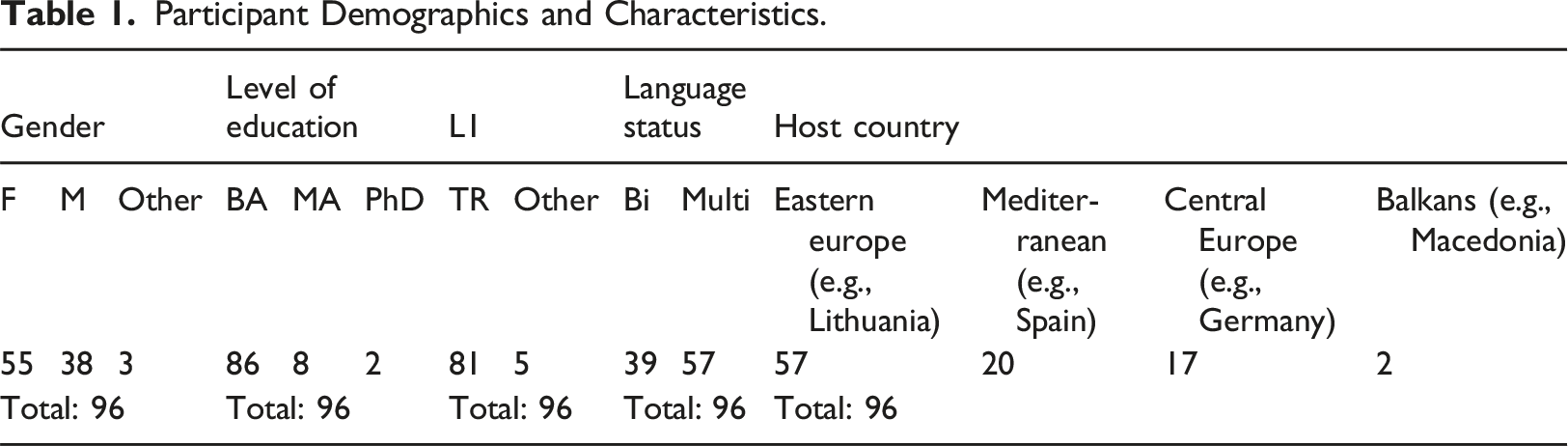
Participation to the study was compensated as the researchers organized a raffle and paid 1000 Turkish Liras to 15 participants who won the raffle at the end of the study. Those who completed all the test batteries were included in the raffle.
Design of the study
To investigate the role of multicultural personality, wellbeing, initial proficiency on SCA, we designed a mixed-methods study in which the quantitative data elicited from the questionnaires in a pre-post quasi experimental design formed the basis for the qualitative data collected via semi-structured interviews.
Instruments
The participants were given a test battery including the Turkish versions of the short Multicultural Personality Questionnaire (MPQ) (Van der Zee et al., 2013), the Short Warwick-Edinburgh Mental Wellbeing Scale (WEMWBS) (Tennant et al., 2007), and the Revised Sociocultural Adaptation Scale (Ward and Kennedy, 1999; Wilson et al., 2017). They also completed the short version of the Oxford Quick Placement Test (OPT) (40 items). Besides, there were demographic questions including those about gender, age, host university, their previous SA experience or being abroad, participation to a pre-departure or upon-arrival orientation program, language, or intercultural classes at home and/or in the host country.
As part of a larger project, we elicited data using these questionnaires and tests twice as pre (Time 1) and post-tests (Time 2), but we only utilize pre-test scores for MPQ, WEMWBS, and OPT to see their predicting power (independent “explanatory” variables) on SCA. The post-test results from SCA were used in the current study as the dependent variable in the regression analysis.
Multicultural personality questionnaire (MPQ) (Van der Zee et al., 2013)
The short version of MPQ includes 40 5-point Likert scale (1- totally not applicable, 5- completely applicable) items aiming at determining personality traits. It is designed to measure five factors: cultural empathy (8 items, e.g., enjoys other people’s stories),
The warwick-edinburgh mental wellbeing scale (WEMWBS) (Tennant et al., 2007)
The Short WEMWBS includes 14 items on a 5-point Likert scale assessing mental wellbeing (e.g., I’ve been feeling useful) on a frequency (1- None of the time, 5- All of the time). (Tennant et al., 2007) This scale was validated with different migrant populations in Europe (Dewaele and Dewaele, 2021). The Cronbach’s alpha for this instrument is 0.864 indicating high reliability.
The revised sociocultural adaptation scale (Ward and Kennedy, 1999; Wilson et al., 2017)
SCA includes 21 statements concerning several types of encounters and issues that might alternate sociocultural adjustment in the host country. Participants respond to each item (e.g., building and maintaining relationships) on a 5-point Likert scale indicating a degree of competence in adjustment (1- not at all competent, 5- extremely competent). (Ward and Kennedy, 1999; Wilson et al., 2017) The Cronbach’s alpha for this instrument is 0.930 indicating high reliability.
The oxford quick placement test (OPT)
The OPT version utilized includes 40 items (40 is the maximum points) testing receptive English proficiency as it does not include any questions requiring the test-taker to perform the TL (e.g., written or oral production). It consists of 20 multiple-choice questions presented in cloze tests, and 20 stand-alone multiple questions asking for grammatical or lexical knowledge. The mean score for OPT at pre-test was 27.68 (SD = 2.87) with a minimum of 21 and a maximum of 40 (full points) available in the dataset, indicating an intermediate level of proficiency in English.
Semi-structured interviews
A subgroup of participants out of the larger sample, 15 of whom won the raffle and one volunteer (n = 16), were interviewed in Turkish right upon their return home in terms of their lived experiences concerning language learning and use, experiencing cultural differences and relations, daily lives, and how they reflect on their sociocultural adaptation but always starting with a ground tour question (e.g., Could you describe your overall experiences during ERASMUS?) (please see Appendix B for the interview guide). In the current study, we focus on the data we elicited concerning the factors that influence our participants’ SCA during their ERASMUS sojourn. Each interview took around 30 to 45 minutes. Further details about the conduct and analysis of the interview data are given in the next subsection.
Data collection procedures
The international offices at all the Turkish universities were contacted before collecting data. The practitioners forwarded the online test battery including all the instruments described in the previous section to all outgoing students in the 2022–2023 academic year. We collected the pre-test data from 199 outgoing students, yet only 96 of them completed also the post-test upon completion of their ERASMUS program. The data analyzed were elicited from this group of 96 participants who took part in the ERASMUS exchange program during Fall 2022. The average time of test completion was 43 minutes. The order of the individual tests were not randomized, so each participant responded the tests in the exact same sequence during a single sitting.
Interviewee Profiles.
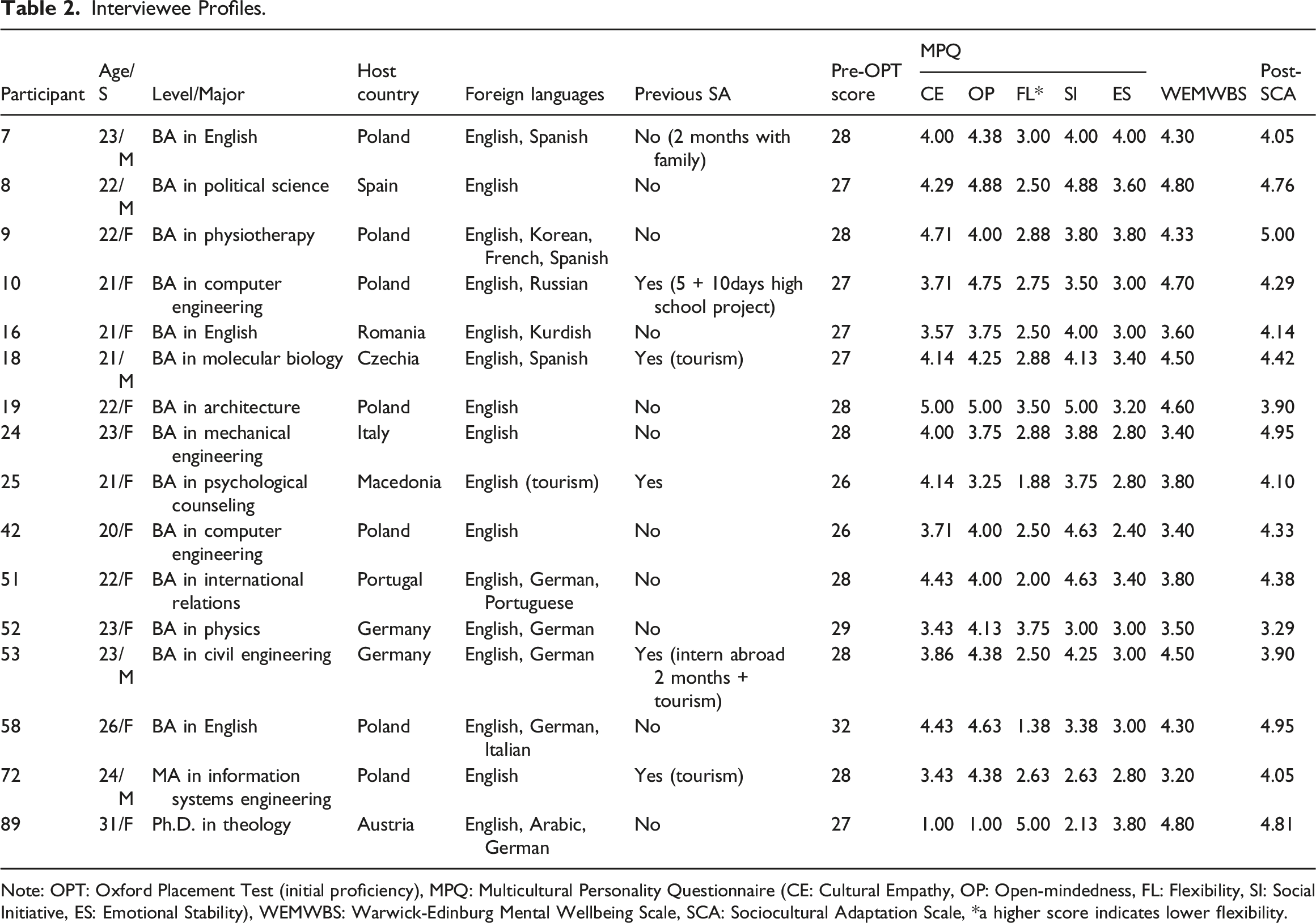
Note: OPT: Oxford Placement Test (initial proficiency), MPQ: Multicultural Personality Questionnaire (CE: Cultural Empathy, OP: Open-mindedness, FL: Flexibility, SI: Social Initiative, ES: Emotional Stability), WEMWBS: Warwick-Edinburg Mental Wellbeing Scale, SCA: Sociocultural Adaptation Scale, *a higher score indicates lower flexibility.
Data analysis procedures
The quantitative data from the test battery were analyzed using inferential tests. First, the dataset was checked for any violations to assumptions of multiple regression analysis and repeated measures analysis of variance (RM ANOVA), such as normality and homoscedasticity. No violations were found to interfere with the selected tests. All the quantitative analyses were computed with SPSS version 28. As for RM ANOVAs, we conducted an a priori power analysis to estimate minimum sample size requirements with the alpha level set to 0.05 (two-tailed), power level to 0.80, and effect size to 0.25 for the two groups involved using G*Power (Faul et al., 2007). The sample size (n = 96) warranted statistical power surpassing the minimum sample size suggested. We calculated and interpreted effect sizes via partial eta squared η2 values.
The data from the interviews were first transcribed verbatim by a research assistant and coded through two rounds of open coding to find out the factors leading to changes in language proficiency and sociocultural adaptation. The Turkish dataset was partially translated into English and backtranslated into Turkish to ensure no loss of meaning. We followed an inductive content analysis approach to build a model by discovering patterns, categories, and themes in the interview data. Hence, a three-level analysis of data reduction, data display and conclusion drawing were conducted to reveal the themes.
Results
RQ1. What is the predictive power of multicultural personality, wellbeing, and initial proficiency on sociocultural adaptation during a semester-long ERASMUS sojourn?
Descriptive Statistics.
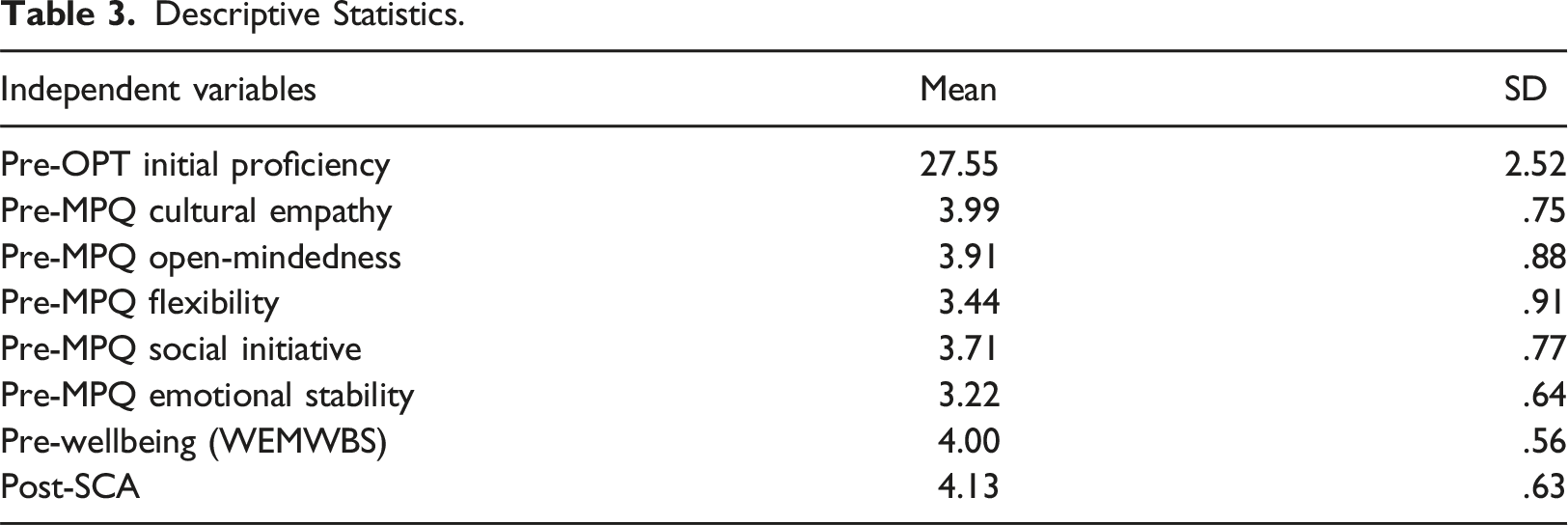
Correlations Between Factors and SCA.
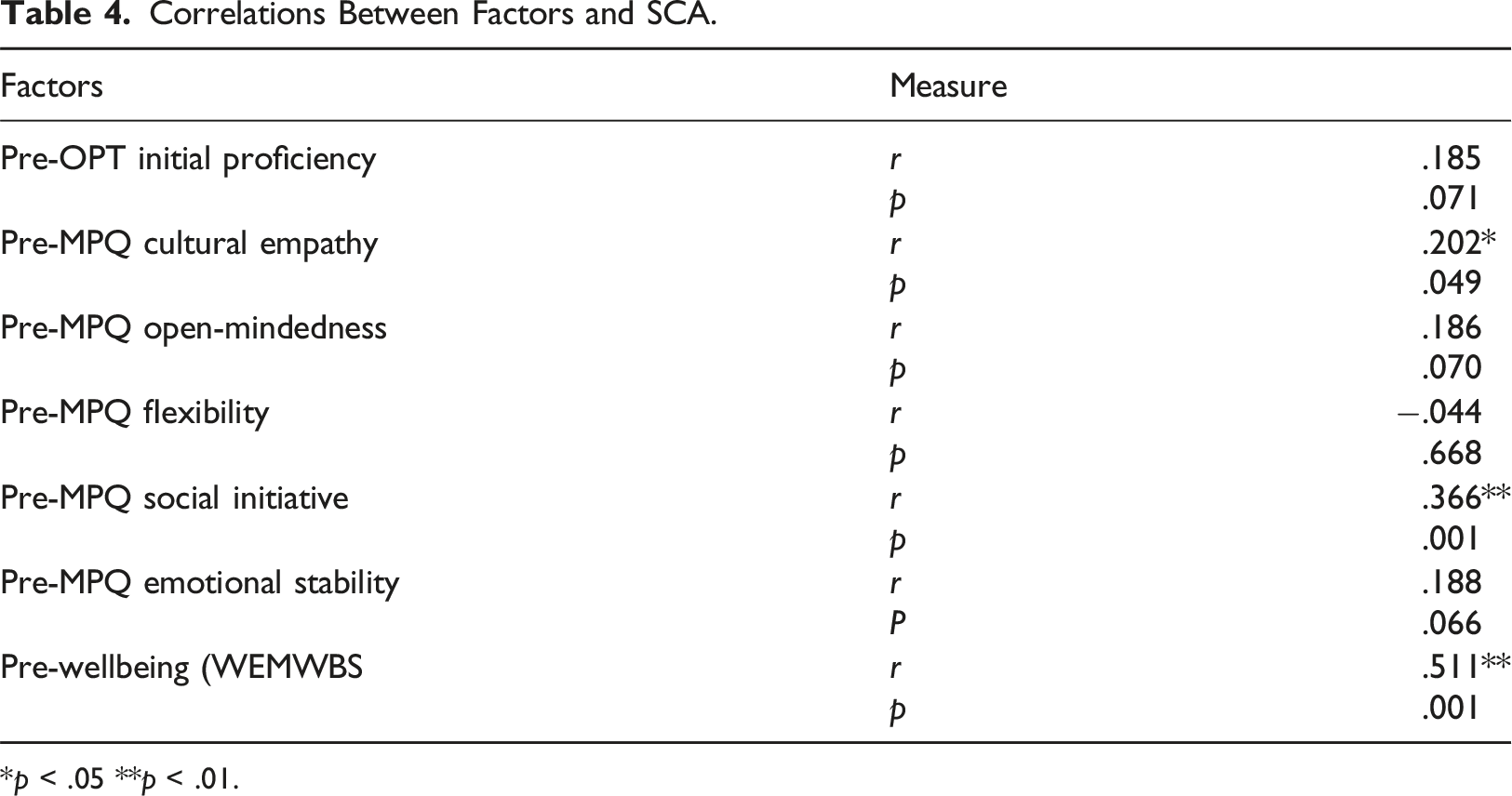
*p < .05 **p < .01.
Multiple Regression.
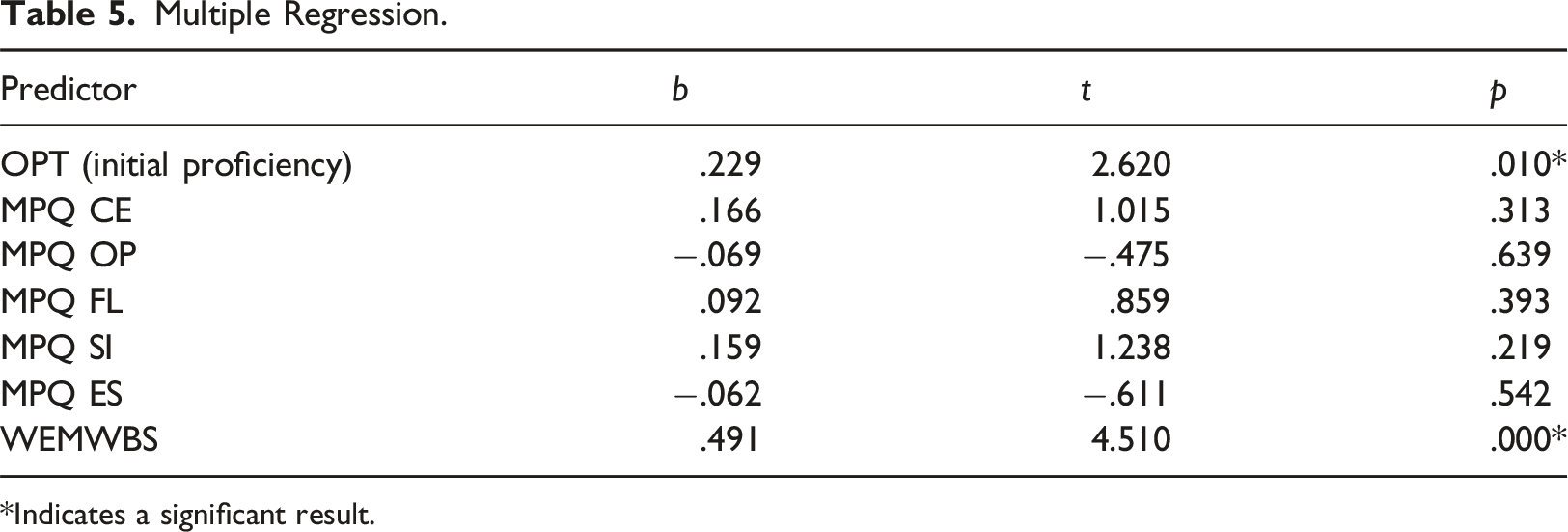
*Indicates a significant result.
RQ2. How do individual differences affect sociocultural adaptation gains during a semester-long ERASMUS sojourn?
To determine if individual differences alternate sociocultural gains after a semester abroad, we ran several repeated measure (RM) ANOVAs with Bonferroni corrections. We grouped our participants according to Pre-OPT scores on three levels (B1, B1+, B2) and pre-wellbeing profiles on three levels again (low, medium, high scores on WEMWB) given that only these two ID variables were confirmed to be significant predictors in the MRAs, which served as between-subjects variables/factors in the tests. The SCA scores were utilized as within-subjects factor (pre-post). The results indicated a significant interaction effect only between wellbeing and SCA with a large effect size (F (2, 93), 4.327, p = .01, η2 = 0.99). Those with better wellbeing scores at pre-departure had stronger SCA profiles after a semester abroad. However, there were no significant main or interaction effects for pre-departure proficiency on SCA (2, 93), 1.338, p = .268, η2 = 0.049).
RQ3. How does a subgroup of participants conceptualize the factors that influence sociocultural adaptation during their ERASMUS sojourn?
Summary of Themes and Categories.
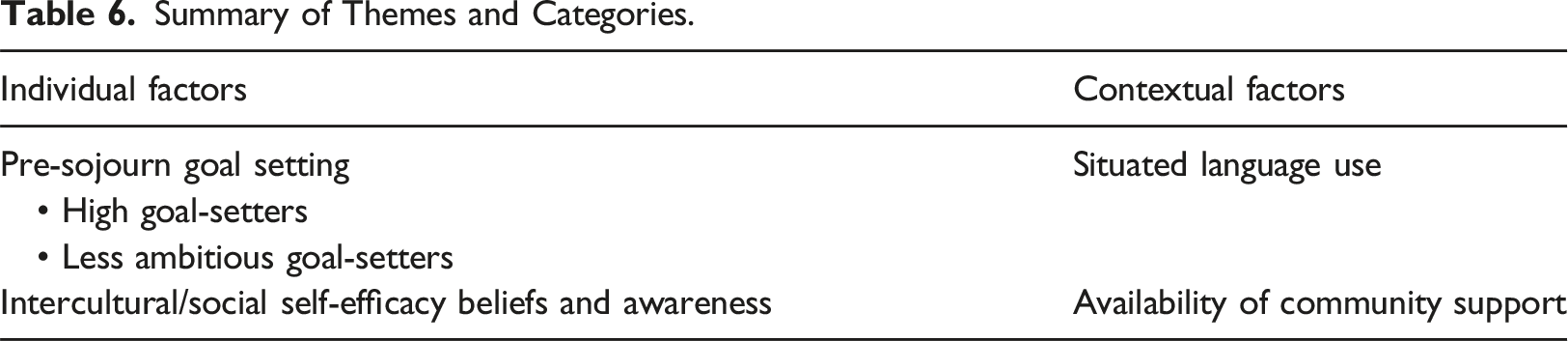
Individual factors
The first theme emerged as a factor influencing students’ socio-cultural adaptation is related to our participants’ individual characteristics and self-efficacy beliefs about their upcoming ERASMUS experience and intercultural exchange. There are three major categories under this theme: goal setting, intercultural self-efficacy, and awareness including cultural empathy, respect to diversity, and the ability to negotiate differences. We present each in a separate subsection.
Goal setting
When asked about their lived experiences in terms of SCA, the majority of the interviewees reported that they had set relevant goals at pre-departure which were achieved through their stay. The way they experienced SCA was thus in line with their pre-sojourn goals. It was clear in the interviews that SCA was part of these sojourners’ expectations and plans ahead during their time abroad, a well-thought detail about their ERASMUS stays. They were determined to make the most of their stays: “ERASMUS was a rite of passage for me. So, there were both difficulties and advantages. I mean the process goes on with your management. That’s why, your goals and priorities are so important” (Par16).
They took actions which were relevant to their personalities that complimented their pre-departure goals, leading to different degrees of SCA. By and large, how these participants conceptualize SCA was quite tentative as per their individual expectations and personal characteristics. Accordingly, the results indicated that some sojourners had set clear goals about taking every opportunity to immerse in their new environment, interact with people, and engage in social encounters during SA that we refer to as “high goal-setters.” These sojourners reported to have established social relations and built rapport with mostly other international students and less frequently with local people (e.g., students, people at service encounters, admins on campus, faculty members). The high goal-setters are risk takers leaving their comfort zone and make the most of new intercultural experiences as seen in the excerpts below: I did not go abroad with a friend (from home), so I was a bit scared at the beginning. […] Then, I realized that once I tried really hard, I managed to succeed. My goal, as I said before, was to be able to really immerse in the new environment, see new places, get to know new cultures. […] That’s why, whenever someone asks me how my ERASMUS was, I tell them that I achieved my goals, completed my purpose. (Par42) I had no problems about adaptation. I always go to the town center at first, try to discover the streets etc. Or, before departure, I search for some helpful applications. Also, you know, most local people in Poland cannot speak English, so after you learn a few Polish words to communicate with them, their attitude towards you change positively. They help you so much when you thank them in their language. We paid attention to these (at pre-departure) (Par72).
On the other hand, there was a counter group that we called the “less ambitious goal-setters” who were redundant to leave their comfort zones to engage with new people or take a cultural challenge. These too reported to have reached their goals, though, without any social or cultural benchmark to be met as they had no or very few relevant pre-set goals. Spending a semester abroad and being able to survive psychologically and economically in this unknown territory was the core purpose for these sojourners as they reported in the interviews. This group tended to establish new friendships with their compatriots, for these reasons, other Turkish ERASMUS students or the members of Turkish diaspora living in their host country. […] I was rather travelling-oriented before departure, maximum destinations with the minimum budget possible. So, we always planned these trips with other Turkish sojourners. Because I know what they can afford – they can spend whatever they received as ERASMUS stipend. We had no problems with those from different nationalities, but their circumstances did not meet mine (Par42).
Personality was one crucial factor influencing sojourners’ goal-setting behavior. Some defined themselves as open-minded and extroverted, leading them to set high-level goals for intercultural communication during SA as being someone “respecting diversities” (Par07) and “who initiated conversations, planned events, invited people to these events […] met people from many different cultures, […] learned about their cultures, and […] presented own culture which was so enjoyable” (Par09). The social environment in the home country, as well, such as family and university, also has an effect on pre-departure goal-setting. Students from more conservative families reported to hesitate to immerse into a different culture because of their own cultural or religious norms. Some other students, especially those studying in the Eastern or rural parts of Turkey, were not sufficiently guided by their universities at pre-departure, ending up with no awareness of the importance of intercultural communication. Some of these students went abroad for the first time, and they spent most of their time with Turkish friends and diaspora, but they still thought that they had reached their goals in terms of sociocultural adaptation during SA.
Intercultural/social self-efficacy beliefs (ISEB) and awareness
Similar to the goal-setting theme, some students reported to have higher ISEB and awareness for intercultural communication with sufficient linguistic, communicative, and social skills to interact with other internationals or local people. These sojourners did not hesitate to participate in international events or get in touch with local people. Essentially, most of our participants were well-aware of the importance of developing intercultural skills and efficacy, leading them to put efforts into establishing international social networks. These participants have intentionally built rapport with other internationals and become a part of the international community, a way towards SCA and social wellbeing during SA. […] I had friends to go out for a coffee from day 2 onwards because I attended the orientation as I planned right upon my arrival to Prague. With these people I met the first day I was together all the time, travelled together for 5 months. […] I have never searched for a Turkish food place, for instance, because it was also the part of the experience, right, to taste their food (Par18).
They also demonstrated high levels of cultural empathy, respect to diversity, and ability to negotiate differences. The more they believed to be capable of navigating through intercultural situations, the more risks they took and tried to interact with others, helping them build a large network of ERASMUS friends, and fewer but equally strong bonds with local students: My girlfriend is Polish and Catholic. Her mother died when I was there. We even prayed together at the Catholic cemetery. Sometimes, I said our (Muslim) prayers and explained their meaning. She similarly explained their practice, religious views, and understanding of life. We had no problems, but it was because of me, my attitude. It would be really difficult for someone with a strict attitude because, you know, every morning you wake up with the church bells, everywhere you see a cross or a Catholic cemetery. It is about attitude. (Par18).
Contrarily, some of the participants had exposed low ISEB at pre-departure. They preferred not to communicate much with the local people or other internationals. Instead, they stayed within their comfort zones and looked for other Turkish ERASMUS sojourners to socialize with. They had personal priorities (e.g., self-development) so did not prefer to build rapport with the people around: Well, frankly speaking, it [SCA] depends on your expectations. Some people might expect to have fun, travel, and meet new people, but I only wanted to become a better version of me, develop myself. […] I continue only interacting with my Turkish friends at home online (Par19).
Contextual factors
Contextual factors concerning the social atmosphere in the host country and university emerged as the second major theme in our analysis. All our interviewees referred to issues concerning situated language use and availability of community support as significant subcategories of this theme, leading to SCA, or diminishing it.
Situated language use
Sojourners’ SCA process is also related to their language practices and the situated language use in the host country and community. Most reported English to be the main contact language, but some indicated frequent use of Turkish and the local language. The wide use of Turkish was a diminisher, as the sojourners did not take any risks to communicate using English or the local language. Especially those in Germany and Austria were exposed to Turkish more given the high number of Turkish immigrants available.
Those who had the chance to get English medium of instruction (EMI) at their host institutions, integrated more with local students, making friends, and developed a further interest into their culture and language. English was used as an icebreaker to stimulate the initial conversation. When the medium of instruction was the local language, our participants had difficulties to adapt: Actually, I did not adapt that much. My courses were in Portuguese. We took Portuguese lessons, but not Portuguese for academic purposes. So, it did not help. We failed to integrate into the lessons, did not understand a thing, could not make friends with our classmates […]. (Par51).
If the students were taught in EMI, they mostly had separate classes with other ERASMUS students. Thus, they had more contact with other sojourners and built a community of their own. When they took classes with local students in the local language, or in a mixed class with other ERASMUS students and in English, they still had significantly fewer contacts with the latter group and failed to adapt to the local environment, such as “I was taking classes with other ERASMUS students in English, so I did not meet a single Czech student over a semester in Prague” (Par18) or “I met no Italians than my instructor” (Par24).
Availability of community support
Our analysis also showed that sojourners receiving support from their immediate social community had an easier SCA process. ERASMUS was defined as a support mechanism for all fellow sojourners. They reported to have more difficulties getting support from local students or other degree-seeking internationals. The sense of being a valued member of a community was a facilitator through the SCA process and a strong support at moments of mental distress: “After two months, I started to feel really homesick and depressed. But our friendship (referring to their ERASMUS student community) helped me stood up and felt better” (Par72). The support was bilateral—our participants reported to be both givers and takers of community support: We shared the same emotions with other ERASMUS students, so I can understand them, feel them, regarded them as one of us. We had international communities, be it Polish, Hungarian, German, French, or from many other countries. They can relate to us (Turkish sojourners) because they go through the same process. It was mutual. We adapted very quickly because we (referring to the whole ERASMUS community) knew the psychology behind (Par08).
When they could not benefit from such a support mechanism, they struggled more with similar problems. There were seldom incidents of racism, but overall, when the sojourner failed to find a support community, be it full of local or other international students, or a mixture, they emotionally, mentally, and socially fail to move on: I was all alone. I always thought no one would turn to you even if you burst into tears in front of them. And, it happened! I cried out in the middle of the main street – no one turned their heads! They did not even offer a Kleenex! (Par58).
Discussion
Within a mixed-methods design, this study quantitatively analyzed the data from the test batteries through a multiple regression analysis to determine the predictive power of initial proficiency in English, pre-departure multicultural personality traits, and wellbeing on sociocultural adaptation (SCA) abroad and through RM ANOVAs to understand to how ID variables influence SCA, while qualitatively analyzing interview data to better understand the dynamics of SCA during sojourn. The results indicated that English competence and wellbeing at pre-departure were significant predictors of SCA. However, only those with better wellbeing profiles at pre-departure had significantly stronger SCA profiles at the end of their stay abroad. While initial OPT scores emerged as significant predictors in the multiple regression analysis, this does not necessarily imply clear group differences in SCA trajectories. Indeed, when participants were grouped by their initial OPT scores, the repeated-measures ANOVA revealed no significant differences in SCA development. This suggests that while language competence may contribute to explaining variance in SCA at an individual level, its influence may not manifest in clearly distinguishable group patterns over time. This finding complies with those in the literature in the sense that a threshold proficiency might be relevant to establishing connections while abroad (Hessel, 2017; Köylü, 2021), practicing the language and getting immersed in cross-cultural relations and ending up with better integration into the new environment. However, such results do not comply with those from Savicki (2011) and Savicki et al. (2013) indicating that initial proficiency is only a predictor for affective and cognitive factors, but not sociocultural integration. The difference might lie in the type of program our sojourners participated in. The ERASMUS program is a self-initiated and self-directed journey, during which participants do not get instant and on-site support from a program coordinator as with US student-sojourners in Savicki (2011) and Savicki et al. (2013). This would be rather overwhelming as ERASMUS sojourners do not get immediate support from official personnel, but rely on themselves, other fellow sojourners, sometimes compatriots, local admins on campus, or faculty members when need be. In any case, their language ability in a context where English is spoken as a contact language would make it significantly different for those with higher initial competences to contact new people or get to solve problems during their sojourn. Additionally, wellbeing at pre-departure is also a significant predictor of SCA, helping become more resilient to a variety of problems that sojourners would potentially face at differentiated degrees of seriousness and difficulty (from accommodation problems to being a victim of crime). The stronger the psychological profiles of sojourners are at pre-departure, the better their coping mechanisms function during their stay. We also know that wellbeing tends to remain stable during a much longer sojourn, such as 8 months (Dewaele and Dewaele, 2021), with significant fluctuations from mid-sojourn (Time 2) till the end. Yet no differences were found between Time 1 (pre-departure) and Time 3 (towards the end of sojourn). Our results also confirmed the significant influence of wellbeing on SCA, while pre-departure proficiency had no crucial role on adaptation. This might be related to the greater influence of psychological factors at play when sojourners take the initiative to contact new people in their host environment. Language proficiency might be an additional factor to further the relationships first built thanks to good wellbeing profiles at the beginning of their sojourn and ability to function in a social environment.
Drawing also on the qualitative findings of our study, our participants had challenging experiences during sojourn leading them to feel down, but they quickly lifted their spirits. Their wellbeing significantly contributed to their ongoing contact with the people in their host countries, paving the way for SCA. Our findings did not indicate any multicultural personality factors as significant predictors of SCA during sojourn unlike the majority of the studies in the literature (Van der Zee et al., 2013; Yakunina et al., 2012). This may have caused by the model we built, including MPQ, initial proficiency, and wellbeing. Thanks to the recent developments of research in personality studies, we believe a different framework, such as the concept of proactive personality, might be a significant predictor and antecedent of SCA abroad (Zimmermann et al., 2024). When lined with language competence and wellbeing, multiple personality factors may have secondary significance on predicting SCA. Our findings fail to resonate those from the studies confirming the predictive power of development in the local language as a predictor of integration (e.g., Van Niejenhus et al., 2018) with positive effects on multicultural personality traits, such as social initiative, given that we focused on English as the contact language (and in some cases the medium of instruction), but not the ambient language.
The qualitative analysis showed that the selected group of participants (n = 16) with varied multicultural personality, wellbeing, and linguistic profiles had similar lived experiences in terms of SCA. Those with different pre-sojourn readiness due to personality and goal setting and preparedness ended up with varied in-sojourn experiences in terms of academic integration, psychological challenges, and rapport-building with the new people in the host countries. Difficulties in these resulted in fluctuating degrees of SCA. Personality and getting prepared before the experience are important factors for a favorable sojourn experience. Pre-sojourn search about the host country, culture, and language is key to set realistic experiences about SA (Hua et al., 2020; Leong, 2007). Additionally, intercultural and social self-efficacy beliefs were found to significantly contribute to SCA. Those with more positive beliefs initiated more contacts with the new people around as opposed to those who struggled to leave their comfort zones due to initial lack of positive self-efficacy beliefs, which might have played a crucial role for the interviewees to initiate social contacts with the new people at the host country and eased integration. This result complements those from the previous literature (Köylü and Tracy-Ventura, 2022) as how challenging a SA experience could be and how those daring to leave their comfort zone have better SCA and overall gains after a semester abroad. Intercultural awareness at pre-departure is also key for SCA. Our interviewees reported to have certain knowledge and interest towards their host country and language, which helped them look for opportunities to learn more about these through new social connections. Yet it should be taken with a grain of salt that ERASMUS sojourners tend to build rapport with other fellow sojourners, rather than those from the local community (Mocanu, 2024). Those participants also showed significant instances of cultural empathy, respect to diversity, and ability to negotiate differences, potential handicaps for intercultural communication during sojourn. Those lacking such awareness or skills failed to adapt, build rapport with other local or international students, and failed to immerse into the target environment. Our results resonated those in the literature for the ELFSA context, again, as pre-departure basic cultural awareness would lead to advanced levels of intercultural competence after sojourn, through better integration to the immediate environment abroad (Delaisse and Zhang, 2024; Humhreys and Baker, 2021).
Considering contextual factors, situated language use, and availability of community support emerged as factors leading to SCA. These themes echo the studies confirming the importance of psychological factors and social networking (O’Reilly et al., 2010; Van Mol and Michielsen, 2014; Yu et al., 2019; Yu and Wright, 2016; Zheng, 2017) as significant elements leading to integration. These in-sojourn factors also resonate the findings in the literature that a semester-long ELFSA stay, in continental Europe where English is used as a lingua franca, is invaluable to increase intercultural competence and realizing how powerful this would be to build a support community (Köylü and Borràs, 2023) like a community of practice (Wenger, 1998). The role of language is also indispensable. Complementing the literature, our participants also reported on how frequent L1 use would negatively influence SCA, while ELF (Köylü and Tracy-Ventura, 2022) and EMI use would trigger further connection with other international and local students, and at times lead to learning (and using) the L3 to a certain degree.
The major contribution of our study entails the discrepancy between program-level institutionalized supranational policies (i.e., ERASMUS policies) (Bulut-Şahin and Brooks, 2023) and individual realization of these principles in sojourners’ experiences abroad. As suggested by Bulut-Şahin and Brooks (2023), such policies are rather nation-bounded, referring much to how different nations experience their sojourn, make the most of the progressive values of internationalization, or offer equal opportunities for growth. The findings of this study extend these to the individual level, questioning the degree to which nation-bound policies in international student mobility include each and every representative of a given culture. At least in the case of Turkish tertiary level sojourners, we found significant individual variation among the participants in terms of adaptation and the factors contributing to it.
Our results might also help change the assumption that SCA is only linked to extracurricular activities and starting connections with people in the new environment. Our findings showcased that getting accustomed to the academic system abroad through the use of EMI would potentially create a relaxed environment to feel fit in, which, in turn, would result in more attempts to connect to people around and adapt. This might also be linked to what type of an exchange program ERASMUS is: voluntary and self-initiated, but sojourners have to sign up for classes to get credits. It is probably important for ERASMUS sojourners to feel belonged to the academic environment, to a small but supportive community, so much so that it feels like they still continue their higher education while abroad.
The link between our quantitative and qualitative results is also prominent in our study. We found pre-departure wellbeing and language proficiency as significant predictors of SCA. The interviewees substantially referred to the role of their personality leading to setting effective goals at pre-departure at varying degrees, intercultural self-efficacy beliefs, and awareness leading to looking for more social interaction, use of English facilitating their engagement to the social and academic environment to better integrate, as well as showing resilience to psychologically stressful situations during their stay through a community of support in which they mostly use English. Taking part in orientation programs at home and abroad, getting prepared to what to expect in the host country, along with a threshold proficiency would indeed help understand the linguistic and cultural landscape, take steps to be involved in a support community, and help socioculturally integrate into the host country and community. But even more crucially, each sojourner should be given the opportunity to individualize the pre-departure orientation program content as per their needs (Delaisse and Zhang, 2024), that top-down institutional planning would not cater for each and every sojourner, and that we need personally tailored support before and during sojourn if we aim towards full adaptation and making the most of a stay abroad. Yet host institutions should offer more extracurricular activities for incoming sojourners, potentially leading to establishing more new contacts to ease integration into the host community (Thies and Falk, 2023).
Limitations and implications
Our study also has several limitations. We investigated only the case of a group of tertiary students from Turkey, the majority of whom (75%) had no previous SA experiences. Some short-term international experience even for touristic reasons might positively contribute the SCA process of the students during their semester-long ERASMUS sojourns. Thus, we need prospective studies exploring the case of sojourners from different linguacultural backgrounds with previous SA experience. Also, an in-depth qualitative case study or a longitudinal ethnography might bring different insights into a sojourn experience. We also suggest taking different IDs, such as self-efficacy and attitudes towards home and host cultures, and development in the local language into consideration in prospective studies.
Our results have important implications for researchers and practitioners working in the field of internationalization and study abroad. Although supranational institutions such as the European Commission, countries and higher education institutions are working to increase the number of students participating in the ERASMUS Program, this study shows that not all ERASMUS mobility has the same outcomes and that efforts should be made to increase progressive results. As this study shows, personal factors such as multicultural personality, wellbeing and language proficiency are highly influential in the SCA process and therefore policymakers should not only focus on the in-sojourn period when designing the ERASMUS program. However, pre-sojourn orientation, support, and mentoring programs are crucial, especially for students with lower wellbeing or lower scores in MPQ factors. On-campus opportunities for intercultural learning, if possible, would also be beneficial to orientate future sojourners with varied profiles (Lei et al., 2023). Additionally, post-sojourn evaluations and reflections from students will also contribute the development of the sojourn programs.
Conclusion
This study investigated the role of initial English proficiency, multicultural personality, and wellbeing on SCA during a semester-long ERASMUS sojourn. Our quantitative results found initial English proficiency and wellbeing at pre-departure as strong predictors of SCA, while wellbeing significantly alternated degrees of SCA. The follow-up qualitative results seconded these findings, but also revealed several key individual and contextual factors differentiating SCA, such as goal setting, intercultural self-efficacy beliefs and awareness, situated language use, and availability of community support. Besides highlighting how significant goal setting and academic integration is for better integration during sojourn, our results substantiate the need to provide ample opportunities to prepare future sojourners and also support them through their stay abroad experiences to better overcome certain problems preventing them to integrate to their host environment during times of distress. In this respect, we hope these findings will serve as promising new avenues for future studies in the field.
Footnotes
Acknowledgements
This article is based upon work from the COST Action “European Network on International Student Mobility: Connecting Research and Practice (ENIS), CA20115” supported by COST (European Cooperation in Science and Technology. We are also grateful to the Hermann Paul School of Linguistics (HPSL) for their small research grant during data collection. Finally, we thank Dr Emre Güvendir and Dr Kutay Uzun for their contributions to instrument development and their constructive feedback on earlier versions of this paper.
Declaration of conflicting interests
The author(s) declared no potential conflicts of interest with respect to the research, authorship, and/or publication of this article.
Funding
The author(s) disclosed receipt of the following financial support for the research, authorship, and/or publication of this article: This work was supported by the Hermann Paul School of Linguistics (Small research grant), European Network on International Student Mobility - ENIS (Dissemination grant), European Network on International Student Mobility - ENIS (Short term scientific missionary grant).
Appendix
Author biographies
 ). She has published on topics including study abroad, language development, and internationalization at home in top-tier journals such as Language Learning, and Journal of Second Language Writing, and Studies in Second Language Acquisition.