



Abstract
Collaborative learning among international students has become common in higher education. Culturally diverse students may manage conflicts during collaborative learning differently based on their cultural norms. This study investigates the conflict management behaviours of culturally diverse higher education students (N = 55) and examines the influence of individualism and collectivism on these behaviours. Bivariate analysis was used to explore the correlations between participants’ levels of individualism and their conflict management styles. Additionally, qualitative content analysis identified potential conflict factors and management strategies among these students. The findings revealed that students' collaborative learning behaviours and conflict management strategies varied according to their cultural norms of individualism and collectivism. The study highlights one aspect of complex cultural dimensions and their potential influence in collaborative learning, suggesting that educators should provide special attention to supporting culturally diverse students.
Keywords
Intercultural Collaborative Learning
Thanks to advancement of information and communication technology, the process of bringing students from different cultures together to learn in international study programmes has become a widespread phenomenon (Weinberger et al., 2007; Zhang, 2001). This teaching method which brings multiple students to engage in learning tasks, namely, collaborative learning (Dillenbourg, 1999), has become a common educational approach in higher education and widely studied across fields from diverse perspectives. For instance, students’ interactions and collective learning processes have been investigated through the lens of knowledge co-construction and reasoning (Kimmerle et al., 2021; Vuopala et al., 2019; Weinberger et al., 2013), regulation of learning (Janssen et al., 2012; Järvelä et al., 2019) and motivation and emotion (Järvenoja et al., 2020; Näykki et al., 2014; Polo et al., 2016). While a body of research highlights the benefits of taking varying perspectives (Doise and Mugny, 1984), conflicts between students have received relatively little attention, even though socio-emotional conflicts within a group can be detrimental to successful collaborative learning (Isohätälä et al., 2018; Näykki et al., 2014). Particularly in culturally diverse contexts prone to misunderstandings and conflicts due to different cultural norms and experiences, conflicts may be harmful or beneficial for learning depending on how they are resolved (Stahl et al., 2010).
Intercultural collaborative learning may foster active participation and knowledge sharing among culturally diverse students, but it can also present challenges, particularly in terms of managing conflicts and building consensus when working on tasks together (Anderson and Hiltz, 2001; Kimmel and Volet, 2012; Popov et al., 2012; Weinberger et al., 2007). Some studies addressing the cultural aspects of collaborative learning have focused on challenges among learners, demonstrating that cultural backgrounds influence their prioritisation of challenges (Popov et al., 2012), motivation for collaboration (Poort et al., 2019) and participation behaviours in the collaborative task (Chen et al., 2006). Investigating how students experience and address conflicts in culturally diverse study groups may help to identify which cultural aspects should be considered when designing learning environments and facilitating intercultural collaboration (Chen et al., 2006; Kim and Bonk, 2002; Rogers et al., 2007; Weinberger et al., 2013). Therefore, this exploratory study aims to gain a deeper understanding of the challenges that arise in intercultural collaborative learning scenarios and how culturally diverse students resolve them.
Social interactions and conflict in collaborative learning
Collaborative learning has been defined as learners’ joint activities and efforts to achieve a common learning goal, which is considered a knowledge co-construction process in which learners interact to expand their existing knowledge and acquire new knowledge (Dillenbourg, 1999; Janssen et al., 2012). Learners build common ground and construct new knowledge by externalising their thoughts, internalising other ideas, and negotiating and building consensus within a team (Beers et al., 2005). Shared processes of reasoning and exchanging ideas are conducive to making learners aware of contradictions between their own and others’ understandings, supporting the attainment of new knowledge and deeper understanding, which leads to cognitive growth (Doise and Mugny, 1984; Teasley, 1997). However, evidence suggests that unguided collaboration does not always lead to productive social interactions among learners (Dillenbourg, 2002; Kirschner et al., 2009; Weinberger et al., 2010). Knowledge co-construction rarely occurs when participants merely socialise or share their personal opinions. Instead, it requires active construction of a conceptual space, including constructive, reciprocal criticism and the productive resolution of conflict (Doise and Mugny, 1984; Stahl, 2005; Teasley, 1997).
While argumentation and conflict can represent high-level cognitive processes (e.g. reasoning, elaborating and negotiating) in collaborative learning, they also pose emotional risks for learners (Isohätälä et al., 2018; Polo et al., 2016). Negative emotional arousal in argumentative interactions can hinder group collaboration, causing tension and confrontation among members and disrupting their cognitive processes (Polo et al., 2016). Unresolved challenges and conflicts can generate negative emotions among learners and prevent them from processing on tasks and engaging in critical discussions (Näykki et al., 2014). As a result, learners tend to agree with their peers’ claims uncritically, accepting contradictory opinions without argumentation to restore and sustain a favourable atmosphere (Isohätälä et al., 2018). Therefore, successful collaborative learning requires both engagement in high-level cognitive processes and the maintenance of favourable socioemotional conditions (Isohätälä et al., 2018).
Features of intercultural collaborative learning
Intercultural collaborative learning refers to a situation in which students with culturally diverse backgrounds interact and learn together through a collaborative task. In such contexts, students’ different perspectives (e.g. views, values, feelings and thoughts) and behaviours (e.g. modes of communication, working style and interactive attitudes) influence their participation, motivation, satisfaction and performance in collaborative learning activities (Economides, 2008). For example, Chen et al. (2006) found in their cross-cultural study that culture influences student self-presentation during collaborative learning in four elements: working style, patterns of discourse, communication context and perception of time.
First, one’s preferences for working style differed between the two goups; American students emphasised the efficiency of the work, whereas Taiwanese students valued group interaction and collaboration (Chen et al., 2006). Prior studies also revealed that Asian-based students (Olesova et al., 2011) and students from collectivistic countries (Popov et al., 2014) perceived collaborative learning more positively than students from individualistic countries.
Second, patterns of discourse may vary (e.g. short, targeted discourse vs detailed discourse). Chen et al. (2006) found that Taiwanese students’ messages were long and detailed, including broad information about personal experiences, while American students’ messages were short and task-focused. Similarly, Olesova et al. (2011) reported that European-based students had difficulty understanding messages from their group members (Asian-based students) in online collaborative learning settings due to unclear meaning or indirect explanation.
Third, the communication context influences the interpretation of others’ intentions to varying degrees in so-called ‘high- or low-context cultures’ (see Hall, 1976). Chen et al. (2006) found that Taiwanese students more frequently included emoticons in their messages to express their emotional context, whereas American students sometimes needed to clarify the core point of the messages from Taiwanese students. Popov et al. (2014) also suggested that the limited social affordances (e.g. lack of tone of voice and facial expressions) of online collaborative learning platform were problematic for students from collectivist cultures, as they found it difficult to interpret a partner’s intent and respond appropriately.
Finally, differing perceptions of time can present challenges to collaboration. Chen et al. (2006) evidenced in their study that Taiwanese students perceived American classmates as being aggressive because they were stricter with deadlines, maintained a fast conversation pace and focused on efficiency.
These perceptual and behavioural differences affect a group’s negotiation and consensus-building process, which are integral to collaborative learning. Cultural differences appear in the transactivity of negotiating parties and attitudes towards disagreements (Setlock et al., 2004; Weinberger et al., 2013). Mixed culture groups potentially face more challenges in task coordination and mutual understanding due to a lack of agreement and common ground (Popov et al., 2013). Hence, while culturally diverse groups offer opportunities to leverage diversity for learning, they also bring additional challenges to conflict management due to differing communication styles and behavioural norms (Anderson and Hiltz, 2001; Weinberger et al., 2007).
Conflict management style and behavioural characteristics
Conflict management style is defined as general behavioural tendencies or patterns of response used to deal with conflict in various opposing interactive situations (Oetzel and Ting-Toomey, 2003). Thomas and Kilmann (1974) presented five styles of handling conflict based on two dimensions: ‘assertiveness’ and ‘cooperativeness’ which explain the degree to which a person tries to fulfil their own or others’ needs. Similarly, Rahim (1983) developed five styles of addressing interpersonal conflict using two dimensions: concern for ‘self’ and ‘others’, which describe the extent to which an individual tends to satisfy their own or others’ concerns. However, Putnam and Wilson (1982) argued that these five-component models can be reduced and integrated into three basic conflict styles: (a) control, forcing or dominating; (b) solution-oriented, issue-oriented or integrating; and (c) non-confrontational, smoothing or avoiding (as cited in Oetzel and Ting-Toomey, 2003, p. 601).
Accordingly, Oetzel et al. (2000) identified the relationships between the three conflict management styles (dominating, integrating and avoiding) and facework behaviours. Facework behaviours refer to communicative actions that express one’s social dignity and support the social dignity of another party (Ting-Toomey, 1988; Ting-Toomey and Kurogi, 1998). Results from the factor analysis show that 13 facework behaviours are related to the three conflict management styles.
First, aggression and defend self facework behaviours are associated with the dominating conflict management style, characterised by the use of direct tactics and direct attacks on the other person to protect self-gain. Second, apologise, compromise, consider the other, private discussion and talk about the problem facework behaviours are associated with the integrating conflict management style. This style emphasises a mutual concern for both self and others, protects the relationship and considers both parties’ needs. Express feelings and remain calm facework behaviours include aspects of both dominating and integrating styles. Finally, avoid, give in, involve a third party and pretend facework behaviours are associated with the avoiding conflict management style. In contrast to the direct approach of the dominating style, the avoiding style reflects an indirect approach to managing conflict, aimed at avoiding embarrassment for the other person while protecting oneself.
In summary, the dominating style is characterised by a self-goal or purpose orientation, the integrating style is characterised by an open attitude towards other opinions and negotiation, and the avoiding style is characterised by actions such as stepping sideways or withdrawing (Boroş et al., 2010).
Culture and conflict management
‘Culture is a lens through which people interpret conflict and orient themselves when conflict occurs’ (Brett et al., 2014: 136). Different cultural norms and experiences influence prioritisation, interpretation and reactions in collaborative scenarios, which inherently increases the potential for conflicts (Stahl et al., 2010). Initial miscommunication between parties from different cultures can easily escalate into an intense and polarised conflict situation due to differing values and assumptions about conflict (Ting-Toomey and Kurogi, 1998). Therefore, understanding the effect of cultural diversity in conflict resolution processes is vital for successful teamwork (Boroş et al., 2010).
Although various aspects are intertwined within a culture, the individualism–collectivism dimension (Hofstede, 1980; Triandis, 1995) is one key factor explaining the relationships between culture and conflict management styles (Brett et al., 2014; Oetzel and Ting-Toomey, 2003; Ting-Toomey and Kurogi, 1998). In individualistic cultures, one’s self-view is more detached from social groups, and personal goals are autonomously valued compared to collectivistic cultures, where self-view is closely tied to social groups, and the goals of the self and others are valued in relation to the social context (Hofstede, 1980; Triandis, 1995). For instance, Ohbuchi et al. (1999) found that Japanese (collectivistic cultures) demonstrated strong avoiding tactics and goal orientation to maintain social relationships and harmony in conflict situations. In contrast, Americans (individualistic culture) more frequently employed assertive tactics in conflict situations and focused on achieving justice-oriented goals (Ohbuchi et al., 1999). Popov et al. (2012) investigated how students’ perceptions of challenges during multicultural group work differ, finding that students’ cultural background (the individualist–collectivist dimension) affects prioritisation of challenges. Their results showed that students from collectivistic cultures perceived culture-related challenges, such as different interaction styles and conflict resolution approaches, as significantly more important than students from individualistic cultures (Popov et al., 2012). Similarly, a meta-analysis by Oyserman et al. (2002) found that seven studies demonstrated how the individualism–collectivism dimension influences collaboration and conflict resolution styles, although this effect may depend on the specific interaction partner.
Ting-Toomey and Kurogi (1998) claim that face-related concepts (see Ting-Toomey, 1988; Ting-Toomey and Kurogi, 1998), such as ‘losing face’ or ‘giving face’, are often emphasised in collectivistic cultures, where social contexts and relationships are of central importance (Hofstede et al., 2010). In such cultures (e.g. Japanese and Chinese cultures), indirect methods are often preferred in the conflict resolution process, as the implicit approach helps protect one’s face. However, these methods can be problematic for members of other cultures due to their inherent ambiguity (Brett et al., 2014).
It can be argued that orientation towards individual versus group goals (as expressed by individualism vs collectivism) influences whether a conflict management approach is more direct or indirect (Ohbuchi et al., 1999; Ting-Toomey and Kurogi, 1998). While a direct conflict resolution approach may help resolve misunderstandings among group members, it risks offending someone if they feel their dignity has been undermined. This study examines these dynamics in conflict management approaches among culturally diverse students during collaborative learning.
Aim and research questions
This exploratory study aims to better understand the challenges that arise in intercultural collaborative learning settings and how students from diverse cultural backgrounds address them. While several studies have investigated the challenges of intercultural collaborative learning (e.g. Poort et al., 2019; Popov et al., 2012), a gap remains in understanding how students approach conflict management in these contexts. This study, therefore, provides deeper insights into conflict situations during intercultural collaborative learning. The specific research questions are
Methods
Context and participants
The participants were university students who enrolled in three international master’s degree programmes in the Faculty of Education in a Finnish university between 2017 and 2019. Data were collected using an online survey conducted in December 2019. The online survey link was sent to the student mailing lists of the programmes. In total, 55 students (39 females and 16 males) participated in the study voluntarily.
Survey instrument
The online survey comprised two sections: a Likert-scale questionnaire and an open-ended questionnaire. The questionnaire was created in English and tested with two non-native English speakers to ensure the sentences could be easily understood.
The Likert-scale questions aim to identify the participants’ conflict management styles during intercultural collaborative learning (RQ1), ranging from 1 (= Not at all likely) to 5 (= Very likely). The items were based on Rahim’s (1983) validated questions about conflict management styles. To describe collaborative learning situations, statements from the PREP21 (Preparing teacher students for the 21st-century learning practices) project (Häkkinen et al., 2017) were integrated. The survey contained 24 questions: eight questions each in dominating, integrating and avoiding conflict management styles (see Appendix).
Open-ended questions aim to explore the participants’ conflict experiences (RQ2) and their management strategies (RQ3) during intercultural collaborative learning. The first question asked whether a participant had experienced conflict situations during intercultural collaborative learning settings, and only the participants who answered ‘yes’ to this question moved on to the following questions: (1) What kind of conflict happened? What made you feel confused/frustrated? and (2) In such a situation, how did you try to resolve the conflict(s)?
Data analysis
Classification of participants
Classifications of the participants by IDV score.
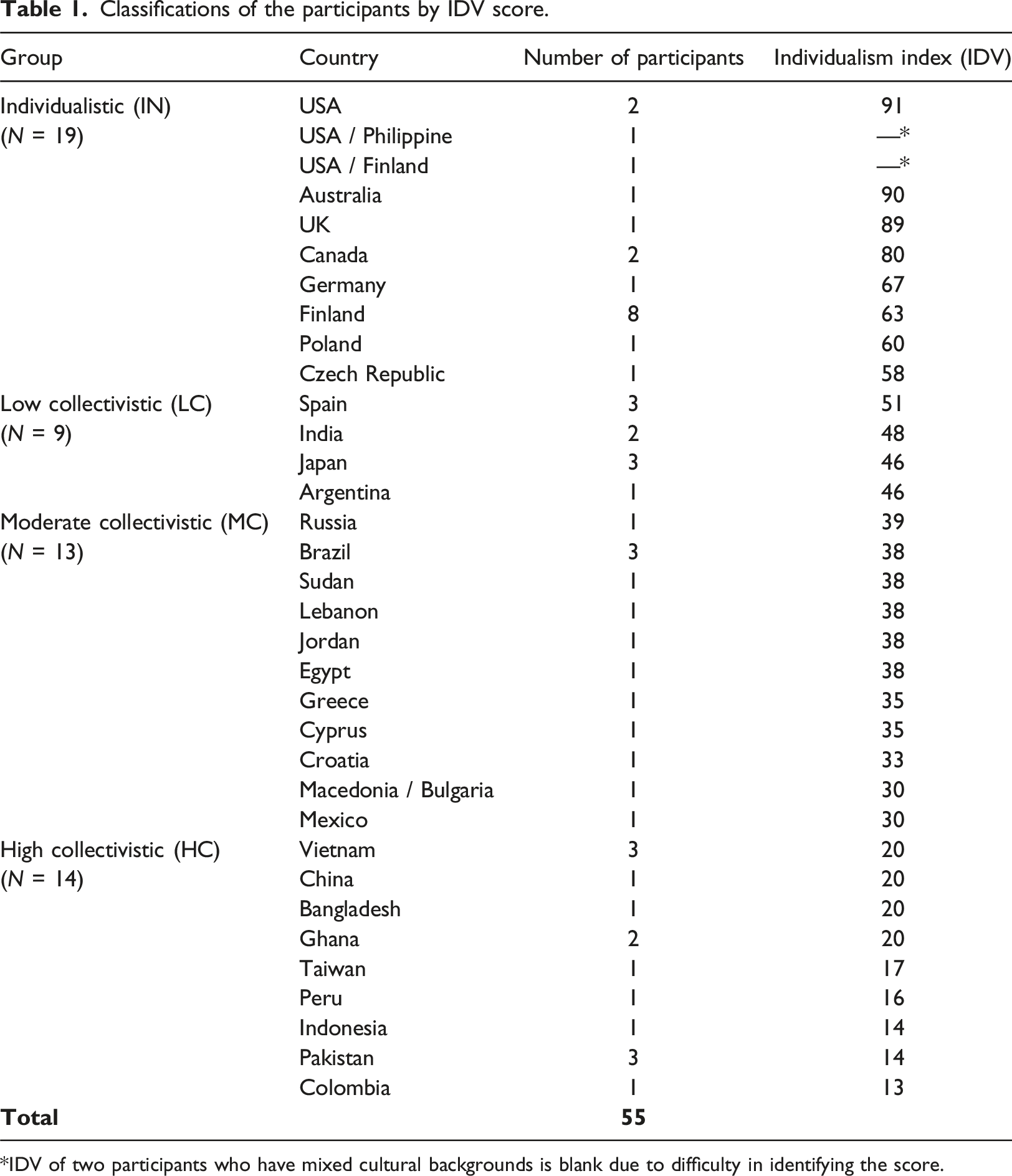
*IDV of two participants who have mixed cultural backgrounds is blank due to difficulty in identifying the score.
Quantitative analysis
The quantitative data from the Likert-scale questions (for RQ1) were analysed using SPSS version 26.0 (Statistical Package for the Social Sciences). Bivariate analysis examines the correlations between the participants’ IDV scores and conflict management styles. Descriptive statistics visualise how the groups with different levels of IDV score (IN, LC, MC and HC) reacted to each conflict management style. Two participants with mixed cultural backgrounds (e.g. a person who has grown up in the US with parents from an Asian country) were excluded from the quantitative analysis due to the difficulty in identifying their IDV scores (see Table 1). Therefore, the total number of participants included in this analysis dropped to 53.
Qualitative analysis
As the qualitative analysis included only those students who had experienced conflict situations during intercultural collaborative learning, this analysis included only 37 students. The number of participants in each IDV-based group was as follows: IN (N = 9), LC (N = 9), MC (N = 9) and HC (N = 10).
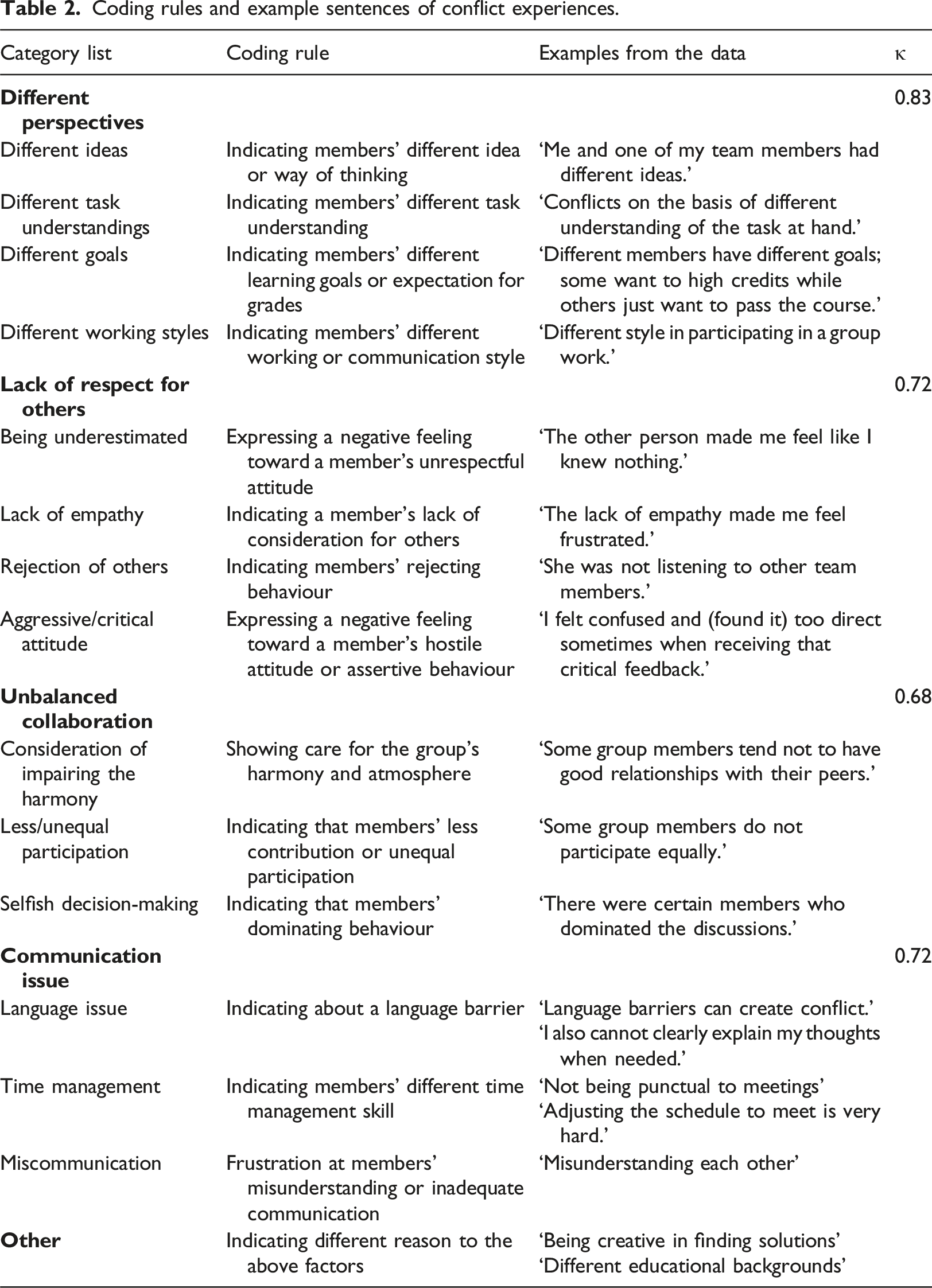
Coding rules and example sentences of conflict experiences.
Coding rules and example sentences of conflict management strategies.
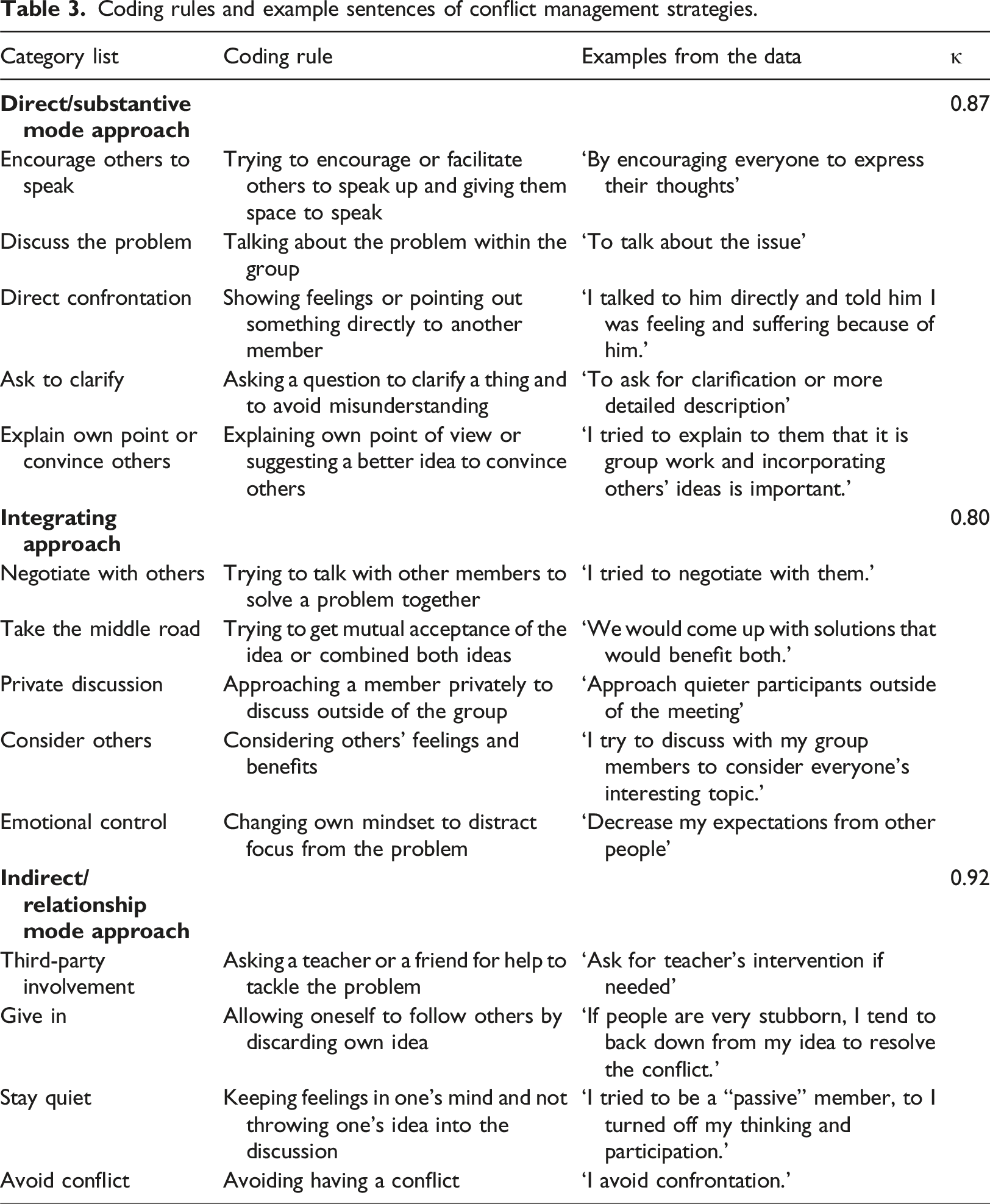
To increase the reliability of the study, two coders analysed the participants’ answers separately. The second coder referred to a coding book (Table 2 and 3) when analysing written content without seeing actual example sentences coded by the first coder. A participant’s information (e.g. country of origin, gender and IDV) was not disclosed to the second coder. The intercoder reliability was calculated with the value of Cohen’s kappa coefficient of each main theme that integrated the small categories (see Table 2 and 3).
Results
RQ1. How are degrees of individualism related to the conflict management styles of culturally diverse students?
Correlations between the IDV score and conflict management styles.
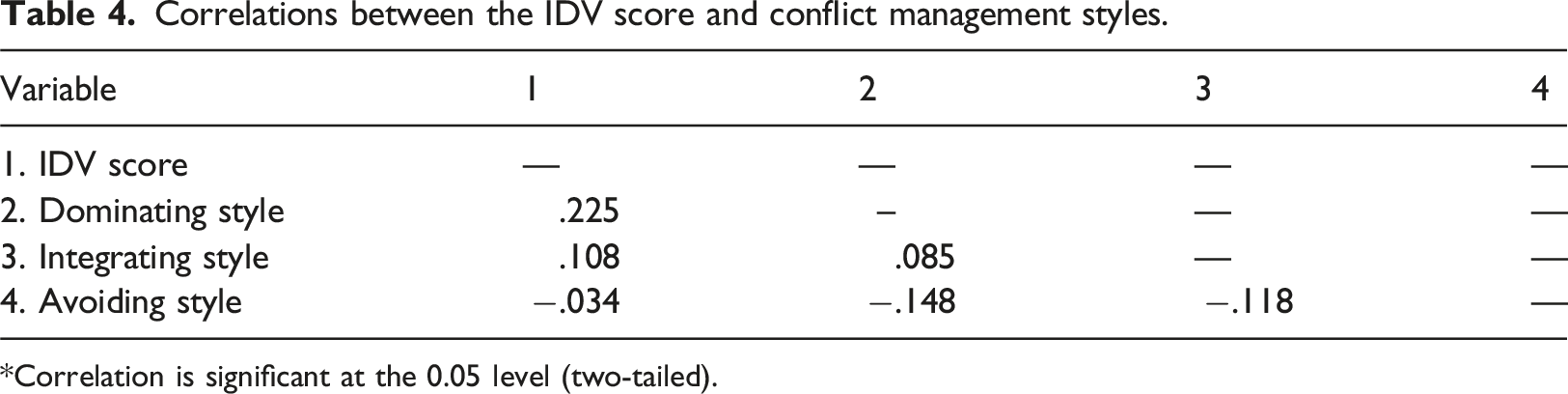
*Correlation is significant at the 0.05 level (two-tailed).
Descriptive statistics of conflict management styles per group.
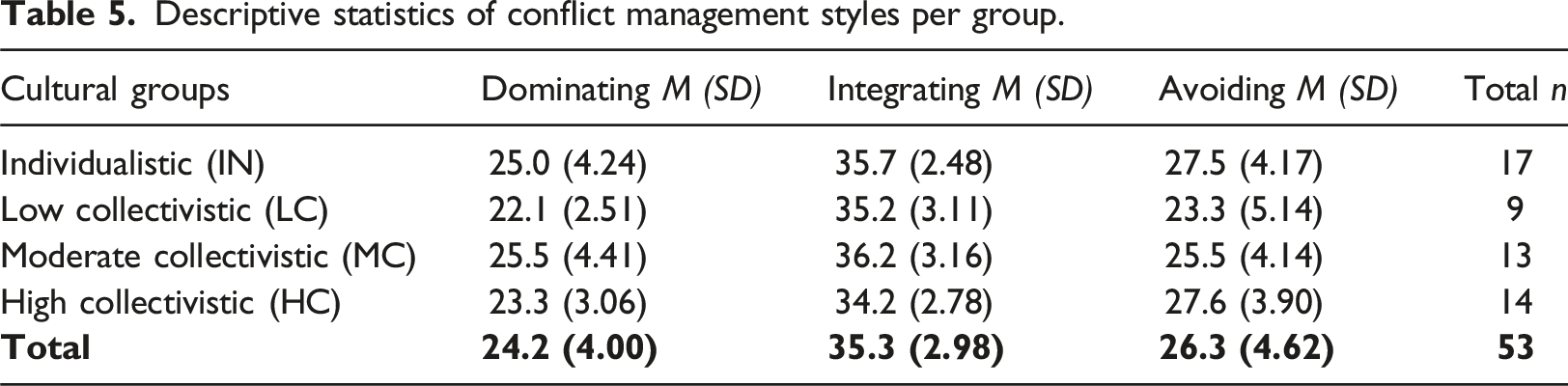
RQ2. What factors influenced culturally diverse Students’ conflict experiences during collaborative learning?
The participants reported a total of 133 episodes of conflict experiences during intercultural collaborative learning. The most frequently appeared theme was lack of respect for others (34.6%), followed by unbalanced collaboration (26.3%), different perspectives (24.8%) and communication issues (14.3%).
As with the participants’ conflict triggers, a group member’s attitudes associated with selfish decision-making and rejection of others were most frequently reported (19 and 17 episodes, respectively). The following is an example answer: Sometimes, there has been a person in a group work situation who does not allow anybody else’s ideas to be heard but insists on having their idea to be the one to go with. This has caused friction between group members. (Kate, female, IN)
Moreover, aggressive/critical attitude was also often indicated (15 episodes) in association with members’ dominating attitudes. One participant described how and why a group member displayed aggressive attitudes towards other members: Sometimes, people don’t open the space for others’ ideas. Sometimes, they dismiss ideas without even listening to them. Other times, they use personal and mean comments to try to persuade others not to engage with others’ ideas, except their own. (Olivia, female, MC)
When it comes to cultural differences, notable findings between the individualistic and collectivistic country groups were detected in the less/unequal participation category; two different perspectives of ‘participation’ appeared. For example, one participant in the IN group said: I most often get frustrated when people do not say anything, even if they disagree. This can lead to a collaborative solution where some [members] of the group have not contributed and therefore feel disempowered/not engaged. (Michael, male, IN)
Another participant in this group also mentioned a member’s shyness and lack of participation. Some group members are too shy to share their thoughts and the rest of the group just want to get the work done fast so they don’t really care. For me, it’s frustrating because it always takes a lot of time from the actual work and then we need more time to get the work done. (Jessica, female, IN)
As shown, the participants of the IN groups valued group members’ contribution to the discussion. Contrary, participants of the HC group pointed out group members’ unequal participation due to other priorities like personal stuff. Some group members do not participate equally; maybe they want to take a free ride, or they have other important personal issues to do. (Mia, female, HC)
Another participant in the LC group also said: The involvement of group members varies as per their interest and working style. Getting people on board at the same time could be challenging. (David, male, LC)
While the first two participants expressed frustration at members’ lack of participation in the discussion, such as hesitating to speak out on the topic, the latter two participants talked about the group’s holistic involvement. The former viewpoint was more frequently found in the IN group (3 out of 5 episodes), while the latter one was only found in the LC and HC groups (3 episodes each). Relating to the ‘equality’ of the group, the episodes of the category consideration of impairing the harmony were also found only in the LC and HC groups (4 and 2 episodes, respectively).
Another cultural difference was found from the HC groups’ conflict experiences related to the category of different working styles (7 out of 12 episodes). Some participants in the HC group were aware of the cultural differences in working styles as follows: Exchange and Western students usually have a fast workflow, meaning they try to create products based on easy-doing models. They try to finalise the project as fast and simple as possible…. I sometimes want to do the project in a perfect way, rather than a quick way. (Emily, female, HC) It is cultural difference: some are open to criticising publicly, while my culture is to criticise privately. I sometimes felt confused and [found it] too direct when receiving that critical feedback. Also, there are conflicts in proceeding with a task. Some prefer a spontaneous, on-the-go style to approach the task, while I prefer planning, setting a goal in general first, which causes an argument, and I don’t want to impose my ideas on the others; therefore, I felt frustrated sometimes and did my own way. (James, male, HC)
Both participants found it difficult to proceed with the task in a fast and efficient way of working while they prefer to plan collective actions and ensure the quality of work. Interestingly, most of the answers (7 out of 12) came from the participants from East and Southeast Asia, which will be discussed later.
RQ3. How did culturally diverse students manage conflict during collaborative learning?
Lastly, culturally diverse students’ different approaches to managing conflicts were examined using three thematic umbrella categories: direct/substantive mode, indirect/relationship mode and integrating approach. These themes and the behaviours under each category (sub-categories) are considered characteristic of the respective conflict management styles (dominating, avoiding and integrating; see Oetzel et al., 2000).
Direct/substantive mode approach
The participants in the IN group resolved 68.1% of their conflicts using the direct/substantive mode approach while the collectivistic country groups (HC, MC and LC) used this approach on average, 39.1%.
The participants of the IN group tended to actively employ strategies to encourage others to speak (4 out of 8 episodes). For example, Michael tried to get other members to join the discussion to resolve the conflict directly and openly. By encouraging everyone to express their thoughts, even if they are a little shy. By giving everyone a chance to speak, for example, by going round the circle to allow everyone to speak. (Michael, male, IN)
Strategies related to explaining own point or convincing others were also often used by the participants of the IN group (3 out of 6 episodes). For example, one participant tried to convince other members to work collaboratively by justifying the reason and its importance: I tried to explain to them that it is important and actually beneficial to work collaboratively and that the task cannot be successfully finished without collaboration. (Chloe, female, IN)
However, other strategies in the direct/substantive mode approach appeared more frequently in the collectivistic country groups; a discussing the problems category appeared most frequently in the HC group (5 out of 10 episodes) and a direct confrontation category appeared most frequently in the MC group (6 out of 11 episodes). No explicit variances were found among the LC, MC and HC groups in this approach.
Indirect/relationship mode approach
The strategies related to the indirect/relationship mode approach appeared more frequently in the collectivistic country groups (on average 31.8%) whereas the percentage of the IN group was 18.1% on average. For example, give in strategies were mostly found in the collectivistic country groups (7 out of 8 episodes). Example answers include: Be on the adjusting side rather than ask others to adjust. (Ethan, male, HC) I tried to be a “passive” member, so I turned off my thinking and participation and just went with the main flow of ideas towards whatever we would achieve. (Isaac, male, MC)
This type of withdrawal behaviour (e.g. just following the mainstream instead of arguing) was not found in the IN group.
Although all the collectivistic country groups reported episodes of this approach in a similar way regardless of their IDV scores (high, moderate or low), avoid conflict strategies were mentioned mainly by the participants from East and Southeast Asian countries (5 out of 7 episodes). One participant said: When communication problems happen, such as receiving too direct feedback and not being listened to, I avoid confrontation…. I keep myself in a harmonious situation by not telling my counterpart what I feel and carrying on with his or her ideas. (James, male, HC)
After experiencing a conflict situation with group members, James was determined to choose the right members for the next collaborative task to avoid a conflict as follows: But later on, I assume those are short-term work and keep thinking it is a short-term study. In the future, for longer-term work, I will choose the right team members to work with right from the beginning. (James, male, HC)
Another participant from East Asia also explained why she stayed quiet during the discussion and preferred to select members to avoid conflict: I struggled a bit to cut in their arguments like other people, since I think that is a very rude thing to do. But if I waited for others to finish their argument, some random person would cut in again and start their argument…As a consequence, I came to choose people who listened well and were good at responding to others well and integrating everybody’s thoughts into one work. (Alice, female, LC)
Alice had experienced uncomfortable situations in which some group members dominated the discussion; this experience led her to choose people who were good listeners. Neither participant directly explained what made them uncomfortable with other members, but instead, they tried to avoid potential conflicts, for example, by choosing team members.
Integrating approach
Regarding the use of this approach, the HC group scored the highest (11 out of 23 episodes) and the IN and MC group scored the lowest (3 episodes each). However, no notable characteristics or distributions among the categories were found across the groups, except for the strategy consider others; only the participants who originated from Asian regions mentioned strategies in this category (6 out of 6 episodes). Example answers include: I showed that I care about their feelings. (Sara, female, HC) I try to discuss with my group members to consider everyone’s interesting topic. (Mia, female, HC)
In addition to considering other group members’ thoughts and feelings, some participants tried to find a reason for one’s behaviour in a conflict situation. I try to understand what is making them act in this way. (Jane, female, LC) I tried to understand why that person did so. (James, male, HC)
This kind of behaviour of trying to understand the background of a group member’s action to resolve the conflict was not detected in the MC group, another collectivistic country group, nor the IN group. We will delve into such differences across the collectivistic country groups in the discussion.
Discussion
Degree of individualism and conflict management styles
Correlations between the IDV score and conflict management styles excluding a sub-sample (Finnish participants N = 8).
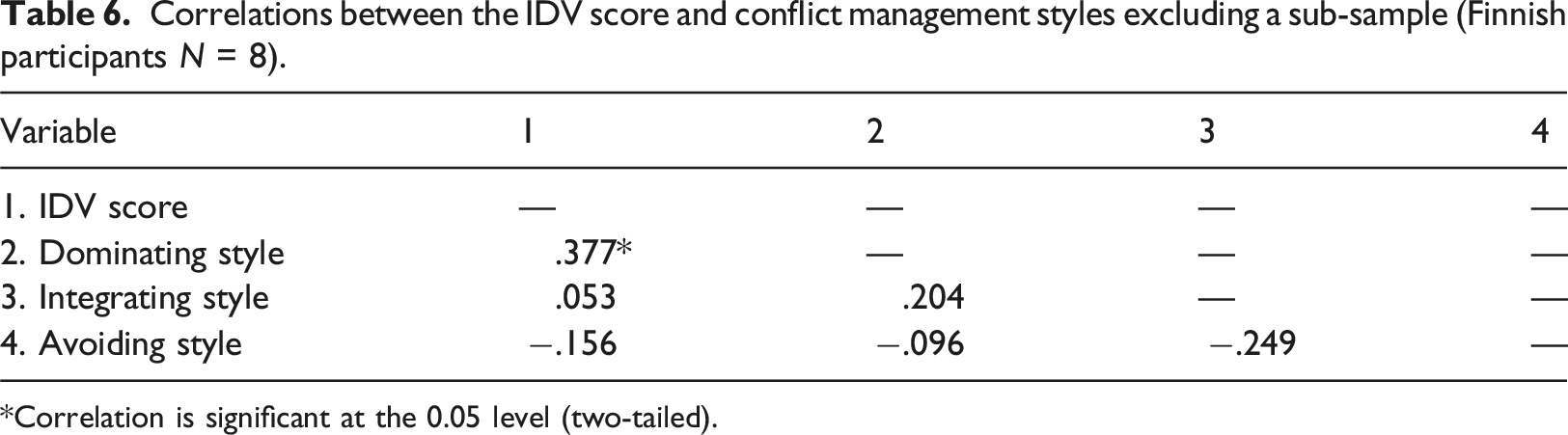
*Correlation is significant at the 0.05 level (two-tailed).
Descriptive statistics of conflict management styles per group excluding a sub-sample (Finnish participants N = 8).
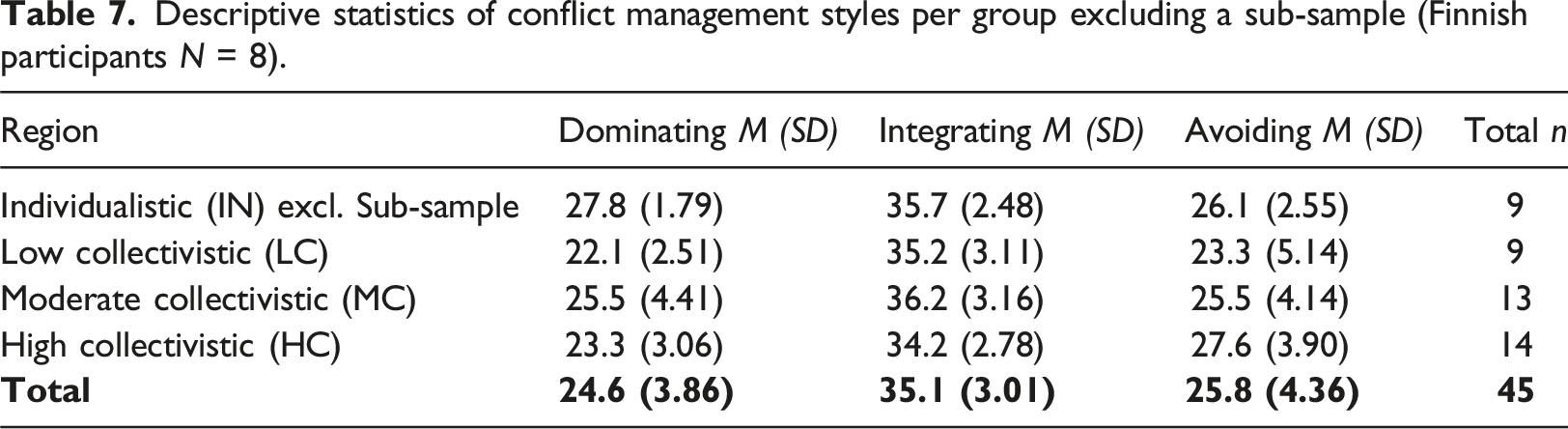
The results align with findings from previous studies which revealed that Finnish students were group-focused with a higher level of reflection and monitoring behaviours (Kim and Bonk, 2002). According to Weinberger et al. (2013), when comparing Finnish students with German students, the Finnish students displayed integrating attitudes for consensus building and avoided critical arguments, while the German students tended to build consensus in a conflict-oriented fashion, modifying peer’ ideas and suggesting alternative solutions in a more pronounced way. Although their IDV scores were almost the same (Germany: 67 and Finland: 63), their approaches to consensus-building were different. This result could be explained by other cultural differences between the two cultures, such as the masculinity–femininity dimension, which affects the ways conflicts are handled, either more fight-focused or negotiation-oriented (Hofstede et al., 2010). In this case, German culture scores high in masculinity (66), while Finland scores low (26), which implies the German approach may be more assertive, while Finnish approach may be more modest. This finding underscores that an individual’s conflict management style is not solely influenced by one cultural dimension, such as individualism–collectivism dimension, but is shaped by a complex interplay of multiple cultural factors.
Culturally diverse students’ conflict experiences and management strategies
In general, a group member’s lack of respect for other members often triggered conflicts among culturally diverse students. This issue includes assertive behaviour (e.g. overly aggressive or critical feedback) and disregard for others (e.g. not listening to other members). Many participants in the HC group related their conflict experiences to group members’ different working styles. Popov et al. (2012) also reported that students from collectivistic cultures perceived challenges which are related to different working behaviours and conflict resolution styles as more significant factors in multicultural group work. As Emily and James described (in RQ2), they felt uncomfortable with an efficiency-driven working style and fast-paced discussion. This finding aligns with the evidence from Chen et al. (2006), which suggests that Western students’ working styles, characterised as quick, direct and sometimes aggressive, were perceived as difficult by Taiwanese students. It can be inferred that students from highly collectivistic countries (especially in Asia) may perceive the direct and fast-paced working style of students from individualistic countries (mainly Western regions) as aggressive or even dominating (see Oetzel et al., 2000; Ting-Toomey and Kurogi, 1998).
Similarly, values concerning participation were perceived differently between the IN group and the collectivistic country groups. These differences were clearly reflected in their conflict management strategies. For example, the participants from the IN group seemed to value the expression of their viewpoints as well as others’ opinions, consistent with findings from previous studies (see Brett et al., 2014; Popov et al., 2014). In individualistic cultures, attitudes such as exchanging different ideas and engaging in arguments are more appreciated because quickly reaching a consensus is often seen as reducing the quality of the discussion (Popov et al., 2014). Consequently, a group member’s lack of participation or failure to express their own ideas could frustrate students accustomed to argumentative discussions.
Notably, the participants from collectivistic countries, particularly East and Southeast Asia, tended to use more indirect approaches compared to those from individualistic countries. When a strong opinion was expressed within the group, they sometimes withheld their thoughts and feelings, opting to follow the group rather than presenting a counterargument. As highlighted in the participants’ episodes, strong disagreements or arguments could be detrimental for those prioritising group harmony (Isohätälä et al., 2018; Popov et al., 2014).
Such indirect, implicit and quiet communication approaches – referred to as signals – are commonly used in collectivistic cultures (Brett et al., 2014; Kim and Bonk, 2002). Individuals from these cultures tend to pay greater attention to others’ behaviours to avoid causing discomfort (Popov et al., 2014). This explains why some participants reported considering other group members’ goals, feelings or behaviours when resolving conflicts. Notably, all such cases were reported by participants from Asian countries, which underscore the importance of cultural norms in social interactions, such as protecting one’s face to maintain harmonious relationships (Brett et al., 2014; Hofstede et al., 2010). These examples illustrate that the identified differences align with the concepts of direct/substantive versus indirect/relationship goal orientation (Oetzel and Ting-Toomey, 2003; Ohbuchi et al., 1999; Ting-Toomey and Kurogi, 1998).
Complexity of cultures and conflict management behaviours
Although certain behavioural characteristics were observed among culturally diverse students, the results did not reveal clear relationships between their IDV scores and conflict management behaviours. Specifically, the variation in results among the three collectivistic country groups with different IDV score ranges, namely LC (IDV 51–40), MC (IDV 39–26) and HC (IDV lower than 25), was subtle and not linear. This finding supports the argument that individualism and collectivism are not opposite poles of the same dimension but are rather two separate dimensions, particularly when examined at the individual level (e.g. Gouveia et al., 2003; Hofstede et al., 2010). Singelis et al. (1995) proposed that individualism and collectivism can vary across countries, depending on the extent to which people value ‘equality’ within the collective: Some collectivists (e.g., the Japanese) emphasize in-group harmony very much and others not at all. For example, East Asians avoid confrontation and would rather tell a lie than cause anyone to lose face. On the other hand, in an Israeli kibbutz, intensive discussions that may result in people losing face are common. (Singelis et al., 1995: 244)
This perspective helps to explain the observed similarities and differences among the LC, MC and HC groups. For instance, conflict experiences in the LC and HC groups were often associated with less or unequal participation by group members (3 and 4 episodes, respectively), whereas this issue was only identified once in the MC group. Similarly, conflict management strategies in the LC and HC groups frequently involved avoiding conflict (3 episodes each) and considering others (2 and 4 episodes, respectively). In contrast, the MC group reported just one episode of avoiding conflict and none in the category of considering others. Half of the LC and HC groups were composed of participants from Asian countries (especially East and Southeast Asia), whereas the MC group did not include any participants from these regions.
It can be assumed that cultural norms beyond the individualism–collectivism dimension, such as the masculinity–femininity dimension or attitudes towards equality, may influence an individual’s conflict management behaviours. In particular, within the context of collaborative learning, educational experiences in students’ home countries may also shape their collaborative learning behaviours and conflict resolution strategies (Economides, 2008; Nguyen et al., 2005). Further investigation is required to explore the complex relationships between students’ cultural backgrounds and their behavioural characteristics in collaborative learning settings.
Limitations and future implication
The primary limitation of this study is the small sample size (N = 55), which restricts the generalisability of the findings. While the results must be interpreted within this context, the aim of this exploratory study was to investigate challenges and management strategies employed by culturally diverse students during collaborative learning, using a qualitative approach. Although the quantitative analysis (RQ1) was based on a small dataset, it provided valuable insights that enriched the interpretation of the qualitative data.
We also acknowledge that using a country-level IDV score for individual participants may constrain the analysis, as participants may not fully align with their home country’s cultural norms – particularly those studying abroad, as in this study. Furthermore, recent modernisation and rapid economic development may contribute to shifting mindsets towards greater individualism (Hofstede et al., 2010; Kapoor et al., 2003). While our findings align with earlier research on individualism, a more nuanced approach at the individual level (cf. Markus and Kitayama, 1991) would better capture the interplay of multiple cultural and personal factors. Such an approach could more accurately reflect the individual preconditions influencing conflict management behaviours in intercultural collaborative learning contexts (Boroş et al., 2010; Kapoor et al., 2003; Oetzel and Ting-Toomey, 2003; Singelis et al., 1995).
The findings of this study could have practical applications in learning environments. Facilitating multicultural groups of students more effectively could help harmonise different approaches to working and learning together (Popov et al., 2013). One approach is to externally script collaboration, which involves specifying, sequencing and distributing roles and activities among group members (Weinberger, 2011). Collaborative learning methods that were originally developed and implemented in Western contexts may not be as effective in cultures with entirely different educational approach (Nguyen et al., 2005). Therefore, culture-sensitive scripts could mediate the group dynamics of intercultural learners, facilitate productive interaction and conflict management and maximise the benefits of intercultural collaborative learning (Popov et al., 2013). Another approach is to make conflicts explicit and to support joint conflict management processes using an awareness tool (e.g. Järvenoja et al. (2020)). The impact of such tools could be particularly beneficial in multicultural groups, where socioemotional conflicts may arise due to hidden differences in perspectives and beliefs. By addressing these differences openly, the potential for more constructive and collaborative outcomes could be enhanced.
In multicultural collaboration, learners are encouraged to interact across cultural boundaries, enhancing their problem-solving skills through conflict resolution. Awareness of diverse communication styles across cultures enables learners to better understand, navigate and respect differing perspectives and approaches (Kim and Bonk, 2002). However, experience of conflict resolution among culturally diverse students may not necessarily lead to the development of skills and competencies for effective intercultural collaborative problem-solving. As some findings indicate, individuals often prefer to collaborate with others from the same cultural background (Kimmel and Volet, 2012), and thus, culture can be a significant factor to shape collaborative learners’ interaction (e.g., Stepanyan et al., 2014). Therefore, merely grouping individuals with diverse backgrounds is insufficient; additional support is needed – not only for content-focused interaction but also for socio-emotional processes, such as conflict management (Kimmel and Volet, 2012; Vuopala et al., 2016).
Conclusion
The current study explored international higher education students’ perspectives on conflict situations during intercultural collaborative learning. We found that the dimensions of individualism and collectivism influence communication styles, including approaches to conflict resolution. In collaborative learning settings, some individuals may prefer group members to openly express their opinions, valuing direct and clear communication. However, this attitude may vary according to cultural norms. Some individuals may choose to remain silent, observing group dynamics to maintain balance and harmony within the group. The diverse cultural backgrounds of group members affect their goals and expectations in collaborative learning, resulting in different communication behaviours that can, in turn, lead to conflicts. This study highlights one aspect of complex cultural dimensions and their potential influence in intercultural collaborative learning, suggesting that educators should pay special attention to supporting culturally diverse students.
Footnotes
Declaration of conflicting interests
The author(s) declared no potential conflicts of interest with respect to the research, authorship, and/or publication of this article.
Funding
The author(s) received no financial support for the research, authorship, and/or publication of this article.
Ethical statement

Appendix
Online survey questions (Likert scale and open-ended questions)
Author biographies
Likert scale questions
(1) I propose my own ideas to my group members to meet a best joint conclusion. (2) I am not willing to share my ideas if am not sure. (3) During a group discussion, I use my own expertise or knowledge to get my ideas accepted. (4) I appreciate all of group members’ ideas to be open so that the issues can be resolved in the best possible way. (5) I try to keep my disagreement with my group members to myself in order to avoid hard feelings. (6) In group learning situations, I often hold on to my idea or solution to a problem. (7) I think listening to other group members is important to come up with decisions acceptable to all of us. (8) I often find difficulties in accepting other group members’ ideas although I try to listen to them carefully. (9) In group learning situations, I try to take other group members’ ideas and interests into account. (10) It is important to listen to other group members to avoid a possible conflict and have a smooth discussion. (11) I try to listen to other group members to keep the atmosphere peaceful and try not to have collision. (12) I’m not good at receiving feedback. Sometimes it’s difficult for me to accept it if it is different from my thoughts. (13) I rather work and study alone than in groups so that I don’t get any hard feelings or conflicts. (14) I am not comfortable with open discussion of my differences with my group members. (15) I think the most favourable situation is that we (as a group) could make a joint conclusion with combining group members’ ideas acceptable for all. (16) I try to work with my group members to find solutions to a problem which satisfy my expectations. (17) I show the merits of my ideas or position to take an initiative in negotiation in group learning situation. (18) I try to investigate an issue with my group mates to find a solution acceptable to all group members. (19) I usually enjoy being in a leading role rather than in an assisting role during a group work. (20) When I feel my idea is better than other group members’ ideas, I try to persuade others for my favourable direction. (21) I try to integrate my ideas with those of my group members to come up with a decision jointly. (22) I think the most favourable situation is that we (as a group) could achieve the task without having conflicts during discussion. (23) I try to work with my group members to find solutions to a problem which satisfy our expectations as a team. (24) I generally avoid having an argument with my group members.
Open-ended questions
(Have you experienced some conflicts during intercultural collaboration caused by different styles of negotiation or discussion?) (1) If yes, what kind of conflict happened? What made you feel confused/frustrated? (2) In such a situation, how did you try to resolve the conflict(s)?