



Abstract
Research routinely suggests that international students often struggle in engaging with other student groups. This study, therefore, examines to what extent and how the intercultural attitudes and intentions of new international students in three Dutch educational institutions related to their acculturation orientation preferences (AOPs) during the “honeymoon” stage. Their AOPs were investigated across four social contact domains: living, schoolwork, friendships, and general interactions. Using structural equation modelling, results from 198 respondents indicate that intercultural intentions predicted their AOPs, with multicultural integration the most preferred strategy and marginalization the least preferred. Results of a simple mediation analysis show that intercultural intentions mediated the effect of intercultural attitudes for students adopting multicultural integration and separation strategies. Interview findings from 25 participants indicate that students sometimes adopted different orientations across the social contact domains. Internationally oriented higher education institutions should further support new students in their planning for intercultural interactions.
Keywords
Introduction
The benefits of studying in international learning environments (ILEs) cannot be overstated for new international students. ILEs expose students to unique intercultural relations and enriching social interactions, which can foster well-groomed individuals with multicultural mindsets (Gilani et al., 2020; Mejri, 2019). Interactional experiences with both the domestic group (DG) and diverse cultural groups constitute a significant part of migrants’ acculturation (Berry, 2005; Fu, 2015). This is because the social networks students develop in the first year can help mitigate acculturative stress (Schoe et al., 2022) and negative outcomes such as depression, loneliness, and homesickness (Koo et al., 2021).
However, despite the efforts of institutions of higher education (IHEs) to improve the level of engagement among their student groups, research routinely indicates that some international students struggle to engage with other student groups, especially with domestic students, during the process of acculturation, which begins with the honeymoon phase (Arkoudis et al., 2013; Harryba et al., 2013). And, the majority of studies of international students’ acculturation often overlook sojourners’ contact experiences during the honeymoon stage of acculturation, which is characterized by excitement and curiosity (Gilani et al., 2020; Zagefka and Brown, 2002) and can last anywhere from several weeks up to a few months post-arrival in the new society (Birrell and Timney, 2008).
To address this lacuna in research, this study explores international students’ acculturation orientation preferences (AOPs) during the honeymoon stage; focusing on the extent to which their intercultural attitudes and intentions to engage with other student-groups (domestic, conational, and non-conational) impact upon their orientations across four social contact domains: living, schoolwork, friendships, and general interactions. Further, because acculturation is a unique and personal experience (Berry, 2005), this study explores international students’ lived experiences of social contact to understand their intercultural mindsets and AOPs from their own reflective narratives. This study addresses two research questions: (1) Based on their experiences of social contacts during the honeymoon stage of acculturation, to what extent do the intercultural attitudes and intentions of new international students within ILEs impact upon their AOPs? (2) How do the intercultural attitudes and intentions of new international students within ILEs impact upon their honeymoon AOPs?
This research adopted a survey to examine our first research question and in-depth interviews to answer the second. The rationale for this complementary, dual-method design was that a survey can help us understand the effect of intercultural attitude and intention on AOPs among new international students, while interviews can describe how these constructs interact based on the personal, lived experiences of some international students. Our research was approved by the Ethics Committee of the Faculty of Behavioral and Management Sciences, University of Twente.
This study contributes to existing research because it explores the early mindsets and social contact experiences of new international students in engaging with other student groups during the initial stage of acculturation. It also describes some factors that may account for differences in their AOPs across the social contact domains.
Literature review
Acculturation and student-sojourners in ILEs
Acculturation is the change-process that occurs when two or more cultures engage in unmediated, sustained contact over time (Berry, 2005). It is a phenomenon that is characterized by changes in behaviors and values due to intercultural contact (Cheung-Blunden and Juang, 2008). Therefore, forms of social contact between people of diverse cultures constitute a crucial dimension of acculturation (Berry, 2005; Orton, 2012). Research also suggests that developing strong social contacts can help new international students mitigate the acculturative stress they face in their first year (Koo et al., 2021; Schoe et al., 2022).
Furthermore, most research in acculturation (e.g., Berry, 2005; Celenk and Van de Vijver, 2011; Cheung-Blunden and Juang, 2008; Culhane, 2004) tends to employ the bi-directional approach, which focuses on how attached students are to their conational group (CG) compared to the DG. From this perspective, there are four distinctive AOPs: assimilation, integration, separation, and marginalization (Berry, 2005). Assimilation is when international students prefer to have contact primarily with the DG rather than CG. When international students prefer to have contact with both DG and CG, then they are following the integration pathway. Separation occurs when students have contact with their CG rather than the DG. Marginalization is a situation in which student-migrants have little or no contact with either their CG or the DG. Prior studies have suggested that integration produces the best socio-cultural, psychological, and academic outcomes for student-sojourners, while marginalization is predictive of poor adjustment (Berry, 2005; Lakey, 2003).
A challenge in the acculturation research concerns the application of bi-directional models to explain the unique experiences of student-sojourners in a multicultural context (Lakey, 2003; Schwartz et al., 2010; Smith and Khawaja, 2011). This is because the role played by non-CG international students in acculturation, particularly during the honeymoon stage, is often neglected (Gilani et al., 2020). For example, students who have little or no contact with either CG or DG but who have established contact with non-CG international students cannot be said to be strictly marginalizing.
Studies have also suggested that non-CG international students provide social and emotional support for struggling students (e.g., Gilani et al., 2020; Kashima and Loh, 2006). In fact, it is imperative to distinguish between those students who want to separate from their CG and those who wish to separate from the international group (IG) outside of their own CG; thus, the categorization of the bi-directional orientations takes on a new meaning when non-CG international students are factored into the acculturation process. Celenk and Van de Vijver (2011) noted that multicultural integration may better define the experiences of international students who have successfully integrated within an ILE. Gilani et al. (2020) further emphasized that when the domestic university is supportive of integration, and various student-groups are respectful of diversity and intercultural strategies, then there is an interplay between multiculturalism and the integration of students. It has also been suggested that the experiences of incoming students within the new society are defined, in part, by their experiences within the ILE (Schwirner, 2005), especially when the university plays an active role in fostering contact among the student groups (Gilani et al., 2020; Li and Zizzi, 2018).
Honeymoon stage of acculturation
In the U-curve hypothesis, honeymoon refers to the initial stage of student-migrants' contact experiences with the new society, which is marked by excitement, curiosity, and positivity (Birrell and Timney, 2008). This is subsequently followed by the hostility stage (when migrants might experience acculturation stress), the humor stage (when migrants adjust to the new environment), and, finally, the home stage (when migrants adapt to the new society). Given that acculturation strategies vary across individuals and may change over time (Zagefka and Brown, 2002), we examine what AOPs students have at the honeymoon stage, especially when non-CG international students are factored into the acculturation process across the social contact domains.
Social contact domains: living, schoolwork, friendships, and general interactions
Birman and Simon (2014) emphasized that social contact is one of the key life domains in which migrants can experience changes (with the other life domains being news, child-rearing, education, language, celebration, food, and religion). Berry (2005) noted that complex variations can take place across these domains during migrants’ acculturation. Some migrants may adjust well in, say, the language domain but not in other domains. Social contact experiences are indicative of the extent to which migrants are willing to engage in interactions with the DG and non-CG (Berry, 2005). Consequently, we examine four social contact domains for migrants that have been identified as important in prior research: living, schoolwork, friendships, and general interactions.
With respect to living social contact domain, Li and Zizzi (2018) found that roommates play a role in terms of students’ social and academic achievement. Therefore, international students' housemate experiences can yield insights into their orientations as well as how well they are able to adjust to their new society (Biggers, 2017 ). Regarding schoolwork, new students in ILEs come into contact with student groups, both inside and outside the classroom, with whom they work on class exercises, group projects, and assignments. Studies have found that diversified work groups in multicultural settings allow students to develop their intercultural competence, which, in turn, is predictive of their social adjustment (Acquah and Commins, 2018; Mejri, 2019), higher levels of academic achievement, and satisfaction than students who work in undiversified groups (Summers et al., 2008). Friendships as a social contact domain has been suggested in many studies be indicative of acculturation and adjustment outcomes, especially in terms of the type of social support migrants have (Glass and Westmont, 2014). For example, international students with diversified friendships have been found to have better social, academic, and psychological outcomes than those with undiversified friendships (Kashima and Loh, 2006). General interactions refer to all the forms of contact that migrant students have outside of the living, schoolwork and friendships domains (Orton, 2012), interactions with university staff, or meeting new people at a social event. The pattern of migrants’ general interactions is indicative of both their degree of orientation within their new society and positive interactions (Berry, 2005).
Intercultural attitudes, intentions, and interactions
Intercultural attitudes and intentions are psychological constructs which reflect the extent to which individuals are willing to engage in interactions outside of their CG (Krosnick et al., 2005). Intercultural attitudes in a multicultural context are defined as follows: Students’ eagerness, openness, willingness and readiness for and interest in discovering, learning and experiencing other cultures through familiarizing with local people in the domestic culture and ... various cultures in several ways. (Karakaş, 2013: 3).
Intercultural intentions refer to the conscious decision of a person to engage in interactions with people outside of their CG (Sheera and Norman, 1999). It is underscored by a motivation which is reinforced with subjective plans and preparations (Aditia et al., 2018). Therefore, intercultural intention is how subjectively prepared a person is for intercultural interactions.
Intercultural interactions refer to the behaviors of people during their contact with people outside of their CG (Culhane, 2004). These interactions include all forms of verbal and non-verbal interactions that occur in an intercultural context in which the cultural distance is sufficiently significant as to produce a discernable impact upon the interacting individuals (Spencer-Oatey and Franklin, 2009). In acculturation research, intercultural interaction has been found to minimize intercultural conflicts and can yield positive adjustment outcomes for both migrants and domestic members within a multicultural context (Gilani et al., 2020).
Many studies have examined the relationship between attitudes, intentions, and behavior. Attitudinal and behavioral intentions are considered as drivers of behavior, although the precise mechanism of their effects differs across studies. Attitudes have been found to be a predictor of behavior (Dekker et al., 2007; Glasman and Albarracín, 2006). Brown (2011) discovered that pre-arrival attitudes toward the domestic culture are predictive of migrants’ post-arrival contact behavior with the DG and other foreigners, which, in turn, influences their acculturation. Furthermore, as a precursor to behavior, behavioral intentions have been suggested as having an influence over behavior and as a mediator of the effect of attitude on behavior (Ajzen, 1991; Cai and Shannon, 2012; Karabiyik et al., 2021). Figure 1 shows the theoretical relationship amongst the constructs. Based on this discussion, we advance the following hypotheses:
H1 The intercultural attitudes of new international students in ILEs have a negative influence on (i) assimilation (ii) separation CG and (iii) marginalization orientations, and a positive influence on (iv) separation IG and (v) multicultural integration.
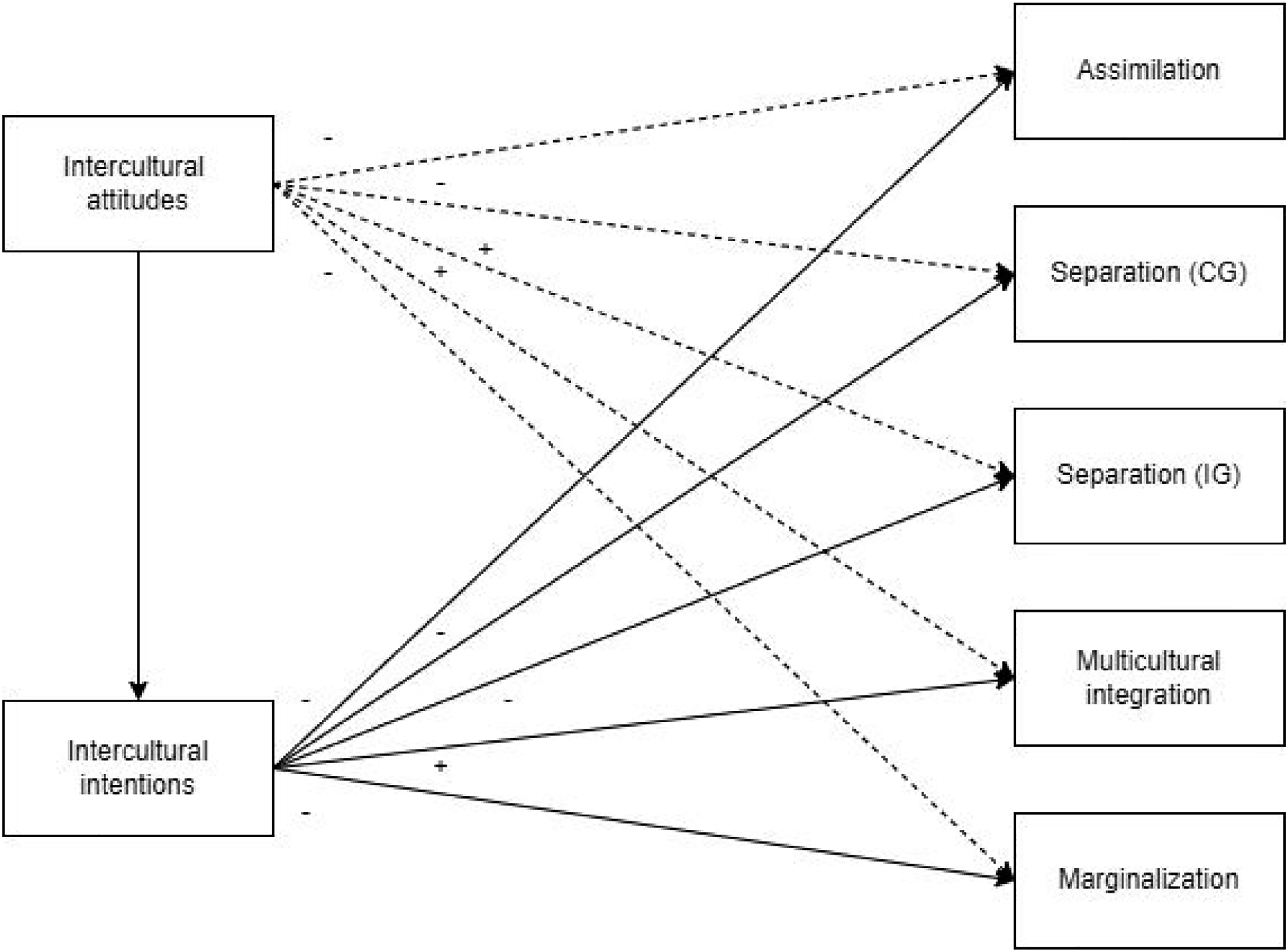
H2 The intercultural intentions of new international students in ILEs have a negative influence on (i) assimilation (ii) separation CG and (iii) marginalization orientations, and a positive influence on (iv) separation IG and (v) multicultural integration.
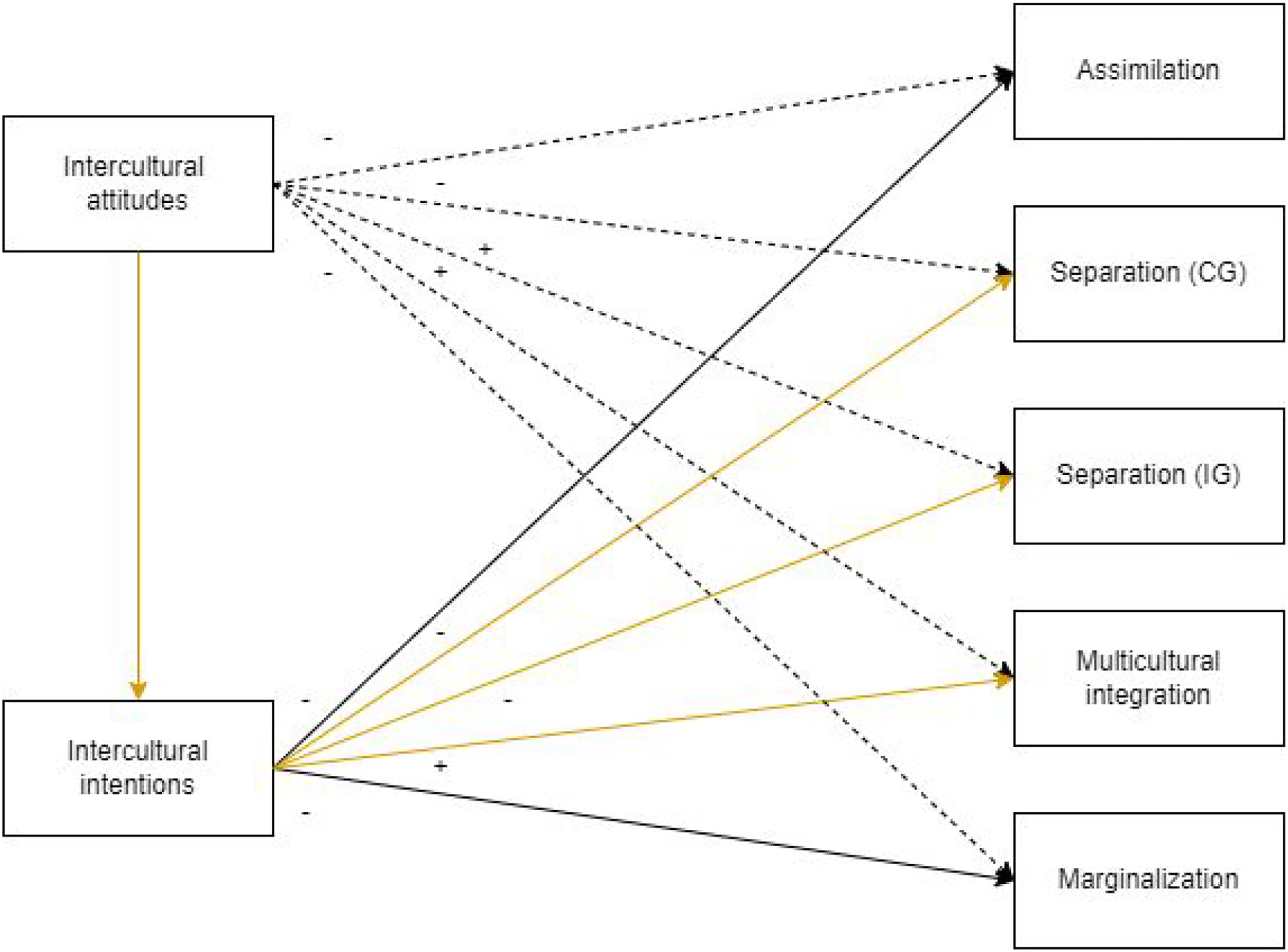
H3 The intercultural intentions of new international students mediate the influence of intercultural attitudes on (i) assimilation (ii) separation CG (iii) marginalization (iv) separation IG and (v) multicultural integration.
Conceptual model of the influence of intercultural attitudes and intentions on new international students’ honeymoon AOPs. Direct effect of intercultural attitudes and intentions on new international students’ honeymoon AOPs. Indirect effect (in color) of intercultural attitudes through intercultural intentions on new international students’ honeymoon AOPs.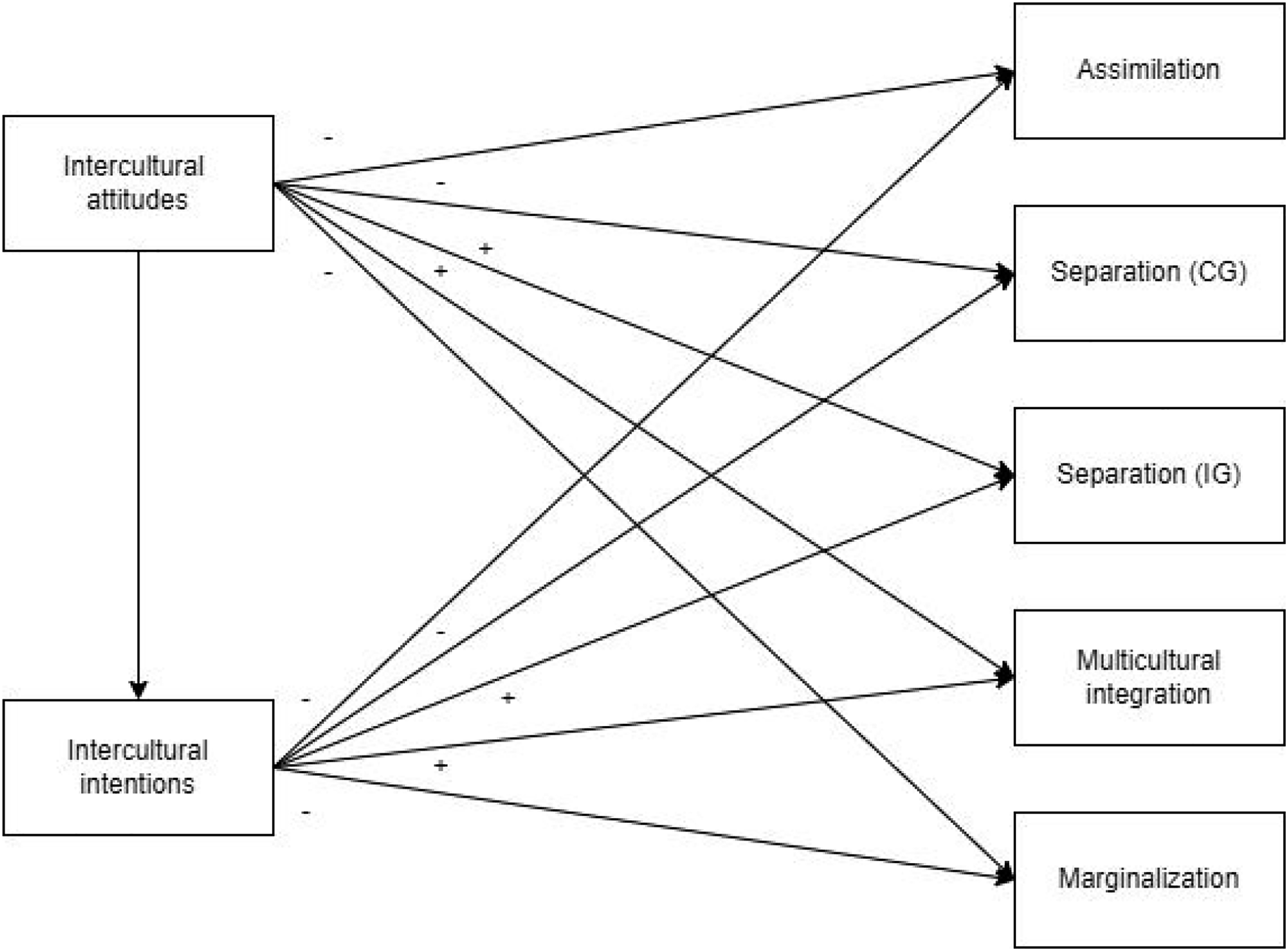
Study 1: Survey
We conducted a cross-sectional survey to answer our first research question. The method was deemed appropriate to understand the effect of intercultural attitudes and intentions on AOPs within a sample of new international students. An online questionnaire was developed using Qualtrics and was designed to be active for 6 weeks (August–September, 2019).
Respondents
Respondents were recruited from the three Dutch IHEs which attract a considerable number of international students in the city of Enschede, which is located in the eastern part of the Netherlands. The recruitment took place during their orientation weeks through voluntary sampling. We used three key channels to target our respondents: (1) we distributed postcards with a QR code which gave access to the online questionnaire, (2) study advisors of the new students assisted in sharing our questionnaire with the respondents, and (3) we shared the questionnaire link on social media channels of the IHEs.
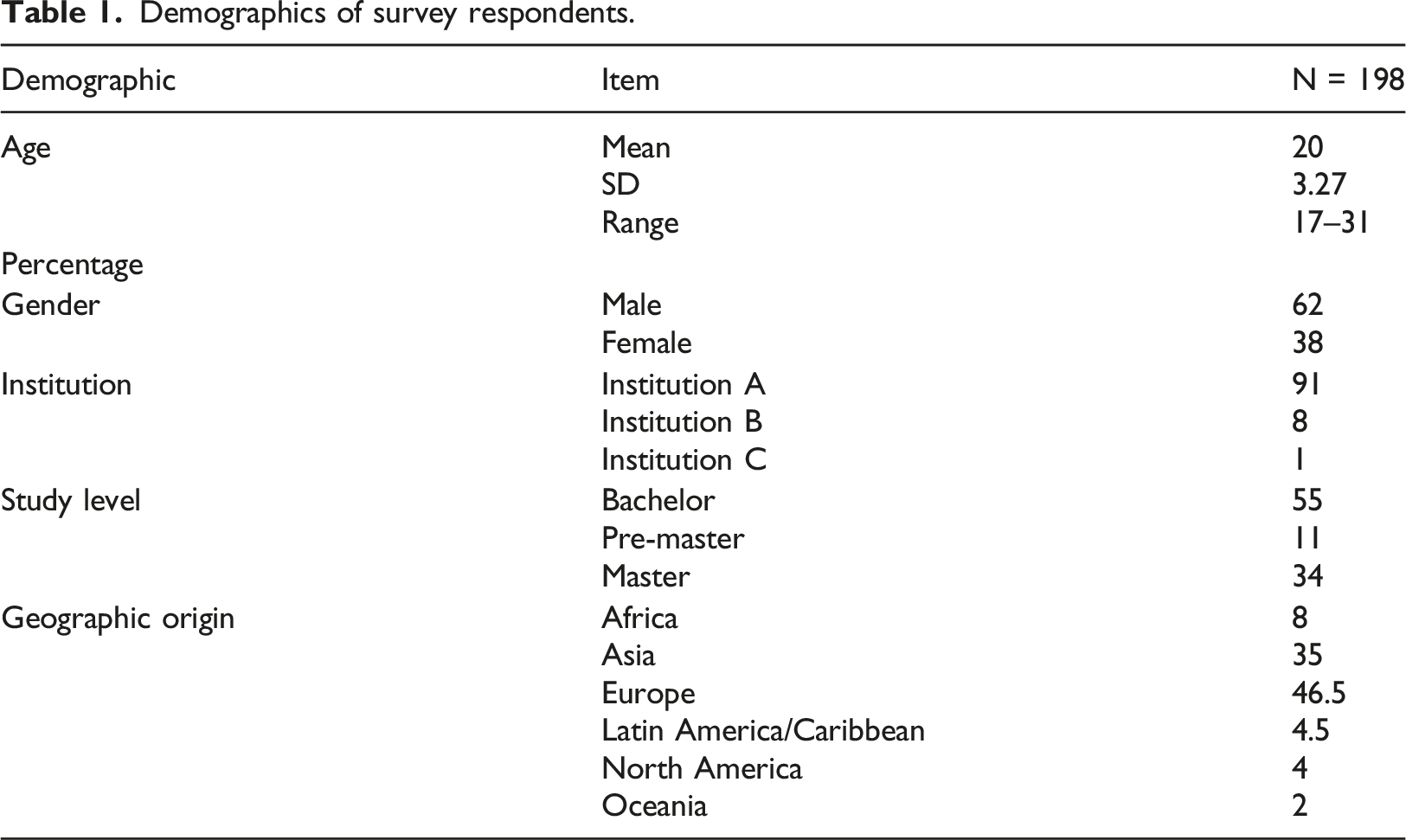
A total of 253 international students completed the online survey. However, questionnaires from 55 respondents were discarded, as they either incorrectly answered the validation question (I confirm that I am Dutch/non-Dutch) or failed to finish the survey. Therefore, data from 198 new international students, who were from 54 different countries, were included in the analysis.
Demographics of survey respondents.
Measurements
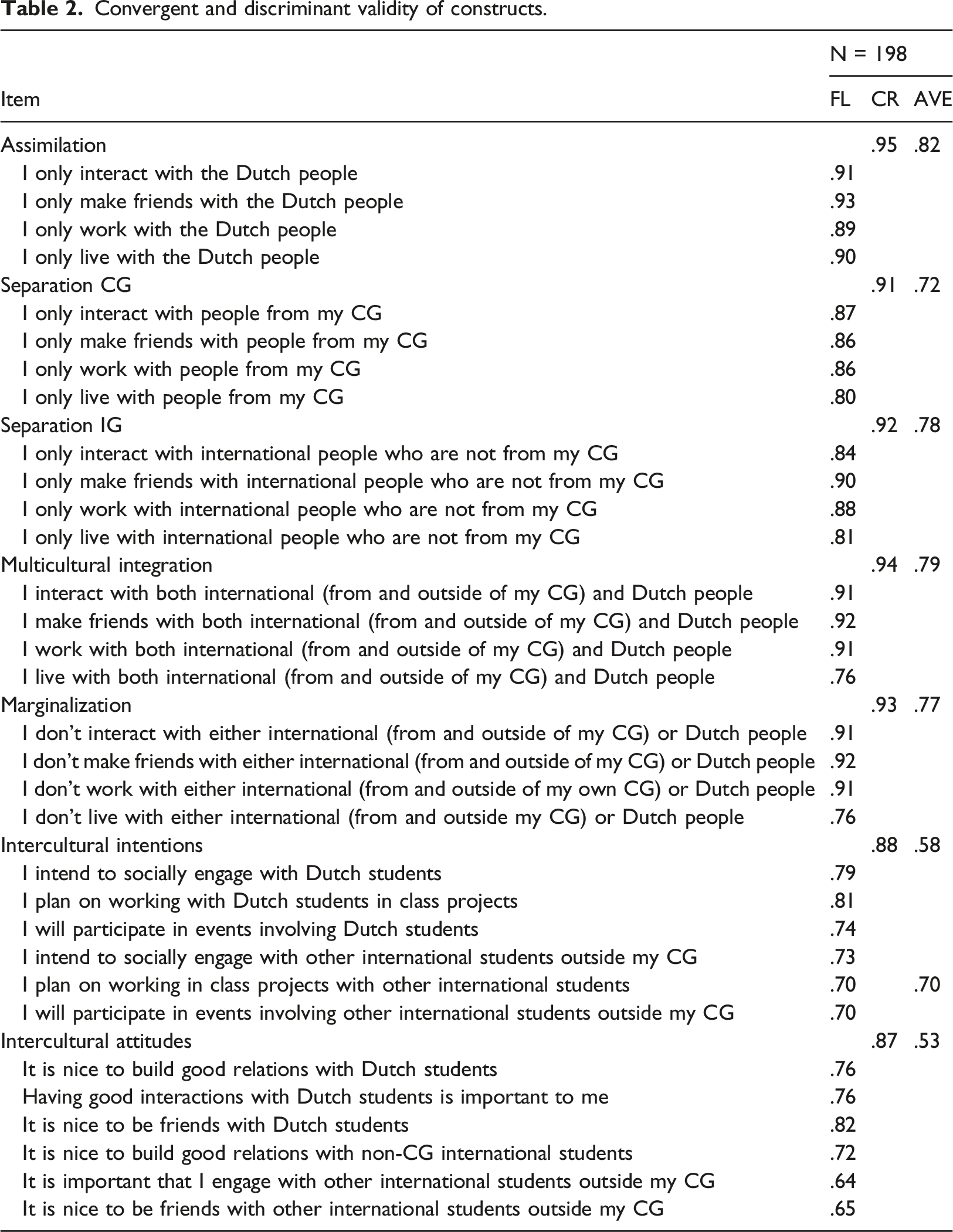
Convergent and discriminant validity of constructs.
Honeymoon AOPs, intercultural attitudes, and intentions
We constructed 20 original items to examine students’ AOPs identified in this research: assimilation, separation CG, separation IG, multicultural integration, and marginalization. We developed four original items for each AOP to examine who the international students live with, work with inside and outside of the classroom, are friends with, and generally interact with.
Likewise, we constructed six original items to measure respondents’ intercultural attitudes and six original items to measure their intercultural intentions for Dutch students and non-CG international students.
Results
Measurement validity and reliability
Prior to testing the structural model for our sample, we first determined both the validity and reliability of the scales used for the survey. Confirmatory factor analysis using AMOS 26.0 was performed to determine the discriminant and convergent validity of the scales. Hair et al. (2006) recommended a factor loading (FL) value higher than 0.50 for an item to be significant. Table 2 presents the factor loading values for the individual items. Additionally, at the construct level, Hair et al. (2006) proposed the calculation of composite reliability (CR) and average variance extracted (AVE) instead of Cronbach’s alpha when using structural equation modelling (SEM).
The AVE values for all constructs were adequate, as those values were higher than 0.50 (Fornell and Larcker, 1981). Moreover, the CR values were more than sufficient for all the factors (>0.60; Bagozzi and Yi, 1988). Hence, all the constructs used for this study possessed convergent validity.
Correlation, means, and standard deviations of constructs.
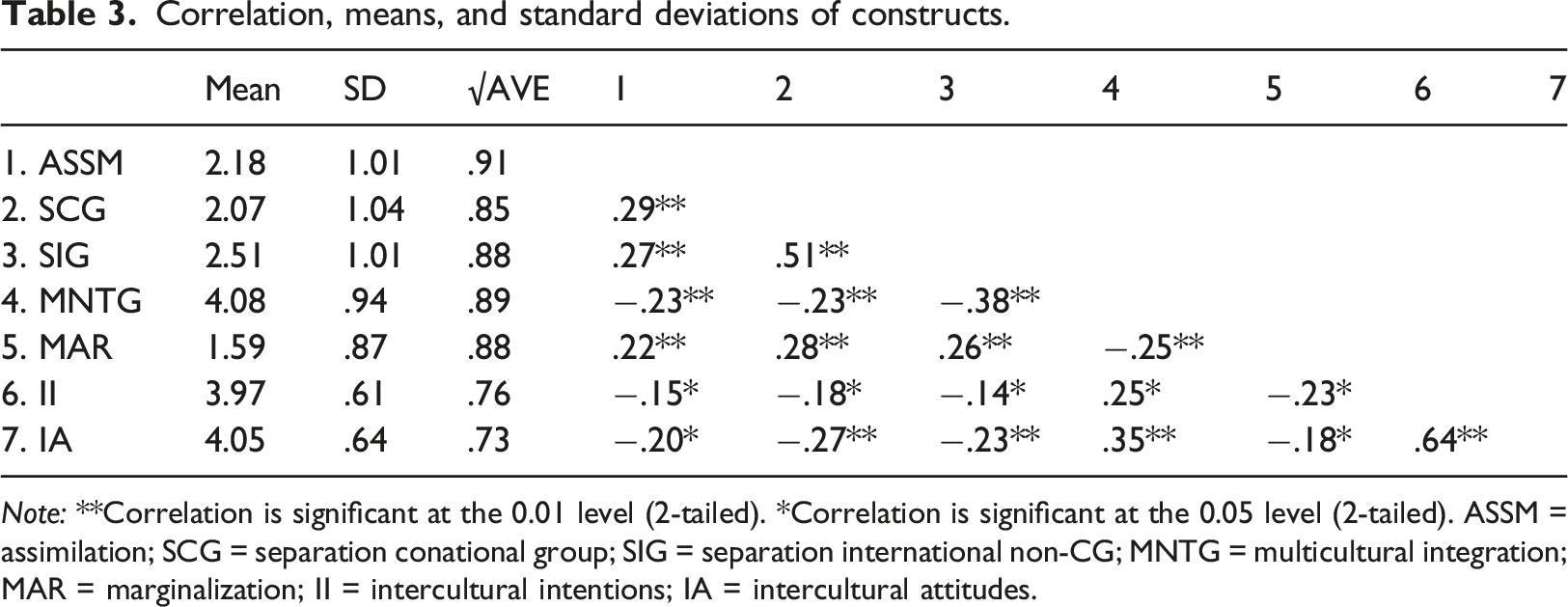
Note: **Correlation is significant at the 0.01 level (2-tailed). *Correlation is significant at the 0.05 level (2-tailed). ASSM = assimilation; SCG = separation conational group; SIG = separation international non-CG; MNTG = multicultural integration; MAR = marginalization; II = intercultural intentions; IA = intercultural attitudes.
Table 3 also shows the mean scores and standard deviations of the constructs for our sample. Mean scores were calculated to give an indication of respondents’ self-reported perceptions and beliefs. An independent sample t-test was subsequently performed to ascertain whether the scores for the various constructs significantly differed by age, gender, and study levels. The results were not statistically significant (sig. 2-tailed >0.005).
Test of the measurement model.
Several indices were used to assess the fit of both the measurement and structural models. Since X2 is sensitive to sample size, the ratio of X2 to the degrees of freedom was considered. A value less than 5 for X2 signifies an acceptable fit between the hypothesized model and the sample data (Wheaton et al., 1977).
Further, three fit indices were considered for drawing comparisons between the baseline model. Hu and Bentler (1999) and Schreiber et al. (2006) recommended using the root-mean square error of approximation (RMSEA) as a measure of absolute fit and the comparative fit index (CFI) and Tucker–Lewis's index (TLI) to determine the model’s incremental fit. An acceptable model fit is achieved if the CFI and the TLI values are higher than 0.90 and the RMSEA value is lower than 0.08 (Hair et al., 2006).
Based on these criteria, the measurement model tested with data from 198 international students [X2 = 477.09, df = 207, X2/df = 2.31, TLI = 0.89, CFI = 0.91, RMSEA = 0.08] was unacceptable. To improve the fit, two items with the lowest FL (under intercultural attitudes) were excluded. This improved the model fit (X2 = 817.5, df = 404, X2/df = 2.02, TLI = 0.91. CFI = 0.92, RMSEA = 0.07).
Test of the structural model.
To test the hypotheses pertaining to the effects of intercultural attitudes and intention on the AOPs, structural equation modelling was performed. The test of the structural model indicated that it had an acceptable fit [X2 = 831.7, df = 399, X2/df = 2.08, TLI = 0.92, CFI = 0.92, RMSEA = 0.07]. As can be seen in Figure 2, analysis of the structural model revealed an insignificant effect of intercultural attitudes on international students’ AOPs (p > 0.05), indicating that hypothesis 1 is not supported. Furthermore, the effect of intercultural intentions on all AOPs was found to be significant. Specifically, intentions had a significant negative effect on assimilation (β = −0.33, p < 0.001), separation CG (β = −.43, p < 0.05), and marginalization (β = −.48, p < 0.001), but a significant positive effect on multicultural integration (β = 0.53, p < 0.001). However, intercultural intention was found to have a significant negative effect on separation IG (β = −.34, p < 0.05), rather than the hypothesized positive effect. Therefore, hypothesis 2 is partially supported.
Test of the indirect effect of intercultural attitudes on students’ honeymoon AOPs
With respect to the indirect effect of intercultural attitudes on the AOPs through intercultural intention, mediation analysis was performed using PROCESS Macro v4 (in SPSS 26.0) developed by Hayes (2018). As can been seen in Figure 3, the results show statistically significant indirect effect of intercultural attitudes, through intercultural intention, on multicultural integration (β = 0.15; SE = 0.06; CI 95% = 0.0380, 0.2685), separation CG (β = −.16; SE = 0.08; CI 95% = −.3104, −.0190), and separation IG (β = −.18; SE = 0.07; CI 95% = −.3133, −.0574). Moreover, intercultural attitudes were found to have no direct effect on any of the orientations. This implies that intercultural intention fully mediates the effect of intercultural attitudes on integration, separation CG, and separation IG. Furthermore, intercultural attitudes were found to have statistically insignificant indirect effects on assimilation (β = -.04; SE = 0.06; CI 95% = -.1751, 0.0675) and marginalization (β = -.03; SE = 0.07; CI 95% = -.1653, 0.0971) because the confidence interval in the bootstrapping results included a value of zero. Therefore, hypothesis 3 is partially supported.
Study 2: Interviews
To answer our second research question, we carried out in-depth interviews to explore the lived experiences of a sample of new international students in greater depth through their intercultural attitudes, intercultural intentions, and AOPs during the honeymoon stage across the four social contact domains. This method was deemed to be appropriate because interviews allow participants to freely share their insights and experiences (Owen, 2014).
Participants
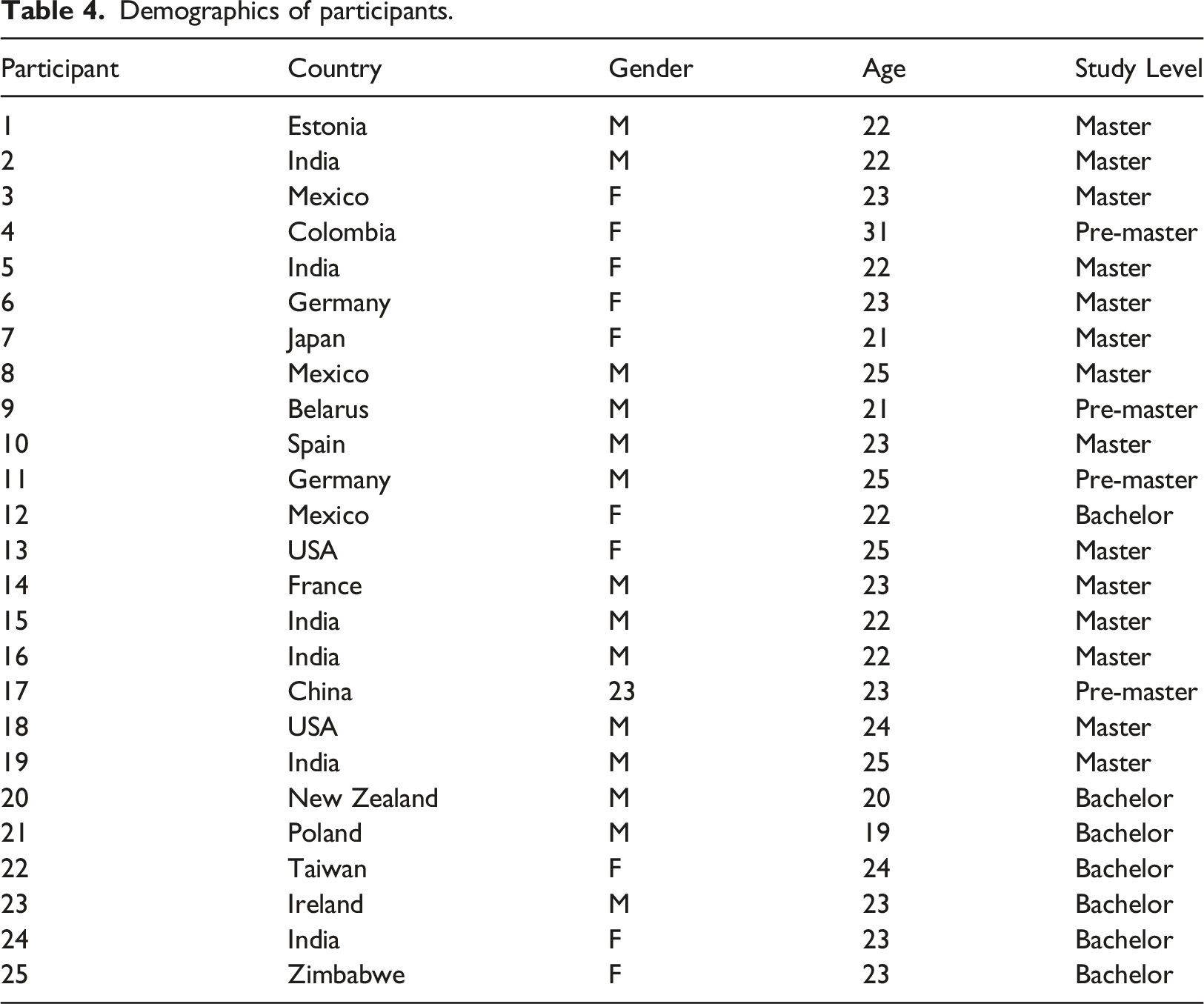
Demographics of participants.
Interview guides and procedures
The semi-structured interviews aimed at understanding participants’ intercultural attitudes, intentions, and AOPs at a critical stage of their acculturation and the factors which play a role in this. Questions addressed their pre-arrival expectations and preparations for the university and Dutch society, their social contact experiences since they had arrived in the country, their plans regarding making intercultural social contacts, and their dispositions toward people they lived with, worked with (inside and outside of the classroom), developed friendships with, and interacted with in general.
The interviews were audio recorded and lasted between 25 to 65 min.
Data analysis
We followed the recommendations of Wintre et al. (2015) on thematic analysis, which included phases of data transcription, data reduction, theme collation, and construct coding. For interrater reliability, another coder analyzed the transcripts of three randomly selected participants (12%). Interrater reliability was sufficient for intercultural attitudes (full agreement), intercultural intentions (full agreement), AOP measurements (κ = 0.79) across social contact domains, and for factors that play a role in their social contact experiences (κ = 0.72).
Furthermore, to specifically examine participants’ general AOPs, we evaluated their responses to questions related to their experiences across living, schoolwork, friendships, general interactions social contact domains, and coded this for each participant (D: Dutch, I: international, and C: conational). The most recurring student groups (D/I/C) that the participants have most social contact with across all four social contact domains were used to indicate their general AOPs. For example, Participant 5 lived alone, interacted generally with all groups (DI
Further, we examined the specific AOPs for each of the four social contact domains to determine how comparable they were among the participants. Specifically for intercultural attitudes, we assessed whether participants were positively (+) or negatively (−) disposed toward engaging with people outside of their CG (i.e., Dutch and/or non-CG international students). And, for intercultural intentions, we examined how prepared (plans) they are to have intercultural engagements (+) or not (−).
Findings
Overview of participants’ intercultural attitudes, intentions, and honeymoon AOPs
Table 5 shows the responses of the participants regarding their intercultural attitudes, intentions, and AOPs. As one can discern, most of them displayed positive intercultural attitudes (92%) and intercultural intentions (88%) and had a general preference for multicultural integration (60%) followed by separation IG (28%) and separation CG (12%), respectively. There was no indication among the participants to generally assimilate or marginalize at this stage. This could suggest that the positivity that characterizes the honeymoon stage may also reflect in the interest of new students to have diversified interactions outside of their CG, and that some students do generally have an attachment to the IG with minimal contact with their CG or the DG. However, Participants 5 and 17 had negative intercultural attitudes and made no plans for intercultural engagement, while Participant 16 had positive intercultural attitudes but showed no intentions for intercultural interactions. These three participants appear attached to their CG. Table 6 shows the coded responses of the participants and the identified factors that play a role in their intercultural attitudes, intentions and honeymoon AOPs. Personality was the common theme which could have informed their intercultural attitudes and intentions at the honeymoon phase. One participant said:
I have a personality which you can say is more reserved. That’s why it is easy for me to meet and talk with people from my country. I don’t have to try too hard. [P5]
Coded responses of participants’ intercultural attitudes, intentions, and AOPs across social contact domains. Note: *Multicultural integration. L = living; SW = schoolwork; F = friendships; GI = general interactions; IG = international group; CG = conational group; IA = intercultural attitudes; II = intercultural intentions; D = Dutch people; I = international (non-CG); C = people from CG, M = lives alone; +/- indicates participant was positive/negative. Coded responses of participants on factors that play a role in their honeymoon social contact experiences. Note: +/- indicates that factor was mentioned by participant as playing a positive/negative role in their honeymoon social contact experiences.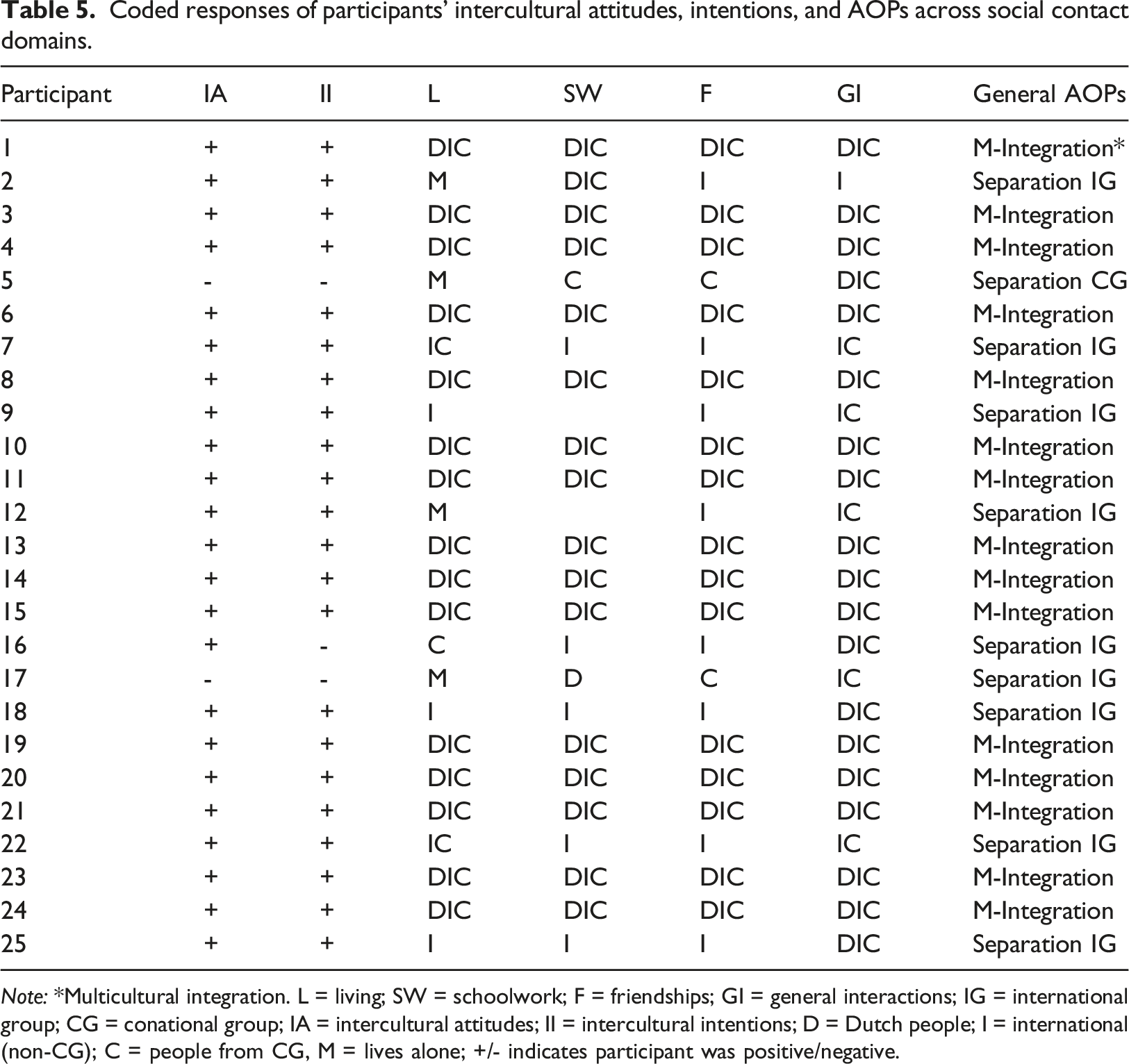
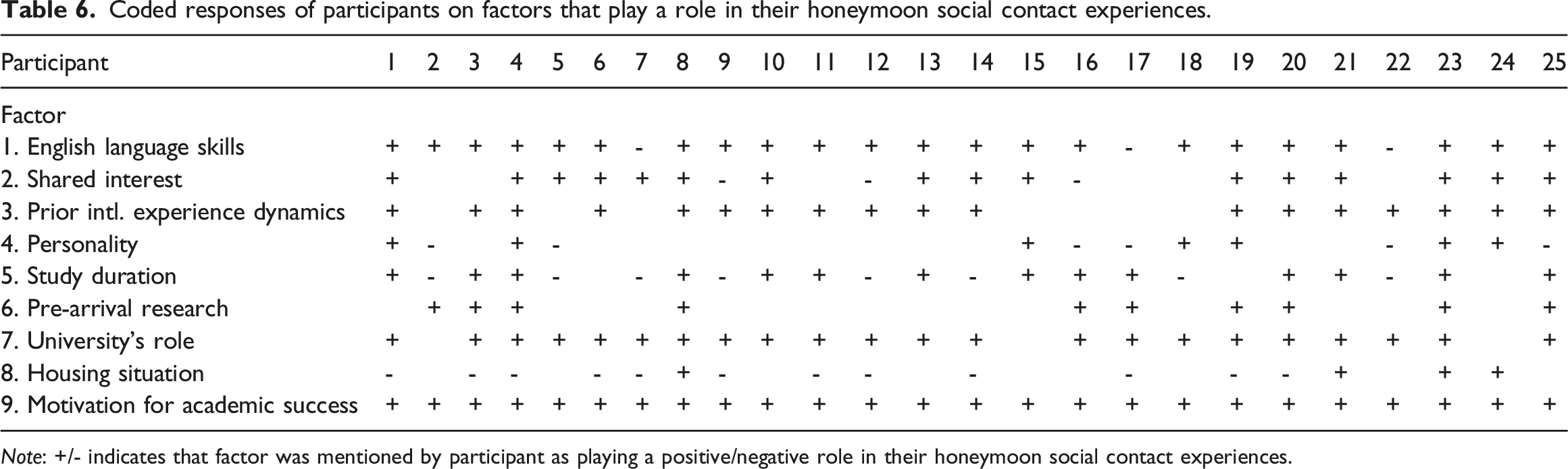
Furthermore, some participants who had prior international study experience, irrespective of whether these were positive or negative, were more inclined toward multicultural integration or separation IG because they believed they could use their prior experience as a form of social capital that would enable them to navigate the multicultural ILE. This is illustrated in the following quote:
I have studied abroad for a year in 2018. That’s why I decided to come here to study. It was so much fun because I got to interact with a lot of people. I would like to have that kind of experience again. I can manage it. [P10]
Similarly, their study duration appeared to have some impact on participants’ intercultural attitudes and intentions. To some participants, especially those at the bachelor level, the longer the period of study, the more they were open to intercultural engagements, as it enabled them to establish sustainable relationships during their studies. However, some participants with shorter study durations considered it unnecessary to invest in long-term intercultural friendships. One participant said:
I am not sure about making friends just yet because this is all temporary to me. I might decide to go somewhere else in (a) few months. [P9]
Additionally, how participants assessed the facilitating role played by the university, both prior to and after their arrival, was considered to be instrumental to their mindsets and orientation toward intercultural engagement. For example, the university provided them with some assistance during their transition to the country and organized welcome events to help orientate them into the ILE and their new society. Therefore, the university can be said to have facilitated intercultural contact among the student groups and opened up opportunities for them to develop friendships, work together in their academic work, and have general interactions. One participant stated:
I don’t know what I would do if the university did not have the Kick-in (welcome) events. How would I meet people? I have some friends already because of this. [P19]
Most of the participants made pre-arrival plans and some of them continued to plan to have intercultural engagements, for example, joining a sport, social or study association, participating in social events, and volunteering. However, an interesting observation is that some participants, especially those without prior international experience, did more extensive pre-arrival investigation to orientate themselves about the Netherlands, the university, and, in some cases, even other cultures, than those with prior international study experience. They also more actively explored potential intercultural contact opportunities both within and outside of the university than most of those who did no prior research. As one participant said:
It’s my
first
-time outside Mexico. I did a lot of research about the Netherlands and what student life is like here. I already joined the Buddy program. I want to interact with as many people as possible. I found out about Tank Station (a social and cultural meeting place), which I heard that a lot of internationals and also Dutch people go to. [P3]
Some of the participants noted having no contact with their CG because there were very few individuals from their country present at the university (or in some cases none). Others noted that they actively preferred contact outside of their own CG for diversified contact experiences. Therefore, they had most contact with non-CG people with whom they share the “international” identity. One participant said: I didn’t come here to meet other Americans otherwise I would stay in the US. But even if I wanted to, there isn’t much option for me here to do that. There are many people in similar situation so we just have to depend on other internationals for support. It is a very accessible group compared with the Dutch students. [P18]
Participants’ honeymoon AOPs across social contact domains
When considering each of the social contact domains examined, some interesting differences in their orientations can be noted. Although most of the participants were consistent in their multicultural integration (DIC) across the four contact domains, some participants simultaneously adopted different orientations in specific aspects of their social contact domains. This suggests that the acculturation strategies new international students followed were not linear across all situations. Below, we discuss the participants’ orientation patterns across the contact domains in relation to additional factors that were reported as having impacted upon their intercultural attitudes, intentions, and AOPs during the honeymoon stage of their sojourn.
Living AOPs
Generally speaking, most participants (60%) were either planning to live or already living in housing with a diverse group (DIC). Specifically, four participants (2, 5, 12, and 17) lived alone. The others lived with non-CG international students and/or conational students (separation CG/IG). None of the participants shared housing with only Dutch people.
The circumstances behind how participants obtained their accommodation appeared to impact on their intercultural attitudes, intentions, and AOPs. On the one hand, some participants from countries outside of the European Union (EU) noted that they had limited choices as to where to live and whom to live with because the university had assisted them in arranging their housing pre-arrival. On the other hand, those from EU countries were offered less assistance by the university, and, as such, had to arrange their own accommodations. In fact, some of the participants had yet to find accommodation and were living in temporary housing at the time of the interview. Additionally, some participants noted that they would have preferred to live alone but accepted their accommodation because of the cheaper rent and availability. Further, some participants who were particularly interested in living with Dutch people (who themselves often prefer living with other Dutch people) could not because they were rejected by them. This further affected the intercultural attitudes and intentions of some participants toward general interactions with Dutch students.
Therefore, due to room scarcity, rental prices, and rejection from Dutch students, some participants had no option but to accept whatever accommodation they could find regardless of their own housemate preferences. One participant said: I really wanted to live with Dutch people, but they seem not to want me. I live with only internationals. [P14]
Schoolwork AOPs
When examining their schoolwork AOPs, some observations can be made. First, participants expressed a greater willingness to engage with other students here compared with the other social contact domains. In fact, multicultural integration was the most preferred orientation (64%), followed by separation IG (28%). However, only Participant 17 opted to assimilate (i.e., work only with Dutch students to understand the Dutch academic process better), while Participant 5 preferred working with people from her own CG. Although some of the participants were only just starting their classes, most of them were positive about working with all student groups. Closer inspection of their interview responses suggests that they perhaps felt this way because they valued their academic achievement. One participant said:
We are all here to learn and maybe succeed in the future. It doesn’t matter who I work with as long as we work well together [P18].
However, some participants noted that while they prefer to work with the Dutch students who could guide them in understanding the academic system of the university, they were hesitant about it because of the potential for rejection. Therefore, they displayed a stronger preference to work with non-CG internationals, both within and outside of their CG.
Friendship AOPs
The AOPs toward developing friendships displayed a different pattern. Although most of the participants also preferred multicultural integration (60%) in their friendship domain, some participants had friends only from the IG and others only from their CG. Only Participant 25 indicated that she had no one she considers as her friend at this stage.
To some participants, a sense of shared interest with other students appeared to instill a feeling of connection with them regardless of their cultural backgrounds. This influenced their intercultural attitudes and intentions. However, some indicated that they prefer to develop friendships with other international students because they identify with them. One participant said: I heard that the Dutch are friendly, but I don’t have any expectations for us to be friends just yet. I feel more connected to internationals right now. I have friends who are Portuguese and Spanish because we have similar social and academic interests. [P2]
General interaction AOPs
In assessing their preferences regarding who they like to interact with, in general, multicultural integration was also the most preferred strategy (76%) among the participants. Specifically, 96% said they interact with non-CG internationals from or outside of their CG, while 72% said they do so with Dutch people. This may indicate that while new international students do want to engage in general interactions with students at the university, there is a stronger preference to interact with the international group than with Dutch students. None of the participants preferred general interactions with only the Dutch people.
Some of the participants noted that their personalities influenced their intercultural engagement mindset and AOPs. Some noted that it would likely take additional effort for them to step outside of their “comfort zone.” One participant noted: I envy people who just put themselves out there and make friends. I live alone. I like it that way. It’s easier for me. [P5]
English language skills were a recurring factor in the participants’ responses. English is the official language of the university and the common language among all students. However, some participants with limited English language skills perceived it as a challenge when attempting to have intercultural interactions, despite the fact that most planned to improve their English. One participant said: I can’t speak good English. Everyone laugh(s) at me. I want to make friends, but it is difficult. [P22]
Discussion
In this study, multicultural integration was the most preferred strategy and marginalization the least preferred by new international students, even during the honeymoon stage (see Gilani et al., 2020). This perhaps suggests that the positivity that characterizes the honeymoon stage may play out in how positive new students' intercultural attitudes are and what plans they have in place to engage in diversified interactions (Culhane, 2004). However, our qualitative findings suggest that new students may not only adopt different strategies within different life domains (Berry, 1992) but also in various specific aspects of social contact domains during their acculturation; thus, further confirming the complexities that define the acculturation experiences of student-sojourners. Moreover, most acculturation models have been criticized for being too reductionist (Smith and Khawaja, 2011). In this study, we have demonstrated that there may be more ways to categorize the acculturation experiences of sojourners in ILEs (e.g., separation [IG] and multicultural integration).
To answer our research question on the effect of intercultural attitudes and intentions on AOPs, our findings suggest that intercultural intentions have greater influence over the AOPs of new international students than intercultural attitudes. This shows that the subjective plans and preparations, students make toward engaging in intercultural interactions across the four social contact domains, may have a greater say over how well they adjust to the new ILE and society (Aditia et al., 2018; Tartarkovsky, 2018). As expected, intercultural intentions were found to be predictive of multicultural integration and positively mediated the effect of intercultural attitudes on multicultural integration. This suggests that the effective integration of students at this stage may be partly based on how well-prepared they are for intercultural interactions both in the ILE and in the wider society (Gilani et al., 2020). However, although intercultural intentions were assumed to positively predict separation IG, since the strategy involves contact with other non-CG, we discovered that intercultural intentions negatively predicted (and mediated) the effect of intercultural attitudes on separation IG. It may be possible that this orientation performs the same functional role as separation CG does for students who prefer to stay in their CG (see Gilani et al., 2020). In addition, on how intercultural attitudes and intentions interact with honeymoon AOPs, our qualitative findings were consistent with the quantitative results because three general orientations were notable amongst the participants: multicultural integration, separation CG, and separation IG.
As to the question of how the individual and subjective experiences of students play a role in their intercultural attitudes and intentions and AOPs across the social contact domains, our findings suggest that due to a multiplicity of factors students may adopt different orientations across their social contacts. For example, some students may orientate toward separation IG in their general orientation, while, simultaneously, maintaining diversified intercultural contact across other social contact domains.
This study has also shown that, during the honeymoon stage, most new international students have positive intercultural attitudes and intentions within an ILE (Culhane, 2004), and that these may subsequently influence their acculturation in the wider society. For example, some students may be able to establish diversified friendships with other students at their IHEs and these friendships may extend outside of the ILE.
Acculturation experiences are unique to each individual sojourner because there is no linear pathway toward adaptation (Berry, 2005). Moreover, our findings indicate some variations in new international students’ orientations across some specific social contact domains. We have attempted to partly map out patterns and variations in some students’ post-arrival acculturation experiences across the contact domains explored. In doing so, we have also been able to confirm a number of factors that could explain the variations in orientations across the social contact domains. Although some of these factors have already been established by other studies to influence adjustment of migrants (e.g., language skills, prior experience, personality, housing, and pre-arrival research), our study confirms that the dynamics of these factors are already present from the initial honeymoon stage of acculturation.
Furthermore, even though we looked at interactions from the singular perspective of international students interacting outside of their own culture (i.e., with DG and other non-CG), the specific role of the host students play cannot be overemphasized. From our findings, we found that most participants want multicultural integration indicating positive mindsets toward the Dutch and other student groups. However, experiences of rejection by the Dutch for housing, schoolwork, and general interaction did influence some students AOPs, their intercultural attitudes, and intentions.
Recommendations for future research
Many researchers have advocated for longitudinal studies to examine international students’ experiences in a new society (e.g., Schoe et al., 2022; Smith and Khawaja, 2011). Therefore, future research can longitudinally explore the acculturation experiences with focus on how international students' intercultural attitudes, intentions, and AOPs develop over time and what impact these changes have on their acculturation across social contact domains and other life domains such as language, clothing, and food.
Additionally, research can explore how the acculturation motivations of new international students develop overtime and what factors may play a role in the development. Also, research can explore the domestic students’ intercultural attitudes and intentions for engaging with other student groups and how their pattern of social contact develops in a multicultural context. Future studies can examine what impact the contact experiences outside of the ILE have on students’ acculturation within the ILE and vice versa.
Further, other factors not addressed in this study may also explain the social distance among students' groups. Mejri (2019), for example, found that host students’ political party affiliation and the levels of metacognitive, motivational, and behavioral cultural intelligence were statistically significant predictors of their social distances from international counterparts. Therefore, future studies can investigate how student’s social and emotional intelligence develops over time based on their intercultural contact among student groups.
Recommendations for practice
Intercultural intention was found to significantly play a role in students’ acculturation. This has some implication for the roles IHEs can play in the acculturation process of new international students across the four social contact domains.
First, IHEs can introduce policies which encourage migrating students to carry out more extensive pre-arrival research and assist them in making plans for intercultural interactions, irrespective of whether or not they have prior international study experience.
Second, IHEs during their recruitment and welcoming processes can provide clear information on extracurricular programs and events that facilitate intercultural contact opportunities amongst students such as language exchange classes or cultural events. This can help in new international students' orientation toward general interaction and can create an avenue to develop new friendships.
Third, finding housing remains a consistent issue for many new international students (see Fang and van Liempt, 2021), even though that is where some students have the first contacts with other student groups (Schoe et al., 2022). However, IHEs and domestic societies can further address housing problems by providing alternative housing or by recruiting new students based on available housing. Some of the participants specified preferences on whom to live with. Therefore, whenever possible, universities can encourage housing agencies to develop a matching process for such students, especially for those students who really want diversified interaction with non-CG.
Lastly, in the schoolwork domain, teachers can be involved by encouraging students to work in diversified groups inside and outside of the classroom. This can create opportunities for new students to generally interact with other student groups and can help them to develop new friendships.
Limitations
This study partly adopted a self-report approach to generate part of our data. This might have introduced bias into the results. Although we examined three IHEs, the fact they were all located in a single city may have also impacted on the results. Hence, different results may be found at IHEs in other cities. Original questions were also generated to measure intercultural attitudes and intentions and AOPs for this study, which might have contextualized the nature of the responses. Further, we treated the international students as a homogenous group without exploring how aligned their cultural and social values are with other student groups, especially those of the host society. Differences in cultural and social values may have impact upon the dynamics of their interactions and orientation preferences with other groups. In addition, we discovered that English language proficiency was an important factor affecting some new international students in their early social contact experiences. However, we did not examine how aligned international students’ native languages were with Dutch. Social contact experiences extend outside of the ILE where English is the official language. This means that, overtime, some students may be confronted with Dutch language difficulties outside of the ILE which may have impacted upon their AOPs, intercultural attitudes, and intentions.
Conclusion
This study shows that early intercultural experiences and other specific factors serve to partly determine which students are more likely to acculturate better in their new societies. Therefore, maintaining positive intercultural attitudes and intentions beyond the honeymoon stage may allow international students to enjoy engagement opportunities within ILEs and, in turn, enrich their acculturation experiences. Consequently, IHEs and their domestic and international students must accommodate change via flexible mindsets and play their respective roles in nurturing ILEs where positive interactions are encouraged among the diverse student groups.
Footnotes
Acknowledgements
The authors would like to thank the students who participated in the study.
Declaration of conflicting interests
The author(s) declared no potential conflicts of interest with respect to the research, authorship, and/or publication of this article.
Funding
The author(s) received no financial support for the research, authorship, and/or publication of this article.
