



Abstract
After the fall of communist regimes in Central and Eastern Europe, the returns to education were substantially growing over time. We summarise the existing literature conducting a meta-analysis of returns to education for economies of Central and Eastern Europe (CEE) and test for several mechanisms, which can explain the evolution of the returns over time and differences between countries of the region. The average estimated rate of return basing on more than 600 estimates is around 7%, but it shows variation depending on the methodology adopted, but also on countries’ characteristics. We find out a positive impact of the unemployment rate and negative impact of the enrolment rates into tertiary education. The first observation suggests we observe a countercyclicality of education returns while the latter shows that the dominance of supply of tertiary graduates reduced returns to schooling.
Introduction
Central and Eastern European (CEE) countries are mostly an example of a successful transition from centrally planned into market-oriented economies. Many of them became members of the European Union, which strengthened the economic ties with the western world in terms of trade links, mobility of labour, the culture of governance and international standards in many areas, with some differences in the model of economy adopted in different countries of the region (Bohle and Greskovits, 2007, 2012; Delteil and Kirov, 2017). One of the key aspects of this economic transition were changes in the structure of the labour supply. They have resulted from several factors, with changes in educational decisions, especially of young people, being probably most important. Most countries experienced a dynamic growth of interest in higher education, with a decline of vocational education (Kogan et al., 2008, 2011). It was clearly related to better than average labour market opportunities for the group of tertiary graduates and changes of the systems of education offering easier access to higher education institutions (HEI). This process has been documented in the literature, with numerous studies on the returns to education in transition economies. It is, in fact, a fascinating area of research, being a rare example of a natural experiment of significant institutional change experienced by economies of the region.
Initial period of transformation was mostly characterised by dynamic increase in demand for high skills, which provided huge incentives to invest in education. Educational systems responded to those needs by expanding schooling opportunities, which translated into higher than the world average growth of enrolment rates. The demand for high skills was then followed by an increase in supply of tertiary graduates. It remains an empirically intriguing question, how these two forces interplayed for this group of countries.
However, getting a clear picture of the evolution of the returns to education in transition countries is not an easy task. First of all, the variety of research strategies is extremely large, with different types of econometric approaches, types of data sources and variables controlled for used in different studies. Particular results are not directly comparable. Second, more than three decades passed since the beginning of the transition in CEE counties. Individuals who were entering labour market on the early 1990s are now close to reaching retirement age. Several countries of the region became members of the European Union. During this period significant changes, both on the supply and demand side of the labour market, were observed, potentially having impact on the returns to education. In particular, a question of potential overeducation and mismatch between labour supply and labour demand structures has been discussed in recent years (see Brunello and Wruuck, 2021; Pastore and Zimmermann, 2019).
Our paper has two aims. The first one is to assess the evolution of the returns to education in selected Central and Eastern European economies during a quarter of century after the beginning of the transition period. We are trying to realise this objective using a meta-analysis – a method allowing to derive a result reflecting the true unknown parameter possibly best using the already available empirical evidence (Borenstein et al., 2007). By controlling different papers’ characteristics, we were able to compare studies and to assess the dynamics of the average return to education over time. Our second aim is to assess the link between the rate of return to education in CEECs and the business cycle and selected educational systems characteristics. In this part of our research, we look at the returns to education from the perspective of the cyclical variation in labour demand and the quality of education. Very interesting question is if accession to European Union – an institutional change of substantial importance – have had any impact on the returns to education in CEE countries. We believe including EU dummy to control for the year of accession for a particular country represents a good proxy of institutional change resulting from adoption of European law, joining European market (higher investment and capital flows) and allowing for greater mobility of students. Very important channels of EU accession impact on returns to schooling are also all the changes which happened to the educational system itself, with changes in teaching modes and study programmes and their internationalisation. Many countries of the region also adopted Euro as their currency which could have additionally stimulated their economic growth.
Our hypotheses are verified using metadata from 51 publications (peer reviewed journals and working papers) on 14 countries complemented by external data sources on macroeconomic performance, measures of supply of human capital, human capital formation process and quality of educational system. The methodology adopted in our paper consists of two steps. In the first one, we use a meta-analysis, also known as a quantitative literature review, in order to estimate the average rate of returns to additional year of schooling while controlling research strategy properties of different studies for transition economies. In the second step, we complement our dataset with data on macroeconomic performance and educational systems characteristics.
The paper is organised as follows. The first section describes the educational boom in tertiary education in CEE countries and portrays the changes in the employment structure. Next section briefly discusses the methodological issues in estimating returns to education and provides justification for the meta-analysis. The following section presents the metadata sample and discusses the empirical strategy adopted in this paper. Then we present the empirical results and finally, the last section provides the summary of the findings.
Educational boom in transition economies and structural changes in employment
Central and Eastern European countries were characterised with relatively high level of educational attainment at the starting point of the transition process. Gross school enrolment rate at the tertiary level was particularly high in CEE countries belonging to the Soviet Union before 1991 (like in Ukraine). More interestingly, it was relatively low in the most developed counties of the region (the Czech Republic, Hungary, Poland) that later became leaders of the transition process in the region. The only CEE country with gross school enrolment rate at the tertiary level lower than the world average was Romania. With time, we have observed a dynamic growth of enrolment rates (Figure 1). The Russian Federation and Ukraine are the only two countries in the group that suffered from an initial decline in schooling, with enrolment rates falling up to the mid-1990s, only to increase in the later period. Generally, enrolment rates in the CEE region were growing up to the end of the first decade of the 21st century. In recent years, they stabilised and even contraction of higher education sector in some countries was observed (Kwiek, 2013). Gross school enrolment rates at the tertiary level in selected economies (%).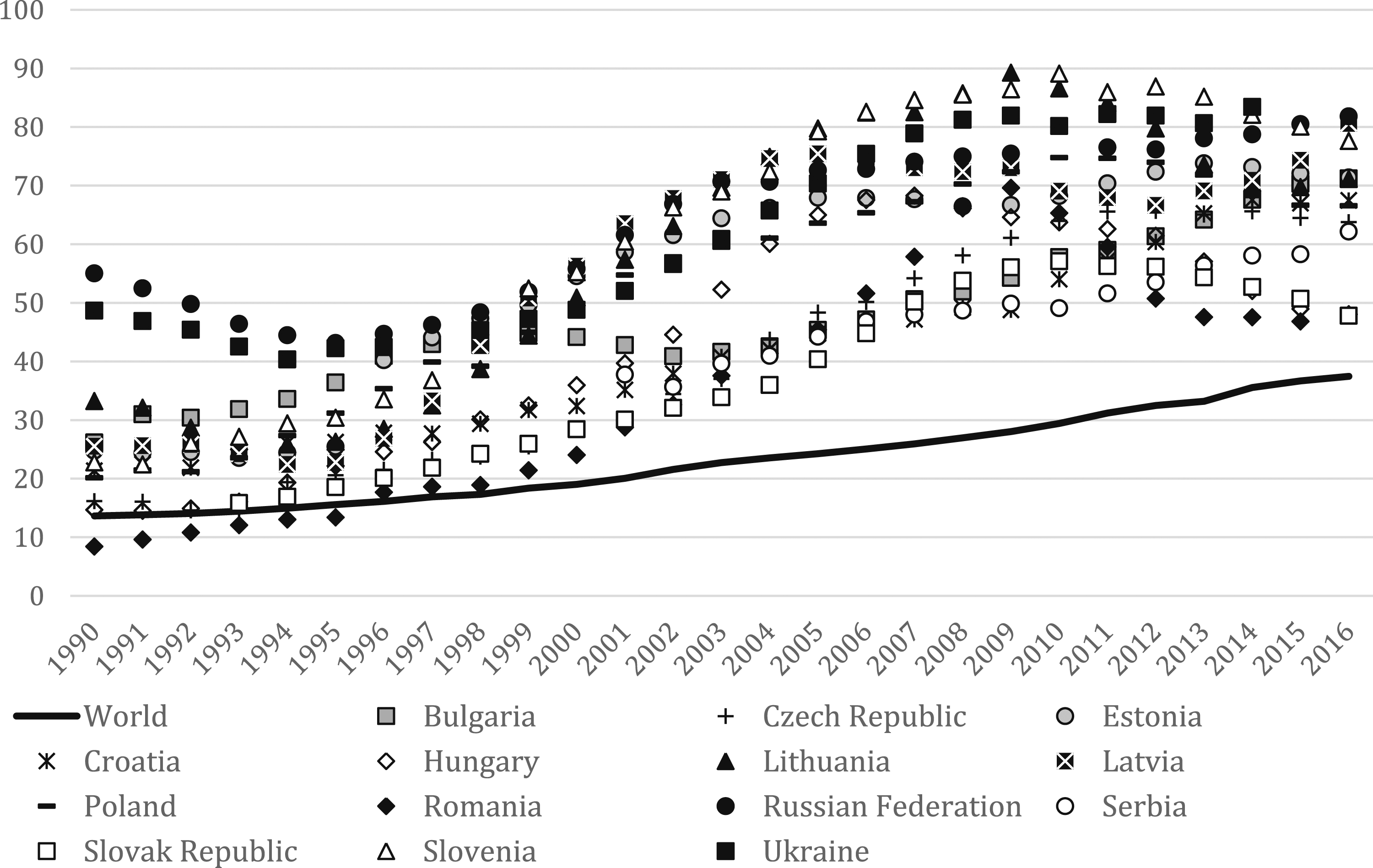
Growing interest with university education resulted in the inflow of tertiary education graduates to the labour market. It is clear that the higher education systems in CEE countries were not homogenous and that the higher education sector itself offered a variety of fields of studies, different focus of study programmes on vocational versus general orientation. Higher Education Institutions were also highly diversified in the aspect of their prestige (Boyadjieva, 2017). We acknowledge that the variation of returns to education to some extent can be related to differences in higher education systems in the aspects mentioned above.
With changes in labour demand, related to technological progress, economic modernisation of post-socialist economies, growing openness and inflow of FDI, the share of high-skilled individuals in employment grew significantly (Figure 2). It is particularly high in the Russian Federation and Baltic states, with Romania, Slovakia and Czech Republic being on the opposite end of the distribution. Share of individuals in employment with tertiary education (%).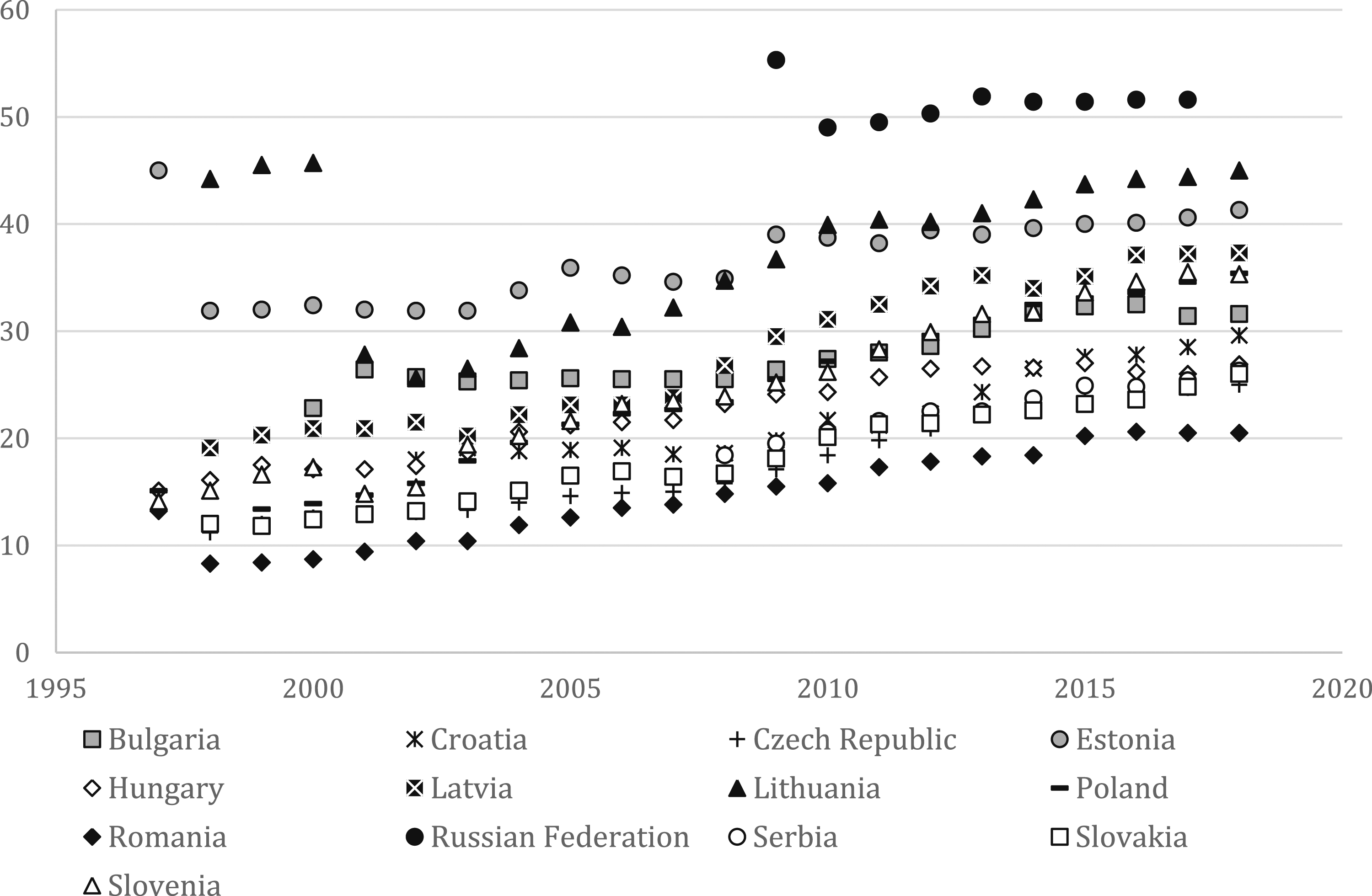
There are probably several reasons behind growing incidence of tertiary education in the first decades of transition period. Among the economic issues, two seems to be the most important. One is related to the relatively high wages of employees with higher education. It has been examined by extensive literature on return to education. The other one is the issue of probability of employment. Most transition countries experienced an unprecedented growth of unemployment in the first years of transition. Tertiary education, particularly in early years, was a factor significantly improving labour market position of a job seeker. As a result, the relative unemployment rate (Figure 3) was relatively low. With time and changes in the structure of labour supply and demand, tertiary education was not a guarantee of employment any more. The relative unemployment rate grew significantly and approach value of 1 in some countries (Serbia, Slovenia, Ukraine). Relative unemployment rate of individuals with advanced education (comparing to average unemployment rate).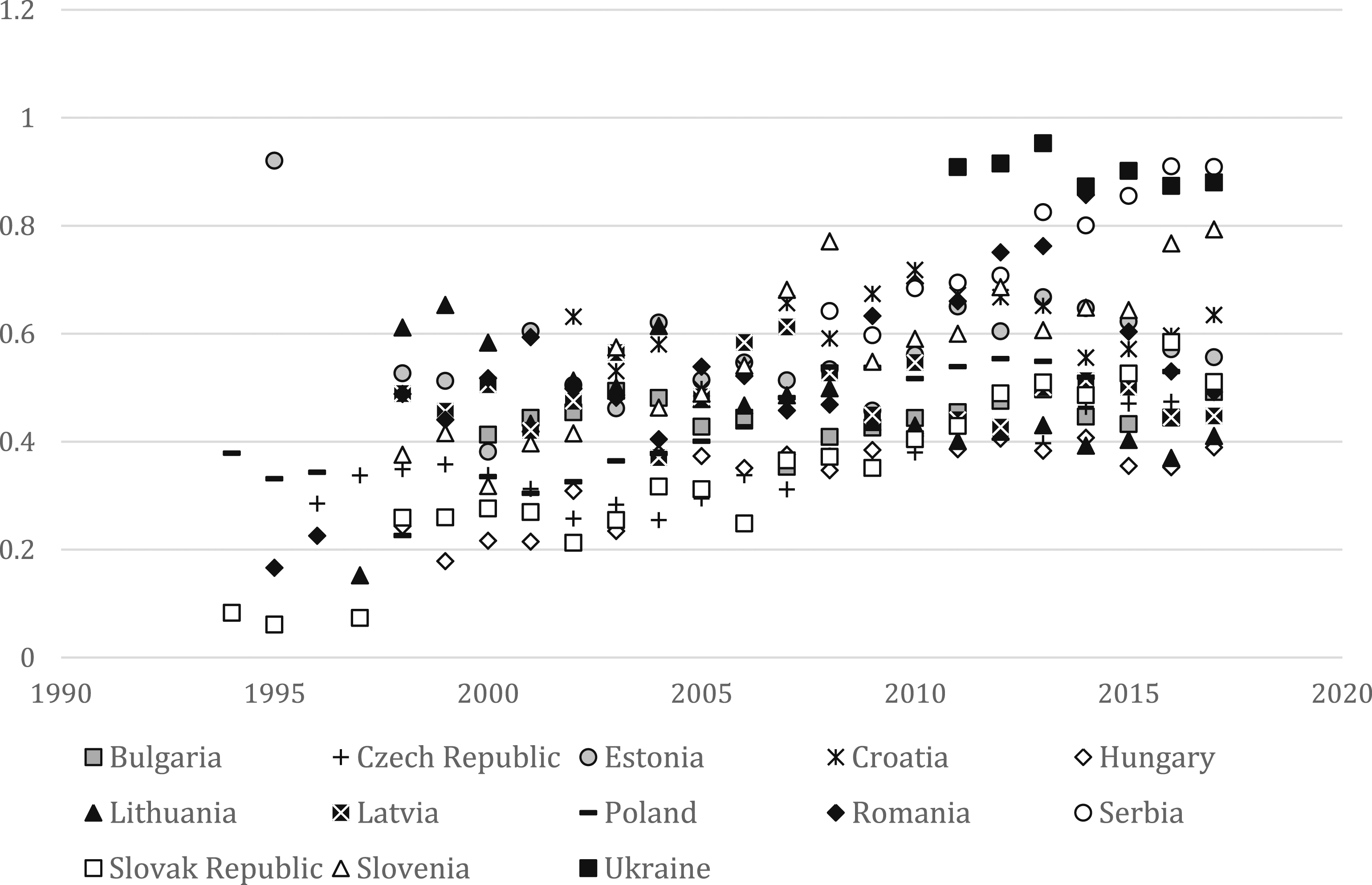
Research hypotheses
Basing on the literature review of both theoretical and empirical papers, we have formulated three hypotheses that we want to verify with our analysis. In the first one, we claim that the returns to education were increasing in the first years after the beginning of economic transition, only to stabilise later and fall in recent years. The hypothesis is derived from empirical analysis of changes in the labour supply and demand over time and a claim that in the initial years of transition a vigorous growth of a relative demand for highly skilled workers in transition economies pulled return to education. Later, with dynamic growth of tertiary graduates’ supply, the rate of return to education got stabilised only to fall in recent years (inverted U-shape hypothesis).
Labour supply and demand effects for schooling returns were studied in a number of papers. Psacharopoulos (1989) showed increasing returns to schooling in the USA for 1950s and 60s which he attributed to increasing demand for higher skills. The period of 1960–1980 was characterised by falling returns with dominating supply side effects at that time period. Similar effects were found for Canada, France and United Kingdom. Contributions in this strand of literature can be found in the papers by Hartog et al. (2001) for Portugal after European Union accession; Fersterer and Winter-Ebmer (2003) for Austria between 1981 and 1997; Bartolj et al. (2013) for Slovenia.
Our second hypothesis claims that the rate of return to education in transition economies is counter-cyclical. It is based on the empirical evidence on changes in wage dynamics of high- and low-skilled workers during the business cycle. With transition economies’ labour markets being relatively sensitive to business cycle changes, we claim that the rate of return to education is negatively related to GDP growth rate. The evidence for business cycle effects for the returns to schooling can be found in Psacharopoulos et al. (1996) for Mexico; Sakellaris and Spilimbergo (2000) for the United States; Corliss et al. (2013) for Australia; Ammermueller et al. (2009) for Germany and Wincenciak (2020) for Poland.
The third and last hypothesis claims that the bigger are inputs in the system of education and the greater its quality, the higher are the rates of returns to education. The hypothesis is based on human capital theory: the higher inputs into education process, the higher its quality and bigger graduates’ productivity gains. In competitive labour markets, higher productivity should be reflected by increasing wage levels and therefore – in higher returns to education. The increase of returns to education attributed to higher quality of education has been most notably documented in Zhang et al. (2005) and Hanushek and Zhang (2009).
Methodological issues in estimating returns to education
The returns to education are typically studied within the framework of human capital theory originated by the works of Schultz (1961) and Becker (1964). Human capital is defined as a set of human abilities (skills, education, attitude, health and other characteristics) which are useful in the productive process. This makes human capital yet another, but very important, factor of production. In this theory, education is perceived as a source of accumulation of competences which increase productivity of individuals and lead to increases in earnings. The study of returns to education is mostly focused on its monetary effects (through the impact on earnings) but it can also be noticed that education yields important non-monetary outcomes, which escape direct pecuniary measurement. Longer life expectancy, less criminal behaviour, stronger social cohesion or greater political participation are mostly often mentioned in the literature of the field (Riener and Wagner, 2021; Vila, 2000).
It is, however, possible to see the role of education as a signalling device (Spence, 1973), where it serves only as a tool to discriminate between high and low ability workers. The correlation between education and earnings typically obtained in empirical studies is not enough for a causal link between education and earnings to exist. The crucial problem is that both major theories of education predict importantly that high ability individuals tend to educate themselves longer and therefore the link between education and earnings might be biased by the impact of ability on earnings (ability bias). This correlation between schooling and earnings can stem from the fact that the most efficient individuals have higher earnings and obtain more schooling (the problem of selection).
Typically, the returns to education are estimated using earnings functions by simple OLS method, where the log of earnings (wages, hourly wages, yearly income and other variants in numerous studies) is regressed against the set of covariates, among which the most important ones are the labour market experience and its squared term, gender and other personal and job-related characteristics. Mincer (1974) works laid out golden standard in this approach, which is used until today. In its most basic form, the typical regression takes the following form

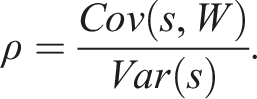
Given the regression equation we have:
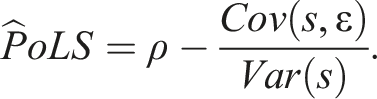
The problem here is that the OLS estimate of the yearly return to schooling is unbiased only if the length of schooling is independent of the error term. Empirical studies propose to use instrumental variables method to overcome this problem. However, it is not always possible to find the instruments – variables that are correlated to duration of schooling but uncorrelated to individual abilities. One of the most often cited papers by Angrist and Keueger (1991) offered an interesting approach based on dates of birth. They noticed that individuals born early in the calendar year tend to have less schooling than otherwise identical individuals born in the latter part of the year. Assuming that the date of birth is independent of individual ability and preferences this may be used as an instrument for schooling. The empirical results, however, proved to be not much different to OLS, although somewhat lower (Card, 1999). Another method that is proposed in the literature to obtain valid estimates of the returns to education consists of using data on individuals whose abilities are as similar as possible. There are several papers that try to estimate returns using the samples of twins and siblings, although some studies do show that even between identical twin there might be significant differences in IQ tests. It is possible then to estimate the returns to education using the OLS method without bias, provided that the differences in duration of study between twins are not correlated to differences in ability that may influence their earnings. This might, however, violate the assumption of twins being identical if they have difference in schooling. Studies by Ashenfelter and Rouse (1998) find that the genetically identical individuals had only slightly smaller differences in returns to schooling than for any two random individuals in the sample. Oreopoulos and Salvanes (2011) used Norwegian administrative records to confirm that siblings with one year of schooling more had higher annual income than their less educated siblings.
The differences in returns to education across countries can arise from a misalignment of demand and supply of skilled labour. If demand for high skills is high, but there is a large gap in the population in terms of skills, there might be substantial returns to schooling offering high incentives to invest in education. Another important aspect is the wage policy, tax and benefit system, resulting in the overall wage dispersion in the country. A highly compressed wage distribution, typical for the Scandinavian countries will result in lower returns (Isacsson, 1999).
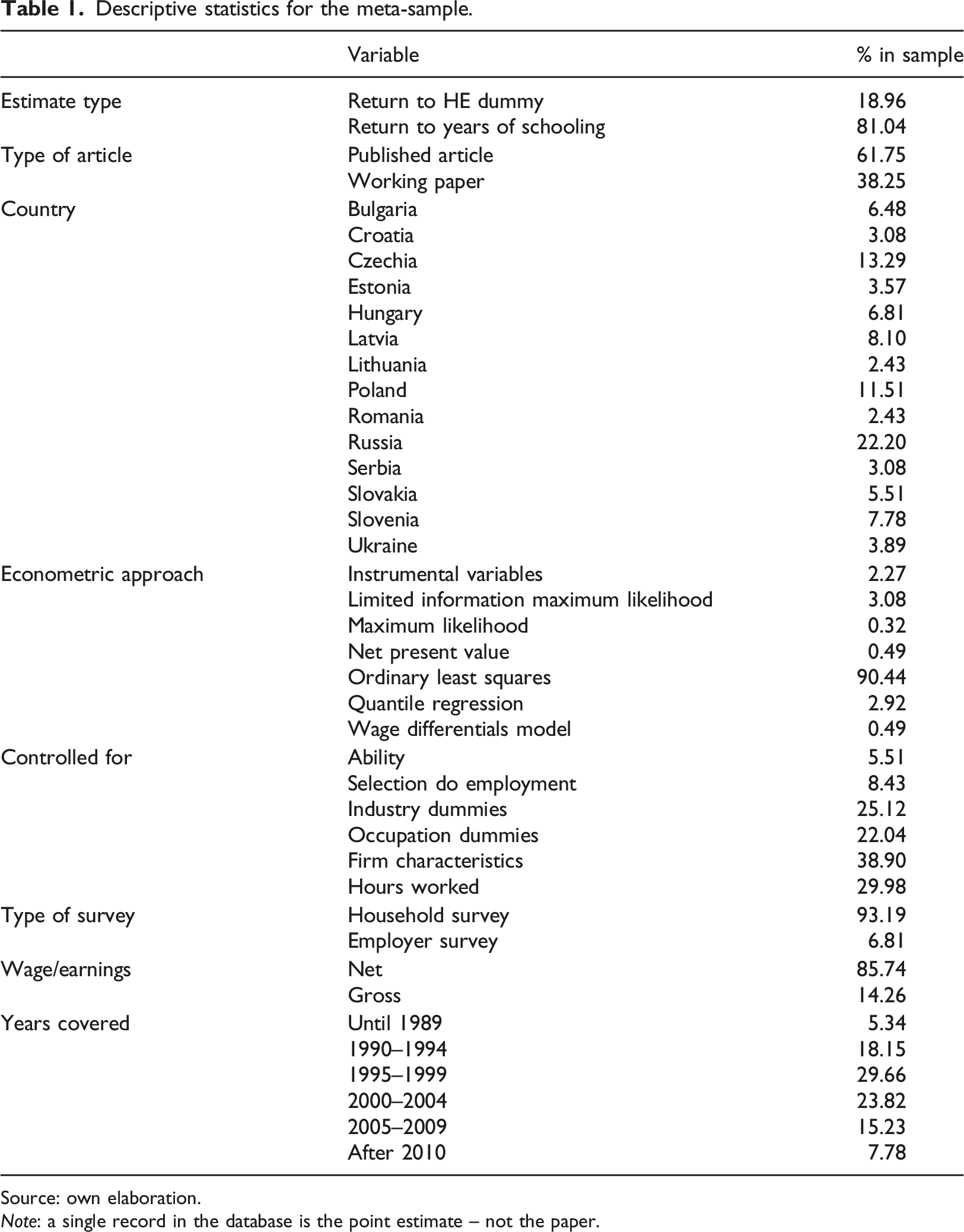
Descriptive statistics for the meta-sample.
Source: own elaboration.
Note: a single record in the database is the point estimate – not the paper.
Lastly, the estimates of returns to education in CEE countries are very difficult to compare due to differences in time coverage, differences in definitions, earnings functions specifications, data samples, econometric methodology and institutional and macroeconomic differences between these countries. This observation justifies the need to employ a meta-analysis of the estimates. One of the goals of the meta-analysis is to derive an estimate which reflects the true unknown parameter possibly best using the already available empirical evidence (Borenstein et al., 2007). The secondary objective is to identify reasons for the across study differences in the estimates of rate of return to education.
The advantage of the meta-analysis over a single study is its greater statistical power and generality of its findings as it is based on numerous previous studies (Konstantopoulos, 2006; (Shadish et al., 2002)). Meta-analysis has been already successfully employed in research on gender, parenthood, labour market performance and returns to education (De Linde Leonard and Stanley, 2015; Fleisher et al., 2005; Jarrell and Stanley, 2004; Matysiak and Vignoli, 2008; Weichselbaumer and Winter-Ebmer, 2005).
Construction of the meta-sample and empirical strategy
Meta-sample characteristics
The first step in conducting meta-analysis is rigorous systematic literature search under precisely defined assumptions. Well proceeded meta-analysis limits bias by using reproducible process of searching and evaluation the quality of the individual studies (Crowther et al., 2010). The set of papers included to the final database should be driven by the principle of pre-defined procedures.
In our study, we searched for the relevant papers using Google Scholar, EconLit, Web of science and RePEc databases. We used various combinations of keywords that included the following phrases: • returns to education, • returns to skill, • returns to schooling, • education premium.
We were searching the databases in the period between 1st March of 2018 and 1st March of 2019. We limited our search to papers that were as follows: • peer-reviewed (leaving out reports), • written in English, • focussing at least on one of the following countries: Bulgaria, Czechia, Croatia, Estonia, Hungary, Latvia, Lithuania, Poland, Romania, Russian Federation, Serbia, Slovakia, Slovenia and Ukraine.
The search resulted in collecting more than 50 studies. In the process, more papers were collected in the initial phase but had to be dropped out as they had significant weaknesses such as lack of basic data on the econometric procedure (no standard errors, p-values or t-scores reported). For each of the papers, we extracted the data on: year of publication, authors, journal of publication, type of publication (working paper or published article), countries covered, estimation type (return to additional year of schooling or wage premium to an education level), definition of higher education, reference category (base level), return point estimate, standard error of the point estimate, number of observations in the sample, years covered, method of estimation, type of sample (women only, men only, combined), type of survey (household, employer), name of the survey and dependent variable characteristics (net/gross, wage/income, monthly/hourly). On top of that, we included information if the following were controlled for in the regression equation: ability, selection to employment, adjustment for hours, industry dummies, occupation dummies, firm characteristics, class of settlement, full-time or part-time job and schooling quality.
Our final sample covered 51 papers published in 34 different journals (economics and sociology) over the years 2001–2017. The range of years covered in the studies varies from 1978 to 2013. From these papers, we obtained 617 single estimates of the wage premium. The summary statistics of the meta-sample have been presented in Table 1.
In most of the papers, the return to additional year of schooling was estimated. Only in less than 20% of cases, the yearly return had to be imputed from the wage premium to a level of education. Almost 2/3 of the estimates come from published papers. The highest share of collected estimates refer to Russian Federation (22%), the lowest for Romania and Lithuania (2.43% both). As was already mentioned, overwhelming majority of the studies utilise simple OLS methodology in estimating returns. What regards the earnings function, nearly 40% of estimates come from regressions where firm characteristics were controlled for. In nearly 30% cases wages were adjusted for hours worked, 25% of regressions controlled for industry dummies, 22% controlled for occupation dummies. Ability was controlled for in only 5% of cases, similarly only 8% of regressions controlled for selection into employment. Wages were mostly given in net rather than gross values (almost 86%) which corresponds to survey type distribution (93% of estimates obtained using household surveys). Distribution of estimates by years covered reveals that the interest of researchers was concentrated mainly in the last few years of 20th century.
We complemented the meta-sample with some macroeconomic factors from the World Bank’s World Development Indicators. Data were collected for each year and each country covered in the analysis. We used two variables to capture business cycle effects, namely: real GDP growth (annual change) and unemployment rate (% of total labour force). Additionally, we included enrolment into tertiary education to capture quantitative effect of educational attainment for labour supply. Including the measure of the government expenditure on tertiary education (as % of GDP) allowed us to control for the qualitative aspect of the educational policy, while average learning outcomes (using standardised, psychometrically robust international and regional achievement tests based on the scores of assessment studies of PISA, TIMSS and PIRLS) controlled for the differences in the quality of education across countries. This last variable was based on the estimates provided by Altinok et al. (2018) in their ‘Global data set on education quality (1965–2015)’. For the missing data, we imputed moving average on the basis of the results estimated for neighbouring years. In order to maximise coverage by country, tests have been harmonised and pooled across subjects (math, reading, science) and levels (primary and secondary education).
Econometric procedure
In the first step of the analysis, returns for every country and year and paper are regressed on a set of covariates including only papers’ characteristics (sample design, variables used, methods applied, country dummies and time trends among others) and country dummies (specification 1).
In the second specification, we also include the EU dummy, which captures the year of accession for a particular country to control for substantial institutional change in those countries. In specifications (3) to (6), we include additionally a set of macroeconomic and educational variables (GDP growth rate, unemployment rate, government expenditure on tertiary education, learning outcomes and enrolment rate into tertiary education). The equation to be estimated takes the following form
Discussion of empirical results
Descriptive analysis
Summary statistics of estimates of returns to schooling in the meta-sample.
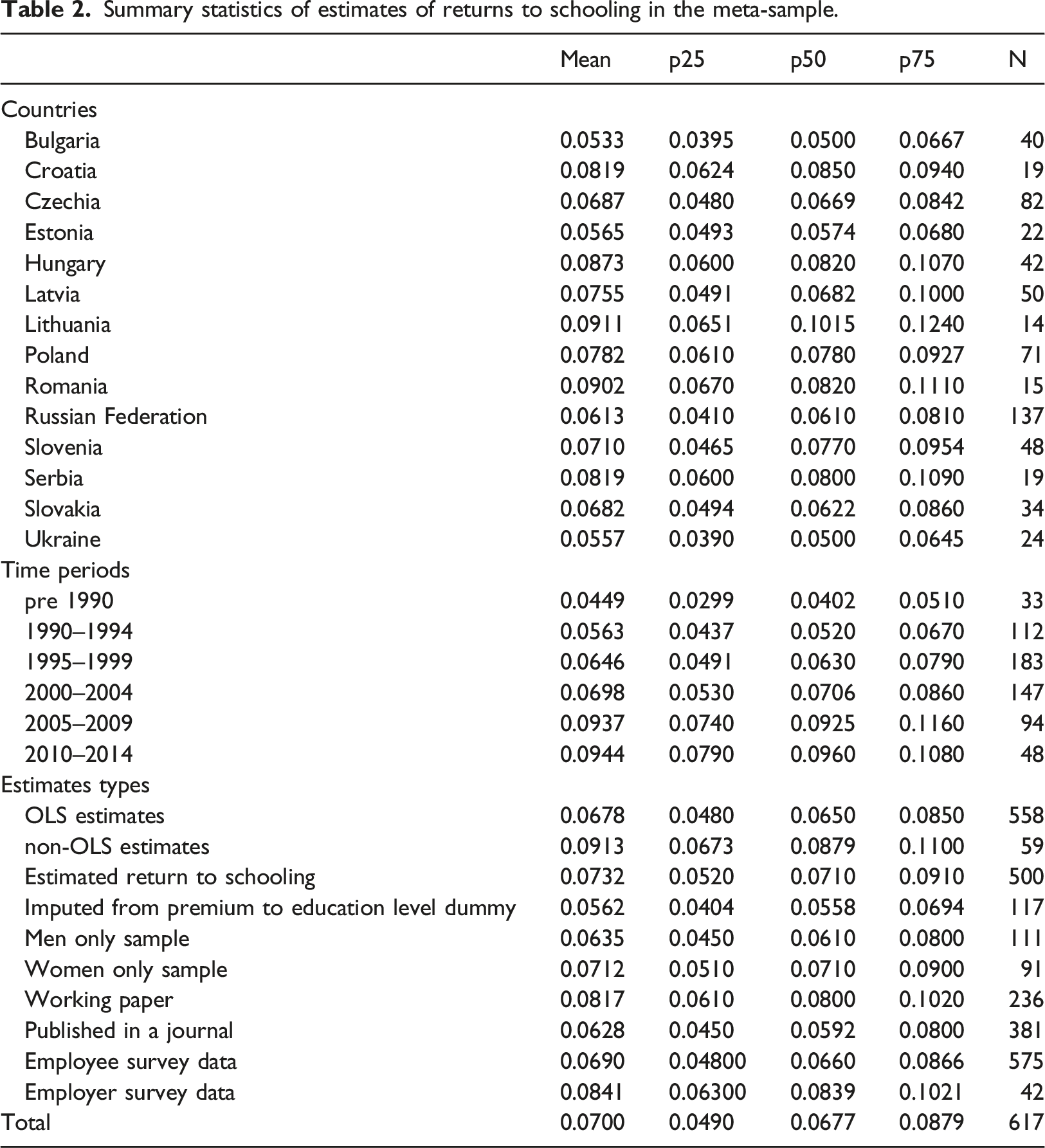
On average, the return to additional year of schooling for all countries and years in the sample is 7% with the median of 6.8%. The estimates for employer-based survey data are visibly higher (8.4% vs 6.9). Papers published in a journal also provide estimates which are on average smaller than those reported in working papers, but this does not necessarily imply a publication bias, but might be due to more sophisticated techniques used in the published papers. OLS estimates are significantly smaller than non-OLS estimates (6.8 vs 9.1%). Returns estimated for samples of women tend to be slightly higher than those for male only samples (7.1 vs 6.4%). There are also apparent differences in average estimates for particular countries and it remains empirically intriguing how much of this variation can be attributed to the fact of methodological or institutional differences. As can be seen from the table above, there are also visible differences of returns across time. We have 33 estimates for the period before 1990 of an average value of return of 4.5%. The average value of returns increased moderately over the next 15 years. Starting from 2005 a clear increase is observed and it remains to be empirically verified to what extent it can be attributed to the accession to European Union in 2004 by 8 out of 14 countries in our sample.
Meta-analysis of the meta-sample.
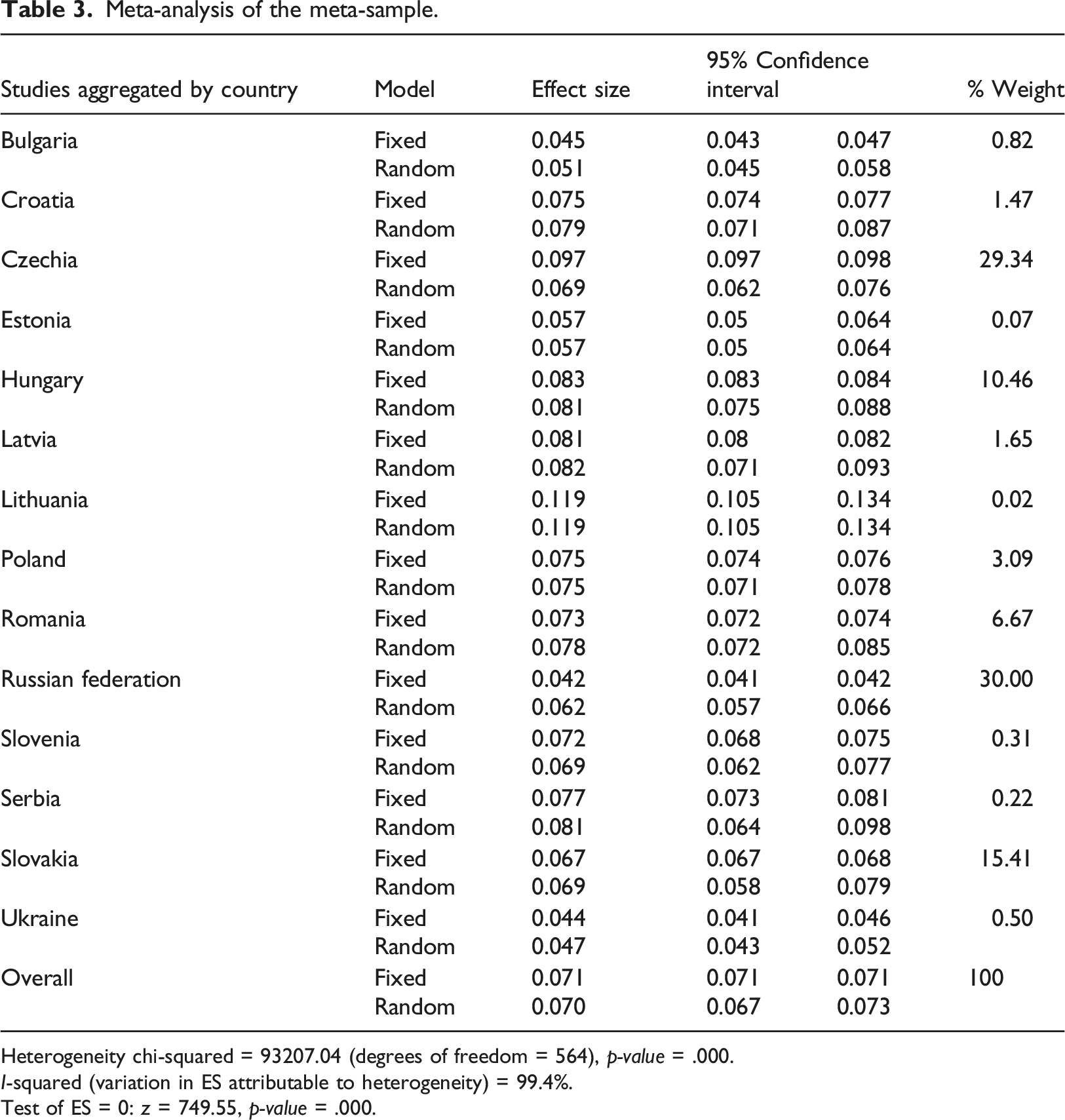
Heterogeneity chi-squared = 93207.04 (degrees of freedom = 564), p-value = .000.
I-squared (variation in ES attributable to heterogeneity) = 99.4%.
Test of ES = 0: z = 749.55, p-value = .000.
Meta-regression analysis
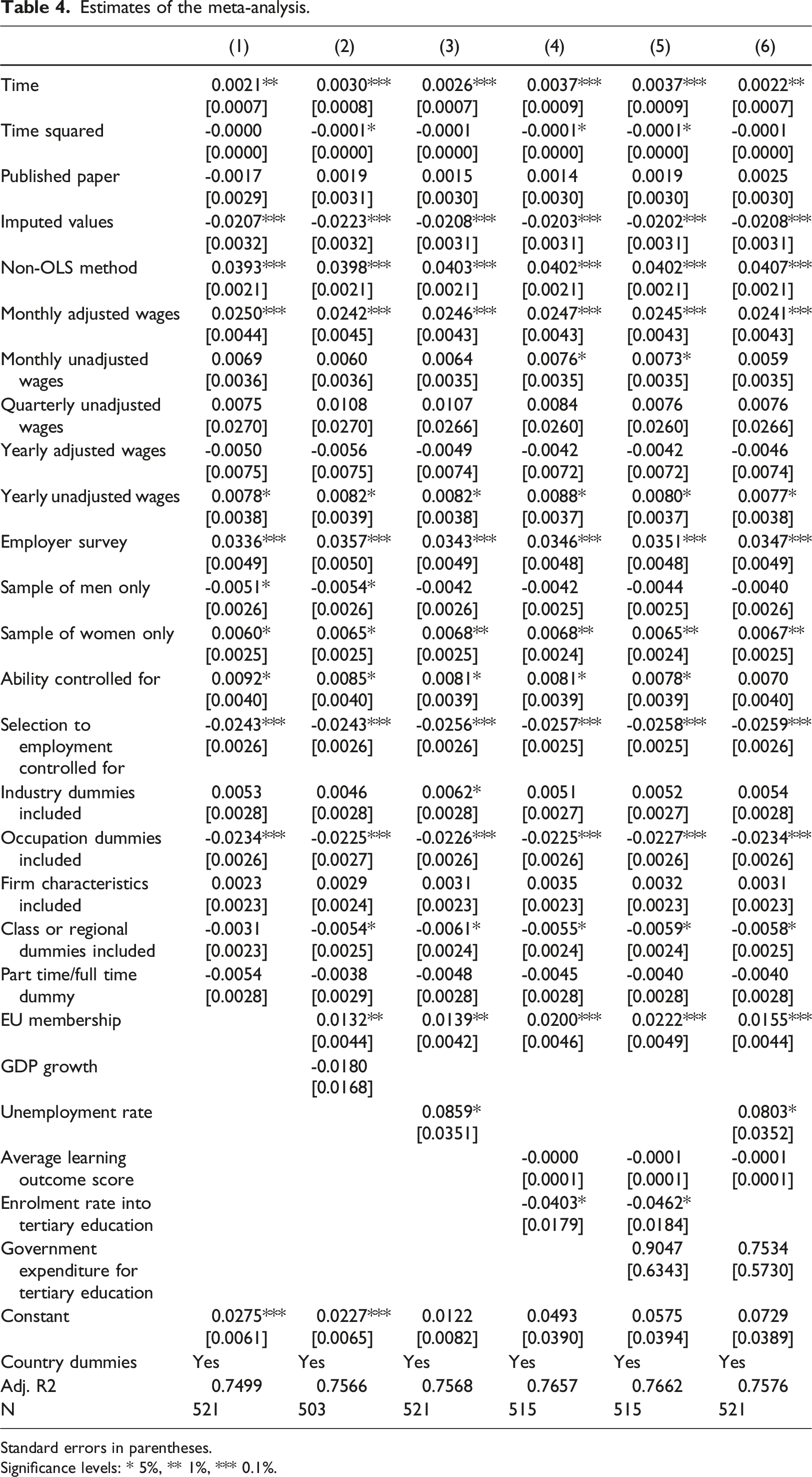
Estimates of the meta-analysis.
Standard errors in parentheses.
Significance levels: * 5%, ** 1%, *** 0.1%.
The results prove the following. Firstly, the fact if the estimate has been published in a peer-reviewed journal does not seem to have any impact on its value. However, the estimates, which have been obtain by imputing premia to education levels into returns to additional years of schooling were on average lower by 2–2.2% points. Method of estimation turned out to be important predictor of the estimated return. Papers which have used OLS report on average lower returns by 4 percentage points and this discrepancy is rather large. There were significant differences in estimates obtained by using different choice of dependent variable and the fact if it was adjusted for hours worked or not. Papers using data on monthly wages adjusted for hours tend to predict the returns higher by 2.4–2.5% points. Similarly, sample type remains very important, as the papers relying on employer surveys report returns higher by 3.3–3.6% points. Estimates of returns obtained on a sample of women tend to be somewhat higher than average, by 0.7% points. Interestingly, the fact of controlling for ability proved to be significant in terms of estimated returns to schooling, with the effect of 0.8–0.9% points. This finding suggests that the ability bias might be an important source of underestimation of returns to schooling. Controlling for selection into employment yields lower returns by roughly 2.4 to 2.6% points. Including occupational dummies in the earnings equation results in estimated returns lower by 2.3% points, while including industry dummies does not seem to make a significant difference for the estimated returns. Other firm characteristics did not make any statistical difference for the estimated returns to schooling as well. Including dummies for regions and/or class of settlement unit resulted in estimates lower by 0.5–0.6% points.
In specifications (3) to (6), we included other explanatory variables to control for a macro context of estimated returns to schooling. Results indicate that generally there is no significant link between the GDP growth rate and the return to education in CEE countries (the parameter is negative but not statistically different from zero at any conventional significance level). Unemployment rate on the other hand turned out to be positively related to returns to education, although quantitatively the effect is rather small. This result suggests that the returns to schooling are countercyclical and confirms the findings of Wincenciak (2020) for Poland in an earlier study. We could not include both the GDP growth and the unemployment rate in the same specification given that these two macro variables are highly negatively correlated and both capture the business cycle effect. Government expenditure for tertiary education in relation to GDP is in general positively related to returns to education but the effect is not statistically significant. Improvements of the quality of education measured by increase in the average learning outcome score (Altinok et al., 2018) do not tend to correlate with the increase of the returns to education. Importantly, the relationship of enrolment into tertiary education and returns to schooling turned out to be negative, which confirms the typical demand and supply effects (Štefánik and Horvát, 2015).
Including EU dummy into regression suggests that for the countries in the period of EU membership, the returns were higher by 1.3–2.2 percentage points. The result is highly significant in all model specifications where we include this variable. It confirms that after accession to EU returns to schooling were generally higher in CEE countries. There are many channels through which the accession could have increased the returns: better labour market opportunities (higher investment and flow of international capital), increased speed of reforms, adopting modern teaching styles, restructuring the study programmes in line with the Bologna process but also improvements in student achievements (Bergbauer, 2019) which manifests greater human capital accumulation.
Lastly, the estimates for time trend and time trend squared in the last model specification enabled us to calculate that the maximum returns were attained around the year 2009–2010 (the function of returns with respect to time is concave and attains its maximum around the year of 2009–2010), implying an upward trend till that year and declining afterwards.
Conclusions
In this paper, our primary contribution to the literature of the field is the assessment of the returns to education in selected CEE economies during more than a quarter of century after the beginning of the transition period using more than 600 estimates from a large body of research. Our research covers relatively long period of time allowing for study of time trend changes in the evolution of returns to education as well as the effects of accession to European Union accomplished by many countries of the region. The meta-analysis conducted by Fleisher et al. (2005) for CEE countries, Russia and China was mainly focused on the initial stage of transition and the speed of market reforms in those countries. The second contribution to the literature was estimation of business cycle effects for the returns to education in the group of CEE countries.
Controlling for different research papers’ characteristics, we managed to estimate the rate of return to additional year of schooling to be equal to 7% on average. We were also able to compare studies and draw some conclusions on the impact of research strategy chosen by authors for the obtained results. We have found out that usually the estimates were higher if data came from employers’ surveys (comparing to household data) or when authors used OLS as an estimation method. On the other hand, the estimates were lower when years of education imputed on the basis of level of education, when occupation is controlled for and spatial variables were included. We have not rejected the hypothesis that the returns to education were increasing in the first years after the beginning of economic transition, only to stabilise later and fall in recent years (inverted U-shape hypothesis – concavity of the function of returns with respect to time). In fact, the estimates we got suggested that the upward trend in the rates of return to education has changed to a downward one after 2009–2010. This result supports the hypothesis that up to this year the demand effects prevailed (pulling the returns upwards), while later, the unprecedented increase in the supply of tertiary education graduates could have become dominant factor and the rates of return to education fell in CEE countries.
Our second aim was to assess a link between the rates of return to education in CEECs and the business cycle (GDP growth and unemployment rate) controlling for the enrolment rate to tertiary education, government expenditure on tertiary education and average learning outcomes. As for the second hypothesis, we have found the evidence for positive relationship between returns to education and unemployment rate. The relationship was found to be statistically significant, although the quantitative effect was relatively weak. Nevertheless, this result suggests that returns to schooling in CEE countries were countercyclical. Our third hypothesis claimed that, the bigger are inputs in the system of education and its quality, the higher are the rates of return to education. We did not find convincing evidence for the significant relationship between the returns to schooling and the government expenditure for tertiary education in relation to GDP or the average learning outcome score.
One of the most interesting results was a consistent and relatively strong effect of the European integration. Clearly, the accession to EU coincided with higher returns to education. That was a partly surprising result, particularly if we take into account the structure of the post-accession migration, with domination of low-skilled workers. We therefore attribute this effect to dominating demand side effects of access to European market, flow of investment, better transparency (decreased corruption) in business activity and more favourable economic environment through higher openness to international trade.
The latest estimates included in the meta-analysis used the data from 2013. It would be an extremely interesting question to analyse more recent data and check if the trend of falling returns to education, identified in the earlier studies, prevails for later periods. With growing share of tertiary graduates in the labour force, it would be also interesting to investigate the heterogeneity of returns to education depending on the field of education or more demand-related factors. However, it seems that in order to reach this type of research aims, an alternative approach would be necessary. Instead of conducting a meta-analysis, one should use a data set including comparable data on individual earnings, personal and job characteristics and educational attainment for several countries under fully homogenous methodology.
Footnotes
Declaration of conflicting interests
The author(s) declared no potential conflicts of interest with respect to the research, authorship, and/or publication of this article.
Funding
The author(s) disclosed receipt of the following financial support for the research, authorship, and/or publication of this article: Article prepared as part of the project: ‘The private value and the rate of return to tertiary education in Poland’, funded by the National Science Center, granted by Decision no. 2015/19/B/HS4/03232.
