



Abstract
This study explored international school teachers’ views and experiences on how the teachers’ and students’ intercultural communicative competence perceptions could be developed. In the study, nine teachers working in international schools in Iran were selected through purposive sampling to be part of a semi-structured interview. The interview questions were designed by the researchers, drawing on Yildiz’s (2016) and Zhou’s (2011) checklists. Based on the results, teachers found being knowledgeable about other cultures, flexible, and open-minded as significant elements for developing the teachers’ intercultural communicative competence. Teachers also referred to the school’s curriculum and the student’s life experiences as the most influential factors in developing the students’ ability to communicate effectively.
Keywords
Introduction
The concept of communicative competence (CC) has been mainly employed in the field of language education, out of which the notion of intercultural communicative competence (ICC) has emerged. ICC identifies the various aspects “involved in competent communication in any language-culture—the linguistic, paralinguistic, extralinguistic (i.e., non-verbal), and sociolinguistic components” (Fantini, 2019: 31–38). In the last millennia, migration has become the leading force for promoting Intercultural Competence (IC) as a critical skill for humans to adapt and deal with novel languages and cultures to communicate. Dypedahl and Bøhn (2017) have described IC as “the ability to communicate appropriately with people who have different mindsets and/or communicative patterns” (50) Yildiz’s (2016) and Zhou’s (2011).
Intercultural Communicative Competence, “the ability to communicate and interact across cultural boundaries” (Byram, 1997: 7), is a 21st-century competency that is of utmost importance to be developed in global citizens as we are not born with it (Bennett, 1993). This competency is present in daily interactions regardless of the context (Deardorff, 2009). International schools are a great point for ICC education since pupils and teachers are immersed in a variety of language-cultures in this educational setting.
As the market for international schools is growing pretty fast (Greenlees, 2006), and the range of services these schools offer is diverse, it is not simple to define a clear framework for these schools. Generally, the use of international schools is becoming widespread among the majority of mobile parents seeking an “international” education for their children (MacDonald, 2009). The graduates of international schools are expected to be “globally-minded” citizens (Hayden and Thompson, 2008).
Multiculturalism is dominant in international schools, and teachers and students are exposed to various culture-related issues daily. Therefore, education managers and teachers of these schools are responsible for preparing students not only for their immediate needs when it comes to communication with their peers but also for their future, when they are expected to enter the international and global world of commerce and education. Teachers as agents of ICC education must also be prepared and supported to be able to raise their ICC awareness and help promote the importance of ICC. Likewise, they are required to develop their students’ ability to communicate with people with cultural backgrounds other than their own. For schools, to better educate their teachers for such a mission, it is vital to study the teachers’ perceptions of ICC considering their living and working context.
The number of international schools in Tehran is rising. Cultural ethnocentrism, even though condemned on the surface, does exist in these schools. This is firstly a source of miscommunication between adults, and secondly, it makes it difficult for teachers to develop students who are aware of cultural differences and know how to move past them. Lack of cultural awareness is seen in the school management team as well. While hiring teachers, no ICC evaluation is part of any teacher hiring process, even though many of the managerial and educational problems lie in cultural differences.
Multicultural education and curriculum fosters the students’ cultural tolerance (Banks, 2013; Gay, 2004; Wilson, 2012). The curriculum used in international schools should be multicultural, and constant monitoring of the cultural tolerance (Gasser and Tan, 1999) should be present, yet this is not seen in any part of the educational planning in most of these schools. Therefore, the need for the educational managers of these international schools to be knowledgeable enough about ICC, to be able to introduce it to the teachers, and prepare an environment that is welcoming toward all cultures is of absolute necessity. Teachers who are considered the link between the school management and the students can be even more influential. They probably do not have the permission and support from the school authorities to implement cultural projects and activities in their lesson plans.
Previous research studies (Atay et al., 2009; Castro and Sercu, 2005; Önalan, 2004) have also shown that teachers’ perceptions of culture teaching are relatively traditional. This means the focus has been on the visible aspects of culture, including daily life rituals related to special events, food, clothes, and the like. Likewise, teacher-centered culture teaching activities were favored rather than student-centered (Bandura and Sercu, 2005). With all the above in mind, the international school teachers’ level of awareness, whether or not they are biased when it comes to a specific culture, and if they consider it necessary to inform students of other cultures were the motives to carry out this study and investigate international school teachers’ views and experiences on ICC development of both teachers and students.
Literature review
In today’s interconnected world, intercultural interactions and interactions across cultural boundaries play a central part. To survive in this global village, the intercultural aspects of learning and teaching a foreign language should be considered. Intercultural competence, as a core skill, is simply the use of one’s intercultural ability, beliefs, skills, and knowledge to interact properly across intercultural environments (Deardorff, 2008). Byram (1997) defines ICC as the knowledge of others; knowledge of self; skills to interpret and relate; skills to discover and interact; valuing others’ values, beliefs, and behaviors; and relativizing one’s self. Zhao and Jiang (2003) see ICC as a set of skills, pragmatic competence, and behavioral competence.
Fantini (2020) introduces the assessment of target language proficiency in a graphic, illustrating the components and aspects of intercultural communicative competence (ICC). These components represented various features or attributes (such as open-mindedness, patience, motivation, empathy, self-reliance, clear sense of self, tolerance for the differences, tolerance of ambiguities, among others), three specific abilities (establish relationships, communicate well, and collaborate), four domains or dimensions (knowledge, attitudes, affect skills, and awareness), and target language proficiency (p. 55). According to Fantini (2020), ICC has been considered a critical skill for all purposes, such as diversity, internationalization, and internationalism, and parties, like teachers, students, staff, academics, faculty, and the like), whose development involves the academic, cognitive, experiential, and affective domains.
Teachers’ between-groups interactions (Alred et al., 2003) and face-to-face and online interactions (Müller-Hartmann, 2006) with people of varied cultures can affect their ICC levels. In addition, Lin et al. (2017) have argued that the online exchange of language learning and interaction may establish a critical space for promoting the learners’ language and intercultural competence. Bastos and Araújo’s (2015) study has revealed, for the teachers to become intercultural communicators, the actual interaction between cultures should be part of teacher training programs, which means there is a need for first-hand culture exposure (Sowden, 2007). However, this may not be a possibility for all the teachers.
Different instructional and assessment approaches have been introduced by language teachers and researchers as strategies moving toward the acquisition of ICC and an intercultural identity (Byram and Fleming, 1998; Byram et al. 2001; Davcheva and Docheva, 1998; Kramsch, 1993; Morgan and Cain, 2000; Roberts, 1995). Based on Vygotsky’s Sociocultural Theory (SCT), dynamic assessment (DA) is used as an instructional approach to integrate interventions into the assessment procedures and improve the learners’ performance (Lidz and Gindis, 2003). Lidz (1997) has claimed that “dynamic assessment has a meaningful contribution to make to the assessment of culturally diverse learners” (95). Borghetti (2015) has also recommended DA for IC assessment to probe the sensitive nature and relationship between IC and performance. Deardorff (2006) has also suggested using various approaches and techniques for the formative assessment of ICC to provide students the required feedback.
These instructional approaches can be inspected based on three categories, including the linguistic awareness of culture approaches, intercultural teaching approaches, and culture exploration approaches. Intercultural teaching approaches, focusing on the cultural contents, invite the learners to connect their own cultures with others so that the students would gain knowledge; hence, they become tolerant of other cultures (Risager, 1998, 2007). However, incorporating intercultural features into our classes and creating a balance between promoting intercultural competence and language learning can be a severe challenge for the teachers. Culture exploration approaches want the learners to become autonomous in investigating the foreign culture, which also develops culture-learning skills (Barro et al., 1998; Hammersley and Atkinson, 1995).
Finally, there is linguistic awareness discussed in culture approaches which aims to develop the learners’ metacognition through integrating culture and language and introducing intercultural issues to the students (Knapp-Potthoff and Liedke, 1997). These scholars believe that cultural differences are hidden in linguistic manifestations. Through discussing critical linguistic problems that may cause communication problems in intercultural contact, the students learn strategies to solve such problems. The framework applies to the lexicon, culture-specific actions, discourse conventions, para-verbal phenomena, topics, register, non-verbal expressions, speech acts, communicative style, and action sequences. In reality there are many approaches, such as intercultural training approaches, which combine these aspects (Brislin and Yoshida, 1994; Gudykunst et al., 1996; Liddicoat, 2004; Paige and Martin, 1996; Toliboboeva, 2020).
In content and language integrated learning (CLIL) contexts, both the linguistic level and content or the subject matter initiate the intercultural learning processes as content is culturally sensitive (Sudhoff, 2010). The main objective of intercultural learning processes is to develop the ability to alternate and mediate across various cultural perspectives. Through rich CLIL environments, such cultural perspectives and real-world orientations can be easily explored. As a result, this would help language learners’ plurilingual skills and interculturality (Sudhoff, 2010) mainly in international schools.
There are numerous published studies, describing the teachers’ perceptions and strategies regarding ICC development. Bastos and Araújo (2015) have pointed out that teachers see ICC as developing a positive vision toward oneself, others, and plurilingual and ICC environments. Guilherme’s (2002) research on Portuguese teachers showed the activities teachers use in classes to incorporate culture into language, including the comparative and contrastive activities. With foreign language teachers in a few European countries, Sercu et al. (2005) found two teacher profiles: “the unfavorably disposed foreign language teacher” and “the favorably disposed foreign language teacher.” Ryan and Sercu (2005) also showed the low level of “interactive encounters” among in-service EFL teachers. Non-interactive encounters, on the other hand, have been much more attainable.
Regarding the students’ intercultural ability, in a recent study, Howard et al. (2019) examined the intercultural learning opportunities created in a two-year language learning program for young learners aged 11 to 13 in New Zealand, and whether or not such opportunities and non-specialist teachers’ attempts have been efficient in promoting the students’ intercultural capability. The findings revealed that the changes in the teachers’ practices have resulted in further intercultural learning.
The present study
Following a qualitative approach, this study intended to explore the international school teachers’ views toward ICC and the strategies they employ to develop ICC in teachers and students. The following research questions were addressed in this study. 1. What are the teachers’ perceptions concerning the ways the students’ intercultural communicative competence can be developed at an international school in Iran? 2. What are the teachers’ perceptions concerning the ways the teachers’ intercultural communicative competence can be developed at an international school in Iran?
Methodology
Participants
Based on purposive sampling, nine teacher participants (both male and female) were picked in this study. A purposive sampling, according to Mackey and Gass (2005), is a non-random type of sampling through which the researcher singles out some participants based on a set of criteria or his/her knowledge about the sample to obtain data in which he/she is interested. The participants’ level of teaching experience at international schools, educational background, and the number of languages spoken and countries visited were the main criteria considered for selecting the participants. There are 7 international schools located in Tehran, and all these teachers were selected from these schools. They were subject teachers with teacher training certificates or academic degrees in ELT-related fields and with at least 2 years of experience, teaching in an international setting.
Instrumentation
In semi-structured interviews, a checklist of questions is employed to guide the researcher, although there is room for more discussion and negotiation and supporting of the information (Mackey and Gass, 2005). The interview questions were developed by the researchers, using Yildiz’s (2016) and Zhou’s (2011) checklist as well since they were found in line with the purpose of this study. Three experts in applied linguistics re-examined the questions for language and content appropriateness perspectives. To this end, each item was rated in terms of relevance and clarity based on a scale ranging from inappropriate to completely appropriate. The questions were categorized on topics related to teachers’ ICC conceptions (see Appendix). The interviews were recorded with the use of a voice recorder application for mobiles. To overcome the participants’ difficulty in attending a face-to-face interview, such as their distance and availability, save time, and develop the participant pool, some teachers participated in the interview through online platforms like WhatsApp, Telegram, and Skype.
Data collection procedure
To observe ethical principles in research, the department of international schools in the ministry of education was contacted to get their consent and permission for this research study and having the involvement of international schools in Tehran. After getting the participants’ consent, a total of nine teachers working for international schools located in Tehran, Iran, were chosen to participate in a semi-structured interview. The content validity of the interview questions was ensured through the expert judgment approach (Escobar-Pérez and Cuervo-Martínez, 2008). Afterward, all interviews were held, and the participants’ remarks were recorded, transcribed, summarized, categorized, and analyzed. Qualitative data analysis brings order to the data through the organization of content into patterns, categories, and descriptive units (Patton, 1988). Thematic analysis was carried out inductively, identifying the codes and extracting the themes during data analysis (Berg, 2001) on the interview answers. Such categorization process resulted in the identification of the dominant patterns demonstrated by the teachers. Then themes were coded and analyzed using frequency count and percentage to get a better and more accurate interpretation of the results.
Results
Teachers’ perceptions regarding the developments of the students’ ICC
Most influential factors in developing the students’ ability to communicate effectively.
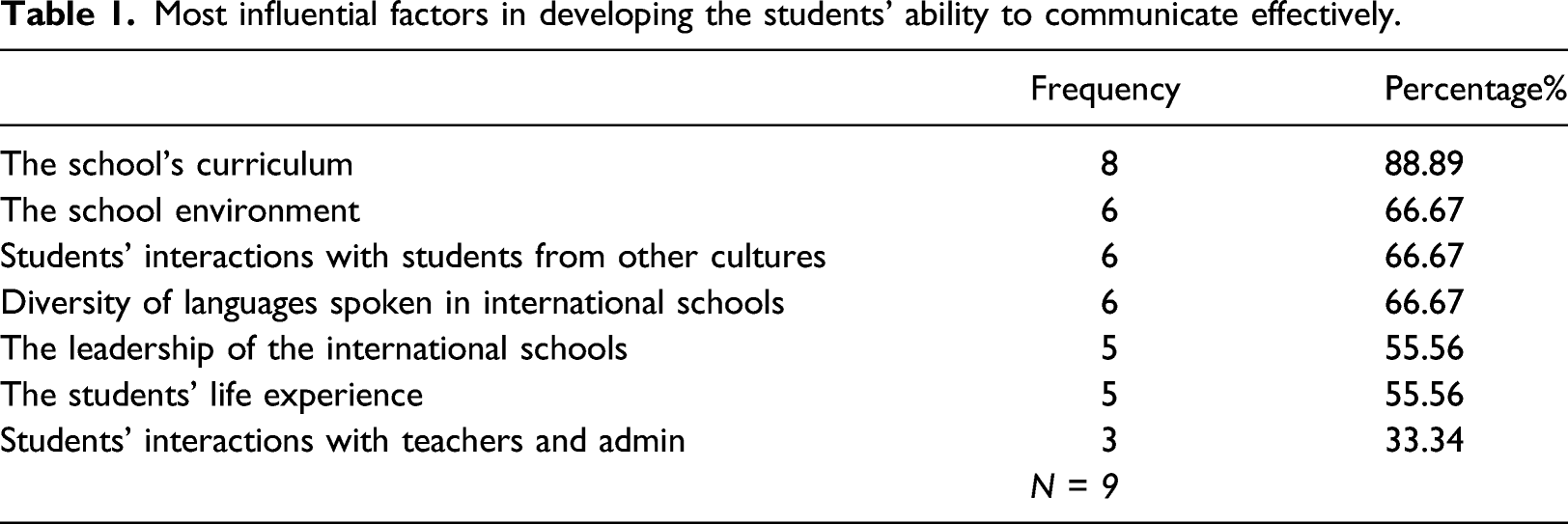
As can also be seen, the school’s curriculum was mentioned by 88.89% of the teachers. The least mentioned factor effective on the students’ ICC was their interactions with teachers and the school administration staff. From international school teachers’ perspectives, the student’s personal experiences and friendships with other students on the one hand and the school’s environment and leadership on the other hand, have had equal influences on the students’ development of ICC. The following excerpt presents one teacher participant’s view regarding the effects of implementing limitations on the curriculum. Teacher 4: Since the school’s curriculum defines what the students are going to learn and if these students are going to learn in a very limited scope, that’s going to limit their minds. That’s going to teach them the presupposed prejudices that is not going to help them.
Another teacher was keen on the role of the leadership of international schools and defined its influence as follows: Teacher 5: I think the leadership of international schools can have a great impact since the strategies they will apply can affect the entire process. I mean by designing an appropriate syllabus or selecting well-experienced teachers in making the school’s environment different.
One of the interviewees even described all of the factors as equally important and influential. Teacher 8: All of them. Yet, none separately from the others. Rather, allowing each to act its proper function on considering the final result which is that of communication.
Asking about all the factors affecting the students’ ICC development, the participants were unanimous in the effect of the mentioned factors. As an example, they all agreed that a well-designed curriculum, is one which enhances the teachers’ pedagogical practices and the students’ understanding of the course content and achievement, would help students with their ICC level, yet a limited curriculum, which targets a restricted group of learners, activity types, or specific practices, would limit the students’ insight into ICC. When it came to the diversity of languages spoken in international schools, even though 66.67% of the teacher participants agreed on the influence of languages on ICC, some believed the impact was positive. In contrast, some thought diversity of languages would be negative.
One teacher described the positive effect of language learning on culture and how they were intertwined and inseparable, highlighting the role of language to be culture-bound and culture-specific. Teacher 4: The diversity of languages spoken and the school environment are the two most important things since each language that you speak is in a context of a culture. You cannot separate culture and language, and you know, many believe that language is one of the divisions of culture. So, the more languages the students can learn, the more they’re going to have to be familiarized with other cultures. So, these two are I think the most important things.
It was not the case for another teacher who would see the diversity of languages as a means of division among students, giving more prominence to the use of English in the class to prevent any sort of misunderstanding and misinterpretation. Teacher 1: And the diversity of languages, well in international schools, yes… well in international schools it is better that everyone speaks in English because colonies of the people who speak their native language together cause a lot of problems. For example, when we have two Koreans in our school in our class they speak together and they start laughing. The students who do not understand what they say may pick it in a wrong way, and it causes a lot of misunderstanding. So, I believe that in these situations, it is better even with different cultures they speak in one language that everyone can understand and stop sending misunderstanding and misinterpretation.
When the interviewees were asked if going to international schools would help students with their own cultural identity, they answered yes, but there were different opinions. For instance, one interviewee contended that: Teacher 3: I think it affects them a lot because especially when they are talking about even their ceremonies, the special occasions we are doing this wow but we just celebrate it in a different way! You can just hear this conversation about this in the students with other, even with different cultures and even between Iranian people who have religious families and they don’t have such families. So, I think it is quite important, and it affects them a lot.
However, a few teachers expressed their worries about the negative effect of going to international schools on the students’ cultural identity. Two teachers shared their opinion, underscoring the side effects of using English as a medium of instruction in international schools to further present the English culture, as follows:
Teacher 6: International schools generally use English as the main medium of instruction, so I think as they use English mainly, they mainly focus on the English culture. So, many students coming from cultural backgrounds actually might not know about their own culture that much in comparison with students that go to some schools in their own country. It is the responsibility of international schools to help students with their cultural identity. Teacher 3: I think that international schools should highly focus on each individual student’s cultural background, their mother tongue, and strive to develop students’ cultural identity, not just developing the English culture.
In addition, some participants underscored the effect of other factors such as the schools’ attitude and curricula on the students, concluding that the impact of international schools on the students would depend on these factors. Teacher 8: It depends on the school attitude and the curriculum in the first place. Yet, comparatively, going to an international school as opposed to a normal one advances students’ tolerance and appreciation of varieties and differences, and therefore, they might (if directed in the right place), finally lead them to grasp their own culture in a better light.
One another participant also added the level of school internationalization as another factor influential in determining the level of success a school would have with helping students with their identity. Teacher 4: Very much depends on the curriculum of that school and how much it tries to imply and apply those principles in practice but going to an international school where there are students from other cultures, that’s a huge step for any child to be in a simulated environment where people come from very diverse backgrounds, and they are going to have to be able to cope with all the differences they are facing. So, it’s going to be very effective depending on the school and how much international it is.
To sum up, teachers thought of more than one factor to be involved in the students’ ICC development. They all gave the most responsibility to the curriculum they were working with. They all believed in a direct relationship between school leadership and environment, the student’s life experiences and relationships with others, and the development of students’ ICC. The teacher participants had conflicting views when it came to the diversity of languages spoken in international schools. Some believed it would divide the students and put them in groups according to their native language, and others would see a new language as an opportunity to learn about a new culture.
They also had diverse ideas on whether attending international schools would positively or negatively affect the students’ ICC development. Some saw international schools as a threat to the students’ cultural identity, with the consequence of not being competent enough in any culture or being more familiar with English culture than their own culture. However, some would find the experience enriching for the students, giving them the opportunity to become exposed to various cultures.
Teachers’ perceptions regarding the developments of the teachers’ ICC
Most effective knowledge, skills, attitudes, and strategies to develop the teachers’ ability to communicate effectively.
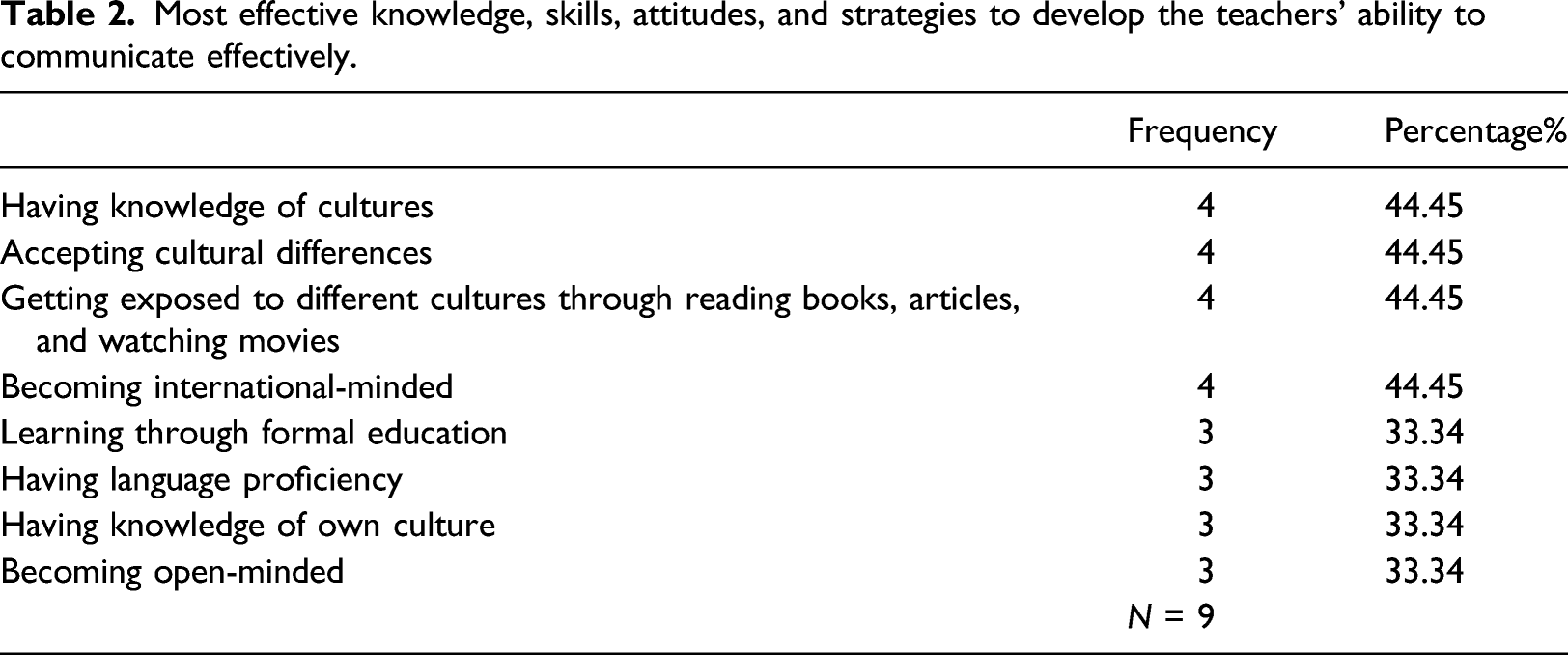
As can also be seen, having knowledge of cultures, accepting the cultural differences, getting exposed to various cultures through different means, and becoming international-minded have had the most impact on the teachers’ ICC. In the opinion of international school teachers, all the factors mentioned were almost equally important. One interviewee concentrated on the teachers’ knowledge of other cultures as the most prominent factor affecting their intercultural ability. Teacher 3: I think that the level of teacher’s knowledge is very important because they have to know themselves and their nationality very well. Cause when you just know yourself and your culture, you can just understand what you are good at or what are your weaknesses. So, when you know other people, you can just compare your weaknesses and your strengths. So, I think that knowledge is very important.
Some of the interviewees (33.34%) thought that ICC could be developed through formal education in the form of workshops and on-the-job training. Teacher 6: I think teachers should be given some sort of knowledge about various cultural points, and these things should be addressed in a way that teachers become aware of the importance of cultural issues and how they affect their students and their teaching. So, teachers should not only be given instructions, but they themselves should also go for that by reading some articles and by joining some programs and workshops.
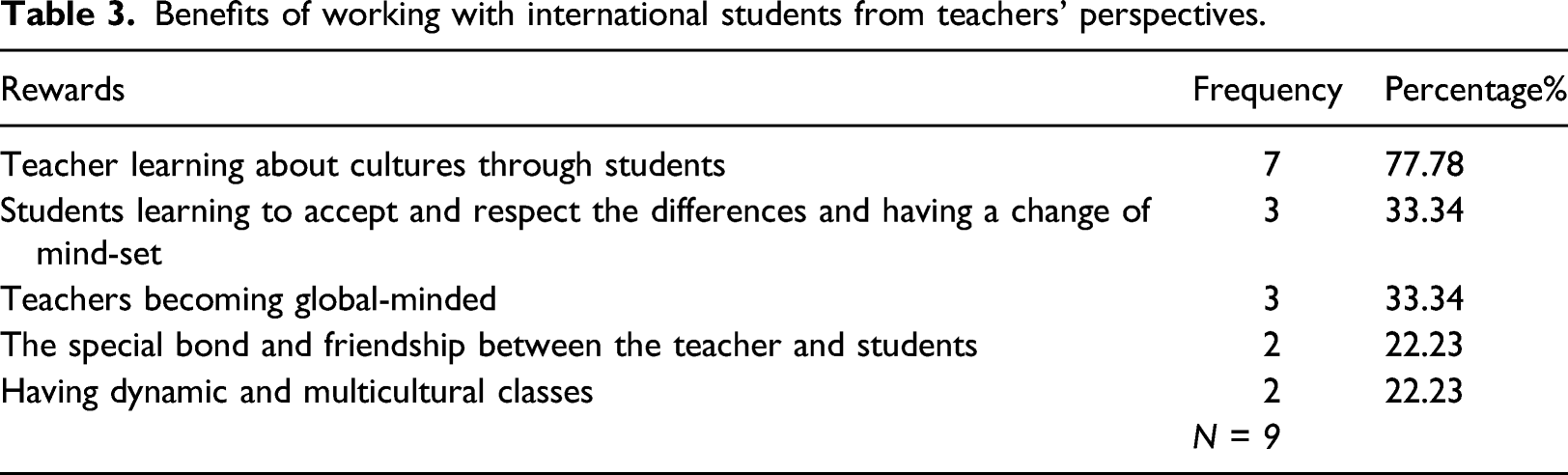
Benefits of working with international students from teachers’ perspectives.
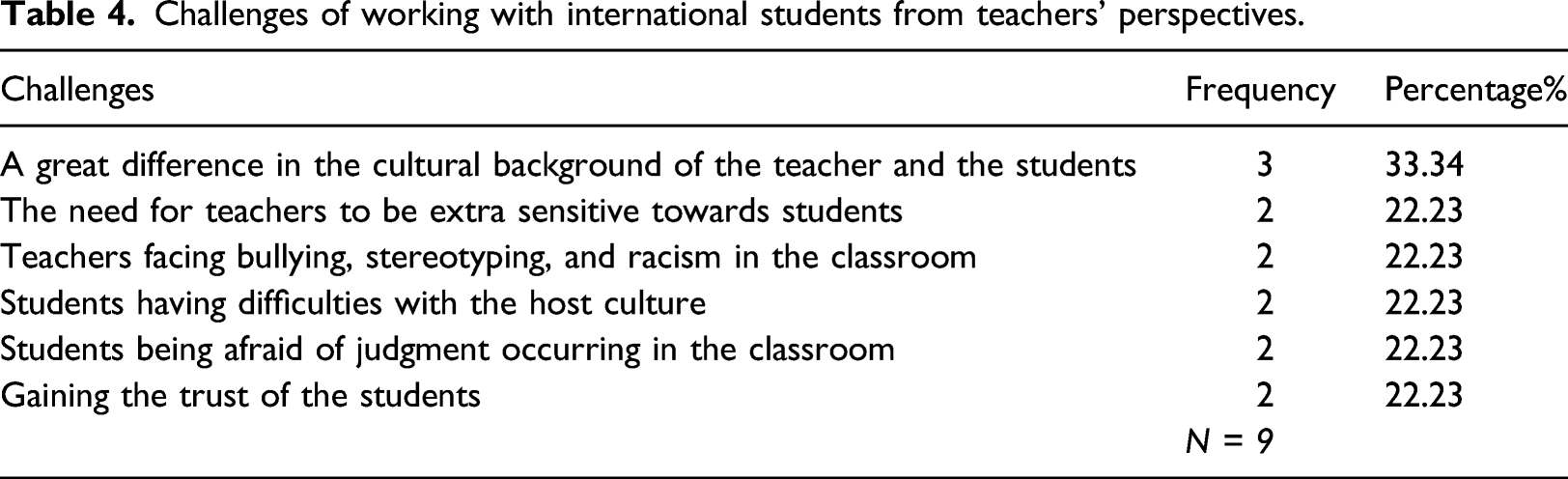
Challenges of working with international students from teachers’ perspectives.
Teachers also found satisfaction both in the students’ learning and their learning of other cultures through students. Having such students in the class could lead to a change in attitude toward different cultures as well. One interviewee had this to highlight about her students’ progress in the course: Teacher 2: The most rewarding aspect is that they come up with a new cultural platform, a new compromise, and a cross cultural platform of the background culture and the new culture there …. Hmmm …. Learning … and that is the most rewarding aspect of this cultural difference.
Another teacher discussed the rewards for the teachers working in international settings. Teacher 4: And as a teacher, you are always learning. So, learning about different cultures and different backgrounds and being able to work with so many different people is going to be rewarding for me.
The challenges of having students from variant cultural backgrounds were noticed not only in the interaction between the students themselves but also in the interaction between the teacher and students. Teacher 5: The most challenging aspect is when I just face bullying and racism issues in my classes. Sometimes it really turns out to a tough situation to handle, at least in my classes. I just try to avoid the students spreading cold troll stereotypes no matter positive or negative.
To be able to gain more insight into the perception of teachers on ways of developing the students’ ICC level, which can sharpen their linguistic and communicative competence, the teachers were also asked to talk about the activities they would prefer (e.g., festivals, shows, assemblies, and school trips among others) to put culture into practice. The use of multimedia was in the lead, and the use of texts and books would follow (Figure 1). Teacher 4: I think the most effective thing a teacher can do is to use different resources, diverse resources actually, so using different tools like videos and of course it depends on that subject that you are teaching, but that can help the students awareness about other people, other cultures, other backgrounds, other styles of life. Activities and Teaching Strategies Used to Put Culture into Practice Hereupon, one teacher participant explained.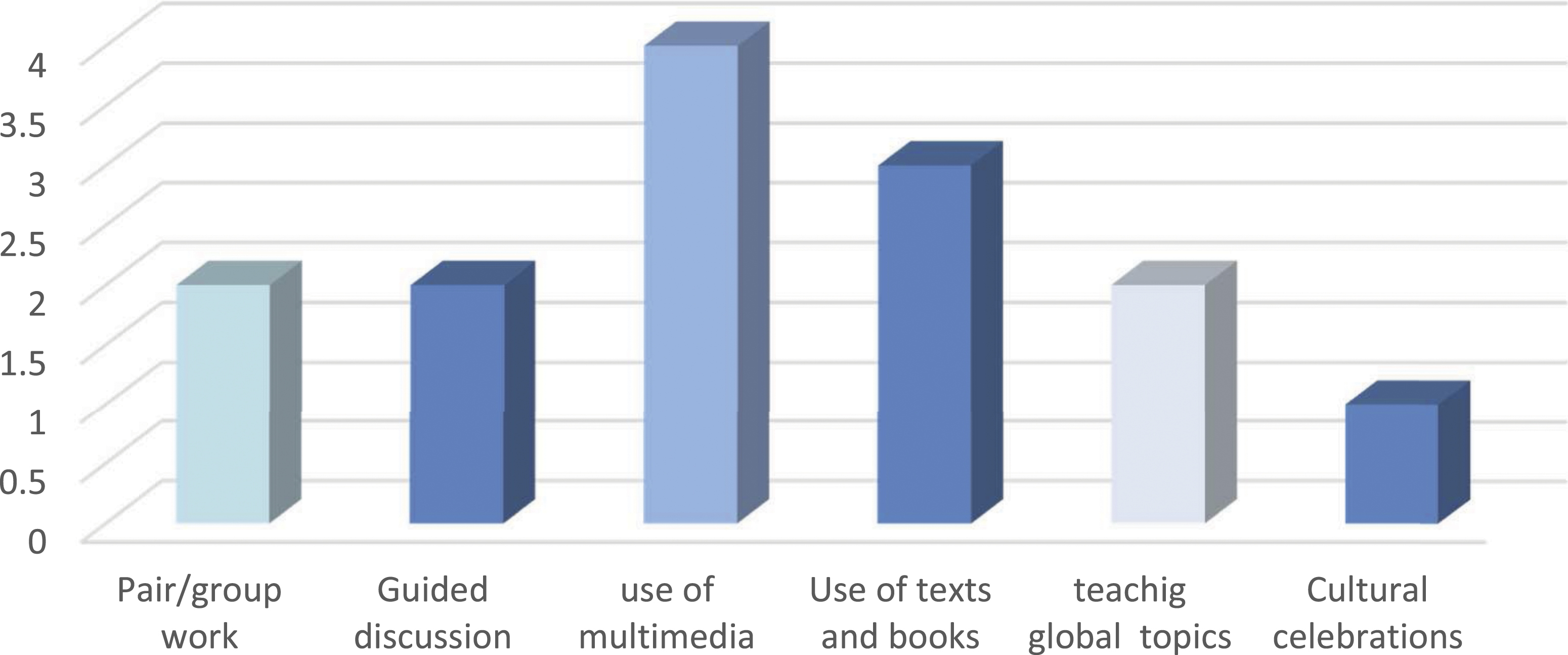
To put culture into practice, teachers referred to the limitations which were found out of the classroom. There was no mention of students or the teachers themselves as sources of limitations in this culture practice. The two significant limitations the teachers were facing were related to the restrictions the curriculum imposed on the teachers and having families not ready to face cultural differences. Teacher 4: The obstacles we may face in our international schools in Iran, I think are the obligations of our national curriculum and the limitations of course that they bring with themselves that is the first thing and the second thing is that the families that teachers have to work with, they may not be ready yet for this cultural awareness. So, the two biggest obstacles facing any teacher I think are these two.
When they were asked if they had given students opportunities to reflect on intercultural experiences in the class, 83.33% stated they had; only 16.67% found culture irrelevant to their teaching subject. Teacher 3: Honestly, they don’t have such opportunities in my subject cause most of the time, they are busy with solving questions and just exchanging ideas on how to solve another question.
Teachers working with subjects like reading and writing, literature, and social studies, which entail cultural features, all expressed that they had given their students the chance to reflect on their intercultural experiences. This can be mainly because teachers in the sciences and practical subjects do not get the opportunity to develop intercultural competence. The responsibility is thus, disproportionately placed on the teachers teaching humanities courses. Teacher 8: A great extent! That’s the main point of discussion and even inquiry in IB literature since they bring not only their own experiences as readers to the text but also they have to reflect on those of the characters in the text. The result (if managed carefully) is a healthy interaction of these experiences.
One another teacher also mentioned that even though her subject of teaching has not been related to culture directly, she has designed projects to include culture in her classes. Teacher 5: As the final term project, I ask students to apply all those techniques in a project, and they are supposed to just introduce their own country clearly and vividly, and at the end, they have a chance to discuss their projects as well.
To recapitulate, teachers were not impressed with how their educational experiences and training dealt with culture teaching. They expressed their concerns about their education to be mostly non-existing, and in the cases of them being trained for such matters, it was just theoretical. Most participants thought of having knowledge of other cultures, accepting cultural differences, getting exposed to different cultures through reading books, articles, and watching movies, and becoming international-minded as influential in developing teachers’ ICC awareness. They considered cultural education for teachers as the responsibility of both the school leadership and teachers to participate in workshops and gain more knowledge on culture and ICC.
They all found classes in international schools special in terms of the benefits they would gain and the challenges they would face. It was mentioned how these classes were a source of learning about cultures for teachers and how teachers would observe students’ mind-set change and move toward culture acceptance and respect, which is an indication of teachers moving past ethnocentrism (Bennett, 1993). This would also affect teachers’ cultural sensitivity, and they would become more open-minded while working with students from a variety of cultures.
Teachers were also faced with bullying and racism in their classes, and some students were feeling judged by others based on their cultures. Teachers had to deal with issues that were not common in ordinary classes, hence the need for them to be prepared for such dynamic yet sensitive courses. Likewise, the teachers felt that the school management was not always supportive in such matters, and this was the same with the students’ parents, as they would sometimes not be ready to deal with cultural issues themselves.
Discussion
This study explored the teachers’ views and perceptions regarding how the ICC level of both teachers and students could be developed through conducting interviews. Based on the results, the teachers focused on the importance of having knowledge of other cultures. Being flexible and open-minded were also mentioned as personal characteristics needed for teachers’ ICC. Teachers’ concerns lie in enhancing what is unknown and foreign to the students and developing their knowledge of a variety of cultures. Such concerns for culture teaching have also been underscored in Kramsch’s (2003) and Castro and Sercu’s (2005) studies.
Additionally, teachers referred to the school’s curriculum and student’s life experiences as the most influential factors in developing students to communicate effectively. This goes hand in hand with the hidden curriculum introduced by Eisner (1979). The hidden curriculum refers to the values, beliefs, and norms that the students absorb through their school experience, social interaction, and teaching and learning experience either implicitly or explicitly (Giroux and Penna, 1983).
Language and cultural learning help us understand our own culture better (Hall, 1973). In this study, 57.14% of the teacher participants believed attending international schools would help students with their own cultural identity. Yet, 14.28% of the teachers expressed their worries about the negative effect of going to international schools on the students’ own identity. Xu and Connelly (2010) explained how minorities “need to be viewed as rich intellectual resources for the reconstruction and enrichment of the mainstream culture” (254). Teachers in this study also highlighted the role of interaction with students from other cultures, professional experience, and observation as ways they have learned to teach culture.
As for the activities, they would prefer to teach culture through the use of multimedia and the use of texts and books would follow, which is compatible with Trede et al. (2013) recommendation that “appropriate and pedagogically rewarding international experiences depend on adequate resources” (453). Teachers involved in this study mentioned that they would bring culture to the classroom through resources such as videos and various texts and books. However, they felt much under pressure of the students’ parents and the strict curriculum they had to follow. Materials developers and curriculum designers should use this piece of information to bring authentic culture-based materials to the curriculum in the form of books, eBooks, and electronic multimedia. They should also use technology and design websites and apps for both teachers and students to provide easy access to such resources.
Regarding teachers’ motivation to teach intercultural communicative competence, the vast majority of the teachers (83.33%) in this study contended that they had given students opportunities to reflect on their intercultural experiences in the class, which corroborates the ideas of Sercu et al. (2005). Furthermore, teachers who have been teaching humanities courses found that the literature instruction would encourage students to reflect on their impressions and expectations about cultural beliefs, behaviors, and issues in their home and target cultures. This could prepare students to suspend and modify their stereotypes or disbeliefs (Byram, 1997; Fries, n.d.).
Conclusion and implications
This study explored the teachers’ views and experiences about ways to develop both the teachers’ and students’ ICC in international schools. Based on the results, teachers defined ICC as respecting other cultures, accepting the differences between cultures, having knowledge about other cultures, being flexible, and open-minded. Likewise, teachers identified the school’s curriculum and the student’s life experience as the most influential factors in developing students to communicate effectively. They also believed that attending international schools would affect students and their own cultural identity, mostly positively.
They unanimously contended that the best way to develop the teachers’ ICC was through interaction with students from other cultures, professional experience, and observation. Only a few thought ICC could be learned through official education. All teachers found intercultural interaction with the students both challenging and rewarding. The students’ learning of other cultures and the teachers’ cultural exposure and learning, and the changes that happened in their attitudes, were the main reward and challenges found in teacher/student interactions and among the students themselves. Teachers also referred to the limitations imposed on them from out of the classroom, such as critiques from the students’ parents and national regulations, as obstacles on their ways to develop the students’ ICC.
Hence, the school managers should be supporting teachers in this matter and set rules and regulations to facilitate the process of internationalization at schools by focusing on intercultural perspectives. Similarly, Parks (2020), referring to the integration of language and content in foreign language degree programs in the UK and USA, argues in support of a unified curriculum, which would foster opportunities for the students' development of intercultural competence and discussions on interculturality. Hence, teachers should consider the scope of the curriculum and its flexibility toward cultural differences to promote the students’ perceptions of ICC. This should also be taken seriously by the curriculum designers as there should be a level of flexibility implemented in the curriculum to give enough space to the teachers to have the authority to change the curriculum according to their classroom setting and cultural and intercultural needs. Curriculum designers could also help teachers with their ICC by developing instructions, tasks, and activities based on cultural issues, using any opportunity to educate teachers on cultural and intercultural issues.
Additionally, intercultural knowledge should be considered as a part of assessment in EFL classes as it can sharpen the students’ communicative competence, most importantly when it comes to international schools where the concept of ICC is present in every class regardless of the subject being taught. Consequently, teachers should be properly trained to know how to use various types of classroom-based assessment, which is how ICC should be assessed. These all show that more intercultural studies are required to better identify the teachers’ intercultural knowledge and experiences in other international schools outside Iran.
Footnotes
Declaration of conflicting interests
The author(s) declared no potential conflicts of interest with respect to the research, authorship, and/or publication of this article.
Funding
The author(s) received no financial support for the research, authorship, and/or publication of this article.