



Abstract
The purpose of this study is to examine profiles of students’ attitudes toward citizenship norms and inclusiveness in the political process, focusing on changes in the frequency of particular profiles and in the strength of predictors across a decade. Using data from 16 countries participating in the 1999 and 2009 International Association for the Evaluation of Educational Achievement civic education studies, we identified five attitudinal profiles. Profiles defined by negative attitudes toward diverse social groups decreased over time, whereas profiles defined by very positive attitudes toward diverse groups increased, particularly in western Europe. Although some post-Communist countries demonstrated trends toward more positive attitudinal profiles, others trended toward profiles defined by weaker citizenship norms. Across countries and cohorts, more positive profiles were associated with stronger school climates and expectations of civic participation.
Introduction
The attitudes that adolescents hold and the degree to which they value participation in civic life have important ramifications not only for their own future engagement (Carretero et al., 2016), but for the creation and sustained viability of democratic life more broadly (Amnå, 2012). As such, it is crucial to consider the development of such attitudes. The ways in which adolescents make sense of civic life are rapidly changing as the world around them becomes marked by periods of financial and political instability, globalization, and vast increases in technology and communication (Schulz et al., 2010). To this end, some studies point to an erosion of adolescents’ norms of civic engagement in recent cohorts of young people, painting a very “passive” civic profile in many parts of the world (Amnå and Ekman, 2013; Hooghe et al., 2016).
Despite research suggesting a decline in the value placed on civic engagement, there is reason to believe that the political picture of young people is, actually, quite complex. Some adolescents may eschew traditional forms of political participation such as political party membership (perhaps due to declining trust in political institutions), instead placing a higher value on noninstitutionalized civic participation such as engaging with the local community or becoming involved in protests. Others may be more concerned about ensuring equitable opportunities for civic participation, but do not have strong opinions on which specific forms of such participation are the most valuable (Torney-Purta and Barber, 2011; Torney-Purta et al., 2008). Looking over time, historical shifts in such patterns of attitudes toward engagement may correspond to political changes in an adolescent’s home country (e.g., changes from authoritarian or totalitarian political systems to democracy) and to the degree to which political forces within a country make political participation salient to young people in a particular cohort (Hooghe et al., 2016). Such societal factors may also affect how salient personal characteristics (e.g., gender) or individual experiences within schools are associated with these attitudes.
Research in this field can easily produce inconsistent, if not contrary results. This is due both to the multiple ways in which civic participation can be defined, and to the importance of looking at factors at multiple levels (e.g., individual, school, and national) that can account for individuals’ attitudes toward such participation (Hooghe et al., 2016). Keeping this in mind, a holistic modus operandi in relation to the study of youth civic engagement, assuming that individuals hold attitudes toward multiple forms of participation simultaneously, is ideal in that it allows the researcher to consider these approaches in tandem. In particular, research has shown the benefits of applying cluster analysis to cross-national data as a means of drawing this sort of holistic picture, as cluster analysis aids in understanding patterns of students’ attitudes (Hooghe et al., 2016; Toots and Idnurm, 2012, 2016; Torney-Purta and Barber, 2011), expectations of participation (Chow and Kennedy, 2015), and in-school experiences (Reichert et al., 2018). Torney-Purta (2009) further argued that this results in conclusions more readily understood by policy-makers and lay audiences than large-scale summary statistics. The current study applied latent profile analysis, a particular form of cluster analysis, to cross-national and cross-cohort data across multiple civic attitudes as assessed in 1999 as part of the International Association for the Evaluation of Educational Achievement’s (IEA) Civic Education Study (CIVED:99), and again in 2009 as part of the IEA International Civics and Citizenship Education Study (ICCS:09). This approach allowed us to examine broad profiles of adolescents’ responses according to multiple indicators of their attitudes (rather than on single scales capturing specific attitudes) across two cohorts of young people who are now adults in their 20s (ICCS:09) or 30s (CIVED:99). It also allowed us to attend to the diversity in political, cultural, and structural opportunities that influences adolescents’ attitudes toward civic engagement (Amnå, 2012). Specific research questions to be examined are as follows:
What profiles of civic attitudes are observed among adolescents? In what countries are particular attitudinal profiles most frequently observed? In what ways has the frequency of attitudinal profiles changed from 1999 to 2009?
What individual and contextual factors are associated with profile membership? Are these factors especially predictive of profile membership in certain cohorts and/or countries?
Conceptual framework
In considering young people’s attitudes toward civic engagement, we draw upon three key assumptions inherent in contemporary approaches to civic education presented by Carretero et al. (2016) in their overview of civic education from the perspective of developmental and educational psychology. The first is an acknowledgment that civic engagement includes multiple forms of civic participation, including both traditional political engagement alongside local and unconventional forms of involvement. Carretero et al. (2016) cite Sherrod et al. (2010) when making the case that this multifaceted approach redefines how researchers and educators understand and approach civic education. The second is an acknowledgment of the importance of civic values for motivating behavior in these multiple domains. Specifically, and beyond valuing civic participation in and of itself, the authors highlighted the importance of tolerance and respect for the rights of diverse social groups as civic values that it is crucial to develop in young people. This speaks to the importance of considering respect for immigrants, individuals from minoritized ethnic groups, and women, as part of a broader profile of civic attitudes. The third is the understanding that young people are active learners, and that as a result they engage in “active learning and meaning making” within social contexts (Carretero et al., 2016: 297). This statement underscores the importance of understanding the characteristics of the environment within which attitudes toward civic engagement are developed.
Researchers have taken into account this multidimensional perspective on civic engagement in a variety of ways. One way has been to conduct separate analyses on each outcome of interest (perhaps with some design correction for correlated outcomes); this is by far the most common approach employed in studies of civic attitudes (Geboers et al., 2013; Knowles et al., 2018). However, this only provides information on one attitude at a time. Other researchers have attempted to work across multiple outcomes using composite indicators, resulting in a broad conceptualization of civic competence encompassing attitudes as well as knowledge and conceptual understanding (Hoskins et al., 2011, 2014). Although the “composite” approach provides a broad consideration of civic competence, one limitation of this approach is that it accounts for unique strengths and weaknesses that individuals demonstrate in specific competencies within the global construct without reverting back to the multiple outcome approach described earlier. Cluster (or profile) analyses provide a third means of capitalizing on the breadth of approaches to civic engagement, outlining profiles of students with specific patterns of skills, behaviors, and (relevant to the current study) attitudes. Some of this work has focused on patterns within one particular type of attitude (e.g., Hooghe et al., 2016, and Reichert, 2016, both of whom conducted analyses on citizenship norms), whereas other studies have considered patterns across a broader range of perspectives (e.g., Torney-Purta et al., 2008). These groups can then, in turn, be compared to see what differences in their backgrounds may have resulted in the formation of a particular pattern of responses. Within the context of cross-cohort analyses in particular, this approach is useful in that it allows the researcher to identify both intragenerational variability in civic attitudes (examining profiles in a single cohort) as well as intergenerational variability (looking at differences in profile frequencies across cohorts) (Keating et al., 2015).
Given the importance of considering multiple perspectives of civic participation as stated previously, we wanted to examine a variety of attitudes that span multiple content domains, allowing us to identify ways in which adolescents’ conceptualizations of specific aspects of their surrounding world, and resulting personal values, are presented together in an interconnected fashion. Once such profiles were identified, we considered how they related to adolescents’ intended civic behaviors, with the understanding that particular attitudes may serve to motivate specific types of behavior that adolescents find to be personally meaningful and relevant (Carretero et al., 2016). Given the focus by many researchers on the shift away from traditional and institutionalized forms of participation (e.g., Hooghe et al., 2016; Reichert, 2016), we correlated attitudes with a variety of conventional behaviors with close ties to the political system (e.g., voting, joining a party, and running for office) as well as less conventional or more locally oriented behaviors (e.g., volunteering or protesting). In addition, in line with our general assumptions about the nature of civic learning, we considered how the frequency of patterns changed as a function of proximal social contexts in schools and classrooms, focusing particularly on the potential roles of democratic climates both in individual classrooms and in the school more broadly (Keating and Benton, 2013; Torney-Purta, 2002; Torney-Purta et al., 2001). Beyond that, we considered the more distal sociohistorical contexts of country and cohort, and (through comparisons by gender) prevailing gender role norms (Barber and Torney-Purta, 2009).
Data and methods
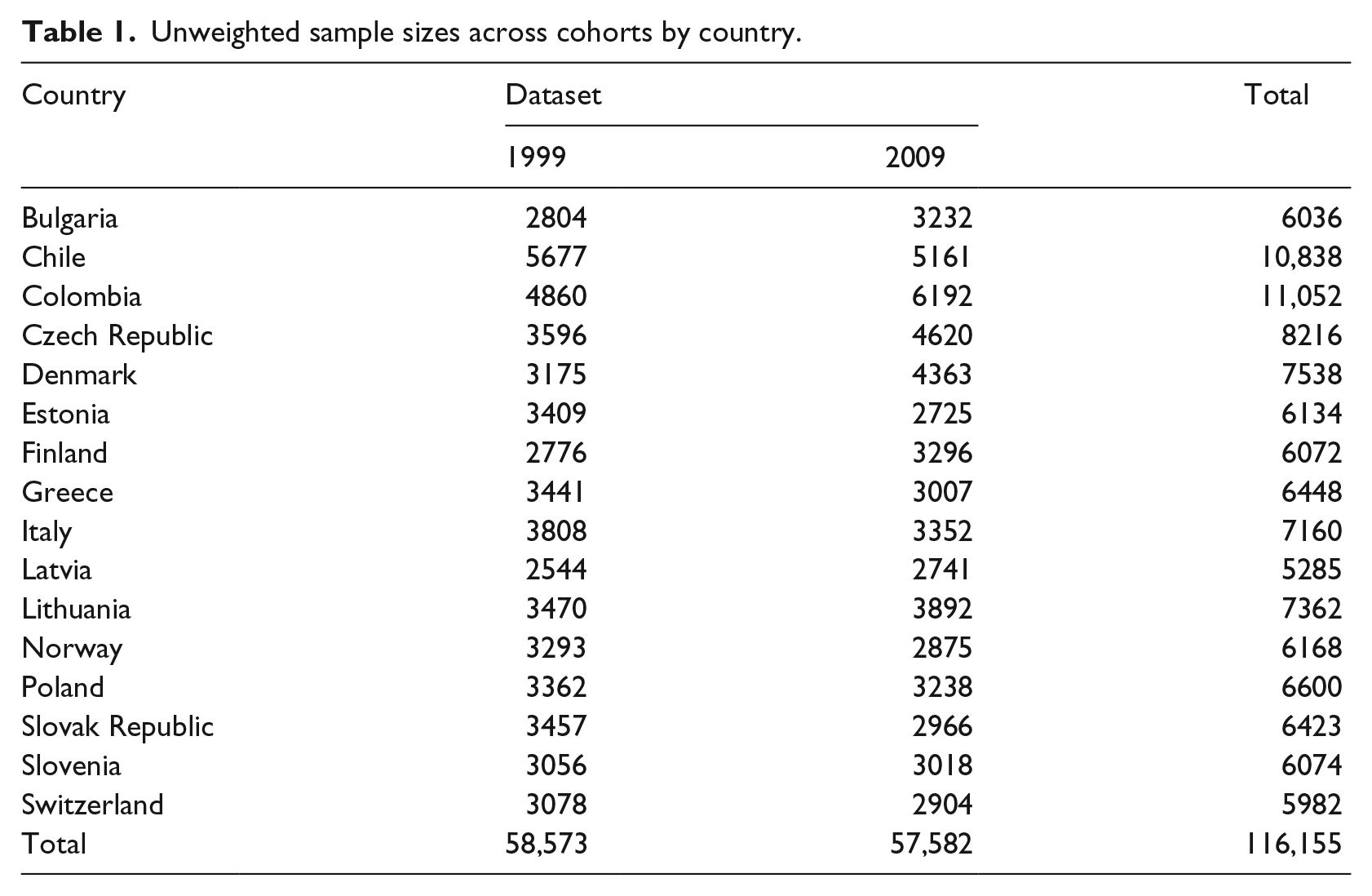
Broadly speaking, the utilization of large-scale datasets such as CIVED:99 and ICCS:09 provides the best opportunity to draw valid cross-national comparisons (Torney-Purta, 2009). Data were drawn from student survey data collected in 16 countries participating in CIVED:99 and ICCS:09: Bulgaria, Chile, Colombia, the Czech Republic, Denmark, Estonia, Finland, Greece, Italy, Latvia, Lithuania, Norway, Poland, Slovakia, Slovenia, and Switzerland 1 . All 16 countries participated in both CIVED:99 and ICCS:09, and as discussed by Schulz et al. (2010) in their cross-cohort analysis of civic knowledge, no major changes were made to either the student survey or to the sampling guidelines that would compromise comparability across cohorts. These 16 countries also tested at similar times of the school year for both cohorts; Schulz et al. (2010) indicated how changes to the timing of the test in England and Sweden compromised the ability to make valid cross-cohort claims in these two countries. Due to the decision to test measurement invariance by gender in earlier stages of this project (Barber and Ross, 2018; Munck et al., 2018), as well as the interest in gender as a predictor in the current study, we only included students who indicated they were male or female (eliminating those with missing data). Unweighted sample sizes by country and cohort appear in Table 1.
Unweighted sample sizes across cohorts by country.
The assessment framework guiding the CIVED:99 study, which was inspired by the findings of a series of case studies outlining civic education in 24 countries (Torney-Purta et al., 1999, 2001), outlined a multidimensional conceptualization of citizenship, focusing on the domains of democracy and citizenship, national identity and international relations, and social cohesion and diversity. The assessment framework of ICCS:09 was adapted to cover four domains (Civic Society and Systems, Civic Principles, Civic Participation, and Civic Identities); however, the content of these domains is similar to the content of the CIVED:99 domains (Barber and Torney-Purta, 2012). Each domain was operationalized in the CIVED:99 and ICCS:09 instruments through assessments of attitudes, which includes conceptualizations of normative behavior, as well as by assessments of knowledge, skills, and behaviors.
Creating attitudinal profiles across cohorts
We created civic attitudinal profiles (clusters) by examining responses on the following six 2 scales: (a) support for the political and cultural rights of immigrants; (b) support for rights of religious/ethnic minorities within their country; (c) support for gender equality (women’s rights) in politics and in the labor market; (d) norms of social movement citizenship (students’ opinions on the importance of citizens participating in human rights or protest activities); (e) norms of conventional citizenship (students’ opinions on the importance of citizens participating in political activities or showing respect for the government); and (f) trust in the government. 3 Each of these scales, which were created using survey items with four-point response options, was assessed for cross-national and cross-cohort comparability (and to ensure comparability of scale fit between male and female students) using the alignment method, a modern measurement technique available in Mplus version 7. It was necessary for us to create new scales that fit across the two cohorts, rather than relying on the available scales created using item response theory (IRT) techniques, because the IRT scales were not designed to allow for comparison between the CIVED:99 and ICCS:09 studies. The alignment method was particularly appropriate for this task given the ease with which it can assess for noninvariance in a large number of groups. For each of the six scales above, fewer than 25% of possible parameters demonstrate significant noninvariance, indicating acceptable model fit (Asparouhov and Muthén, 2014). Details appear in Barber and Ross (2018) and Munck et al. (2018).
Individuals’ factor scores resulting from the alignment method analyses were saved into a dataset, and values were transformed to retain the original metric of the items (i.e., they were transformed so that the lowest value was a 1 and the highest a 4). These scores were then subjected to a latent profile analysis using restricted maximum likelihood estimation, also using Mplus version 7. We ran multiple versions of this analysis, beginning with fitting the data into two profiles and ending with a model with six profiles extracted. The decision on the number of profiles to ultimately retain was made by examining fit statistics (log-likelihood, Bayesian information criterion (BIC), and entropy) and the size of resulting clusters, and by consulting prior theory and research. Both the alignment method and latent profile analyses were conducted taking into account the clustering of students within schools and the weighting of cases to account for unequal probabilities of selection into the studies.
Patterns of attitudinal profiles by cohort and country
Once a latent profile model was selected, we saved each participant’s most likely profile membership (determined by identifying the profile to which the participant had the highest conditional probability of belonging) into a dataset. We first used this variable to examine frequencies of profile membership by country and cohort. We used the crosstabs option in the SPSS Complex Samples module, which again allowed us to account for the sampling design employed by CIVED:99 and ICCS:09. These analyses enabled us to examine how frequencies of profile membership differed by cohort, by country, and by cohort within each country.
Predictors of attitudinal profiles across cohorts: Behavioral intentions and indicators of school/classroom climate
Finally, we also used the most likely profile membership as an outcome variable in a multinomial logistic regression analysis, allowing us to examine how other variables not used to identify profiles predicted group membership. Three of these predictor variables—students’ reports of the openness of their classroom climate, their confidence in the value of student voice in their schools, and expectations of illegal protest—are scales that went through the same alignment analyses as was described for the scales appearing in the clusters themselves (see Barber and Torney-Purta, 2012 for details on item comparability in these scales). Additional predictors are single items that appear identically in CIVED:99 and ICCS:09 (gender (male/female), intent to run for office, expectation of voting in a national election, expectation of joining a political party, and expectation of taking time to engage in voluntary activity in the community (each on a four-point scale)). We also considered participant age as a statistical control. Finally, we include an indicator for dataset (CIVED:99/ICCS:09) to capture differences in the likelihood of profile membership between cohorts; we also included interactions between predictors and dataset to assess whether specific variables are more or less predictive of profile membership over time. We also ran these analyses using the SPSS Complex Samples module, conducting a single analysis in which selected countries were identified as “subpopulations.”
Results
Overall results of latent profile analysis
After reviewing several analyses, we chose to retain a solution with five latent profiles (log-likelihood = −460805.129; number of parameters = 40; BIC = 922076.613; entropy = .763). Although a four-profile solution was also defensible (and, in fact, had a higher entropy value than the five-profile solution), we felt that the five-profile model better aligned with previous research employing cluster analyses, which also extracted five groups (Torney-Purta, 2009; Torney-Purta and Barber, 2011; Torney-Purta et al., 2008) and captured important theoretical distinctions in types of attitudes. To contrast, a six-factor solution yielded no notable improvement to model fit and resulted in a profile that captured only 1% of participants.
An overall illustration of profiles appears in Figure 1. The first profile, which we describe as an “exclusionary” profile, had especially negative attitudes toward rights for immigrants, and members of religious and ethnic minority groups. Approximately 4% of participants in our sample fell into this profile. On average, those who belonged to this profile indicated that they “disagreed” with all survey items pertaining to rights that minoritized groups have to retain their culture and participate in civic activities. This group also had the lowest support for women’s rights (their average score of 2.87/4 puts them three-quarters of a standard deviation below the overall mean), and below-average trust in governmental institutions and belief in the importance of various actions for citizenship.
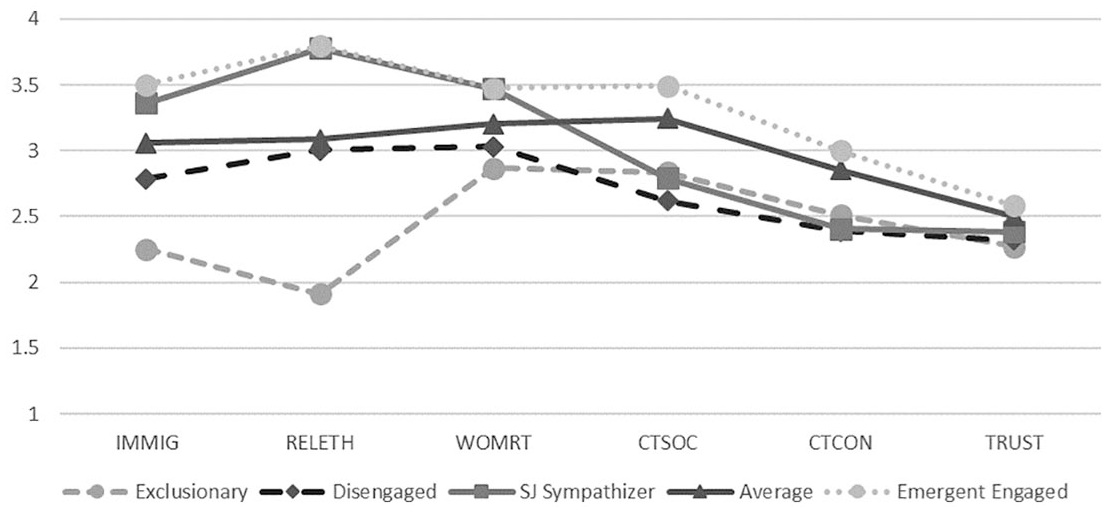
Summary of attitudinal profiles.
We describe the second profile as “disengaged.” Although they do not share the extremely negative attitudes toward immigrants and religious/ethnic minorities that the “exclusionary” group has, they are, nonetheless, characterized by below-average attitudes toward rights for marginalized social groups, toward the importance of various activities for citizenship, and toward the trustworthiness of governmental institutions. Most notably, they had the weakest conceptions of both social movement and conventional forms of citizenship, neither “agreeing” nor “disagreeing” on average that any activity is important. Approximately 16% of participants fit this profile.
The third profile was characterized by a very high level of support for the rights of women, religious/ethnic minorities, and immigrants, but a below-average belief in the importance of various activities for citizenship (especially conventional activities) and trust in governmental institutions. Such a pattern has previously been described as a “social justice” cluster (Torney-Purta, 2009; Torney-Purta and Barber, 2011; Torney-Purta et al., 2008). Here, we adapt this label by describing this group as “social justice sympathizers,” as members of this group may be unlikely to advocate for marginalized populations if they do not believe that various civic activities (whether conventional or social movement in nature) are important. This group made up approximately 11% of the sample.
The fourth (and largest) profile describes students who are “average” in their attitudes. They agreed (though not strongly) that women, immigrants, and religious/ethnic minorities deserve social and political rights, and felt, similarly, that conventional and social movement activities were important (though not “very” important) for citizens. They neither agreed nor disagreed in relation to trust in governmental institutions, which put them slightly above the other three profiles described so far in terms of trust. Each of these scores was within one-half of a standard deviation of the overall sample average; therefore, we refer to this profile as “average” throughout the analyses. Altogether, approximately 39% of participants fell into this group.
The final profile had the most positive attitudes. Their degree of support for the rights of marginalized groups was similar to that observed in the “social justice sympathizer” profile, but they coupled it with the strongest average conceptualizations of both conventional and social movement citizenship. The degree of trust that they had in government systems was more modest, however, as it was similar to the level of trust demonstrated in the “average” profile. Because this cluster demonstrated attitudes that are strongly aligned with emergent civic engagement (see Torney-Purta and Amadeo, 2011), we labeled this profile “emergent engaged.” Approximately 26% of participants fit this profile.
Differences in the frequency of attitudinal profiles by cohort and country
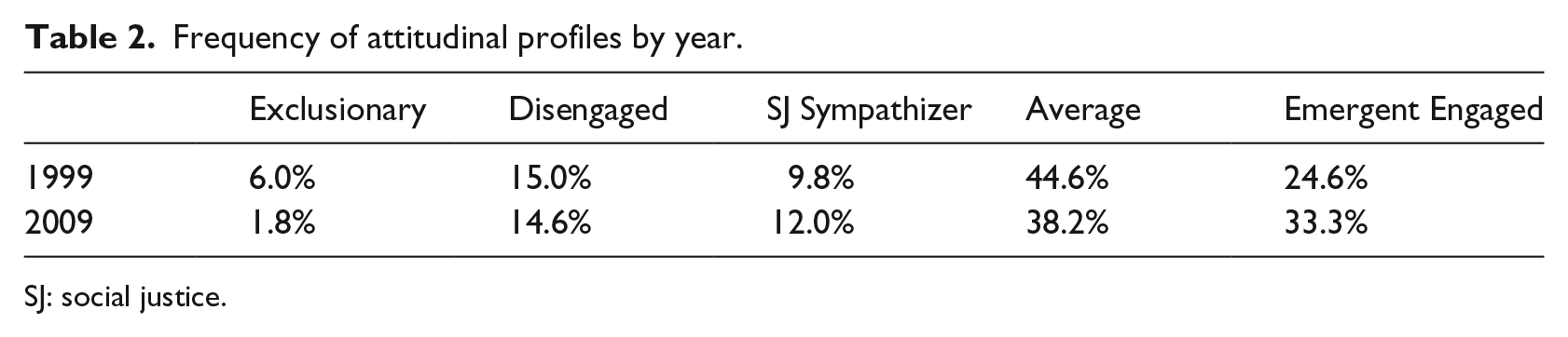
We assigned each participant to the latent profile of which they were most likely a member, then compared frequencies of profile membership by cohort and country. Table 2 summarizes differences in profile memberships by cohort, comparing CIVED:99 participants with ICCS:09 participants. Overall, the “exclusionary” and “average” profiles were more frequently found in 1999, whereas the “social justice sympathizer” and “emergent engaged” ones were found more often in 2009. The proportion of individuals in the “disengaged” profile stayed more stable across cohorts, changing by less than one-half of one percent. Overall, this suggests that attitudes toward marginalized groups become more positive over time, regardless of whether they are coupled with strong citizenship norms.
Frequency of attitudinal profiles by year.
SJ: social justice.
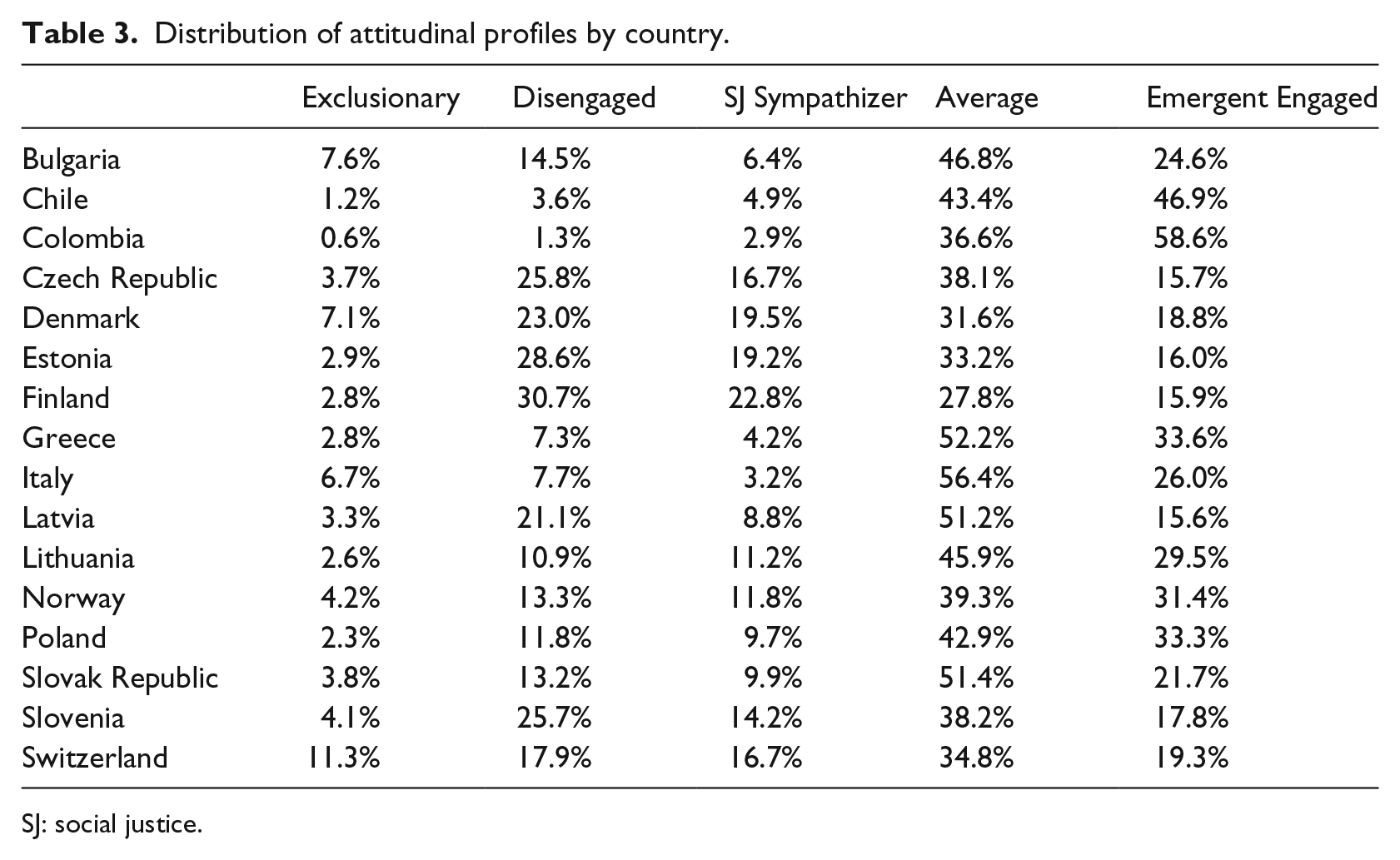
Table 3 summarizes differences by profile membership by country, considering both cohorts together. Overall, the “exclusionary” profile was found in the largest proportions in Bulgaria, Denmark, Italy, and Switzerland, and in the smallest proportions in Chile and Colombia. The “disengaged” profile was found with the greatest frequency in the Nordic/Baltic region (notably Finland, Denmark, and Latvia) as well as the Czech Republic, Slovenia, and Bulgaria. Chile and Colombia had the smallest proportions of participants in this profile, and it was also underrepresented in Greece and Italy. Many of the same national patterns observed for the “disengaged” profile were also found in the “social justice sympathizer” profile: this group was overrepresented in the Nordic/Baltic region (with the highest proportions found in Finland, Estonia, and Denmark), the Czech Republic, and Slovenia. It was also overrepresented in Switzerland. In contrast, the “social justice sympathizer” group was underrepresented in the two Latin American countries (Chile and Columbia) and the two southern European countries (Greece and Italy), as well as Bulgaria.
Distribution of attitudinal profiles by country.
SJ: social justice.
Turning to the two profiles with stronger citizenship norms, the “average” profile was the most frequent profile in every European country, but not in the two Latin American countries. It made up over half of the samples in Italy, Greece, the Slovak Republic, and Latvia, and was also overrepresented in Bulgaria and Lithuania. It was found in the smallest proportion in Denmark, Estonia, and Switzerland, although it was the most frequent profile of the five in each of these countries. Finally, the “emergent engaged” profile was most frequently found in Colombia (where almost 60% of participants matched the profile) and Chile. It was also overrepresented in Greece, Poland, and Lithuania. It was found least frequently in the Czech Republic, Finland, Estonia, and Slovenia.
In sum, profiles characterized by stronger citizenship norms (regardless of whether they are coupled with a very high level of support for marginalized groups such as women and immigrants) were found in Latin America and southern Europe, whereas profiles with lower citizenship norms were more characteristic of the Nordic/Baltic region. Post-Communist countries in eastern Europe were diverse in their profiles, with some (like Poland and Lithuania) demonstrating stronger citizenship norms and others (like the Czech Republic and Slovenia) weaker ones. The very negative “exclusionary” profile appeared in some of the oldest democracies in this sample (notably Switzerland and Denmark), but also appeared with a fair degree of frequency in Italy and Bulgaria.
Differences in profile membership by cohort within countries
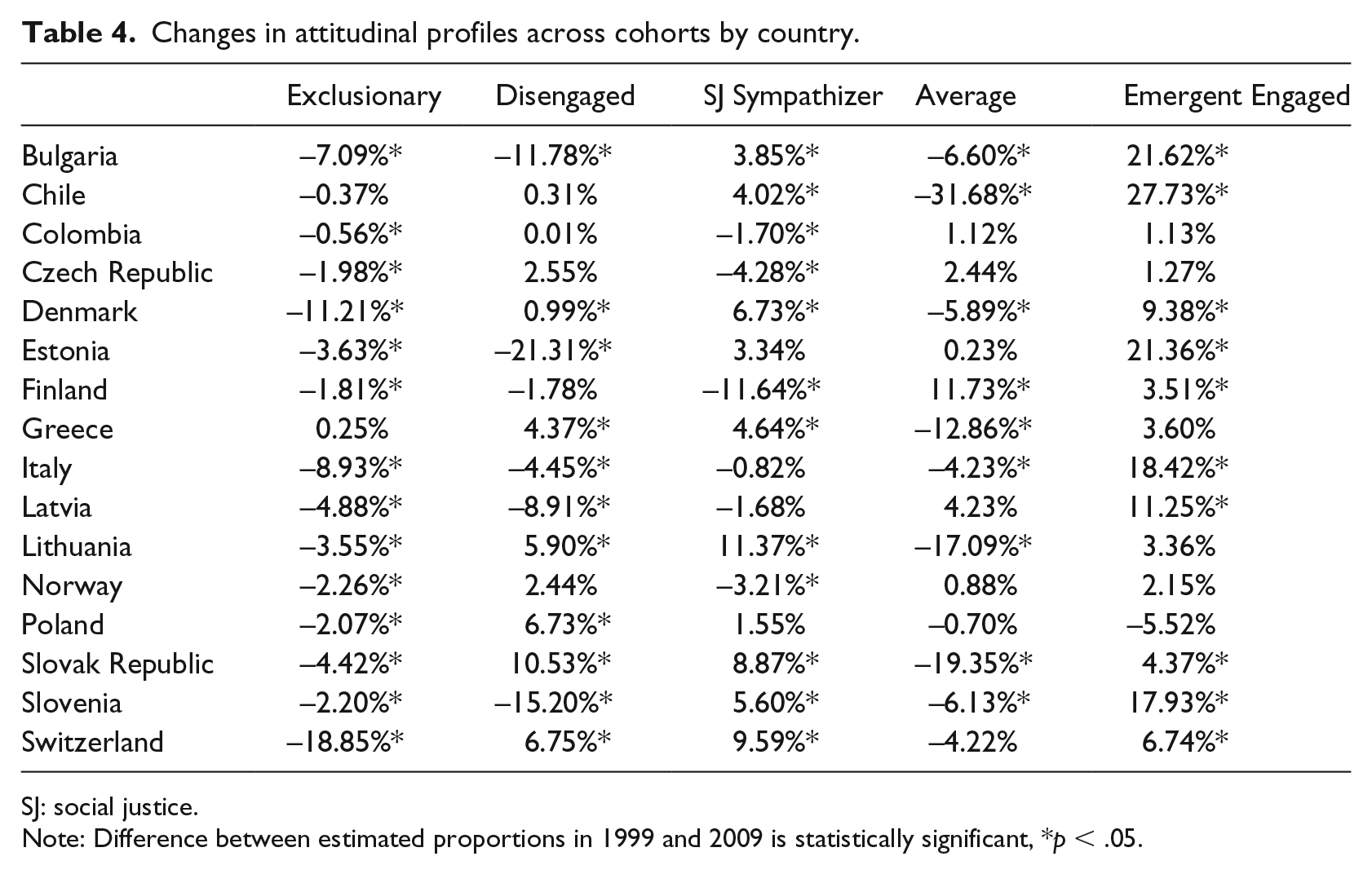
A summary of differences in the frequency of attitudes between cohorts within each of the 16 countries appears in Table 4. The proportion of participants in the “exclusionary” profile decreased significantly from the 1999 cohort to the 2009 cohort in nearly every country (with the exception of Chile and Greece). These shifts were most dramatic in Switzerland, Denmark, Italy, and Bulgaria—the countries with the highest proportions of participants in the “exclusionary” profile overall. Patterns of change over time in the “disengaged” profile were more mixed. Some countries with large proportions of participants in the “disengaged” profile in 1999 (notably Estonia, Slovenia, and Bulgaria) had much smaller proportions in this profile in 2009, whereas other countries showed more consistent frequencies across cohorts (notably Denmark, with a significant change of just under 1%, and the Czech Republic and Finland, which both had nonsignificant differences between cohorts). In addition, decreases were also seen in Italy and Slovenia. Membership in the “disengaged” profile was significantly higher in the 2009 cohort compared with the 1999 cohort in five countries, with the greatest differences found in the Slovak Republic, Switzerland, Poland, and Lithuania. The proportion of “social justice sympathizers” increased from the 1999 cohort to the 2009 cohort in many countries (most dramatically in Lithuania, the Slovak Republic, and Switzerland—countries that also showed increases in the “disengaged” profile). The “social justice sympathizers” profile decreased in frequency over time in Finland only.
Changes in attitudinal profiles across cohorts by country.
SJ: social justice.
Note: Difference between estimated proportions in 1999 and 2009 is statistically significant, *p < .05.
Altogether, eight countries had statistically lower proportions of young people in the “average” profile in 2009 compared with 1999. Such differences were most dramatic in Chile, the Slovak Republic, Lithuania, and Greece, each of which showed double-digit decreases in “average” profile membership from 1999 to 2009; Bulgaria, Denmark, Italy, and Slovenia also showed smaller decreases. Only Finland had a statistically significant increase (11%) in the proportion of individuals in the “average” profile across the two cohorts. Finally, proportions of individuals in the “emergent engaged” profile increased across cohorts in every country except Poland, which had a nonsignificant decrease. The increase in this profile from 1999 was statistically significant in ten countries and most dramatic in Chile, Bulgaria, Estonia, Italy, Slovenia, and Latvia.
Predictors of profile membership in four countries
Based on the findings outlined above, we selected four countries for in-depth analyses of predictors of profile membership. Chile is a Latin American country with high citizenship norms that experienced a shift from the “average” profile being the most frequently found in 1999 to the “emergent engaged” profile being the one that occurred most in 2009. Switzerland was selected as a western European country with a significant “exclusionary” group in 1999 that demonstrated a shift toward higher proportions of young people in more inclusive profiles (“social justice sympathizer” and “emergent engaged”) in 2009. Further, given that two distinct cross-cohort patterns were observed among the post-Communist countries, two countries sharing this history were selected: Estonia, which demonstrated a shift from a high proportion of young people in the “disengaged” profile in 1999 to a high proportion in the “emergent engaged” profile in 2009, and Poland, which was characterized by a significantly higher number of young people in the “disengaged” profile in the 2009 cohort.
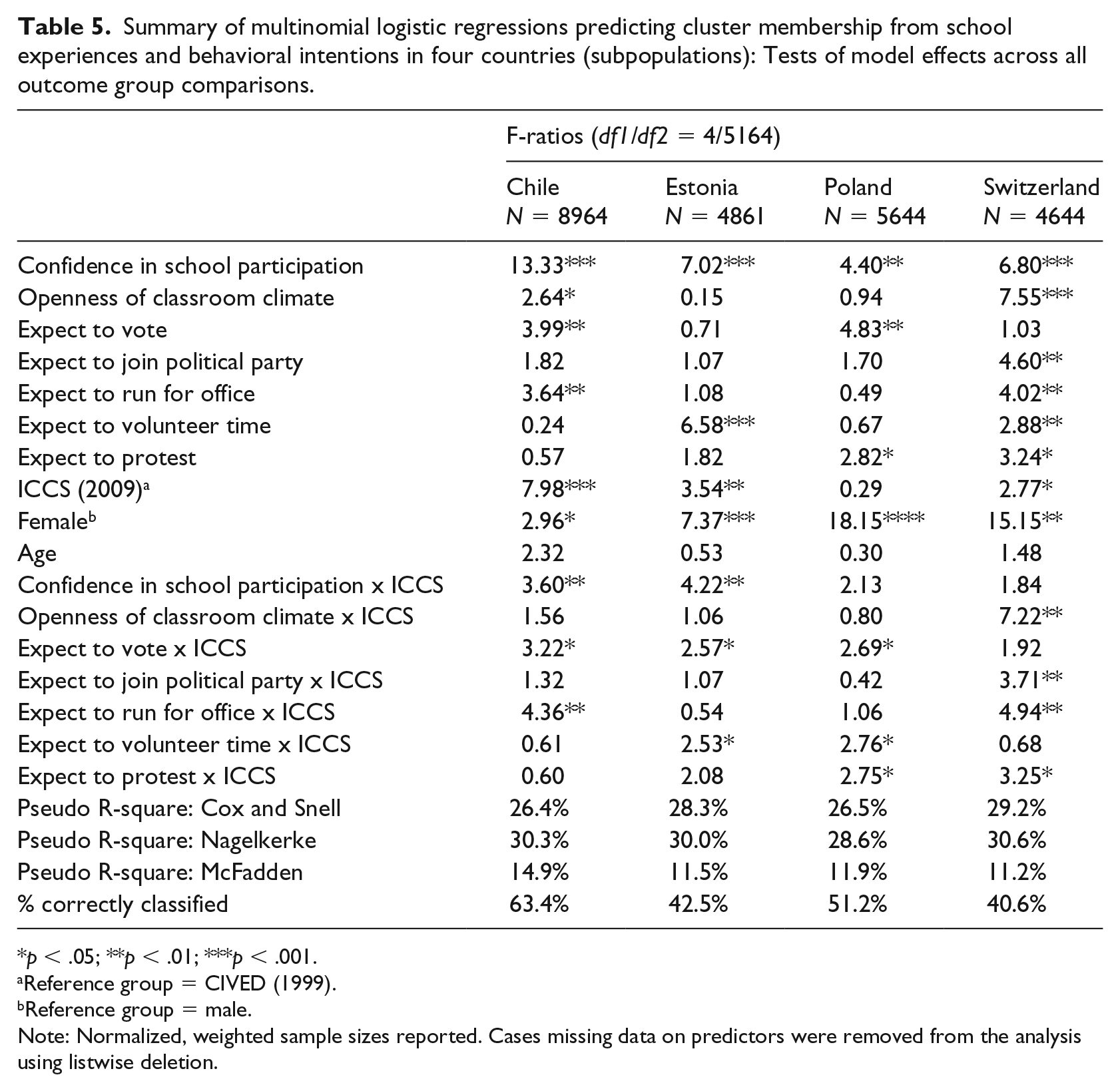
Table 5 summarizes the results of multinomial logistic regression analyses conducted within each of the four countries by reporting overall model effects for predictors of profile membership in each country. Two predictors, gender and confidence in the value of school participation, were significantly related to profile membership in all four countries. Follow-up analyses 4 of the significant effect of gender revealed that although exact patterns varied by country, members of the “exclusionary” and “disengaged” profiles had higher proportions of male youth, whereas the “emergent engaged” and “social justice sympathizer” profiles had higher proportions of female youth. With regard to the effect of confidence in the value of participation on profile membership, members of profiles with more impassioned attitudes toward marginalized groups, particularly if those attitudes were positive, had more confidence that students’ voices in their schools’ matter than did members of other profiles. Specifically, the “disengaged” and “average” profiles demonstrated lower confidence in the value of participation at school compared with those who had more extreme attitudes.
Summary of multinomial logistic regressions predicting cluster membership from school experiences and behavioral intentions in four countries (subpopulations): Tests of model effects across all outcome group comparisons.
p < .05; **p < .01; ***p < .001.
Reference group = CIVED (1999).
Reference group = male.
Note: Normalized, weighted sample sizes reported. Cases missing data on predictors were removed from the analysis using listwise deletion.
Other predictors were significantly related to profile membership in some, but not all countries. Cohort (CIVED:99 vs. ICCS:09) was significant in three of the four countries (with the exception of Poland), which is reflective of the differences in the frequency of various profiles across cohorts described earlier. The perceived openness of classroom climate was significantly related to profile membership in Chile and Switzerland, and a statistically significant interaction between cohort and classroom climate in Switzerland indicated that the predictive power of classroom climate differed in 1999 and in 2009. Follow-up analyses revealed that “social justice sympathizers” had especially low views of classroom climate. In both countries (and when comparing with “social justice sympathizers”), higher perceptions of classroom climate were associated with a greater likelihood of having “average” or “emergent engaged profiles,” particularly in 1999. Moreover, in Switzerland, higher perceptions of an open classroom climate were also associated with a greater likelihood of being “disengaged” or “exclusionary” than of being a “social justice sympathizer.” The difference between “disengaged” and “social justice sympathizer” in this regard was especially pronounced in 1999.
The patterns of association between attitudinal profile membership and behavioral intentions varied across the four countries examined. In Chile, members of different profiles varied in their intentions to vote (1999 only) and run for public office. In Estonia, attitudinal profiles were related to intent to volunteer, and in Poland they were related to intent to vote and protest. In each of these cases, significant interactions with cohort indicate that the strength of the associations between behavioral intentions and attitudes differed in 1999 and 2009; with the exception of a couple of instances in the two post-Communist countries, this was due to stronger associations of attitudes with intended behaviors in 1999. Turning to Switzerland, attitudinal profiles were related to every intended behavior except for voting, and there were significant interactions between cohort and every outcome except for volunteering (suggesting that the association between volunteering and attitudes is similar in the two cohorts). A combination of national factors (including those in both political and education systems) and the frequency/mainstream nature of specific behaviors at specific points in each country’s recent history may explain these contrasting and often complex findings.
Despite the differences highlighted across the four countries, follow-up analyses revealed some common ways in which attitudes related to intended behaviors. Overall, those who intended to participate in civic life in one form or another were less likely to hold “disengaged” attitudes and more likely to have an “emergent engaged” profile. Members of the “social justice sympathizer” profile frequently demonstrated a stronger intent to participate (e.g., running for office in 1999 Chile, or volunteering in Estonia) when compared with other groups, although they indicated weaker intentions of voting compared with their “emergent engaged” peers.
Other follow-up analyses revealed how characterizing the intended behaviors of those with “exclusionary” and “average” profiles can be challenging. Intent to vote was associated with a higher likelihood of membership of the “exclusionary” profile compared with the “disengaged” profile in 1999 Poland. In contrast, in 1999 Switzerland, members of the “social justice sympathizer” profile, the “disengaged” profile, and the “average” profile were all more likely to protest than were those in the “exclusionary” group. Turning to “average” young people, although less likely to run for office (Chile, 1999) or protest (Poland, 1999) compared with the most engaged profiles, “average” young people were actually more likely to join a political party in Switzerland, with differences especially pronounced in 1999.
Finally, Table 5 also reports the percentage of cases correctly classified and pseudo R-squares as an overall assessment of the models. Generally speaking, the model functions similarly in each of the four countries, although the higher rate of successful classification in Chile may be due to the very low actual proportions of participants in the “exclusionary” and “disengaged” profiles.
Discussion
Overall, this analysis illustrates how attitudes toward equal opportunities and conceptualizations of citizenship cluster together to form various profiles, and how the prevalence of specific profiles varies between cohorts and across countries. A five-profile solution provided the best fit to the data, when taking into account both model fit and theoretical soundness. When looking at differences in the distribution of profile memberships between the 1999 and 2009 cohorts of early adolescents, there was a shift toward clusters defined by a high level of support for women, groups who were minoritized due to their religion or ethnic identity, and immigrants (i.e., the “social justice sympathizer” and “emergent engaged” groups). There was a dramatic decrease in the proportion of young people belonging to the “exclusionary” profile, and also a sizable decrease in the “average” profile—perhaps because individuals with stronger citizenship norms are more likely to couple them with inclusionary attitudes in 2009. In some ways, these findings contradict research on cross-cohort differences in attitudes (particularly attitudes toward immigrants and immigration) using adult surveys, which found more mixed results in terms of whether attitudes were becoming more positive or more negative (Ceobanu and Escandell, 2010). Several potential explanations for these differences exist, however, even beyond developmental factors, including (a) the lack of western European and western European heritage countries (e.g., Australia and the USA) included in this sample compared with samples in other studies, (b) cohort-based differences (Hooghe and Wilkenfeld, 2008), as many of the adults surveyed were teenagers prior to the late 1990s/2000s, (c) differences in the specific aspects of attitudes toward the minoritized groups examined, or (d) the inclusion of rights of other groups—notably women—when defining profiles.
Although inclusionary attitudes toward women, immigrants, and members of minoritized religious/ethnic groups defined which profiles were seen in a specific cohort, citizenship norms were more important in defining differences in profile memberships across countries. For example, members of the Nordic/Baltic region (particularly Denmark, Estonia, Finland, and Latvia), the Czech Republic, Slovenia, and Switzerland were characterized by lower citizenship norms, either in the presence of strongly inclusionary attitudes toward marginalized groups (“social justice sympathizers”) or in the absence of inclusive attitudes (“disengaged”). However, countries defined by high proportions of young people in profiles with strong citizenship norms had more diverse patterns, with some countries demonstrating high proportions in the “average” category (e.g., Bulgaria, Italy, Lithuania, and the Slovak Republic), some in the “emergent engaged” category (e.g., Colombia, Norway, Poland), and others in both (e.g., Chile and Greece). Moreover, countries with the highest proportion of young people in the “exclusionary” profile (Switzerland, Denmark, Bulgaria, and Italy) varied in terms of their distributions of other profiles, although none of these countries have especially noteworthy proportions of young people in the “emergent engaged” category.
In looking at these results (and also considering differences between the two cohorts), some regional patterns are evident. Latin American countries (Chile and Colombia) and southern European countries (Greece and Italy) demonstrated some of the most consistently positive profiles of attitudes overall, echoing findings from research taking a composite-based approach to the study of civic attitudes (Hoskins et al., 2011, 2014). Changes over time in Chile and Italy resulted in still higher proportions of young people with the “emergent/engaged” profile, which could be considered as the strongest attitudinal profile. (Some changes in the opposite direction from the 1999 cohort to the 2009 cohort in Greece may have been a reflection of the economic and political crises that only deepened after 2009.) In addition, generally speaking, the western European countries examined here became more engaged—and, specifically, more inclusive—from 1999 to 2009, although they also started with some of the least inclusionary attitudes (perhaps due to having longer histories of accepting immigrants and larger immigrant populations). The one exception to this pattern, Norway, had more-positive/inclusive attitudes to begin with in 1999. Western European countries also tended to have high proportions of students in profiles defined by weak citizenship norms, echoing Hooghe et al.’s (2016) findings from a latent class analysis of ICCS:09 data.
However, regional variations become considerably more complex when considering the post-Communist countries throughout various regions of eastern Europe that make up almost half of the countries in this study. Bulgaria, Estonia, Latvia, and Slovenia were characterized by shifts toward more young people in the “emergent engaged” category (away from “disengaged” and “average”), whereas Poland, Lithuania, and the Slovak Republic shifted toward more “disengaged” profiles. (The Czech Republic stayed fairly stable over this time.) Estonia and Latvia may have benefited from strong national identities and ties to the Nordic/Baltic region (Malak-Minkiewicz, 2007), although internal political tensions (and a weaker economy compared with Latvia or Estonia) may have kept Lithuania from demonstrating similar growth (Barbara Malak-Minkiewicz, personal communication, June 26, 2015). Poland started with intensive economic reforms (compared with many other countries in the region) at the time of the transition to democracy, and was more advanced with regard to educational reforms than many other countries at the time of CIVED:1999 (Malak-Minkiewicz, 2007), resulting in more-positive attitudes. However, worsening political tensions in Poland (Jakubowska and Kaniasty, 2015) and economic tensions in the Slovak Republic may have resulted in less-positive attitudes in 2009. Finally, it is possible that the positive shifts from 1999 to 2009 observed in Bulgaria and Slovenia could be a function of political events that happened just a few years previously: Bulgaria joined the European Union, and Slovenia entered the Eurozone (in 2007) (Kerr et al., 2010). It remains to be seen, then, whether these shifts toward more “emergent engaged” attitudes are indicative of long-lasting trends, particularly when considered in the context of the financial crisis that began not long before ICCS:09 and continued for several years afterwards (Hoskins et al. 2016). Analyses of data collected from the International Civics and Citizenship Education Study of 2016 will provide a logical starting point from which to explore this further. It also remains to be seen whether these patterns are still characteristic of cohort differences today, with ICCS:09 participants now in their 20s and CIVED:99 participants in their 30s.
Despite the complex patterns observed at the country level, the association of individual factors with membership of various profiles was remarkably similar among the four different countries examined (Chile, Estonia, Poland, and Switzerland). Being male was associated with a higher likelihood of membership of the “exclusionary” and “disengaged” profiles, a finding that echoes results of cluster analyses conducted in other countries (Torney-Purta 2009; Torney-Purta and Barber, 2011; Torney-Purta et al., 2008) as well as work on inclusive attitudes more specifically (Godfrey and Grayman, 2014; Husfeldt, 2006; Sampermans and Claes, 2018; Torney-Purta et al., 2001). School and classroom contexts are also related to civic attitudes. As to be expected, higher confidence in the value of student voice was associated with a lower likelihood of being “disengaged” and a higher likelihood of being “emergent engaged.” What was somewhat surprising was that higher confidence was also associated with a greater likelihood of being in the “social justice sympathizer” category and, in 1999, a lower likelihood of being in the “average” category.
This suggests that positive, inclusive experiences in school may be more strongly related to young people’s beliefs about ensuring rights for diverse groups than to their opinions of citizenship activities. Although Torney-Purta (2002) has highlighted the importance of such “collective efficacy” within the school context, the more common measure of school climate employed in studies examining data from the CIVED:99 and ICCS:09 studies is “openness of classroom climate for discussion” (e.g., Campbell, 2008; Godfrey and Grayman, 2014). In this study, “openness of classroom climate” was only a significant predictor of attitudes in two of the countries studied (Chile and Switzerland). In both countries, perceiving an open climate was related to a higher likelihood of being in one of the two profiles defined by high citizenship norms (“average” or “emergent engaged”) than being social justice sympathizers. Moreover, in Switzerland (particularly in 1999), “social justice sympathizers” were predicted to have lower climate perceptions than either of the two more negative groups. Additional research on classrooms and schools as proximal developmental contexts in these countries (and over time) is clearly needed, in particular, focusing on opportunities for intergroup contact among peers (especially when making decisions at school) and objective measures of the degree of openness in a classroom climate toward diverse viewpoints. (It could be, for example, that “social justice sympathizers” in these two countries are legitimately responding to negative climates, and without a strong sense of norms for political action feel helpless as to what can be done.)
Finally, although there was variation by country in terms of the specific behavioral intentions associated with civic attitudes, there was, overall, a finding that “disengaged” attitudes are, indeed, associated with a lack of intent to engage in society oneself. Beyond that, however, these results indicate unique ways in which young people with other profiles of attitudes and, in particular the “social justice sympathizers,” may envisage their future participation. For example, despite both groups having weak citizenship norms, a strong intent to volunteer was associated with a higher likelihood of being a “social justice sympathizer” (versus being “disengaged”) in two countries. This suggests that despite low citizenship norms in the abstract, social justice sympathizers may, indeed, be considering individual civic action. However (and in keeping with their lukewarm approach to conventional citizenship), it is not in the form of traditional methods of civic action such as voting or joining a political party. Many other findings described in these analyses, including those revealing detailed patterns pertaining to “average” or “exclusionary” groups, were only significant in 1999. This suggests that the polarization described earlier resulted not only in larger numbers of “exclusionary” young people overall, but also in closer ties between individuals’ attitudes toward citizenship and their intent to act as citizens. (From a methodological vantage, the larger number of individuals demonstrating less-positive profiles may have meant that there was more statistical power to detect nuanced differences in 1999 compared with 2009.) At the same time, a smaller number of associations between attitudes and intended behaviors strengthened in 2009 in the two post-Communist countries, perhaps as expectations in relation to voting (Estonia) and volunteerism (Poland) solidified.
The use of a variety of attitudinal measures in a cross-cohort, cross-national dataset offers a unique opportunity to examine broad patterns of attitudes and changes across cohorts in a methodologically rigorous way. However, the breadth of a study like this comes with limitations as well. Analyses that focus on a more narrow scope of variables may provide a more nuanced picture of specific attitudes (e.g., Hooghe et al., 2016, in their study of citizenship norms using ICCS:09 data). Moreover, by looking across cohorts, we were limited to considering predictors that were comparable in the CIVED:99 and ICCS:09 studies. Items that could have served as predictors (or as attitudes in the profiles themselves) in one cohort or the other either did not appear in both studies, or appeared in very different formats that made using them as the “same” item/scale impossible. Finally, when looking broadly across a group of countries that are diverse in their political histories and cultures, any resulting cluster (profile) solution is going to have to be general enough to account for broad patterns in these varied contexts. Some smaller profiles (specific to certain countries, or in particular cohorts, for that matter) may exist, but may not appear with enough frequency overall to justify the extraction of a separate cluster. Most notably, work by Torney-Purta et al. (2008) found a small but deeply “alienated” group that held exclusionary attitudes and was extremely distrusting of the government in the US data from CIVED:99. This cluster was retained when expanding the sample to several western European countries (Torney-Purta, 2009; Torney-Purta and Barber 2011). The pattern was not observed in great enough frequency across the combined CIVED:99/ICCS:09 sample to include this cluster in the current analysis. However, these profiles may be very important for researchers interested in characterizing attitudes within a particular country.
In sum, this analysis illustrates how early adolescents’ attitudes have changed between 1999 and 2009 in complex ways. Although young people became more positive in their attitudes overall, there is a subset of countries (particularly in eastern Europe) where, around 2009, political and financial difficulties following the transition to democracy results in an increase of individuals with more “disengaged” profiles. It is important for educators and others who support youth development to consider such attitudes because they have a clear (if contextually dependent) association with young people’s intentions to engage in civic life. Additional information on how both schools and classrooms can support the development of prosocial, inclusive civic attitudes with a strong respect for the roles of citizens can be used to help support positive outcomes in this important domain.
Footnotes
Funding
The author(s) disclosed receipt of the following financial support for the research, authorship, and/or publication of this article: This research was funded by a grant from the Spencer Foundation’s New Civics Initiative.