



Abstract
The research presented in this article strives to answer the question: how do we educate for sustainability? I have provided evidence that arts-based educational research methods and major cultural resources provide very rich learning experiences that extend across disciplinary boundaries and can be crafted into pedagogical practices that help orientate learners of all levels to issues of sustainability. The article addresses the challenge of developing pedagogies for socio-ecological sustainability across disciplines in higher education. I present three kinds of conceptual resources in support of this project: theoretical influences that provide a range of lenses through which I can focus on my research concerns and pedagogical developments; methodological innovations – the use of the Dérive combined with a narrative record; and real-world aesthetic resources derived from gallery visits, an architectural exploration and interactive, scientific visits to major botanical gardens in Europe. I also briefly outline the importance of research resources derived from my own interdisciplinary work in virtual worlds - technology enhanced learning (TEL). These resources have led to a fusion of ideas from my own empirical research and personal experiences and observations in the real world. The most significant outcome of my Dérive experiences is a reminder of the power of aesthetic and emotional responses in learning activities. The blending of digital and analogue conceptual resources has synergised my thinking about pedagogies of sustainability, and increased my understanding of the importance of engagement with the real world, the role of emotion in learning and the power of experiential learning. I argue that personal and collective responses to artwork can act synergistically, and that community learning and individual learning are linked in informal settings, as evidenced by the Dérives presented in this article.
Introduction
The world is a complex, interconnected, finite, ecological–social–psychological–economic system. We treat it as if it were not, as if it were divisible, separable, simple and infinite. Persistent, intractable, global problems arise directly from this mismatch. (Meadows, 1982: 101)
There is increasing awareness of the important role that the visual arts have in to play in research: how they can help us to understand, in a profound way, the world in which we live and how we can make sense of it. Sullivan (2006, 2010) has argued that artistic creativity is not only the preserve of those in the creative disciplines; we all have an instinctive human need to create. David Bohm (2005) argues that people from all walks of life possess a basic need to explore and to create something that is ‘whole and total, harmonious and beautiful’, but opportunities to engage in such activity are often limited, with few people achieving or realising their creative potential (Bohm, 2005: 3). Carl Rogers propounded the belief that creativity exists within every person even though it may be hidden beneath ‘layer after layer of encrusted psychological defences’ (1967: 351). Barron contends that, in our present times, ‘creativity is needed more than ever before’ if we are to solve the problems of our planet and our very survival (Barron, 1988: 97).
There is a growing recognition that artistic forms of knowing contribute to our understanding of the increasingly complex world that we inhabit, and that human emotion plays a critical role in this process. The crucial linkages between an understanding of global environmental impact, personal and community consumption, and production and creativity, are most significantly developed and enhanced by education as an ongoing process in people’s lives. Recent scientific evidence has clearly shown the need for urgent action on issues of socio-ecological sustainability. I argue that this will require new educational practices and methods to engage people on a deep level and help develop their consciousness of sustainability issues. The gravity of the situation is highlighted by James Hansen, a world-renowned, highly respected climate scientist, who has argued: There is a possibility, a real danger, that we will hand young people and future generations a climate system that is practically out of their control. We conclude that the message our climate science delivers to society, policymakers, and the public alike is this: we have a global emergency. Fossil fuel CO2 emissions should be reduced as rapidly as practical. (Hansen et al., 2016: 3801)
This is a concept paper that is primarily focused on exploring resources for developing pedagogies of socio-ecological sustainability for multiple higher education disciplinary contexts. It draws upon the creative disciplines to help catalyse the conceptualisation of new pedagogical practices and resources to address these complex issues in higher education. These are interdisciplinary challenges, and they require disciplinary experts to move beyond their expertise to create new thinking, practices and approaches that cut across domains. Nissani (1997) has argued that ‘Interdisciplinarity typically applies to four realms: knowledge, research, education, and theory.’ Much pedagogical research involves the interlocking and overlapping, discontinuities and synthesis of these four realms. In part, it is the interdisciplinary crossing over between them that drives the creation of fresh vision and new opportunities – the fundamental pre-requisites for the building of creative, flexible and adaptable learning systems and environments. Interdisciplinarity, then, at its most basic, brings together the distinctive components of many disciplines (Nissani, 1997: 203). My thinking is also informed by other theoretical influences (see below). I am putting these ideas together here to provide a set of conceptual resources that I intend to use as my sustainability research moves forward.
My recent research (Sclater, 2016; Sclater and Lally, 2016) has highlighted the need for novel and creative ways to mediate interdisciplinary communications and to support collaborative working. With co-workers, I have also shown that creative practices can offer a powerful language for such collaborative communication, mediated by technology (Lally and Sclater, 2012, 2013; Sclater and Lally, 2013, 2014). This article explores the pressing need for new pedagogical practices to address socio-ecological sustainability. It considers the use of creative practices to support dialogue in relation to issues of sustainability, and the role of emotion, aesthetics and technology-enhanced learning (TEL) in that process.
There is increasing agreement that sustainability concerns cannot be adequately comprehended or tackled without thinking in terms of ‘interrelationship’, with the concomitant requirement for interdisciplinary approaches and new ways of thinking, working and researching practice. Current educational practices and configurations, however, are broadly typified by disciplinary separation (Godemann, 2008). In higher education, there have been appeals for more interdisciplinary approaches to learning and teaching (Jones et al., 2010: 25), with sustainability being one of the principal drivers of this call.
The present article also focuses on the interrelationship between the themes of sustainability, technology, aesthetic experiences and art and design education. It explores how the insights arising from the nexus of these themes can contribute to new ways of designing learning experiences that enable learners from across a wide range of disciplines in higher education to engage at a deeper level with regard to issues of global concern. It explores the role of aesthetic experience in learning, particularly the role of social and emotional learning, and the important contribution that art and design education offers to this enterprise by way of pedagogical practices that help to effectively connect and engage learners.
Research resources: An autobiographical research journey and recent TEL investigations
This article draws upon two forms of research as the basis for undertaking an exploration of the nexus of the above-mentioned themes. The first and principal form is an autobiographical research journey undertaken in response to several key creative stimuli, using the methodology of the ‘Dérive’. The theory of the Dérive was developed by Guy Debord (1956), a French Situationist philosopher who developed the technique to study architecture and the built environment. It has been described as ‘a mode of experimental behaviour linked to the conditions of urban society: a technique of rapid passage through varied ambiances’ (Situationist International Online, 1958). A Dérive shares many characteristics of a ‘deliberative walk’ (Ehrström, 2017) and is quite different from the classic notion of a journey or a stroll. When undertaking a ‘Dérive’ a person takes a wander – this is sometimes referred to as a ‘drift’ – without any strongly planned expectations. When operating in this mode, it is necessary for one to suspend one’s judgement and be open to what ever one may encounter in the environment. It also involves being open to how one chooses to interact with the surroundings at any given moment. It is a playful orientation, in which one freely explores one’s surroundings without the need to follow any particular route, allowing oneself to be attracted by whatever one may encounter on the way.
My Dérives were a series of exploratory walks, undertaken in a variety of informal learning settings between January and July 2017. Adopting a narrative approach (Clandinin and Connelly, 2000), I present reflections of my engagement, supported with photographic evidence. I used this method to extract my felt experiences from the creative stimuli to which I was exposed. I was directly engaging through the world of experience rather than through my usual approach – the world of books and journal papers. A series of ‘Dérives’ was undertaken to help me understand, in an embodied way, the importance of aesthetic experience. The idea behind this was that it would help me to personally connect a series of ideas in relation to learning and teaching practices and research methodologies. I planned that this would help to further develop my thinking about pedagogies of sustainability.
As a second form of research, this article draws upon some of my published work to briefly explore how TEL may be used to support learning with regard to sustainability. I argue that TEL can be used to support pedagogies of socio-ecological sustainability, not only within the art and design education community, but also across disciplines.
Conceptual resources 1: A consideration of theoretical influences
In this section, I will briefly consider some of the theoretical influences upon my thinking. Working in interdisciplinary groups presents several challenges. Discussions are sometimes complex, with technical and research languages being used. Often, there is no broad theoretical framework available. This may lead to multiple ‘incoherencies’, making it challenging to create a meaningful focus and develop plans for action. A key question is: how can theory help? One of the most useful theoretical frameworks in my research has been cultural–historical activity theory (CHAT).
Lev Vygotsky and John Dewey
Lev Vygotsky (Vygotsky, 1978), an educational psychologist whose work has been subject to many interpretations and misinterpretations, was one of the founders of what is now called (by some scholars) CHAT. He was one of the leading thinkers in the development of social constructivist theories of human learning and development. Among his many achievements was the foregrounding of the social aspects of learning, and his legacy is complex. His influence, directly and indirectly, helps in understanding how social experiences contribute to the development of thinking. John Dewey (Dewey, 1966), an educational thinker, philosopher and contemporary of Vygotsky, pioneered, among other things, project-based approaches to individual learning and pedagogy that place the learner centrally and actively in the learning process. Their dialogues pre-figure some of the tensions that still exist between individualised and group-oriented pedagogies.
CHAT
CHAT is a research framework that has been refined over the last 25 years by Yrjö Engeström and others (Engeström, 2009). I find this framework useful and relevant to my own research work because it points to the importance of community, learning spaces, and tools and practices (represented here by mediating artefacts) in the learning process. It takes a societal perspective that foregrounds the activity of humans and their goals in real settings.
Figure 1 represents the components of human activity as conceived by CHAT. It includes the participants in the setting, and shows what happens when two activity systems converge, as might happen in a collaboration between people from different disciplines. It also shows the shared goals (objects) of the participants. The point of convergence is sometimes referred to as the ‘boundary space’ and can be a site of creative conflict and tension, which can also be a driver of creativity. This is how we might come to understand the notion of ‘creative abrasion’ (Leonard-Barton, 1995: 63), a widely held concept in the design research community. The overlapping of the (shared) objects can be a representation of shared goals in a collaboration, for example, between students working within a physical space, such as a studio, or occupying any other shared space. This could be an electronic space or a physical space or both. Figure 1 illustrates how activity theory helps us to conceptualise these interactions. So, for example, ‘instruments’ – computers, language, paint, materials – are tools. ‘Object’ is a person’s motivation, goal or intention. The ‘subject’ is the person or people involved in the setting, for example, students and educators. ‘Rules’ are the values of the setting. ‘Community’ is the cultural and historical setting, partly the shared politics, history, economics and other people within it. ‘Division of labour’ is an acknowledgement of the multiple differentiated forms of activity that exist in a setting. An example might be a teacher and a student both having specific roles in the setting that might, at the same time, enable and constrain them. Figure 1 shows the details or significant components of a setting, and shows that they are connected to one another, but it does not imply any causal relationship.
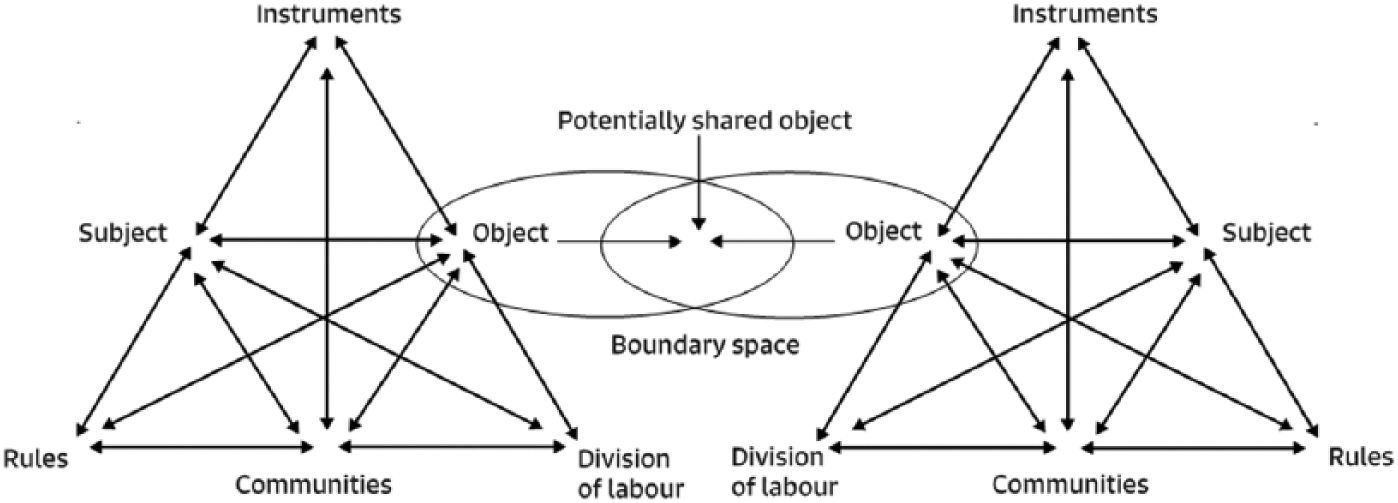
Activity theory: Two activity systems and the overlaps between them.
It has rarely been my experience that a single theoretical source is sufficient to meet all my needs during interdisciplinary work. The following writers and researchers have supplemented my use of CHAT in my research. Generally, I seek out theoretical ‘frames’ that help to sharpen my focus on key elements of my area of work. In my sustainability research, these ideas have been influential.
Christine Halverson
Christine Halverson’s paper (Halverson, 2002) has been important in my thinking because it describes and argues for different ways in which theories can be used by social scientists and arts and humanities researchers, and articulates why theory is useful. For example, she explains how theory can be inferential and provide directions for investigation, and so guide inquiry. Theory can also be descriptive: researchers can focus their research using theory as a lens, and theoretical language helps to speak about what they find. Theory can be rhetorical, providing coherence, language and confidence with which researchers may discuss matters. Halverson also argued that theory can help in applying findings to the real world, and support practical issues such as implementing learning designs arising from our work.
Stephen Ball
In his seminal paper ‘Intellectuals or technicians’ (1995), Ball explores the role of theory in a wide-ranging and imaginative way, and makes claims for the essential value of theory in educational studies. This is principally to resist the development of more technical approaches to education, but is also more widely about theory’s role in critical thinking. Ball articulated his own deep concerns about the diminishing role of management theory in research. He argued that without theory, educators are vulnerable to becoming technicians of policy implementation. He argued that theorising was a way for researchers to open up spaces for critical thought and reflection, to ‘think otherwise’ (Ball, 1995: 266, 268), and to ‘be disruptive’ (266).
Richard Hall
Hall (2016) argued that we need to establish learning spaces that are collectively shaped by the participants in relation to all aspects of the learning processes. He pointed out that current higher education institutional arrangements tend to make staff and students entrepreneurial subjects, whose labour is ‘enabled through technology’. The use of learning analytics, mobility and flexibility of provision assist in this process. As with Ball, Hall is interested in the extent to which this process can be ‘resisted or refused’, and alternatives created. He argues for the use of technology inside a ‘co-operative pedagogy of struggle’, which asks what education is before asking what it is for, and he inquires into what technology-enhanced co-operative education might look like.
Neil Selwyn
Selwyn (2010, 2012) has argued that social theory needs to be used more explicitly in researching the role of technologies in learning. He points out that TEL, in particular, lacks theorisation of its social settings. He calls for a more critical approach to its use for learning. This is important, particularly in the light of the perspective that regards TEL as having contributed to the worsening of educational environments, climates and relationships in recent years, as universities clamour to zip up and ship out their ‘educational products’ to the global market place via bite-size chunks of e-learning that can be undertaken anywhere, anytime – or so they say – on any topic imaginable (Sclater, 2016: 299).
Naomi Klein
Naomi Klein (2016) has argued eloquently about some of the fundamentals of sustainability. In her essay ‘Let them drown: The violence of othering in a warming world’, she refers to a major peer-reviewed study warning that sea level rise could happen much faster than previously believed. The principal author was James Hansen, to whom she refers as perhaps the most respected climate scientist in the world (Hansen, 2005; Hansen, 2009; Hansen et al., 2008; Hansen et al., 2016). In Klein’s words: He warned that, on our current emissions trajectory, we face the ‘loss of all coastal cities, most of the world’s large cities and all their history’ – and not in thousands of years from now but as soon as this century (Klein, 2016: 12).
‘If we don’t demand radical change’, Klein herself argues, ‘we are headed for a whole world of people searching for a home that no longer exists’ (Klein, 2016: 12).
Conceptual resources 2: My autobiographical Dérives
As a practitioner and educator, I have a long-standing research interest with regard to art and the environment, and I consider that there is an urgent need for our education systems at all levels – not least higher education – to focus more of their attention on addressing the very challenging global environmental crisis with which we are confronted, and how this might be addressed through our learning and teaching practices. I also have a long-standing research interest in TEL, both as an educational practitioner and researcher in higher education. More recently, my research in virtual worlds (e.g. Devlin et al., 2015; Lally and Sclater, 2012) has been exploring how technology can enable educators to develop pedagogies of sustainability in the art and design education community (Sclater, 2016). This work has included helping to sustain learning communities in engaging in creative and open investigation with regard to matters of concern (such as the environmental crisis), and in developing learning spaces to support these communities and their dialogue. As part of my aesthetic and conceptual journey, I have been personally influenced by the work of Richard Long, Joseph Beuys, Agnes Denes, Andy Goldsworthy, Ian Hamilton Finlay and Katie Paterson. This is not a comprehensive list, but these are the artists whose work has really resonated with me profoundly over a long period, not least because I have personally visited some of their work. I made Dérive journeys in 2017 to art museums and sites in the UK and Europe that have enabled me to reflect upon the interrelationship between sustainability, technology, aesthetic experience and art and design education. The purpose of these Dérives was to support my own aesthetic nourishment and provide sustenance for my active engagement in the development of pedagogies of socio-ecological sustainability within our discipline of art and design. So, now for my journeys. I began in the Tate Modern in the cold winter in February of 2017.
First Dérive: Influential artists – Joseph Beuys, Tate Modern, London
The performance artist, sculptor, installation artist, graphic artist, art theorist, pedagogue and environmentalist Joseph Beuys has been a major influence on my thinking. I was delighted to come across some of his work in the Tate Modern (Figure 2), including some of the videos in which he is seen to be debating the purpose of art in society. From roughly the 1950s through to the early 1980s, Beuys demonstrated how art might originate in personal experience yet also address universal artistic, political and/or social ideas (i.e. topical issues of the day). This way of thinking connects with the theories of Vygotsky and Dewey, in which both individual aesthetic responses and societal concerns are addressed through art. Here are two important quotes with Beuys reminding us about the purpose of art. In a nutshell, art cannot be art if it does not work transformatively with our current culture.
Art can no longer be art today if it does not reach into the heart of our present culture and work transformatively within it. (Joseph Beuys) (Galschiøt, 2017) Every human being is an artist, a freedom being, called to participate in transforming and reshaping the conditions, thinking and structures that shape and inform our lives. (Joseph Beuys) (Beuys, J, 2018)
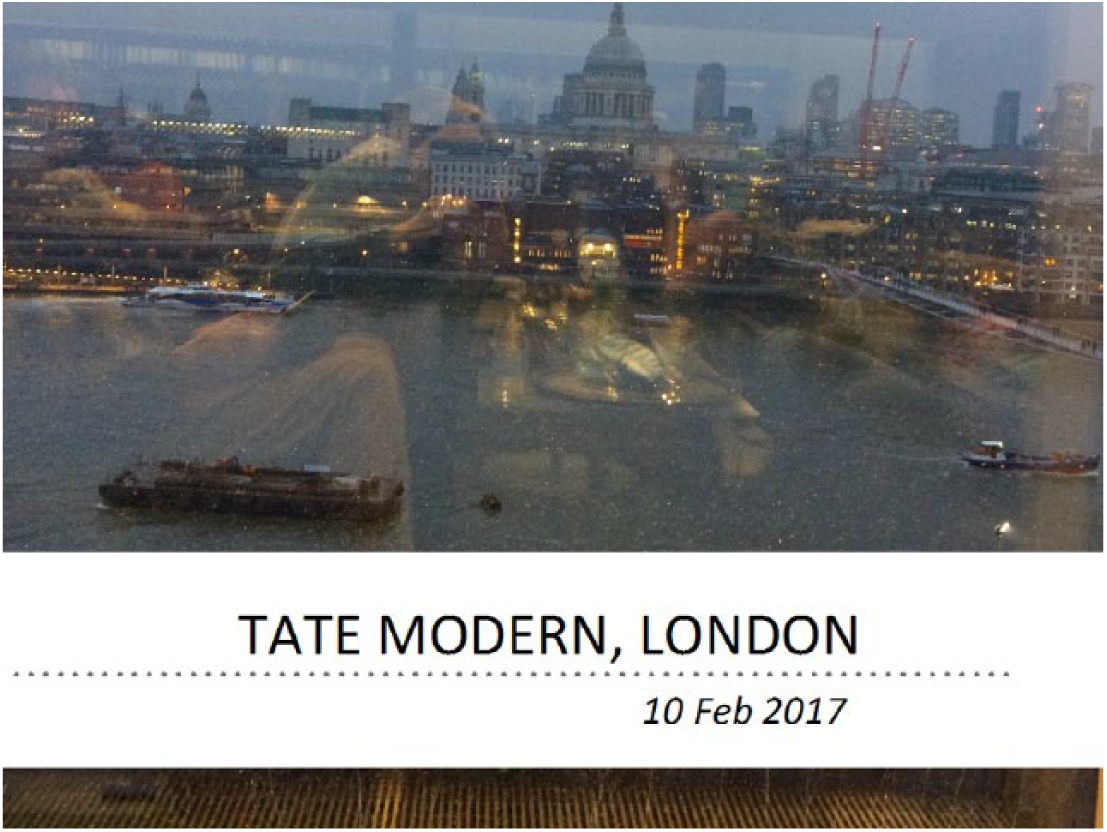
First Dérive to Tate Modern, London, 10 February 2017.
One of his works particularly resonated with me because I feel it is particularly relevant to my own concerns. In his artwork 7000 Oaks, he planted oaks in Kassel (Germany), each paired with a basalt stone, with the help of volunteers. This was featured in a documentary exhibition that was shown in Dusseldorf (Germany). The project was of enormous scope and extended over many years. In this quote, Beuys talks about the significance of the oak trees (Cooke, n.d.): I believe that planting these oaks is necessary, not only in biospheric terms, that is to say, in the context of matter and ecology, but in that it will raise ecological consciousness – raise it increasingly, in the course of the years to come because we shall never stop planting. (Joseph Beuys)
Second Dérive: Influential places – botanical gardens, Crete
My next Dérive was to the botanical gardens in Crete in July 2017 (Figure 3). I am deeply influenced by gardens and plants, and I was struck by the diversity as well as the beauty of the location and the planting. Whilst walking in the garden I came across a weighing scale (Figure 4) (hanging from a tree), which reminded me that whatever we do in the world – I am relating this to artistic research, but it can be equally applied to other areas of human endeavour – we should have the ideal of good balance, with risk always needing to be considered. Any intervention, particularly one that leaves a physical mark on the world, needs to be considered in terms of its impact. This scale is a metaphor that captures this.
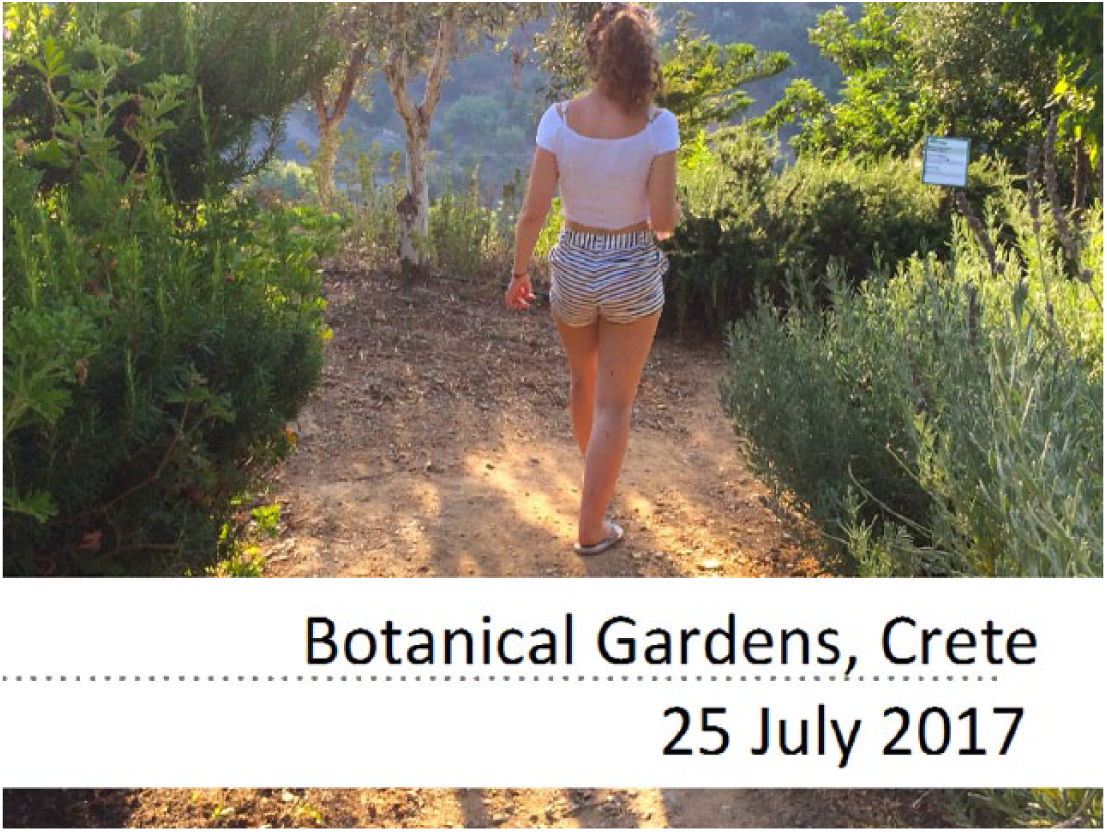
Second Dérive: Botanical gardens, Crete, 25 July 2017.
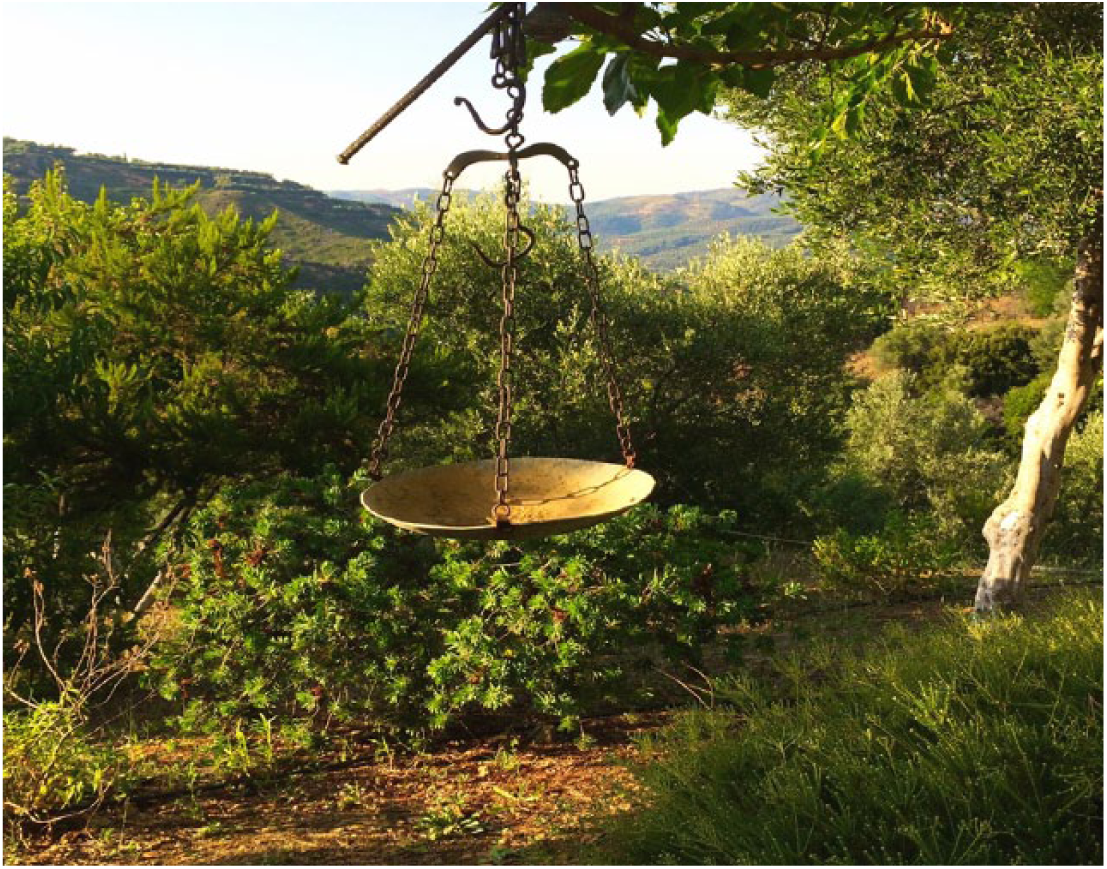
Second Dérive: Image of weighing scale, botanical gardens, Crete, 25 July 2017.
I also came across the sign ‘Nature is the largest Pharmacy in the world’ (Figure 5) in the gardens which I think has a double meaning. On my first reading, I understood it to mean that as individuals and societies who make up the world we need to take care of our plants because they are our medicine; without them we cannot survive. On reading the sign a second time I understood it to mean that nature is there for large pharmaceutical companies to plunder and make large profits.
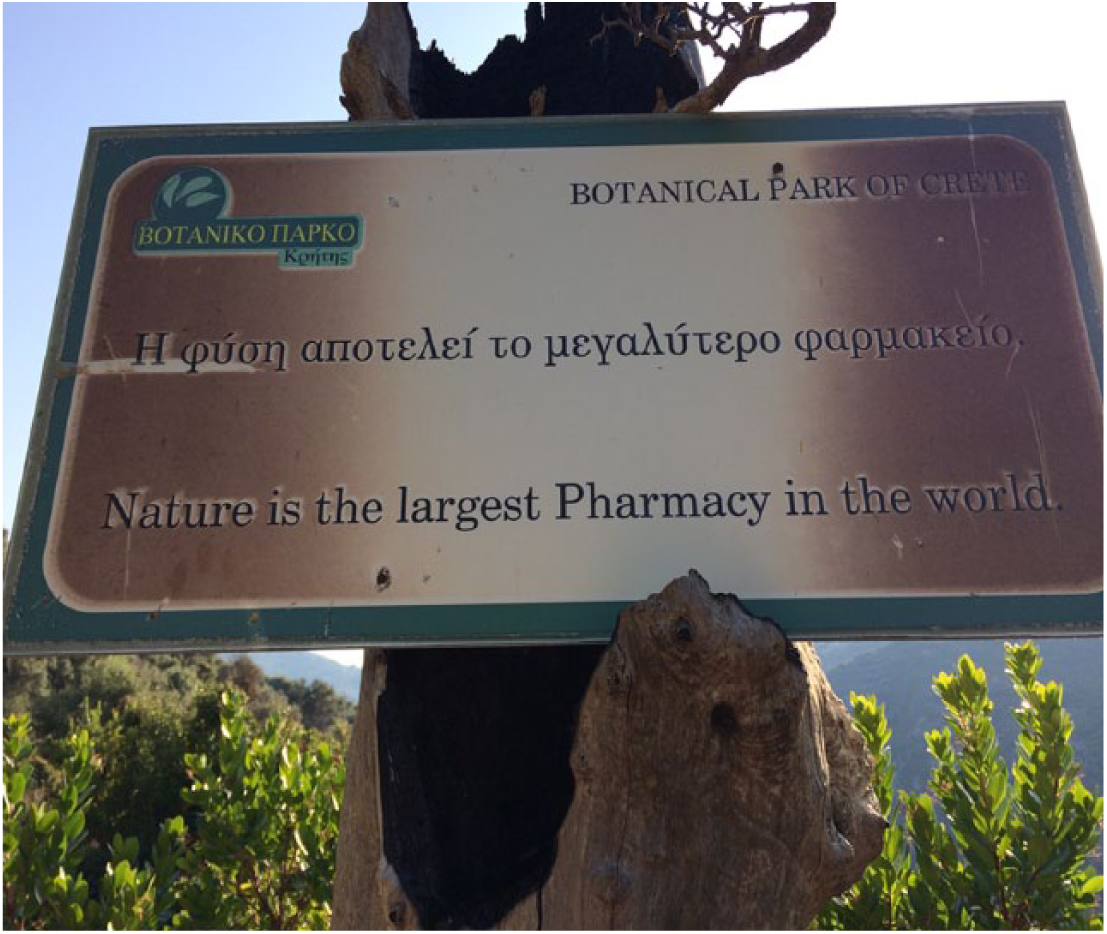
Second Dérive: Sign located in the botanical gardens, Crete, entitled ‘Nature is the largest Pharmacy in the world’, 25 July 2017.
Third Dérive: Influential places – Sagrada Familia, Barcelona
In July of 2017 I visited Gaudi’s famous Sagrada Familia in Barcelona (Spain) for the first time (Figures 6 and 7). This majestic basilica reminded me of the tremendous creativity of the human spirit and that creativity is often stimulated by the collective thinking of more than one person, as with this very grand building that has had teams of people from all disciplines working on it for decades. This hugely ambitious interdisciplinary project, which also included a major technological component (for example, the modelling of the acoustics), is due to be completed in 2024 (having begun in 1882). I have included images of this basilica here because the whole experience was for me extremely moving. I was awestruck by the beauty of the building and the sheer ingenuity and complexity of the construction. For me it represents a metaphor of the creative human spirit: if people and communities focus their minds and energies, they can achieve important goals, such as addressing the challenges of climate change. In addition, it reminded me that we need beauty, and that sometimes resting in the beauty of art for its own sake is needed to galvanise social action. Gaudi’s basilica is a tour de force of interdisciplinarity in these ways.
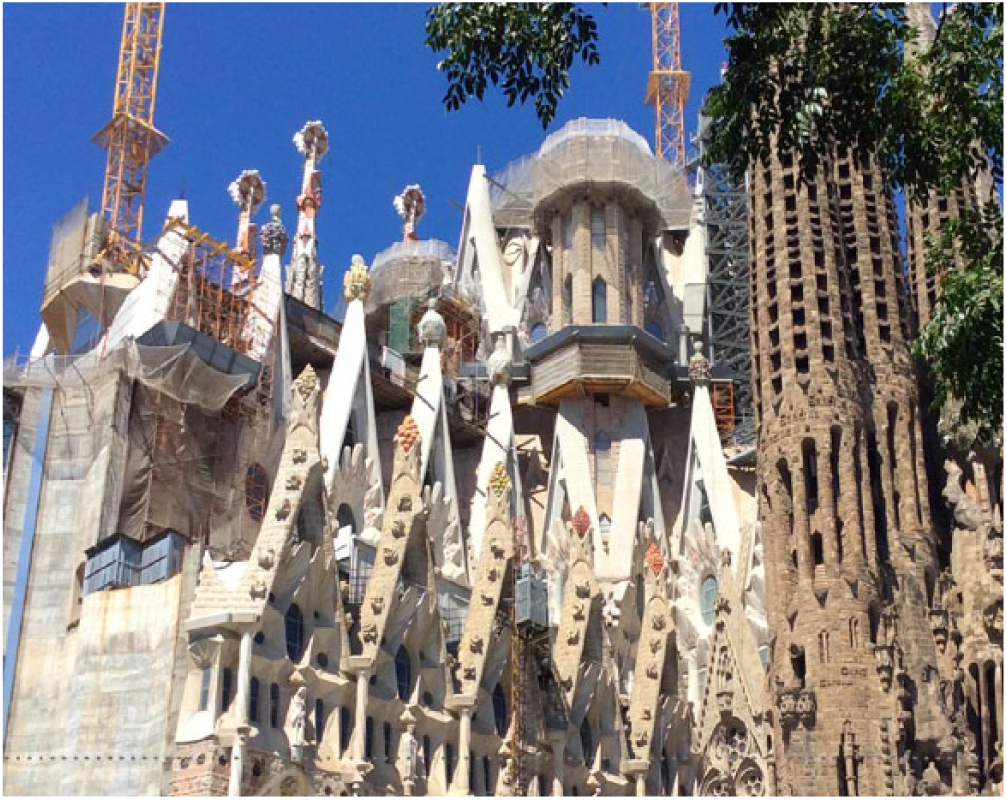
Third Dérive: Exterior of Sagrada Familia, Barcelona, 7 July 2017.
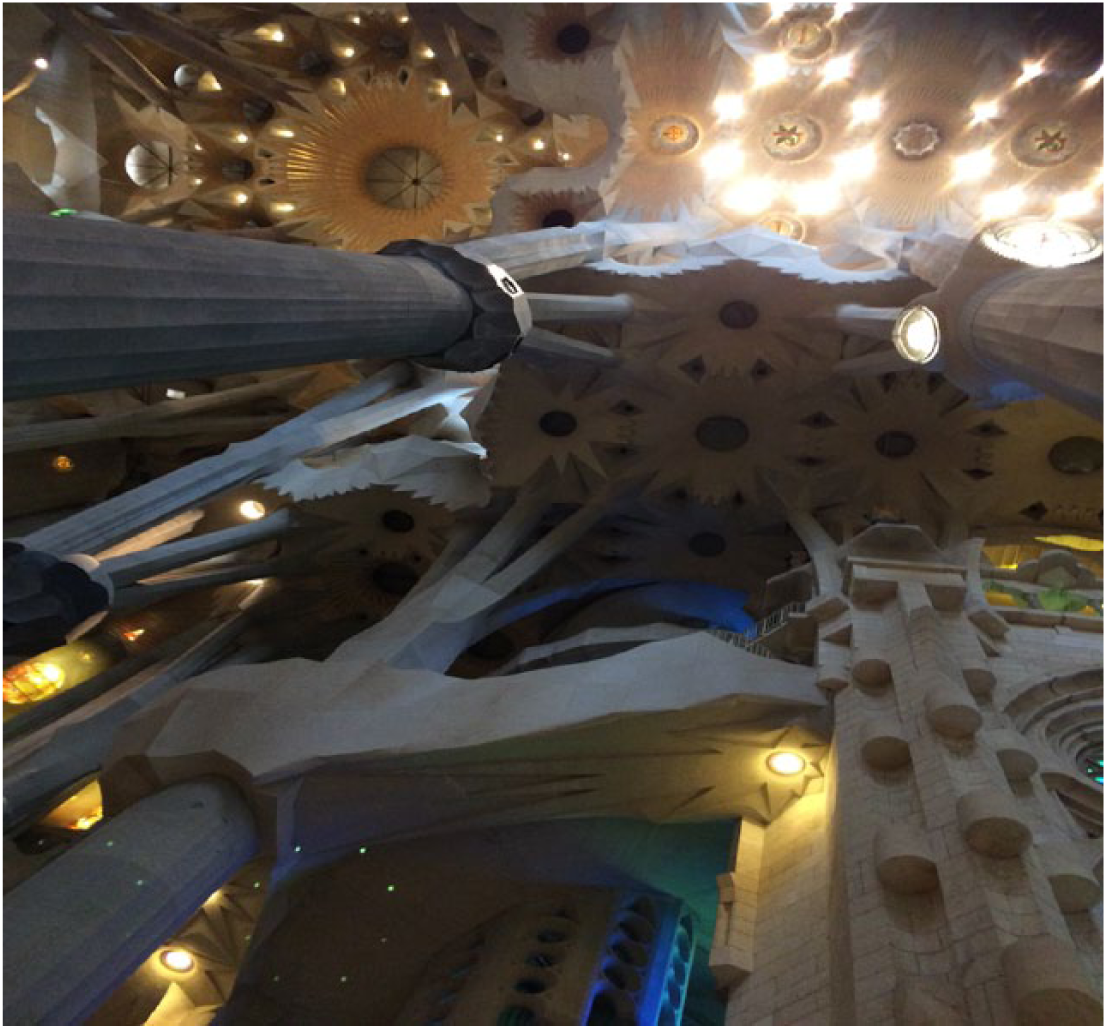
Third Dérive: Interior of Sagrada Familia, Barcelona, 7 July 2017.
Fourth Dérive: Influential artists – Joan Miró
My next visit was to the Miró Foundation in Barcelona (Figure 8). Miró, in his own words, saw the role of the artist as ‘someone who, amidst the silence of others, uses his voice to say something, and who has the obligation that this thing not be useless, but something that is of service to mankind’ (Prodger, 2011). The work in the Miró Foundation reveals that almost until the day he died, on 25 December 1983, Miró continued to produce works of art with a profound aesthetic and social content. In November 1958, the French artist, author and art critic Yvon Taillandier had a conversation with Miró (then aged 65) about the artist’s creative process and his philosophy on art. The result was Miró: I Work Like a Gardener (Miró, 2017), a bilingual volume in French and English, originally published as a limited edition of 75 copies in 1964. This book remains the most extensive account of Miró’s ideas on art.
For me an object is alive; this cigarette, this matchbox, contain a secret life much more intense than certain humans. I see a tree, I get a shock, as if it were something breathing, talking. A tree too is something human.
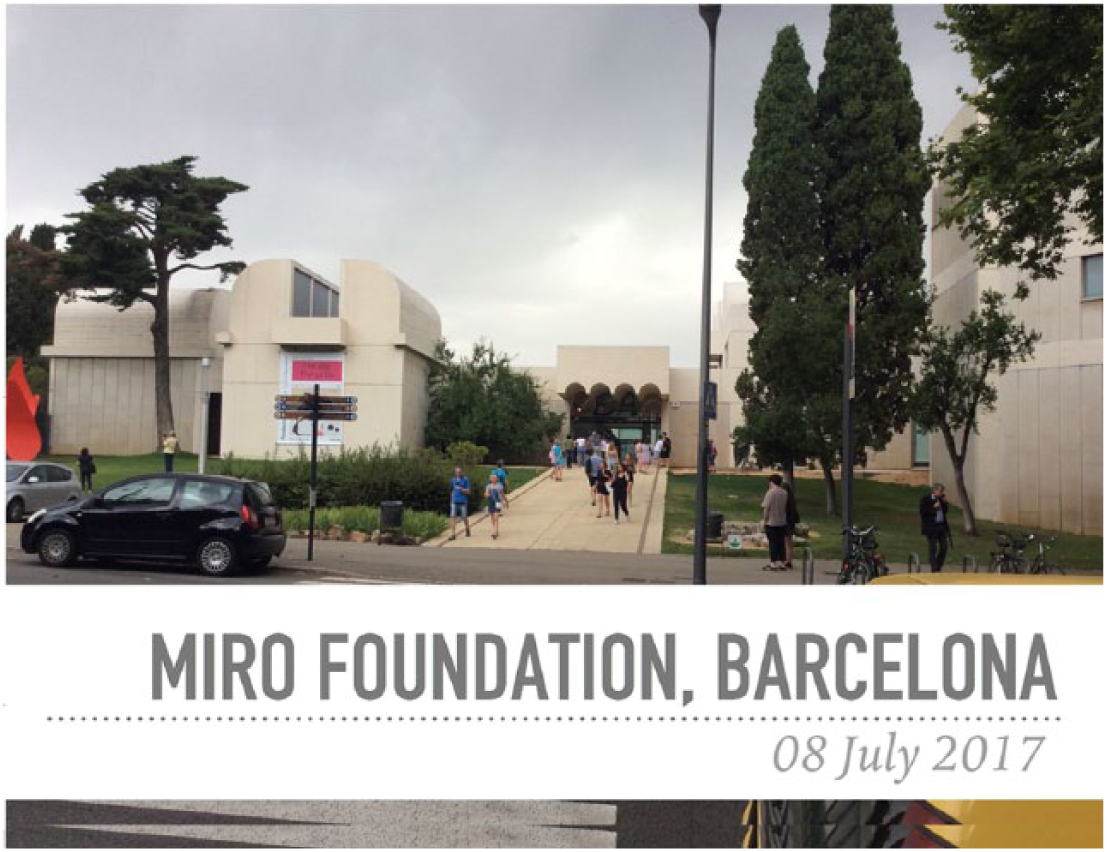
Fourth Dérive: Jean Miró Foundation, Barcelona, 8 July 2017.
I was also particularly affected by the playfulness of Miró’s artistry (Figure 9) and the joy and vibrancy of his colours, and was totally immersed in the experience of the work in the Miró Foundation. Again, like my encounter with the Sagrada Familia in Barcelona, I was fully engaged in looking, an experience that made a significant impression on me.
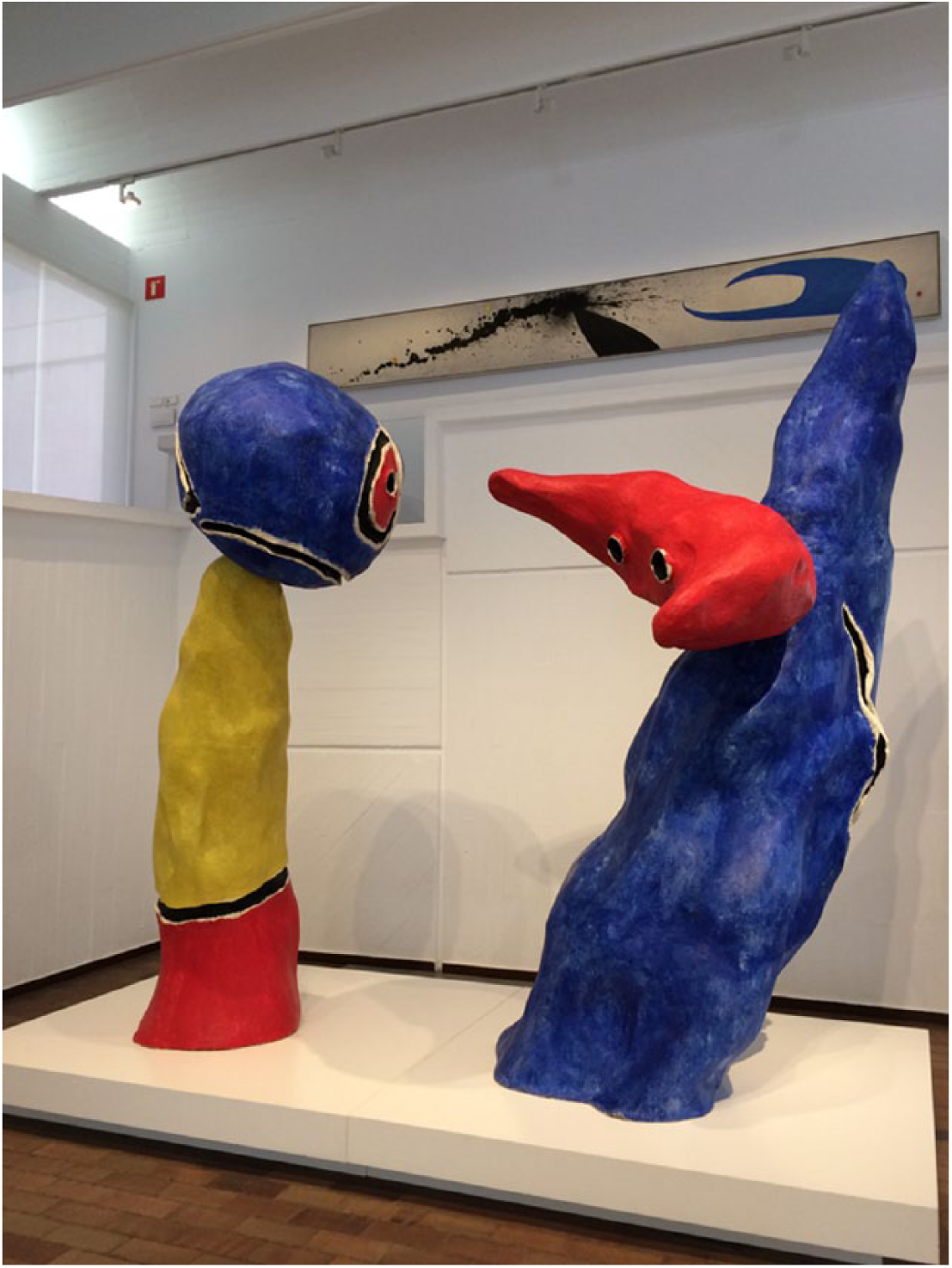
Fourth Dérive: Pair of lovers playing with almond blossoms. Model for the sculptural group at La Défense, Paris, 1975. Jean Miró Foundation, Barcelona, 8 July 2017.
Fifth Dérive: Influential places – Kew Gardens
In late July 2017, I visited Kew Gardens (Figure 10) to view The Hive, a fascinating 17-metre-tall metal structure resembling the shape of a beehive and set within an abundant wildflower meadow (Figure 11). This multisensory installation, designed by the UK-based artist Wolfgang Buttress, has been inspired by scientific research into the health of honeybees, and includes a circular glass viewing platform offering magnificent views of Kew Gardens. It provides an immersive sound and visual experience for visitors. The Hive is an intriguing steel structure composed of a multitude of hexagonal shapes on to which LED lights are geometrically positioned to mimic a honeycomb structure. It offers two levels of viewing for the visitor: ground level, which permits the viewer to look up through a circular glass ceiling into the complexity of the steel beehive structure above; and higher up, where the viewer is invited to enter the enveloping structure of the beehive and experience the myriad reflections in the glass floor. Whether situated underneath the structure or above on the circular glass viewing platform, one cannot miss the pulsating LED lights synchronised with a symphony of deep sounds resembling a ‘hum’, which rises and falls in accordance with the real-time activity of the real bees in the natural beehive located behind the scenes at Kew. The installation represents an interdisciplinary collaboration between artists, musicians and scientists.
Fifth Dérive: Kew Gardens, 31 July 2017.
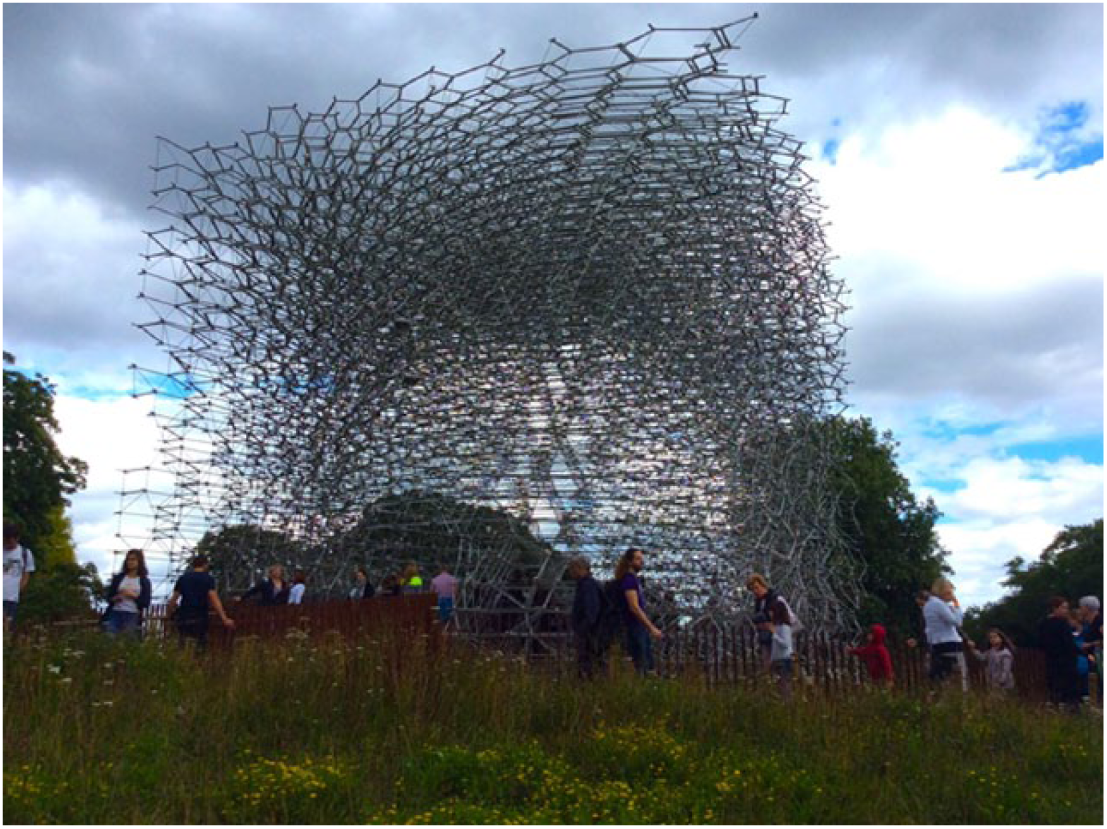
Fifth Dérive: External view of The Hive taken from the wildflower meadow, 31 July 2017.
I was awestruck by the highly immersive nature of the experience and the complexity of the structure. Just like my immersion in the exercise of photographing the interior and exterior of the Sagrada Familia, The Hive was equally fascinating to photograph. In both settings, I spent many hours engrossed in taking pictures and I was captivated by the way in which visitors of all ages (Figure 12) were engaging with the structure and with each other. These structures were immersive learning experiences – multisensory, interdisciplinary and interactive – provoking thoughts and feelings that helped to make real human meaning of the underlying sustainability issues. My learning in these settings was informal and highly social; The Hive was making scientific ideas accessible to a very wide range of ‘participants’. The aesthetic experience created a conduit though which meaning could be made of complex issues.
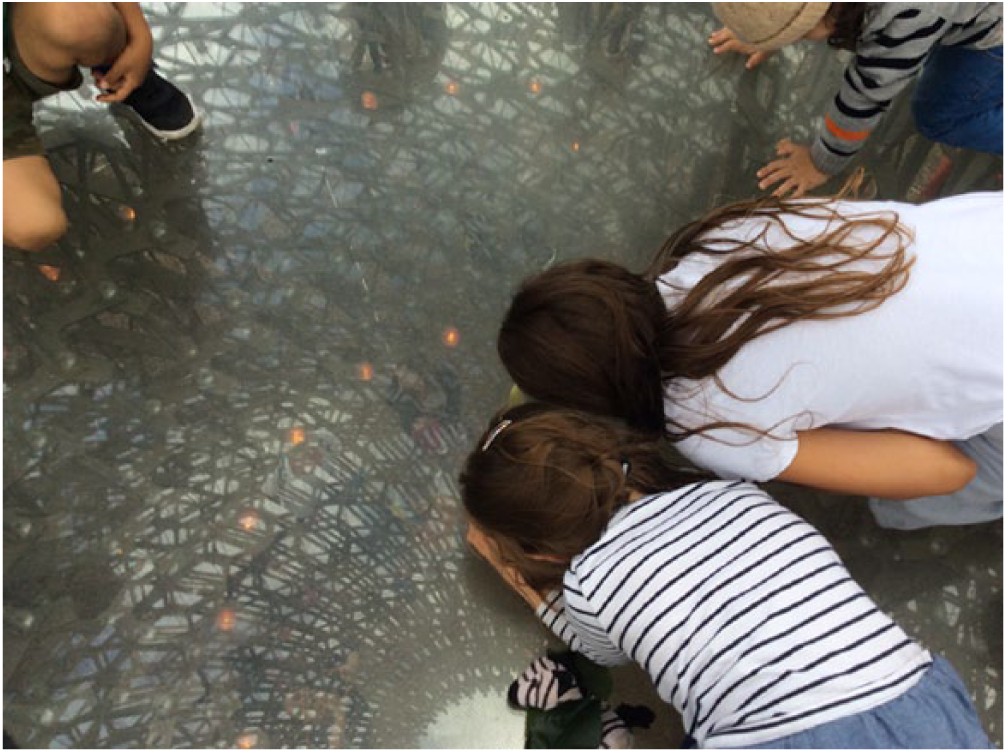
Fifth Dérive: Children looking through the glass platform of The Hive, 31 July 2017.
Conceptual resources 3: TEL
In assembling conceptual resources for the development of my socio-ecological sustainability research I will also draw upon the extensive interdisciplinary TEL research I have undertaken in virtual worlds (see the Inter-Life project reported in Lally and Sclater, 2012; Thomas and Brown, 2009)). One aspect of this has been to facilitate settings in which participants are engaged in the construction of material culture, such as the development of creative artefacts and environments, which I have shown can act as mediators of learning. In relation to sustainability pedagogies these artefacts can mediate and mobilise the expression of meaning with regard to issues of concern to learners. At the start of the Inter-Life project, the researchers, in collaboration with the young people involved, generated a list of ‘issues’ and the young people were invited to research these issues, choosing one that was of personal interest. This process included a discussion around many aspects of the issue in question, and involved the sharing of interests and contextual expertise. The discussions included thinking about and addressing social challenges. The research team also engaged the young people directly in the project planning, teaching and evaluation process. During the project, the young people made several films together, focusing on a wide range of relevant topics that encapsulated the shared experiences of group concerns. Through these activities, we concentrated on the development of ‘meaning-making’ through textual interactions, film-making, photography and writing, to help the young people negotiate the challenges of their concerns in their own lives. The activities with which young people engaged were designed to help them make sense of their experiences, to facilitate critical enquiry and to engage in relevant problem solving. In any learning enterprise in which technology is being used there is a need to adopt a critical approach (Selwyn, 2010; 2012) to its use, for example, where the educator seeks to embed a consciousness of socio-ecological sustainability.
Concluding comments
My major concern in this article has been to address the challenge of developing engaging pedagogies to support the project of addressing socio-ecological sustainability across disciplines in higher education. I have collected together three kinds of conceptual resources: theoretical influences that provide a range of lenses through which I can focus on my research concerns and pedagogical developments; methodological innovations, principally the use of the Dérive and a narrative approach; and real-world aesthetic resources derived from gallery visits, an architectural exploration and interactive, scientific visits to major botanical gardens in Europe. I have also briefly outlined the importance of research resources derived from my own interdisciplinary work in virtual worlds (TEL). For me, these explorations and resources have led to a fusion of ideas drawn from my own empirical research as well as my personal experiences and observations in the real world. One of the most significant outcomes from my Dérive experiences has been a reminder of the power of aesthetic and emotional responses as part of learning activities (Marshalsey, 2015; Sagan, 2008). The blending of both digital and analogue conceptual resources has synergised my own thinking about pedagogies of sustainability, and increased my understanding of the importance of engagement with the real world, the role of emotion in learning and the power of experiential learning.
In terms of promising pedagogical designs, this research has increased my sense of the importance of personal journeys. Personal and collective responses to artwork can act synergistically, as the presence of visitors between the ages of 3 and 83 so dramatically demonstrated at The Hive. Community learning and individual learning are inextricably linked in these informal settings, as evidenced by the Dérives presented in this article. My research strives to answer the question: how do we educate for sustainability? In this article, I have provided evidence that arts-based educational research methods and major cultural resources provide very rich learning experiences extending across disciplinary boundaries that can be crafted into pedagogical practices to help orientate learners of all levels to issues of sustainability.
Footnotes
Declaration of conflicting interests
The author(s) declared no potential conflicts of interest with respect to the research, authorship, and/or publication of this article.
Funding
The author(s) received no financial support for the research, authorship, and/or publication of this article.