



Abstract
This paper uses a comparative methodology to examine the teaching of abstraction in two mathematics lessons, in Denmark and England. In doing so it aims to extend previous work by the authors, examining the effect of local, cultural issues on the form of teaching in order to understand how these also affect the subject content too. The analysis draws on two theoretical frameworks: the work of Hazzan and Zazkis to make sense of mathematical abstraction; and of Bernstein to provide a framework for examining pedagogic discourses at classroom level. The work compares two lessons, one each in England and Denmark, drawing out the ways in which teachers’ situated activities help to construct different versions of the subject matter – mathematical abstraction in this case. We assert that as well as abstraction being a practice which is constructed socially, cultural practices also mean that this is done differentially for, and by, groups of pupils and their teachers in ways which are likely to exacerbate the former’s differences, not reduce them. Some implications of this insight are discussed at the close.
Introduction
Our purpose in writing this paper is our interest in why students in various international contexts appear to fair so differently with mathematics. This is a question that concerns policy makers, strongly driven by the outcomes of international testing programmes such as the Performance in Secondary Assessment (PISA) (Organisation for Economic Cooperation and Development, 2001). The macro picture of international comparisons, which tends to be their focus, makes for good political rhetoric but tells us little about the classroom-level mechanisms from which it is built up; mechanisms that are of real importance since it is ultimately at the level of practice that changes must be enacted.
It is these mechanisms that we explore in this paper. Our approach is comparative, focusing on Denmark and England, countries which have school systems which are superficially similar enough to make comparison possible, but with important differences at the level of their social and cultural discourses. These we claim, allow researchers to understand the relationship between such discourses and practice at ground level. By comparing schooling between the two countries we illuminate differences and similarities both between and within the education systems from which to draw implications about how pupils’ learning is culturally situated. Because learning as a whole presents too grand a task and ‘pupils’ too large a group, we focus specifically on two elements. In disciplinary terms our focus is on mathematical abstraction as a particular example (and for specific reasons, laid out below); in terms of pupils it is on ‘low attainers’ in the English context – where this phrase means the attainment achieved, and/or predicted of them by teachers, in tests. Danish pupils, by contrast, are not categorised in this way and certainly not placed in sets accordingly and hence in this context the pupils are ‘mixed-ability’ in English terms.
Our previous work (Dorf et al., 2012, 2013; Kelly et al., 2013b, 2013c), on which we build here, has led to an interest in the following questions which frame this study.
What constitutes school subjects – in this case mathematical abstraction – in each country and for different groups within countries?
How are such subjects constructed through pedagogy?
How does this construction afford and constrain success and failure, with a particular interest in the notion of perceived pupil ‘ability’?
Our interest is therefore in mathematics as a cultural relay (Bernstein, 1990, 1996) in reproducing (in)equality in schools. Through our analysis we hope to illuminate the way in which what mathematics is to pupils and teachers, and how they come to learn it within the particular policy framework of schools, play out in the activity of mathematics pedagogy. To be clear though, this paper is not about comparison; rather, comparison is the tool that we use to examine abstract mathematical thinking and its relationship more generally with policy in different sociocultural settings. The paper has the following outline. Having briefly explained the comparative context of the two countries involved it explores, in some depth, the nature of abstraction as a mathematical process vital to success in the subject before laying out the theoretical framework within which the work is set. Then, the methodology for our study is outlined before describing lessons in two classrooms, one from each country, as examples of practice. These allow an analysis which we think opens up an understanding of the ways in which subject disciplines, as well as pedagogical form, can be mediated through local cultural practices. The paper then closes with a brief discussion of some of the implications of these observations for practitioners and policy makers.
The comparative context
Differences in education contexts and cultures between countries mean children can have quite different experiences of school mathematics. This is the case with Denmark and England. Broadly speaking, whereas the English tradition is for individualised teaching (Goodson and Lindblad, 2011), Danish schools have traditionally placed a high importance on the group (Osborn, 2004). Thus, English teachers tend to focus on providing a highly differentiated programme whilst Danish teachers often allow students to find their place in work common to the class. Moreover, in recent years English schools have focussed on promoting student attainment on national tests because of the importance placed by successive governments on the progressive improvement of students’ test scores (Ball, 2008), policed by The Office for Standards in Education (Ofsted – the English schools’ inspectorate). Such outcomes have been shown to have a strong effect on both teachers’ and pupils’ pedagogical behaviour (Gillborn and Youdell, 2000; Keddie, 2016; Pratt, 2016). In contrast, since the 1970s, educating for democracy has been a dominant goal for schools in Denmark – though it should be noted that this situation is changing with current teachers increasingly being required to improve students’ performance on national tests, introduced in 2010 (Andreasen and Hjörne, 2013; Andreasen et al., 2015).
Our work therefore concerns the realities of teaching embedded in the practicalities and messiness of routine practice (Kelly et al., 2013a). We have worked with eight mathematics teachers in England and eight in Denmark, the former all teaching in state community colleges with the latter in public folkeskoler. Each teacher was observed teaching pupils aged 12–13 years and interviewed twice, as was a focus group of their pupils in order to compare mathematics teaching and the values and understandings underpinning it in these two countries. The full findings of this study are reported elsewhere (Kelly et al., 2013b; see also Dorf et al., 2012, 2013; Kelly et al., 2013a) and in them we draw on Bernstein (1990, 1996) in showing how teachers mediate the many influences on their teaching practice, separating broad socio-political influences, which serve to recontextualise and pedagogise knowledge and ways of knowing, from teachers’ individual mediation within institutional contexts. We also illustrate how, in doing so, mathematics teaching results not from teacher actions alone but from an interaction between teachers and pupils.
Whilst interesting, up to now this work has been broad in its outlook, focusing on pedagogical form; but pedagogy involves a subject discipline too and it is this that we address in the current paper. Doing so immediately problematises the relationship between the two. In terms of the former we make use of Alexander’s definition of pedagogy as ‘the act of teaching and the discourse in which it is embedded’ (Alexander, 2001: 507) in order to be able to talk about teaching as a socially and culturally situated activity across different comparative contexts. Within this definition, the subject can be seen as part of the (specialised) discourse of teaching. To tackle this, we draw on two theoretical sources: firstly, on a conceptual analysis of mathematical abstraction based on the work of Hazzan and Zazkis (Hazzan, 1999; Hazzan and Zazkis, 2005); and, secondly, Bernstein in relation to the nature and pedagogic role of discourses.
Mathematical abstraction
One reason for choosing abstraction as the conceptual focus of this paper is that in everyday discourse at least, it represents the very antithesis of something situated in a cultural context. Indeed, the Concise Oxford Dictionary defines both adjectival and verb forms as, adjective. Separated from matter, practice, or particular examples, not concrete; ideal, not practical. verb. Deduct, remove; disengage from.
The two forms are worth noting here. We can say that an idea can ‘be abstract’, and that we ‘can abstract’ an idea from something. In both forms though, the sense is in moving away from the practical and concrete.
In mathematics more specifically, abstraction takes on further particular forms. Hazzan and Zazkis (2005: 103) categorise ‘levels of abstraction discussed in the literature’ as follows:
(A) abstraction level as the quality of the relationships between the object of thought and the thinking person,
(B) abstraction level as reflection of the process–object duality, and
(C) abstraction level as the degree of complexity of the concept of thought.
Throughout the rest of this paper we refer to these as type A, B and C abstraction, respectively. Taking each of them in turn, A refers to the way in which an individual responds to mathematical ideas, the feelings they have towards them and the dispositions they bring to mathematical activity. In this conception abstraction is not seen as being ‘in’ the mathematical entity, but in the relationship the person has to it; the closer the personal experience one has had the more familiar mathematical ideas feel and the less abstract they are. This notion of abstraction therefore focuses on an individual’s comfort or discomfort with mathematical ideas that are more, or less, familiar to them. It is important to note that unlike B and C below, in English daily usage this construction of abstraction is more likely to be seen in negative terms; ‘abstract’ often being used pejoratively, and as an adjective, to describe an unwanted incomprehensibility and inapplicability in contrast to things that are ‘real’ and ‘useful’.
The second, type B, draws on the notion that mathematical ideas can be understood both as procedures and as objects (Gray and Tall, 1994; Gray et al., 1999; Sfard, 1991), and that effective mathematical thinkers can switch between these states, operating with both the procedure and the concept, and hence being able to think ‘proceptually’. A very simple example of this is addition, say 3 + 4 = 7. One understanding of this is as a procedure – the act of counting to three and then counting on four more, or later starting at 3 and counting on four. Note though that in the latter procedure ‘three’ has become an (abstract) concept since one can only ‘start at it’ if one perceives it as such. Moreover, ‘3 + 4 = 7’ later allows the mathematician simply to mentally replace 7 with 3 + 4 or vice versa. The symbols now represent ideas, not procedures, and so increasing abstraction means increasingly being able to operate at the conceptual level rather than (only) with the procedural. ‘Abstract’ in this form is a verb rather than being adjectival – one becomes able to abstract the concept from the procedures it originated in – and allows users to condense a long-winded procedure into a concise idea, and hence reduce the cognitive demand involved in calculation. Such compression, once mastered, simplifies mathematical tasks and hence is vital for continued success in the subject.
Thirdly, in type C, the idea of increasing complexity draws on the notion that mathematical objects build on each other so that (say) multiplication has addition and counting buried within it – metaphorically like Russian dolls. Increasing abstraction here implies the development of a more complex object with a greater number of previous concepts built into it (more dolls inside). It thus invokes a model of mathematics that is linear; each step in the process of learning mathematics involves building on the last one. It is also adjectival, but without the English negative connotations of type A.
It is important to point out that we do not suggest that any or all of these represents truths about mathematics. Conversely we see all of them as different social constructions and, moreover, constructed in and through the discourses within which they come about. As we shall see, it is through this mutual interaction between abstraction as an idea and pedagogy that we are able to make sense of relationships between policy at the macro level and classroom activity.
To begin to make sense of teaching in this way we note that whilst each of the conceptions of abstraction can be articulated independently, they also interact with each other in a number of ways which hold implications for the teaching and learning of mathematics. Not least is Sfard’s (1991) analysis of the process of abstraction which draws B and C together. Sfard notes the complex nature of the move from one level of abstraction to the next. As type B above makes clear, abstraction involves a process of reification – where something that was previously understood procedurally becomes reified as an object. However, this process of reification cannot happen spontaneously; it begins with a process of ‘interiorization’ (Sfard, 1991: 18) – experimenting with the ways in which an idea works in relation to previous mathematical objects that one has already made sense of. Then, reification of the new idea requires the learner to have some purpose, say a problem to solve as part of his or her developing understanding, during which time the concept can be understood afresh as an object because of the way in which ‘it’ (note the objectification here) operates in the new mathematical realm. However, Sfard points to an important paradox here because to work at the ‘higher’ level one must use the ‘lower’ mathematical concept as an object in the new procedure. But simultaneously, it is not until one tries working at the higher level that there is a need for this reification as one ‘plays’ with the new idea to try to make sense of how it works. Thus, paradoxically, as Sfard notes (1991: 31), ‘the lower-level reification and the higher-level interiorization are pre-requisites of each other!’
Thus, whilst Sfard’s psychological analysis shows how types B and C of Hazzan and Zazkis’ model are connected, it also implicitly points to a connection with A. The paradoxical nature of abstraction requires learners to undergo an ontological shift; suspending their belief in what the mathematical idea is so that they can see it, ontologically differently, as part of something else. For learners to be successful in processes of abstraction they must therefore be willing to have a particular relationship with mathematical ideas. In as far as letting the familiar become unfamiliar is seen as increasing the level of abstraction, learners must be willing first to allow an idea (understood as a procedure) to become more abstract in this sense of unfamiliarity as it moves from procedure to object, before familiarising oneself with it again as an object in a new mathematical process (Mason, 1989). Put another way (and deliberately tautological to illustrate the point), to successfully draw out abstractions one must first allow it to ‘feel more abstract’ (A) in order to be able ‘to abstract’ it (B) into ‘something more abstract’ (C), which ought then to ‘feel less abstract’ (A)!
Our point in describing this is not to play tautological games, but to illustrate that the business of abstraction, so often associated in common social interactions with ‘cold’ and emotionless mathematicians, is actually inherently social and potentially emotionally charged. This emotional element to mathematical activity is well-documented both in relation to professional mathematicians and school pupils. For example, Singh’s (2012) account of the proof of Fermat’s Last Theorem by English mathematician Andrew Wiles vividly illustrates both the intellectual and emotional challenge of a seven-year struggle and Burton (1999, 2001) also describes such experiences in relation to university mathematicians more generally. Meanwhile, pupils’ – largely negative – experiences of school mathematics are well described in Nardi and Steward (2003). Our analysis, then, aims to examine how the idea of abstraction is constituted in different ways in culturally different classrooms.
Examining pedagogical relations
The purpose of considering abstraction in such detail above is to move on from our previous focus on culturally different pedagogical form (e.g. Kelly et al., 2013c) to illustrate how the subject focus of pedagogy and form interrelate. Our aim is to understand not just how teachers and pupils act but how this forms part of a construction of the subject of mathematics itself that is different in each context and then, crucially, to consider how this illustrates a mechanism by which social injustice might be replicated. In brief, an analysis of pedagogy requires an analysis of practice embedded in discourse (Alexander, 2001) and in our previous work we have explored the form of practice by identifying teacher and student roles (see Kelly et al., 2013a, 2013b). Note that these do not exist independently of the actors in their context, but are entirely our constructions to describe the relationships we see in patterns of behaviour, allowing us to conceptualise teacher roles as characterizing the act of teaching whilst acknowledging its situated and reciprocally defined nature. These roles are articulated using Bernstein’s model of pedagogic discourse (1990, 1996), involving instructional discourse – the content, sequencing and pace of teaching and the approach to and focus of assessment; and regulatory discourse – the management of who does what (the division of labour) and ensuring the behaviour is appropriate in the context of the school classroom. Pedagogic discourse prompts us to articulate roles and by looking at this across nations we can compare it; focusing here on the way in which the subject content of pedagogy is constructed through its more general form.
Whilst the approach outlined above allows an analysis of pedagogic form, to address the subject discipline we conceptualise it as part of the specialised discourse of teaching and we draw on another of Bernstein’s theorisations: that of vertical and horizontal discourses. Bernstein (1999; see also Bernstein and Solomon, 1999) articulates these as follows. Horizontal discourse relies on common sense knowledge and ‘is likely to be oral, local, context dependent and specific, tacit, multi-layered, and contradictory across but not within contexts’ (Bernstein, 1999: 159). Crucially, it is ‘segmentally organised’, that is, knowledge associated with this discourse is organised around specific, and non-connected, contexts in which meaning may be different, dependent on the context in question. In contrast, ‘a vertical discourse takes the form of a coherent, explicit, and systematically principled structure, hierarchically organised, as in the sciences’ (Bernstein, 1999: 159). One key corollary of this distinction is in the way in which knowledge in each becomes integrated. For the horizontal discourse, integration comes about through the connection of previously separate contexts; but for the vertical discourse integration is ‘at the level of meanings’ (Bernstein, 1999: 161). Mathematics can be understood as a vertical discourse therefore. It is coherent, systematic and hierarchically organised and integrated at the level of meaning; and in relation to forms of abstraction above, this verticality is implicit in both forms B and C in terms of the way in which mathematical ideas are internally (within the subject) connected. Likewise, form A can be understood as the move from horizontal to vertical discourses; meaning starts off in separate, segmented, life-world contexts and is ‘abstracted’ into a vertical discourse of mathematical meaning that is initially unfamiliar in common-sense terms.
With this distinction in place, we now turn to the empirical study before returning to these ideas in the analysis.
Context and methodology of the study
A detailed account of the methodology for this work is given in Kelly et al. (2013c) and is not repeated here. However, in brief, a series of case studies were used, with data in each of Denmark and England collected from eight teachers and their classes, two at each of four schools, by insider researchers who were native speakers of Danish or English. Pupils were aged 12–13 years old (grade 6 in Denmark, year 8 in England). This allowed consideration of subject teaching beyond basic level, but avoided working with teachers focused entirely on test preparation. Moreover, around this age some students have particular difficulties moving from procedural to conceptual understanding and, given the importance of an understanding of abstraction for later mathematical success, this is an area where differences in achievement can widen. Pupils were taught by specialist mathematics teachers: in Denmark in mixed ability classes of about 20 students; in England in classes of about 25 students set according to perceived student attainment.
Data was generated from lesson observations, interviews with teachers and students and documentary analysis for each class to explore and illuminate the varied goals and broader expectations which orientated teachers’ and students’ work. Whilst our analysis draws to some extent on all our data, the current paper illustrates a very limited subset of it, using just one lesson from each national context as ‘telling cases’ (Mitchell, 1984); but with the commonality that both were algebra lessons focusing on linear equations (straight line graphs), variables and unknowns. Both schools where these episodes take place were identified as being particularly successful in mathematics teaching. Each is situated in a medium-sized town environment of mixed suburban character, with an ethnically homogeneous but socially mixed catchment. The English community college caters for pupils aged 11–16 whilst the Danish folkeskoler caters for students aged 6–16. We describe below the teaching and learning behaviours that we observed in each class and note the local and national discourses which, we assert, afford such behaviours. Note that we do not imply any sense of determinism here. Actors are not compelled to behave in any one way and had we looked elsewhere we might well have found teachers doing things differently. However, we did not and beyond the specific data for the project our wide anecdotal experience also suggests what we saw is not atypical. We therefore argue that the prevailing discourses afford such behaviours, even if they do not make them inevitable.
Simple linear equations: England
Pupils are divided into separate classes or sets of about 25 students, according to their attainment; this episode concerns a lower set. The teacher is female, a mathematics specialist and has five years teaching experience. This year 8 lesson takes place in the spring term and lasts 50 minutes, a typical length for English school lessons, successive policy initiatives since the late 1990s having normalised teaching that is ‘focused’ and tightly prescribed against objectives.
Although there is some variation, in many ways this lesson is typical of what we saw. On arrival, once they have sat down and got their work books out, pupils immediately engage in a short activity linked to the content of the lesson, displayed on the interactive whiteboard. This involves writing as many equations as they can for b, t and s where b = 5, t = 4 and s = 7. They are given several to start them off including b + t = 9 and 5t − s = 13. After about 5 minutes the teacher gets the attention of the class and asks the children to suggest answers which she lists or helps the child to correct and then lists on the whiteboard.
Next the teacher displays three objectives on the whiteboard and reads them to the children, giving an example of each. The first two, she explains, are at (attainment) level 5 and include, ‘to begin to multiply a single term over a bracket and collect like terms’. The third, at level 6, is, she adds, for those ‘working really well’: ‘to be able to construct and solve linear equations with integer coefficients, with and without brackets (unknown on either or both sides) using appropriate methods’.
Immediately she asks the children to look at two pages she had placed on their tables before the lesson. One is a word search where the children are to seek 12 mathematical terms including variable, formula, coefficient and integer. The second is a crossword listing 12 definitions, the answers being the same mathematical terms. The children have five minutes, in pairs, to complete these tasks before they are quickly marked as a class, with individuals suggesting answers and the teacher confirming or correcting each one.
Now the lesson moves into its second third, with an input to the whole class led by the teacher about solving linear equations by doing the same thing to each side of the equation until the unknown is left on one side and the answer on the other. First, she reminds the children that addition/subtraction and multiplication/division are inverse operations. Next, she displays an equation on the interactive whiteboard, a + 5 = 9. She shows an animated pair of balance scales showing a + 5 on one side and 9 on the other, before subtracting 5 from each side, the scales rocking as she removes each 5, to finally leave a to balance with 4. She now works out a structurally identical problem, writing alongside the original problem and saying aloud what she is thinking. Finally, she selects a child to tackle another identical problem at the whiteboard whilst she encourages, corrects and confirms their answer. The teacher tells the children that this is what you have to do to get level 5. This process is then repeated with equations becoming incrementally more complex: b – 5 = 12; 2c = 8; c/5 = 2; 2c + 4 = 10; 2(c + 5) + 2 = 26; 2(c − 7) = c − 3. For those requiring only addition and subtraction she includes the scales demonstration, but for those involving multiplication, division or brackets she forgoes it. At first all of the children are settled, but as the equations become more complex a few become distracted, making jokes when the teacher asks them what the correct mathematical term would be or calling out to friends asked to explain their thinking if they offer an incorrect answer. Each time this happens the teacher redirects the question to another child, who often responds correctly.
For the final third of the lesson the children sit and work in three attainment groups with about eight students in each. Each group has a different set of tasks. Some are asked to do paired work and others individual work. The lowest attaining children work in pairs tackling problems on cards which are structurally identical to the ones the whole class had worked through using addition and subtraction; then individually they write them in their books. Problems for the middle group, which they tackle individually, include bigger numbers and some require multiplication and division. Those for the highest group, also tackled individually, require multiplying a single term over a bracket. The teacher circulates, providing pupils with one-to-one support. Indeed, children do not help each other outside the paired activity. Sometimes the teacher reminds the children of, and talks them through, the taught procedure which, in the case of the lowest attainers, she links to a drawn set of balance scales. She also concerns herself with supervising children’s secretarial efforts in the presentation of their work and reminding them to focus on their work. The children take a few minutes to settle, but are then happy to work slowly through their given tasks, although there is some social chat. But as the middle and higher groups meet harder problems, some become distracted, joking and chatting until teacher comes and talks them through these tasks.
As the children complete their work the teacher displays a word problem on the interactive whiteboard which, she says, is at level 6. The children have to work out the answer by converting the problem to an equation and solving it. Very few children do this, but she individually helps or commends those that attempt it. Finally, for the last few minutes of the lesson, one at a time and getting progressively harder, the teacher puts a number of erroneous solutions to equations on the interactive whiteboard for the whole class to consider, and each time asks the children to say what is wrong, first to the person sitting next to them before she selects one child to tell the class.
Solving simple linear equations: Denmark
The lesson concerns linear functions, moving from calculations of prices and quantities to x/y herring bone tables, graphs and linear equations in the form y = mx + c, initially with c = 0. Though not shared directly with the pupils, post-lesson the teacher said that the lesson aims were: to know about continuous variables x and y and explore the relations between them; to input and extract information into and from tables and graphs; an introduction to drawing graphs using gradients and working out equations for linear relationships. The lesson begins with the teacher coming in with children from break, whereupon the children sit down, settle quickly so that the teacher starts with a strong sense of order and silence as the topic is introduced.
There then follows a class discussion for 20 minutes during which the teacher first discusses with the pupils what a variable is and what it means. She talks about discrete and continuous variables, then introduces three things – tables, graphs, and equations with the question ‘what are tables?’. Though they cannot define it, she allows pupils to try to answer but then introduces commodities such as cheese priced per kilogramme to construct tables together with which to make graphs, and then graphs which are used to make tables. This begins with an exercise calculating prices and quantities (total cost of cheese = number of kilogrammes at a fixed price per kilogramme).
The teacher then shows an example of representing weight (a continuous variable) and price using a two-dimensional, herring bone table: cheese at €5 per kilo; y being the price and x the number of kilogrammes. For each x the class fill in the corresponding y value.
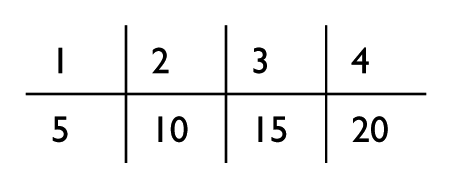
Next, the children are asked to work in small groups or pairs doing a few similar tasks (e.g. litres of petrol at so much per litre) to construct herring bone tables using continuous variables, and requiring them to reach agreement between themselves by means of arguments about the adequacy of their answers and solutions to their work tasks.
The teacher then reconstructs the first herring table as a set of coordinates and then plots them as a graph. She writes y = mx, explaining that m is the gradient and the origin is 0. She reminds the children of the difference between a graph and a chart or diagram and pupils insert values from the herring table into the coordinate system, with the teacher asking: T: So, what does the equation look like? C1: x multiplied by y
T: No, that doesn’t work
C2: y = 5x
Next the class works together use the remaining tables to construct graphs and linear equations with the teacher supervising, often assisting instrumentally in the correct construction of equations etc.
For the next 40 minutes, pupils are then supported by their teacher in reading, interpreting and constructing further graphs and equations, gradually translating daily life situations and language to the language of algebra and helping students appreciate the concept of variables. Pupils tackle exercises from a textbook, working in mixed ability seating partners (which change places every 14 days). The teacher facilitates this, wondering out-loud with questions, encouraging pupils all the time to describe the connection between the two variables, always working first with examples but then moving to mathematical connections without the physical context. Indeed, when she introduces linear relationships a few pupils still have difficulties, but each time she asks ‘if one is added to one variable how does the other variable change’, keeping the focus on the vertical discourse of the mathematical relationships involved and the way in which these interconnect. At the end of this section of the lesson she then asks, ‘what is the message of the equation, what can we deduce about a relationship?’
For a further 20 minutes children are then rotated to work in another group, explaining to the new group what they had been doing. The teacher is authoritative, but there is no friction at all. After this, the final section of the lesson involves using a projector on a whiteboard to make another herring table, but this time leading the class towards a situation with a constant, c, in the equation for the line.
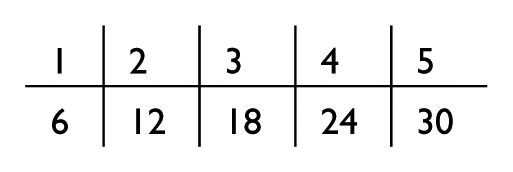
Starting with y = 6x, x on top and y on the bottom, she then moves on to
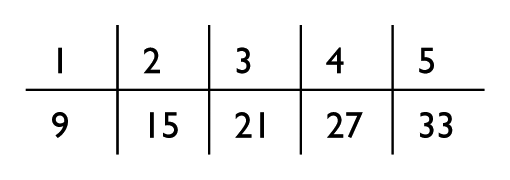
representing y = 6x + 3, telling the class that ‘when x = 0, y = 3, so c is where line joins the y axis’. Having previously worked from real world examples to the symbolic abstraction, she next reverses this suggesting looking at it as ‘cost of gas = fixed price per unit + standing charge’. Finally, the teacher asks, ‘what is an equation?’ and answers her own question, saying ‘it describes the relationship between two variables’. She gives pupils a few other herring bone examples and asks them to use the remaining time to work out the equation for each, which they then discuss.
Analysis
Our observation and interviews with the teacher in the English classroom suggest that the particular roles ascribable to the teaching relate to several dominant discourses, especially those in which pupils are described as ‘low ability’. Teaching is largely positioned in a ‘coaching’ role and both the instructional discourse and the regulatory discourse are strongly framed in terms of the division of labour of pupils and teacher, the latter dominating and the former remaining largely passive across both discourses. Simultaneously, there is strong classification of the mathematical ideas themselves, with the lesson focused on a very particular objective – as nearly all English lessons are because of extensive policy that has encouraged a normative, performance-orientated model of teaching based on perceived ‘best-practice’ (e.g. Ball, 2003; Beck, 2009; O’Leary, 2012; Rutkowski, 2007). The structure of the English mathematics curriculum and the policy that surrounds it is based in two related, strong beliefs: first that mathematics can be deconstructed into constituent pieces, with the teacher able then to control how these are put back together by pupils; and second that the teacher is responsible for engineering this process – to make learners learn whatever the lesson is ‘about’ (Pratt, 2016). Both these ideas are premised on an understanding of abstraction in the sense of Hazzan and Zazkis’ type C – increasing complexity. Expertise in teaching in the English context requires teachers to identify what children do not know before teaching it directly on the basis of ‘understanding the progression in strands of mathematics over time, so that they know the key knowledge and skills that underpin each stage of learning’ (Office for Standards in Education, 2012: 10).
In England, one important part of pedagogical discourse mentioned by teachers as the rationale for drawing pupils back from the abstract to the ‘real world’ was what they referred to as ‘making it meaningful to students’. This phrase, or at least its sense, occurred regularly in interviews with teachers – including this one – as a justification for the way in which they managed issues of classroom control by changing the nature of the lesson activity. In the English lesson referred to above the teacher did just this, though she claimed to be increasing the abstraction by building in greater degrees of complexity (including bigger numbers and requiring multiplication and division). She perceived this as implicitly making the problems ‘increasingly hard’. But ‘making it more meaningful’ draws on a particular sense of the word ‘meaning’ as being familiar to pupils as part of their physical world. Moreover, as our interpretation of Bernstein, above, suggests, this meaning is context dependent in the segmented, horizontal discourses of everyday life and so drawing pupils back to it implies drawing them back to the related, segmented knowledge structures associated with each ‘place’. Whilst this might alleviate the difficulties of type A abstraction – making things feel more familiar – the point of Sfard’s discussion of types B and C abstraction is that pupils have to find ‘meaning’ in terms of the interconnected, systematic, hierarchical vertical discourse of mathematics itself – that is through interiorization and condensation in Sfard’s terms. As they play with an object, the way it works within the system of mathematics starts to ‘mean’ different things mathematically. However, our interpretation is that in moving from the scales to the symbols, type A abstraction – increasing unfamiliarity – increases as pupils move further away from the physical context. Because this form of abstraction is implicitly seen as negative in English culture, so, as happened here, pupils started to become unsettled and play-up and the teacher slipped further into a supervisory, performative role in order to manage the potentially ‘negative’ effects of the mathematical (type A) abstraction. Alongside this, she manages things by retreating back to the ‘familiar’ territory of the ‘real world’ (the scales), hoping that pupils will be supported by focusing on the translation between horizontal and vertical discourse in doing so. However, this is at the expense of building hierarchical understanding through the vertical discourse of the mathematical ideas themselves, leaving ideas segmented. Additionally, pupils are asked to work individually or in pairs at most, working diligently on questions aimed at practising their procedural manipulation of unknowns. There is little incentive, and therefore limited scope, for creative agency in exploring the mathematical objects involved in order to get a sense of their hierarchy, and hence of abstraction in forms B and C.
In addition to this perception of security in the real world, the strong framing of teacher control and the strong classification of mathematical ideas also mean that pupils’ experience of managing mathematical ideas becomes limited. Pupils are stuck with a normative form of ‘disciplinary agency’ (Boaler, 2002) focused on mathematical procedure with the fear of things becoming too abstract (in the sense of type A). The teacher’s regular return to the perceived safety of this disciplinary procedure, which is initiated by the pupils themselves through their behaviour, offers them little opportunity to engage in the ‘dance of agency’ that Boaler describes (2002) as being important if they are to develop their appreciation of the abstract nature of the ideas (in the sense of B and C). Moreover, such engagement is not uniform across the pupil group. As Bernstein notes (1999: 169), When segments of horizontal discourse become resources to facilitate access to vertical discourse, such appropriations are likely to be mediated through the distributive rules of the school. Recontextualising of segments is confined to particular social groups, usually the ‘less able’.
As noted above, in the English classroom the lesson is strongly framed and classified; from the beginning, when lesson objectives make clear that only the ‘most able’ will be able to access the more complex material; and during the lesson where differentiation of task means that those already least able to complete the work get access only to a limited part of the what is needed to see the hierarchical connections implicit in the vertical mathematical discourse. By contrast, in the Danish class, the teacher works in a supervisory role at times and pupils are required to practise procedures, but this is just one part of the lesson. Throughout the rest of it the teacher is working in a role in which the instructional discourse is prominent and the regulatory discourse less so. Moreover, the former is less strongly framed such that pupils have the opportunity to affect the direction of the thinking in the lesson. Tasks require pupils to argue for the veracity of their thinking amongst themselves, potentially allowing pupils to explore ideas and support each other in ways that afford interiorization. There is also a weaker classification of mathematical ideas – making it more likely to contribute to the vertical discourse necessary for types B and C abstraction. The lesson is still clearly ‘about’ variables, functions and graphs but whereas in the English lesson this forms an objective towards which the teacher drives relentlessly, in the Danish classroom it forms a centre-point around which the lesson moves so that teacher and pupils can roam into new mathematical territory and see how it connects up. The Danish teacher therefore spends more time working on the relationships between ideas, developing them progressively from simple starting points (which would be well below the ‘level 5’ work that the English classroom jumps straight into). Where reference is made back to the ‘real world’ of fish, cheese and milk, this is to facilitate connection to the vertical discourse of the mathematical abstraction so that pupils are encouraged to move away from the familiar and to explore the unfamiliar hierarchy of the mathematics. Interestingly, this is partly possible because the lesson is longer and ideas can therefore be developed in this way over a longer period of time, unlike English lessons which universally run to tightly prescribed timing and focused objectives.
Discussion
The activity in two mathematics lessons described above is not unusual and the point is not to describe classroom behaviours that readers, in each context at least, would not recognise as typical. Neither is it to make judgements about which is ‘better’; not least since this can only be understood in relation to the culturally-situated objectives of the different settings. This is an important point since it is tempting to try to make these kinds of judgements and, indeed, this is exactly the kind of use to which some comparative research – PISA included – is often put. However, we want to avoid this simplistic, linear, cause and effect thinking because, as our previous work has shown, pedagogical form is linked to the complexities of culturally-situated purposes. For example, English classrooms are dominated by preparation for tests and strong framing and classification may well be the most effective pedagogy for immediate success; though there is evidence that it also leads to greater drop-out later in schooling (Hutcheson et al., 2011; Pampaka et al., 2011). Rather, our point is to show how within this typical activity, pedagogical form and subject content are being mutually constructed in ways which are different in each context. Moreover, these differences are also differentiating in the sense that pupils’ opportunities to engage in important mathematical thinking is afforded or constrained by them. It is important to note here that in identifying these pedagogical forms and the nature of the abstraction that ensues, neither is causal of the other, nor does one come before the other. Each is part of a complex milieu in which pedagogy and mathematical subject content are mutually constructed in and through the discourse in which they are embedded.
One implication from of this paper therefore is that there is a complex interaction playing out differently in each country between the cultural specificity of schooling and the pedagogical form, but that these also affect the way in which the content of the subject discipline is understood; in this case, the way in which abstraction is understood both mathematically and socially through the pedagogical actions in each context. As we said at the start, the comparative context here is not the focus but the tool we use to make sense of pedagogy in different contexts. What it has illustrated is the situated nature of abstraction itself. Far from being divorced from social activity, abstraction – in as far as it is constituted in all three of the forms identified at the start of the paper – can be seen as directly linked to it, at the level of policy, curriculum and wider culture and then, through these, to the culturally specific classroom activity of pupils and teachers. Moreover, it shines a light on a political issue relating to the replication of success and failure. A growing body of research (Boaler, 2005; Boaler et al., 2000; Muijs and Dunne, 2010; Wiliam and Bartholomew, 2004) is pointing to the effects of setting and differentiated allocation of resources – what Gillborn and Youdell (2000; see also Marks, 2014) call ‘educational triage’ – on pupils’ mathematical attainment. Moreover, further research is demonstrating the links between ‘transmissionist’ teaching approaches (those which are tightly framed in terms of teacher control and strongly classified in terms of curriculum content) and pupils’ waning disposition towards studying mathematics (Hutcheson et al., 2011; Nardi and Steward, 2003; Pampaka et al., 2011). This study both supports such research and provides an insight into at least one mechanism for how it takes place. If, as we know, being capable in mathematical abstraction is a crucial element of success in mathematics at a high level, then practices which reduce the likelihood of this happening will be detrimental to pupils. Abstraction, far from being a ‘skill’ which high attaining pupils ‘have’ can be seen here as a practice which is constructed socially and differentially for, and by, groups of pupils and their teachers in ways which are likely to exacerbate these differences, not reduce them. The challenge for mathematics teachers, and the people and systems that support them, is therefore twofold. Firstly, to understand the complexity of the development of subject discipline knowledge as both conceptual and social in their classrooms; and secondly to address this complexity, even in the face of a policy context which makes short-term thinking in the drive for high grades the number one priority for mathematics teacher, in England, but increasingly around the world too.
Footnotes
Declaration of Conflicting Interests
The author(s) declared no potential conflicts of interest with respect to the research, authorship, and/or publication of this article.
Funding
The author(s) received no financial support for the research, authorship, and/or publication of this article.