



Abstract
This paper examines the utilization of video in comparative education teaching and is shaped by two interconnected arguments. Underpinning the paper is the argument that students have certain assumptions about comparative education which are not in accordance with the complex, historical and contemporary scholarship of the field, and which thus need to be deconstructed. It is argued that video is an effective teaching tool to use to trace and unsettle such assumptions, and thus, open up the possibility for more complex comparative educational thinking to emerge in university classrooms. These uses and functions of video are explored in the paper with the help of a TV programme comparing education in Greece and Finland.
Keywords
Introduction
In the last few years there have been various initiatives to enhance comparative education teaching in universities (see the Comparative Education Instructional Material Archive at Indiana University, USA). However, the potential of using video in teaching about the field has not yet been adequately explored. How video resources can be employed in classrooms to trace and map out what assumptions about comparative education students bring to our courses, and where they get such assumptions from have not yet been examined. Perhaps more importantly, video-based interventions that can help us unsettle their assumptions have not yet been devised – in case their assumptions are not in accordance with the complex, historical and contemporary scholarship of the field – and, thus, create conditions within which different modalities of comparative educational thinking may flourish in university lecture rooms.
The current paper explores the use of video in comparative education teaching, notably the uses and functions of a TV programme on Greek and Finnish education called The desolation of being a pupil. The paper argues that as a teaching resource employed at the beginning of a comparative education course, this TV programme serves two interrelated purposes. First, it helps in tracing the routine assumptions and certainties of students about the field by reassuring them that comparative education is about the things they “know”. The desolation of being a pupil draws upon a set of modalities of comparative educational thinking from the historical trajectory of the field, that reflect an epistemic form of comparative education with ‘a low-level theoretical problematique’ (Cowen, 2009a: 1281). Second, the deconstruction of the video serves to unsettle the certainties of students and their taken-for-granted assumptions about comparative education and, at the same time, serves to sketch the course’s agenda of teaching for them. It helps in introducing a range of themes that are at the core of ‘a comparative education with a [more] complex intellectual problematique’ (Cowen, 2009a: 1278), thus opening up the possibility for students to develop new modalities of thinking comparatively about the educational world.
The desolation of being a pupil
The point of departure of this paper’s narrative is a TV programme – a comparison of education in Greece and Finland called The desolation of being a pupil (Η δυστυχία να είσαι μαθητής). This programme was aired on the Greek Channel MEGA in January 2009 and forms part of a popular series called Research (Έρευνα). According to the production team (see http://www.megatv.com/erevna), this series routinely takes as its starting point ‘a salient issue of contemporary social life that concerns all of us’ and, ‘looking into archives, interviewing people, and gathering evidence’, endeavours ‘to shed light on its hidden aspects and causes’. The dictum – and underlying ideology – of the series is ‘question everything, contemplate about everything, search for things, investigate beyond the obvious, the widely accepted, the ready-made’.
The desolation of being a pupil starts with the presenter of the programme, journalist Pavlos Tsimas, informing the audience that the topic of this particular episode of Research is education reform: ‘Another education minister announces yet another round of dialogue on education’ and, in light of this, ‘Research travels tonight from Athens to Helsinki and learns things’. The programme, Tsimas announces, will compare ‘a usual day of two typical pupils’ – Vanessa from Greece and Jan from Finland. After a 20 minute presentation of the daily routine of the two pupils, Tsimas sums up the discussion as follows:
There are two pupils who both attend a public school. One [Vanessa] works hard, twelve hours a day: school – private tutoring – home study. The other [Jan] studies dance, music, media and filmmaking in school and has plenty of time to do sports and hobbies after school. Obviously, the second pupil is happier than the first but, on the other hand, the first pupil, the one who works harder, learns more than the second and accumulates more knowledge and skill for life – or does she? Well, no! The largest international assessment study of educational achievements conducted by OECD every three years shows that this relaxed Finnish school is ranked first in the world and its pupils achieve the best results. In contrast, the dull and heavy Greek school ranked 26th in 2000, fell to the 32nd position in 2003 and the 38th position in 2006. Why, when we overload our children with so much work and exhaust them so much, do we in reality give them so little? Why, when we overwork them so much, do we endow them with so little useful knowledge? What is wrong with the Greek school? It is with this question in mind that we started our Research tonight.
After this intervention, the programme expands its comparative analysis to cover other aspects of educational provision in Greece and Finland. It talks to other pupils as well as teachers, academics and former education ministers, and compares and contrasts pedagogical practices, curricula, issues of administration, teacher salaries and training, school infrastructure and classroom facilities. After discussing aspects of Greek education for about 10 to 12 minutes and before moving on to talk about Finnish education, Tsimas wraps things up as follows:
Stressed-out pupils, frustrated teachers, a school that is sad and dull, exhausting and joyless. Could it be otherwise? International surveys show that there is another school which excels and whose pupils rank first in all subjects in international assessments and is at the same time full of joy and happiness and is open-hearted. We tried to get to know this school. We travelled to Finland, the country that is always ranked first in international educational assessments and is considered to have the best schools in the world. We attempted to learn the secrets behind this success story that we could emulate. Finland, although far from Greece, looks a lot like our country: it is a small country, it speaks a language that no one else speaks in the world, it is geographically located between East and West and, in the economic sphere, it is not very different from us. So what are they doing right that we are doing wrong?
Subsequently, the programme focuses on aspects of the educational system of Finland (10–12 minutes), extracting three principles from Finnish education that ‘Greece could copy in order to create a better educational system’. These are: Finnish education offers equal opportunities for all; it emphasizes learning, not tests and testing; and, it is characterized by teacher and student autonomy.
The last part of the programme offers some explanations as to why ‘we are doing things wrong’ (compared to the Finns). To mention one example, Marietta Yannakou, the Greek Education Minister from 2004 to 2007, appears in the programme claiming that ‘what the Finns have that we do not have is a more sensible way of dealing with things, in politics, in parliament, in decision-making, everywhere. Here we are an enthusiastic people, but also a people who want the slightest of our efforts to pay off and be rewarded immediately. The Finns see things in the long term. To create an educational system that everyone agreed upon, they debated for many years’. Alluding to the so-called forces and factors’ school of thought in comparative education (see below), this explanation of educational difference between Greece and Finland highlights that The desolation of being a pupil draws upon and perpetuates – in Cowen’s terminology (2009a, b, 2014) – certain sorts of modernist ‘stones’ and ‘traps’.
Perpetuating modalities of comparative educational thinking
By comparing Vanessa and Jan as representatives of the educational systems of Greece and Finland respectively, the programme consolidates ‘not just methodological nationalism, but methodological statism and methodological educationism’ (Dale and Robertson, 2009: 1113). It reproduces the routine assumptions that comparative education is essentially about “countries” and “systems” and that “doing comparative education” essentially means “comparing” (and “contrasting”) countries, and aspects of their educational systems habitually defined in administrative terms. This entrenched understanding of comparison as juxtaposition dates back to ‘the modernist beginnings of comparative education’ (Kaloyannaki and Kazamias, 2009). As a modern episteme, comparative education emerged against the background of the rise of the international system of national states and, to use Sadler’s metaphor, the global ‘garden’ of national systems of education. In this light, countries and systems became the field’s central units of analysis, and this has resulted in a narrow conceptualization of social space in comparative education as the space of the nation and state-regulated education (Beech and Larsen, 2014; Larsen, 2010).
The TV programme contains another routine assumption about the field: comparative education looks for “similarities” and “differences” between countries and systems and, subsequently, seeks out “the causes of things” (Manzon, 2011). In the programme, a list of both similarities and differences between Greek and Finnish education is offered to the audience, but the focus is clearly on identifying differences. Harking back to the spirit of the Enlightenment (Silova, 2012), the differences between the two educational systems are classified through a set of opposing categories: ‘underpaid’ versus ‘highly-paid’ teachers; ‘large’ versus ‘small’ class size; ‘outdated’ versus ‘latest’ facilities; ‘unhappy’ versus ‘happy’ school environments; ‘stressed-out’ versus ‘relaxed’ pupils; and so on. This classification of difference reflects that the programme ‘reads the global’ (Cowen, 2009a) along evolutionary lines: the world consists of “developed” (and “less developed”), and “underdeveloped” countries and systems of education (Phillips and Schweisfurth, 2014).
As the narrative of the programme unfolds, several opinions about the causes of the educational differences are conveyed to the audience – e.g. Marietta Yannakou’s view that the difference in the national mentality of the Greeks and the Finns accounts for the failure (and success) of reforms. Projecting oversimplified and stereotypical generalizations about “national character” (e.g. the “unrealistic” Greeks versus the “sensible” Finns) as the “causes of things”, the video invokes the forces and factors’ school of thought in comparative education (Hans, 1949; Kandel, 1933; Mallinson, 1957). This school of thought, which operates within the epistemic boundaries of the Sadlerian dictum that ‘the things outside the schools matter even more than the things inside the schools’ (Sadler, 1964: 310), dominated comparative education until the 1960s. According to this view, an education system ‘reflects, while it seeks to remedy, the failings of the national character’ (Sadler, 1964: 310).
However, the study of societal dynamics and their complex relations to educational systems is not the main preoccupation of the programme. Echoing the thinking of Holmes (1965), the production team of the programme identifies and conveys to the audience only a limited number of the cultural and political underpinnings of education that – in the team’s view – are (or may be) preventing educational improvements. The societal underpinnings of education are also hinted – i.e. where Tsimas talks about similarities between Finland and Greece in terms of population size, language, geography and economy – in order to render unacceptable the position of Greece in the OECD’s Programme for International Student Assessment (PISA) rankings (compared to “similar” Finland). In offering unsystematic narratives about the “contexts” of education, the programme evokes Auslandspädagogik (the descriptive study of education in foreign countries) and, through this evocation, perpetuates an enduring leitmotif in the history of comparative education: the assumption that ‘an educational system is nothing more or less than a system of schools’ (Sadler, 1964: 309). The suppression of “history”, “culture”, “power” and “struggles” in the study of education alludes to the iconic writings of Jullien de Paris on the possibility of un ouvrage sur l’éducation comparée. As early as the first quarter of the 1800s, Jullien conceptualized education as an independent aspect of social reality which, as such, can be analysed separately from the contexts that surround it (Fraser, 1964: 50).
Since education – according to the programme’s logic – is independent from its context, a set of educational principles can be deduced from the Finnish model and applied to improve education in Greece. ‘Could we copy something from the educational system of Finland to create a better educational system in Greece?’ asks Tsima, who informs the audience that, as “applied social scientists”, his colleagues travelled to Finland ‘to learn the secrets behind a success that we could emulate’. Underlying this line of thought are two long-running assumptions in comparative education (Beech, 2006, 2009; Phillips and Ochs, 2003; Rappleye, 2012a; Silova, 2012; Sobe and Ness, 2010; Steiner-Khamsi and Waldow, 2012). The first is the feasibility of educational borrowing: the routine assumption that ideas and ideals, policies and practices, transferred from one context to another, will maintain their “magic” properties and will “fix” what needs to be fixed. The second is the assumption of educational and social progress through comparative research and the act of learning something of practical value from “others”. From the perspective of this melioristic logic, the intellectual work of comparative education is the specification of “best practices” and “international trends” in the global educational space and its praxis, the “successful” implementation of educational imports, and the subsequent improvement of education and society.
An understanding of educational transfer as a process with three stages is also embedded in this programme and this has been a constant motif in the history of the field since the period of the ‘modern travellers’ (Beech, 2006). The programme identifies a local educational problem first – ‘Greek education is dull and heavy and, while it overworks and exhausts pupils, it gives them very little useful knowledge for life and the future’ – and then seeks solutions in foreign education. Here the OECD both provides “scientific” legitimation of the problem and determines where Tsimas and the MEGA team of producers and journalists should look for “tested” solutions: in Finland, ‘which is considered to have the best schools in the world’. Three principles – ‘the secrets behind Finland’s success’ – are finally extracted from the Finnish education model (see previous section) and are offered to the general public as well as to Greek reformers, educational planners and policy makers, as a means of improving Greek education. This type of thinking about transfer highlights three further defining features of the programme and well-established themes in comparative education: a conception of time as linear and evolutionary; an understanding of education reform as a series of gradualist linearities; and, a view of educational systems as being evolving equilibria and the product of social consensus (Cowen, 2009a).
So, springing from an underlying desire to contribute to policy dialogue in Greece, the programme’s comparative analysis gives practical aims more importance than understanding (of the shape of education in Finland). Embedded in this perspective on comparison is a powerful legitimation motif in the history of comparative education: the ideology of “usefulness”, and being “relevant” to policy making and educational planning (Cowen, 2014). The expectation about practicality also goes back to Western Enlightenment. In conceptualizing comparative education in pragmatic terms, Jullien suggested that comparisons would ‘give birth to the idea of borrowing from one another what … is good and useful’(Fraser, 1964: 46). This motif was reinforced from the 1960s onwards with the “scientific turn” and the vision of the field as ‘a tool for educational planning’ (Noah and Eckstein, 1969: 81), as well as with the shifting international politics and the need to develop and measure the ‘other’ (Nóvoa and Yariv-Mashal, 2003: 424–425).
Tracing modalities of comparative educational thinking
The argument so far is that The desolation of being a pupil draws upon and perpetuates a set of nominalist, even simplistic, modalities of comparative educational thinking from the historical trajectory of the field. This section extends this argument, suggesting that if it is employed as a video teaching resource at the beginning of comparative education courses this TV programme helps us trace students’ comforting certainties and taken-for-granted assumptions about the field. It does so by creating a moment of confidence in students whereby they are reassured that comparative education is about the things they “know” and “saw” in the video. That is to say, “everybody knows” that: comparative education compares (and contrasts) countries and systems; it looks for similarities and differences; it offers causal explanations of similar and different patterns of educational systems; and, it identifies and recommends best practices for the purpose of improving education.
This video is generally shown at the very first meeting with undergraduate and postgraduate students. Before playing it, students are invited to think of and write down the possible links between the content of the video and the course. Their written responses are collected immediately after they have watched the video, and the open discussion that follows is recorded for the purposes of analysing students’ views about the field. The analysis offered in this section is based on a sample of 245 undergraduate students and 64 postgraduate students whom I taught over a period of five terms (two and a half years between September 2012 and December 2014) at the University of Cyprus 1 .
In reply to the question, “Why does this TV programme appear at a university course of comparative education?” students habitually state that ‘with the help of the video one can roughly define the field of comparative education, outline what role it plays at the university, in education and in society and define its main features and characteristics’.
In the eyes of the students the video is an example of comparative education because of its nominalist traditional form: it “juxtaposes” two “countries”, Greece and Finland; and “compares” their “educational systems” (or certain aspects of these systems). ‘Clearly the video is related to the course’, writes an undergraduate student, who goes on to say that ‘It encompasses the broader philosophy and meaning of Comparative Education, because it examines and compares the educational systems of Greece and Finland – their pedagogical approaches, curriculum, infrastructure and facilities and the overall philosophy that underpins these two systems’.
For students, the video is an example of comparative education because it traces “similarities” and – mostly – “differences” between the two countries: ‘The video we watched is directly related to the course because it compares the educational systems of Greece and Finland. It addresses some of their similarities, but it mainly presents their differences and the everyday lives of two pupils that are completely different’. Like Tsimas and the MEGA production team, students imagine differences in a way that reflects a modernist reading of the educational world. In their rhetorics, the world is often construed in evolutionary terms consisting of ‘advanced’ (and ‘less advanced’) and ‘retarded’ systems of education. ‘In the last decades’, a student stresses, ‘the world has evolved, but we are failing to keep up with it and, like Greece, our education [i.e. in Cyprus] is lagging behind other countries. The Finnish educational system is much more advanced than ours. There are also very progressive systems in East Asia’.
The video – in the students’ view – is an example of comparative education for another reason: the field studies the “other” and compares (and contrasts) it with the “self ”. As one student put it,‘although the video brought back bad memories, it was a very stimulating way to start the course and caught my attention because it shows that education is not just what we are experiencing in Cyprus and Greece. The video made me want to get to know what other educational systems are doing. So I expect the course will help us to see similarities and differences between other systems and ours’. From the point of view of the students, acquaintance with the “other” justifies the place of comparative education in university programmes not only because it arouses curiosity, but because, more importantly, it provides opportunities for learning from the “other”, and thus, for improving the “self ”. In a student’s own words: ‘In the course I would like to learn how educational systems in other countries work, so I can make comparisons with our system and see whether it is possible to change ours on the basis of lessons from these other countries’.
Indeed, underpinning students’ written and verbal responses to the video is the leitmotif that the legitimation of comparative education as a field of study and method of inquiry is its “practical value”. In their view, comparative education is – and is expected to be – a “useful science” in at least two ways. First, students often maintain that by identifying “best practices” in the global space of education, the field is in a position to offer practical guidance to educational planners, policy makers and reformers on how to improve the educational system of Cyprus. ‘Through comparison’, remarks an undergraduate student, ‘we will identify positive elements in the educational systems of other countries which we could integrate in our system, in order to improve it. The comparative method is an effective way through which we can change and improve our policies, planning, system and society in general’. Likewise, a postgraduate student stresses that, ‘the purpose of getting to know and comparing systems of education in different countries is to be able to judge what would work favourably in our country. In this way, we can solve the chronic weaknesses and deficiencies of our system’. Second, the infusion of comparative education into the micro-world of the school classroom leads students to believe that the study of foreign education is a means of enhancing their teaching repertoire, and improving their teaching effectiveness. Again, the logic behind this assumption is that the field is in the best position to identify “what works” at the micro-level of other educational systems. The following student account is indicative of this line of thinking:
The comparison of different approaches to teaching in various countries is very important for us as future teachers. It can help us to learn new, better ways to teach, for the purposes of improving, to some extent, our teaching and our students’ learning. With the help of Comparative Education, we can widen our horizons to new ideas and alternative ways of teaching and adopt useful teaching practices. This will help us to become more effective teachers and this is actually what I expect to learn in this course, that is, to find out what works in other countries and is good for us to try out with our own pupils.
The students’ thinking about the “usefulness” of comparative education at the macro- and micro-levels of education comprises an understanding of transfer as “feasible”. In accord with the production team of Research, the majority of students construe aspects of education as being capable of being transported from one country to another, in the sense that they will maintain their meaning and functions in the context of their transplantation. As an undergraduate student puts it, ‘the Finnish school has some very good elements which, if adopted, would improve the performance and scores of our pupils, as well as the way they see education and feel about schooling’. ‘One thing that was engraved on my mind after I watched the video’, a postgraduate student similarly writes, ‘is that there are secrets of success to emulate and create a better educational system’.
To a large extent, students’ belief in the feasibility of borrowing is derived from a construal of ‘an educational system as nothing more or less than a system of schools’. In their accounts of the video, many students reveal a lack of sense of the local context of reception of borrowed policies and practices, and a lack of concern regarding the fact that foreign education is being studied in isolation from its socio-cultural and political-historical contexts. Out of 245 undergraduate students, only four criticize the video’s decontextualized approach to the study of Finnish education on the grounds that ‘it tells us very little about Finland’. The number of students increases at the postgraduate level, with nine students out of 64 denouncing the video, ‘because it tells us almost nothing about the culture of the Finnish society, or about the Finnish welfare state and the social class system of Finland. These are important in understanding Finnish education’.
Also, very few students (two undergraduates and six postgraduates) appear to accept the fact that the implementation of educational imports may not be a straightforward process due to the specificities of the context of reception. Often this awareness is embedded in propositions that imports must be “adapted” to local realities. Such propositions highlight that students read comparative education as a “science” that can predict and control obstacles in transfers. An undergraduate student notes in this regard: ‘The video identifies practices that would be good to be adopted in Greece, but they need to be adapted properly during their transfer from the Finnish system to the Greek one in order to be implemented correctly’.
Students also perceive comparative education as a “science” that possesses the tools and methods to understand, describe, categorize and improve the educational world. As one student put it: ‘The video demonstrates how education in Greece and Finland works and why the Greek system is ineffective and the Finnish very effective. I consider this to be the role of Comparative Education. Through systematic and scientific studies of educational systems, Comparative Education determines which system is the best and which systems are problematic and need improvement while, at the same time, it identifies and suggests ways of improving these systems’. From this perspective, what needs to be unsettled, if more complex thinking about the field can flourish in our classes, is the foundational assumption of students that the video reflects reality and the educational world. In other words, there is a need to multiply – as well as, perhaps, mitigate – the views expressed by a limited number of students (four out of 245 undergraduates and seven out of 64 postgraduates) that ‘you cannot be sure that the content of the video reflects reality. I, personally, think the video is media propaganda’.
Unsettling modalities of comparative educational thinking
This section argues that the deconstruction of the video serves to unsettle (some of) the students’ taken-for-granted assumptions about comparative education and, thus, enables them to move their thinking forward in new directions, which are emerging (or have emerged) in the literature and will be taught in the course (e.g. Bray et al. 2014; Cowen and Kazamias, 2009; Larsen, 2010; Manzon, 2011; Ninnes and Mehta, 2004; Schriewer, 2000; Silova, 2010; Steiner-Khamsi and Waldow, 2012). To problematize students’ modalities of thinking about the field, three deconstructive strategies are often implemented in classrooms – these strategies are examined in this section. The first strategy is a critical appraisal of the video through Sadler’s lenses (Phillips, 2006; Sadler, 1964); the second is a post-structural approach to the video’s impact on the thinking, feelings and emotions of students, inspired by Ball’s (1990) work; and, the third is a critical multimodal discourse analysis of the video using insights from the work of sociolinguists such as Fairclough (2003), Kress and van Leeuwen (2001, 2006) and Wodak (2013).
At the end of the first meeting, students are given a Greek translation of Sadler’s classic speech entitled ‘How far can we learn anything of practical value from the study of foreign systems of education?’ (Kaloyannaki, 1998) and they are asked to read it at home before the next meeting. In particular, they are requested to appraise the video’s comparative approach through Sadler’s prism and their written appraisals are collected at the beginning of the second meeting. During the open discussion that follows this activity, which is recorded for the purposes of analysis, the students’ attention is specifically drawn to two fragments of the text from Sadler’s speech. The first extract, which is displayed to the whole class with the help of the classroom’s LCD projector, reads:
… if we propose to study foreign systems of education, we must not keep our eyes on the brick and mortar institutions, nor on the teachers and pupils only, but we must also go outside into the streets and into the homes of the people, and try to find out what is the intangible, impalpable, spiritual force which, in the case of any successful system of Education, is in reality upholding the school system and accounting for its practical efficiency. (Sadler, 1964: 309)
In the discussion, the motif of the social contextualization of the study of foreign education, which tended to be previously absent in students’ rhetorics, is now hesitantly becoming visible. As Grossley and Watson (2003) would have put it, students discover that ‘context matters’ in comparative education. ‘From the point of view of Sadler’, as a postgraduate student points out, ‘the approach of the video is problematic. Tsimas did not examine the social, political and cultural factors that make the Finnish system efficient’. Likewise, an undergraduate student points out that ‘Sadler made me realize that Tsimas and his team focused only on some students and teachers, they visited several schools and they observed a few classroom lessons. They did not study the wider context which Finnish education is embedded in’.
Students’ discovery of context – a normal motif in a certain strand of scholarship in comparative education since at least the turn of the 20th century (Grossley, 2009) – makes it possible to teach how contextual dynamics and their complex relations to educational systems have been dealt with in the field. To teach, for example, the classic factors of Hans (1949) which include religion and language and political philosophies and their relation to notions of educated identities, or the absence of context in the ‘ “comparative education” of solutions’ (Cowen, 2009a: 1285) practised by international agencies such as the World Bank and the OECD. The discovery of context also puts on the course’s agenda of teaching the academic critique of this motif – i.e. that although context is of importance, it remains largely under- theorized in the field (Rappleye, 2012a) – and the ongoing attempts to imagine it as the coding of social power in ‘educational Rosettas’ (Cowen, 2009a), as an ‘archive’ that educationalists draw upon to constitute educational knowledge (Klerides, 2012), and as a ‘discursive assemblage’ constantly in the making and remaking by researchers (Sobe and Kowalczyk, 2012).
The students’ attention is then drawn to a second excerpt from Sadler’s speech, again with the help of the LCD projector of the classroom:
In studying foreign systems of Education we should not forget that the things outside the schools matter even more than the things inside the schools, and govern and interpret the things inside. We cannot wander at pleasure among the educational systems of the world, like a child strolling through a garden, and pick off a flower from one bush and some leaves from another, and then expect that if we stick what we have gathered into the soil at home, we shall have a living plant. A national system of Education is a living thing, the outcome of forgotten struggles and difficulties, and ‘of battles long ago’. (Sadler, 1964: 310)
Here, Sadler’s metaphor of ‘transplantation’ undermines students’ certainty of the feasibility of educational transfer (in the sense that imports will maintain their properties in the context of transfer), forcing them to consider the possibility that transfer may not be as unproblematic as they had initially thought. The following account by an undergraduate student is indicative of this shift:
This particular quotation from Sadler made me see the whole borrowing thing in a different way. When you transfer educational models from one place to another, this may not be successful, you can never be sure… I assume because Finland and Greece are two different contexts. I think this is what Sadler is saying here. It is impossible to transplant a country’s educational system (or aspects of it) to another country, because I assume it is not feasible to isolate education from its context.
Yet, many students are reluctant to renegotiate their initial assumption about the feasibility of “successful” borrowing and this is often encoded in a defensive and ambiguous talk of “adaptation”. ‘Obviously when implementing a borrowed model of teaching from another country’, an undergraduate student remarks, “we must adapt it properly to our reality, in order to avoid negative consequences’. In a similar manner, a postgraduate student notes that ‘clearly it is always important to take into consideration our realities – our school facilities and the needs of our pupils and local communities – otherwise the borrowed elements are not going work in our context. If you try to implement something you borrowed from a different context without adapting it to your contextual specificities, it simply will not work’.
This form of unclear thinking is problematized through a combination of provocative questions and illustrative examples. For example, students are often challenged to elaborate on the specific meanings of adaptation – e.g. “what do you mean exactly when suggesting that borrowed elements should be adapted properly to our reality?” “What exactly do we keep, modify or reject – and why?” To mention another example, students are invited to reflect on the reaction by church leaders and other social groups in Cyprus to ‘critical literacy’ and ‘history education’, and whether this reaction, preventing the two transnational discourses from becoming official education policy in Cyprus, could have been predicted and dealt with in a way that would have made their implementation successful. These interventions aim to guide students to an understanding of the trap they set for themselves: adaptation implies that borrowers fully grasp and control the complexities of context.
In light of this discussion, students are introduced to a core theme of the field – the mobility of aspects of education across borders – and the ground is laid for more complex thinking about transfer to emerge in classes, as summarized in Cowen’s (2009b: 315) phrase, ‘as it moves it morphs’. In particular, students are informed that comparative education has not unraveled the immunological logic of the contexts of reception which have historically distorted or blocked intended transfers, nor has it created ‘a “geometry of insertion” ’ for practices which, although they are created in one place, could be inserted in another (Cowen, 2009b: 324). Instead of the normative question ‘what can be learnt from others’ students are informed that the field addresses research-oriented questions such as ‘why did transfer occur?’, ‘how was transfer implemented?’ and ‘who were the agents of transfer?’ (Steiner-Khamsi, 2000).
In light of the argument that transfer is problematic and unpredictable, the question of “why study Finland?” often surfaces in the classroom. Some students themselves respond to this question by reproducing Sadler’s positioning of the field: that comparison and the study of “foreign education” is a means to understand their own system in a better way and, based on this deeper understanding, to carry out reforms and improve education “at home”. As a student puts it:
… there is practical value in comparison. The study of Finland and other foreign educational systems will result in our being in a better position to understand the cultural, religious and socio-economic distinctiveness of our own educational system, which is the result of our history. Then, we can focus on and develop the positive elements in our system and try to change and improve the negative elements. I think through comparison you know where you stand in the world… you see your strengths and weaknesses, and you act upon them.
Inspired by Ball (1990), the issue of “why study Finland?” is also approached from a post-structural perspective. To make students “see” what is at the core of the video’s comparative education, aspects of their initial written responses to the video are discussed, notably the effects of the video on their thinking, feelings and emotions. Extracts from their writings are read out in the classroom highlighting that, after watching the video, some students thought ‘that the problems of education in Greece and Cyprus are well- known to us and that the video tells us nothing new’. In light of such statements, students are provoked to ponder and wonder “why, then, did Tsimas need to compare Greece with Finland if the problems of Greek education are well-known?” Before any answer is given, students are reminded – again, through extracts from their initial responses to the video – of what some of them noted after they watched the video:
In spite of the fact that the video was produced a few years ago, the situation in Greece (or Cyprus) is getting worse. Having in mind Finland, I am sad and feel angry because we are not learning anything from other countries. Basically this is what has stayed with me after watching the video, together with a strengthening of the vision for change. I hope that this situation will change someday.
Such interventions put the theme of the political uses (and abuses) of comparative education firmly on the teaching agenda of the course – that “lessons from elsewhere” arise from and are thus interwoven in reform debates and more often than not are ‘instances of political production’ aiming at ‘producing particular policy outcomes’ (Rappleye, 2012b: 122). In this context, students are introduced to the notion of ‘externalization’ (Schriewer, 1992) and informed that its study is also at the core of comparative education, with many comparativists (e.g. Bouzakis and Koustourakis, 2005; Katayama, 2012; Mattheou, 2006; Rappleye, 2012a, 2012b; Schriewer and Martinez, 2004) articulating frameworks for understanding such phenomena and their effects on policy. The discussion here provides fertile ground for students to learn later in the course that “references to elsewhere”come in the form of legitimation, caution and warnings, scandalization or glorification, and are often deployed to both catalyse and impede reform. More importantly, they are taught that comparative educational knowledge cannot be decoupled from regimes of power and the discursive production of truth (Popkewitz and Rizvi, 2009).
In discussing externalization, students are specifically asked to think over ‘the politics of cross-national attraction’ (Phillips and Ochs, 2003): how and why attraction to Finland arises in Greece. Here the ‘media circus’ of PISA and the growing influence of the OECD on national educational politics and policies (Pereyra et al. 2011) inevitably enter the discussion and the outline of the course. In light of this, students are introduced to a number of cutting-edge themes in current comparative educational thinking and are informed that these will be taught during the term. For example, there is the intersection of domestic educational politics and the politics of international political relations (Arnove et al. 2012), and the “comparative turn” in education policy – the motif of ‘comparative education as a mode of governance’ (Nóvoa and Yariv-Mashal, 2003). There is also the large-scale and quantitative, comparative education of international measurement and evaluation, at the centre of which is the new world order of multilateral agencies, non-governmental organizations, business corporations, consultancy firms, professional communities of learning and scientific experts (Beech, 2009; Jones, 2007; Silova, 2012), as well as related arguments about neo-colonialism (Sultana, 2007), new imperialism (Tikly, 2004) and the rise of neo-empires of knowledge in education (Klerides et al. 2014). Finally, there is the reconceptualization of space in comparative education along the lines of notions such as ‘networks’ (Beech and Larsen, 2014; Moutsios, 2004) and ‘policyscapes’ (Carney, 2009).
Another key point emerging from the externalization literature, students are further told, is that “references to elsewhere” are rarely scholarly attempts to understand the “other”. Rather “lessons from abroad” point to discursive efforts to disparage “us” and glorify “them” for the purposes of producing and justifying a need for reform “at home” (Katayama, 2012; Rappleye, 2012a; Schriewer and Martinez, 2004). In light of this perspective, students are invited to work out how negative “self ”-presentation and positive “other”-presentation are articulated multimodally in the video. In the discussion that follows, a number of features of the video’s overall strategy of ethnocentrism reversal are identified, using insights and concepts from the fields of multimodal discourse and critical discourse analysis.
First, there is the video’s representation of social actors and processes (Fairclough, 2003). The video compares and contrasts the daily lives and experiences of two ‘typical’ pupils. On the one hand, it presents Vanessa, a student who is in her final year at school, and who is preparing for university entrance exams that are very competitive. Her life revolves around these exams and, as a result, she has no free time for anything else and is stressed out. Her school routine is marked by ‘dull’ history and language lessons as well as ‘theoretical’ lessons in computer and natural sciences (theoretical in the sense that these do not take place in laboratories); while her after-school routine is dominated by private tutoring lessons, home study and short coffee breaks with classmates to complain about schooling. On the other hand, the video presents Jan, a student who is in the second year of upper secondary school and has another year to go before he needs to start preparing for university entrance exams. In the video, Jan speaks with great enthusiasm of his media lessons which he chose himself according to his personal interests. His daily routine in school is depicted to include dance and music lessons, while in the afternoon he has plenty of free time in which to do sports and go to a rock climbing gym with his girlfriend.
Students are told that the choice of these two pupils and the choice of which subjects, school experiences and after school activities to feature serve to project a Manichean image of the educational world, and it is upon this image that the legitimation of reform is constructed. On the one hand, there is the “progressive” Finnish world of freedom and choice, useful knowledge, efficiency, good learning outcomes and lack of testing, competition and conformity. On the other, there is the “backward” Greek world of oppression and anxiety, useless knowledge, lack of results, antagonism and conformism. In the words of a postgraduate student, ‘Tsima’s choices of units of comparison epitomize the video’s strategy of disparaging Greece and glorifying Finland’.
Students are also told that this ‘(mis)reading of the world’ (Silova, 2012: 241) is reinforced by the materiality of the video encompassing issues such as sounds and music, lighting and colours (Kress and van Leeuwen, 2001, 2006). The video introduces Jan by playing Finland’s 2006 Eurovision song that won the contest, conveying to the audience, from the very beginning, the message that they are viewing a “winner”. As a rule, depictions of Jan’s daily life in and out of school are framed using happy tunes and songs, while Vanessa’s are often accompanied by music which invokes oppression, resistance to authority and social change. A characteristic example is the 1974 song School by English rock band Supertramp, which speaks out against school authority and the conformity it implies. The techniques of lighting employed in the video achieve similar effects, evoking positive emotions for Finnish education and negative ones for Greek education. As Figure 1 illustrates, these techniques tend to associate the Greek system of education with “darkness” and the Finnish one with “light”.
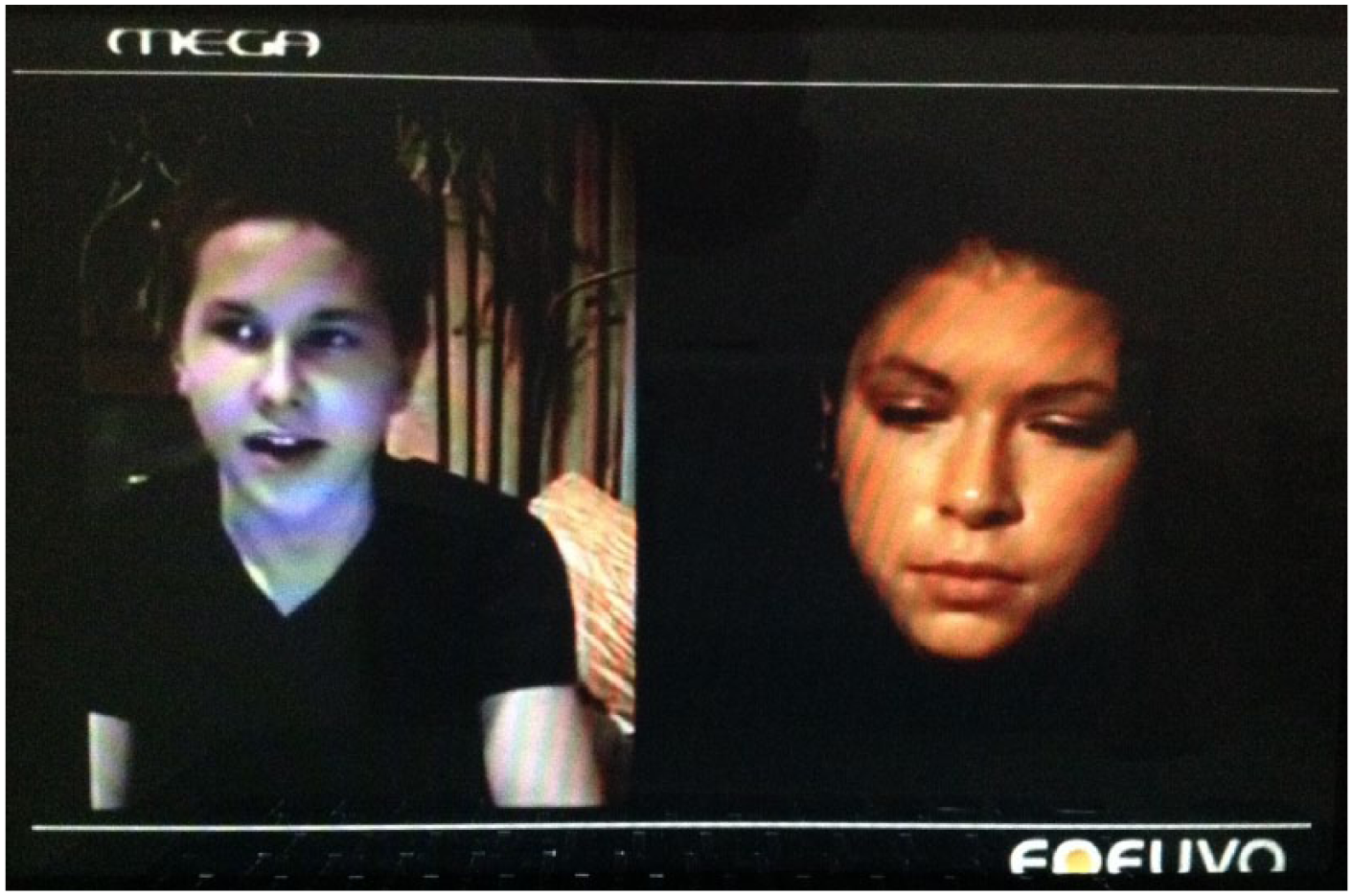
A still from the 2009 Greek TV programme The desolation of being a pupil showing a Finnish pupil in the ‘light’ and a Greek pupil in the ‘darkness’.
Students are further informed that a range of discoursal, conscious or unconscious strategies (Wodak, 2013) in the video also convey the superiority of provision “elsewhere” and the inferiority of provision “at home”, and they are asked to (try to) look out for them. For example, there are strategies of overgeneralization through which the two students and their specific experiences are projected as being “typical” representatives of the “whole” educational system of Greece and Finland. ‘One of the problems of the video’, points out an undergraduate student, ‘is that Vanessa and Jan are presented as if they stand for the whole Greek and Finnish education respectively’. There is also the pervasive utilization of omission strategies in the video, through which aspects of reality that contradict negative “self ”-representation and positive “other”-representation are silenced and set into the background as key absences. For example, a postgraduate student points out that ‘the video omits to tell us how and why the two students were selected. Also, we learn almost nothing about the social class background of the families of the two pupils’. A final example relates to the strategies of playing down and trivializing negative aspects of Jan’s school routine and, more generally, of Finnish education. For instance, a student highlights that Jan’s numerous unexcused absences from the school are hastily glossed over in the video, while another stresses that ‘although the video presents a Finnish pupil saying that Finnish university entrance exams are very stressful, too, this reference is trivialized by Tsimas saying that “no system in the world is perfect”’.
Conclusion
Owing to its particular content, The desolation of being a pupil invites students to identify with a set of comparative education motifs which correspond to their prior knowledge about the field. This meeting point between, on the one hand, what students “know” about comparative education and, on the other, what they “saw” in the video, accounts for the power of the video to trace students’ assumptions about the field. It stimulates students to express their views about comparative education in a spontaneous and confident manner, and to reproduce an epistemic form of the field with ‘a low-level theoretical problématique’.
That this form of comparative education is embedded in a real-life situation, its normalization via the medium of the TV and its entanglement with students’ past experiences as pupils and their future career trajectory as teachers (or present career for some of them), all work together to reinforce students’ identification with, and subjectification to, this form of the field. In general, the moment of identification is facilitated by a wider “regime of comparative educational truth” existing in Cypriot society. The nominalist modalities of thinking about the field sketched in this paper manifest themselves in newspapers and educational blogs, the websites of teachers’ unions and the work of the Ministry of Education and Culture. They are also academically acceptable in Cypriot universities. The desolation of being a pupil appears in other undergraduate and postgraduate courses as an illustration of the things we can learn from the study of “effective” systems of education, “successful” education policies and “good” teaching practices.
The deconstruction of the content of the video generates a moment of disjunction – a moment forcing students to disassociate comparative education with what they “know” and “saw” in the video. It provokes students to start clearing away the modernist ‘stones’ which comparativists created both for themselves and for others, and which various social technologies such as the TV and university-based teaching invite them to retain. At the same time, escaping the modernist ‘traps’ of the field opens up the possibility for students to identify with and subject themselves to ‘a comparative education with a more complex intellectual problématique’, which is the agenda of attention in the course. In this way, the video helps us to sketch the outline of the course for students, informing them in a stimulating way what the course is and is not going to be about from the very beginning.
But the video is not a useful resource in comparative education teaching only because of the relevance or appropriateness of its content. Also, by means of its multimodal nature, the video carries out the tasks of tracing and unsettling modalities of comparative educational thinking of a low-level theoretical problématique in a very effective way.
While students are watching the video and taking in the content, feelings and emotions are also being elicited including hope, anger, sadness and relaxation. These feelings and emotions are heightened by visual images, gestures and movement, the background music, colour selection and the techniques of lighting. Combining a range of modes of representation to transmit contents and invoke feelings and emotions, the video invites students to identify with and subject themselves to a theoretically weak form of comparative education in a more powerful way than any monomodal text that relies only on words. For example, the message of reforming the “inferior” education of Greece on the basis of the “superior” education of Finland is conveyed to students not only as a rational option. Through the use of contrast in music and lighting, it is also projected as a way that gives them hope for a “better” future, and cultivates their determination for change and emancipation from “oppression” in the present. Likewise, studying and copying ‘a country that is considered to have the best schools in the world’ is not presented simply as a sensible thing to do. Using visual images (e.g. of Jan dancing in the school gym, climbing on technical rocks in his neighbourhood gym after school or enjoying himself in the school media laboratory) the study of Finland evokes anger and sadness about their country’s educational system in the students. Altogether the words, images, movement, music and lighting leave a huge impact on the students’ mood, motivation and attitude, reinforcing their certainty that comparative education is a force for progress and salvation.
Similarly, the multimodal deconstruction of the video invites students to disassociate the course they have chosen with what they “know” about comparative education and “saw” in the video in a more persuasive manner than any monomodal deconstruction. Here the notion of multimodal deconstruction acquires two complementary meanings. First, it means a combination of deconstructive strategies including the utilization of insights from both the historical and contemporary literature of the field, extracts from students’ writing and conceptual tools from other fields such as policy sociology, multimodal discourse and critical discourse analysis. Second, it takes up the meaning of analysing for and with students how the video uses a range of modes of meaning-making to cognitively and emotionally engage the audience in discussion about education reform. For example, how it employs words, images, music and lighting to project “us” and “them” as educationally “inferior” and “superior” respectively; how it uses the OECD and PISA to justify these imaginings; and how these imaginings both contribute to an increase in viewership of the Channel and afford legitimacy to Research by projecting an image of the Channel as a socially sensitive and relevant institution within society. The combination of these two complementary sets of strategies and techniques of deconstructing the video causes shock and confusion in students and, at the same time, excitement and anticipation to reread comparative education in more complex ways.
However, nominalist and simplistic assumptions about comparative education are not as easy to unsettle and replace with more complex ones. There are routine continuities in the thinking of students, so The desolation of being a pupil can be used instead to evaluate the impact of specific teaching interventions (e.g. after teaching the political uses of comparative education) or to trace hybrid forms of thinking about the field. In a similar manner, the video can be used at the end of the course to evaluate acquired knowledge and the overall impact of the course on students’ thinking.
So the intention behind this paper was not to propose effective ways of using video in comparative education teaching or, more generally, how to teach comparative education. Rather, the paper should be seen as a response to a conundrum shared by many comparativists across the world (e.g. Carney, 2010; Cowen, 2014), that is: how can more complex modalities of thinking comparatively about the educational world, as a way of ensuring the institutional survival of the field in a changing university, be effectively circulated in society?
Footnotes
Funding
This research received no specific grant from any funding agency in the public, commercial, or not-for-profit sectors.