



Abstract
Since 2002, the 15 member states of the Caribbean Community (CARICOM) have shifted human resource development reforms from focusing on providing basic, mass primary and secondary education and limited tertiary education toward diverting resources to Technical and Vocational Education and Training (TVET) to accommodate labor mobility. This shift fixated on facilitating the creation of the Caribbean Single Market (CSM) in 2006, which was premised upon the free movement of service, capital, goods, people, and the right to establishment (ability of any CARICOM national to establish a business). The motivation was to create an optimal frontier at the regional level to aid in the development of the ‘ideal Caribbean person.’ This article will examine how CARICOM members relied upon the non-economic policy process of functional cooperation and the policy tool of what I call ‘cooperative educational transfer’ at the regional level to move ideas and practices collaboratively to stimulate national education reform. A summative content analysis shows that the rise of cooperative educational transfer at the regional level was a direct consequence of dialectic, dynamic, and fragmentary effects of globalization, since emerging markets in the small (and micro) states of CARICOM cannot insulate themselves from global economic pressures individually. In an analysis of 13 national CARICOM educational policies, findings show that during the 2002–2010 policy period, decisionmaking was distrait, since national governments incorporated both national mandates and regional aspirations and commitments in their reform agendas.
Keywords
Introduction
During his foreign travels in the 1930s, and later in his two-volume book Democracy in America, Alexis de Tocqueville argued that America’s organizing principles and founding political institutions made it “exceptional,” in that they were qualitatively divergent from other Western nations since the American Revolution had managed to produce a viable democracy. De Tocqueville uses exceptionalism as a qualifying marker not to define cultural superiority but to say that America’s principles and democratic institutions made it an outlier from the status quo of that time (Lipset, 1996). In this article, the regional level is taken as the unit of analysis to suggest that the current reconfiguration of integrative political projects based on regional trading agreements (RTA), custom and economic unions, and free trade areas is giving rise to what I call “regional exceptionalism.” In the context of this article, and applying the concept to regional projects within the 15 member states of the Caribbean Community (CARICOM), I define regional exceptionalism as an indicator of diverse, unusual, and extraordinary divergence from the current status quo of nationalism or internationalism. In comparative and international education, a focus on the regional level as the unit of analysis entails a movement away from “methodological nationalism” (Dale, 1999; Robertson and Dale, 2008; Jules, 2012a), which necessitates using the nation-state as the core concept when comparing societies. Therefore, when regional exceptionalism is applied to illuminating the discursive practices of educational policy discourses from a regional perspective, it creates what I term educational exceptionalism, demarcated as a regional governance space that diverges from the current global trends and waves of multilateralism, that has given rise to “educational multilateralism” (Mundy, 1998; Jones, 1999; Jones and Coleman, 2005) and internationalism—producing “educational fundamentalism” (Jones, 2007). Thus, I suggest that educational exceptionalism exists within a distinctive policy space in which educational policies, performances, and practices are inhabited at the regional level and might be seen as a singularity of the post-Cold War era in “small states,” “micro-states,” “small open economies,” and “small island developing states” (Armstrong et al., 1998; Commonwealth Advisory Group, 1997; Commonwealth Consultative Group, 1985; Commonwealth Secretariat/World Bank Task Force, 2000; Read, 2004). These terms are used interchangeably in this paper to describe the physical and economic vulnerability and fragility of the CARICOM members (Briguglio, 1995; Bune, 1987; Holmes, 1976; Jules, 2012b).
The growth of regionalism, a political process based on economic cooperation and coordination between countries (see Fishlow and Haggard, 1992; Haggard, 1997; Yarbrough and Yarbrough, 1992), has led to several types of integrative amalgamations, which have centered on: (a) preferential trade arrangements (PTAs) and customs unions that organize trade (e.g. Comunidad Andina [CAN] and the Southern African Customs Union [SACU]); (b) embryonic emerging regional blocs that utilize political dialogue and cooperation to reduce the influence of the United States (e.g. the Bolivarian Alliance for the Peoples of Our America [ALBA], 1 Community of Latin American and Caribbean States [CELAC], 2 the Union of South American Nations ([UNASUR]; 3 (c) sophisticated “extra-territorial units” (Arnove, 2013) and currency and monetary unions (e.g. the European Union [EU] and the Caribbean Single Market [CSM]); and (d) regional assemblages, or “trans-regional regimes” (Jules, 2008, 2012a) (e.g. the 15-member Caribbean Community [CARICOM] 4 that are utilizing regionalization – empirical processes of economic flows, integration, cooperation, coherence, and convergence within a geographic space (see Schultz et al., 2000; Grenade, 2008) as a way to combat the progression of financial market-led globalization. In light of the proliferation of the political project of regionalism, the focus of this article is on the policy processes and its antecedents that regional economic institutions or “trans-regional regimes” (Jules, 2008, 2012a) employ in promoting coordination and cooperation within education. To do so, this article relies on Krasner’s (1983) expansive definition of regimes to assert that a trans-regional regime is an intra-state organization where “[actors’ expectations], principles, norms, rules, and decisionmaking procedures…converge in a given issue area” (p. 1). Thus, a trans-regional regime is an entity formed by regional nation-states to provide resources for the development of member states through harmonization (Jules, 2008, 2012a). As a trans-regional regime, CARICOM can be seen as an outlier to conventional norms since its main purpose is to create common regional policies that benefit its member states. CARICOM as a trans-regional regime is defined as such because of its structures, institutions, bureaucratic functions, and coordinating mechanisms—making it unique in today’s global climate of regional amalgamations and supranational institutions.
Given the Caribbean’s history of slavery and colonialism and its lack of institutional capacity to implement policy decisions, regional leaders have recognized the strategic importance of regional cooperation and coordination and have used policy transfer as a mechanism without historically defining it as such. Thus, the scholarship on “educational transfer” (Beech, 2006, 2011, 2012; Phillips and Ochs, 2004; Rappleye, 2006; Rappleye and Paulson, 2007) may provide some insights as to how we view educational exceptionalism. In other words, educational transfer is what defines educational exceptionalism at the regional level. Here, educational transfer is advanced as a “policy mechanism” (see Dale, 1999) or “policy tool” (Jules, 2008, 2012a) used to strengthen CARICOM states, given their limited size, fragilities, and vulnerabilities. As CARICOM champions causes that stimulate the enhancement of a knowledge-based and innovative economy premised upon competition and human resource development (HRD), this article focuses on investigating the movement (i.e. the transfer) of educational ideas from the national level to the regional level and then back to the national level. This reciprocal movement of policy ideas is identified as cooperative educational transfer, given that (a) CARICOM encourages deeper regional integration through the non-economic process of functional cooperation 5 and (b) in the post-bureaucratic age, member states of CARICOM must negotiate across national boundaries for the good of the integrative process to engender national and regional education reform.
Given notions of a new type of bureaucratic structure that exists beyond the stratum of the state, Technical and Vocational Education Training (TVET) within CARICOM is analyzed to understand the policymaking process at the regional level and its efficacy upon national reforms. The paradigmatic shift toward TVET has made CARICOM both an agent and a stakeholder of educational policymaking among its members. Dale and Robertson (2002) note that in a globalized age, regional organizations are “significant agents in both powering and steering the forces that make up global capitalism” (p. 10). I contend that this new dual role as both agent and stakeholder is what makes CARICOM exceptional in today’s increasing commoditized, consumerist, innovative, and globalized world. In essence, CARICOM presents a unique case within the Global South since its non-economic relations in the area of education are governed, convened, and executed through the process of functional cooperation. Therefore, decisionmaking within CARICOM becomes horizontal and emphasizes meta-decisionmaking rules to encourage regional participation and empowerment. For the post-bureaucratic regime or organization, binding decisions are made strategically—that which unifies all parts of the system producing binding pronouncements and demonstrating active collaboration with others (Heckscher and Donnellon, 1994).
The case presented here is based upon a summative content analysis (latent and manifest meanings in text) of policy discourse to understand how authoritative action in the movement of policy ideas is undertaken across national educational policies. This paper has three explanatory sections prior to the findings section. First, I detail a brief history and context of regional TVET reforms; second, I review the literature on educational transfer and advance that it is a policy tool that provides an analytical framework for analyzing the discursive movement of policy ideas at the regional level; and third, I present a case study of the Caribbean Vocational Qualifications (CVQ), including a discussion of their implications for TVET, to illustrate how national governments, in their policy papers, speak in different policy languages to different policy audiences.
Historicizing Technical and Vocational Education Training: The regional context
Within the Caribbean, TVET dates back to the establishment of the Caribbean Commission in 1942. Ten years after its establishment, the Caribbean Commission released its seminal report at the fifth session of the West Indian Conference, entitled The Development of Vocational Education in the Caribbean. The report noted that the Caribbean economy was “dependent primarily on agriculture, a little heavy industry, and an increasing number of light industries, handicapped at every stage by low productivity and the absence of the necessary skills” (Caribbean Commission, 1952: 3) and that as such the economy would benefit greatly from investment in vocational education. In the 1940s and 1950s, vocational education in the region consisted primarily of agricultural training. While a few countries had apprentice programs, the Caribbean Commission (1952: 25) highlighted that workers needed to possess “general skills and…flexibility which is gained by systematic training of hand and eye and mind through the manipulation of various kinds of material with simple tools” (p. 25). In the post-independence period, mass education expanded regionally but efforts in vocational education remained dormant. Vocational education reemerged with a regional theme at the beginning of the 1990s when Caribbean leaders noted that “all institutions of education and training have to gear themselves for an accelerated effort to equip the peoples of the region with the knowledge and skills necessary to function in a highly competitive and technology-driven world” (CARICOM, 1990a: 1).
The regional call for accelerated learning and the reverberations of the failed socialist experiments in Guyana, Grenada, and Jamaica gave rise to the first Regional Strategy for TVET in 1999, which was finally updated and approved by Ministers of Education at the Council of Human and Social Development (COSHOD) 26 meeting in 2013. 6 The original Regional Strategy describes TVET as “orientation and exposure to the subject which give[s] the knowledge and skills upon which students could build a future career” (CARICOM, 1990c: 1). TVET is seen as both a “vehicle for development of marketable and entrepreneurial skills and as an engine for development” (CARICOM, 1990c: 1). TVET also gained prominence as the catalyst for technological expansion and regional modernization since it seeks to promote a “population that is well educated and trained in science and technology…[that will be] capable of being readily mobilized to meet the changes in technology” (CARICOM, 1990c: 1). Moreover, the Regional Strategy for TVET recognizes technical and vocational training as a core component of a comprehensive regionwide human resource development program (HRD) aimed at enhancing competence in science and technology. In 1993, the Advisory Task Force on Education (CARICOM, 1993) noted that curriculum development in TVET was an integral part of the school-to-work transition. Provision of TVET courses alongside academic subjects became a core practice of the region (CARICOM, 1993). The Advisory Task Force further identifies that implementation of the TVET strategy “requires a commitment from the governments of the region to continue to invest in TVET in order to prepare young persons at the secondary level for training in the specialized and para-professional areas at higher levels” (CARICOM, 1993: 49).
Additionally, the strategy calls for the coordination of TVET activities regionally, outlining that governments should provide directions for the development of TVET programs by elevating the status of TVET as a viable career path; offering effective TVET guidance in schools; reviewing, upgrading and extending TVET offerings at all levels; developing an entrepreneurial climate; and providing greater equity in job training. Achieving these goals required national and regional commitments to TVET, especially in the establishment of institutional partnerships and programs that supported TVET. Soon after the 1993 Regional Strategy was completed, international donors, such as UNESCO, began funding regional TVET initiatives and CARICOM states began the process of arraying and ratifying the Caribbean Model Labour Laws (CMLL), prepared in cooperation with the Caribbean office of the International Labour Organization (ILO). The four CMLL focus on: (a) the Harmonization Act, regarding equality of opportunities and the proper treatment of citizens in employment and occupation; (b) Occupational Safety and Health in the working environment; (c) the Registration, Status, and Recognition of both trade unions and employers’ organizations; and (d) the Harmonization Act’s guidelines for employment termination. As such, CARICOM member states began to demonstrate national and regional buy-ins for international training and employment standards. It is within this context of member states undertaking international objectives and benchmarks in conjunction with regional educational policy mandates that the policy tool or policy mechanism of ‘cooperative transfer’ was utilized to fast-track the development of TVET across the region. Here ‘cooperative transfer’ is used to describe the functional processes through which educational reforms at the national level are based on non-cohesive pressures but defined as a collaborative mechanism to spur deeper economic integration.
Within small (and micro) states, TVET is becoming an important component of the regional development project. CARICOM uses both regional trading agreements (RTAs) and integrative instruments (economic integration, foreign policy coordination, functional cooperation, and security, the latter added in 2007) to act as a multi-level governance body that responds to gaps within the national governments to control transnational, regional, and global economic processes. While functional cooperation is not the focus of this article, it does describe components relevant to this argument such as its focus on creating efficient operations of common services and activities for the benefit of the people; accelerating the promotion of greater understanding among the people; advancing social, cultural, and technological development; and intensifying activities in areas such as health, education, transportation, and telecommunications (CARICOM, 2007; Jules, 2008; 2012a). Functional cooperation, as an integrative instrument of regionalization, operates within a rules-based enterprise, such as the Caribbean Single Market and Economy (CSME), through the advancement of specific facets of CARICOM’s agenda (CARICOM, 2007). Indeed, the Needham’s Point Declaration on Functional Cooperation (CARICOM, 2007) indicates a shift from government to governance, premised upon discourse and agreement rather than authority and domination (Heckscher and Donnellon, 1994). This shift can be seen as a starting point for the post-bureaucratic age in the Caribbean; it is within this movement that we see the principles and institutions that make CARICOM exceptional.
Educational exceptionalism: Cooperative transfer in education
As de Tocqueville’s travel tales explain the American system in comparison with the rest of the world, existing research on educational transfer in comparative education has its historic foundation in the foreign travel of Jullien de Paris (1775–1848). de Paris sought to explain and understand “foreign influences” as he created a “science” of education (Beech, 2006, 2012). Educational transfer eventually became an “orthodox mechanism” (Dale, 1999) to explain the “liquidification of knowledge” (Sobe and Ortegon, 2009) and is used either explicitly or silently (Waldow, 2009) to elucidate how countries respond in times of crisis (Phillips and Ochs, 2004; Rappleye, 2006). In building upon this prevailing scholarship, it is argued that educational transfer taking place at the regional level is a ‘cooperative’ endeavor with attributes of educational exceptionalism—that is, it occurs within the regional space, is reciprocal between the member states of a trans-regional regime (CARICOM), and involves the specific policy process (functional cooperation) to engender deeper regional integration. Thus, the case for cooperative transfer in education as a policy tool stems from the focus on economic and non-economic harmonization through integrative measures. In this way, trans-regional regimes, such as CARICOM, exist to facilitate the shaping of common policy responses to common regional problems while mitigating unintended outside forces.
First, cooperative transfer, at the regional level, enables a move away from methodological nationalism to more of a concentration on regional exceptionalism, as it is a direct consequence of the dialectic, dynamic, and ongoing process of globalization within the Caribbean. The growth of communication and the prolific presence of transnational organizations and trans-regional regimes encourages collaborative policy transfer. The starting point for understanding the cooperative attributes of educational transfer begins with Dolowitz and Marsh (1996, 2000), who, in drawing on the work of Bennett (1991, 1997) and Rose (1993), argue that policy transfer involves a number of processes. The objectives of transfer can include policies, institutions, ideologies or justifications, attitudes and ideas, and negative lessons. Transfer then takes place across time, countries, and policy fields (Dolowitz and Marsh, 2000). Rose (1991) offers the example of using a program from one place and employing different administrative means to suit an adopter within a different political system. Further, there are different degrees of transfer, ranging from the straightforward copying of a policy, legislation or technique, to various forms of emulation, hybridization, synthesis, and inspiration (Dolowitz and Marsh, 1996).
Second, cooperative transfer, at the regional level, exists within the parameters of structural changes and innovation inherent in the post-bureaucratic state. These changes began with the realignment of nation agenda-setting attitudes along non-economic areas since consensus is easily garnered within the non-economic areas. Thus, social learning transpires regionally between CARICOM member states, given that the best practices that are eventually developed are “at the center of a conflict over the control and direction of global policy” (Held and McGrew, 1993: 272). Policy reform within CARICOM, especially in education, occurred because of the geographical and regional diffusion of predetermined models (Berry and Berry, 1990). Regional diffusion models emphasize the influence of nearby states, assuming that states emulate their neighbors when confronted with policy problems of the same nature (Berry and Berry, 1990; Gray, 1973; Newmark, 2002; Rogers, 1995; Walker, 1969). Adopters are often geographically clustered, and contiguous states are more likely to adopt policies that their neighbors have already implemented (Berry and Berry, 1990).
Finally, the development of cooperative transfer as a survival mechanism of policy ideas and practices across the region has its foundation in the Caribbean Education Strategy (World Bank, 2000). The World Bank (2000: xiii) called for the stocktaking of regional and national activities to “determine areas of convergence with respect to objectives and reform activities” and the Rose Hall Declaration acknowledged that intensified efforts to “promote human and social development through, inter-alia, appropriate education and training…to establish the conditions for the creation of a knowledge-based society capable of competing effectively in the new global environment” (CARICOM, 2003: Section B, para 12) are an essential prerequisite of educational reform. The movement of policy ideas between the national and the regional levels through the utilization of policy transfer culminated in a regional HRD policy outlined in two documents: Creative and Productive Citizens for the 21st Century and Science and Technology and HRD in the Context of the CARICOM Single Market. These policy documents outline a regional cross-sectoral coordination of national educational policies, creating the “ideal Caribbean person” 7 (CARICOM, 1997a) or the “neo-modern Caribbean citizen” (Jules, forthcoming). The new HRD policy emphasized the need for Caribbean citizens to be equipped with “knowledge and skills to compete and function effectively both within the regional context and in the global economy” since “knowledge and skill requirements for a modern and international economy include assimilation and adaptation of lessons of international experiences to local contexts” (World Bank, 2000: 2–3).
The process of analysis
This research was conducted at the level of “policy talk” or policy discourse, as opposed to the level of “policy action” or “policy implementation” (Brunsson, 1989). The focus was on policymaking discourse that emerges, disseminates, and travels within geographic areas. The methodology stems from research showing that written policies showcase vital expressions of social power, given that they epitomize the values of authoritative actors and institutions whose knowledge about the social world is echoed in such texts (Ball, 1990). Therefore, in this analysis, national educational policies passed by government institutions and governmental cabinets represent policy discourse and, from the Foucauldian perspective, demonstrate what “can be said, and thought, but also…who can speak, when, where and with what authority” (Ball, 1990: 17).
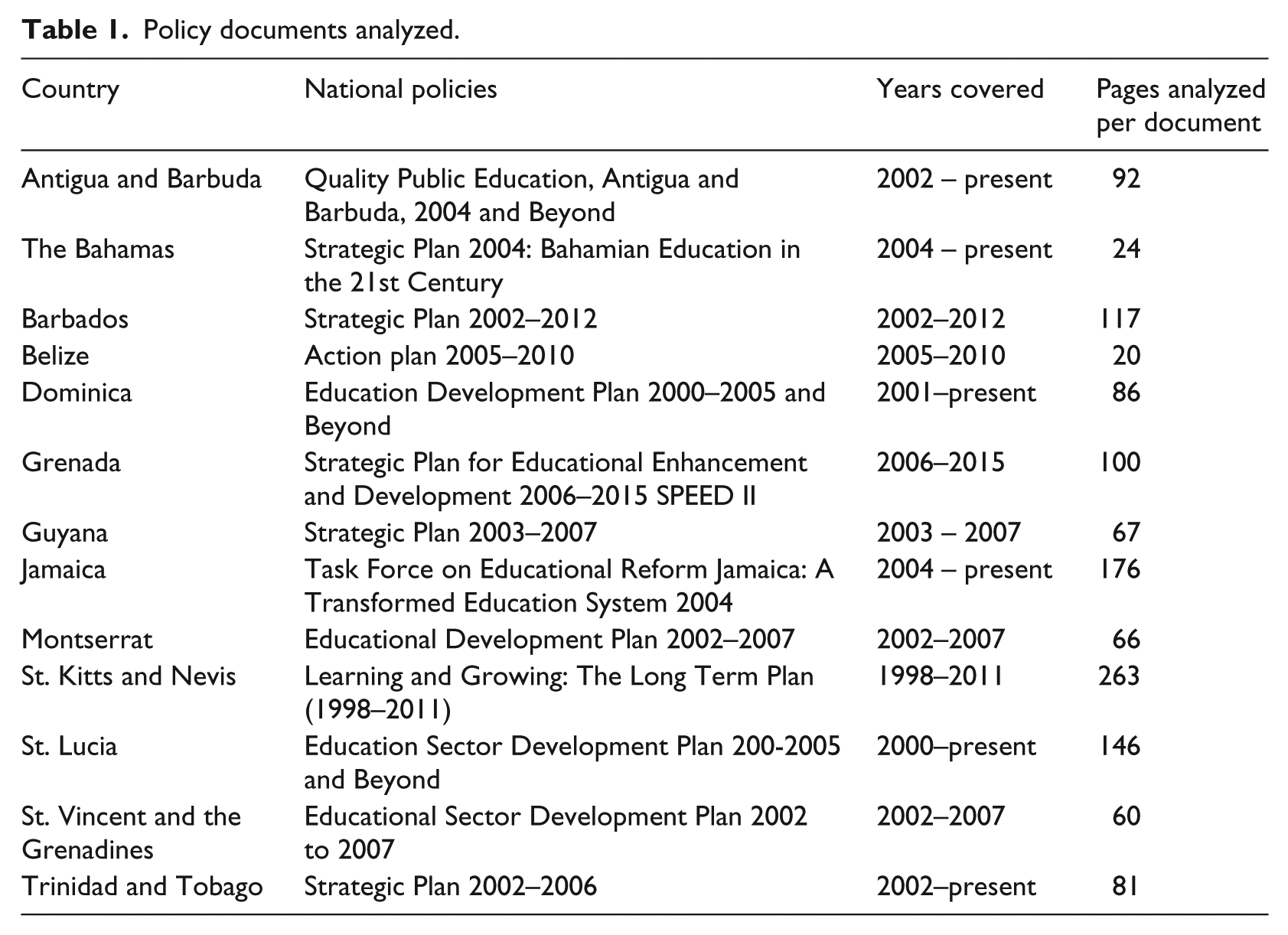
Table 1 shows the national educational policies of 13 CARICOM members, 8 analyzed with the aid of a summative categorical content analysis to understand the manifestations of policy discourse. This was done by first looking at the frequency or occurrence of the pre-selected themes’ occurrence (manifest content analyses) and then giving attention given to underlying meanings of the words or the context (latent context analysis) to understand the extent to which regional policy discourse informs national policy discourse. This study had two phases of data analysis and coding. In phase one, nine TVET sub-themes from the sub-category of “school and the world to work,” under the broader category of “curriculum reform” of the regional education policy laid out in The Future of Education in the Region (CARICOM, 1993), were selected. The categories, representing explicit or inferred communication (see Hsieh and Shannon, 2005), were: (a) commitment to TVET (legislation); (b) training of TVET coordinators and managers; (c) linkages among ministries and institutions; (d) public awareness programs; (e) strengthening of TVET training programs for TVET instructors; (f) training of guidance counsellors; (g) education partnerships for training/apprenticeships; (h) remuneration and benefits for instructors; and (i) gender equity (CARICOM, 1993: 48–51). Although the first Regional Strategy for TVET was created in 1990, it was not used as the benchmark for this study, since The Future of Education in the Region (CARICOM, 1993) built upon the initial 1990 regional TVET strategy and implemented it as a Regional Strategy. For the purpose of this study, only the themes in the region that dealt with TVET were analyzed (see Jules, 2008; Jules, 2012 for the larger study focusing on several thematic areas).
Policy documents analyzed.
Second, to identify whether or not TVET regional mandates existed in national policy discourse, I then examined the objectives of the Caribbean Single Market and Economy (CSME) as stated in the Grand Anse Declaration (CARICOM, 1989). These objectives called for the “full use of labour (full employment) and full exploitation of the other factors of production (natural resources and capital)” (CARICOM, n.d.). Moreover, the Caribbean Single Market, but not the Caribbean Single Economy, came into effect in 2006, with 13 out of the now 15 members of CARICOM accessing it.
Finally, all 13 national policies were read qualitatively by two coders and coded for policy reference or policy congruencies—i.e. the existence of the exact text (word for word) or the conceptual idea—to the regional policy. Direct references to a regional theme in a national policy were assigned a code. Once all of the documents were read, analyzed, and coded, all of the data was then tallied. While there is no standardized intercoder reliability measurement in content analysis, the widely accepted rule is that studies that have reached coefficients above (.75) to (.80) are seen as having high reliability (as cited in Neuenforf, 2002). Coders used the same nine textual classifications to enhance the reliability of the classifications. Coder 1 was a trained researcher and coder 2 was the lead researcher. The two coders coded the same phrases 90% of the time across the 13 policy documents, giving intercoder reliability of .85.
Findings
While all nine themes were present across the 13 documents analyzed for the 2002-2010 policy cycle, because of space constraints I will focus on two selected categories: (a) commitment to TVET (legislation) and (b) linkages among ministries and institutions. I will also address how national governments sought to link and incorporate these broad regional benchmarks into their national strategies, examining how various themes move unidirectionally between the regional and national level.
At the level of discourse, the first finding revealed that national governments, seeking to implement several of the nine TVET recommendations wholesale, transferred the regional discourse and implanted it into national texts. However, national governments first identified and transferred national best practices, identified and defined by CARICOM members, to the regional level using functional cooperation. This process of transfer included: (a) meetings and other types of interaction aimed at arriving at decisions about the planning and implementation of shared services or other regional activities (an example of the most basic form of cooperation); (b) coordination of the actions of individual member states (so that, once agreement was reached on general principles, individual member states may proceed to apply them on a bilateral basis); (c) unifying action that goes beyond the adoption of common principles applied at the level of individual member states; and (d) creating national consultations and a single policy space that may be managed supra-nationally (see Jules, 2008; Jules, 2012; Task Force on Functional Cooperation, 2008). Given the role of cooperation in advancing the regional agenda, the “silent transfer” (Waldow, 2009) of policy practices was distinctive because it commenced through a cooperative perspective aligning national goals with regional benchmarks.
The emphasis on skills reformation at the regional level allowed for the “design[ing] and implement[ing] of a programme of [TVET] for all citizens as part of lifelong learning” (MOE Trinidad and Tobago, 2000: 50). For example, under the category “commitment to TVET (legislation)” (CARICOM, 1993), the document analysis revealed that national governments wrote that their situational analysis showed a need to commit to TVET at the national level to facilitate the seamless transition of graduates to the workforce. The key thematic factor was that national governments linked their commitments to TVET by advocating locally that TVET provided the necessary skills needed in preparation for the world of work, which was critical to regional development (MOE Antigua and Barbuda, 2002; MOE Guyana 2003; MOE Jamaica, 2004). Moreover, the sense of preparation to the world of work was linked to the “vision of the ideal Caribbean person” adopted by all CARICOM governments at CHGCC 18 (1997). This vision of the ideal Caribbean person stressed that the ideal Caribbean citizen should view respect for human life as the foundation on which all other desired values must rest; is psychologically secure; values differences based on gender, ethnicity, religion, and other forms of diversity as sources of strength and richness; is environmentally astute; is responsible and accountable to family and community; has a strong work ethic; is ingenious and entrepreneurial; has a conversant respect for cultural heritage; exhibits multiple literacies, independent and critical, and applies them to the application of science and technology; and embraces differences and similarities between females and males CARICOM (1997). Therefore, national commitments to TVET, along with an increased focus on the creation of the ideal Caribbean person, stemmed from regional mandates focusing on: (a) decentralizing national systems by giving more stakeholders the ability to participate in TVET preparations and (b) provisions that adjusted the labor market to meet the demands of the world of work. Thus, national governments argued that they would “continue to diversify the curricula at the secondary level especially in the [TVET]” (MOE Grenada, 2006: 33), since “universal secondary education (USE) will be academic, technical and vocational in character” (MOE Grenada, 2002: 33). Other countries, such as Barbados (2002), called for the “implementation of a Pilot Project to rationalize the technical and vocational resources at the secondary schools” (p. 64). Such legislative mandates at the national level were linked back to the Regional Strategy for TVET that called for “formulation of programmes for TVET; expansion of education training opportunities; optimisation of use of available resources; increase in impact of resources allocated for education and training; and consolidation and continued development of TVET” (CARICOM, 1990: 5).
Another strong TVET category that resonated in national policies was the “linkages among ministries and institutions” (CARICOM, 1993). This theme spoke to the ability of national governments to coordinate TVET programs in line with regional testing and assessment carried out through the Caribbean Examination Council (CXC) in the form of the Caribbean Secondary Education Certificate (CSEC) and the Caribbean Advanced Proficiency Examination (CAPE). For example, MOE St. Kitts (1998) argued that “links with industry [should] be established to facilitate use of, and exposure to, modern technology and facilities, as a requirement for passing CXC examinations in the area” (p. 41). MOE Montserrat (2002) noted that “increased emphasis has also been placed on private sector development and the strengthening of the human resource base through tertiary education and vocational training” (p. 4). MOE Jamaica (2004) called for technical/vocational courses to be seen as core subjects for CSEC, along with mathematics, English language, Spanish, social sciences, natural sciences, and information technology. Thus, several policies transformed national curricula to include “academics, arts, sports and technical and vocational training” (MOE St. Kitts, 1998: 93). A second institutional building mechanism was the establishment of modular accreditation systems for vocational training (see MOE St. Lucia, 2000; MOE St. Vincent, 2002). Thus, another major finding concluded that the similarities found stemmed from policy agenda-setting attitudes as well as regional mandates that called for the streamlining of regional and national interests.
To explain the similarities found, attention was given to the concept of exceptionalism detailed above, since it was found that these similarities implied national policy documents were speaking a common regional language. It was further deduced from the similarities found that the process which gave rise to the convergence of regional and national policy text was based upon cooperation. The case of TVET shows how national policies and the regional framework are defined, assessed, and bequeathed to the broader regional integration project and how this, in turn, contributes to national development. Analysis of TVET policy exemplifies how national and regional consensus is garnered around priority areas in the Caribbean.
Developing a clearinghouse through cooperative educational transfer
The Caribbean Single Market and Economy (CSME) is based upon the free movement of skills, labor, goods, capital, and the right to establishment (ability of any CARICOM national to establish a business). 9 Policy constructing within the CSME calls for: (a) the removal of “all obstacles to intra-regional movement of skills, labour and travel” (CARICOM, n.d.: 1); (b) the harmonization of social services (education, health, etc.); (c) the ability to provide for the transfer of social security benefits; and (d) the establishment of “common standards and measures for accreditation and equivalency” (CARICOM, n.d.: 1). The portability of skilled workers across the region is seen as an important step towards accelerating the CSME since it offers the same level of recognition and quality assurance standards in all countries. Thus, several of the categories of workers who can move and work freely across the region (artisans, nurses, teachers, university graduates, sportspersons, musicians, managers, technical and supervisory staff, and media workers) falls under the purview of TVET reform, since these categories were identified as ones in which nationals could obtain a CARICOM Certificate of Recognition of Skills Qualification (CARICOM Skills Certificate) from the designated minister in their home or host country.
The development and reform of national TVET programs served as a catalyst for member states to think about how national citizens function within the CSME, and the repercussions of this for educational development. To achieve these reforms in TVET, the region underwent two phases to ensure that member states were able to successfully transfer ideas: (a) member states developed regional institutions that created, maintained, and managed educational standards; and (b) these regional agencies were expected to train national agencies on regional competencies. Through these steps, member states shifted policy discourse from the national to the regional level in the form of collective regional meetings, treaties, and declarations signaling the first aspect of cooperative transfer. The ideas stemming from this intentional learning process were then embedded in regional institutions as a collaborative endeavor and finally transferred back to the national level to be adopted and applied within that policy sphere.
The summative content analysis shows that a clearinghouse was created by national ministers of education as the first aspect of cooperative transfer during a period of heightened regional discourse. The clearinghouse gathered and distributed, in the forms of meetings, reports, and working documents, “knowledge about policies, administrative arrangements, institutions and ideas in one political system (past or present) [to be] used in the development of policies, administrative arrangements, institutions and ideas in another political system” (Dolowitz and Marsh, 2000: 344). This exchange of best practices across CARICOM member states has existed since the inception of CARICOM, but it was actualized within the clearinghouse, evidenced when educational ministers met collectively as a body to make decisions that have had long-term consequences for both the national and regional level. The process begins with recommendations in the form of final reports, derived from the Council of Human and Social Development (COHSOD) (the current regional body responsible for education), which are then presented to the Conference of Heads of Government of the Caribbean Community (CHGCC), which meets several times during the year. CHGCC then endorses the recommendation of the reports, thus giving the green light for national legislatures to ratify these recommendations and implement them into national policies.
The content analysis reveals that cooperative transfer occurred through the movement of national discourse—which called for greater investment in HRD to allow for the free movement of citizens and the establishment of common accreditation standards—to the regional level. For example, from a cooperative transfer perspective, the Regional Accreditation Mechanism (RAM), established in 1997, became linked to National Accreditation Bodies (NAB) to facilitate the free movement of skilled nationals, goods, services, capital, and the right to establishment, as enshrined in the Grand Anse Declaration (CARICOM, 1989). The RAM is dependent upon NAB and provides quality assurance and program harmonization at various levels. It also establishes common standards and measures for accreditation, and provides consistent qualification recognition. The RAM establishes internationally recognized systems of tertiary education, promotes the mobility of skilled individuals, contributes to economic and social development, and ensures the reciprocal recognition of state agreements (Crossley et al., 2011). The NAB are part of the administrative arrangements necessary to facilitate the free movement protocols, but
…are not responsible for the implementation of the free movement of skills, policy or approval of applications for free movement […] they are designed to function in an advisory capacity, guiding the development of national quality assurance systems that would ensure quality tertiary education; evaluate and monitor performance of institutions against set standards; and enforce compliance with national standards that are regionally accepted and internationally comparative. (CARICOM, 2011: 1)
These core elements of NAB are guided by the rules, procedures, and common standards that create methodical and transparent policies capable of delivering regional citizens to compete in the global arena.
The major components of TVET reform in the region were geared towards systems of demand-driven competency-based approaches, shown in Figure 1, premised upon global occupational standards and derived in collaboration with industry (Working Document COHSOD XVa, 2006). Since the endorsement of the TVET strategy by the Standing Committee of Ministers of Education (SCME 8) in 1990, three member states have set up National Training Agencies (NTA) for the purpose of building and promoting TVET in their respective nations: Barbados, Jamaica, and Trinidad and Tobago. Years later, to foster the national-to-regional transfer of successful TVET best practices, the Caribbean Association of National Training Agencies (CANTA) was established in 2003 through a memorandum of agreement between the Jamaican Human Employment and Resource Training (HEART Trust/NTA), 10 the TVET Barbados Council, and the TVET Trinidad and Tobago Council. 11 After the establishment of CANTA, the core principles, practices, and administrative instruments of several national agencies 12 were transferred into CANTA’s core operation systems so that regional occupation standards could be developed and distributed. CANTA’s current member countries are Antigua, Bahamas, Barbados, Belize, Guyana, Jamaica, Montserrat, St. Lucia, and Trinidad and Tobago; the organization is based on the same regionally endorsed platform of occupational standards as the National Vocational Qualification of Jamaica (NVQ-J), and coordinates TVET to certify skilled labor for the free movement of certified workers within the CSME. As CANTA (2011: 1) notes, “Regional Occupational Standards (ROS) are National Occupational Standards that have been regionally approved by CARICOM” and are used to:
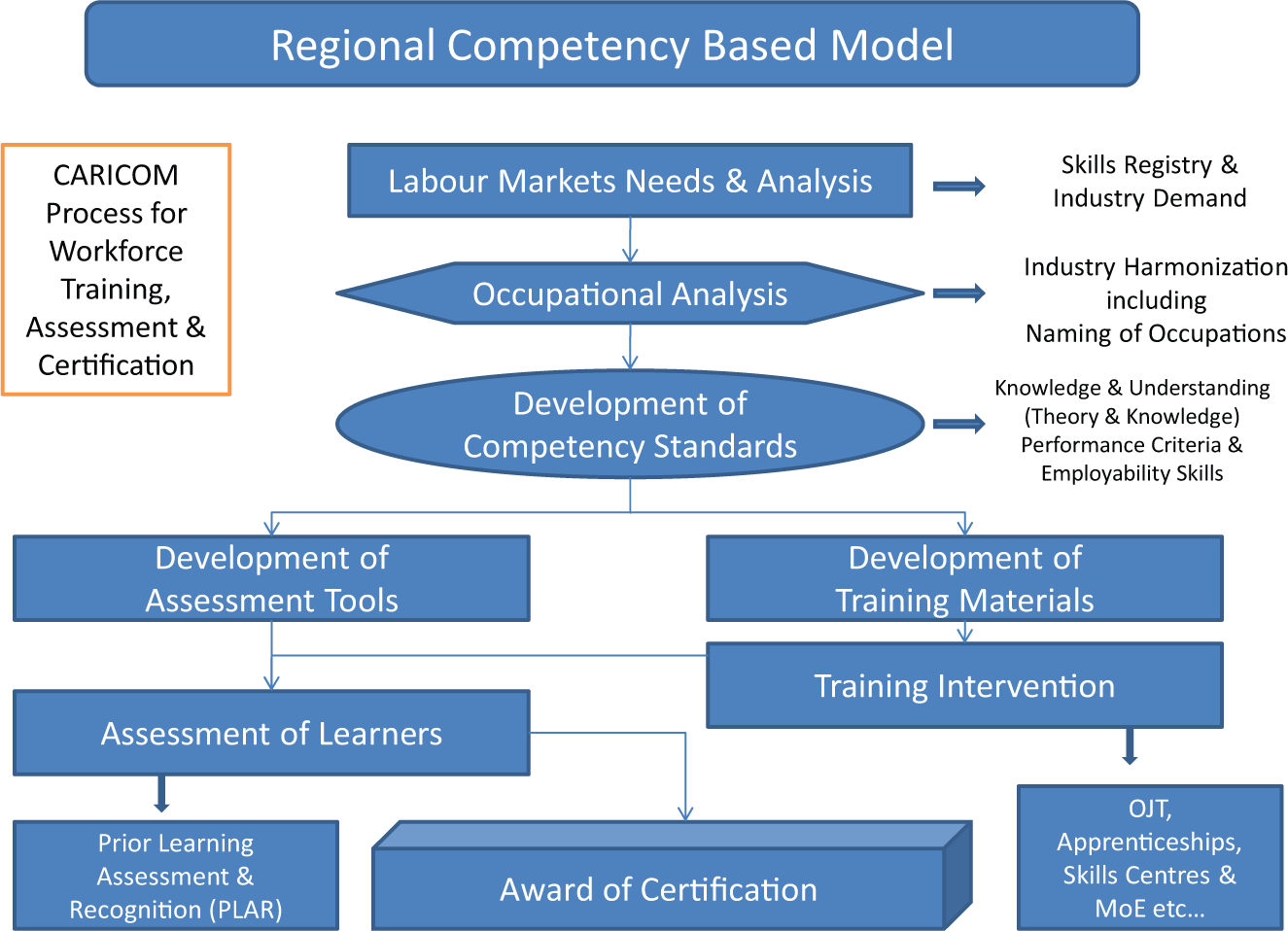
The Regional Competency Based Education and Training Model.
Determine the criteria to award the Trinidad and Tobago National Vocational Qualification (TTNVQ) and the Caribbean Vocational Qualification (CVQ)
Prepare job descriptions and specifications
Determine recruitment criteria
Set in-house standards of performance and develop workplace procedures
Form a benchmark for quality of performance
Develop training programmes
Assess the effectiveness of training programmes
Identify skills gaps and training needs
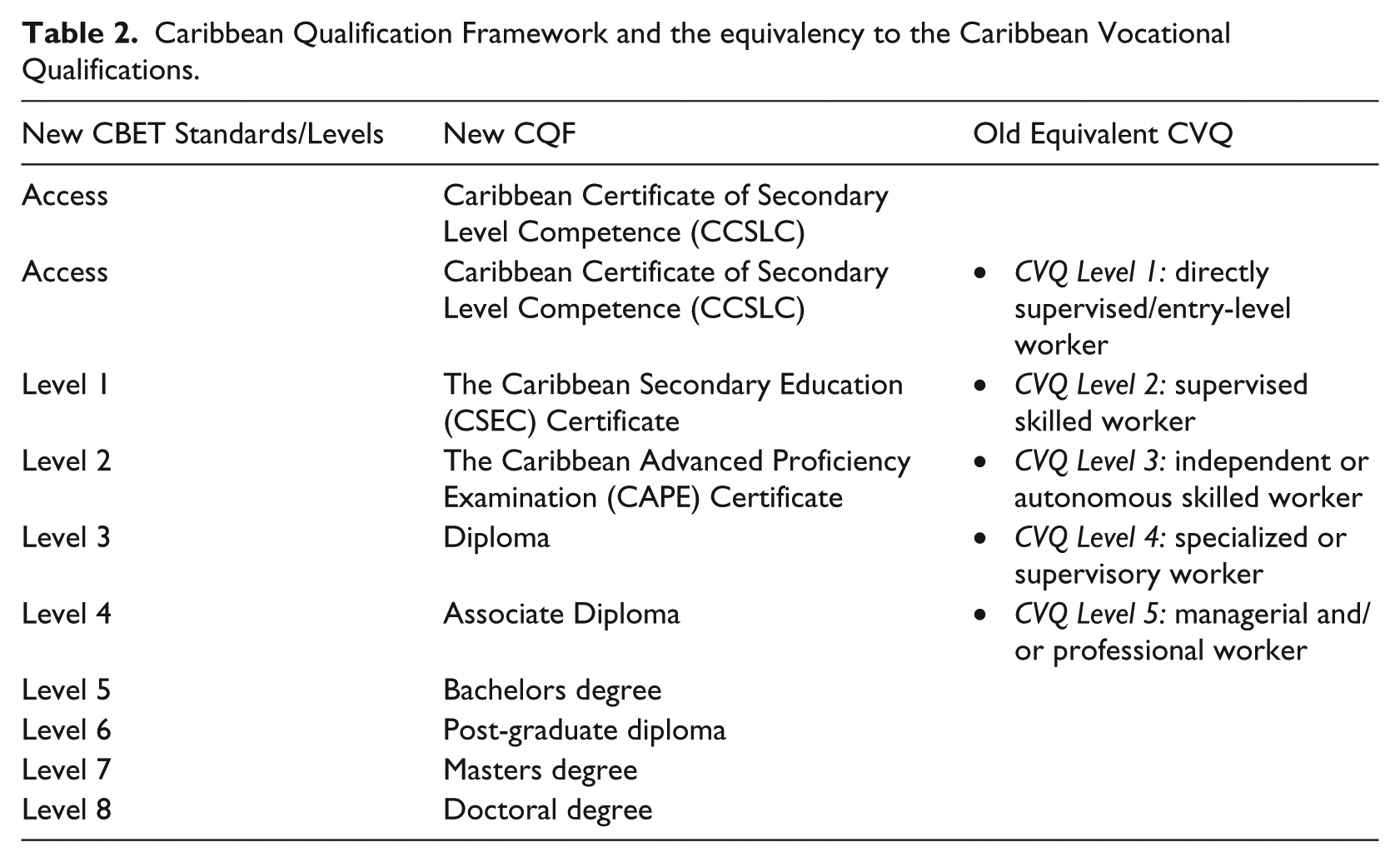
At COHSOD XI (2004), CANTA, through the Regional Coordinating Mechanism for Technical and Vocational Education and Training (RCMTVET), called for the development of Caribbean Vocational Qualifications (CVQ). The initial CVQ used a five-tiered system of Competency Based Education and Training (CBET) standards/levels relevant to regional employment:
CVQ Level 1: directly supervised/entry-level worker
CVQ Level 2: supervised skilled worker
CVQ Level 3: independent or autonomous skilled worker
CVQ Level 4: specialized or supervisory worker
CVQ Level 5: managerial and/or professional worker. (CANTA, 2005: 5)
In 2007 the HEART Trust/NTA launched the CVQ levels that correlate to different CBET standards to facilitate the movement of certain categories of workers (artisans, nurses, teachers, university graduates, sports persons, musicians, managers, technical and supervisory staff, and media workers). With entitlement to move freely across the CSME, the skills of these laborers become portable throughout the region (HEART Trust/NTA, 2007). As Table 2 shows, the CVQ Levels and the CBET standards relevant to employment are the main output drivers, while assessment is matched to the performance of individuals; essentially, CBET certifies prior work experience (however attained) in Vocational Qualifications (VQs) regionwide. These regional VQs stem from the HEART Trust/NTA and to a lesser extent NTAs in Barbados and Trinidad and Tobago. As the levels demonstrate, these elements are developed and incorporated into VQs, eventually informing the national programs of learning. Further, as the new CBET Standards/Levels illustrate, this qualification arose from national best practices and was accessible to persons already in the workforce as well as students in secondary schools across the Caribbean, allowing for easier school-to-work transition. These regional standards are organized into units allowing students to earn credit points towards achieving a complete CVQ, which are available in the fields of agriculture, business, communication, construction, energy, engineering and maintenance, health, information technology, manufacturing, personal services, tourism, and hospitality.
Caribbean Qualification Framework and the equivalency to the Caribbean Vocational Qualifications.
As CANTA (2005) argues, NTAs, with these new standards, contribute to the list of regional standards developed to “facilitate regional competency based education and training initiatives” (p. 1). CARICOM members accepted initial five-level regional system for vocational qualifications approved in 2004 since CBET incorporates knowledge, skills, attitudes, and workforce preparation into education and training. These competencies are based on the specific requirements of the various occupations.
Given the regional importance of CVQs, findings show that other member states have acquired standards from the HEART Trust/NTA for use in their TVET systems through the process of direct transfer. The HEART Trust enabled transfer in the form of services to member states through the training of managers, allocation of technical personnel, and access to training modules developed in relation to occupational standards. A number of developments have facilitated regional competency-based education and training initiatives, including the establishment of a regional framework for vocational qualifications, which were developed to encompass both academic and vocational tracks, formerly seen as parallel. This framework is intended to help facilitate the articulation of programs and qualifications within as well as across tracks and to increase efficiency.
COHSOD XXIV (2013) has expanded the CVQ as the universal benchmark regionally for TVET qualification in CARICOM and approved the change from five-tired CVQ CBET standards/levels system to to an eight-tiered CBET standards/levels called the Caribbean Qualification Framework (CQF) (see Table 2) that is conceived as a multi-leveled framework centered on skills and competencies interconnected with the various levels of institutional programs and certifications, from high school to university. As Table 2 shows, the CQF, with its progression from a five-tiered qualifications system to the eight different levels of certification, has now emerged as the ideational framework of educational governance. Table 2 illustrates the new seamless education and training framework developed by Jamaica’s HEART Trust/NTA, modified within CARICOM, endorsed by CARICOM Heads of State, and adopted by national ministries. In this endorsement and adoption of a regionalized policy, national governments and ministries of education demonstrate how the CBET model is transferred back to the national from the regional, since there is “agreement at the regional level on the structure of the proposed VQs” (CANTA, 2005: 5). It is the transfer of regional practices back to the national level that lies at the core of cooperative transfer.
Subsequently, a CARICOM working group developed a regional accreditation or equivalency framework for the regional certification of vocational competencies by examining the following areas: (a) type or level of program; (b) orientation and purpose,; (c) duration of typical program; (d) credits equivalency, (e) entry requirements, (f) occupational competence, and (g) academic competence (CANTA, 2005). COHSOD VII (2002) endorsed the occupational standards developed for use in training and the credentialing of workers, allowing for the standardizing of training and qualifications at the regional level.
The three NTAs used as inspiration for the development of a regional educational clearinghouse engendered the transfer of best practices in the form of capacity building and development and adoption of the five-tired CVQ CBET standards/levels. Adoption of this model by member states meant that they accepted: (a) the original five-level framework of occupational certification that has now been revised to an eight-level framework (see Table 2); (b) the occupational standards already developed in the region; (c) the process of standards development; and (d) the process of training. Since HRD is pivotal to the enactment of the CSME and the free movement of skilled nationals, CVQ—created nationally, modified regionally, and transferred back to the national – is the central interface for all other subsystems (e.g. economic, institutional, and legislative) to ensure the viability and sustainability of the CSME.
Educational exceptionalism and small states
As explained above, educational exceptionalism can be defined as a distinctive space that the regional level occupies, given the current international trends. The Caribbean regional space provided for the construction of competency-based education and training initiatives for TVET, demonstrating how educational exceptionalism plays out at the regional level with the aid of the cooperative policy transfer. CARICOM leaders recognized that to achieve a competitive regional workforce and a common system, an understanding of quality assurance issues was vital at all levels of education and training. Utilizing the TVET structure, national workforces were encouraged to be trained in a “broad spectrum of skills to ensure their competitiveness in the current economic environment and agreed that schools curricula should prepare students for participation in the ICT-driven global economy” (COHSOD IX, 2003: 5). Thus an examination of CVQs, through the lens of TVET, illustrates how the concept of cooperative transfer promoted the portability of qualifications and put the region in a position that allowed for competitive global participation.
The harmonization of certification and accreditation procedures became critical to the functioning of integrated markets as the institutionalization of CVQs not only facilitated the free movement of workers, but also contributed to the enhancement of skills training in work settings. In addition, it facilitated the credentialing of skilled workers already in the workforce. The development of CVQs used the five-tiered regional qualifications framework (which has now been revised to an eight-tiered system) and a delegated structure in which individual NTAs agreed on the use of approved regional occupational standards and mechanisms. COHSOD XV (2006b) agreed that a CVQ would be conferred in accordance with the CANTA Model for Training Assessment and the Certification process of TVET. In turn, the Caribbean Examination Council (CXC), as the regional examinations body, would confer CVQs within the secondary school system throughout the region. The Barbados TVET Council, the HEART Trust/NTA, along with the NTA of Trinidad and Tobago, issued CVQs necessary for employment and continued to provide certification for member states that had not yet established mechanisms for CVQs. Trinidad and Tobago launched their CVQ in May 2007 and Jamaica launched its in October 2007. Holders of CVQs will be entitled to move freely in the CSME, thus facilitating the portability of skills throughout the region (HEART Trust/NTA, 2007). Thus, CVQs became couched in the rhetoric of regional best practices and was expected to be disseminated to other member states. In essence, the policy experiments of CVQs in the countries that successfully transferred the model from HEART/NTA laid the foundation for policy reforms to travel across the region to other member states. In essence, CVQs became a type of “travelling reform” (Steiner-Khamsi and Stolpe, 2006), slated for dissemination. In 2005, attention was placed on establishing a harmonized system of training and certification based on the agreed-upon competency-based principles. The initial preparation of the movement of National Vocational Qualifications to a Regional Vocational Qualification was hailed as a political accomplishment through the sharing of national best practices that subsequently informed the regional discourse of common standards and framework (CARICOM, 2007).
Conclusion
Leaders who created the national policies referenced other national polices without acknowledgment since they used the regional framework as a form of legitimization for work that had been done prior to the 1993 regional educational policy. This article advanced that education exceptionalism provides a viable framework for understanding the CARICOM regional integration project. If integration is the primary aim of member states, educational exceptionalism functions as a governance mechanism within the post-bureaucratic state. In other words, utilizing a specific policy process (functional cooperation) and policy tool (cooperative transfer) within education makes the CARICOM integration project exceptional from a governance perspective. Further, cooperative transfer allows for the efficient movement of educational policies and practices from the national to regional level and then from the regional level to the national level. The duality of this process is identified as cooperative transfer since it is grounded within CARICOM’s non-economic pillar of functional cooperation, which calls for the coordination of all non-economic sectors, ranging from health to education. In using TVET to illustrate how cooperative transfer works, it is important to understand why it took place. As small states within the Caribbean encounter the same problems within their educational systems, they look to CARICOM to create and diffuse a regional policy on education. Together, the interconnections provided at the regional level of analysis demonstrate the importance of discursive policy at the regional level and its ramifications at the national level. Therefore, social learning, lesson drawing, geopolitical reconstruction, and deterioration occurred among CARICOM member states as they addressed the challenges of globalization and moved away from methodological nationalism. Although such challenges were not new to the region, they caused the area to reconstruct itself in unprecedented ways and forced the region to move towards a group of borderless nation-states housed within the CSME. Moreover, regional leaders have used economic integration and RTAs, and have focused on greater integration as a way to overcome smallness. The continued CARICOM commitment to the policy process of functional cooperation expresses the determination of regional leaders to make it one of the principal means by which the benefits of integration are distributed across the region. It should also be noted that CARICOM went through the process described above while simultaneously revising the five levels of the CBET standards/levels since 2010 until the new CQFs were adopted in 2015 (see Table 2). The new proposed Caribbean Qualification Framework, which now has eight-levels, should replace the CBET standards/levels.
TVET was identified as a forum for the coordination of administrative tools, processes, and performances, since regional challenges hinged on the ability of the region to produce and maintain a highly competent and competitive workforce. Retraining and reorganizing the work force became essential, alongside the need for labor, public/private partnerships, and programs to develop the competitiveness of workers. New demands were placed on the regional workers to continually develop new competencies and adapt skills to meet the needs of a dynamic labor market. Consequently, training systems at both the work and institutional levels were introduced to ensure that workers were appropriately equipped to meet emerging challenges. The streamlining of an efficient workforce became the foundation on which CARICOM countries constructed a response to the global situation. CARICOM is premised upon integration and as such, isomorphism is expected among its constituency. Among member states, regionalism is given preference over internationalism. Consequently, internationalism must conform to regional standards, not vice versa. Cooperative transfer was used between the member states of CARICOM as they deepened the integrative movement. This paper advances that educational transfer is a cooperative policy tool or mechanism at the regional level, premised on the actual transfer of knowledge about policies, administrative arrangements, institutions, and ideas in one political system (past or present) to another.
Footnotes
Acknowledgements
I am grateful for the support of my colleagues Kristin J. Davin and Lara K. Smetan and my graduate assistants Landis G. Fryer and Devin Moss who provided comments on earlier drafts of this article, and to the external referees and editor who offered extensive critical feedback.
Funding
This research received no specific grant from any funding agency in the public, commercial, or not-for-profit sectors.