



Abstract
We conducted a rapid scoping review of empirical studies to identify how persons with intellectual and other cognitive disabilities have been engaged as active members of research and evaluation teams. We conducted a literature search using a systematic method that accessed peer reviewed studies in relevant library databases and all major evaluation journals. The search resulted in 6,624 potential articles, of which 32 met the inclusion criteria for this study. The findings address three categories of interest: 1) methodological underpinnings and practical justifications for using inclusive approaches, 2) different inclusion processes, and 3) reflections by researchers with and without intellectual and other cognitive disabilities. Findings provide conceptual and practical insights for researchers and evaluators when designing inclusive methods involving persons with intellectual and other cognitive disabilities. Gaps in inclusive research and evaluation are discussed and suggestions for future research are proposed.
Keywords
Introduction
This paper presents and appraises existing empirical evidence on the inclusion of persons with intellectual and other cognitive disabilities in research and evaluation teams. Inclusive approaches are understood to help capture diverse perspectives that persons with intellectual and other cognitive disabilities contribute as active members of research and evaluation teams (Molinari et al., 2011). Their inclusion in such teams serves moral and social purposes, and aims to prevent further marginalization (Mertens, 2001). Moreover, including persons with disabilities can be considered good practice because inclusive approaches reportedly enhance the validity and utility of research and evaluation while limiting potential biases (Chouinard & Cousins, 2009; Frankena et al., 2015; Maynard, 2015; Mertens, 2001). However, persons with intellectual and other cognitive disabilities still tend to experience a lack of power and control over their own lives, and their voices may still be suppressed, such that ‘experts’ and policy makers make important research, programmatic and life decisions without them (Buchanan, 1996; Maynard, 2015; Molinari et al., 2011).
Walmsley et al. (2018) indicated that the goal of inclusive research is to contribute to “social change and improve quality of life” and it recognizes the contributions that persons with intellectual disabilities can make; it is based on problems that are important to these individuals, which also inform research processes and outcomes; it produces information that can be used by individuals with intellectual disabilities; and it brings individuals with intellectual disabilities together with those who investigate the issues that are important to these individuals (p. 758). Nonetheless, in a review of literature on inclusive evaluation (from 2000-2009) involving persons with various disabilities, Jacobson et al. (2013) found fewer persons with intellectual and developmental disabilities included in program evaluations compared to those with psychiatric disabilities (13% vs. 47% respectively). They also indicated that while 77% of individuals with disabilities (including persons with intellectual and developmental disabilities) were included in data collection, only 31% contributed to decision-making regarding design or interpretation (Jacobson et al., 2013). There is little available evidence to guide inclusive research and evaluation processes with this population (Yarbrough et al., 2011). We embarked on this review to fill that void and inform good practice.
Different terms are used by researchers and evaluators to describe methodological approaches as they report on collaboration with persons with intellectual and other cognitive disabilities in knowledge building processes (e.g., emancipatory disability research, action research) (Bigby et al., 2014; Frankena et al., 2015). In light of this varying terminology and related conceptualizations, Walmsley and Johnson (2003) argued that ‘inclusive research’ is the most comprehensible to people because it serves as an umbrella term comprising different definitions and approaches, all with the common intent of including populations in research that concerns them. Inclusive research with persons with intellectual and other cognitive disabilities comprises a larger body of literature compared to inclusive evaluation (Maynard, 2015). According to Frey (2018), evaluation uses methodological approaches similar to research while assessing the value, merit and efficacy of programs, policies, products, and processes. Given the similarities between evaluation and research methods, the literature on the latter is applicable to the evaluation field, and vice-versa (Maynard, 2015).
Past literature reviews on inclusive research that involved individuals with intellectual disabilities (Bigby et al., 2014; Di Lorita et al., 2018; Frankena et al., 2015) revealed discrepancies in the titles and roles that these individuals hold in research. For example, according to Bigby et al. (2014), persons with intellectual disabilities who play a role as “controllers” or “leaders” have more control over research processes compared to those referred to as “advisors”. Frankena et al. (2015) described the role of persons with intellectual disabilities in research as “co-researchers”, “research advisors” and “research partners”. These authors also found that the activities that individuals with intellectual disabilities undertook included making decisions about the topic of research, guiding questions and methods, data collection, applying for ethics approval, literature review, developing accessible materials and analysis of data. On the other hand, Di Lorita et al. (2018) observed that “co-researchers” with intellectual disabilities are often not involved in aspects of research that require higher cognitive processing (i.e., data analysis).
Previous reviews revealed several barriers and practical considerations related to inclusive research. Some of these barriers are assessing the capabilities of persons with intellectual disabilities at the recruitment phase (i.e., whether they have the capacity to understand and examine research topics), the extra time required to plan for the inclusion of persons with intellectual disabilities during the design phase (Frankena et al., 2015), and increased research costs and time that are not always coherent with budget requirements and deadlines imposed by funding agencies (Di Lorita et al., 2018). Despite these challenges, conducting research with persons with intellectual disabilities has several benefits for co-researchers, academic researchers, participants, and the research project (Di Lorita et al., 2018). For example, co-researchers with intellectual disabilities often feel empowered, develop a sense of accomplishment, and increase their social and support system. Academic researchers also benefit from such a collaboration due to the added value and strengths that co-researchers with intellectual disabilities bring to the projects. Learning about lived experiences of co-researchers can also be instrumental to academic researchers. Participants have also reported feelings of comfort and being understood when interacting with co-researchers who have the same disability as they do. Lastly, the engagement of co-researchers with intellectual disabilities can be invaluable as they contribute their lived experiences to different phases of research (i.e., developing interview guide, designing questionnaires, data analysis and dissemination of findings; Di Lorita et al., 2018).
The involvement of persons with intellectual and other cognitive disabilities has been shown to enhance the validity and relevance of research and evaluation, and it often leads to positive outcomes for all stakeholders. Nonetheless, there are several gaps in the literature with respect to: 1) consistency in defining the roles and titles of evaluators or researchers with intellectual and other cognitive disabilities, 2) consistency in defining how inclusive approaches are enacted by research teams, and 3) clear guidelines in terms of how to work with persons with intellectual and other cognitive disabilities and engage them in research and evaluation, how to approach and accommodate them. With foregoing previous research findings in mind, we embarked on a rapid scoping review that integrates evidence of methodologies used in inclusive research and evaluation frameworks. The initial motivation for this study was our need to conduct an inclusive evaluation study of an early-stage social enterprise focused on improving accessibility for persons with intellectual and other cognitive disabilities. An initial foray into the evaluation literature in search of guidance on good practice to support our work yielded very few empirical studies to provide insights. This prompted us to conduct a rapid scoping review that also included literature on inclusive research in the social and health sciences.
Method
This rapid scoping review was conducted according to the methodological framework outlined by Arksey and O’Malley (2005). It included five stages: 1) identifying the research objective(s)/question(s); 2) identifying relevant studies; 3) study selection; 4) charting the data; and 5) collating, summarizing, and reporting the results (Arksey & O’Mally, 2005). Our objectives were: i) to uncover international evidence on practical considerations for including persons with intellectual and other cognitive disabilities in research and evaluation processes and teams; and ii) to produce insights that could guide decision-making about inclusive research and evaluation studies and projects.
Articles included in our review met the following criteria: (a) primary focus on adults (above 18 years of age) with intellectual disability, cognitive impairment, or cognitive disability, (b) engagement of adults with intellectual disabilities, cognitive impairment, or cognitive disabilities as participants in some or all aspects of the inquiry, (c) empirically conducted research and evaluations (e.g., individual or multiple case studies, studies examining empirical participatory research, meta-analyses of empirical studies) and conceptual studies that in some fashion drew on empirical findings even if the latter were not the main focus of such studies, (d) peer-reviewed journal articles, books, book chapters, theses and dissertations, and (f) English language papers. We did not limit the search based on year of publication. We conducted the literature search from October 2019 to March 2020.
The search included these databases: APA PsycInfo (Ovid), MEDLINE (Ovid), ERIC (Ovid Platform) and CINAHL (EBSCO). Our interest in identifying practices to guide an inclusive evaluation study led to a complementary, direct search of major evaluation journals: Evaluation, American Journal of Evaluation, Evaluation and Program Planning, Canadian Journal of Program Evaluation, Evaluation Journal of Australasia, and African Evaluation Journal. These searches used combinations of these keywords: “participatory”, “evaluation”, “participatory evaluation”, “inclusive research”, “participatory research”, “emancipatory evaluation”, “empowerment evaluation”, “intellectual dis*”, “learning disability”, “cognitive disability”, “cog* dis*”, “cognitive impair*”, “cognitive impairment*”, “cognitive dis*”, “cognitive disorder*”, “dementia”, “Alzheimer’s”, and “traumatic brain injury”. This search strategy yielded a total of 6,624 articles, which were reviewed (the titles and abstracts) by one of the researchers (GG) according to the established exclusion and inclusion criteria. Following this review and after removing duplicate sources, 48 articles were uploaded to Covidence, an online tool used to screen references. Two other researchers (PM, RL) separately reviewed all the titles and abstracts of the articles in Covidence. This led to 39 articles being included for a full-text review, which was completed by all three researchers. The researchers independently flagged papers that did not meet all inclusion criteria, and then discussed any disagreements until consensus was reached. This whole process led to 32 articles being included in the sample for this study (see Figure 1). Search strategy.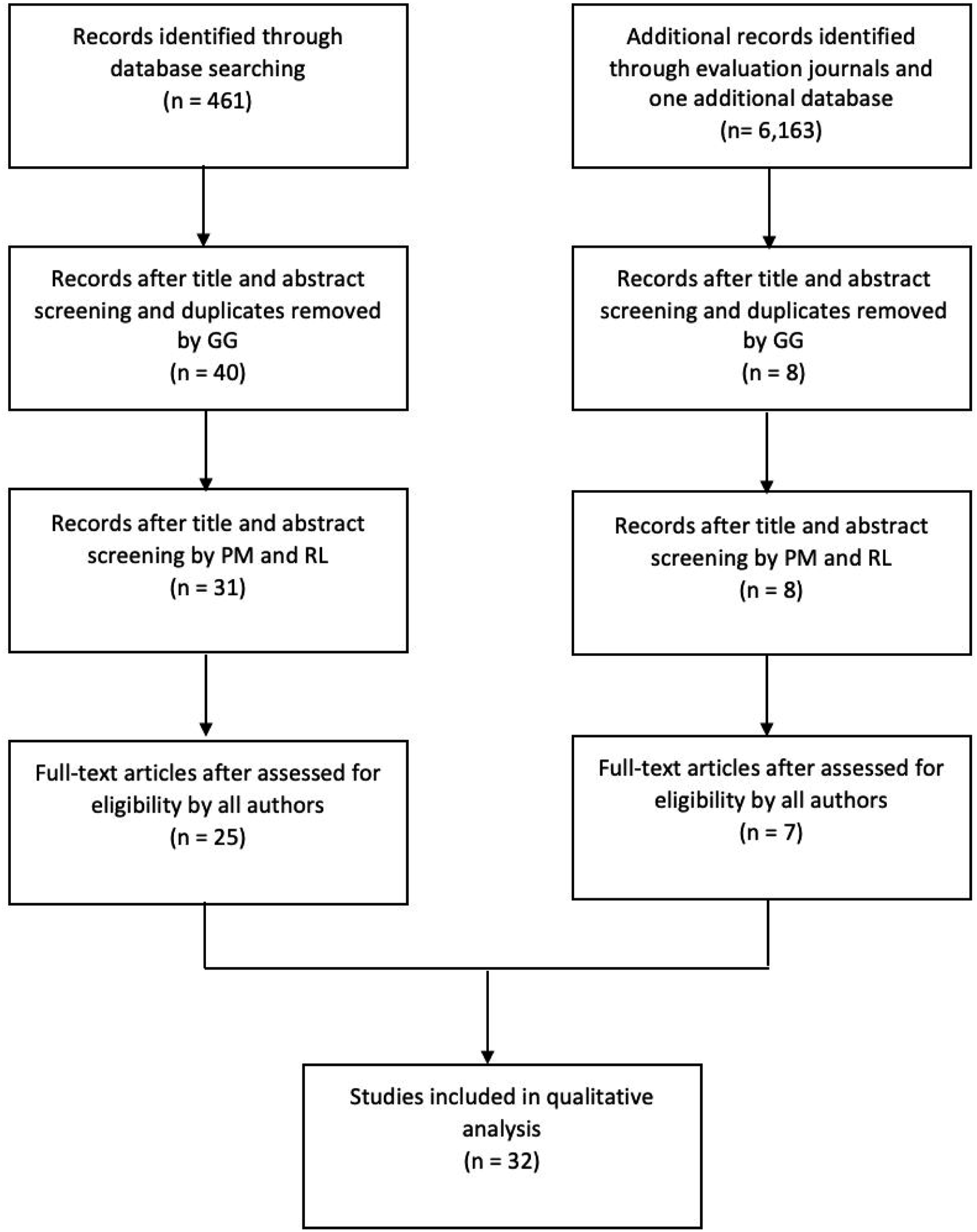
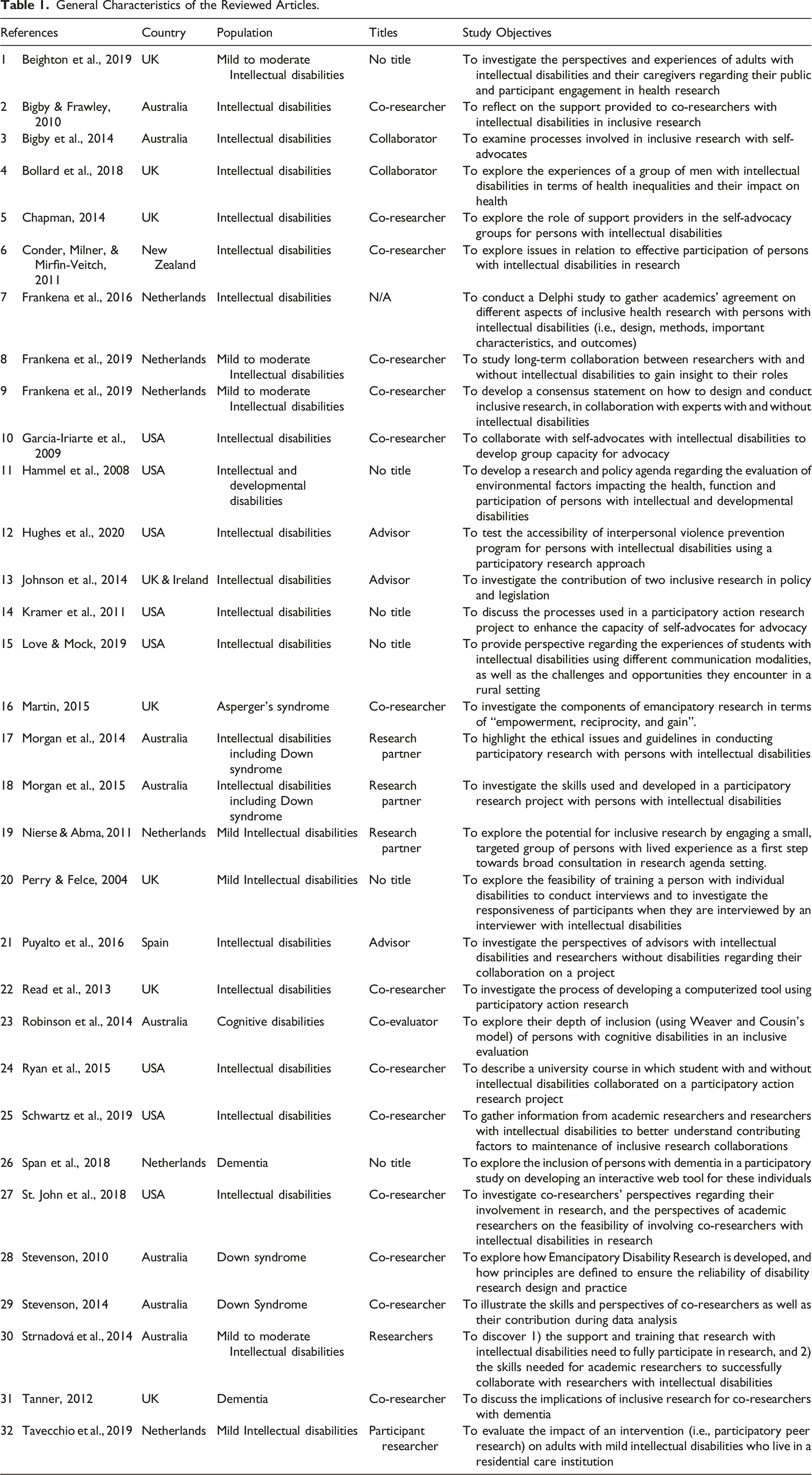
General Characteristics of the Reviewed Articles.
Findings
Table 1 presents the main characteristics of the 32 studies in the final sample. Most studies (n=29) involved persons with intellectual and developmental disabilities and three studies involved individuals with other cognitive disabilities (i.e., Robinson et al., 2014; Span et al., 2018; Tanner, 2012).
Methodological Approaches and Practical Justifications
Some researchers adopted a specific, existing model or framework to guide the design and implementation of their studies. Most researchers relied on approaches that drew on distinctive methodological frameworks (e.g., participatory action research) to guide study design and execution. A small number instead drew generalized philosophical inspiration from relevant research traditions (e.g., emancipatory research). Eleven of the studies engaged persons with intellectual disabilities in participatory action research (PAR) or action research (AR) for various reasons: 1) to acknowledge the importance of including persons with intellectual disabilities throughout all stages of the research process and give them ownership as representatives of their broader community who will be impacted by research outcomes (Bollard et al., 2018; Conder et al., 2011); 2) to promote social change by collaborating with a marginalized group of people in various stages of research (Garcia-Iriarte et al., 2009); 3) to allow for active engagement of persons with disabilities in the development of research and creating opportunities for the expression of their perspectives (Love & Mock, 2019); 4) to improve practice and products used by these individuals (i.e., storytelling software; Read et al., 2013); and 5) to empower underrepresented communities in solving issues of immediate concern (Ryan et al., 2015; St. John et al., 2018).
Beighton et al. (2019) and Bigby and Frawley (2010) drew on Walmsley and Johnson’s (2003) model of inclusive research and Stevenson (2010, 2014) used the Emancipatory Disability Research framework to inform research design and methods. Beighton et al’s. (2019) study contributed to patient and public involvement using the Walmsley and Johnson’s (2003) model, which has several characteristics, including that the problem should be owned by persons with intellectual disabilities who are involved and exert control throughout the research process. In contrast, Stevenson (2010, 2014) elaborated the Emancipatory Disability Research paradigm (Barnes, 2001, 2003) into a framework to conduct participatory action research involving individuals with Down syndrome. The Emancipatory Disability Research framework intends to empower individuals with disabilities by fully involving them in all phases of a study based on key principles, which include control, accountability, practical outcomes, the social model of disability, the “problem of objectivity”, the choice of methods, and the role of experience. The framework emphasizes transparency in that all components of a study must be explained to ‘advisors’ with disabilities and the anticipated research outcomes should clearly aim to benefit persons with disabilities (Stevenson, 2010).
Nine studies were guided by a philosophical commitment to the participation of persons with intellectual and other cognitive disabilities, rather than a specific model or methodology. For instance, Robinson et al. (2014) used a participatory approach to support four dimensions of an inclusive program evaluation including “diversity, depth of participation, power relations, and manageability” (p. 495). Hughes et al. (2020) drew on a participatory philosophy to co-create interventions that would have a positive impact on the lives of persons with intellectual disabilities. Morgan et al. (2014) used a participatory approach because it promised to engage persons with intellectual disabilities as ‘partners’ contributing to various phases of the research and authentically communicating their knowledge and experiences. Tavecchio et al’s. (2019) study was guided by a participatory peer research stance that involved persons with intellectual disabilities as participant researchers to give them a significant degree of control and focus their engagement. Other studies reported being guided by a participatory philosophy to design an interactive web tool for individuals with dementia (Span et al., 2018), and examine the literature related to their research topic and policy implications (Hammel et al., 2008).
Three studies in our sample reported being guided by an emancipatory approach. For example, Martin (2015) conducted a study with service users with Asperger’s syndrome to examine key principles of emancipatory research (i.e., empowerment, reciprocity, and gain); while Perry and Felce (2004) reported being guided by an emancipatory philosophy in involving individuals with intellectual disabilities as ‘co-researchers' in conducting interviews. Nine studies mentioned being guided by ‘inclusive’ values or approaches. For example, Chapman (2014) reported using an inclusive approach with the goal of ensuring that all research processes were accessible to persons with intellectual disabilities. Bigby et al. (2014) used ‘collaborative group’ research to foster inclusion. Puyalto et al. (2016) reported an emphasis on inclusion in investigating the perspectives of self-advocates and advisors with intellectual disabilities regarding their involvement in research processes. Tanner (2012) investigated the process of including individuals with dementia as ‘co-researchers’ in all stages of research. Additionally, several researchers (i.e., Frankena et al., 2019; Nierse & Abma, 2011; Schwartz et al., 2019) reported conducting ‘inclusive’ studies in collaboration with persons with intellectual disabilities in which academic researchers did not play a role as ‘experts’ and where decision-making power was shared among researchers with and without intellectual disabilities.
Inclusion Processes
Sources of Recruitment
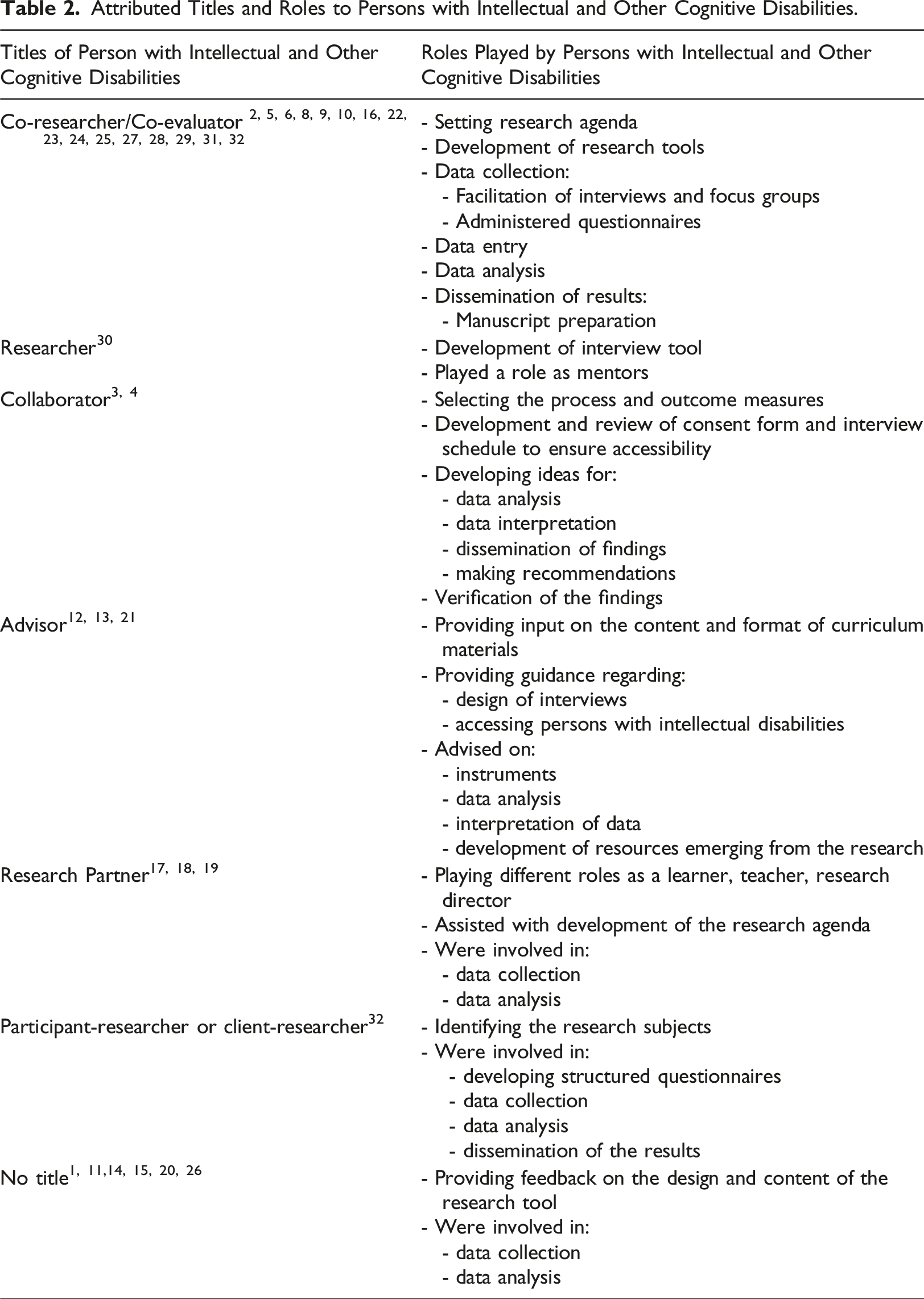
Attributed Titles and Roles to Persons with Intellectual and Other Cognitive Disabilities.
Researchers have discussed some challenges they experienced in recruiting persons with intellectual disabilities to serve as ‘co-researchers’ (or in other related participatory roles). For example, Beighton et al. (2019) recruited individuals with intellectual disabilities who had previous research experience as part of an established team due to barriers put forward by gatekeepers, such as research governance and ethics boards, in terms of ensuring individuals’ capacity to consent to be involved in such research roles. These authors acknowledged two limitations to this approach. First, established groups are often dominated by persons with mild to moderate intellectual disabilities, which means those with severe to profound intellectual disabilities are excluded, thereby introducing potential bias into the knowledge base about inclusive research. Second, the previous relationships researchers have with individuals with intellectual disabilities may cause biases in research processes such as group discussions (Beighton et al., 2019). St. John et al. (2018) noted recruitment challenges when relying on paid workers and/or family members to communicate with potential partners with intellectual disabilities.
Titles and Roles
The findings revealed inconsistencies in the titles authors assigned to persons with intellectual and other cognitive disabilities who played a role in their research teams. In 26 studies, these individuals played roles as “co-researchers” (e.g., Bigby & Frawley, 2010; Frankena et al., 2019; Martin, 2015; Nierse & Abma, 2011; Schwartz et al., 2019; St. John et al., 2018; Tanner, 2012), “collaborators” (Bollard et al., 2018), “advisors” (Hughes et al., 2020; Johnson et al., 2014; Puyalto et al., 2016), “research partners” (Morgan et al., 2014; Morgan et al., 2015) and “participant-researcher” (i.e., Tavecchio et al., 2019). However, six studies did not name the titles assigned to persons with intellectual and other cognitive disabilities (e.g., Beighton et al., 2019; Kramer et al., 2011; Ryan et al., 2015; Span et al., 2018). (See Table 2)
The findings also revealed that ‘co-researchers’ and ‘co-evaluators’ with intellectual and other cognitive disabilities were involved in different phases of evaluation or research including: (A) study design which consisted of making decision regarding the study measures, interview guide, and developing research tools (e.g., Frankena et al., 2016; Read et al., 2013; St. John et al., 2018; Stevenson, 2010); (B) data collection which included conducting interviews and facilitating focus groups, administering questionnaires (e.g., Bigby et al., 2014; Conder et al., 2011; Perry & Felce, 2004; St. John et al., 2018; Stevenson, 2014; Tanner, 2012); (C) data entry (Conder et al., 2011); (D) data analysis and interpretation (e.g., Frankena et al., 2016; Martin, 2015; Stevenson, 2010); and (E) dissemination of the findings which comprised of preparing manuscripts for publication, presenting at national and local conferences, creating an accessible video of findings, presenting at health and social care groups (e.g., Martin, 2015). In Strnadová et al’s. (2014) study, persons with intellectual disabilities were involved in the initial phase of research (i.e., helped with the development of interview tool) and the researcher with mild intellectual disabilities played a role as a mentor to the other three researchers with moderate intellectual disabilities. For instance, she guided the academic researchers when their instructions or explanations were not explicit or accessible enough or provided emotional support to the other researchers with moderate intellectual disabilities.
In a study by Bollard et al. (2018), “collaborators” were involved in the initial phases of the research (i.e., developing and reviewing the consent form and the interview schedule), and validated the findings. In other studies, “collaborators” participated in the process of selecting outcome measures and developing ideas for data analysis, dissemination of findings (i.e., conference presentation) and making recommendations (i.e., Beighton et al., 2019; Robinson et al., 2014; Schwartz et al., 2019). In studies in which persons with intellectual disabilities played a role as “advisors”, they provided input and guidance on the content and format of research and curriculum materials, engaging persons with intellectual disabilities, and advised on many research processes including development of instruments, data analysis and interpretation, and dissemination of results (i.e., developed workshops based on the results of the study, created short films on the narratives of an advisory group, and participated in a discussion panel on a national radio) (Garcia-Iriarte et al., 2009; Hughes et al., 2020; Johnson et al., 2014; Puyalto et al., 2016).
In three studies, “research partners” were involved in data collection (i.e., focus groups and semi-structured interviews) and analysis, and some played different roles as a learner, teacher, research director, and they assisted with development of research agenda (Morgan et al., 2014; Morgan et al., 2015; Nierse & Abma, 2011). The “client- researchers” in Tavecchio et al.’s (2019) study were involved in many phases of research including the development of the interview guide, data collection (i.e., questionnaires and semi-structured interviews), data analysis, and dissemination of the results. In other studies, in which persons with intellectual and other cognitive disabilities were not given any titles or specific roles, they provided feedback regarding the design and content of the research tool and were involved in data collection (i.e., focus groups and interviews), analysis and dissemination of results (i.e., created a video of projects) (e.g., Hammel et al., 2008; Kramer et al., 2011; Love & Mock, 2019; Span et al., 2018).
Practical Considerations Throughout the Inclusion Process
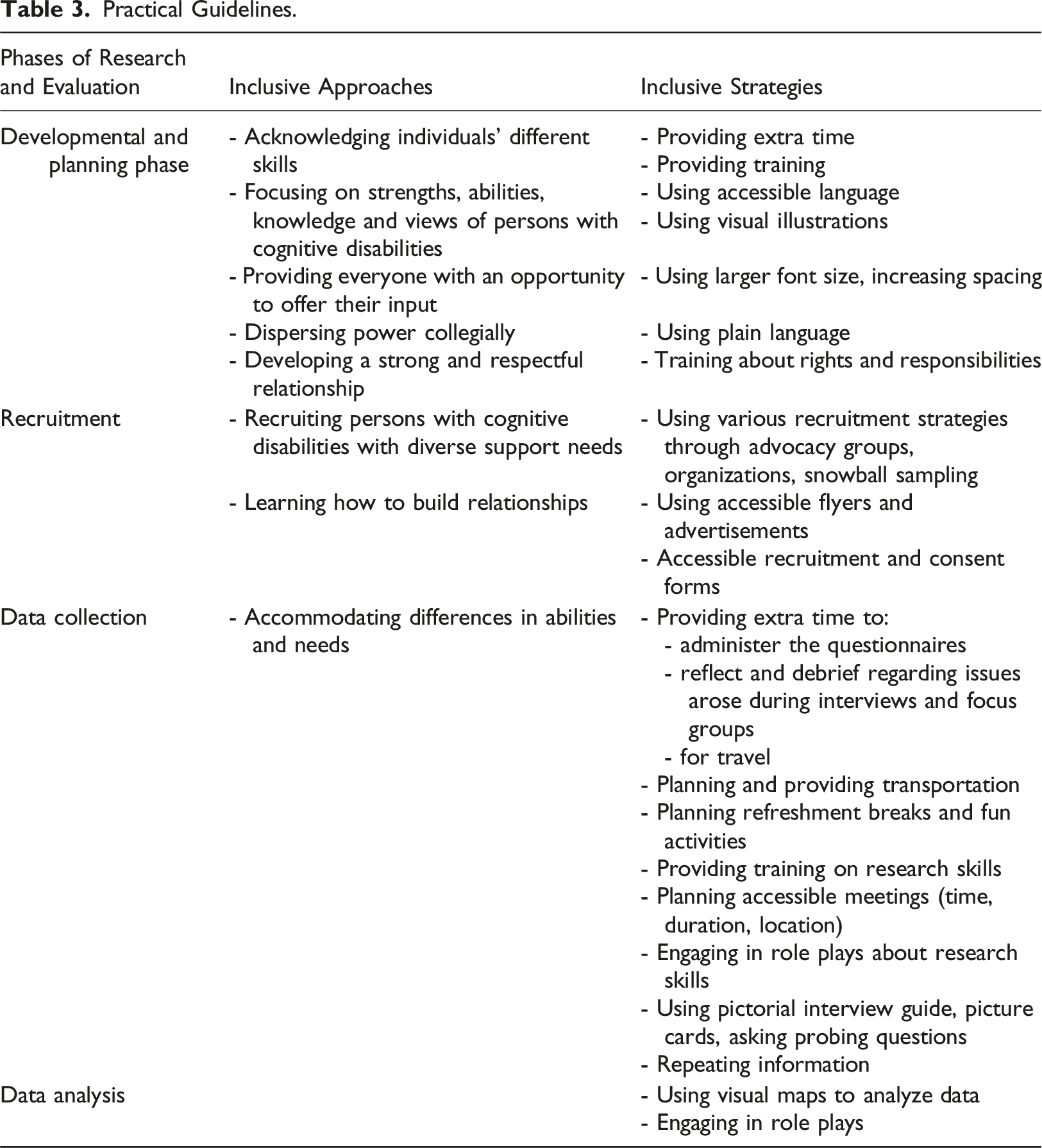
Our analysis revealed several practical considerations and strategies for including persons with intellectual and other cognitive disabilities as ‘co-researchers’ or similar roles. For example, some researchers have argued that while it is important to focus on ‘co-researchers’ strengths, knowledge and views, the differences in individuals’ needs should not be ignored and the “right” support should be in place throughout the research process (e.g., Bigby & Frawley, 2010). For example, Conder et al. (2011) reported that supporting ‘co-researchers’ was crucial in enabling their participation. Such support included focusing on the abilities of the ‘co-researchers’, providing additional time to prepare for administering questionnaires and reflect on issues that arose during focus groups, arranging additional meetings to train ‘co-researchers’, as well as planning refreshment breaks and fun activities. Similarly, Bigby et al. (2014) acknowledged the importance of recognizing self-advocates’ different skills, providing them with an opportunity to offer their input, having a collegial approach in dispersing power so that they feel comfortable to claim their roles.
Furthermore, some studies used accessible research material (e.g., using larger font size, increasing spacing), plain language (Bigby & Frawley, 2010; Frankena et al., 2019), visual maps to analyze data (Frankena et al., 2019), role-plays (i.e., to teach research skills to ‘co-researchers’ with intellectual disabilities (Strnadova et al., 2014), several types of prompts (e.g., asking probing questions, using pictorial interview guide and picture cards, PowerPoint presentations), and repetition of information (e.g., Frankena et al., 2019; Hughes et al., 2020; Tanner, 2012). Furthermore, some researchers indicated that being flexible (e.g., Beighton et al., 2019; Bigby et al., 2014; Bollard et al., 2018; Stevenson, 2010), planning for regular meetings (Bigby et al., 2014), regular breaks, fun activities (Conder et al., 2011), and establishing financial payment (Frankena et al., 2016) have enhanced the motivation and involvement of persons with intellectual disabilities in research and evaluation processes. The findings of the review also revealed that in addition to using these different strategies, there are other variables that contributed to enhancing the involvement of these individuals. For instance, researchers emphasized the importance of building a respectful relationship with ‘co-researchers’ with intellectual disabilities to help build their confidence and trust, and to encourage them to reflect on the research and speak up their opinion (Conder et al., 2011; Frankena et al., 2016).
The Perspectives of Researchers with and without Intellectual and Other Cognitive Disabilities
In numerous studies, researchers with intellectual and other cognitive disabilities reported viewing their participation as authentic, and they felt valued, empowered, proud, listened to, and were respected without being bullied (e.g., Beighton et al., 2019; Conder et al., 2011; Puyalto et al., 2016; Ryan et al., 2015). They also reported perceiving their participation to have enhanced their confidence (Beighton et al., 2019), knowledge and skills (Nierse & Abma, 2011), advocacy (Bigby et al., 2014), and to have altered their perception regarding other individuals with cognitive disabilities (Robinson et al., 2014). Participation was also reported to have motivated persons with intellectual disabilities to become more active, aware, and responsible for their own situations (Tavecchio et al., 2019).
The findings show that the academic researchers found the involvement of individuals with intellectual disabilities in data analysis and interpretation to be valuable because their personal experiences helped close the gap between research agendas and the actual needs of these individuals and their caregivers (Beighton et al., 2019). Beighton et al. (2019) indicated that individuals with intellectual disabilities provided imperative insights in informing healthcare policy and practice. Similarly, others reported that the involvement of ‘co-researchers’ contributed to different phases of the research, enhanced the depth and quality of the study, and that they learned from each other (e.g., Bigby & Frawley, 2010; Bigby et al., 2014; Chapman, 2014).
Other researchers reported that involving “co-researchers” and “advisors” in research led to change in policy, promoted social change, enhanced the quality of research, and resulted in gradual increase in knowledge regarding the issues that individuals with intellectual disabilities experience (Garcia-Iriarte et al., 2009; Hughes et al., 2020; Johnson et al., 2014; Puyalto et al., 2016). Tavecchio et al. (2019) indicated that working with “client-researchers” expedited the implementation of results. Additionally, some researchers reported that working with persons with intellectual and other cognitive disabilities provided valuable input on the development of the content and design of research instruments and ensured that the data analysis process was transparent and inclusive (Hammel et al., 2008; Kramer et al., 2011; Span et al., 2018).
In contrast, Bigby and Frawley (2010) discussed several challenges associated with researching with a person with intellectual disabilities. These included a lack of time to put in place appropriate support for the “co-researcher” with intellectual disabilities to participate in initial planning phases of research due to funding deadlines, and difficulty maintaining a mentoring role between the researchers and “co-researcher” during the dissemination phase. These authors also indicated that they may have unintentionally “disempowered” the “co-researcher” by failing to focus on his strengths, knowledge and preferences, and not addressing his difficulties and learning in a “natural context” rather than through formal supports (Bigby & Frawley, 2010).
Discussion
We embarked on this rapid scoping review to identify, analyze, and integrate the existing empirical knowledge base on the inclusion of persons with intellectual and other cognitive disabilities in research and evaluation teams and processes. Our sample was comprised predominantly of articles addressing persons with intellectual disabilities, and it thus appears there is a serious gap in empirical research with respect to the inclusion of persons with other cognitive disabilities. We also yielded very few sources from the evaluation literature, suggesting that evaluation researchers could benefit from conducting studies on this topic and interacting with the more established knowledge base in applied research communities.
Based on its recency, method and search criteria, our study extends the previous reviews on this topic by Bigby et al. (2014), Di Lorito et al. (2018), and Frankena et al. (2015) in several ways. Despite the differences in methodological approaches and practical justifications posed by the studies in our sample, we nonetheless observe that studies on this topic tend to be grounded in the same normative stance: a principled commitment to involving persons with intellectual and other cognitive disabilities as deeply and extensively as possible in research teams and processes. We also observed that studies in our sample do not generally provide sufficient methodological detail to understand what occurs or how inclusion was operationalized.
There was considerable diversity and inconsistency across studies regarding the titles and roles researchers assigned to persons with intellectual and other cognitive disabilities. The inconsistent and somewhat random use of terminology provides little clear guidance to the field in how these roles can be practically actualized. In the three extant reviews, Bigby et al. (2014) described three categories of roles for persons with intellectual disabilities in research teams (i.e., advisor, leader, collaborator), Frankena et al. (2015) defined the roles of such individuals as “co-researchers” and “advisors”, and Di Lorito et al. (2018) identified them as “co-researchers”. Our findings show that persons with intellectual and other cognitive disabilities have carried out various responsibilities under a range of titles. In our sample, ‘researchers’, ‘collaborators’, ‘research partners’, ‘participant researchers’ and ‘client-researcher’ were involved in ways that could be encompassed under Bigby et al’s. (2014) ‘collaborative groups’ approach; while the ‘advisors’ in our sample played similar roles to those suggested by Bigby et al’s. ‘advisory’ approach. But we did not find any evidence in our sample of persons with intellectual and other cognitive disabilities playing roles where they had full control over any aspect of the research process; thus, Bigby et al.’s category of ‘leader’ cannot be applied to sources in our study. Also, looking across our sample, we observe that persons with intellectual or other cognitive disabilities have been included in different phases of research and evaluation projects, but there is no single study in our sample, where they were involved in all phases. In other words, the extensive participation of persons with intellectual and cognitive disabilities also appears to elude the efforts of those committed to inclusive research and evaluation.
This tension we detect between aspirations and empirical experience resonates with findings from the three other extant reviews on this topic, which identified some barriers and challenges in deeply and extensively involving persons with intellectual disabilities in research teams and processes. Foremost among these were resource constraints related to the amount of time and funding required to conduct inclusive research projects that substantially involve persons with intellectual disabilities as team members throughout the process (Bigby et al., 2014, Frankena et al., 2015), along with unrealistic deadlines imposed by funders (Di Lorita et al., 2018). Our observation that there appear to be limitations on the degree of control that persons with intellectual disabilities are afforded or able to exercise in research and evaluation processes was also signaled in two of the previous reviews. Di Lorita et al. (2018) reported that persons with intellectual disabilities working as “co-researchers” were frequently not involved in aspects of the research process deemed to be too cognitively demanding (i.e., data analysis); while Bigby et al. (2014) discussed the potential impact of “intellectual deficit” on conducting research as an issue in terms of quality and rigor. In our sample, we note that Frankena et al. (2019) included persons with moderate intellectual disabilities in the data analysis phase in a project by using visual maps to support the process. This suggests there are innovative techniques that exist and can be developed to overcome at least some of the reported barriers and challenges in previous reviews. The accommodation strategies highlighted in these studies are an important contribution to the field; however, the knowledge base could benefit from additional reporting on such innovative strategies and techniques.
These latter issues also link to inclusive researchers’ aspirations to enhance the representativeness and diversity of persons with intellectual disabilities and other cognitive disabilities being involved as team members. In their previous review, Bigby et al. (2014) reported that most of the individuals with intellectual disabilities participating in research teams in their sample of studies had mild disabilities. In our review, most authors did not specify the degree of severity support needs of intellectual or other cognitive disabilities among ‘co-researchers’ in their research or evaluation projects. This is a potential problem with respect to operationalizing the principled stance of inclusive research and evaluation in that it appears the benefits of inclusion tend not to be extended to persons with more severe level of support needs. Frankena et al. (2015) concluded from their review that conducting assessments of level of support needs at the recruitment phase in inclusive research projects seemed to pose challenges for researchers. Resolving assessment issues in recruitment, and developing, testing and reporting on innovative techniques for involving a wider range of persons with intellectual and other cognitive disabilities, become important pieces in solving the puzzle of more representative inclusion. Findings from our review revealed how some researchers pursuing inclusive goals have used multiple recruitment strategies and sources. However, little information was provided about the strengths and limitations of such strategies and sources, and there is a lack of transparency regarding inclusive research processes, which again highlights this as an area for further research.
Practical Guidelines.
In line with the findings of reviews by Di Lorito et al. (2018) and Frankena et al. (2015), our study revealed that persons with intellectual and other cognitive disabilities reportedly felt valued, empowered, and listened to because of their active involvement in research and evaluation processes and teams. Their inclusion also reportedly enhanced their knowledge, skills, confidence, and motivation due to participating in research on topics that impact their lives. Consistent with the findings of Di Lorito et al’s. (2018) review, researchers without disabilities in our sample also reported benefits from the involvement of persons with intellectual and other cognitive disabilities in research and evaluation teams. Specifically, researchers and evaluators reportedly observed improvements in the accessibility and quality of research design and tools; they also gained perspective regarding the personal experiences of individuals with intellectual and cognitive disabilities, which in turn helped with informing policy and practice.
Limitations
Given this literature search was conducted between 2019 and early 2020, several recent studies and reviews on inclusive research (e.g., Jones et al., 2020) have not been included. However, there is an urgent need to build evidence in a coherent and consistent manner to inform inclusive research methods, especially due to a rapidly growing interest and capacity in such methods. Therefore, even though this scoping review does not include some of the more recent studies on inclusive research, it has significant implications in the field as it provides evidence to inform inclusive research practices and research priorities.
Furthermore, the studies included in this scoping review focused on empirically conducted research and evaluations, and therefore other types of studies that may have included inclusive strategies may have been missed. Given a few evaluation studies were identified, subtle differences in approach between theoretical research and evaluation studies could not be identified. Lastly, the experiences, needs, and supports for community-engaged research with people with cognitive disabilities may greatly differ from a group to another. For example, individuals with intellectual and developmental disabilities have a life-long experience of disability that may impact their engagement in research in a different way than for people with traumatic brain injury or dementia, which are later-onset acquired cognitive disabilities. Therefore, inclusive approaches and strategies discussed by researchers who involved persons with cognitive disabilities may need to be tailored to the specific group they wish to involve.
Conclusion
Inclusive approaches to research and evaluation have gained significant attention over the past four decades, and they are philosophically aligned with the contemporary focus on equity, diversity and inclusion in academic research and evaluation. Researchers and evaluators in our study demonstrated principled commitment, regardless of the methodological approaches they used in their research. Despite a record of innovation with respect to strategies, techniques and interventions, challenges and barriers still exist to the deep and extensive inclusion of persons with intellectual and other cognitive disabilities in research and evaluation teams and processes. A coherent set of practical, evidence-based guidelines for conducting inclusive research and evaluation is not available in the empirical literature. Thus, deriving guidelines from the current knowledge base would prove difficult because studies tend not to report on why persons with intellectual and cognitive disabilities are not included in certain tasks in research and evaluation teams. Nonetheless, the existing knowledge base offers important insights with respect to the roles that persons with such disabilities can play in research teams, and strategies and techniques that can be used to advance their inclusion in various phases of research and evaluation processes.
Footnotes
Acknowledgement
This article draws on research supported by the Social Sciences and Humanities Research Council.
Declaration of conflicting interests
The author(s) declared no potential conflicts of interest with respect to the research, authorship, and/or publication of this article.
Funding
The author(s) disclosed receipt of the following financial support for the research, authorship, and/or publication of this article: This work was supported by the Government of Canada’s New Frontiers in Research Fund (NFRF) (NFRFE-2018-00558).
