



Abstract
The menarche age in girls with intellectual disability and high support needs (HSN) is approximately the same as in girls with typical development. However, there is no clear teaching procedure for menstrual hygiene management (MHM) skills before menarche. This study examined whether a menstrual education program that focuses on visual support affects the MHM skills of girls with intellectual disability/HSN. The study comprised 11 preadolescent girls with intellectual disability/HSN in their pre-menarche age. They were asked to change napkins on a doll three times: before, immediately following, and one month after attending the program. Fifteen MHM items were measured. The participants’ scores were significantly higher after attending the program. There was no significant difference in the mean scores for each of the 15 items among the levels of intellectual disability. The program that utilized visual materials was effective, and the effect was not influenced by age or intellectual level.
Keywords
Introduction
The number of children with intellectual disability and high support needs (HSN) (intellectual disability/HSN) in Japan has been increasing for several years. In April 2007, special support education was introduced in Japan. The Japanese sex education guidelines have not specified classroom hours for sex education, regardless of disability. In Japanese society, discussions on sexuality have long been considered taboo. After the Second World War, sex education emerged as purity education. Criticism soon arose that teaching primary school students about genitalia-related terms and junior high school students about sexual intercourse and contraceptive methods could lead to the dissemination of extreme contents, considered contrary to traditional Japanese societal and cultural norms (Nishioka, 2018). Thus, sex education in schools has stagnated as an issue for almost 10 years. Establishing an understanding of sexuality education for children with disabilities in Japan remains a challenge.
The age of menarche in girls with intellectual disability/HSN is approximately the same as in girls with typical development (Tracy et al., 2016). However, it has been reported that menstruation among adolescent girls with disabilities is frequently accompanied by problems involving premenstrual onset and dysmenorrhea symptoms due to the effects of existing diseases (Albanese and Hopper, 2007).
Furthermore, reproductive function-related abnormalities caused by genetic disorders or treatments with antiepileptic agents reportedly may affect the menstrual cycle of girls with intellectual disability. Therefore, it is important to monitor patterns of menstrual cycles, dysmenorrhea, and premenstrual symptoms among adolescent girls with intellectual disability (Bowley and Kerr, 2000). Girls with intellectual disability face many menstrual problems, including hygiene issues, due to their lack of self-care ability during menstruation (Quint, 2008).
Children with intellectual disability/HSN often have limited conceptual, social, and practical understanding. This can limit their ability to develop various skills (Tracy et al., 2016). Their adaptation to daily life depends both on the severity of their intellectual disability/HSN and their access to social resources, including education and other services. Adolescent girls with intellectual disability/HSN may find it difficult to think in abstract terms. Therefore, it is important to provide them with practical instructions. It is also essential to provide them with hands-on learning that relates to their experience, and to use teaching materials that include models.
Educational methods should be prioritized and individualized to suit the characteristics of students’ disabilities. This requires many innovations in terms of teaching and teaching materials. In many developed countries, picture books and information resources are the established means of preparing adolescent girls with intellectual disability/HSN for the onset of menarche (Tracy et al., 2016; Taylor et al., 2010) and for self-care during menstruation. Only limited literature in this area has been developed in Japan. It has been documented that proper training can help to improve self-care skills (Richman et al., 1986; Veazey et al., 2016). A previous study reported that sex education for girls with intellectual disability focused on increasing their knowledge and improving their skills and attitudes (Altundağ and Çalbayram, 2016). Another study among girls with intellectual disability reported that using a doll for practice was effective for improving menstrual hygiene management (MHM) skills (Altundağ and Çalbayram, 2016). However, the study was conducted among girls with intellectual disability who had already begun menstruating, not among premenstrual girls, and only the before and after effects of the program were verified.
It is unclear how to teach MHM skills to girls with intellectual disability/HSN before they begin menarche. Education about MHM-related processes and procedures at the premenstruation stage may help to reduce fear and feelings of stigma among girls with intellectual disability/HSN.
Menstrual education in Japan must be modified based on the degrees of disability of preadolescent girls with intellectual disability/HSN. However, no studies have verified the effect and sustainability of introducing MHM skills specific to Japanese menstrual hygiene products and bathroom environments.
This study examined the effectiveness of a menstrual education program that focused on providing visual support for girls with intellectual disability/HSN. We evaluated the effects of an education program that used a doll model to teach MHM skills to preadolescent girls with intellectual disability/HSN. The effects were verified before, directly after, and one month afterwards.
Objective
This study aimed to examine whether a menstrual education program that focused on visual support could improve MHM skills among preadolescent girls with intellectual disability/HSN.
Methods
Study design and subjects
This study had an experimental design. No previous studies have measured the effects of menstruation on preadolescent girls with intellectual disabilities/HSN. Therefore, this experimental study was conducted on a pilot scale. We set the effect size to 0.4, calculated the sample size required when making a research plan by G-power, and confirmed whether the power of 0.95 was at least 10 samples (5 samples or more in each group).The participants included 11 preadolescent girls with intellectual disability/HSN, between 8 and 12 years old, who were from special schools or classes in the Tokai and Kansai regions. None had yet menstruated.
Instruments
Girls with intellectual disability/HSN participated in this study along with their mothers. Their mothers were independent in their daily lives, had the ability of taking care of their girls, and had enough ability to understand the purpose of this research. The mothers and girls who participated in this study were all Japanese nationals of the same race and ethnicity and could understand Japanese.
The program was implemented in small groups of up to three participants. It consisted of three themes: “Becoming an adult,” “What is menstruation?,” and “How to deal with menstruation?.”
We visually presented the female body and the processes of menstruation using PowerPoint slides. The animated slides featured girls who had hairstyles and clothes identical to those of the dolls; this allowed the participants to link the girls on the slides to the dolls. The illustrations depicted various changes in appearance, body, and genitals, and how ovulation occurs during the menstrual cycle.
For teaching MHM skills, we introduced several kinds of sanitary napkins, sanitary underwear, and pouch-carrying napkins. We demonstrated how to use them and helped the participants practice placing them on sanitary underwear. The mothers were asked to assist their girls in actual napkin changing practice. They were also asked to complete a questionnaire.
The participants were asked to demonstrate changing napkins using a doll before the program, directly after it, and 1 month afterwards. Researchers measured the effect of the program on their skills. We did not give any instructions or explanations to the participants to practice at home by the third time, which was 1 month later.
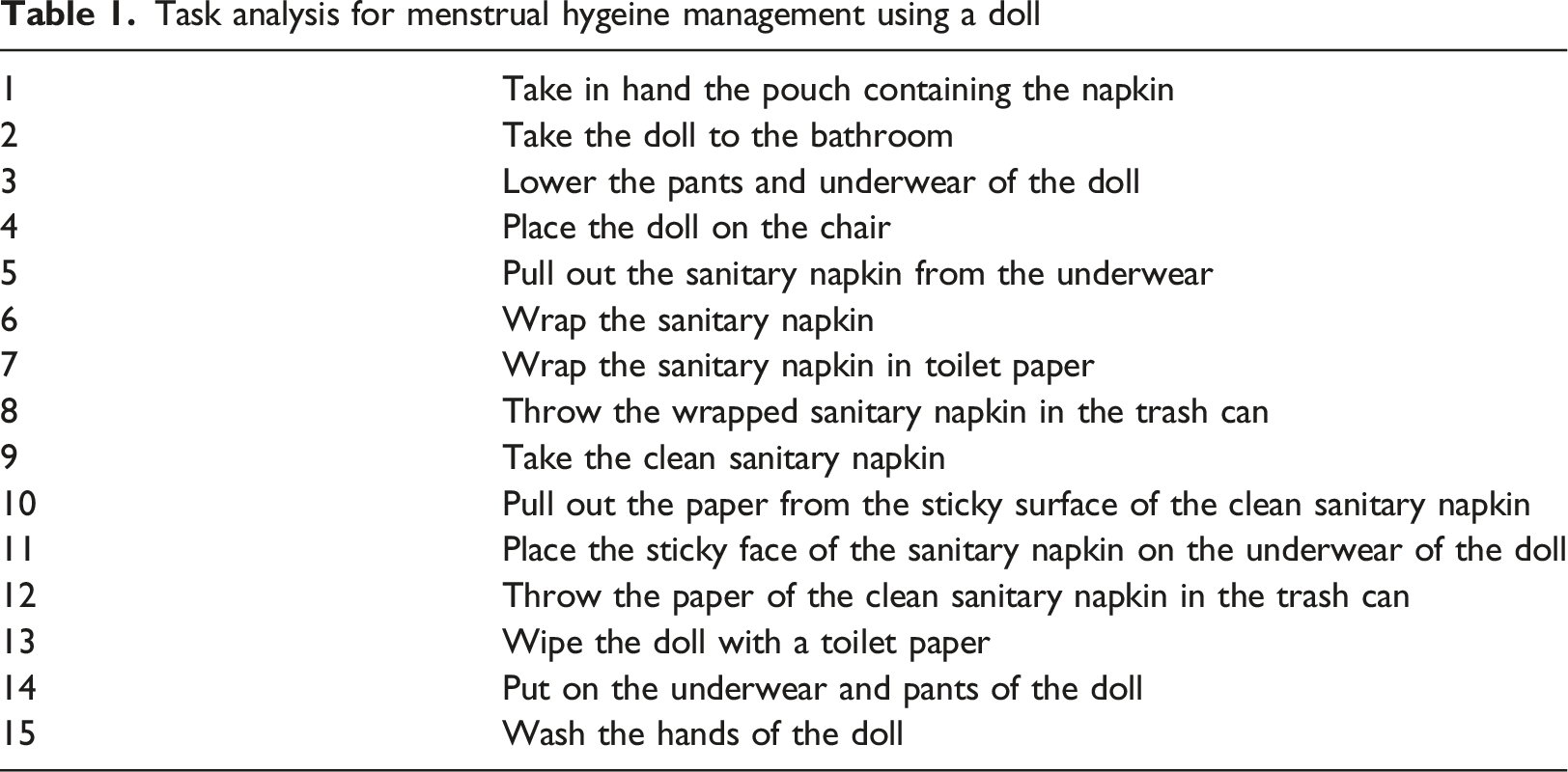
Task analysis for menstrual hygeine management using a doll
Data collection
This study was conducted in the Tokai and Kansai regions between April 1, 2018 and March 31, 2020. We used a special needs school and parents’ association to distribute an invitation to parent, which outlined our research and the ethical considerations. After receiving positive responses from parents, the researchers directly explained the research to them, along with their preadolescent girls. The parents confirmed their consent by: 1) completing a consent form, 2) participating in the menstrual education program, and 3) participating in the effect measurement interventions. The study data were collected by measuring the effects three times—before the education program, just after the program, and one month later.
Ethical considerations
This study was conducted with the approval of the Ethics Committee of our University (No. 29-1). All study procedures were conducted according to the principles of World Medical Association Declaration of Helsinki. The target institutions, school principals, and study subjects received oral and written explanations of the following aspects of the study: purpose, objectives and methods, data management methods, anonymity preservation measures, protection from mental distress, content withdrawal, and information regarding the publication of the research results at conferences and other meetings. We explained that our video recordings would be used only for assessing the program’s effects. The program was conducted in a classroom where privacy was maintained.
Data analysis
The two researchers’ scores from their assessments of the video recordings were averaged at each time point for each of the 15 MHM tasks.
The item scores and total scores at the three time points were compared using the Friedman test. When significant differences were observed, the Bonferroni test was used for conducting multiple comparisons. Our analysis determined whether the results differed depending on the presence or absence of intellectual disability. Statistical analyses were conducted using SPSS software version 24 (IBM, Armonk, NY, USA). The significance level was set at 5%.
Results
Participants’ backgrounds
Participants’ backgrounds and effect measurement scores
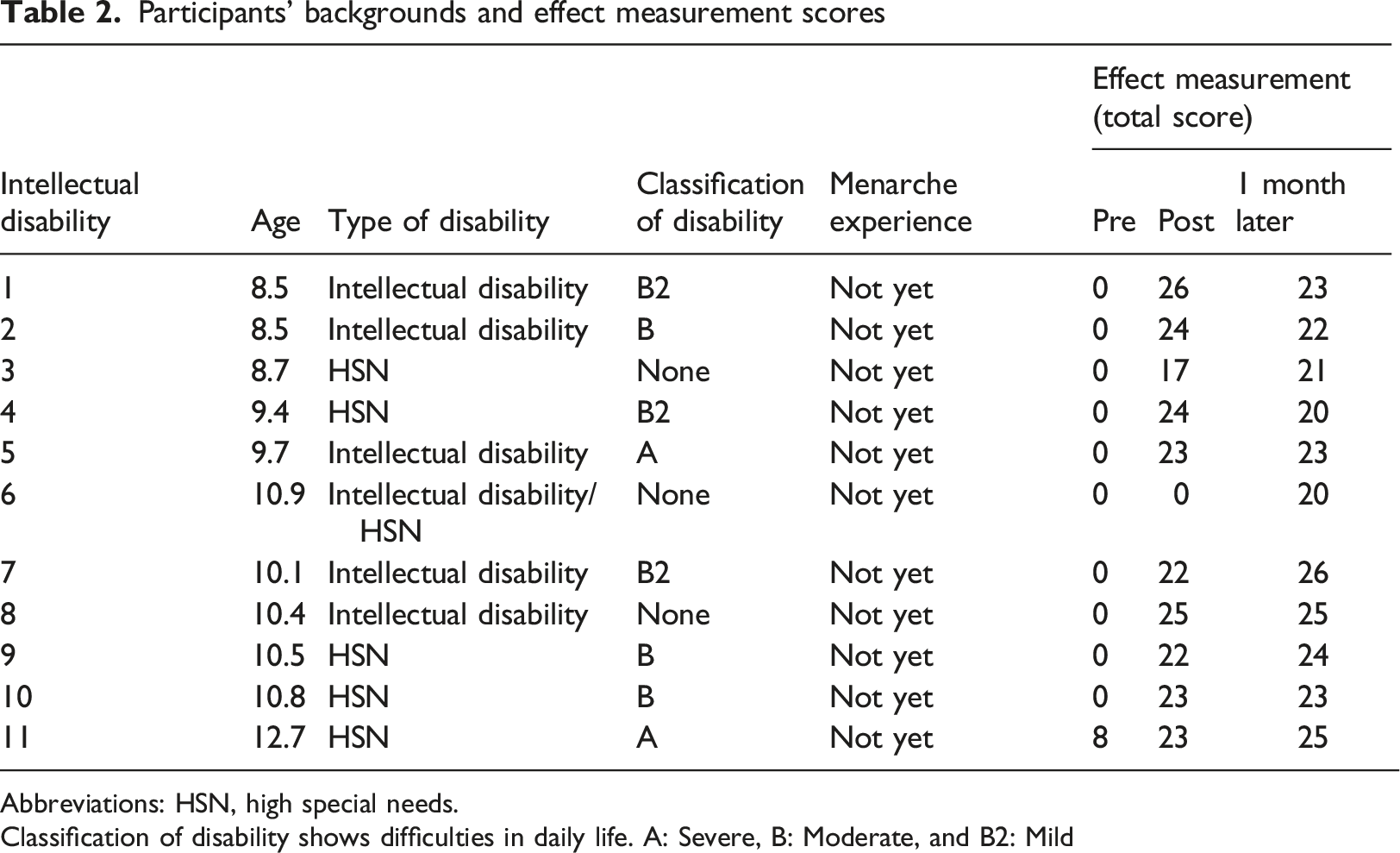
Abbreviations: HSN, high special needs.
Classification of disability shows difficulties in daily life. A: Severe, B: Moderate, and B2: Mild
Effect measurement related to sanitary napkin changing
Mean total scores for all items of effect measurement (n = 11)
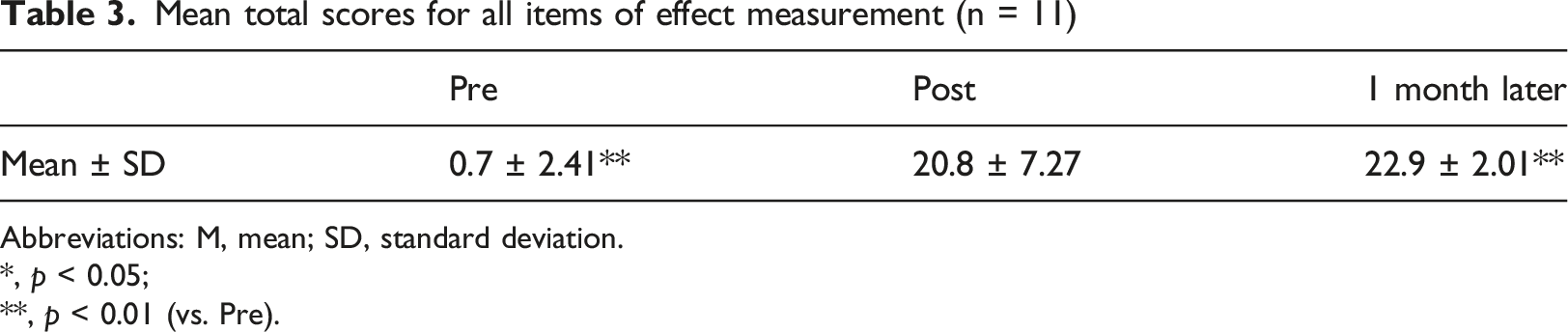
Abbreviations: M, mean; SD, standard deviation.
*, p < 0.05;
**, p < 0.01 (vs. Pre).
Mean total scores for intellectual disability and HSN participants (n = 11)
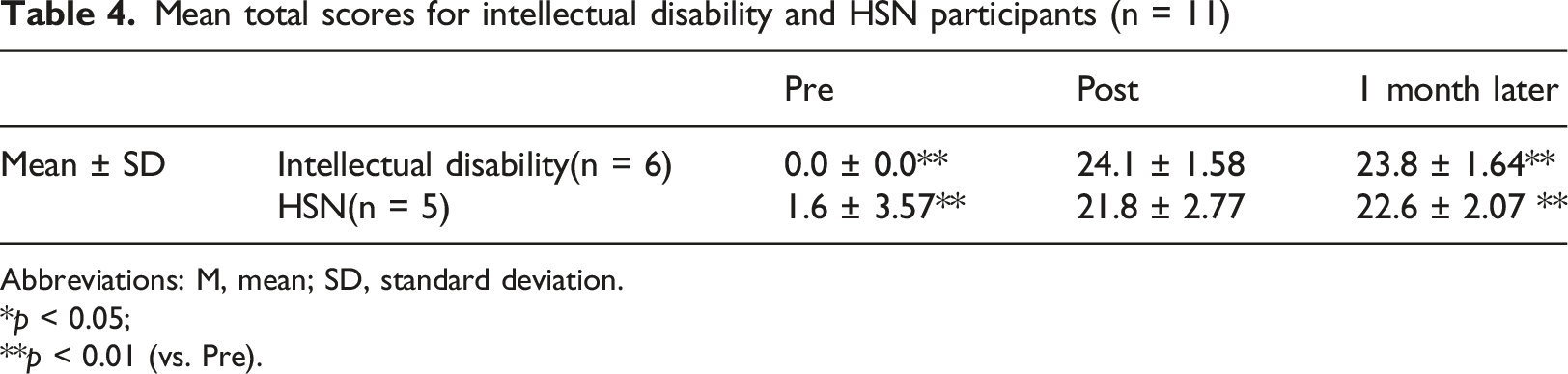
Abbreviations: M, mean; SD, standard deviation.
*p < 0.05;
**p < 0.01 (vs. Pre).
Comparison of total and mean scores for the measurement items
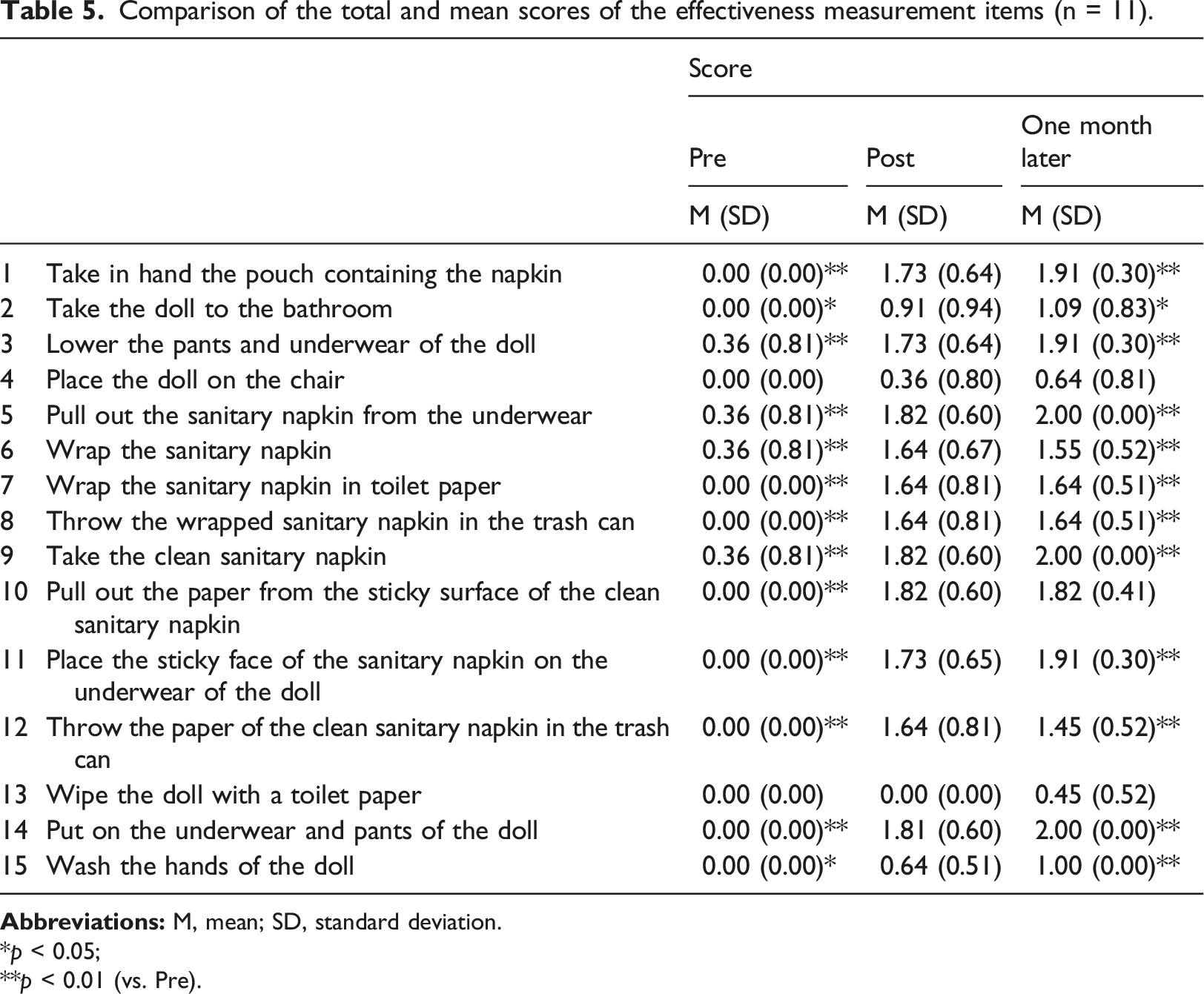
Comparison of the total and mean scores of the effectiveness measurement items (n = 11).
*p < 0.05;
**p < 0.01 (vs. Pre).
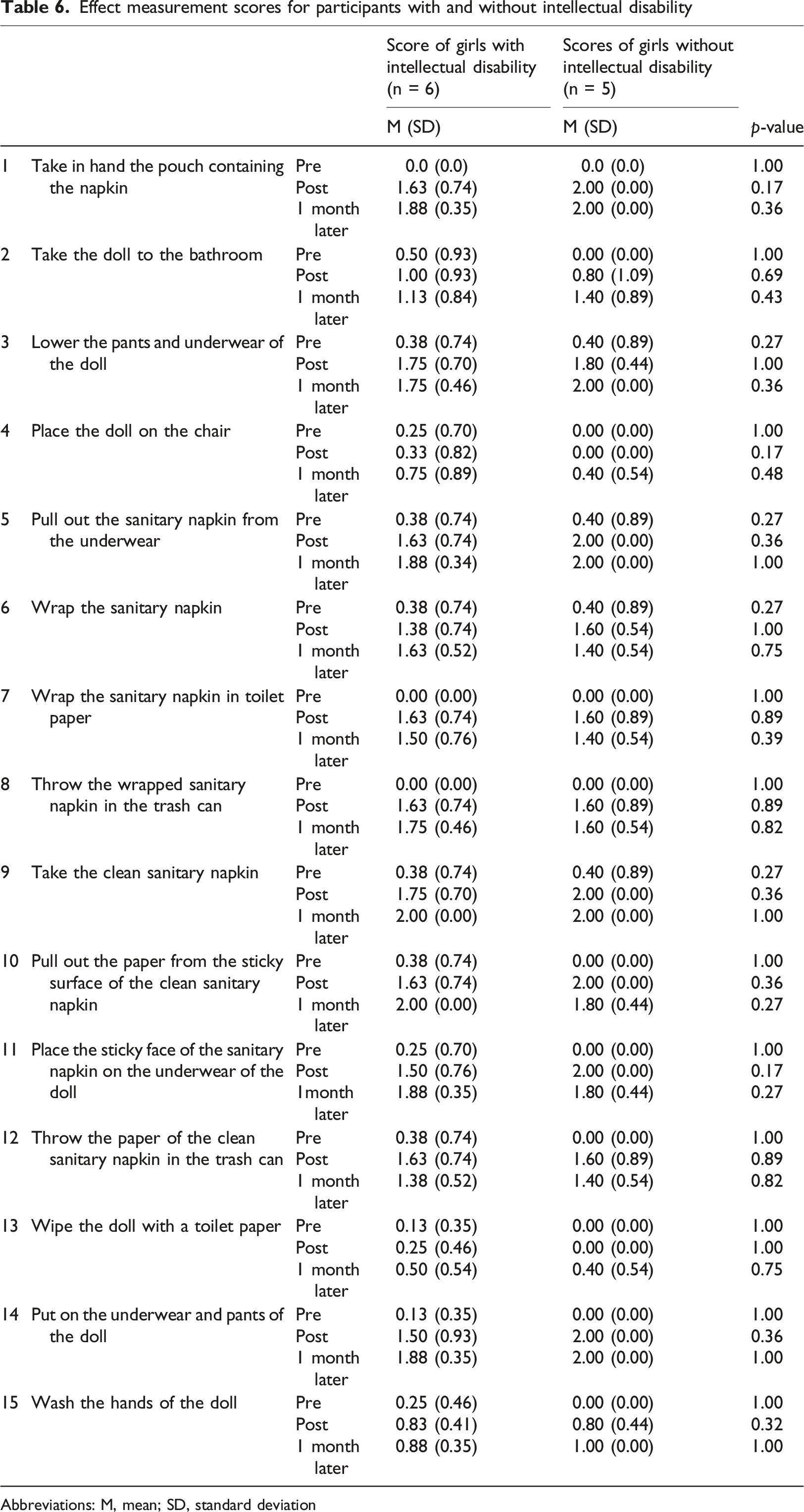
Effect measurement scores for participants with and without intellectual disability
Abbreviations: M, mean; SD, standard deviation
Discussion
The present study is the first Japanese study to evaluate the effectiveness of a menstrual education program for preadolescent girls with intellectual disability/HSN. Using a doll, MHM-related skills were taught to girls with intellectual disability/HSN who had not reached their age of menarche. The program’s effects persisted for up to one month.
Previous studies have reported that the use of doll models can help girls recognize the state of menstruation and its specific behaviors (Altundağ and Çalbayram, 2016). The topic of menstruation is not widely-discussed topic in public; many prepubescent girls with intellectual disability/HSN do not receive enough information about it (Castañeda et al., 1996; McMahon et al., 2011). The first menstruation can be a frightening experience for such girls. Our program was developed to provide introductory education for girls with intellectual disability/HSN, to reduce their fear and stigma regarding menstruation.
No significant difference was detected in the scores before and after the program for the two items, “place the doll on a chair” and “wipe the doll with a toilet paper.” A previous study also obtained low scores for the latter task.3
Our study used a toilet for the dolls and a single-room environment to aid learning through a sense of play in completing a series of actions. It is questionable whether a single practice session with a doll is sufficient training for performing a series of actions (e.g., sitting on the toilet seat, urinating, and wiping the genitals). Previous studies have reported that ingenuity related to real life may be a relevant consideration (Schaafsma et al., 2015).
Our results confirm the effectiveness of visual support based on young girls' experiences. The effects of our program persisted up to one month afterwards. For maintaining the MHM skills of premenstrual girls’ with intellectual disability/HSN, it may be necessary to regularly practice with a doll; the time of menarche is difficult to predict. Our participants did not go to the bathroom to practice MHM. It might be recommended to use a bathroom setting, after learning MHM skills using a doll, so as to associate MHM activities with a real life environment. Furthermore, it may be necessary to provide more substantial explanations, such as presenting photos showing each MHM task being applied to a doll, to assist memory of the tasks.
Although some items had low mean scores after one month, there were significant differences before and after participating in the program. These included: “wrap the sanitary napkin” (after one month, 1.55 ± 0.5), “wrap the wrapped sanitary napkin in toilet paper” (after one month, 1.64 ± 0.5), and “throw the paper of the clean sanitary napkin in the trash can” (after one month, 1.45 ± 0.5).
Our study included girls with severe intellectual disability and those with behavioral problems without intellectual disability. Participants with behavioral problems had impulsivity, hyperactivity, attention deficit, and communication problems. The participants had a wide range of individual differences in terms of physical development, intellectual development, and mental stability level. They ranged in age from 8 to 12 years; however, age did not affect the degree of intellectual delay or the effect of improvement. In general, younger children with more severe intellectual disability are less proficient in activities such as rolling and wrapping. However, there was no significant difference in these tasks for MHM using a doll depending on the presence or absence of intellectual disability, and the effect of improvement in girls with intellectual disabilities was similar to that in adolescent girls with behavioral problems.
We attempted, as much as possible, to use prepared visual explanations that matched real life situations in Japan. We aimed to make it easier for preadolescent girls with severe intellectual disability to understand MHM. A previous study of an adult woman with a severe intellectual disability reported that performing a series of MHM tasks on a regular basis helped to improve her skills, with the effect lasting for at least six months (Richman et al., 1986). Therefore, we suggest that a booster effect may be expected as a result of repeating the program every few months.
We should further consider how much intellectual understanding is necessary for performing MHM, and at what age education is most effective. Where there is a coordination disorder, it may be necessary to cooperate with an occupational therapist.
We did not use a control group, and the participants differed in age and intellectual level. Therefore, our results are not generalizable. Finally, our study was not blind-evaluated by a third party. Further study of the effect and sustainability of similar interventions will require more study scenarios. At that time, we would like to further lower the effect size and increase the sample size for further analysis.
Conclusion
Our study demonstrated that a comprehensive menstrual health intervention program using a visual presentation and a doll model is effective for helping preadolescent girls with intellectual disability/HSN to learn MHM skills. The intervention’s effects were not influenced by age or intellectual level; they persisted for more than one month.
Further study is required to determine the optimal timing of this intervention and the fundamental skills that should be included in the education program.
Footnotes
Acknowledgements
We would like to express our deepest gratitude to the teachers at the special needs schools and special needs classes for their cooperation in conducting this study. We would also like to thank the participating girls and parents. The authors would like to thank Enago ( ) for the English language review.
Author contributions
S. Tsuda contributed to the conception and design of this study, performed the statistical analysis and drafted the manuscript; S. Takada critically reviewed the manuscript and supervised the whole study process. All authors read and approved the final manuscript.
Declaration of conflicting interests
The author(s) declared no potential conflicts of interest with respect to the research, authorship, and/or publication of this article.
Funding
The author(s) disclosed receipt of the following financial support for the research, authorship, and/or publication of this article: This work was supported by JSPS KAKENHI Grant Numbers [grant no. 17K14069].
Ethical considerations
This study was conducted with the approval of the Ethics Committee of the Faculty of Human Sciences of Tezukayama Gakuin University (No. 29-1). All study procedures were conducted according to the principles of World Medical Association Declaration of Helsinki. The parents confirmed their consent by: (1) completing a consent form, (2) participating in the menstrual education program, and (3) participating in the effect measurement interventions.