




Abstract
Children with Down syndrome (DS) using intensive computer-based phonics (GraphoGame, GG) were studied. The children’s independence and improvement in phonological processing, letter knowledge, word decoding, and reading strategies were investigated. Seventeen children (5–16 years) with DS participated in a crossover design through 8 weeks (one period), with three test sessions separated by 4 weeks. Children were randomly assigned to GG intervention or regular schooling (RS). All children completed one period and eight children completed two periods. A majority gradually became independent in managing GG. At the group level, very little benefit was found from working with GG. At the individual level, several children with mild to severe intellectual disabilities showed increased decoding of trained words. After one period of GG and RS, an increase in alphabetically decoded words was found. The finding suggests that when individual challenges are considered, computer-based phonics may be beneficial for children with DS in their educational setting.
Introduction
Behavioral profiles in children with Down syndrome (DS) related to reading
Children with Down syndrome (DS) typically experience specific delays and deficits in speech and language development relative to other cognitive domains (Clibbens, 2001; Kent and Vorperian, 2013; Silverman, 2007). Verbal short-term memory deficits, that is, weaknesses related to immediate memory of sound-based information (Baddeley and Hitch, 1974) are seen as one of the main explanations of their difficulties (Naess et al., 2011). On the other hand, children with DS have a relatively stronger visuospatial short-term memory (Conners et al., 2011) and a relative visual learning strength (Clibbens, 2001; Fidler et al., 2005) which explains the relatively larger emphasis on whole-word reading instruction in this population. Reading development in children with DS reflects their behavioral phenotype in the majority of cases. This means that they have relatively weaker phonological decoding skills compared to word recognition skills, as well as extremely poor comprehension skills (Conners et al., 2011). Consequently, in order for reading instruction to be effective in children with DS, their specific challenges related to memory and learning need to be taken into consideration in educational contexts.
Van Bysterveldt and Gillon (2014) described the literacy development of a cohort of 77 five- to fourteen-year-old children with DS. The majority could read one or more words in isolation, but only 6.5% demonstrated word reading skills at a 7- to 8-year-old level. Roch and Jarrold (2008, 2012) compared word and nonword reading in children with DS to children with typical development (TD) matched for reading abilities, with respect to phonological awareness (PA) skills. Roch and Jarrold (2008) found that although children with DS had poor PA and nonword-decoding skills, the relationship between the two skills was the same in both DS and TD groups. Moreover, children with DS read at least as well as the TD children on tasks that required sight-word reading, that is, reading of irregular words. In the 4-year follow-up, the ability to decode nonwords played a marginal role in predicting later sight-word reading. On the contrary, sight-word reading was a longitudinal predictor of nonword reading. Roch and Jarrold (2012) concluded that earlier recommended sight-word reading instruction (Fidler et al., 2005) should be combined with phonics training for optimal reading development in children with DS.
PA in children with DS in relation to reading development
Phonemic awareness is assigned a central role as predictor of individual differences in typical beginning reading (Hulme et al., 2012; Melby-Lervåg et al., 2012). Also, in populations with DS, several studies support the idea that phonemic awareness plays a key role in learning to read (Lemons and Fuchs, 2010; van Bysterveldt and Gillon, 2014). Although individuals with DS have overall lower performance on PA tasks, letter knowledge skills have been found to be relatively easy for these children to acquire (Lemons and Fuchs, 2010). Several previous reading intervention studies have incorporated elements of letter knowledge, oral PA games, and phoneme–grapheme correspondence to children with DS. For example, Burgoyne et al. (2012) found an effect on single-word reading, letter-sound knowledge, and phoneme blending after a 20-week intervention delivered by teacher assistants (TAs) to 57 children with DS. Children who were younger, attended more intervention sessions, and had better initial receptive language skills, made greater progress during the course of the intervention. But, as is often the case (Cupples and Iacono, 2002; Goetz et al., 2008), no transfer to untaught skills was found. In the study by Burgoyne et al. (2012), the TAs reported that they found it difficult to teach phonics to children with DS. Burgoyne et al. (2013) therefore developed a highly structured phoneme-blending program, which was implemented with 10 of the children (Burgoyne et al., 2012). With this highly structured program, children made significant gains in blending skills after the intervention period compared to an 8-week control period. To sum up, there is a large variation in the outcomes of previous intervention studies and also obstacles in efficient reading instructions to children with DS. In addition, there is a lack of studies solely focusing on the core features of phonics, namely phoneme–grapheme correspondence, segmenting, and blending (McArthur et al., 2012), but instead, studies have targeted several reading-related skills. This makes it difficult to distinguish which targeted skills have an effect on the outcome, and also if each participant received the same amount of each skill targeted in the interventions. Moreover, previous studies lack a highly structured individual adaptation to each participant’s level of competence during the intervention. The present study adopted a highly structured computer-based phonics program that automatically adapts the letter and word material to the level of each individual learner (Lyytinen et al., 2009).
Reading strategies in children with DS
While there is a huge bulk of research about the development of decoding skills and strategies in TD children, fewer studies have described these skills in children with DS. Ratz (2013) compared reading stages in 190 school-aged German students with DS to a large sample of non-DS students with intellectual disability based on a teacher questionnaire. Teachers categorized children’s reading strategies using Frith’s developmental model of reading (1985): logographic (child recognizes words in the same way as any other visual object); alphabetic (child has letter sound knowledge and blends sounds into words); and orthographic (child does not need to sound out words but recognizes words automatically) (ESOL, British Council, 2019). Ratz found that comparably more DS students with severe intellectual disability than non-DS students with severe intellectual disability reached an alphabetical reading stage (41.5% vs. 13.4%). More DS students with mild intellectual disability remained at an alphabetical reading stage compared to non-DS students with mild intellectual disability (61.9% vs. 34.1%). Also, fewer DS students than non-DS students with mild intellectual disability reached an orthographic stage (31.7% vs. 60.8%). Ratz concluded that DS students’ emphasis on the alphabetical reading stage was possibly due to their weak phonological working memory, which acted as a barrier between the alphabetic and orthographic stages. Ratz (2013: 4512) concluded, although children with DS have strong visual capacity, learning sight words is “not the path to literacy” and emphasized the need for practice in PA, learning phonics and sounding out short words. The differences in reading strategies in children with DS with mild and severe intellectual disability would require further investigation.
Computer-based phonics
There are very few computer-based training studies that have been realized in children with DS. An exception is a recent study by Felix et al. (2017) that investigated the effectiveness of a computer-assisted learning tool, named “HATLE” for Spanish children with DS. The tool aimed to improve reading and writing abilities through mobile computing, multimedia design, and computer speech-recognition techniques, with five sessions (á 60 min) a week over 16 weeks. The study showed improved single-word reading and hand-writing forms. Felix et al. concluded that the physical limitations of DS children in manipulating computer input devices require an appropriate design for educational software. Furthermore, teachers needed training to teach computer skills to the children with DS. The authors encouraged the use of emerging technologies, such as mobile computing, touchscreen design, and speech recognition, and to provide teaching methods that are more accurate, easy to use, and less expensive than other forms of assistive technology. In light of the lack of digital tools for phonics training for children with DS, the present study with the use of GraphoGame (GG) was launched.
GG is a computer-based reading program designed to support phonemic awareness in children with dyslexia (Lyytinen et al., 2007; Lyytinen et al., 2009) and is a learning tool for synthetic phonics instruction (Kyle et al., 2013). Several studies have reported a positive effect of GG on word-decoding ability in elementary school children at risk for reading disorders (Kyle et al., 2013; Lyytinen et al., 2009; Saine et al., 2011). During 2010–2012, a Swedish version of GG served as an intervention tool for deaf and hard of hearing (DHH) children using cochlear implants and/or hearing aids (Nakeva von Mentzer et al., 2013, 2014a, 2014b). In these studies, children on average practiced with the program for 7 min each day for 4 weeks. The results were promising, particularly for DHH children with an initially weak phonological status, who improved their phonological skills (Nakeva von Mentzer, 2014b). Also, a significant correlation between letter knowledge and phonological gain was observed only in children with weak phonological skills. Nakeva von Mentzer et al. (2014b) reasoned that letter knowledge may be specifically important in these children, as letters could work as a facilitator in developing PA. In summary, GG focuses on auditory identification of speech sounds and their corresponding letters and provides reading games for blending speech sounds into words with the aim to support automatization.
The present study
The present study was launched to investigate whether children with DS in school units for children with mild intellectual disability or moderate to severe intellectual disability could benefit from computer-based phonics intervention for their reading development.
Research questions
Can children with DS work independently with GG—computer-based phonics? If not, what challenges do they face and what adaptations are required?
Does intensive intervention with GG improve phonological processing and decoding skills in children with DS and are there any associations between intervention outcome and their level of intellectual disability?
What reading strategies do children with DS use, and how do these relate to outcomes in GG?
Methods
Participants
The children were recruited from the Syndrome Department at Uppsala University Hospital and from the Swedish National Down Syndrome Association. Inclusion criteria were children with a diagnosis of DS who showed a positive attitude to learning letters and reading activities and could name or recognize at least a few letters according to both parent and teacher report. The exclusion criterion was fluent reading. Initially, 19 children were invited to participate in the study. Two children did not complete the study, one girl was already a fluent reader and one boy refused to work on the computer. The final sample of participants was 17 children (6 boys and 11 girls). The mean age of the children when entering the study was 10.0 years (SD = 2.8 years, range 5.8–16.8 years). All children attended either school units for pupils with mild intellectual disability (ICD-10-SE, 2011; n = 11, mean age 9.1 years, SD = 3.2) or moderate to severe intellectual disability (n = 6, mean age 10.5 years, SD = 2.1). The two groups did not differ with respect to age (p = 0.12). Caregivers of 15 children completed a questionnaire regarding communication and development of their child and their own educational level (Table 1). The majority of the children started speaking between 2 years and 3 years of age (n = 7), four children started speaking at 3–5 years of age, and two children started speaking at 1 year of age. Twelve children used primarily speech or only speech (mild intellectual disability, n = 9; moderate to severe intellectual disability, n = 3). Three children used a combination of speech and sign (mild intellectual disability, n = 1; moderate to severe intellectual disability, n = 2). Thirteen children were monolingual and two children heard another language besides Swedish in the family. Three children had hearing problems through development. The educational level of the mothers was high (higher education n = 11, high school n = 4). According to the parents, all children had earlier digital experience with, for example, tablets, computers, and cell phones for listening to music and videos on the internet, or taking photos (Table 1). Written informed consent was obtained from the parents of all children. The study was approved by the Regional Committee for Medical Research Ethics in Uppsala (registration number 2015/171).
Demographic information on participating children.
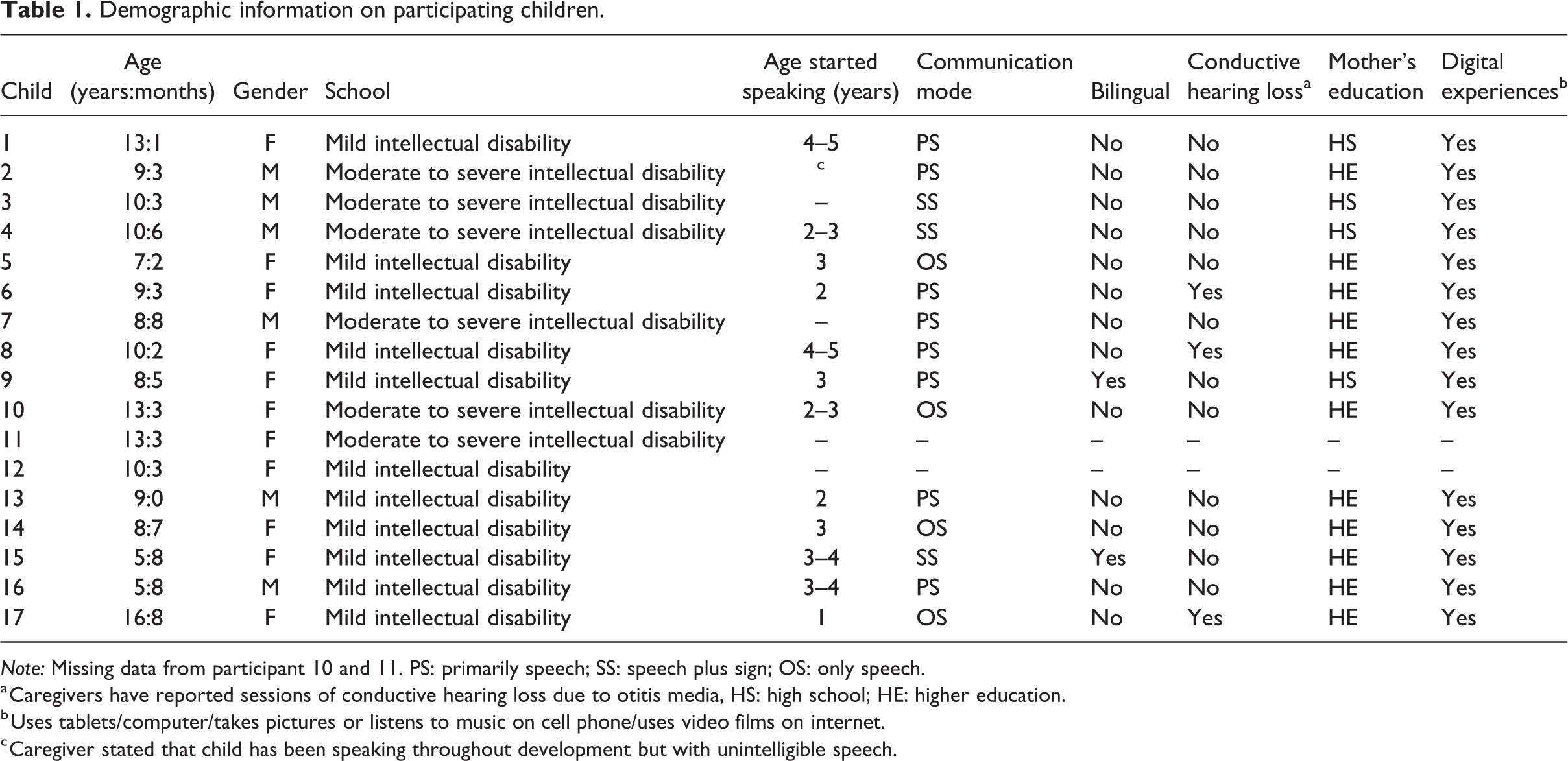
Note: Missing data from participant 10 and 11. PS: primarily speech; SS: speech plus sign; OS: only speech.
a Caregivers have reported sessions of conductive hearing loss due to otitis media, HS: high school; HE: higher education.
b Uses tablets/computer/takes pictures or listens to music on cell phone/uses video films on internet.
c Caregiver stated that child has been speaking throughout development but with unintelligible speech.
GG intervention program and setting
The computer-based intervention program was accomplished by means of an originally Finnish version of GG (Lyytinen et al., 2007, 2009), previously translated from Finnish-Swedish into standard Swedish (Nakeva von Mentzer et al., 2013). The program follows the synthetic phonics approach of “small units first” (Kyle et al., 2013; McArthur et al., 2012), that is, phoneme–grapheme correspondence training is introduced first, followed by short word-decoding tasks and simple word-forming tasks (blending/spelling).
GG adapts the complexity of the training to each child’s level of performance. An algorithm in the program presents approximately 20% of the items from a pool of new connections, yet to be learned, in such a way that they benefit each individual player’s learning (Lyytinen et al., 2009). Progression through the game is controlled so that approximately 80% needs to be correct for the child to reach the next, more advanced level. The Swedish version has 56 levels, categorized into 3 themes according to phonological and orthographical complexity of the words. It introduces isolated upper-case letters and their corresponding speech sounds, followed by lower case letters. It then advances to one-syllable words with CV (consonant vowel) structure (theme 1), proceeds to VC, CVC, VCC, and CVCC structures (theme 2) and finally targets eight-letter words (theme 3). The words at theme 3 contain initial consonant clusters as well as words with the first examples of larger grapho-phonemic units, namely the bi-graphs “ng” /ŋ/, “sj” /ʃ/ and “tj” /ç/. When the child reaches the highest level, he or she has also completed 10 word-forming tasks that encourage blending/spelling skills. In these tasks, the child is presented with boxes that contain letters and is asked to put them in the correct order, for example, “c – a – t.” Between decoding tasks, GG provides the player/children with auditorily presented nursery rhymes along with their corresponding and highlighted text. This is intended to be a rewarding break from the game. Figure 1 illustrates six tasks in GG.
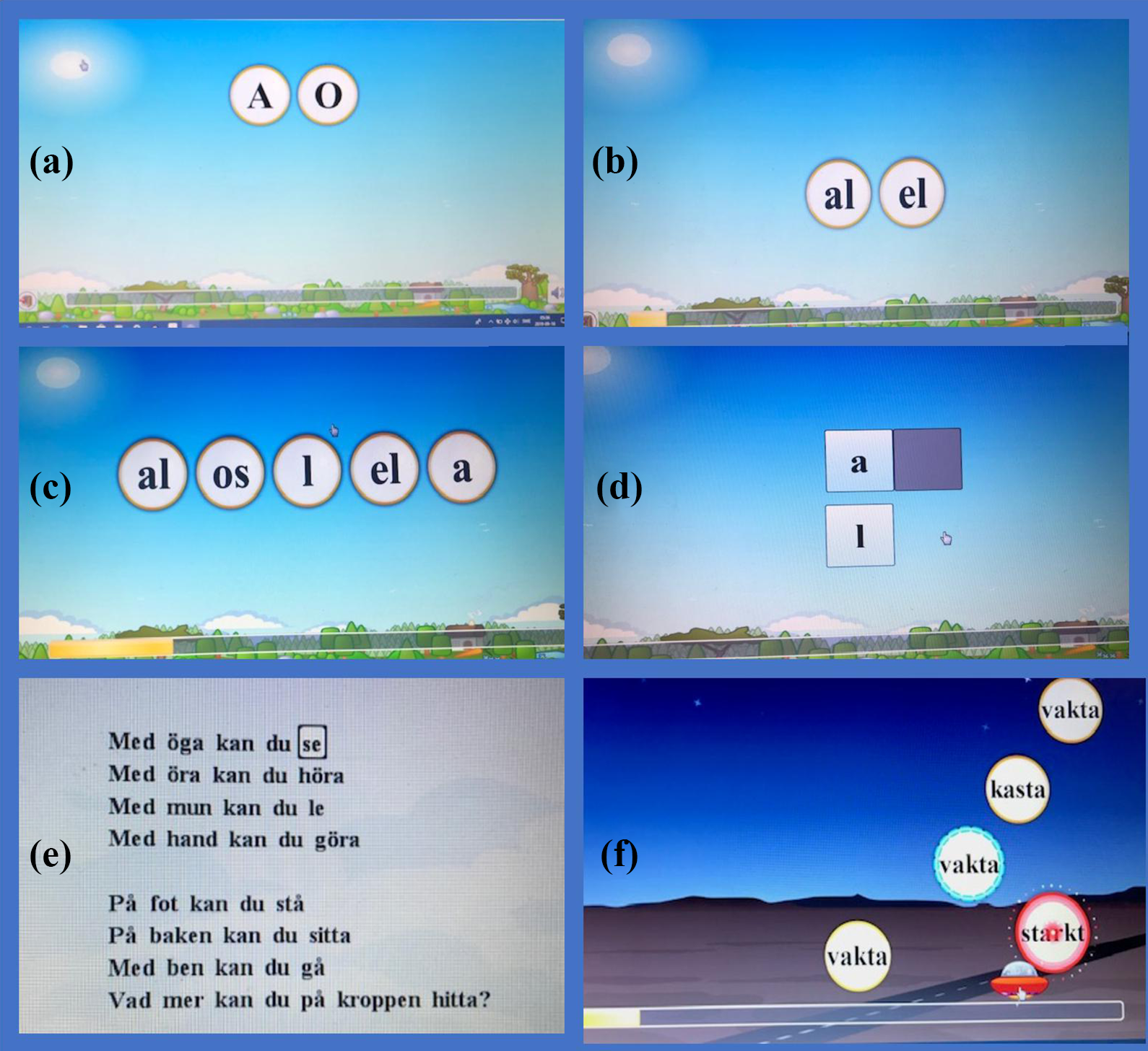
Six tasks from GraphoGame. (a)–(c) Theme 1, levels 1–3. Child clicks on the letter/word on the screen which corresponds to the auditorily presented letter sound/word. (d) word-forming task, child pulls letters from left to right to form a word. (e) nursery rhyme (reward), words are lighten up when spoken, child listens and follows along. (f) Theme 3 level 55, child hits the word which corresponds to the auditorily presented word by moving the space craft with the mouse cursor/pressing the touch screen. For each task, when child makes a correct match, a visual timeline gradually fills (shown in yellow at the bottom of the screen in (b) (one correct), in (c) (three correct), and in (f) (two correct)). When the whole timeline is filled in yellow, a new task is presented.
Regular schooling (RS) for children with intellectual disability
In mild intellectual disability classes at primary school age, reading and writing tuition combines PA methods (Bornholm program, Lundberg et al., 1988), phonics methods with whole-word reading methods (National Agency of Education, 2019). A teacher in one of the mild intellectual disability classes described, at younger ages, learning activities need to be fun and apply to children’s playfulness. They also work on the basis that learning takes place all the time, everywhere, and not only in special lessons. In addition, story listening is included, where the students get experience in different texts. They talk about the content which is preferably based on pictures to stimulate reading comprehension. The aims in educational settings for teaching of children with severe intellectual disability give major attention to activities of daily living and less to teaching reading (National Agency of Education, 2015).
Design
The study had a longitudinal crossover design through 8 weeks. Nine children signed up for the study during spring semester (first period). In order to increase the number of participants, the study was repeated during the autumn semester, and eight new participants were recruited (second period). The data from the two periods were analyzed together as one group (n = 17). The children of each period were randomly divided into group 1 (period 1 + 2, n = 10) or group 2 (period 1 + 2, n = 7). These two groups did not differ with respect to age (p = 0.12). Each period had three assessment sessions separated by 4 weeks of intervention with GG among regular school activities or 4 weeks of only regular schooling (RS). After the first baseline assessment (T1), group 1 started the GG intervention and group 2 continued with RS. After 4 weeks, a second assessment (T2) was completed and thereafter the groups switched activities, that is, from RS to GG intervention, and vice versa. After another 4 weeks, the children were tested again (the third assessment, T3). Eight children from the spring semester continued the study during autumn and thus participated in two periods. These children continued in their group assignments 1 or 2 and had a fourth, fifth, and sixth assessment (T4, T5, and T6). Results from their second period are analyzed separately.
GG intervention
Computers with the GG software were delivered to the five participating schools. Five teachers had the main responsibility for the intervention. For seven children, two teachers shared responsibility. The training took place individually and was overseen by the teacher in a shielded part of the classroom or in an adjacent group room to ensure ecological validity. Treatment fidelity was ensured by instructing and coaching the teachers in person, via e-mail correspondence, and over the phone by the second author. Instructions included the following: ensure that children practiced with GG 10 min per day during 4 weeks (in total 20 school days) and compensate missing days by increasing the daily practice with corresponding practice time in cases where the child did not follow the intervention schedule. Treatment fidelity was also ensured by the design of GG, where dates, time of day when training took place, the total amount of training time (h:min), and the highest GG level reached (max 56) were registered automatically on the GG server for each child.
To overcome fine motor difficulties, such as controlling the mouse cursor, touchscreens were offered to the schools of all children. Thirteen children used these. Teachers were also informed to support children’s endurance with a visual timeline, which some of them did.
Teacher log notes
The teachers were instructed to write log notes after each GG session. The log notes covered the teacher’s impression of the child’s ability to work independently and his or her progress in every training occasion. Teachers also reported on the children’s use of adaptation tools and major difficulties.
Individual assessments
All assessments (T1–T3, T4–T6) took place in a study room adjacent to the classroom. Children could have their teacher present in the room during the testing if they wanted. The oral assessments were audio-recorded. The majority of the testing was carried out by the second author, a speech-language pathologist (SLP) with extensive experience in assessing children with developmental challenges. Each test session lasted approximately 30 min. A test protocol was followed. Word-decoding lists were presented in a randomized order. Due to geographical circumstances, half of the second period assessments were carried out by two other SLPs, who received careful training in the test procedures by authors 1 and 2. To obtain consistency in scoring, these two SLPs first scored children’s recordings separately, then compared their separate scores until conformity was achieved. For interrater reliability, 30% of the first period’s phonological testing (initial phonemes correct at T2) of a random sample of seven children was scored by the second author and one of the extra SLPs, each separately. Agreement was found in 98.4%.
Letter knowledge
Letter sound identification
A letter sound identification task was used to measure the ability to identify lower case letters from how they sound (Clay, 1973). In this task, the children were presented one card at a time showing four letters in a row. The child was instructed to point to the letter in which the test leader sounded out loud. Each correct pointing scored 1 p. The maximum score was 26 p. Clay reported concurrent validity (as cited in Denton et al., 2006: 14) for letter identification (0.85) with word-reading tasks based on correlations for 100 six-year-old New Zealand children in 1966. Split half reliability is reported at 0.97.
Letter naming
A letter naming task was used to measure the ability of naming lower case letters (Frylmark, 1995). The child was presented with a chart of 4 × 6 rows of letters with the Times New Roman font in size 48 pt. The child was instructed to name each letter the test leader pointed at. Children were scored correct when producing the letter name or the letter sound. The maximum score was 24 p. The instruction manual does not provide information about validity or reliability.
Phonological processing
Phonological output
The children were asked to name everyday pictures of objects and events from Thelander and Kvarnevik Naming and Phoneme test, “Värmlandstestet” which is a test used by nurses when assessing 4-year-old children’s speech and language skills at the primary health-care clinic (Rikshandboken Barnhälsovården, 2012). According to Rikshandboken, Värmlandstestet has good social validity and screening sensitivity. It uses pictures that are familiar to 4-year-olds’ concepts about the world; children like the test and it works well as a contact-creating instrument. Värmlandstestet identified 90% of the speech delayed children, and trends toward overdiagnosis were not observed (as cited in Rikshandboken, Barnhälsovården, 2012: 2). The purpose of using Värmlandstestet in the present study was to get a general perception of children’s speech ability and to recognize systematic speech errors which could affect the scoring of the reading tests. The children’s performance was scored as initial phonemes correctly produced, max 31 p.
Phonological awareness
Initially, a computer-based nonword discrimination task was used (Wass et al., 2008). Due to the children’s difficulties in comprehending the instructions of the task, this test was excluded and will not be reported.
Decoding
Three word-decoding tasks consisting of a total of 60 regularly spelled words were created in a pilot study (Abrahamsson and Quick, 2015); GG words (total 20), real words (total 20), and nonwords (total 20) (see Appendix) and were used as outcome measures on reading ability in the present study. Twenty words were selected from GG. These constituted two-, three-, four-, and five-letter words distributed in three word lists, short words with simple orthographic structure first (CV, VC), and long words with complex orthographic structure last (CCVCV) (GG word lists 1; seven words, 2; seven words, 3; six words). With the GG words as templates, 20 other real words with the same orthographic structure were selected (Real word lists 1, 2, and 3), followed by 20 nonwords (Nonword lists 1, 2, and 3), also with the same orthographic structure. In total, there were nine word lists randomly presented to the children at each assessment session (see Appendix). The maximum score for each group of words, GG words, Real words, and Nonwords, was 7 p for word lists 1 and 2, respectively, and 6 p for word list 3. Children were presented with the word lists on laminated A5 sheets, 210 × 148 mm or 8.27 × 5.83 inches. The font was Arial at 28 pt. size.
Children’s decoding of GG words was also scored with respect to reading strategy, alphabetic (sounding out individual letters or syllables to a word), and orthographic (direct word reading) by the second author who has long experience of assessing children with developmental challenges. Since no pictures are provided in the word lists, the possibility of using a guess strategy, that is, logographic reading strategy, was considered limited.
Data analysis
A summary of teachers’ log notes for each child was made and the report on children’s ability to work independently was graded in the following three levels: Independently. Those were children who were reported to work independently or mostly independently with the program from the start. Gradually independently. Those were children, who after some time learned to manage the program and the computer and reached a stage of mostly independent work. Dependently. Those children who, according to the teachers, needed partial or full support during all sessions.
First, nonparametric descriptive statistics were presented for baseline data at T1 and differences between groups 1 and 2 at baseline were analyzed. Then Wilcoxon signed-rank test was used to analyze differences after the first part of the period (4 weeks) T1–T2 and the second part (4 weeks) T2–T3 for each group separately (sig. p < 0.05, two-tailed p). Nonparametric test statistics were chosen due to the small sample size and to minimize the effect of outliers (Field, 2013: 214). Comparisons between groups at T2 and T3 were performed with univariate analysis of variance, and thereafter in order to reduce the effect of differences pre-intervention, the results at T2 were compared with univariate analysis of covariance (ANCOVA, preceded by Levene’s test of equality of variance) controlling for T1 and the results at T3 with ANCOVA controlling for T2. Finally, the results of eight children who participated in two 8-week periods were analyzed, that is, 4 + 4 weeks of GG intervention compared to 4 + 4 weeks of RS (Wilcoxon signed-rank test). Kendall’s τb was used in the correlation analyses of associations between reading strategies and GG intervention (sig. p < 0.05, 2-tailed p). Effect size is reported with Pearson’s correlation coefficient (r) and partial eta squared (ηp2).
Results
GG intervention
Intervention sessions and time
The recommended number of GG sessions (20 days) and GG training time during one period was difficult to reach in the schools. Twelve children had less than the recommended 20 sessions, and the total training time of 10 children was also less than recommended (3:20 h:min, one period). There were also children who practiced more than the recommended sessions and time, and children who compensated for missing sessions by adding time (children 1, 11, and 12), per the authors’ recommendation to the teachers (Table 2). The mean number of GG intervention sessions per one period was 16.8, with a mean total time of 3:20 h (min–max = 2:0–4:41 h). For the 8 children who completed two periods, the mean number of GG intervention sessions was 31, with a mean total time of 6:16 h (min–max = 4:25–7:59; see Table 2).
Information regarding GG training.
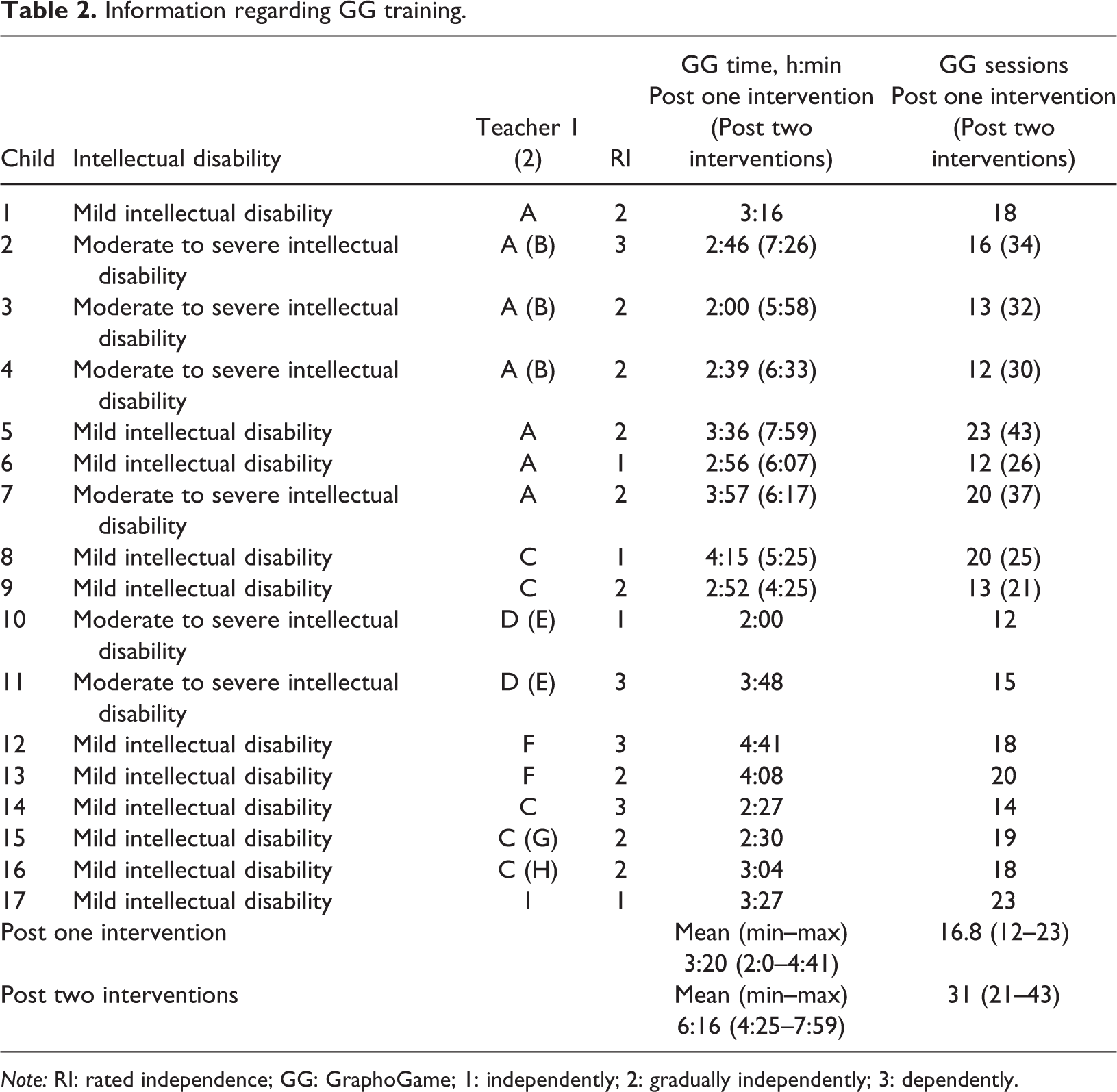
Note: RI: rated independence; GG: GraphoGame; 1: independently; 2: gradually independently; 3: dependently.
Comparisons with respect to intellectual functioning (mild intellectual disability and moderate to severe intellectual disability school units) showed that children from mild intellectual disability schools (n = 11) practiced with GG on average 3:42 h in total (min = 2:25 h, max = 4:41 h), whereas children from moderate to severe intellectual disability schools (n = 6) practiced on average 2:51 h (min = 2:0 h, max = 3:57 h). This did not constitute a significant difference, p = 0.20, ηp2 = 0.11.
Independence
Four children managed the program independently from the very beginning (children 6, 8, 10, and 17). Three of these were in schools for mild intellectual disability (the exception was child 10; Table 2). The teachers reported that nine children made gradual improvements toward independent work with GG. These 9 children needed between 4 and 10 GG sessions before they managed the program themselves, although with the teacher present in the room. Four children needed support regarding motivation and attention from the teacher throughout the whole intervention (children 2, 11, 12, and 14). The children’s independence was reported to vary somewhat with their mood. For some children, comprehending instructions in the game was reported to be the biggest challenge, while for others, teacher log notes made it evident that the children were frustrated with not being able to speak well enough or sound out letters themselves. Overall, children from both types of school units, mild intellectual disability and moderate to severe intellectual disability, were found working independently, gradually independently, or totally dependently with GG.
Adaptations
Some children who found it difficult to press the touchscreens hard enough preferred the mouse cursor. Pictures to support spoken language and teachers’ manual signing were beneficial for several children’s comprehension of the tasks in GG. Visual timelines were reported to support children’s motivation to complete the GG sessions, as did stickers or raisins as rewards after completion of tasks in GG. Extra time, watching how others did it, careful preparation before an activity began, and clear routines were crucial educational elements for many.
Outcome after GG intervention and RS
In Table 3, descriptive statistics are given for groups 1 and 2 separately. Group 1 were children selected for GG intervention during the first part (T1–T2, 4 weeks) of the intervention period, and for RS during the second part (T2–T3, 4 weeks). Group 2 were children selected for the reverse order, that is, RS between T1 and T2 and GG intervention between T2 and T3.
Descriptive statistics of test outcomes after one intervention period for group 1 (GG intervention during T1–T2) and group 2 (GG intervention during T2–T3). Significant improvements of each group related to their GG and RS weeks, respectively.
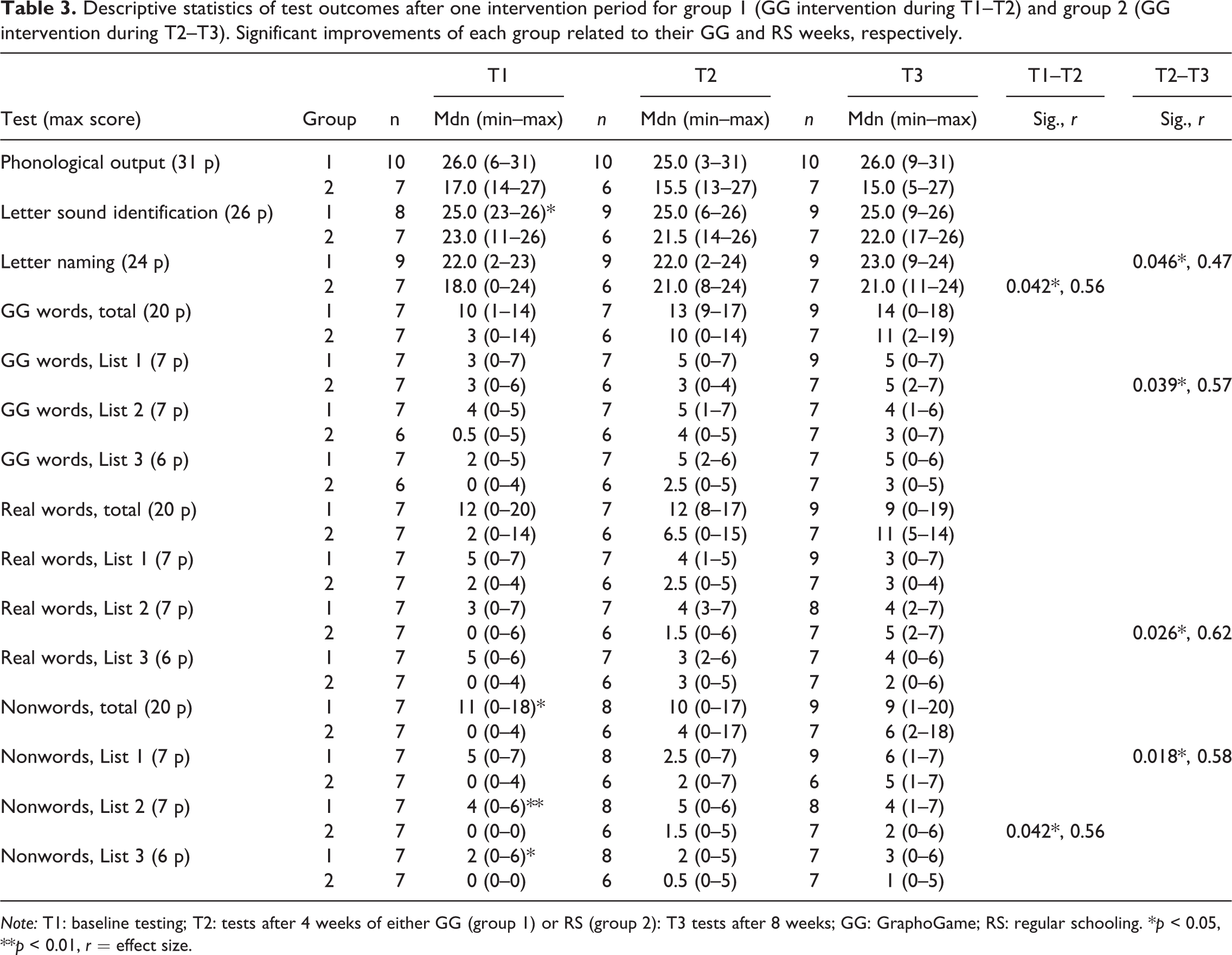
Note: T1: baseline testing; T2: tests after 4 weeks of either GG (group 1) or RS (group 2): T3 tests after 8 weeks; GG: GraphoGame; RS: regular schooling. *p < 0.05, **p < 0.01, r = effect size.
Although there was no significant age difference between group 1 and group 2, an initial difference (T1) between groups was found in letter sound identification (p = 0.026, group 1 > group 2). When controlling for age, this difference disappeared (F = 3.05, p = 0.131). Also, on reading nonwords, group 1 reached significantly higher scores than group 2 (List 2, p = 0.003; List 3, p = 0.025, nonword total p = 0.025). These differences did not disappear when controlling for age.
Analyses of differences within each group during the first part (T1–T2) and during the second part (T2–T3) of the period were made. A significant increase in letter naming was found for group 1 after the second part (T2–T3, Z = 1.997, p = 0.046, r = 0.47) and for group 2 after the first part (T1–T2, Z = 2.032, p = 0.042, r = 0.56), both increases occurred after 4 weeks of RS. A significant increase after RS on decoding Nonwords, List 1 (Z = 2.375, p = 0.018, r = 0.58) was found for group 1 and for group 2 after RS on decoding Nonwords, List 2 (Z = 2.032, p = 0.042, r = 0.56). Further, a significantly higher result of group 2 was found on decoding of GG words, List 1 and decoding of Real words, List 2 after their GG intervention in the second part of the period (T2–T3, Z = 2.060, p = 0.039, r = 0.57 and Z = 2.226, p = 0.026 respectively, r = 0.62; Table 3). Although nonparametric statistics was used, the variation in numbers of children at the different assessments may have influenced the results. In sum, this means that the children as a group showed very limited improvements (Table 3) after GG intervention.
When ANCOVAs between groups 1 and 2 at T2 controlling for baseline differences at T1 were performed, the only significant difference found was in letter naming in favor of group 2 (group 1 n = 9, Mean (SD) = 19.56 (6.95); group 2 n = 6, Mean (SD) = 19.0 (5.93); F = 7.509 p = 0.018, ηp2 = 0.39). In the ANCOVA of differences between groups at T3 when controlling for the results in T2, a significant difference was again found in letter naming, but this time in favor of group 1 (group 1 n = 9, Mean (SD) = 21.44 (4.75); group 2 n = 6, Mean (SD) = 18.83 (5.35); F = 7.32, p = 0.019, np2 = 0.38). Both results showed an effect of RS. A difference was also found in phonological output in favor of group 1 (group 1 n = 10, Mean (SD) = 24.0 (6.86); group 2 n = 6, Mean (SD) = 16.17 (8.40); F = 7.193, p = .019, np2 = 0.36). An unexpected decrease in the results of child 4 (group 2) added to this difference (T2: 14 p, T3: 5 p). In sum, only the increase in letter naming after RS still remained after controlling for previous scores.
Eight children participated in two 8-week periods of GG intervention and RS, totaling 16 weeks. To investigate the effect of 8 weeks of GG intervention compared to 8 weeks of RS, the total increase of decoded GG words during their GG interventions (n = 7, Mean (SD) = 6.0 (7.19), min–max = −2–20) was compared with the total increase of decoded GG words during their RS (n = 7, Mean (SD) = 2.43 (7.14), min–max = −13–9). The difference was not significant (Z = 0.734, p = 0.463).
For an overview of all children’s test results at T1–T3 (17 children, one 8-week period GG + RS), and T1–T6 (8 children, 16 weeks), see Table in Supplemental material. A combination of GG intervention and RS resulted in significantly higher scores after 8 weeks in letter naming (p = 0.002) and decoding of both trained words (GG—words: total p = 0.02, List 2 p = 0.04, and List 3 p = 0.004) and untrained words (Real words List 2 p = 0.049 and Nonwords: total p = 0.03 and List 1 p = 0.004). After two periods of participation, the eight children decoded significantly more GG words correctly (total score p = 0.04, List 1 p = 0.04, List 2 p = 0.03, and List 3 p = 0.02.) than at their first assessment T1.
GG words, individual results
The children’s decoding of GG words is presented individually in Table 4. The number of correctly decoded GG words at T1, T2, and T3 is given, and the total change in number of decoded GG words after one period (8 weeks) is calculated separately after GG intervention (4 weeks) and RS (4 weeks). The total increase of correctly decoded GG words after one GG intervention in all children was 58 words (Mean = 3.92, min–max = −4–15). Corresponding analysis of the number of correctly decoded GG words after one period of RS in all children showed an increase of 20 words (Mean = 1.08 min– max = −6–9). This difference in the increase between GG intervention and RS was not significant (p = 0.201). The range in achievement was very large—three children (1, 8, and 17) had slightly lower scores (8 words total) after one GG intervention and four children (5, 10, 13, and 12) had slightly lower scores after RS (14 words total). The two 5-year-old children (15 and 16) did not participate in either assessment session. Considering children with mild intellectual disability and children with moderate to severe intellectual disability separately, in 8 children with mild intellectual disability (three missing values), an average increase of 2.25 correctly decoded GG words was observed after GG intervention and an average increase of 0.4 (one missing value) correctly decoded words after RS (in total 18 and 4 words, respectively; see Table 4). The corresponding average increase in correctly decoded GG words in children with moderate to severe intellectual disability (n = 6) was 6.65 words after GG intervention and 2.65 words after RS (in total 40 and 16 words, respectively, see Table 4). The average increase of correctly decoded GG words after GG intervention was attributed to children with moderate to severe intellectual disability (40 words, see Table 4), particularly, child 2, 7 and 11. In summary, the variation between children was large and indicated that a gain from practicing with GG might be mostly on an individual basis. Importantly, both children with moderate to severe intellectual disability and children with mild intellectual disability benefited from GG training on decoding GG words, that is, trained word material.
GG total word decoding scores at T1, T2, and T3 (Lists 1, 2, and 3, max 20).
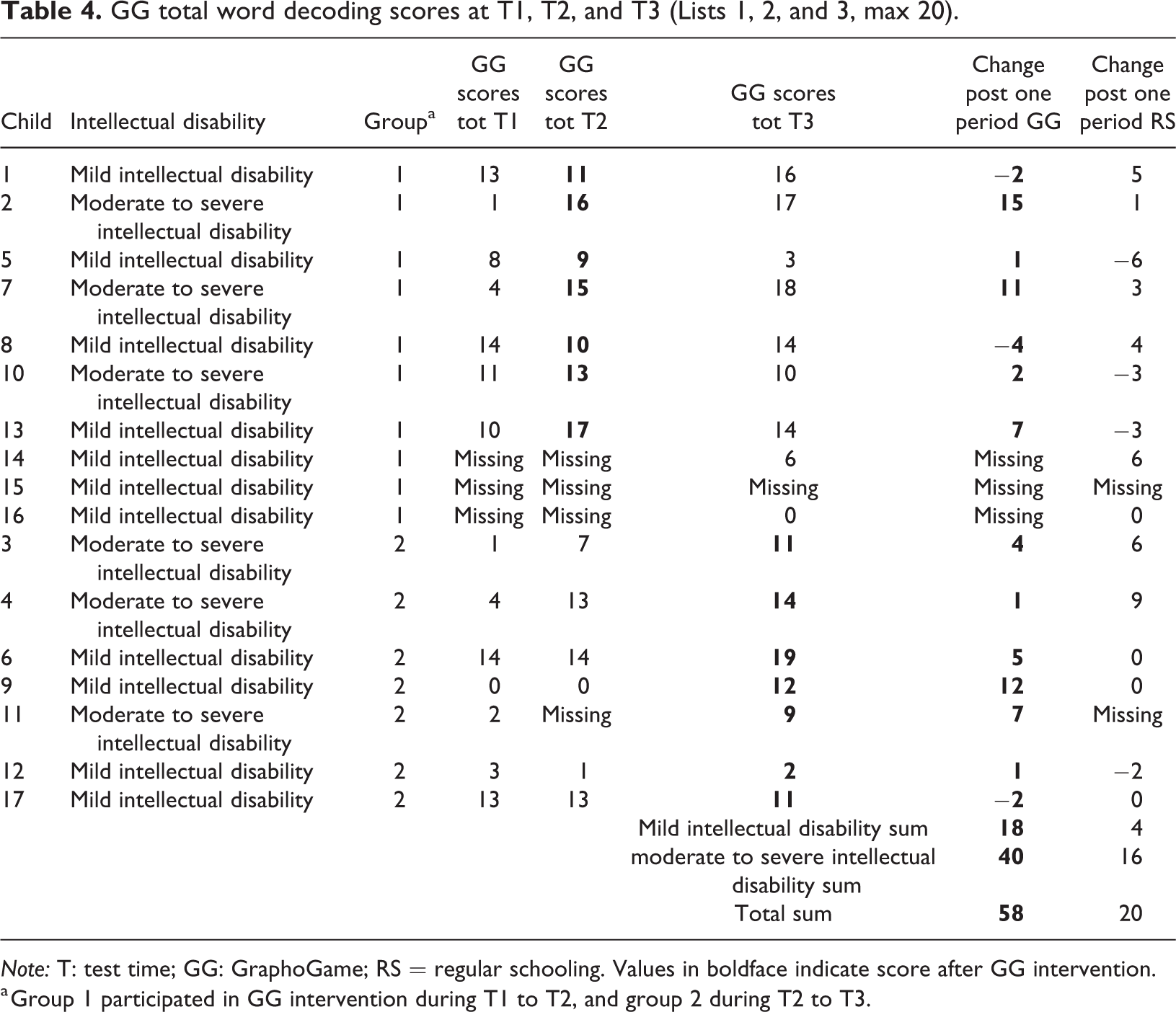
Note: T: test time; GG: GraphoGame; RS = regular schooling. Values in boldface indicate score after GG intervention.
a Group 1 participated in GG intervention during T1 to T2, and group 2 during T2 to T3.
Reading strategies, individual results
The children’s reading strategies when assessed with the GG word lists were analyzed (Table 5). Seven children who had limited or no decoding skills at T1 used an alphabetical decoding strategy at T3. Four children increased their use of orthographical decoding strategies from T1 to T3 (after one period of GG + RS). The individual differences in reading strategies were large, for example, child 5, attending a mild intellectual disability school, managed GG with gradual independency did not make any progress in alphabetical decoding, while child 7, in a moderate to severe intellectual disability school, also managed GG with gradual independence but increased the alphabetical decoding score from 0 to 18 (max 20).
Reading strategies: number of GG words read with an alphabetic or orthographic strategy (max = 20).
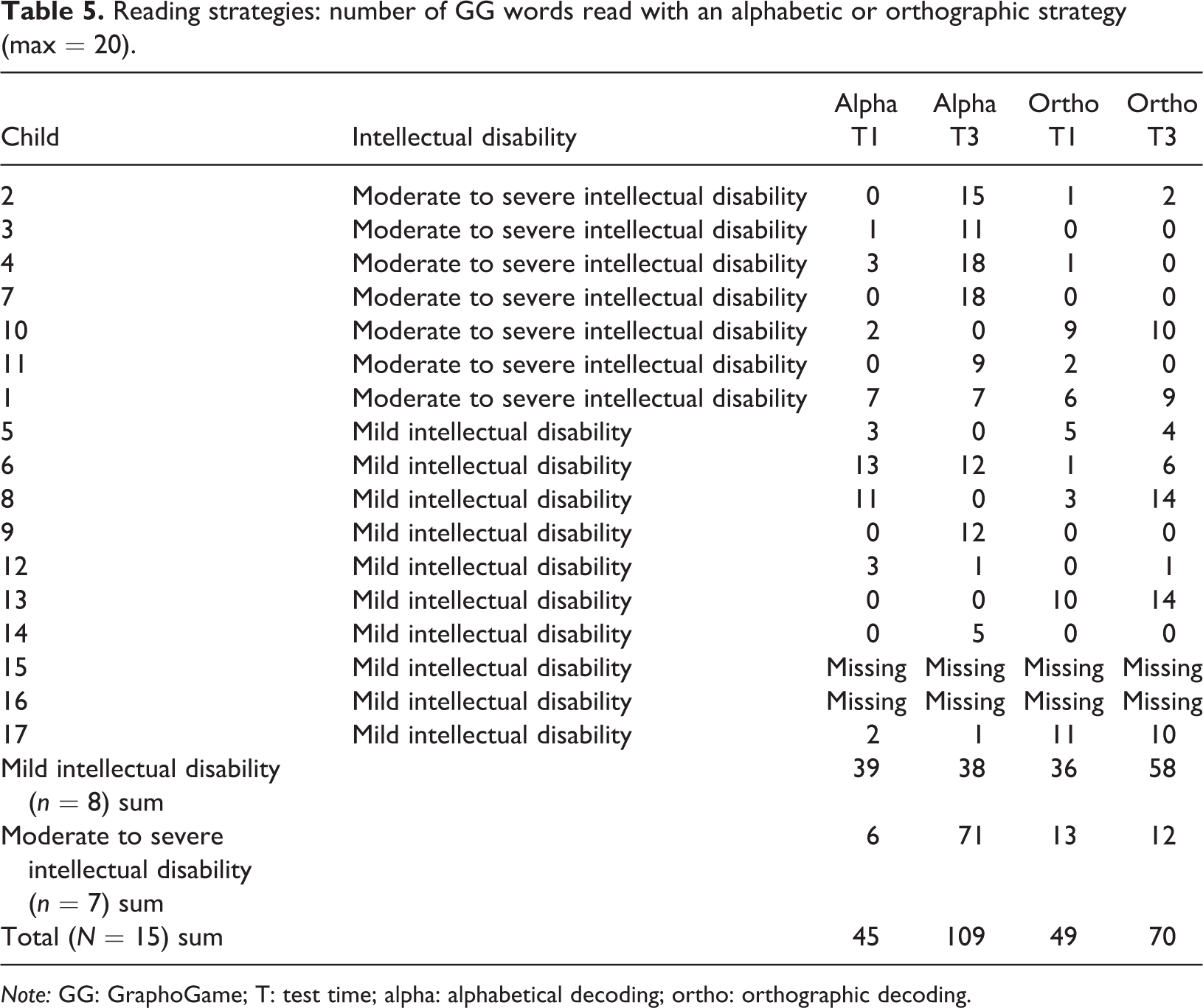
Note: GG: GraphoGame; T: test time; alpha: alphabetical decoding; ortho: orthographic decoding.
Considering children with mild intellectual disability and children with moderate to severe intellectual disability separately, it was observed that at the group level, the children with moderate to severe intellectual disability increased their total number of alphabetically decoded words considerably (from 6 words to 71 words), while at the group level in children with mild intellectual disability, the same clear increase was not observed. While child 9 made a considerable progress to alphabetical decoding, child 8 made a progress from alphabetical decoding at T1 to orthographical decoding of many words at T3 (see Table 5). All children with moderate to severe intellectual disability (except child 10, who read most words orthographically) showed an increase in their number of alphabetically decoded words on average 10.8 words. Corresponding analysis of orthographically decoded words revealed that children with mild intellectual disability (n = 9) showed an average increase of 2.2 words (from 36 words to 58 words). In particular, children 6, 8, and 13 showed an increase. No child with moderate to severe intellectual disability showed a major increase in orthographically decoded words.
The progress in reading strategies was associated with different aspects of GG, such as time spent practicing and achieved levels. Alphabetically decoded words at T3 were significantly associated with total GG intervention time (τb = 0. 43, p = 0.02) and orthographically decoded words at T3 were significantly associated with achieved GG levels (τb = 0.49, p = 0.01, see Table 6). Thus, in conclusion, the more time children spent practicing with GG, the more words they decoded alphabetically, and the higher the GG levels the children achieved, the more words they decoded orthographically.
Children’s reached GG levels and corresponding orthographic content.
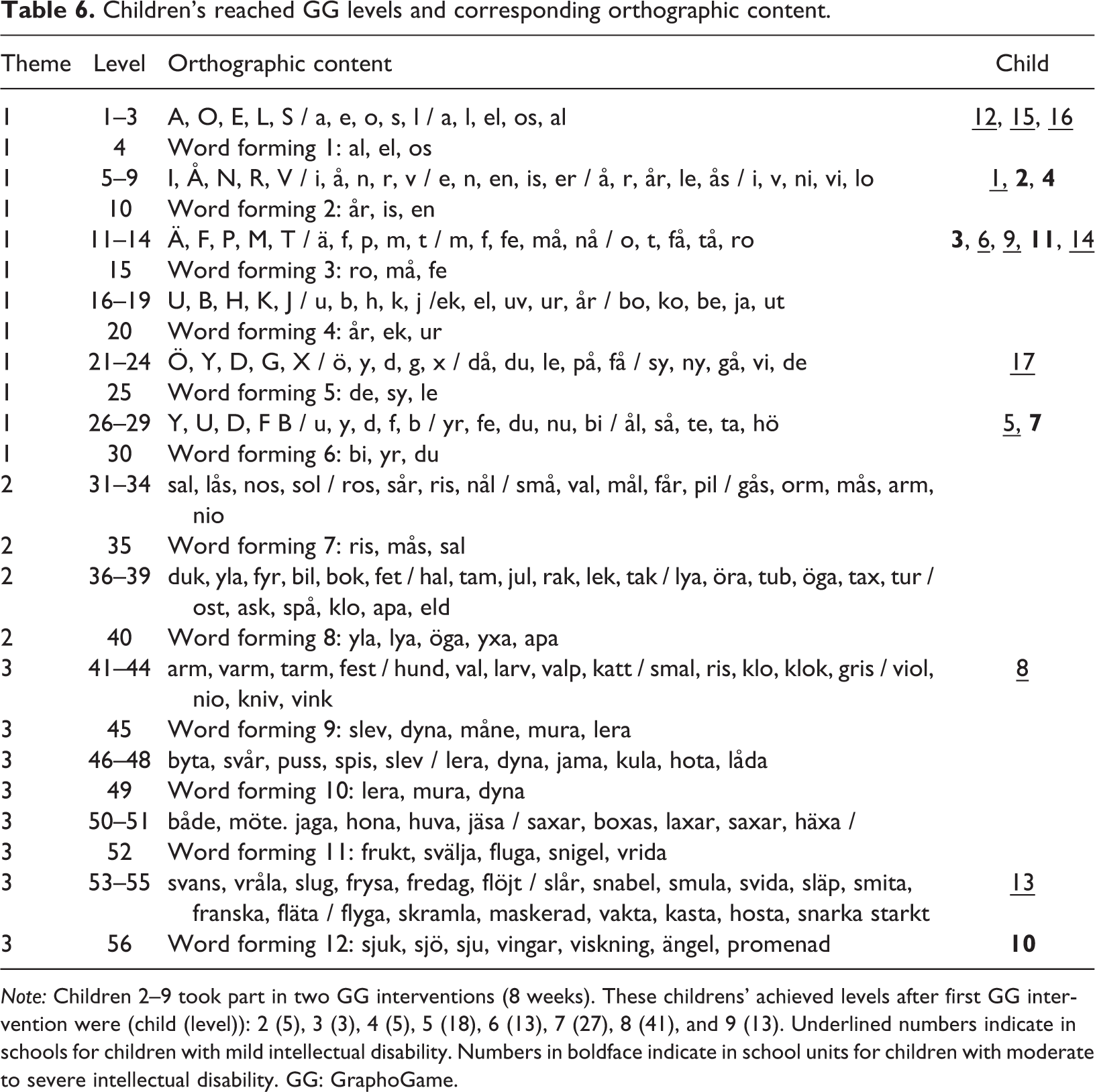
Note: Children 2–9 took part in two GG interventions (8 weeks). These childrens’ achieved levels after first GG intervention were (child (level)): 2 (5), 3 (3), 4 (5), 5 (18), 6 (13), 7 (27), 8 (41), and 9 (13). Underlined numbers indicate in schools for children with mild intellectual disability. Numbers in boldface indicate in school units for children with moderate to severe intellectual disability. GG: GraphoGame.
GG levels were achieved in relation to number of GG intervention periods, school placement (mild intellectual disability/moderate to severe intellectual disability), individual differences, and independent work.
Table 6 shows how far each child reached in the GG program levels. The variation was large, ranging from one level to the maximum of 56 levels (Mdn = 13) for 11 children after completing one GG intervention (4 weeks). For the 8 children who completed two interventions (8 weeks), the range was between 5 and 44 levels (Mdn = 14).
The majority of the children did not reach above GG level 14, which means they managed phoneme–grapheme correspondence of upper case and lowercase letters, and decoding of a small number of CV words, although with individual differences. For example, one child in a moderate to severe intellectual disability unit was the only child who worked through all levels in GG, thus having decoded CCCV words and irregularly spelled words with larger grapho-phonemic units. Regardless of age, school placements (mild intellectual disability/moderate to severe intellectual disability), and the number of GG intervention periods, six children (four in mild intellectual disability units) reached higher levels than the others. Three of these children (8, 10, and 17), who worked independently, reached 23–56 levels, and the other three who worked gradually independently (5, 7, and 13) reached 27–53 levels. Interestingly, no child who was totally dependent on support from a teacher advanced beyond level 14.
Discussion
In the present study, 17 children with DS using intensive computer-based phonics (GG) participated in a cross-over design (GG intervention 4 weeks and RS, RS 4 weeks). The first aim was to explore children’s independence and need of adaptations when working by the computer. The second aim was to investigate possible effects on phonological processing, letter knowledge, word decoding, and reading strategies in children with mild intellectual disability and children with moderate to severe intellectual disability.
The majority of the children became gradually independent using GG, but attention and behavior challenges varied in many children from time to time, which are believed to have affected the results. At the group level, very few improvements were related to GG training. Only group 2 showed significant results in decoding one list of GG words, trained words, and one list of real words, untrained words. However, individual improvements were observed in the decoding of GG words after GG intervention and increased alphabetical reading strategy after a full period (GG + RS) in children with limited or no initial decoding skills. There were associations between alphabetically decoded words and amount of training with GG, as well as associations between orthographically decoded words and number of levels reached in GG. The results indicate that intensive phonics training with GG was beneficial in some children with DS.
GG phonics training: challenges and adaptations
A common pattern in the teachers’ log notes was that the children’s attention and motivation varied between sessions. Moreover, frustration with speech difficulties and poor understanding of the instructions hindered some children from independent and effective work with the GG tasks. Comparable behavioral challenges in children with DS are known from earlier studies. In a teacher survey by van Bysterveldt and Gillon (2014), tutors reported that some school-aged children with DS had difficulties with attention and behavior, and about 35% of the children did not participate in any classroom reading activities, due to their need for individual adaptations. Helpful adjustments for the children in the present study were pictures supporting speech, manual signing, small rewards of different kinds, help in sounding out letters, and visual timelines. De Almeida Barbosa et al. (2018) concluded that alternative communication devices, such as speech-generating devices and picture communication, could probably be used with a broader group of children with DS and in an adjusted form during phonics training (Felix et al., 2017).
A high prevalence of symptoms of autism spectrum disorder (ASD) and attention deficit hyperactivity disorder (ADHD) in children with DS has recently been recognized by two research groups. A British questionnaire study with data from more than 500 children with DS reported ASD symptoms in 38% of the children (Warner et al., 2014), while a Swedish population-based study of 41 children reported ASD in 41% and criteria for ADHD in 34% (Oxelgren et al., 2017). The authors recommended that all children with DS should be screened for both ASD and ADHD at 3 and 5 years of age and at early school age, so that proper adjustments to their family and educational settings can be made. Several of the adaptations that teachers used in the current study correspond to the recommendations for special education of children with neurodevelopmental disorders attending mainstream schools (Evans et al., 2014).
Outcome after GG intervention
Despite daily 10-min training with GG over 4 weeks in children’s educational setting, there were few results at the group-level indicating GG training to be more efficient than RS. Generalizations to untaught material are rarely reported in studies of children with DS (Lemons and Fuchs, 2010). In the present study, an indication of positive generalization was the finding of a statistically significant improvement on the decoding measure “real words” for group 2.
At an individual level, the results clearly verified findings from many other studies which have emphasized the vast individual variations in reading abilities and achievements in children with DS (Allor et al., 2010; Burgoyne et al., 2012; van Bysterveldt and Gillon, 2014; Lemons et al., 2017, 2018). Several children in the present study correctly decoded many more GG words after one period of GG intervention than after one period of RS, but there were also children for whom the results showed the opposite, and children for whom neither GG nor RS resulted in progress—even negative outcome was sometimes observed. The large variation between children was also noted in advancements in their GG work. The majority of the children never reached beyond decoding single letters and two-letter words, while two children reached the highest theme in the game, thus having decoded irregularly spelled words and larger grapho-phonemic units. Consequently, individually adapted teaching methods are necessary for optimal results.
Structured programs for training delivery were noted as requested by teachers by both Burgoyne et al. (2012) and van Bysterveldt and Gillon (2014). In a case report of a child with DS with exceptional reading skills (Groen et al., 2006), an early start with whole-word reading instruction before sound-based reading instruction was described as the optimal method of teaching. The researchers noted that the parents had started teaching their child to read whole words before 3 years of age, and that in an early development group, this child started to learn letter sounds and developed blending skills at 4 years of age. An early pre-literacy training is also a recommendation of the Bornholm program (Lundberg et al., 1988). Adapted individually to intellectual level, this program was mentioned in the teaching methods used during RS in the present study.
The observation that individual children with moderate to severe intellectual disability in the present study benefited more from GG intervention in relation to GG words than children with mild intellectual disability suggests that digitalized phonics-training need not be restricted to children with DS with high intellectual functioning. Particularly in relation to taught word material, intense phonics training could be beneficial also for some children with moderate to severe intellectual disability, as long as their individual skills are considered. The progress of some children in moderate to severe intellectual disability units in the present study could reflect the lower focus on academic teaching in these classes (National Agency of Education, 2015). A recent survey of preschool teachers’ use of digital tablets in preschools for TD children showed that adequate training to increase digital competence of teachers was still warranted (Otterborn et al., 2018), which suggests that increased digital competence is also needed in teachers in classes with children with intellectual disability.
Reading strategies
Ratz (2013) reported that more children with DS and a mild intellectual disability remained at an alphabetical-decoding stage compared to children with mild intellectual disability with mixed etiologies, and comparably more children with DS, both those with mild intellectual disability and those with severe intellectual disability, used an alphabetical-decoding strategy. Also, in the present study, only a couple of children showed a clear increase in orthographically decoded words after one project period (GG + RS), while many of the children showed a clear increase in alphabetically decoded words. This seemed to confirm Ratz’s (2013) findings of an often-reported barrier to orthographic-decoding strategies (Ratz, 2013).
Two major approaches in reading are presented to children with DS, either enhancing sight-word reading (Fidler et al., 2005) or emphasizing practice in phonics (Ratz, 2013) or a combination of both (Roch and Jarrold, 2012), which includes letter knowledge suggested for other clinical populations (Lyytinen et al., 2009; Nakeva von Mentzer et al., 2014b). Because of the findings that sight-word reading predicted nonword reading, Roch and Jarrold (2012) suggested starting with sight-word reading followed by phonics for optimal reading development in children with DS to benefit from children’s relatively strong visual memory skills (Conners et al., 2011). Ratz (2013), on the other hand, emphasized PA and the need for practice at a phonics level and sounding out short words, instead of teaching sight words. Lyytinen et al. (2009) and Nakeva von Mentzer et al. (2014b) stressed that letter knowledge is the strongest early predictor of reading development and may work as a mediator in developing PA for children with weak phonological skills.
Limitations of the current study
There are several limitations in the present study: the small sample size, the short GG intervention time (Allor et al., 2010, 2014), the wide age range, and, particularly, the fluctuation in the children’s participation in test situations. Altogether, these circumstances influenced the execution of the study. Alternative methods of delivering the phonics training, for example, via tablets or comparable technology, would give a deeper understanding of how children with DS could improve their reading due to technical adaptations in their educational setting.
Conclusions
At the group level, there were few results indicating reading progress after GG intervention. However, at the individual level, some children increased their decoding achievements markedly after GG intervention. A few children advanced to the top levels in the GG program, while the majority stayed at the lower levels. During the project period (8 weeks), progress was observed in an alphabetical-decoding strategy in several children with moderate to severe intellectual disability. However, transfer to an orthographical-decoding strategy was observed in only a small number of children with mild intellectual disability. Associations were clear between time spent GG practicing and alphabetical decoding and between reached levels in GG and orthographic decoding. The heterogeneity within the children with respect to behavioral challenges, independence in computer work and development of literacy skills leads to the conclusion that when individual differences are considered, some children with DS can benefit from intensive computer-based phonics in their educational setting.
Supplemental material
Table_overview_in_Suppl - Intensive computer-based phonics training in the educational setting of children with Down syndrome: An explorative study
Table_overview_in_Suppl for Intensive computer-based phonics training in the educational setting of children with Down syndrome: An explorative study by C Nakeva von Mentzer, N Kalnak and M Jennische in Journal of Intellectual Disabilities
Footnotes
Author’s note
All authors have approved the final article.
Acknowledgements
The authors thank all children, their teachers, and assistants for participating in the study. The authors are grateful to Klaudia Ceder, Ingrid Sör, and Anders Nilsson at the Department of Neuroscience, SLP-unit, Uppsala University. The authors thank Dylan Treisman for proofreading.
Data availability
The data may be available upon request from the first author.
Declaration of conflicting interests
The author(s) declared no potential conflicts of interest with respect to the research, authorship, and/or publication of this article.
Funding
The author(s) disclosed receipt of the following financial support for the research, authorship, and/or publication of this article: This work was supported by Sävstaholm foundation.

Supplemental material
Supplemental material for this article is available online.
Appendix
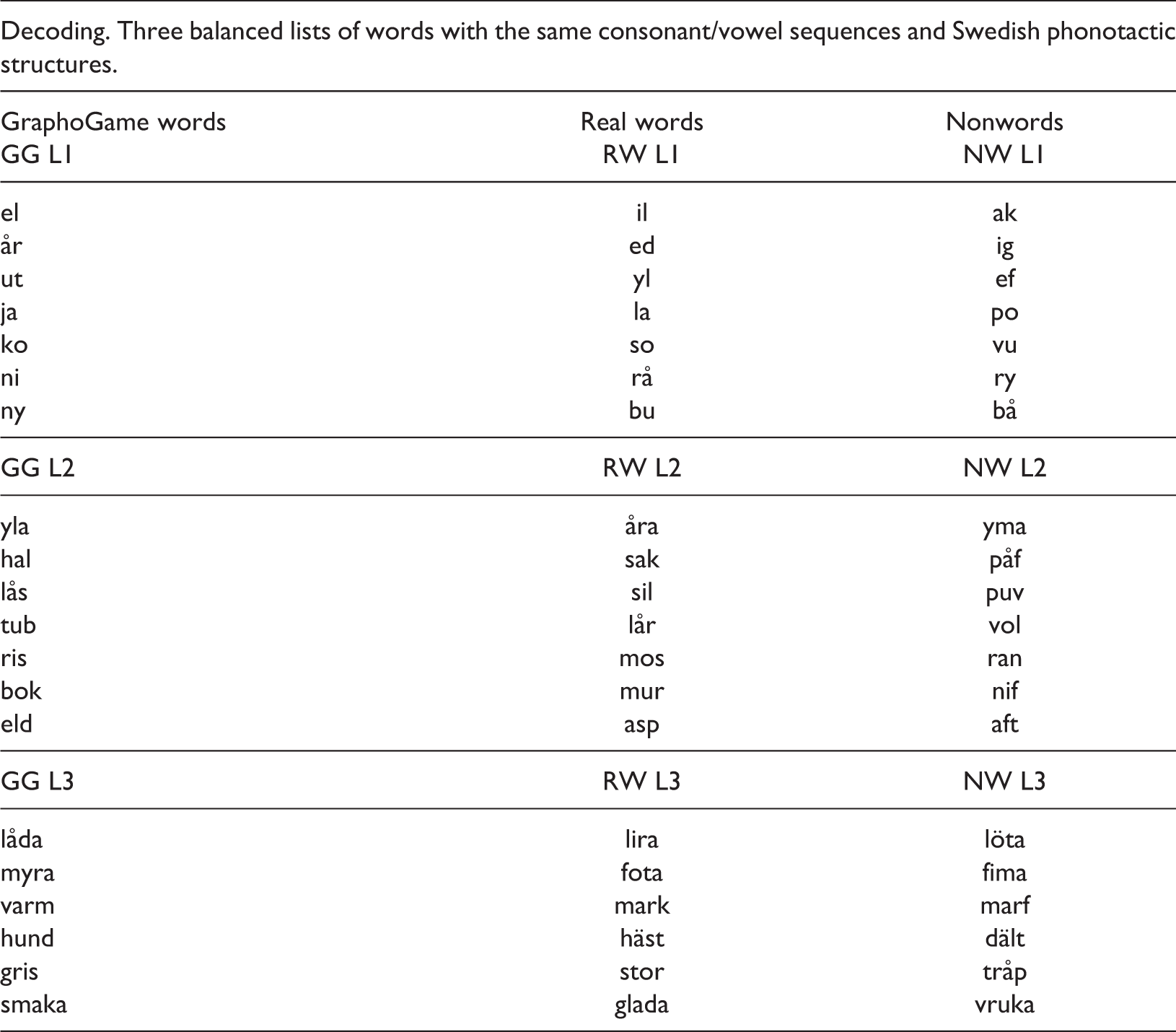
| Decoding. Three balanced lists of words with the same consonant/vowel sequences and Swedish phonotactic structures. | ||
|---|---|---|
| GraphoGame words |
Real words |
Nonwords |
| el år ut ja ko ni ny |
il ed yl la so rå bu |
ak ig ef po vu ry bå |
| GG L2 | RW L2 | NW L2 |
| yla hal lås tub ris bok eld |
åra sak sil lår mos mur asp |
yma påf puv vol ran nif aft |
| GG L3 | RW L3 | NW L3 |
| låda myra varm hund gris smaka |
lira fota mark häst stor glada |
löta fima marf dält tråp vruka |
References
Supplementary Material
Please find the following supplemental material available below.
For Open Access articles published under a Creative Commons License, all supplemental material carries the same license as the article it is associated with.
For non-Open Access articles published, all supplemental material carries a non-exclusive license, and permission requests for re-use of supplemental material or any part of supplemental material shall be sent directly to the copyright owner as specified in the copyright notice associated with the article.
