




Abstract
In the building industry, the interest into adhesive tape to achieve a more tight and robust building envelope has increased rapidly in recent years. With an increasing demand for energy efficiency in buildings, national building authorities are strengthening building requirements to mitigate and adapt to future climate impacts. This paper studies the water vapour permeability of adhesive tape for building purposes. A water vapour permeable wind barrier is essential to enable drying of the external side of the building envelope. Laboratory measurements have been conducted to evaluate how the drying conditions of the wind barrier layer are affected by the use of wind barrier tape. The results show that all the wind barrier tapes tested can be defined as significantly more vapour tight than the wind barrier itself. The wind barrier used as reference was found to have an sd-value of 0.03 m while tape ranged between 1.1 and 9.24 m. To ensure adequate drying and minimize the risk of moisture damages, the wind barrier layer should be vapour open. In an investigated construction project, the amount of tape constitutes 13% of the area of the building’s wind barrier. Further simulations need to be conducted to accurately determine the drying conditions and the following consequences.
Introduction
Energy efficiency in the building sector is essential to mitigate greenhouse gas emissions. A major point of focus in the field of climate adaptation of buildings is the reduction of energy use under future climate scenarios (Stagrum et al., 2020). To reduce energy consumption, national building authorities are strengthening building requirements regarding airtightness and thermal transmittance in building envelopes (Norwegian Ministry of Finance, 2012). Future climate impacts because of global warming necessitate proper and robust building design (Hauge et al., 2017). An increased frequency of extreme weather, like intense rainfall and storms, might have major consequences if buildings are not adapted to future weather loads. In Norway, it has been found necessary to chart and improve the preparedness of the national building stock in the face of climate change, as noted by a government whitepaper (Norwegian Ministry of the Environment, 2013). An airtight building envelope, achieved by the wind- and vapour barriers, is essential to reduce the energy consumption of the building.
Traditionally there has been a large focus on the airtightness of both the wind barrier and the vapour barrier in Norway. In ordinary wood-frame buildings in Norway, the air barrier system consists of an internal and an external layer, known as a vapour and a wind barrier, respectively (Uvsløkk, 2003). The purpose of the vapour barrier layer is (1) to prevent vapour diffusion from the indoor climate and (2) to prevent indoor air from entering the outer layers of the building envelope. The barrier should therefore be airtight and vapour tight. A continuous, vapour tight vapour barrier material is necessary to prevent air leakages and moisture problems (Hansen et al., 2020). A wind barrier on the external side of the envelope also has several functions: in addition to being wind- and waterproof, the barrier should be vapour permeable, which allows the building envelope to dry out. It is well known that air leakages through the vapour and wind barrier layers can be critical and cause moisture problems in the building envelope (Simonson et al., 2005; Fufa et al., 2018; Geving et al., 2019). Especially in cold climates, air leaks can be critical and lead to condensation damage in the building envelope. Therefore, a strict recommendation is set for the vapour permeability of the wind barrier to be used in Norwegian buildings (Uvsløkk, 2003), so that any condensed moisture can dry out towards the external side.
With increasing demands for lower energy consumption and stricter requirements for airtightness in buildings, the interest and use of adhesive tape to seal joints in wind and vapour barriers have also increased rapidly in recent years (Fufa et al., 2018). The use of adhesive tape is particularly important in the design of passive houses and zero-emission buildings. Despite the widespread use of tape in buildings, the research in the field is mainly limited to durability and strength of the tape and the airtightness of the taped joints (Fufa et al., 2018; Jacobs et al., 2012; Langmans et al., 2017). However, it is unknown whether the tape will impact the drying capability of the wind barrier layer. The majority of the identified research relates to the duration, strength and airtightness of the tape. Throughout the literature search, information regarding vapour resistance of adhesive tape has not been identified. As the vapour resistance should be different for vapour and wind barriers, it will be relevant to investigate whether the vapour- and wind barrier tapes have a corresponding vapour resistance. More research is therefore important to identify the vapour permeability of tape and its implications for building envelopes. This article will attempt to answer the following research questions:
- How are the properties of adhesive tape for building purposes recorded in research literature?
- What is the water vapour resistance of adhesive tape for building purposes?
- How are the drying conditions of building envelopes affected by the water vapour resistance of adhesive tape?
To determine the water vapour permeability of adhesive tape, a selection of tape products has been tested. The majority of the tapes tested are wind barrier tapes. However, a vapour barrier tape has also been tested for reference. The results from the measurements are limited to laboratory conditions and are determined according to the testing standard NS-EN ISO 12572:2016. A case building project is studied to illustrate the extent of adhesive tape usage and the possible implications for drying capacity. Existing research literature on tape for construction purposes was retrieved through a scoping literature review, conducted using the method described by Arksey and O’Malley (2005). The findings of the literature review are presented in the Theoretical framework chapter.
Theoretical framework
Moisture in buildings
Moisture in buildings may cause adverse consequences concerning thermal comfort, energy consumption and microorganism growth. The moisture conditions in a building depend on the moisture load the building is exposed to by supply of ventilation air and internal moisture supplement (Thue, 2016). Climate changes due to global warming necessitates proper building design to prevent increasing cases of moisture damage in the future (Lisø et al., 2017). Leakages in the building envelope should be avoided as even small leaks can have a major impact on the building’s air transport (Geving and Thue, 2012). This applies in particular to the transport of humid indoor air to the external side of the structure, where the airtightness of the vapour and wind barriers is important. Air leaks occur mainly due to leaks such as cracks, punctures and tears, as well as leaks at connections between building parts (Relander et al., 2009; Thue, 2016). Water may also intrude from the external side, in the form of precipitation water leaking in. Façade systems must be designed to reduce the wetting of the building envelope, but may not necessarily eliminate it (Arce Recatalá et al., 2020).
Wetting of building materials may negatively impact their thermal conductivity and insulation performance, depending on the moisture resistance of the material (Geving and Thue, 2012). This imposes strict requirements for the use of air barrier systems on the internal and external side of the thermal insulation. Moisture should be prevented from accumulating in the structure, and eventual moisture must be allowed to dry out. As the vapour barrier material by necessity is not permeable, drying must occur through the wind barrier layer, which should be designed to permit vapour transport.
Air tightness and permeability in air barrier systems
Air leakages in joint connections of wind- and vapour barriers can cause condensation damage in exterior structures (Geving and Thue, 2012; Jensen et al., 2020). To prevent heat loss due to air leaks, SINTEF Community (Uvsløkk, 2003) recommends a water vapour diffusion-equivalent air layer thickness (sd-value) of at least 10 m. To prevent air leakages, it is recommended to reduce the number of joints, and to clamp, tape or glue any joints (Geving and Thue, 2012). To ensure adequate drying of the building envelope, the recommended water vapour resistance for the wind barrier layer is an sd-value of less than 0.5 m (Uvsløkk, 2003).
Adhesive tape in the building sector
Tape products can be used to seal joint connections in wind- and vapour barriers, seal pipe penetrations, ensure tightness of window/wall connections, and repair damages to the barriers. The use of tape for building purposes started as early as in the 1980s and has recently become more important with stricter energy requirements (Munawwar, 1980). Traditionally, mechanical fasteners such as nailed battens have been used in joint connections. In the last 30 years, however, the use of adhesive tape has increased due to improvement in product properties such as continuous bonding, better stiffness and better durability (Jacobs et al., 2012). Compared to mechanical fasteners, tape is also easier and faster to assemble, in addition to satisfying stricter requirements for airtightness (Fufa et al., 2018). The adhesive was traditionally made up of rubber but was later developed into acrylic-based, plastic compounds for permanent attachment and increased UV and thermal resistance (Jacobs et al., 2012).
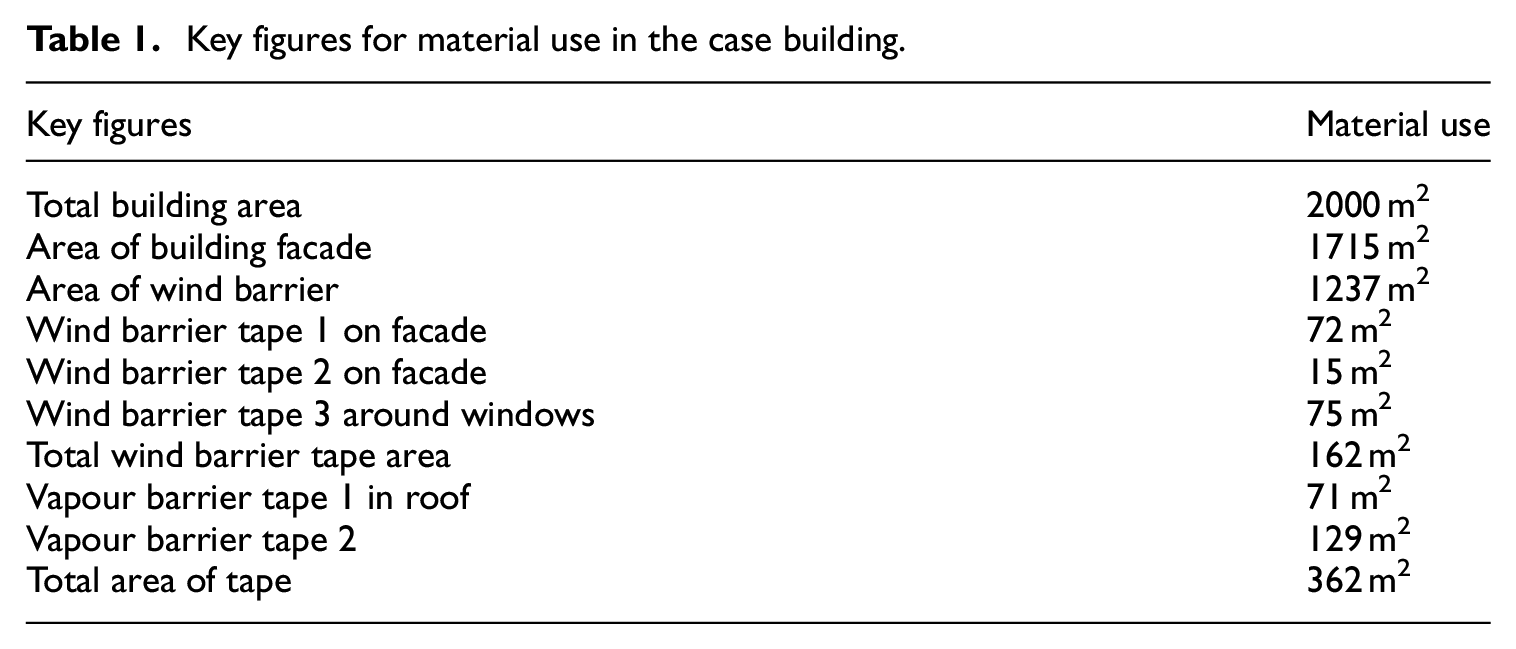
Adhesive tape can be classified as a viscoelastic material and easily adheres to a surface (Benedek, 2004). The adhesive constituting the liquid part of the tape provides the attachment, while the solid part provides shear force stability. The increased use of tape within the building sector can be illustrated in the context of its total use in an example building project. Table 1 shows the key figures for material use in a construction project at the NTNU campus. The amount of wind barrier tape corresponds to 13% of the total area of wind barrier material used in the building. Figures 1 to 3 show how the wind barrier tape is applied during the construction period before the wood cladding is installed.
Key figures for material use in the case building.
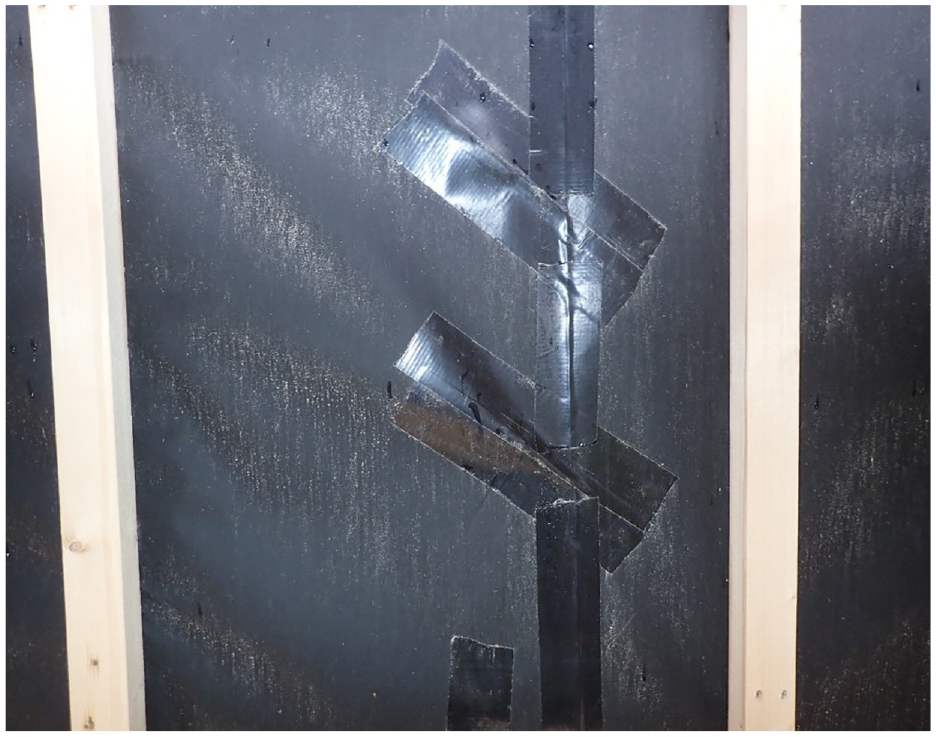
A taped joint in the wind barrier of the case building. Tape is also used to repair minor tears in the wind barrier.
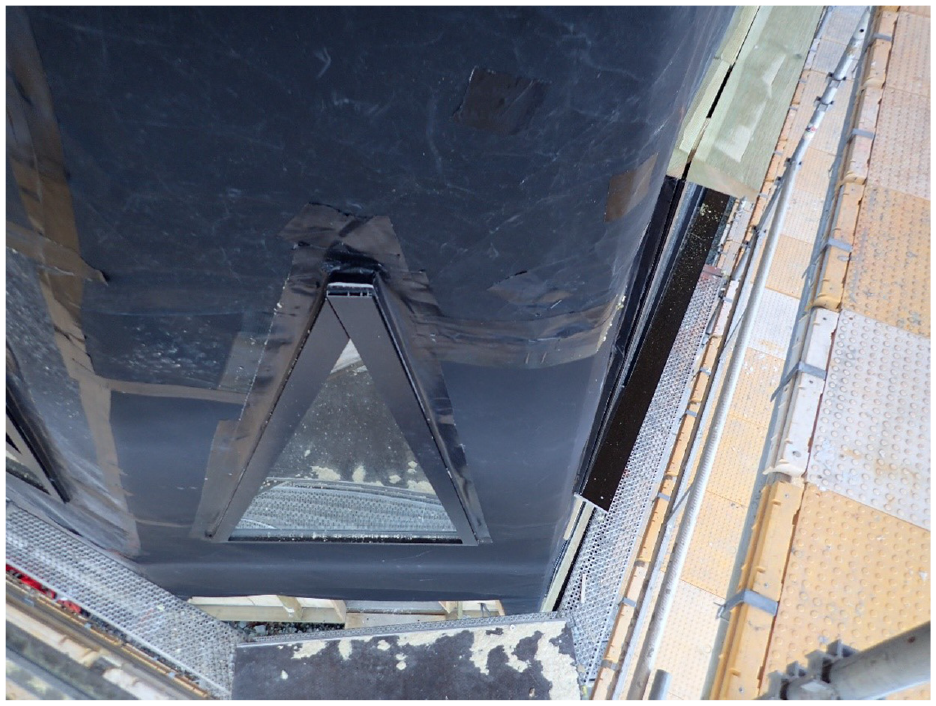
Tape used to seal the wind barrier around a window.
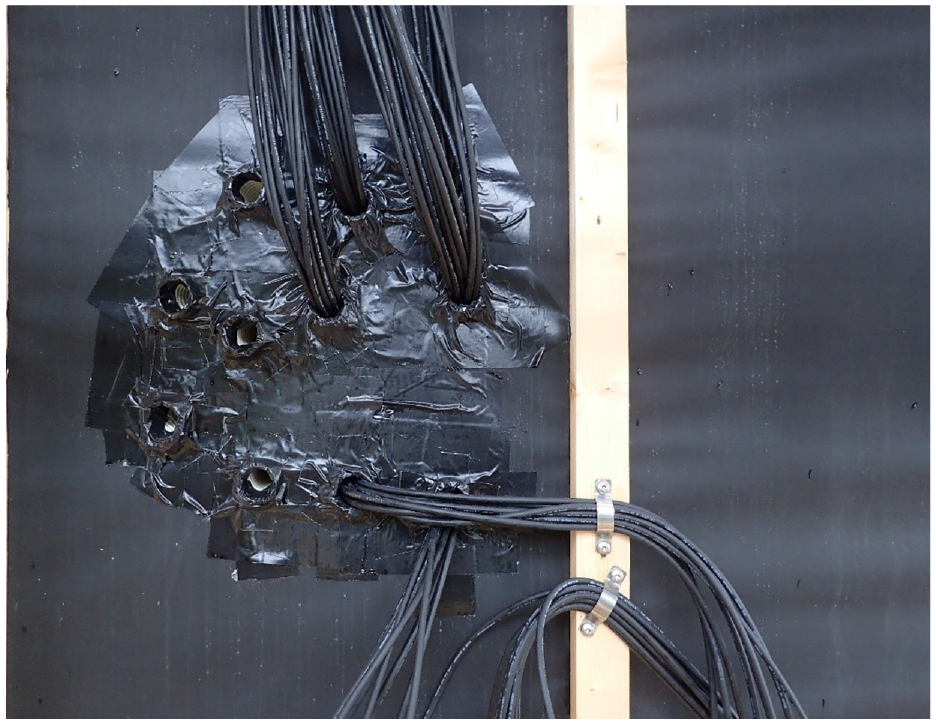
Substantial use of tape to create a seal around photovoltaic electricity cables penetrating the wind barrier.
Resistance and duration of adhesive tape
Research on adhesive tape for building purposes is limited and is largely based on methods for determining duration and strength of tape, and airtightness of taped joints. As the tape generally is not accessible after the building envelope is closed, the tape must be functional throughout the life of the building (Fufa et al., 2018). Wind barrier tape in particular must be able to withstand climatic impacts such as direct rain and UV radiation during the construction period. Heitman (1990) studied the engineering use of acrylic foam tapes and investigated structural properties where creep deformation became the limiting factor (Jacobs et al., 2012). In the late 1990s, several studies were carried out to map the adhesion mechanism of adhesive tape (Jacobs et al., 2012). Geiss and Brockmann (1997) and Brockmann and Hüther (1996) studied the creep resistance of tapes for various materials using a single-lab shear test. The test results indicated that a load of 0.01 MPa could be maintained for 20 years or more (Jacobs et al., 2012).
Ackermann (2012) and Gross and Maas (2011) developed a method based on a 180° peel test. The method indicates how well the tape is attached to the substrate and what force it takes to break the taped connection. Gross and Maas (2011) investigated the peel force between different types of tape and substrates. The test results indicate that the type of substrate and curing time of the adhesive greatly influence the peel force (Langmans et al., 2017). Research also shows that the stress resistance of tape in combination with the polyethylene (PE) film is lower than with other bonding materials (Langmans et al., 2017). Methods for testing the durability of wind barrier tapes are limited to ageing based on temperature and relative humidity (Langmans et al., 2017). These are conditions that are representative of indoor climate, but the method neglects outdoor climate effects such as rain, UV radiation, high relative humidity and frost. Especially during the construction period when the wind barrier is most exposed, joint connections of tape must be able to withstand large climatic impacts (Langmans et al., 2017).
Similar to Gross and Maas (2011), SINTEF has researched the duration of adhesive tape and how the tape is affected in a Nordic climate. To assess the tape’s function over time, test samples were exposed to a 2-week climate-ageing test and a 24-week heat-ageing test. The climate ageing test was conducted through a vertical climate simulator where the samples were exposed to climate cycles featuring UV radiation, water spray, freezing temperatures and ambient indoor conditions (Fufa et al., 2018). Accelerated ageing tests can indicate the expected lifespan of a product. In this way, the ageing time in the test chamber can be compared to actual outdoor exposure. Since outdoor exposure can vary widely depending on weather conditions where the building is located and how exposed the building is, there will be limitations to this method. Therefore, the studies did not include the lifetime calculation for the tape products but examined how the peel and shear resistance are affected over time. The results from the tests show that the peel- and shear resistance of tape attached to flexible membranes such as wind- and vapour barriers were lower compared to fastening to rigid materials. The study also emphasizes that the tape’s performance largely depends on its application (Fufa et al., 2018).
Air permeability and moisture cycles
The tightness of joints represents a vital part of the performance of the building (Hutchinson et al., 1995). Kalamees et al. (2017) measured air leaks from eight different joints using different sealing solutions in a timber-framed building envelope under laboratory conditions. In addition, air leakage levels for four houses were measured outdoors for comparison. The transition between the external wall and inserted floor and corners of the external wall was where the largest air leaks were measured. The smallest air leakage was in the transition between the external wall and window. Results from the measurements show that self-adhesive tape was the most promising solution for avoiding air leaks. The study also shows differences in air leaks measured in the laboratory and in the field and emphasizes that the performance quality is critical to achieving good results (Kalamees et al., 2017). Especially the performance of the insulation can be degraded due to uncontrolled air leaks through the building envelope (Wahlgren and Sikander, 2010). Relander et al. (2008) investigated seven different sealing techniques to reduce air leaks around windows. The results showed that tape was the tightest material and the air leaks were too small to be registered by the measuring equipment. The study also concludes that the most critical aspect for the tape’s tightness is the workmanship (Relander et al., 2008).
Studies have also been conducted to investigate how air permeability of taped joints is affected by climate impacts. A study by Langmans et al. (2017) deals with trials of two tape products that are exposed to different conditions. The samples are compared before and after exposure. The results from the tests indicate that the influence of temperature, frost and UV has a limited effect on air permeability with an increase of less than 2 × 10⁻⁵ m3/m/h/Pa. Geving et al. (2019) have investigated how clamped overlap joints in a vapour barrier are affected by repeated moisture cycles. The overlap between the joints was fixed with nails of different centre spacing and sealed with adhesive tape. Results from the tests show a notable increase in air leaks after the first moisture cycle. For further moisture cycles, large air leaks were observed with the centre distance between the nails being 450 mm. In comparison, the air leakage was significantly smaller at 300 mm and not present at 150 mm. The study points out that the use of tape had a good effect on air leaks at where the centre distance between nails was large. The results show that the use of tape for a centre distance of 450 mm reduced the air leaks by 58%. In comparison, the measured air leaks were reduced by 22%–39% for shorter centre distances. The study concludes that a large part of the air leaks occurs due to the perforations from the nails. The nails contribute to apertures in the membranes and therefore make airtight transitions difficult. Results from the measurements show that the use of adhesive tape can greatly contribute to airtight transitions, but the effect can be reduced by mounting holes through the membrane (Geving et al., 2019). According to Simonson et al. (2005), the ratio between internal and external water vapour resistance is affecting the drying of the wall. The study also underlines that the vapour resistance of the inside layer should be greater than that of the outside by a factor of at least 1:3 to minimize mould growth.
Airtightness of building penetrations has also been tested with different sealing solutions (Bracke et al., 2014). The measurements were conducted with a large- and a small-scale setup and with penetrations of varying diameters. Four specimens where tested including two types of tape, PUR and gasket. The test results show that air leaks were detected around pipe penetrations when a standard tape designed for sealing joints were used. The study emphasizes that the rigidity of the tape makes it difficult to satisfactorily seal a three-dimensional connection. Further, the measurements show that a flexible tape designed for three-dimensional connections give a satisfactory airtightness. The air leakages due to gaskets showed to be less airtight than PUR and flexible tape but are according to the study negligible in absolute values.
Møller and Rasmussen (2020) tested the peel and shear resistance and airtightness of the joints of air and vapour barrier systems before and after artificial ageing. It was shown that peel and shear strength increased after ageing, but that airtightness decreased significantly. The unexpected results were used as a basis of a review of standardized test methods for such joints, finding deficiencies in currently used tests and the need to develop a better methodology.
Building physical basis
Moisture transport occurs through four different mechanisms: fluid flow, capillary suction, vapour diffusion and moisture convection (Doran, 2013). In the vapour phase, moisture transport happens mainly by diffusion and convection (Hagentoft, 2001). Diffusion occurs due to a difference in water vapour pressure in the air across a material layer, while convection occurs due to a difference in air pressure (Geving and Thue, 2012). The moisture transport depends on the porosity of the material and the air velocity. Fick’s law of diffusion describes the net rate of particles moving through an area with high to low concentration (Thompson, 2014). Equation (1) shows how the diffusion flux is proportional to the gradient where D is the diffusion constant. Differences in partial pressures will gradually be equalized and the molecular movements will be transported by diffusion in the direction of lower water vapour pressure.

The water vapour permeability of a material is a property describing the potential rate of water vapour transport by diffusion (Geving and Thue, 2012). The moisture permeability of thin layers such as tape can be described through either its water vapour permeance, water vapour resistance or diffusion equivalent air layer thickness –sd-value. The sd-value expresses the diffusion resistance of the material layer compared to a stagnant air layer (Geving and Thue, 2012). In simplified terms, the sd-value is used to show how vapour open a material layer is. The sd-value is given as the water resistance factor multiplied by the thickness of the material.
Method
Determination of water vapour permeability
Laboratory measurements have been conducted to determine the water vapour resistance (equivalent air layer thickness –sd-value) of various tape products. Water vapour transmission is determined according to NS-EN ISO 12572: 2016 Hygrothermal performance of building materials and products – Determination of water vapour transmission properties – Cup method. The cup method is based on placing test samples in a temperature and humidity-controlled test chamber. The sample setup involves a cup containing a saturated salt solution, with the sample placed over the cup as a lid. A saturated salt solution of potassium nitrate (KNO3) is used to regulate the relative humidity (RH) inside the cup to less than 100%, to avoid condensation on the sample’s underside. The saturated salt solution maintains a humidity of 94% RH inside the cup. The temperature in the test room is kept at 23°C ± 1°C and the humidity at 50% ± 5% RH.
Vapour diffusion will occur through the sample, due to differences in water vapour pressure between the air on the inside and outside of the cup. As a result of the vapour diffusion, the cup with the sample will lose or gain mass over time. The samples are periodically weighed along selected time intervals to determine the moisture transport into or out of the cup. With the mass change rate being known, the water vapour permeability and the sd-value of the sample can be determined. The magnitude of the moisture transport will depend on the difference in vapour pressure, temperature, air velocity above the test sample, the air layer thickness between the sample and the saturated salt solution, and the density of the material being tested. The samples are cut out to a circle of 174 mm.
To calculate the sd-value of the adhesive tape, water vapour permeability was measured together with a wind barrier. The vapour resistance was first determined for the wind barrier alone, and then together with the different tape products. The sd-value of the tape is determined by the difference between the combined sd-value of the tape and wind barrier and the sd-value of the wind barrier alone. The vapour permeability of the air layer in the cup is accounted for using the method described in Annex G of NS-EN ISO 12572. Measurements of the water vapour permeability are also performed on both sides of the tape (attaching the tape on the underside of the sample) and tape without the adhesive (backing). The purpose of these extra tests is to investigate the effects of high outdoor relative humidity, and how the adhesive affects the vapour resistance of the construction tape. To the author’s knowledge, the measurements are performed without deviating from the standard.
Procedure for preparing the samples
The procedure is summarized in Figure 4. The various tape products were first rolled out on the wind barrier, joined tightly but without overlap. For the test samples with a double layer of tape, the top layer of tape overlapped the bottom layer as shown in Figure 5 (For illustration purposes, generic brands of duct tape are shown in the figure). The samples were then cut out to a diameter of 174 mm using a punching machine. The samples were then stored in a room of relative humidity of 50%. The cups were filled with the potassium nitrate solution to the top 15 mm of the cup. A mixture with plasticine and beeswax was melted and used to attach the specimens to the cup. Five samples were created and tested for each tape product.
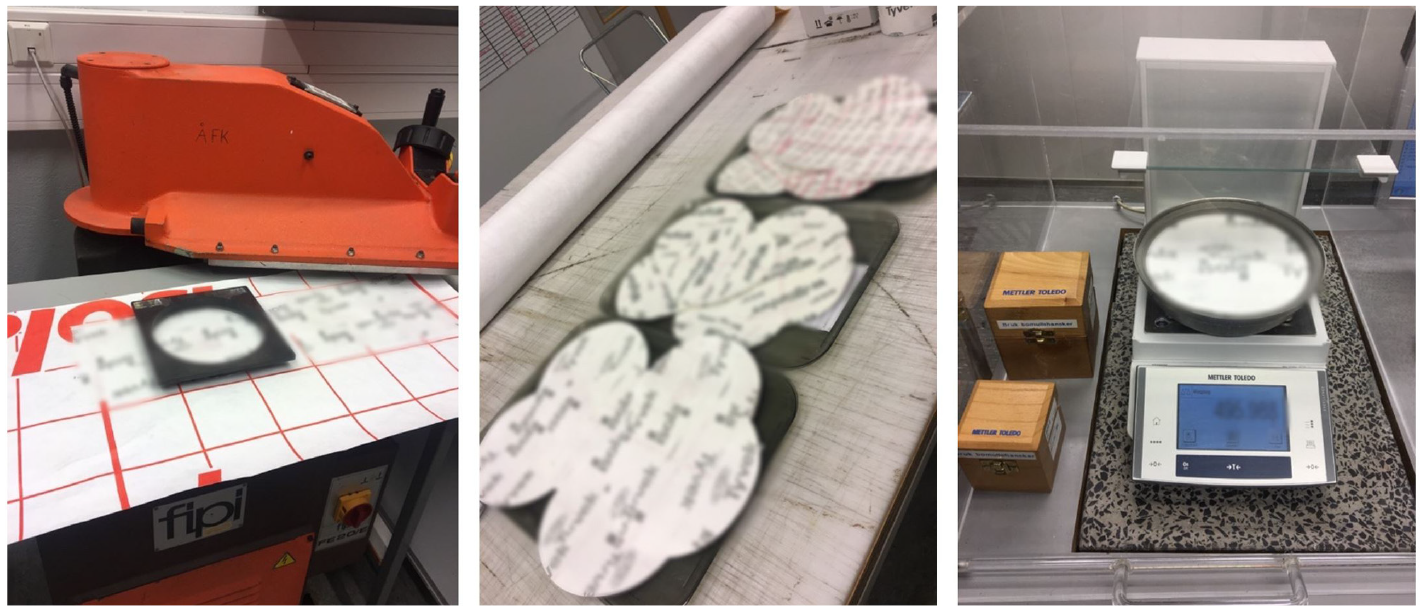
Procedure for preparing the samples (brand names have been anonymized).
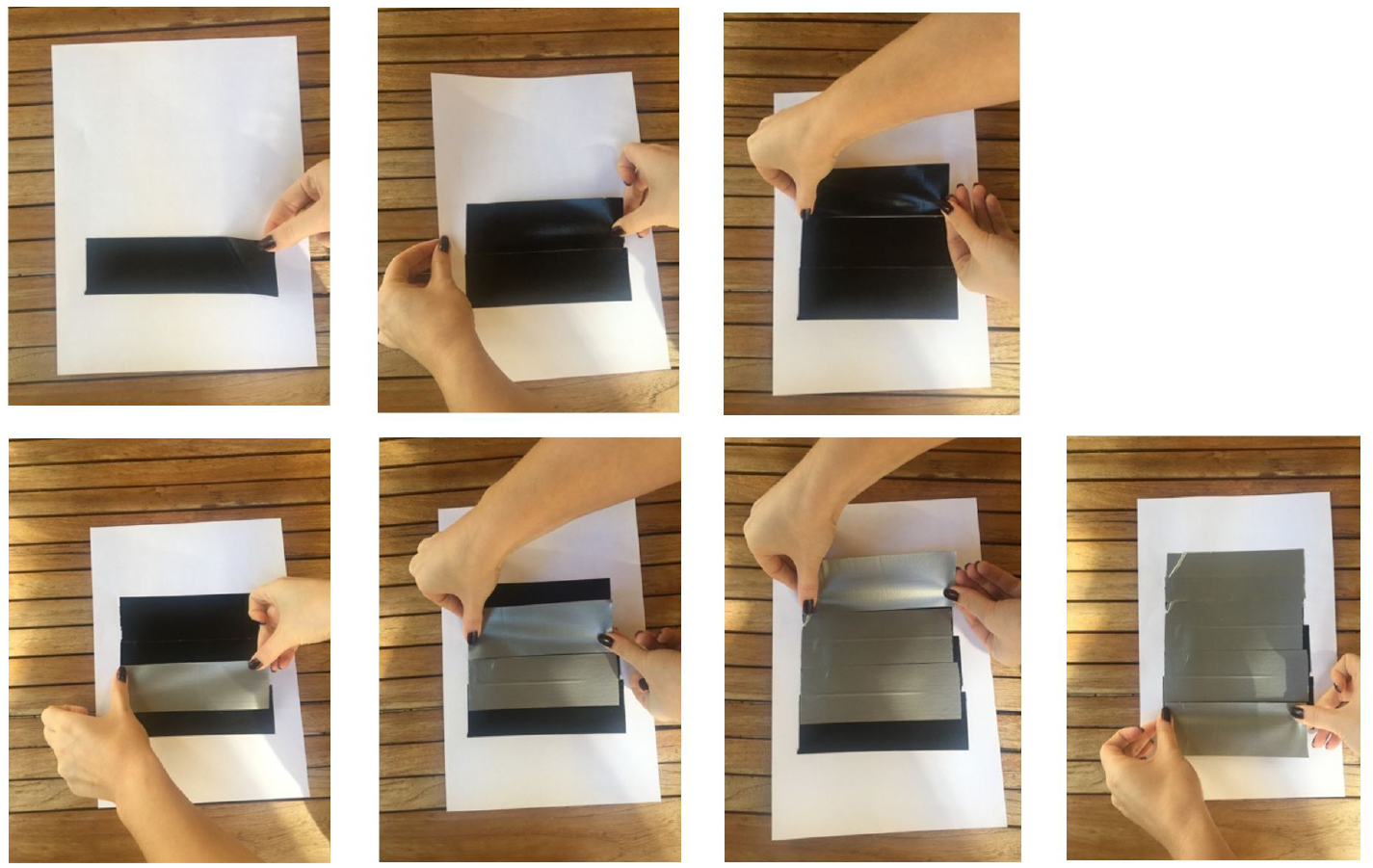
Application method for the tape samples, illustrated using generic brands of duct tape.
Overview of test materials
The tape products were acquired from local hardware stores, except the backing without the adhesive which was ordered directly from the manufacturer. The specific products used in this study have been anonymized. Table 2 describes which tests were conducted on each product. The notation WB followed by a number indicates that the product is a wind barrier tape. The product ‘WB’ without a number is a wind barrier. ‘VB-1’ is a vapour barrier tape.
Measured sd-values of the barrier- and tape materials.
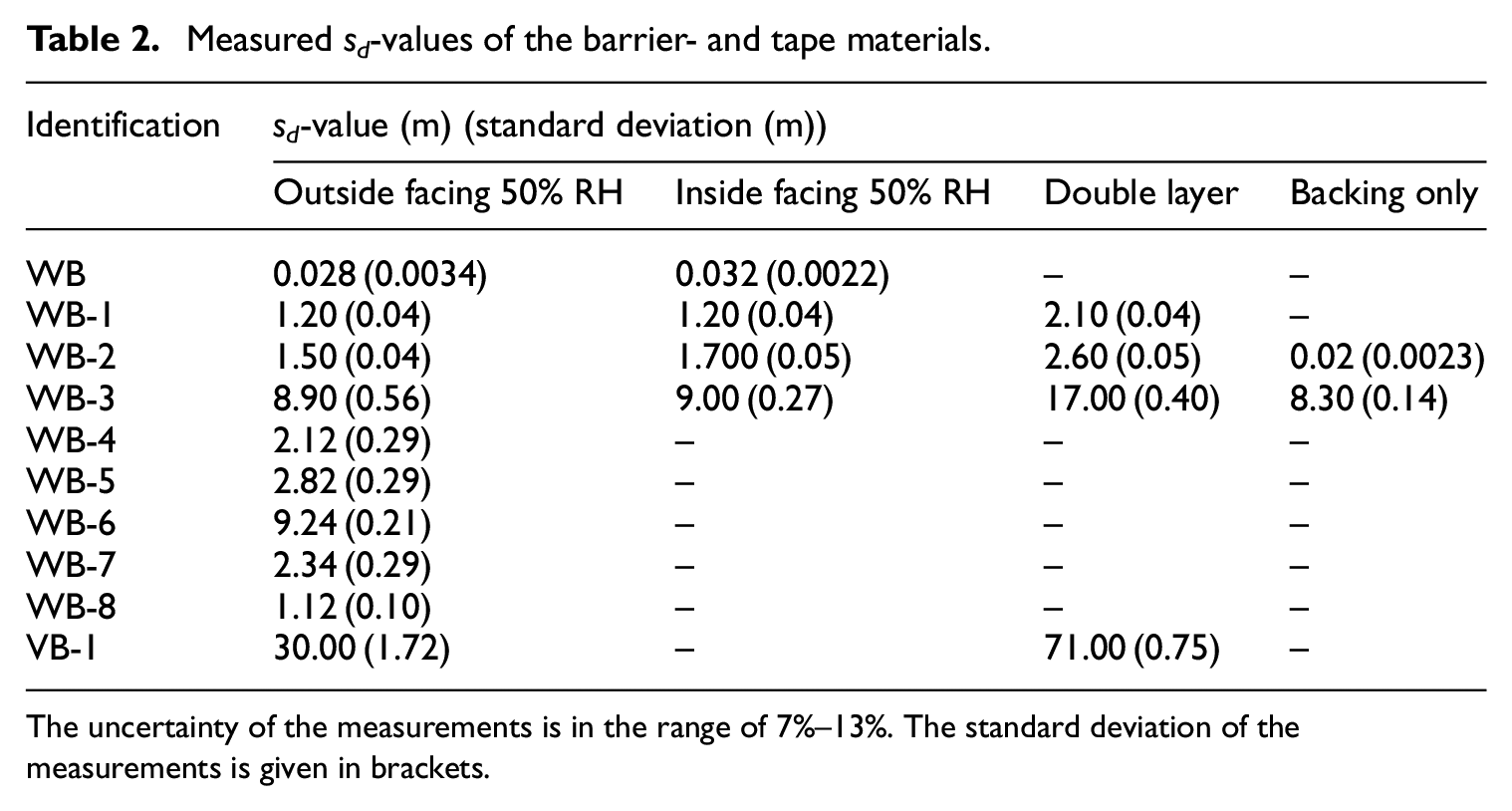
The uncertainty of the measurements is in the range of 7%–13%. The standard deviation of the measurements is given in brackets.
Results
The laboratory measurements were carried out according to NS-EN ISO 12572: 2016 Hygrothermal performance of building materials and products – Determination of water vapour transmission properties – Cup method as described in the Methods chapter. The test results of the water vapour permeability (equivalent air layer thickness –sd-value) are summarized in Table 2.
Discussion
This section is structured around the research questions presented in the Introduction section and will thus use one sub-section to answer each question.
Research literature of adhesive tape for building purposes
The research literature investigated through a literature review is presented in the Theoretical Backgrounds chapter. Using the scoping study method (Arksey and O’Malley, 2005), it has been possible to map the extent of the research literature and uncover knowledge gaps. As can be seen, research literature on construction tape is primarily focussed on the durability and strength of the tape, and the airtightness of taped joints. No research has been identified concerning the water vapour resistance of construction tape.
Water vapour resistance of adhesive tape for building purposes
The water vapour transmission of various tape products is determined according to the cup method described in NS-EN ISO 12572:2016. The test materials consisted of a wind barrier, eight wind barrier tapes and one vapour barrier tape. Several of the products were tested with vapour diffusion going both ways, as a single layer and a double layer. Five additional tapes were only tested as a single layer with diffusion in one direction. Besides, adhesive tape was tested using only the tape backing, to study the water permeability properties of the adhesive.
The final test results are summarized in Table 2 and show variations between the wind barrier tapes tested. WB-1 and WB-2 were found to have an sd-value of 1.2 m and 1.5 m, respectively, when mounted on the external face of the sample. WB-3 is measured with a greater sd-value of 8.9 m. Five additional wind barrier tapes were tested as a single layer, with resultant sd-values ranging between 1.12 and 9.24 m. Notably, none of the wind barriers can be defined as vapour-open. All of them greatly exceed the recommended sd-value for wind barriers, which is <0.5 m (Uvsløkk, 2003). The vapour barrier tape (VB-1), on the other hand, has a measured sd-value of 30 m which can be defined as highly vapour tight, and comparable to the recommended sd-value for vapour barriers of >10 m.
The results also show that the permeability of a sample mounted with the reverse face up differs little from that of a conventionally mounted sample, with an increase in sd-values of less than 12%. The measurements also indicate that the sd-value of a double layer of tape is slightly less than twice that of a single layer. This underlines that the water vapour permeability is decreased significantly when several layers of tape are applied. Furthermore, the laboratory measurements indicate that the tape backing has a significantly lower sd-value than a full layer of tape. The result indicates that the total water vapour resistance of the tape may be mainly dependent on the adhesive. The uncertainty in the measurements is in the range of 7%–13%.
Drying conditions affected by the water vapour resistance of adhesive tape
The laboratory measurements show that none of the tested wind barrier tapes can be defined as vapour-open (having an sd-value less than 0.5 m). The wind barrier layer should be vapour-open to ensure adequate drying of the structure. However, if the layer is vapour tight to the extent that water vapour does not pass through, moisture can remain in the wall and cause persistent problems. Wind barriers are sufficiently vapour open to meet this requirement, but extensive use of tape will decrease the vapour permeability below the recommended limit.
The test results show that the vapour barrier tape can be defined as highly vapour tight. As the vapour barrier layer itself needs to have a high vapour resistance, its functionality would not be as affected by the resistance of the tape compared to the wind barrier layer. On the other hand, it will impose stricter requirements on the water vapour resistance where the tape is used to seal existing holes in the barrier, since the moisture transport at the location of the hole will depend solely on the vapour resistance of the tape. The water vapour resistance of the tape is also especially critical between building elements, for example, around windows where the vapour barrier material is not continuous, and a larger water diffusion is expected. The measured sd-value of the vapour barrier tape suggests that the tape is sufficiently vapour tight to complement the vapour barrier and will prevent water vapour diffusion from the indoor air.
The extent to which the water vapour resistance of the tape will affect the drying conditions of the structure will depend on several factors. First and foremost, the amount of tape used will affect the total water vapour resistance through the wall. In addition to sealing joint connections in the wind barrier, the tape is also used to repair damages in the wind barrier as well as sealing pipe penetrations. The tape might also be used in several layers, increasing the amount of tape and subsequently the overall water vapour resistance of the barrier in that area. The drying conditions will also be affected by the amount of moisture in the structure due to leakages or built-in moisture. The higher the amount of moisture, the longer the drying time and the more severe the consequences if the wall is vapour tight. By using materials with a higher water vapour resistance than recommended, the tolerance of built-in moisture and leakages decreases. For critical building parts like windows, SINTEF recommends strict requirements for sealing details which reduces the risk of leaks and the need for drying (Asphaug, 2018). According to Geving and Holme (2010), it is observed that the relative humidity in the wind barrier layer increases with increasing insulation thickness. Stricter requirements for insulation and the need for lower U-values contributes to increased insulation thicknesses which further increases the risk of high relative humidity. Where excessive use of tape makes the structure more vapour tight, the drying time will be extended, increasing the risk of mould growth (Geving and Holme, 2010). Mould risk is considered high if the relative humidity exceeds 80% and if the temperature is above 0°C–5°C, which corresponds to a wood moisture content of 20%. To mitigate the risk of mould growth, it is therefore desirable to achieve good drying conditions in the building structure, by keeping the wind barrier layer vapour open.
To determine to what extent the drying conditions are affected due to the water vapour resistance of the tape, further simulations of critical building details should be conducted. Using simulation programmes like WUFI, the moisture transport within the different material layers can be determined. Due to the high sd-value of wind barrier tapes, it is conceivable that the relative humidity will increase where adhesive tape is applied to the wind barrier layer. To evaluate the potential consequences, further simulations and physical tests are needed to observe developments in relative humidity and the temperatures over time. Regardless, it is recommended to use a vapour-open wind barrier tape to ensure adequate drying and minimize the risk of moisture damage to the structure.
Conclusion
Previous research in the field of self-adhesive tape for the building sector has primarily concerned the durability and strength of tape, as well as the airtightness of taped joints. However, in order to assess drying conditions and minimize the risk of moisture problems in buildings, it is also necessary to determine the water vapour resistance of adhesive tape.
Laboratory measurements show that none of the studied wind barrier tape products can be defined as vapour-open, with sd-values ranging from 1.1 to 9.2 m, and thus do not fulfil the recommended sd-value for wind barriers of <0.5 m. The vapour barrier tape, on the other hand, has a measured sd-value of 30 m and can be defined as highly vapour tight. The permeability of a sample mounted with the reverse face up differs little from that of a conventionally mounted sample, with an increase in sd-values of less than 12%. The measurements also demonstrate that the sd-value of a double layer of tape is almost twice that of a single layer. This underlines that the water vapour permeability is highly decreased when several layers of tape are utilized. It is also shown that the backing of the most vapour open wind barrier tape has a significantly lower sd-value than a complete layer of tape. This was not observed for the vapour tight wind barrier tape.
The results indicate that the adhesive may be the chief contributor to the total water vapour resistance of the tape. It is conceivable that the relative humidity in the building structure will increase when joints in the wind barrier are made more vapour tight by the use of wind barrier tape. To what extent the drying conditions will be affected will depend on the amount of tape used and the moisture content in the structure due to built-in moisture and leakages. In addition, the risk of mould growth will increase as a result of increased relative humidity. Further simulations and tests need to be conducted to accurately determine how the drying conditions are affected. Regardless, it is recommended to use a vapour-open wind barrier tape to ensure adequate drying and minimize the risk of moisture damage to the structure.
Footnotes
Acknowledgements
Thanks to Miriam Nilsen and Ole Aunrønning for supplementary laboratory work.
Declaration of conflicting interests
The author(s) declared no potential conflicts of interest with respect to the research, authorship, and/or publication of this article.
Funding
The author(s) disclosed receipt of the following financial support for the research, authorship, and/or publication of this article: This research was funded by the Research Council of Norway through two different research projects. One is the Centre of Research-based Innovation ‘Klima 2050’ (www.klima2050.no), funded with the grant number 237859. The second is the project ‘TightEN – Durable adhesive airtight solutions for energy efficient building envelopes’ ( ), funded with the grant number 294894.