




Abstract
Organisations increasingly embrace allyship as a strategy to enhance support for diversity. The rise of atypical leaders offers hope to individuals from marginalised backgrounds, fostering the belief that these leaders would align themselves as allies and actively promote diversity within organisations. However, this assumption remains empirically untested. This paper investigates the tendency of atypical leaders to engage in allyship behaviours in contexts where regulatory and normative support for diversity is absent. Within unregulated neoliberal environments, the significance of atypical leaders is amplified, as diversity initiatives frequently receive limited backing from typical leaders, and the lack of a regulatory framework subjects these initiatives to considerable strain and risk. Through a qualitative study involving 33 atypical leaders from Turkey, we explore whether atypical leaders exhibit allyship towards diversity. Our findings delineate the conditions that enable and limit the effectiveness of atypical leaders’ allyship in a country with a toxic triangle of diversity. This study illuminates the critical influence of the regulatory environment on the allyship behaviours of atypical leaders, underlining the complex interplay between leadership, regulatory contexts, and allyship practices.
Keywords
Introduction
Leadership literature has mainly focused on typical leaders (i.e., white, male, heterosexual, able-bodied, and from privileged socio-economic backgrounds) demonstrating allyship within frameworks supportive of diversity and inclusion (Jolly et al., 2021; Warren and Bordoloi, 2021). Allies are leaders who support social justice and equality causes. Not all leaders are allies. The concept of allyship in leadership refers to the self-identification of leaders as allies and their active support for distinct socio-demographic groups (Oppong, 2023) and to diversity in an organisation more broadly (Ladkin and Patrick, 2022). Although discourses on allyship have gained prominence, a disparity remains between rhetoric and actual practice (Küskü et al., 2021). Relevant literature distinguished vacuous claims for allyship which lack real action (Hoque and Noon, 2004) from performative actions that fail to adequately tackle inequality (Thorne, 2022) and emancipatory allyship that address systemic inequalities and enhance workplace equality (Ayaz et al., 2024; Sumerau et al., 2021; Erskine and Bilimoria, 2019).
Allyship behaviours usually offer meaningful support in contexts where diversity frameworks and policies exist (Fletcher and Marvell, 2023). However, conventional leaders often fail to provide meaningful support in environments where legal and organisational frameworks are merely symbolic or even obstructive to diversity (Myeza and April, 2021). Unregulated neoliberal contexts often prove detrimental to diversity in organisations, characterised by a toxic triangle of diversity, which includes the absence of legal enforcement, lack of supportive discourses, and omission of proactive measures (Küskü et al., 2021, s. 553). Our study explores the allyship of atypical leaders for diversity in the adversarial and combative national context.
In such challenging contexts, marginalised employees look to atypical leaders—who might share experiences of exclusion—for allyship. Atypical leaders are individuals in positions of power who originate from often disadvantaged backgrounds, including women, LGBT+ and less-able individuals, and people from less privileged socio-economic backgrounds. There is growing evidence that atypical leaders may support other groups which are under pressure, such as a cis-gender female leader advocating for LGBT + rights or an able-bodied black leader focusing on disability issues (Erbil and Özbilgin, 2024).
Nevertheless, it is not certain whether atypical leaders fulfil this expectation and show allyship in unregulated neoliberal contexts. They may fail to do so, as they experience significant normative pressures and sometimes lack actual power to instigate pro-diversity change. More specifically, atypical leaders may face barriers in their allyship efforts, including diminished influence as token figures or the glass cliff phenomenon (Garcia et al., 2009; Haslam and Ryan, 2008; Yoder, 1991). In unregulated contexts, atypical leaders experience increased pressures to conform to leadership norms and expectations from the dominant group. As a result, they consider it risky for themselves, marginalised others, and for diversity within an organisation to openly demonstrate allyship behaviours. Therefore, this article questions to what extent atypical leaders show allyship for diversity in an adversarial context.
In this paper, we differentiate between demographic and behavioural atypicality in leadership. Demographic atypicality concerns leaders from disenfranchised or marginalised backgrounds, whereas behavioural atypicality involves leaders exhibiting normatively marginal behaviours, often viewed as abnormal. Unlike demographic atypicality, which is beyond an individual’s control, behavioural atypicality involves a degree of choice, whether to align with one’s demographic background or to adopt marginal behaviours. Investigating these facets of atypicality reveals their role and limitations in leaders’ ability to champion diversity.
Our study delves into how demographic and behavioural differences among atypical leaders influence their support for diversity, using insights from an empirical study of 33 atypical leaders in Turkey—23 demographically atypical and 10 behaviourally atypical. This research is set against Turkey’s national context, characterised by a lack of legal support, organisational policies, and affirmative discourses for diversity, coupled with a traditional leadership orthodoxy. This environment underscores the significance of atypical leaders in promoting diversity in a setting devoid of normative support structures. Through a field study in this unregulated neoliberal context, we explore how atypical leaders, both demographically and behaviourally distinct, navigate their roles as advocates for diversity.
This study presents evidence that atypical leaders may only provide limited diversity support within unregulated contexts and explores why such leaders struggle to offer effective allyship. It also examines why atypical leaders often fail to deliver allyship for diversity within an unregulated context. Our findings expose the limitations of atypical leaders’ allyship, which tends to lack the depth of true allyship. In particular, we find that demographically atypical leaders, while being acutely aware of their own workplace marginalisation, encounter normative and regulatory barriers that curtail their agency to show performative gestures of allyship. They are left with covert allyship—unspoken but enacted within context limitations. While owning their distinct identities, behaviourally atypical leaders narrowly direct their support towards those with similar atypical behaviours, casting uncertainty on their wider diversity allyship commitments. The study also uncovers a lack of intersectional allyship, possibly mirroring the broader context’s disregard for diversity.
The paper is structured as follows: We first assess atypical leaders’ potential as diversity allies. We then concentrate on their emergence as allies within an unregulated landscape. The methodology section outlines data collection, analysis procedures, and ethical considerations. The findings section delivers field insights and themes identified through qualitative analysis (Gioia et al., 2013). The conclusion critically appraises the extent of atypical leaders’ allyship in unregulated environments.
Allyship for diversity among atypical leaders
Allyship is defined as a leadership behaviour in which influential leaders advocate for those who are less privileged, marginalised, or whose behaviour deviates from societal norms (Sabat et al., 2013; Salter and Migliaccio, 2019). This concept necessitates a profound understanding of marginalisation experiences (Dennissen et al., 2020). It includes leaders who proactively support the efforts towards diversity and inclusion of disadvantaged groups beyond their own, challenging exclusion and discrimination (Fletcher and Marvell, 2023).
Despite a vast majority of global leaders professing their support for diversity and inclusion (OECD, 2020; PricewaterhouseCoopers (PwC), 2021), there often exists a disconnect between the rhetorical support for allyship within organisations and the actual implementation of diversity and inclusion practices (Özbilgin, 2024). This discrepancy has led to an evolution in the allyship literature, which now critically distinguishes between mere verbal claims often devoid of meaningful action, termed as empty shells by Hoque and Noon (2004), and performative actions that fail to combat inequality (Thorne, 2022) effectively. Furthermore, some forms of allyship might unintentionally reinforce the systems of oppression they aim to dismantle, thereby deepening inequalities (Edwards, 2006). In contrast, emancipatory allyship, as highlighted by Sumerau et al. (2021) and Erskine and Bilimoria (2019), are advocated for their potential to genuinely transform social structures, achieving lasting pro-diversity changes by altering unequal power dynamics and promoting equality, diversity, and inclusion in the workplace. The practical application of emancipatory allyship includes capacity building, sponsorship, mentoring, and other leadership development initiatives.
At its essence, allyship requires a profound understanding of the challenges faced by members of another demographic group, aiming to eliminate inequality and these disadvantages through considerate support (Jun et al., 2023; Louis et al., 2019). This study explores the capacity of atypical leaders to exhibit allyship behaviours, given their propensity to offer support and demonstrate empathy towards various social categories experiencing marginalisation (Samdanis and Özbilgin, 2020).
Atypical leaders, or atypical bosses, are individuals in positions of power and authority who differ demographically from the predominant leadership group within a social context (Alter, 2017). Atypical leaders come from disenfranchised groups (e.g., LGBT + individuals and racial or religious minorities), and they are often underrepresented in leadership positions (Alter, 2017). Atypical leaders do not represent a uniform group. Instead, they display varying ‘degrees of atypicality’ (Samdanis and Özbilgin, 2020), influenced by the distinct set of status beliefs that others associate with their social identities (Ridgeway, 2011), such as gender, class, sexual orientation, race, and religion, in a specific context. Consequently, certain atypical individuals might face heightened disadvantages due to the convergence of various demographic factors, a phenomenon known as ‘intersectionality’ (Carrim and Nkomo, 2016).
Current literature suggests that atypical individuals often face more significant challenges in rising to leadership roles (Samdanis and Özbilgin, 2020), remaining authentic at work (Ayaz et al., 2024), and asserting authority, especially when compared to typical leaders from privileged socio-demographic backgrounds (Myeza and April, 2021). However, atypical individuals, through the adversity encountered on their path to leadership, may develop “skills and values such as inclusiveness, perseverance, resilience, adaptability, and empathy”, which equip them to support others from atypical backgrounds and enhance organisational diversity (Samdanis and Özbilgin, 2020: p.114).
Empirical evidence regarding the support of diversity by atypical leaders is currently limited, yet it is expanding. Alter’s (2017) study into atypical leaders centres on minority leaders within the French context, emphasising how their distinctive experiences and viewpoints contribute to their success. He also argues that atypical leaders have a distinct tendency to challenge the accepted norms and question the purpose of standard practices. In addition, Myeza and April’s (2021) study shows that black leaders believe their unique experiences and historical background of being black in South Africa have endowed them with exceptional empathetic leadership skills towards other black employees. These studies predominantly depict atypical leaders as advocates for diversity. Yet, they do not thoroughly examine whether atypical leaders exhibit emancipatory allyship towards social groups to which they do not necessarily belong.
Existing literature predominantly focuses on demographic atypicality (e.g., Ayaz et al., 2024; Myeza and April, 2021; Samdanis and Lee, 2021). However, this study also considers behavioural atypicality. While demographically atypical leaders differ from the dominant group regarding social identity, behaviourally atypical leaders’ identities may or may not diverge from those of the dominant group. Behavioural atypicality refers to how an individual’s actions deviate from the accepted norms and expectations within a social context, such as an organisation. Theories of deviance (Yavuz et al., 2020) and big-five personality types (Costa and McCrae, 1985) posit that individual work behaviours vary by normative settings and individual dispositions. Therefore, behavioural atypicality is a context-relational psycho-social phenomenon that emerges at the interplay of individual repertoires of behaviour and normative structures of the work environment.
Behavioural atypicality is exemplified by leaders who display unconventional behaviours that contrast with prevailing leadership styles. Research on behavioural atypicality currently needs to be more extensive. Beyond a medical model of behavioural atypicality (Thompson et al., 2021), studies on leadership behaviours, like the Globe Study (House et al., 2014), have highlighted the efficacy of diverse leadership behaviours across national contexts. Prior research has indirectly addressed behavioural atypicality by exploring nonconformist (Yavuz et al., 2020) and norm-critical leadership behaviours (Plotnikof et al., 2022).
Both demographically and behaviourally atypical leaders have the potential to practise allyship. Demographically, atypical leaders might be more predisposed than typical leaders to advocate for individuals from marginalised backgrounds. For example, a heterosexual upper-class leader can be considered an ally when supporting sexual orientation or other forms of demographic or behavioural diversity. However, at its core, allyship represents a behavioural divergence, as leaders take action to eradicate conditions that perpetuate inequality and discrimination in the workplace. Indeed, many leaders claim to display atypical behavioural traits, indicating a departure from dominant norms. This tendency may manifest as an affinity towards various categories of diversity and inclusion within the workplace—categories they do not personally belong to (Hayes, 2022). Yet, not all atypical leaders exhibit allyship, whether demographically or behaviourally distinct. Hence, there is a pressing need to investigate the factors that facilitate or impede the practice of allyship.
The existing literature on allyship mainly focuses on national contexts where diversity laws, organisational policies, and narratives supporting diversity exist. Much of this research is conducted in developed countries, such as the USA (Erskine and Bilimoria, 2019), Canada (Djulus et al., 2021), the UK (Fletcher and Marvell, 2023), and regions like Western Europe (Umathum and Wihstutz, 2015), uncovering a gap between professed allyship and the actual realisation of diversity goals.
We may infer that allyship practices might be even rarer in settings where diversity is not formally endorsed. In organisations within unregulated environments, diversity often suffers due to adversarial treatment. This encompasses a void in legal enforcement, a deficiency in supportive discourses, and a lack of proactive diversity initiatives (Küskü et al., 2021). In these unregulated environments, the importance of atypical leaders becomes even more pronounced, though they are expected to encounter substantial obstacles in promoting equality, diversity, and inclusion.
Allyship of atypical leaders in an unregulated neoliberal context
In its nascent years, the fledgling Turkish Republic of the 1920s experienced a vigorous drive towards gender equality. This was attributable to the collapse of the religious and traditional structures that had previously suppressed women’s rights in the Ottoman Empire. During this period, significant numbers of women began to occupy leadership roles in Turkey. For instance, the inaugural national assembly boasted the highest percentage of female delegates. Nonetheless, a revival of traditional values and conservative social pressures, coupled with a rise in religious concerns, have negatively impacted women’s access to leadership roles in Turkey since the 1960s. Despite these setbacks, Turkish women have attained relatively strong representation, holding positions of power within professional sectors, including the typically male-dominated STEM fields, contrasting Western Europe (Küskü et al., 2007).
Women’s representation at the board of directors’ level remains scant, predominantly within family-owned enterprises (Akca and Özaslan Çalışkan, 2019). A lack of leaders from atypical religious, ethnic, sexual orientation, disability, and other demographically disadvantaged backgrounds is evident (Özbilgin and Erbil, 2023; Özbilgin et al., 2022). LGBT + leaders are scarcely seen facing direct or indirect discrimination in employment and the workplace (Göçmen and Yılmaz, 2017). In Turkey, cultural incentives to foster allyship for diversity are greatly challenged (Özbilgin, 2011; Erbil and Ozbilgin, 2023). Moreover, a distinct lack of legislative support exists for atypical leaders striving to form alliances to champion diversity.
Behavioural atypicality is context-specific (Samdanis and Özbilgin, 2020). To understand behavioural atypicality in Turkey, we must examine the behaviours of prototypical leaders in Turkey. The GLOBE, (2020) suggests that paternalistic and charismatic leadership are more effective in the Turkish context (Aycan et al., 2013), where hierarchical and authoritative approaches (Özbilgin, 2011) still have currency as acceptable leadership behaviours. In such a context, participative, democratic, inspirational, self-taught, encouraging, flexible and creative leadership behaviours would appear atypical.
Turkey is a nation where the atypicality of demographic or behavioural types in leadership roles is not culturally promoted. Küskü et al. (2021) depict an unregulated marketisation of everything and the absence of supportive laws, organisational policies, and discourses for equality. This stifles the emergence of atypical behaviours and backgrounds in the workforce. The authors ascribe this to the unregulated neoliberal policies pursued since the early 1980s in Turkey. The rise of nationalist and ultra-conservative politics after the 2000s has created an antagonistic environment for diversity and has been ineffective in nurturing a supportive atmosphere for the emergence of leaders with atypical behavioural and demographic characteristics.
Neoliberal policies tend to responsibilise individuals for their well-being, and unregulated market conditions foster different forms of populism that repress equality (Erbil and Ozbilgin, 2023). While organisations may comply with ceremonial legal regulations about equality, they do not directly foster leadership diversity (Beauregard et al., 2018; Küskü et al., 2021). The inadequacy of legislation supporting diversity and the lack of progressive political will (Palalar Alkan et al., 2022) render the allyship of atypical leaders challenging. The promulgation of repressive policies and discourses has created a hostile environment for diversity. Turkey has withdrawn from the Istanbul Convention, which aims to protect gender equality and support LGBT + individuals and other minorities to be free from violence and harassment (Ozbilgin et al., 2023).
There are reports of rampant hate speech directed at LGBT + individuals, ethnic and religious minorities, as well as working-class people (Özbay, 2022). The prevailing context does not facilitate organisations in promoting behavioural or demographic atypicality, nor does it effectively deter atypical leaders from concealing their identities or offering support to individuals from atypical backgrounds (Özbilgin et al., 2024). Within this challenging environment, our study aims to provide evidence of how atypical leaders manifest allyship for diversity without regulatory frameworks aligning with social justice expectations. Most studies on atypical leaders are conducted in countries with normative, legislative, and discursive support for diversity, encouraging such leaders’ rise. Our research, however, provides insights into the enablers and constraints faced by atypical leaders when attempting to demonstrate allyship for diversity within a national context defined by a toxic triangle for diversity.
Methods
Participants
This study used qualitative research methods, drawing on interviews with atypical leaders from Turkey (Silverman, 2000). The first author has collected data through in-depth interviews with atypical leaders using qualitative research methodology. He reached five leaders through their contacts. Three leaders identified themselves as demographically atypical, and two identified as behaviourally atypical. Drawing on the snowballing sampling technique, we included 28 other participants in the study to improve representation by gender, ethnicity, age, and other demographic attributes. All participants came from urban centres of Turkey, where corporate headquarters are predominantly located. Consequently, the lack of rural leaders in our sample is the limitation of our study. In total, we completed our interviews with 33 leaders in 2022. The first author recorded all interviews with informed written consent, and we promised full anonymity and confidentiality to the participants.
Participant selection was based on participants' self-identification based on two criteria: atypicality (a self-identified form of demographic or behavioural atypicality) and leadership (with a significant corporate leadership role). As the atypical leaders have not strongly claimed allyship due to the adversarial context, we have yet to further explore the impact on diverse groups and communities. We acknowledge the limitation of allyship based on self-identification. Future research should gather more data from followers, audiences and communities beyond self-identification to verify allyship claims.
Information about participant.
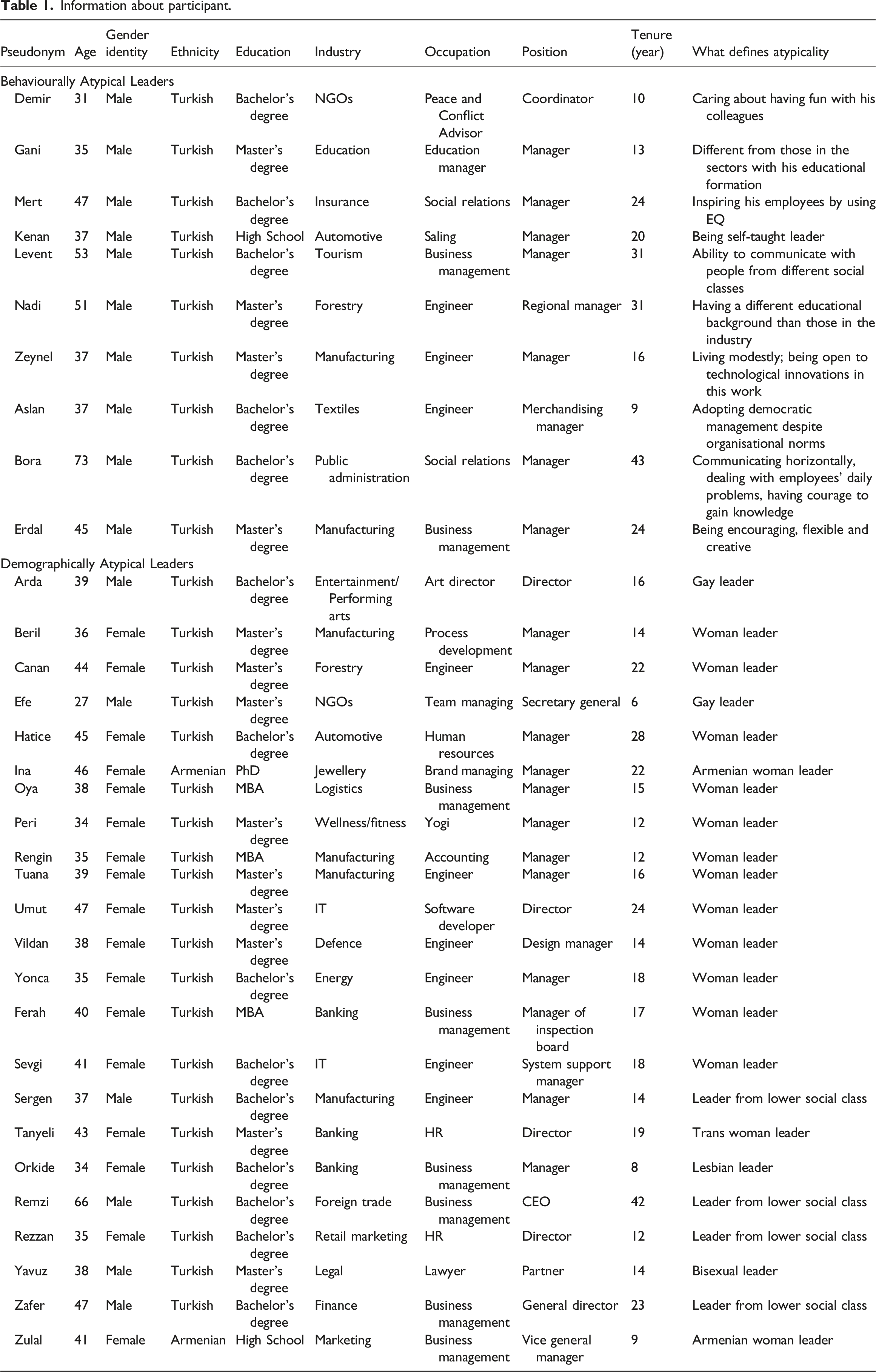
Demographically atypical participants include gender, sexual orientation, ethnic and social class diversity. Demographic categories of atypicality were based on extant literature, including key etic categories of diversity (Özbilgin, 2024). There is also intersectionality in our participants. However, ethnic diversity is also minimal among corporate leaders, and we could only interview two Armenian Turkish citizens. General atmosphere of antagonism towards diversity made it difficult for us to secure more involvement as disclosure and research rapport are challenging to secure for exploring demographic atypicality in the Turkish context. We applied both an inclusion criterion and an exclusion criterion to identify the behaviourally atypical participants. Our inclusion criterion is that they should describe themselves as behaviourally atypical. The exclusion criterion is that they must be demographically atypical. We asked leaders to explain what makes their behaviour atypical. We identified these common features: “taking more risks than other leaders, being braver than other leaders, being more visionary than other leaders, thinking differently than peers, being more enthusiastic than other leaders, being more stubborn than other leaders”. Table 1 includes these aspects of behavioural atypicality that participants identified in their own behaviours.
As per all demographic and behavioural identity research, our measures are based on self-identification. Nevertheless, we adopt a critical stance by not solely accepting individuals' self-claims at face value. We actively sought specific examples and instances to substantiate their assertions. Through our data analysis, we can demonstrate the restricted scope of allyship among atypical leaders. It becomes evident that allyship has primarily been confined to providing moral support to vulnerable and disadvantaged groups while lacking a comprehensive commitment to implementing structural reforms to foster greater inclusivity within organisations.
Interview schedule
We conducted in-depth interviews that provided robust data on the leaders’ backgrounds, experiences, and approaches. While performing the interviews on behalf of our team, the first author used the qualitative study form we designed. The 36-item semi-structured study form had six main themes: the background of the leaders, their approach to managing their emergence processes and careers, their relationships with their followers, their approaches, perceptions and practices towards being allies for diversity, their roles and expectations in succession, and other human resources policies, the consequences of their leadership styles. The study also included demographic information summarised in Table 1. The study form enhanced our thematic focus, enabling participants’ spontaneity and flexible expression of perspectives.
Data analysis
The first author transcribed the recordings verbatim. As we promised privacy and anonymity, we worked with our utmost consideration. We stored recordings and transcriptions in a secure computer. We assigned a pseudonym to each participant. We also removed any data that could compromise privacy or reveal participants’ identities, ensuring they remain anonymous.
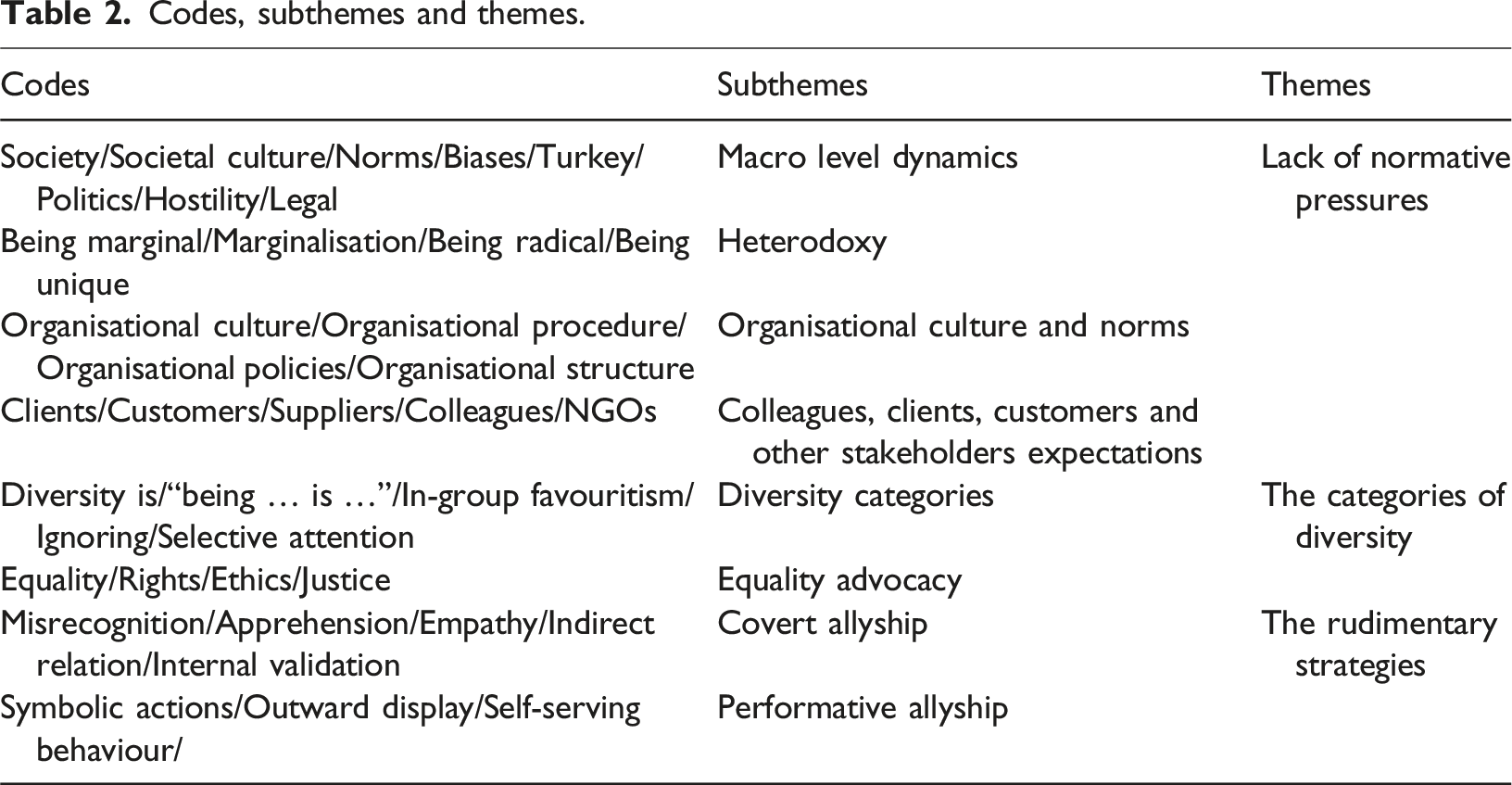
This study adopted the abductive approach (see Figure 1), which involves an iterative theory-building process through a dynamic interplay between empirical data and theoretical framework (Timmermans and Tavory, 2012). The second author primarily conducted the abductive analysis, with the co-authors actively engaging in iterative discussions. This collaborative approach, guided by phronesis, ensured that reflective judgement and the practical application of contextual knowledge enriched the abductive reasoning process. First, we engaged in an abductive process of iterative reading of the extant theory and field data, generating themes based on agreement and disagreement between literature and data. Based on these emergent themes, we analysed data thematically. We ran the thematic analysis three times in light of revisions we received, refining our themes and subthemes based on abductive engagement with literature, review feedback and the field data. While thematic analysis allowed us to describe the patterns in our observations, the abductive approach helped us relate plausible theories to interpret observations that could explain the extant construct adequately. Abductive research proccess. Adapted from: Conaty (2021).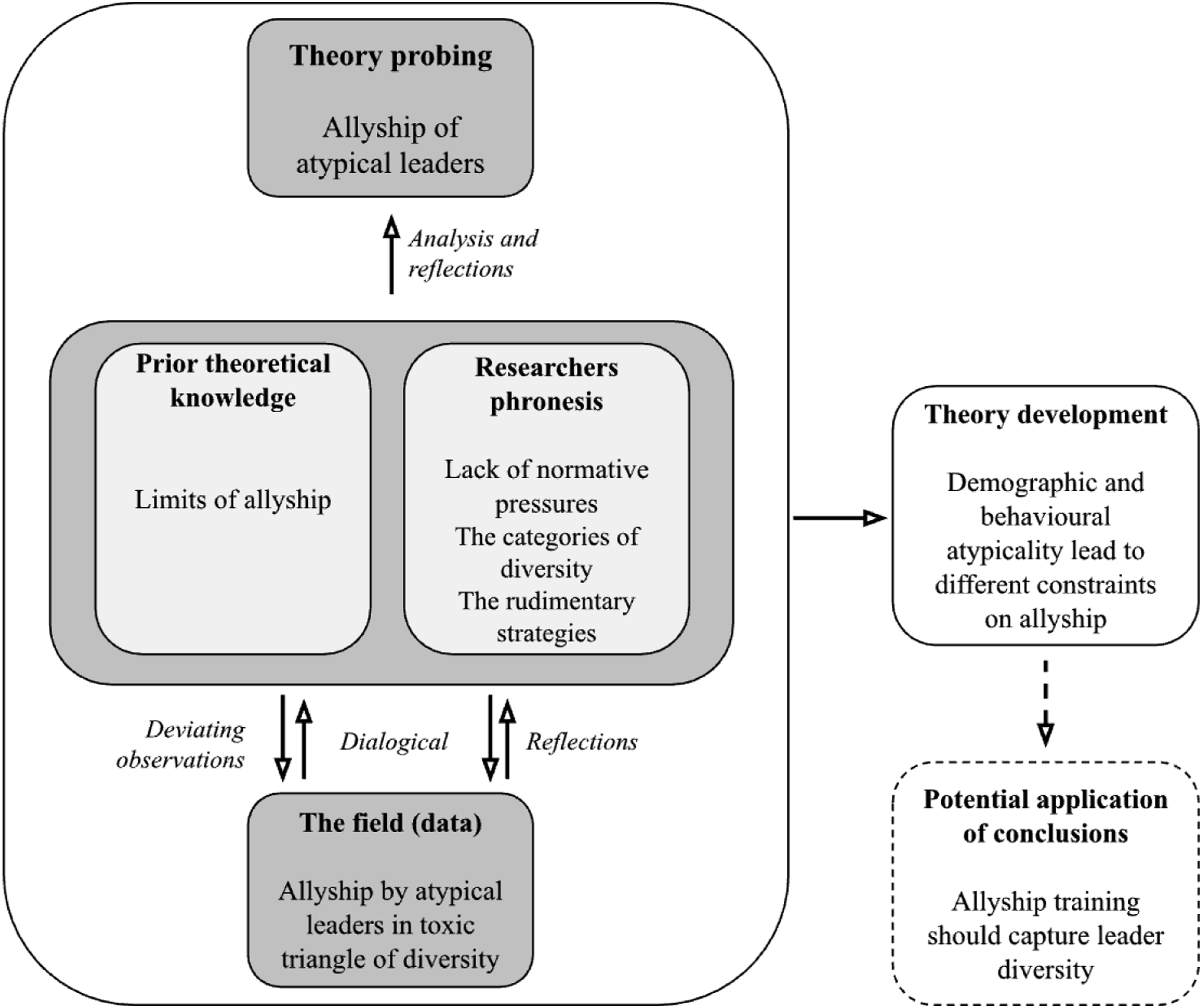
Codes, subthemes and themes.
Findings
Diversity and inclusion categories are typically associated with social groups’ collective struggles to challenge inequality and achieve inclusion. In general, the inclusion of demographically atypical individuals within social structures has historically been supported by social movements, such as the human rights movement. More recently, the inclusion of marginalised individuals and the support of relevant leaders within organisations have gained momentum as part of the Equality, Diversity, and Inclusion (EDI) movement and practice (Ozbilgin and Erbil, 2021). Some scholars consider behavioural atypicality in leadership as part of diversity and inclusion efforts at work (Ozbilgin et al., 2023). In this study, we explored the extent to which demographically and behaviourally atypical leaders show allyship for diversity in a context that lacks normative pressures to support diversity.
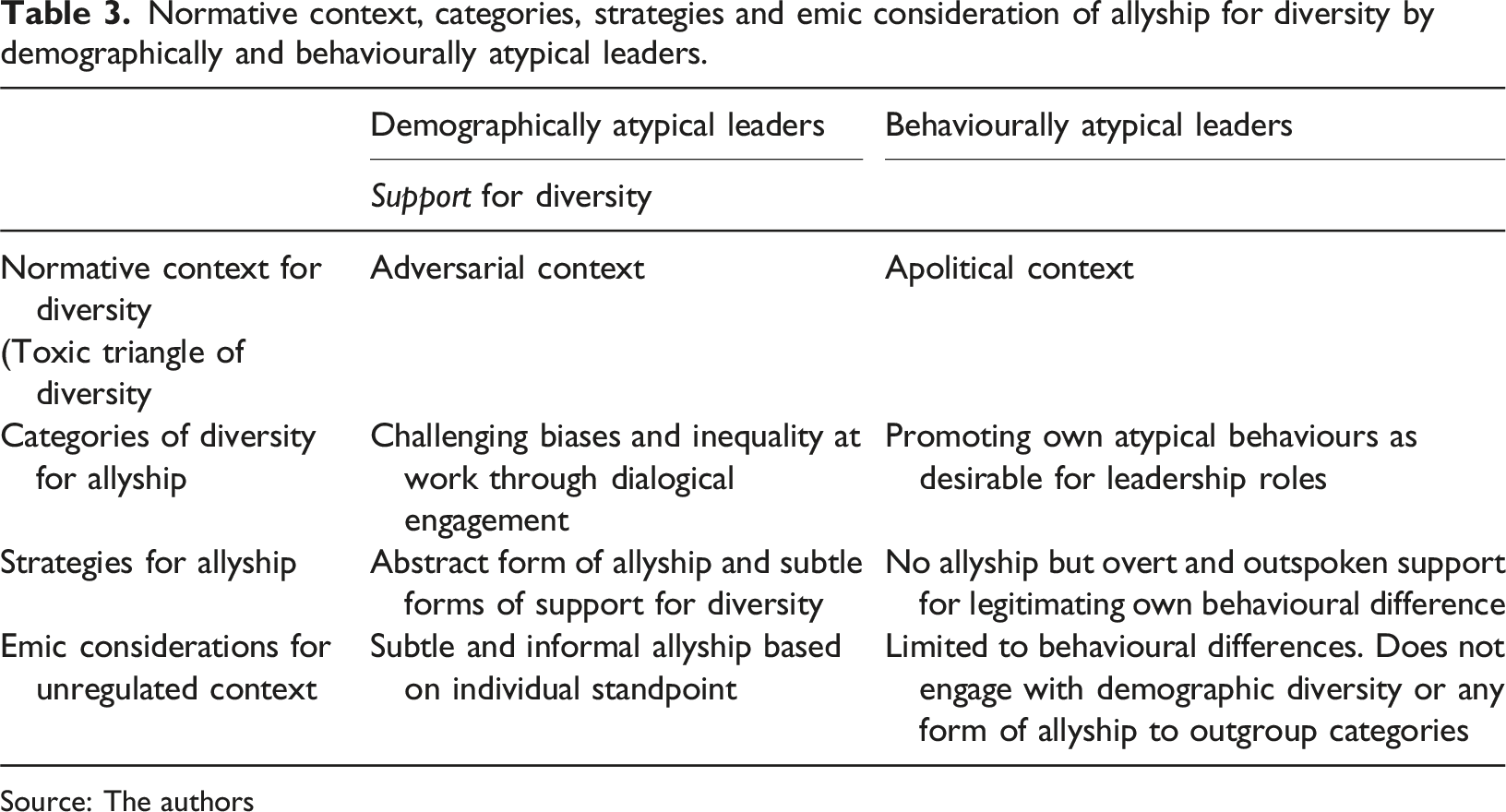
Normative context, categories, strategies and emic consideration of allyship for diversity by demographically and behaviourally atypical leaders.
Source: The authors
The lack of allyship for diversity among atypical leaders
The lack of normative pressures on atypical leaders to show allyship for diversity
The common belief is that atypical leaders are well-positioned to enhance organisational diversity. However, without norms and formal regulations to support diversity, there is a risk that efforts may become superficial or inadequate. Atypical leaders operating in unregulated contexts often feel compelled to adopt the prevailing values of the dominant groups, reinforced by societal norms. This results in a challenging environment where such leaders may separate themselves from diversity initiatives, justifying their stance by prioritising professionalism, individualism, and competition—values typically used by established groups to preserve their influence.
In contexts where diversity initiatives are unregulated, allyship behaviours rely largely on the discretion and sense of responsibility of leaders, in contrast to more regulated environments where allyship is explicitly guided by established diversity frameworks. Therefore, allyship thrives in an environment where it is formally supported. Without such a framework, leaders may be reluctant to support diversity proactively. For example, one of the more privileged participants acknowledges understanding what allyship entails and expresses a willingness to engage, but also recognises that the broader political climate and a lack of personal motivation can hinder these efforts: Diversity, equality and inclusion are intertwined leadership concepts. It is necessary to internalise these concepts and put them into practice to become a good leader. [...] However, in Turkey, it is purely political to reach top leadership positions. I was appointed as general manager twice. Both happened thanks to the political decision-makers [...] In countries like Turkey, many leaders take office politically. (Bora, 73, male, manager, behaviourally atypical leader)
Both demographically and behaviourally atypical leaders are unconventional participants within the traditional leadership orthodoxy. As such, they may exhibit allyship behaviours that are atypical and reflexive. Such divergence in leadership approach highlights a gap between their unique perspectives and the dominant values, norms, and practices that underpin leadership orthodoxy.Atypical leaders can be regarded as ‘innovators from the margins’ (Alter, 2018) when they use their unconventional thinking, voice, and position to challenge established norms and successfully introduce pro-diversity practices.
The struggle of atypical leaders to integrate into the leadership orthodoxy frequently entails compromising their heterodox identity. When atypical leaders, both behaviourally and demographically, contest the established norms of leadership, they risk being marginalised and labelled as outsiders. The leadership domain harbours stringent normative expectations regarding leader behaviours and backgrounds. Atypical leaders, being heterodox—legitimate yet marginalised members of the leadership cohort—find themselves in a unique position. Their status as outsiders grants them the opportunity for reflexive engagement and allyship with diversity initiatives in the workplace, albeit within the constraints imposed by the normative expectations of the leadership orthodoxy.
Rigid organisational culture and norms significantly limit atypical leaders’ ability to promote allyship. These systemic barriers, rooted in traditional leadership models, inadvertently marginalise those deviating from dominant norms. In the competitive and traditionally male-dominated energy sector, the journey of Yonca, a beacon of resilience and determination, particularly stands out. Yonca, who has spent her recent years as a female leader in the energy sector, states that she is marginalised as she is demographically atypical. Yonca shows allyship for diversity to eliminate sexism and bias at work and mentions that masculine norms make it challenging for her. However, her ability to affect changes and eliminate sexism through support for diversity is limited. Further, her support for diversity did not stretch to categories outside her own category of gender diversity: As a woman, I definitely don’t believe that we have equal conditions with men, especially in male-dominated sectors like mine [the energy sector]. Almost all those who are likely to become leaders in this industry are men. Although decision-makers may see themselves as non-sexists, they are actually heavily influenced by prejudices. I am a leader who has managed to get rid of sexist prejudices. However, I am still not free from the tension of sexism. I can feel tension with my own co-workers. [...] Many of them don’t want me to be a leader because they think that they cannot succeed in leadership as a woman. I’ve had male co-workers say that it was wrong to make me a leader. That’s why I don’t see myself as being one with the majority. However, I can say that I’m even more ambitious thanks to them. (Yonca, 35, female, manager, demographically atypical leader)
Stakeholders’ expectations often do not support the allyship of atypical leaders, reflecting a broader challenge within organisational settings. One of our behaviourally atypical participants, Kenan, notes that his behavioural atypicality stems mainly from his separation from his formally trained colleagues as a self-taught leader. Kenan does not view his behavioural atypicality as a problem and supports his in-group to tackle negative opinions on behavioural diversity: I think that I draw attention in the business environment because I’m different, and I have achieved success thanks to my uniqueness… I think I’m changing the opposing viewpoints of my colleagues on dissimilarity and being different. I’m pretty happy with this. (Kenan, 37, male, manager, behaviourally atypical leader)
In this study, we observed that atypical leaders occupy a unique position within organisations, functioning simultaneously as insiders—capable of influencing others through their decisions and actions—and outsiders, due to their identity and behaviour not aligning with the dominant group and culture. However, they may be inclined to support only one category of difference, either demographic or behavioural, potentially compromising long-term and consistent allyship efforts.
The categories of diversity for which atypical leaders showed support
Atypical leaders may support those outside their ingroup for personal advancement. However, these leaders face a paradox in their decision-making due to their dual allegiance to the conventional leadership model and their atypical backgrounds. Our study found that demographically atypical participants tended to advocate for diversity by supporting individuals who shared aspects of their own category of demographic atypicality. As a result, their allyship and support for all categories of diversity were limited. For instance, Yavuz, is a bisexual male leader who actively supported LGBT + diversity through mentorship and sharing his knowledge and experiences with LGBT + colleagues. Despite this, his advocacy focused only on his category of diversity. Moreover, the support for diversity by most demographically atypical leaders in our study did not confront the inherent prejudices embedded within the workplace’s systemic and structural framework: [In Turkey] LGBT + individuals are being marginalised through government policies. I have observed an increase in pressure against the LGBT + community. As a bisexual individual, I am concerned about this situation. However, I don’t have significant concerns regarding my work since I am involved in an international organisation. It is not a problem for employees in our office to disclose their sexual orientation; our organisation even supports it. I prefer to support my LGBT + colleagues within my organisation and my personal circle. I share my experiences and knowledge and provide mentorship to young LGBT + colleagues. (Yavuz, 38, bisexual male, demographically atypical leader)
Behaviourally atypical leaders often focus their diversity efforts primarily on their own category of behavioural diversity. This narrow focus distances their allyship from fully embracing equality across all categories of demographic and behavioural diversity.For example, Zeynel associates being behaviourally atypical with the idea of success. According to Zeynel, being successful is about thinking outside the norms. Thus, the only form of workforce diversity that Zeynel supported was the propensity of individual to think and act differently, which he positioned as an atypical behaviour: I look for ways to be different, to be a game changer in a job, in a task, in a position, and apply them. To be successful, you must combine theory and practice. [...] I believe that employees who act differently can totally pull off this combo. That’s why I’m all about helping out those unique folks in the company. Backing those who have a different way of doing things will spice up the organisation’s diversity and amp up its performance. (Zeynel, 37, male, manager, behaviourally atypical leader)
Overall, we found that the perspectives of both demographically and behaviourally atypical leaders were often limited to their own category of atypicality, overlooking the potential for intersectional allyship. An approach that concentrates solely on a single aspect of diversity does not fully utilise the potential of allyship to address and dismantle the systemic and intersectional inequalities that impact members from different diversity categories.
The rudimentary strategies of allyship among atypical leaders
Demographically and behaviourally atypical leaders engage with allyship differently. Our study’s demographically atypical participants highlighted the importance of conforming to norms to be accepted by the dominant group. This is often because diverse identities may be viewed as challenging the existing order. Leaders with atypical demographic profiles may also be concerned about being misunderstood and having their contributions undervalued. As a result, these leaders might favour more subtle forms of allyship in promoting diversity. For example, Reza, a female leader from our study who comes from a less privileged socio-economic background, described how she engages in allyship in a low-key and indirect manner to foster the rise of demographically atypical leaders: I support the emergence of atypical leaders. However, I don’t openly express my support because doing so would harm myself and the person I am advocating. Openly supporting atypical individuals can lead to adverse outcomes since it might be seen as a direct challenge to the prevailing organisational culture. These perceptions hinder atypical leaders like me from supporting individuals with different backgrounds. Some atypical leaders even discourage support for other atypical individuals to convey the message ‘I am just like you’. I see this happening, especially with women leaders. I try to guide and support atypical individuals, but I cannot do so openly or transform organisational policies in a supportive direction. (Reza, 35, female, director, demographically atypical leader)
In contrast to their demographically atypical counterparts, behaviourally atypical leaders openly display their non-conformity and champion diversity, albeit often not extending their allyship to other differing categories. Their support typically takes the form of performative actions, which may not effectively tackle the roots of inequality. Behaviourally atypical participants justify their approach for two main reasons. Firstly, they attribute their success to distinctive thought processes and believe their atypical behaviour stems from unique cognitive abilities, allowing them symbolic worth and possibilities of agentic action. Secondly, they perceive that their leadership circles value atypical behaviours as a form of self-assurance and, thus, encourage them. An example from our study is Erdal, who feels free to openly support behavioural atypicality, with outward and public displays, in his organisation, unlike demographically atypical leaders who often remain covert with the fear of criticism: My successor must be [behaviourally] atypical, just like me... I am open to supporting those who have potential and think and act differently. Let them be different, let them think differently, and let them stay marginal. They will be elevated. (Erdal, 45, male, manager, behaviourally atypical leader)
The allyship for diversity among demographically atypical leaders is challenging and limited to covert and subtle forms. Although behaviourally atypical leaders show overt and outspoken forms of support for diversity, they have not expressed allyship for other categories of difference beyond their own. On the one hand, demographically atypical leaders often show covert allyship due to a fear of misrecognition, hiding aspects of their normative differences to fit in, which limits their allyship potential. They experience apprehension about being seen as supporting marginalised groups, curbing their empathy and forcing them to engage in indirect and subtle forms of allyship. On the other hand, behaviourally atypical leaders are vocal and valorised at work. Yet they do not show allyship to other groups, which could threaten their privileged position, framing their allyship as self-serving behaviour rather than supporting disadvantaged others.
Discussion
There is a pervasive expectation that atypical leaders will inherently act as dedicated allies and champions of diversity. Nevertheless, diversity management initiatives risk becoming empty shells without establishing norms and regulations to endorse diversity (Hoque and Noon, 2004). Particularly in contexts where diversity policies are overlooked, atypical leaders are frequently seen as the primary allies for diversity, notably in the silence of typical leaders (Küskü et al., 2022).
In unregulated environments, the absence of legal backing, organisational policies, and supportive discourses for diversity (Küskü et al., 2022) descends into a detrimental spiral. This decline is propelled by the responsibilisation of marginalised individuals, the selective allyship of atypical leaders rooted in their personal views of social justice, and the adoption of prevailing discourses by these atypical leaders. These aspects of the toxic spiral within unregulated contexts are presented next.
Extensive responsibilisation of marginalised individuals in unregulated neoliberal contexts
In a neoliberal setting, responsibilisation shifts the onus of well-being onto the individual. Specifically, marginalised individuals are laden with disproportionate responsibilities in unregulated contexts, a concept represented by the deficit model of diversity support (Özbilgin, 2023). This model suggests that individuals must tackle biases and overcome obstacles to leadership positions and employment. Our participants’ narratives reflect that the burden is placed on individuals to create opportunities and make strategic choices, including whether to manifest allyship or engage in transformative actions. This neoliberal trend has not only solidified market biases but has also led to their normalisation among atypical leaders.
Selective allyship of atypical leaders rooted in their personal views of social justice
Atypical leaders interpret and enact allyship in unregulated contexts based on their unique identities and perspectives, often without broader social justice considerations. This individualistic approach to allyship, while championing intersectional solidarity and allyship in theory (Kamasak et al., 2020), may neglect the potential of allyship as a tool to dismantle systemic and intersectional inequalities affecting individuals from various diversity categories. In the neoliberal context of Turkey, atypical leaders’ approaches to allyship and diversity are shaped by their personal identities and the broader societal backdrop. On the one hand, demographically atypical leaders might empathise with marginalised individuals in the workplace yet often limit their allyship to their category of atypicality, thereby not fully supporting a broader spectrum of diversity. Full allyship would inevitably provoke an adversarial environment, which most demographically atypical leaders prefer to avoid. Despite their enthusiasm for celebrating diverse ways of acting and thinking, allyship for behavioural diversity presents itself as apolitical (Hayes, 2022), lacking the characteristics of emancipatory allyship. In other words, behaviourally atypical leaders failed to broaden their allyship to include other categories of difference or target sustainable emancipation of disadvantaged groups.
The adoption of prevailing discourses by atypical leaders to avoid misrecognition
Individual responsibilisation and a lack of a diversity regulatory framework pressure atypical leaders towards adopting dominant discourses to sidestep misrecognition. Such leaders often shun diversity initiatives, rationalising their detachment by appealing to professionalism, individualism, and competition — tactics typically utilised by dominant groups to secure their status (Doldor and Atewologun, 2021). In regulated environments, however, atypical leaders may support those outside their group, leveraging out-group favouritism for personal advancement (Lianidou, 2021). Despite this, a dichotomy in their actions persists due to their simultaneous allegiance to dominant norms and non-conformist origins (Samdanis and Özbilgin, 2020).
This cautious approach is driven by a fear that presenting as divergent might be interpreted as challenging the status quo, a concern deeply embedded in contexts where diversity lacks formal support (Bacouel-Jentjens and Yang, 2019). The fear of misrecognition intensifies as the institutional and societal barriers prove too daunting for atypical leaders to initiate emancipatory allyship (Sumerau et al., 2021). Without a supportive regulatory backdrop for diversity, atypical leaders perceive a high risk in vocally advocating for diversity.
Reflections on allyship theory and practice within unregulated contexts
The concept of emancipatory allyship (Erskine and Bilimoria, 2019; Sumerau et al., 2021) might seem excessively idealistic or impracticable in unregulated contexts, suggesting that alternative forms of allyship could be more feasible in these environments. In an unregulated setting, the study highlights that the hurdles for atypical leaders in pursuing emancipatory allyship are exacerbated by the deregulation of diversity and equality characterising neoliberal contexts. In such settings, performative allyship, though limited, emerges as a practical strategy for demographically atypical leaders to build broader alliances and coalitions, potentially catalysing diversity-driven organisational change and fostering pro-diversity workplace norms. In Turkey, demographically atypical leaders often resort to performative allyship, demonstrating solidarity with marginalised individuals (Thorne, 2022). As these leaders may perceive their atypicality as a magnet for prejudice, such as sexism in male-dominated industries, they tend to adopt a stance of tempered radicalism (Meyerson and Scully, 1995) over outright activism for cognitive, normative, and regulatory change. Consequently, they practise performative allyship (Thorne, 2022), avoiding radical actions (Sumerau et al., 2021) to safeguard their careers.
Despite these challenges, atypical leaders need to continue their allyship efforts. Allyship can raise the profile and perceived importance of diversity and inclusion issues at work. Although allyship may appear as a voluntary choice for leaders, it is essentially spurred by legislation that supports equality and makes leaders responsible for diversity. Therefore, allyship needs a regulated context (Jolly et al., 2021).
Allyship can be both a product and producer of cognitive, normative, and regulatory change, where atypical leaders are key in facilitating these changes due to their personal experiences of marginalisation and otherness. Significant changes within organisations often stem from challenging the status quo upheld by dominant norms. However, the transformative potential of allyship practices of demographically and behaviourally atypical leaders was substantially limited. This emphasises the profound influence of an unsupportive environment and the prevailing normative resistance to diversity within the leadership orthodoxy in Turkey.
Conclusion
We expand the concept of allyship by exploring the allyship for diversity among atypical leaders. Atypical leaders are increasingly expected to demonstrate allyship for diversity (Samdanis and Özbilgin, 2020), yet their actions and good intentions are often hindered by normative and institutional constraints. Most studies of allyship for diversity emanate from national contexts where there are protective legislation, supportive policies and discourses of diversity (Erskine and Bilimoria, 2020; Fletcher and Marvell, 2023). Our study takes place in a context where there are hostile normative pressures against diversity, revealing how atypical leaders’ potential and possibilities of allyship are further curbed (Küskü et al., 2021) The toxic triangle of diversity perpetuates workforce diversity as a threat, thereby muting diverse voices in the workplace, including the voices of demographically atypical leaders to support marginalised individuals (Camgoz et al., 2023; Erbil and Özbilgin, 2023).
Our paper’s original contribution and theoretical extension is twofold: First, demographically atypical leaders’ support for diversity was principally focused on countering biases related to their own category of demographic difference. Their forms of allyship were covert, subtle, and abstract, too insubstantial to serve as emancipatory allyship for other categories of difference. Second, leaders with behavioural atypicality found it less challenging to articulate and endorse their type of behavioural difference, as it is politically less controversial than demographic atypicality. For them, supporting diversity meant validating their behavioural differences as a valued leadership trait. Allyship for behavioural diversity manifested as apolitical allyship as it did not represent emancipatory allyship. Furthermore, the behaviourally atypical leaders did not extend their allyship to encompass emancipatory allyship. Thus, we extend theories of allyship by exploring allyship claims and practices of atypical leaders. We theorise the allyship of atypical leaders in an unsupportive national context.
We asked a two-tiered research question in this context: To what extent do atypical leaders show allyship for diversity in an unregulated context? Why do atypical leaders fail to deliver allyship for diversity in such a context? This research demonstrates that atypical leaders experience and contribute to a detrimental downward spiral of diversity. This decline is driven by the extensive responsibilisation of marginalised individuals, the selective allyship of atypical leaders based on their personal social justice perspectives, and the adoption of mainstream discourses by these same leaders to avoid misrecognition. Our study reveals the impact of the unregulated context of diversity on the allyship of atypical leaders for diversity. Stiglitz (2012) argues that neoliberalism has more detrimental effects in countries that do not hold their industries accountable for supporting workforce diversity and human rights. In the unregulated neoliberal setting of Turkey, atypical leaders exhibited limited agency for allyship for diversity, revealing two distinct patterns of behaviour.
Vincent et al. (2024) discuss responsibilisation as shifting the onus for promoting diversity onto individuals. Within the neoliberal context of Turkey, workers from disadvantaged backgrounds often look to atypical leaders (Samdanis and Özbilgin, 2020) in the hope that they will take on the mantle of supporting diversity at work in the absence of other supportive frameworks. Our research assessed the extent to which atypical leaders met these expectations and how they ultimately fell short of demonstrating allyship. The deficit model of diversity support, as critiqued by Özbilgin (2024), and the responsibilisation theory by Vincent et al. (2024), highlight the undue burden placed on individuals to tackle workplace biases within unregulated contexts like Turkey, where systemic inequalities persist due to nominal equality laws and a lack of organisational accountability. In this setting, covert allyship is a pragmatic strategy for demographically atypical leaders to build broader alliances, potentially driving pro-diversity organisational change.
Future research should explore the dynamic relations between allies and their beneficiaries to check allyship claims and practices' veracity and true impact. Moreover, future studies could contrast the allyship endeavours of typical and atypical leaders in both regulated and unregulated environments. Although emancipatory allyship (Ayaz et al., 2024; Erskine and Bilimoria, 2019; Sumerau et al., 2021) may be unfeasible in unregulated diversity contexts, further empirical research is necessary to ascertain the viability of emancipation and authenticity through allyship in unregulated contexts.
Footnotes
Declaration of conflicting interests
The author(s) declared no potential conflicts of interest with respect to the research, authorship, and/or publication of this article.
Funding
The author(s) received no financial support for the research, authorship, and/or publication of this article.
