




Abstract
Deliberately transforming society toward equitable and sustainable futures requires leadership. But what kind of leadership? While the dominant understanding of leadership often centers on the individual, the concept of collective leadership is receiving increased attention. Yet, the relationship between individual and collective leadership remains elusive and has been given limited attention in the transformation literature. In this study, I explore how leadership is understood and enacted in an Alaska Native community engaged in transforming community systems toward enhanced sustainability. I draw on Indigenous leadership research, organized through four interrelated analytical lenses: the individual leader, leadership through culture, leadership through process, and leadership through integration. I find that leadership in the community can be seen as something simultaneously individual and collective and argue that an Indigenous relational ontology makes it possible to imagine leadership as an “individual-collective simultaneity.” In the discussion, I highlight the connections to emerging theories and approaches within “mainstream” leadership research, pointing to the potential for bridging disciplines and paradigms. For leadership and transformation researchers to engage in this bridging work, we must reflect on and reconsider our assumptions as to what agency for transformation is, with important implications for how we work to support transformations. While “ontological bridge building” creates tensions, it is through holding and working through these creative tensions that we can start to see pathways toward equitable and sustainable futures.
Keywords
Introduction
In February 2017, Alaskan Senator Dan Sullivan presented his Alaskan of the Week award to the Village Council President from the Yup’ik village of Igiugig in southwestern Alaska. Praising her as a community leader at the forefront of what he termed a ‘rural revolution,’ Senator Sullivan emphasized her personal qualities, including her creativity and determination in “making the impossible in some of the most extreme parts of our country in terms of rural living seem possible” (Sullivan, 2017). In September 2020, Senator Sullivan again honored the village of Igiugig with his Alaskan of the Week award, but this time he went “plural in a big way.” Rather than any one individual, Senator Sullivan awarded the whole community of Igiugig, in recognition of their ability to come together to ensure the well-being of all residents. In his award speech, Senator Sullivan emphasized, “this community has maintained a strong sense of connection with each other, which is so important” (Sullivan, 2020).
Leadership is a key aspect of sustainability (Ferdig, 2007). In the context of coupled socio-environmental crises, such as climate change, biodiversity loss, social inequality, and economic instability, there is a growing emphasis on leadership capable of deliberately transforming societal systems toward enhanced sustainability and equity (Case et al., 2015; Kuenkel, 2019; Marshall et al., 2017; Meijerink and Stiller, 2013; Vignola et al., 2017). This increased focus on leadership and leaders is also true for rural Alaska, where leaders that enhance community sustainability are increasingly called for, and celebrated, as exemplified in the first anecdote above. Yet, as shown in the second anecdote, sustainability is also furthered through collective efforts. Thus, the notion of the individual leader reflects only part of the story of leadership for sustainability.
In this study, I inquire into the nature of leadership in the Yup’ik community of Igiugig in southwestern Alaska, emphasizing the relationship between individuals and groups in processes of deliberate transformation. In order to engage with a deeper and broader understanding of leadership as it unfolds in the community, I work from the perspectives of what I collectively refer to as Indigenous leadership, arguing that these perspectives allow for a more holistic understanding of leadership for sustainability that includes the individual as well as the collective.
This study speaks to the growing discussion within social change research on the role of agency in deliberate transformations (Abson et al., 2017; Moore et al., 2014; Patterson et al., 2017; Pesch, 2015; Werbeloff et al., 2016; Westley et al., 2013). In their investigation into some of the main conceptual approaches for analyzing societal transitions and transformations, Patterson et al. (2017) found that all such approaches highlight the importance of human agency, often expressed through leadership, entrepreneurship, or management. Yet, rather than understanding agency for transformations as “a single individual’s vision and steering,” socio-environmental change researchers are increasingly calling for broader perspectives, pointing to the interconnections between individual agency and “systemic shifts in institutional underpinnings such as mental models, management routines, and resource flows” (Westley et al., 2013: p. 1). In their study on how to assess sustainability transformations, Salomaa and Juhola (2020, p. 8) observe that “individual change and collective change have traditionally been observed in parallel fields,” and go on to suggest that “the question of the relationship between and the embedded nature of individual and collective changes deserves more attention.” In the context of leadership studies, this calls for research into the kinds of relationships and processes that characterize leadership in transformations toward sustainability, and in particular, the relationship between individuals and collectives in leading change.
Within leadership studies, there has been a shift toward an understanding of leadership “in the plural” (Contractor et al., 2012; Denis et al., 2012; Hernandez et al., 2011). There are several different strands within this shift, including shared leadership (Pearce et al., 2007), collective leadership (Eva et al., 2019), or networked leadership (Balkundi and Kilduff, 2005), as well as leadership created through practice (Raelin, 2016a) or as a function of interaction (Uhl-Bien et al., 2007). The aim of this scholarship is to unsettle the myth of the individual heroic leader and reformulate leadership as something shared or something emerging through process. Despite these advancements, the questions of what leadership is, what forms of agency brings it about, and the relationship between individual and collective leadership are far from settled. In her overview of the shift from an actor-view to a process-view of leadership, Simpson (2016) points out that this move implies a shift in the fundamental assumptions about what leadership is by understanding action and agency as performative rather than representative of reality. While both an actor-view and a process-view have their merit in an analysis by opening up for different ways of conceiving of leadership, Simpson (2016, p. 175) warns that given the distinct ontological assumptions underpinning these different orientations, we should “be wary of any attempt to produce a grand unified theory of leadership.” Yet, while ontological differences are important to consider, insisting on keeping the actor-view and the process-view separate seems counterproductive when aiming for a deeper understanding of leadership.
Instead, in this study, I argue that Indigenous leadership 1 can help resolve some of the perceived tensions between an individual and a collective view of leadership by providing detailed accounts of exactly how individuals and collectives come to matter through their inseparability and their becoming together. Within many Indigenous 2 cultures, leadership is inherently relational in that the individual is seen to develop within the context of community, and all phenomena are part of an intricate interrelationship characterized by co-emergence, codependence, and reciprocity (Cajete, 2016). Recent years have seen an increase in publications that present insights on leadership from the perspective of various Indigenous cultures (Edwards et al., 2013; Gambrell, 2016; Henry and Wolfgramm, 2018; Ruwhiu and Elkin, 2016; Turner et al., 2019; Verbos and Humphries, 2014; Wolfgramm et al., 2016). This is in part due to the increased recognition of the importance of context for understanding leadership as well as a growing “dissatisfaction with the overwhelming dominance of Anglo-American values, interests and theoretical frameworks that have cast the ‘non-Western,’ ‘alternative’ or ‘Indigenous’ to the margins” (Ruwhiu and Elkin, 2016: p. 317). As Liu and Baker (2016, p. 439) note, in both popular and academic discourse, “‘doing leadership’ is inextricably linked to ‘doing whiteness.’”
Several of the abovementioned authors suggest paths of convergence between Indigenous and “mainstream” leadership research, yet little empirical research has been done to explicitly connect these two paradigms. Furthermore, insights from Indigenous leadership research have yet to make a significant mark on the “mainstream” leadership literature and, importantly for this present study, the literature on sustainability transformations. Based on an empirical inquiry into leadership in the community of Igiugig, this study contributes toward a dialog between Indigenous and non-Indigenous leadership paradigms. The purpose of this engagement is to generate and share knowledge on the nature of leadership in deliberate transformations toward sustainability and the relationship between the individual and the collective in this process.
I start the study by presenting central concepts and perspectives from Indigenous leadership research and theorizing, including some specific to Yup’ik culture, organized as four interrelated analytical lenses: the individual leader, leadership through culture, leadership through process, and leadership through integration. I then present insights from conversations with Igiugig community members that shed light on the nuances of leadership in the community. The analysis enables a view on leadership that is simultaneously individual and collective and shows individuals and collectives as emerging through a process of co-becoming. In the discussion, I relate the insights from Igiugig back to the subfields of collective and processual leadership. I argue for the possibility of building bridges between different perspectives, disciplines, and paradigms as an important step toward addressing the deep need for respecting and lifting up Indigenous perspectives in matters of sustainability. Finally, I argue that the interrelated nature of individuals and collectives explored in this study provides valuable insights into the conceptualization of agency within transformation research, with important implications for how we understand and support sustainability transformations.
In many ways, this study presents my own coming to terms with leadership as it is enacted in Igiugig and as it is understood and expressed by Igiugig community members. My research does not “uncover” something that was previously “unknown,” on the contrary, the people of Igiugig are fully aware of the what, how, and why of their efforts. Likewise, as a non-Indigenous researcher, I do not attempt to contribute to the field of Indigenous leadership per se. Instead, I share insights that emerged from my own process of engaging with the enactment of leadership in Igiugig, based on subsequent reflections on and questioning of assumptions about leadership and agency common within the study of sustainability transformations. With this study, I contribute toward the opening up of this field to other paradigms and ways of knowing that enables us to better understand and support sustainability transformations now and in the future.
Indigenous leadership: four interrelated analytical lenses
Indigenous leadership encompasses “a continuum of styles that defy any simple reduction” (Warner and Grint, 2006: p. 232). Yet, there are fundamental similarities between the worldviews of Indigenous peoples that inform how leadership was and is conceptualized and expressed across this continuum. According to Blackfoot scholar Little Bear (2000), for instance, the Indigenous knowledge systems across Turtle Island 3 (North America) are all characterized by being holistic, cyclical, generalist, process-orientated, and grounded in a particular place. Similarly, Tewa scholar Cajete (2016, p. 370) points out that despite the cultural and linguistic differences between Indigenous peoples, “there are underlying similarities in their focus on the nature of interrelationship and the development of individuals in the context of community.” In what follows, I bring forth some of the central concepts from within the Indigenous leadership continuum, with special emphasis on the context of Turtle Island, focusing on insights related to the relationship between the individual and the collective. I have structured this section according to four interrelated analytical lenses: the individual leader, leadership through culture, leadership through process, and leadership through integration. Besides the Indigenous leadership literature presented below, this structure is informed by Igiugig community members’ perspectives on the drivers of change in their community (Gram-Hanssen, 2019) as well as the different assumptions as to the nature of leadership within “mainstream” leadership research, as articulated by Simpson (2016).
Individual leader
Despite Europeans’ observation upon arrival on Turtle Island that “No one seemed to be in charge of anything” (Deloria and Lytle, 1984, p. 9, referenced in Gladstone and Pepion, 2017: p. 575), most Native American tribes were structured according to specific manifestations of leadership. In fact, much Indigenous leadership research mentions the importance of individual leaders in traditional and contemporary Indigenous societies. Yet, how such individuals come to be leaders and what their roles are varies greatly from the (largely “Western”) notion of the individual hierarchical leader exerting her or his will on the “followers” (Warner and Grint, 2006). In the context of traditional Yup’ik society, leadership was endowed based on skills and personal qualities, such as being a successful hunter or being knowledgeable about plant medicines. Yet, skills alone were not enough. Rather, how those skills translated into community well-being was what made someone a leader (Fienup-Riordan, 2005). In exploring the concept of “Indigeneity,” Harris and Wasilewski (2004, p. 493) describe how contemporary Indigenous leadership “arises from the assumption of responsibilities arising out of our relationships and the roles in society these relationships engender.” Based on care rather than coercion, the most important responsibility of a leader is to “create the social space in which productive relationships can be established and take place” (Harris and Wasilewski, 2004: p. 493). The idea of the leader is in many Indigenous contexts closely linked to the idea of the servant, in that a leader is tasked with ensuring that the vision of the people comes to fruition. Exploring traditional leadership among the Yup’ik of western Alaska, Fienup-Riordan (1990, p. 202) found that “the ideal Yup’ik leader reflected the will of the people.” Similar notions are found among First Nations in Canada, where leaders are seen as offering “a servant-type service for the good of all” (McLeod, 2012: p. 43).
Within Indigenous leadership theorizing, the notion of service is related to the concepts of gift, responsibility, and reciprocity. In the context of First Nations in Canada, for instance, Anishnabe Midekway and Nehiy/naw Cree scholar Leon (2012) finds that serving the community is both a gift and a responsibility. Echoing this sentiment, Mi’kmaq scholar Pidgeon (2012, p. 147) defines First Nation leadership as a practice that “connects the physical, emotional, cultural, and spiritual with the four R’s—respect, relevance, reciprocity, and responsibility.” Ruwhiu and Cone (2013) describe Maori leadership as a form of pragmatic leadership based on the inherent connectedness of human beings and spirit, emphasizing how such leaders are seen as responsible for the well-being of their communities. Thus, while the individual leader is important, it is his or her relationship to the community that qualifies the leadership role.
Leadership through culture
Culture has a strong presence in Indigenous leadership literature, especially in how it serves to foster relationships (Verbos and Humphries, 2014). Culture is seen to teach relations to self, to community, to ancestors, to future generations, and to the environment (Leon, 2012). Cultural values can also be explored as a way of developing self-awareness and to gain an understanding of how such values inform thoughts and actions (Lee Brown in Leon, 2012). In presenting a Maori perspective on relational leadership, Henry and Wolfgramm (2018) argue for the importance of considering both culture and context as forces that influence the dynamics of relational leadership. Thus, leadership understood in this way involves collective culture and relationality as well as individuals accepting the gifts and the responsibility within that culture as a way of honoring those relations.
Culture is also important for leadership in that it links the present to the past and enables the sourcing of ancient wisdom for the present moment. The strong emphasis on culture and knowledge of the past means that Elders have a prominent leadership role in many Indigenous societies. In Yup’ik culture, Elders are highly respected as storytellers and carriers of practical knowledge for how to live “a good life” (Fienup-Riordan, 2005: p. 12). According to Kawagly et al. (1998, p. 140), Yup’ik community Elders are seen as “the repositories of traditional knowledge and they see it as their responsibility to educate the younger members.” The idea of looking back in order to go forward is central to many Indigenous cultures, including the Yup’ik. In the Igiugig Village Climate Change Adaptation Assessment Plan, a community Elder is quoted, saying: “The grandpa’s and grandma’s spoke to us, what we got coming behind us…we can remember and we could pass it on, what’s coming behind us” (emphasis in original) (Igiugig Village Council, 2020). Similar notions are found among the Potawatomi of Turtle Island, asserting that “The further backward you can look the further forward you can see” (Shawanda and Wesley-Esquimaux, 2010: p. 22), as well as the Maori of Aotearoa (New Zealand) with the concept of Ka mura, Ka muri (walking backward into the future) (Ruwhiu and Elkin, 2016: p. 318).
These ideas and ideals are not only things of the past but have important implications for how leadership unfolds. Summarizing the various cultured components of the Maori leadership system, Ruwhiu and Elkin (2016, p. 311) describe it as “derived from cultural criteria that are bound to the norms, protocols, cultural traditions, kinship systems, economics, politics, and social processes that still remain central features of life in Maori communities and organizations today.” Thus, the individual leader is closely governed by the cultural values and structures in place within the community.
Leadership through process
Despite the importance of individual leaders, many Indigenous societies across the Americas are characterized by a distributed form of leadership, where any individual leader is in close collaboration with other segments of society and where leadership positions are subject to change between individuals and groups over time. In traditional Blackfoot society, for instance, leadership positions were transferred between individuals and families, and any one leader was accountable to influential governing groups, called “societies,” as well as the tribe as a whole (Gladstone and Pepion, 2017). This meant that “A tribal chief was more a facilitator than a manager” (Gladstone and Pepion, 2017: p. 576) and was a leader only by the consent of the people. In the context of Comanche society, Harris and Wasilewski (2004, p. 493) explain how “Generosity is the most highly valued human quality. The basic principle is to keep everything moving, to keep everything in circulation.” This acceptance of and engagement with change also translates into how leadership is understood and performed. According to Mohawk scholar Alfred (2009, p. 46), “the essence of [Indigenous] leadership is the governance of change.” In this perspective, focus naturally falls on the process of governing change rather than any one individual engaged in such governance.
The process of governing change is also central to Yup’ik leadership practice, which is especially visible in the emphasis on collective decision-making. While traditionally, village leadership was often spearheaded by an individual or a group of Elders, any leadership decision was finalized only after deliberation with the whole community in the qasgi (the communal men’s house) (Fienup-Riordan, 2005). These decision-making processes were characterized by community members’ personal experiences and the community’s moral code and deliberation generally continued until the village was “of one mind” (Reedy et al., 2020: p. 6). In contemporary Yup’ik society, the process of collective decision-making based upon consensus is still prevalent, with important implications for sustainability and well-being (Rasmus et al., 2019). This attention to the process of change is thus important for understanding Indigenous leadership.
Leadership through integration
The above insights bring to the forefront the question of how to view the relationship between individuals and collectives in Indigenous leadership theorizing. Speaking to the assumed separation between individuals and collectives in “Western” perspectives on leadership, Pidgeon (2012, p. 147) writes, “What is often missing from mainstream conversations about leadership is an acknowledgement of the inherent philosophical, epistemological, and cultural differences in how relationships work within Indigenous leadership. (…) Leadership, from an Indigenous perspective, is, in fact, a communal activity embedded within a particular context” (emphasis in original). Thus, the individual and the collective are integrated into a whole. Importantly, however, this integration does not erase the individual or the diversity of expressions. Writing about the fight for sovereignty among the Yupitt Nation during the 1980s, Fienup-Riordan (1992, pp. 79–80) explains: “Yup’ik ideology as it relates to political activity has two fundamental features that help to explain their ability to respect diversity while working for unity: (1) people’s duty to pursue the path they are taught, and (2) their need to work with one mind.”
This “both-and” stance is not unique to the Yup’ik people. Referencing the legal struggles of First Nations in Canada, Chickasaw scholar Henderson (2008, p. 37) states that “Under Aboriginal legal traditions and treaties, individual and group rights are neither separate nor in conflict; our individuality depends on our collective heritage and identity.” Exploring adaptive and transformative capacity among the Guna in Panama, Apgar et al. (2015) found that such capacity relies on this integration of the individual with the collective. In practice, such an integration consists of both “contributing as a member of the collective to show solidarity,” and “behaving as a unique individual to leverage differences in the collective through the dialogical processes” (Apgar et al., 2015: p. 5). Promoting individuality as performed within the collective field enables individuals to share their unique skill and knowledge toward the greater good. Reflecting on ways forward for Yup’ik sovereignty efforts, Fienup-Riordan (1992) suggests that it is from respecting diversity that unity may arise.
Thus, this fourth analytical lens sheds light on how we might hold both the individual and the collective in view when assessing and supporting leadership for sustainability transformations. How leadership in Igiugig relates to the four analytical lenses will be explored in the results section below. First, however, a few words on the context, relations, and process of the empirical research presented in this study.
Methods: context, relations, and process
Context
Igiugig is a rural community located at the convergence of Yup’ik, Alutiiq, and Dena’ina Athabascan traditional homelands in southwestern Alaska (see Figure 1). Igiugig is small with approximately 70-year round residents, most of whom identify as Yup’ik Alaska Natives. Map of Igiugig, Alaska.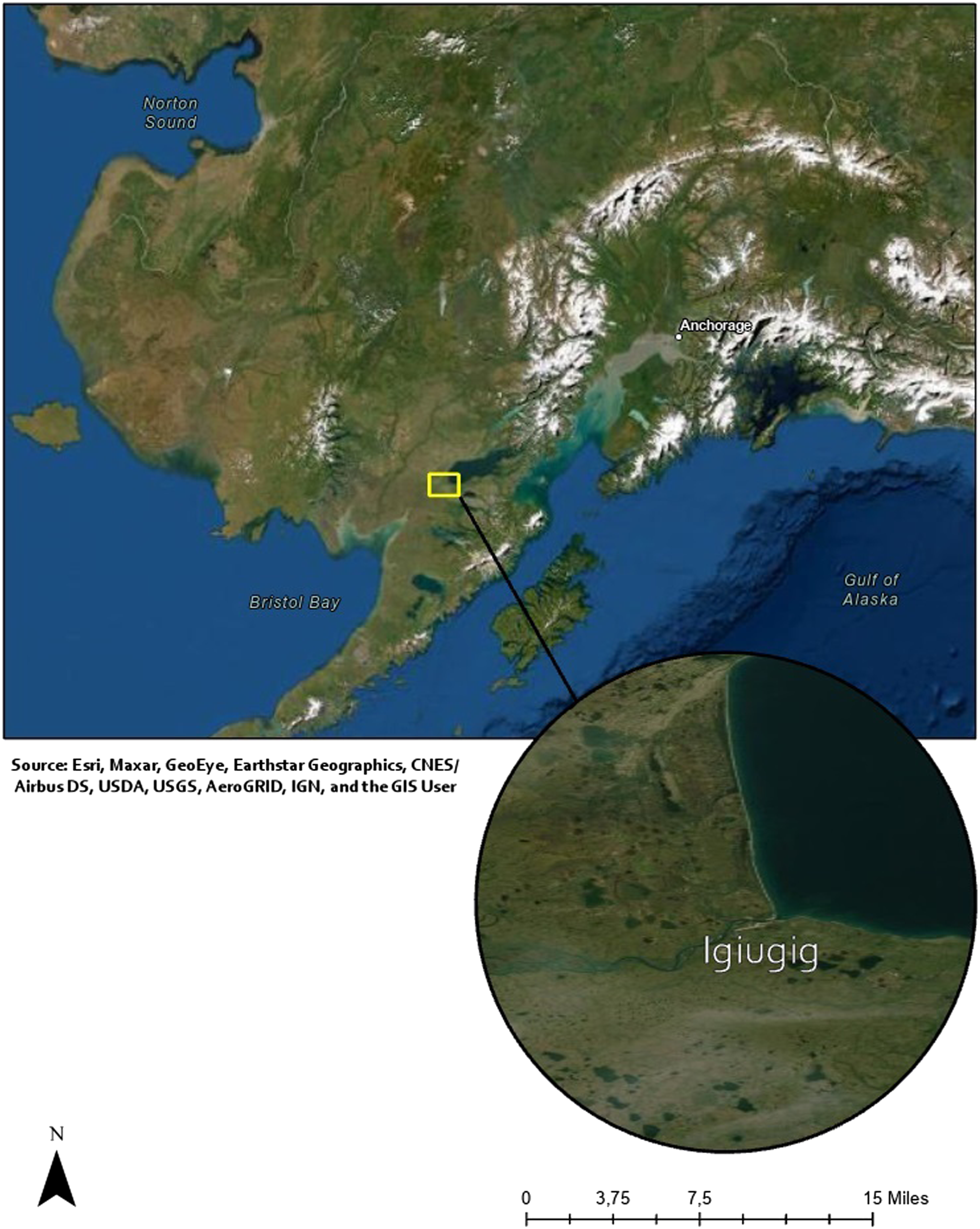
Igiugig can be seen as an example of sustainability transformations in the making. Transformations are emergent phenomena that defy any set definition (Feola, 2015; Patterson et al., 2017; Salomaa and Juhola, 2020). However, for the purpose of this study and informed by the context of the community of Igiugig, I take sustainability transformations to mean radical societal shifts that move systems, structures, and relationships toward enhanced sustainability, characterized by equity and justice among humans and nonhumans. By deliberate transformations toward sustainability (O’Brien, 2012), I refer to conscious and purposeful efforts toward initiating and engaging with such shifts in alignment with the above values.
In Igiugig, transformations have come about through deliberate efforts to decolonize and “take back” community systems by shifting them toward enhanced autonomy and self-sufficiency in alignment with the values of self-determination and cultural integrity. These efforts are visible through community projects, from energy and food security to economic development and cultural revitalization. From being characterized by rigidity and fragility, these community systems are being transformed into resilient and adaptive systems that support the sustainability goals of the community (see Gram-Hanssen (2012) for a description of some of these efforts). The community define their work as community development that keeps them “propelling forward” (Igiugig Village Council, n. d). In the context of rural Alaska, however, where many communities struggle with a host of environmental and socioeconomic challenges (Ayunerak et al., 2014; Gram-Hanssen, 2018; Jacobs et al., 2018; Loring et al., 2016; Richter-Menge et al., 2019), these efforts can be seen as transformational in the sense that they all together change what it means to be a rural Alaskan community in the 21st century.
Relations
I first learned about Igiugig ten years ago, while researching the involvement of youth in community sustainability in rural Alaska. Intrigued by the community’s approaches and results, I contacted the Village Council asking for permission to visit and learn about their efforts. The initial visit turned into several more, and during the past decade, these visits have resulted in different research collaborations (Gram-Hanssen, 2019, 2018, 2012). By inviting me and my questions into their community, community members have expressed an interest in reflecting together on their community work, hoping that more exposure of their efforts and results will be of benefit to them as well as other communities in the region.
Throughout our relationship, my approach to the community has always been that of a student learning from an insightful teacher. The people of Igiugig are the experts on their community and on issues of community sustainability in their unique context. Yet, although a student, I am no passive observer but impact the people and the place in various ways. When visiting, I take active part in community life, from cleaning fish on the beach to assisting with administrative tasks in the Village Council office. When doing interviews with community members, I am aware that my questions invite reflection and that my impact on the community is not necessarily limited to the few weeks and months I visit but may extend beyond what I can imagine and what I plan for. How I present and discuss what has been shared with me also might impact community members directly or indirectly through how others perceive of them and how they perceive of themselves, both of which can have very real consequences. All of these issues are exacerbated by the fact that I am a white academic representing a European educational institution, which creates both assumed and experienced power differences between the community members and myself.
Research is not a benign activity, far from it. In an Indigenous context, research has long been a synonym for white society exploiting Indigenous knowledge while undermining the legitimacy of Indigenous worldviews and lifeways (Smith, 2012), to the extent that “to be researched is to be colonized” (Tuck, 2013: p. 368). While most contemporary research with Indigenous communities aims at benefiting those communities, the lack of reflexivity of the researcher and the use of top-down approaches and methods often results in the opposite (Tuck, 2013; Wilson, 2008). Indigenous and non-Indigenous scholars alike are increasingly recognizing that “all inquiry is both political and moral” (Denzin et al., 2008: p. 2) and pointing to the need for a decolonizing research agenda (Smith, 2012). Such an agenda aims not only to “cause no harm” (Cochran et al., 2008: p. 22), but to aid in the process of transforming exploitative and oppressive relations among Indigenous and non-Indigenous individuals and societies (Snow et al., 2016). Research has the power to do great damage, but research also has the potential to further ongoing struggles for freedom and to contribute to insights that may lead to shifts in thinking and acting among all parties involved (Smith, 2012). In an Indigenous context, this must include a shift toward a decolonized reality. Besides wanting to contribute to certain fields of study and societal issues, it is my explicit aim for my involvement with the community of Igiugig to be beneficial to their efforts toward sustainability, self-determination, and decolonization, now and in years to come.
I have responded to the inherent risks associated with doing research in various ways, including by using methods that allow for active participation, grounding the research in community members’ perspectives and needs, as well as inviting community members to review and comment on the written output. I work qualitatively with community member narratives as the foundation for answering my research questions, aiming to create a process in which their voices and epistemologies can take center stage (Smith, 2012). As a non-Indigenous researcher, I aim to engage respectfully with community members’ understandings and ideas, well aware that they go through several translation processes in my attempt to make sense of them and present them in writing. In this regard, I am mindful of the risks involved when analyzing what are largely Yup’ik concepts and values using “Western” frameworks and logics (Todd, 2016) and instead aim to let community member insights “work on me” and my understanding of sustainability transformations (Gram-Hanssen et al., Under review). Yet, learning how to decolonize my research practice and our relationship is an ongoing process. I am grateful to the community for being patient with me and agreeing to be part of this work, however imperfect it may be.
Process
The research drawn from in this study is based on two visits to the community in summer and fall of 2017. While up until that point, my main inquiries had been focused on what the community is doing, I now wished to engage with the questions of how they do it. Wishing for their voices and perspectives to form the foundation of the research, I asked community members to share their perspectives on how change comes about in their community. Participants were recruited through word of mouth, and all community members over the age of 18 were invited to participate. Over the course of four weeks, 42 interviews were conducted with 29 community members, with several community members interviewed twice. Twenty women and nine men, ranging between 18 and 60 years of age, were interviewed. The first 14 interviews were semi-structured and open-ended qualitative interviews that focused on significant social or environmental changes to the community and the drivers of these changes. Participants were also asked to reflect on what possible future changes they could envision and how such changes might affect the community in years to come.
The second round of interviewing happened four months later and included 28 interviews. These interviews were conducted as part of a Q-methodology research process, aimed at identifying a handful of distinct opinions on the topic of community change. Q-methodology is a mixed method that makes use of a statistical factor analysis in order to group individual opinions into a handful of distinct opinion types (Watts and Stenner, 2005). In this case, participants were presented with 38 statements derived from the first round of interviews, expressing different subjective perspectives on how change comes about in the community. Participants were asked to rank these statements according to their level of agreement or disagreement. After ranking the statements, participants were interviewed about their ranking and asked to explain their interpretation of some of the statements. All interviews were recorded, transcribed, and coded using NVivo12.
Through the subsequent factor analysis, I identified three opinion types: focusing on individual agency, cultural heritage, and collective decision-making, respectively (Gram-Hanssen, 2019). While the notion of leadership was mentioned most explicitly among the people adhering to the first opinion type, leadership was a reoccurring theme throughout all interviews. Despite not being the main focus of our collaboration, leadership thus arose as a way to frame the changes happening in the community. At a recent (online) community gathering, in which I presented the results of our collaboration thus far, community members expressed interest in pursuing the leadership lens further. In the analysis below, I draw on quotes that speak to different understandings and expressions of leadership. While the first three community scenes predominantly draw inspiration from the three perspectives identified in the earlier study (Gram-Hanssen, 2019), the fourth community scene takes an integrative perspective that holds all three together for a deeper understanding of leadership in the community.
I have chosen a narrative style for the analysis where quotes from community members are woven together to create a coherent story rather than presented as isolated “observations.” This choice arises from a wish to present more than “data” by giving an embodied experience of a place and a group of people (Veland et al., 2018). While quotes are taken from one-on-one interviews with Igiugig community members, 4 the events and the circumstances of interactions presented in the scenes are fictional to fit the narrative style. In order to ensure anonymity of the research participants, the characteristics and activities of individuals portrayed are fictional but reflect the lifeways of the inhabitants of Igiugig. The only participants whose characteristics are not fictional are the Village Council President and her late father. This choice was done in collaboration with the Village Council President and was made due to the importance of disclosing certain aspects of their positions and family history for the purpose of understanding their leadership roles. I have still chosen to keep their names anonymous, however, to keep consistency throughout the narratives.
Analysis: enacting sustainability transformations
In this part of the study, I present different understandings of leadership as expressed in the interviews with community members, structured around four community scenes that correspond to the four analytical lenses: the individual leader, leadership through culture, leadership through process, and leadership through integration. At the end of the analysis, I lift up insights from the four community scenes to help articulate a comprehensive understanding of leadership as it is enacted in Igiugig.
Scene one: the airport building—the individual leader
I step off the ten-person bush plane where I spent the past one and a half hours flying from Anchorage to Igiugig in southwestern Alaska. I am in a small, rural village off the road system, located where Lake Iliamna is “swallowed” by the Kvichak River. It is early July and the small airport building is buzzing with life. The other passengers on the plane, sport fishermen from all over the world, here to experience the phenomenal sockeye salmon run, are greeted by their guides and soon rush off toward the river. In the summer months, the community grows from 70 to 200 inhabitants, largely driven by sport fishing. I am here to talk to Igiugig residents about transformational change and the kind of leadership that brings it about.
Igiugig has been in the news lately due to its sustainability work, especially in regard to renewable energy. “I get asked for more energy related things than anything else that I’ve ever done,” says the Village Council President, as we sit in her office, paperwork stacked high on her desk. She spends much of her time applying for and managing community grants, from wind turbines to culture camps. I am aware that she has received several awards in recognition of her leadership. From the outside, it looks like Igiugig might be a one-woman show and that what is enabling this community to become increasingly sustainable is the presence of certain individuals with extraordinary leadership skills.
My conversations with other community members reaffirm the sense of the importance of the Village Council President. When asked about the importance of passionate individuals for driving change, a community member explains, “When they want something they go and get it. [The Village Council President] is a good example!” Another community member similarly refers to the Village Council President when she reflects on the importance of having a community vision to direct future change: “The vision for the future is with the people that are playing the cards now, and that is [the Village Council President]. (…) [She] has a drive like nobody else has for our village.”
The Village Council President is not the first prominent leader of Igiugig. A community member who recently moved to Igiugig tells about the previous administrator who moved to Igiugig in the 70s and gradually took on a leadership role in the community. “[F]rom the stories I hear, [Igiugig] was just, you know, a village like most other villages in the area. Nothing really to stand out about it until [the previous administrator] came here and I think his passion and his leadership qualities [changed the village],” he says, adding, “You get an individual that is a good leader and inspires people, so many things can fall into place after that. And people will rise up and live up to their potential if they have somebody good to lead them.”
This sentiment is exemplified by another community member, who tells how the previous administrator helped give her direction and supported her in getting a job, which in turn enabled her to qualify for a subsidized home. “He told me in which direction I needed to go (…) So now I have my own house!” A similar story is shared by a community member who came to Igiugig as a teenager in order to live with relatives and go to school in the community. He says, “I came down here and my outlook on education changed, because of [the previous administrator]. He was a really good mentor for me.” Now, this community member holds a bachelor’s degree in engineering and works with the community-based environmental consultant company. I quickly learn that the previous administrator is the late father of the Village Council President, and it seems as if she is carrying the leadership legacy of her father forward. In fact, she came back to the village after graduating from college in order to take over the work of her father, who had recently passed away. When asked about this, she explains: “Some people had said how the village would crumble without my dad there, and I was like, no way! So initially it was to honor his name.”
It is lunchtime and the airport building is emptying out. Based on my conversations thus far, I have gotten insights into a line of strong community leaders who are visionary and working from a sense of responsibility for their community. This aligns with the first analytical lens, the individual leader, that emphasizes the important of individuals with certain characteristics and skills for leading change. Yet, as some of the community members hint at, the real “magic” may be in the relationship between these leaders and the rest of the community. The Village Council President is after all not working in isolation but is embedded within a community context. What, then, are the practices leaders engage in to be able to lead the community toward sustainability?
Scene two: the smokehouse—leadership through culture
I leave the airport building behind and head down the dirt road. I walk past a few fallen down wooden structures; I have been told that this is one of the oldest settlements in the Lake Iliamna area with the ancestors of Igiugig residents having traditionally used it as a fish camp before they relocated here permanently in the early 1900s as part of the semi-forced settlement process. Subsistence fishing is still of high importance to the people of Igiugig, and during summer, everyone is down by the river where salmon are split, cleaned, and thrown in a brine before they get hung to dry on wooden racks. After a few hours in the sun, the fish are transferred to the smokehouse where they hang for three days in the smoke from a smoldering fire, kept going day and night with small pieces of driftwood from the beach.
I reach one of the smokehouses where two women are in the process of hanging up their fish. I start talking with one of the women about the importance of practicing cultural activities, such as fishing. The conversation quickly returns to issues of community change, but rather than focusing on any one individual, I get a sense that culture and cultural practices play a role in driving change. “Well, I’ve seen communities where the young people are not participating in their traditional dance and language and they get lost and then they get into drugs and alcohol and suicide. (…) When they’re more involved they’re busy, they don't have time to think like that.” This is not only about staying out of trouble but also about knowing who you are. The woman explains, “[The knowledge of the Elders is] the whole spectrum of our whole being and identity.” The other women supports this perspective, adding, “I think if you speak your own language it connects you more to your ties of where you’re from and [gives you] enough confidence and you can feel strong in yourself and [have] faith that you can do it.”
As I talk to more community members on their way to and from the beach, the importance of knowing and speaking the Yup’ik language for both personal and community health comes up in different ways. A community member who is involved in the community’s efforts to revive the Yup’ik language shares that learning the language and the dancing makes him feel good and helps him grow as a person. “[I]t helped me a lot, like I felt lost a while ago and just learning my language and, I don’t know, it keeps us connected I guess.” To him, such efforts are the true reasons behind Igiugig’s transformations. This is not just about individual health but has implications for larger-scale processes in the community and beyond. In my conversation with the Village Council President earlier in the day, she had reflected on the broader implications of the community’s Yup’ik language program, arguing that speaking Yup’ik directly relates to the community’s decolonization efforts. In this perspective, language revitalization is a tool for deliberately transforming community systems.
Despite the importance placed on Yup’ik culture, some community members object to the idea that positive change is dependent on such practices. For instance, one community member argues that language revitalization is one source of positive change but emphasizes the importance of respecting people’s differences, including different cultural backgrounds and opinions. She reflects, “Everyone has a different opinion. And it’s about how you go about compensating that difference. Are you gonna throw a tantrum or are you gonna talk it out and figure something out that’ll please everybody?”
Clouds have moved in front of the sun and the bugs are out, chasing me away from my comfortable spot outside the smokehouse. The afternoon’s conversations invite me to reevaluate my earlier conclusions. Rather than leadership being about individuals acting on their free will, culture and cultural practices take center stage. Leadership that enhances the well-being of community members seems to emerge by way of engaging with Yup’ik cultural practices, such as language or traditional activities. This resonates with the second analytical lens, leadership through culture, in which leadership arises through the engagement of individuals in certain cultural practices, and through the push and pull of such interactions. Yet, not everyone engages in Yup’ik cultural practices or identifies as Yup’ik. Reflecting on my conversations, I wonder whether seeing leadership as limited to certain practices overlooks the dynamic nature of change processes and leadership in this context. Is there something more fundamental at play?
Scene three: the community fundraiser—leadership through process
It is evening and I have been invited to join a community fundraiser at the school. The children have prepared food that they sell to raise funds for an upcoming school trip to Washington D.C. The whole community is there, kids running around, and everyone enjoying the food and sharing stories. I approach the Village Council President and ask her to reflect on some of the perspectives I have heard so far. She rejects the thesis that Igiugig’s transformations are due to her or her father, focusing instead on what guides her work. “[T]he main drivers [of change],” she says, “[is] what the people want.” She tells about a community visioning process they did in the 90s, involving everyone in the community. “[So], when I stepped in in 2008 to be the administrator, I had a roadmap of all these projects I could go after that had 100% community support, because it was the community’s plan.” Speaking of the community greenhouse, she says, “it was a vision, it was a dream, everybody thought it was a good idea. We went after it and it’s working, and it is improving the quality of life where we live” (Igiugig Village Council President, 2017). Thus, the community moves from idea to practice through collective leadership.
Several other community members identify the visioning process and the involvement of community members in decision-making as an important reason for Igiugig’s success. To one of the high school students, who was a baby when the visioning process took place, it is important to include all community members in such processes. “I think it’s good to ask the Elders first, when we’re thinking about change and stuff like that. And it’s good to ask the kids, cause they’re gonna be the ones who are gonna look after [everything] after we’re gone.” This indicates an awareness of both past and future in day-to-day decision-making. Rather than any one individual or decision, the practice of collective decision-making is highlighted as a driver of change.
The sense of change being enacted through the community as a whole extends beyond the visioning process. I learn that all major decisions in Igiugig are based on consensus. A community member explains the logic behind this process, saying, “We do things together. I’ve seen it quite often where there’s something that we started moving towards and people weren’t comfortable and so you backed off. And then you worked it through and it was kinda like, ‘so, let’s make this so this is positive for everyone.’” Things do not always go according to plan, however, and several community members emphasize the importance of being adaptive and making things work, even if it might look different than originally envisioned. A community member explains, “we do like to plan two years down the road. But sometimes, you know, we’ll have a plan in place then we get to a certain place and we’re like, ‘oh this might not work,’ and so we’ll have to improvise. So across the board, I think we’re pretty good at handling whatever comes around, because we’ve thought about it for the future but we usually have back up plans or, you know, someone is able to come up with a quick solution.”
The crowd is thinning out and I walk toward my lodging. Based on this evening’s conversations, leadership hinges on the community coming together to create the possibilities for positive change. Transformative leadership does not rely on any one person or type of knowledge but emerges in the flow of day-to-day practice centered around collective decision-making and coming together as a community. This relates to the third analytical lens, leadership through process, where actors move to the background and process takes center stage. Yet, if leadership is processual and emergent and not to be ascribed to any one individual, what then is the role of distinct “leaders,” such as the Village Council President? Is there a way in which I can take all perspectives and insights of community members into account, recognizing that all hold partial truths and that individuals, relations, and process all matter for how transformations come to be enacted?
Scene four: the river—leadership through integration
It is morning and I am scheduled to fly back to Anchorage in a few hours, weather permitting. Even though the village is remote in terms of physical distance from the urban centers, Igiugig feels incredibly connected. This is partially due to the influx of people in the summer, but more importantly, it is due to the outlook of community members who exhibit a deep connection to this particular land, its people, and history, as well as a keen awareness of what goes on outside the community.
I head down to the mouth of the river. A woman is standing at a wooden table deliberately placed on the waterline, enabling her to stand on land while throwing fish guts back into the lake. She is well underway with today’s fish processing. We start speaking about community visioning and the importance of community members being on the same page. She reflects, “Well, sometimes we can do things without the full vision, you know. I’m sure a lot of people don’t have the vision for what [the Village Council President] has planned, but they can see enough of it to agree and (…) help and move it along. So I don’t think it’s important that everyone has the full vision. But it is important that we all have (…) the same trajectory going.” She emphasizes community visioning while also pointing to the individual vision of certain community leaders, highlighting the importance of aligning one with the other.
Two more women join us at the splitting table. One of them says: “[The village leadership is] not perfect but it’s pretty close actually. (…) I think that somebody like [the Village Council President]’s vision for the future and the way she wants to steer things are really right on. I mean they’re in tune with what the community wants and when she applies for something it’s usually not something that just she wants really bad, it’s something that everyone wants to get on board with her about. So I find that incredible leadership, I mean really good.” I ask whether there are ever conflicts about issues of community development, and all three women laugh, confirming that there are. The third woman, who recently moved to Igiugig, says, “The community as a whole is pretty like-minded. You know, everybody’s got different opinions and stuff, but (…) from the youngest to the oldest, all get together and like to discuss everyone’s futures.” The other woman clarifies, “Here in this village, even if we really don't care for each other a lot of times, we’ll all help, it does not matter who it is, everybody’s gonna help everybody and nobody’s gonna starve.”
I join one of the women in collecting more driftwood for the smokehouse, walking along the shore of Lake Iliamna. I ask her to help me understand the relationship between community leaders and the community at large. “[Traditionally,]” she explains, “[leadership] was based on really working hard and people [sharing resources]. The people who were usually in some type of leadership were the ones who did lots and shared lots with everybody else.” According to her, the influence of “Western’ hierarchical leadership has changed this somewhat, although Igiugig is trying to uphold the Yup’ik values. “The act of trying to get some of that stuff back really makes this village different. This village has always been (…) a village that progressively move forward, and actually did a lot of the older styles of doing things, like helping everybody else.” When asked what defines leadership in this context, she replies without hesitation, “It’s a way of being good to everybody with whatever you’re doing.”
When we come back to the splitting table, another community member has pulled up on the beach in his skiff, unloading more salmon for the women to process. I ask him about the thesis that passionate individuals drive community change. He corrects me, adding: “passionate individuals with knowledge drive community change.” To him, it is crucial that whoever is in a leadership position is also embedded within the community and works to further the values of community members. Only then can leaders “be good to everybody” and ensure that change is just and equitable.
Two young girls on a four-wheeler have come to inform me that my plane has arrived. One of the girls is wearing a sweatshirt with the high school tagline printed on it: “small but mighty.” The statement reminds me of a speech the Village Council President gave recently at a Native Issues Forum meeting, focusing on the current political and economic challenges of Alaska. In the speech, she highlighted three key points for Alaska Native communities in the time ahead: keeping people and values at the center, working for tribal sovereignty and self-determination, and electing the right leadership to advance the vision of sovereignty. While it might be tempting for Alaska Native communities to stay isolated in times of political upheaval, she argued that the exact opposite is needed, emphasizing that, “Alaska needs all of our help. And this is our home and we’re the hosts. And we need to be not only at the table, we need to be setting the table. (…) We’re thinking of progress for the next ten thousand years. They need our stories, they need our vision, and they need our helping hands” (Igiugig Village Council President, 2019).
On the way back to the airport building, my thoughts circle around the nature of leadership in this community. While the sense of leadership as process remains, the perspectives shared by community members this morning insist on bringing the individual back in. Leadership then seems to be a matter of integration, with transformational change enacted in a continuous process involving individuals acting in relation to the group.
Integrating duality: individual-collective simultaneity
Throughout the four community scenes above, we gain insights into the different ways in which leadership is enacted in Igiugig. For a comprehensive understanding of how transformational change happens in this community, it seems we need to be able to hold both the collective (in its broadest sense) and the individual in view. This implies recognizing that the individual and the collective are impossible to separate and that what each individual does matters for how the collective develops and how transformations are able to unfold. While some community members are very important and individual drive and initiative matters a great deal for the positive changes happening in Igiugig, there is an acute sense that these individuals cannot be separated out from the community. Rather, individuals seem to operate within a collective field, defined by community values and culture and influenced by both human and nonhuman phenomena (including past and future generations). What emerges then is a process of “individual-collective simultaneity,” where the act of relating becomes a defining feature of both the individual and the collective.
On a practical level, leadership in Igiugig seems to be about fostering a culture of alignment between individual values and goals and that of the group or community while also ensuring that there is space for individual expressions within that larger field. Recognizing that individuals and the collective develop in relation to (or rather, within) one another, those entrusted with leadership must care for both in a continuous dance. To simultaneously care for individuals and collectives is challenging in the context of non-Indigenous society, where the view of leadership is based on an understanding of phenomena as isolated and inherently separate. Speaking to this challenge, Mi’kmaq scholar Doyle-Bedwell (2012, p. 193) reflects, “Our cultural values demand we work for the whole within a dominant system that focuses only on the individual. How do we negotiate this cultural conflict and develop skills to operate in both worlds?” In Igiugig, part of their transformational work is negotiating this apparent conflict by bridging worldviews and continuously translating an ontology of isolation into one of relation, and vice versa, honoring the partial truths existing in both. Being aware of both individuals and the collective, the community works to enable a process where the individual and the collective can contribute positively toward each other’s becoming. This sentiment is shared among many Indigenous cultures, across Turtle Island and beyond, summarized well be Yakama scholar Jacob (2012, p. 179) when she reflects that “strong, communally oriented individuals make the strongest collectivity.” Thus, insights from Indigenous leadership and from the community of Igiugig suggest that the individual and the collective are inherently connected, or more accurately, they were never separate to begin with, and that this deep connection is a key feature of sustainability transformations.
Discussion: bridging paradigms
The insights presented above as to the relational nature of leadership are to some extent mirrored in the part of “mainstream” leadership research engaged with leadership “in the plural” (Denis et al., 2012), presented in the introduction. Especially those theories that focus on practice and process resonate with an Indigenous view on leadership. According to Raelin (2016a, p. 149), a practice perspective views leadership as “a condition that is purely collective rather than a summation of individual acts.” Rather than the relationship between “leader” and “followers,” leadership is a result of collective action that emerges through discursive and material engagement over time (Raelin, 2016b). Thus, while individuals are still present in leadership, they can no longer be seen as “containers” of leadership (Denis et al., 2012).
While there are some perceived tensions between actor-based and process-based conceptualizations of leadership, as highlighted by Simpson (2016), some scholars within “mainstream” leadership research are attempting to incorporate and expand the role of individuals within collective and processual understandings of leadership. For instance, instead of focusing on leadership as held either by individuals or collectives, Hernandez et al. (2011) suggest focusing in on the loci and the mechanisms of leadership in order to address the sources of leadership as well as how it is distributed. They suggest five loci (leader, context, followers, collectives, and dyads) as well as four mechanisms (affect, cognition, behavior, and traits) that together help to develop a more comprehensive and integrative understanding of the leadership phenomenon. In a more recent contribution, Jones (2019) draws on pragmatist philosophy and developmental psychology to explore the role of the individual leader within a practice view on leadership. As with Indigenous leadership, Jones (2019, p. 563) argues that culture is central when attempting to understand the role of leaders in transformations, suggesting that “people do not become transformational leaders despite their social environment; but because of it.” Taking these notions to sustainability transformations, Kuenkel (2019, p. 49) suggests that leadership be seen as “an individual and simultaneously a joint activity aimed at bringing forth reality and creating new circumstances at various levels, from individual to organizations to societal change.” As she concludes, “this brings the relational aspect of leading into the foreground.”
These points of convergence between Indigenous and non-Indigenous approaches to leadership and the potentials for transformation point to ways in which so-called ‘Western’ and Indigenous ontologies might speak to each other. “Ontological bridge building” efforts matter for how we are able to approach the wicked problems of the 21st century in ways that are equitable and sensitive to different ways of knowing and being in the world (Johnson et al., 2016; Rout and Reid, 2020). This is especially important in fields such as leadership research, where theorizing and conceptualizations directly and indirectly inform what paths will be taken by organizations, communities, and nations in attempts to move toward sustainability. As has been pointed out by numerous scholars, the engagement with other ways of being that can inform humanity’s move toward equitable and sustainable futures is something Indigenous knowledge and perspectives can greatly contribute toward (Burns, 2015; Edwards et al., 2013; Gould et al., 2019; Johnson et al., 2016). In their meta-theoretical review of wisdom and its implications for environmental leadership, Edwards et al. (2013, p. 27) find that much sustainability research share several core meta-theoretical lenses with Indigenous sciences. The authors argue that taken together, these can contribute toward a globally engaged understanding of wisdom and leadership. Cajete (2016, p. 364) points out that, done well, “Such an exploration may also lead to the creation of new paradigms that can move us collectively and creatively beyond current paradigms of individualistic leadership to more communal and culturally relevant forms of Indigenous leadership.”
The potential for bridging goes beyond leadership research and is especially relevant in research and theorizing on sustainability transformations. For instance, exploring transformational sustainability interventions, Abson et al. (2017) identify reconnecting humans with nature and rethinking knowledge production as central leverage points for sustainability transformation. Despite the obvious points of convergence with Indigenous worldviews and teachings, there is no reference in this work to such people groups or to Indigenous scholars making similar claims. This silence is symptomatic of much academic literature (Todd, 2016; Watts, 2013), including the literature on sustainability transformations. This is problematic, especially given the normative goal of much transformation research to further equitable and just change that takes into account other ways of knowing and being. Importantly, however, “ontological bridge building,” or “braiding work” (Elwood et al., 2019), needs to be grounded in respectful relationship-building and be sensitive to the pitfalls of exploiting Indigenous knowledge and perpetuating colonial systems of oppression (Chandler and Reid, 2018; Chapman and Schott, 2020; Whyte et al., 2018). Thus, the manner in which this work is done matters greatly for the outcomes generated (Gram-Hanssen et al., Under review).
For leadership research to contribute toward our understanding of how transformational change is enacted and the role of leadership in this process, building bridges and caring for relationships are important components for future research and practice. Such processes invite reflection on assumptions as to how change happens, what agency for transformation is, and how it is activated (O’Brien, 2020). Unanga◯ scholar Tuck (2013, p. 370) warns that “without making how we think change happens explicit, we may inadvertently rely on theories of change that locate power entirely outside our communities.” While this is especially problematic in an Indigenous context, due to the colonial assumptions of power within much social theorizing (Tuck, 2013), in Indigenous and non-Indigenous settings alike such assumptions risk leading to self-fulfilling prophesies of society’s inability to enact radical and equitable change. The interrelated nature of individuals and collectives proposed in this study will therefore be important to consider and explore further for the purpose of theorizing social change, and especially in the context of enacting and supporting sustainability transformations.
Conclusion
In this study, I have engaged with different understandings and enactments of leadership in processes of deliberate transformations in the Yup’ik community of Igiugig, Alaska. Rather than leadership being either an individual’s ability to act or a process arising through collective action, I have conceptualized leadership in processes of transformational community change as something that is inherently collective and emergent while simultaneously being dependent on individuals “showing up” in everyday situations and contributing with their unique skills and perspectives toward the greater good—a process of “individual-collective simultaneity.” I have shown how a view of leadership grounded in a process-oriented and relational ontology, such as many Indigenous ontologies, enables us to hold the collective and the individual together, acknowledging that they are emergent and part of each other’s becoming. Leadership in this context is about performing one’s individuality in relation to the collective. What sets certain individuals apart as leading transformational change seems to both be an acceptance of the responsibility to lead as well as an awareness of how relations matter for bringing about just and desirable change.
Drawing on decades of research on who leaders are and what they do, leadership researchers are uniquely positioned to inquire into the enactment of deliberate transformations toward sustainability. For such inquiries to add substantially to our understanding of transformation and sustainability, however, it will be important to actively engage with the field’s ontological assumptions. This is not limited to leadership research but is relevant for all fields and disciplines dealing with the question of how to enact sustainability transformations. Becoming aware of and questioning assumptions about how change is enacted is necessary if we hope to move beyond top-down sustainability. In taking such an engagement serious, an important area for future research is the potential for different ontologies to come together to inform and expand on our assumptions about agency for transformations, with careful consideration to the importance of relationship-building in such processes. While such ontological plurality creates tensions, it may be through holding and working through such creative tensions that we can start to see pathways toward equitable and sustainable futures.
Footnotes
Acknowledgements
Quyana to the community of Igiugig for sharing their insights with me. Also, a warm thank you to Karen O’Brien, Grete Hovelsrud, and the rest of my team at the University of Oslo for great reflections and comments and to Mari Andrine Hjorteset for technical assistance with the figure. A special thank you to the two anonymous reviewers and the journal editor for their insightful comments and suggestions.
Declaration of conflicting interests
The author(s) declared no potential conflicts of interest with respect to the research, authorship, and/or publication of this article.
Funding
This research was financed by the Norwegian Research Council as part of the research project AdaptationCONNECTS, funding number 250434.

Notes
Author biography
Irmelin Gram-Hanssen is a PhD student at the Department of Sociology and Human Geography at the University of Oslo. Her research focuses on social change and the possibility for sustainable and equitable transformations in the context of climate change. She works in an Indigenous community context and explores the enabling conditions for transformational change including the role of worldviews and perceptions of human and non-human agency.