



Abstract
Objectives:
To explore in the context of peoples’ personal social networks, the contribution that pets make to ‘the work’ associated with the management of long-term conditions.
Method:
Mixed methods survey with nested parallel qualitative study; 300 participants were drawn from diabetes and chronic heart disease registers of General Practices across Greater Manchester in the North West of England. Notions of ‘work’ were used to describe the illness and everyday activities associated with chronic illness.
Results:
Nineteen percent of participants identified at least one pet within their network. Pets contributed mostly to managing emotions (emotional work), to enhancing a sense of self identity (biographical work) and to a lesser extent practical tasks (everyday work). There were indicators that pets mediated relationships for people living with a long-term condition through very weak ties with others in domestic and community settings.
Conclusion:
The findings suggest that pets have unique qualities and are not simply substitutes for human relationships in long-term condition management. The study has potential implications for furthering a social contextual analysis of chronic illness, the understanding of relationships, and the meaning and the role of companion animals in long-term condition management.
Introduction
Living with a long-term condition involves the giving and receiving of formal and informal support undertaken individually and collectively within people’s personal communities – ‘the set of active and significant ties which are most important to people’. 1 Social networks and systems of lay and community support are increasingly recognised as important for long-term condition management (LTCM). Knowledge that interactions and relationships with pets might serve therapeutic functions and generate social capital 2 suggests that, in this field of enquiry, the role of pets can usefully be considered alongside ‘human to human’ relationships. Here, we consider the role of pets as part of peoples’ personal communities, networks and the work associated with managing a long-term condition.
Social networks and the work of chronic illness
The concept of social support has proved a useful analytical tool in the area of LTCM. However, the notion of long-term illness ‘work’ is used preferentially here because it provides a complementary focus for further understanding the resources, networks and relationships involved and permits a range of contributors to be taken into account. 3,4 It also emphasises that illness and its management can be treated as problems of action. 5 The distribution of the responsibilities for LTCM work between groups of involved actors implicates a set of relationships combining the person with the condition and members of their personal communities including community groups, health professionals, non-health professionals and pets.
In recognising that networks and significant others are relevant for understanding the practices, resources and relationships of illness management, there are persuasive arguments for considering the inclusion of pets. It has been suggested that the failure to fully acknowledge the role of animals and pets in social research is a result of anthropocentrism and that the way in which distinctive relationships evolve in dialectical and contingent ways between humans and companion animals has potential for understanding social- and health-related phenomena. 6,7 Thus, a key contextual question relevant here is the extent to which human–pet relationships are essentially equivalent or different to human–human relationships (lay and professional) in chronic illness management.
The potential contribution of pets to LTCM
In the pursuit of a post-humanist approach to applied social science, a burgeoning research literature exploring the connection between animals and society points to the likelihood of uncovering complex human–pet relationships in chronic illness management. 7 Just as interpersonal relationships vary in quality, depending on context and the dyadic interactions between people, the same is likely to be true of relationships with pets within an extended focus of illness-related social networks. 8 –10 Previous literature in the field has been concerned with the ontological bases of human–dog/cat relationships and the therapeutic effects of pet ownership. So, for example, dog-owning patients with heart problems have been found to be significantly more likely to survive a year post-discharge from a coronary care unit suggesting that pet contact can be important in the rehabilitation process. 11
The value of pet ownership has previously been documented, 12 –16 and some research suggests that pets perform similar activities to those of humans in displaying a level of sensitivity to conscious and unconscious human signals. Wells 17 points to experimental trials in which dogs have been trained to detect human cancers (skin, bladder, lung and breast) with a relatively high degree of reliability and that dogs can anticipate and warn their owners of impending bouts of hypoglycaemia. Other research has shown how pet owners interact with animals as they would with human acquaintances 18,19 and how ‘animalness’ at times is of distinctive value in relationships. 20 Recent anthropological research points to the way in which human–pet interactions and relationships are not necessarily categorically different from interpersonal interactions and that any differences might be of degree rather than of kind. 6 Dogs have been described as ‘social catalysts’ because of the myriad of ways they facilitate contact with other people.21 In this respect, companion animals act as facilitators of social interactions with others rather than being passive recipients of human affect and nurture. Pets can be seen as potentially creating or maintaining ‘weak ties’ within community settings serving a bridging function within and between networks. 22 A recent study suggests that health benefits might accrue to the broader community via the social capital of pet ownership. 2
However, the meaning and roles ascribed to pet ownership for chronic condition management within a broader social context remains latent and evidence about the nature of pets’ contribution is still equivocal or lacking. For example, a study of people suffering from chronic fatigue syndrome (CFS) failed to show an association between pet ownership and self-reported health based on traditional health outcome measures such as the Chalder Fatigue Questionnaire (CFQ), General Health Questionnaire (GHQ-12) or Short-Form-36 health survey. 23 Whilst indicating a generally held belief that pets have the potential to enhance quality of life, the specific meaning and utility of the role of pets, which lies behind such beliefs, remain under-examined. In this context, there have been calls for the deployment of qualitative research approaches as a means of deepening the agenda and analysis in the field of animals, society and health. 7 The mixed methods approach adopted here permits an extension beyond viewing pets as useful in their own right or in conjunction with more traditional forms of therapy through to an exploration of their role and meaning comparative to others in a network. Most importantly, the ability of a social network analysis permits an examination, which takes us beyond dyadic relationships to a wider group (‘networks of networks’) analysis. Thus, the aim of this article is to further the understanding of the place and contribution of pets within social networks relevant to personal long-term illness work and their role in mediating relationships and mobilising resources.
Methodology
Study design
A mixed methods study was undertaken in 2010 involving a quantitative survey with a nested qualitative element. Ethical approval was obtained from the Greater Manchester Research Ethics Committee in February 2010. Data collection was via face to face interviews conducted in participants’ homes by researchers working on the project (HB, DK and JP) and lasted between 45 min and 2 h.
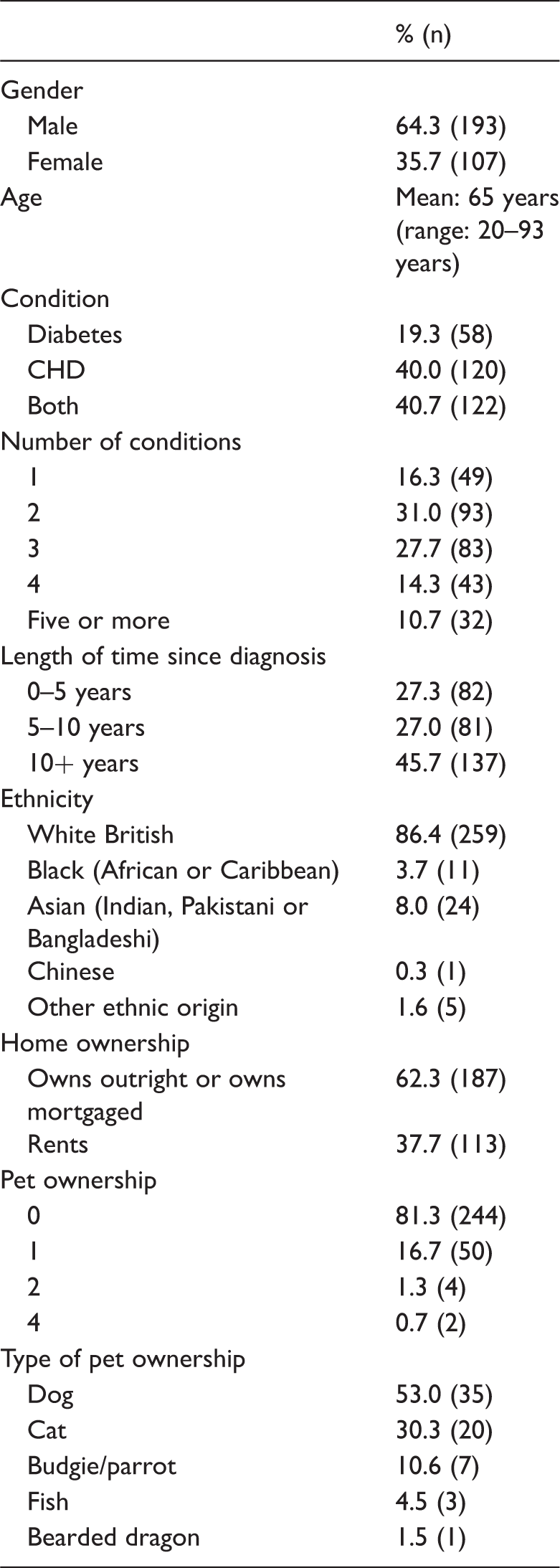
Demographic information from sample of 300 participants
Questionnaire and interview schedule
The face-to-face interviews used concentric circles maps, 24 which enabled individuals to plot their personal communities: people, groups or pets that were considered to be important for helping to manage their conditions (e.g. diabetes and chronic heart disease). Network members placed in the central circle were considered the most important, those in the middle circle were important but not as important as the central circle and those in the outer circle were important but not as important as the other two circles.
The illness work framework
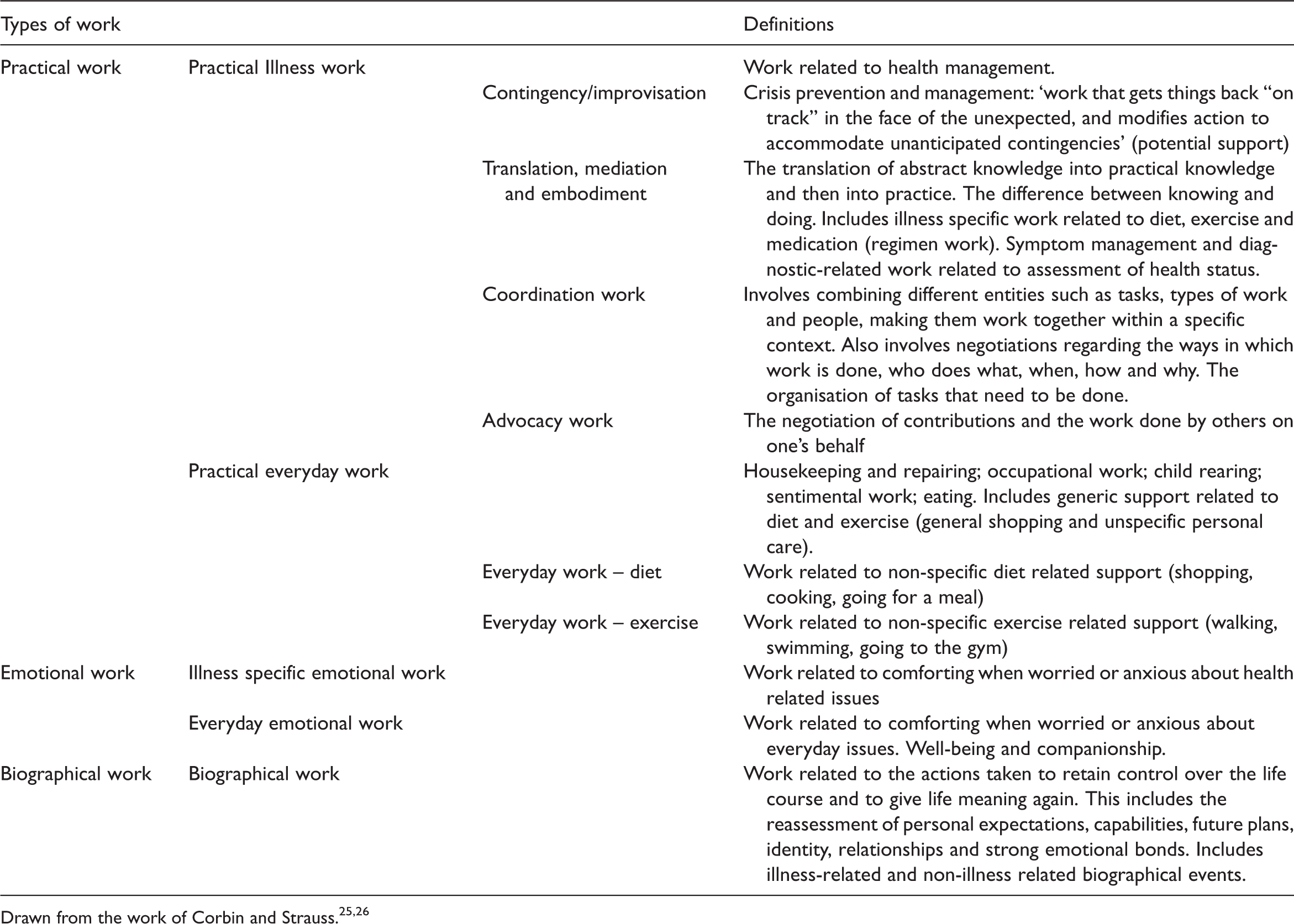
Illness work questions
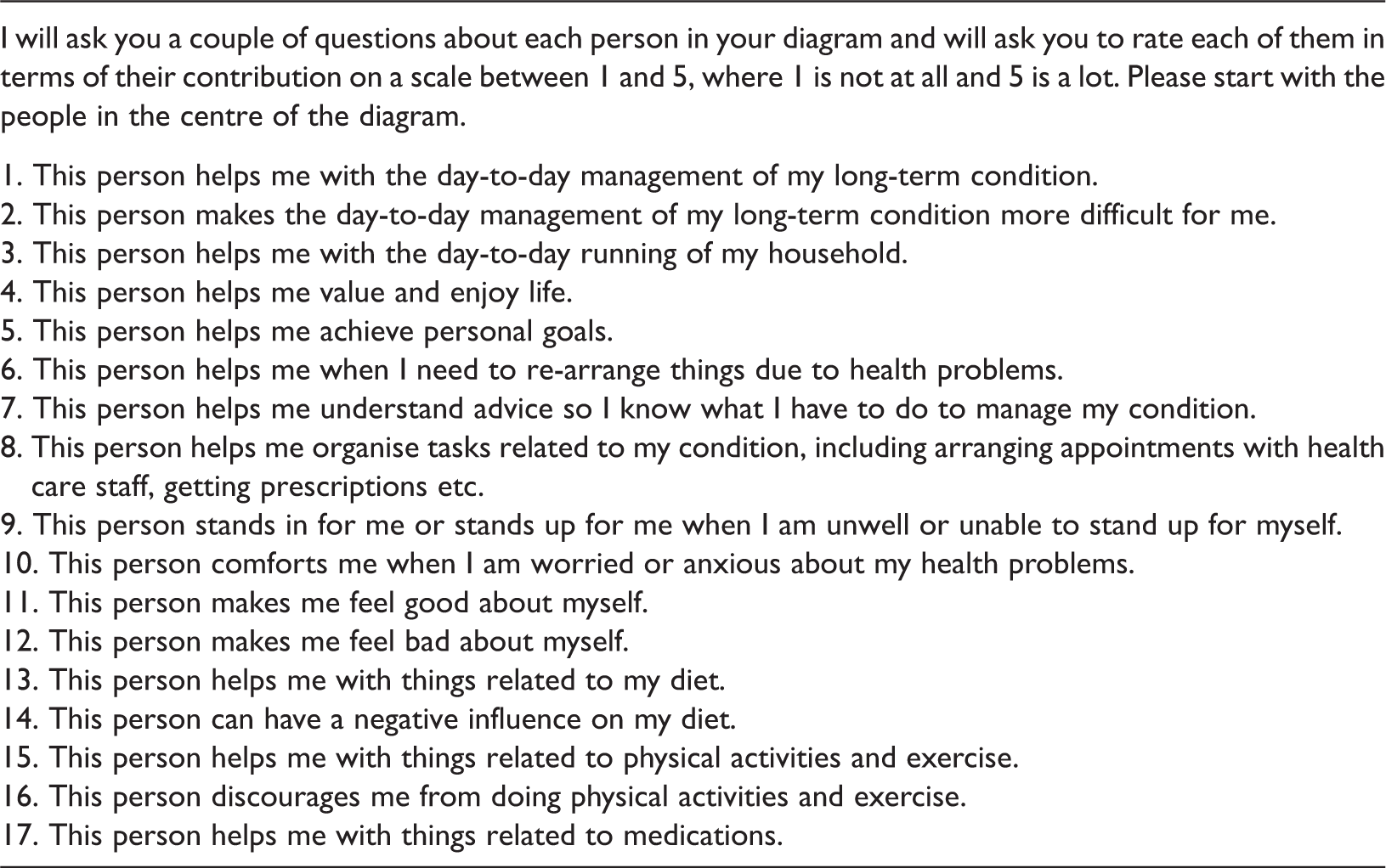
Definitions of types of work used within the paper
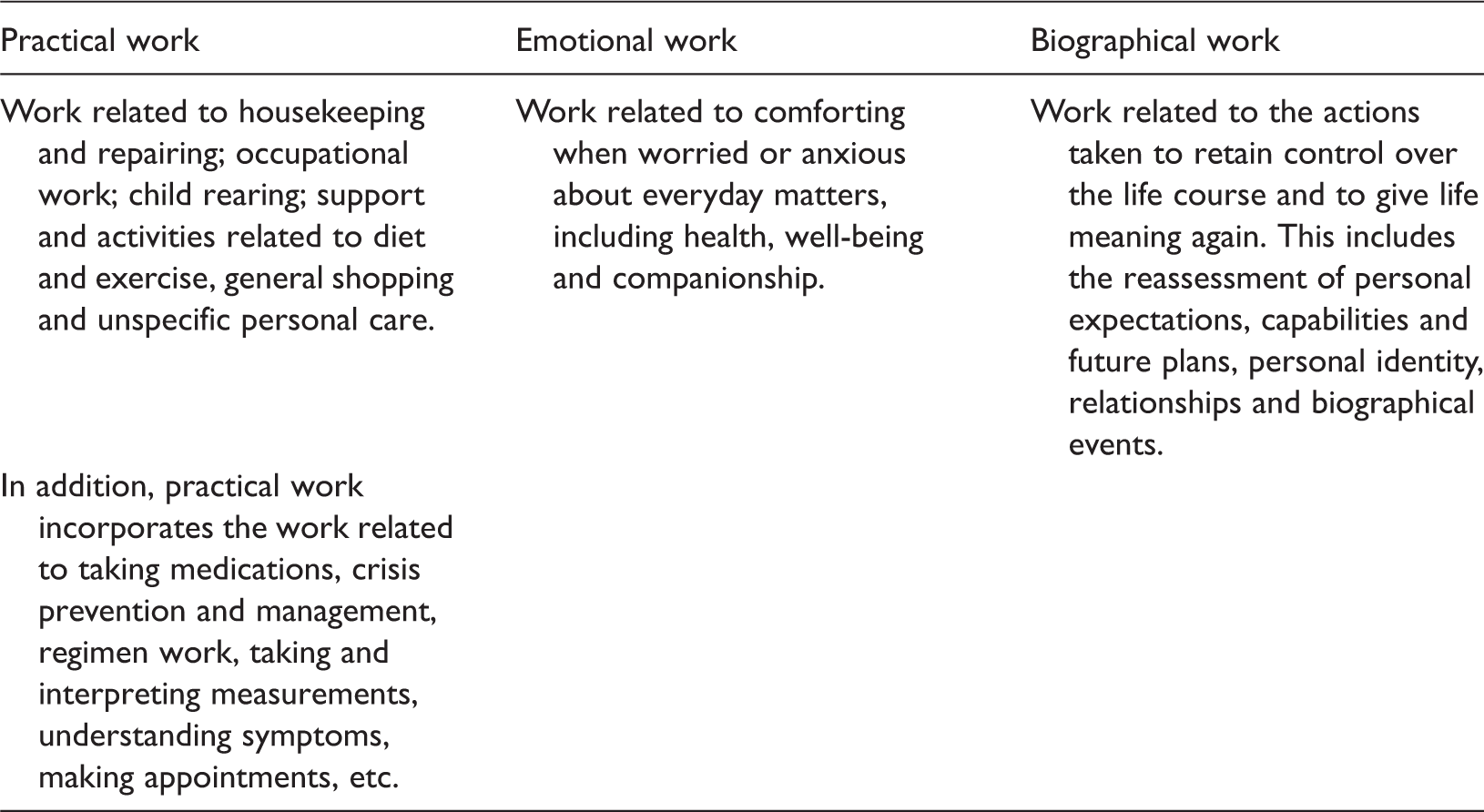
During the interviews, participants were asked to elaborate on the roles of network members by rating each between 1 and 5 on a Likert scale for 17 different aspects of work undertaken by members where 1 is ‘not at all’ and 5 is ‘a lot’(Table 3).
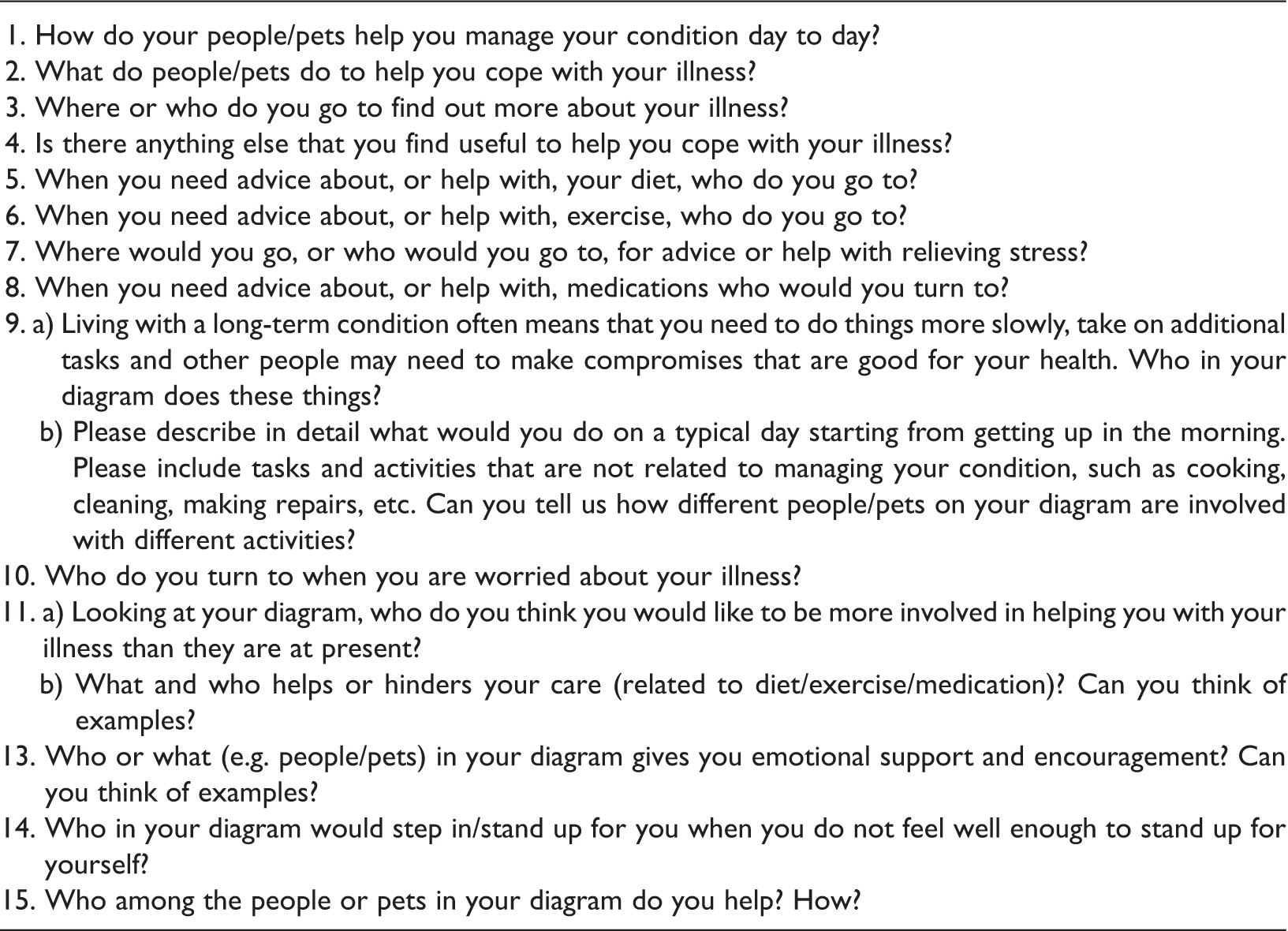
Qualitative interviews
Prompt questions for qualitative interviews
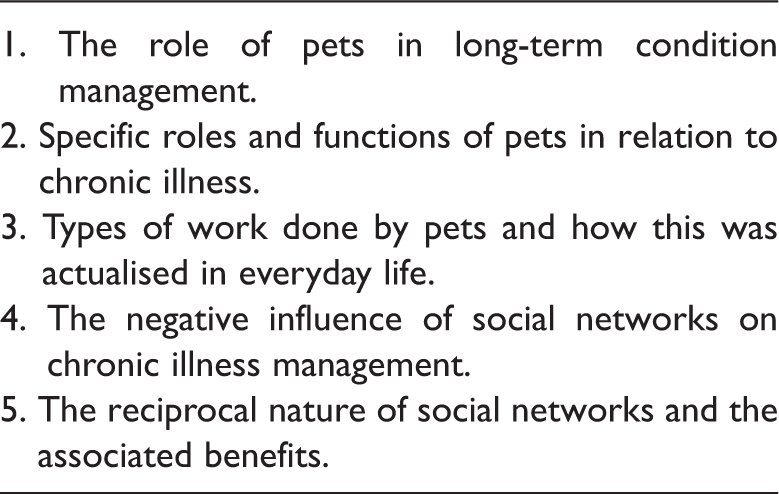
Themes
Data analyses
The aim of the analyses was to explore the role of pets in social networks related to long-term illness management in the context of human to human relationships.
Quantitative analysis
For the purpose of comparing pets against other kinds of network members, we generated a score for each type of work and member (including pets) by summing across respondent ratings for each member on the individual question items in each type of work. Since numbers of items differed by type of work, to make scores more comparable, we rescaled scores to range from 0 (does not help) to a maximum of 10 (helps a lot).
We additionally coded each network member into one of eight types based on their relationship to the participant (partner/spouse, close family, other family, friend or colleague, medical professional, pet, group (e.g. church or social group) and ‘other’).
Member scores on types of work were analysed using a multilevel linear regression model, with members clustered within networks and network means treated as a random effect. Relationship ‘type’ was included as a set of ‘dummy’ explanatory variables. To compare pets directly against other members within the same network we restricted the sample for analysis to only those networks that include a pet. From the regression results for each type of work we conducted a post-estimation omnibus test to determine if amounts of work undertaken differed significantly across relationship categories. Where it did, we compared the mean score for pets against the mean score for each of the other relationship types. All analysis was conducted using STATA (version 11) 30 and an alpha-level of 5%.
Qualitative analysis
The qualitative interviews allowed further elaboration of the meaning and contribution of pets to networks and illness work. The interviews were audio-taped with participants’ consent, transcribed verbatim and analyses assisted by Atlas (version 6). 31 A framework analysis was undertaken, coding data relating to pets and/or the work (emotional, biographical or practical) implicating pets. The researchers coded transcripts independently and then met to discuss, examine and agree on emergent codes. A list of final themes and related sub-themes were produced.
Results
Quantitative
Pet ownership
Of the 300 respondents in the survey sample, 18.7% (n = 56) currently owned one or more pets (though a larger number of respondents had previously owned a pet). Within the 300 networks, there were 2544 network members, not including the respondents themselves, of which 66 (2.6%) were pets. Pets included dogs, cats, birds and bearded dragons and an exact breakdown of pet ownership can be found in Table 1. Thirty-five pets (53.0%) were placed in the centre (of most importance) circle. To summarise, 300 participants were included in the study that identified 2544 network members within their personal communities.
Multilevel linear regression
Mean emotional, practical, biographical and negative work scores for different relationship categories
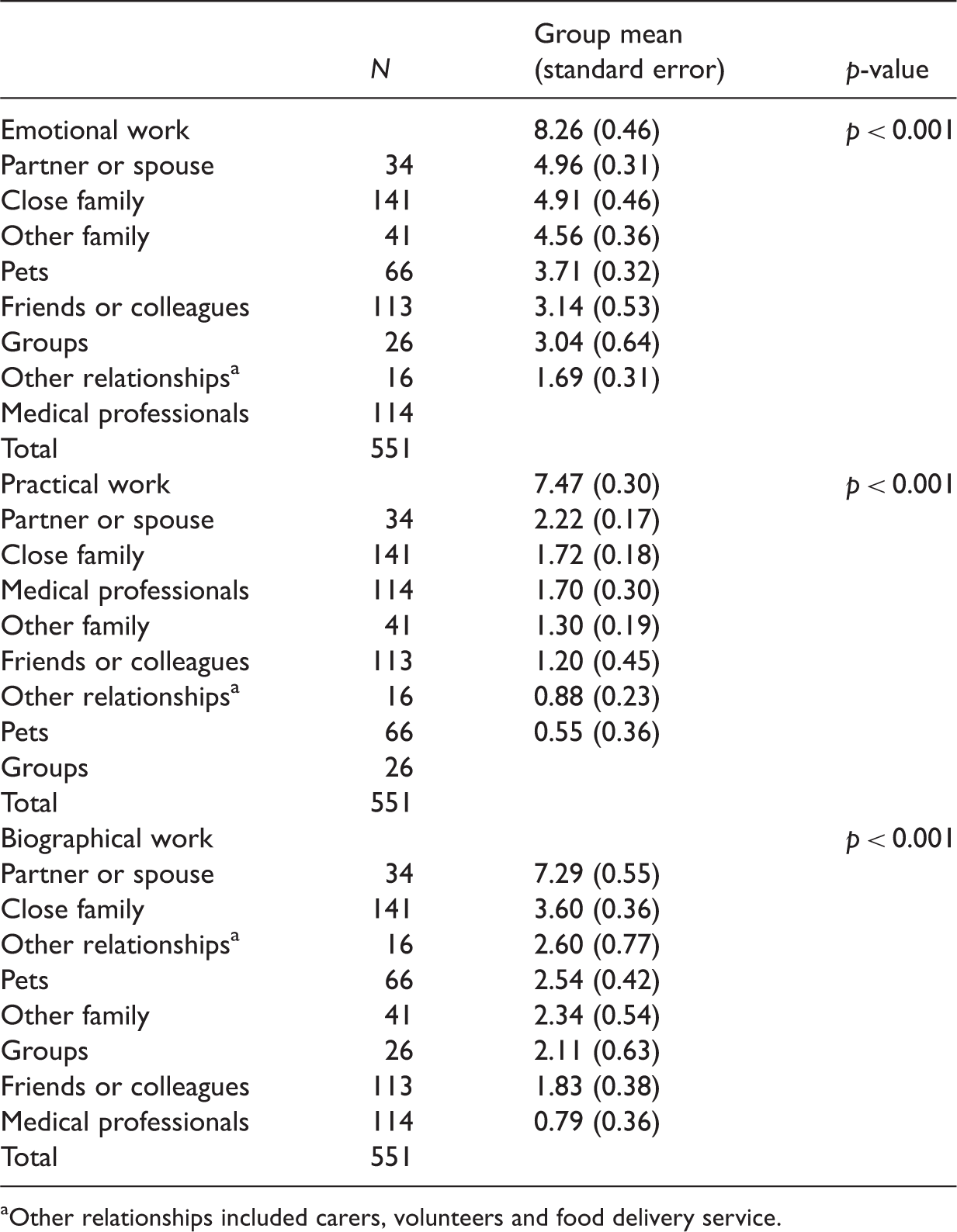
Other relationships included carers, volunteers and food delivery service.
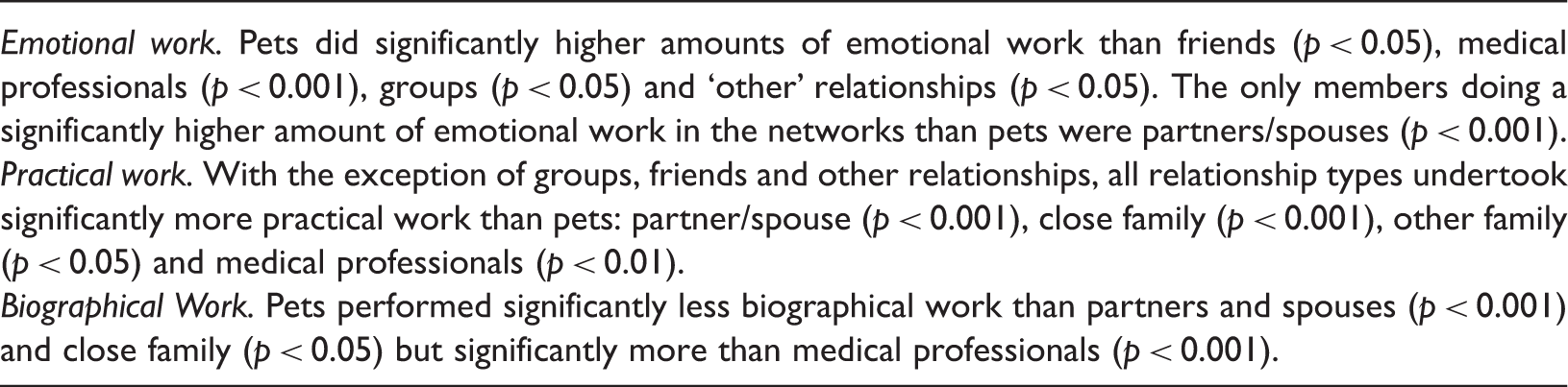
Results from multivariate linear regression
Qualitative findings
We identified several themes related to the nature of pets within social networks and work which were considered in the context of narratives about human relationships: pets, relationships and relatedness, the nature of the work undertaken by pets and pets as mediators of social relationships.
Pets, relationships and relatedness
Pets that were included in networks were often talked about anthropomorphically (‘my little baby’). However, despite linguistic attributions likening pets to humans, pet relationships were neither the same nor solely a substitution for human relationships. Pets offered a distinctive role that of a constant and reliable source of support and companionship out-with the norms associated with human to human contact: She’s me best friend… she’s with me all the time. What do you get out of having her? Just comfort really. She’s lovely. I mean she plays, she wants to play, she comes and tells me she wants to play, things like that. She’s company as much as anything.
The main perceived differences between pet based and other relationships were evident in descriptions of reciprocity. In chronic illness, as in other situations, there are moral dimensions to how people negotiate the boundaries of their relationships.
32
Whilst reciprocity was abundantly apparent within human–human relationships, participants reported being conscious of being unable to ‘pay back’ the help they received from others in the same way as they had in the past. In this sense, it was apparent there were feelings of being a burden on family members and friends as a result of chronic illness and consequently of guilt and shame interfering with a sense of reciprocity. The vicissitudes of suffering from a long-term condition seemed to allow for a more easily negotiated equilibrium in the dependence–independence balance when pets rather than close relatives were involved: It’s a companion, walking, when you come in from work, I am married. The dog’s there, welcomes you, makes you feel good, rather that than walking into an empty house. And do you talk to your dog? Yeah Yeah. And how does that make you feel? Does that make you feel better? Oh yeah. Yeah. I just talk to her like you talk to a human being. I just walk in, say ‘everything ok, alright?’ and she barks, she must understand me (laughs).
Participants often talked about their reluctance to ask for help from others, especially their children because of a seeming inappropriateness linked to an apparent desire to preserve normalised, pre-illness identities within families (e.g. being a grandparent). This normative preservation was sometimes threatened by the debilitating effects of long-term illness, which led to family members taking autonomous action and overstepping established boundaries. This resulted in participants rethinking their own identities and trying to maintain a level of independence: Yeah. And do you think they’re both… they’re all very important in terms of supporting… Oh they’re very good. Oh yeah. Definitely. Definitely. I went away and when I come back they’d redecorated for me. I’ve only got to pick the phone up and say I want something, or if I go out and I’m at the shops they phone, ‘well why are you at the shops, why haven’t you told us, we’ll take’… I said ‘no, I’ve got to have a bit of independence’. Sometimes they overpower you but I can’t tell them that because they’re so good. Yeah. I try to sneak out now and again. They don’t like me doing it, but I’ve got to have a bit of independence.
The preservation of reciprocating adequately and a lack of burden were apparent in descriptions of the pet/owner dyads. It was apparent that participants would sometimes infantilise their pets restoring a perceived sense of equality based on performing needed functions, which may have been lost in other close relationships. This was most evident in the feeding, grooming and exercising of animals: She’s better looked after than the queen’s cat if she had one… … I’ve got to go to Asda for turkey for her. (wife of I1): She’ll only have the turkey from Asda delicatessen! Oh, she won’t have the fresh stuff, you know what I mean, the cheap stuff? She only has the best stuff… She has her Bob Martins every day if I can get it down her doesn’t she and I give her a grooming. Every day. I groom everything, so you better be careful here; I might get my comb out in a bit!
Types of illness work undertaken by pets
This section elaborates on the types of long-term condition work that pets are identified in (Table 4). The long-term illness work undertaken by pets is inextricably linked to the nature of the relationship discussed in the last section but involves other elements. Table 7 shows that pets are most implicated in emotional work. Emotional work
The nature of emotional work undertaken by pets was most salient in accounts when the help of humans was viewed as absent or viewed negatively. Mostly, human relationships in networks were perceived as supportive but intimacy in close relationships could have negative connotations. At times, partners or family members in attempting to provide support did so unsuccessfully or were perceived to be ‘nagging’. This was experienced as stressful and as potentially having a detrimental effect on an individual's ability to cope: I was in so much pain like you know with all the problems I had I said I think I’d better… I can’t be involved because she was… ringing me every minute you know and I said it’s more of a hindrance than a help to have somebody worrying about you when I’m trying to deal with my own problems. She was causing me problems rather than helping me and I decided I, I had to finish the relationship because I said it’s not helpful.
Pets as a source of emotional support minus the nagging, together with the specific attributes of pets as soothing, relaxing and calming to their owners and others, demarcated the support they provided: What is it that they do that’s different from people? I dunno. I’d sooner have them than people. They’re er, they are what they are you know? You see what you get. You get what you see. I mean the cat, I’ve only got to stroke her and that chills me out no end. I mean she’s sat at the side of me now…. … I think they soothe you a lot, me. You know just to stroke her and being with her. I don’t know if it’s the purring of the cat or whatever, I always feel relaxed when she’s near me. I’m stroking her as I’m talking to you (laughs). But they are relaxing, I think they are anyway.
Practical work
Given that practical work covered a plethora of tasks (from shopping and cooking through to measuring blood glucose levels), pets de facto were not able to contribute in the same way as humans. Thus, in this respect, it was not surprising that pets were reported as less helpful than others (Table 7). However, there were elements of practical work (e.g. body ‘work’ – specifically detection) where pets were implicated. For example, participants often cited that pets could sense when they were feeling physically unwell and acted accordingly: Well, an instance a few months ago I had an angina attack while I was out with the dog. And I started to have what I thought was a heart attack and she stopped and sat down and she wouldn’t move. And then I went alright and she started walking again. It came back again and she stopped again and then she wouldn’t move so I had to sit down. I sat there for about 25 minutes and the pain went and she got up and turned round and started to walk back to the house. I didn’t tell her which way to go but she turned round and started to walk back to the house. So do you think that’s…? A sixth sense…? She knows… If there’s something wrong they know.
The perceived ability of pets to recognise when their owners were unwell extended to mental wellbeing: And do you find them [cats] helpful? Oh yeah. One not, because one we can’t cuddle, but the other one will sit on your knee and loves to be stroked and purrs. But the other cat is… they were both strays actually when we got them. And I think sometimes one of the cats knows when I’m a… when any of us are a bit down it comes and gives that extra look at you and rubs its leg on your foot and that.
Pets played a role in everyday practical work through their impact on exercise. This was mainly for dog owners engaged in dog walking but having a routine of getting up and having to feed a pet was important for some. Having to take dogs for walks meant that exercise was embedded in participants’ daily routines and easier to maintain than without a pet. Exercise was seen as mutually beneficial to both pet and owner: What about if you needed help with exercise who would you go to? :I wouldn’t go to, I mean I walk the dog, I mean that’s like 3 miles a day […] Yeah, yeah ‘cos I wouldn’t be walking three miles without the dog (laughs). […] I mean yeah without the dog the exercise would be probably drastically cut.
Some dog owners reported a sense of security, which was important for those who felt most vulnerable as a result of long-term illness. Dogs made their owners feel protected by deterring strangers in areas which were blighted by crime. For example, one participant with hearing difficulties had a dog that let her know if there was someone at the door: …it was a good house dog, it would bark at the least noise. It'd hear things, well, it can hear things that you can't. I didn't ask you, why did you decide to get a pet, was it in order to… Well, to guard the property, a bit of company. And it was well trained, it could hear a pin drop out there and it'd be up at the door […] You could hold it in your hand, so it was quite upsetting when it got stolen. It was only out there a few minutes […] But these people, well, it's a bad world, they actually steal, well, they steal anything that's not nailed down. Unfortunately it had to be my dog.
Biographical work
Biographical work refers to the actions taken to retain control over the life course and to give life meaning again. Pets were identified as important here albeit to a lesser extent than other human network members. Participants talked about pets as something that they had ‘always had’ or described themselves as ‘animal lovers’, which to some extent impacted on a sense of continuity that was pervasive despite the diagnosis and effects of long-term illness: And what’s it like having Bobby around? Oh, he’s lovely. It was the best thing I ever did. My husband died 13 and half years ago and I’ve always loved animals. In fact I’ve just been writing four cheques out to send to the [pet] charities and I do send them periodically. I don’t have a monthly one because of course I’m a pensioner and I’ve got to watch me pennies but I love animals of any description.
The strength of pets as mediators of social relationships
It appeared from the qualitative analysis that pets had positive mediation effects on social interactions and relationships. This was not limited to close personal relationships but extended to ties with acquaintances and the local community. Pets provided opportunities for their owners to forge new relationships. Mediation appeared to be most salient for more vulnerable and isolated participants: I: If it weren’t for him, [Spencer the dog] I would stay inside most of the time.
Pets performed a role in the maintenance and enhancement of existing relationships by increasing the frequency of social contact. For example, one divorced participant saw his ex-wife regularly and attributed this sustained connectedness to his cat. She visited often to see the cat and, in this way, maintained social contact with her former husband.
Social interactions between family members increased when members of the wider family looked after pets whilst they were away. Not only did this assist in enhancing social contact with friends and family (e.g. the contact with family members prior to going away and subsequent visits to see the pet because of the relationship formed whilst they were in their care) but also it supported the owners financially because the pets did not need to go into expensive kennels or catteries. Benefits were also evident for those without pets of their own but who looked after pets for friends and family members. For example, one individual looked after several dogs in the community but did not have a dog of his own: Don’t see a lot of Blue [local dog], but as soon as he comes out for a walk he comes visiting me! So I get on with animals better than I do people… (wife of I1): I don’t like dogs, I’m not a dog person, so we’ve never owned a dog ourselves but he looks after everybody else’s dogs.
Pets connected their owners to resources by acting as ‘go-betweens’ facilitating interactions with ‘familiar strangers’
33
or casual social acquaintances such as shop owners or dog walkers. For example, one participant owned hunting dogs, which allowed him to interact with other people at his local hunting club: We’ve made more friends walking the dog. And we might not know their names or know where they live but we talk to… people tend to talk to you don’t they and it does make a difference having him really.
Weak ties are relationships whose value lies in their greater numbers rather than their intensity. Their ‘strength’ lies in the capacity for efficient access and transmission of information and resources between people.
22
Whilst weak ties and their impact on wellbeing was evident in the narratives of those without pets, it appeared most evident in those with them. Dogs in particular had the potential to increase pet owners’ sociability with the wider community. Having to leave the house daily meant that dog owners were exposed to community-orientated circumstances, increasing the potential to forge new relationships and enhancing a habitual continuation of connectedness with the local community. One participant talked about keeping up to date with the progress of the re-building of the local church through conversation with builders working on the site as a result of walking his dog in that area on a daily basis. Another described his daughter taking her dog into nursing homes to meet the residents: Well I tell you something, me eldest stepdaughter, our Julie, her dog, Scooby who’s the father to the pups here, she actually took him on a course, a training course and she passed. And it was, I forgot what they call it now, pet something and she used to take him the old folks’ home for old people to stroke and that helps people, you know?
Discussion
The data presented in this article demonstrate the relevance of exploring the overlapping and distinct work of pets within social networks and relationships associated with long-term illness management. Adopting a social network approach in conjunction with an ‘illness work’ framework allowed participants to self-select those relationships which were important to them, and pinpoint what specific role network members played in each type of work. It was apparent that pets played significant and specific roles within LTCM. With regard to the type of illness work undertaken, pets were implicated mostly in emotional work with smaller contributions made to practical and biographical work. Pets were highly valued by owners because they provided a form of unconditional support and companionship that was not always forthcoming in human to human relationships. The input undertaken by pets was not seen as being subjected to rationing, nor did it need to be reciprocated. The ‘moral’ baggage involved in attempting to negotiate an acceptable dependence–independence balance also appeared to be less salient compared to when people were involved. Relationships with pets were neither the same nor solely substitutions for human relationships but differed in relation to choice, complexity and perceived levels of reciprocity and burden.
The ability to choose pets in accordance with the limitations imposed on a person by their condition(s) offered a sense of mastery and control (resonating with self-efficacy). Importantly, with pets participants also had the ability to fashion the relationship in ways not possible in dyadic human relationships.
Reciprocity in close relationships and its influence on wellbeing and coping is well documented. 34 –36 However, as in other research, participants reported concerns about being, or becoming, a burden on others (including close family members). The latter was less notable in their narratives about pets with the downside of close intimate and proximate human–human relationships in long-term illness less obvious. In this respect, connecting with pets appeared to invoke positive comparisons, which reinforced a sense of moral worth, 37 reaffirming positive identities as pet owners with added benefits for managing a chronic illness through counteracting some of the more fragile aspects of a long-term illness identity. Being with a pet provided a sense of purpose and value, which was free of the potential guilt, disruption and burden posed when accepting or initiating support from family members. Pets appeared to enhance and mediate existing relationships as well as establishing new ones. Our data (presented under the last theme) suggested that the presence of pets tended to reinforce existing and intimate relationships facilitating social interactions broadly in a way, which resonated with the notion of the strength of weak ties 22 in enhancing social capital and the role of acquaintances 38 and familiar strangers 33 (where relationships are more ‘passing’ or ‘fleeting’). The type of weak ties that pets seemed to foster had affinity with developing and sustaining a sense of familiarity and embeddedness within a locality and accessing people, places and resources. Finally, the policy implications of this study suggest that pets might usefully feature alongside consideration of the usual support systems associated with the management of long-term conditions and in planning how needs might be more usefully and creatively met by policy makers.
Footnotes
Acknowledgements
This research was funded by the Collaboration for Leadership in Applied Health Research and Care (CLAHRC) for Greater Manchester. CLAHRC Greater Manchester is a partnership between the Greater Manchester NHS Trusts and the University of Manchester and is part of the National Institute for Health Research. The authors are members of the Patient Theme of CLAHRC for Greater Manchester.
Funding
This research has been funded by the Collaboration for Leadership in Applied Health Research and Care (CLAHRC) for Greater Manchester. CLAHRC Greater Manchester is a partnership between the Greater Manchester NHS Trusts and the University of Manchester and is part of the National Institute for Health Research. The authors are members of the Patient Theme of CLAHRC for Greater Manchester.