




Abstract
Ultrasound image degradation originates primarily from transducer defects and potentially undermines reliable image interpretation. Systematic quantitative quality control is often neglected due to the limited resources available for this task. We propose a quantitative quality control based on in-air reverberation images. These images serve as an initial indication of image degradation. They are easily generated for any (curvi-)linear transducer independent of the level of expertise of the operator. Automated analysis is presented to extract quality parameters based on the in-air reverberation pattern. Static images acquired by the clinical user are transferred to a server where analysis is performed. The results are available to the sonographer prior to clinical use and transducer status can be remotely monitored with trend analysis over time. The method was evaluated for normal functioning and defect transducers. A pilot study was performed over a period of three weeks to assess reproducibility and practical feasibility. All reverberation images were successfully analysed for different transducer types and vendor-specific image presentation. The proposed quality parameters are sensitive to signal loss and allow differentiation of type and severity of image degradation. The pilot study was well received by the sonographers for the simplicity of the method and the measurements were consistent over time. The proposed automated analysis method of ultrasound quality control can monitor (curvi-)linear transducer status in the entire hospital, overcoming previous limitations for periodic quality control. Implementation of the method can reduce the number of defective transducers routinely used in clinical practice.
Introduction
Transducer defects are the main cause of image degradation in clinical ultrasound. As few as two consecutive malfunctioning elements can impact the imaging profile and the loss of four or more elements can significantly reduce resolution and penetration with reliable image interpretation at risk. 1 Previous studies have shown that in the range of 30–40% of transduces in daily use suffer from a transducer error, with the most common error delamination and cable break, followed by the less frequent occurrence of piezoelectric element failure.2,3 On average transducer failure rates exceeds 10% annually 4 and at least a quarterly assessment of all transducer status is suggested. 4
Quantitative conventional quality control of ultrasound involves a dedicated phantom and the measurements require proficiency.5–7 Certain tests can be automated,8,9 yet still necessitate the dedicated effort of a ultrasound technician to obtain the appropriate phantom images. Since an average hospital is equipped with numerous ultrasound systems, each equipped with multiple transducers, systematic quantitative quality control is often neglected due to the limited resources available for such an extensive task. Ad hoc observations of transducer failure by the clinical user prompt follow-up quantitative measurements. Quality of clinical diagnosis is at risk once transducer failure is unnoticed or visual assessment underestimates the severity. Without structural quantitative measurements, any form of trend analysis of transducer degradation is impossible.
We propose an automated analysis approach of quantitative quality control based on the reverberation image with the transducer operated in-air to overcome these difficulties. This image consists of a series of consecutive lines which are generated by internal reflections of ultrasound due to the large acoustic impedance mismatch between the front face of the transducer and air. This image can be generated independent of the level of expertise of the operator for any (curvi-)linear transducer by simply activating the ultrasound system. Visual inspection of the in-air reverberation image is a standard qualitative routine assessment of scanner performance regarding uniformity and sensitivity as recommended by the Institute of Physics and Engineering in Medicine. 10 It has been shown that agreement exists between the quantitative analysis of in-air reverberation patterns and individual crystal sensitivity measurements regarded as the gold standard of transducer status.11,12
A systematic approach is depicted in this study to automate the quantitative analysis of this reverberation pattern, independent of ultrasound vendor. Single value quality parameters are derived, indicating the sensitivity and the uniformity of the transducer. Digital Imaging and Communications in Medicine (DICOM) images of the reverberation pattern are sent for analysis to a dedicated image analysis server directly after acquisition, with quality control results instantly available to the clinical user and the ultrasound service engineer through a web interface. Proof of principle of the technique is demonstrated based on data obtained from a series of transducers. A pilot study at the department of Obstetrics and Gynaecology at the Vrije Universiteit (VU) University Medical Center serves as validation of quality parameters reproducibility and assessment of practical feasibility. The presented novel approach resolves the current limitations of conventional periodic quality control and enables hospital wide status monitoring of ultrasound systems.
Methods
Image acquisition
The in-air reverberation images can be obtained with the transducer in the holder on most systems. The ultrasound pre-set selected at the system has to match only two simple criteria. First, there should preferably be no saturation of image intensity in the reverberation bands, thus the gain should be set such to obtain sufficient signal and penetration. Second, a pre-set should not have any overlap of image annotation with the ultrasound data. In practice, most standard clinical pre-sets match these criteria. If possible, it is recommended to create a separate quality control pre-set on each system for every available transducer. Such a pre-set can be configured with minimal post-processing and maximum visibility of the reverberation pattern for single element failure by selecting appropriate focus, depth, and gain settings. Finally, for subsequent data gathering of one transducer the same protocol should be applied every time, this requires a time–gain–compensation (TGC) reset on most systems. The transducer surface should be clean of any ultrasonic gel remnants prior to imaging. The imaging protocol can be extended to apply a standardised form of manual moving and rotating the transducer to evoke possible intermittent failures due to cable breaks or crystal contact issues before image acquisition.
Automated image analysis
The reverberation images are analysed without manual intervention. Characteristic to ultrasound DICOM files are the annotations within the image which may interfere with the image analysis, as shown in Figure 1(a). The first step of the analysis is the data field segmentation and extraction from the surrounding annotations. Segmentation is performed based on a connected component analysis of the image.
13
The largest centre component is identified as the data field (Figure 1(b)). The second step of the analysis is to represent the ultrasound data of all transducers in a rectangular data field, which requires a resampling of the data for curvilinear transducers. Parameters of a line fit to the upper boundary of the data field determine whether a linear or curvilinear transducer was applied. In case of a curvilinear transducer, the data are transformed by bi-cubic interpolation into a rectangular format using the fit parameters (Figure 1(c)). This similar data structure for both linear and curvilinear transducers serves as precursor for further image analysis.
(a) Example of an ultrasound image of the reverberation pattern as acquired with the GE Voluson E8 IC5-9-D transducer with the Penetration/OB protocol, (b) extracted curvilinear data field after segmentation with connected component analysis and (c) transformed data field to rectangular matrix as preprocessing step to data analysis.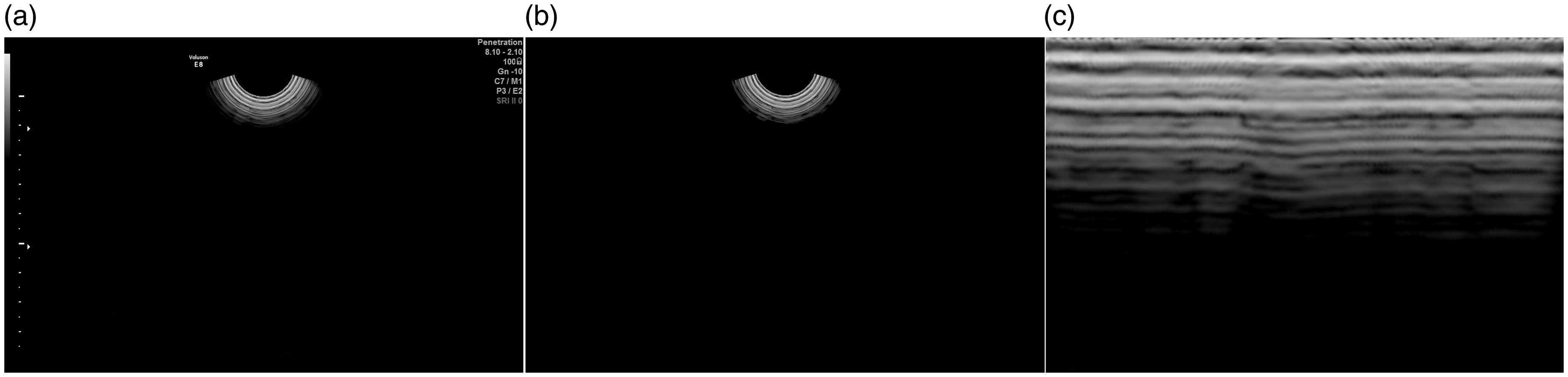
The subsequent data field is analysed for signal uniformity and transducer sensitivity. Two intensity profiles are derived: a horizontal intensity profile along the piezoelectric element array of the transducer and a vertical intensity profile along the image signal depth. The vertical intensity profile is constructed of sequential median values of all horizontal image line intensity distributions (see Figure 2). The median values are chosen because of robustness to image degradation. A transducer sensitivity parameter
Illustration of the horizontal and vertical intensity profile determination of the ultrasound data field for image analysis. The vertical intensity profile is composed of the median values of all sequential horizontal image lines intensity distributions. The vertical position of the intersection of the intensity profile with the noise level is a parameter of transducer sensitivity. The horizontal intensity profile is derived from the mean intensity values of the vertical image lines within a fixed ROI (indicated in yellow). The horizontal intensity profile is indicative of the uniformity of the transducer image and a set of statistical parameters is derived from the intensity profile. Regional analysis within segments of the intensity profile, as shown by the dotted white lines, allows for demarcation and classification of image defects based on a combination of severity and position. ROI: region of interest.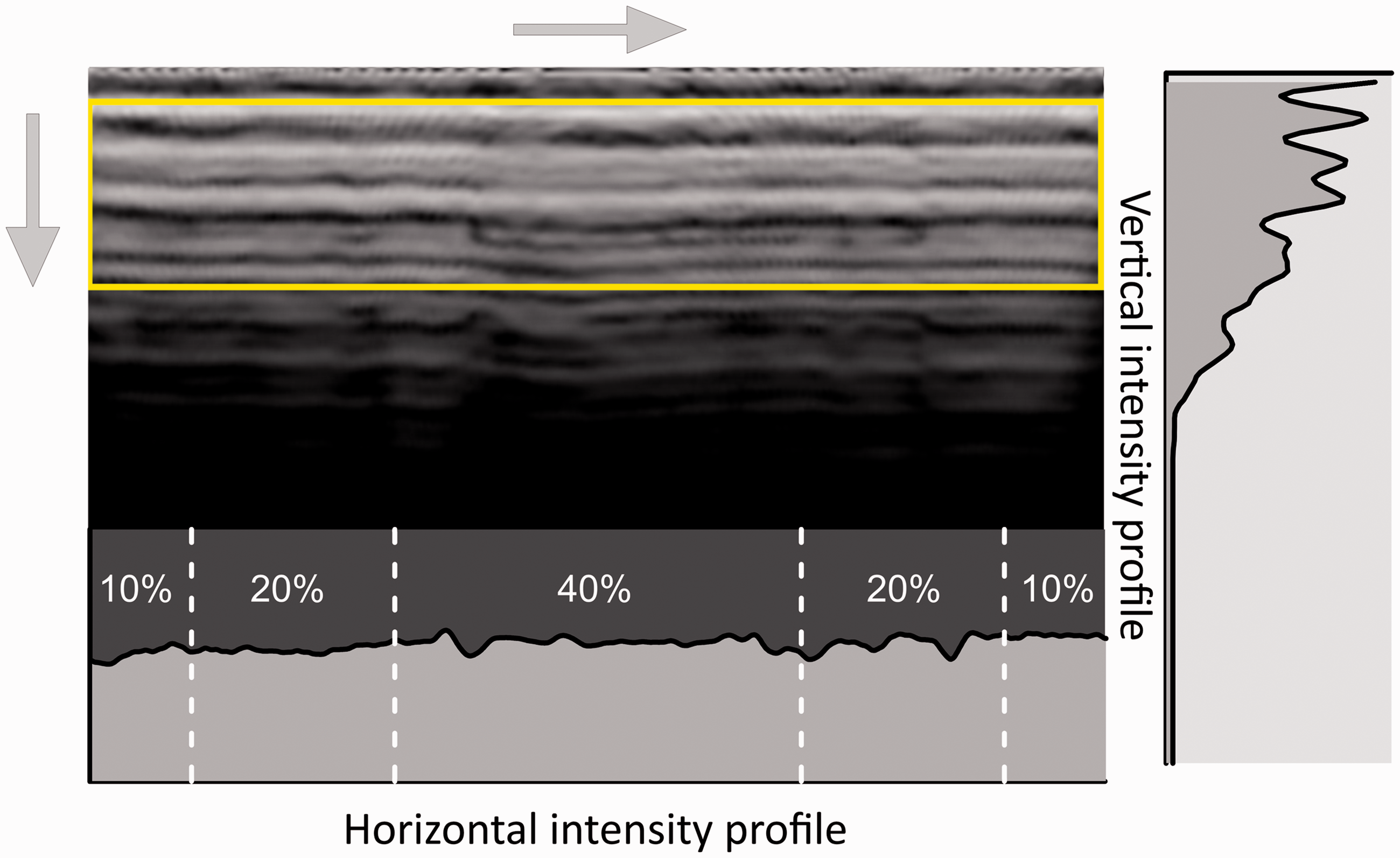
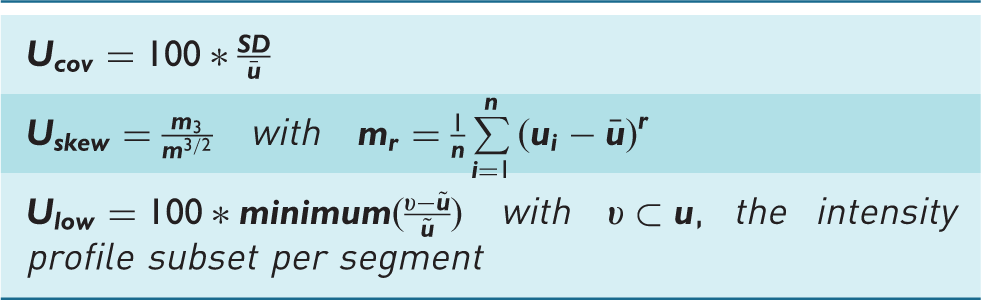
Uniformity parameters as assessed from the horizontal intensity profile
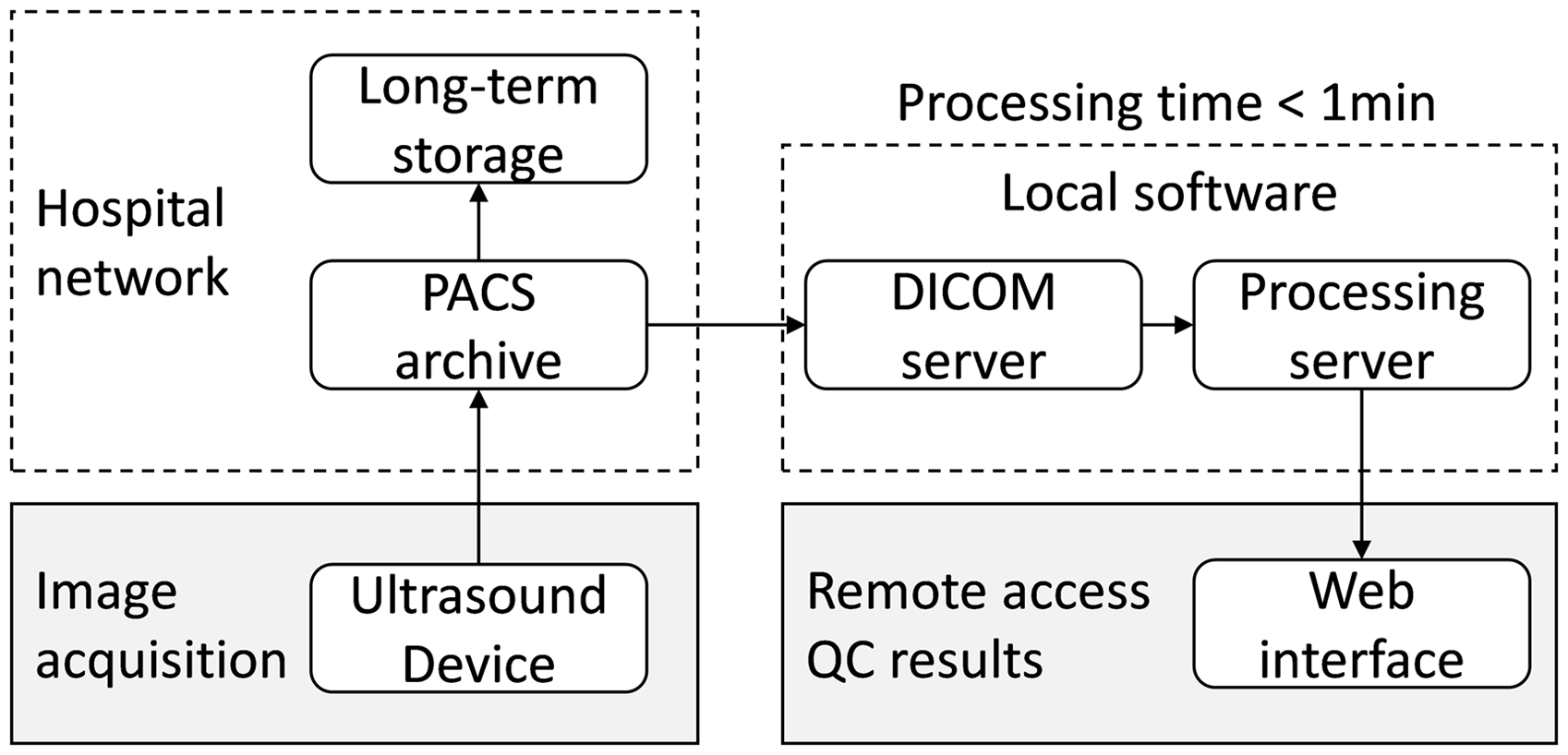
Overview of the QC data transfer. After image acquisition at the ultrasound device, the QC data are transferred to the clinical PACS. The system then forwards the images to a long-term storage and to the image analysis server. Results after processing are remotely available through a web interface. PACS: Picture Archiving and Communication System; QC: quality control.
General reduction in uniformity due to noise and signal loss is determined as an increase in the coefficient of variation of u,
QC data routing and image analysis server
All image acquisitions are made under a quality assurance (QA) patient name. The images are automatically sent to the hospital Picture Archiving and Communication System (PACS) after acquisition as part of the standard clinical workflow. The PACS is configured to select the QC images based on a prefix in QA patient name. An auto-forwarding rule assures that the QC images are sent to both a long-term storage archive and to the image analysis server (see Figure 3). Alternatively, the images can be sent directly to the image analysis server if it is added as PACS node to the modality.
The automatic image analysis server is installed locally, consisting of a DICOM server and a processing server for multimodality QC tasks. i The DICOM server receives and stores the QC images, the processing server periodically checks for newly received QC images and processes them accordingly. Dedicated image analysis modules can be integrated into the processing server designed for different QC tasks. The processing server selects QC images based on DICOM header information and executes the corresponding image analysis module, with specific configuration settings and suspension levels. The QC results of the analysis are available through a remotely accessible web interface.
A dedicated ultrasound module is created in Python (Python Software Foundation. Python Language Reference, version 2.7. http://www.python.org). It is configured to receive and process QC data from ultrasound machines. Differentiation of transducer type for GE systems is obtained by optical character recognition of the transducer type from the DICOM images, as the transducer type information is absent in the GE DICOM header. The entire processing after acquisition is automated and the status of the transducers can be reviewed by the clinical user on the web interface within 1 minute after sending the DICOM images, thus before initiating patient exams (see Figure 4). It is upon the clinical user to make a final decision whether it is medically justified to use a failing transducer for the clinical task. Additionally, the service engineer and physicist can also monitor the transducer status and if a suspension level is exceeded, perform an on-site inspection of the transducer.
Example of the web interface for quality control monitoring. The clinical user can directly inspect the status of each transducer available at the ultrasound system after acquiring the reverberation images. The data are presented separate for each examination room and transducer, in this particular example the data are shown for a RAB4-8-D GE Voluson E8 transducer. The quality parameters are displayed together with two suspension levels which can be set for each transducer/protocol combination. If a suspension level is exceeded the measured value is highlighted; yellow for first level and red for second level. The above presented suspension levels are indicative and definitive values need to be determined in a follow-up study. The original interface is in Dutch and is translated in this example.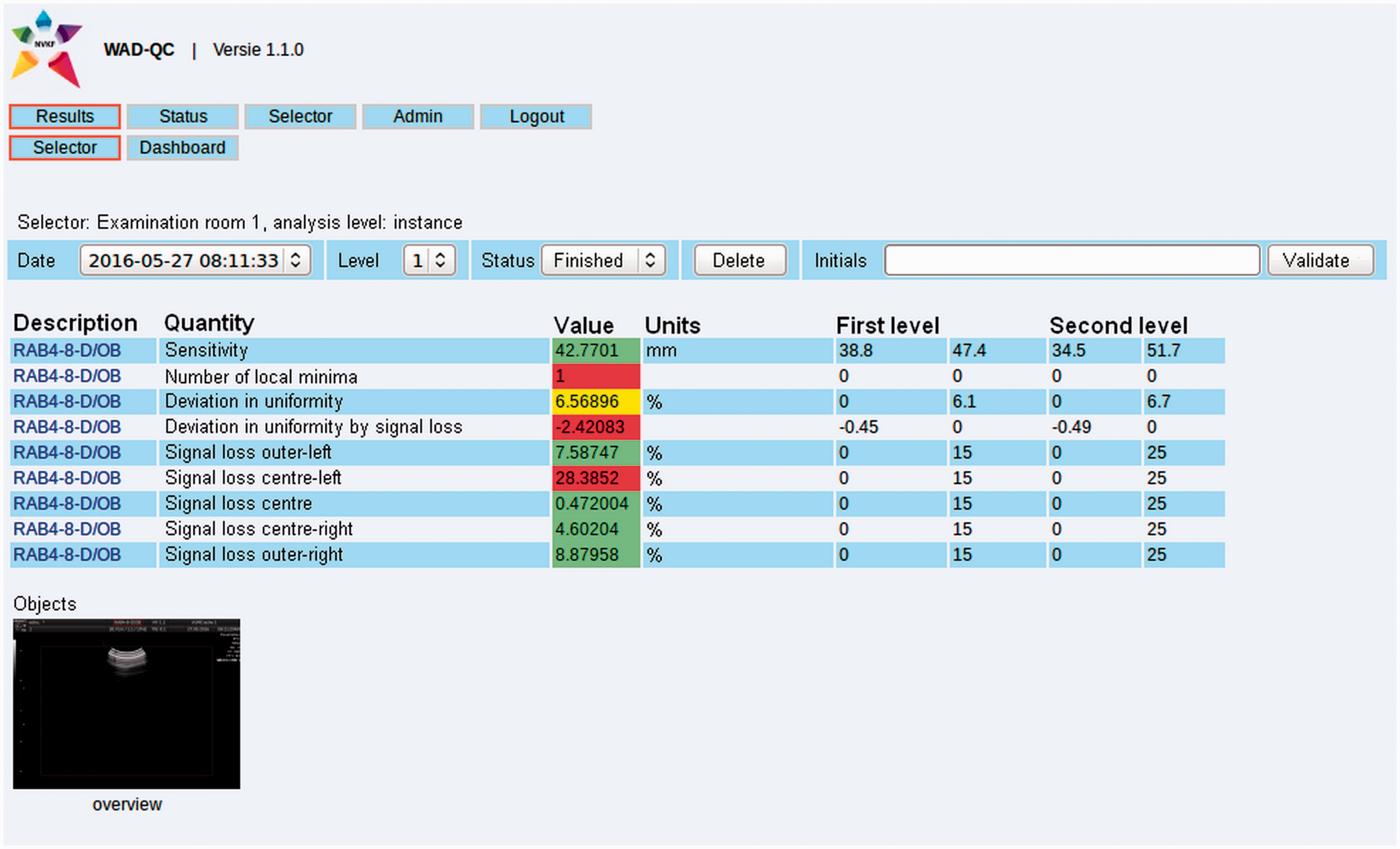
Data acquisition and feasibility testing
Reverberation data from eight different ultrasound systems were analysed to evaluate the method. This included data from the following systems: GE Voluson E8 and GE Voluson E6 (GE Healthcare, Chicago, United States), Esaote Mylab 15 (PIE Medical Benelux B.V., Maastricht, Netherlands), Aloka Alpha 7 and Aloka Alpha 10 (Hitachi Medical Systems Europe, Zug, Switzerland), Philips EPIQ 5G (Philips Medical Systems International B.V., Best, Netherlands), Toshiba Aplio 500 (Toshiba Medical Systems Europe, Zoetermeer, Netherlands), and Samsung H60 (Samsung Medison, Seoul, South Korea). This resulted into a total of 21 reverberation images from various transducers. The dataset contained normally functioning transducers currently in use as well as defective transducers rejected from clinical use.
A daily QC programme was conducted to assess the reproducibility in output parameters within a time frame where image degradation due to normal usage is unlikely. Additionally, the pilot study indicates the practical feasibility of the technique and workflow. Reverberation images were acquired at the Department of Obstetrics and Gynaecology at the VU University Medical Center. The sonographers were instructed to obtain reverberation images at the start of every working day for the duration of three weeks. The ultrasound system used was a GE Voluson E8 equipped with two ultrasound transducers: a RAB4-8-D 2-8 MHz 3D/4D wideband curved linear array transducer and a IC5-9-D 4-9 MHz endocavity wideband microconvex transducer. The RAB4-8-D transducer was used in 2D mode to acquire the reverberation images. The already available clinical pre-set Penetration/OB was chosen to obtain the data. All TGC sliders were set to centre position during acquisition. The pilot study was performed without using the web interface of the analysis server for the sonographers as at this stage no suspension levels were determined yet.
Results
Multivendor reverberation data
All of the 21 transducer images were successfully analysed with specific configuration settings depending on the vendor, pre-set and transducer type. Particularly the choice in offset and depth of the ROI for the uniformity analysis proved to be most diverse. The analysis of the quality parameters for three normally functioning transducers in clinical use from a Toshiba Aplio 500 system and a GE Voluson E8 system is presented in Figure 5. For comparison, transducers from an Aloka Alpha 7 system showing defects resulting in various degrees of signal loss are presented in Figure 6. The value of Quality parameters determined for three transducers: (a) 11L5 Toshiba Aplio transducer, (b) 6C1 Toshiba Aplio transducer and (c) IC5-9-D GE Voluson E8 transducer. The graphs correspond to the transducer images. Overall the transducers show no apparent signal loss as is reflected by the results. Only transducer (b) shows minor loss of image signal at the centre segment which translated into a higher Quality parameters determined for three defective transducers: (a) convex Aloka Alpha 7 transducer, (b) micro-convex Aloka Alpha 7 transducer and (c) linear Aloka Alpha 7 transducer. The graphs correspond to the transducer images. The quality parameters with regard to uniformity 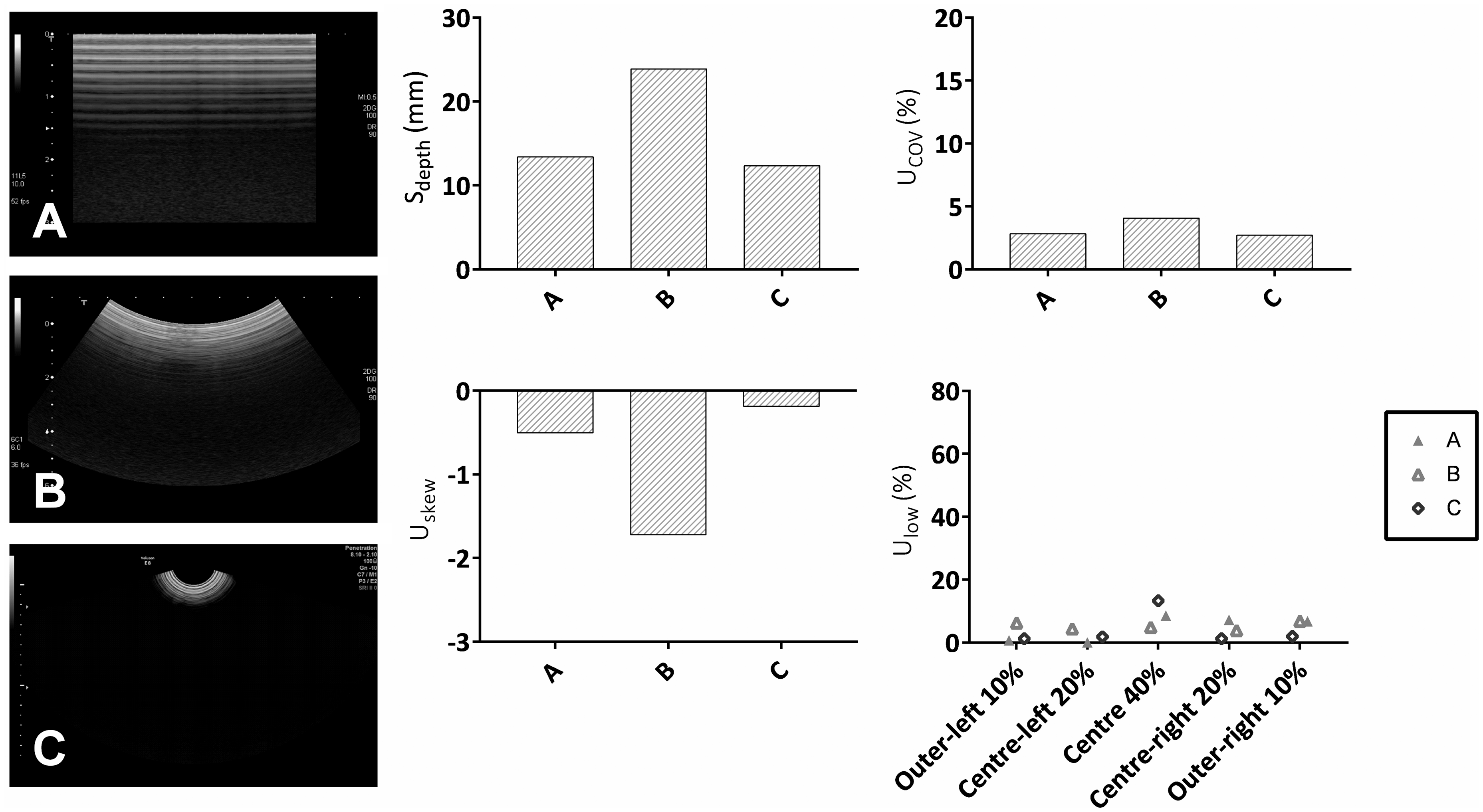
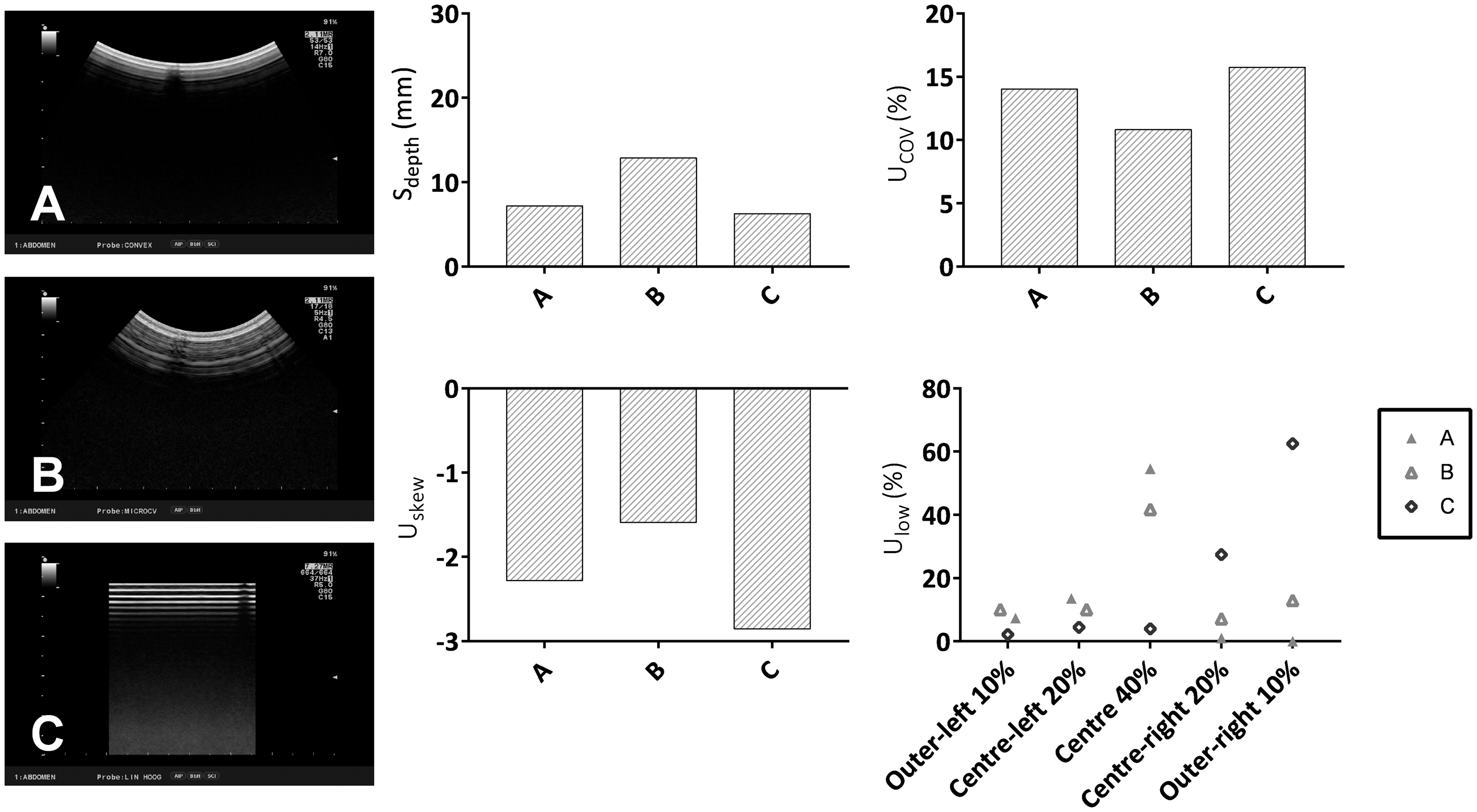
The increase of
The defect in the micro-convex Aloka Alpha 7 transducer shown in Figure 6(b) is diffuse with a relatively larger difference in
Pilot study
A combined total of 30 reverberation images were acquired during the three-week pilot study at the GE Voluson E8 ultrasound system for the RAB4-8-D transducer and the IC5-9-D transducer. All data were successfully processed by the implementation of our proposed method. Two situations were recognised during the practical implementation. An off centre defect was present in the RAB4-8-D transducer during the QC pilot programme. It was decided by the sonographers to continue using the transducer until it was exchanged by the vendor. This was scheduled some time after the pilot study and an evaluation report was generated by the vendor based on individual crystal sensitivity measurements. Comparison of the crystal sensitivity data and the reverberation analysis is included in the study. The Penetration/GYN pre-set as opposed to the Penetration/OB pre-set was unintentionally used by the sonographers for six out of the 15 reverberation images obtained with the IC5-9-D transducer. Therefore, these data were excluded from the results. Apparently, the imaging protocol had insufficient emphasis on the choice of required pre-set, as there was ambiguity on which of the two available penetration pre-sets on the system were required for imaging. This problem was limited to the pilot study since no feedback of the results was presented to the sonographers yet. Out of these six images, three were acquired with residue of ultrasonic gel on the transducer surface. The influence of the ultrasonic gel residue was apparent in the quality parameters, yet this does not represent the actual transducer status.
Typical reverberation images of the two transducers obtained with the Penetration/OB pre-set are shown in Figure 7 (left panel). The RAB4-8-D transducer showed a defect resulting in signal loss during the pilot study, while the IC5-9-D transducer showed no hardware defects. The quality parameters were automatically extracted and the outcome of the image analysis is shown in Figure 7 (right panel). The Reverberation images obtained with the Penetration/OB protocol from the RAB4-8-D transducer (n = 15) and the IC5-9-D transducer (n = 9) over a period of three weeks. The graphs show the results for the quality parameters for each transducer, shown as median values with range. A clear distinction can be seen in the uniformity parameters between the defective RAB4-8-D transducer and the IC5-9-D transducer.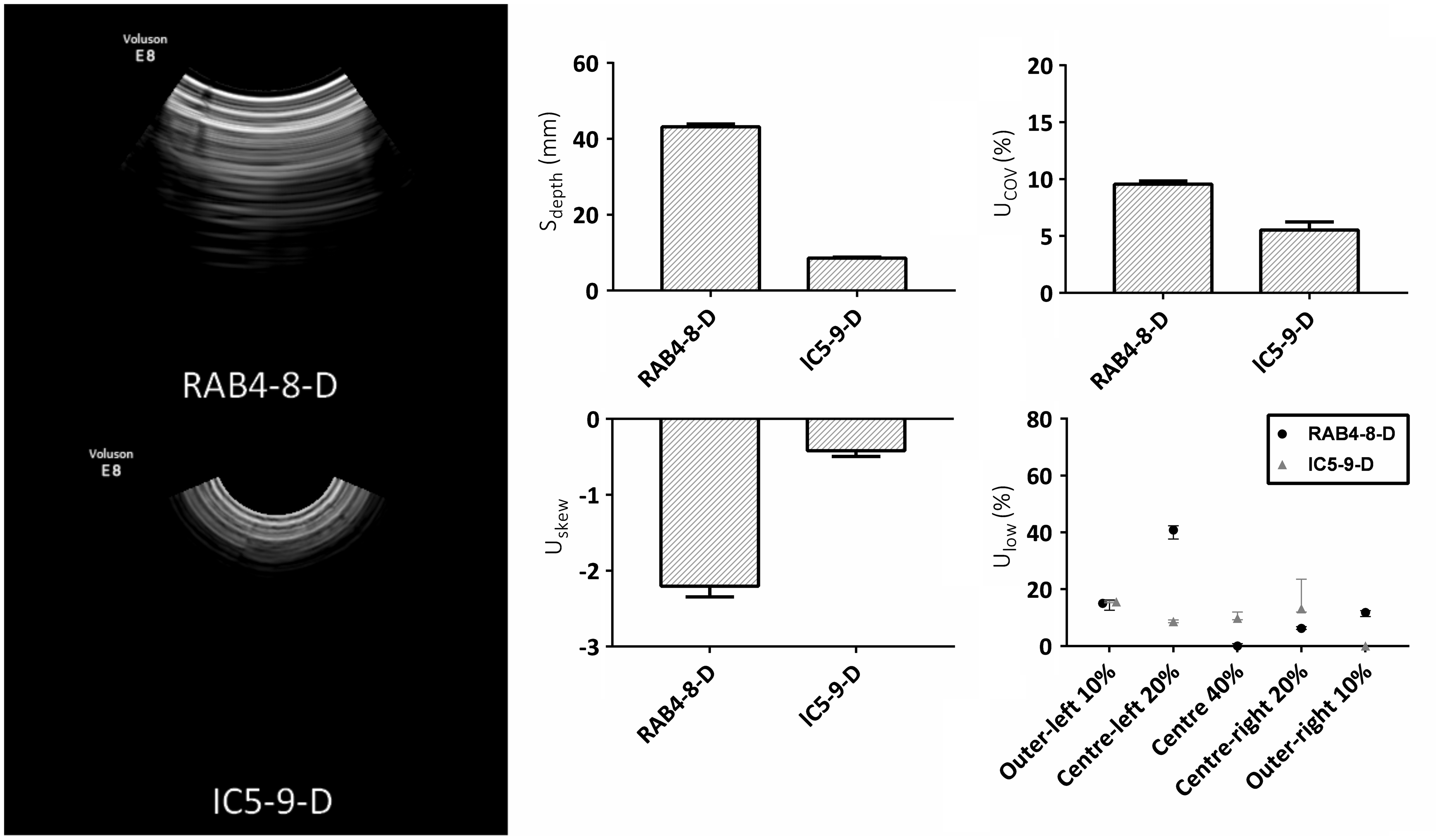
The RAB4-8-D transducer was sent to the manufacturer (GE Healthcare Ultrasound, Hoevelaken, Netherlands) where an individual crystal sensitivity measurement was performed as part of a maintenance report. The results of the measurement are shown in Figure 8. A clear correlation can be appreciated between the horizontal profile u and the individual crystal sensitivity measurement. The two non-consecutive dead elements in the crystal sensitivity data do not translate into signal loss of the reverberation profile.
(Left) Reverberation image of the RAB4-8-D transducer, notice the loss of signal in the left corner. (Upper right) Horizontal intensity profile 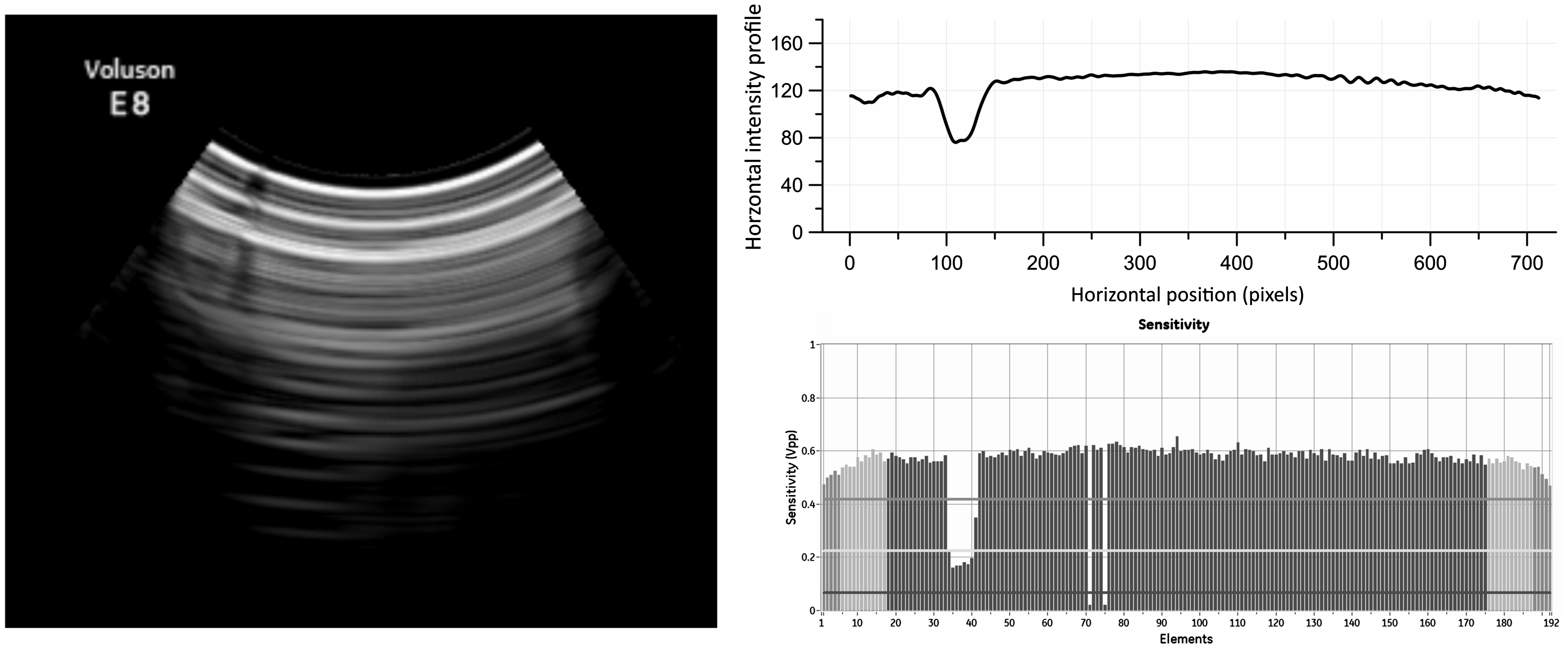
Discussion
An automated analysis method of quality control of ultrasound is presented which permits ultrasound status monitoring of (curvi-)linear transducers. The technique provides a first indication of consistent image degradation and can be easily performed by any sonographer and implemented throughout the hospital. The effort of periodic quality monitoring of ultrasound no longer relies on additional trained personnel and the availability of a dedicated ultrasound QC phantom since the clinical user acquires the QC image. It is reduced to a straightforward acquisition of an in-air image which only requires selection of a preconfigured QC patient and pre-set. The entire QC procedure can be performed in under 2 minutes with the results promptly available to the user. The web interface allows suspension levels to be set, giving the clinical user feedback on transducer performance before engaging patient diagnostics. The service engineer and medical physicist can monitor trends in quality parameters, although gradual degradation is unlikely and most quality loss is expected to be ad hoc. The presented approach facilitates in minimising the response time of the service engineer for more elaborate phantom measurements when transducer failure occurs. Ultimately such QC data can be analysed on a meta-level exposing possible relations in vendor-specific defects or clinical applications susceptible for inducing transducer damage.
The results from the various ultrasound systems demonstrate that the analysis method is robust for different (curvi-)linear transducer types and settings. The proposed quality parameters are sensitive to signal loss and a preliminary differentiation of the type of image degradation is possible. Any pre-set can be chosen to obtain a QC image as long as the reverberation pattern is not saturated and no overlap with image annotation is present. But it is strongly recommended to create a specific quality control pre-set to maximise the visibility of single element failure and to reduce the risk of selecting the wrong pre-set if there is ambiguity in clinical pre-set nomenclature.
The pilot study was well received by the sonographers for the simplicity of the method and the brief time required to obtain the images. The frequency can be lowered to weekly QC for follow-up measurements further reducing impediment on workload. The most important conclusion is that the measurements are consistent over time. The remaining variance between measured values is due to noise, small fluctuations in transducer performance, and presumably an offset from the centre position of the TGC sliders prior to imaging. The latter was acknowledged by the sonographers as a possible explanation. These deviations do not exceed the differences resulting from signal loss.
Limitations
An important limitation of the proposed method is the use of a static image to characterise the image quality of a dynamic system. Problems such as cable break or crystal contact loss can occur as intermittent failures when strain is applied on the electronics of the transducer. This was evident from our analysis of the reverberation images of the RAB4-8-D transducer in the pilot study. The results showed a qualitative resemblance with the crystal measurements from the vendor in accordance with the study by Quinn and Verma. 12 However two non-consecutive dead elements were not visible as signal loss in the reverberation image profile. This is inherent to the mechanism of 3D imaging via steering of the element array in the RAB4-8-D transducer. Elements may fail at different angles due to strain on the internal wiring, which can be measured by the vendor but is not captured by the reverberation pattern. Therefore, caution must be applied when interpreting the reverberation results from a 3D mechanical transducer as the signal loss of the transducer can be underestimated. The imaging protocol can be extended to apply a standardised form of manual moving and rotating of the transducer to evoke possible intermittent failures.
Another limitation is the possible false positive in transducer failure detection. The in-air reverberation pattern can be disturbed without any implication for the clinical image quality. A local detachment of the transducer lens is not relevant when the transducer is applied to the patient skin surface, as are distortions in the oil bath of 3D transducers. Similarly gel remnants may cause interference in the reverberation pattern. It is recommended to include a check for gel remnants prior to imaging in the acquisition protocol. In case of a potential problem after quality control, the sonographer should be instructed as part of the protocol to recheck the transducer.
The proposed method does not permit quality monitoring of phased array transducers. Different quality parameters should be developed to analyse phased array transducers. The suggested sensitivity parameter in this study could possibly be used for a fixed orientation of phased array imaging.
The identification of individual transducers based on DICOM images was impossible for the tested transducers. Transducer type can be extracted but this does not discriminate between different transducers of the same type. The assumption was made that the combination of ultrasound station and transducer type is unique, yet in practise transducers may be exchanged between systems as backup which will interfere with trend analysis. This limitation can be overcome by instructing the clinical user to label the image with a unique transducer ID via image comment or additional patient information in the header. A practical implementation could be to use an abbreviated identification name instead of the extensive factory transducer ID. This would require additional physical labelling of the transducer which can be done at the introduction of new ultrasound systems.
Future work
An important step before large-scale clinical introduction is the determination of suspension levels at which the user should send a transducer for technical evaluation by a service engineer. The choice of suspension levels depends on several factors. The initial outcome of the quality parameters is dependent on transducer type and imaging pre-set. Therefore, reference values should be obtained after establishing a quality control protocol, by instance at introduction of a new transducer or an annual transducer check. The level of acceptable deviation can be determined by comparison of reverberation quality control parameters with conventional quality parameters and the corresponding suspension levels from phantom images of the same transducer. We have started a study to determine initial suspension values. In practice, different suspension levels may be considered depending on the clinical application and its vulnerability to signal loss, as is the case for any QC ultrasound parameter.
Conclusion
Our proposed automated analysis method of ultrasound quality control based on in-air reverberation images can monitor (curvi-)linear transducer status throughout the hospital, overcoming previous limitations for periodic quality control. Implementation of the technique will reduce the number of defective transducers routinely used in clinical practice and the risk of missing diagnoses.
Footnotes
Declaration of Conflicting Interests
The author(s) declared no potential conflicts of interest with respect to the research, authorship, and/or publication of this article.
Funding
The author(s) received no financial support for the research, authorship, and/or publication of this article.
Ethical approval
Not applicable. No patients were involved in the study and no patient data was used. The data presented in the manuscript is from in-air reverberation images only, generated without any patient interaction directly at the ultrasound systems.
Guarantor
PvH.
Contributors
PvH researched literature and PvH and MH conceived the study. PvH, AS, DD, NvdW designed the method. PvH, CK, RvA, JK did the data acquisition and PvH did the data analysis. PvH wrote the first draft of the manuscript. PvH, AS, DD, NvdW, CK, JK, RP and MH wrote the final version of the manuscript. All authors reviewed and approved the final version of the manuscript.
Acknowledgments
We would like to thank Dr. Engels for facilitating the pilot study at the Department of Obstetrics and Gynaecology, VU University Medical Center and the sonographers for their efforts in the data acquisition.