




Abstract
Speciesism is a form of discrimination resulting in the unequal treatment of non-human animals based on the perceptions of human beings. This article aims to make a connection between speciesism and animal welfare legislation, focusing on how animal welfare protections are impacted by the anthropocentric views of specific animal species. We draw upon scholarship, legislation, and Canadian case law and examples to do so. While there is significant existing research, scholars continue to suggest speciesism and the inadequate state of animal welfare laws are distinct from one another. Our findings demonstrate how human preferences and perceptions of particular animals create injustices by and through speciesism. When legal reform and animal welfare legislation does not take seriously animal rights and dignity, law becomes a product of speciesism, and a tool for it to survive. A failure for Canadian animal welfare legislation to take seriously the sentience and dignity of all animals will have significant consequences for animals, ecosystems, and humans alike. We conclude by outlining necessary recommendations to reject—if not combat, at minimum—speciesism in the Canadian context.
Introduction
Species justice and speciesism are two concepts which impact animal welfare legislation in varying ways. Law and legislation which uphold species justice “recognizes that non-human animals bear rights just like their human counterparts” (Gacek, 2020, p. 149); however, speciesism is seemingly left out of this discussion. Indeed, while species justice “constructs harm so that non-human animals have the inherent right to not suffer abuse from humans” (Gacek, 2020, p. 150), little has been said regarding the harm speciesism causes toward non-human species as it relates to animal welfare legislation (for notable exceptions see Deckha, 2018; Sorenson, 2016). While the primary goal of animal protection laws should be to achieve species justice, these laws are often simultaneously shaped by the implicit biases of speciesism. Speciesism can vary from overt to covert beliefs, processes, and mechanisms, but it is nonetheless recognized as a focus of human interests prioritized over the values and rights of non-human animals 1 (Horta, 2010). Of course, speciesism is a global phenomenon that is distinctly defined by various cultural, social, and religious beliefs (Sollund, 2008) which impacts how humans perceive and thereby prefer certain types or kinds of animals over others.
When one considers the continuous perpetuity of the human superiority complex (see Eski, 2023), progress toward a more equitable world for non-human animals continues to move at a pace slower than perhaps we wish (or legal and/or political authorities intend; see Dhont et al., 2019; Sorenson, 2016). Indeed, legal protections continue to remain inadequate, enforcement is scarce, and there is significant pushback by individuals, corporations, and societies on the topic of legal reform and continued advocacy (Almiron et al., 2015; see also generally Bisgould, 2014; Deckha, 2018; Gacek et al., 2020; Gacek and Jochelson, 2022; Sorenson, 2016). Our article endeavors to expand upon speciesism as a (species) justice issue by exploring and making a connection between human perceptions of animals and Canadian animal welfare laws. In our view, perceptions and preferences feed into each other, because without a necessary holistic view of all non-human animals deemed worthy and in need of protection, negative perceptions impact preferences, which may hinder socio-cultural and/or legal progress for species justice for the country in question. While existing research seems focused on speciesism and animal protection laws as distinct from one another (as discussed below), we contend that by keeping these arguments separate we lose the ability to make progress—incremental, substantial, or otherwise—in the field of Canadian animal welfare.
Our article is structured as follows. First, we explore the concept of speciesism, drawing upon cultural, religious and media considerations to demonstrate the complexity of the term. We then move to a focus of the ongoing challenges we observe with the concept itself as it relates to (i) the ethics of speciesism; (ii) the systemic exploitation of non-human animals; and (iii) its connection to hindering animal protection laws and/or treaties. Taking these challenges into consideration is necessary, as we then connect speciesism to animal welfare legislation by exploring through green criminological, critical animal, and socio-legal scholarship how human attitudes and perceptions toward animals can differ depending upon the animal in question and humans’ associated preferences. Following this, we present our case to reconsider Canadian animal welfare legislation across the federal and provincial levels. We demonstrate, through specific examples, the existing gaps and inadequacies are not merely oversights, but instead systemically rooted in speciesism. From our analysis we outline necessary recommendations to reject if not combat speciesism in the current Canadian context, which will conclude our discussion.
The forthcoming discussion focuses predominantly on the connections between speciesism and animal welfare legislation in Canada. While we will primarily examine federal and provincial legislation, we acknowledge the varied scholarship we draw upon originates both with and beyond the Canadian context, recognizing how trans- and interdisciplinary the discussion of speciesism has become. Rather than police the boundaries of which discipline should speak to speciesism over others, we believe it pertinent across the social sciences and cognate disciplines to understand the interplay between individual preferentiality of certain species and collective governance, action, enforcement law provides over society. We contend human attitudes toward specific animals influence the laws associated with them. Put simply, we suggest favorable perceptions lead to more adequate protection laws, while negative perceptions lead to more potentially misguided if not faulty protection laws. We make this case by exploring an array of literature, current and proposed legislation, and select case studies that have undergone legal proceedings. 2 In so doing, our work demonstrates why enhanced animal protection laws are not only necessary, but essential to promote a more equitable society for all, humans, animals, and ecosystems alike. In short, it is time to address the elephant in the room – and silence it no longer.
The concept of speciesism
To begin, let us explore the concept of speciesism. Richard Ryder, a psychologist, writer, and animal rights advocate, coined the term speciesism in 1970 (Horta, 2010). In 1985, the Oxford English Dictionary (OED, n.d) included the term in its publication, deriving the definition from Ryder’s influence (Horta, 2010). This milestone can, in part, be attributed to Singer’s (1975) book, Animal Liberation, which popularized the term speciesism as a legitimate concept of inquiry. In Singer’s (1975) view, speciesism can be broadly defined as the unjust discrimination toward non-human animals based on one’s membership in a particular group, declaring the dominance of one species over another. In fact, this concept mirrors the similar notions of racism, sexism, and classism, and speciesism has since been established as a form of structural injustice (Dhont et al., 2019; Jackson, 2019; Singer, 1975). The superiority complex that most human beings possess assumes that the interests of humankind outweigh the interests of non-human animals (Almiron et al., 2015; Eski, 2023; Jackson, 2019). While this definition remains extremely relevant in modern society, academics from various disciplines have contributed thoughtfully to the concept of speciesism over the past several decades. Philosophers have debated the ethical implications of speciesism (for discussion see Horta, 2010), biologists have revealed its harmful impacts on ecosystems (World Society for the Protection of Animals [WSPA], 2007), medical professionals have warned about the human health risks associated with poor animal welfare (WSPA, 2007), and social scientists have explored its links to racism and sexism (for examples see Dhont et al., 2019). The far-reaching nature of this phenomenon positions speciesism as a deep-rooted trans- and interdisciplinary injustice. In effect, speciesism has yielded harmful social, legal, and economic systems that perpetuate systemic exploitation (Almiron et al., 2015; Sorenson, 2016).
Cultural manifestations
Not only does the concept of speciesism arise in several distinct research areas, but its influence manifests through culture, religion, and contemporary media. Serpell (2004) and Sollund (2008) explore, respectively, how cultural norms and values deeply affect human attitudes toward animals. Language is a core cultural component, and as language has evolved, specific idioms and figures of speech degrading non-human animals have become popularized in modern society (Serpell, 2004). For example, using the term “guinea pig” to describe an individual undergoing testing for new methods implies the scientific role of certain species is concretely predetermined. Sollund (2008) takes a different approach when examining how cultural manifestations impact speciesist attitudes. Sollund (2008) suggests certain cultures have unique perceptions of fashion and beauty standards influencing their perceptions of animals. While the most luxurious products, typically fur and leather, symbolize wealth and prestige, the intrinsic value of the animals that sustain this industry is overlooked (see also van Uhm, 2018). Another cultural consideration that Singer (1975) addresses is the role of traditions. While these traditions have usually persisted for decades, they reflect the relevance of speciesism in modern society. For instance, several holidays in North America revolve around a turkey dinner—and Canada is no exception (Canadian Living, n.d.). Singer (1975) claims although the consumption of this specific bird is widely accepted, the idea of consuming other animals, such as a dog or cat, would be strongly condemned.
Religious expression
Cultural manifestations of speciesism are persistent, but Regan (1986) explores how religious beliefs have also played a significant role in shaping speciesist attitudes (see also Sanbonmatsu, 2014). First, these beliefs can be seen through the sacrificial practices of animals in Christianity. While the Bible generally has a positive and respectful understanding of animals, there are numerous instances where animals are killed to atone for human sins (Kowalski, 2001; Linzey, 1998; Scully, 2002). Similarly, Islam holds morally significant beliefs about animals, and guidelines are set out to prevent their suffering. Nonetheless, Halal slaughter persists as a means of sacrificing animals for human consumption (Aghwan and Regenstein, 2019). Additionally, Hinduism, a religion which believes in the protection of cows, holds vastly different attitudes toward animals than that of North America. However, other animals are slaughtered in place of the protected cows, raising the question of speciesism in the Hindu distinction of “clean” and “unclean” animals (Narayanan, 2018). In sum, while these attitudes vary across religions, they reinforce speciesism as a global phenomenon (Sanbonmatsu, 2014).
Role of the media
Mainstream media continues to strengthen speciesist attitudes in contemporary society (Serpell, 2004). Crude marketing strategies portray distasteful or misleading advertisements, which have been criticized by animal rights organizations. For example, the Billy Bishop Airport in the province of Ontario displayed a large poster which stated, “You’re precious cargo, not cattle,” to announce airport upgrades (The Canadian Press, 2017), and a McDonalds campaign about sustainable beef was considered false advertising when the fine print revealed only 30% of their beef met sustainability guidelines (Tinney, 2021). Further, few journalists dedicate their careers to exposing the unethical treatment of animals in the agriculture industry, and most news media is focused on the coverage of domestic animal rescue operations (Grugan, 2019). For instance, farm animal neglect is quite common, yet there was only one conviction in the province of Saskatchewan in 2023 (Animal Protection Services Saskatchewan, n.d.). Additionally, this matter was not recognized by any mainstream media outlet. In contrast, in March 2025, approximately 60 dogs were apprehended from a neglectful breeder in rural Saskatchewan (Round of Apaws 306, 2025). The news media covered this case extensively, people opened their homes to foster the sick and traumatized dogs, and social media accounts across the province pled for donations and advocated for justice (Round of Apaws 306, 2025). Indeed, certain animals are perceived as pests or commodities, while other species are viewed as sentient beings with emotional complexity and intelligence (Deckha, 2018; van Uhm, 2018).
In sum, the complex interplay between human preferences and perceptions, constructed and mediated by and through cultural, religious and media considerations exist in the Canadian context. Human preferences and perceptions, as witnessed above, (re)affirm how and in what ways particular animal species are understood and help us consider where current human-animal relations are taking us. Law and legislation are not immune to these preferences and perceptions either. Centering our focus upon speciesism, as we have done here, benefits the necessary discussion of the ongoing challenges that speciesism purports by and through animal maltreatment on the one hand and welfare on the other. It is this discussion of speciesism we turn to next.
Ongoing challenges of speciesism
Animal maltreatment is a significant legal, social, and ethical concern, and extensive research has been conducted to explore and examine the complexities of animal welfare (Almiron et al., 2015; Aviram, 2022; Gacek, 2019, 2020; Gacek and Jochelson, 2020; Jochelson and Gacek, 2018; Marceau, 2022). Below we explore the intersection between animal maltreatment and welfare, as it connects to speciesism and species justice. Throughout the process of gathering and reviewing existing research, three significant themes have emerged. These themes include (i) the concept and ethics of speciesism; (ii) the far-reaching impacts of the systemic exploitation of non-human animals; and (iii) the legal framework of animal protection law and animal welfare treaties. Through analyzing existing literature relating to the injustices that animals face as a result of speciesism, the urgent need for socio-cultural and legal reform as well as a deeper understanding of speciesism as a motive for animal cruelty in the Canadian context will be made clear (for examples see Gacek, 2019, 2020; Gacek and Jochelson, 2020; Jochelson and Gacek, 2018).
The resemblance between speciesism and other social inequalities is not simply about who faces the discrimination but about how those attitudes are generated and the moral considerations of these perspectives (Dhont et al., 2019; Jackson, 2019). Dhont et al. (2019) and Sollund (2008) argue, respectively, how speciesism is rooted in cultural norms, legal frameworks, and political and economic gains. These attitudes are socially constructed and reinforced by discriminatory structural bodies. Gacek et al. (2020), in their exploration of “crimes against nature,” highlight the historical developments connected between bestiality and common law jurisprudence, specifically how the criminal definition of bestiality in Canadian law remains intimately tied to the country’s gendered and racialized legal history. Sollund (2008) maintains how similar unethical historical acts of cruelty, such as slavery and gender segregation, which were once accepted and normalized are now condemned due to the belief in the sentience of previously persecuted beings. Because of the increasing awareness of the sentience of non-human animals, speciesism is also becoming widely criticized as an unjust and intolerable ideology (for relevant discussions, see Gacek et al., 2020; Gacek and Jochelson, 2020; Jochelson and Gacek, 2018).
Another common ethical theme among scholars who study speciesism is the implications of speciesism as it relates to human behavior and well-being. The lack of resistance to this notion of human superiority has perpetuated dominance and control, leading to larger social concerns such as violence against humans (Beirne et al., 2018; Sollund, 2008). Becker and French (2004) contend speciesism perpetuates a pattern of abuse that not only affects animals but also increases the risk of interpersonal violence for vulnerable populations. There are strong correlations between animal abuse, child abuse, and domestic violence (see Beirne, 1997; Beirne et al., 2018; Beirne, 2007, 2011; Gacek, 2019; Gacek et al., 2020). Becker and French (2004) suggest individuals with a history of animal cruelty were more predisposed to sexual violence (Becker and French, 2004; see also Gacek et al., 2020). Similar thoughts are taken up in Gacek’s (2019, p. 340) exploration of Canada’s federal animal cruelty legislation, wherein he examines the “cruelty connection” between interpersonal violence and animal abuse. Renewed interest in considering animal cruelty in Canadian federal, provincial, and territorial legislation is needed, not simply as a crime against the welfare of animals themselves, but also as a bellwether to potentially more egregious acts committed (Gacek, 2019; Weiler and Zavitz, 2025). In fact, Gacek (2019, p. 317) opens up the possibility to reconsider the twinned evils of “socio-political and anthropocentric machinations [existing within] the criminal justice system” itself; public concern with animal rights and welfare is on the rise, and so proposing “alternative courses of action to redress animal abuse and harm in Canada [must] translate into concrete application” within and beyond justice institutions (Gacek, 2019, p. 317). Indeed, the connection between speciesism and other forms of abuse and oppression emphasizes the importance of acknowledging speciesism as a (in)justice issue; if not for the sake of animals, then for the reduction of violence and abuse among human populations (Becker and French, 2004; Beirne et al., 2018).
Impacts of systemic exploitation of non-human animals
Speciesism is displayed within large-scale industries aiming to produce, test, and entertain for human benefit. The three most referenced examples of the systemic exploitation of non-human animals within the current research are factory farming for the food industry, animal testing within scientific research, and conservation regarding the wildlife trade (for examples, see Almiron et al., 2015; Knight, 2007; Morin, 2018; Nurse, 2022; Singer, 1975; Sorenson, 2014; Stallwood, 2014). These industries, which are backed by ambiguous omissions in animal protection laws, rank economic growth for human interests above any ethical obligations that may exist for non-human animals (Aviram, 2022; Morin, 2018; Sorenson, 2016). This further establishes speciesism as a structural injustice that is deeply rooted in large social systems (Singer, 1975).
Almiron et al. (2015) and Singer (1975), respectively, explore the world of factory farming, which enables mass cruelty toward non-human animals for large-scale human consumption. Economic pressures and inadequate legal protections empower enormous agricultural corporations to carry out rigorous farming practices (Morin, 2018; Nilbert, 2014; Stallwood, 2014). These practices are not just unethical toward the existence of non-human animals; they also give rise to additional concerns about extinction, ecological disruption, and public health (Almiron et al., 2015; Eski, 2023; Lynch and Barrett, 2017). Yet, the factory farm industry continues to blaze ahead, utilizing legal loopholes that enable agriculture corporations to operate with few welfare laws (for examples see Fernandez, 2022; Morin, 2018; Nilbert, 2014; Stallwood, 2014). This manipulation and exploitation of non-human animals further reinforces how deeply embedded the speciesism ideology is in social norms and universal systemic structures (Dhont et al., 2019).
The second practice facing scrutiny is the role of animal testing within scientific research (Almiron et al., 2015; Gacek and Jochelson, 2022; Morin, 2018). Despite several legal protections in Canada and the United States, respectfully, aimed at safeguarding domesticated pets and certain wild animals from maltreatment, farm animals and non-human animals used for science—such as primates—are not afforded those same protections (for discussion see Beirne et al., 2018; Gacek and Jochelson, 2017a, 2017b; Jochelson and Gacek, 2018). The justification of the use of these species is allowed on the basis of their supposed lack of sentience and ethical value (Almiron et al., 2015). As discussed below, farm animal welfare in Canada falls under provincial and territorial jurisdiction, but it questionable whether the lack of standardization of care across these jurisdictions help or hinder the resulting welfare (for discussion, see Gacek, 2019; Ziegler, 2019). George et al. (2016) demonstrate how speciesism plays a central role in the attitudes toward non-human animal laboratory victims. They conducted a study where the value of 1 indicated a strong preference for an animal, and the value of 7 indicated a strong dislike of an animal. American attitudes toward dogs reflected a score of 1.78, and their attitudes toward rats reflected a score of 5.55. This reveals, once again, how the perspective of speciesism continues to penetrate mass, large-scale industries.
Third and final, the legal and illegal wildlife trade is increasingly harmful to non-human animals, yet speciesist attitudes penetrate this industry more so than ever before (Phelps et al., 2016). Despite the existence of some animal protection laws aiming to protect certain species, barriers to enforcement make it difficult to ensure those policies are upheld (for discussion, see Fernandez, 2022; Nurse, 2022). Because the economic demand for non-human animal exploitation is so great, whether it be through the attainment of exotic pets, luxury commodities (van Uhm, 2018), or the use of zoos, circuses, and/or aquaria (Bisgould, 2014; Laidlaw, 2014), millions of non-human animals are captured, tortured, and killed each year for the benefit of human entertainment and indulgence (Phelps et al., 2016).
Establishing the speciesism-animal welfare connection
While we focus on Canadian legislation here, we are reminded how speciesism is a global phenomenon and issue. On an international scale, animal rights organizations and NGOs have been campaigning for universal legislation to protect non-human animals for decades (Weiler and Zavitz, 2025). Therefore, the World Society for the Protection of Animals (WSPA) produced a guiding framework called the Universal Declaration on Animal Welfare (Universal Declaration on Animal Welfare [UDAW], 2007), of which Canada is a signatory. In fact, the UDAW (2007, p.1) is “an agreement among people and nations to recognize that animals are sentient and can suffer[.]” This framework promotes work to study the impacts of poor animal welfare on animals, humans, and their ecosystems. The UDAW provides numerous case studies to back its claims and calls on governments across the globe to invest in the welfare and protection of non-human animals. Despite WSPA’s (n.d.) consultative status with the United Nations (UN), this informative body of work cannot progress without the support of the UN. Moreover, the framework is not legally binding, has no power to hold individual’s or institution’s responsible for crimes against animals, and it is merely a recommendation for the future of animal welfare. Although the Universal Declaration on Animal Welfare is considered an important advancement in animal rights, its non-binding nature highlights the substantial gap between ethical intentions and enforceable legislation.
The historical attitudes toward non-human animals, particularly in Canada, have shaped the current legal provisions in ways which ignore and avoid preventing exploitation (Gacek, 2019; see also Dhont et al., 2019; Goetschel, 2024). Legal protections that exist through legislation and international treaties continue to be vague and insufficient (White, 2022). Most legal protections are simply suggestions, and they are seldom enforced (Goetschel, 2024). For instance, the Convention on International Trade in Endangered Species of Wild Fauna and Flora (CITES) (2015) and the Universal Declaration on Animal Welfare (UDAW) are two of the most significant international treaties regarding non-human animals. Unfortunately, CITES only considers trade regulations and leaves out all species that are not considered to be endangered (1975), and UDAW is not legally binding (Goetschel, 2024). These gaps not only exist in international law but in domestic law as well (Goetschel, 2024). In Canada, “all provinces and territories have laws in respect to animal welfare” (Gacek, 2019, p. 315), yet there are limitations present in the current legislation iterations we see in select provinces (e.g. see Ziegler, 2019). Moreover, Criminal Code of Canada (1985) has legislation against single instances of animal abuse but continues to leave out large-scale suffering and the broadly-conceived recognition of animal rights (Deckha, 2018; Gacek, 2019). Additionally, enforcement bodies are spread thin, and ambiguous legal provisions make it increasingly difficult to successfully prosecute offenders (Goetschel, 2024; Marceau, 2022; Nurse, 2022). Although non-government organizations (NGOs) play a significant role in this conversation and advocate for more substantial laws and protections, economic resistance, social displeasure, and corporate greed fueled by speciesism cause disapproval toward these activist organizations (Dhont et al., 2019; see also Stallwood, 2014).
To demonstrate the connection between speciesism and animal welfare legislation, we outline below how, in varied ways, human attitudes and perceptions toward a variety of animals can differ depending upon the animal under consideration. Various studies have been conducted, some of which have utilized the seven-point Likert scale to measure the likability ratings of non-human animals (George et al., 2016; Sinclair et al., 2022), while others have been conducted to evaluate human perceptions on the importance of certain animal welfare factors (Marriott and Cassaday, 2022; Sullivan et al., 2022). These respective findings are utilized to observe how speciesism manifests as a form of discrimination dependent upon human preferences in the human-animal relationship.
As shown in Table 1, the attitudes of surveyed participants reflect how humans appraise the value of animals (George et al., 2016). While George et al.’s (2016) is based upon American attitudes, we see significant purchase in these findings. This is in part because of the greater influences American culture and media have upon Canadian perspectives and perceptions; given our interconnected borders and histories, many cultural and media considerations flow from south of the 49th parallel to the north (Bookman and Gacek, 2017; Melnyk, 2014). Moreover, with little attention paid toward the Canadian context in this regard (i.e. a lack of Canadian study alternatives) we must draw upon American studies. Therefore, inferences between American and Canadian attitudes from the study above can be made here. An additional study conducted by Sinclair et al. (2022) mirrors these same results on a global scale. Despite distinct cultural and religious beliefs about animals in different regions of the world, this study proves that the human superiority complex over animals exists regardless of one’s country of origin. Additionally, while this study recognizes a large majority of people care about the welfare of animals, they still evaluate the worth of species based on their own wants and needs. For example, developed nations are drawn to esthetically appealing animals that they can develop relationships with, and lesser developed regions of the world place more value on species who have considerable advantages for human survival. Despite these distinct beliefs, the hierarchical gradient of animal perceptions continues to persist. While the species’ rankings may vary across cultures and religions (Sinclair et al., 2022), the fundamental structure remains the same. These claims are substantiated in Figure 1, where human attitudes toward specific species were collected in various countries across the world.
Americans’ Attitudes Toward Various Species in 2014.
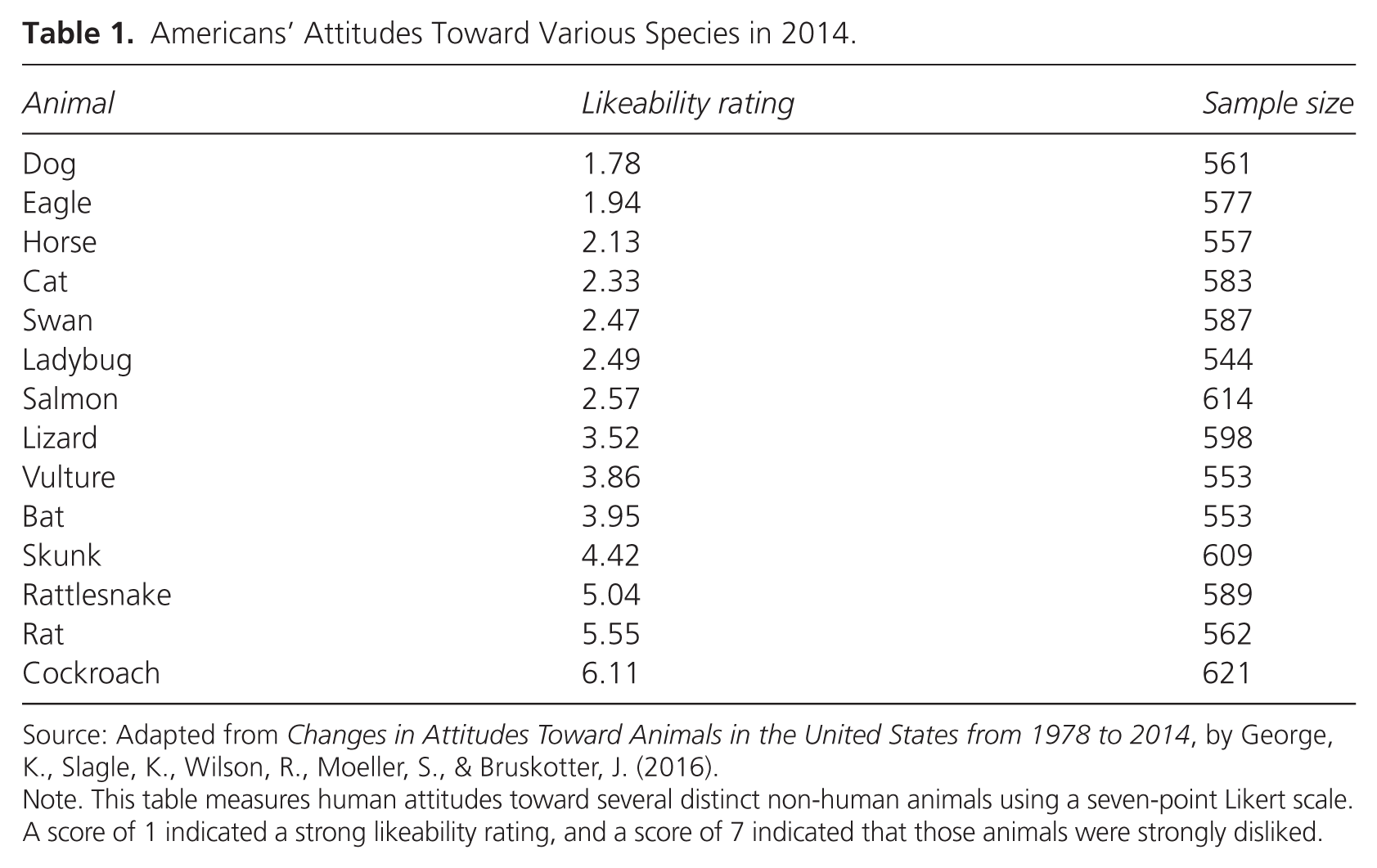
Source: Adapted from Changes in Attitudes Toward Animals in the United States from 1978 to 2014, by George, K., Slagle, K., Wilson, R., Moeller, S., & Bruskotter, J. (2016).
Note. This table measures human attitudes toward several distinct non-human animals using a seven-point Likert scale. A score of 1 indicated a strong likeability rating, and a score of 7 indicated that those animals were strongly disliked.
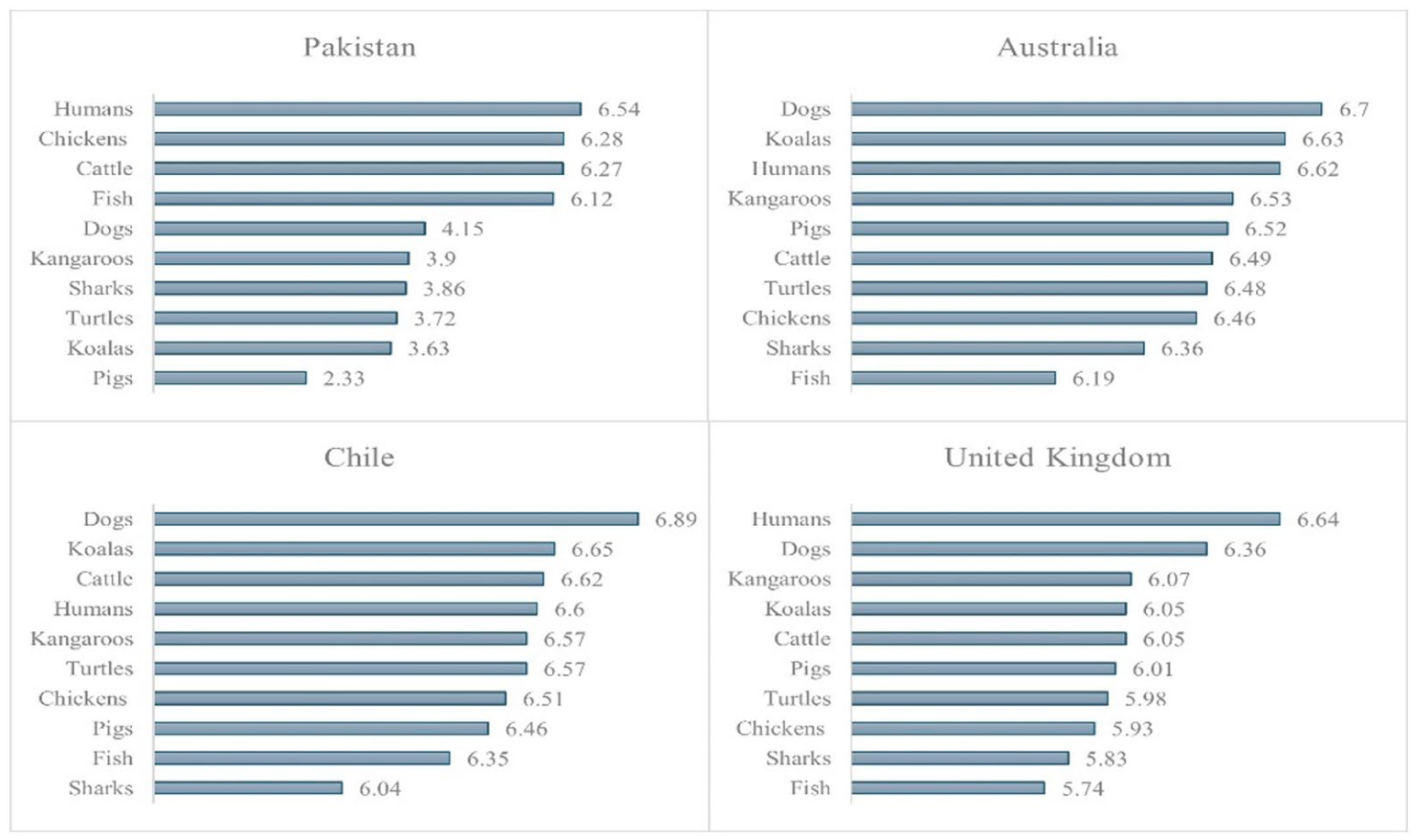
Human perceptions on the importance of animal welfare by country.
Respectively, Marriott and Cassaday (2022) and Sullivan et al. (2022) found comparable results to those of George et al. (2016) and Sinclair et al. (2022), further demonstrating not only the existence of speciesism but its connection to animal maltreatment and welfare. Marriott and Cassaday (2022) conducted a survey on the likeability of specific animals and the moral implications of utilizing animals to further human interests. In short, the results suggest participants rejected the notion of using domesticated pet species to fulfill human needs, while being significantly more agreeable to the use of pest or profit species. Further, Marriott and Cassaday (2022) conclude a lack of respect amongst humans may lead directly to poor treatment of animals, suggesting how attitudes toward pet species versus non-pet species is a key factor in speciesist discrimination.
Sullivan et al. (2022) produced significant quantitative results suggesting a similar connection between preference and welfare (see Table 2). Several statements related to animal welfare were posed to students in a questionnaire format. Students had the opportunity to determine how important each factor was in the lives of dogs and cats, animals used for food, and mammals of the horse family (equids). While these students showed significant ethical beliefs and believed most factors related to animal welfare were extremely important for all three groups, the same hierarchical structure was revealed. Students consistently prioritized the rights of dogs and cats, with equids following close behind, while the rights of animals used for food and fiber were much less significant.
Animal science students’ assessment of the importance of animal welfare.
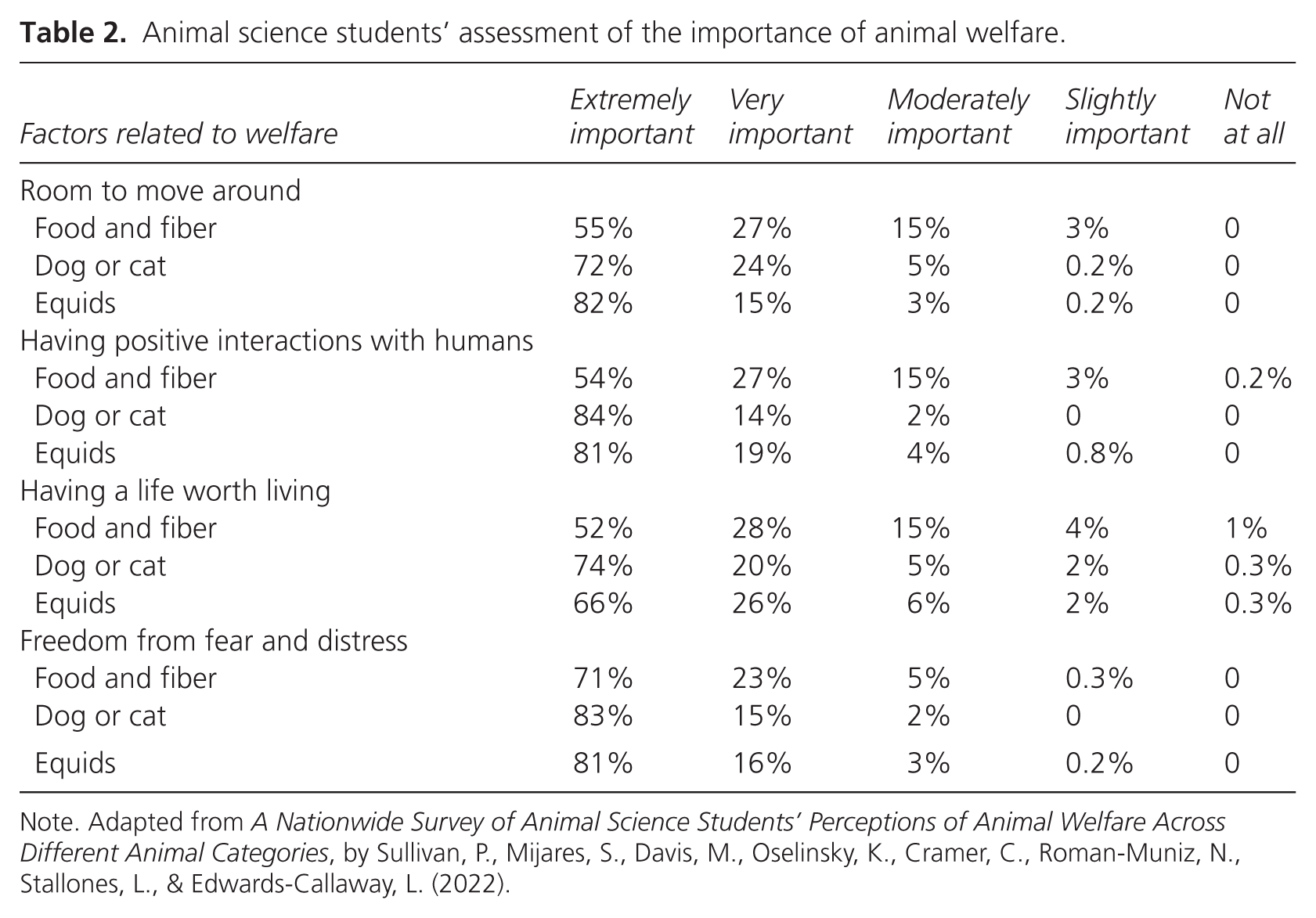
Note. Adapted from A Nationwide Survey of Animal Science Students’ Perceptions of Animal Welfare Across Different Animal Categories, by Sullivan, P., Mijares, S., Davis, M., Oselinsky, K., Cramer, C., Roman-Muniz, N., Stallones, L., & Edwards-Callaway, L. (2022).
The work of George et al. (2016), Marriott and Cassaday (2022), Sinclair et al. (2022), and Sullivan et al. (2022) provide compelling evidence that speciesism exists globally as a significant form of discrimination. Despite this phenomenon manifesting in several diverse ways across cultures, religions, and social structures (Sinclair et al., 2022), consistent trends emerge in the ways humans assess the value of animals. In short, speciesism is more than just a theoretical concept; it is a firmly established form of discrimination impacting human perceptions of animals and the state of animal protection legislation. We demonstrate the complexity of this connection in the Canadian context in the next section.
Challenges of existing Canadian animal welfare legislation
In Canada, the provinces and territories have jurisdiction and primary responsibility “for protecting the welfare of animals, including farm and companion animals” (Government of Canada, 2024, n.p.). Each province and territory has their own law or set of laws “to ensure animal welfare.” (Government of Canada, 2024, n.p.) 3 In terms of regulatory mechanisms, this too is left up to provinces and territories to oversee; some provinces “may govern specific aspects of animal welfare” while others may govern specific species (Government of Canada, 2024, n.p.) Alongside the current animal welfare mandate of the Canadian Food Inspection Agency (CFIA), these federal regulations aim to ensure “humane transport of animals and humane treatment of food animals in federal abattoirs” (Government of Canada, 2024, n.p.) while working closely with industry, provinces, territories, and stakeholder communities to establish and (re)examine animal welfare standards of care (see also Deckha, 2021). Currently the Criminal Code of Canada “prohibits anyone from willingly causing animals to suffer from neglect, pain or injury” (Government of Canada, 2024, n.p.) and this Criminal Code prohibition is enforced by up to and including “police services, provincial and territorial Societies for the Prevention of Cruelty to Animals and/or provincial and territorial ministries of agriculture[,]” depending upon the province and territory in question (Government of Canada, 2024, n.p.).
While one could posit how the introduction and permanency of animal protection legislation is a step toward comprehensive concern of animals’ wellbeing in any one country, others, such as animal rights activists and socio-legal scholars, puzzle over whether law and legislation authentically and meaningfully enshrine intrinsic values and basic rights of animals (Frasch, 2016; see also Aviram, 2022; Bisgould, 2014; Gacek, 2019; Stallwood, 2014). Concerns arise from the broad range of animal protection laws existing and whether they do enough to combat animal abuse, neglect, or suffering; will strict penalties for abuse and neglect to the total absence of basic, necessary protections be enough to hold offenders accountable? Will stricter penalties or incarceration suffice? (for discussion, see Frasch, 2016; Gacek, 2019; Marceau, 2022; Ziegler, 2019) As we demonstrate below, the gaps in legislation and inadequate protections are a direct result of speciesism. By outlining examples of Canadian animal welfare legislation among different jurisdictions, our analysis reveals multi-level shortcomings.
Federal level: Bill C-246
Bill C-246, the Modernizing Animal Protections Act, was struck down during the second reading in the Canadian House of Commons on October 5, 2016. This Act aimed to amend the Criminal Code, the Fisheries Act, the Textile Labeling Act, and the Animal Protection Act. This bill would have broadened the scope of criminal liability for animal offenders, and the silence from the government following its defeat revealed the limited consideration given to animal welfare in Canada (Sankoff, 2016). Yet, while many were frustrated with this defeat and argued this piece of legislation would have drastically changed animal protection in Canada (Sankoff, 2016), there were several gaps in the proposed legislation which reflected speciesism. First, Bill C-246 cracked down on animal fighting, making it illegal to profit from fighting or to train or transport animals for the purpose of fighting. Second, it ensured bestiality and any form of sexual abuse of animals remained illegal. It is uncontested that these areas of the legislation are essential for animal protection, but it is important to note which animals these policies aim to protect. It is widely known that dogs are most frequently used in animal fighting rings (Animal Legal Defense Fund, 2018), and Holoyda et al. (2020) note how dogs, cats, and horses are the most common victims of bestiality (for further discussion of bestiality in the Canadian context, see also Gacek and Jochelson, 2017a, 2017b; Gacek et al., 2020; Jochelson and Gacek, 2018). As previously discussed, these animals are typically well respected and deeply valued in Western culture (George et al., 2016; Sullivan et al., 2022), revealing their position near the top of the anthropocentric hierarchy. The same protections were not awarded for species near the bottom of this hierarchy. Bill C-246 did not seek to strengthen legislation for animals used in agriculture, scientific research, or hunting and fishing, reinforcing speciesist attitudes which disregard the welfare of animals in these industries (Sullivan et al., 2022). This selective approach to animal welfare legislation emphasizes how the influence of speciesism dictates which animals are worthy of legal protections, while other species are deemed inferior and excluded from protection.
Provincial level: “Ag-Gag” legislation
Not only have recent animal protection laws excluded certain species from legal protections, but new agricultural gag (“Ag-Gag”) legislation has been implemented to protect industries who are notorious for the abuse and neglect of animals (Weiler and Zavitz, 2025). These laws have been passed in several provinces in Canada, which aim to create or amend trespass legislation to prohibit whistleblowers from entering onto agricultural property and revealing animal cruelty (Weiler and Zavitz, 2025; see also Gacek, 2020 regarding trespassing, animal trapping, and resulting animal cruelty). Alberta’s main source of Ag-Gag legislation was passed in 2019 and can be recognized as Bill 27. This legislation amended various trespassing laws in several distinct Acts, drastically increasing penalties for entering properties that raise or house animals (Weiler and Zavitz, 2025). While the Ag-Gag components of Bill 27 are discrete and were implemented under the guise of protecting rural property owners, animal rights activists and scholars have exposed Bill 27 for what it truly is (Weiler and Zavitz, 2025).
Ag-Gag legislation in Ontario is much less subtle than that of Alberta. The Security from Trespass and Protecting Food Safety Act, S.O (2020) demonstrates overt speciesism and blatantly outlines the restrictions against trespassing on agricultural land where animals are located. Under the Security from Trespass and Protecting Food Safety Act, S.O (2020):
(a) eliminate or reduce the unique risks that are created when individuals trespass on those properties or interfere with farm animals, including the risk of exposing farm animals to disease and stress as well as the risk of introducing contaminants into the food supply;
(b) protect farm animals and the food supply chain from the risks described in clause (a);
(c) protect the safety of farmers, their families and persons working in or on farms, animal processing facilities and prescribed premises as well as the safety of drivers of motor vehicles transporting farm animals; and
(d) prevent any adverse effects the risks described in clause (a) may have on Ontario’s overall economy. (2020, S.O. 2020, c. 9, s.1)
In contrast with Bill 27, this Act clearly states that the general public is prohibited from entering private land where agricultural facilities are located. However, similarly to Bill 27, a cover story is implemented. The Security from Trespass and Protecting Food Safety Act, S.O (2020) claims that the provisions are imposed to combat rural crime, protect human and animal health, ensure the safety of farm employees, and prioritize the wellbeing of the economy.
Furthermore, and despite attempts at concealing animal negligence and abuse, journalists, animal rights activists and undercover whistleblowers continue to face significant risks in exposing these industries’ animal maltreatment (Weiler and Zavitz, 2025; see also Aviram, 2022; Stallwood, 2014). In 2019, animal activists started a protest at a turkey farm where the birds were severely mistreated (Weiler and Zavitz, 2025). While several of the protestors were prosecuted, the turkey farm avoided all consequences for the neglect and abuse that occurred, and Bill 27 was passed to protect the turkey farm from future incidents (Weiler and Zavitz, 2025). Another similar case study occurred at a hog farm located in Abbotsford, British Columbia (Demarsh, 2024). Although the province of British Columbia has not recently passed any new Ag-Gag legislation, their current regulations reflect the same principles similarly observed in Alberta and Ontario. Demarsh (2024) examined the conditions at Excelsior Hog Farm, where the pigs were being brutally assaulted and neglected. Two animal advocates were able to obtain video footage of this abuse and release it to the media, but they were swiftly charged and convicted under Ag-Gag laws. Further, despite irrefutable video evidence, the hog farm continues to go unpunished. Unfortunately, these incidents happen quite frequently. It has become common practice in Canada to pass Ag-Gag laws, convict whistleblowers, and ignore the conditions of agricultural facilities (Weiler and Zavitz, 2025). Not only do we believe this to be ethically unacceptable, but it is clear, based on the above, that these injustices are a product of speciesism.
Summary
Speciesism exists not only in diverse ways and across levels of jurisdiction; it demonstrates how we continue to fail in efforts of enhancing animal protections to combat speciesism in Canada. Among animals who elicit a favorable response, it is true that select animals are afforded meaningful and adequate protections (Bill C-246), yet it is this selectivity which makes us pause. For instance, Bill C-246, though defeated, focused on protecting animals who are already highly valued in Western society, such as dogs, cats, and horses, reinforcing hierarchical structures rather than reassessing them. However, the legislation within Bill C-246, while critical, was visibly selective, and excluded various animals—namely those utilized in agriculture, research, or commercial and exploitive practices. At the federal level, this legislation not only further entrenched speciesism within Canadian bureaucracy, but also sets a poor standard of care for animals, especially when particular types of care falls under Canadian provincial and territorial jurisdiction.
Conversely, animals who are perceived as commodities or pests, such as pigs, cows, rats and large birds, are similarly disregarded and excluded from provincial legal protections (Bill 27; Security from Trespass and Protecting Food Safety Act, S.O, 2020). The implementation of Ag-Gag legislation, including Alberta’s Bill 27 (2019) and Ontario’s Security from Trespass and Protecting Food Safety Act, S.O (2020), becomes a heavy-handed legal tool which can be weaponized to strategically suppress and oppress. In effect, and rather than advancing animal welfare, Ag-Gag laws here merely protect industries from negative inquiry and attention and permit them to act in their best interest, and often at the expense of the living beings in their care (Bill 27; Security from Trespass and Protecting Food Safety Act, S.O, 2020). Through Canadian Ag-Gag laws, governments become emboldened to pass these laws reflecting not solely animal care negligence, but animal exploitation complicity on a mass scale.
Indeed, despite varied legislation across Canada, a consistent pattern emerges: companion animals are protected because they are culturally valued, whereas farmed and research animals remain unprotected due to their economic benefits. One may posit: if Canadians partake in eating turkey for dinner on most holidays (Canadian Living, n.d.), should they not also be made aware of the instances of neglect and abuse that may result in the farming process (Weiler and Zavitz, 2025)? Should we not strive to pull back the curtain and expose cases of mistreatment, or do certain political and industrial entities impact efforts to progress species justice? Do certain cultural traditions supersede species justice? As per our analysis, although the speciesist hierarchy may be rooted in human behavior (Gacek, 2019; Gacek et al., 2020; Sollund, 2008), its perpetuation is no accident. As bureaucratic and industrial entities continue to emphasize the worth of animal is measured by its perceived human benefit, anthropocentric speciesism ultimately prevails.
Therefore, speciesism in Canada is evident in what federal and provincial legislation does, as well as what it refuses to do. It prevents the passage of progressive legislation while also enables governments to weaponize the law in favor of seemingly cruel, if not irresponsible industries. Given the intricate connection between individual human perceptions of animals and associated preferences on the one hand, and the relationship between collective speciesism and animal welfare legislation on the other, where do we go from here? What can we do to move species justice forward while combatting speciesism when it arises?
Confronting silence: The role of resistance through exposure
Considering that many individuals and communities still believe in the importance of animal welfare (Aviram, 2022; Deckha, 2021; Gacek et al., 2020; Morin, 2018), we encourage forms of social, political, and economic resistance to combat speciesism. Culturally, speciesist attitudes are engrained in humanity (Serpell, 2004). Traditions, languages, core worldviews, and belief systems are all fundamental elements of humanity that are nearly impossible to abandon (Sanbonmatsu, 2014; Serpell, 2004). Further, the engrained perceptions of non-human animals are instinctual, stemming from the survival tactics of cultural ancestors (Singer, 1975). While one may be judgmental of humans’ superiority complex, it continues to play a significant role in the survival of humanity (Dhont et al., 2019). Alongside culture, religion also deeply impacts human perceptions (for examples see Kowalski, 2001; Linzey, 1998; Regan, 1986; Sanbonmatsu, 2014; Scully, 2002). Sea changes in religious and cultural beliefs as they pertain to species justice is important progress to make here; however, we recognize that although advancing animal welfare should be a priority, reforming if not radically overhauling cultural and religious practices will not happen overnight (Garcia and McGlone, 2022). Unfortunately, this consideration makes international animal protection legislation quite unrealistic in certain jurisdictions (Garcia and McGlone, 2022).
As we work toward combatting speciesism in culture and religion in the long term, perhaps economic and political opposition to speciesism can also help tackle its nefarious persistence in the immediate sense. Various industries rely heavily on the exploitation of animals for profit and economic gain, whether they be pharmaceutical companies, entertainment enterprises, fashion and beauty organizations, or agricultural facilities (Fitzgerald, 2018; Gacek, 2020; Morin, 2018; Sollund, 2008). In short, greater output equals higher profits (Sollund, 2008). These industries provide valuable goods and services and contribute to the job market, gaining support from the communities they operate within (Sollund, 2008). Further, these industries have some of the most powerful voices, heavily influencing the political sphere (Almiron et al., 2015). These voices often advocate against animal welfare laws which would drastically change business operations, increase costs, and decrease profits (Almiron et al., 2015). On a global stage, governments may oppose animal welfare regulations to uphold international relations and preserve trade agreements (Almiron et al., 2015). Ultimately, speciesist attitudes embedded in cultural, religious, economic, and political resistance trigger strong opposition to the advancements of animal welfare. It is this opposition we must push back upon, for the sake of species justice. Community activism and grassroots mobilization is only the beginning of where this necessary reform must be advocated (Aviram, 2022; Stallwood, 2014). We need all levels of government to increase efforts to combat speciesism wherever and whenever it arises. This means we need progressive and authentically meaningful legal reforms to be passed which protects the welfare of animals now and secures a future of protection for them. This also means we need to challenge state-funded scholarship to free itself from the “straightjackets that may exist” and report on speciesism when it occurs (Eski, 2023, p. 6). We must also hold those in power through public transparency and accountability mechanisms available to the public to ensure decisions made on behalf of us are empirically based and morally and ethically sound. Now more than ever before, we must recognize the intrinsic value of animals and their critical role in the well-being of human-animal relations (Deckha, 2018, 2021; Sorenson, 2016).
Furthermore, as Gacek and colleagues (2020, p. 362) remind us, we can learn lessons of resistance from post-second World War human rights instruments, like the Canadian Charter of Rights and Freedoms, to push boundaries of what law’s responsibility should be toward species justice: In Canada, those instruments allowed Victorian mores of moral corruptibility to shift to conceptions of harm to the dignity and liberty of humans in the context of obscenity and indecency laws (Labaye), allowed for the enshrinement of same sex marriage (M. v H.; Reference re. Same Sex Marriage), and allowed for the protection of sex workers’ right to security of the person (Canada v. Bedford).
These significant legal cases demonstrate an intricate connection between social science research, social change, and human rights protection. In so doing, we manifest a more nuanced understanding of how culture, religion, politics, and socio-moralities shift over time because of an appreciation for the empirical. Further law reform, such as the creation of a “green constitution” (Gacek and Jochelson, 2020, p. 4) or greater efforts to grant rights to nature has the potential “to propagate societal understandings of human–animal relations and galvanize the discussion about appropriate and just treatment of animals in Western, liberal democracies” (Gacek and Jochelson, 2020, p. 4; see also Monod de Froideville and Bowling, 2022). The same shift, in our view, is possible for species justice when empirically based approaches and analytics merge with society to resist speciesism.
Concluding thoughts
The concept of speciesism is embedded in varied forms of social, cultural, and religious beliefs (Serpell, 2004); it manifests across social norms and values, political agendas, and economic pressures. At the same time, animal welfare legislation remains a persistent issue to combat. Taking into consideration our exploration of the connection between human perceptions of animal preferences with Canadian animal welfare legislation, we reveal how human perceptions of preferred animals directly reflect the protections that they are afforded (or not). There exists an oscillating connection between individual preferentiality of certain species and how law, legislation and governing regulations structure whether society cares about certain species, depending upon the species in question. The feedback loop of micro-level preference and macro-level legal governance results in the maintenance and stability of anthropocentric views of specific animal species.
Despite our discussion here, the future looks bleak for animals who are neglected, abused, and mistreated without meaningful advocacy (Deckha, 2021; Fitzgerald, 2018; Gacek and Jochelson, 2020). However, we are not a council of despair; if we can shift perceptions and acknowledge animals for their intrinsic value and deep sentience, there may be an opportunity to turn the legal dial toward progressive, meaningful reforms. Of course, challenging deeply embedded speciesist beliefs remains no easy task, requiring action from those in positions of power and privilege to supplement systemic change. Notwithstanding, by addressing the elephant in the room, perhaps we stand a chance at progressing meaningful legal reforms and efforts to inspire a more just and equitable world for all living beings alike.
Footnotes

Funding
The authors received no financial support for the research, authorship, and/or publication of this article.
Declaration of conflicting interests
The authors declared no potential conflicts of interest with respect to the research, authorship, and/or publication of this article.